

 Portable Tire Inflators
 Electric Air Pumps
 Electric Car Tyre Pumps
 Electric Ball Pumps
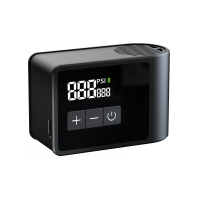 Electric Bike Pump
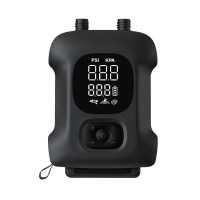 SUP Air Pump
Why Your Car Tires Keep Losing Pressure Between Fill-Ups
Most drivers check their tire pressure only after the dashboard warning light flashes. By then, you’re already driving on a tire that’s lost 10 to 15 percent of its recommended pressure, which quietly eats into fuel economy and tire lifespan. An electric air pump for car tires solves this at the source, letting you top off pressure in your driveway before a slow leak becomes a flat on the highway.
Tire pressure isn’t static. Temperature swings, small punctures from road debris, and even the porous nature of rubber itself cause tires to lose roughly 1 to 2 PSI per month under normal conditions. Cold weather accelerates this further, since air contracts as temperature drops. A portable inflator turns a monthly chore into a two-minute task, done at home instead of a gas station with a coin-operated compressor that may or may not work.
The Problem With Gas Station Air Pumps
Anyone who’s fed quarters into a gas station compressor knows the frustration. The gauge is often inaccurate, the hose barely reaches your rear tires, and you’re guessing at when to stop. Over-inflation stresses the sidewall; under-inflation increases rolling resistance and wears the tread unevenly along the edges.
A dedicated electric pump removes that guesswork. Models like the T22 use a built-in pressure sensor paired with an automatic shut-off, so the unit stops the moment your target PSI is reached. You set the number once, attach the nozzle, and walk away instead of hovering over a hissing hose.
What Makes a Pump Fast Enough for Daily Use
Airflow speed is the difference between a tool you actually use and one that sits in a drawer. The T22 relies on a 22-cylinder compression design that pushes roughly 32 to 36 L/min, drawing on up to 100W of working power. In practical terms, that’s enough to bring a passenger tire from empty to road-ready in a few minutes rather than waiting through a slow trickle of air.
Pressure range matters just as much as speed. A pump limited to 60 or 80 PSI can’t handle anything beyond a sedan tire, which leaves truck owners and cyclists without a usable tool. The T22’s range runs from 2 up to 160 PSI, covering:
- Passenger car and SUV tires, typically 30 to 40 PSI
- Motorcycle tires, which often run higher and more precisely controlled
- Bicycle and e-bike tires, where narrow road tires can call for 80 PSI or more
- Sports balls, which need a completely different low-pressure, high-precision touch
That spread is why a single device, rather than a car-only pump, ends up covering a household’s entire inflation needs.
Reading the Display Without Guesswork
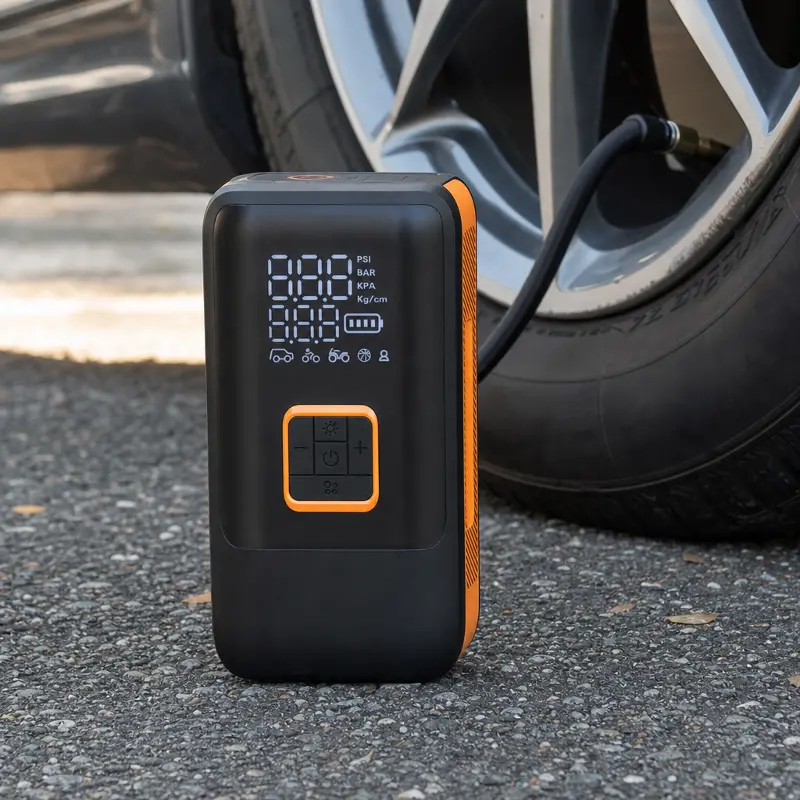
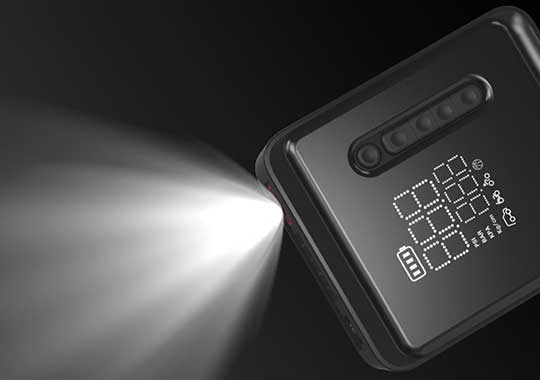
A pump is only as useful as its readout is clear. Squinting at a tiny analog gauge in a dim garage defeats the purpose of going electric in the first place. The dual LED numeric display on the T22 shows target pressure and real-time pressure side by side, along with battery level, selected mode, and the current unit of measurement.
Unit flexibility solves a smaller but real annoyance: not every tire sidewall or bike pump uses the same standard. Being able to toggle between PSI, BAR, KPA, and Kg/cm² means you’re not doing mental math every time you switch between the family car and a mountain bike.
Preset Modes Take the Guesswork Out of Target Pressure
Knowing the right PSI for every object you own isn’t realistic, and that’s where preset modes earn their place. Rather than memorizing numbers, you select a category and let the sensor handle precision.
- Car mode — tuned for standard passenger vehicle tire ranges
- Motorcycle mode — adjusted for the narrower tolerances motorcycle tires require
- Bicycle mode — suited to higher-pressure road and hybrid bike tires
- Ball mode — calibrated for the low-pressure needs of sports balls
- Custom mode — manual entry across the full 2 to 160 PSI range for anything outside the four presets
This structure matters most in the moment you’re least patient, like topping off a tire in a parking lot before a long drive. Selecting a mode and pressing start is faster than consulting a tire pressure chart on your phone.
Battery Life and What It Actually Means on the Road
Specs on a box rarely translate to real-world confidence, so it helps to break down what the numbers mean in use. The T22 runs on three 18650 rechargeable cells with a combined 2600mAh capacity, delivering a runtime of about 20 to 25 minutes per charge.
| Metric | Specification | Real-World Meaning |
|---|---|---|
| Battery capacity | 2600mAh / 28.86Wh | Enough for about 1.5 standard tires per full charge (per manufacturer data) |
| Charging time | 2 to 3 hours | Full charge overnight or during a workday |
| Charging port | Type-C | Compatible with common phone chargers and power banks |
| Cycle life | 100 cycles at 80%+ capacity | Years of occasional use before noticeable decline |
| Power-bank output | 5V/2A | Can charge a phone in a pinch |
That last line deserves a second look. A tire inflator that doubles as an emergency phone charger sounds like a stretch, until you’re stranded roadside with a dead phone and a low tire at the same time. It’s not a replacement for a dedicated power bank, but it’s a reasonable backup when you need one.
Noise and Portability: The Details That Decide Daily Use
A compressor that sounds like a leaf blower gets used once and then forgotten in the trunk. Noise output on the T22 stays at or below 85dB measured at one meter, which is loud enough to notice but not loud enough to wake a sleeping household at 6 a.m.
Size follows the same logic. At 161 × 68 × 53 mm and 508 grams, the unit fits in a glovebox, a bike pannier, or a backpack side pocket without demanding its own storage space. That’s a meaningful distinction from older corded inflators that required a car’s 12V outlet and a cable long enough to reach the rear tires.
Choosing Between a Corded and a Cordless Inflator
The decision usually comes down to how and where you’ll use the pump.
- Choose a corded, 12V inflator if you only ever inflate tires while parked near your car and don’t mind the cable length limiting your reach.
- Choose a rechargeable electric pump if you need to inflate bicycle tires away from a vehicle, want power-bank backup, or prefer not to run the car engine just to top off a tire.
- Choose a high-PSI model (120+ PSI) if your household includes motorcycles, performance tires, or sports equipment with varying pressure needs.
- Choose a basic low-PSI model if you’re only ever filling standard passenger car tires and don’t need the extra range.
For most multi-vehicle, multi-use households, the cordless option with a wide pressure range ends up being the more practical long-term tool, even if the upfront cost is slightly higher than a basic corded unit.
Frequently Asked Questions
How often should I check my car tire pressure?
Monthly is a reasonable baseline, with an extra check before long road trips or when seasonal temperatures shift sharply, since cold air causes measurable pressure drops.
Can an electric pump over-inflate a tire?
A unit with automatic shut-off and a built-in pressure sensor, like the T22, is designed to stop at the target PSI, which reduces that risk compared to manual pumps where you’re watching a gauge yourself.
Is 160 PSI overkill for a car tire?
Yes, for a standard passenger tire, which rarely exceeds 35 to 40 PSI. The higher ceiling matters for other use cases, such as certain motorcycle or performance tires, rather than daily car use.
Will a portable inflator work on a completely flat tire?
It can add air to a flat tire, but a sudden total loss of pressure usually points to a puncture or valve failure that needs repair, not just reinflation.
How long does the battery last in storage?
Lithium-ion cells like the 18650s used here degrade slowly over time regardless of use, so periodic charging every few months during long storage periods helps preserve capacity.
Keeping Tire Maintenance Simple
Tire pressure maintenance isn’t complicated, but it’s easy to neglect when the right tool isn’t within reach. A compact electric air pump for car tires closes that gap by sitting in a glovebox or garage shelf, ready whenever a dashboard light or a visual check says it’s time. Between preset modes, a clear digital display, and a pressure range wide enough to cover bikes and sports equipment too, it turns a recurring annoyance into a routine that takes less time than finding parking at a gas station.
-
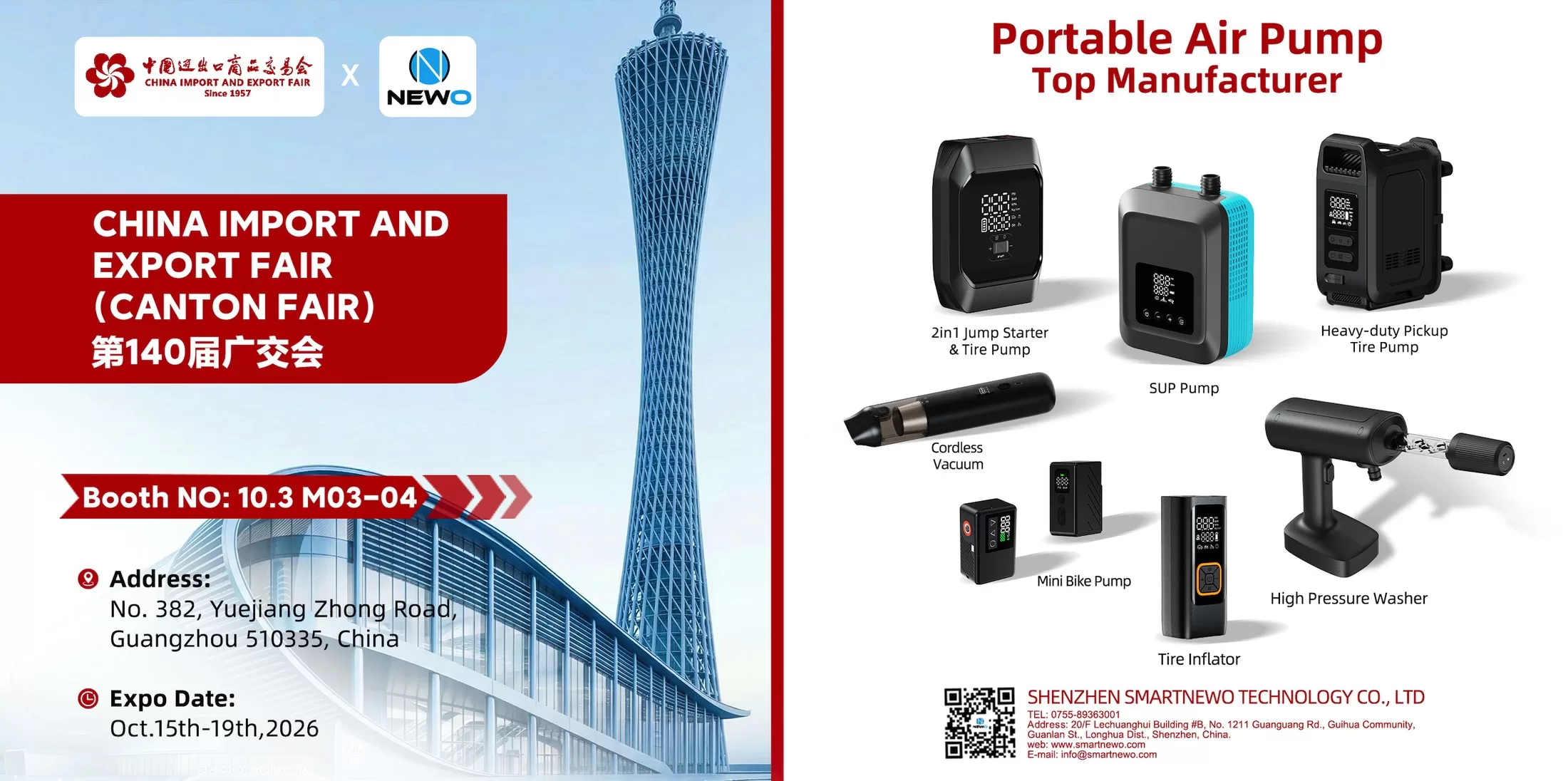
Meet NEWO at the 140th Canton Fair: Visit Booth 10.3 M03–04
Meet NEWO at the 140th Canton Fair in Guangzhou, October 15–19, 2026. Visit Booth 10.3 M03–04 to explore portable air pumps and discuss OEM, ODM and distribution opportunities.... -

As Shenzhen Welcomes the World for APEC 2026, NEWO Welcomes You to Our Factory
As Shenzhen prepares for APEC 2026, NEWO welcomes international buyers and partners to visit our factory, meet our team and explore future cooperation.... -
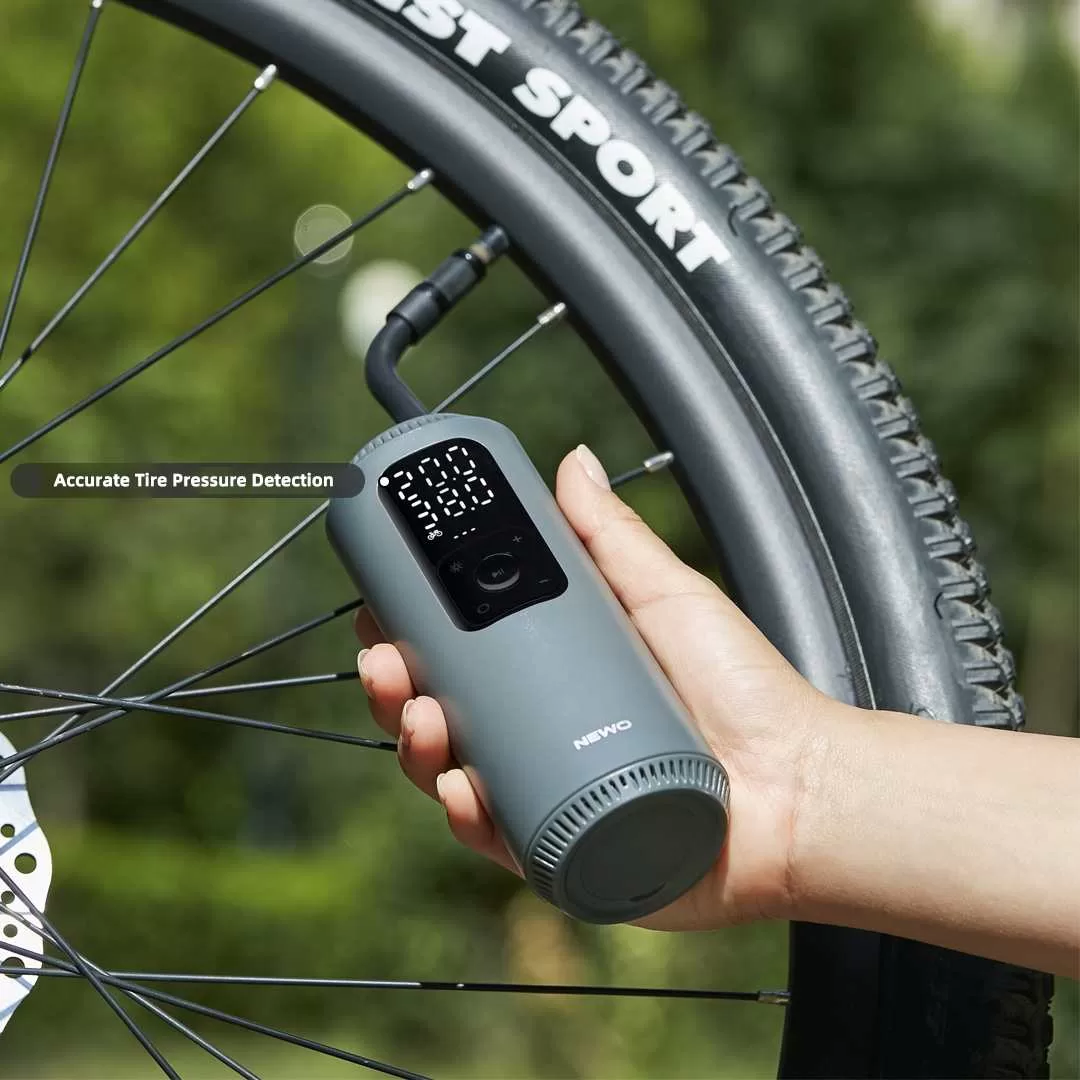
Leading the Way in Product Innovation and Excellence
Smartnewo exemplifies professionalism in product innovation and manufacturing. Their collaboration with Xiaomi Youpin on the G01 crowdfunding project highlights their expertise in creating compact, powerful inflatable pumps. Rigorous engineering, meticulous production processes, and advanced quality assurance underscore their commitment to excellence. The success of the G01 project, with significant market... -
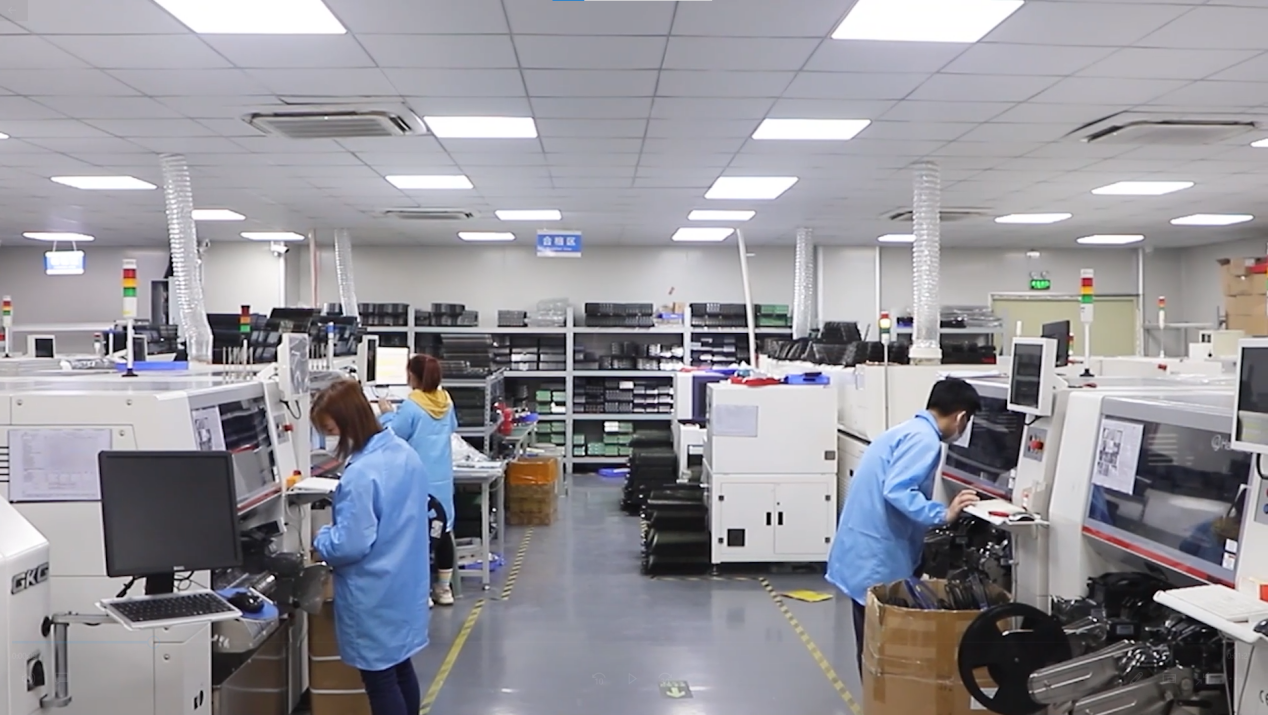
Essential Qualities of an Excellent Supplier
In today's competitive market, finding a reliable supplier is crucial for business success. Based on insights from Smartnewo and broader internet research, here are key qualities an excellent supplier must possess:... -
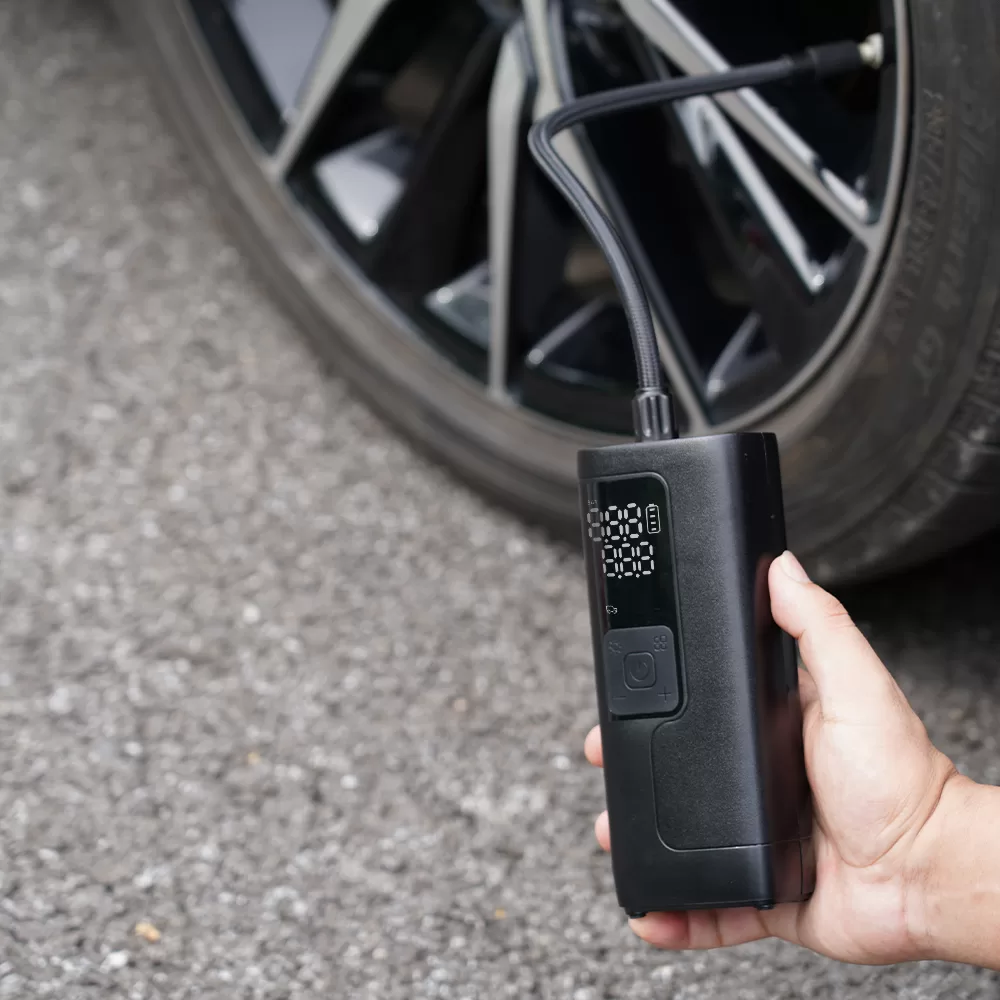
NW06 Tire Inflator: Compact Power for Quick Inflation
Summary The NW06 Tire Inflator delivers quick and efficient tire inflation with a powerful 35L/min airflow. It features a user-friendly LCD screen for real-time pressure monitoring, dual power options with a built-in 6000mAh battery, and multiple nozzle attachments for versatile use. Its compact design and integrated LED light ensure convenience and... -
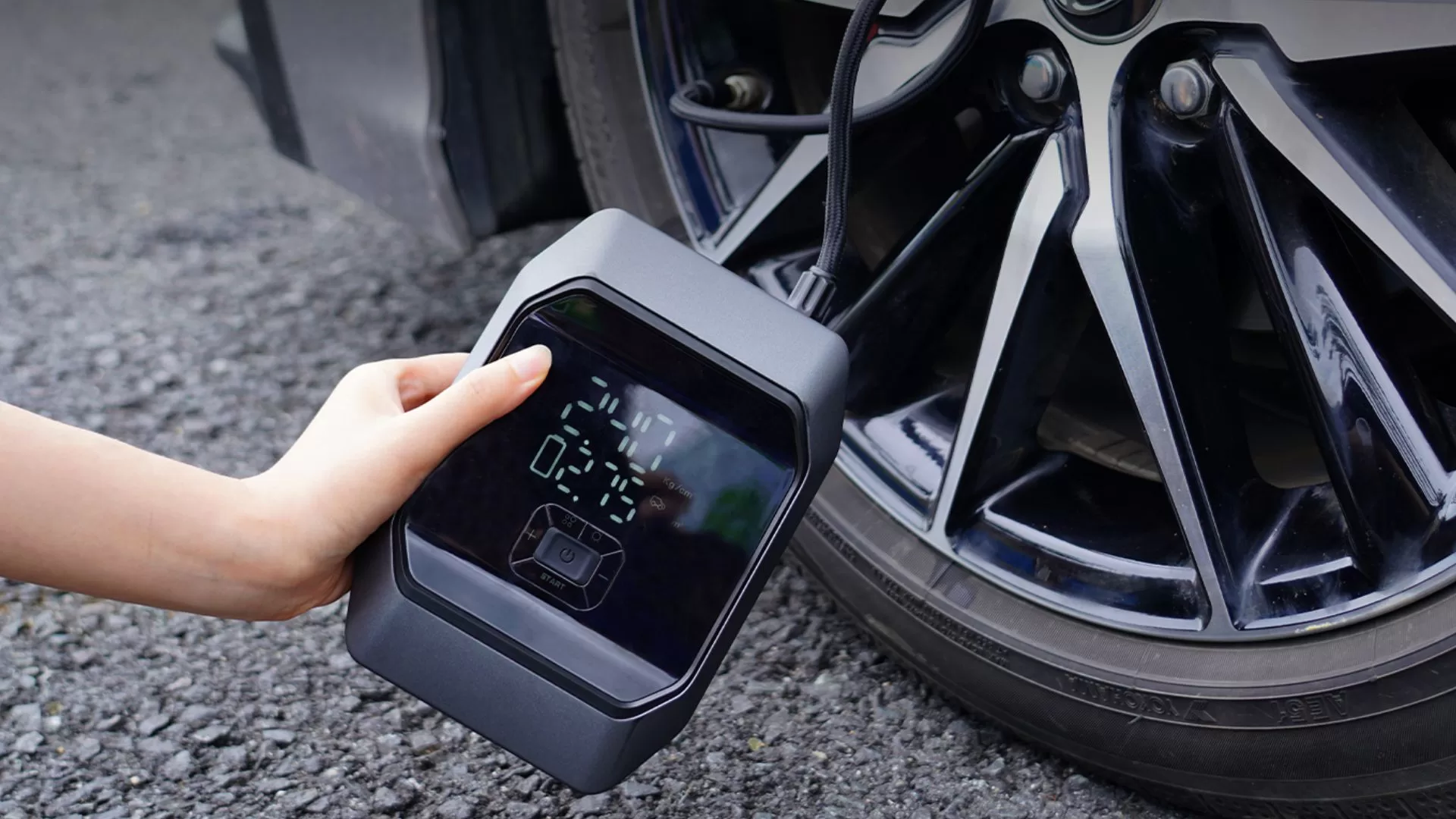
Unleash the Power of Portability: The SmartNewo Jump Starter with Air Compressor KF03
This guide will walk you through the steps to effectively use a portable tire inflator, helping you stay prepared and safe on the road.... -
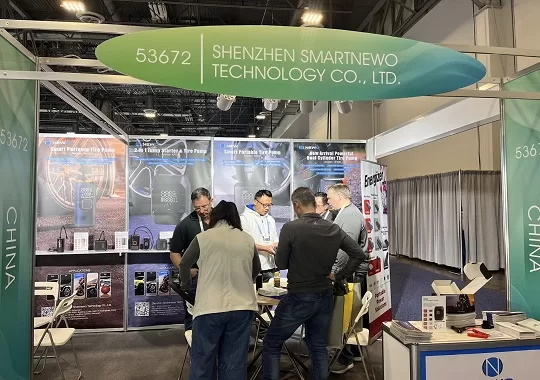
Newo Attends The 2024 Consumer Electronics Show (CES)
Smartnewo booth is located at 53672, Halls A-D, Level 2, Venetian Expo, Las Vegas Convention Center (LVCC). ... -
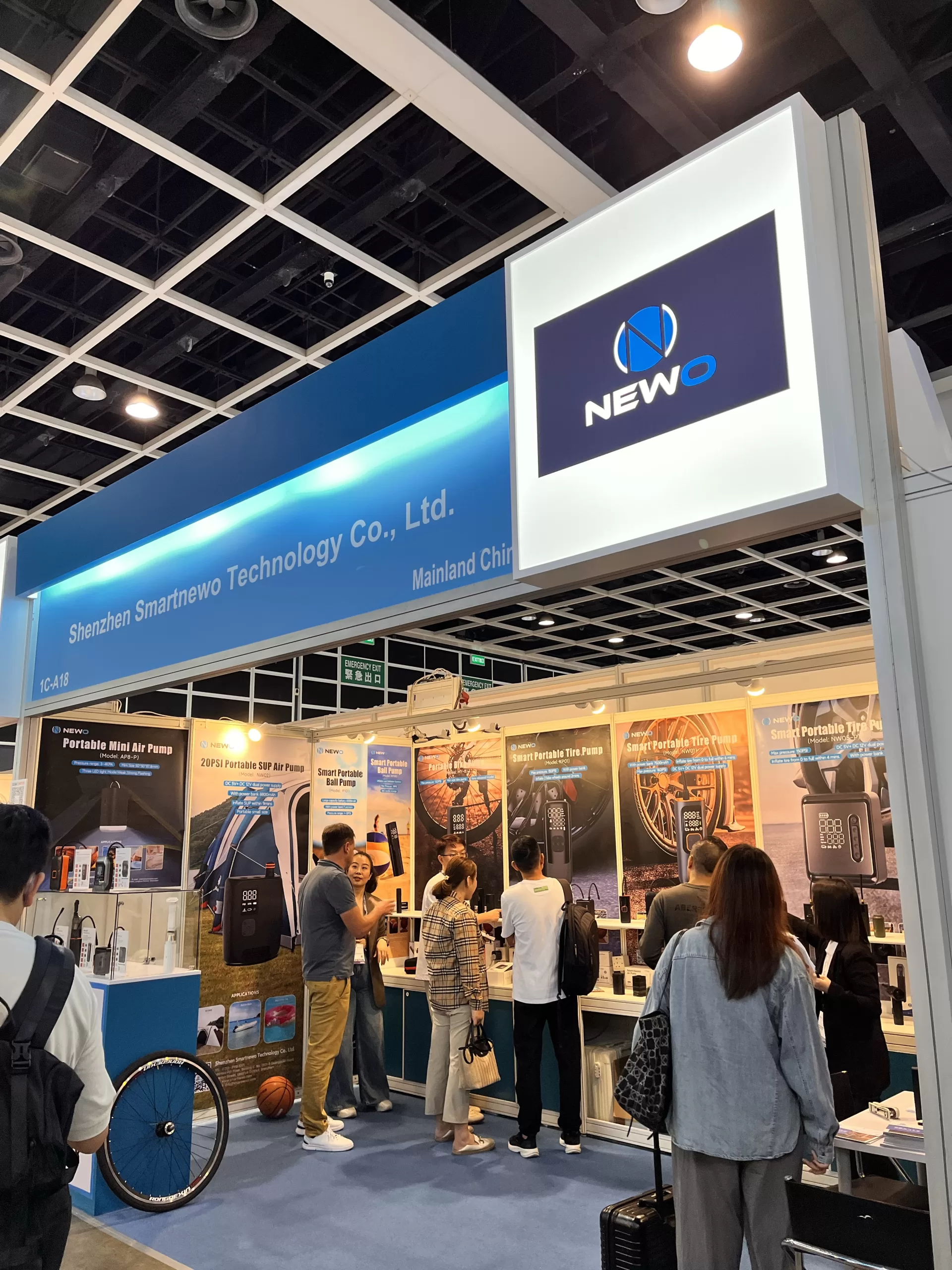
Smartnewo’s Dual-Cylinder Air Pump Rocks the Hong Kong Autumn Electronics Fair!
Smartnewo’s Dual-Cylinder Air Pump Rocks the Hong Kong Autumn Electronics Fair!... -

Meet at the Canton Fair! Smartnewo brings dual-cylinder air pumps, making your inflation experience faster and more stable!
NEWO has went deep communication and negotiation with customers from all over the world on booth.... -
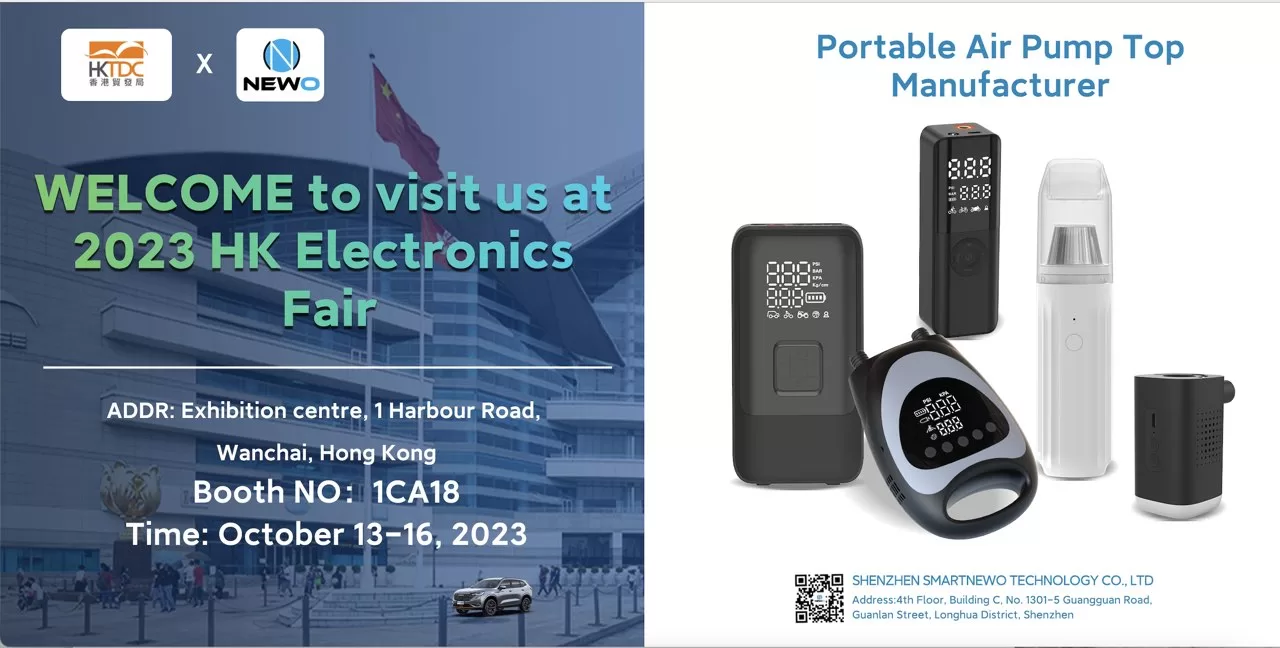
“Hong Kong Autumn Electronics Fair – 1CA18 (October 13th to 16th): Smartnewo invites you to visit our booth!
Hong Kong Autumn Electronics Fair...
-
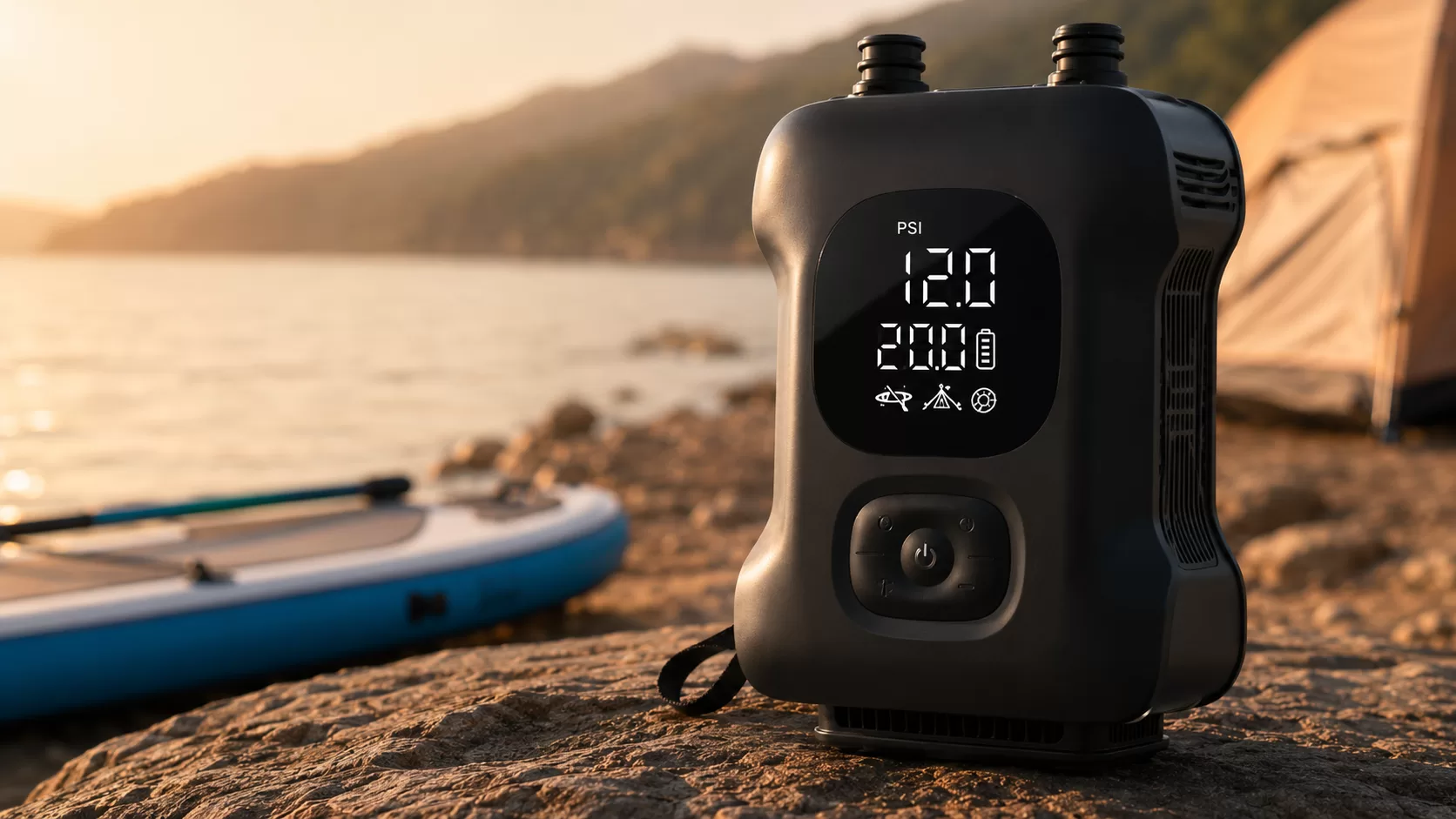
Rechargeable Electric SUP Pump for Paddle Boards: Faster Inflation for SUPs, Kayaks and Inflatable Tents
The BL10-C Portable Electric Bike Tire Inflator is a compact and lightweight mini electric bike pump designed for modern cyclists. With up to 120 PSI pressure, a digital LED display, preset pressure control, automatic shut-off, USB-C charging, and multiple valve adapters, BL10-C offers a convenient inflation solution for road bikes,... -
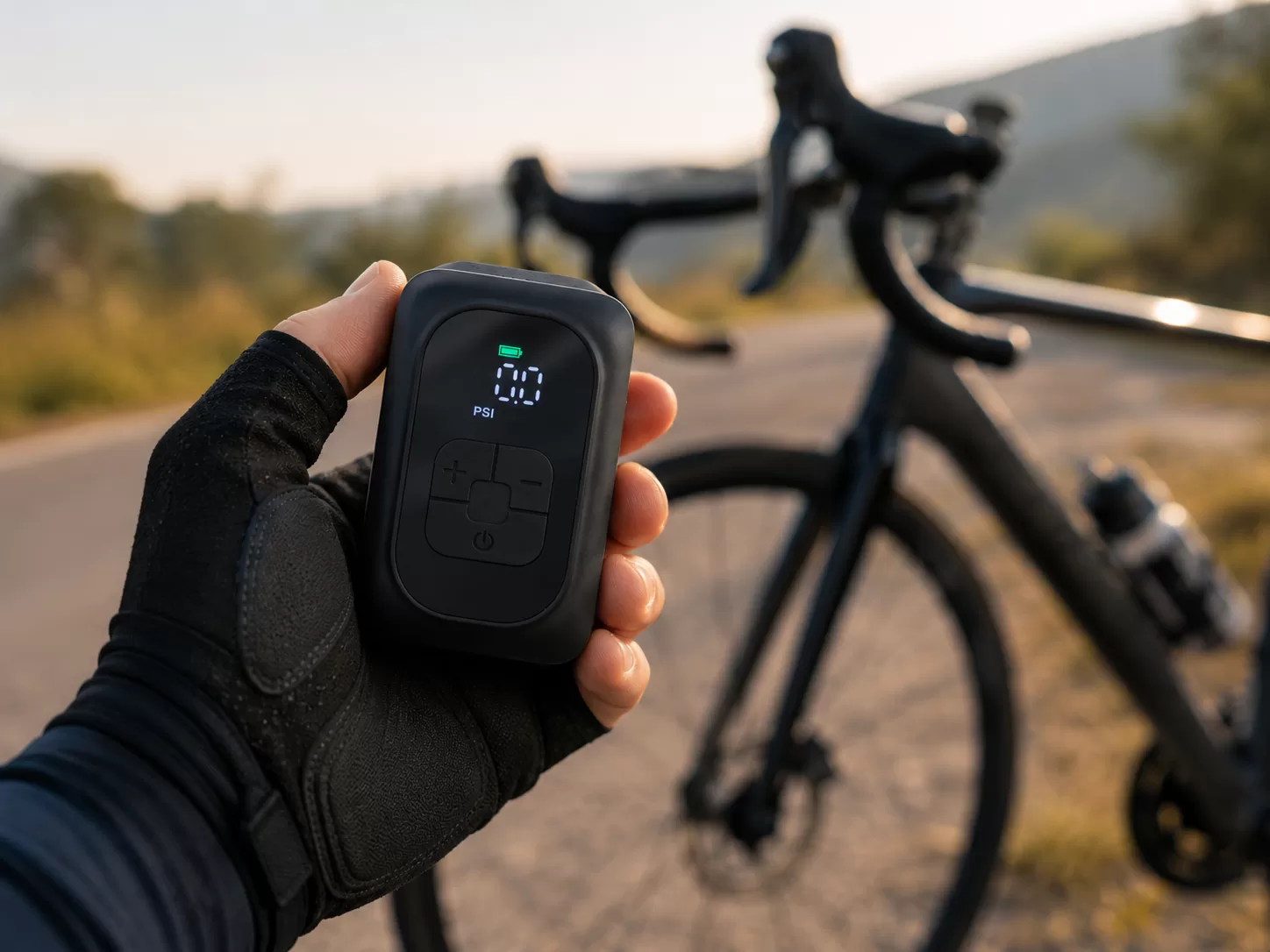
Are Electric Bike Pumps Worth It in 2026? Electric Pump vs CO₂ vs Mini Hand Pump
Discover whether electric bike pumps are worth it in 2026. This guide compares electric bike pumps, CO₂ inflators, and mini hand pumps for road cycling, gravel riding, commuting, and long-distance rides. Learn the pros, limitations, best use cases, and key features to look for before choosing the right portable tire... -
BL10-C Portable Electric Bike Tire Inflator: Small Size, Reliable Power for Every Ride
The BL10-C Portable Electric Bike Tire Inflator is a compact and lightweight mini electric bike pump designed for modern cyclists. With up to 120 PSI pressure, a digital LED display, preset pressure control, automatic shut-off, USB-C charging, and multiple valve adapters, BL10-C offers a convenient inflation solution for road bikes,... -
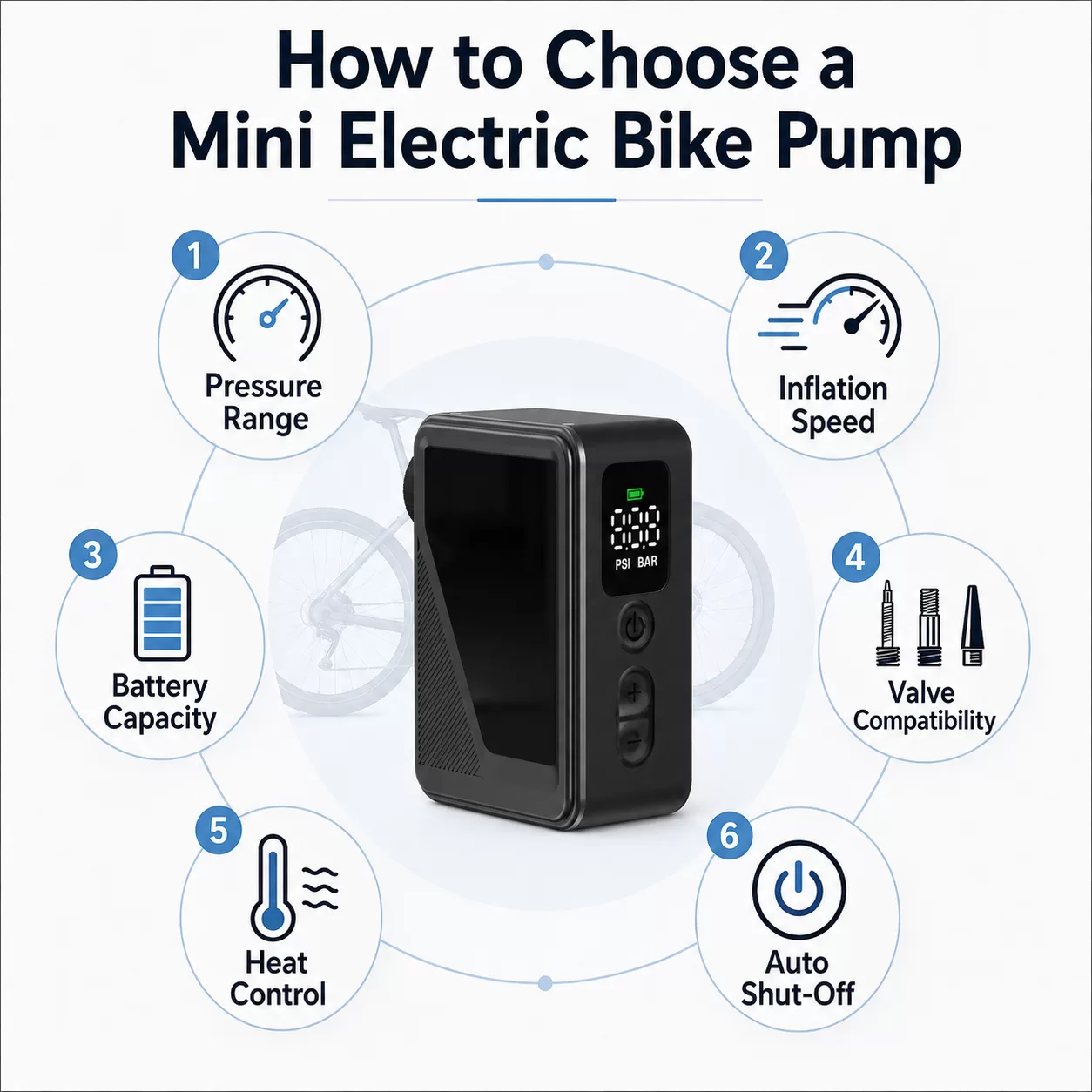
Why Mini Electric Bike Pumps Are Becoming Essential for Modern Cycling
Discover why mini electric bike pumps are becoming essential for modern cyclists. Learn how portable electric bike pumps improve tire pressure management, riding safety, and convenience.... -
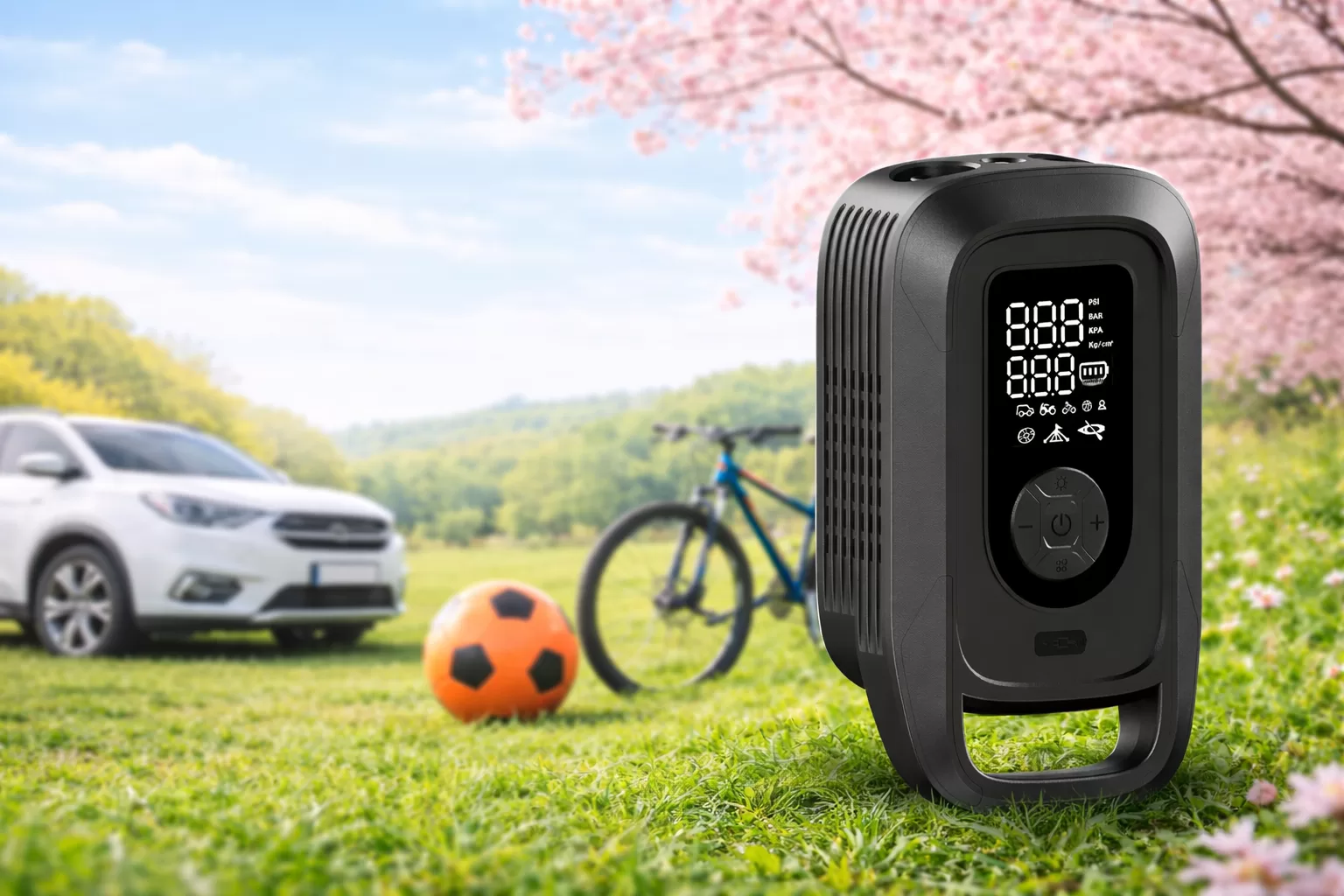
The Ultimate Smart Solution for Easy Outdoor Adventures in 2026
Discover how a spring travel air pump simplifies outdoor trips with fast inflation, smart features, and powerful performance—perfect for every adventure.... -
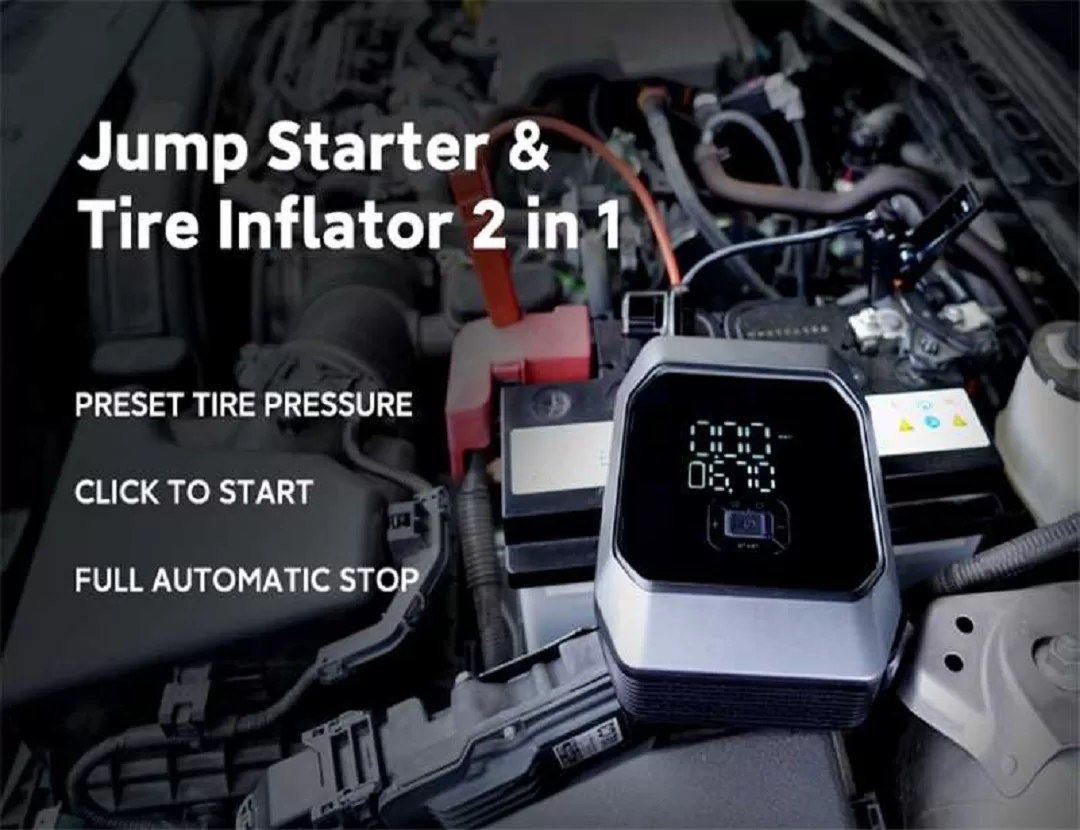
Powerful 5-in-1 Portable Car Tire Inflator and Jump Starter: The Ultimate Emergency Tool for Every Driver
Why Every Driver Needs a Portable Car Tire Inflator and Jump Starter Modern drivers face many unexpected situations on the road. A flat tire, low tire pressure, or a dead car battery can happen at the worst possible time. That’s why having a portable car tire inflator and jump starter is... -
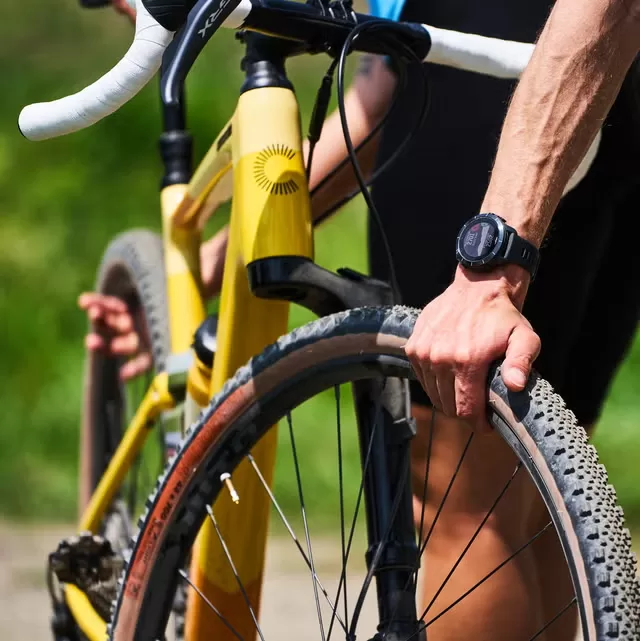
7 Real Cycling Scenarios That Show Why Every Rider Should Carry a Mini Bike Pump
Cycling is one of the most freeing activities you can enjoy. Whether you’re commuting to work, riding through city streets, or exploring quiet countryside roads, a bike ride can instantly improve your day. But there’s one small problem that almost every cyclist eventually faces: Low tire pressure. It might happen... -
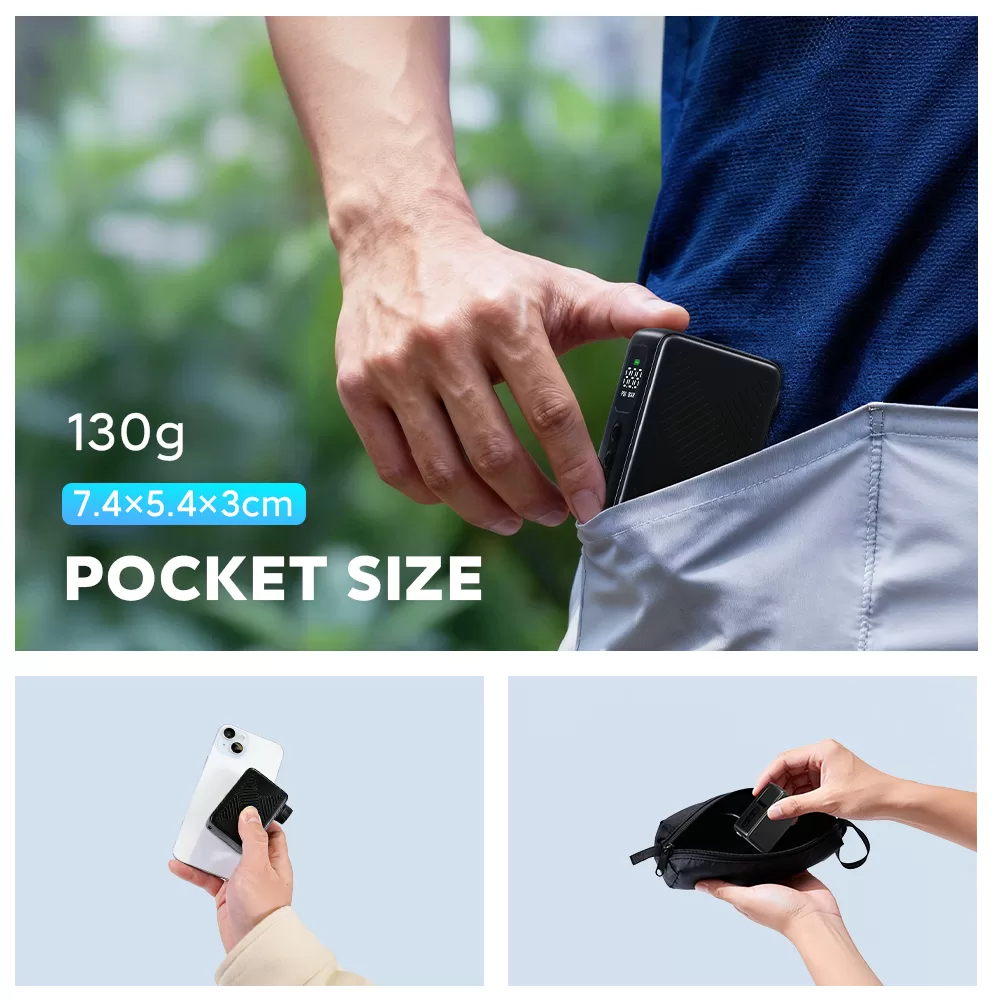
BL08-A Portable Electric Bike Pump: A Global Distribution Opportunity with Smartnewo
Smartnewo, a professional manufacturer of portable electric air pumps, introduces the BL08-A model — a compact and efficient inflator designed for global distributors, e-commerce sellers, and outdoor accessory brands seeking reliable OEM/ODM solutions. Table of Contents Main Heading Subtopics 1. Introduction: Expanding the Global Market for Smart Inflation Tools Portable... -
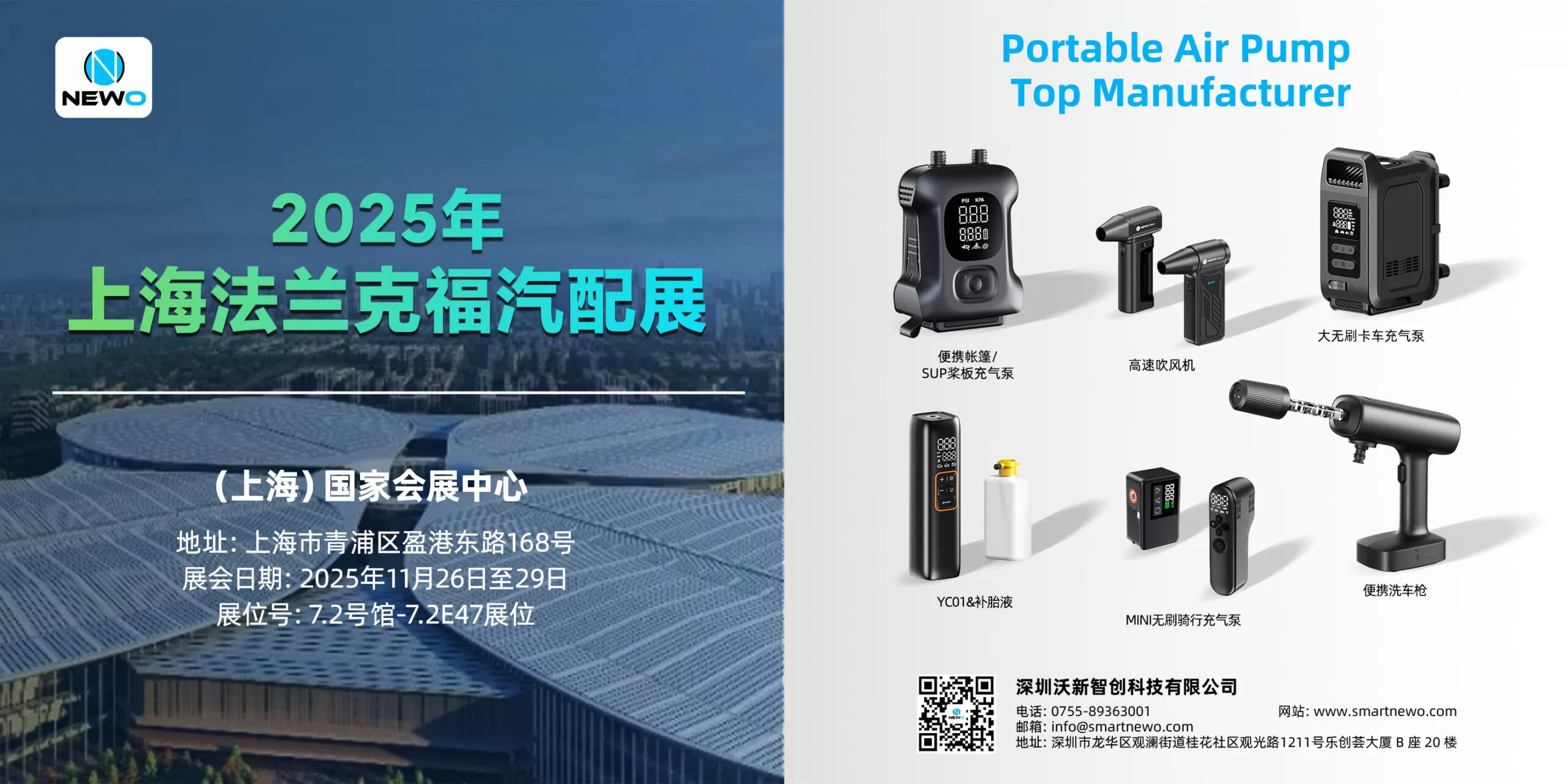
Connecting Opportunities at Automechanika Shanghai 2025 — Smartnewo Exhibition Day 1
Today marks an exciting beginning as Smartnewo officially opens its booth at Automechanika Shanghai 2025. As one of the largest and most influential automotive aftermarket exhibitions in the world, the show provides an exceptional platform for meaningful conversations, partnership building, and global industry exchange. Located at Booth 7.2E47, Smartnewo presents... -

Why Every Outdoor Cyclist Should Carry a Mini Electric Bike Pump
Whether you are an experienced mountain rider or a weekend road-cycling enthusiast, one thing is certain: unexpected tire pressure issues can ruin an entire ride. That’s why more cyclists are turning to mini electric bike pumps—compact, lightweight, and far more reliable than traditional hand pumps. 1. Consistent Pressure, Even in...
-
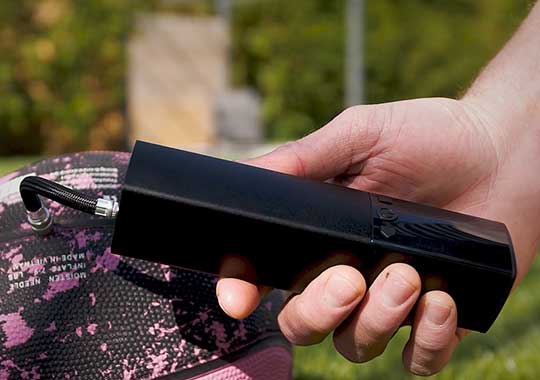
How Is a Football Properly Inflated?
The correct inflation of a football - with not too much and not too little air - is a hotly debated topic among footballers.... -
Application Scenarios of Car Inflator Pump
Often long-distance business trips or play car owners because the road may be more remote areas, in this case if you encounter a tire leak....