

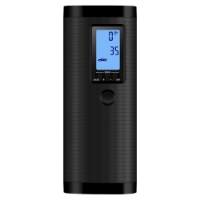
 Portable Tire Inflators
 Electric Air Pumps
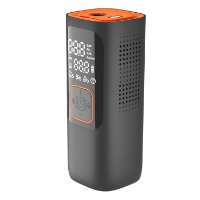 Electric Car Tyre Pumps
 Electric Ball Pumps
 Electric Bike Pump
 SUP Air Pump

The Comprehensive Guide to Choosing and Using a Portable Air Tyre Pump
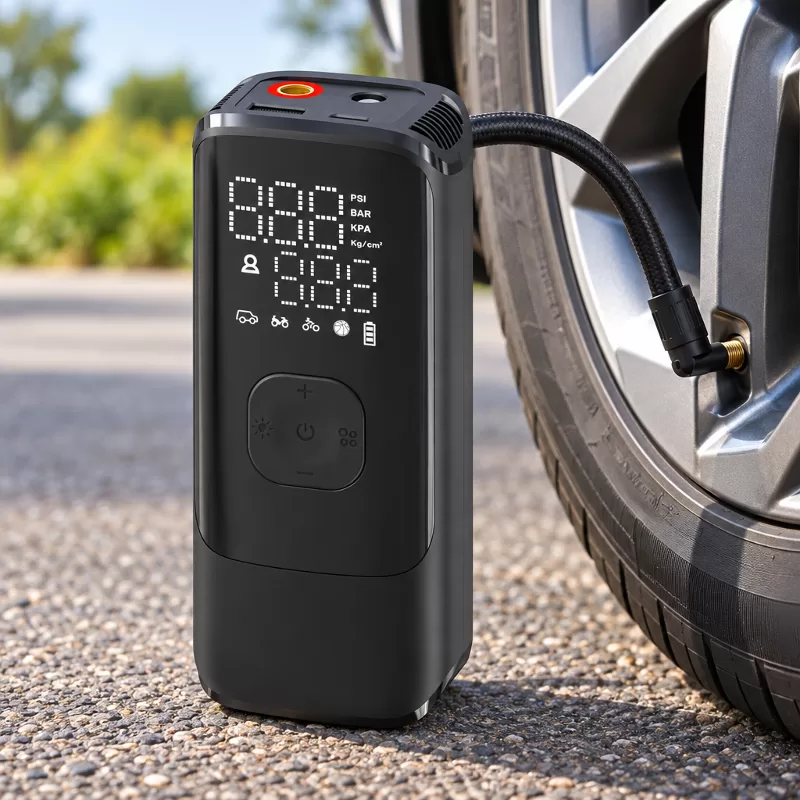
Maintaining correct pneumatic pressure is among the most critical vehicle maintenance tasks, yet it remains frequently neglected until a dashboard warning triggers. A portable air tyre pump provides drivers, cyclists, and urban commuters with immediate roadside independence, eliminating the reliance on service station forecourts or manual floor pumps. Modern compact inflators merge rechargeable lithium-ion cells with high-pressure micro-cylinders, delivering reliable pressure top-ups wherever your journey takes you.
Selecting the right device requires an understanding of mechanical displacement, thermal limits, battery chemistry, and precise pressure management. Handheld inflators must balance compact enclosures with the intense heat generated during active air compression. Whether addressing minor pressure losses on a commuter car or setting suitable pressures for bicycle tyres, having appropriate equipment safeguards tread wear and vehicle safety.
Understanding the Portable Air Tyre Pump: Mechanics and Capabilities
How Compact Cordless and 12V Inflators Differ from Workshop Compressors
Workshop air compressors rely on massive induction motors coupled to heavy steel receivers, accumulating dozens of litres of pressurised air ready for instantaneous delivery. In contrast, a portable air tyre pump utilises positive displacement via a compact motorised cylinder assembly. Instead of drawing from a pre-compressed reserve, the small motor continuously pressurises ambient air and feeds it directly into the tyre valve.
Because there is no storage tank, the rate of airflow depends strictly on cylinder dimensions and motor operating speed. Miniaturisation forces engineering compromises, primarily regarding thermal management and continuous operational duration. While a stationary shop compressor runs continuously under industrial cooling fans, handheld units absorb substantial heat within their internal components, necessitating periodic rest during multi-tyre tasks.
Multi-Application Coverage: Commuter Vehicles, Two-Wheelers, and Inflatables
Compact inflators are versatile tools designed to handle divergent pressure regimes across recreational and transportation sectors. Car tyres require substantial volumetric airflow at specific target pressures designated by the car manufacturer. Bicycle pressures vary widely depending on tyre width, rim construction, rider weight, casing, and tubeless or inner-tube configurations, so the pump must support the specific target rating.
A single portable electric pump can adapt across this operational spectrum when paired with appropriate digital pressure controls and suitable adapters. The compressor handles passenger vehicle tyres, motorcycle tyres, power-assisted e-bike tyres, mobility wheelchairs, balance vehicles, and sports balls. The micro-cylinder assembly inflates diverse volumes within designated limits, provided the user observes proper pressure requirements.
Distinguishing Portable Convenience from Emergency Tyre Repair
A portable tyre inflator restores lost pressure, but it does not fix structural failures. Understanding this distinction prevents hazardous roadside incidents when dealing with punctured casings. An inflator may provide temporary pressure only when the tyre and vehicle manufacturer’s emergency instructions permit limited travel. Do not continue driving on a tyre that is flat, visibly damaged, or rapidly losing pressure; use a spare or roadside service and have the tyre professionally inspected.
When a sidewall suffers structural tears, beads unseat from the wheel rim, or severe punctures occur, an air pump cannot re-establish pneumatic stability. Drivers must carry complementary emergency plug equipment or sealant where approved by vehicle instructions alongside an electric inflator. Relying solely on continuous pumping without addressing an active puncture risks severe casing failure during operation.
Key Selection Criteria: How to Choose the Right Portable Tyre Inflator
Power Source Dynamics: Battery Freedom vs. 12V Vehicle Auxiliary Support
Power supply architecture determines how effectively an inflator performs during unexpected breakdowns. Internal rechargeable lithium-ion cells offer complete untethered convenience, allowing you to walk freely around four wheels without wrestling with power cords across dirty bodywork. Yet, chemical batteries slowly self-discharge when stored inside cold glove compartments through winter months.
Connecting directly to a 12V to 14V vehicle auxiliary power socket provides stable electrical current, ensuring the pump operates even when internal batteries are entirely depleted. Dual-power hybrid designs offer the strongest balance, operating primarily from internal rechargeable cells while supporting direct vehicle plug-in backup. This dual redundancy ensures you are never stranded with an unpowered pump when a tyre is flat.
Airflow Rate (L/min) vs. Maximum Pressure (PSI / Bar)
Marketing materials frequently spotlight high maximum pressure figures, such as 150 PSI, leading buyers to believe the pump inflates vehicle tyres at rapid speeds. In reality, maximum pressure indicates the stall resistance of the cylinder assembly, not the speed of air delivery. Airflow rate, measured in litres per minute (L/min), dictates the actual displacement volume potential for passenger vehicle tyres.
An automotive tyre contains a significant volumetric capacity, meaning a pump delivering 10 L/min takes substantially longer to adjust a passenger tyre compared to an 18 L/min model. Airflow ratings can help compare inflators, but real inflation time also depends on tyre size, starting pressure, and airflow at operating pressure. Check whether the manufacturer states the test conditions before using the L/min figure to predict inflation time.
| Technical Attribute | Battery-Only Handheld | 12V Corded Auxiliary | Hybrid Dual-Power Inflator |
|---|---|---|---|
| Power Delivery | Internal Rechargeable Pack | Vehicle Cigarette Lighter Socket | Internal Battery + 12V–14V DC |
| Portability | Completely Cordless | Limited by 3m–4m Cable Reach | Cordless with Emergency Cable |
| Storage Dependency | Requires Periodic Recharging | Ready Whenever Vehicle Battery Works | Operational Even If Battery Flat |
| Typical Weight | 400g to 600g | 600g to 1200g | 450g to 700g |
| Primary Use Case | Urban Commuting & Cycling | Dedicated Long-Distance Motoring | Comprehensive All-Vehicle Backup |
Physical Form Factor, Thermal Management, and Motor Cylinder Size
The internal cylinder size influences pumping performance and structural stress within compact inflator bodies. Standard micro-compressors often employ compact cylinder mechanisms built inside metallic barrels. A designated 17-cylinder structure delivers an effective combination of mechanical output and steady airflow without excessive power drain from compact battery packs.
Because compressing gas generates direct thermal energy, ventilation perforations and internal cooling paths are critical design elements. Inadequate venting causes internal seals to degrade under continuous friction. Quality inflators feature slotted exterior housings that promote convective airflow around the mechanical drive, protecting structural components during extended operation.
Digital Controls: Auto-Shutoff, Preset Modes, and Pressure Sensors
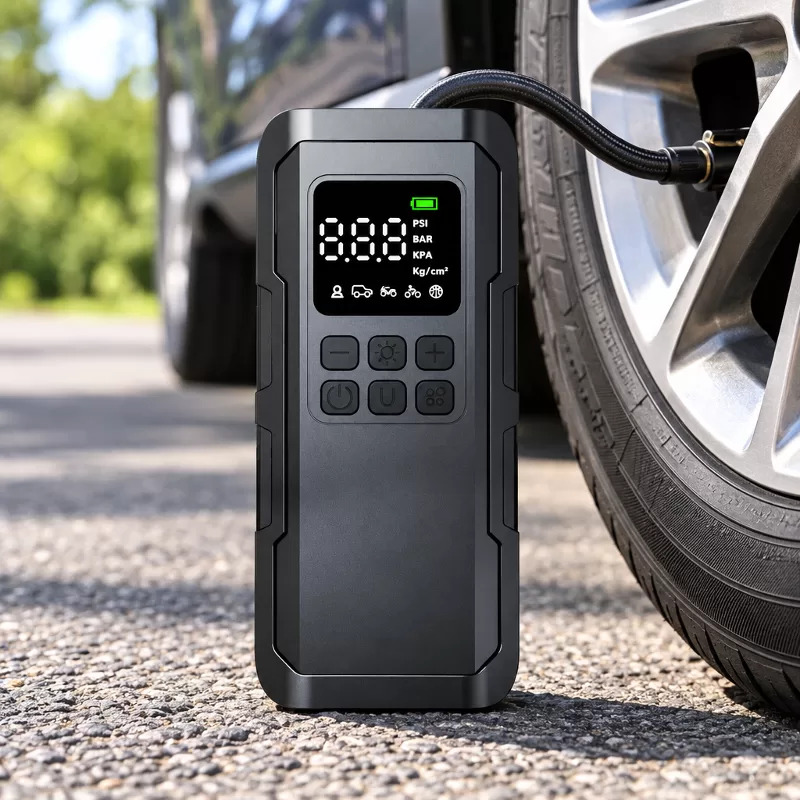
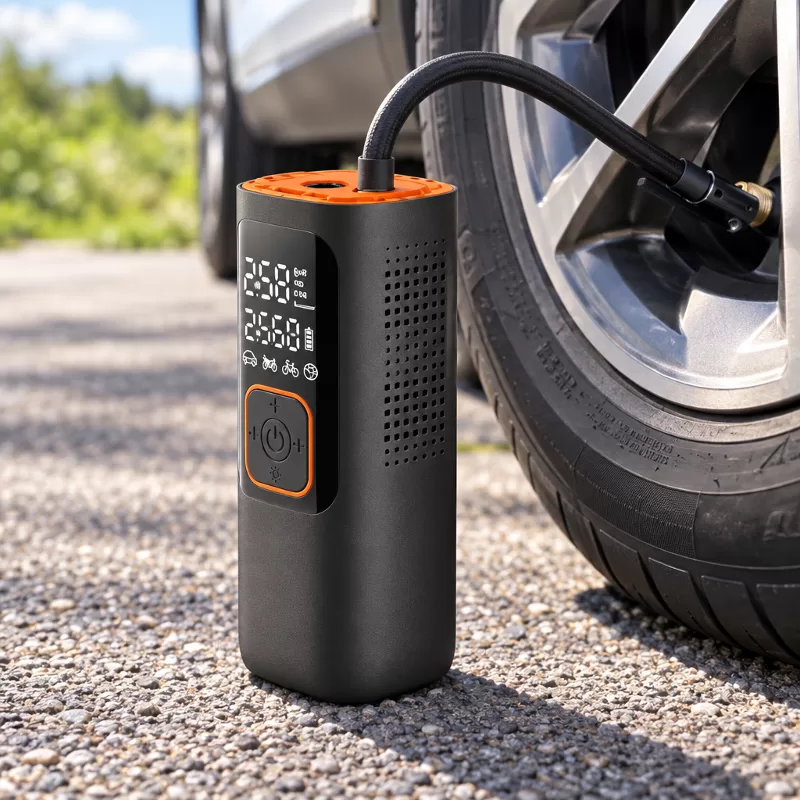
Analog dial gauges are prone to mechanical parallax error, vibration needle flutter, and gradual spring calibration drift. Many modern inflators use electronic pressure sensing and digital controls; confirm the included connector system before purchase. Dual digital LED screens present target values alongside current tyre pressure, making pressure tracking clear.
The automatic shut-off feature is designed to stop inflation at the selected target, but final pressure can vary with hose connection, temperature, and sensor accuracy. Check the result with a reliable gauge when accurate pressure matters. Preset modes tailored for cars, motorcycles, bicycles, and balls establish baseline settings while permitting custom adjustments for specific load requirements.
Tyre Pressure Safety and Technical Standards
Decoding the Vehicle Placard vs. Tyre Sidewall Maximum Pressure
A persistent misconception among motorists is reading the pressure number stamped on the tyre sidewall rubber. That embossed sidewall figure represents the maximum permissible cold inflation limit the tyre casing can mechanically endure at its maximum load index. It is not the target inflation pressure engineered for your specific automobile chassis.
The authoritative tyre inflation benchmark is determined by the vehicle manufacturer and displayed on the safety placard located on the driver’s door B-pillar, glove compartment, or inside the fuel filler flap. The vehicle manufacturer specifies the recommended pressure for the vehicle’s approved tyre fitment and load conditions. Inflating tyres to the sidewall maximum rather than the vehicle placard degrades contact patch grip and introduces severe ride harshness.
The Science of Cold Tyre Inflation and Thermal Expansion
Tyre pressure must always be measured and adjusted when the rubber is cold. Driving heats the tyre and normally raises the pressure reading, so follow the manufacturer’s cold-pressure procedure rather than applying a universal correction. Standard industry guidance defines a cold tyre as one that has been stationary for at least three hours or driven less than one mile at moderate speeds.
Seasonal shifts also produce significant pneumatic variations that require proactive monitoring. As a broad rule of thumb, tyre pressure changes by about 1–2 PSI for every 10°F (about 5.5°C) change in temperature, although the actual change varies. Always use the vehicle manufacturer’s cold-pressure specification to maintain proper road safety throughout seasonal temperature transitions.
[Tyre Air Pressure Conversion Reference]
- 1.0 Bar  = 100.0 kPa = 14.50 PSI = 1.02 kg/cm²
- 2.0 Bar  = 200.0 kPa = 29.00 PSI = 2.04 kg/cm²
- 2.2 Bar  = 220.0 kPa = 31.90 PSI = 2.24 kg/cm²
- 2.4 Bar  = 240.0 kPa = 34.80 PSI = 2.45 kg/cm²
- 2.5 Bar  = 250.0 kPa = 36.25 PSI = 2.55 kg/cm²
- 3.0 Bar  = 300.0 kPa = 43.50 PSI = 3.06 kg/cm²
Interpreting Measurement Units: PSI, Bar, and kPa
Regional differences often lead to confusion when setting digital inflator displays. The Imperial standard, Pounds per Square Inch (PSI), is widely used across North America and the United Kingdom, whereas mainland Europe relies on the metric Bar. Asian markets and vehicle engineering documentation routinely specify pressures in kilopascals (kPa) or kilograms per square centimetre (kg/cm²).
Modern digital micro-pumps allow direct switching across these units at the touch of a button. Understanding the mathematical relationship between 1 Bar and roughly 14.5 PSI prevents catastrophic entry mistakes. Accidental entry of a 2.4 target using the PSI scale would result in extreme under-inflation, while dialling 32 using the Bar scale would over-pressurise the tyre dangerously.
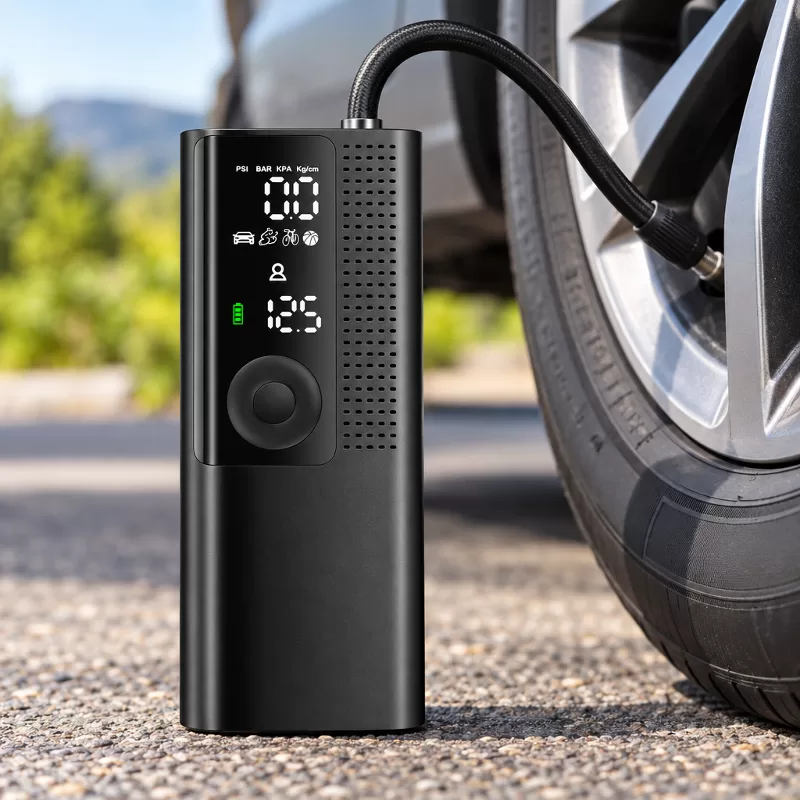
Practical Operating Procedures: Step-by-Step Inflation Guide
Pre-Inflation Inspection and Valve Stem Preparation
Before attaching an air compressor, visual assessment of the tyre assembly is essential for personal safety. Inspect the tread groove depth, verify that the bead sits flush along the wheel rim, and examine the sidewall for visible impact bulges or cuts. If you detect tyre structural damage, inflating the casing roadside creates a severe hazard.
Unscrew the protective plastic or brass dust cap from the valve stem and set it aside in a clean, secure location. Inspect the valve opening to confirm it is clear of heavy debris before attaching the pump fitting. If the valve leaks or is contaminated, have it serviced rather than pressing the valve core pin to clear it.
Connecting the Air Hose and Configuring Target Values
Secure pneumatic connection requires deliberate mechanical alignment to prevent air loss and ensure accurate pressure sensor readings. Threaded hose fittings and clamp chucks each require specific handling to seat correctly.
- Check the internal rubber O-ring gasket inside the air hose connector to confirm it is seated flat without cracks or dirt.
- Thread the hose connector clockwise squarely onto the valve stem threads until finger-tight, or clamp the lever firmly down without bending the valve stem.
- Power on the inflator and observe the digital screen readout to confirm the baseline cold pressure reading.
- Select the matching preset mode or use manual controls to enter the exact pressure listed on your vehicle placard or equipment manual.
- Press the motor start button to initiate air compression.
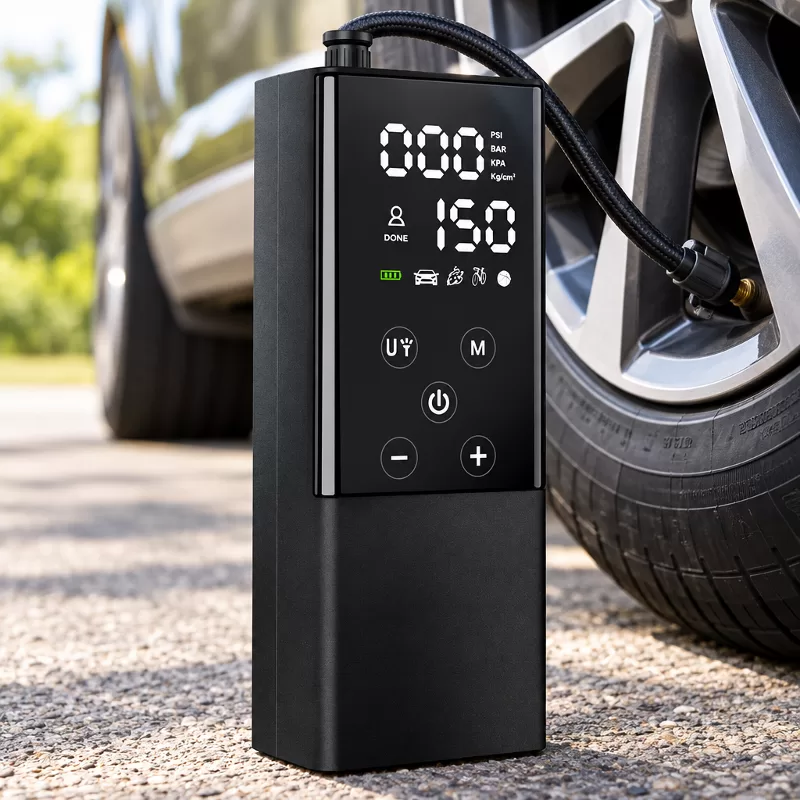
Active Inflation Monitoring and Thermal Dissipation Management
Once the pump motor engages, mechanical vibration and thermal generation begin immediately. Never leave an active inflator dangling unsupported from its flexible air hose; doing so places severe mechanical stress on the valve stem assembly. Instead, place the inflator body flat on the ground or secure it with a stable support.
Keep an ear out for any abrupt changes in the motor pitch. If the motor suddenly slows down or emits an irregular sound, stop operation to prevent damage. The LP17A-P is specified for approximately 20 minutes of runtime. Follow the product manual for operating and cooling intervals, and stop if the unit becomes excessively hot or shows abnormal behavior.
Disconnection, Storage, and Accessory Protection
When the digital sensor reaches the preset value, the automatic shut-off stops motor operation. Unthread the connector swiftly or release the clamp with a prompt motion to minimise air loss. A tiny hiss of air during release is normal, representing the venting of residual pressurised gas trapped within the pump hose itself.
Allow the pump, hose, and connector to cool before packing them away, especially after extended operation. Compressing air heats internal and external fittings during prolonged running. Replace the valve stem dust cap securely to seal out road grime, fold the hose smoothly to avoid tight kinks, and store the unit in a dry interior compartment.
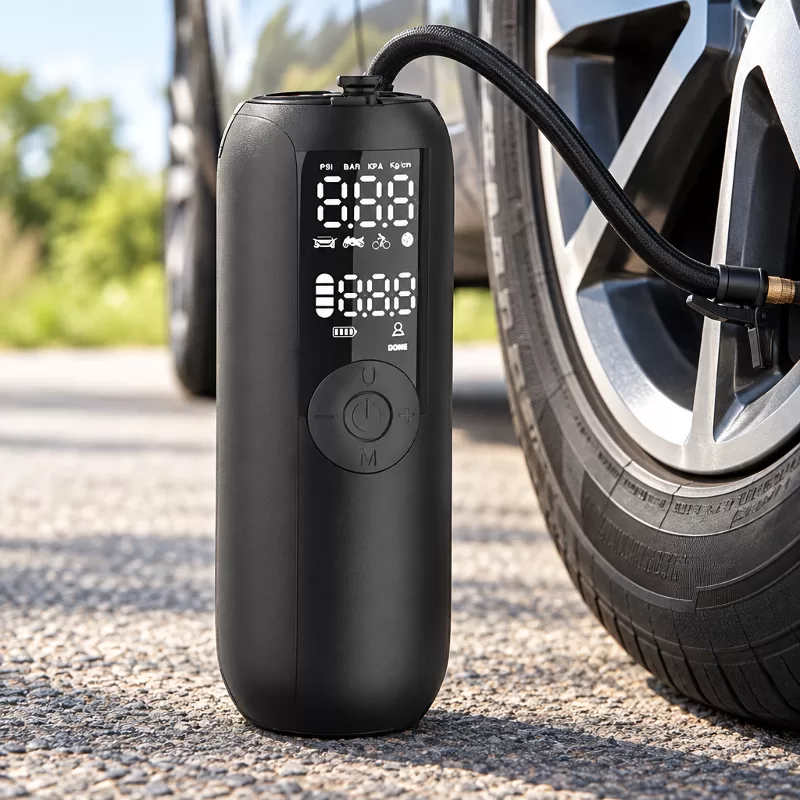
Real-World Product Benchmark: LP17A-P Technical Profile
Mechanical Architecture and Dual-Power Delivery
Engineered as a balanced multi-vehicle maintenance solution, the Portable Tire Inflator Air Pump 150PSI LP17A-P embodies practical design parameters. At the mechanical core of this device, the manufacturer specifies a 17-cylinder structure and an airflow rate of 17–18 L/min. Operating across a specified pressure range of 2 to 150 PSI, the unit handles everything from sports balls to high-pressure two-wheeler setups.
What makes the LP17A-P especially practical for roadside use is its dual-power architecture. It runs from an integrated rechargeable lithium-ion pack (configured with 2 × 18650 cells, 2000mAh, 7.4V, 14.8Wh) while also supporting 12V to 14V vehicle auxiliary power. This means that even if the internal battery sits discharged after months in a boot, you can plug directly into the vehicle’s 12V socket to complete roadside top-ups.
[LP17A-P Technical Profile]
- Cylinder Architecture: 17-cylinder structure
- Specified pressure range: 2 to 150 PSI
- Pneumatic Airflow: 17 to 18 L/min airflow rating
- Internal Power Pack: 2 × 18650 Li-ion cells (7.4V, 2000mAh, 14.8Wh total capacity)
- External Auxiliary Input: 12V to 14V car power support
- Thermal / Acoustical Profile: 50W maximum power | ≤85 dB sound output at 1 metre
- Physical Packaging: 68 × 46 × 160 mm enclosure | approximately 453.1 g net weight
Control Interface, Display Ergonomics, and Output Functions
The LP17A-P features a high-contrast dual LED screen that displays both live pressure and target preset values simultaneously. Five preset inflation modes simplify routine tasks, while custom pressure setting lets users dial in exact pressures for specialised sports or mobility equipment. The manufacturer lists automatic shut-off and a maximum working power of 50 W.
The hardware includes modern electronic convenience features, utilising a 5V/2A Type-C input for recharging in approximately 2 hours. A standard 5V/2A USB output allows the unit to be used as a power-bank-style accessory, providing reserve charge for smartphones during travel delays. Its compact dimensions (68 × 46 × 160 mm) and approximately 453.1 g weight may make it convenient to store in a suitable vehicle compartment or cycling bag, provided the storage location protects it from heat and moisture.
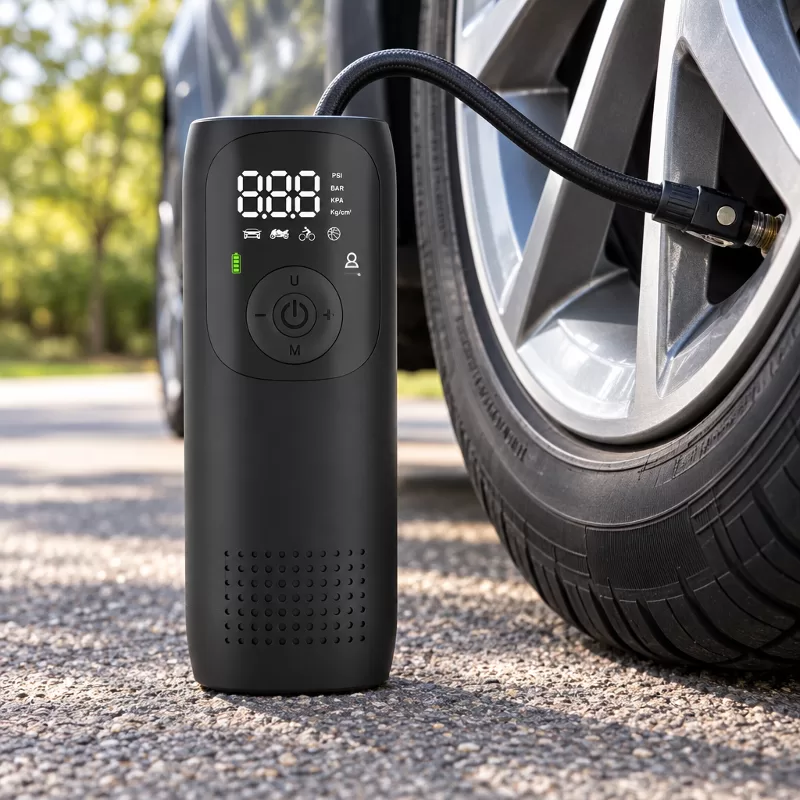
Published Operational Metrics and Manufacturer Stated Capacities
Manufacturer performance specifications for the LP17A-P provide clear operational baselines. Operating within an ambient working temperature window of minus 10°C to 45°C, the device generates an acoustic noise profile rated at 85 dB or below at a distance of 1 metre. The internal lithium-ion cells are rated for a cycle life of 100 cycles while retaining 80% or more of their original capacity.
Under battery power, the LP17A-P delivers an operational runtime of approximately 20 minutes on a full charge. According to manufacturer data, this battery capacity allows for an inflation capacity of approximately two 205-width tyres per full charge. For routine pressure top-ups, the unit provides dependable everyday convenience before requiring a recharge.
| Technical Parameter | Manufacturer Specification (LP17A-P) | Practical Operational Relevance |
|---|---|---|
| Airflow Output | 17 to 18 L/min | Steady top-ups for commuter passenger car tyres |
| Max Pressure Rating | 150 PSI (2 to 150 PSI range) | Supports road bikes, motorcycles, cars, and sports equipment |
| Battery Architecture | 2 × 18650 cells (2000mAh, 7.4V, 14.8Wh) | Cordless convenience without external cables |
| Auxiliary Power Input | 12V to 14V car power support | Operates directly from vehicle power if battery is drained |
| Runtime Limit | Approximately 20 minutes | Operational duration before requiring recharge or cooling |
| Inflation Capacity | Approx. 2 of 205 tyres per charge | Baseline capacity stated for typical tyre inflation needs |
| Charging Port / Input | Type-C interface, 5V / 2A | Recharges via car adapters, power banks, or wall sockets |
| Auxiliary Power Bank | 5V / 2A USB output | Provides emergency backup charging for mobile devices |
| Operating Temperatures | -10°C to 45°C | Reliable performance across seasonal temperature shifts |
Common Buying and Operating Mistakes to Avoid
Relying Blindly on Preset Modes Without Checking Vehicle Specifications
Preset values, if available, may not match your vehicle. Verify the actual target pressure on the vehicle placard or in the owner’s manual before starting inflation. Car pressures vary significantly by vehicle chassis, axle placement, tyre specification, and load, so a generic default cannot substitute for the manufacturer’s verified figures.
Adjusting pressures to reflect varying vehicle conditions is equally important. For heavy loads or towing, use the vehicle manufacturer’s specific loaded or towing pressure recommendations. Do not apply a universal 3–5 PSI increase without manufacturer guidance. Checking the B-pillar placard guarantees that your vehicle remains balanced and safe under varying load states.
Overlooking Connector Thread Compatibility
Different pneumatic systems utilise distinct valve standards, and using the wrong attachment will compromise the valve core. Most car tyres use Schrader valves, but bicycles, e-bikes, mobility products, and balance vehicles may use different valve formats, including Presta or Dunlop types. Confirm compatibility and use the correct adapter.
Attempting to force an unthreaded or incorrectly sized chuck onto a slender bicycle valve bends the internal pin and prevents inflation. Always check that your portable pump kit includes the necessary adapters for your equipment, including ball needles and narrow cycling fittings. Storing these accessories securely with the inflator prevents frustration when unexpected maintenance arises.
Disregarding Battery Storage and Passive Self-Discharge
Storing a lithium-ion battery in an automobile boot exposes the chemistry to harsh temperature swings. Extreme cabin heat can accelerate cell degradation, while freezing winter temperatures slow electrochemical activity, reducing effective operational duration. Leaving a depleted inflator in these conditions risks dropping cell voltages below optimal levels.
To keep an inflator field-ready, store it with a partial charge rather than fully depleted if left unused for prolonged stretches. Every few months, top up the battery via Type-C charging to counter natural parasitic drain from internal monitoring circuits. Selecting a dual-power model capable of running from 12V vehicle power provides an essential safety net against an unexpected flat battery.
Maintenance, Battery Longevity, and Safe Vehicle Storage
Preserving Lithium-Ion Battery Health Across Temperature Cycles
Maximising the lifespan of lithium-ion cells requires sensible battery management. Avoid draining the cells down to zero percent, as repeated deep discharges stress the cell chemistry and reduce overall cycle life. Recharging the battery pack before it is fully depleted keeps capacity stable over time.
Avoid charging the unit immediately after a strenuous inflation session while the pump body is hot. The combined heat from active compression and electrical charging stresses the battery pack. Allow the motor housing to cool to room temperature before plugging in the Type-C cable, ensuring internal components stay protected.
Inspecting Hoses, Rubber O-Rings, and Dust Caps
The flexible air hose endures considerable mechanical stress, flexing under pressure pulses and absorbing heat generated during operation. Routinely inspect the high-pressure hose sheath for cracking, outer abrasion, or kinks. A compromised hose can leak or fail during high-pressure inflation.
Inspect the O-ring inside the chuck for dirt, cracking, or deformation and replace it if needed. Lubricate it only if the manufacturer specifies a compatible product and procedure. Keeping the connector clean and seating it properly on the valve ensures an airtight seal and accurate digital gauge performance on every tyre.
Frequently Asked Questions (FAQs)
What pressure should I put in my car tyres?
Always use the cold inflation pressure values specified by your vehicle manufacturer on the placard located on the driver’s door jamb, B-pillar, or inside the fuel filler flap. Never inflate your tyres to the maximum pressure printed on the tyre sidewall, as that number represents the absolute mechanical limit of the casing, not the engineered setting for balanced traction, braking, and ride comfort.
Can a portable tyre pump inflate both high-pressure bicycle tyres and car tyres?
Yes, provided the inflator has an appropriate pressure rating and suitable valve adapters. Car pressures vary by vehicle and must come from the placard or manual. Bicycle pressures vary widely by tyre system and manufacturer guidance; the pump must support the tyre’s specified pressure. An inflator supporting up to 150 PSI with Presta adapters easily covers both categories.
What happens if the pump’s internal battery runs out during a roadside top-up?
If you have a battery-only inflator, you must wait until you can recharge the unit via a USB power source. If you use a dual-power unit like the LP17A-P, you can plug the auxiliary power cord directly into your car’s 12V socket to complete the job without waiting for a battery recharge.
Does an automatic shut-off feature guarantee exact final pressure?
The automatic shut-off is designed to stop inflation at the selected target, but final pressure can vary with hose connection, temperature, and sensor accuracy. Check the result with a reliable gauge when accurate pressure matters. Removing the chuck quickly also prevents unnecessary venting of residual line pressure.
Can I use a portable tyre inflator to seat a tubeless tyre bead?
A portable inflator may not provide the airflow needed to seat some tubeless beads. Whether it works depends on tyre-and-rim compatibility and the inflator’s delivery; use the tyre or rim maker’s procedure, and use a suitable high-volume source if the bead does not seat.
How hot should a portable inflator get during normal operation?
It is normal for the internal cylinder and hose fittings to become warm during active inflation because compressing gas generates direct thermal energy. Stop the pump if it becomes excessively hot, emits an unusual odor, or operates abnormally. Allow it to cool fully and follow the manufacturer’s operating instructions before reuse.
Reliability Across Every Journey
Investing in a reliable portable air tyre pump provides peace of mind across daily commutes, cycling trips, and cross-country road trips. High-quality inflators combine dependable airflow displacement, broad pressure ranges, resilient internal mechanical components, and dual-power flexibility. For us at Newo, continuous advancements in pneumatic technology, product design, and manufacturing drive the development of smart electric air pumps and portable inflation solutions designed to deliver dependable roadside performance.
By following recommended vehicle manufacturer door placard pressures, accounting for ambient temperature shifts, and maintaining your equipment, you preserve tyre health, maximise fuel economy, and stay prepared for the road ahead. Equipped with a versatile portable air tyre pump, you gain complete independence from out-of-order service station forecourt pumps, ensuring you remain ready for any journey.
-
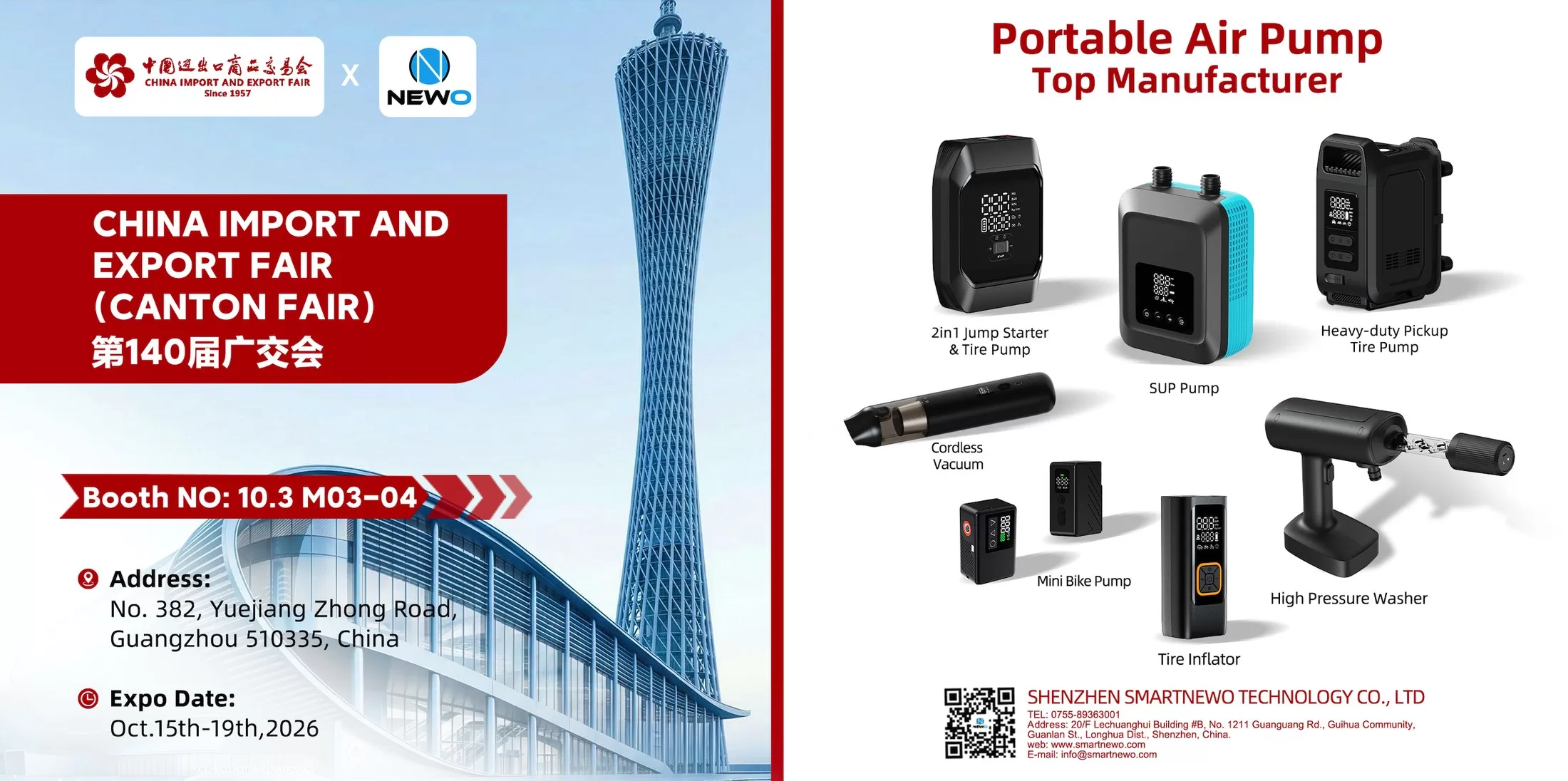
Meet NEWO at the 140th Canton Fair: Visit Booth 10.3 M03–04
Meet NEWO at the 140th Canton Fair in Guangzhou, October 15–19, 2026. Visit Booth 10.3 M03–04 to explore portable air pumps and discuss OEM, ODM and distribution opportunities.... -

As Shenzhen Welcomes the World for APEC 2026, NEWO Welcomes You to Our Factory
As Shenzhen prepares for APEC 2026, NEWO welcomes international buyers and partners to visit our factory, meet our team and explore future cooperation.... -
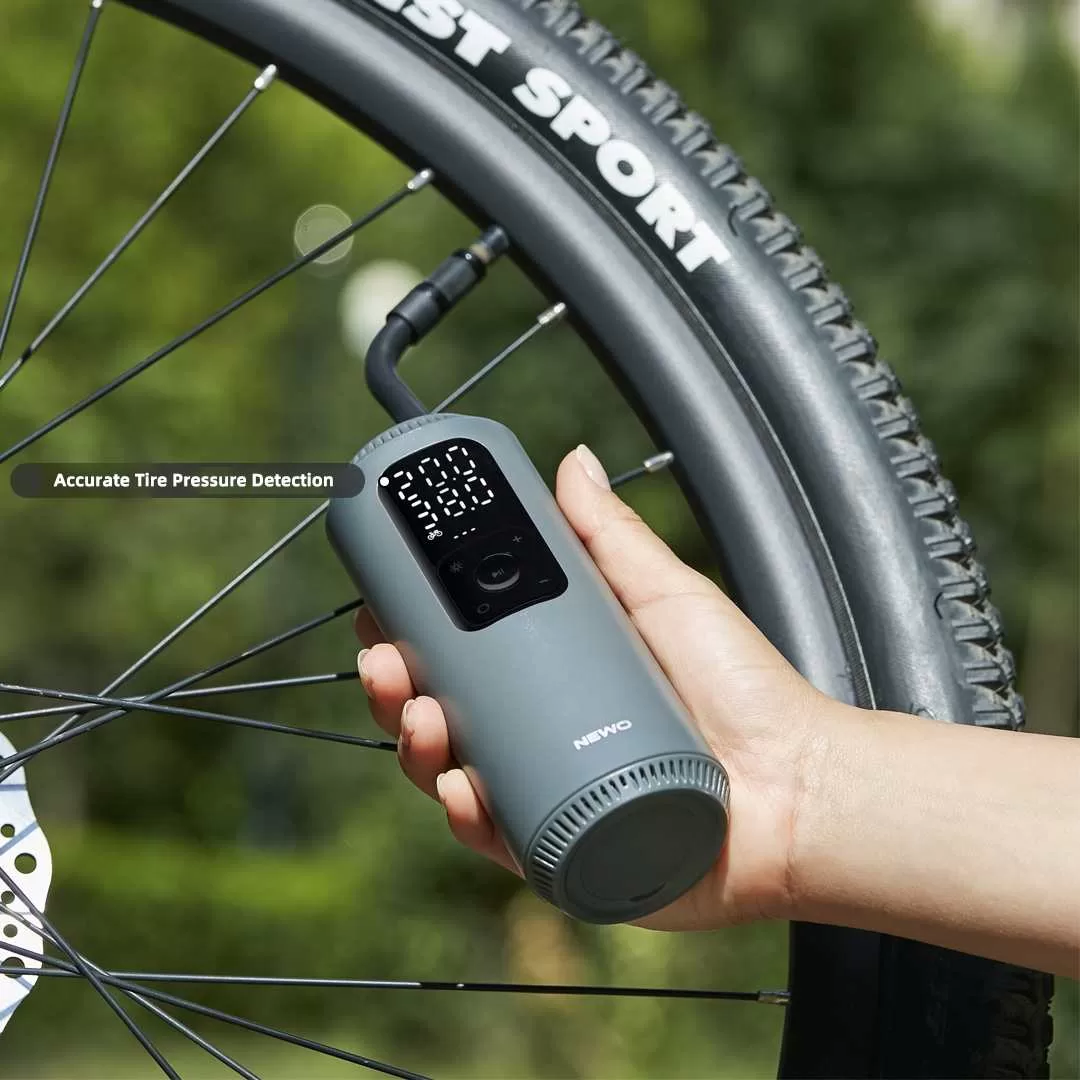
Leading the Way in Product Innovation and Excellence
Smartnewo exemplifies professionalism in product innovation and manufacturing. Their collaboration with Xiaomi Youpin on the G01 crowdfunding project highlights their expertise in creating compact, powerful inflatable pumps. Rigorous engineering, meticulous production processes, and advanced quality assurance underscore their commitment to excellence. The success of the G01 project, with significant market... -
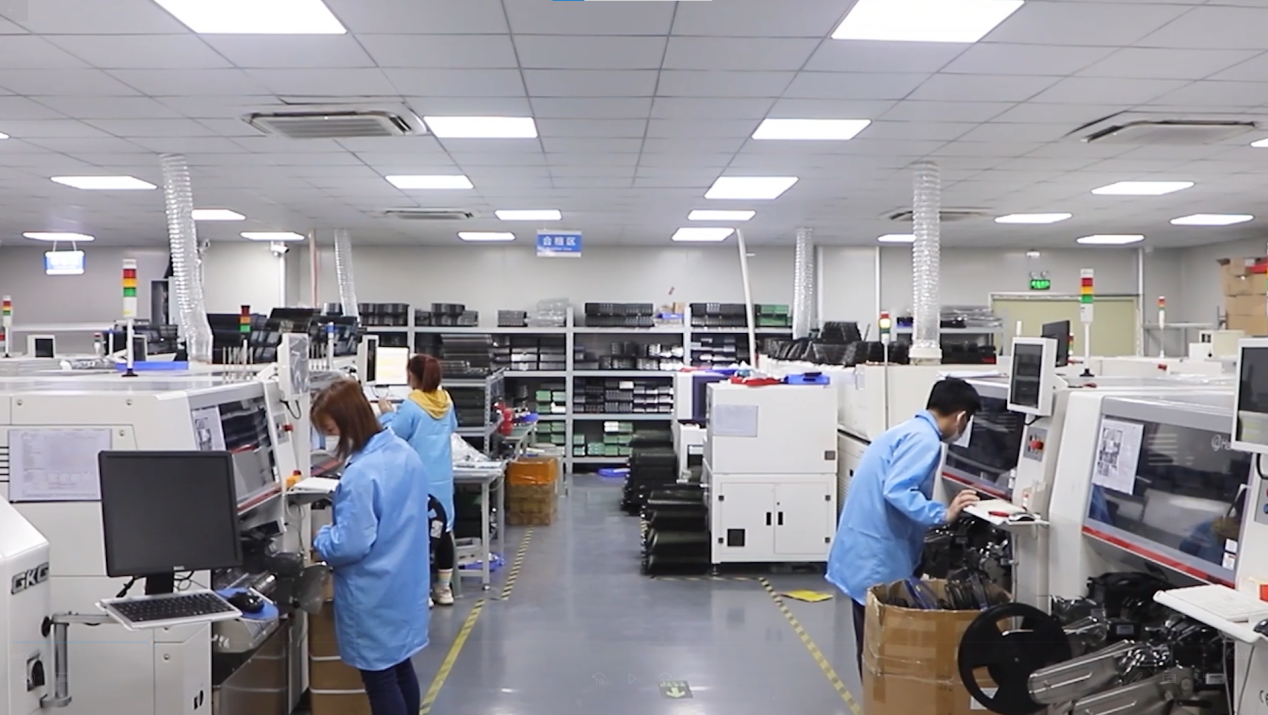
Essential Qualities of an Excellent Supplier
In today's competitive market, finding a reliable supplier is crucial for business success. Based on insights from Smartnewo and broader internet research, here are key qualities an excellent supplier must possess:... -
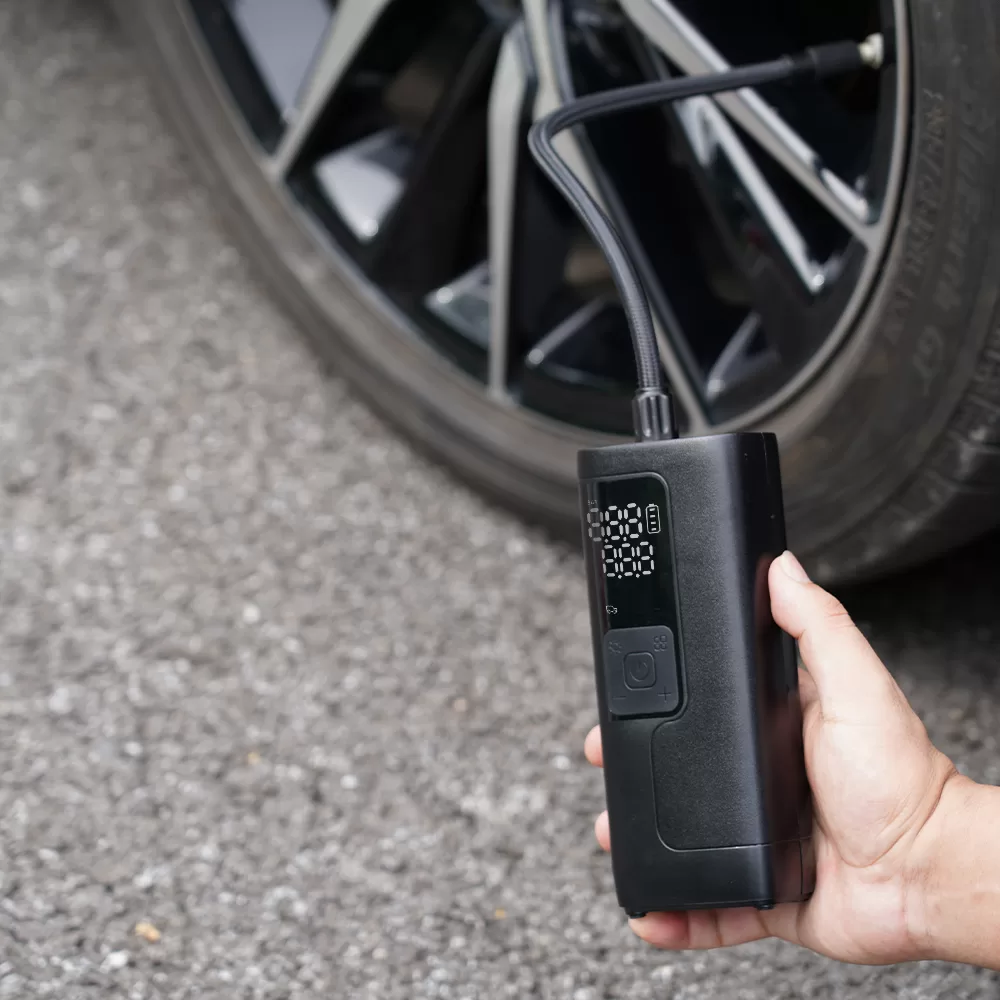
NW06 Tire Inflator: Compact Power for Quick Inflation
Summary The NW06 Tire Inflator delivers quick and efficient tire inflation with a powerful 35L/min airflow. It features a user-friendly LCD screen for real-time pressure monitoring, dual power options with a built-in 6000mAh battery, and multiple nozzle attachments for versatile use. Its compact design and integrated LED light ensure convenience and... -
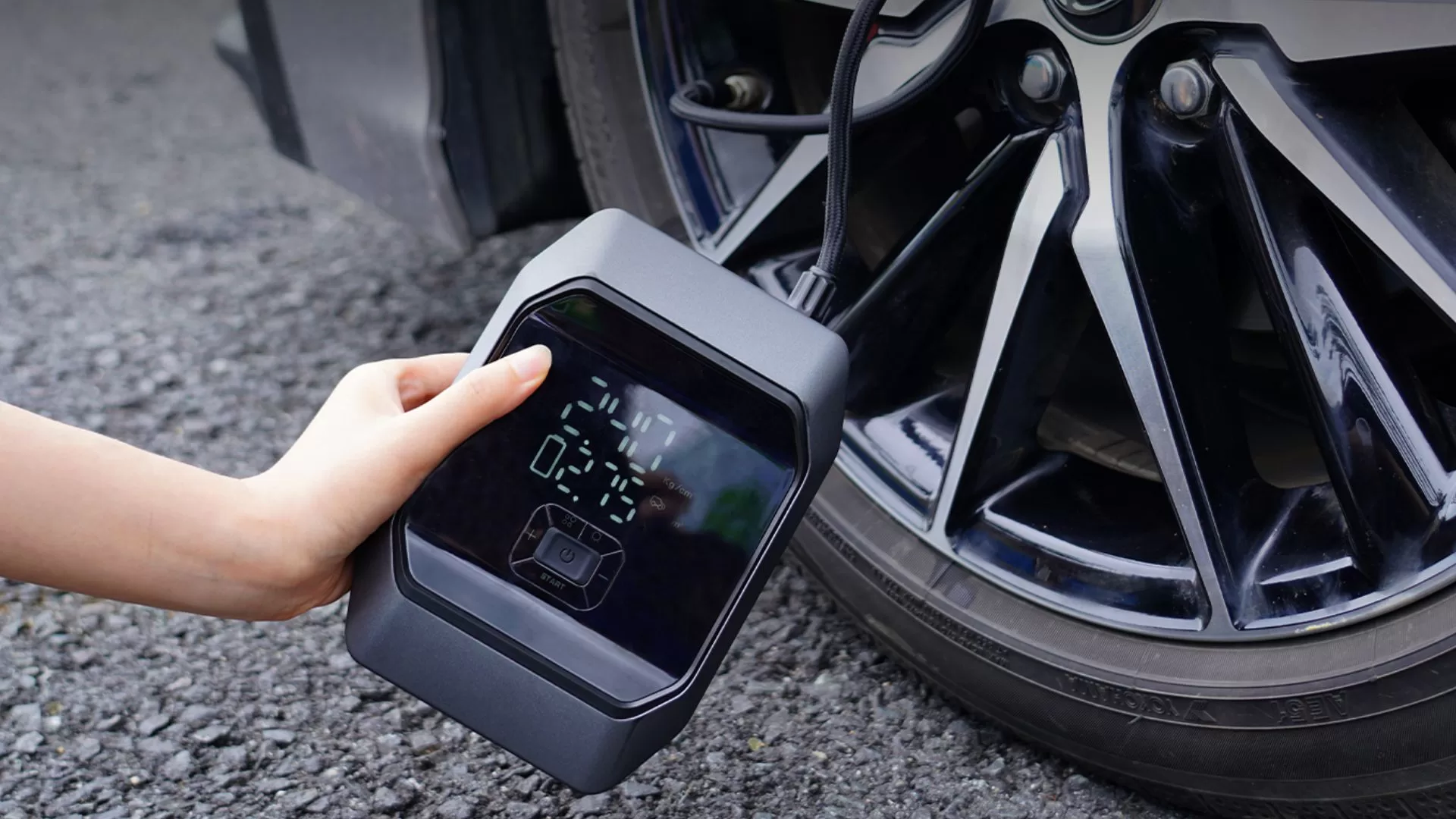
Unleash the Power of Portability: The SmartNewo Jump Starter with Air Compressor KF03
This guide will walk you through the steps to effectively use a portable tire inflator, helping you stay prepared and safe on the road.... -

Newo Attends The 2024 Consumer Electronics Show (CES)
Smartnewo booth is located at 53672, Halls A-D, Level 2, Venetian Expo, Las Vegas Convention Center (LVCC). ... -
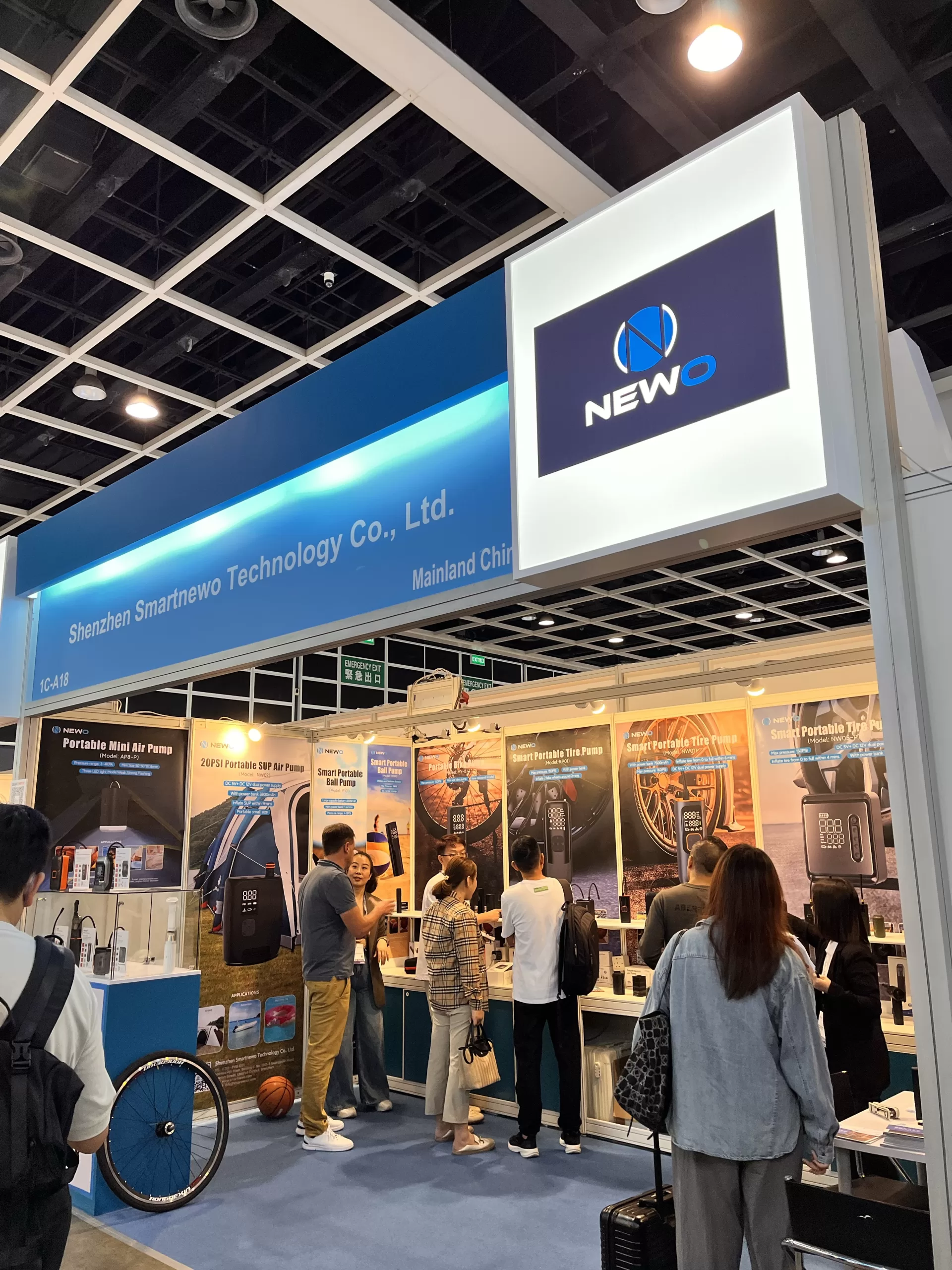
Smartnewo’s Dual-Cylinder Air Pump Rocks the Hong Kong Autumn Electronics Fair!
Smartnewo’s Dual-Cylinder Air Pump Rocks the Hong Kong Autumn Electronics Fair!... -

Meet at the Canton Fair! Smartnewo brings dual-cylinder air pumps, making your inflation experience faster and more stable!
NEWO has went deep communication and negotiation with customers from all over the world on booth.... -
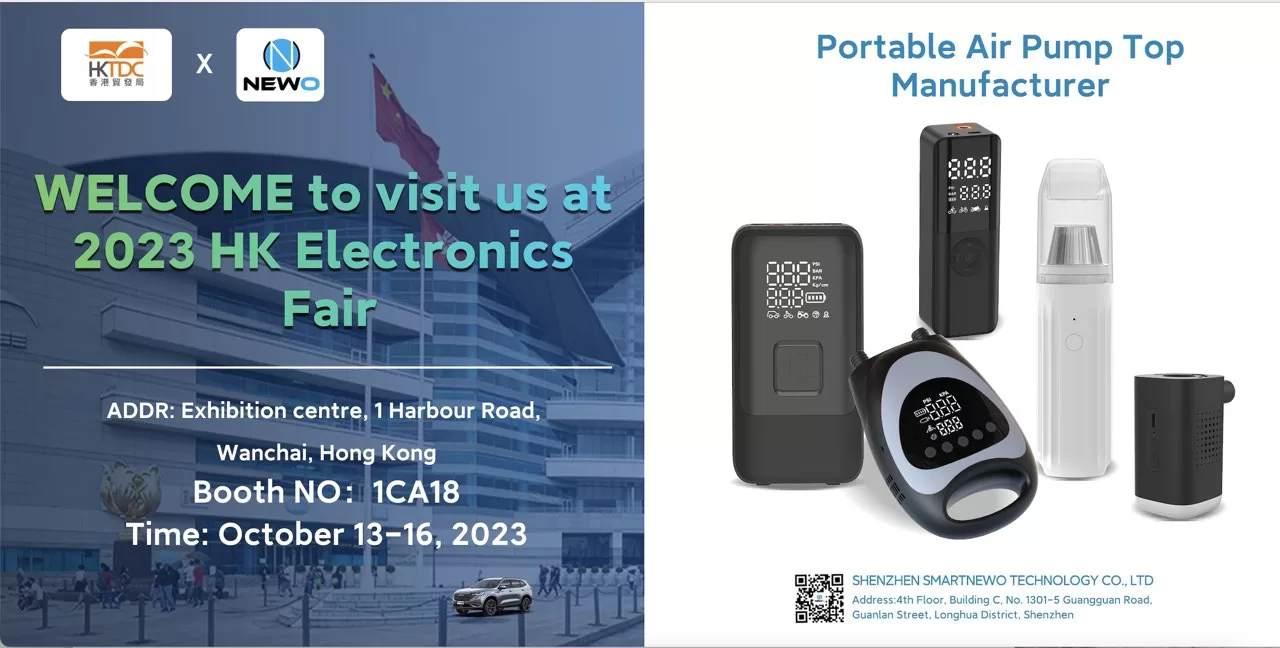
“Hong Kong Autumn Electronics Fair – 1CA18 (October 13th to 16th): Smartnewo invites you to visit our booth!
Hong Kong Autumn Electronics Fair...
-
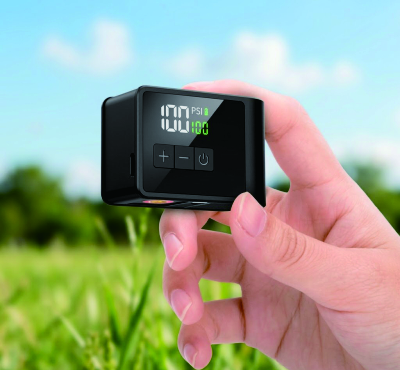
What to Check Before Ordering Custom Electric Bike Pumps
Plan custom electric bike pumps with a clear requirements freeze for valves, TPU tubes, portability, repeated top-ups, charging, and model-specific documents.... -

OEM vs ODM Air Pumps: Which Manufacturing Model Fits Your Brand?
Compare OEM and ODM air pump projects by design responsibility, change approval, development scope, and written ownership terms before choosing your route.... -

How to Choose a Reliable Tire Inflator Manufacturer in China
Choose a tire inflator manufacturer in China with a focused RFQ, supplier evidence, configuration checks, and clear sample-to-pilot decisions for your brand.... -
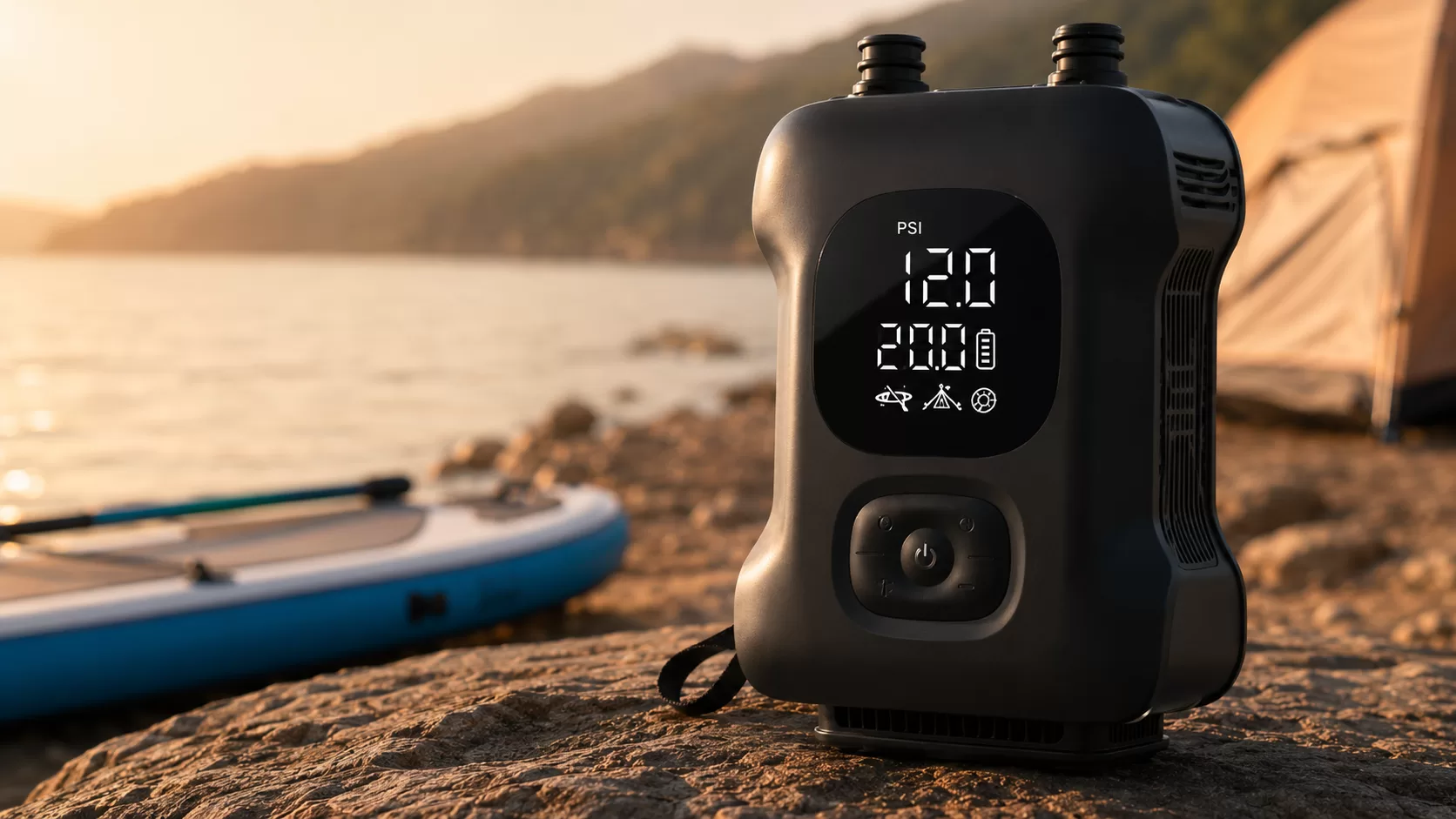
Rechargeable Electric SUP Pump for Paddle Boards: Faster Inflation for SUPs, Kayaks and Inflatable Tents
The BL10-C Portable Electric Bike Tire Inflator is a compact and lightweight mini electric bike pump designed for modern cyclists. With up to 120 PSI pressure, a digital LED display, preset pressure control, automatic shut-off, USB-C charging, and multiple valve adapters, BL10-C offers a convenient inflation solution for road bikes,... -
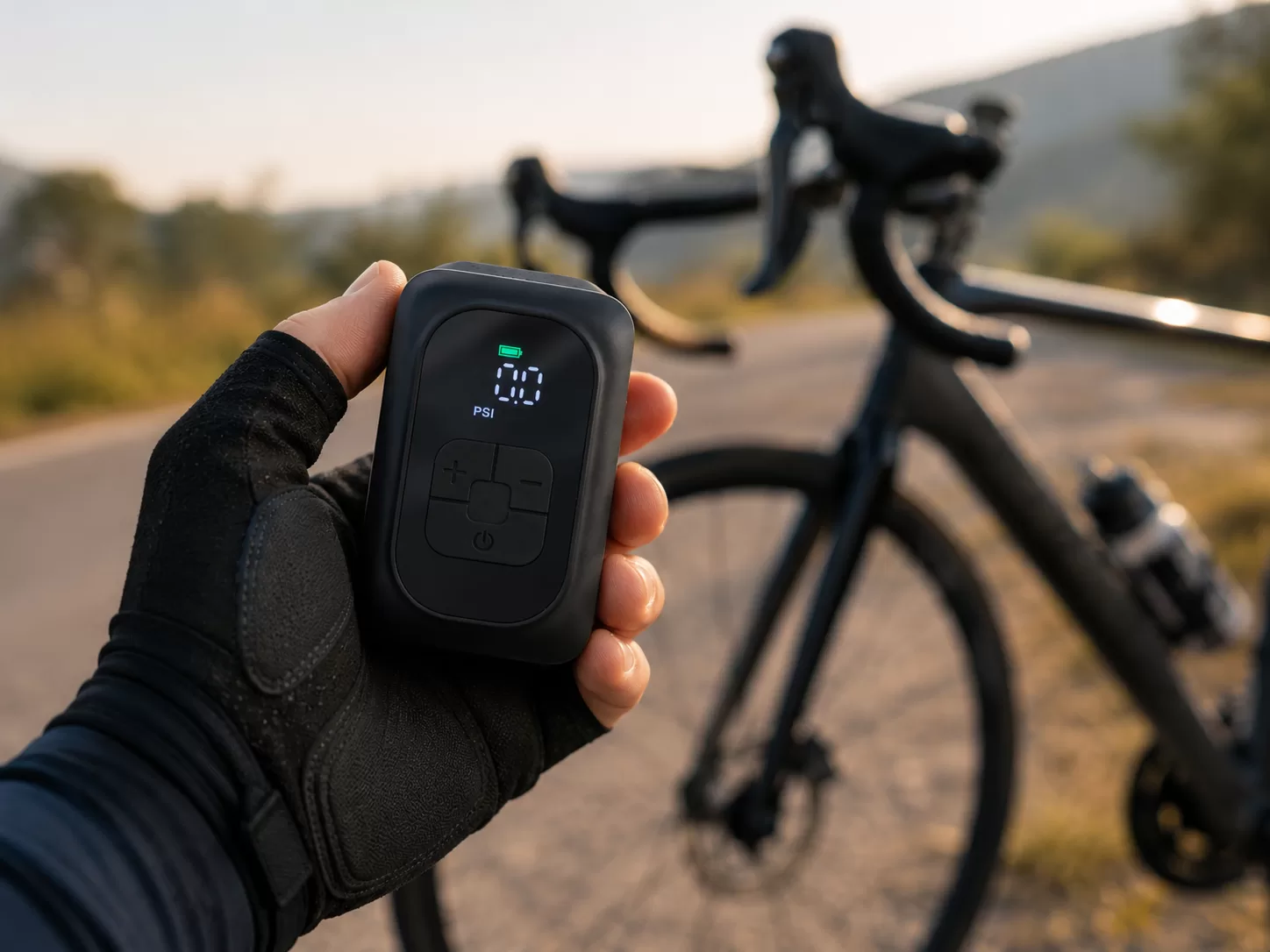
Are Electric Bike Pumps Worth It in 2026? Electric Pump vs CO₂ vs Mini Hand Pump
Discover whether electric bike pumps are worth it in 2026. This guide compares electric bike pumps, CO₂ inflators, and mini hand pumps for road cycling, gravel riding, commuting, and long-distance rides. Learn the pros, limitations, best use cases, and key features to look for before choosing the right portable tire... -
BL10-C Portable Electric Bike Tire Inflator: Small Size, Reliable Power for Every Ride
The BL10-C Portable Electric Bike Tire Inflator is a compact and lightweight mini electric bike pump designed for modern cyclists. With up to 120 PSI pressure, a digital LED display, preset pressure control, automatic shut-off, USB-C charging, and multiple valve adapters, BL10-C offers a convenient inflation solution for road bikes,... -
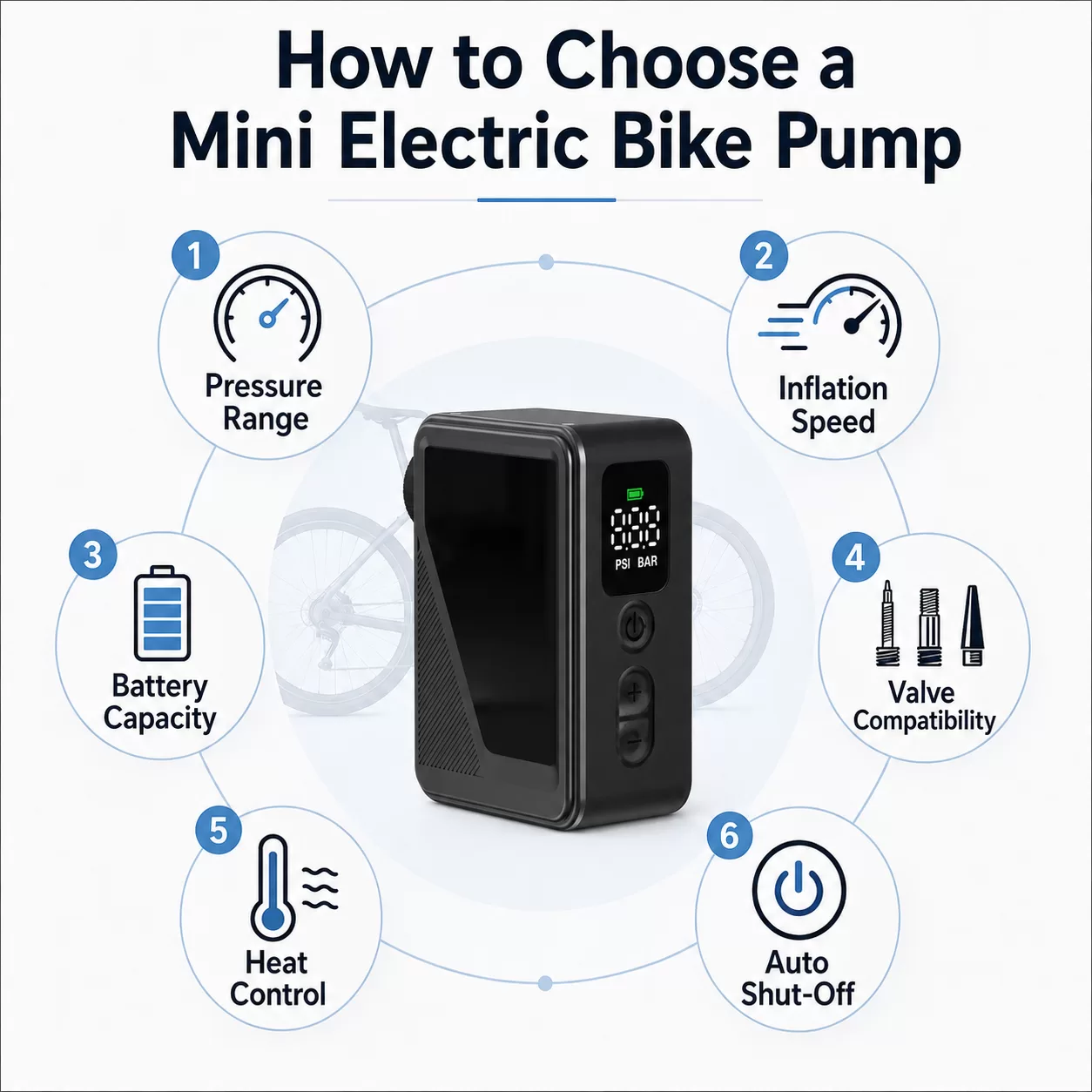
Why Mini Electric Bike Pumps Are Becoming Essential for Modern Cycling
Discover why mini electric bike pumps are becoming essential for modern cyclists. Learn how portable electric bike pumps improve tire pressure management, riding safety, and convenience.... -
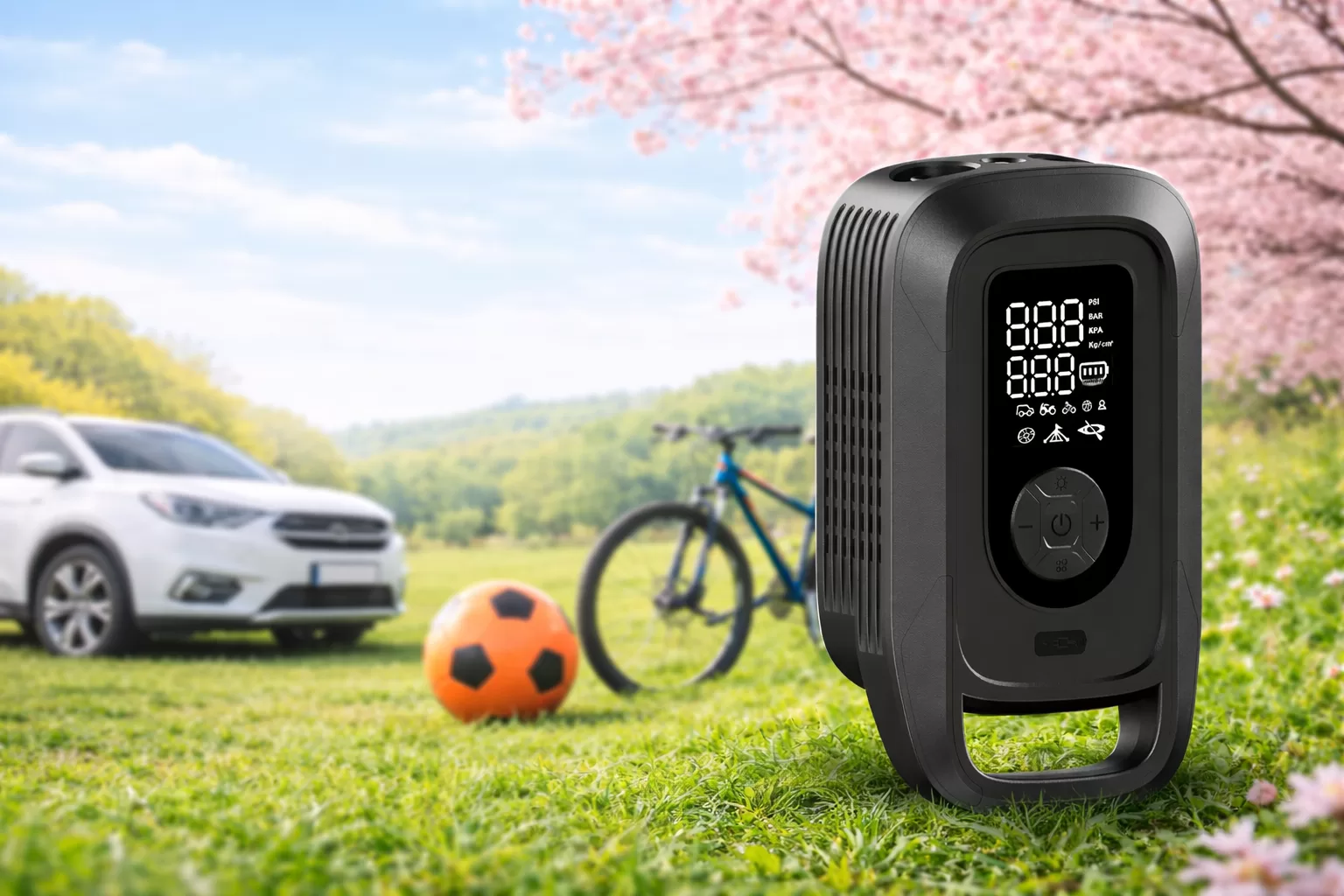
The Ultimate Smart Solution for Easy Outdoor Adventures in 2026
Discover how a spring travel air pump simplifies outdoor trips with fast inflation, smart features, and powerful performance—perfect for every adventure.... -
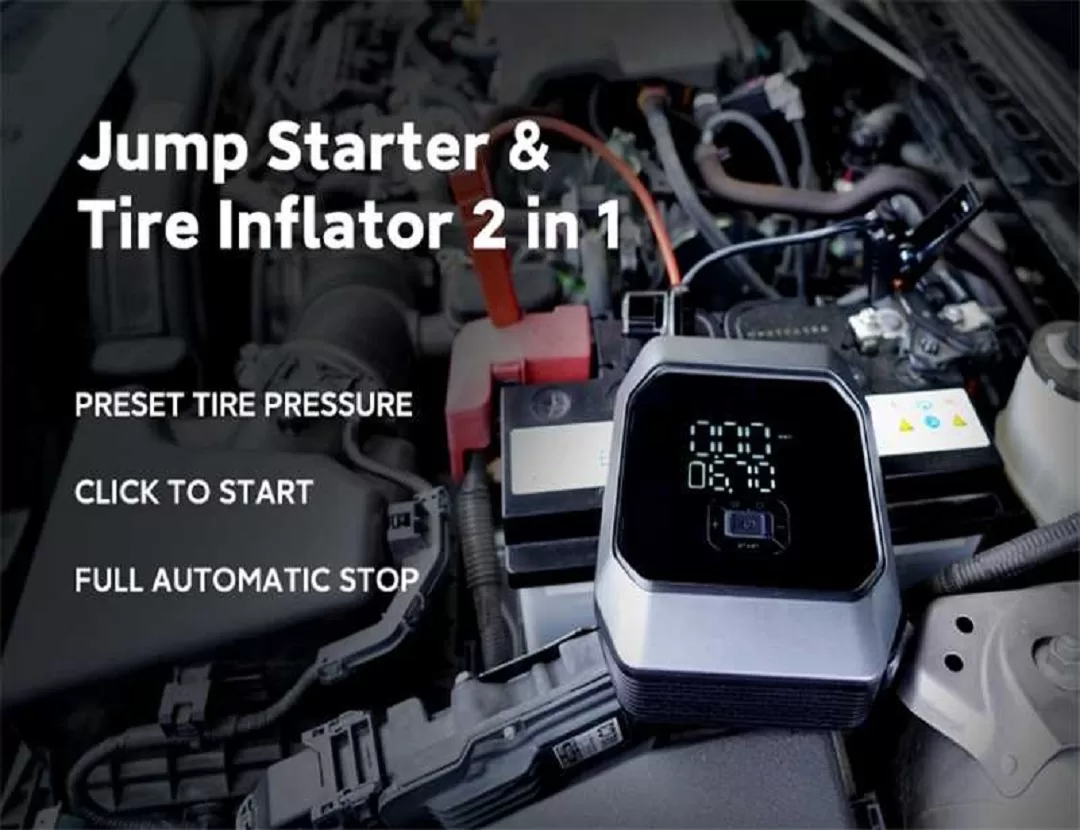
Powerful 5-in-1 Portable Car Tire Inflator and Jump Starter: The Ultimate Emergency Tool for Every Driver
Why Every Driver Needs a Portable Car Tire Inflator and Jump Starter Modern drivers face many unexpected situations on the road. A flat tire, low tire pressure, or a dead car battery can happen at the worst possible time. That’s why having a portable car tire inflator and jump starter is... -

7 Real Cycling Scenarios That Show Why Every Rider Should Carry a Mini Bike Pump
Cycling is one of the most freeing activities you can enjoy. Whether you’re commuting to work, riding through city streets, or exploring quiet countryside roads, a bike ride can instantly improve your day. But there’s one small problem that almost every cyclist eventually faces: Low tire pressure. It might happen...
-
How Is a Football Properly Inflated?
The correct inflation of a football - with not too much and not too little air - is a hotly debated topic among footballers.... -
Application Scenarios of Car Inflator Pump
Often long-distance business trips or play car owners because the road may be more remote areas, in this case if you encounter a tire leak....