

 Portable Tire Inflators
 Electric Air Pumps
 Electric Car Tyre Pumps
 Electric Ball Pumps
 Electric Bike Pump
 SUP Air Pump

The Essential Engineering and Practical Guide to Choosing a Portable Air Inflator for Car Tires
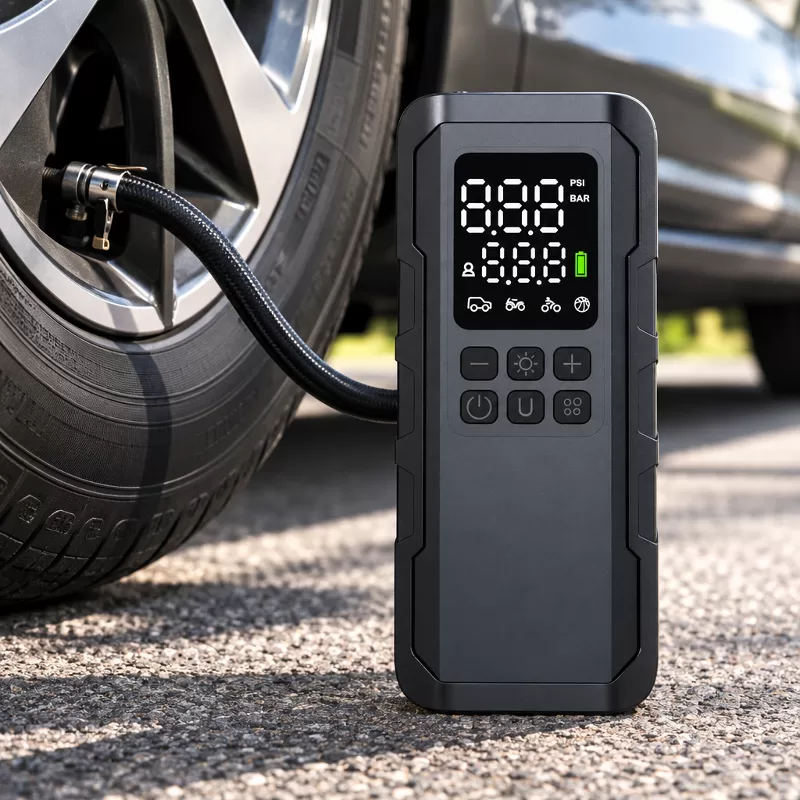
Maintaining proper tire pressure remains one of the simplest yet most overlooked aspects of everyday vehicle safety, efficiency, and tire longevity. A modern portable air inflator for car tires eliminates the frustrating dependence on public service stations, allowing drivers to address slow leaks, seasonal pressure drops, and roadside adjustments directly from their vehicle. Whether responding to a sudden dashboard pressure alert during a morning commute or inspecting tires before an extended highway journey, having an independent, battery-powered inflation device provides immediate roadside autonomy.
Every pneumatic tire naturally experiences gradual pressure loss over time through valve interfaces and elastomeric permeability. When ambient outdoor temperatures drop significantly, this pressure loss becomes more pronounced, which can alter vehicle handling stability and decrease fuel efficiency during regular travel. Investing in a dedicated portable car tire pump provides a practical maintenance safeguard, allowing motorists to check and correct pressure discrepancies wherever their vehicle is safely parked.
Why Every Driver Needs a Portable Air Inflator for Car Emergencies
The Hidden Hazards of Driving on Incorrect Cold Tire Pressure
Tire engineers establish recommended vehicle inflation values based strictly on cold pressures. Authoritative guidance from the National Highway Traffic Safety Administration (NHTSA) defines tires as cold after the vehicle has remained stationary for at least three hours, or has been driven less than one mile after sitting for at least three hours. Guidance from NHTSA confirms that underinflated tires flex excessively while rolling, generating elevated internal friction that can degrade tire structural integrity over sustained driving. Beyond safety considerations, underinflation compromises handling precision, causing less responsive steering behavior and lengthening braking distances on wet road surfaces.
Underinflated tires can also increase rolling resistance, worsen fuel economy, and contribute to uneven tread wear over time. Vehicle manufacturers and safety agencies caution motorists against exceeding the tire’s marked maximum pressure or straying from factory recommendations, as overinflation can create an uncomfortably firm ride quality and increase susceptibility to damage from road hazards. Carrying an onboard portable tire inflator enables motorists to maintain recommended specifications consistently, helping avoid premature tire wear without waiting for tire monitoring warnings to trigger.
Traditional Gas Station Pumps vs. Compact Cordless Air Compressors
For generations, vehicle operators depended primarily on coin-operated or complimentary compressed air stations installed beside commercial fueling facilities. While these public compressors provide a useful utility, they can be inconvenient to access, occasionally out of service, or occupied during busy travel hours. Drivers must often alter their travel routes and navigate tight parking lanes just to conduct a routine pressure top-off.
In contrast, a personal lithium-ion inflator serves as a dedicated, self-contained pneumatic tool stored directly in the vehicle. These compact devices draw energy from integrated rechargeable battery cells, read pressure values with internal electronic sensors, and deliver pressurized air without requiring an external electrical outlet. Having an inflator on hand allows drivers to address low pressure promptly in their own driveway or roadside parking spot, bypassing the scheduling delays of commercial stations.
Core Mechanics: How Modern Portable Tire Inflators Work
Understanding Airflow Rates and Maximum Pressure Ratings
Many compact inflators utilize a direct-current motor coupled with a piston mechanism that draws in ambient air and compresses it into the tire chamber. A tool’s maximum pressure rating describes the upper limit of mechanical resistance the unit can deliver, whereas the volumetric airflow rating indicates the volume of air transferred per minute under specified operational conditions. Automotive tires operate at moderate pressure thresholds—frequently between 30 and 36 PSI—yet require substantially more air volume displacement than small utility or bicycle tires.
- Piston Displacement Area: The bore and stroke dimensions of the compressor cylinder determine the volume of air moved during each mechanical stroke cycle.
- Continuous Airflow Delivery: Airflow ratings, commonly measured in liters per minute, directly influence how long the pump must run to raise pressure across automotive tires.
- Compression Heat Generation: As atmospheric air is compressed inside the mechanical chamber, thermal energy naturally dissipates through the cylinder structure and adjacent housing.
When evaluating compact air compressors, selecting an output capacity suited to passenger car tire volumes helps ensure reasonable inflation times. Comparing airflow specifications alongside maximum pressure ratings allows prospective users to gauge practical performance across different tire types.
Battery Architecture and Motor Efficiency in Cordless Systems
Operating a high-pressure electric compressor without relying on a tethered 12V vehicle socket requires a dedicated rechargeable battery configuration. Portable inflators frequently employ high-density battery layouts, such as three 18650 cells rated at 11.1V and 2000mAh. Supplying adequate operating voltage allows the motor to maintain stable mechanical output during demanding automotive inflation cycles.
Driving a 60W motor platform demands balanced current delivery across the discharge cycle of the battery pack. Electronic regulation circuits inside the device help manage power distribution during operation and support stable cyclic battery performance. As a manufacturer specializing in portable pneumatic solutions and electric air pumps, Newo incorporates multi-cell battery layouts and direct-current motor drivetrains designed to provide portable inflation across varied automotive and recreational equipment.
Essential Features to Evaluate in a Handheld Car Tire Pump
Pressure Accuracy and Auto Shut-Off Precision
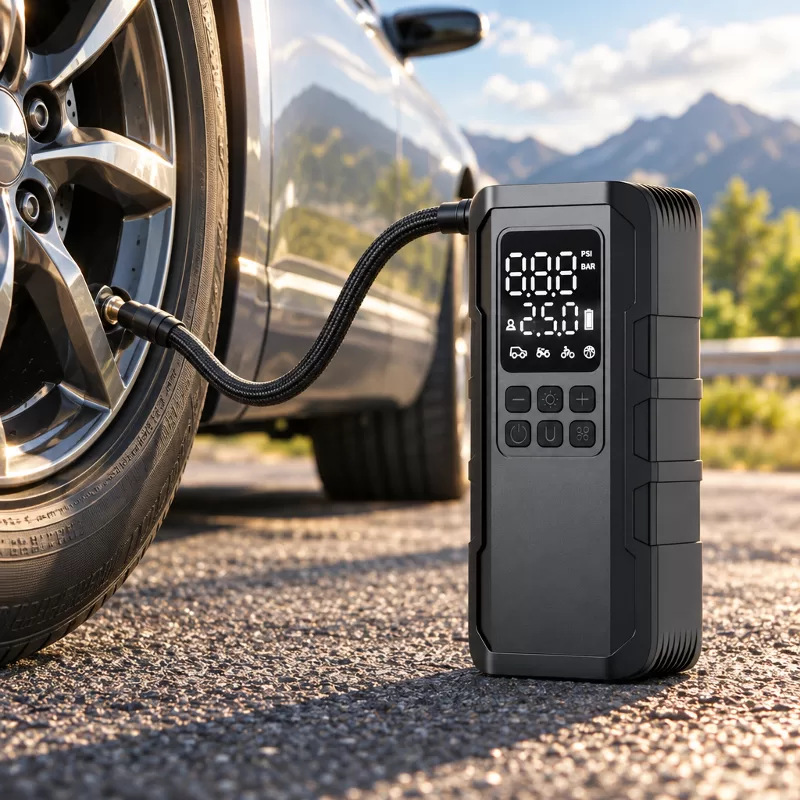
Mechanical pressure gauges depend on internal analog springs and linkages that can lose calibration over time if subjected to vibrations or accidental impacts in a vehicle trunk. Modern portable inflators replace mechanical needles with solid-state digital pressure transducers that continuously monitor line pressure during inflation cycles. These electronic sensors read instantaneous pneumatic feedback and present clear numerical values on segmented LED or LCD screens.
Automatic shut-off functionality provides practical protection against accidental overinflation. Motorists simply enter their target pressure value using the unit’s control buttons and begin the compression cycle; the control module is designed to stop inflation when the displayed pressure reaches the preset value. This automatic cut-off eliminates guesswork, helping each tire reach its designated pressure without requiring constant manual intervention.
Form Factor, Thermal Management, and Field Usability
Physical dimensions strongly influence whether an emergency inflator remains accessible in a car interior or ends up relegated to a remote garage shelf. Compact units measuring under 170 mm in length and weighing approximately 500 grams fit conveniently inside door pockets, glove compartments, or trunk organizers. However, housing a motorized compression mechanism in a small handheld enclosure requires practical thermal and physical considerations.
- Ventilation Apertures: Openings in the casing allow air circulation around internal components while the device is in operation.
- Housing Contours: Molded exterior shells with textured ribs assist with grip and handling during roadside operation.
- Braided Hose Construction: Flexible braided air hoses connect securely between the inflator body and the tire valve stem.
When reviewing inflator options, checking overall build characteristics and casing design helps ensure the tool is manageable to hold and practical for roadside use.
Multi-Vehicle Versatility and Emergency Lighting
Although passenger vehicles represent the primary use case, versatile portable inflators support a wide range of everyday inflation tasks. Standardized threaded chucks and included adapter accessories allow the same compact unit to service bicycles, e-bikes, motorcycles, and recreational equipment like sports balls. Having preset operational modes simplifies toggling between diverse pressure ranges, from low-pressure basketballs to high-pressure bicycle tires.
Tire pressure discrepancies and punctures do not only happen in broad daylight. Integrated multi-mode LED work lights illuminate the tire valve area during night stops along unlit roadways or inside dimly lit parking garages. Selectable lighting modes, such as continuous illumination, flashing visibility signals, and an SOS light mode, turn a standard portable inflator into a practical multi-purpose emergency tool for night travel.
Technical Specification Comparison: Evaluating the Compact Inflator Class
Benchmark Overview: The Electric Car Tire Air Pump 150PSI LP8 Profile
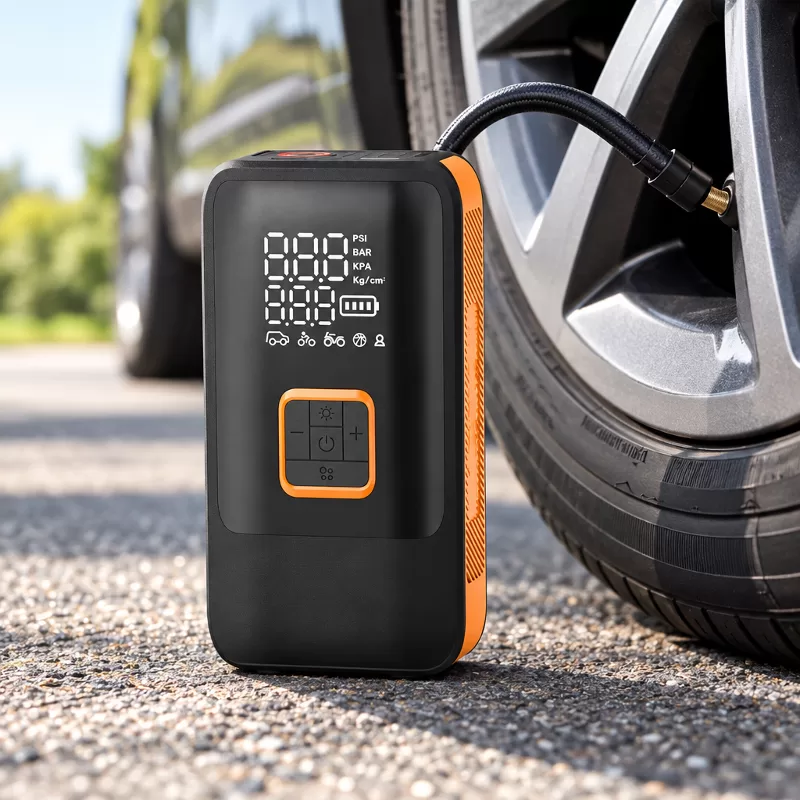
Reviewing published technical data from dedicated hardware platforms clarifies what performance characteristics drivers can anticipate from modern compact inflators. The LP8 model offers a representative profile of contemporary portable pneumatic design, combining a compact body with multi-purpose vehicle inflation capabilities based on the manufacturer’s engineering specifications.
| Specification Parameter | Manufacturer Benchmark Value (LP8) | Practical Application Context |
|---|---|---|
| Compressor Cylinder Size | 19-cylinder specification | Balanced displacement for portable handheld automotive use |
| Working Motor Power | 60W rated power | Efficient mechanical drive suited for 11.1V battery systems |
| Airflow Output | 26 to 28 L/min | Steady air delivery for passenger vehicle tire top-offs |
| Pressure Range | 2 to 150 PSI maximum | Accommodates cars, motorcycles, bicycles, and sports equipment |
| Battery Architecture | 3 × 18650, 2000mAh (11.1V, 22.2Wh) | Cordless operation independent of vehicle 12V auxiliary sockets |
| Input / Output Ratings | Type-C (5V/2A, 9V/1.5A input/output) | Recharges via Type-C; supports mobile device charging output |
| Product Dimensions | 70.5 × 50 × 165 mm | Compact footprint for storage in glove boxes or door panels |
| Net Product Weight | 522 g | Lightweight chassis suitable for comfortable single-handed operation |
| Acoustic Rating | 85 dB or below at 1 meter | Moderate operational sound output during active compression |
Real-World Capacity: Understanding Manufacturer Inflation Benchmarks
Manufacturer specifications provide baseline performance figures to help users understand tool capabilities under controlled test scenarios. In the case of the LP8, product technical documentation indicates an inflation capacity of approximately 3.5 individual 205/55 R16 car tires per full battery charge, alongside an operating runtime of 20 to 25 minutes. In ordinary driving conditions, motorists rarely require a full zero-to-full inflation; routine maintenance typically involves small pressure adjustments to account for temperature changes or normal seepage.
The manufacturer lists a working-temperature range of -10°C to 45°C for the device, though actual performance and runtime may vary depending on ambient conditions and operational load. Users should follow the manufacturer’s separate charging and operating instructions regarding temperature and duty cycles. Having bidirectional Type-C power connectivity provides secondary utility, allowing the inflator’s battery output to supply power to personal mobile devices during travel pauses. Maintaining the device within recommended storage guidelines ensures it remains ready to operate when tire adjustments become necessary.
Step-by-Step Guide: How to Safely Inflate Car Tires Anywhere
1. Determining the Cold Pressure Target
Drivers should not rely on the pressure number molded onto the tire sidewall when determining daily operating inflation. Guidance from NHTSA confirms that the sidewall marking indicates the maximum cold inflation pressure the tire can hold, rather than the vehicle manufacturer’s recommended operating specification.
- Ensure the tires are cold, meaning the vehicle has remained stationary for at least three hours, or has been driven less than one mile after sitting for at least three hours.
- Open the driver-side door and locate the vehicle placard affixed to the B-pillar door jamb.
- Review the cold tire inflation recommendations specified for your vehicle’s front and rear tires.
2. Attaching the Braided Hose and Verifying Real-Time Pressure
Connecting the air hose properly establishes an airtight seal necessary for precise digital pressure readings.
- Unscrew the valve cap from the wheel’s Schrader valve stem and place it in a secure location.
- Thread the inflator’s braided hose clockwise onto the valve stem until it is seated firmly against the valve gasket.
- Check the inflator display screen, which will turn on to register the current resting pressure inside the tire chamber.
3. Setting the Target Value and Executing Inflation
Configuring the digital target enables the tool’s integrated automatic shut-off functionality.
- Select the car preset mode and adjust the display unit to PSI or BAR according to your vehicle placard.
- Use the adjustment buttons to set the target pressure to match the vehicle manufacturer’s specification.
- Press the power button to initiate the compressor, allowing the motor to pump air into the tire.
- Remain near the vehicle while the tool operates; the pump is designed to shut off automatically when the measured pressure reaches the target value.
4. Disconnecting and Allowing Thermal Cooldown
Disconnecting the hose promptly preserves internal air pressure and prevents unnecessary wear on valve hardware.
- Carefully unthread the metal connector from the tire valve, handling the textured collar.
- Reinstall the valve dust cap securely over the valve stem to shield the core from roadway debris and water ingress.
- Allow the air hose connector to cool briefly before packing the inflator and its accessories back into its storage bag.
Maintenance and Storage Protocols for Cordless Pumps
Battery Health Care: Managing In-Vehicle Storage
Vehicle interiors experience substantial temperature swings between bright sunny days and chilly overnight hours. Rechargeable lithium-ion battery cells gradually lose charge when kept in unconditioned environments for prolonged periods without use. Permitting an electric tire inflator to remain fully discharged over extended periods can degrade overall battery longevity.
To ensure reliable readiness during travel emergencies, drivers should check the device’s charge indicator periodically and consult the manufacturer’s storage and charging instructions. Recharging the battery using a compatible Type-C power source ahead of seasonal road trips helps maintain charge levels. Keeping the inflator enclosed within its protective travel case or in a center console can also reduce exposure to extreme temperature swings.
Inspecting Hose Seals and Threaded Valve Connectors
Pneumatic reliability depends upon clean, undamaged physical connections between the tool and the tire. Inspect the threaded metal connector on the air hose periodically to ensure threads remain free of sand, road salt, and metal grit that could score the vehicle valve stem. Keeping the connection clean ensures quick attachment and prevents air leakage during inflation.
Examine the small elastomer sealing ring positioned inside the hose connector chuck. If this sealing ring becomes worn, misaligned, or dried out, compressed air may escape around the valve during pumping, resulting in longer runtimes and inaccurate pressure readings. Replacing worn gaskets and storing accessories securely in the supplied pouch keeps the inflator operating efficiently.
Frequently Asked Questions (FAQs)
How long does a portable air inflator for car tires take to top off a tire?
Inflation duration depends on multiple factors, including tire dimensions, starting pressure, target pressure, ambient temperature, and the specific airflow output of the pump. A routine pressure top-off of several PSI on a passenger vehicle tire generally requires only a short run of a few minutes with an inflator delivering 26 to 28 L/min airflow. Bringing a completely flat tire up to operating pressure requires substantially more run time and battery capacity.
Can a compact 150 PSI cordless inflator handle heavy truck or commercial tires?
While a 150 PSI maximum pressure rating allows the compressor mechanism to reach higher operational pressures, compact handheld units possess limited total air displacement per minute and operate within finite continuous runtimes. Portable handheld inflators are designed primarily for passenger sedans, crossovers, light SUVs, motorcycles, and bicycles. Inflating large commercial truck tires typically requires high-volume shop compressors designed for prolonged heavy-duty workloads.
What is the difference between recommended tire pressure and the PSI on the tire sidewall?
The pressure listed on a tire sidewall is not the vehicle’s recommended operating pressure. Safety organizations like NHTSA clarify that the sidewall number indicates the maximum cold inflation pressure the tire can hold. Drivers should always follow the vehicle-specific cold tire pressure specifications printed on the driver-side door jamb placard or in the vehicle owner’s manual.
How often should I check and recalibrate my vehicle’s tire pressure?
Authoritative guidance from NHTSA recommends checking cold tire pressure at least once a month and prior to departing on long highway road trips. According to industry guidance from the U.S. Tire Manufacturers Association (USTMA), tire pressure can change by approximately 1 to 2 PSI for every 10°F change in ambient outdoor temperature. Keeping an accurate digital inflator in the vehicle simplifies routine monthly inspections at home.
Will leaving a battery-powered tire pump in the car during winter damage the battery?
Exposure to cold temperatures can temporarily reduce the usable discharge performance and capacity of lithium-ion batteries. Motorists should check the manufacturer’s recommended storage-temperature instructions to prevent premature cell wear. Bringing the unit indoors before planned winter excursions helps ensure the battery delivers full operational output when needed.
Conclusion: Investing in Reliability and Roadside Autonomy
Neglecting tire maintenance compromises passenger safety, diminishes vehicle handling, and increases fuel consumption across everyday driving. Relying on unpredictable service station air hoses or waiting for roadside assistance for minor pressure losses introduces unnecessary inconvenience and delay. Equipping your vehicle with a reliable portable air inflator for car maintenance provides complete peace of mind, allowing you to monitor and adjust tire pressures conveniently whenever needed.
With features like digital pressure sensing, automatic shut-off control, and compact cordless engineering, a portable air inflator for car tires transforms a tedious maintenance chore into an efficient routine. By checking inflation against your vehicle’s door placard, inspecting hose seals, and periodically checking battery status, you can ensure dependable performance, preserve tread life, and support safer travel on every journey.
-
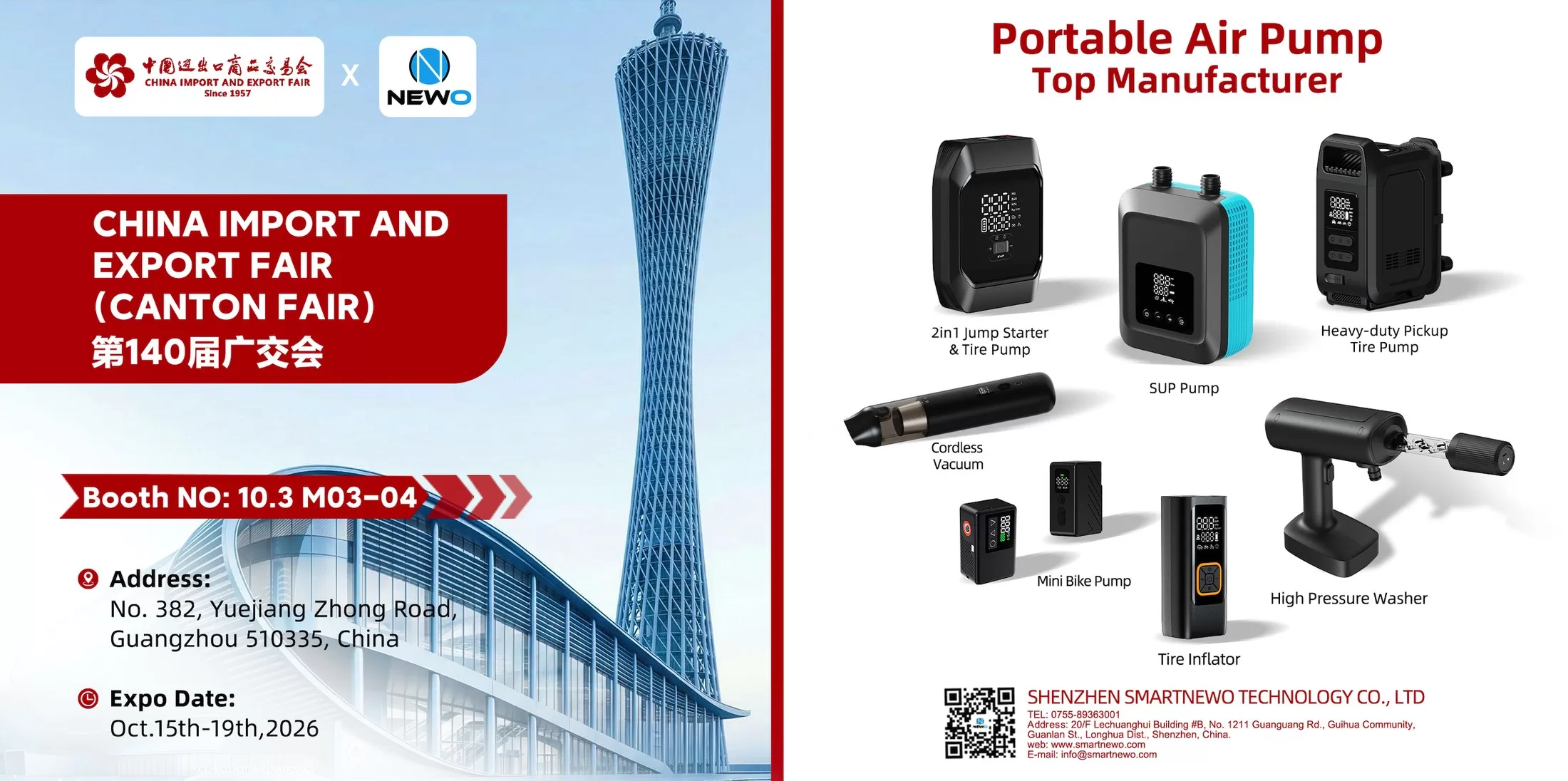
Meet NEWO at the 140th Canton Fair: Visit Booth 10.3 M03–04
Meet NEWO at the 140th Canton Fair in Guangzhou, October 15–19, 2026. Visit Booth 10.3 M03–04 to explore portable air pumps and discuss OEM, ODM and distribution opportunities.... -

As Shenzhen Welcomes the World for APEC 2026, NEWO Welcomes You to Our Factory
As Shenzhen prepares for APEC 2026, NEWO welcomes international buyers and partners to visit our factory, meet our team and explore future cooperation.... -
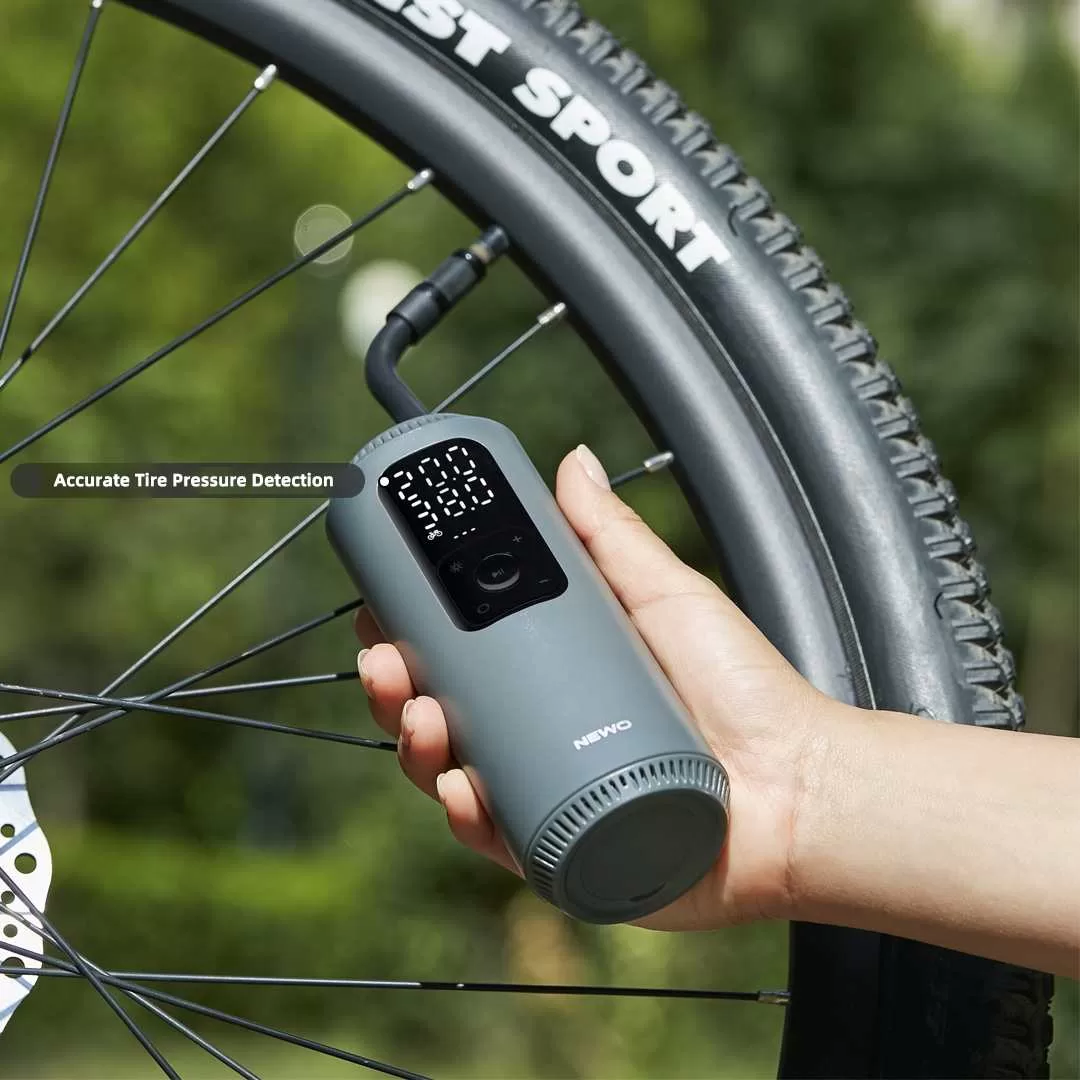
Leading the Way in Product Innovation and Excellence
Smartnewo exemplifies professionalism in product innovation and manufacturing. Their collaboration with Xiaomi Youpin on the G01 crowdfunding project highlights their expertise in creating compact, powerful inflatable pumps. Rigorous engineering, meticulous production processes, and advanced quality assurance underscore their commitment to excellence. The success of the G01 project, with significant market... -
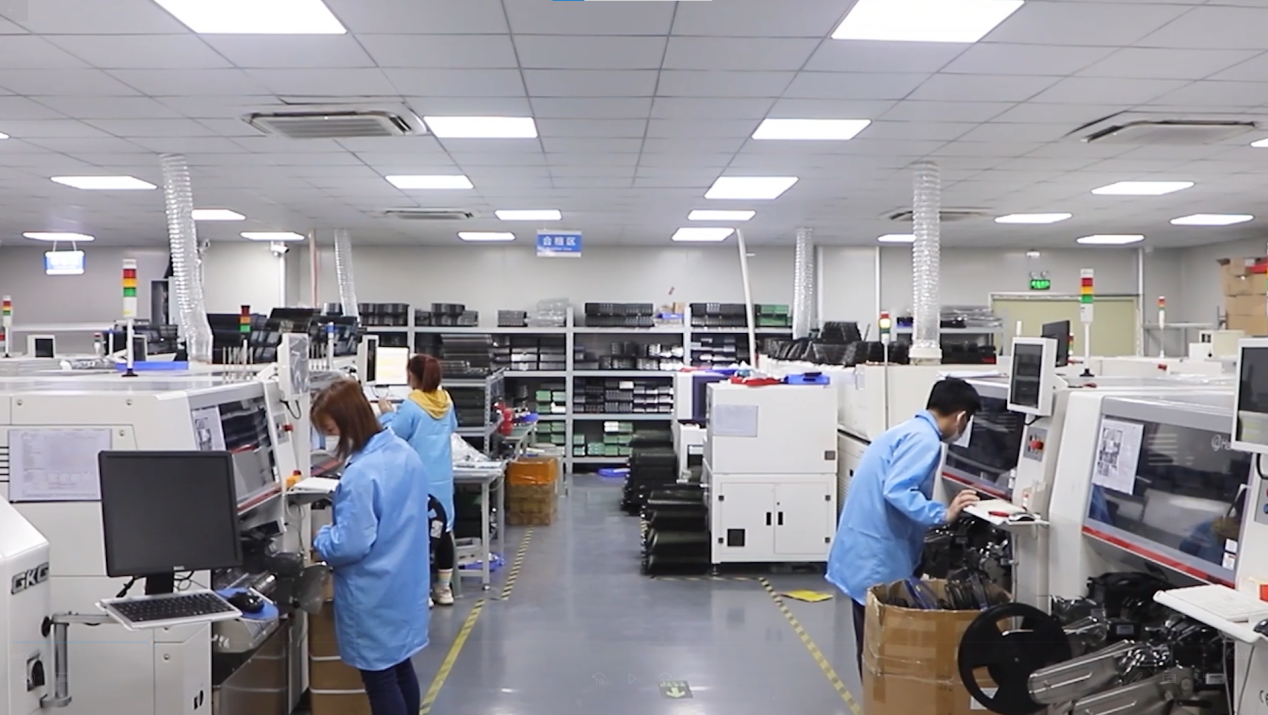
Essential Qualities of an Excellent Supplier
In today's competitive market, finding a reliable supplier is crucial for business success. Based on insights from Smartnewo and broader internet research, here are key qualities an excellent supplier must possess:... -
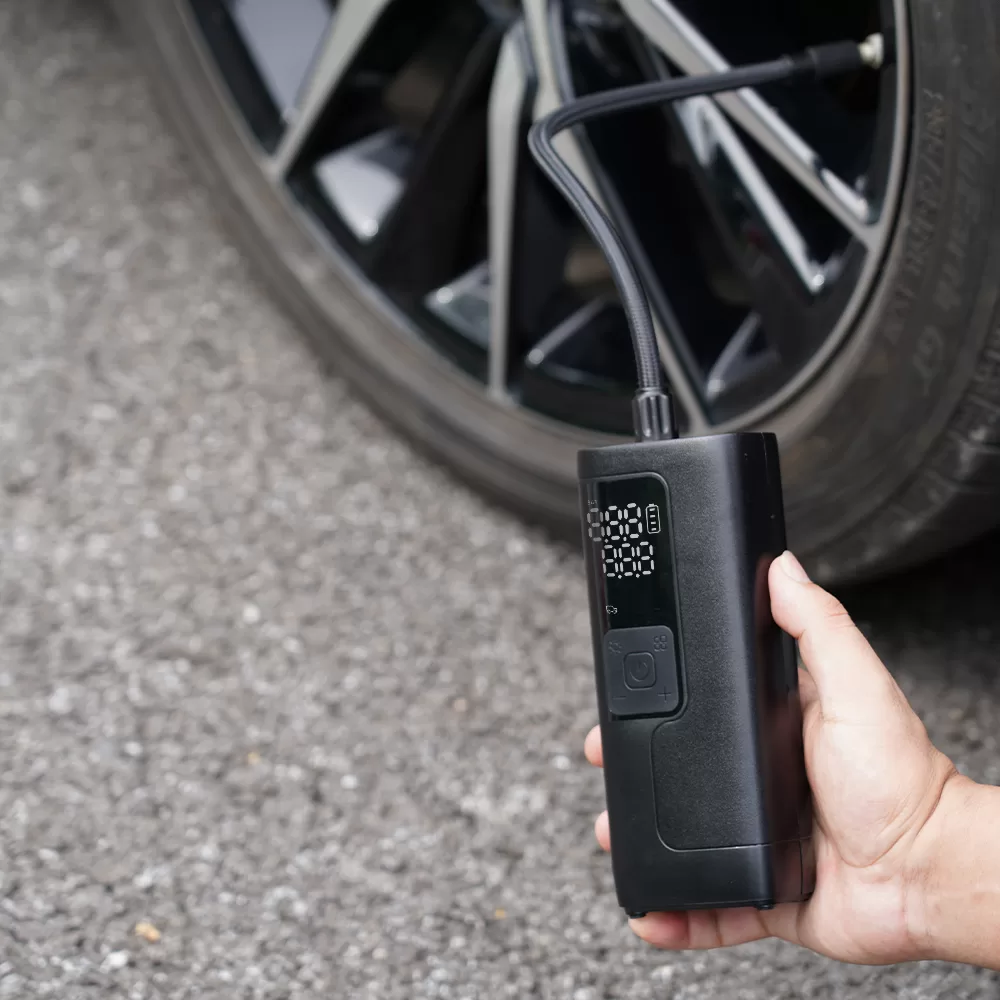
NW06 Tire Inflator: Compact Power for Quick Inflation
Summary The NW06 Tire Inflator delivers quick and efficient tire inflation with a powerful 35L/min airflow. It features a user-friendly LCD screen for real-time pressure monitoring, dual power options with a built-in 6000mAh battery, and multiple nozzle attachments for versatile use. Its compact design and integrated LED light ensure convenience and... -
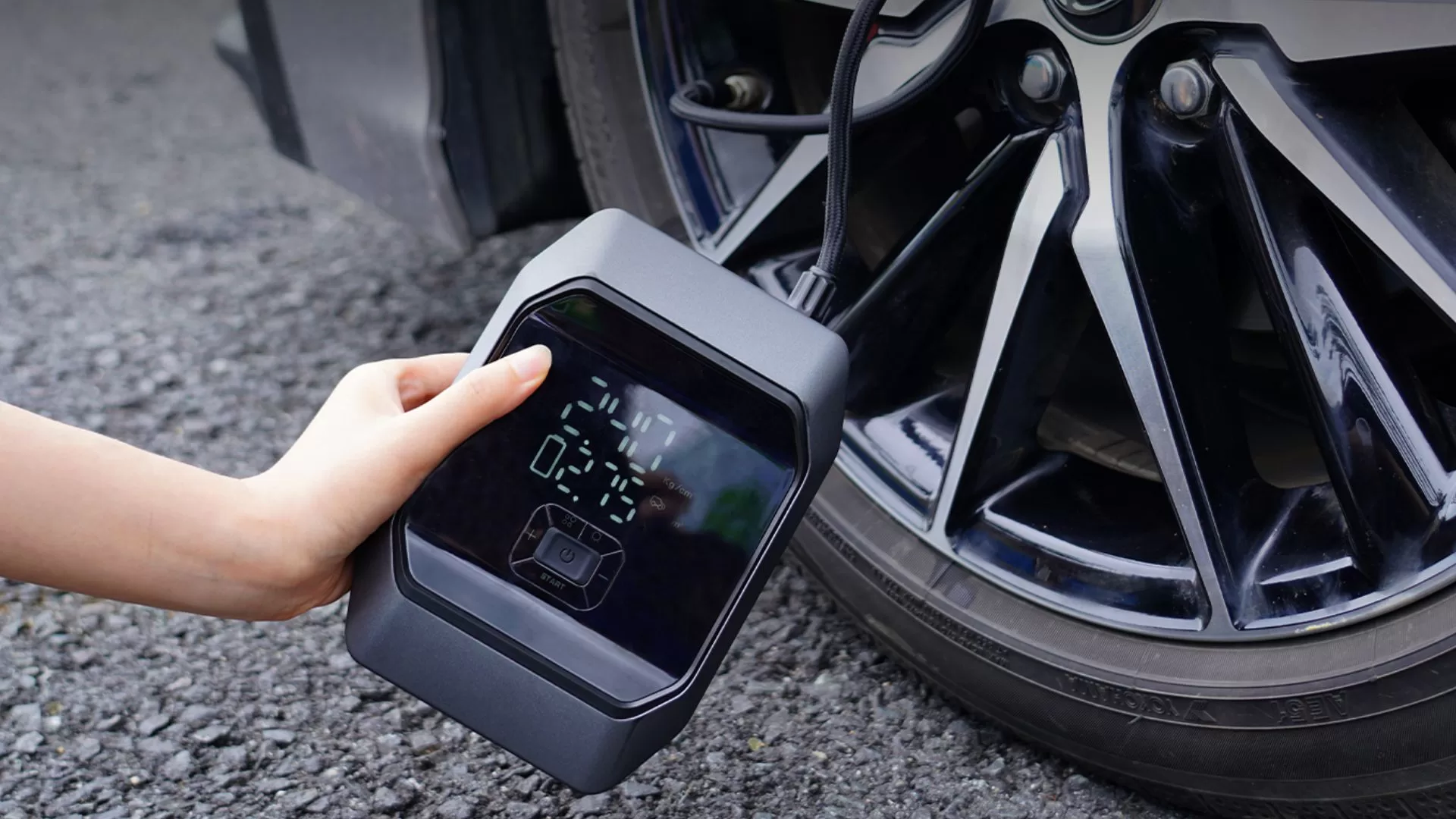
Unleash the Power of Portability: The SmartNewo Jump Starter with Air Compressor KF03
This guide will walk you through the steps to effectively use a portable tire inflator, helping you stay prepared and safe on the road.... -

Newo Attends The 2024 Consumer Electronics Show (CES)
Smartnewo booth is located at 53672, Halls A-D, Level 2, Venetian Expo, Las Vegas Convention Center (LVCC). ... -
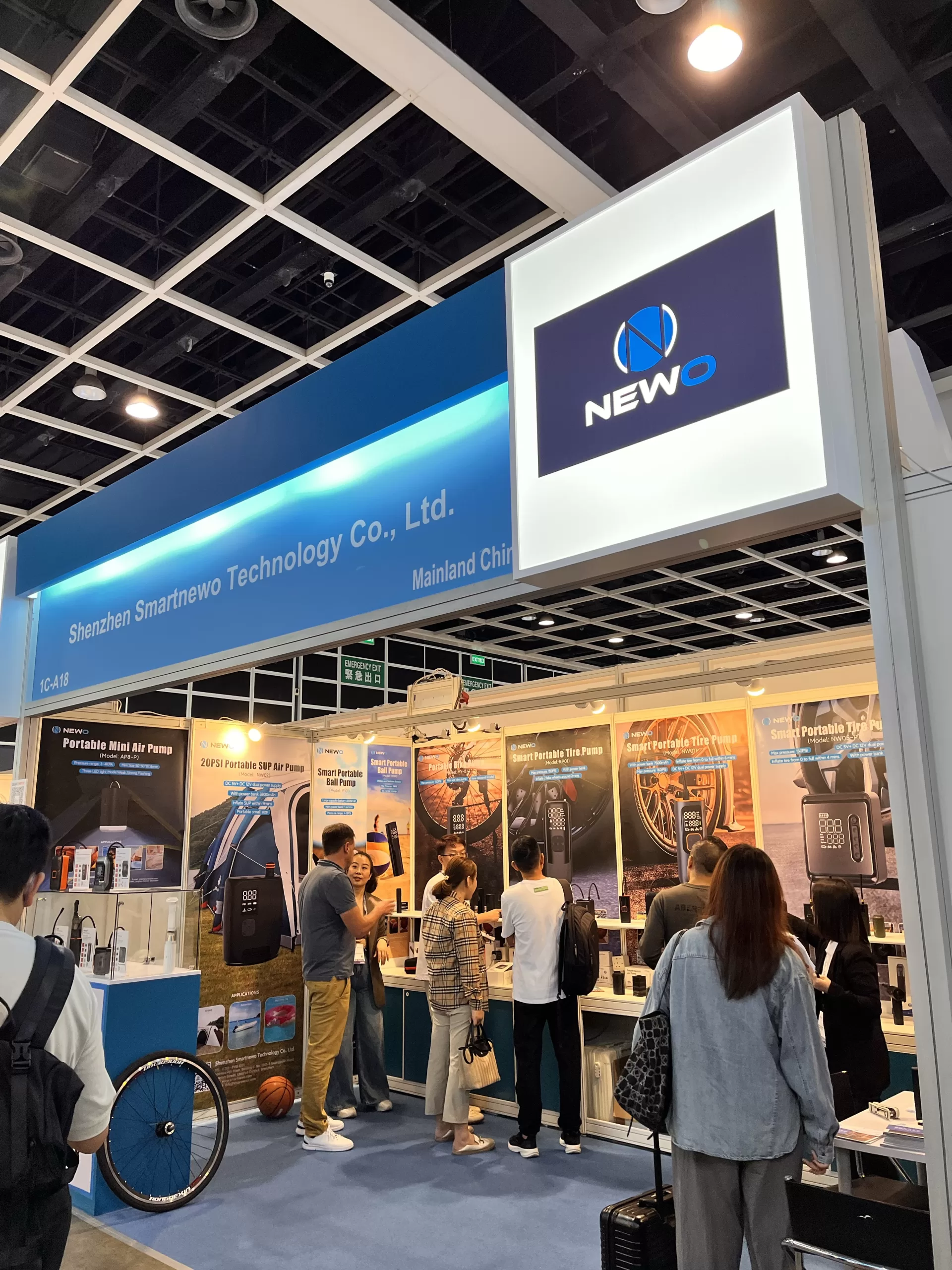
Smartnewo’s Dual-Cylinder Air Pump Rocks the Hong Kong Autumn Electronics Fair!
Smartnewo’s Dual-Cylinder Air Pump Rocks the Hong Kong Autumn Electronics Fair!... -

Meet at the Canton Fair! Smartnewo brings dual-cylinder air pumps, making your inflation experience faster and more stable!
NEWO has went deep communication and negotiation with customers from all over the world on booth.... -
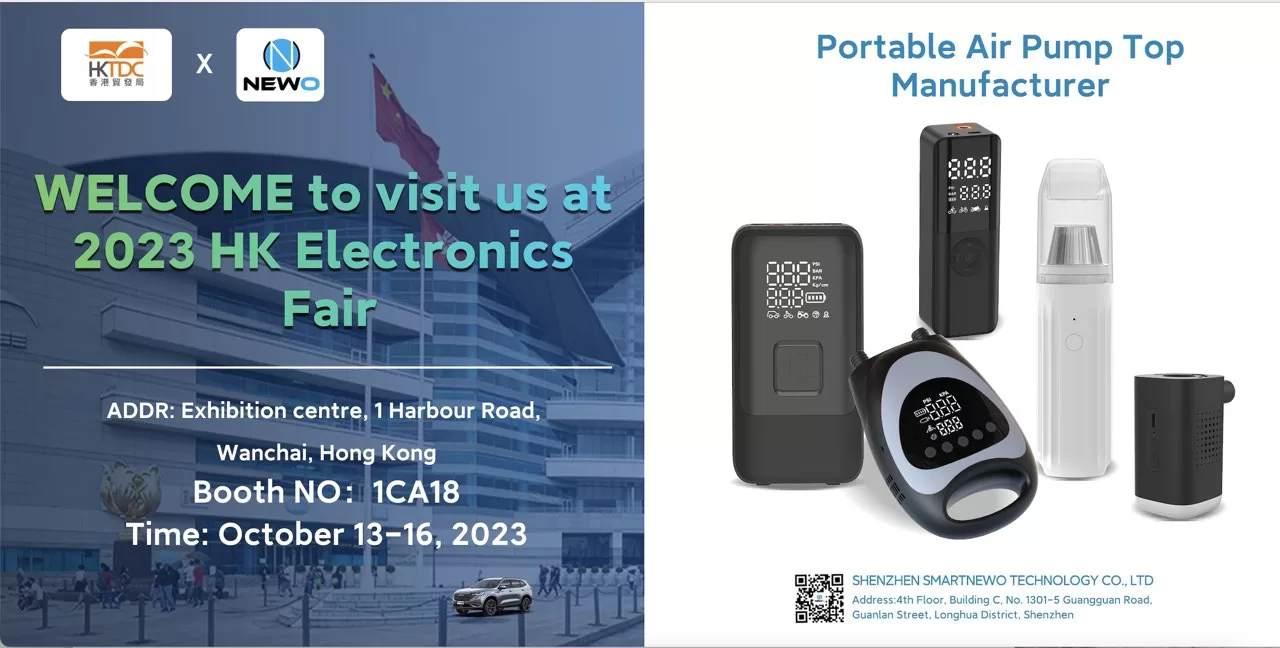
“Hong Kong Autumn Electronics Fair – 1CA18 (October 13th to 16th): Smartnewo invites you to visit our booth!
Hong Kong Autumn Electronics Fair...
-
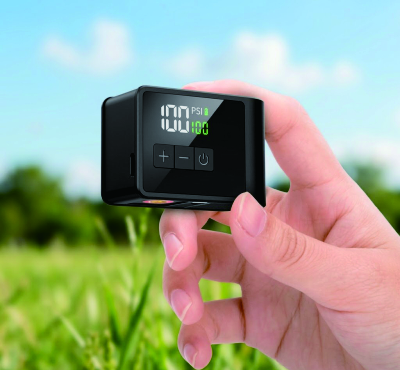
What to Check Before Ordering Custom Electric Bike Pumps
Plan custom electric bike pumps with a clear requirements freeze for valves, TPU tubes, portability, repeated top-ups, charging, and model-specific documents.... -

OEM vs ODM Air Pumps: Which Manufacturing Model Fits Your Brand?
Compare OEM and ODM air pump projects by design responsibility, change approval, development scope, and written ownership terms before choosing your route.... -

How to Choose a Reliable Tire Inflator Manufacturer in China
Choose a tire inflator manufacturer in China with a focused RFQ, supplier evidence, configuration checks, and clear sample-to-pilot decisions for your brand.... -

Rechargeable Electric SUP Pump for Paddle Boards: Faster Inflation for SUPs, Kayaks and Inflatable Tents
The BL10-C Portable Electric Bike Tire Inflator is a compact and lightweight mini electric bike pump designed for modern cyclists. With up to 120 PSI pressure, a digital LED display, preset pressure control, automatic shut-off, USB-C charging, and multiple valve adapters, BL10-C offers a convenient inflation solution for road bikes,... -
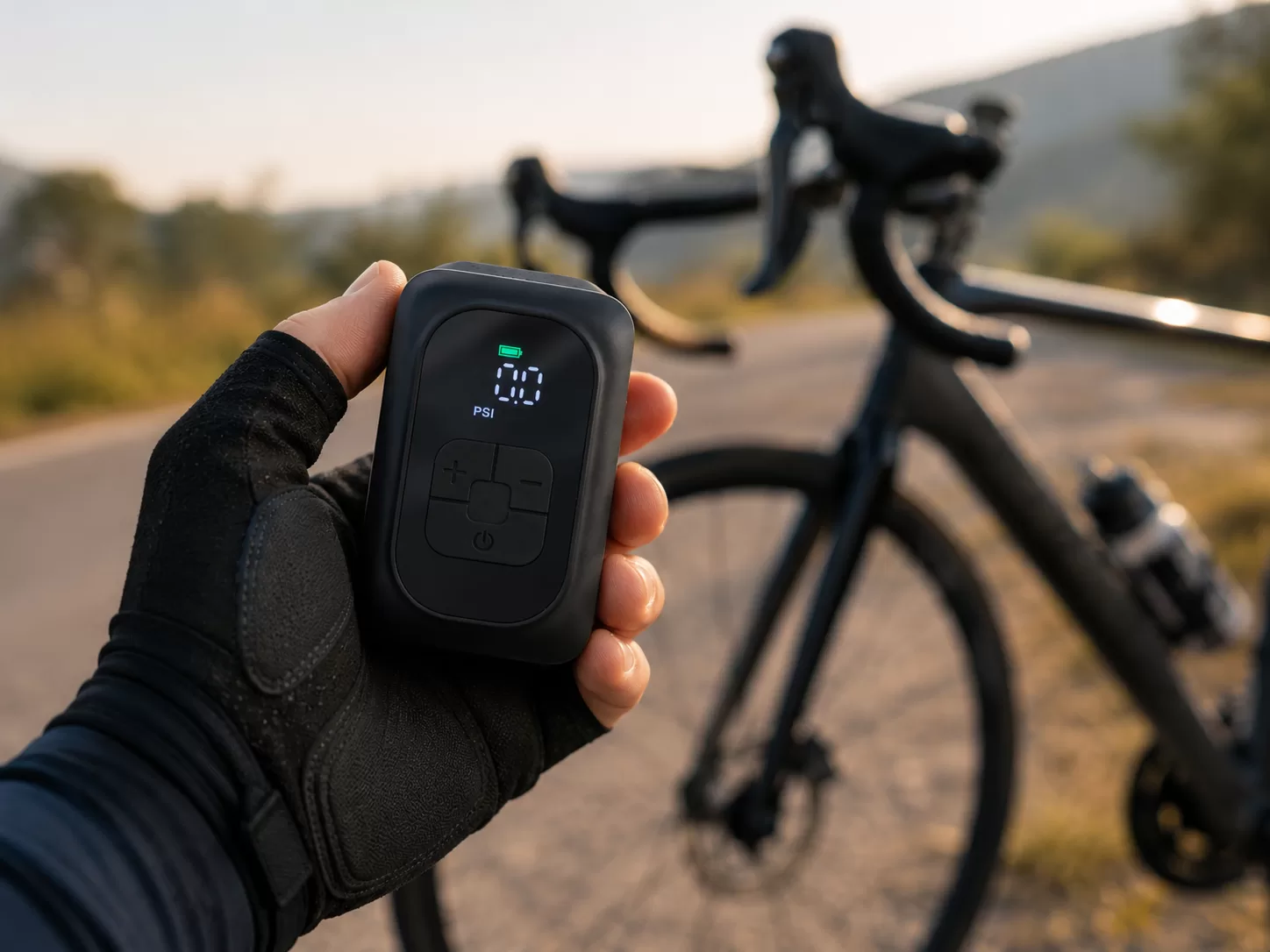
Are Electric Bike Pumps Worth It in 2026? Electric Pump vs CO₂ vs Mini Hand Pump
Discover whether electric bike pumps are worth it in 2026. This guide compares electric bike pumps, CO₂ inflators, and mini hand pumps for road cycling, gravel riding, commuting, and long-distance rides. Learn the pros, limitations, best use cases, and key features to look for before choosing the right portable tire... -
BL10-C Portable Electric Bike Tire Inflator: Small Size, Reliable Power for Every Ride
The BL10-C Portable Electric Bike Tire Inflator is a compact and lightweight mini electric bike pump designed for modern cyclists. With up to 120 PSI pressure, a digital LED display, preset pressure control, automatic shut-off, USB-C charging, and multiple valve adapters, BL10-C offers a convenient inflation solution for road bikes,... -
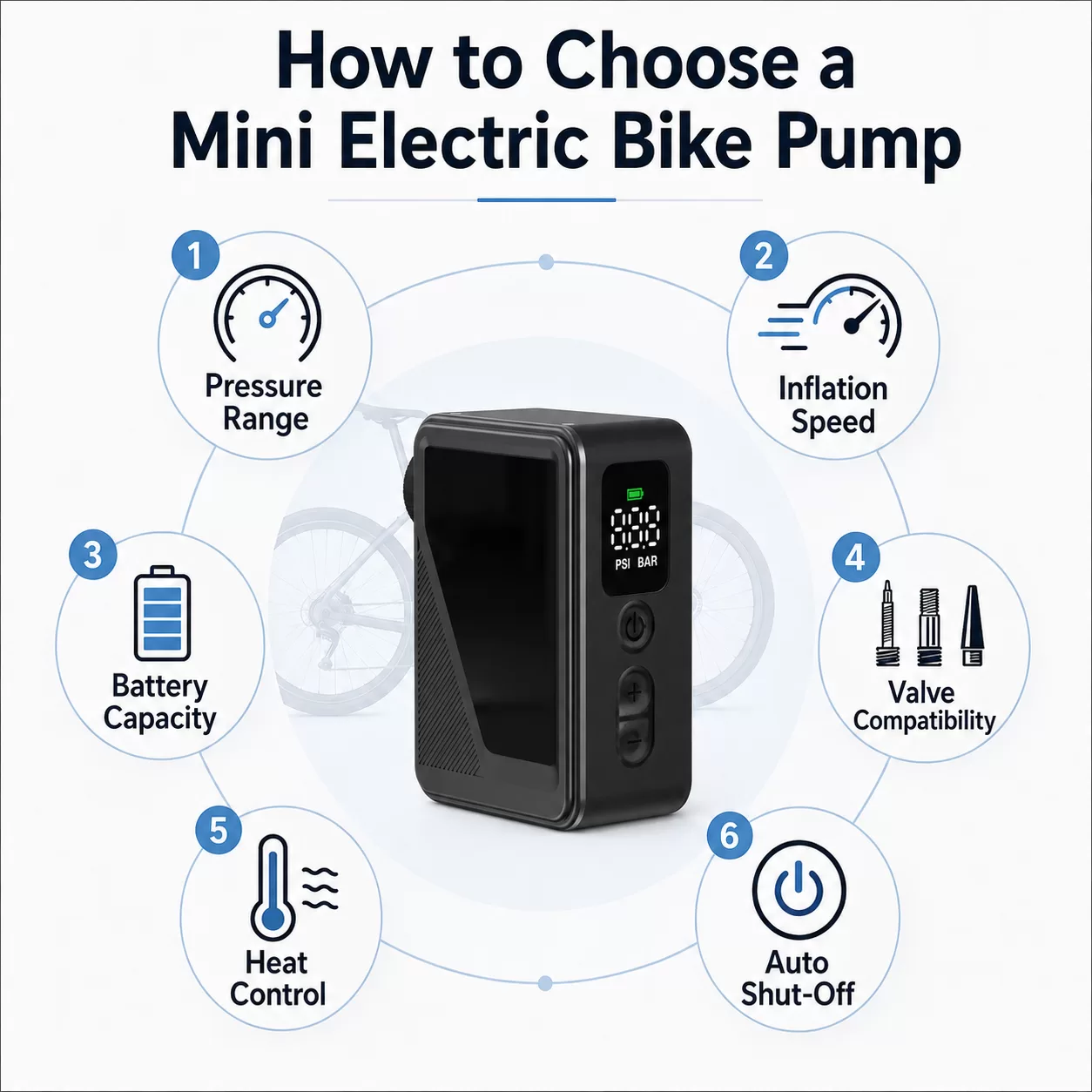
Why Mini Electric Bike Pumps Are Becoming Essential for Modern Cycling
Discover why mini electric bike pumps are becoming essential for modern cyclists. Learn how portable electric bike pumps improve tire pressure management, riding safety, and convenience.... -
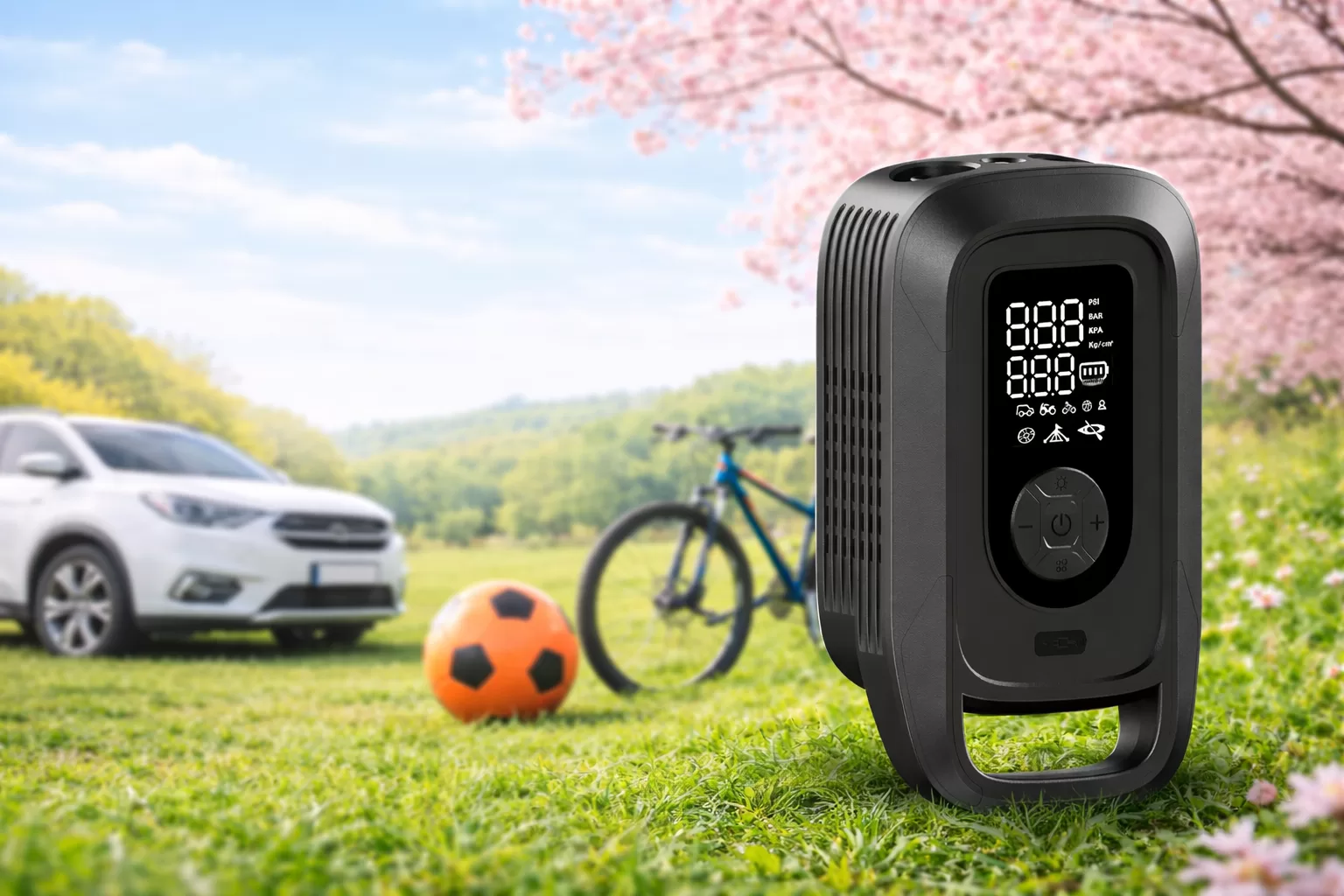
The Ultimate Smart Solution for Easy Outdoor Adventures in 2026
Discover how a spring travel air pump simplifies outdoor trips with fast inflation, smart features, and powerful performance—perfect for every adventure.... -
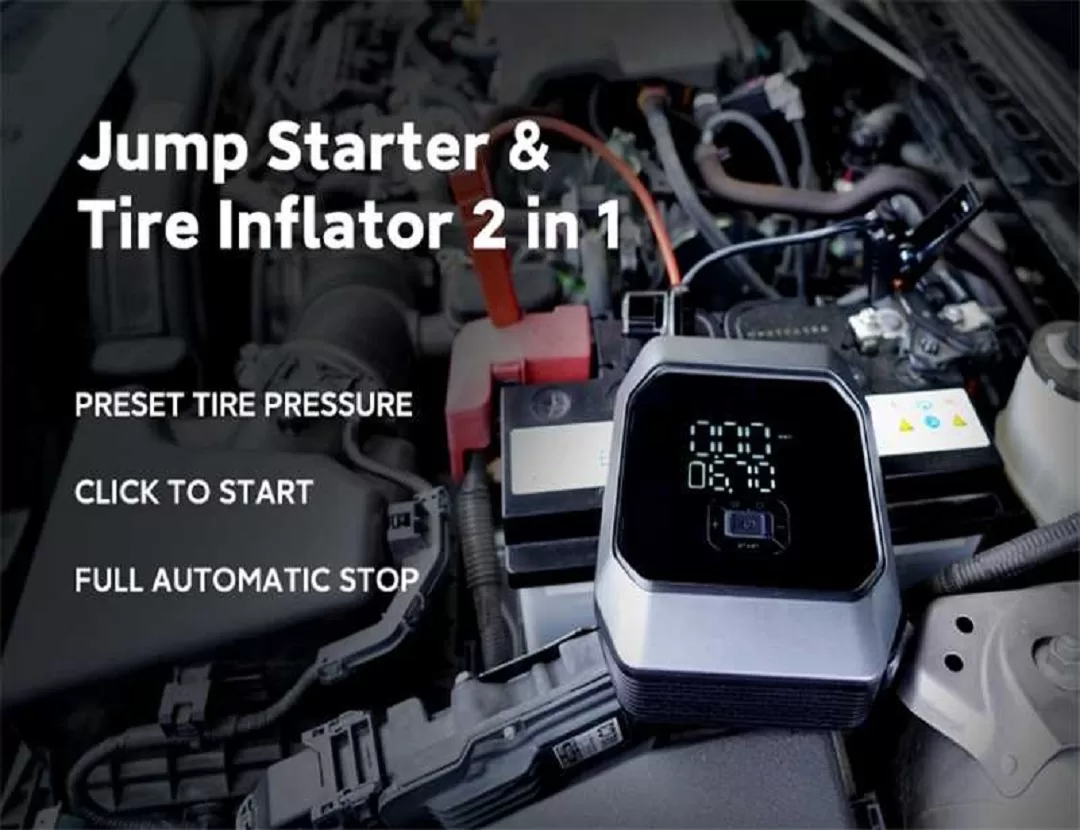
Powerful 5-in-1 Portable Car Tire Inflator and Jump Starter: The Ultimate Emergency Tool for Every Driver
Why Every Driver Needs a Portable Car Tire Inflator and Jump Starter Modern drivers face many unexpected situations on the road. A flat tire, low tire pressure, or a dead car battery can happen at the worst possible time. That’s why having a portable car tire inflator and jump starter is... -

7 Real Cycling Scenarios That Show Why Every Rider Should Carry a Mini Bike Pump
Cycling is one of the most freeing activities you can enjoy. Whether you’re commuting to work, riding through city streets, or exploring quiet countryside roads, a bike ride can instantly improve your day. But there’s one small problem that almost every cyclist eventually faces: Low tire pressure. It might happen...
-
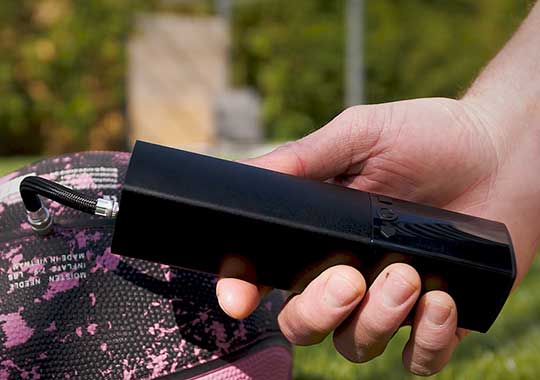
How Is a Football Properly Inflated?
The correct inflation of a football - with not too much and not too little air - is a hotly debated topic among footballers.... -

Application Scenarios of Car Inflator Pump
Often long-distance business trips or play car owners because the road may be more remote areas, in this case if you encounter a tire leak....