
 Portable Tire Inflators
 Electric Air Pumps
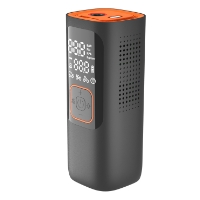 Electric Car Tyre Pumps
 Electric Ball Pumps
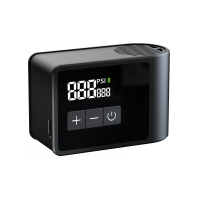 Electric Bike Pump
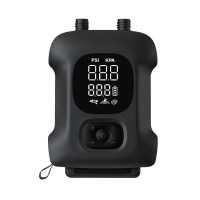 SUP Air Pump
Choosing an Electric Tire Inflator with Gauge for Everyday Use
A flat or soft tire rarely happens at a convenient time. Whether it’s a car tire losing a few PSI overnight or a bike tire going slack before a weekend ride, pressure problems tend to show up right when you have no gas station or workshop nearby. An electric tire inflator with gauge solves this by combining a compressor and a pressure reader in one handheld unit, so you can check and correct tire pressure without guessing or borrowing equipment from someone else.
This article looks at what these devices actually do, why gauge accuracy and automatic shut-off matter more than raw pump speed, and how to judge whether a compact cordless model fits your routine.
Why Tire Pressure Monitoring Matters More Than People Think
Underinflated tires wear unevenly, use more fuel, and respond more slowly in corners or sudden stops. Overinflated tires ride harder and wear out the center tread faster than the edges. Neither mistake is dramatic on its own, but both add up over months of driving.
The problem is that most drivers only think about tire pressure when something already feels wrong, like a visibly sagging tire or a dashboard warning light. By then, the tire has often been running low for days or weeks. A pump without a built-in gauge makes this worse, because you’re adding air without knowing your starting point or your stopping point.
This is where a gauge-equipped electric pump changes the habit. Checking pressure becomes a 30-second task instead of a trip to a gas station, which makes people more likely to actually do it on a regular basis.
How an Electric Inflator with Gauge Actually Works
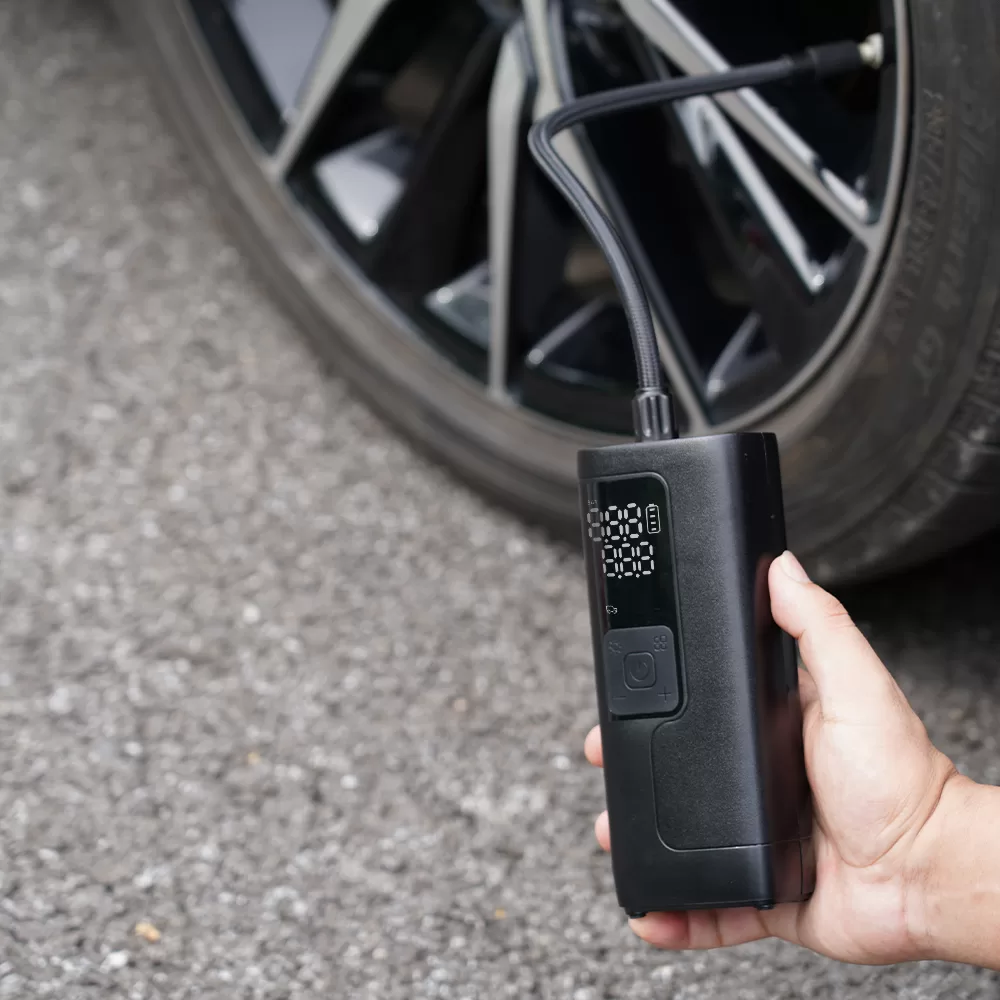
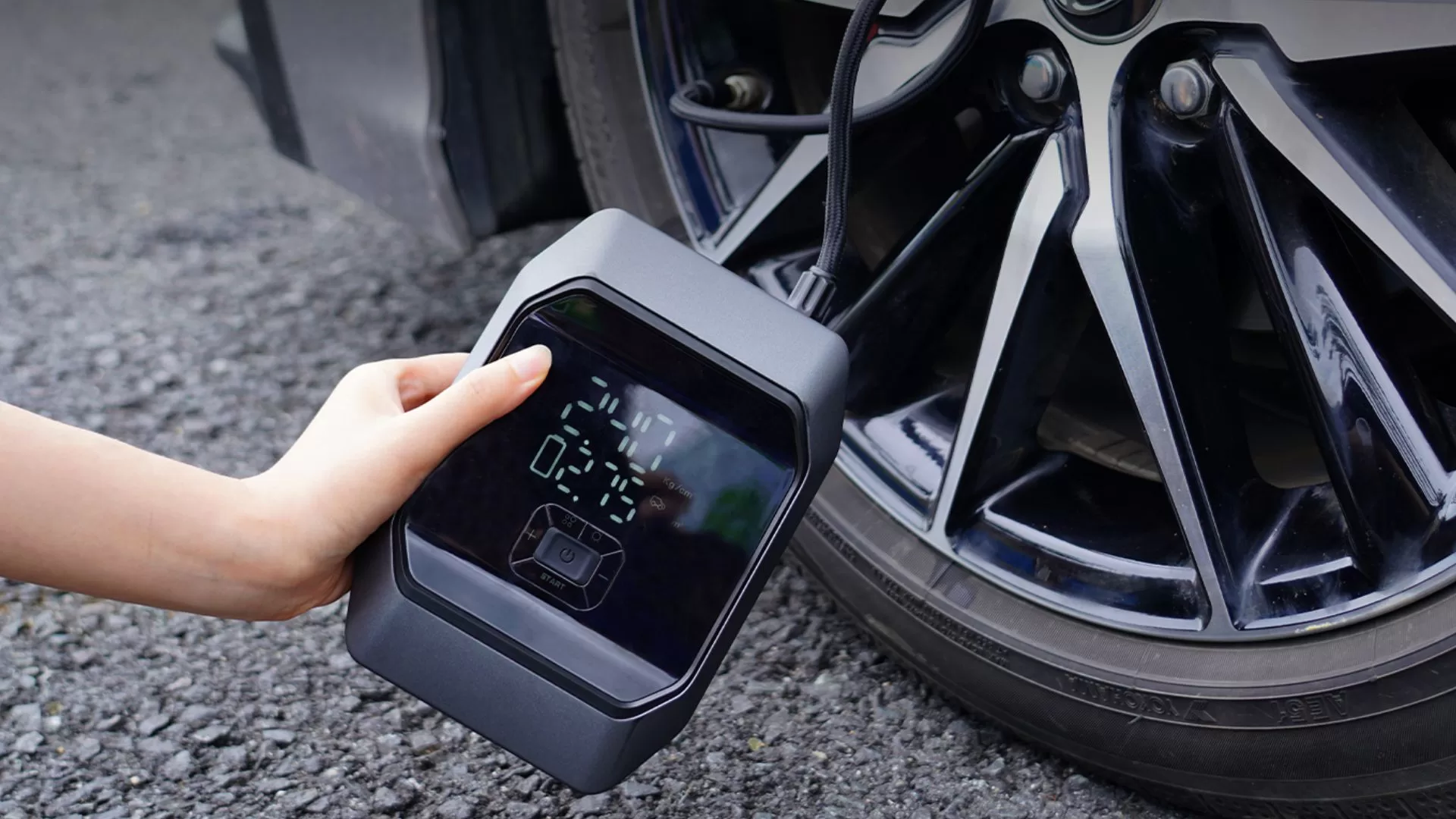
At its core, the device is a small electric air compressor paired with a pressure sensor and a digital readout. You set a target pressure, attach the hose to the valve, and the pump runs until it reaches that number. The gauge isn’t a separate accessory here, it’s integrated into the same control loop that runs the motor.
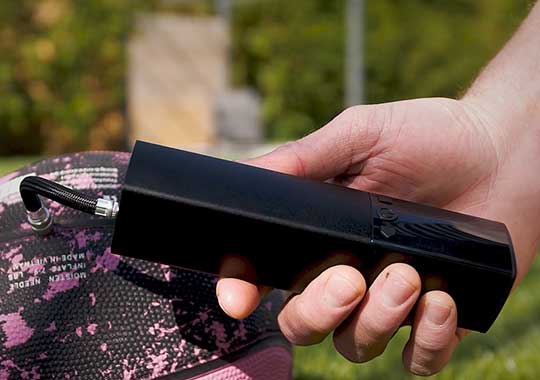
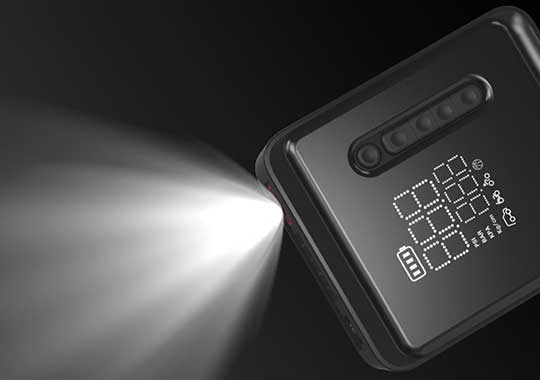
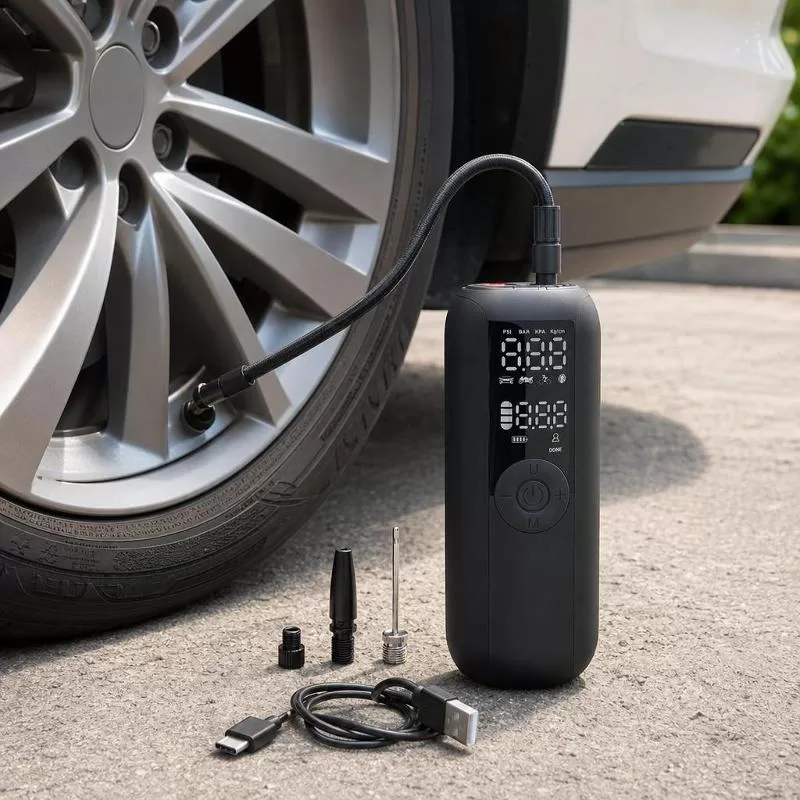
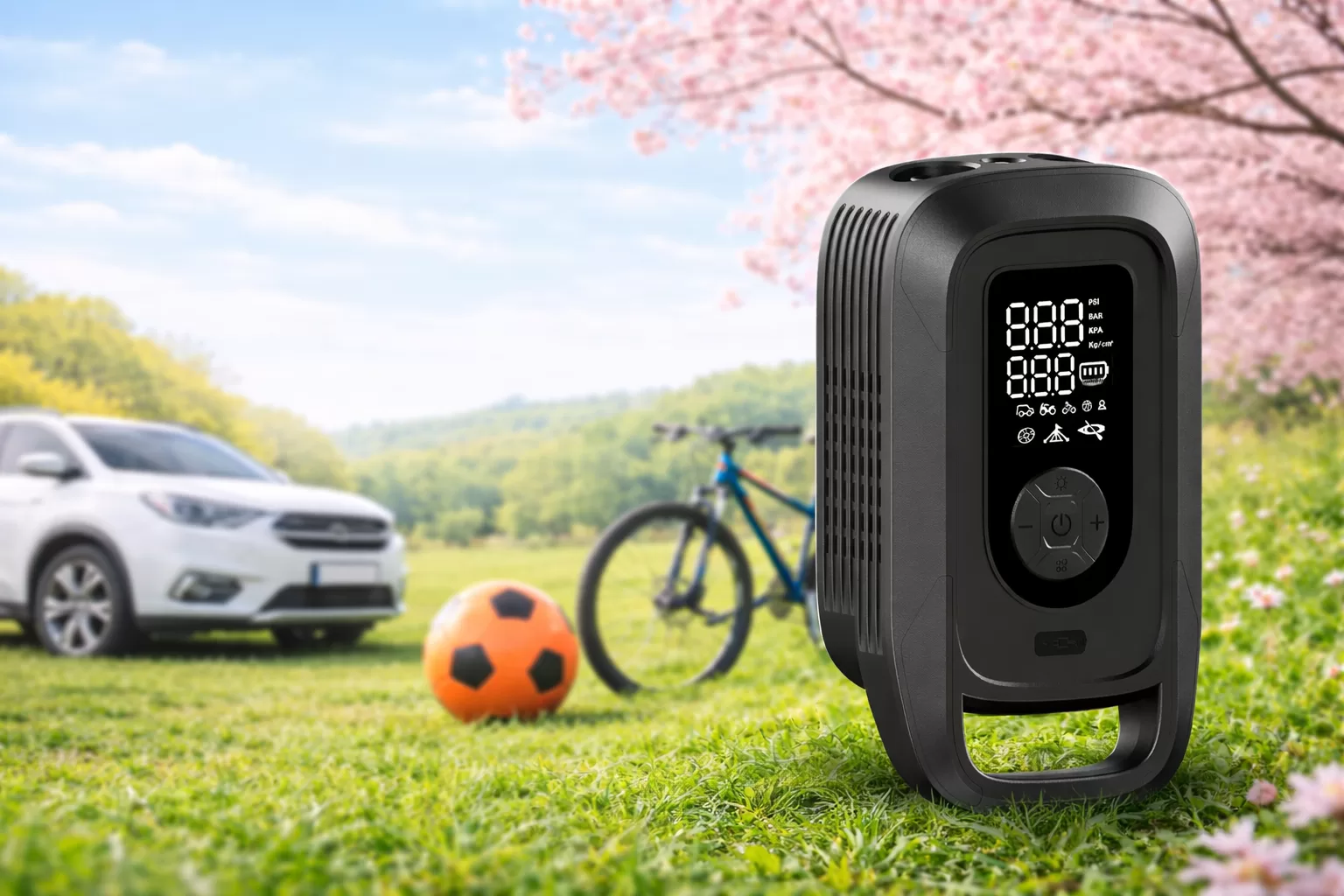
The Newo LP1, for example, uses this approach with a dual digital display that shows the measured pressure, the preset target, battery level, and the current application mode at the same time. That matters because you’re not left wondering whether the number on the screen is your current reading or your goal.
Preset modes are the other piece of this. Rather than manually watching a needle creep up, you select a mode that matches what you’re inflating, car tire, bicycle tire, motorcycle tire, ball, or inflatable, and the pump’s automatic pressure control stops the motor once the target is reached. This reduces the risk of overinflation, which is a real concern with manual pumps where it’s easy to keep pumping past the point you meant to stop.
What to Look for in Pressure Range and Airflow
Not all inflators are built for the same jobs, and pressure range is the first filter. A pump rated for 150 PSI, like the LP1, covers passenger car tires, which typically need 30 to 35 PSI, with plenty of margin for motorcycle tires and high-pressure bicycle tires that can run higher. Lower-range pumps meant only for balls or inflatables won’t be enough for a car tire, so checking the stated maximum pressure against your actual use case is a necessary first step.
Airflow, usually measured in liters per minute, determines how long inflation takes. A pump moving 15 to 18 L/min will fill a bicycle tire in well under a minute but will take longer on a larger car tire, since there’s simply more volume to displace. This is a tradeoff worth understanding before buying: a smaller, lighter pump with modest airflow is great for topping off, but it’s not meant to replace a shop compressor for repeated full-tire jobs back to back.
Battery Life and Charging: What Actually Limits Daily Use
Cordless convenience comes with a battery budget, and it’s worth knowing the numbers before relying on one of these pumps for a road trip or a long ride. A 2000 mAh, 7.4V lithium battery, as used in the LP1, is rated for roughly 20 to 30 minutes of continuous runtime per full charge, which translates to about 10 to 15 bicycle tires or a smaller number of car or motorcycle tires depending on how low they started.
Charging through a Type-C port typically takes 2 to 3 hours, and the battery is rated for around 300 charge cycles before capacity drops to 80% of its original level. That’s a useful number for anyone wondering how long the pump will hold up with regular, say weekly, use over a few years.
A few practical charging habits help get the most out of this kind of battery:
- Charge after use rather than letting it sit fully depleted for long stretches
- Avoid leaving the pump in a hot car, since extreme heat accelerates battery wear
- Keep it topped up before road trips, even if the last session only used a portion of the charge
Comparing Core Specifications at a Glance
| Specification | Detail |
|---|---|
| Maximum pressure | 150 PSI |
| Air flow | 15 to 18 L/min |
| Battery capacity | 2000 mAh, 7.4V, 14.8 Wh |
| Charging time | 2 to 3 hours |
| Runtime per charge | 20 to 30 minutes |
| Preset inflation modes | 5 |
| Display units | PSI, BAR, KPA, Kg/cm² |
| Weight | 438 g |
| Working temperature | -10°C to 45°C |
This kind of side-by-side view is useful when comparing a compact pump against a bulkier garage compressor, since it shows exactly what you’re trading in exchange for portability: slightly longer fill times for a device that fits in a glove compartment or backpack pocket.
Why Multiple Pressure Units and Adapters Matter
Pressure units aren’t universal. PSI is standard in the US, BAR is common across much of Europe, and KPA or Kg/cm² show up on certain bicycle and motorcycle manuals. A pump that only displays one unit forces you to do mental conversion, which is an easy place to make a mistake when you’re inflating a tire on the side of the road.
Having PSI, BAR, KPA, and Kg/cm² selectable on the same display, which the LP1 supports, removes that friction entirely. You read the tire’s recommended pressure off its sidewall or owner’s manual and match the unit directly, no conversion chart needed.
Adapters matter for a related reason. A pump that only inflates Schrader valves is of limited use once you own a road bike with Presta valves, a basketball, or a swimming ring. A 2-in-1 hose paired with a Presta adapter, ball needle, and swimming ring nozzle extends the same device across car tires, bike tires, sports equipment, and inflatables, which is part of why these pumps have become a single-tool solution for households that used to need two or three separate inflators.
Choosing the Right Pump for Your Situation
Picking a model comes down to matching the pump’s specs to how and where you’ll actually use it. A short decision process helps narrow things down:
- Identify your primary use case: mostly car tires, mostly bicycles, or a mix of vehicles and sports equipment
- Check the maximum pressure rating against the highest pressure you’ll need, with some margin
- Confirm the display supports the pressure unit printed on your tire or equipment
- Consider battery runtime against how many items you’ll inflate in one session
- Factor in size and weight if the pump needs to live in a car trunk, saddle bag, or backpack
For most daily drivers and casual cyclists, a compact unit covers the full range of needs. For fleet use or frequent full-tire inflation, a corded or higher-capacity compressor may still make more sense.
Everyday Scenarios Where This Tool Earns Its Space
Beyond the obvious case of a slowly leaking tire, there are a handful of situations where keeping an electric inflator with gauge in the car or garage pays off. Roadside tire top-ups before a long drive are the most common, but they’re far from the only one.
- Checking and adjusting tire pressure before seasonal temperature changes, since cold weather lowers PSI naturally
- Inflating e-bike or mountain bike tires before a ride, where pressure affects both comfort and rolling resistance
- Topping off wheelchair or balance vehicle tires, where manual pumps can be physically difficult to use
- Handling sports balls and swimming rings with the same device instead of a separate hand pump
- Using the built-in LED light, present on models like the LP1, as a backup light source during a nighttime roadside stop
Frequently Asked Questions
Does an electric inflator with a gauge replace a tire pressure monitoring system (TPMS)?
No. A TPMS continuously monitors pressure while driving and alerts you to changes. An electric inflator is a tool you use manually to check and correct pressure at a given moment; the two serve different, complementary purposes.
How accurate is the digital gauge compared to a mechanical one?
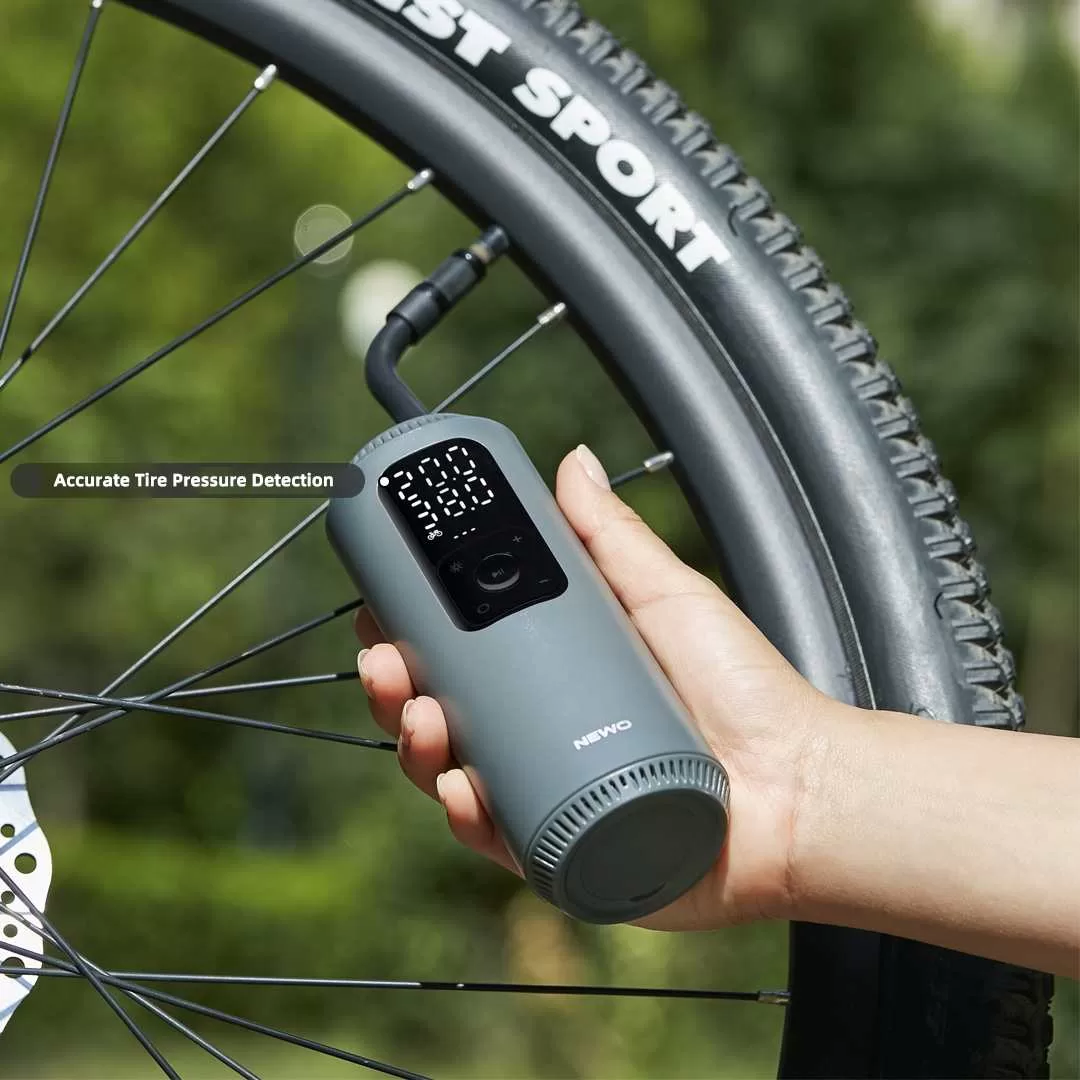
Digital gauges on these pumps are generally easier to read precisely than analog dial gauges, since there’s no needle position to interpret. That said, periodic comparison against a trusted gauge is a reasonable habit for anyone who wants extra confidence in the reading.
Can one pump really handle both car tires and bicycle tires?
Yes, provided its maximum pressure rating covers both. A 150 PSI unit comfortably covers passenger car tires around 30 to 35 PSI and higher-pressure bicycle tires, since the ceiling is well above what either typically needs.
Will the automatic shut-off prevent overinflation if I walk away?
The preset pressure mode is designed to stop the motor once the target reading is reached, which reduces the chance of overinflation compared to a manual pump you have to watch continuously.
How long does the battery actually last in cold weather?
Battery performance in any lithium-based device tends to drop somewhat in cold conditions. Models rated for operation down to -10°C, like the LP1, are built to function in winter use, though runtime may be shorter than in moderate temperatures.
An electric tire inflator with gauge isn’t a dramatic purchase, but it quietly removes one of the more common sources of car and bike neglect: not knowing your tire pressure until it’s already a problem. For us at Newo, that practical, everyday reliability is the whole point of building compact tools like the LP1, designed to sit in a glove box or backpack and do one job well whenever it’s needed.
-

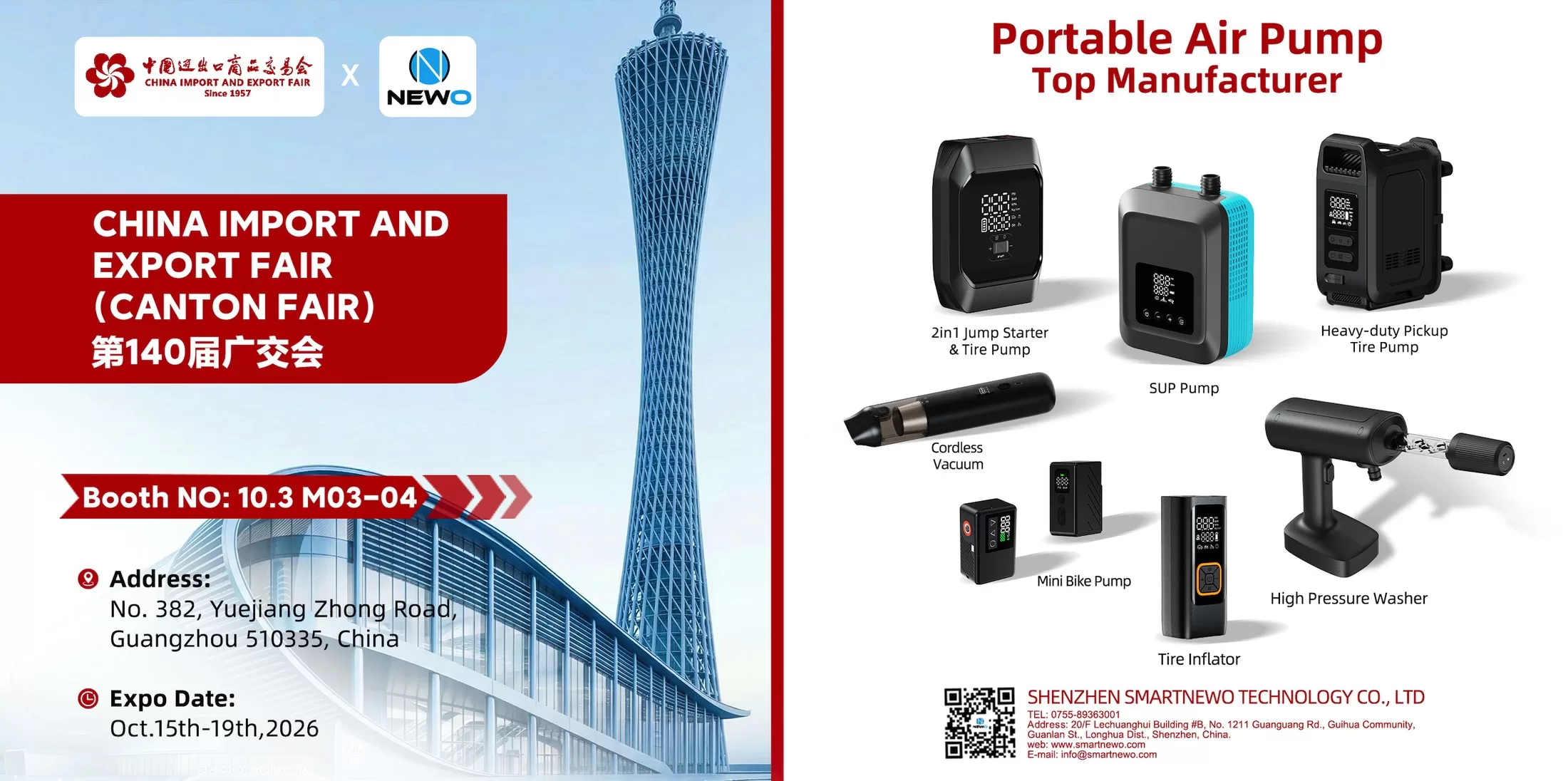
Meet NEWO at the 140th Canton Fair: Visit Booth 10.3 M03–04
Meet NEWO at the 140th Canton Fair in Guangzhou, October 15–19, 2026. Visit Booth 10.3 M03–04 to explore portable air pumps and discuss OEM, ODM and distribution opportunities.... -

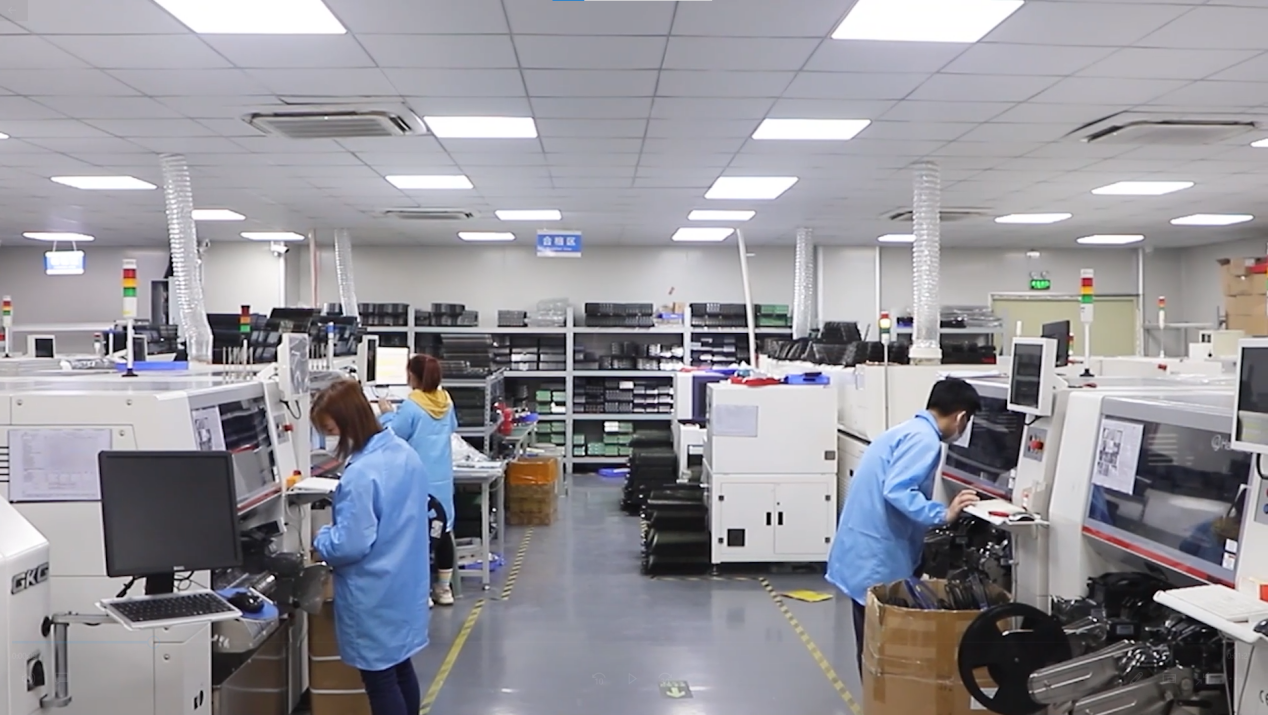
As Shenzhen Welcomes the World for APEC 2026, NEWO Welcomes You to Our Factory
As Shenzhen prepares for APEC 2026, NEWO welcomes international buyers and partners to visit our factory, meet our team and explore future cooperation.... -

Leading the Way in Product Innovation and Excellence
Smartnewo exemplifies professionalism in product innovation and manufacturing. Their collaboration with Xiaomi Youpin on the G01 crowdfunding project highlights their expertise in creating compact, powerful inflatable pumps. Rigorous engineering, meticulous production processes, and advanced quality assurance underscore their commitment to excellence. The success of the G01 project, with significant market... -

Essential Qualities of an Excellent Supplier
In today's competitive market, finding a reliable supplier is crucial for business success. Based on insights from Smartnewo and broader internet research, here are key qualities an excellent supplier must possess:... -

NW06 Tire Inflator: Compact Power for Quick Inflation
Summary The NW06 Tire Inflator delivers quick and efficient tire inflation with a powerful 35L/min airflow. It features a user-friendly LCD screen for real-time pressure monitoring, dual power options with a built-in 6000mAh battery, and multiple nozzle attachments for versatile use. Its compact design and integrated LED light ensure convenience and... -

Unleash the Power of Portability: The SmartNewo Jump Starter with Air Compressor KF03
This guide will walk you through the steps to effectively use a portable tire inflator, helping you stay prepared and safe on the road.... -

Newo Attends The 2024 Consumer Electronics Show (CES)
Smartnewo booth is located at 53672, Halls A-D, Level 2, Venetian Expo, Las Vegas Convention Center (LVCC). ... -

Smartnewo’s Dual-Cylinder Air Pump Rocks the Hong Kong Autumn Electronics Fair!
Smartnewo’s Dual-Cylinder Air Pump Rocks the Hong Kong Autumn Electronics Fair!... -

Meet at the Canton Fair! Smartnewo brings dual-cylinder air pumps, making your inflation experience faster and more stable!
NEWO has went deep communication and negotiation with customers from all over the world on booth.... -

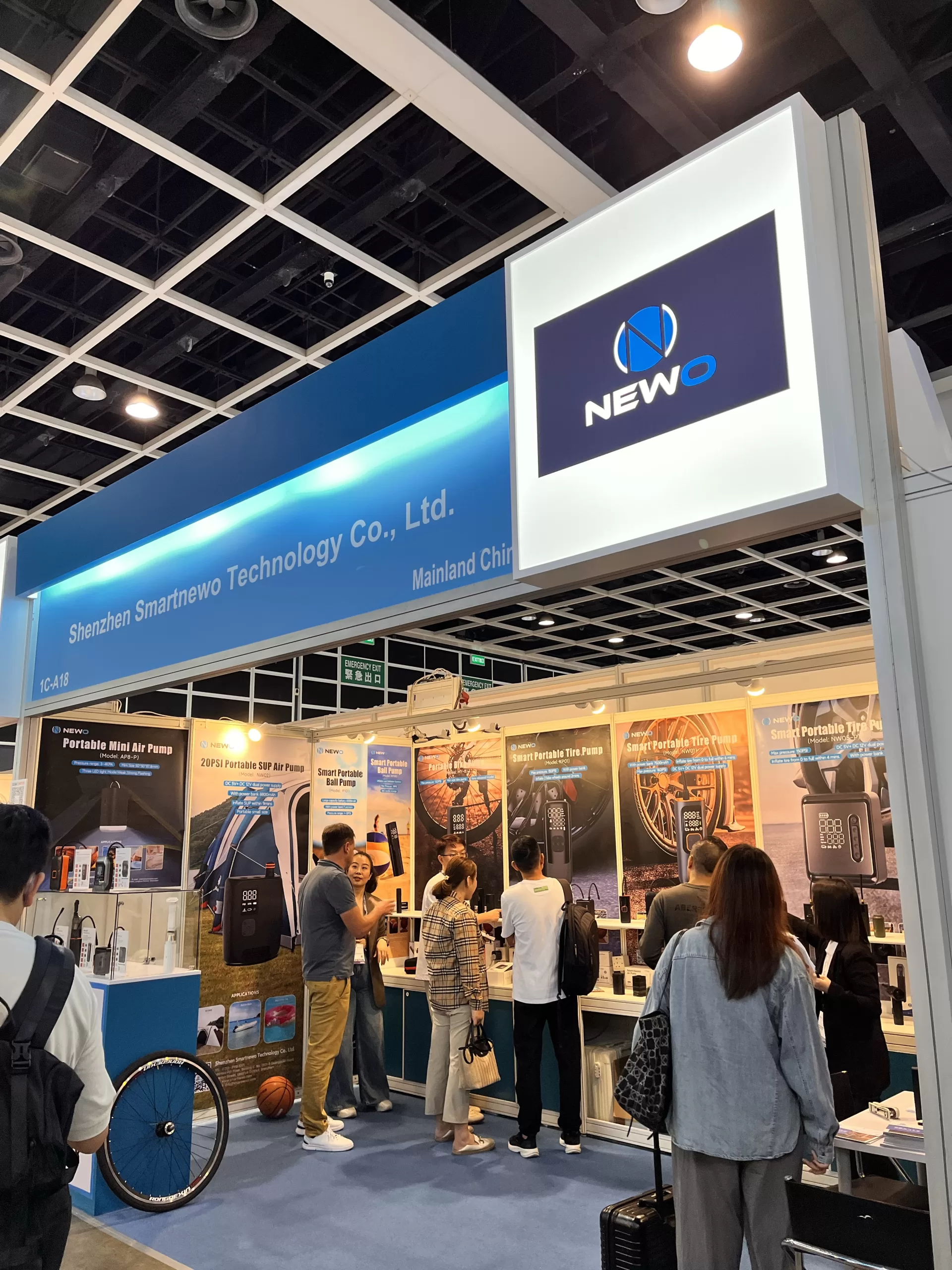
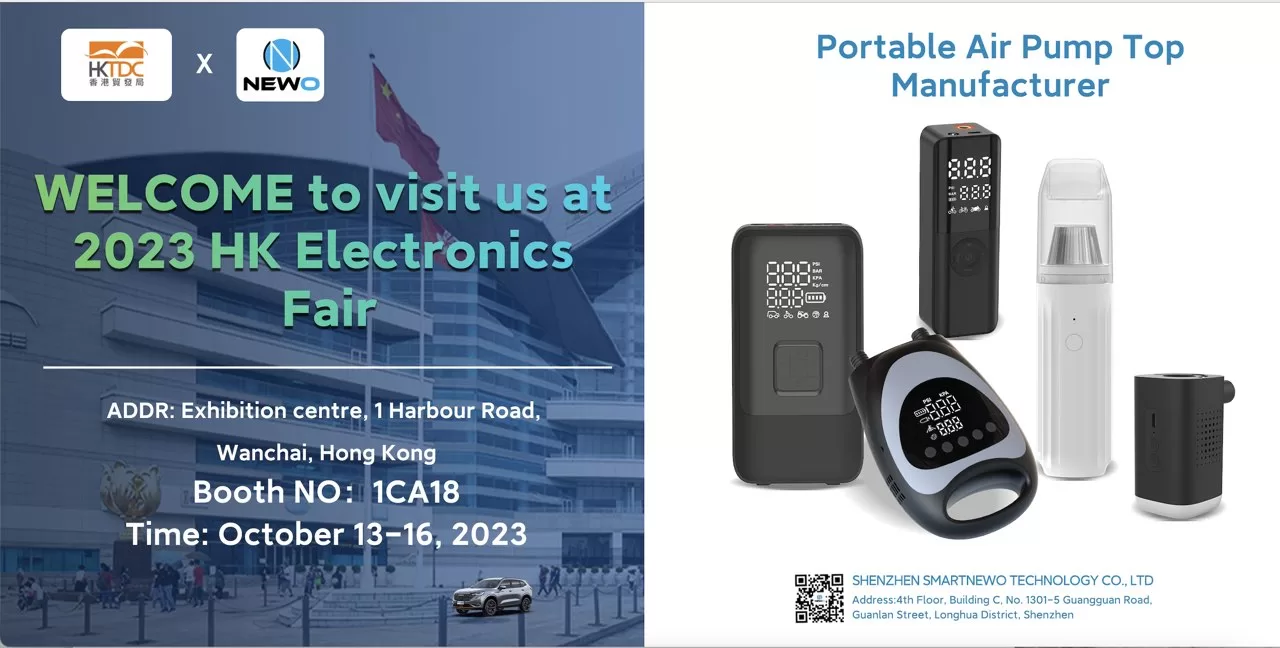
“Hong Kong Autumn Electronics Fair – 1CA18 (October 13th to 16th): Smartnewo invites you to visit our booth!
Hong Kong Autumn Electronics Fair...



-

Rechargeable Electric SUP Pump for Paddle Boards: Faster Inflation for SUPs, Kayaks and Inflatable Tents
The BL10-C Portable Electric Bike Tire Inflator is a compact and lightweight mini electric bike pump designed for modern cyclists. With up to 120 PSI pressure, a digital LED display, preset pressure control, automatic shut-off, USB-C charging, and multiple valve adapters, BL10-C offers a convenient inflation solution for road bikes,... -

Are Electric Bike Pumps Worth It in 2026? Electric Pump vs CO₂ vs Mini Hand Pump
Discover whether electric bike pumps are worth it in 2026. This guide compares electric bike pumps, CO₂ inflators, and mini hand pumps for road cycling, gravel riding, commuting, and long-distance rides. Learn the pros, limitations, best use cases, and key features to look for before choosing the right portable tire... -
BL10-C Portable Electric Bike Tire Inflator: Small Size, Reliable Power for Every Ride
The BL10-C Portable Electric Bike Tire Inflator is a compact and lightweight mini electric bike pump designed for modern cyclists. With up to 120 PSI pressure, a digital LED display, preset pressure control, automatic shut-off, USB-C charging, and multiple valve adapters, BL10-C offers a convenient inflation solution for road bikes,... -

Why Mini Electric Bike Pumps Are Becoming Essential for Modern Cycling
Discover why mini electric bike pumps are becoming essential for modern cyclists. Learn how portable electric bike pumps improve tire pressure management, riding safety, and convenience.... -

The Ultimate Smart Solution for Easy Outdoor Adventures in 2026
Discover how a spring travel air pump simplifies outdoor trips with fast inflation, smart features, and powerful performance—perfect for every adventure.... -

Powerful 5-in-1 Portable Car Tire Inflator and Jump Starter: The Ultimate Emergency Tool for Every Driver
Why Every Driver Needs a Portable Car Tire Inflator and Jump Starter Modern drivers face many unexpected situations on the road. A flat tire, low tire pressure, or a dead car battery can happen at the worst possible time. That’s why having a portable car tire inflator and jump starter is... -

7 Real Cycling Scenarios That Show Why Every Rider Should Carry a Mini Bike Pump
Cycling is one of the most freeing activities you can enjoy. Whether you’re commuting to work, riding through city streets, or exploring quiet countryside roads, a bike ride can instantly improve your day. But there’s one small problem that almost every cyclist eventually faces: Low tire pressure. It might happen... -
BL08-A Portable Electric Bike Pump: A Global Distribution Opportunity with Smartnewo
Smartnewo, a professional manufacturer of portable electric air pumps, introduces the BL08-A model — a compact and efficient inflator designed for global distributors, e-commerce sellers, and outdoor accessory brands seeking reliable OEM/ODM solutions. Table of Contents Main Heading Subtopics 1. Introduction: Expanding the Global Market for Smart Inflation Tools Portable... -

Connecting Opportunities at Automechanika Shanghai 2025 — Smartnewo Exhibition Day 1
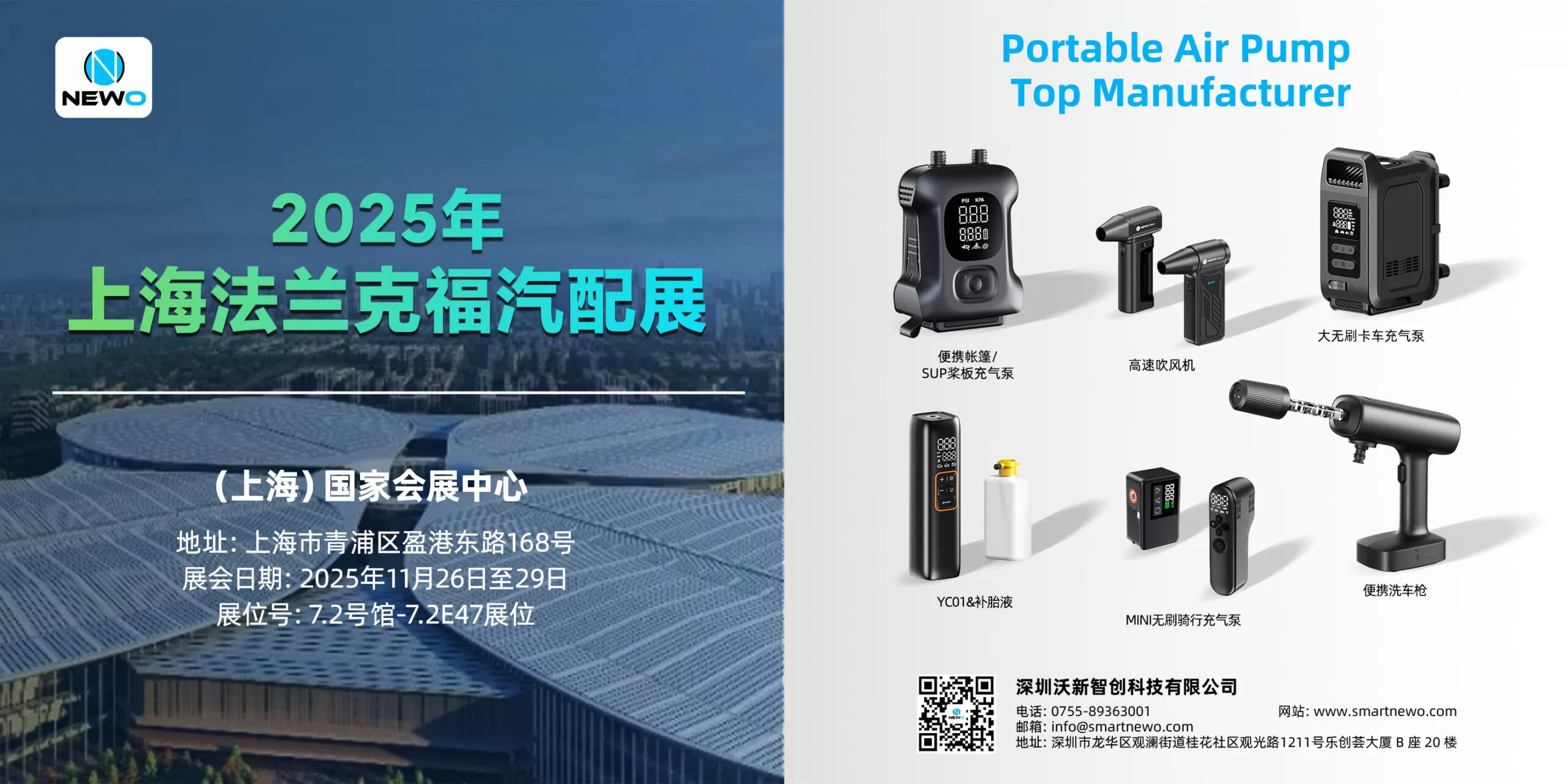
Today marks an exciting beginning as Smartnewo officially opens its booth at Automechanika Shanghai 2025. As one of the largest and most influential automotive aftermarket exhibitions in the world, the show provides an exceptional platform for meaningful conversations, partnership building, and global industry exchange. Located at Booth 7.2E47, Smartnewo presents... -

Why Every Outdoor Cyclist Should Carry a Mini Electric Bike Pump
Whether you are an experienced mountain rider or a weekend road-cycling enthusiast, one thing is certain: unexpected tire pressure issues can ruin an entire ride. That’s why more cyclists are turning to mini electric bike pumps—compact, lightweight, and far more reliable than traditional hand pumps. 1. Consistent Pressure, Even in...

-
How Is a Football Properly Inflated?
The correct inflation of a football - with not too much and not too little air - is a hotly debated topic among footballers.... -
Application Scenarios of Car Inflator Pump
Often long-distance business trips or play car owners because the road may be more remote areas, in this case if you encounter a tire leak....