
 Portable Tire Inflators
 Electric Air Pumps
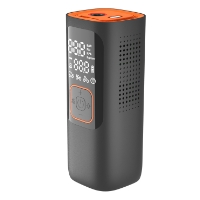 Electric Car Tyre Pumps
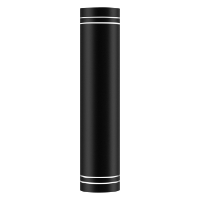 Electric Ball Pumps
 Electric Bike Pump
 SUP Air Pump
Electric Air Ball Pump: Pressure Control and Runtime Design for Team Equipment
Sports equipment tends to suffer from a common problem that rarely gets discussed: inconsistent ball pressure. A basketball that feels perfect during morning practice may bounce unpredictably by afternoon, yet most teams rely on hand pumps that offer no feedback and demand physical effort. Electric air ball pumps address this gap by automating inflation while embedding pressure guidance directly into the device.
The shift toward electric inflation reflects a broader pattern in sports equipment management. Where manual pumps required someone to count strokes or guess pressure by feel, electric models integrate sensors, battery systems, and automatic shut-off logic. These changes reduce the cognitive load on coaches, equipment managers, and players who need to prepare multiple balls quickly without compromising consistency.
Why Manual Pumps Create Pressure Variance
Traditional hand pumps inflate balls through mechanical action, but they provide no real-time pressure data. Users pump until the ball "feels right," a subjective measure that varies between individuals and across fatigue levels. This approach works for casual use, but it introduces problems in competitive or training environments where ball behavior must remain predictable.
Over-inflation damages the bladder and shortens ball life. Under-inflation affects bounce height and flight characteristics. Both outcomes waste budget and disrupt play. Manual gauges exist, but they require a separate measurement step after inflation, adding time and creating a workflow gap that many users skip.
Electric air ball pumps solve this by integrating pressure monitoring into the inflation process. Models like the AP1 display a 6–12 PSI range indicator, covering the regulation pressures for basketballs (7.5–8.5 PSI), soccer balls (8.5–15.6 PSI), and rugby balls (9.5–10 PSI). The automatic shut-off stops airflow when the target pressure is reached, removing guesswork and reducing operator error.
Battery Capacity and Inflation Volume
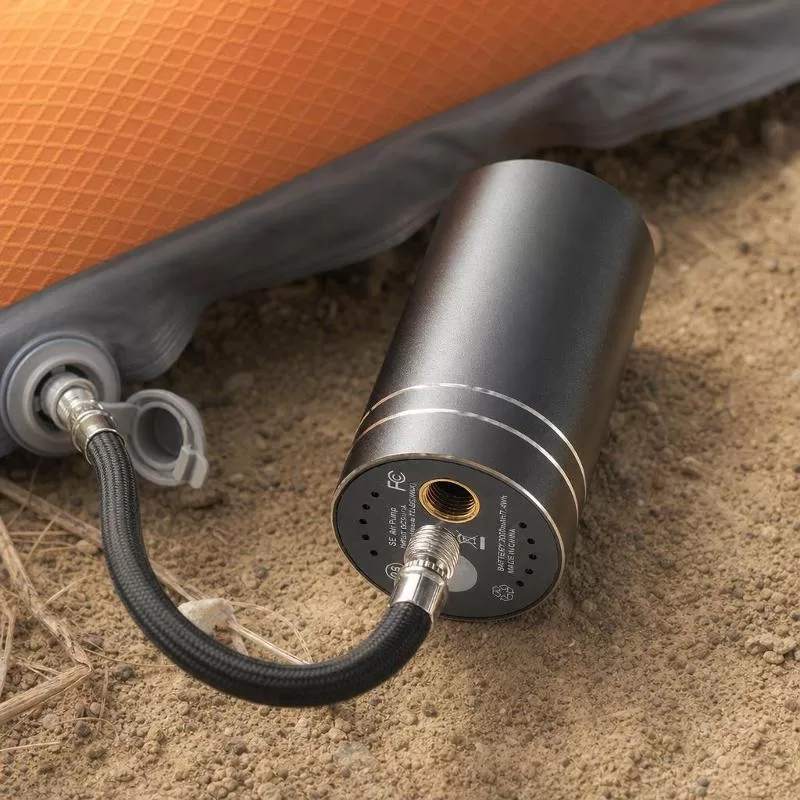
Runtime determines whether an electric pump suits individual use or team-scale preparation. The AP1 uses a 2000 mAh, 3.7 V lithium battery (7.4 Wh total energy) and delivers approximately 40 minutes of continuous operation. At 3.5 L/min airflow, this translates to about 25 basketball inflations per charge—enough for a full team set plus spares.
Battery cycle life is rated at 300 cycles with 85% capacity retention, meaning the pump will maintain most of its runtime through roughly one season of daily use or several years of recreational use. Charging takes 2.5–3.5 hours via Micro-USB at 5 V / 0.8 A, allowing overnight replenishment between training days.
These numbers matter because they define the device’s role in a workflow. A pump that can inflate five balls per charge suits personal use but creates bottlenecks for team managers. A pump that runs for 40 minutes and recharges in three hours fits multi-day tournaments or weekly practice schedules without requiring mid-session downtime.
| Specification | Value |
|---|---|
| Battery Capacity | 2000 mAh, 3.7 V, 7.4 Wh |
| Charging Time | 2.5–3.5 hours |
| Runtime | 40 minutes continuous |
| Inflation Capacity | ~25 basketballs per charge |
| Airflow | 3.5 L/min |
| Cycle Life | 300 cycles at ≥85% capacity |
Portability and Form Factor
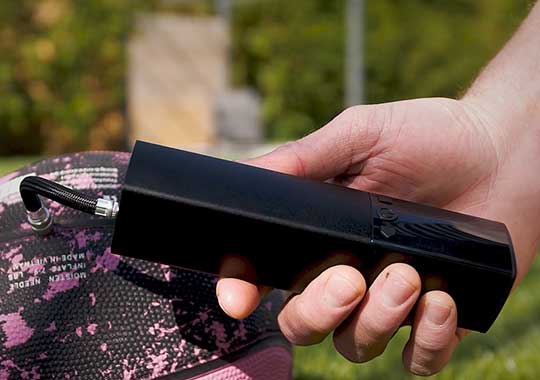
Weight and size determine whether a pump travels with the equipment or stays in storage. The AP1 measures 36 × 36 × 160 mm and weighs 185 g, making it roughly the size of a thick marker and light enough to fit in a gym bag without adding noticeable bulk. The aluminum housing provides structural rigidity while keeping the weight below 200 g, a threshold that influences whether users actually carry the pump or leave it behind.
Cylindrical form factors optimize packing efficiency. The AP1’s shape fits into bottle pockets, tool rolls, or alongside sports gear without creating awkward protrusions. This contrasts with handheld models that use pistol-grip designs, which offer better ergonomics during extended use but take up more space in transit.
Portability also affects use context. A compact pump moves easily between practice fields, locker rooms, and tournament venues. It supports ad-hoc inflation when a ball loses pressure mid-game or when equipment arrives deflated. For teams that travel frequently, the ability to prep balls on-site rather than transporting pre-inflated equipment reduces vehicle space requirements and minimizes pressure loss during transport.
Noise and Operating Environment
Noise level influences where and when a pump can be used without disrupting surrounding activity. The AP1 operates at 35 dB or below at one meter, comparable to a quiet library or soft conversation. This allows inflation during team meetings, in shared locker rooms, or near sleeping areas during overnight tournaments without creating acoustic interference.
The brushed motor design prioritizes cost and simplicity over the near-silent operation of brushless alternatives. Brushed motors generate more audible hum due to commutator friction, but they remain mechanically straightforward and easier to service. For a ball pump used intermittently rather than continuously, the trade-off favors reliability and price over marginal noise reduction.
Operating temperature range runs from -10°C to 45°C, covering most outdoor sports conditions. Cold weather reduces battery efficiency, shortening runtime by 10–20% near the lower limit. High temperatures accelerate chemical aging inside the lithium cell but remain within safe operating margins for the AP1’s battery protection circuit (4.2 V charge cutoff, 3 V discharge cutoff).
Application Scope and Use Cases
Electric air ball pumps serve three primary use patterns: individual sports practice, team equipment management, and recreational or household inflation. Each context places different demands on the device.
Individual use emphasizes portability and simplicity. A player maintaining a personal basketball or soccer ball needs a tool that inflates accurately without requiring multiple steps or external gauges. The AP1’s automatic shut-off and guided pressure range suit this pattern by reducing the skill barrier and ensuring consistent results.
Team use shifts the priority toward volume and speed. Coaches or equipment managers preparing 15–20 balls before practice benefit from the AP1’s 25-ball capacity per charge and 3.5 L/min airflow, which inflates a basketball in roughly 90–120 seconds depending on initial pressure. The emergency light adds utility during early-morning or late-evening sessions in poorly lit facilities.
Recreational use includes inflating children’s balloons, small swim rings, and sports balls during family outings. The 12 PSI maximum pressure handles these objects safely, though it excludes high-pressure applications like road bike tires (80–130 PSI) or SUP boards (12–15 PSI sustained inflation).
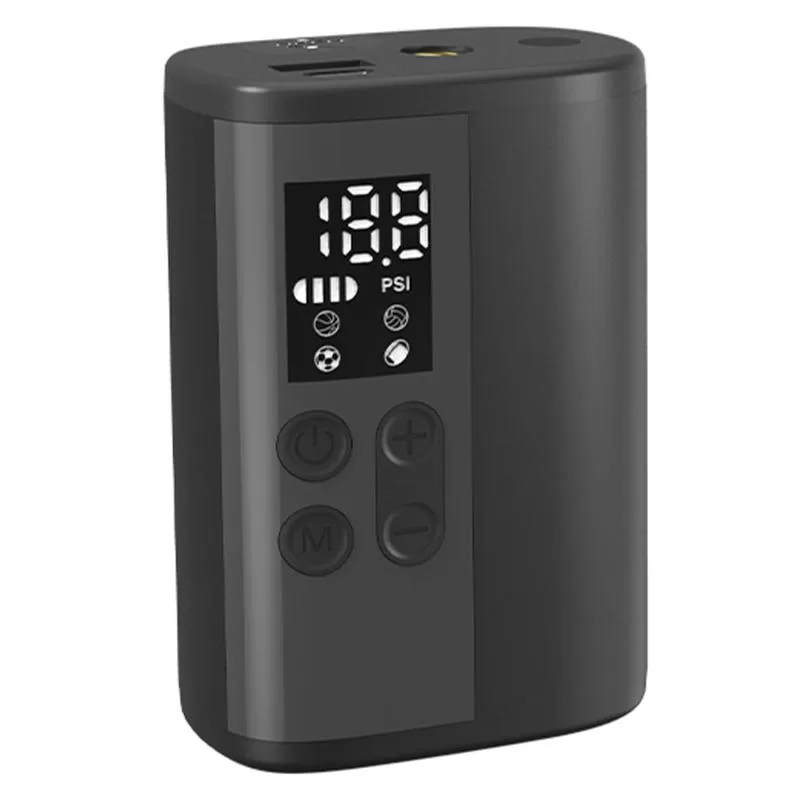
For us at Newo, these scenarios inform design decisions around battery size, pressure range, and form factor. We prioritize applications where portability and ease of use create measurable improvements over manual alternatives, rather than chasing maximum pressure or airflow numbers that exceed most users’ actual needs.
Charging Infrastructure and Cable Compatibility
The AP1 uses a Micro-USB charging port, a connector standard that remains widespread despite the gradual shift toward USB-C in newer consumer electronics. Micro-USB cables are widely available, inexpensive, and compatible with older charging adapters, power banks, and car USB ports. This reduces the likelihood that users will need to carry a proprietary cable or adapter.
However, Micro-USB has limitations. The connector is not reversible, requiring correct orientation during insertion. It also supports lower power throughput compared to USB-C, which constrains charging speed. At 5 V / 0.8 A (4 W), the AP1’s charging rate is conservative, extending charge time to 2.5–3.5 hours. Faster charging would require higher input current and thermal management to prevent battery degradation.
For team environments with multiple pumps, standardized charging infrastructure matters. A single multi-port USB charger can replenish several AP1 units overnight, while USB car adapters enable charging during transport. The 2000 mAh capacity allows emergency top-ups—30 minutes of charging adds roughly 200–250 mAh, enough for five to six additional basketball inflations.
Pressure Range and Sport-Specific Requirements
Different sports specify different regulation pressures, and a pump’s usable range determines which balls it can service effectively. The AP1’s 6–12 PSI range covers most common sports balls but excludes a few edge cases.
- Basketball: Regulation pressure is 7.5–8.5 PSI (NBA, FIBA). The AP1’s range comfortably includes this target.
- Soccer ball: FIFA specifies 8.5–15.6 PSI (0.6–1.1 bar). The AP1 can inflate to 12 PSI, slightly below the upper regulation limit but sufficient for recreational and most training use.
- Volleyball: FIVB regulation pressure is 4.26–4.61 PSI (0.3–0.32 bar). The AP1’s lower bound of 6 PSI exceeds this, so users must rely on manual technique or partial inflation to avoid over-pressurizing.
- American football: NFL regulation pressure is 12.5–13.5 PSI. The AP1 reaches the lower end of this range but cannot achieve the upper limit.
- Rugby ball: World Rugby regulation pressure is 9.5–10 PSI (0.67–0.70 bar). The AP1 fully covers this range.
This makes the AP1 most suitable for basketball, soccer (recreational), and rugby use, with limited applicability for volleyball and American football at regulation pressure. Users working with multiple sports should verify pressure requirements before relying on a single pump model.
Emergency Light and Secondary Functions
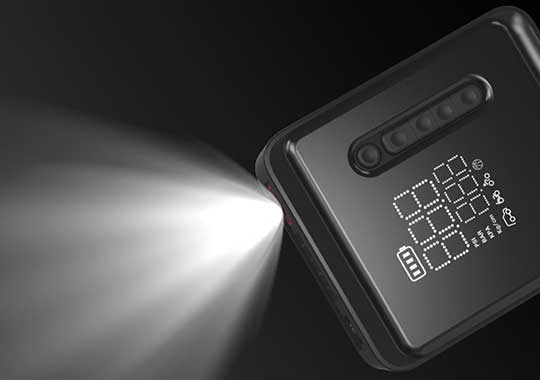
The AP1 includes an integrated emergency light in the end cap, a feature that adds minimal weight but expands use contexts. The light serves several purposes: locating the pump in a dark equipment bag, illuminating a ball valve during low-light inflation, or providing backup visibility during outdoor activities.
Emergency lights in compact devices typically use a single white LED powered directly from the battery. They draw 0.1–0.3 W, allowing hours of runtime without significantly draining the cell. The AP1’s light is accessed via a dedicated button on the control panel, preventing accidental activation during transport.
While not a primary function, the emergency light reflects a design philosophy that values multi-use utility in portable tools. It costs little to implement but increases the likelihood that users will carry the pump regularly, raising the device’s overall return on investment.
Material Construction and Durability
The AP1 uses an aluminum housing, a material choice that balances weight, strength, and thermal conductivity. Aluminum resists dents better than plastic, dissipates motor heat more effectively, and provides a tactile premium feel compared to injection-molded alternatives. The satin or matte finish reduces fingerprint visibility and offers better grip than glossy coatings.
However, aluminum is more expensive to machine than plastic and requires anti-corrosion treatment to prevent oxidation. Anodizing or powder coating adds a protective layer while maintaining the metal’s structural benefits. The AP1’s cylindrical shape simplifies manufacturing—cylindrical extrusions and end caps require fewer tooling operations than complex molded geometries.
Durability in portable pumps depends on impact resistance, seal integrity, and electrical component protection. The brushed motor inside the AP1 uses mechanical commutators that wear over time, with typical lifespans of 500–1000 hours of operation. At 40 minutes per charge and 25 charges per season, a competitive team might accumulate 40–50 hours per year, suggesting a multi-season lifespan under normal use.
Maintenance and Operational Lifespan
Electric pumps require minimal maintenance, but a few practices extend operational life. Keeping the charging port clean prevents connection issues—Micro-USB ports accumulate dust and lint when exposed, which can block contact pins or wedge foreign material into the connector. A small plastic cap or carrying pouch mitigates this risk.
Battery health degrades with charge cycles and temperature exposure. Storing the pump at partial charge (40–60%) rather than full or empty reduces long-term capacity loss. Avoiding full discharge below the protection cutoff (3 V) also preserves cell chemistry. The AP1’s integrated protection circuit prevents damage from over-discharge, but users can further extend lifespan by recharging before the battery fully drains.
Motor brush wear is the primary consumable element. Brushed motors gradually lose efficiency as the carbon brushes erode, eventually requiring replacement or device retirement. For most recreational and team users, this occurs beyond the economic replacement window—by the time motor performance noticeably degrades, newer models with improved features or reduced prices make repair less cost-effective than replacement.
Comparative Workflow Analysis
Switching from manual to electric inflation changes the workflow in measurable ways. A manual hand pump requires 50–100 strokes to inflate a basketball, taking 2–3 minutes and demanding sustained physical effort. An electric air ball pump completes the same task in 90–120 seconds with no user fatigue, but it introduces a charging dependency.
For a single ball, the time savings are modest. For 15 balls, manual inflation takes 30–45 minutes and tires the operator. Electric inflation takes 22–30 minutes and preserves energy for other tasks. The cognitive load also shifts—manual pumping requires constant attention to feel and stroke count, while electric pumping only requires initial setup and occasional monitoring.
However, electric pumps introduce failure modes that manual pumps do not. A dead battery, damaged charging cable, or motor failure renders the device temporarily useless. Manual pumps have fewer failure points—a broken hose or valve can often be field-repaired with basic tools. Teams that rely exclusively on electric pumps should maintain a manual backup for critical use cases.
Purchasing Considerations and Fit Assessment
Choosing an electric air ball pump depends on matching device capabilities to actual use patterns. The AP1’s specifications align well with scenarios that involve:
- Regular inflation of 5–25 balls per session
- Pressure requirements between 6–12 PSI
- Portability demands that favor sub-200 g weight
- Budget constraints that favor cost-effective brushed motor designs
- Multi-sport use across basketball, soccer, and rugby
It fits less well when:
- Volleyball or high-pressure American football inflation is required
- More than 25 balls must be inflated between charges
- Silent operation is essential (brushless models perform better)
- USB-C charging is a hard requirement
For team equipment managers, the AP1’s 25-ball capacity per charge and compact form factor make it suitable for small to mid-size programs. Larger programs may need multiple units or a higher-capacity model. For individual athletes, the balance of portability, runtime, and price positions the AP1 as a practical everyday carry item that eliminates the friction of manual inflation without introducing complex controls or excessive weight.
The emergency light, automatic shut-off, and guided pressure range represent thoughtful feature choices that address real workflow pain points rather than adding novelty for its own sake. These details accumulate into a device that handles the repetitive, low-skill task of ball inflation reliably, freeing attention for coaching, training, and play.
-

Meet NEWO at the 140th Canton Fair: Visit Booth 10.3 M03–04
Meet NEWO at the 140th Canton Fair in Guangzhou, October 15–19, 2026. Visit Booth 10.3 M03–04 to explore portable air pumps and discuss OEM, ODM and distribution opportunities.... -

As Shenzhen Welcomes the World for APEC 2026, NEWO Welcomes You to Our Factory
As Shenzhen prepares for APEC 2026, NEWO welcomes international buyers and partners to visit our factory, meet our team and explore future cooperation.... -

Leading the Way in Product Innovation and Excellence
Smartnewo exemplifies professionalism in product innovation and manufacturing. Their collaboration with Xiaomi Youpin on the G01 crowdfunding project highlights their expertise in creating compact, powerful inflatable pumps. Rigorous engineering, meticulous production processes, and advanced quality assurance underscore their commitment to excellence. The success of the G01 project, with significant market... -

Essential Qualities of an Excellent Supplier
In today's competitive market, finding a reliable supplier is crucial for business success. Based on insights from Smartnewo and broader internet research, here are key qualities an excellent supplier must possess:... -

NW06 Tire Inflator: Compact Power for Quick Inflation
Summary The NW06 Tire Inflator delivers quick and efficient tire inflation with a powerful 35L/min airflow. It features a user-friendly LCD screen for real-time pressure monitoring, dual power options with a built-in 6000mAh battery, and multiple nozzle attachments for versatile use. Its compact design and integrated LED light ensure convenience and... -

Unleash the Power of Portability: The SmartNewo Jump Starter with Air Compressor KF03
This guide will walk you through the steps to effectively use a portable tire inflator, helping you stay prepared and safe on the road.... -

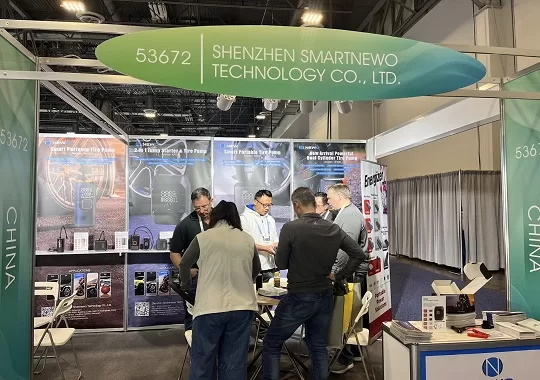
Newo Attends The 2024 Consumer Electronics Show (CES)
Smartnewo booth is located at 53672, Halls A-D, Level 2, Venetian Expo, Las Vegas Convention Center (LVCC). ... -

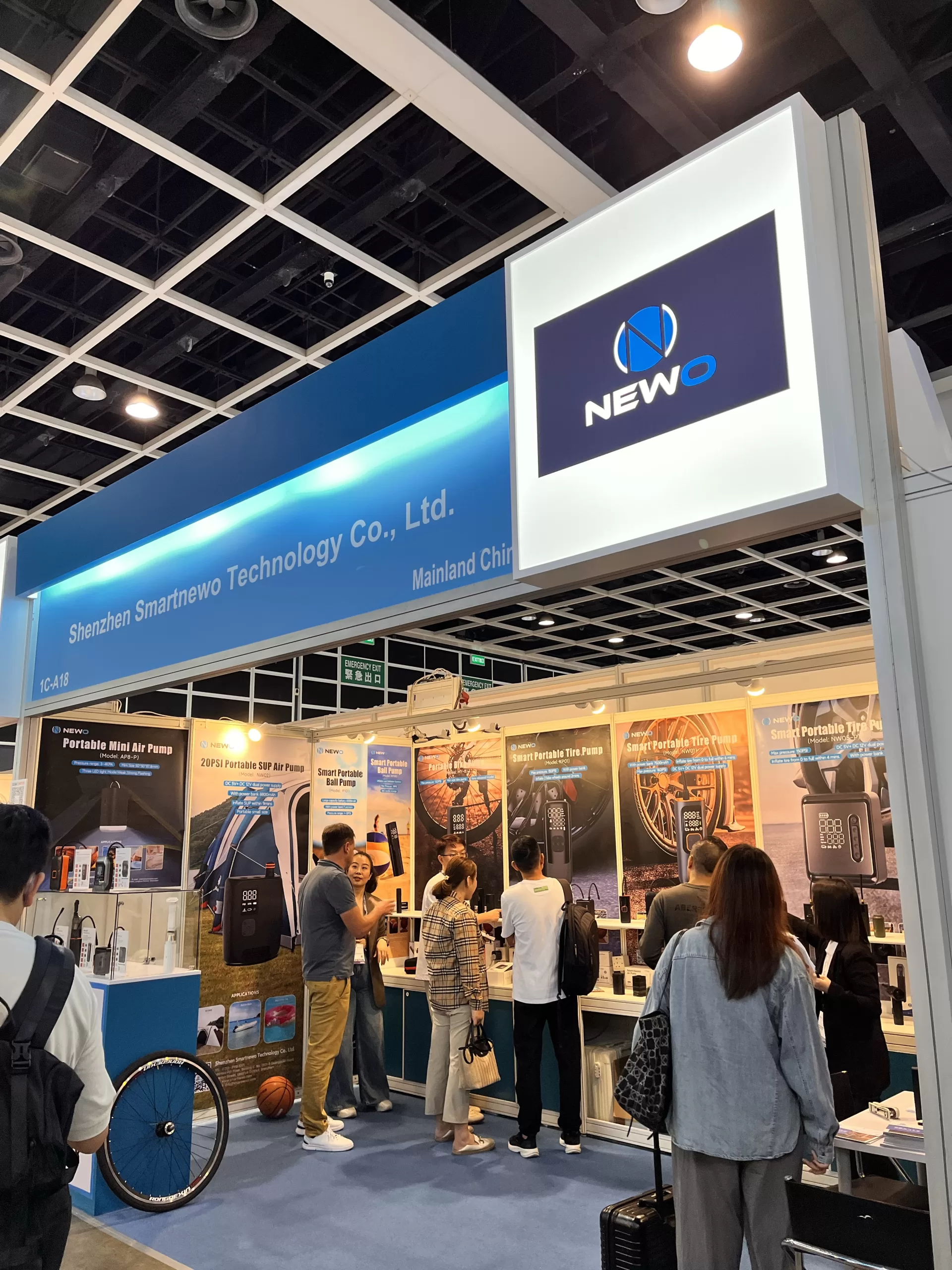
Smartnewo’s Dual-Cylinder Air Pump Rocks the Hong Kong Autumn Electronics Fair!
Smartnewo’s Dual-Cylinder Air Pump Rocks the Hong Kong Autumn Electronics Fair!... -

Meet at the Canton Fair! Smartnewo brings dual-cylinder air pumps, making your inflation experience faster and more stable!
NEWO has went deep communication and negotiation with customers from all over the world on booth.... -

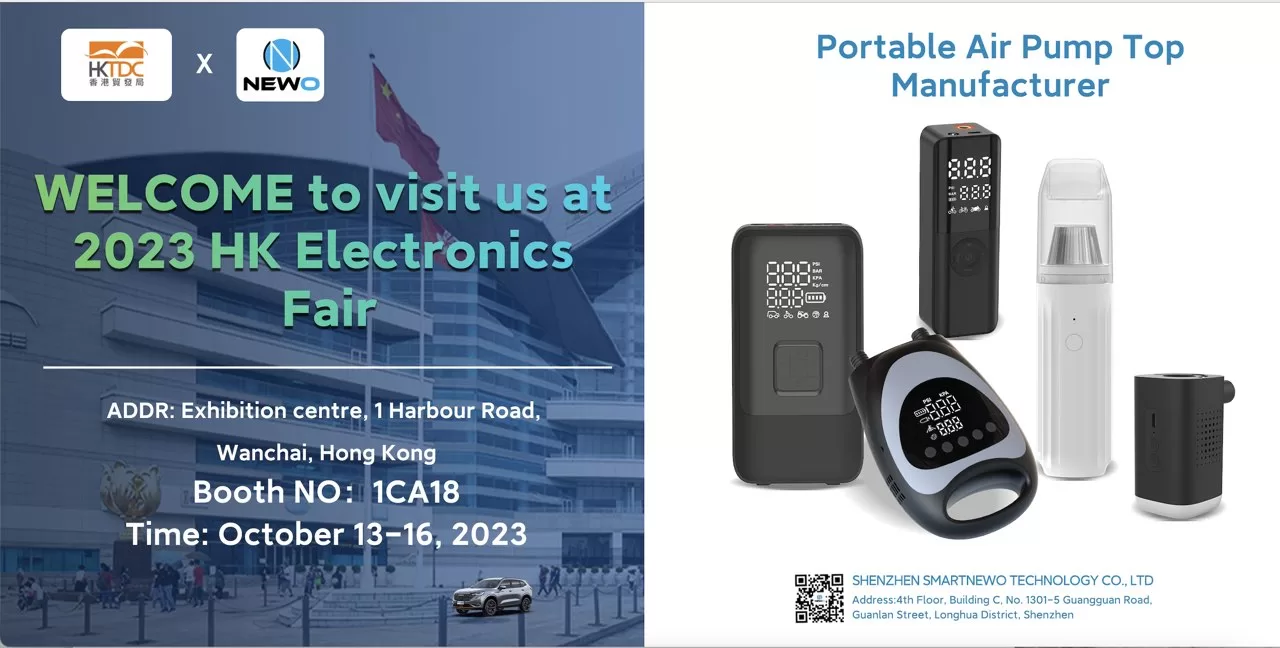
“Hong Kong Autumn Electronics Fair – 1CA18 (October 13th to 16th): Smartnewo invites you to visit our booth!
Hong Kong Autumn Electronics Fair...
-

Rechargeable Electric SUP Pump for Paddle Boards: Faster Inflation for SUPs, Kayaks and Inflatable Tents
The BL10-C Portable Electric Bike Tire Inflator is a compact and lightweight mini electric bike pump designed for modern cyclists. With up to 120 PSI pressure, a digital LED display, preset pressure control, automatic shut-off, USB-C charging, and multiple valve adapters, BL10-C offers a convenient inflation solution for road bikes,... -

Are Electric Bike Pumps Worth It in 2026? Electric Pump vs CO₂ vs Mini Hand Pump
Discover whether electric bike pumps are worth it in 2026. This guide compares electric bike pumps, CO₂ inflators, and mini hand pumps for road cycling, gravel riding, commuting, and long-distance rides. Learn the pros, limitations, best use cases, and key features to look for before choosing the right portable tire... -
BL10-C Portable Electric Bike Tire Inflator: Small Size, Reliable Power for Every Ride
The BL10-C Portable Electric Bike Tire Inflator is a compact and lightweight mini electric bike pump designed for modern cyclists. With up to 120 PSI pressure, a digital LED display, preset pressure control, automatic shut-off, USB-C charging, and multiple valve adapters, BL10-C offers a convenient inflation solution for road bikes,... -

Why Mini Electric Bike Pumps Are Becoming Essential for Modern Cycling
Discover why mini electric bike pumps are becoming essential for modern cyclists. Learn how portable electric bike pumps improve tire pressure management, riding safety, and convenience.... -

The Ultimate Smart Solution for Easy Outdoor Adventures in 2026
Discover how a spring travel air pump simplifies outdoor trips with fast inflation, smart features, and powerful performance—perfect for every adventure.... -

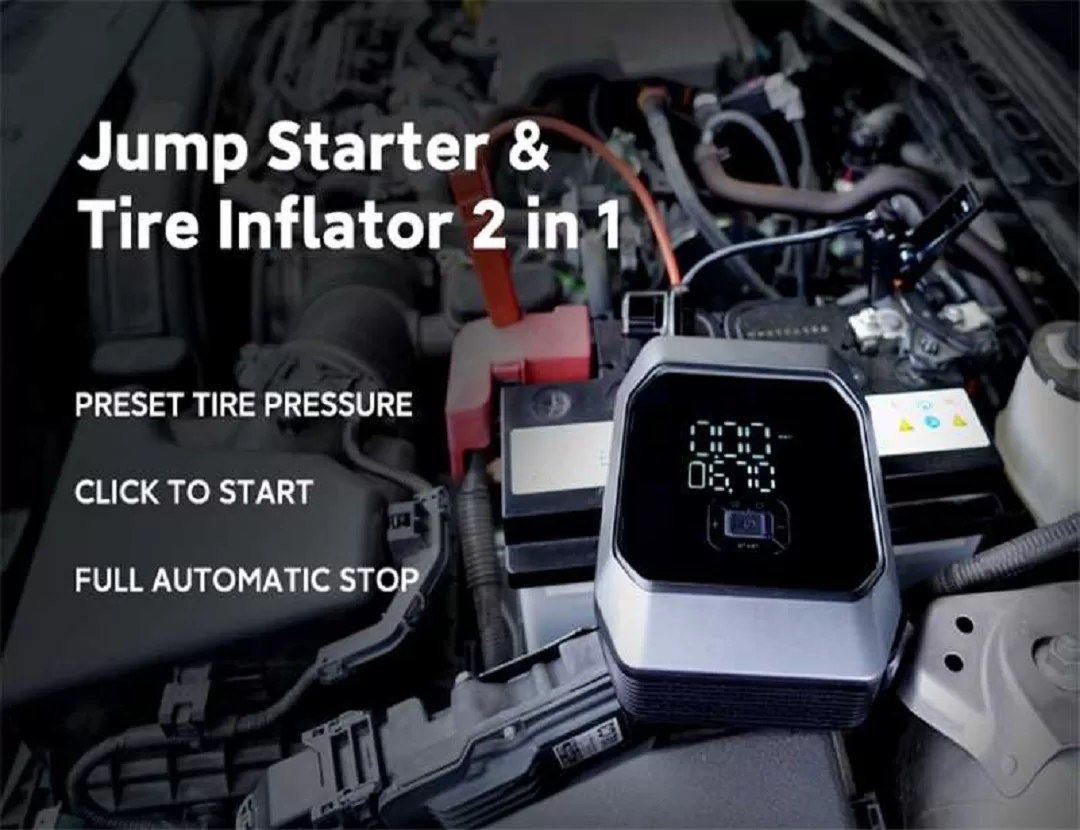
Powerful 5-in-1 Portable Car Tire Inflator and Jump Starter: The Ultimate Emergency Tool for Every Driver
Why Every Driver Needs a Portable Car Tire Inflator and Jump Starter Modern drivers face many unexpected situations on the road. A flat tire, low tire pressure, or a dead car battery can happen at the worst possible time. That’s why having a portable car tire inflator and jump starter is... -

7 Real Cycling Scenarios That Show Why Every Rider Should Carry a Mini Bike Pump
Cycling is one of the most freeing activities you can enjoy. Whether you’re commuting to work, riding through city streets, or exploring quiet countryside roads, a bike ride can instantly improve your day. But there’s one small problem that almost every cyclist eventually faces: Low tire pressure. It might happen... -
BL08-A Portable Electric Bike Pump: A Global Distribution Opportunity with Smartnewo
Smartnewo, a professional manufacturer of portable electric air pumps, introduces the BL08-A model — a compact and efficient inflator designed for global distributors, e-commerce sellers, and outdoor accessory brands seeking reliable OEM/ODM solutions. Table of Contents Main Heading Subtopics 1. Introduction: Expanding the Global Market for Smart Inflation Tools Portable... -

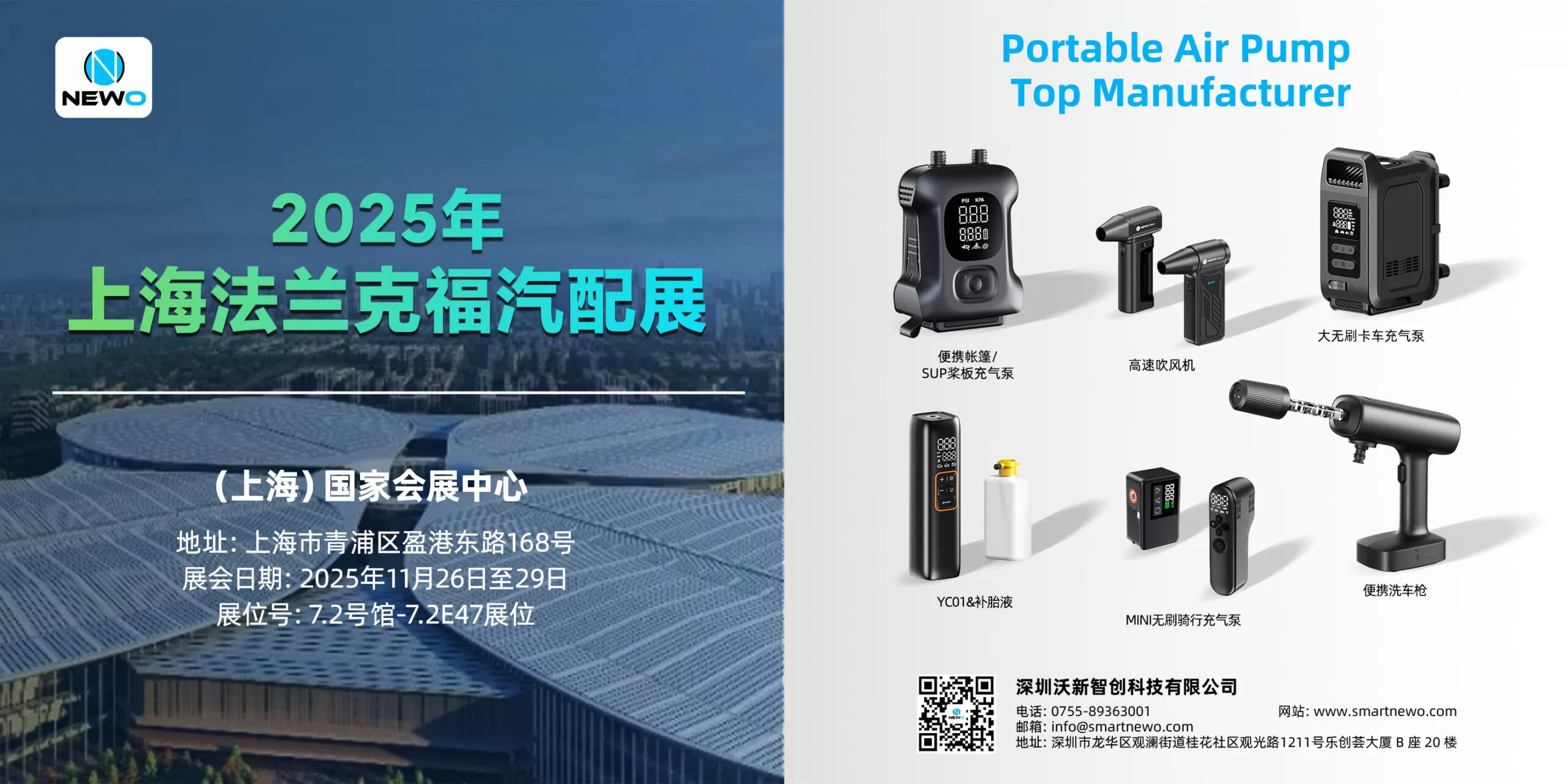
Connecting Opportunities at Automechanika Shanghai 2025 — Smartnewo Exhibition Day 1
Today marks an exciting beginning as Smartnewo officially opens its booth at Automechanika Shanghai 2025. As one of the largest and most influential automotive aftermarket exhibitions in the world, the show provides an exceptional platform for meaningful conversations, partnership building, and global industry exchange. Located at Booth 7.2E47, Smartnewo presents... -

Why Every Outdoor Cyclist Should Carry a Mini Electric Bike Pump
Whether you are an experienced mountain rider or a weekend road-cycling enthusiast, one thing is certain: unexpected tire pressure issues can ruin an entire ride. That’s why more cyclists are turning to mini electric bike pumps—compact, lightweight, and far more reliable than traditional hand pumps. 1. Consistent Pressure, Even in...

-
How Is a Football Properly Inflated?
The correct inflation of a football - with not too much and not too little air - is a hotly debated topic among footballers.... -
Application Scenarios of Car Inflator Pump
Often long-distance business trips or play car owners because the road may be more remote areas, in this case if you encounter a tire leak....