

 Portable Tire Inflators
 Electric Air Pumps
 Electric Car Tyre Pumps
 Electric Ball Pumps
 Electric Bike Pump
 SUP Air Pump

How to Choose the Right Electric Bike Pump for Your Needs
Electric bike pumps have transformed the way cyclists maintain tire pressure, eliminating the frustration of manual pumping and the inconsistency of traditional hand pumps. Whether you’re commuting daily, tackling long-distance rides, or managing multiple bikes, understanding how electric bike pumps work and what features matter most can help you make a smarter purchase decision.
The core appeal of an electric bike pump lies in its efficiency. A quality electric bike pump delivers consistent pressure with minimal effort, turning a five-minute chore into a 30-second task. But not all electric pumps are created equal, and choosing the wrong one means carrying dead weight on your travels or struggling with compatibility issues when you need inflation most.
Understanding Pressure Ratings and What They Mean
Pressure rating is the first number that catches your eye on any electric bike pump spec sheet, but its significance often gets misunderstood. The maximum PSI (pounds per square inch) your pump can deliver directly determines what tires it can inflate and how quickly.
Most bicycle tires fall into two categories: road bike tires typically need 80–130 PSI, while mountain bike and hybrid tires usually settle around 30–60 PSI. An electric bike pump rated for 150 PSI covers both ranges comfortably and handles other inflation needs—car tires, motorcycle tires, and even sports balls—without compromise.
However, raw pressure capacity tells only half the story. What matters equally is how quickly your pump reaches that pressure. Air flow rate, measured in liters per minute (L/min), determines whether you’re filling a tire in seconds or watching the battery drain while you wait.
Air Flow Rate: Speed Matters More Than You Think
An electric bike pump delivering 15–18 L/min can fill a standard bicycle tire in under two minutes. This matters not just for convenience, but for battery efficiency. A slower pump forces your rechargeable battery to work longer, reducing the number of tires you can fill on a single charge.
Consider your real-world scenario. If you’re maintaining a single commuter bike, a modest air flow may suffice. But if you manage multiple bikes or frequently help friends and family, a pump with higher L/min output saves both time and battery power. The relationship is direct: faster air flow means more tire inflations per charge, multiplied across your trips.
A pump specified for approximately 10–15 bicycle tires per full charge gives you a practical benchmark. If you typically inflate three bikes, you’re covered for a week without recharging.
Battery Capacity and Runtime Considerations
The battery inside your electric bike pump determines how independent you can be from wall outlets. A 2000mAh capacity with 7.4V output (common in portable pumps) typically provides 20–30 minutes of continuous operation—enough to handle multiple inflation tasks.
That runtime translates to meaningful tire counts. A 2–3 hour charging window means you can top up during your work commute or overnight and arrive ready for several days of use. Type-C charging has become standard, so you can use the same cable as your phone or laptop, eliminating the need for specialized equipment when traveling.
Battery memory and degradation vary by chemistry and usage patterns. Lithium-ion batteries—the standard for portable pumps—tolerate partial charges without performance loss, so you don’t need to drain the battery completely before recharging.
Preset Modes and Pressure Memory Functions
Modern electric bike pumps include preset inflation modes for common tire types: car tires, motorcycles, bicycles, and sports balls. This feature prevents user error and removes the guesswork. You select your tire type, and the pump automatically stops when target pressure is reached.
Automatic shut-off prevents overinflation, which can damage tire sidewalls or create balance problems. This is especially valuable when you’re distracted or rushing. The pressure memory function—storing your last-used setting—reduces steps on repeat inflations, making the process almost automatic for daily use.
Some pumps also let you set custom pressure limits, useful if you run non-standard tire pressures or need precise control for specific applications like tubeless tire seating or suspension pressure adjustments.
Portability and Weight Constraints
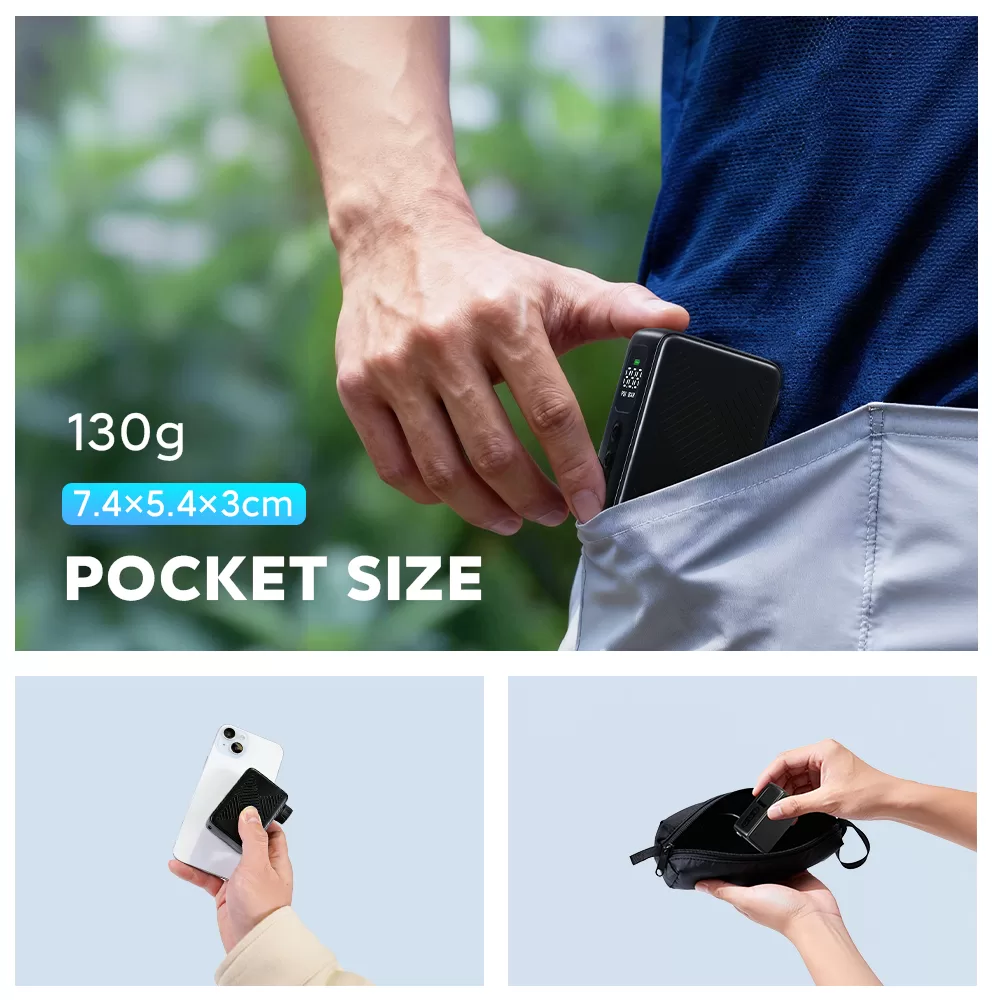
An electric bike pump worth carrying must be genuinely portable. Most modern designs weigh between 300–400 grams and measure roughly 150mm in height, fitting inside a small backpack pocket or seat bag without noticeable bulk.
Weight becomes critical on longer rides where every gram compounds fatigue. A 385-gram pump feels negligible compared to a traditional hand pump and its mounting hardware, yet provides vastly more capability. The real trade-off isn’t weight but rather the guarantee that you have power assistance versus manual labor when you need it most.
Compact cylindrical designs are easier to store and handle than rectangular models. Look for rounded corners and textured grips that prevent slipping when your hands are wet or cold.
Adapter Compatibility and Multi-Purpose Use
An electric bike pump with three included adapters—Schrader (car tire), Presta (road bike), and needle valve (sports balls)—covers nearly every inflation scenario. But verify the adapter fit quality before purchasing. Loose connections cause air leaks and pressure fluctuations, turning a fast pump into a frustratingly slow one.
Some pumps include additional valve adapters for sports balls, pool floats, or inflatable devices. If you maintain different bike types or help others regularly, multiple adapters shift from convenience to necessity.
Display Quality and Readability
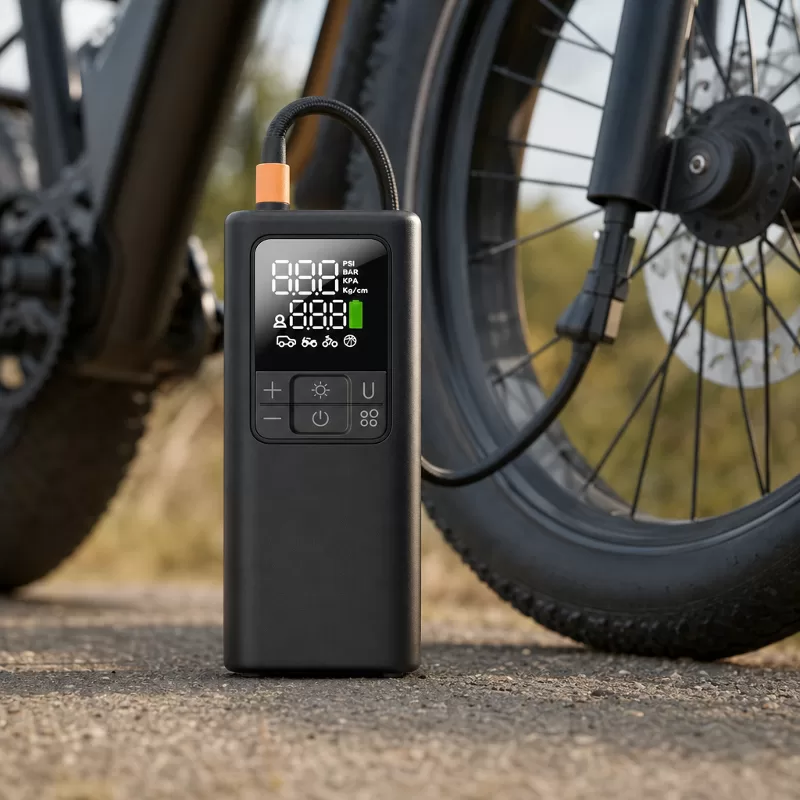
The LCD display on your pump should show pressure readings clearly in all lighting conditions. A backlit screen becomes non-negotiable if you ride early morning or evening. Segmented digit displays (similar to digital alarm clocks) are more legible than dot-matrix style at a glance.
The display should show multiple pressure units—PSI, BAR, KPA, and Kg/cm²—for compatibility with international specs and different user preferences. Some cyclists prefer thinking in PSI, others in BAR; flexibility removes confusion.
Battery indicator visibility prevents surprises mid-inflation. A clear battery status icon tells you whether you can complete your task or need to charge first.
Thermal Management and Noise Levels
Prolonged inflation generates heat. A pump with active heat dissipation—typically a small fan—prevents thermal shutdown and extends usable runtime on hot days or during back-to-back inflations. Operating temperature range (typically -10°C to 45°C) indicates whether your pump functions reliably in winter or high-altitude conditions.
Noise levels matter if you’re inflating tires early morning or in shared spaces. Most quality electric pumps operate at 85dB or below at one meter—roughly equivalent to heavy traffic noise rather than power tools. This permits early-morning use without disturbing neighbors.
Additional Features Worth Evaluating
An LED emergency light transforms your pump into a backup lighting tool. During roadside repairs in darkness, a built-in light provides hands-free illumination and removes the need to carry a separate flashlight.
Power-bank capability (5V output at 1.5A) lets your pump charge phones or GPS devices. This matters on multi-day trips where charging infrastructure is unreliable. It also means your pump serves dual purpose—inflation and emergency power—reducing total gear weight.
Comparing Electric Bike Pumps: A Practical Framework
| Feature | Priority | Why It Matters |
|---|---|---|
| Maximum Pressure | Essential | Must match your tire valve type and pressure needs |
| Air Flow Rate | High | Determines inflation speed and battery efficiency |
| Battery Capacity | High | Enables multi-tire inflation without recharging |
| Automatic Shut-Off | High | Prevents overinflation and user error |
| Pressure Units | Medium | Flexibility for different tire specifications |
| Adapter Quality | High | Poor adapters cause air leaks and slow inflation |
| Display Backlight | Medium | Necessary for low-light conditions |
| Weight | Medium | Affects portability on long rides |
| Thermal Management | Medium | Extends usable runtime on hot days |
| Additional Features | Low | Nice-to-have conveniences like LED light |
Common Mistakes When Buying an Electric Bike Pump
Selecting based on maximum PSI alone misses the real-world picture. A 150 PSI pump isn’t necessarily better than a 100 PSI pump if your bikes need only 60 PSI and air flow rates differ dramatically.
Ignoring battery runtime leads to frustration. A pump that dies after four or five tire inflations becomes a burden rather than a solution, especially on group rides or maintenance-heavy days.
Assuming all adapters fit equally creates compatibility disasters. Loose Presta or Schrader connections waste battery power and leave you with partially inflated tires. Always test adapter fit before committing to a model.
Overlooking charging convenience matters more than it seems. A pump requiring a rare proprietary cable becomes useless when you need it unless you pack extra cords. Type-C universality solves this problem.
Real-World Use Cases
A daily commuter handling a single hybrid or road bike benefits most from a lightweight, fast pump with 20–30 minute runtime. The automatic shut-off prevents puncture-inducing overinflation, and the compact form factor lives in a seat bag.
A bike shop or repair stand benefits from maximum air flow and pressure versatility. Shop pumps can handle car tires, wheelchairs, and sports equipment throughout the day without battery anxiety.
A touring cyclist or adventure rider needs robust battery capacity and multiple pressure units. Different altitudes and tire specifications demand flexibility, and multi-day trips between reliable power sources make battery size critical.
A casual rider managing multiple family bikes prioritizes ease of use and multi-purpose capability. Preset modes and automatic shut-off eliminate decision-making, and adapter variety lets one pump handle all household inflation needs.
Maintenance and Longevity
Regular maintenance extends pump lifespan. Storing in a cool, dry environment preserves battery health. Most lithium-ion batteries tolerate storage at partial charge, so leaving your pump at 50% capacity during off-season storage is better than fully draining it or storing it fully charged.
Clean adapters periodically to prevent dust buildup that can cause air leaks. Check hose connections for cracks or separation—these fail slowly and reduce pump efficiency without obvious warning.
Warranty coverage typically spans one year, so defects show up quickly. Purchase from retailers with reasonable return policies in case early failures occur.
Making Your Final Decision
Choosing an electric bike pump means balancing portability against capability, cost against features, and convenience against independence. The right pump depends on your specific needs rather than abstract specifications.
Start by honestly assessing your inflation frequency, tire variety, and weight sensitivity. If you commute with a single bike, maximum portability wins. If you maintain multiple bikes or ride in varied conditions, pressure range and adapter versatility become non-negotiable.
An electric bike pump rated for 150 PSI with 15–18 L/min air flow, automatic shut-off, and multiple preset modes covers nearly every scenario. It fills road bike tires and mountain bike tires equally well, handles emergency car tire inflation, and manages sports balls. The built-in battery provides 20–30 minutes of operation—enough for 10–15 bicycle tires per charge—making it practical for commuting, touring, and casual riding alike.
The gap between a mediocre pump and a good one emerges only during actual use. A slow pump or incompatible adapters create frustration every single time you inflate. A reliable electric bike pump becomes invisible—you use it, it works, and you forget it’s there. That reliability, multiplied across hundreds of inflations over years of riding, justifies the investment more than any single specification ever can.
-

Meet NEWO at the 140th Canton Fair: Visit Booth 10.3 M03–04
Meet NEWO at the 140th Canton Fair in Guangzhou, October 15–19, 2026. Visit Booth 10.3 M03–04 to explore portable air pumps and discuss OEM, ODM and distribution opportunities.... -

As Shenzhen Welcomes the World for APEC 2026, NEWO Welcomes You to Our Factory
As Shenzhen prepares for APEC 2026, NEWO welcomes international buyers and partners to visit our factory, meet our team and explore future cooperation.... -

Leading the Way in Product Innovation and Excellence
Smartnewo exemplifies professionalism in product innovation and manufacturing. Their collaboration with Xiaomi Youpin on the G01 crowdfunding project highlights their expertise in creating compact, powerful inflatable pumps. Rigorous engineering, meticulous production processes, and advanced quality assurance underscore their commitment to excellence. The success of the G01 project, with significant market... -

Essential Qualities of an Excellent Supplier
In today's competitive market, finding a reliable supplier is crucial for business success. Based on insights from Smartnewo and broader internet research, here are key qualities an excellent supplier must possess:... -

NW06 Tire Inflator: Compact Power for Quick Inflation
Summary The NW06 Tire Inflator delivers quick and efficient tire inflation with a powerful 35L/min airflow. It features a user-friendly LCD screen for real-time pressure monitoring, dual power options with a built-in 6000mAh battery, and multiple nozzle attachments for versatile use. Its compact design and integrated LED light ensure convenience and... -

Unleash the Power of Portability: The SmartNewo Jump Starter with Air Compressor KF03
This guide will walk you through the steps to effectively use a portable tire inflator, helping you stay prepared and safe on the road.... -

Newo Attends The 2024 Consumer Electronics Show (CES)
Smartnewo booth is located at 53672, Halls A-D, Level 2, Venetian Expo, Las Vegas Convention Center (LVCC). ... -

Smartnewo’s Dual-Cylinder Air Pump Rocks the Hong Kong Autumn Electronics Fair!
Smartnewo’s Dual-Cylinder Air Pump Rocks the Hong Kong Autumn Electronics Fair!... -

Meet at the Canton Fair! Smartnewo brings dual-cylinder air pumps, making your inflation experience faster and more stable!
NEWO has went deep communication and negotiation with customers from all over the world on booth.... -

“Hong Kong Autumn Electronics Fair – 1CA18 (October 13th to 16th): Smartnewo invites you to visit our booth!
Hong Kong Autumn Electronics Fair...










-

Rechargeable Electric SUP Pump for Paddle Boards: Faster Inflation for SUPs, Kayaks and Inflatable Tents
The BL10-C Portable Electric Bike Tire Inflator is a compact and lightweight mini electric bike pump designed for modern cyclists. With up to 120 PSI pressure, a digital LED display, preset pressure control, automatic shut-off, USB-C charging, and multiple valve adapters, BL10-C offers a convenient inflation solution for road bikes,... -

Are Electric Bike Pumps Worth It in 2026? Electric Pump vs CO₂ vs Mini Hand Pump
Discover whether electric bike pumps are worth it in 2026. This guide compares electric bike pumps, CO₂ inflators, and mini hand pumps for road cycling, gravel riding, commuting, and long-distance rides. Learn the pros, limitations, best use cases, and key features to look for before choosing the right portable tire... -
BL10-C Portable Electric Bike Tire Inflator: Small Size, Reliable Power for Every Ride
The BL10-C Portable Electric Bike Tire Inflator is a compact and lightweight mini electric bike pump designed for modern cyclists. With up to 120 PSI pressure, a digital LED display, preset pressure control, automatic shut-off, USB-C charging, and multiple valve adapters, BL10-C offers a convenient inflation solution for road bikes,... -

Why Mini Electric Bike Pumps Are Becoming Essential for Modern Cycling
Discover why mini electric bike pumps are becoming essential for modern cyclists. Learn how portable electric bike pumps improve tire pressure management, riding safety, and convenience.... -

The Ultimate Smart Solution for Easy Outdoor Adventures in 2026
Discover how a spring travel air pump simplifies outdoor trips with fast inflation, smart features, and powerful performance—perfect for every adventure.... -

Powerful 5-in-1 Portable Car Tire Inflator and Jump Starter: The Ultimate Emergency Tool for Every Driver
Why Every Driver Needs a Portable Car Tire Inflator and Jump Starter Modern drivers face many unexpected situations on the road. A flat tire, low tire pressure, or a dead car battery can happen at the worst possible time. That’s why having a portable car tire inflator and jump starter is... -

7 Real Cycling Scenarios That Show Why Every Rider Should Carry a Mini Bike Pump
Cycling is one of the most freeing activities you can enjoy. Whether you’re commuting to work, riding through city streets, or exploring quiet countryside roads, a bike ride can instantly improve your day. But there’s one small problem that almost every cyclist eventually faces: Low tire pressure. It might happen... -
BL08-A Portable Electric Bike Pump: A Global Distribution Opportunity with Smartnewo
Smartnewo, a professional manufacturer of portable electric air pumps, introduces the BL08-A model — a compact and efficient inflator designed for global distributors, e-commerce sellers, and outdoor accessory brands seeking reliable OEM/ODM solutions. Table of Contents Main Heading Subtopics 1. Introduction: Expanding the Global Market for Smart Inflation Tools Portable... -

Connecting Opportunities at Automechanika Shanghai 2025 — Smartnewo Exhibition Day 1
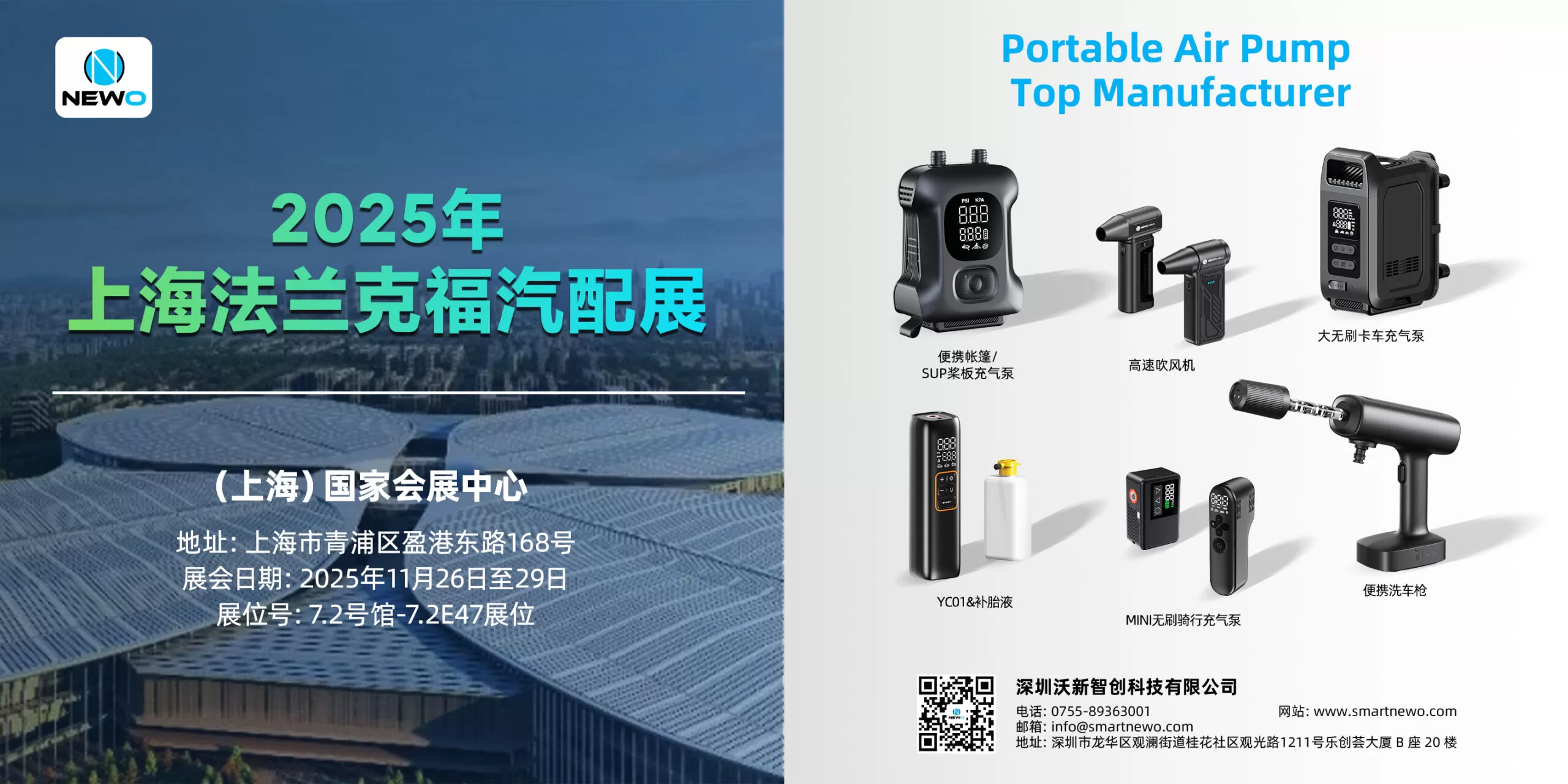
Today marks an exciting beginning as Smartnewo officially opens its booth at Automechanika Shanghai 2025. As one of the largest and most influential automotive aftermarket exhibitions in the world, the show provides an exceptional platform for meaningful conversations, partnership building, and global industry exchange. Located at Booth 7.2E47, Smartnewo presents... -

Why Every Outdoor Cyclist Should Carry a Mini Electric Bike Pump
Whether you are an experienced mountain rider or a weekend road-cycling enthusiast, one thing is certain: unexpected tire pressure issues can ruin an entire ride. That’s why more cyclists are turning to mini electric bike pumps—compact, lightweight, and far more reliable than traditional hand pumps. 1. Consistent Pressure, Even in...







-
How Is a Football Properly Inflated?
The correct inflation of a football - with not too much and not too little air - is a hotly debated topic among footballers.... -
Application Scenarios of Car Inflator Pump
Often long-distance business trips or play car owners because the road may be more remote areas, in this case if you encounter a tire leak....

