
 Portable Tire Inflators
 Electric Air Pumps
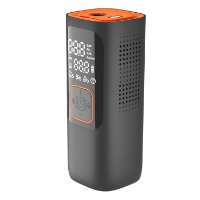 Electric Car Tyre Pumps
 Electric Ball Pumps
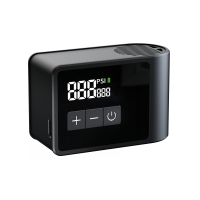 Electric Bike Pump
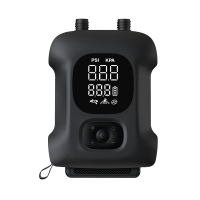 SUP Air Pump

Mini Electric Bike Pump Guide: How to Choose, Use and Maintain One
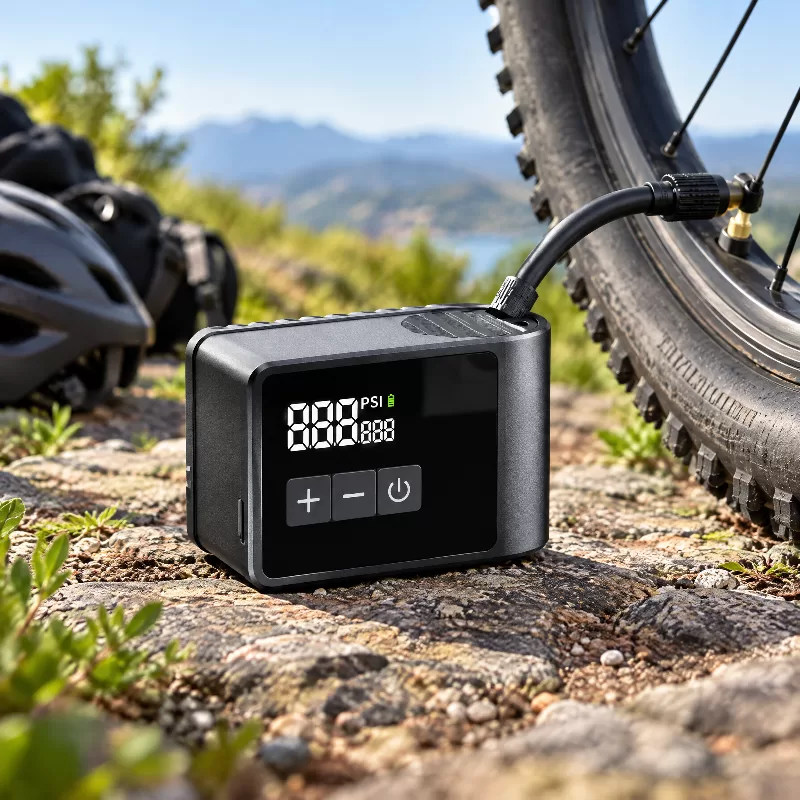
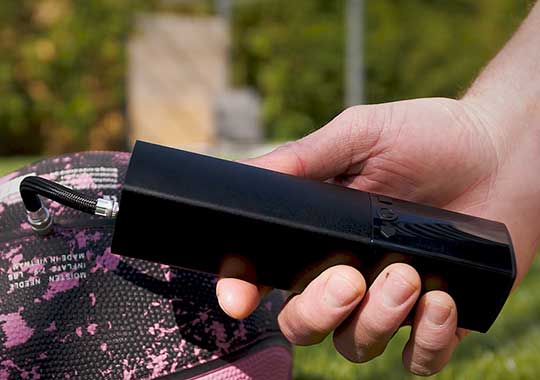
Most cyclists learn about flat tires the hard way, on a cold morning commute or far down a quiet gravel road. For decades the fix meant a telescoping hand pump or a single-use CO2 cartridge. A mini electric bike pump offers a third option. It pairs a small motor with a digital pressure gauge in a body that fits in a jersey pocket. You set a target pressure, connect the valve, and the pump stops when it gets there.
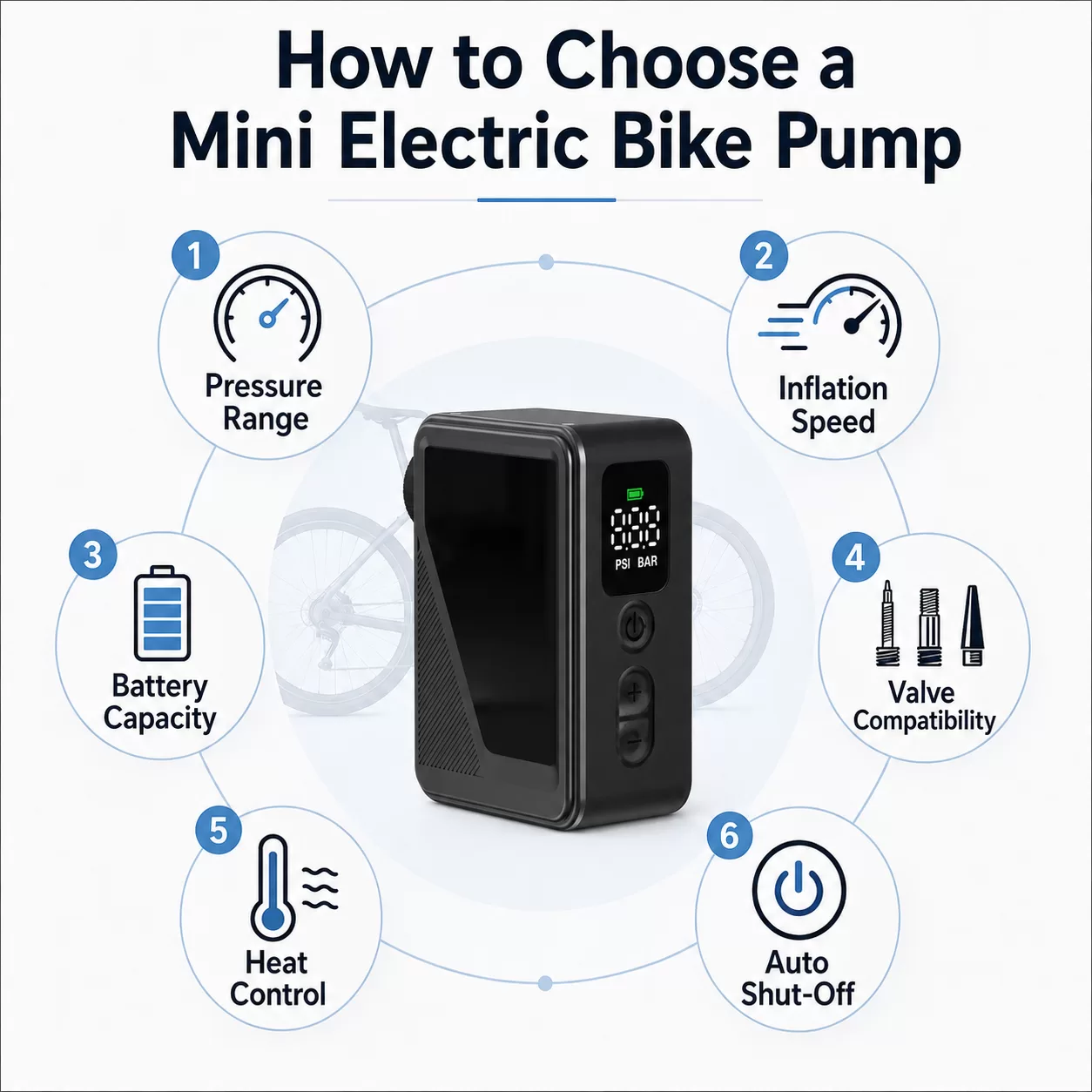
Choosing a portable electric bike pump still takes some care. These devices trade motor power against battery size, heat and weight, and the right balance depends on your tires. A rider on narrow road tires at 80 PSI needs something different from a bikepacker running wide gravel tires at 35 PSI. The sections below explain how these pumps work, which specifications matter, and how to use one well when a puncture interrupts a ride.
Why Riders Are Switching to a Mini Electric Bike Pump
The Limits of Traditional Hand Pumps
Manual mini pumps have rescued countless rides, but their small barrels move very little air per stroke. Reaching 60 PSI or more on a road tire can take a few hundred strokes. The last stretch is the hardest, because each stroke pushes against rising pressure. By that point your arms are already tired from riding, and a quick repair turns into a workout on the roadside.
Hand pumping also loads the valve. Each stroke pushes and pulls on a pump head clamped to a thin Presta stem, and careless pumping can bend the stem or break the threaded tip. Pumps without a hose make this more likely. A short flexible hose, or a pump head that stays still and well supported, reduces that side load. With an electric pump you are not working a handle, so the pump can rest steady while it runs. How much the valve is spared still depends on how the pump connects.
Hand Pump vs. CO2 Cartridge vs. Electric Inflator
Each roadside inflation method trades weight, control and running cost differently. The table below gives rough, typical figures rather than exact numbers for any single product.
| Inflation Method | Typical Weight | Pressure Control | Inflations Available | Ongoing Cost |
|---|---|---|---|---|
| Manual mini pump | Often under 150 g | Low unless it has a gauge | Unlimited, limited by your arms | None |
| CO2 inflator | Head plus cartridge, often under 100 g | Hard to dose precisely | One or two per cartridge | Replacement cartridges |
| Mini electric inflator | Roughly 150–250 g | Digital gauge with auto shut-off | Limited by battery charge | Electricity for recharging |
Each method fails in a different way. A hand pump never runs out, but most riders end up guessing the final pressure. CO2 fills a tire in seconds, yet the cartridge gets very cold as the gas expands, and a fumbled connection can waste the whole charge. CO2 may also be unsuitable for some tubeless sealants, so follow the sealant maker’s guidance. An electric inflator is slower than CO2, but it reaches a set number and can repeat that while the battery lasts.
Who Benefits Most from an Electric Pump on the Go?
Commuters gain the most obvious benefit. A slow leak discovered before work becomes a short stop instead of a sweaty session in office clothes. Because the pump shows the actual pressure, a commuter can also check both tires before leaving home without owning a separate gauge. That small habit catches many slow leaks before they become roadside flats.
Gravel riders and bikepackers get a different benefit, which is easy pressure changes. Many of them drop pressure for grip on loose surfaces and add it back for long paved sections. With a hand pump, few riders bother. With a mini electric bike pump, adding back 10 PSI takes a short run of the motor, and the screen confirms the result. Riders are then more likely to run the pressure that actually suits the terrain.
How Ultra-Compact Inflators Work
Brushless Motors and Small Cylinders
Compressing air to road-tire pressures inside a body smaller than a phone takes a motor that keeps producing torque under load. Many current compact pumps use brushless motors for this job instead of older brushed DC motors.
Brushless motors eliminate brush and commutator wear, which can reduce one source of maintenance. Actual efficiency and service life still depend on the pump’s electrical, mechanical, and thermal design. The motor drives a small piston in a cylinder. Because each stroke moves only a little air, the pump relies on speed rather than stroke volume. A floor pump works the opposite way, with long and slow strokes.
Pressure Sensing and Automatic Shut-Off
Digital pumps replace guesswork with an electronic pressure sensor. The sensor reads pressure in the pump’s air path, and a small controller turns that reading into the number on the screen. Because the piston delivers air in pulses, the reading can fluctuate during inflation. It is worth rechecking the number once the pump stops and the reading settles.
- Live readout: The screen shows current pressure, so you can see whether the tire is holding air before and after inflation.
- Set-and-stop control: You enter a target value, and the pump cuts power once it reaches that value.
- No more thumb tests: A measured number replaces squeezing the tire, which tells you very little at road pressures.
Automatic shut-off matters most when the margin for error is small. Hookless road rims can have strict system-specific pressure limits, often around 5 bar (72.5 PSI) on some road wheel systems. Always follow the lower maximum pressure printed or specified by the tire and rim manufacturers. Going past those figures risks blowing the tire off the rim. A pump that stops at a set value makes it much harder to overshoot by accident while you are distracted on the roadside.
Battery Limits and Heat
Compressing air heats it, and a small pump compresses a lot of air quickly. The battery adds heat of its own, because a lithium cell must deliver high current to keep the motor running against rising back pressure.
Manufacturers handle this in different ways, including vents, metal parts near the cylinder and thermal protection in the firmware. The practical point for riders is simple. The motor works hardest near the end of a high-pressure inflation, so several full inflations in a row put the most strain on the pump. Follow the product manual’s duty-cycle and cooling guidance, and if none is available, avoid repeated back-to-back high-load runs.
Specifications to Check Before You Buy
Maximum PSI vs. What Your Tires Need
Maximum pressure usually gets the biggest print on the box. A 120 PSI rating does not mean you should ride at 120 PSI. Most current road tires run well below 100 PSI, and gravel or mountain bike tires run far lower. The useful question is how much headroom the pump has above your own target pressure.
The maximum figure describes the pump’s ceiling, not a riding recommendation. A pump that tops out close to your target works at its limit on every inflation, which tends to slow it down and drain the battery faster. A pump rated to 120 PSI filling a 70 PSI road tire has room to spare, so it spends the whole job well inside its range.
Airflow and Inflation Speed (L/min)
Airflow, quoted in liters per minute (L/min), tells you how quickly a pump moves air. High-volume gravel and mountain bike tires need a lot of air at low pressure, while narrow road tires need less air at much higher pressure.
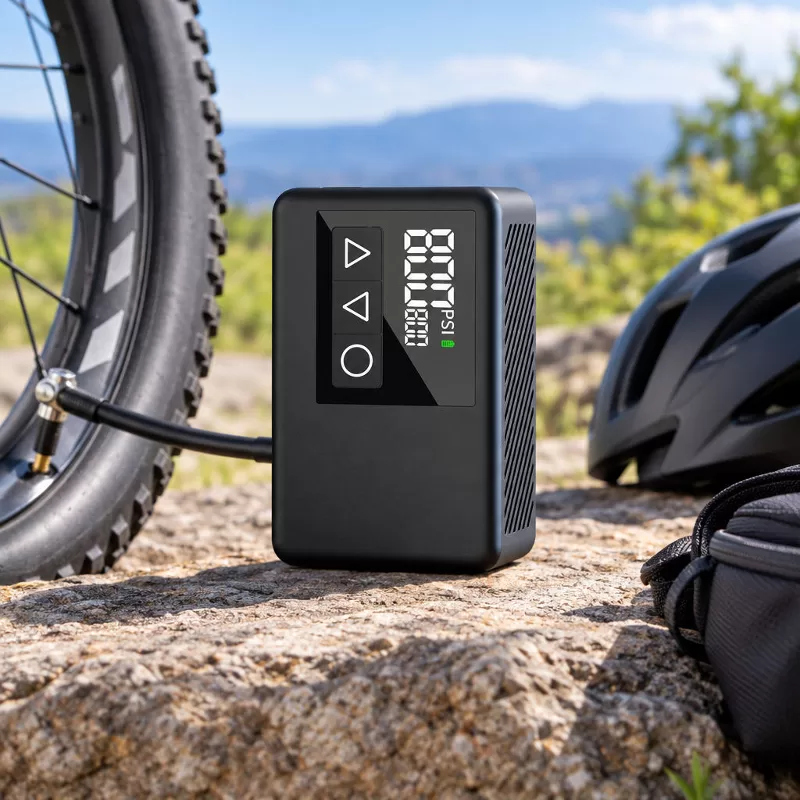
The BL05 is specified at 21–25 L/min, but published airflow alone does not predict real tire-inflation time because flow decreases as pressure rises. Compare models using manufacturer test times for a stated tire and pressure, or measure your own tire at home. Narrow road tires hold relatively little air, while a 29-inch mountain bike tire holds several times more air and uses a much larger share of the battery.
Weight, Size and Pocket Fit
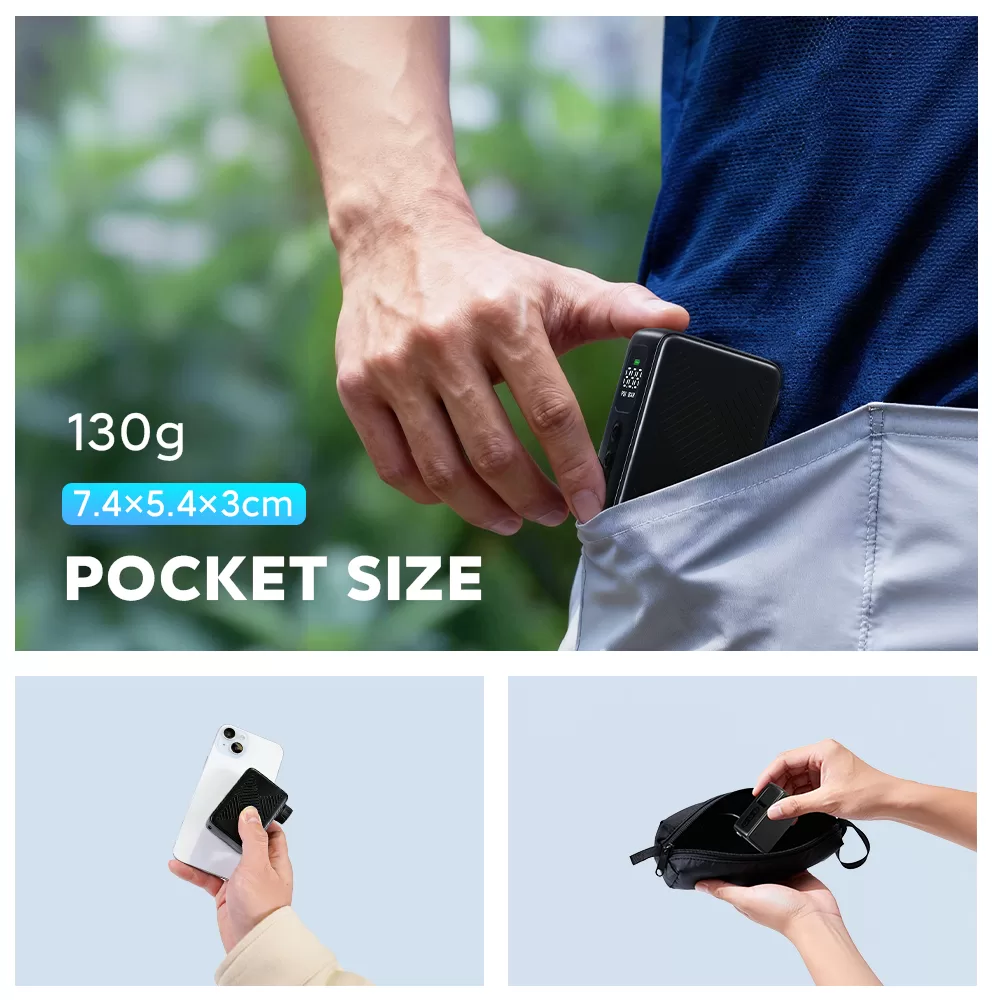
Weight and bulk matter more in a jersey pocket than in a frame bag. A pump you barely notice in a frame bag can bounce and pull on a lightweight jersey for hours, so it helps to judge a pump by where you will actually carry it.
- Shape: Slim rectangular or cylindrical bodies sit more easily in a middle jersey pocket next to a multi-tool and spare tube.
- Weight: Pumps under about 200 g are easy to carry in a saddle bag or pocket, while heavier units start to make a jersey sag.
- Housing: A protective housing may help reduce damage from knocks, but check the manufacturer’s published durability or ingress rating if those factors matter.
Getting these details right means the electric tire pump stays out of the way on long climbs and comes out quickly when you need it. It also makes you more likely to carry the pump on every ride, which matters more than any specification. A pump left at home because it felt bulky cannot fix a flat.
Portability and Power: The Case of the BL05
Newo, a manufacturer of electric air pumps and portable inflators, designed the BL05 as a pocket-sized electric bike tire inflator for cyclists who want automatic pressure control without much extra weight. It makes a useful reference point because its published specifications cover most of the factors discussed above.
| Specification | BL05 (manufacturer data) |
|---|---|
| Pressure range | 2–120 PSI |
| Airflow | 21–25 L/min |
| Pump type | Mini brushless pump, 16-cylinder structure |
| Battery | 500mAh, 11.1V, 5.55Wh |
| Runtime | 4–6 minutes |
| Charging | Type-C, 5V/2A or 9V/1.1A, under 1 hour |
| Battery cycle life | 300 cycles, keeping 80% or more of original capacity |
| Maximum working power | 70W |
| Noise | 85 dB or below at 1.5 m |
| Working temperature | 0°C to 45°C |
| Size and weight | 86.5 × 52 × 39 mm, 179 g |
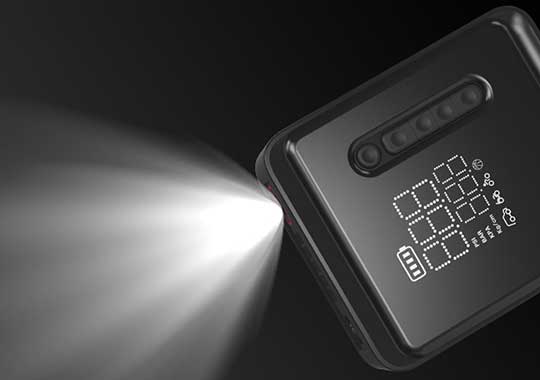
According to the product data, the BL05 combines an LCD display, pressure sensing, an adjustable target pressure and automatic shut-off. At 179 g it fits in a saddle bag, cycling jersey pocket or backpack. Its 4 to 6 minute runtime suits emergency repairs and routine top-ups during rides better than repeated full inflations of large tires. The 0°C lower working limit is worth noting for riders who commute through winter.
Valve Compatibility and Setup
Presta, Schrader and Dunlop Valves
Valve type depends on the kind of bike and where it was sold. For that reason, connection options matter as much as motor power when you choose a portable inflator.
Presta valves dominate road, cyclocross and gravel bikes. Their narrow body needs only a small hole in the rim, which suits narrow rims. Schrader valves, the same type used on car tires, remain common on commuter, utility and many mountain bikes. Dunlop valves, also called Woods valves, are rare in North America but common on city bikes in parts of Europe and Asia.
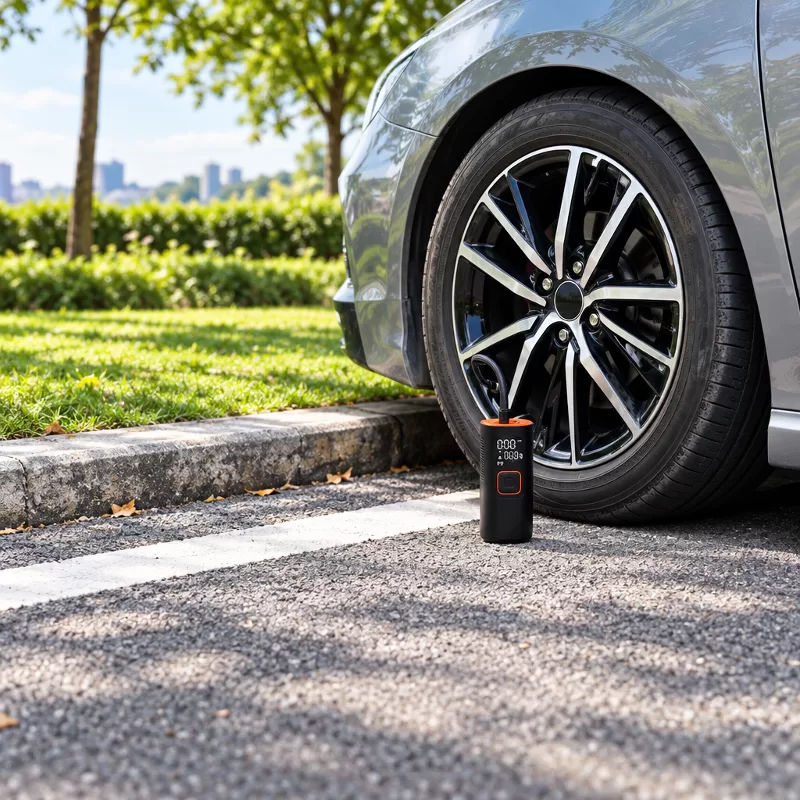
Confirm the BL05’s included valve adapters and hose configuration with the seller or product manual before assuming direct Presta, Schrader, or Dunlop compatibility. Some pumps use a reversible chuck, while others rely on screw-on adapters or a short hose. Many Dunlop valves accept a Presta-style head, which reduces the number of adapters you need. A hose also keeps the pump body away from the spokes while it runs, which makes the connection steadier.
Avoiding Valve Core and Stem Damage
Screw-on heads give an airtight seal, but they carry a small risk with removable Presta valve cores. If the core is not tight in the stem, unscrewing the pump head can unscrew the core as well. When that happens, the air you just added escapes in one loud hiss.
To avoid this, check your removable valve cores with a core tool before you leave home and snug them if needed. When using a screw-on head or hose, tighten it by hand only. Hand-tight tension seals well and is easier to undo without disturbing the core.
Connecting Securely in the Field
Connecting a pump on a wet, dark roadside goes better with a set routine. The sequence below helps prevent air loss and protects the valve.
- Position the valve where you can connect the pump securely and keep the pump or hose clear of the spokes.
- Remove the dust cap, unscrew the Presta valve tip nut until the valve opens, then press it briefly only to confirm it moves freely.
- Thread or push the pump head onto the stem until it seals, without forcing the thin center pin sideways.
- If the displayed pressure is unexpectedly low, stop and check the valve type, pump-head seal, valve core, and sensor reading before starting inflation.
These steps help the pump read the pressure inside the tire rather than pressure trapped behind a blocked or partly open valve. With a correct reading, the automatic shut-off stops at the pressure you actually set.
Field Use: Step-by-Step Roadside Recovery
Pre-Ride Checks and Battery Management
An electric pump is only as useful as its remaining charge when you puncture miles from home. Adding the pump to your usual pre-ride checks prevents an unpleasant surprise at the roadside.
Before long weekend rides, switch the pump on and confirm that it powers up, then recharge it if needed. Lithium cells slowly lose charge in storage, and cold garages or cars can make the drop more noticeable. Topping up through the Type-C port every few weeks keeps the pump ready and avoids leaving the cell fully drained for long periods.
Setting Target Pressure
Higher pressure is not automatically faster on every bicycle or surface. Tire manufacturers and wheel makers generally recommend choosing pressure based on rider load, tire width, casing, rim system, and terrain.
Start with the limits printed on the tire sidewall and the rim maker’s maximum. Use the tire and rim manufacturers’ pressure guidance or a reputable pressure calculator; rider weight, tire width, casing, rim type, and surface can materially change the result. Then enter the value and let the shut-off handle the rest.
Managing Runtime, Heat and Cool-Down
Small pumps work hard to reach high pressure, so heat builds up around the cylinder and nozzle. Knowing how to handle that heat protects both the pump and your fingers.
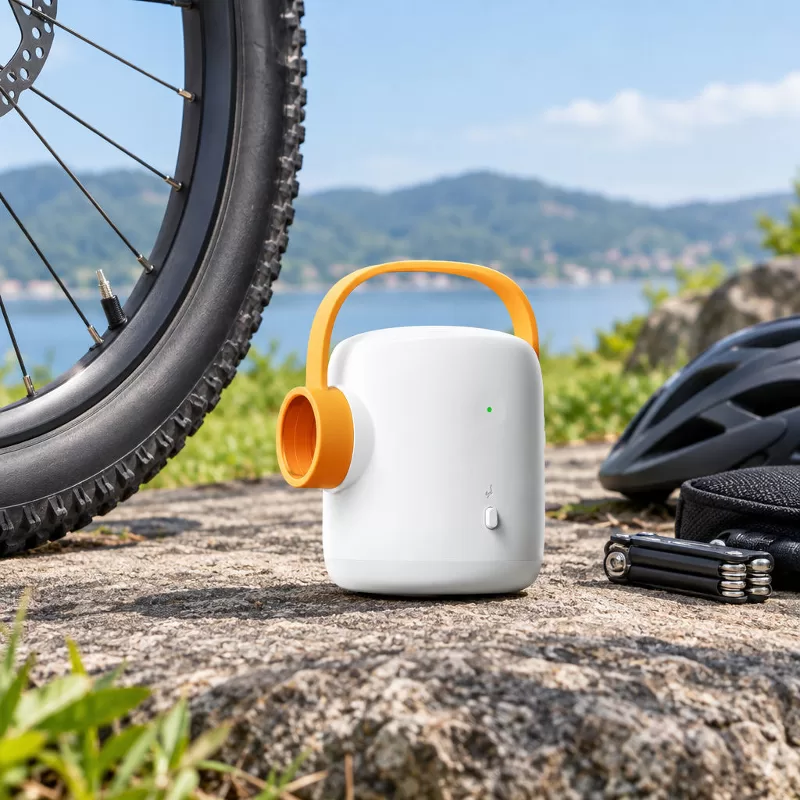
Pump components and the air path may become hot during high-load operation. Avoid touching the nozzle immediately after use and follow the product manual’s cooling guidance. If you need to fill a second flat tire, check the manual’s duty-cycle instructions first. Where none are given, avoid running the pump back-to-back at high load, and let it cool before the next full inflation.
Long-Term Care and Battery Life
Charging and Lithium Battery Health
A rechargeable inflator lasts longest when you follow a few basic lithium battery habits. The manufacturer specifies 300 battery cycles while retaining at least 80% of original capacity under its stated test conditions; real-world results vary with temperature, load, charging, and storage.
- Avoid charging in freezing conditions: Do not charge the BL05 outside the charging-temperature limits in its manual. If those limits are unavailable, let a cold battery warm to room temperature before charging.
- Store at partial charge: For extended storage, follow the manufacturer’s battery instructions; many lithium-battery products are best stored partially charged rather than fully empty.
- Use a suitable charger: A reliable USB charger that matches the pump’s rated input, such as 5V/2A, keeps charging within the design limits.
These habits keep the battery able to deliver full current when you need it at the roadside. A weak cell tends to show itself at the worst moment, near the end of a high-pressure inflation.
Dust, Moisture and Vibration
Bikes expose accessories to constant vibration, road spray and dust. A pump rattling loose in a seat pack against steel tools can scratch the housing or damage the screen over time.
Slip the inflator into a soft neoprene sleeve or a small zip bag before packing it. This simple layer keeps road grime and fine dust away from the air vents and the Type-C charging port. It also cushions the screen and buttons from knocks on rough roads.
Frequently Asked Questions (FAQs)
Can a mini electric bike pump inflate tubeless tires from empty?
Seating a new tubeless tire usually needs a sudden, large burst of air that pushes the tire beads onto the rim shelf at once. The BL05 is specified at 21–25 L/min, but that published figure does not establish that it can seat a tubeless tire from empty. A compressor, reservoir-style tire booster, or another high-volume inflation tool is generally more appropriate for initial bead seating. Once the beads are seated, a portable electric pump handles later top-ups and pressure changes well.
How many bicycle tires can one full charge inflate?
The answer depends on tire volume, starting pressure and target pressure. The BL05’s data lists 4 to 6 minutes of runtime from its 500mAh battery. A top-up of a few PSI uses only a small part of that, while filling a completely flat tire to high pressure uses much more. The most reliable way to know your budget is to time a full inflation of your own tire at home. Cold weather also reduces usable battery capacity, so allow extra margin on winter rides.
Does high target pressure damage the internal pump motor?
Pumping against high back pressure makes the motor draw more current and produce more heat. Many electric inflators include protection that limits current or shuts down when temperatures rise too far. Using the pump within its stated range, such as up to 120 PSI on the BL05, and following the manual’s cooling guidance between inflations keeps wear to a minimum. Running it repeatedly at its maximum without rest is the habit most likely to shorten its life.
Can a mini electric pump also inflate sports balls?
With a compatible ball needle, the BL05 can be used for sports balls listed by the manufacturer. Use the pressure printed on the ball and confirm whether the needle is included or must be purchased separately. The BL05’s range starts at 2 PSI, and its product data lists sports balls as an intended use. Automatic shut-off helps here too, because ball pressures are low and easy to overshoot by hand.
Conclusion: Upgrading Your Ride Essentials
An electric pump suits riders who value accurate pressure and less effort at the roadside. It weighs a little more than a hand pump and depends on a charged battery. In return, it replaces hundreds of strokes and single-use cartridges with a set number and an automatic stop.
When you compare models, look at maximum pressure headroom, airflow under load, runtime, weight and valve support, then match them to your own tires. A well-chosen mini electric bike pump, checked and charged before each ride, turns a flat tire into a short stop and makes it easy to run the right pressure on every road.
-

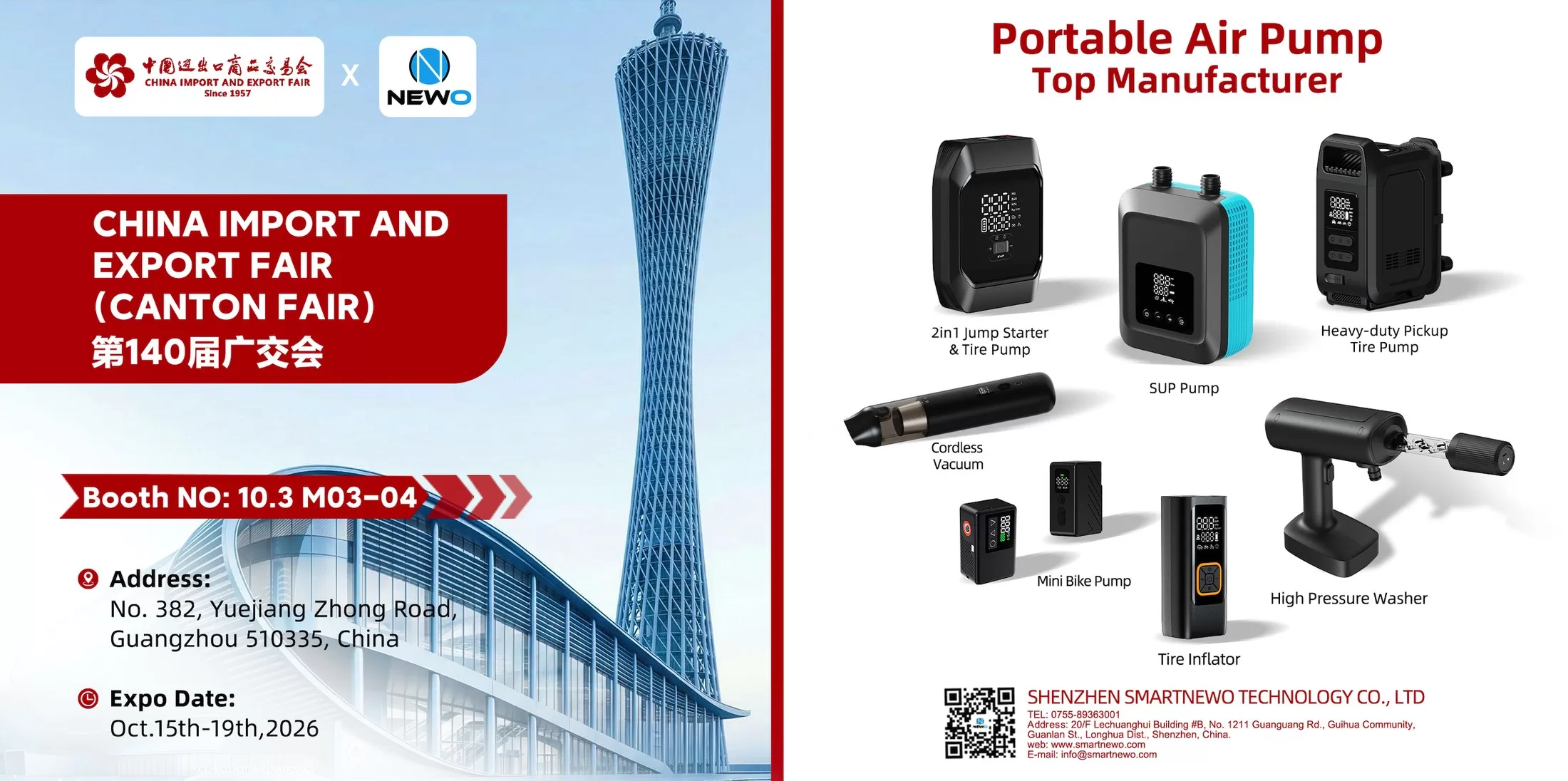
Meet NEWO at the 140th Canton Fair: Visit Booth 10.3 M03–04
Meet NEWO at the 140th Canton Fair in Guangzhou, October 15–19, 2026. Visit Booth 10.3 M03–04 to explore portable air pumps and discuss OEM, ODM and distribution opportunities.... -

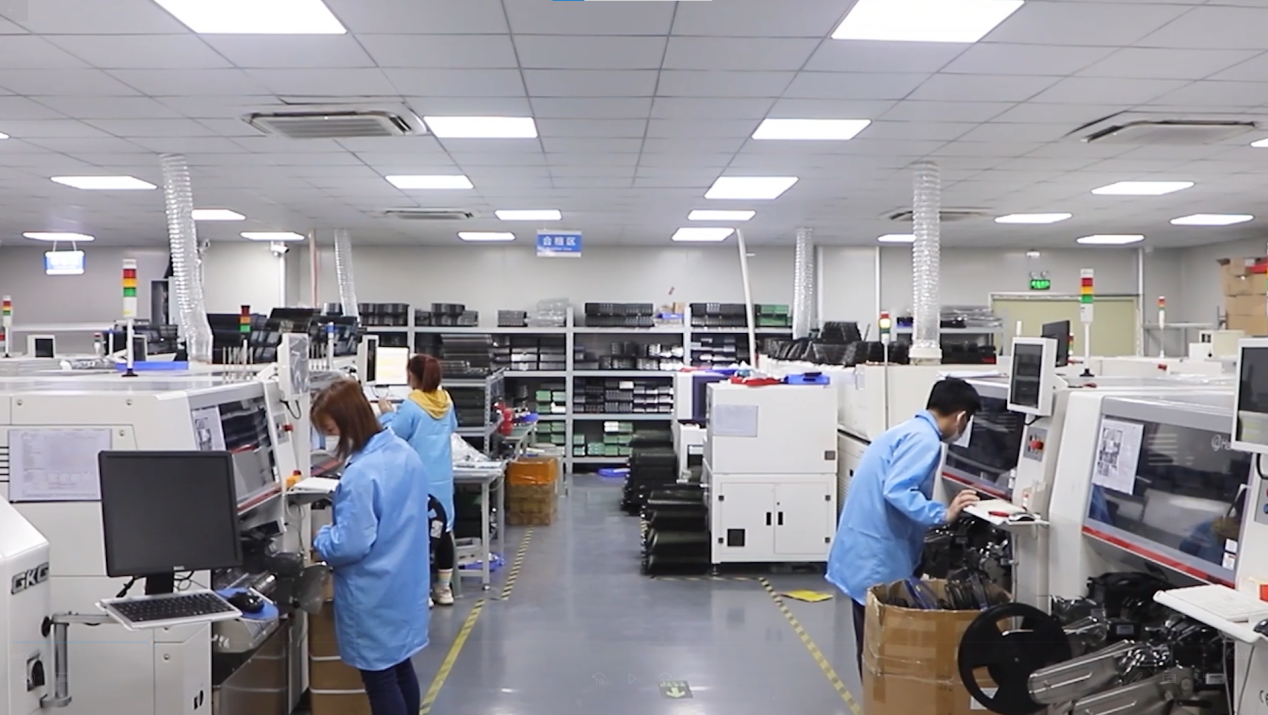
As Shenzhen Welcomes the World for APEC 2026, NEWO Welcomes You to Our Factory
As Shenzhen prepares for APEC 2026, NEWO welcomes international buyers and partners to visit our factory, meet our team and explore future cooperation.... -

Leading the Way in Product Innovation and Excellence
Smartnewo exemplifies professionalism in product innovation and manufacturing. Their collaboration with Xiaomi Youpin on the G01 crowdfunding project highlights their expertise in creating compact, powerful inflatable pumps. Rigorous engineering, meticulous production processes, and advanced quality assurance underscore their commitment to excellence. The success of the G01 project, with significant market... -

Essential Qualities of an Excellent Supplier
In today's competitive market, finding a reliable supplier is crucial for business success. Based on insights from Smartnewo and broader internet research, here are key qualities an excellent supplier must possess:... -

NW06 Tire Inflator: Compact Power for Quick Inflation
Summary The NW06 Tire Inflator delivers quick and efficient tire inflation with a powerful 35L/min airflow. It features a user-friendly LCD screen for real-time pressure monitoring, dual power options with a built-in 6000mAh battery, and multiple nozzle attachments for versatile use. Its compact design and integrated LED light ensure convenience and... -

Unleash the Power of Portability: The SmartNewo Jump Starter with Air Compressor KF03
This guide will walk you through the steps to effectively use a portable tire inflator, helping you stay prepared and safe on the road.... -

Newo Attends The 2024 Consumer Electronics Show (CES)
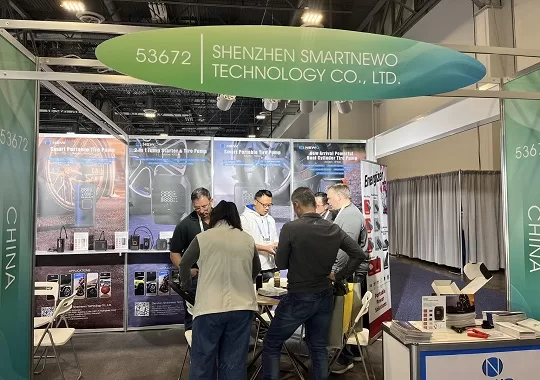
Smartnewo booth is located at 53672, Halls A-D, Level 2, Venetian Expo, Las Vegas Convention Center (LVCC). ... -

Smartnewo’s Dual-Cylinder Air Pump Rocks the Hong Kong Autumn Electronics Fair!
Smartnewo’s Dual-Cylinder Air Pump Rocks the Hong Kong Autumn Electronics Fair!... -

Meet at the Canton Fair! Smartnewo brings dual-cylinder air pumps, making your inflation experience faster and more stable!
NEWO has went deep communication and negotiation with customers from all over the world on booth.... -

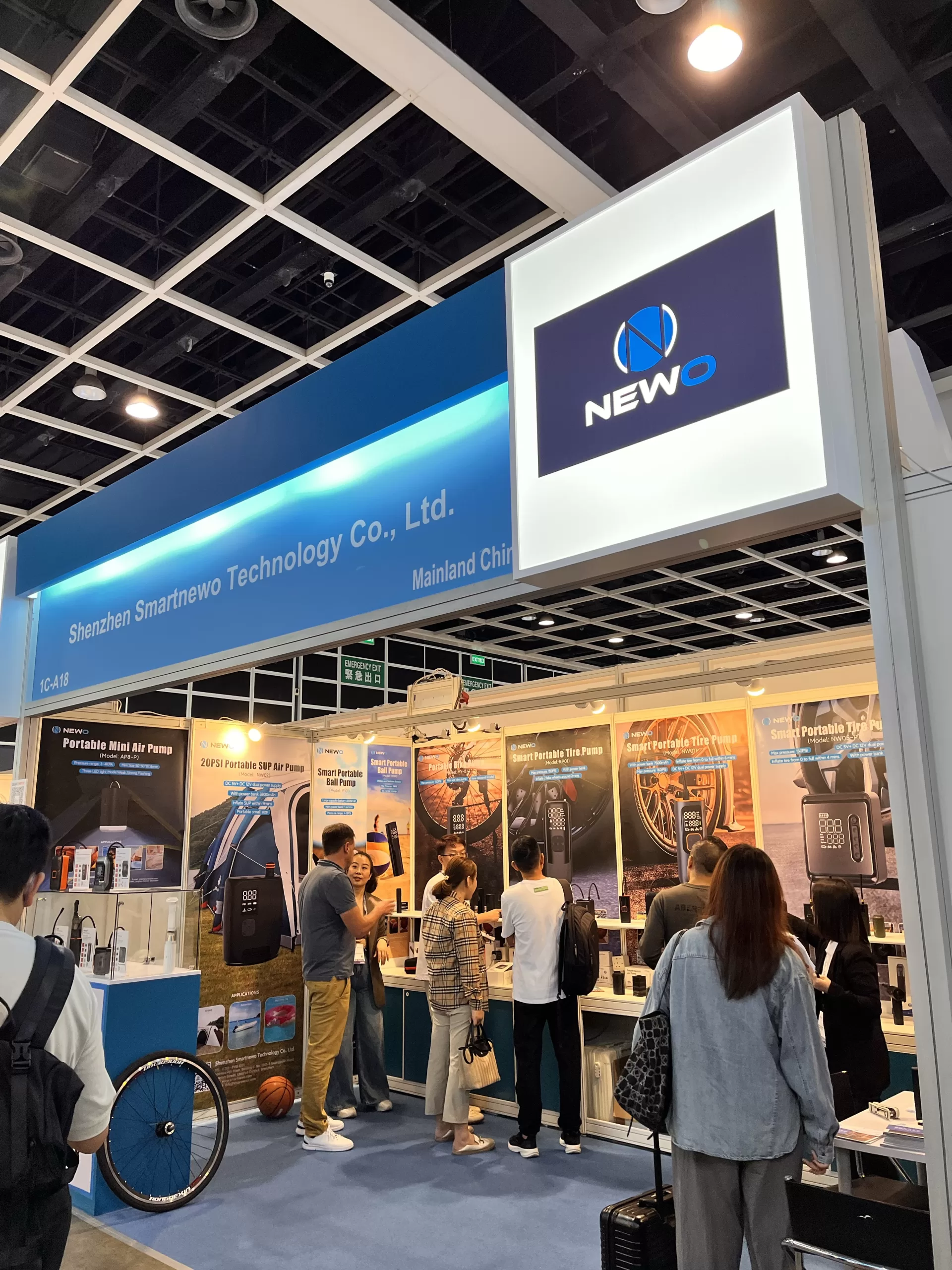
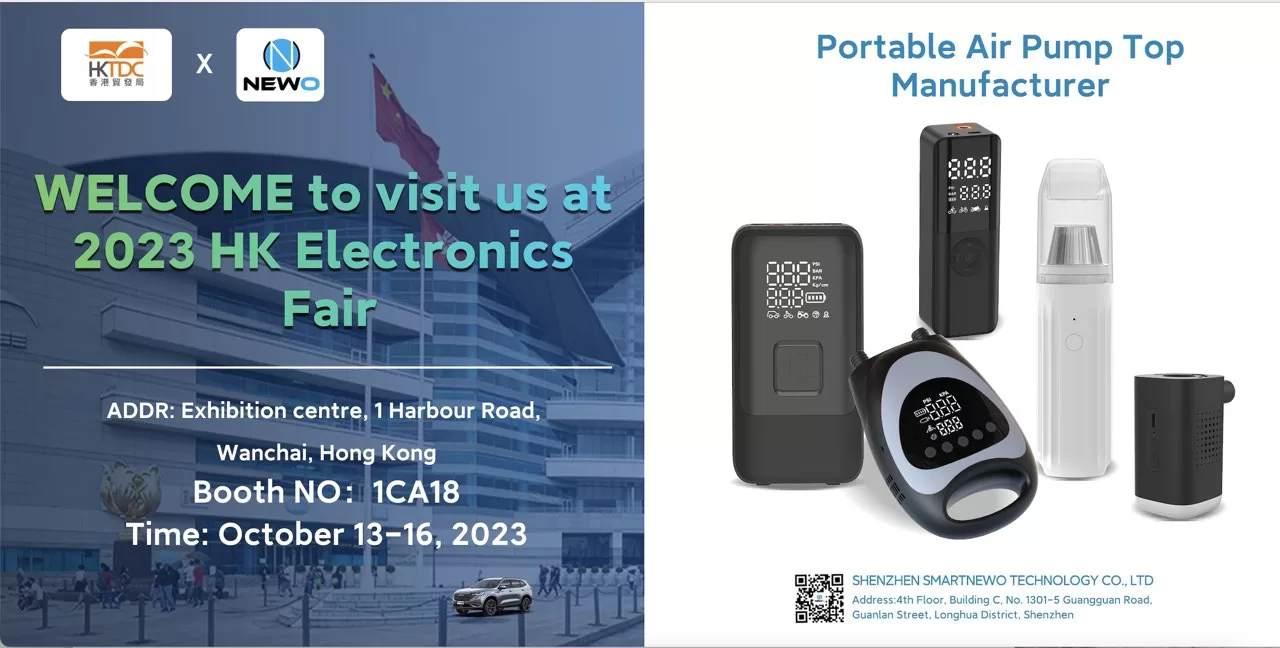
“Hong Kong Autumn Electronics Fair – 1CA18 (October 13th to 16th): Smartnewo invites you to visit our booth!
Hong Kong Autumn Electronics Fair...

-

OEM vs ODM Air Pumps: Which Manufacturing Model Fits Your Brand?
Compare OEM and ODM air pump projects by design responsibility, change approval, development scope, and written ownership terms before choosing your route.... -
How to Choose a Reliable Tire Inflator Manufacturer in China
Choose a tire inflator manufacturer in China with a focused RFQ, supplier evidence, configuration checks, and clear sample-to-pilot decisions for your brand.... -

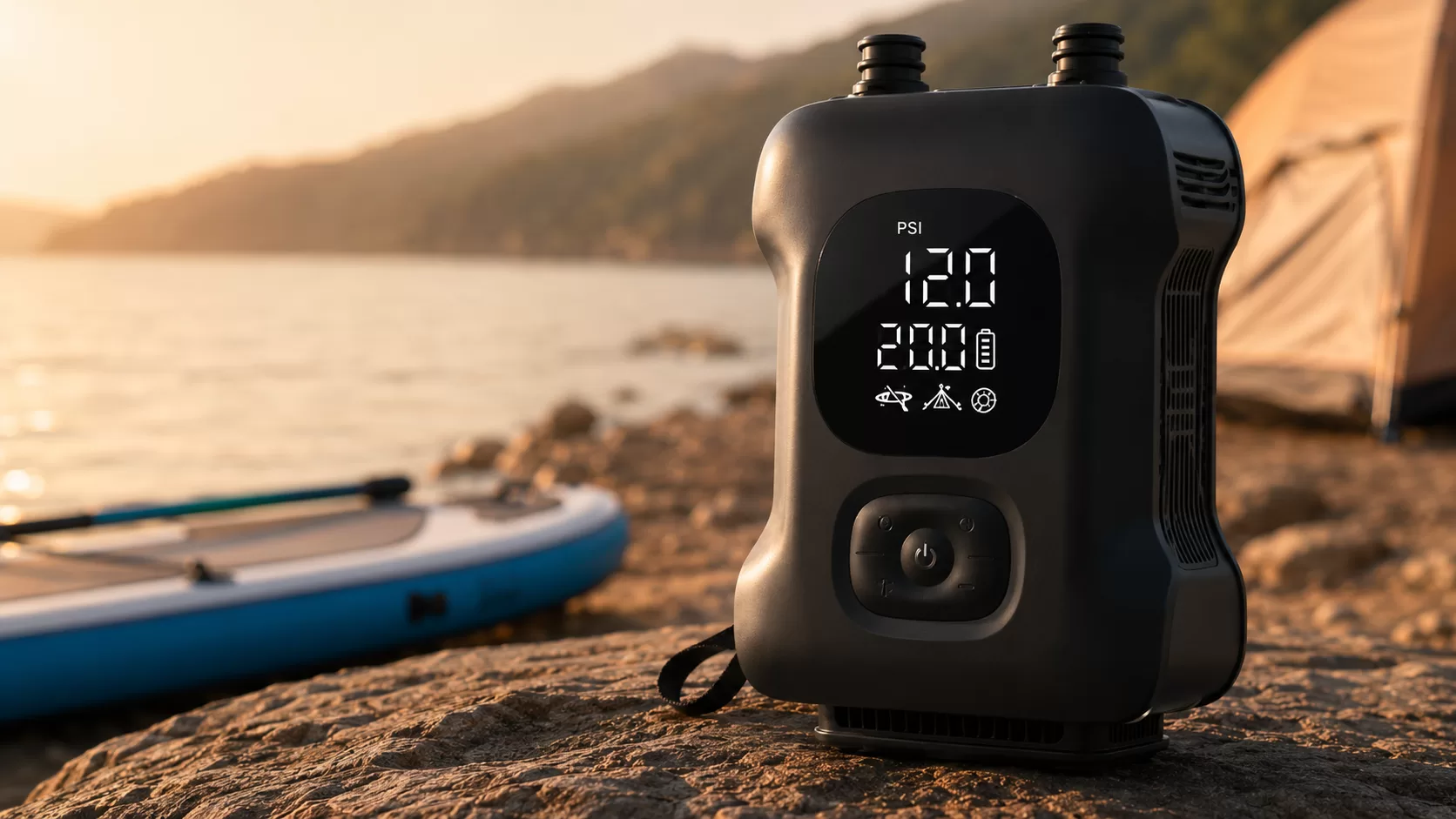
Rechargeable Electric SUP Pump for Paddle Boards: Faster Inflation for SUPs, Kayaks and Inflatable Tents
The BL10-C Portable Electric Bike Tire Inflator is a compact and lightweight mini electric bike pump designed for modern cyclists. With up to 120 PSI pressure, a digital LED display, preset pressure control, automatic shut-off, USB-C charging, and multiple valve adapters, BL10-C offers a convenient inflation solution for road bikes,... -

Are Electric Bike Pumps Worth It in 2026? Electric Pump vs CO₂ vs Mini Hand Pump
Discover whether electric bike pumps are worth it in 2026. This guide compares electric bike pumps, CO₂ inflators, and mini hand pumps for road cycling, gravel riding, commuting, and long-distance rides. Learn the pros, limitations, best use cases, and key features to look for before choosing the right portable tire... -
BL10-C Portable Electric Bike Tire Inflator: Small Size, Reliable Power for Every Ride
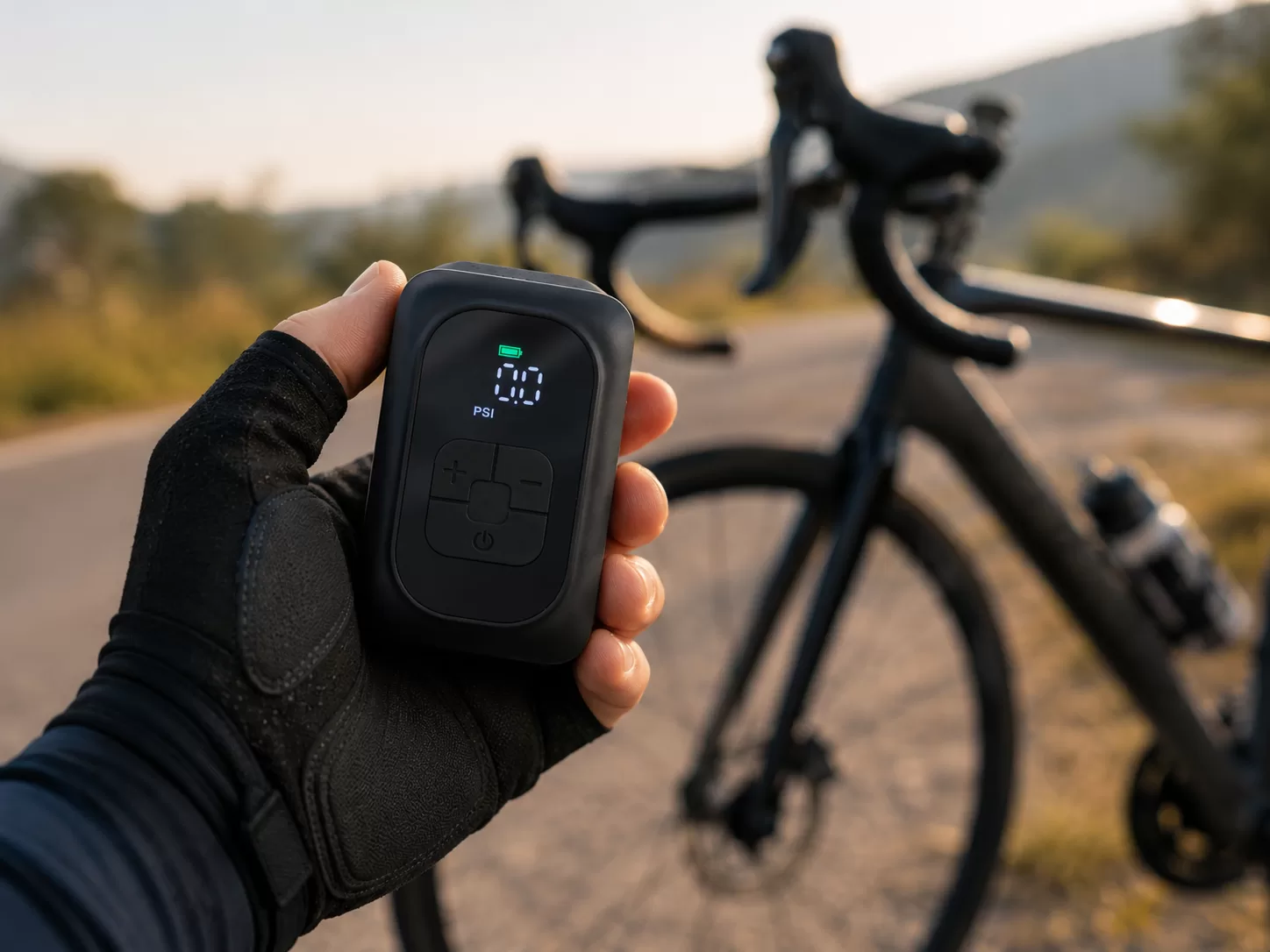
The BL10-C Portable Electric Bike Tire Inflator is a compact and lightweight mini electric bike pump designed for modern cyclists. With up to 120 PSI pressure, a digital LED display, preset pressure control, automatic shut-off, USB-C charging, and multiple valve adapters, BL10-C offers a convenient inflation solution for road bikes,... -

Why Mini Electric Bike Pumps Are Becoming Essential for Modern Cycling
Discover why mini electric bike pumps are becoming essential for modern cyclists. Learn how portable electric bike pumps improve tire pressure management, riding safety, and convenience.... -

The Ultimate Smart Solution for Easy Outdoor Adventures in 2026
Discover how a spring travel air pump simplifies outdoor trips with fast inflation, smart features, and powerful performance—perfect for every adventure.... -

Powerful 5-in-1 Portable Car Tire Inflator and Jump Starter: The Ultimate Emergency Tool for Every Driver
Why Every Driver Needs a Portable Car Tire Inflator and Jump Starter Modern drivers face many unexpected situations on the road. A flat tire, low tire pressure, or a dead car battery can happen at the worst possible time. That’s why having a portable car tire inflator and jump starter is... -

7 Real Cycling Scenarios That Show Why Every Rider Should Carry a Mini Bike Pump
Cycling is one of the most freeing activities you can enjoy. Whether you’re commuting to work, riding through city streets, or exploring quiet countryside roads, a bike ride can instantly improve your day. But there’s one small problem that almost every cyclist eventually faces: Low tire pressure. It might happen... -
BL08-A Portable Electric Bike Pump: A Global Distribution Opportunity with Smartnewo
Smartnewo, a professional manufacturer of portable electric air pumps, introduces the BL08-A model — a compact and efficient inflator designed for global distributors, e-commerce sellers, and outdoor accessory brands seeking reliable OEM/ODM solutions. Table of Contents Main Heading Subtopics 1. Introduction: Expanding the Global Market for Smart Inflation Tools Portable...

-
How Is a Football Properly Inflated?
The correct inflation of a football - with not too much and not too little air - is a hotly debated topic among footballers.... -
Application Scenarios of Car Inflator Pump
Often long-distance business trips or play car owners because the road may be more remote areas, in this case if you encounter a tire leak....