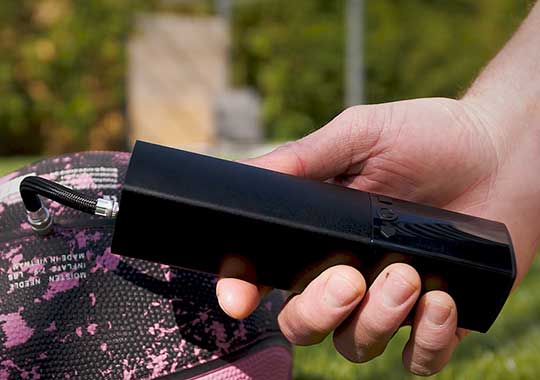

 Portable Tire Inflators
 Electric Air Pumps
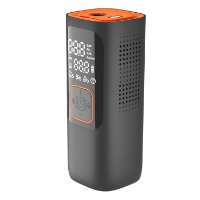 Electric Car Tyre Pumps
 Electric Ball Pumps
 Electric Bike Pump
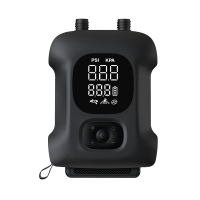 SUP Air Pump

Portable Air Tire Inflator: How to Choose, Evaluate, and Use One Safely
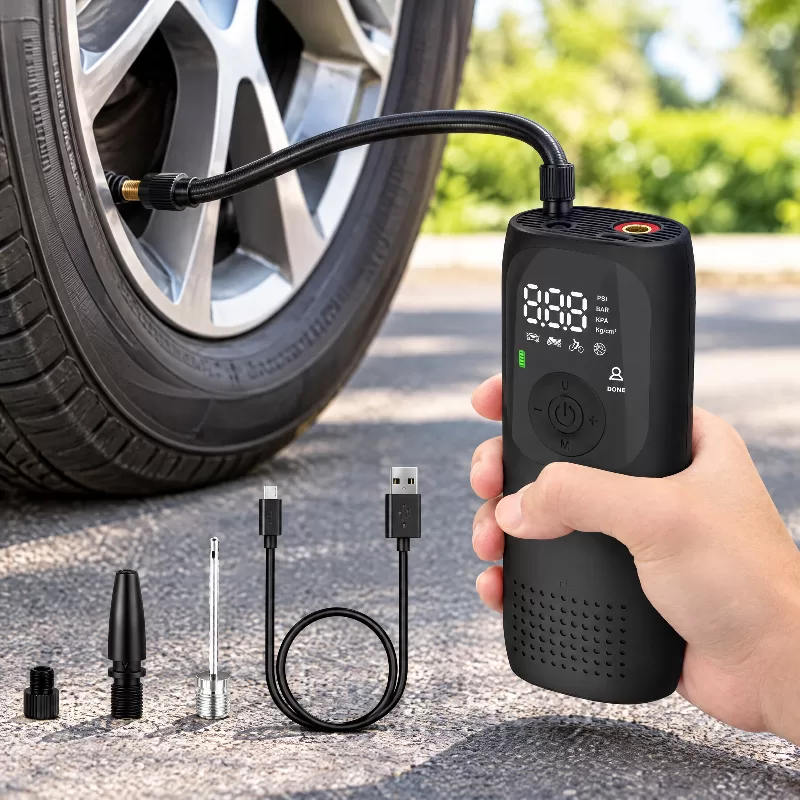
Maintaining correct tire pressure is one of the simplest yet most neglected aspects of vehicle safety and efficiency. Drivers often wait for a dashboard warning light to illuminate before searching for a service station compressor, only to find a broken nozzle or an out-of-order coin machine. Owning a portable air tire inflator transforms this frustrating chore into a routine garage or roadside inspection. A cordless, battery-powered inflator provides the autonomy required to adjust pressure wherever a vehicle is parked. Understanding how pneumatic pumps operate, how pressure shifts under thermal load, and what hardware limits exist empowers drivers to handle low-pressure emergencies with confidence.
Search Intent and Practical Value for Drivers and Riders
What Users Search For: Roadside Backup vs. Routine Garage Top-Ups
When drivers search for a portable air tire inflator, their immediate needs usually fall into two categories: emergency roadside readiness and scheduled preventive maintenance. An emergency scenario involves a sudden loss of pressure miles away from a service center, where a compact inflator must provide enough air to reach safety without damaging the wheel rim.
Routine maintenance represents the far more frequent use case. Tires naturally lose roughly one to two pounds per square inch (PSI) every month due to ambient permeation through the butyl rubber liner. A portable pump allows vehicle owners to restore correct inflation in their driveway without cold morning trips to commercial air kiosks.
Why Tire Pressure Maintenance Matters: Safety, Tread Wear, and Fuel Economy
Running tires below specified pressures drastically alters how a vehicle handles during emergency steering and braking. Under-inflation causes tire shoulders to carry an excessive proportion of the vehicle weight, creating abnormal heat concentration across the tread belts that accelerates premature carcass breakdown.
Fuel efficiency also deteriorates rapidly as rolling resistance increases. The United States Department of Transportation notes that properly inflated tires can improve fuel economy by up to three percent while significantly extending tread life. Maintaining stable pressures ensures an even contact patch against the pavement, stabilizing vehicle dynamics across wet and dry surfaces.
Emergency Realities: When a Portable Pump Helps and When It Cannot
Motorists often overestimate what a compact compressor can achieve during catastrophic tire failures. A portable electric inflator can temporarily add air to a tire with a slow leak or top up pressure lost through temperature changes, but introducing air cannot confirm whether a tire is safe to operate. If a puncture continues leaking rapidly, if internal cord integrity has failed, or if structural damage is present, adding air is not a substitute for immediate professional inspection.
A handheld inflator cannot seal a tire bead that has unseated from the wheel rim, nor can it overcome structural sidewall gashes. If a tire exhibits visible cord separation, substantial structural punctures, or extensive sidewall cracking, applying compressed air invites serious blowout hazards rather than roadside recovery.
How a Portable Air Tire Inflator Works
Reciprocating Piston Mechanism: Converting DC Power into Compressed Air
A modern portable inflator relies on a miniaturized reciprocating piston driven by a direct-current electric motor. The motor turns an eccentric crank mechanism, moving a piston up and down inside an alloy cylinder to draw atmospheric air through an intake reed valve.
As the piston rises on its compression stroke, incoming air is compressed against a discharge check valve, pushing pressurized volume into the output hose. Because compressing ambient air generates substantial kinetic friction and thermodynamic heat, the cylinder wall and pump head absorb intense thermal energy during normal operation.
Pressure Gauges vs. Inflators: Passive Measurement vs. Active Pressure Correction
A mechanical pencil gauge or digital display tool simply reads static air pressure inside a tire chamber through a Schrader valve depressor. While diagnostic tools are useful for periodic verification, they cannot supply replacement air mass when readings fall below target specifications.
In contrast, modern portable inflators measure internal pressure electronically and use that live feedback to control automatic shut-off logic. This electronic sensing allows the pump to monitor line resistance continuously while the motor runs, halting compression once the target threshold is registered.
The 150 PSI Specification: Maximum Rated Pressure vs. Volumetric Airflow
Many consumer inflators prominently advertise an upper pressure boundary of 150 PSI. It is critical to distinguish this manufacturer-stated maximum pressure rating from continuous volumetric flow across varying tire sizes.
For example, the LP2-P is rated to a maximum pressure of 150 PSI and is listed for bicycle and sports inflation; however, the rating alone does not dictate inflation speed or performance across distinct tire sizes. Maximum pressure indicates the upper threshold of the device’s pressure range, whereas inflating larger automotive tires depends on delivered airflow volume rather than peak pressure capability.
Key Features to Evaluate Before Purchasing
Cylinder Configuration and Airflow Volume (LPM vs. Pressure)
Pneumatic displacement determines how quickly an air compressor transfers volume into a sealed vessel. In product specifications for compact handheld hardware, manufacturers often outline internal pump configurations, such as 14-cylinder or 17-cylinder setups.
In the case of the LP2-P specifications, the 14-cylinder configuration lists an airflow of about 14 L/min alongside an estimated runtime of 18 to 22 minutes. The 17-cylinder configuration specifies an airflow of 18 to 22 L/min with an operational runtime of approximately 16 minutes per charge, trading runtime for increased volume output.
Battery Chemistry, Voltage, and Usable Operating Duty Cycles
Cordless inflators run on rechargeable lithium-ion battery architectures, frequently utilizing two series-connected cells yielding a nominal 7.4-volt potential. Battery capacity—often rated around 2000mAh or 14.8 watt-hours—determines how many consecutive tires can be adjusted before the low-voltage cutoff disables the motor.
Operating duty cycles govern how long internal mechanical assemblies can safely run without heat damage. High-drain electric motors generate significant internal temperatures, meaning continuous operation without an adequate resting window can weaken internal seals and motor winding insulation.
Pressure Sensing Accuracy, Preset Modes, and Auto-Stop Mechanisms
Manual inflation presents a risk of over-pressurizing tires, which reduces the tread contact patch and degrades ride comfort. An inflator can incorporate real-time digital pressure sensing alongside an automated shut-off mechanism to stop compression once the selected target is reached.
Preset profiles serve as convenient categories for quicker setup, typically organizing modes into automobile, motorcycle, bicycle, ball, and custom configurations. These modes provide structured starting points, but users must manually adjust target values to match the vehicle or equipment manufacturer’s specified pressure. Final inflation should always be confirmed with a reliable tire pressure gauge.
Form Factor, Thermal Dissipation, and Charging Interfaces (Type-C vs. 12V DC)
Handheld units must balance structural ergonomics against thermal performance. Users should ensure that the tool features adequate housing ventilation openings and adhere closely to the manufacturer’s operational and cooling instructions during use.
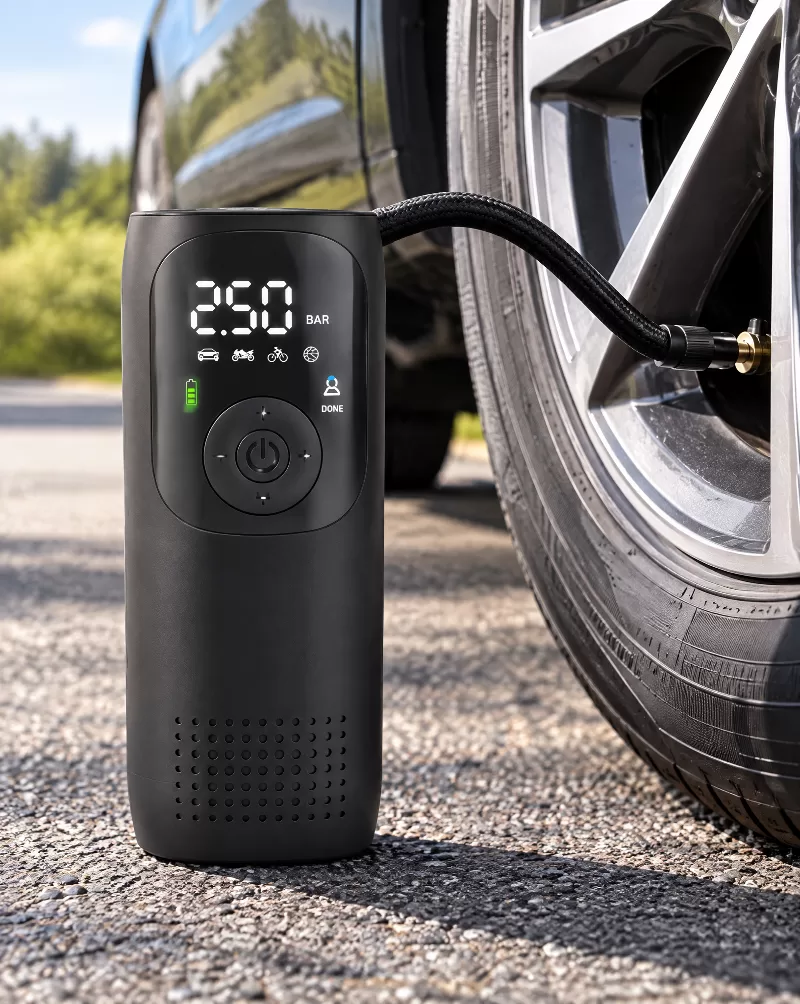
For charging convenience, hardware like the LP2-P incorporates a Type-C input rated at 5V/2A. When connecting to external charging equipment, users should ensure the supplying port or power adapter can supply the specified 5V/2A input, as some lower-output auxiliary vehicle USB ports may not provide sufficient charging current.
Technical Reference: The Newo LP2-P Specifications
Hardware Specifications: 14-Cylinder vs. 17-Cylinder Configurations
As a professional manufacturer specializing in the research, development, and production of smart electric air pumps and portable inflation solutions, Newo engineers hardware tailored for diverse operational balance points. For us, mechanical efficiency is dictated by the precise relationship between cylinder displacement, thermal management, and power consumption.
The LP2-P platform documentation lists distinct performance metrics for two cylinder setups. The 14-cylinder configuration provides an airflow of about 14 L/min with an operational runtime of 18 to 22 minutes. The 17-cylinder configuration lists an airflow of 18 to 22 L/min with an operational runtime of approximately 16 minutes per charge.
Battery Pack Architecture, Charging Parameters, and Auxiliary Power
The LP2-P relies on a dual-cell 2000mAh battery array supplying 7.4 volts and an energy rating of 14.8Wh. The power management module incorporates hard safety cutoffs at 8.4 volts maximum charge and 6.0 volts under-voltage protection, preventing deep cell degradation.
Recharging takes approximately two hours over a 5V/2A (10-watt) Type-C interface. The internal battery system delivers a rated cycle life of 300 cycles while retaining at least 80 percent of its initial capacity, and features an integrated reverse-charging USB power-bank function to power mobile devices during roadside emergencies.
Form Factor, Acoustic Noise Limits, and Environmental Operating Range
Enclosed in a durable acrylonitrile butadiene styrene (ABS) chassis measuring 44 × 64 × 157 millimeters, the LP2-P is compact enough to fit inside glove compartments or motorcycle panniers. The stated operating temperature range spans from -10°C to 45°C.
Acoustic dampening is tuned to ensure operational noise remains at or below 80 decibels measured at a 1.5-meter distance. A 35-watt brushed DC motor powers the assembly, featuring dedicated overcurrent protection and an operational design life spanning 200 to 400 total hours.
Stated Capabilities vs. Operational Boundaries
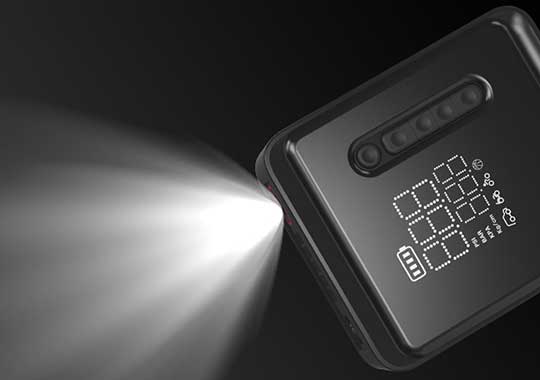
To ensure realistic operational expectations, technical specifications must be viewed through physical realities. The LP2-P supports a working pressure range spanning from 0 up to 150 PSI, controlled via an integrated digital LED screen displaying real-time pressure feedback alongside selectable unit profiles.
According to product data, the 17-cylinder configuration can inflate approximately 15 standard bicycle tires on a single full charge, whereas the 14-cylinder configuration manages roughly 12 bicycle tires. While the pump is designed to handle routine passenger vehicle tire pressure top-ups, filling large, completely empty tires requires patience and adherence to recommended resting periods to avoid excessive thermal buildup.
Practical Comparison: Portable Battery Inflators Across Scenarios
Comparison Table: Pressure Requirements, Inflation Times, and Portability Across Devices
Evaluating inflation hardware requires weighing target pressures, chamber air volumes, and operational parameters across distinct inflation categories.
| Application Target | Typical Pressure Context | Relative Air Volume | Primary Operating Requirements | Practical Operational Considerations |
|---|---|---|---|---|
| Passenger Car Tire | Set via Door Placard (e.g., ~32–36 PSI) | High | Pressure top-up capability; firm valve seal | Routine top-up task; restores seasonal pressure drops without commercial air kiosks. |
| Midsize SUV Tire | Set via Door Placard | Very High | Sustained duty cycle; battery reserve monitoring | Full inflation from flat demands high volume; monitor pump housing temperature. |
| Commuter E-Bike Tire | Set via Tire Casing Recommendation | Medium | Presta or Schrader valve compatibility | Quick pressure replenishment completed multiple times per charge cycle. |
| Road Racing Bicycle | High Pressure (e.g., >80 PSI) | Low | High backpressure resistance; tight chuck connection | High backpressure task; requires firm valve attachment to prevent pressure loss. |
| Standard Sports Ball | Set via Bladder Recommendation | Very Low | Dedicated adapter; sensitive low-pressure control | Sensitive inflation; requires careful pressure monitoring to avoid casing distortion. |
Passenger Vehicles and Crossovers: Routine Top-Ups vs. Full Inflations
For passenger cars and crossovers, recommended cold tire pressure varies by make and model and must always be confirmed on the driver’s door jamb placard. During seasonal transitions, ambient cooling often causes a pressure drop of several PSI across all four wheels.
Under these top-up conditions, a compact portable inflator performs effectively, restoring required operational pressures without needing a service station visit. However, attempting to inflate a completely flat tire on a larger vehicle requires transferring substantial air volume, which places sustained electrical and thermal loads on compact brushed motors.
Two-Wheel Mobility: High-Pressure Bicycles, E-Bikes, and Motorcycles
Motorcycle and scooter stability depends directly on maintaining correct tire inflation. Operating two-wheeled vehicles below the manufacturer-specified cold tire pressure can dull handling, alter turn-in precision, and degrade high-speed stability.
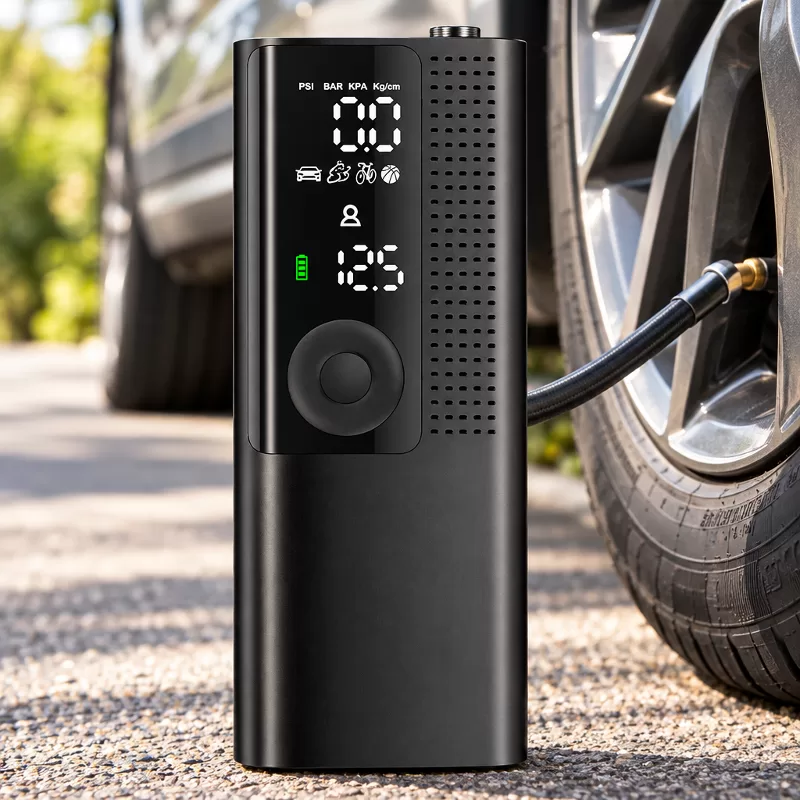
For performance bicycles running narrow tires at elevated pressures, manual hand pumping requires significant upper-body effort against escalating backpressure. A battery-powered electric inflator overcomes this resistance mechanically, delivering consistent volume until reaching the preset shut-off mark.
Light Recreation: Inflatables and Sports Equipment
Sports balls require low pressure levels paired with precise cut-off sensitivity. Using high-volume workshop air lines often results in catastrophic over-pressurization that tears internal stitching or bursts bladders instantly.
A smart portable pump set to ball mode provides a dedicated preset category for athletic gear, channeling air through a narrow metal needle adapter. Users should always check the ball manufacturer’s stamped pressure recommendation before starting to prevent casing distortion.
How to Check and Inflate a Tire Correctly
Step 1: Identifying Recommended Cold Tire Pressure (Placard vs. Sidewall)
Before connecting any inflation hardware, you must verify the manufacturer’s recommended cold inflation pressure. This specification is found printed on the vehicle safety certification placard affixed to the driver-side door pillar, or inside the owner’s manual.
Never use the maximum pressure molded directly into the rubber tire sidewall. Sidewall markings state the structural containment limit of the casing at maximum load, not the optimized operational pressure determined by vehicle chassis engineers.
Step 2: Preparing the Valve Stem and Ensuring an Airtight Seal
Inspect the valve stem for exterior grime, corrosion, or thread damage before attaching the inflator hose. Remove the dust cap, keeping it in a secure spot like your pocket or vehicle cup holder.
Thread the pump’s air chuck squarely onto the Schrader stem without cross-threading the brass fittings. Continue tightening until the internal depressor pin engages the valve core, which prompts the digital display to illuminate and register the tire’s static internal pressure.
Step 3: Configuring Target Pressure and Running the Cycle Safely
- Select the Proper Mode: Use the front control interface to choose your vehicle category or enter manual custom mode.
- Adjust the Pressure Threshold: Press the plus or minus buttons until the digital target readout matches your door jamb placard specification.
- Confirm Hose Alignment: Check that the high-pressure air hose remains straight without tight kinks or sharp bends against the wheel rim.
- Initiate Motor Operation: Press the central power button to begin compression; maintain personal awareness near the tool while running.
- Observe the Cycle: Allow the pump to run steadily until the internal sensor detects the target value and automatically cuts motor power.
Step 4: Post-Inflation Verification and Rechecking After Driving
Once the pump stops automatically, unscrew the hose fitting quickly to minimize pressurized air escape. Re-install the protective valve cap tightly to shield the delicate internal valve core against road grit, moisture, and debris.
Tire pressure should always be checked when tires are cold, meaning the car has been stationary for at least three hours or driven under one mile. After driving for several miles, thermal friction will naturally elevate internal pressure by three to four PSI; this thermal rise is normal and must never be vented or "bled" from hot tires.
Safety Guidelines, Duty Cycles, and Equipment Limits
Heat Buildup and Piston Cooling: Respecting Continuous Run Times
Air compression is fundamentally a thermodynamic process that converts electrical energy into heat. During extended operation, a portable pump’s metal cylinder head and connecting fittings become extremely hot to the touch.
To prevent seal distortion and motor winding insulation breakdown, practice intermittent usage pacing and follow the manufacturer’s user manual regarding maximum continuous operation and resting intervals. Giving the pump adequate time to dissipate internal heat protects internal piston rings and extends hardware life.
Avoiding the Sidewall Maximum Pressure Trap
Inflating tires up to their sidewall limit hardens the tread compound, severely degrading passenger ride quality and extending stopping distances across wet roads. High backpressures also increase vulnerability to road debris impact blowouts when encountering unexpected highway potholes.
Always calibrate target pressures strictly to chassis vehicle placards. The vehicle engineering team balanced braking traction, steering precision, roll resistance, and passenger comfort around that exact specification.
Recognizing Punctures, Sidewall Damage, and Unsafe Bead Seals
Before inflating a flat tire, conduct a thorough visual and tactile check of the entire wheel assembly. A tread puncture may be repairable, but only a trained tire professional can assess it; do not treat reinflation as a repair or proof that the tire is safe to drive.
Conversely, if damage is located along the shoulder, sidewall flex zones, or wheel rim bead interface, adding air creates an immediate rupture hazard. A tire driven on while completely flat often suffers catastrophic internal casing shredding, visible as rubber dust and blistering; tires in this condition must be replaced immediately.
Cold Weather Operation: Battery Performance Below Freezing
Sub-zero winter conditions impact the internal resistance of lithium-ion battery cells. In freezing weather, usable electrochemical capacity temporarily drops, reducing overall motor torque output and total operating minutes per charge.
The LP2-P has an environmental operating rating between -10°C and 45°C. For use in severe winter environments, users should adhere to the manufacturer’s operating guidelines, store the unit in temperature-controlled environments when feasible, and never expose battery cells to direct external heating elements.
Frequently Asked Questions (FAQs)
Can a portable inflator air up a tire that is completely flat on the rim?
A portable unit can reinflate a tire flat on the rim only if the tire bead remains fully seated against the wheel flange. If the bead has dropped inward into the center drop channel, small portable inflators lack the massive burst volume required to snap the bead outward against the rim lip. In that scenario, professional service equipment is required.
Why does my tire pressure reading change after driving for 10 minutes?
Tire pressure rises dynamically as a vehicle travels along a roadway. Road friction and internal carcass flexing generate thermal energy that heats the contained air mass. As a general rule of thumb, tire pressure shifts by approximately 1 PSI for every 10°F change in internal temperature, meaning warm driving pressures naturally read higher than cold baseline placard ratings.
How does cold ambient weather affect battery-powered air compressors?
Cold air temperatures slow lithium-ion chemical reactions, which temporarily raises internal cell resistance and lowers usable runtime. Furthermore, cold ambient weather causes tire air mass to contract, lowering tire pressure by approximately one to two PSI for every 10°F drop in outdoor temperature, prompting frequent winter top-up needs.
Is automatic shut-off accurate enough to eliminate a manual analog gauge?
Automatic shut-off logic offers tremendous operational convenience by halting inflation when the integrated sensor registers the target setting. While digital sensors provide convenient real-time tracking, periodically verifying pressure with an independent, reliable tire pressure gauge remains an established best practice.
How often should a portable inflator’s internal lithium battery be recharged?
Rechargeable lithium battery packs experience gradual self-discharge when stored over extended periods. To maintain readiness during sudden tire pressure drops, consult the product manual for recommended maintenance charging intervals and recharge the unit before long highway trips.
Summary and Buyer’s Checklist
Core Takeaways: Balancing Flow Rate, Portability, and Realistic Use Cases
Investing in a portable air tire inflator gives drivers autonomy, safety, and everyday convenience. Selecting the right model requires matching cylinder displacement, battery capacity, thermal management, and build materials to your personal vehicle profiles and typical travel conditions.
Before making a final choice, review this essential evaluation checklist:
- Cylinder Architecture: Compare the stated 14-cylinder and 17-cylinder configuration figures; confirm the version and performance data with the seller.
- Digital Auto-Stop: Confirm the hardware incorporates preset application profiles and automated shut-off logic to eliminate accidental over-inflation risks.
- Thermal Protection: Ensure the chassis features sufficient ventilation openings and internal overcurrent safeguards to handle mechanical heat buildup safely.
- Type-C Charging: Verify the unit uses standard Type-C charging and confirm that the intended charging source can provide the required 5V/2A input.
- Accessories Included: Verify the package contains necessary Presta bicycle adapters, sports needles, and high-pressure hose extensions suited to your equipment.
Carrying a reliable portable air tire inflator turns tire pressure management from a messy, stressful chore into a simple five-minute check. By following manufacturer pressure placards, respecting duty cycles, and storing your equipment properly, you will protect your tires, optimize fuel economy, and stay prepared for the road ahead.
-

Meet NEWO at the 140th Canton Fair: Visit Booth 10.3 M03–04
Meet NEWO at the 140th Canton Fair in Guangzhou, October 15–19, 2026. Visit Booth 10.3 M03–04 to explore portable air pumps and discuss OEM, ODM and distribution opportunities.... -

As Shenzhen Welcomes the World for APEC 2026, NEWO Welcomes You to Our Factory
As Shenzhen prepares for APEC 2026, NEWO welcomes international buyers and partners to visit our factory, meet our team and explore future cooperation.... -

Leading the Way in Product Innovation and Excellence
Smartnewo exemplifies professionalism in product innovation and manufacturing. Their collaboration with Xiaomi Youpin on the G01 crowdfunding project highlights their expertise in creating compact, powerful inflatable pumps. Rigorous engineering, meticulous production processes, and advanced quality assurance underscore their commitment to excellence. The success of the G01 project, with significant market... -

Essential Qualities of an Excellent Supplier
In today's competitive market, finding a reliable supplier is crucial for business success. Based on insights from Smartnewo and broader internet research, here are key qualities an excellent supplier must possess:... -

NW06 Tire Inflator: Compact Power for Quick Inflation
Summary The NW06 Tire Inflator delivers quick and efficient tire inflation with a powerful 35L/min airflow. It features a user-friendly LCD screen for real-time pressure monitoring, dual power options with a built-in 6000mAh battery, and multiple nozzle attachments for versatile use. Its compact design and integrated LED light ensure convenience and... -

Unleash the Power of Portability: The SmartNewo Jump Starter with Air Compressor KF03
This guide will walk you through the steps to effectively use a portable tire inflator, helping you stay prepared and safe on the road.... -

Newo Attends The 2024 Consumer Electronics Show (CES)
Smartnewo booth is located at 53672, Halls A-D, Level 2, Venetian Expo, Las Vegas Convention Center (LVCC). ... -

Smartnewo’s Dual-Cylinder Air Pump Rocks the Hong Kong Autumn Electronics Fair!
Smartnewo’s Dual-Cylinder Air Pump Rocks the Hong Kong Autumn Electronics Fair!... -

Meet at the Canton Fair! Smartnewo brings dual-cylinder air pumps, making your inflation experience faster and more stable!
NEWO has went deep communication and negotiation with customers from all over the world on booth.... -

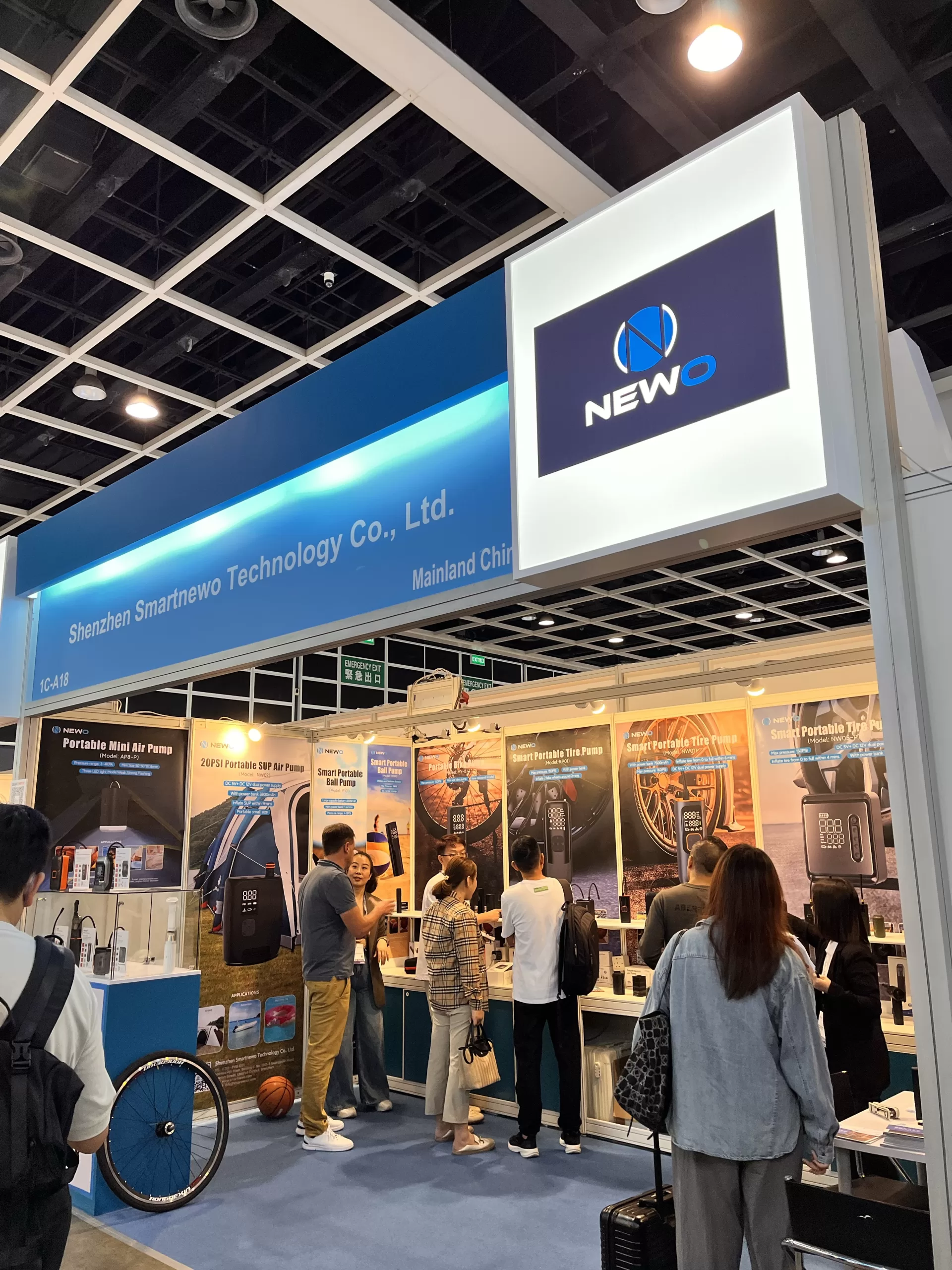
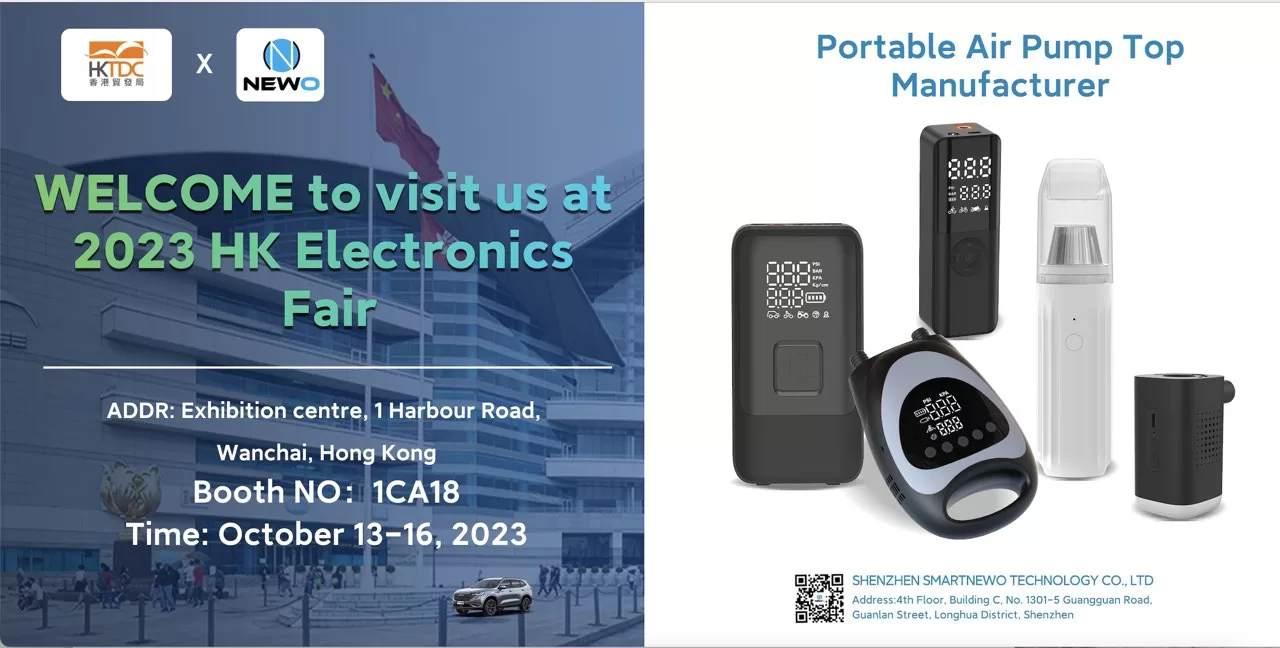
“Hong Kong Autumn Electronics Fair – 1CA18 (October 13th to 16th): Smartnewo invites you to visit our booth!
Hong Kong Autumn Electronics Fair...



-

What to Check Before Ordering Custom Electric Bike Pumps
Plan custom electric bike pumps with a clear requirements freeze for valves, TPU tubes, portability, repeated top-ups, charging, and model-specific documents.... -

OEM vs ODM Air Pumps: Which Manufacturing Model Fits Your Brand?
Compare OEM and ODM air pump projects by design responsibility, change approval, development scope, and written ownership terms before choosing your route.... -
How to Choose a Reliable Tire Inflator Manufacturer in China
Choose a tire inflator manufacturer in China with a focused RFQ, supplier evidence, configuration checks, and clear sample-to-pilot decisions for your brand.... -

Rechargeable Electric SUP Pump for Paddle Boards: Faster Inflation for SUPs, Kayaks and Inflatable Tents
The BL10-C Portable Electric Bike Tire Inflator is a compact and lightweight mini electric bike pump designed for modern cyclists. With up to 120 PSI pressure, a digital LED display, preset pressure control, automatic shut-off, USB-C charging, and multiple valve adapters, BL10-C offers a convenient inflation solution for road bikes,... -

Are Electric Bike Pumps Worth It in 2026? Electric Pump vs CO₂ vs Mini Hand Pump
Discover whether electric bike pumps are worth it in 2026. This guide compares electric bike pumps, CO₂ inflators, and mini hand pumps for road cycling, gravel riding, commuting, and long-distance rides. Learn the pros, limitations, best use cases, and key features to look for before choosing the right portable tire... -
BL10-C Portable Electric Bike Tire Inflator: Small Size, Reliable Power for Every Ride
The BL10-C Portable Electric Bike Tire Inflator is a compact and lightweight mini electric bike pump designed for modern cyclists. With up to 120 PSI pressure, a digital LED display, preset pressure control, automatic shut-off, USB-C charging, and multiple valve adapters, BL10-C offers a convenient inflation solution for road bikes,... -

Why Mini Electric Bike Pumps Are Becoming Essential for Modern Cycling
Discover why mini electric bike pumps are becoming essential for modern cyclists. Learn how portable electric bike pumps improve tire pressure management, riding safety, and convenience.... -

The Ultimate Smart Solution for Easy Outdoor Adventures in 2026
Discover how a spring travel air pump simplifies outdoor trips with fast inflation, smart features, and powerful performance—perfect for every adventure.... -

Powerful 5-in-1 Portable Car Tire Inflator and Jump Starter: The Ultimate Emergency Tool for Every Driver
Why Every Driver Needs a Portable Car Tire Inflator and Jump Starter Modern drivers face many unexpected situations on the road. A flat tire, low tire pressure, or a dead car battery can happen at the worst possible time. That’s why having a portable car tire inflator and jump starter is... -

7 Real Cycling Scenarios That Show Why Every Rider Should Carry a Mini Bike Pump
Cycling is one of the most freeing activities you can enjoy. Whether you’re commuting to work, riding through city streets, or exploring quiet countryside roads, a bike ride can instantly improve your day. But there’s one small problem that almost every cyclist eventually faces: Low tire pressure. It might happen...


-
How Is a Football Properly Inflated?
The correct inflation of a football - with not too much and not too little air - is a hotly debated topic among footballers.... -
Application Scenarios of Car Inflator Pump
Often long-distance business trips or play car owners because the road may be more remote areas, in this case if you encounter a tire leak....