

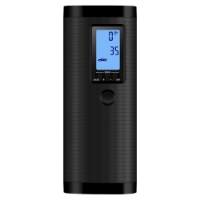
 Portable Tire Inflators
 Electric Air Pumps
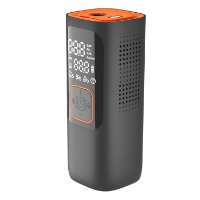 Electric Car Tyre Pumps
 Electric Ball Pumps
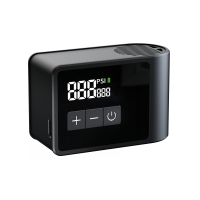 Electric Bike Pump
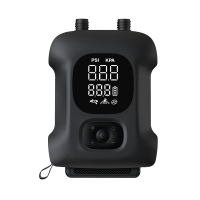 SUP Air Pump

Portable Cordless Tire Inflator: Complete Selection and Practical Operation Guide
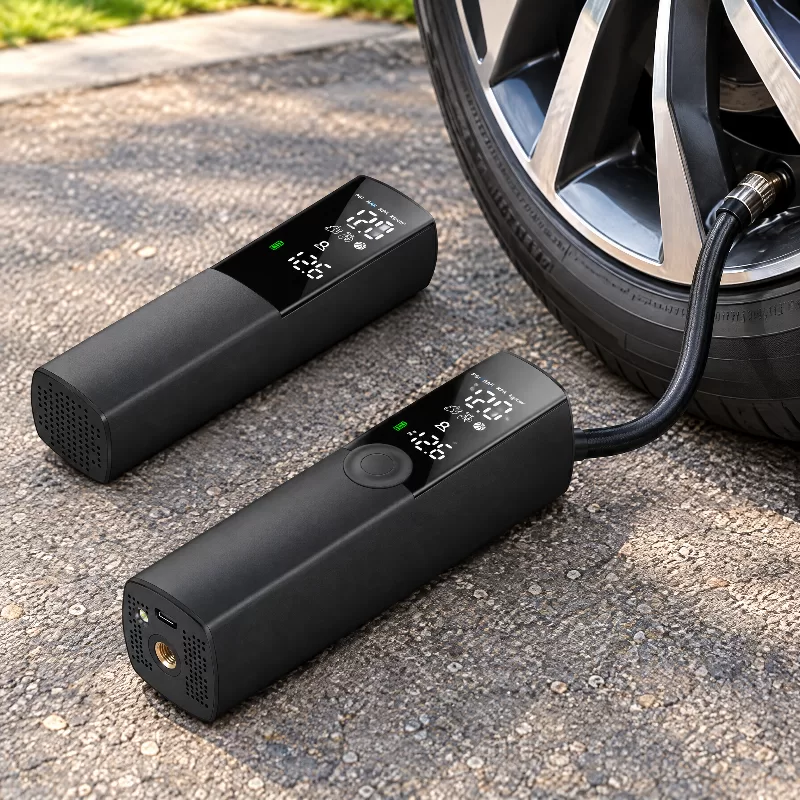
Proper tire pressure supports safe vehicle handling, predictable traction, and can affect tread wear and fuel economy across daily driving. A portable cordless tire inflator offers drivers an accessible alternative to searching for operational gas station air lines or untangling dirty cables in poor weather. Rather than relying on external station gauges of uncertain maintenance, a dedicated handheld device lets owners monitor and adjust inflation pressure on their own schedule.
Rechargeable, battery-operated compressors package electric motors, pressure sensors, and lithium power supplies into compact housings for travel and commuting. Whether handling routine pressure top-ups during seasonal weather shifts or adjusting bicycle tires at a trailhead, understanding how these devices operate helps drivers choose the right tool and protect their pneumatic equipment.
1. Understanding the Portable Cordless Tire Inflator
1.1 Defining Core Mechanics and the Cordless Configuration
At its mechanical core, a portable cordless tire inflator pairs an electric motor and small reciprocating piston with an internal rechargeable lithium battery. When switched on, the internal motor drives the piston to draw ambient air into the cylinder, compress it, and force it through a reinforced delivery hose into the tire stem.
Unlike traditional inflators that require continuous connection to a 12-volt vehicle socket, cordless designs function independently of the car’s electrical harness. This independent layout allows operators to reach any tire on a passenger car, cargo trailer, bicycle, or handcart without worrying about cable length or vehicle battery discharge during use.
1.2 Multi-Category Utility Across Commutes and Equipment
A battery-powered compressor handles a broad range of inflation tasks beyond standard passenger car maintenance. Because different inflatables demand vastly different air volumes and pressures, matching the tool to the intended application ensures efficient, dependable operation.
- Passenger Vehicles: Periodic top-ups to restore target operating pressure following seasonal temperature drops.
- Bicycles and E-Bikes: Routine inflation for road bicycle tires as well as high-volume commuter and electric bike tires.
- Motorcycles and Scooters: Compact pressure maintenance for commuting and touring without access to garage shop air.
- Sports and Utility Gear: Controlled inflation of basketballs, soccer balls, and personal mobility equipment using compatible nozzle adapters.
2. Core Technical Specifications: What to Evaluate Before Buying
2.1 Working Pressure Ratings and Stated Profile Limits
Every pneumatic tool operates within specific pressure boundaries determined by its mechanical build. For example, the Newo BP188 specifies a maximum operating pressure of 120 PSI, while its documentation also notes a custom user-adjustable mode setting reaching up to 150 PSI. These numbers reflect device settings rather than recommendations for your vehicle.
Operators should never treat a compressor’s upper operational setting as an inflation target for everyday equipment. Vehicle and tire manufacturers designate target cold inflation pressures for specific loads and chassis setups. Always verify the manufacturer’s recommended values for your specific tires before selecting a target pressure on any digital inflator.
2.2 Airflow Delivery and Practical Inflation Time
Pressure limits define how much resistance an inflator can push against, but airflow rate dictates the practical time required to complete an inflation task. Compact handheld pumps frequently produce modest volumetric flow rates, such as the 15 to 18 L/min specified for the BP188. This displacement suits regular top-ups and smaller pneumatic tires.
Actual inflation times depend heavily on total tire volume, starting pressure, and ambient resistance. While a larger airflow rating indicates greater volumetric delivery under test conditions, actual field results will vary depending on temperature, hose condition, and the physical volume of the tire being inflated.
2.3 Battery Architecture and Operating Time
Handheld cordless inflators depend on integrated lithium cells to power their compression motors. The published specifications for the BP188 list a 7.4V, 1200mAh (8.88Wh) battery configuration, while its descriptive text mentions two 1200mAh batteries. This setup drives an onboard 35-watt motor equipped with overcurrent protection circuitry.
Continuous runtime figures also reflect differing descriptions in first-party literature: the BP188 specification table states an operating runtime of 10 to 15 minutes, whereas the accompanying text notes continuous working time of up to 20 minutes. Prospective buyers should confirm applicable continuous duty cycles with the manufacturer and allow the device to rest between heavy inflation tasks.
2.4 Digital Transducers and Auto-Stop Systems
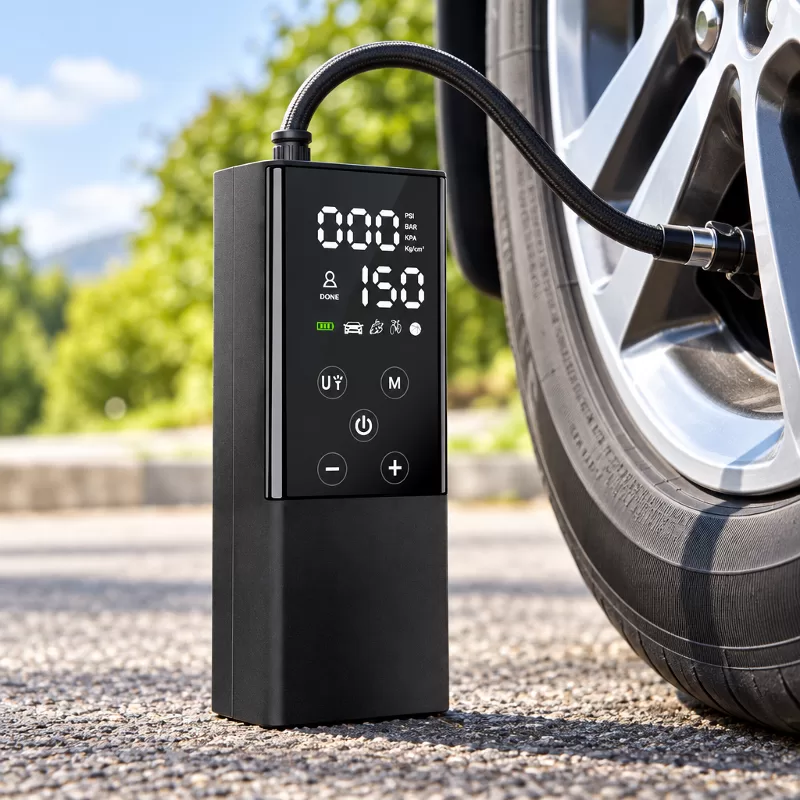
Integrated pressure transducers continuously read backpressure from the tire valve, displaying numeric values on backlit digital screens. Modern digital controls support common international measurement units, allowing operators to switch between PSI, BAR, KPA, and $\text{kg/cm}^2$ depending on the technical specifications of their vehicle.
To prevent accidental over-pressurization, modern inflators feature auto-stop programming. The manufacturer states that the pump stops running automatically once the selected pressure threshold is reached. While this automated shut-off provides significant convenience during roadside operation, checking final pressure against an independent gauge remains sound maintenance practice.
3. Step-by-Step Guide: Safe and Accurate Tire Inflation
3.1 Establishing Cold Tire Pressure Baseline Targets
Accurate inflation begins well before connecting the inflator hose to the valve stem. Rolling friction and road contact generate heat inside tires during operation, causing internal air pressure to rise above standard baseline figures.
- Locate the vehicle tire information placard on the driver-side door jamb, or consult the vehicle owner’s manual to find recommended cold tire pressure values.
- A tire is cold after the vehicle has been parked for at least three hours, or after it has been driven less than one mile (1.6 km) following that three-hour rest.
- Remove the valve stem dust cap, check the exposed threads for road debris or corrosion, and prepare the inflator hose connector.
3.2 Connecting Adapters and Selecting Operational Modes
Tires and sports equipment rely on varying valve designs. Standard automotive tires, wheelbarrows, and most mountain bikes use common Schrader valves, whereas high-performance road bicycles typically feature narrow Presta valves that require a screw-on adapter.
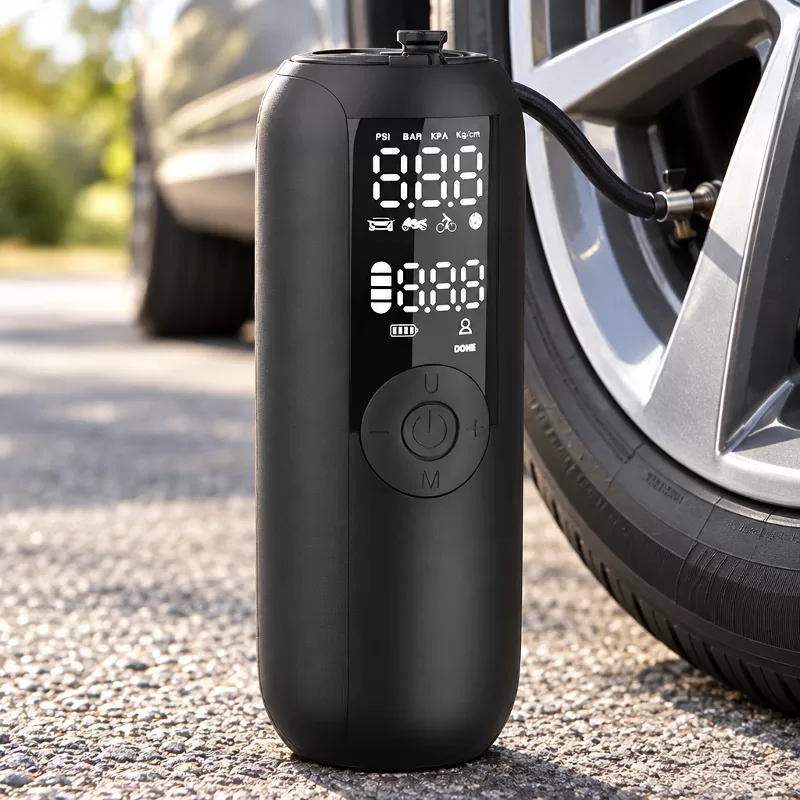
Thread the pump connector squarely onto the stem until fully seated, minimizing air loss while ensuring the internal pin depresses the valve core properly. Select the appropriate operational mode—such as car, motorcycle, bicycle, or custom user mode—to establish a sensible baseline before initiating compression.
3.3 Operating the Pump and Verifying Results
Start the inflator and observe the digital display as pressure rises inside the chamber. Remain beside the equipment throughout operation to ensure the hose remains unobstructed and the housing stays balanced against ground vibration.
Allow the automated shut-off system to stop the motor when the preset target pressure registers on the sensor. If you accidentally overshoot your target, use the built-in manual deflation valve to vent excess pressure until the digital readout matches your target setting.
4. Product Spotlight: Real-World Profile of the BP188 Inflator
4.1 Form Factor, Materials, and Practical Portability
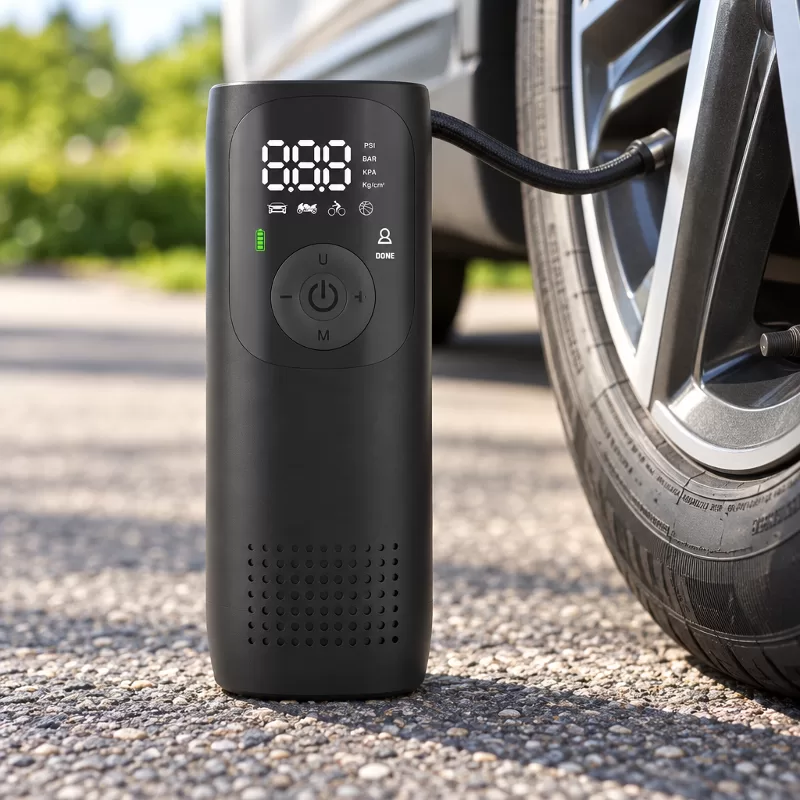
The Newo BP188 demonstrates how compact pneumatic engineering provides functional everyday utility. Built with an aluminum housing measuring approximately 7.48 inches high by 1.3 inches wide, the unit stores cleanly inside vehicle consoles, saddlebags, or travel tool rolls.
Internal hose storage slots protect connection hardware from dust and transit damage. The device also features a backlit digital display, a built-in LED light for working in dimly lit environments, and a standard USB power-bank output port suitable for charging mobile devices during travel.
4.2 Stated Performance and Technical Parameters
Powered by a 35W brushed motor, the BP188 delivers a specified airflow rate of 15 to 18 L/min. The manufacturer’s specification table describes an internal cylinder size of "14 cylinder," though the specific engineering meaning of this designation is not expanded in the technical documentation.
Recharging takes 2 to 3 hours via a standard 5V/2A Type-C input port. Manufacturer documentation states that a full charge provides sufficient energy to inflate approximately 4 to 6 bicycle tires, with operating temperatures rated from -10°C to 45°C at a sound level of 85dB.
| Technical Parameter | Manufacturer Specification (BP188) |
|---|---|
| Product Type | Portable electric air pump |
| Housing Material | Aluminum |
| Stated Maximum Pressure | 120 PSI (Custom mode up to 150 PSI) |
| Stated Airflow Rate | 15 to 18 L/min |
| Cylinder Specification | 14 cylinder (as listed in manufacturer table) |
| Motor Power | 35W brushed motor |
| Battery Capacity / Rating | 1200mAh (raw text describes 2 x 1200mAh) / 7.4V (8.88Wh) |
| Charging Input | Type-C, 5V / 2A |
| Stated Bicycle Tire Capacity | Approx. 4 to 6 bicycle tires per charge |
| Operating Temperature Range | -10°C to 45°C |
4.3 Navigating Manufacturer Specifications and Discrepancies
Careful inspection of technical literature frequently reveals discrepancies across specification tables and marketing descriptions. On the BP188 documentation page, the summary table lists a 1200mAh, 7.4V battery with a 10 to 15 minute runtime, while the descriptive narrative mentions dual 1200mAh batteries and continuous working time of up to 20 minutes.
Furthermore, the device lists a standard maximum pressure of 120 PSI alongside a custom mode adjustment reaching 150 PSI. For us, documenting these differences highlights why users should avoid assuming extreme capabilities: staying within conservative operating limits and following vehicle tire guidelines protects the equipment and ensures consistent performance.
5. Decision Framework: Matching Inflator Types to Your Needs
5.1 When a Compact Cordless Model Excels
Handheld cordless inflators provide practical advantages when swift deployment and mobility matter most. Carrying a cumbersome compressor just to adjust bicycle pressure or check a motorcycle tire adds unnecessary effort to standard maintenance routines.
- Routine Commuter Top-Ups: Prompt adjustment of minor seasonal pressure drops without detours to commercial service stations.
- Bicycle and Trail Maintenance: Quick roadside adjustments where hand-operated floor pumps or frame pumps require excessive physical effort.
- Fleet and Scooter Maintenance: Convenient servicing across multiple e-scooters, wheelchairs, or balance vehicles without trailing power cables.
- Compact Travel Storage: Emergency readiness in compact cars, saddlebags, or gear bags where storage space remains limited.
5.2 Understanding Operational Limits: When Shop Compressors Are Required
Handheld portable pumps operate within distinct mechanical boundaries. Their small internal displacement is designed to supplement existing air volume in sealed tires rather than deliver huge volumetric rushes of air.
Seating fresh tire beads onto wheel rims during new tire installation requires an instantaneous, high-volume surge that only workshop air tanks can generate. Similarly, high-ply commercial truck tires and large agricultural equipment demand high-displacement, heavy-duty compressors to complete inflation within reasonable timeframes.
5.3 Comparison: Cordless Handheld vs. 12V Auxiliary Compressors
Selecting the right inflation equipment involves weighing portability against power source convenience. The comparison below illustrates practical differences between cordless battery units and traditional vehicle-tethered 12V compressors.
| Feature | Handheld Cordless Inflator | 12V Auxiliary Corded Compressor |
|---|---|---|
| Power Source | Internal rechargeable lithium battery | Vehicle 12V auxiliary power port |
| Setup Process | Direct connection without routing cords | Requires unraveling and routing vehicle cords |
| Operating Range | Unrestricted by vehicle location | Restricted by length of power lead |
| Duty Cycle Nature | Limited by internal cell capacity and thermal buildup | Sustained by vehicle electrical system |
| Airflow Capacity | Designed for top-ups and small-to-medium tires | Varies from compact units to high-output twin cylinders |
| Physical Storage | Fits easily in gloveboxes or backpacks | Requires trunk or cargo compartment space |
| Off-Vehicle Tasks | Inflates gear away from vehicles | Requires an accessible 12V automotive power outlet |
6. Frequently Asked Questions (FAQs)
Can a portable cordless tire inflator inflate a completely flat car tire?
A cordless inflator can only be considered for a flat passenger tire if you have confirmed that the tire has not been driven on while flat, remains properly mounted on the wheel rim, and shows no physical damage. If a tire has been driven on while flat or severely under-inflated, running on the deflated sidewall can cause internal structural damage that makes re-inflation hazardous. In those situations, or if the tire will not hold air, do not attempt inflation; replace it with a spare or consult a tire professional. When a tire is undamaged and properly seated, inflating it from zero requires moving substantial air volume through a compact cylinder, which consumes considerable battery power and takes much longer than a routine top-up.
How do I know the correct tire pressure for my car?
The correct cold inflation pressure is listed on the vehicle placard located on the driver’s door jamb or inside the owner’s manual. Do not rely on the maximum pressure printed on the tire sidewall; that marking indicates the maximum inflation pressure the tire is rated to hold under maximum load, rather than the vehicle manufacturer’s engineered operating specification.
Why does the air hose connector get warm during use?
Pneumatic compression naturally generates heat as air molecules are compressed into a smaller space and forced through narrow fittings. This thermal energy transfers into the mechanical cylinder, delivery hose, and metal valve connectors. While models like the BP188 incorporate internal cooling fans and aluminum housings, operators should still handle metal hose fittings with care following extended runtimes.
What should I check if the inflator stops before reaching target pressure?
Unexpected shutdowns typically stem from battery voltage protection or sudden backpressure. If the lithium cell drops below its operational cutoff threshold under load, safety circuits halt the motor. Additionally, a restricted valve stem or poorly aligned connector can produce an artificial pressure spike, triggering the auto-stop system prematurely.
How often should the lithium battery in a cordless inflator be recharged?
Rechargeable lithium batteries gradually lose charge during extended storage, particularly when kept in vehicle compartments exposed to temperature fluctuations. It is best practice to check the charge level ahead of planned road trips and follow the manufacturer’s specific guidelines regarding storage temperature and recharging intervals to keep the battery ready for unexpected roadside tasks.
7. Practical Preparation for Long-Term Reliability
Carrying a reliable portable cordless tire inflator provides steady peace of mind for daily driving, cycling, and family road trips. Regularly maintaining tire pressures according to vehicle specifications supports even tread wear, predictable braking response, and consistent vehicle handling. A compact inflator helps you address minor pressure drops promptly at home or on the road.
Selecting a model with a protective housing, clear digital controls, automated shut-off capabilities, and modern Type-C charging makes routine pressure checks straightforward. By following vehicle manufacturer pressure placards, verifying battery charge ahead of long trips, and allowing equipment to rest between heavy inflation tasks, a portable cordless tire inflator remains a dependable companion for everyday journeys.
-
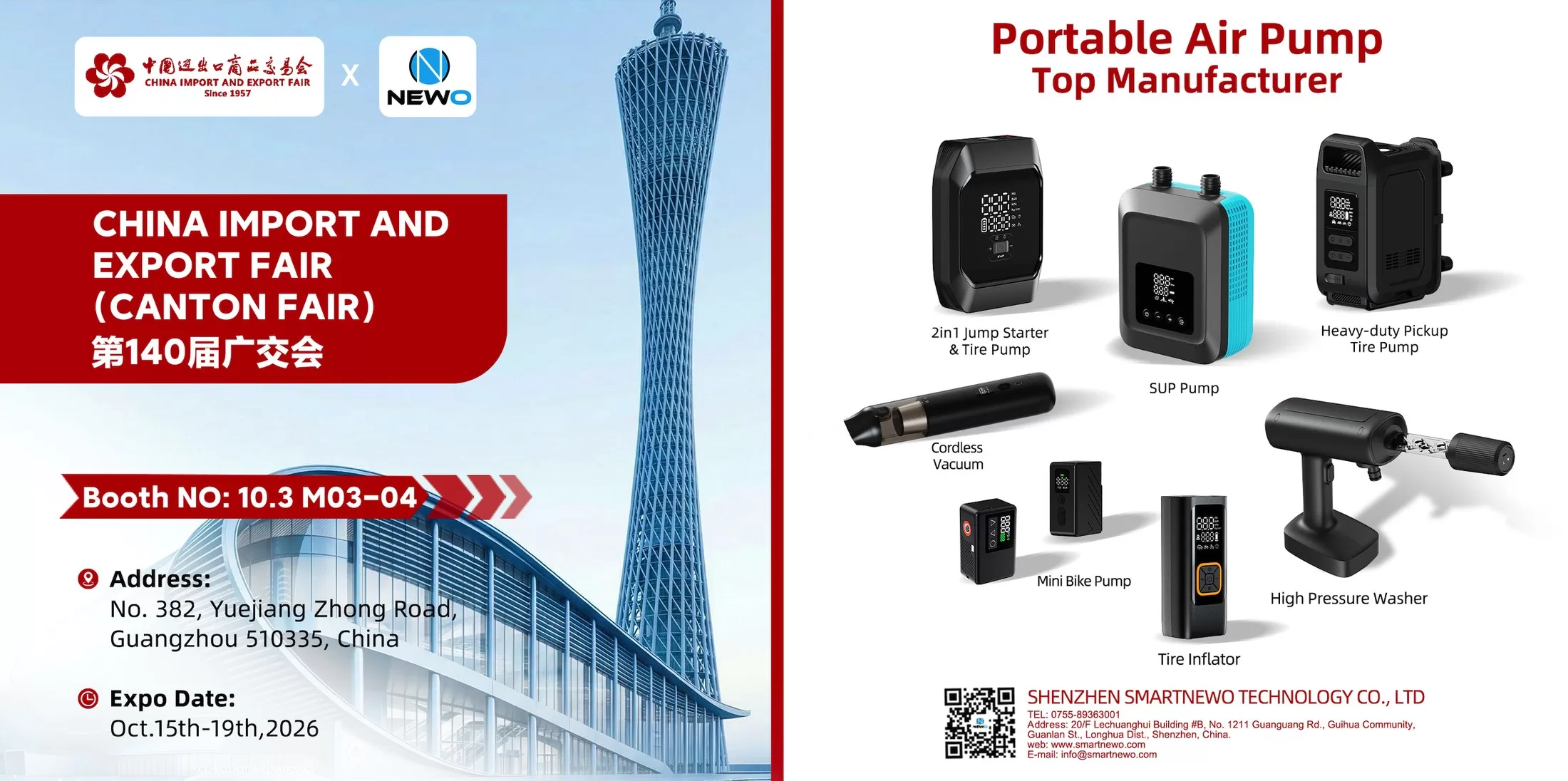
Meet NEWO at the 140th Canton Fair: Visit Booth 10.3 M03–04
Meet NEWO at the 140th Canton Fair in Guangzhou, October 15–19, 2026. Visit Booth 10.3 M03–04 to explore portable air pumps and discuss OEM, ODM and distribution opportunities.... -

As Shenzhen Welcomes the World for APEC 2026, NEWO Welcomes You to Our Factory
As Shenzhen prepares for APEC 2026, NEWO welcomes international buyers and partners to visit our factory, meet our team and explore future cooperation.... -
Leading the Way in Product Innovation and Excellence
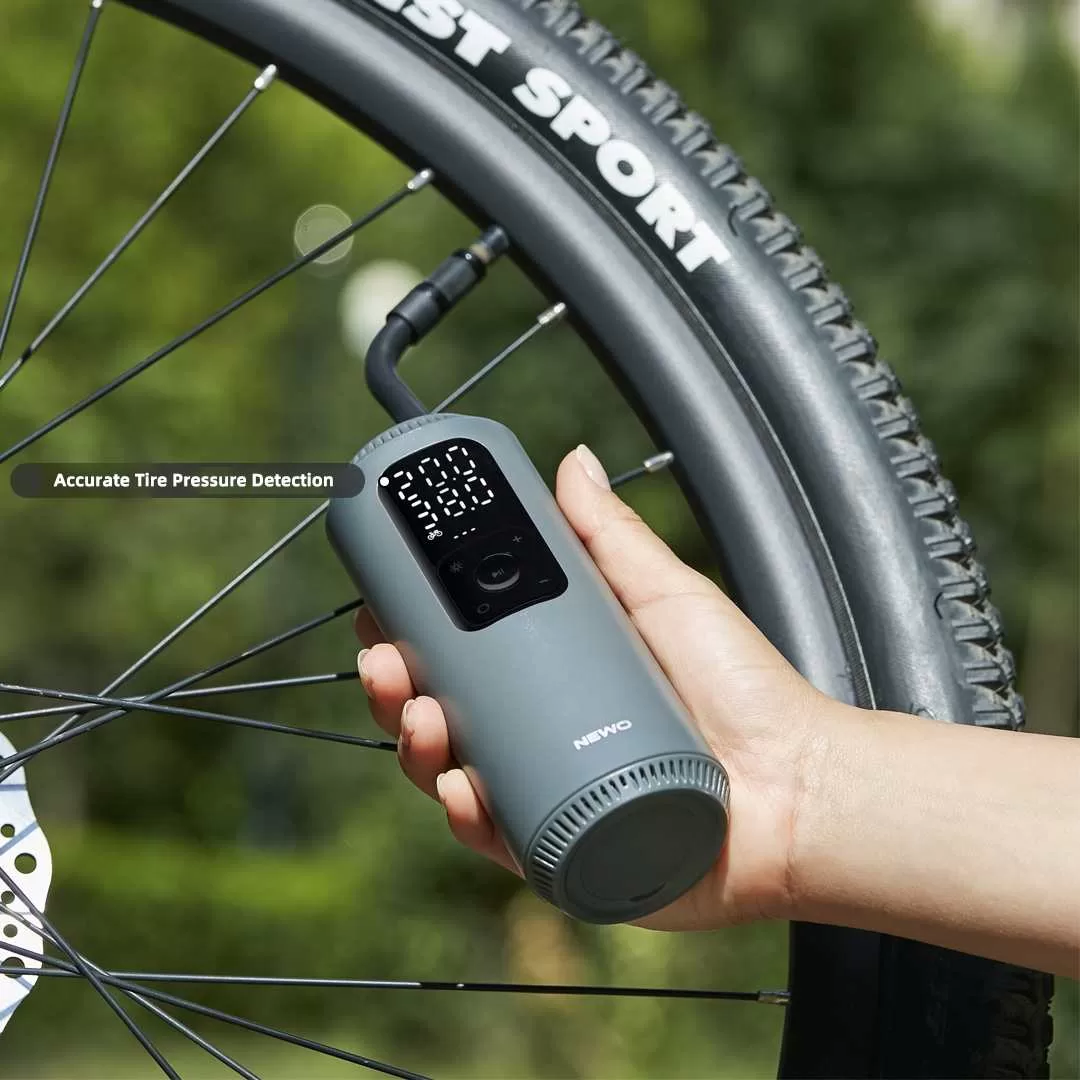
Smartnewo exemplifies professionalism in product innovation and manufacturing. Their collaboration with Xiaomi Youpin on the G01 crowdfunding project highlights their expertise in creating compact, powerful inflatable pumps. Rigorous engineering, meticulous production processes, and advanced quality assurance underscore their commitment to excellence. The success of the G01 project, with significant market... -
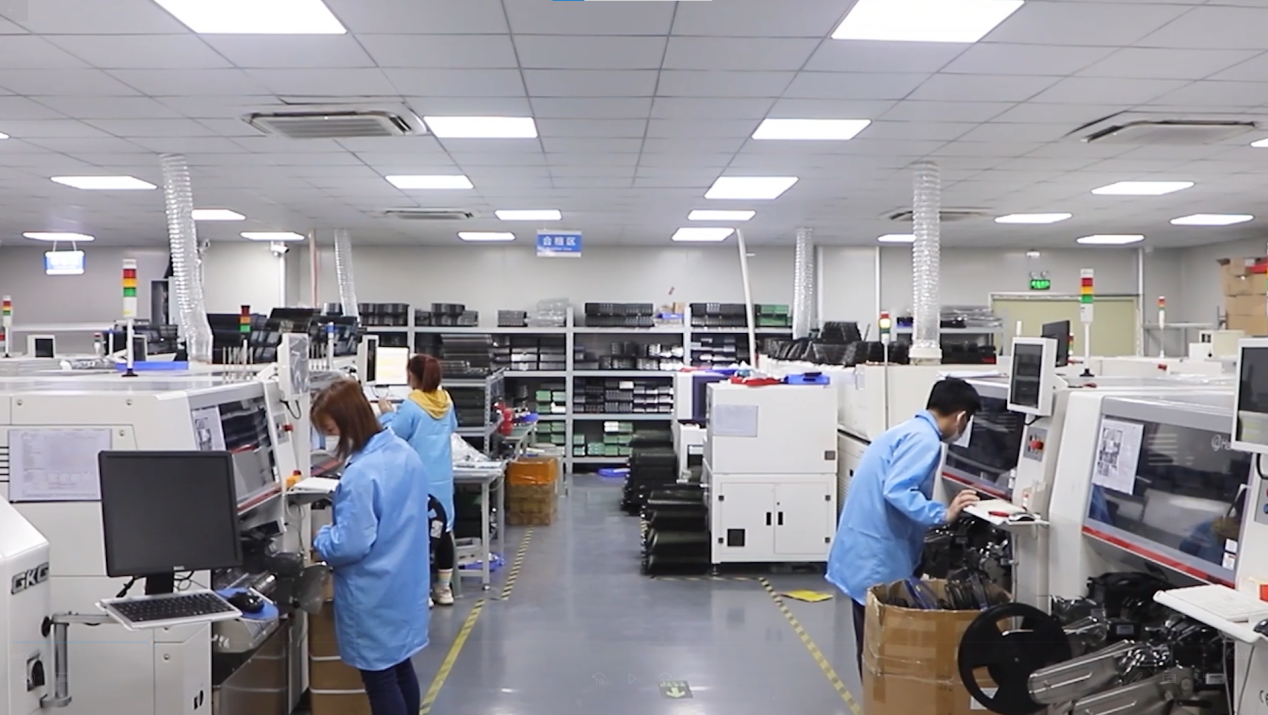
Essential Qualities of an Excellent Supplier
In today's competitive market, finding a reliable supplier is crucial for business success. Based on insights from Smartnewo and broader internet research, here are key qualities an excellent supplier must possess:... -
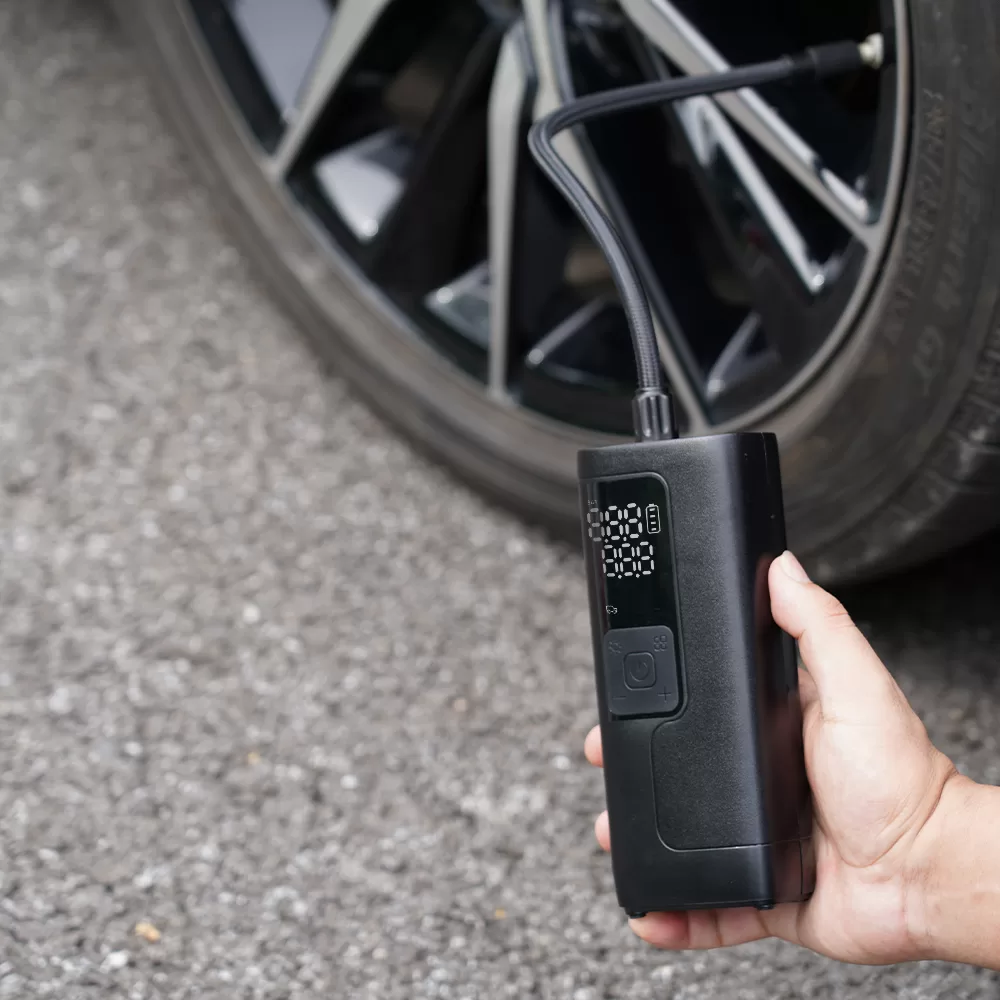
NW06 Tire Inflator: Compact Power for Quick Inflation
Summary The NW06 Tire Inflator delivers quick and efficient tire inflation with a powerful 35L/min airflow. It features a user-friendly LCD screen for real-time pressure monitoring, dual power options with a built-in 6000mAh battery, and multiple nozzle attachments for versatile use. Its compact design and integrated LED light ensure convenience and... -
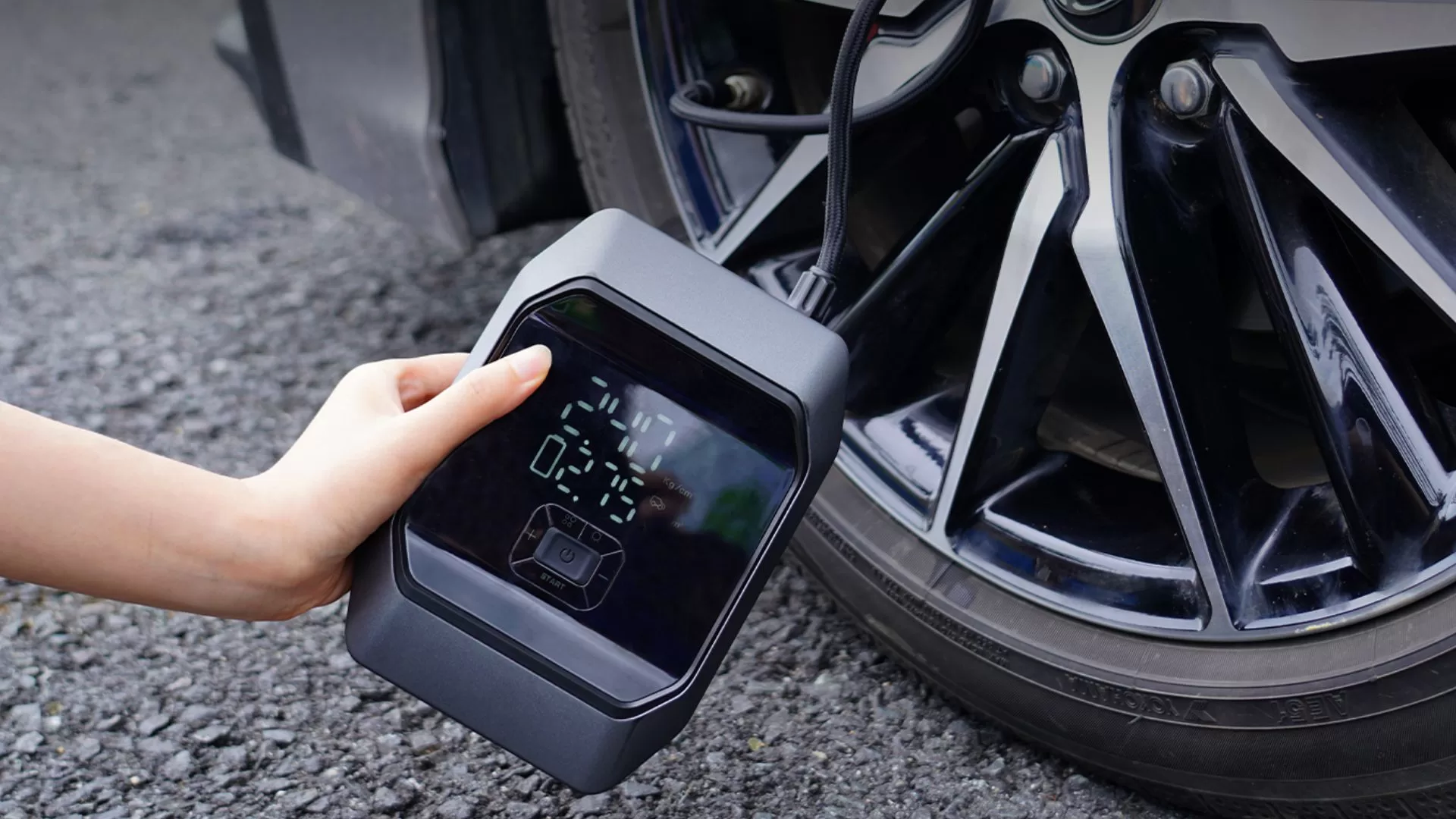
Unleash the Power of Portability: The SmartNewo Jump Starter with Air Compressor KF03
This guide will walk you through the steps to effectively use a portable tire inflator, helping you stay prepared and safe on the road.... -

Newo Attends The 2024 Consumer Electronics Show (CES)
Smartnewo booth is located at 53672, Halls A-D, Level 2, Venetian Expo, Las Vegas Convention Center (LVCC). ... -
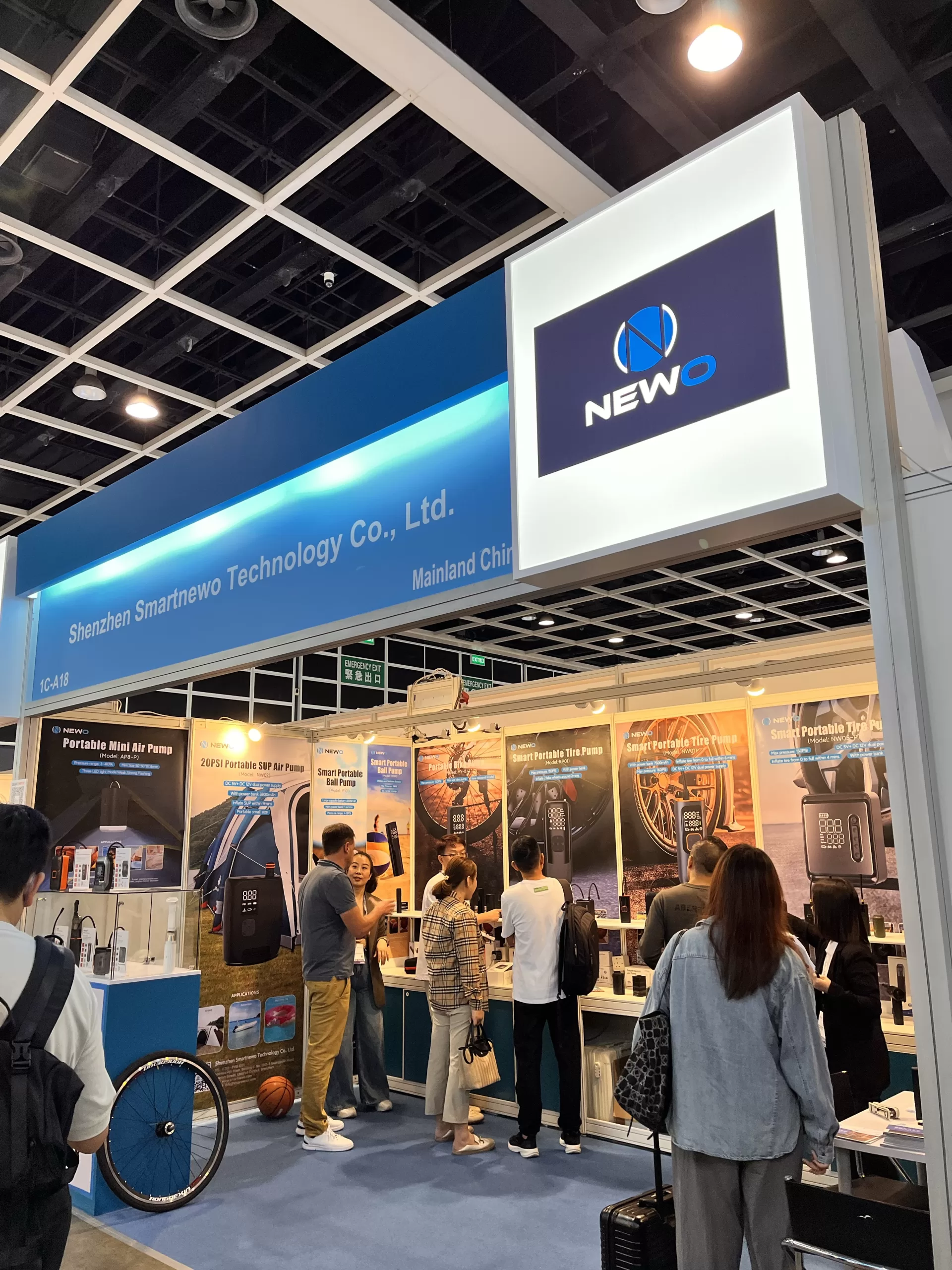
Smartnewo’s Dual-Cylinder Air Pump Rocks the Hong Kong Autumn Electronics Fair!
Smartnewo’s Dual-Cylinder Air Pump Rocks the Hong Kong Autumn Electronics Fair!... -

Meet at the Canton Fair! Smartnewo brings dual-cylinder air pumps, making your inflation experience faster and more stable!
NEWO has went deep communication and negotiation with customers from all over the world on booth.... -
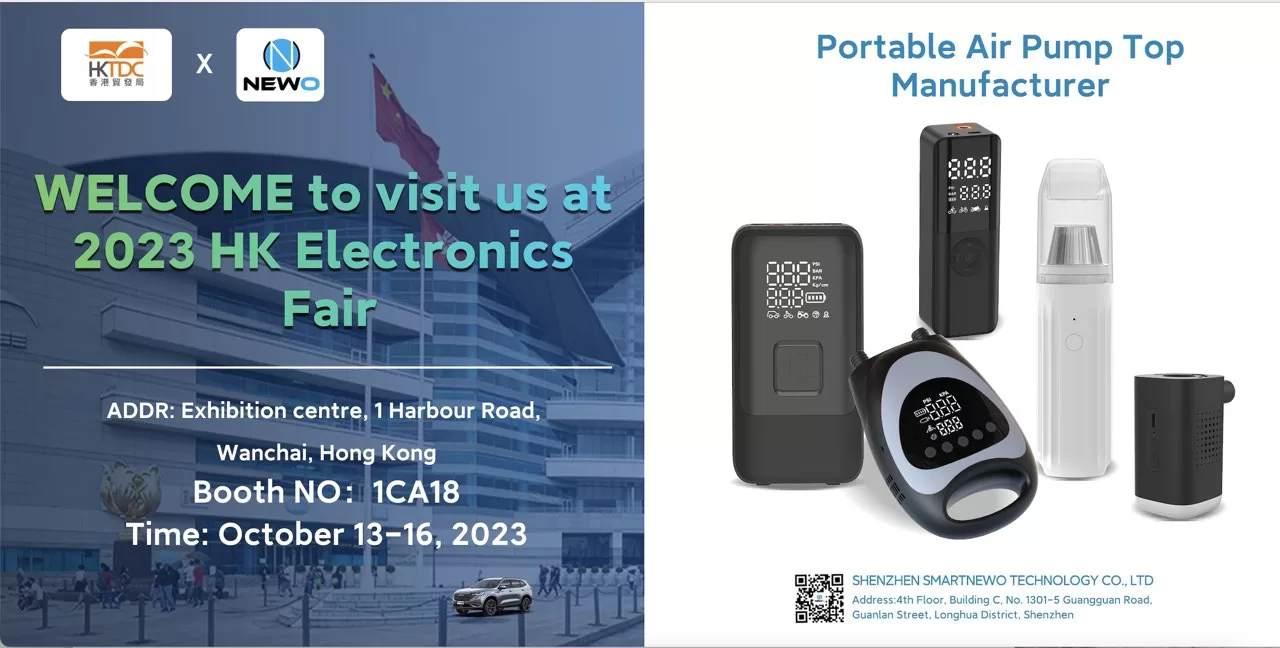
“Hong Kong Autumn Electronics Fair – 1CA18 (October 13th to 16th): Smartnewo invites you to visit our booth!
Hong Kong Autumn Electronics Fair...
-
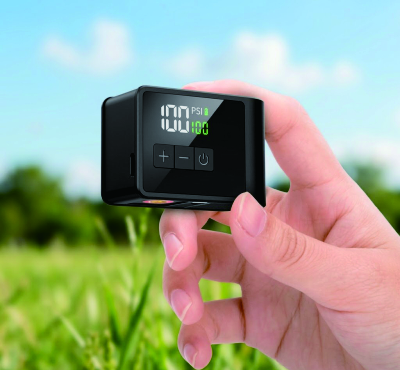
What to Check Before Ordering Custom Electric Bike Pumps
Plan custom electric bike pumps with a clear requirements freeze for valves, TPU tubes, portability, repeated top-ups, charging, and model-specific documents.... -

OEM vs ODM Air Pumps: Which Manufacturing Model Fits Your Brand?
Compare OEM and ODM air pump projects by design responsibility, change approval, development scope, and written ownership terms before choosing your route.... -

How to Choose a Reliable Tire Inflator Manufacturer in China
Choose a tire inflator manufacturer in China with a focused RFQ, supplier evidence, configuration checks, and clear sample-to-pilot decisions for your brand.... -
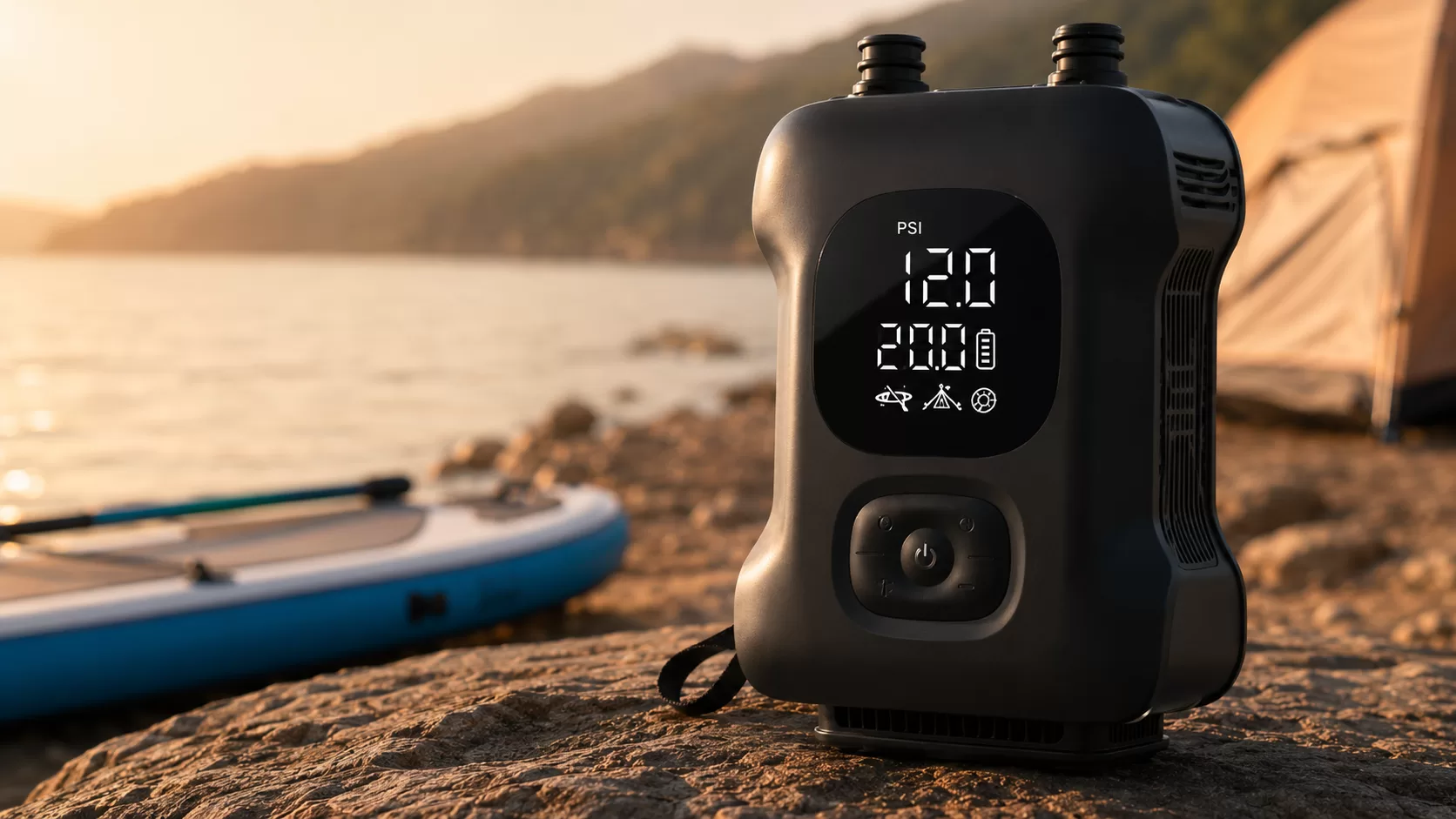
Rechargeable Electric SUP Pump for Paddle Boards: Faster Inflation for SUPs, Kayaks and Inflatable Tents
The BL10-C Portable Electric Bike Tire Inflator is a compact and lightweight mini electric bike pump designed for modern cyclists. With up to 120 PSI pressure, a digital LED display, preset pressure control, automatic shut-off, USB-C charging, and multiple valve adapters, BL10-C offers a convenient inflation solution for road bikes,... -
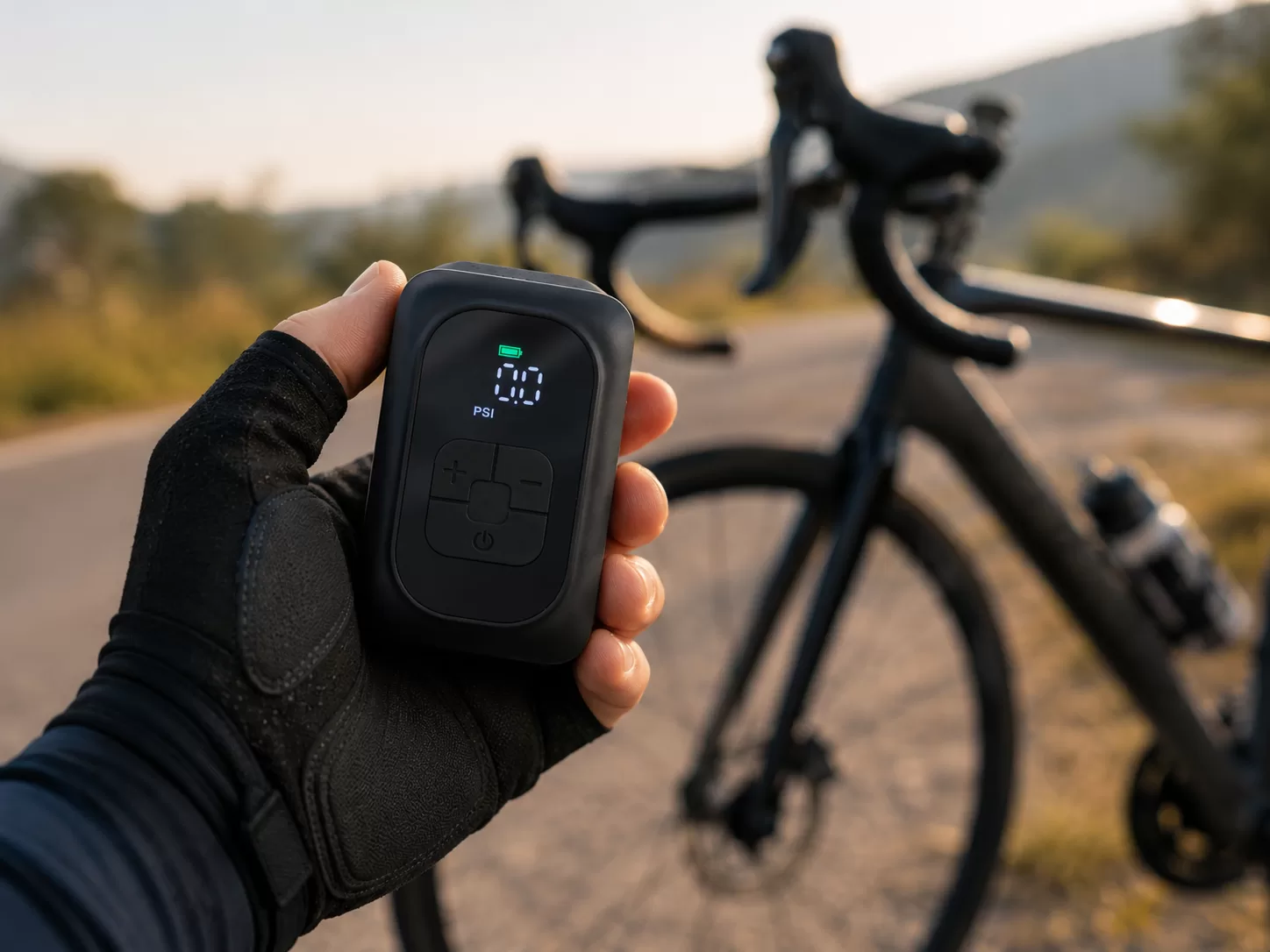
Are Electric Bike Pumps Worth It in 2026? Electric Pump vs CO₂ vs Mini Hand Pump
Discover whether electric bike pumps are worth it in 2026. This guide compares electric bike pumps, CO₂ inflators, and mini hand pumps for road cycling, gravel riding, commuting, and long-distance rides. Learn the pros, limitations, best use cases, and key features to look for before choosing the right portable tire... -
BL10-C Portable Electric Bike Tire Inflator: Small Size, Reliable Power for Every Ride
The BL10-C Portable Electric Bike Tire Inflator is a compact and lightweight mini electric bike pump designed for modern cyclists. With up to 120 PSI pressure, a digital LED display, preset pressure control, automatic shut-off, USB-C charging, and multiple valve adapters, BL10-C offers a convenient inflation solution for road bikes,... -
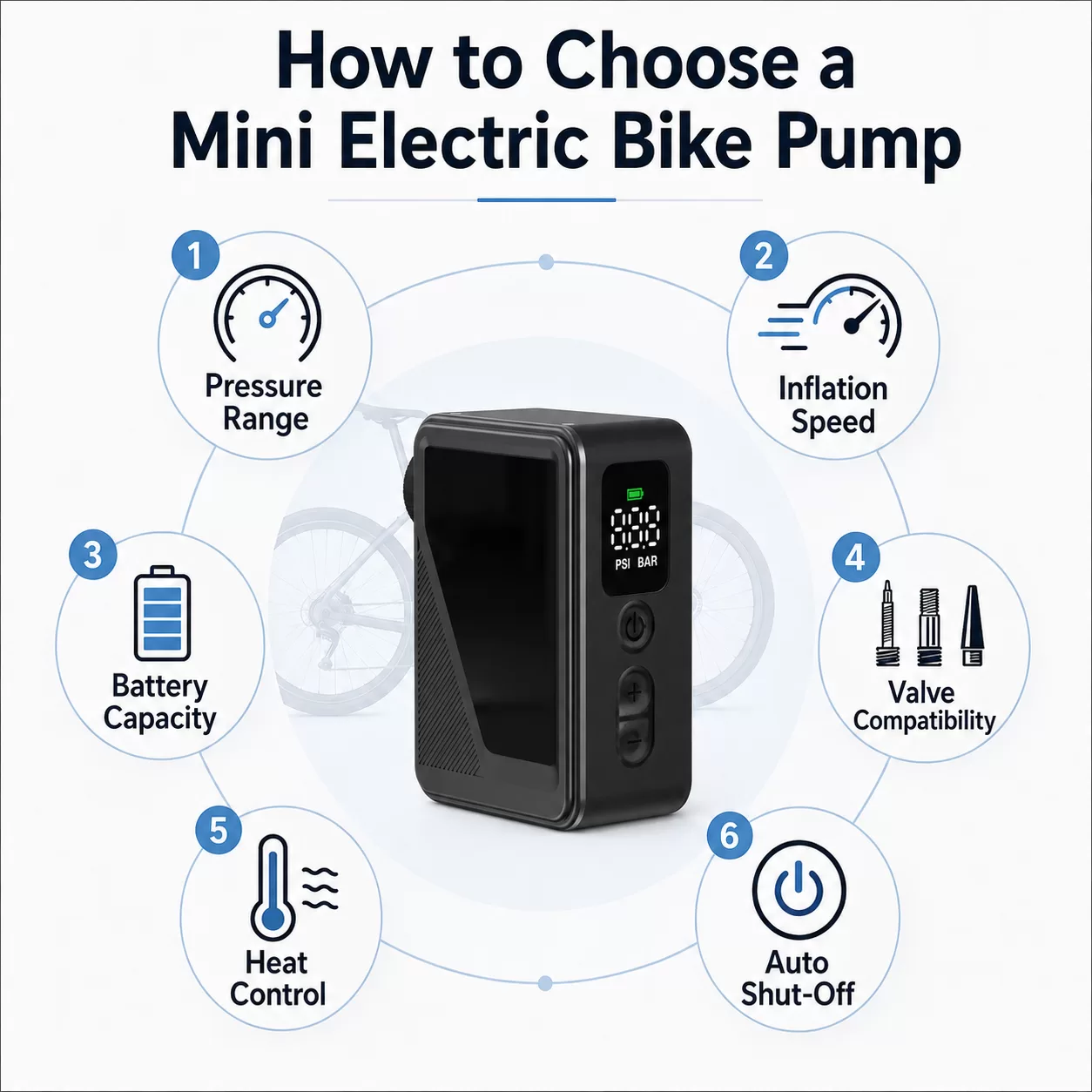
Why Mini Electric Bike Pumps Are Becoming Essential for Modern Cycling
Discover why mini electric bike pumps are becoming essential for modern cyclists. Learn how portable electric bike pumps improve tire pressure management, riding safety, and convenience.... -
The Ultimate Smart Solution for Easy Outdoor Adventures in 2026
Discover how a spring travel air pump simplifies outdoor trips with fast inflation, smart features, and powerful performance—perfect for every adventure.... -
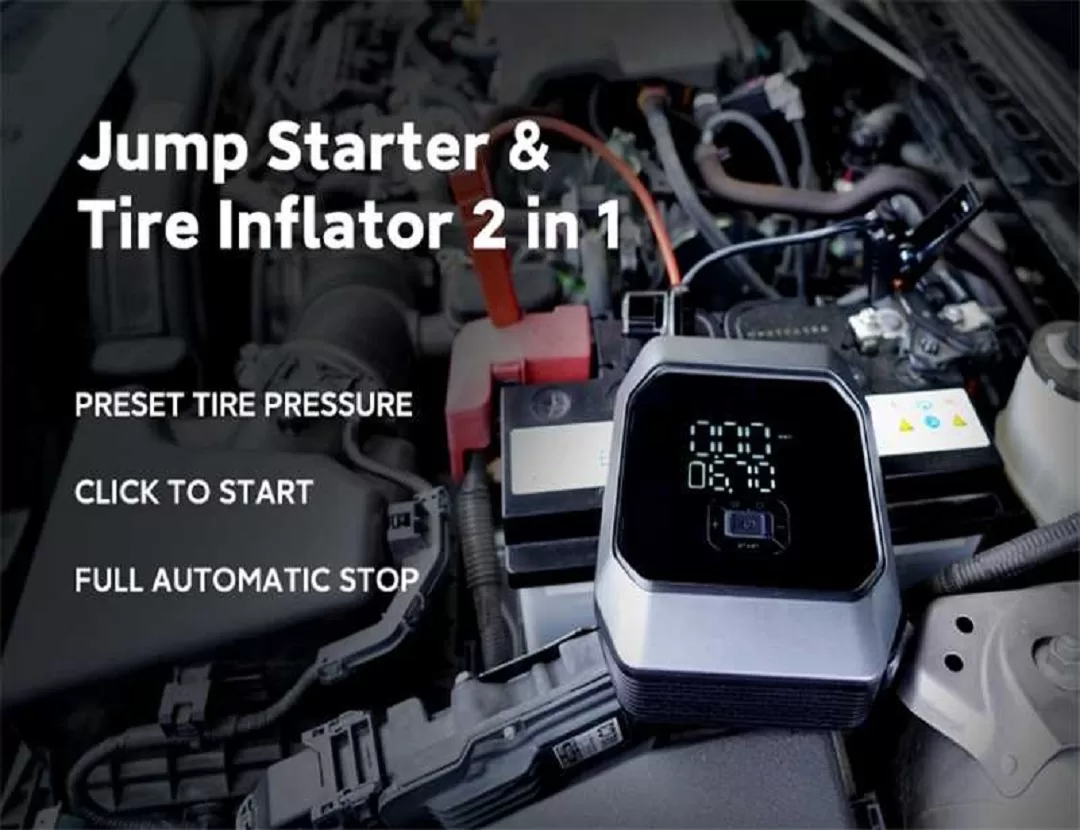
Powerful 5-in-1 Portable Car Tire Inflator and Jump Starter: The Ultimate Emergency Tool for Every Driver
Why Every Driver Needs a Portable Car Tire Inflator and Jump Starter Modern drivers face many unexpected situations on the road. A flat tire, low tire pressure, or a dead car battery can happen at the worst possible time. That’s why having a portable car tire inflator and jump starter is... -
7 Real Cycling Scenarios That Show Why Every Rider Should Carry a Mini Bike Pump
Cycling is one of the most freeing activities you can enjoy. Whether you’re commuting to work, riding through city streets, or exploring quiet countryside roads, a bike ride can instantly improve your day. But there’s one small problem that almost every cyclist eventually faces: Low tire pressure. It might happen...
-
How Is a Football Properly Inflated?
The correct inflation of a football - with not too much and not too little air - is a hotly debated topic among footballers.... -
Application Scenarios of Car Inflator Pump
Often long-distance business trips or play car owners because the road may be more remote areas, in this case if you encounter a tire leak....