
 Portable Tire Inflators
 Electric Air Pumps
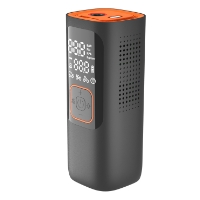 Electric Car Tyre Pumps
 Electric Ball Pumps
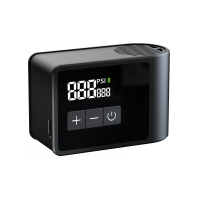 Electric Bike Pump
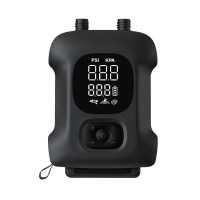 SUP Air Pump
Portable Rechargeable Bike Pump Choices That Match Real Riding Needs
A soft tire rarely announces itself with drama. It starts as a vague drag, then steals speed, then forces the rider to stop beside a path with no floor pump in sight. That is where a portable rechargeable bike pump earns its place. Riders want something small enough for a jersey pocket or saddle bag, yet strong enough to restore usable pressure without guesswork.
Everyday cycling creates a simple problem. Air escapes slowly through valves, bead seats, and temperature swings. Waiting until the next shop visit wastes time. Carrying a full-size compressor defeats the point of light gear. A compact electric option sits between those extremes and answers a practical need on road and trail.
Soft Tires Drain More Than Just Comfort
Rolling resistance rises when pressure drops. On pavement, the tire spreads wider and flexes harder with every revolution. The bike feels sluggish even when the chain is clean and the bearings are free.
Off-road, low pressure can help grip until it goes too far. Then the rim kisses rocks, and pinch flats appear. Many riders misread that as bad luck. It is often a pressure problem left unchecked for days.
Hand pumps still work. They also demand patience and arm strength when a road tire needs near 100 PSI. Electric mini inflators remove that friction from the stop. The rider sets a target, waits, and continues.
What a Portable Rechargeable Bike Pump Handles on the Road
A portable rechargeable bike pump is a battery-powered mini tire inflator built for bicycle valves and light sports use. It is not meant to replace a shop compressor. It is meant to restore rideable pressure when you are already moving.
Typical jobs include topping up mountain bike tires near 38 PSI, bringing road tires closer to 100 PSI, and handling ordinary city bikes or e-bike tires. With a ball needle, the same unit can fill sports balls after a weekend game.
The useful units combine a small motor, a pressure sensor, a readable display, and auto stop. Without those pieces, the tool becomes a noisy toy that overshoots the target.
Pressure Range and Why 120 PSI Matters
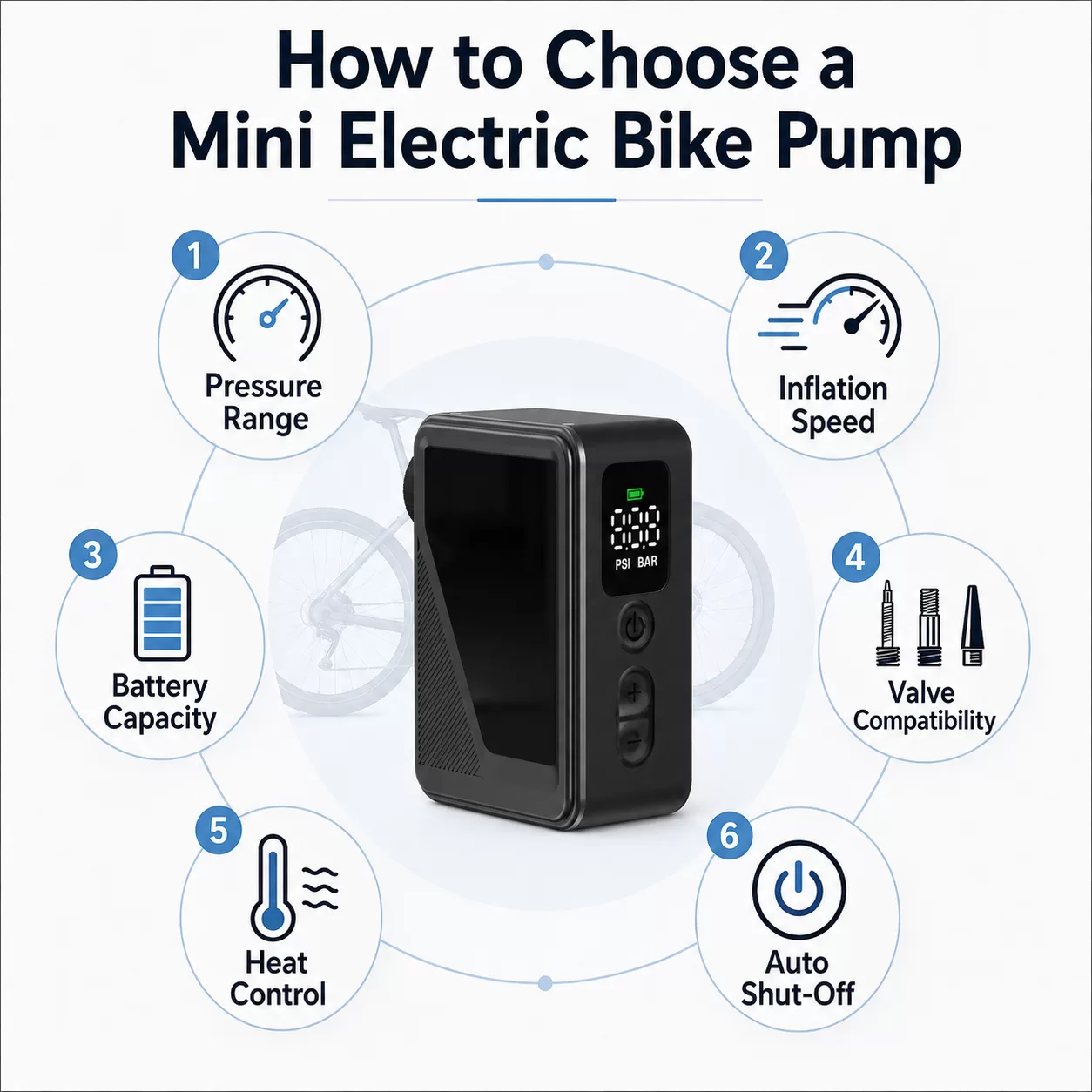
Pressure range tells you which bikes you can serve. A ceiling of 120 PSI covers most road setups and still works for lower-pressure mountain and hybrid tires. A floor near 2 PSI matters less for bikes, yet it supports ball inflation without constant babysitting.
Road riders feel the gap first. Many hand pumps struggle near the top of the scale. An electric unit with a documented 2 to 120 PSI window removes that ceiling for daily use.
Mountain riders live lower on the dial. They still benefit from precise control. Overfilling a soft tire changes handling in ways that feel wrong within the first corner.
Airflow Numbers Versus Inflation Time
Airflow is often listed as liters per minute. On paper, 14 L/min looks modest next to garage compressors. In the field, that rate is enough for bicycle volumes when the seal is clean and the hose is short.
Inflation time depends on starting pressure, target pressure, and tire size. A nearly flat mountain tire takes longer than a road tire that only needs a top-up. Specs that claim multiple mountain tires at 38 PSI or a couple of road tires at 100 PSI give a clearer picture than marketing adjectives.
Riders should treat those capacity notes as planning tools. Cold weather, long hose adapters, and leaky valve cores all reduce real output. Expect variation.
Compact Design Without Losing Function
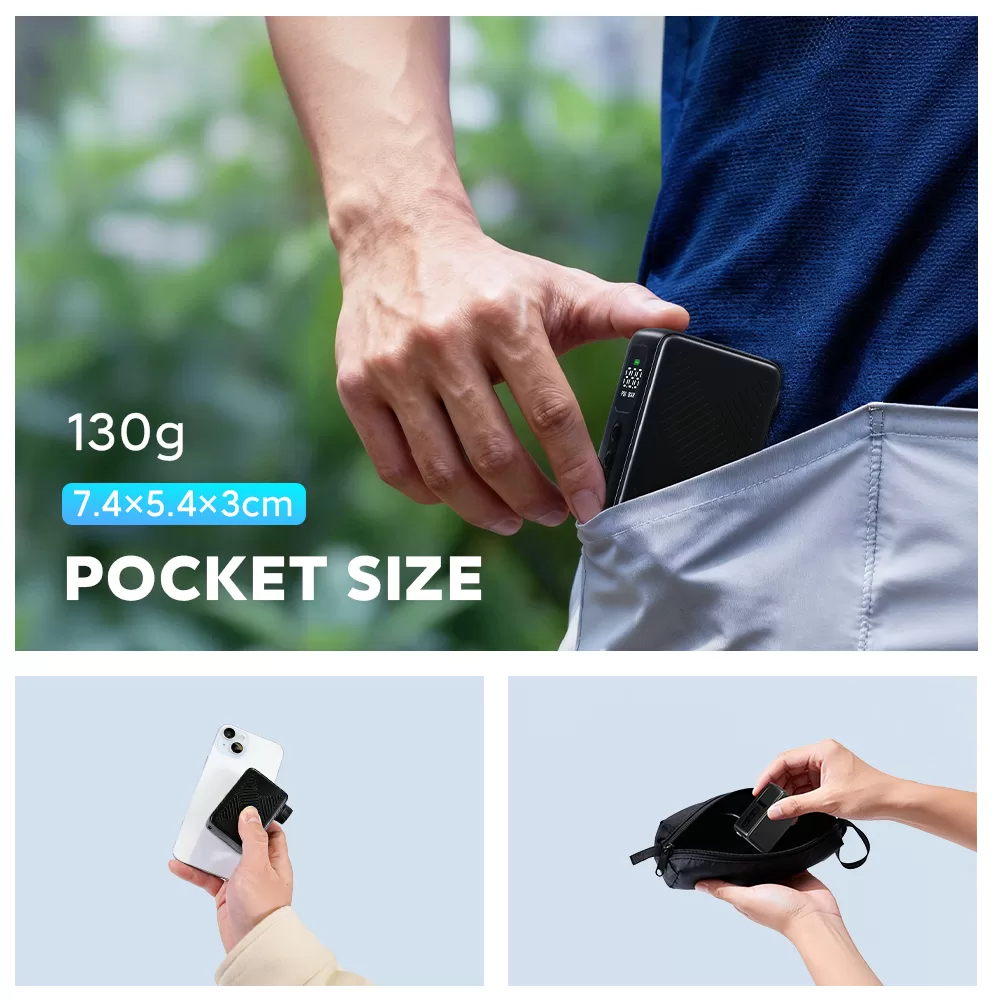
Size decides whether the pump stays home. Dimensions around 71.5 × 45 × 32 mm put the unit in the same class as a large multi-tool. That footprint fits a small pouch without forcing a redesign of the packing list.
Weight follows size. Light tools get used. Heavy tools stay in the garage and leave you stranded after a slow leak. Portability is not a lifestyle slogan here. It is the difference between carrying the device and leaving it behind.
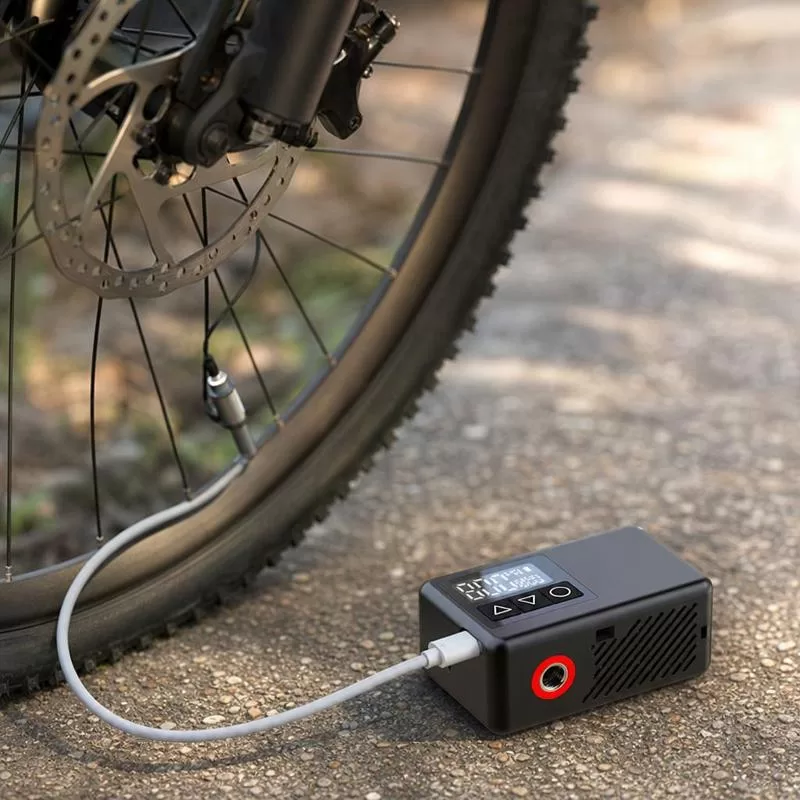
Small housings also create heat management challenges. Ventilation slots and short run times exist for a reason. Continuous blasting on large volumes is the wrong job for a mini bike inflator.
Brushless Motors in Mini Inflators
A small brushless pump structure helps keep the package short while delivering usable pressure. Brushless designs reduce brush wear and can run with less mechanical clutter inside a tight shell.
That does not make every compact motor identical. Housing quality, sensor placement, and thermal limits still decide reliability. Product materials for units such as the BL01 describe a compact brushless pumping structure paired with a built-in high-precision air pressure sensor. That pairing is what supports controlled fills instead of blind blasting.
Noise stays part of the bargain. Levels around 80 dB or below at 1.5 meters are noticeable, yet brief. Most riders accept a short burst of sound if the stop is short.
Dual Displays and Automatic Shut-Off
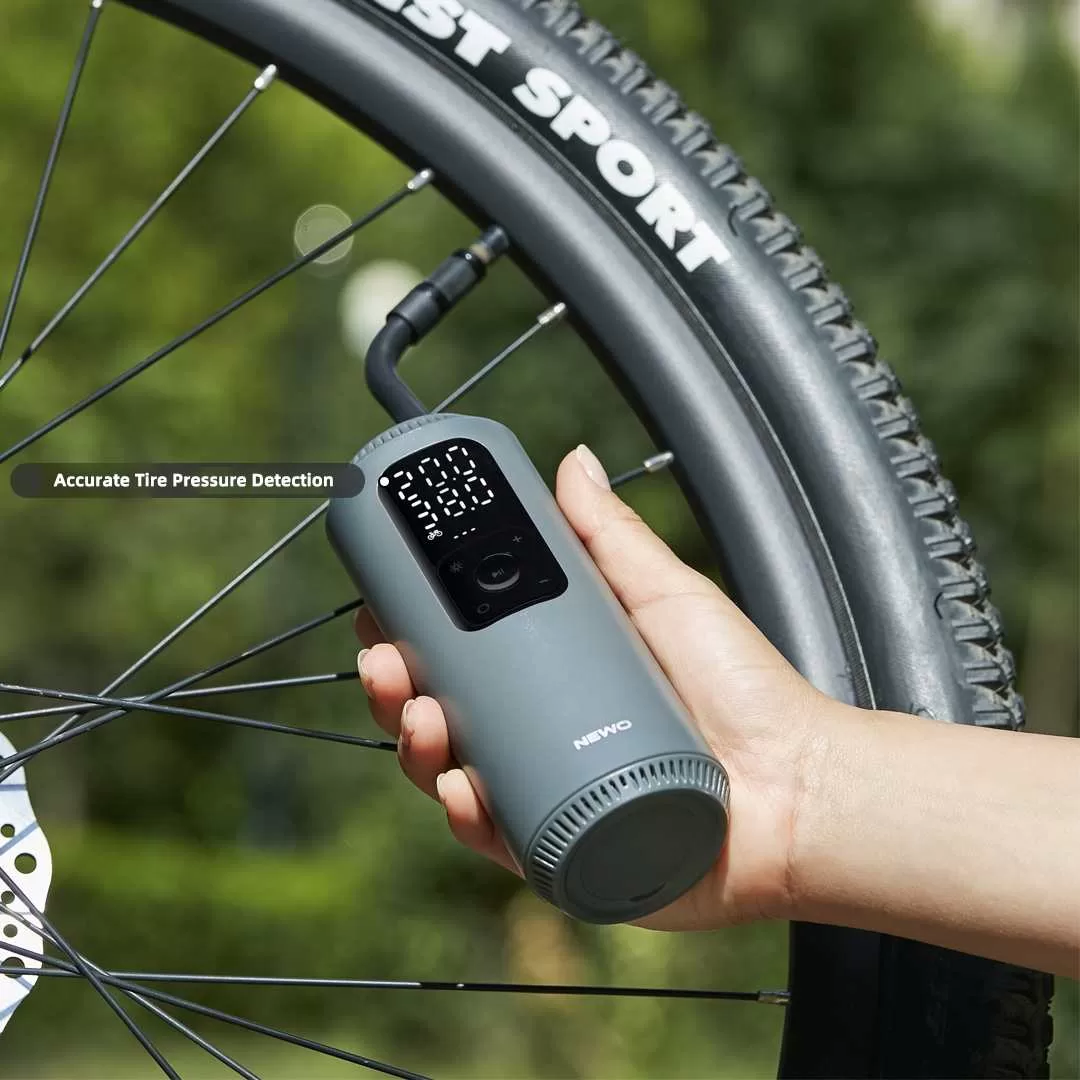
Guessing pressure by thumb is folklore. It fails on stiff road tires and hides slow leaks. A dual LCD display gives live pressure and status in a form you can read while crouched beside a wheel.
Automatic shut-off matters more than people admit. Once the selected pressure is reached, the pump stops. That protects the tire from a careless overshoot and protects the motor from needless heat.
Set the target before you start. Confirm the unit mode. Watch the first few seconds for a clean seal at the valve. Then let the sensor finish the job.
Battery Reality Check for Mini Pumps
Battery capacity in this category is often small by phone standards. A 500mAh pack at 7.4V, listed around 3.7Wh, is sized for short inflation cycles rather than all-day continuous use. Runtime figures of roughly 5 to 7 minutes match that design brief.
What matters is how many tires you can finish before recharge. Product data for the BL01-style mini inflator cites about seven mountain bike tires at 38 PSI, or about two road bike tires at 100 PSI, under its stated conditions. That is a planning number, not a promise for every climate.
Charging time under two hours keeps the tool ready between rides. Cycle life notes such as 100 cycles at 80 percent or above original capacity remind buyers that polymer packs age. Store the pump partly charged if it will sit for weeks.
Working power near 40W explains the heat and the short duty window. These are burst tools. Treat them that way.
Type-C Charging for Mixed Travel Kits
Type-C ports simplify packing. Support for both A-to-C and C-to-C cables means you can borrow a charger from a laptop kit or a wall brick without hunting a proprietary tip. Input around 5V / 1.5A fits common USB sources.
Outdoor riders already carry cables for lights and computers. A pump that joins that ecosystem avoids a second dead-end cord. Desk drawers fill with orphans. Travel kits should not.
Charge before long weekend rides. Top up after any emergency use. A depleted mini pump is only a paperweight with a hose.
Valve Adapters Across Bike Types
Valve standards still split the cycling world. Schrader valves dominate many mountain and city bikes. French valves, often called Presta, remain common on road wheels. A useful accessory set includes both adapters plus a ball needle.
Without the right adapter, even a strong pump fails at the first connection. Leaks at the interface waste battery and time. Carry the adapters in the same pouch as the pump so they do not migrate into a junk drawer.
E-bike tires add mass and sometimes odd valve access near frames and racks. A short, controlled electric fill reduces wrestling in tight spaces. Confirm clearance before forcing a hose against a dropout.
Matching Specs to Mountain, Road, and E-Bike Use
Selection gets easier when you map specs to the bike you actually ride.
- Mountain and trail bikes: prioritize reliable fills near the 30–40 PSI band and enough capacity for more than one tire.
- Road bikes: demand a true high-pressure ceiling near 100 PSI and a sensor that stops on target.
- Ordinary city bikes: favor simple controls and Schrader compatibility for quick weekly top-ups.
- E-bikes: look for stable auto shut-off and adapters that fit crowded valve areas.
- Mixed outdoor kits: include a ball needle if family sports share the same pack.
Working temperature ranges such as -10°C to 45°C outline storage and use limits. Extreme cold reduces battery output. Extreme heat shortens run quality. Keep the unit out of a locked car on hot days when possible.
Newo manufactures smart electric air pumps and portable inflation tools, including compact bike models built around these practical constraints rather than garage-compressor fantasies.
Mistakes That Leave Cyclists With the Wrong Pump
Buyers often chase the highest PSI number alone. Ceiling pressure without usable airflow, a clear display, and auto stop still leaves you guessing beside the curb.
Others ignore valve kits. A beautiful pump that only fits one valve type becomes dead weight on a club ride with mixed bikes.
Some treat runtime like phone battery life. These packs are small. Plan around a handful of tires, then recharge. Expecting hour-long continuous duty invites overheating and early wear.
A final mistake is skipping a pressure check after inflation. Sensors help, yet a trusted gauge spot-check after installation builds confidence in a new tool.
FAQ
Can a mini electric pump replace a floor pump at home?
For quick top-ups, yes. For frequent high-volume workshop work, a floor pump or larger compressor remains faster and easier on the battery.
Is 14 L/min enough for bicycle tires?
For bicycle tire volumes, that rate is generally practical. Large automotive tires are a different class of job and should not be the benchmark.
Why does automatic shut-off matter if I am watching the display?
Distraction is normal roadside. Auto stop reduces overshoot when a car passes or a glove slips on the button.
How should I store a portable rechargeable bike pump between seasons?
Keep it clean, dry, and partly charged. Avoid leaving it fully empty for long stretches, and recheck adapters before the first spring ride.
Will one compact unit cover road and mountain bikes?
A 2–120 PSI range with both Schrader and French adapters can cover both, provided the battery capacity matches how many tires you expect to service away from power.
Riders who treat tire pressure as routine maintenance waste fewer weekends on slow flats and vague fatigue. A portable rechargeable bike pump, used with honest expectations about battery life, airflow, and valve fit, turns an awkward roadside stop into a short pause. Choose the pressure window you need, confirm the adapters in the box, and keep the pack charged so the next soft tire is a minor delay instead of a walk home.
-

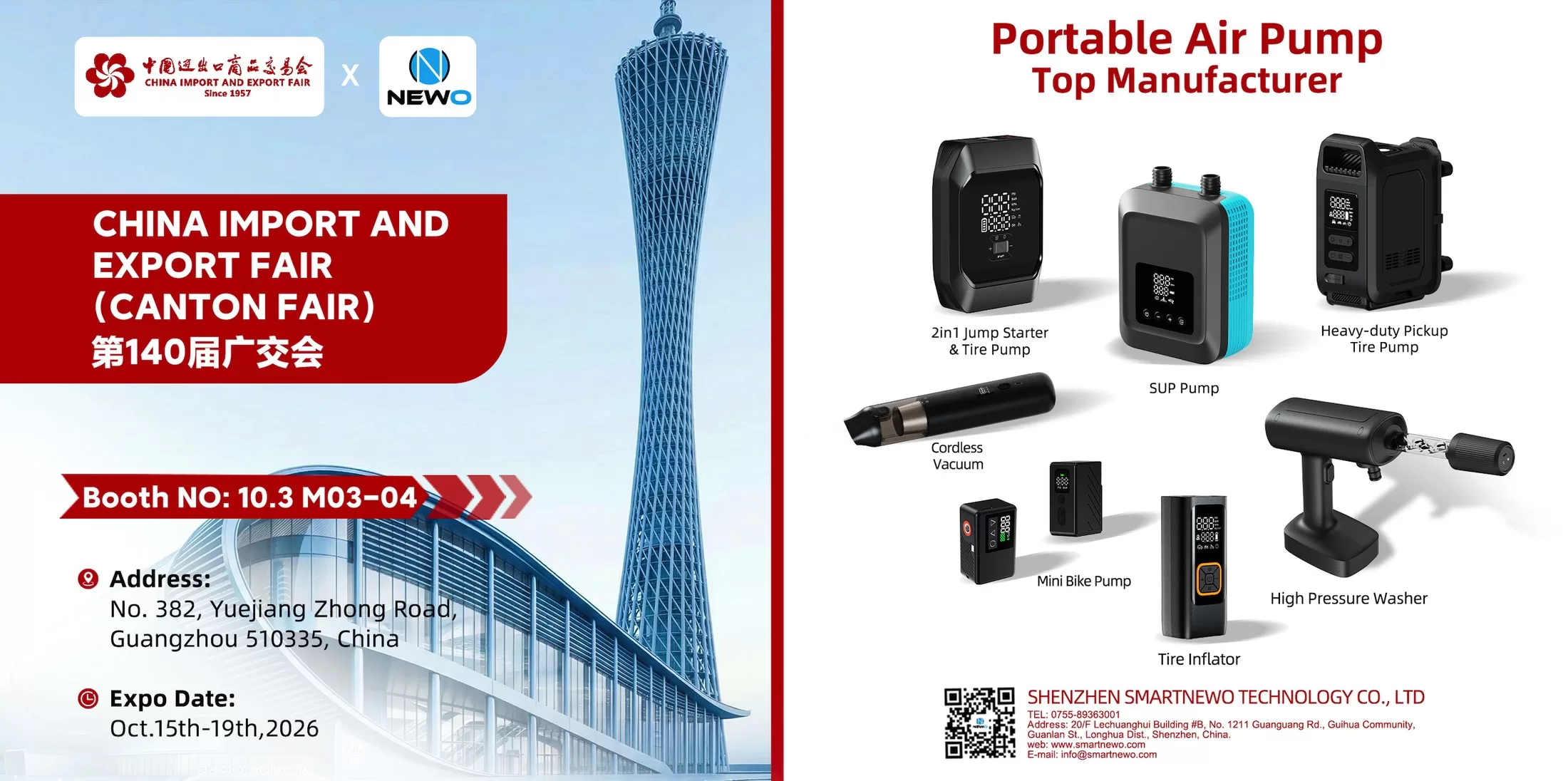
Meet NEWO at the 140th Canton Fair: Visit Booth 10.3 M03–04
Meet NEWO at the 140th Canton Fair in Guangzhou, October 15–19, 2026. Visit Booth 10.3 M03–04 to explore portable air pumps and discuss OEM, ODM and distribution opportunities.... -

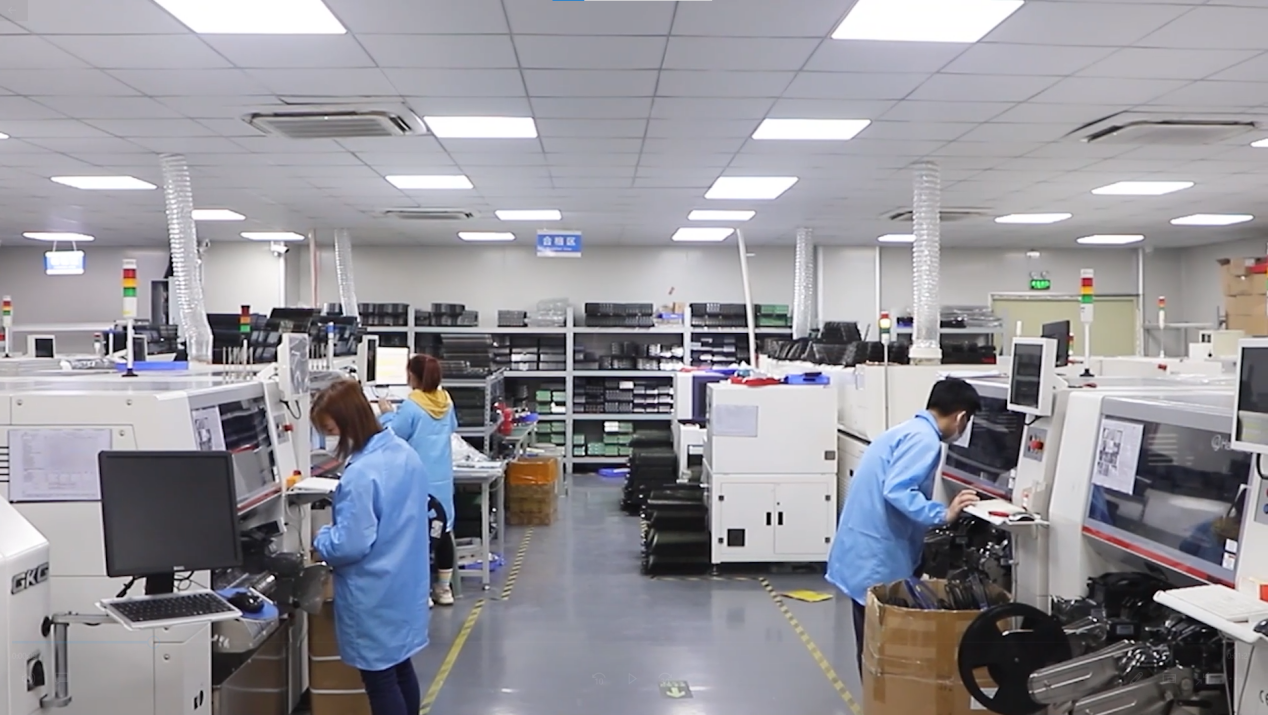
As Shenzhen Welcomes the World for APEC 2026, NEWO Welcomes You to Our Factory
As Shenzhen prepares for APEC 2026, NEWO welcomes international buyers and partners to visit our factory, meet our team and explore future cooperation.... -

Leading the Way in Product Innovation and Excellence
Smartnewo exemplifies professionalism in product innovation and manufacturing. Their collaboration with Xiaomi Youpin on the G01 crowdfunding project highlights their expertise in creating compact, powerful inflatable pumps. Rigorous engineering, meticulous production processes, and advanced quality assurance underscore their commitment to excellence. The success of the G01 project, with significant market... -

Essential Qualities of an Excellent Supplier
In today's competitive market, finding a reliable supplier is crucial for business success. Based on insights from Smartnewo and broader internet research, here are key qualities an excellent supplier must possess:... -

NW06 Tire Inflator: Compact Power for Quick Inflation
Summary The NW06 Tire Inflator delivers quick and efficient tire inflation with a powerful 35L/min airflow. It features a user-friendly LCD screen for real-time pressure monitoring, dual power options with a built-in 6000mAh battery, and multiple nozzle attachments for versatile use. Its compact design and integrated LED light ensure convenience and... -

Unleash the Power of Portability: The SmartNewo Jump Starter with Air Compressor KF03
This guide will walk you through the steps to effectively use a portable tire inflator, helping you stay prepared and safe on the road.... -

Newo Attends The 2024 Consumer Electronics Show (CES)
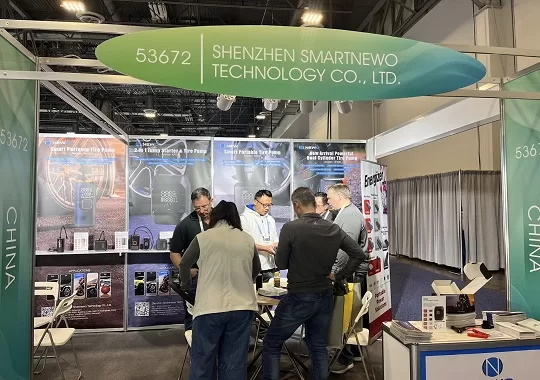
Smartnewo booth is located at 53672, Halls A-D, Level 2, Venetian Expo, Las Vegas Convention Center (LVCC). ... -

Smartnewo’s Dual-Cylinder Air Pump Rocks the Hong Kong Autumn Electronics Fair!
Smartnewo’s Dual-Cylinder Air Pump Rocks the Hong Kong Autumn Electronics Fair!... -

Meet at the Canton Fair! Smartnewo brings dual-cylinder air pumps, making your inflation experience faster and more stable!
NEWO has went deep communication and negotiation with customers from all over the world on booth.... -

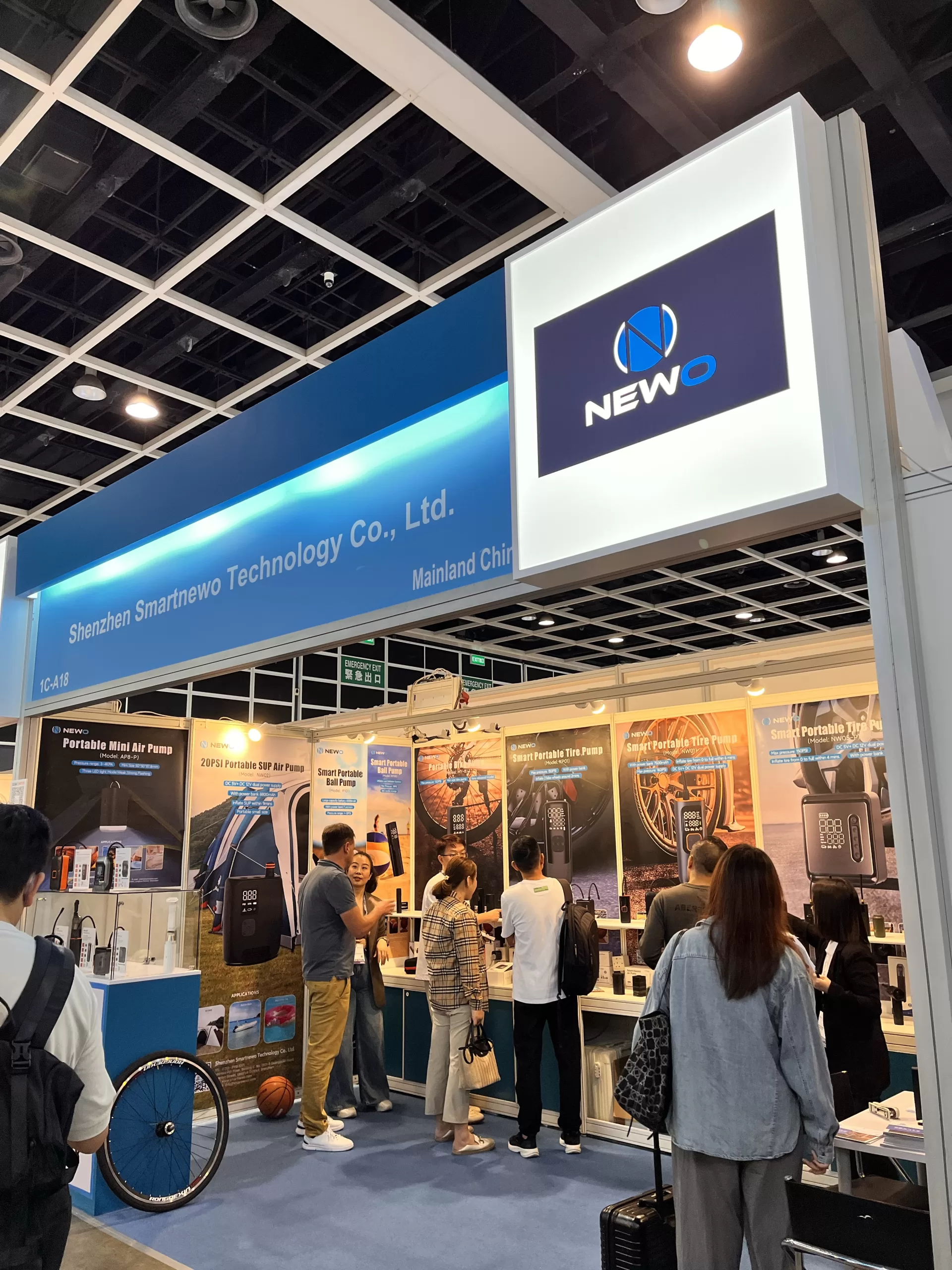
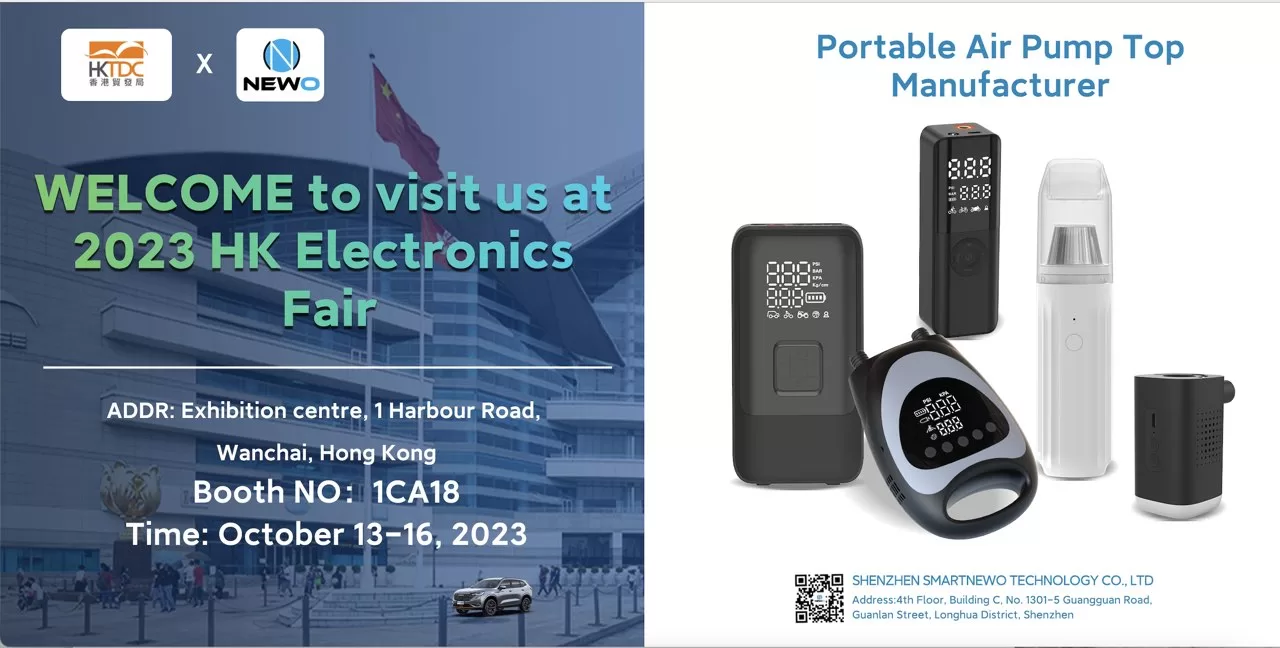
“Hong Kong Autumn Electronics Fair – 1CA18 (October 13th to 16th): Smartnewo invites you to visit our booth!
Hong Kong Autumn Electronics Fair...

-

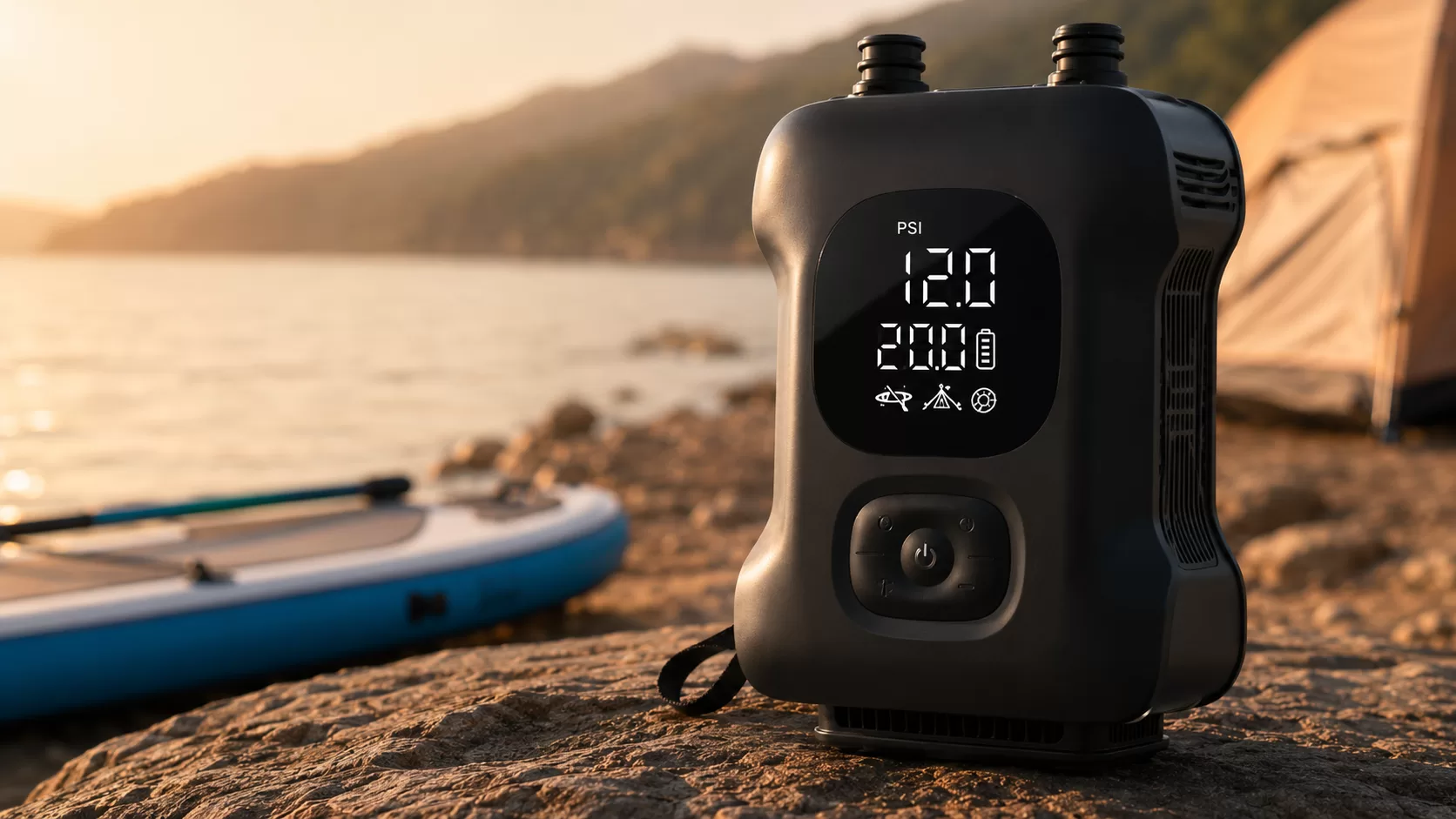
Rechargeable Electric SUP Pump for Paddle Boards: Faster Inflation for SUPs, Kayaks and Inflatable Tents
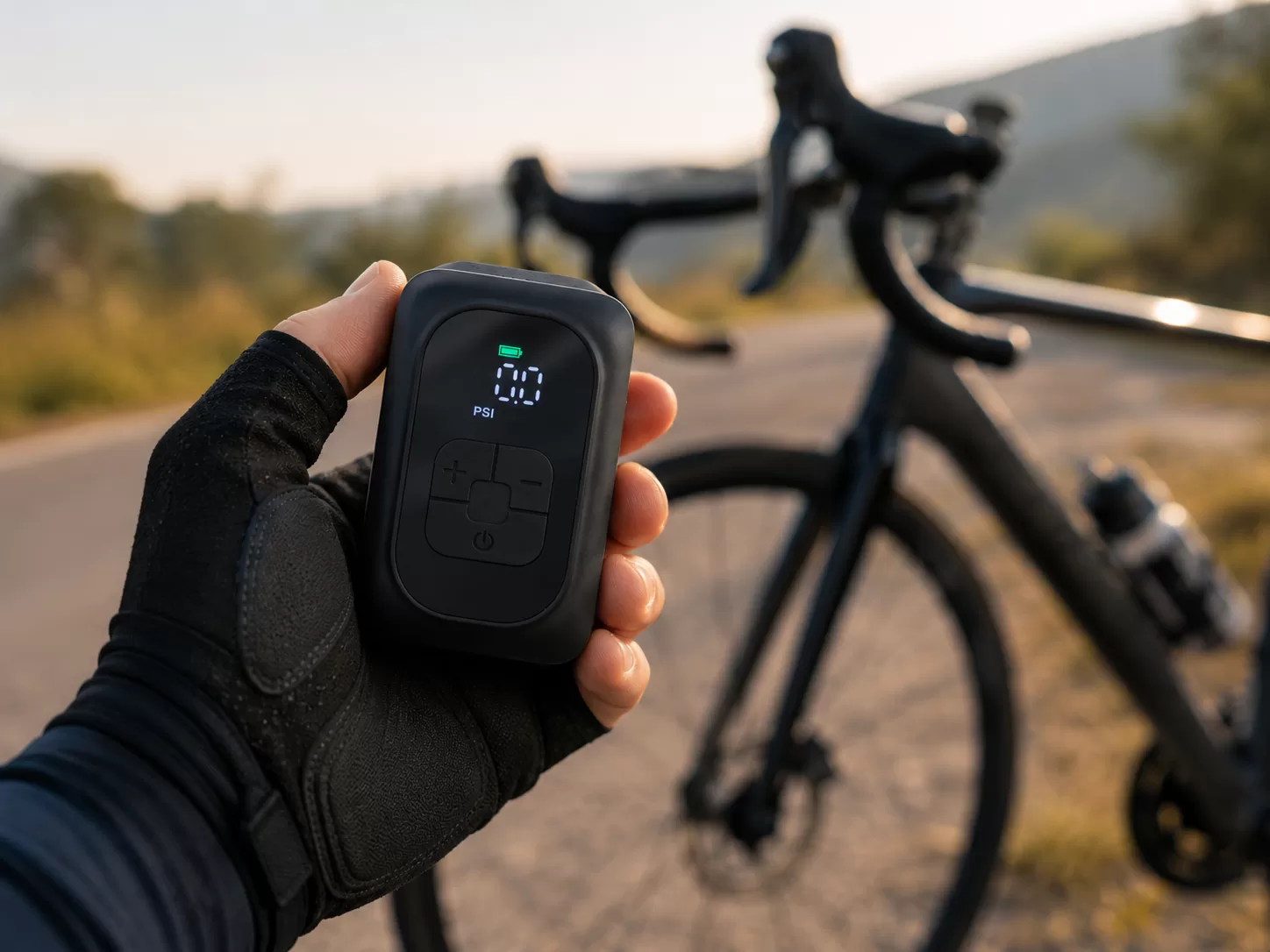
The BL10-C Portable Electric Bike Tire Inflator is a compact and lightweight mini electric bike pump designed for modern cyclists. With up to 120 PSI pressure, a digital LED display, preset pressure control, automatic shut-off, USB-C charging, and multiple valve adapters, BL10-C offers a convenient inflation solution for road bikes,... -

Are Electric Bike Pumps Worth It in 2026? Electric Pump vs CO₂ vs Mini Hand Pump
Discover whether electric bike pumps are worth it in 2026. This guide compares electric bike pumps, CO₂ inflators, and mini hand pumps for road cycling, gravel riding, commuting, and long-distance rides. Learn the pros, limitations, best use cases, and key features to look for before choosing the right portable tire... -
BL10-C Portable Electric Bike Tire Inflator: Small Size, Reliable Power for Every Ride
The BL10-C Portable Electric Bike Tire Inflator is a compact and lightweight mini electric bike pump designed for modern cyclists. With up to 120 PSI pressure, a digital LED display, preset pressure control, automatic shut-off, USB-C charging, and multiple valve adapters, BL10-C offers a convenient inflation solution for road bikes,... -

Why Mini Electric Bike Pumps Are Becoming Essential for Modern Cycling
Discover why mini electric bike pumps are becoming essential for modern cyclists. Learn how portable electric bike pumps improve tire pressure management, riding safety, and convenience.... -

The Ultimate Smart Solution for Easy Outdoor Adventures in 2026
Discover how a spring travel air pump simplifies outdoor trips with fast inflation, smart features, and powerful performance—perfect for every adventure.... -

Powerful 5-in-1 Portable Car Tire Inflator and Jump Starter: The Ultimate Emergency Tool for Every Driver
Why Every Driver Needs a Portable Car Tire Inflator and Jump Starter Modern drivers face many unexpected situations on the road. A flat tire, low tire pressure, or a dead car battery can happen at the worst possible time. That’s why having a portable car tire inflator and jump starter is... -

7 Real Cycling Scenarios That Show Why Every Rider Should Carry a Mini Bike Pump
Cycling is one of the most freeing activities you can enjoy. Whether you’re commuting to work, riding through city streets, or exploring quiet countryside roads, a bike ride can instantly improve your day. But there’s one small problem that almost every cyclist eventually faces: Low tire pressure. It might happen... -
BL08-A Portable Electric Bike Pump: A Global Distribution Opportunity with Smartnewo
Smartnewo, a professional manufacturer of portable electric air pumps, introduces the BL08-A model — a compact and efficient inflator designed for global distributors, e-commerce sellers, and outdoor accessory brands seeking reliable OEM/ODM solutions. Table of Contents Main Heading Subtopics 1. Introduction: Expanding the Global Market for Smart Inflation Tools Portable... -

Connecting Opportunities at Automechanika Shanghai 2025 — Smartnewo Exhibition Day 1
Today marks an exciting beginning as Smartnewo officially opens its booth at Automechanika Shanghai 2025. As one of the largest and most influential automotive aftermarket exhibitions in the world, the show provides an exceptional platform for meaningful conversations, partnership building, and global industry exchange. Located at Booth 7.2E47, Smartnewo presents... -

Why Every Outdoor Cyclist Should Carry a Mini Electric Bike Pump
Whether you are an experienced mountain rider or a weekend road-cycling enthusiast, one thing is certain: unexpected tire pressure issues can ruin an entire ride. That’s why more cyclists are turning to mini electric bike pumps—compact, lightweight, and far more reliable than traditional hand pumps. 1. Consistent Pressure, Even in...
-
How Is a Football Properly Inflated?
The correct inflation of a football - with not too much and not too little air - is a hotly debated topic among footballers.... -
Application Scenarios of Car Inflator Pump
Often long-distance business trips or play car owners because the road may be more remote areas, in this case if you encounter a tire leak....