
 Portable Tire Inflators
 Electric Air Pumps
 Electric Car Tyre Pumps
 Electric Ball Pumps
 Electric Bike Pump
 SUP Air Pump

Portable Tire Inflator for SUV: Engineering Standards, Field Selection, and Real-World Inflation
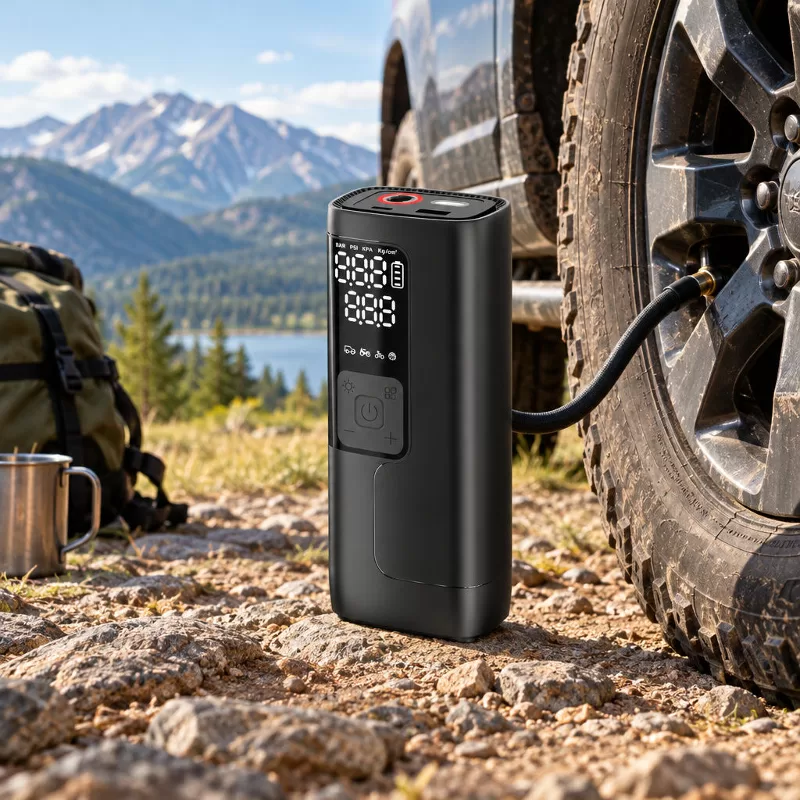
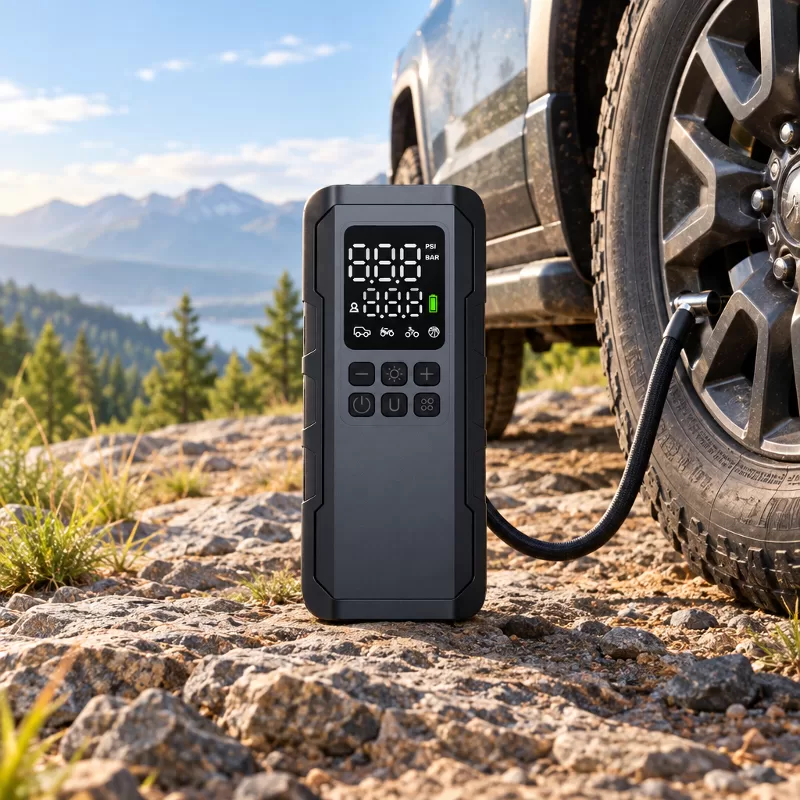
Maintaining correct tire pressure on a modern sport utility vehicle presents distinct pneumatic challenges compared to servicing a compact sedan. Selecting a reliable portable tire inflator for suv use demands an understanding of internal air displacement, continuous runtime limits, and realistic thermal dissipation under load. When a low-pressure light flashes during an interstate commute or after miles on a forest trail, having the right portable tire inflator for suv tires transforms a potential breakdown into a brief roadside stop.
What SUV Owners Need from a Portable Tire Inflator
Light truck and crossover tires demand far more mechanical work from a pump than standard commuter tires. While both vehicles may run at similar resting pressures, the internal air volume of an SUV tire creates entirely different operational burdens.
Air Volume Versus Operating Pressure
Many motorists assume that because an SUV tire runs at 32 to 36 PSI, any compact air pump will inflate it quickly. That assumption breaks down the moment you consider air volume rather than maximum pressure rating alone.
Larger tires generally contain more air volume than smaller passenger car tires. Delivering that volume against escalating backpressure generates intense friction inside the pump cylinder. Miniature single-piston inflators designed solely for small sedans quickly overheat under this load.
The distinction matters because pneumatic workload is defined by the total cubic volume of air being moved, not just the final pressure number displayed on the gauge. A compact inflator rated for 150 PSI may reach that pressure on a narrow bicycle tire, but struggle to push the same pressure into a tire cavity ten times larger.
Maintenance Pressure Adjustments Versus Emergency Inflation
Routine maintenance typically requires topping off two to four PSI lost due to seasonal temperature shifts. Any functional compressor can push that small amount of air over several minutes without overheating.
Emergency situations present an entirely different mechanical hurdle. Bringing a large crossover tire up from twenty PSI to thirty-five PSI takes longer and depends on the inflator’s motor power, airflow capacity, and operating limits under those conditions.
The difference between these two tasks defines whether a compact inflator will serve as a roadside emergency tool or merely handle periodic top-ups in a driveway.
Inflation Limits and Structural Tire Inspection
A portable inflator acts as a pressure delivery device rather than a mechanical puncture repair kit. Pumping air into a tire with casing separation, deep sidewall cuts, or embedded road debris will not solve structural degradation.
The U.S. Tire Manufacturers Association stresses that driving on underinflated tires generates excessive internal heat that permanently breaks down rubber compounds and steel belts. If a tire continually drops pressure over a short period, an inflator is merely a temporary transfer tool to reach a certified technician for internal dismount inspection.
Before connecting any inflator, examine the tire tread and sidewalls for visible damage. Never attempt to inflate a tire showing bulges, exposed cords, or large cuts.
Engineering Parameters for Evaluating SUV Compressors
Pneumatic tools require careful component matching between cylinder displacement, electric motor output, and battery discharge rates to function reliably.
Airflow Rates and Dual-Cylinder Architecture
The manufacturer describes the SH03 as using a dual 24-cylinder structure with a stated airflow of 42 L/min, which supports faster inflation than many compact single-cylinder units.
Airflow measured in liters per minute indicates how much air volume the pump can displace under specified test conditions. Higher stated displacement means the motor can theoretically deliver the required air volume in less time, though actual performance will vary with operating pressure and ambient conditions.
When evaluating specifications, recognize that airflow figures are typically measured at atmospheric pressure with no backpressure. Real-world inflation against a pressurized tire cavity will reduce effective flow rates.
Usable Working Pressure Versus Peak Pressure Claims
Consumer packaging frequently highlights ratings of 120 to 150 PSI. Many passenger vehicles use pressures well below 150 PSI, but the correct target varies; follow the vehicle placard or owner’s manual. The 150 PSI figure is the stated maximum pressure; it is not the recommended pressure for an SUV tire.
Manufacturers list maximum pressure as a capability rating, not an operational target. What matters for daily use is the compressor’s ability to deliver usable airflow at the pressures your vehicle actually requires.
| Technical Metric | Typical Compact Pump | SH03 Stated Specification | Practical Impact on SUV Tires |
|---|---|---|---|
| Piston Configuration | Single-cylinder (common) | Dual 24-cylinder structure | Supports higher sustained airflow for larger tires |
| Airflow Displacement | Lower displacement (typical compact units) | 42 L/min | Fills larger tire cavities more quickly |
| Motor Working Power | Varies by model | 100W | Provides the manufacturer-stated power for inflating larger tires |
| Continuous Runtime | Varies by model | About 20 minutes | Permits extended operation for larger inflation tasks |
| Primary Power Feed | 12V DC auxiliary only (common) | Hybrid Battery + 12V DC | Provides standalone freedom with continuous backup power |
Battery Discharge and Dual-Power Redundancy
Cordless convenience lets you walk around a vehicle without dragging cords through mud, snow, or road grime. Compressor operation can draw substantial electrical power, so battery runtime depends on load, starting pressure, tire size, and operating conditions.
The stated battery capacity is 3 × 4000mAh, 11.1V, and 44.4Wh. The unit is also specified to operate from a 12V to 14V cigarette-lighter power source, subject to vehicle and connection compatibility.
This dual-power design means you can use internal battery power for quick roadside tasks, or connect to vehicle power for extended operation when the battery is depleted or conditions are demanding.
Digital Pressure Sensors and Auto-Stop Cutoffs
Analog dial gauges on portable compressors often suffer from parallax errors and mechanical vibration drift during pump operation. The LED display and automatic shut-off provide pressure monitoring and stop inflation at the selected target, according to the manufacturer.
Users should select the vehicle placard pressure and verify the final pressure with a standalone gauge to ensure accuracy.
Critical Reading of Manufacturer Specification Sheets
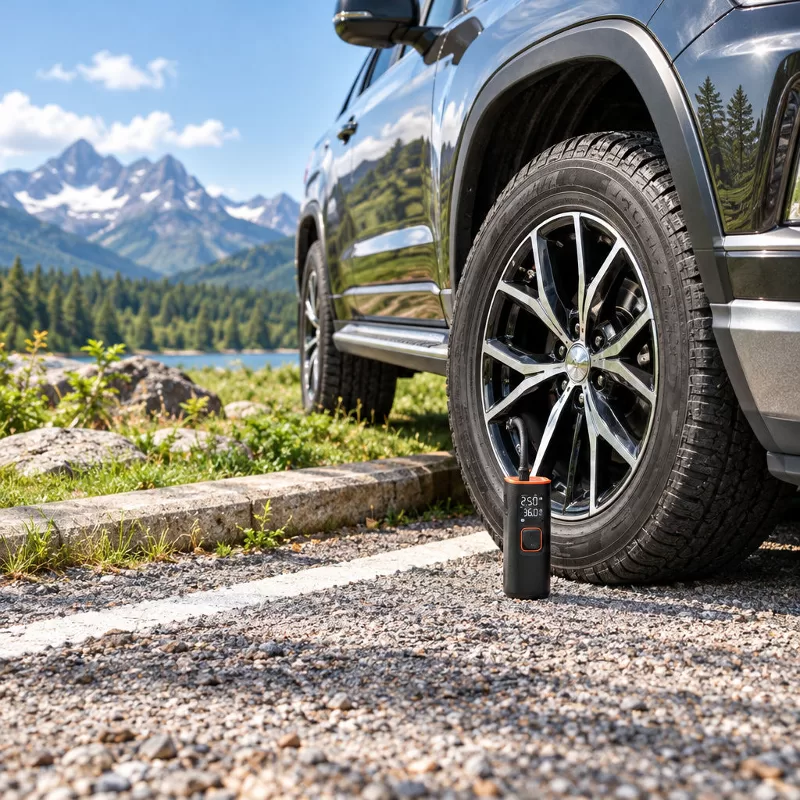
Evaluating technical claims requires understanding how testing benchmarks translate to real-world driveway and highway conditions.
Airflow Benchmarks Versus Real Backpressure
Airflow figures published as liters per minute are typically measured at zero head resistance in controlled ambient conditions. The moment you thread a brass chuck onto a tire stem holding 28 PSI, effective flow rates drop due to head resistance.
A quality compressor maintains stable piston speed against this resistance. Look for stated wattage figures around 100W, which indicate sufficient motor torque to push air against pressurized tire cavities without significant thermal bogging.
When comparing specifications, recognize that no single metric tells the complete story. Motor power, airflow rating, runtime capacity, and operating temperature range all interact to determine real-world performance.
Interpreting Rated Tire Capacities
When product literature states an inflator can service a specific number of tires on a single charge, verify the tire dimensions used for that baseline. The SH03 specification lists inflation capacity as about 4 of 205 car tires per full charge.
Actual usable capacity will vary with tire size, starting pressure, and target pressure. Larger SUV tires will reduce the total number of tires you can service per charge compared to the stated 205 baseline.
Consider these published figures as reference points measured under controlled conditions. Your real-world results will depend on your specific vehicle, ambient temperature, and how much pressure increase each tire requires.
Noise Generation and Duty Cycle Constraints
Reciprocating piston pumps generate sound through high-speed mechanical oscillation and rapid valve cycling. The SH03 manufacturer specification states noise level at 85dB or below at 1.5 meters.
Duty cycle dictates how long a pump can run before requiring passive cooling. The stated runtime is about 20 minutes; actual usable time and the number of tires serviced will depend on tire size, starting pressure, and operating conditions.
Always allow the compressor to cool between extended sessions. Continuous operation beyond the rated duty cycle can trigger thermal protection circuits or accelerate component wear.
Technical Profile: Newo SH03 Portable Inflator
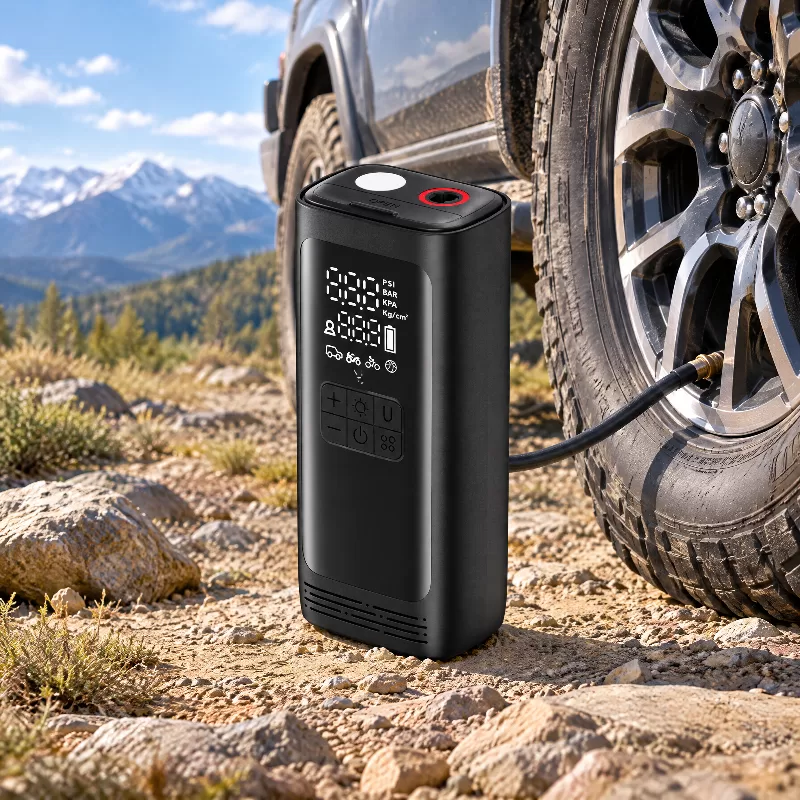
To see how these engineering factors integrate into a physical device, consider the specifications of the Newo SH03, designed specifically for larger passenger vehicles and sport utility platforms.
Stated Piston Architecture and Flow Rates
According to manufacturer technical documentation, the SH03 utilizes a dual 24-cylinder structure paired with a 100W operating motor. This configuration yields a stated airflow rate of 42 L/min with an overall pressure capability up to 150 PSI.
The manufacturer positions this configuration as suitable for SUVs, off-road vehicles, and larger car tires, delivering the continuous airflow required for light-truck and SUV tire inflation.
Power System and Modern Charging Support
The internal battery architecture relies on a 3-cell 4000mAh configuration providing 11.1V nominal output and 44.4Wh total capacity. Bench specifications list runtime at approximately 20 minutes under normal load, with battery retention rated at 80% capacity after 300 charge cycles.
For workshop flexibility, the device features bidirectional Type-C USB Power Delivery up to 30W (supporting 5V, 9V, 12V, 15V, and 20V power profiles). The manufacturer lists a two-to-three-hour charging time. When using external power sources such as adapters or power banks, ensure they support a compatible USB-C PD output. When internal cells are depleted, direct 12V to 14V auxiliary vehicle input allows immediate roadside operation.
This power flexibility means you can recharge the unit from various power sources, depending on what is available.
User Controls and Operational Safety Margins
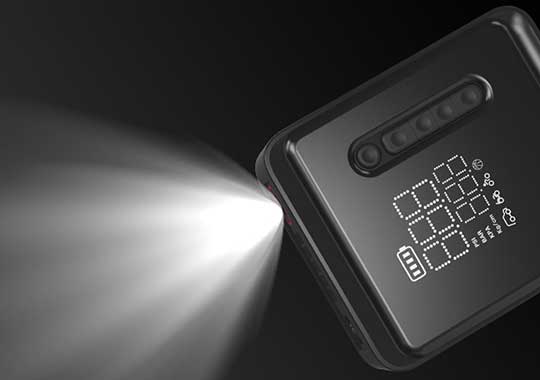
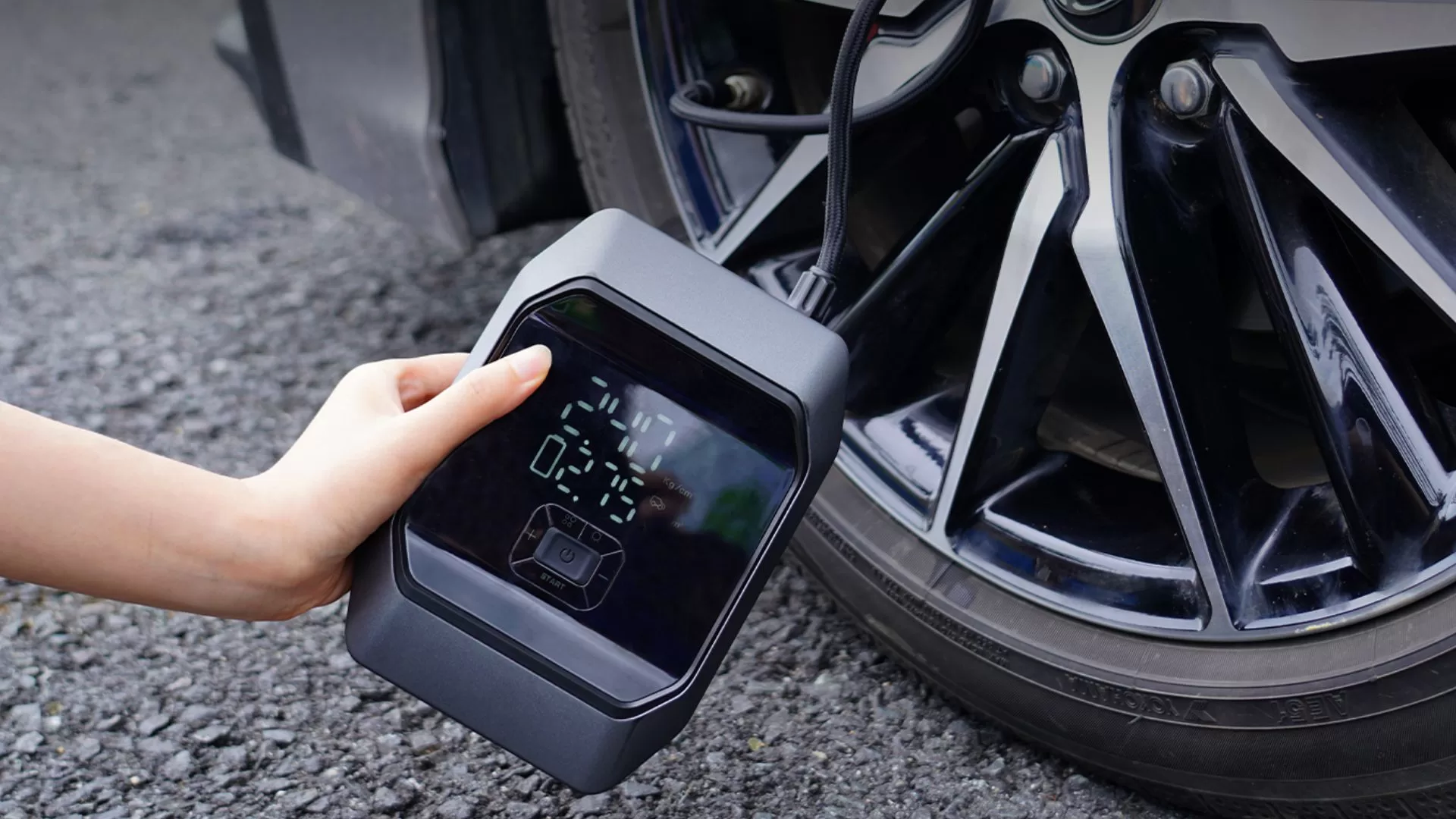
The front housing incorporates a segmented LED display that shows live pressure alongside preset selection modes. Pressure targets can be configured from 2 to 150 PSI, with automatic shut-off stopping the motor once target pressure is achieved.
Physical dimensions measure 188 by 97 by 63 millimeters at an operating net weight of 1014 grams. The manufacturer lists an operating temperature range of minus 10°C to 45°C.
As a manufacturer focused on intelligent pneumatic solutions and portable air pumps, we build these balanced dual-cylinder specifications to handle both high-volume automotive tires and general sporting inflatables.
Practical Field Guide: Inflating an SUV Tire Correctly
Pneumatic tools require structured procedures to ensure personal safety, accurate pressure readings, and prolonged tire service life.
- Locate the vehicle placard pressure. Open the driver-side door jamb to read the original equipment cold tire inflation pressure. The sidewall marking states the tire’s maximum permitted inflation pressure, not the vehicle’s recommended operating pressure. Use the cold pressure on the vehicle placard or in the owner’s manual.
- Inspect the tire before connecting equipment. Examine the tread face and sidewalls for embedded screws, nails, deep cracking, or sidewall bulges. Connecting a pump to a tire with compromised internal belts creates a serious road hazard.
- Secure the air chuck firmly. Thread or clamp the air hose chuck square onto the Schrader valve stem without cross-threading. Listen carefully for hissing sounds that indicate an incomplete seal before activating the inflator.
- Power on the unit and select your target. Turn on the digital inflator to view current cold line pressure on the LED screen. Program the target pressure matching your vehicle door placard using the manual adjustment controls.
- Monitor inflation and check progress. Start the pump and let the automatic cutoff manage airflow delivery. Keep children and pets away from the wheel well while the compressor is vibrating and generating heat.
- Verify cold pressure independently. Disconnect the inflator hose, taking care around metal fittings that absorb heat during operation. Double-check final pressure using a standalone mechanical or calibrated digital pencil gauge.
Cold Inflation Target Checklist:
[ ] Vehicle parked for at least three hours (cold tire baseline)
[ ] Door jamb placard consulted (driver-side pillar)
[ ] Valve stem checked for dirt, grit, or damaged threads
[ ] Inflator connected with secure, airtight seal
[ ] Standalone gauge verification completed after fill
These steps apply whether you are topping off a tire that has lost a few PSI or bringing a significantly underinflated tire back to the recommended pressure. The key difference lies in how long the compressor must run and how much heat it generates in the process.
Cordless Battery Versus 12V Auxiliary Power
Deciding between cordless convenience and continuous corded power requires evaluating where and how you typically drive.
Freedom of Motion with Cordless Systems
Cordless battery inflators eliminate the hassle of untangling long power cables around muddy wheel arches or through passenger footwells. You can easily service a boat trailer, bicycle rack, or utility vehicle parked far from a 12V dash socket.
The manufacturer lists an operating range of minus 10°C to 45°C. Follow the manufacturer’s storage instructions and check charge readiness periodically to ensure the unit is ready for emergency use.
Most modern inflators include battery status indicators on the display panel. Check this indicator before long trips or when the unit has been stored for an extended period.
Sustained Operation via 12V Vehicle Power
Direct 12V auxiliary power ensures continuous, reliable power for demanding tasks. The trade-off lies in physical reach. Depending on the supplied cable length and vehicle layout, you may need an extension cord to reach all four tires on longer SUVs or vehicles towing camping trailers.
Check the actual product contents to determine the vehicle power cord length before relying on it for rear-tire access on extended-wheelbase vehicles.
Dual-Power Redundancy as the Balanced Solution
Hybrid inflators resolve this trade-off by pairing internal rechargeable cells with a 12V auxiliary bypass cable. You get the quick convenience of battery operation for routine morning top-offs, backed by continuous vehicle power if an emergency leaves you with a depleted battery.
The SH03 is specified to support 12V–14V cigarette-lighter power; consult the manufacturer’s instructions to determine how this mode interacts with the internal battery.
Matching Inflator Profiles to Real-World Driving Environments
Different driving routines impose distinct physical demands on tire inflation equipment.
Daily Suburban Driving and Seasonal Pressure Drops
Temperature changes can affect tire pressure. Check cold tires with a gauge and adjust to the vehicle placard. For suburban daily drivers, a portable inflator with clear digital presets lets you restore proper pressure in your driveway in minutes.
Keeping a dedicated inflator in the garage or vehicle storage compartment means you can address low-pressure warnings immediately, without waiting for a service appointment or searching for a functional air station.
Extended Interstate Road Trips and Remote Highways
Underinflated tires can build excessive heat and increase the risk of tire failure during sustained highway driving. Some remote routes may have limited access to tire services, especially outside normal business hours.
Carrying an onboard compressor with extended runtime capacity lets you service low tires immediately, helping you reach an authorized service center safely if a slow leak develops.
This roadside capability becomes particularly valuable when traveling through areas with limited commercial services or during hours when repair shops are closed.
Off-Highway Trail Recreation and Traction Management
Off-road pressure adjustments depend on the vehicle, tire, load, and terrain. Follow applicable vehicle and tire guidance for your specific situation, and restore the placard pressure before returning to highway driving.
Off-roaders need systems delivering high volume displacement to reinflate large all-terrain tires back to highway pressures efficiently. A compact single-cylinder pump may take too long to bring multiple large tires back to safe highway pressures after a day on the trails.
Essential Equipment Verification Checklist
Before stowing any tire compressor inside your vehicle storage compartment, verify that the unit meets these core physical benchmarks.
- Secure connector attachment: Check that the supplied connector is compatible, undamaged, and securely attached to the air hose. Test the connection on a valve stem to ensure it seals properly without air leakage.
- Hose condition and length: Inspect the supplied hose for damage, kinks, or worn areas. Check the manufacturer’s stated operating instructions for any hose-care requirements.
- Digital interface visibility: Consider checking screen visibility in your expected lighting conditions, including bright daylight and nighttime use, to ensure you can read pressure values when needed.
- Battery management circuitry: Look for low-voltage battery safeguards in the product specifications. Battery management circuitry should prevent lithium cells from discharging below safe thresholds under heavy compressor motor draw.
- Compact storage footprint: Ensure the compressor, air lines, charging cables, and vehicle power cords stow securely in a dedicated pouch without rattling in cargo compartments.
These practical considerations affect how well a portable inflator integrates into your vehicle emergency kit and how reliably it will perform when you need it most.
Frequently Asked Questions
Is a 150 PSI portable tire inflator suitable for an SUV?
A 150 PSI rating indicates maximum pressure tolerance rather than delivered air volume. Most SUV tires operate between 32 and 38 PSI, making a 150 PSI pump suitable as long as the manufacturer’s airflow and runtime specifications match your intended tire size and task.
What tire pressure should I use for my SUV?
The sidewall marking states the tire’s maximum permitted inflation pressure, not the vehicle’s recommended operating pressure. Use the cold pressure on the vehicle placard or in the owner’s manual, located on the driver-side door jamb or in the vehicle documentation.
Is airflow more important than maximum PSI for SUV tires?
Airflow measured in liters per minute is far more critical for SUVs than maximum PSI ratings. Large light-truck and crossover tires require high air displacement to inflate efficiently without causing the pump motor to overheat under sustained backpressure. Compare published power, airflow, runtime, and duty-cycle information for your specific tire size and task.
Can a portable inflator reinflate a completely flat SUV tire?
A portable unit can add air to a low-pressure tire provided the tire bead remains fully seated on the wheel rim and the casing has no structural holes. If the tire bead has come off the rim, or the tire or wheel is damaged, do not attempt to reseat it with a portable inflator; use roadside assistance or a qualified tire professional.
Can I run a cordless inflator while connected to vehicle auxiliary power?
The SH03 is specified to support 12V–14V cigarette-lighter power; consult the manufacturer’s instructions to determine how this mode interacts with the internal battery and whether operation preserves or charges the cells.
How does ambient temperature affect portable inflator performance?
The manufacturer lists an operating range of minus 10°C to 45°C. Freezing conditions temporarily decrease usable battery capacity and can affect the mechanical components inside the cylinder pump. In sub-zero weather, keep the inflator inside the heated passenger cabin before use to ensure optimal battery output and motor efficiency.
When should I stop inflating and contact a tire service professional?
Stop immediately if you spot sidewall bulging, visible steel cords, deep cuts, or if air escapes as fast as the compressor pumps it in. Driving on structurally compromised tires risks catastrophic tread separation, requiring professional internal tire inspection or replacement.
Conclusion
Selecting the right portable tire inflator for suv platforms requires looking beyond basic marketing claims and focusing on measurable mechanical specifications. The manufacturer’s stated airflow rate, motor power rating, runtime capacity, and dual-power battery and 12V flexibility determine whether your inflator can handle the substantial air volumes demanded by light trucks and crossovers. By pairing the right hardware with disciplined safety habits—referencing the driver-door placard rather than sidewall numbers and inspecting tire casings regularly—you ensure dependable highway safety and off-pavement freedom wherever your journey leads.
-

Meet NEWO at the 140th Canton Fair: Visit Booth 10.3 M03–04
Meet NEWO at the 140th Canton Fair in Guangzhou, October 15–19, 2026. Visit Booth 10.3 M03–04 to explore portable air pumps and discuss OEM, ODM and distribution opportunities.... -

As Shenzhen Welcomes the World for APEC 2026, NEWO Welcomes You to Our Factory
As Shenzhen prepares for APEC 2026, NEWO welcomes international buyers and partners to visit our factory, meet our team and explore future cooperation.... -

Leading the Way in Product Innovation and Excellence
Smartnewo exemplifies professionalism in product innovation and manufacturing. Their collaboration with Xiaomi Youpin on the G01 crowdfunding project highlights their expertise in creating compact, powerful inflatable pumps. Rigorous engineering, meticulous production processes, and advanced quality assurance underscore their commitment to excellence. The success of the G01 project, with significant market... -

Essential Qualities of an Excellent Supplier
In today's competitive market, finding a reliable supplier is crucial for business success. Based on insights from Smartnewo and broader internet research, here are key qualities an excellent supplier must possess:... -

NW06 Tire Inflator: Compact Power for Quick Inflation
Summary The NW06 Tire Inflator delivers quick and efficient tire inflation with a powerful 35L/min airflow. It features a user-friendly LCD screen for real-time pressure monitoring, dual power options with a built-in 6000mAh battery, and multiple nozzle attachments for versatile use. Its compact design and integrated LED light ensure convenience and... -

Unleash the Power of Portability: The SmartNewo Jump Starter with Air Compressor KF03
This guide will walk you through the steps to effectively use a portable tire inflator, helping you stay prepared and safe on the road.... -

Newo Attends The 2024 Consumer Electronics Show (CES)
Smartnewo booth is located at 53672, Halls A-D, Level 2, Venetian Expo, Las Vegas Convention Center (LVCC). ... -

Smartnewo’s Dual-Cylinder Air Pump Rocks the Hong Kong Autumn Electronics Fair!
Smartnewo’s Dual-Cylinder Air Pump Rocks the Hong Kong Autumn Electronics Fair!... -

Meet at the Canton Fair! Smartnewo brings dual-cylinder air pumps, making your inflation experience faster and more stable!
NEWO has went deep communication and negotiation with customers from all over the world on booth.... -

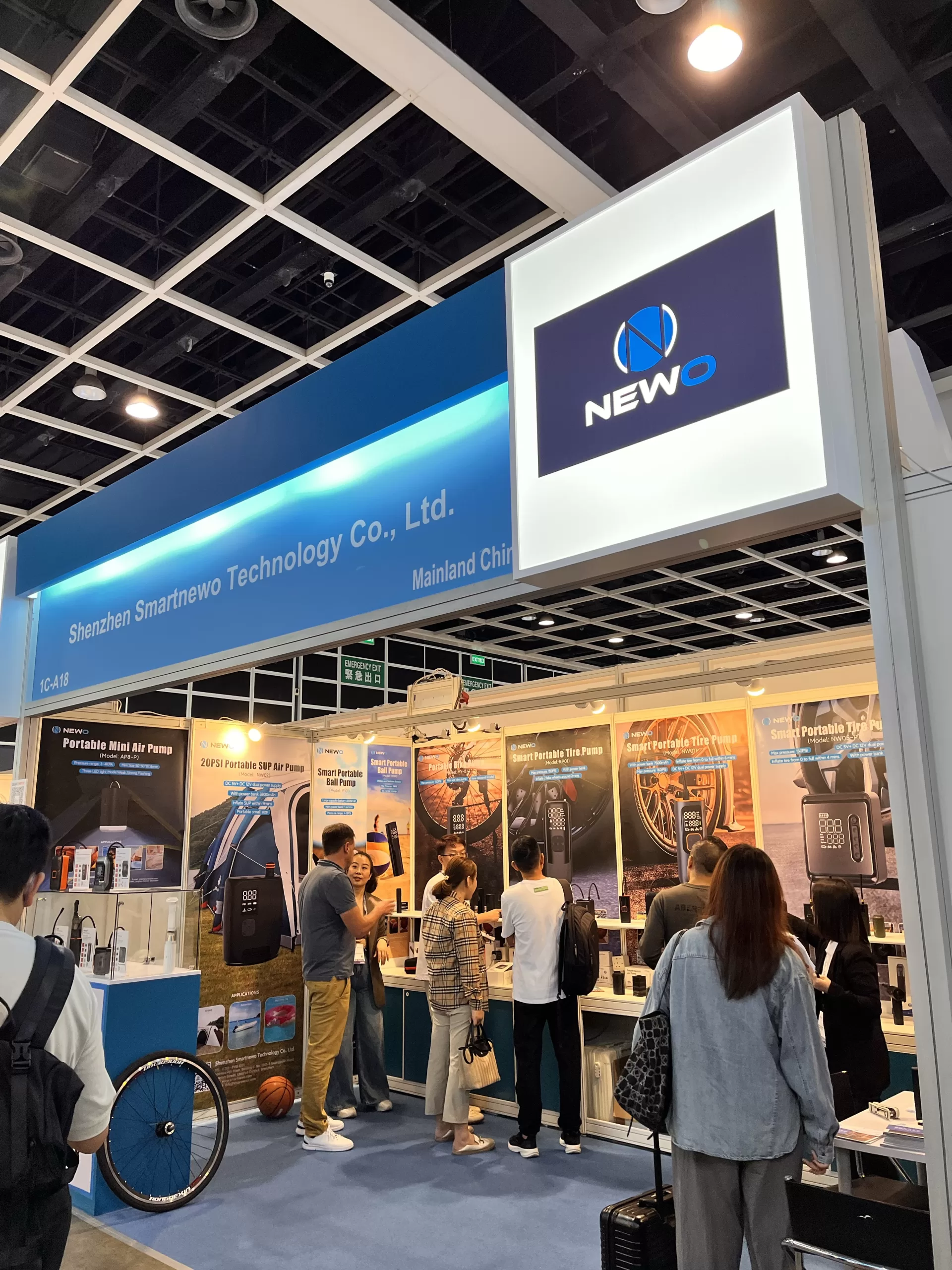
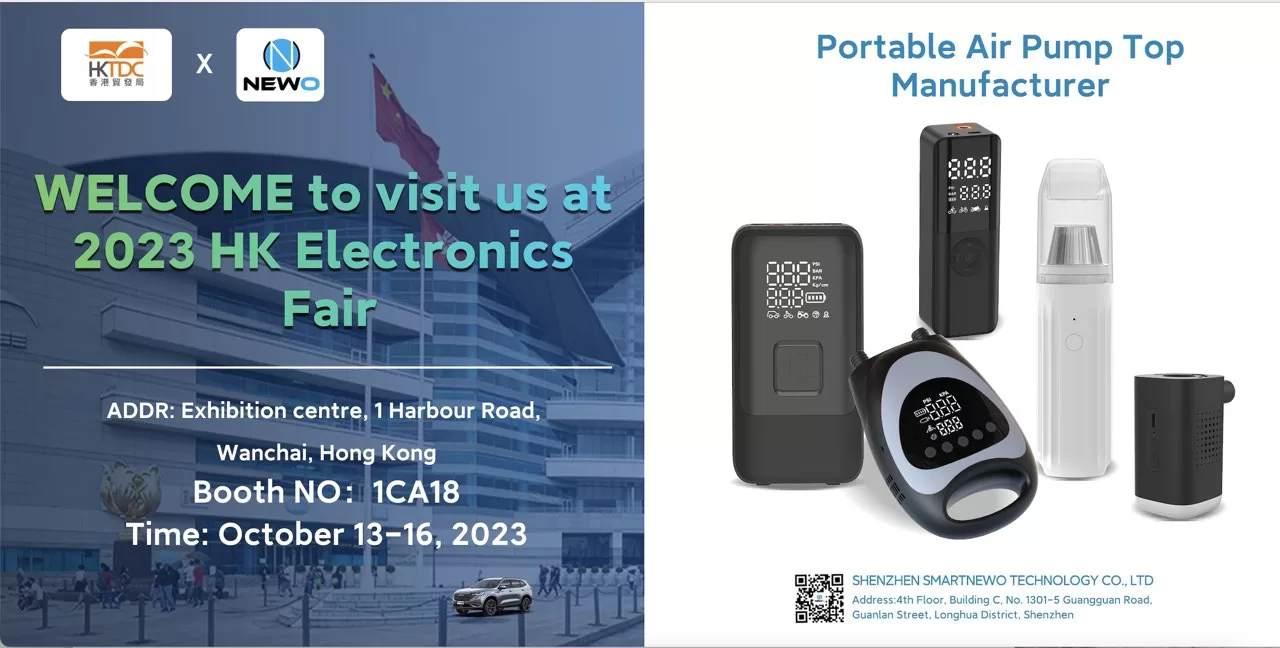
“Hong Kong Autumn Electronics Fair – 1CA18 (October 13th to 16th): Smartnewo invites you to visit our booth!
Hong Kong Autumn Electronics Fair...



-

What to Check Before Ordering Custom Electric Bike Pumps
Plan custom electric bike pumps with a clear requirements freeze for valves, TPU tubes, portability, repeated top-ups, charging, and model-specific documents.... -

OEM vs ODM Air Pumps: Which Manufacturing Model Fits Your Brand?
Compare OEM and ODM air pump projects by design responsibility, change approval, development scope, and written ownership terms before choosing your route.... -
How to Choose a Reliable Tire Inflator Manufacturer in China
Choose a tire inflator manufacturer in China with a focused RFQ, supplier evidence, configuration checks, and clear sample-to-pilot decisions for your brand.... -

Rechargeable Electric SUP Pump for Paddle Boards: Faster Inflation for SUPs, Kayaks and Inflatable Tents
The BL10-C Portable Electric Bike Tire Inflator is a compact and lightweight mini electric bike pump designed for modern cyclists. With up to 120 PSI pressure, a digital LED display, preset pressure control, automatic shut-off, USB-C charging, and multiple valve adapters, BL10-C offers a convenient inflation solution for road bikes,... -

Are Electric Bike Pumps Worth It in 2026? Electric Pump vs CO₂ vs Mini Hand Pump
Discover whether electric bike pumps are worth it in 2026. This guide compares electric bike pumps, CO₂ inflators, and mini hand pumps for road cycling, gravel riding, commuting, and long-distance rides. Learn the pros, limitations, best use cases, and key features to look for before choosing the right portable tire... -
BL10-C Portable Electric Bike Tire Inflator: Small Size, Reliable Power for Every Ride
The BL10-C Portable Electric Bike Tire Inflator is a compact and lightweight mini electric bike pump designed for modern cyclists. With up to 120 PSI pressure, a digital LED display, preset pressure control, automatic shut-off, USB-C charging, and multiple valve adapters, BL10-C offers a convenient inflation solution for road bikes,... -

Why Mini Electric Bike Pumps Are Becoming Essential for Modern Cycling
Discover why mini electric bike pumps are becoming essential for modern cyclists. Learn how portable electric bike pumps improve tire pressure management, riding safety, and convenience.... -

The Ultimate Smart Solution for Easy Outdoor Adventures in 2026
Discover how a spring travel air pump simplifies outdoor trips with fast inflation, smart features, and powerful performance—perfect for every adventure.... -

Powerful 5-in-1 Portable Car Tire Inflator and Jump Starter: The Ultimate Emergency Tool for Every Driver
Why Every Driver Needs a Portable Car Tire Inflator and Jump Starter Modern drivers face many unexpected situations on the road. A flat tire, low tire pressure, or a dead car battery can happen at the worst possible time. That’s why having a portable car tire inflator and jump starter is... -

7 Real Cycling Scenarios That Show Why Every Rider Should Carry a Mini Bike Pump
Cycling is one of the most freeing activities you can enjoy. Whether you’re commuting to work, riding through city streets, or exploring quiet countryside roads, a bike ride can instantly improve your day. But there’s one small problem that almost every cyclist eventually faces: Low tire pressure. It might happen...



-
How Is a Football Properly Inflated?
The correct inflation of a football - with not too much and not too little air - is a hotly debated topic among footballers.... -
Application Scenarios of Car Inflator Pump
Often long-distance business trips or play car owners because the road may be more remote areas, in this case if you encounter a tire leak....