

 Portable Tire Inflators
 Electric Air Pumps
 Electric Car Tyre Pumps
 Electric Ball Pumps
 Electric Bike Pump
 SUP Air Pump

Portable Tyre Inflator: Complete Guide to Selection, Operation, and Emergency Preparedness
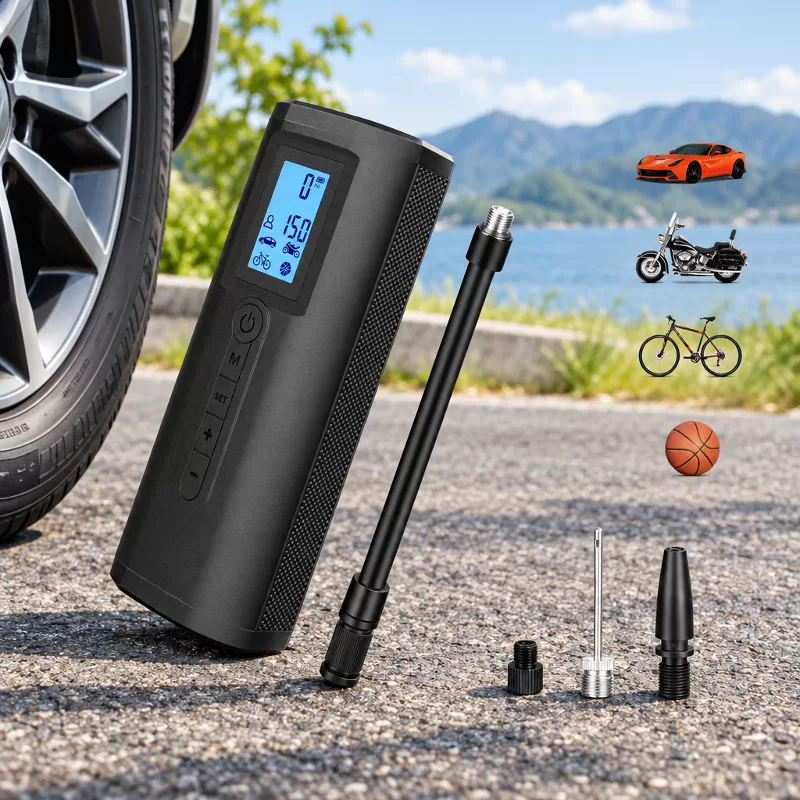
Maintaining correct tire pressure is one of the most neglected aspects of vehicle ownership, yet it dictates vehicle handling, fuel efficiency, and road safety. A portable tyre inflator has evolved from an optional roadside convenience into an essential tool for drivers, motorcyclists, and cyclists. Carrying an electric tyre pump allows you to correct gradual pressure loss at home or manage roadside inflation needs before underinflation damages your tire carcass. Understanding how these tools function helps you make an informed purchase and operate them with confidence.
Understanding the Portable Tyre Inflator
How Portable Pneumatic Pumps Work
A modern portable tyre inflator typically employs an electric motor driving a compression mechanism. One common design uses a reciprocating piston and cylinder assembly. As the motor spins, the piston draws ambient air through intake ports, compresses it inside the chamber, and forces it through a one-way check valve into the delivery hose.
Pneumatic tools of this scale prioritize compactness over massive volume. Because the displacement per stroke is modest, the piston cycles rapidly to generate working pressure. This rapid compression naturally generates friction and thermal energy, which is why engineering designs incorporate ventilation grilles and internal cooling fans to protect the mechanical assembly.
It is equally vital to understand what an inflator is not. An inflator manages air density within an intact rubber chamber. It cannot seal structural punctures, repair torn sidewalls, or reseat a bead that has detached from the wheel rim during a high-speed blowout.
Everyday Scenarios and Roadside Emergencies
Drivers encounter pressure loss under varying circumstances. Seasonal temperature changes can contribute to pressure fluctuations. When ambient temperatures drop, internal air contracts, lowering cold tire pressure without any mechanical puncture present. Tires can also lose air gradually over time or after damage. Regular morning top-ups prevent premature shoulder wear and restore balanced braking across all four contact patches.
Beyond routine passenger car maintenance, a cordless tyre inflator provides versatile service across different vehicle types. Commuters use these devices on electric bicycles and mopeds, where maintaining narrow tire pressures prevents rim strikes. Parents and outdoor enthusiasts rely on them for sports equipment, balance vehicles, and mobility aids like wheelchairs.
Roadside situations introduce higher stress. Discovering a slow leak caused by a small nail miles from a service bay can leave you stranded. A portable unit lets you raise the tire pressure enough to drive safely to a qualified repair facility, avoiding the hazard of changing a wheel on a narrow shoulder.
Critical Selection Criteria: How to Choose the Right Model
Cordless Rechargeable vs. 12V Vehicle-Powered Units
When shopping for a portable tyre inflator for car tyres, the primary hardware distinction lies in the power source. Traditional 12V compressors plug directly into the vehicle cigarette lighter socket via a long power cord. These units offer continuous runtime without battery degradation concerns, but wrestling a tangled cord around dirty wheel arches in the dark can be frustrating.
Cordless battery-powered models utilize integrated lithium-ion cells, eliminating cables entirely. You walk around the vehicle, screw the chuck onto the valve stem, and complete the cycle in minutes. However, cordless units require disciplined recharging habits and storage awareness to preserve cell health across extreme seasons.
Decoding Maximum Pressure vs. True Airflow Displacement
Marketing figures frequently emphasize high maximum pressure ratings, such as 150 PSI, yet maximum pressure does not indicate inflation speed. The critical metric for inflation speed is airflow displacement, measured in liters per minute. Actual inflation time depends on tire size, starting pressure, and working pressure rather than the maximum PSI rating alone.
For example, the AP2-P product information lists a 150 PSI maximum pressure alongside 15 to 18 liters per minute airflow. High-volume light truck tires, by contrast, require large volumes of air rather than extreme pressures. Attempting to fill an empty high-volume tire with a compact inflator forces the motor to run continuously for long periods, triggering thermal cutoffs. Matching displacement volume to your primary vehicle ensures realistic expectations and equipment longevity.
Battery Capacity, Runtime, and Thermal Protection
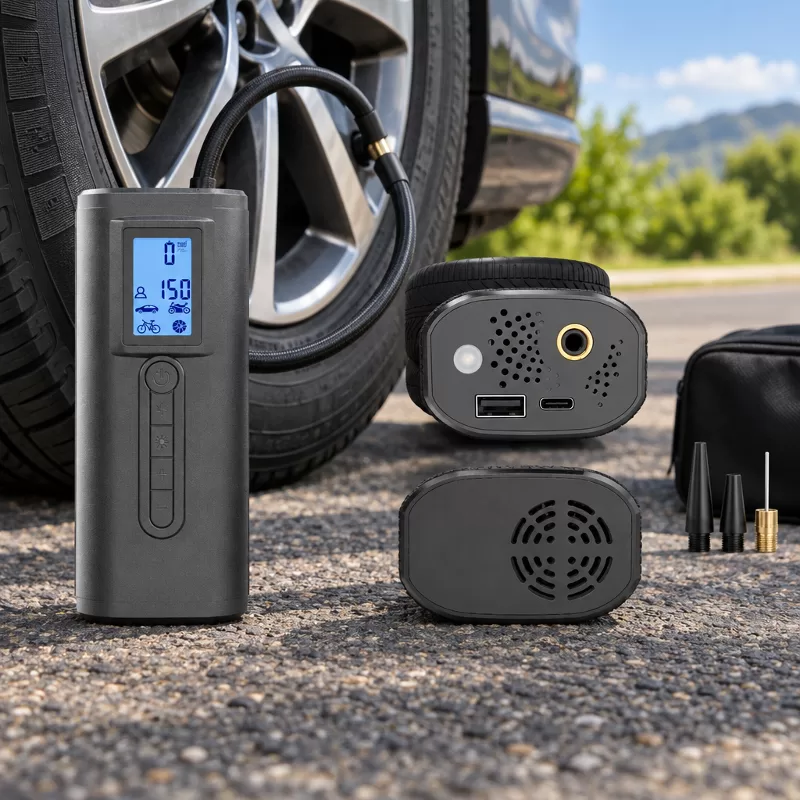
Battery configurations in compact pumps demand careful evaluation. Quality handheld units employ dedicated lithium battery packs engineered for high discharge rates under pneumatic load. Manufacturers generally list battery capacity in milliampere-hours alongside operating voltage, or in watt-hours to reflect total energy capacity.
Runtime is constrained by heat rather than electrical capacity alone. Compressing air generates intense heat within the cylinder head. The AP2-P product specifications list 20 to 30 minutes of runtime and up to 30 minutes of continuous working time. Always consult the product manual for duty-cycle instructions to avoid overheating.
Digital Displays, Pressure Presets, and Auto-Shut-Off Accuracy
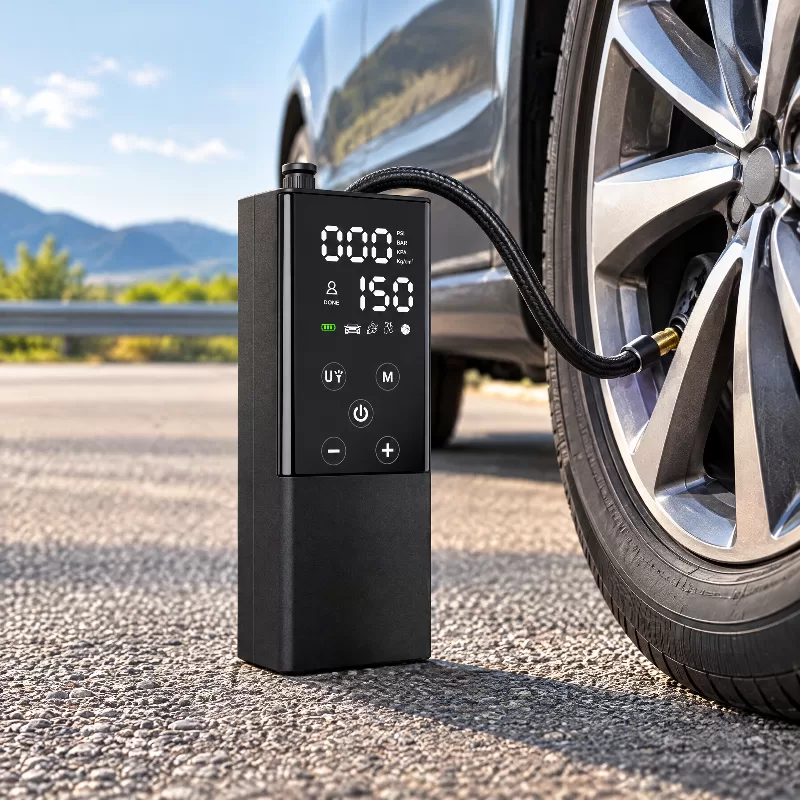
Analog dial gauges have largely given way to digital displays. Modern backlit LCD screens display real-time pressure readings, user-defined target values, battery indicators, and active measurement units such as PSI, BAR, KPA, or Kg/cm².
Automatic shut-off functionality can help reduce the risk of overinflation when the preset and pressure reading are correct. You enter your target value, activate the compressor, and the controller cuts power when internal sensor thresholds are met. Always follow your vehicle’s specified cold tire pressure and verify readings with a dedicated manual gauge when accuracy is critical.
Core Feature Comparison Matrix
| Inflator Category | Primary Power Source | Target Application | Storage & Handling Profile |
|---|---|---|---|
| Handheld Cordless Pump | Internal Lithium-ion (Rechargeable) | Cars, bikes, motorcycles, balls | Glovebox or door bin; cable-free |
| 12V Plug-in Compressor | Vehicle Auxiliary 12V DC Socket | Passenger sedans, crossovers, SUVs | Trunk stowage; requires cord routing |
| Dual-Power Hybrid Inflator | AC/DC + Internal Battery | Mixed garage and remote vehicle use | Larger footprint; multi-cable storage |
| Heavy-Duty Off-Road Compressor | Direct Battery Clamp (12V High-Amp) | 4×4 off-road tires, commercial vans | Dedicated tool bag; direct battery wiring |
Practical Example: Examining the Newo AP2-P 150 PSI Inflator
Technical Specifications and Engineering Parameters
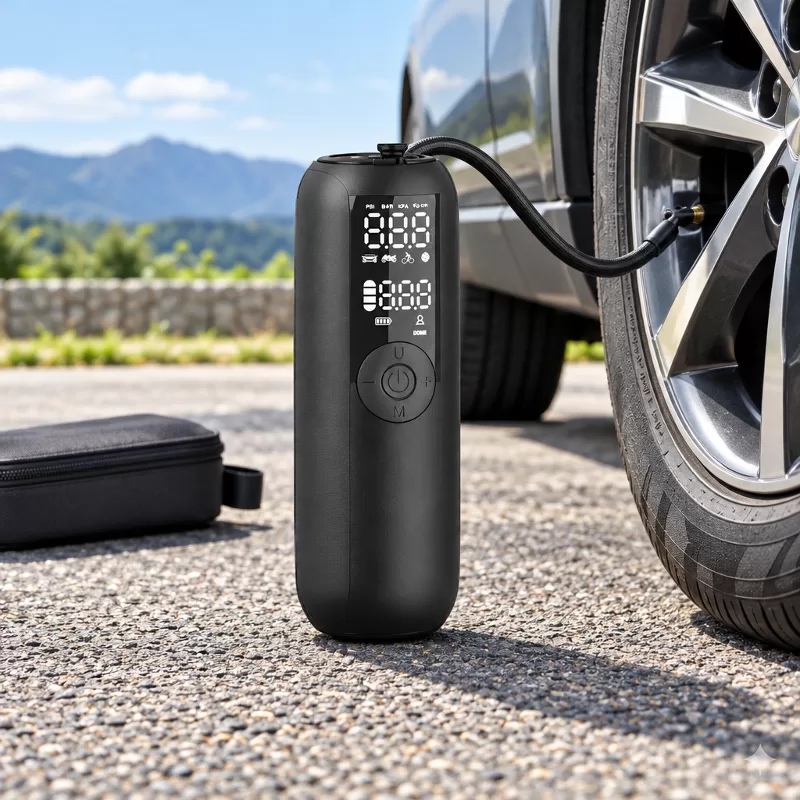
To see how these principles apply in commercial hardware, consider the Newo AP2-P cordless electric air pump. Designed as a handheld cylinder measuring 42 by 62 by 154 mm and weighing approximately 386 g, it packs practical pneumatic performance into a chassis roughly the size of an insulated beverage flask.
Newo is a professional manufacturer specializing in the research, development, and production of smart electric air pumps and portable inflation solutions. With strong expertise in pneumatic technology, product design, and manufacturing, we provide a wide range of products, including portable tire inflators, electric bike pumps, car air pumps, ball pumps, and outdoor inflation solutions. Our products are designed to deliver convenience, efficiency, and reliability for customers worldwide. Supported by advanced production capabilities, experienced engineers, and strict quality management, we are committed to creating high-quality smart inflation products and building long-term partnerships with customers around the world.
| Specification Parameter | Value / Engineering Rating | Notes & Functional Context |
|---|---|---|
| Product Model | AP2-P | Handheld cordless electric air pump |
| Pressure Range | 0–150 PSI | Supports four selectable measurement units |
| Airflow Rate | 15–18 L/min | Optimized for passenger vehicle top-ups and bikes |
| Motor Configuration | 35W Brushed Motor | Product data lists 14 cylinder specification (definition unclear) |
| Stated Battery Capacity | 2000mAh, 7.4V, 14.8Wh | Product data contains inconsistent capacity statements |
| Charging Input & Time | Type-C 5V/2A (2–3 Hours) | Compatible with standard mobile phone adapters |
| Emergency Power Output | USB-A 5V/2A | Secondary power bank functionality for mobile devices |
| Continuous Working Time | Up to 30 Minutes | Built-in cooling fan facilitates thermal dissipation |
| Operating Temperature Range | -10°C to 45°C | Suitable for varied seasonal roadside environments |
| Acoustic Noise Level | <=85dB at 1 meter | Typical acoustic signature for reciprocating pumps |
Multi-Mode Operation and Secondary Capabilities
The AP2-P provides five inflation modes: car, motorcycle, bicycle, ball, and custom mode. Each profile offers a baseline pressure setting while permitting manual fine-tuning. The integrated memory retains the last targeted value, avoiding redundant configuration during multi-wheel maintenance.
Auxiliary features expand roadside utility. The device integrates a forward-facing LED flashlight to illuminate dark valve stems and work areas. Its USB output port allows the internal battery to serve as an emergency power reserve for recharging navigation phones in remote areas.
Practical Applications and Duty Boundaries
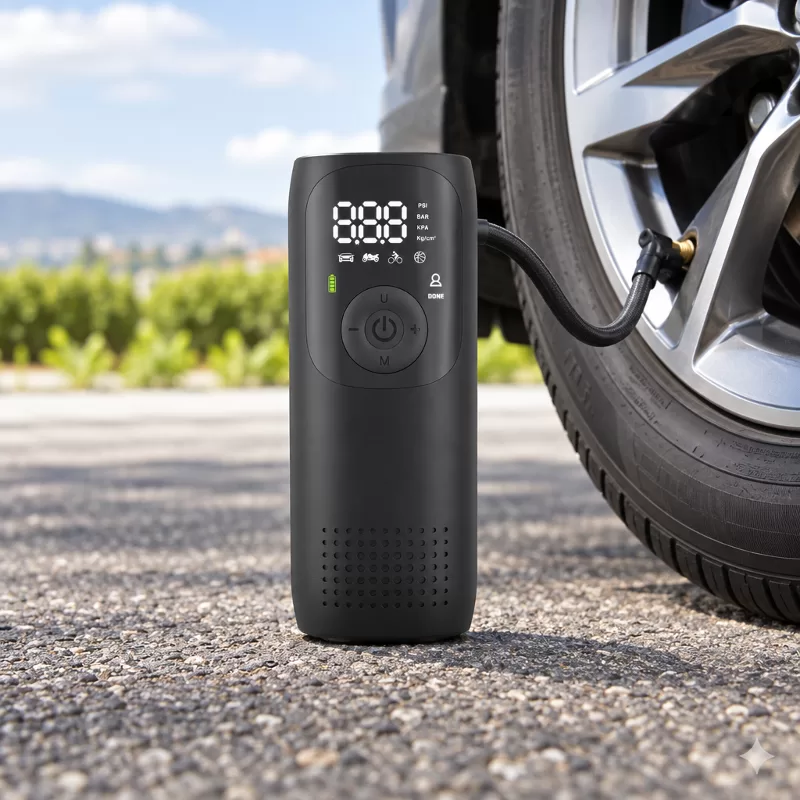
In everyday service, the AP2-P excels at seasonal passenger tire corrections, motorcycle tire maintenance, and bicycle applications. According to the manufacturer, a full charge can inflate approximately 10 to 15 bicycle tires. For car tires, it functions as a top-up tool to restore several missing PSI across all wheels.
Duty boundaries must be respected. A compact inflator’s suitability for large tires depends on tire volume, target pressure, and the manufacturer’s stated duty cycle. With an airflow of 15 to 18 liters per minute, it is designed as an agile emergency and maintenance tool rather than a replacement for high-volume workshop shop compressors.
Step-by-Step Guide: How to Inflate Tyres Safely
Finding the Manufacturer’s Recommended Cold Pressure
A frequent mistake made by drivers is setting tire pressure to the number molded onto the tire sidewall. That sidewall figure indicates the maximum cold inflation pressure the tire structure can support, not what the vehicle chassis requires. Overinflation can affect vehicle handling and make tires more vulnerable to damage from impacts.
Always locate the tire information label positioned on the driver-side door jamb or consult the vehicle owner’s manual. The manufacturer calculated those specific values based on axle load, suspension geometry, and vehicle gross weight. Tire pressure must be verified cold. Cold tires are those that have been parked for at least three hours, or driven less than one mile after being parked for at least three hours.
Step-by-Step Operating Workflow
- Secure the vehicle and inspect the tire: Park on flat ground away from moving traffic, engage the parking brake, and visually inspect the tire for embedded screws, sidewall splits, or obvious structural damage.
- Read the cold specification: Check the door jamb placard for the front and rear axle cold pressure ratings, noting any load-dependent variations.
- Power up and select settings: Switch on your portable tyre inflator, select the appropriate vehicle mode, and choose your preferred measurement unit.
- Connect the air hose: Remove the valve cap, align the chuck squarely with the tire valve stem, and thread or clamp it down firmly to establish an airtight seal.
- Inspect baseline pressure: Read the illuminated display to verify current tire pressure before initiating airflow.
- Set target and begin inflation: Adjust the target pressure to the placard rating using the plus or minus buttons, then press start. The pump will compress air until reaching the preset limit.
- Disconnect and reinstall the cap: Wait for the auto-shut-off to engage, disconnect the chuck quickly to minimize air release, and tighten the dust cap back onto the valve stem.
Managing Warm Tyres and Thermal Expansion
Driving generates friction and carcass deflection that warms the air inside the tire, increasing pressure above cold baseline values. If you check tires after driving, pressure readings will be higher than the cold specification. This elevated reading is normal and expected.
Never release air from a warm tire to match the cold door placard specification. Doing so leaves the tire severely underinflated once it cools back down. If you discover underinflated tires during a trip, regulatory guidance such as that from NHTSA advises inflating to the vehicle’s recommended cold tire pressure, then rechecking once the tires are fully cold. If a tire shows signs of significant air loss or visible damage, do not continue driving; install a spare or contact recovery services.
Boundaries and Maintenance: What an Inflator Cannot Do
Identifying Structural Tyre Damage and Rapid Leaks
A portable tyre inflator is an air replenishment system, not a repair patch. If a tire loses pressure within minutes of filling, the inner liner has suffered severe penetration or the valve core is damaged. Driving on a rapidly deflating tire destroys the internal casing and risks sudden wheel rim impact.
Carefully inspect the tire exterior before operating the pump. Bulges, cracks, or tread separations mean the internal reinforcement cords have failed. In such cases, inflating the tire is unsafe; installing a spare wheel or contacting recovery services is the correct course of action.
Battery Care, Seasonal Storage, and Routine Readiness
Lithium cells face harsh operating environments when stored in vehicles. Follow the manufacturer’s storage-temperature guidance and avoid prolonged storage in extreme temperatures. High summer heat accelerates self-discharge and cell degradation, while freezing winter temperatures temporarily reduce peak discharge rates.
Establish a quarterly maintenance routine to inspect your gear. Check the charge level, test the LED flashlight, inspect the flexible air hose for cracks, and ensure the valve chuck threads remain clean and free of road grit.
Frequently Asked Questions
Is a 150 PSI Portable Tyre Inflator Suitable for Every Car Tyre?
A 150 PSI maximum pressure rating indicates the pressure the internal cylinder can generate, but it does not describe air displacement speed. Passenger-car tire pressure varies by vehicle; use the cold-pressure value on the vehicle placard or in the owner’s manual. While effective for routine top-ups and emergencies, inflating very large commercial or off-road tires from zero requires patience due to modest airflow rates.
What Pressure Should I Set on My Car Tyre Inflator?
Always set the inflator to the cold tire inflation pressure specified on your vehicle’s driver-side door jamb placard or in the owner’s manual. Never set the target to the maximum pressure printed on the tire sidewall. Vehicle placard values are optimized by engineers for safety, handling, tire life, and ride comfort.
Should I Check Tyre Pressure When Tyres Are Hot or Cold?
Always check and adjust tire pressure when tires are cold. Cold tires are those that have been parked for at least three hours, or driven less than one mile after being parked for at least three hours. Checking tires hot yields elevated readings due to heat-induced air expansion.
Does Automatic Shut-Off Completely Prevent Overinflation?
Automatic shut-off cuts power to the motor when internal sensor thresholds reach the selected target. This feature can help reduce the risk of overinflation when the preset and pressure reading are correct. Always follow your vehicle’s specified cold tire pressure. If accuracy is critical, verify readings with an independent manual pressure gauge.
Can a Portable Tyre Inflator Fix a Flat Tyre Caused by a Nail?
No, an air pump merely supplies compressed air and cannot repair physical puncture holes. If a nail creates a very slow leak, the inflator can restore pressure long enough to drive a short distance to a professional repair facility. For fast leaks or blowout damage, the tire must be plugged, patched, or replaced.
How Long Does a Cordless Tyre Inflator Last on a Single Charge?
Runtime depends on battery capacity, ambient temperature, and working pressure. The AP2-P product specifications list 20 to 30 minutes of runtime per charge, sufficient to top off multiple passenger car tires or inflate several bicycle tires. When working on larger tires, consult the product manual for duty-cycle instructions.
Can the Newo AP2-P Be Used on Bicycle and Motorcycle Tyres?
Yes, the Newo AP2-P includes dedicated preset modes and multiple nozzle adapters for bicycles, motorcycles, and sports balls. With a pressure ceiling of 150 PSI, it easily handles high-pressure road bike tires, standard motorcycle tires, and inflatable recreational gear.
Conclusion
Equipping your vehicle with a reliable portable tyre inflator provides practical security against sudden pressure drops, cold morning tire alerts, and inconvenient roadside delays. Whether you keep a compact cordless tyre inflator in your door pocket or stow a portable tyre inflator for car tyres alongside your emergency gear, understanding its operation ensures you can restore proper pressure quickly and safely. Respect cold pressure specifications, observe duty cycles, and maintain your equipment so it remains ready whenever the road demands it.
-

Meet NEWO at the 140th Canton Fair: Visit Booth 10.3 M03–04
Meet NEWO at the 140th Canton Fair in Guangzhou, October 15–19, 2026. Visit Booth 10.3 M03–04 to explore portable air pumps and discuss OEM, ODM and distribution opportunities.... -

As Shenzhen Welcomes the World for APEC 2026, NEWO Welcomes You to Our Factory
As Shenzhen prepares for APEC 2026, NEWO welcomes international buyers and partners to visit our factory, meet our team and explore future cooperation.... -

Leading the Way in Product Innovation and Excellence
Smartnewo exemplifies professionalism in product innovation and manufacturing. Their collaboration with Xiaomi Youpin on the G01 crowdfunding project highlights their expertise in creating compact, powerful inflatable pumps. Rigorous engineering, meticulous production processes, and advanced quality assurance underscore their commitment to excellence. The success of the G01 project, with significant market... -

Essential Qualities of an Excellent Supplier
In today's competitive market, finding a reliable supplier is crucial for business success. Based on insights from Smartnewo and broader internet research, here are key qualities an excellent supplier must possess:... -

NW06 Tire Inflator: Compact Power for Quick Inflation
Summary The NW06 Tire Inflator delivers quick and efficient tire inflation with a powerful 35L/min airflow. It features a user-friendly LCD screen for real-time pressure monitoring, dual power options with a built-in 6000mAh battery, and multiple nozzle attachments for versatile use. Its compact design and integrated LED light ensure convenience and... -

Unleash the Power of Portability: The SmartNewo Jump Starter with Air Compressor KF03
This guide will walk you through the steps to effectively use a portable tire inflator, helping you stay prepared and safe on the road.... -

Newo Attends The 2024 Consumer Electronics Show (CES)
Smartnewo booth is located at 53672, Halls A-D, Level 2, Venetian Expo, Las Vegas Convention Center (LVCC). ... -

Smartnewo’s Dual-Cylinder Air Pump Rocks the Hong Kong Autumn Electronics Fair!
Smartnewo’s Dual-Cylinder Air Pump Rocks the Hong Kong Autumn Electronics Fair!... -

Meet at the Canton Fair! Smartnewo brings dual-cylinder air pumps, making your inflation experience faster and more stable!
NEWO has went deep communication and negotiation with customers from all over the world on booth.... -

“Hong Kong Autumn Electronics Fair – 1CA18 (October 13th to 16th): Smartnewo invites you to visit our booth!
Hong Kong Autumn Electronics Fair...










-

What to Check Before Ordering Custom Electric Bike Pumps
Plan custom electric bike pumps with a clear requirements freeze for valves, TPU tubes, portability, repeated top-ups, charging, and model-specific documents.... -

OEM vs ODM Air Pumps: Which Manufacturing Model Fits Your Brand?
Compare OEM and ODM air pump projects by design responsibility, change approval, development scope, and written ownership terms before choosing your route.... -
How to Choose a Reliable Tire Inflator Manufacturer in China
Choose a tire inflator manufacturer in China with a focused RFQ, supplier evidence, configuration checks, and clear sample-to-pilot decisions for your brand.... -

Rechargeable Electric SUP Pump for Paddle Boards: Faster Inflation for SUPs, Kayaks and Inflatable Tents
The BL10-C Portable Electric Bike Tire Inflator is a compact and lightweight mini electric bike pump designed for modern cyclists. With up to 120 PSI pressure, a digital LED display, preset pressure control, automatic shut-off, USB-C charging, and multiple valve adapters, BL10-C offers a convenient inflation solution for road bikes,... -

Are Electric Bike Pumps Worth It in 2026? Electric Pump vs CO₂ vs Mini Hand Pump
Discover whether electric bike pumps are worth it in 2026. This guide compares electric bike pumps, CO₂ inflators, and mini hand pumps for road cycling, gravel riding, commuting, and long-distance rides. Learn the pros, limitations, best use cases, and key features to look for before choosing the right portable tire... -
BL10-C Portable Electric Bike Tire Inflator: Small Size, Reliable Power for Every Ride
The BL10-C Portable Electric Bike Tire Inflator is a compact and lightweight mini electric bike pump designed for modern cyclists. With up to 120 PSI pressure, a digital LED display, preset pressure control, automatic shut-off, USB-C charging, and multiple valve adapters, BL10-C offers a convenient inflation solution for road bikes,... -

Why Mini Electric Bike Pumps Are Becoming Essential for Modern Cycling
Discover why mini electric bike pumps are becoming essential for modern cyclists. Learn how portable electric bike pumps improve tire pressure management, riding safety, and convenience.... -

The Ultimate Smart Solution for Easy Outdoor Adventures in 2026
Discover how a spring travel air pump simplifies outdoor trips with fast inflation, smart features, and powerful performance—perfect for every adventure.... -

Powerful 5-in-1 Portable Car Tire Inflator and Jump Starter: The Ultimate Emergency Tool for Every Driver
Why Every Driver Needs a Portable Car Tire Inflator and Jump Starter Modern drivers face many unexpected situations on the road. A flat tire, low tire pressure, or a dead car battery can happen at the worst possible time. That’s why having a portable car tire inflator and jump starter is... -

7 Real Cycling Scenarios That Show Why Every Rider Should Carry a Mini Bike Pump
Cycling is one of the most freeing activities you can enjoy. Whether you’re commuting to work, riding through city streets, or exploring quiet countryside roads, a bike ride can instantly improve your day. But there’s one small problem that almost every cyclist eventually faces: Low tire pressure. It might happen...








-
How Is a Football Properly Inflated?
The correct inflation of a football - with not too much and not too little air - is a hotly debated topic among footballers.... -
Application Scenarios of Car Inflator Pump
Often long-distance business trips or play car owners because the road may be more remote areas, in this case if you encounter a tire leak....

