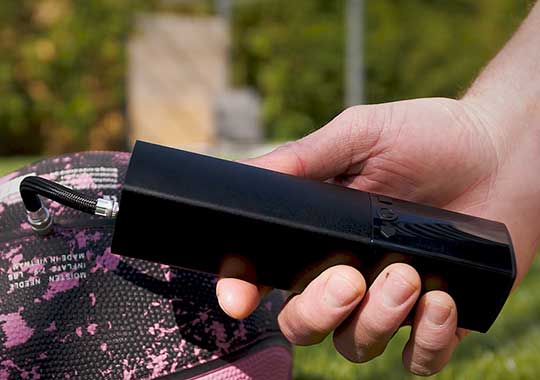

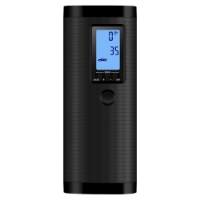
 Portable Tire Inflators
 Electric Air Pumps
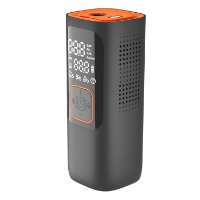 Electric Car Tyre Pumps
 Electric Ball Pumps
 Electric Bike Pump
 SUP Air Pump

Selecting and Operating an Air Pump for Car Tires: A Practical Field Guide to Portable Inflation

Maintaining correct tire pressure is one of the most critical yet frequently delayed aspects of automotive care. When cold weather hits or an unexpected dashboard indicator appears, locating an operable service station air compressor often turns into an exercise in frustration. Keeping an air pump for car tires portable inside your vehicle eliminates this friction, which can make routine pressure top-ups more convenient and may reduce roadside waiting time.
Modern pneumatic tools have advanced far beyond the bulky, oil-lubricated shop compressors once confined to professional repair bays. Today, an air pump for car tires portable offers high-precision pressure management through compact, battery-powered systems that fit neatly inside a glove compartment, trunk organizer, or under-seat cargo tray. Understanding how these compact inflators work, how to evaluate their internal specifications, and how to operate them correctly ensures your vehicle remains safe and roadworthy on every journey.
The Mechanics of Roadside Tire Pressure Management
Understanding the physical forces at play inside a pneumatic tire helps clarify why pressure maintenance requires continuous attention rather than annual inspection. Tires lose air not only through acute punctures or failing valve cores but also through everyday thermal fluctuation and natural microscopic diffusion through the rubber matrix itself.
Why Tire Pressure Drops and Why TPMS Isn’t Always Sufficient
Ambient temperature plays an immediate role in pneumatic pressure balance. Under basic gas laws, tire pressure typically changes by about 1 PSI for every 10–12°F change in temperature; actual readings vary. A car parked overnight during an autumn cold snap can easily awaken with tires sitting several PSI below manufacturer specifications.
Many motorists rely completely on their vehicle Tire Pressure Monitoring System (TPMS) to alert them to low pressure. However, U.S. TPMS requirements are designed to warn when pressure is significantly below the vehicle’s placard pressure, commonly around 25% for the applicable four-tire detection option; the exact threshold and behavior depend on the vehicle. A tire can be underinflated without immediately triggering TPMS, and continued underinflation can increase heat buildup, irregular wear, and fuel consumption over prolonged travel.
Diffusion through tire rubber also accounts for predictable pressure depletion over extended periods. Because rubber compounds are naturally semi-permeable, air molecules gradually escape through the tire casing over time. Tires naturally lose air over time, so check pressure at least monthly rather than waiting for dashboard indicators. Relying solely on automatic warning systems means a vehicle can easily operate with underinflated tires for extended periods without triggering an instrument cluster alert.
Deciphering Placard Pressure vs. Sidewall Pressure
A pervasive misconception among vehicle owners involves reading the pressure printed directly upon the tire sidewall. The sidewall figure is the tire’s maximum permissible inflation pressure, not the vehicle’s recommended operating pressure. Relying on this figure leads directly to incorrect inflation levels that do not match the chassis design.
The authoritative specification for everyday driving is stamped on the driver-side door jamb placard or listed in the owner manual. The vehicle manufacturer specifies the recommended pressure for that vehicle; use the placard or owner’s manual. Do not use the sidewall maximum as the vehicle’s target; follow the placard or owner’s manual to ensure proper contact geometry and intended handling.
Accurate measurement also requires a true cold baseline. A tire is technically considered cold only when the vehicle has been stationary for at least three hours or driven for less than one mile at moderate speed. Driving warms the tire and can raise the pressure reading by several PSI, so use the vehicle’s cold-pressure specification and recheck when the tires are cold.
Evaluating Portable Air Compressors: Core Mechanical Parameters
Selecting an effective air pump for car tires portable requires looking closely at flow rate, electrical architecture, and mechanical heat dissipation. Handheld inflators feature distinct internal geometries, cylinder bores, and motor windings that determine how efficiently they manage automotive tire volumes.
Airflow Rates and Pumping Speed
Compression speed is governed primarily by cylinder displacement and motor output. Portable inflators are commonly rated in liters per minute (L/min) of free airflow, reflecting how quickly the internal piston sweeps and transfers ambient air into the tire cavity.
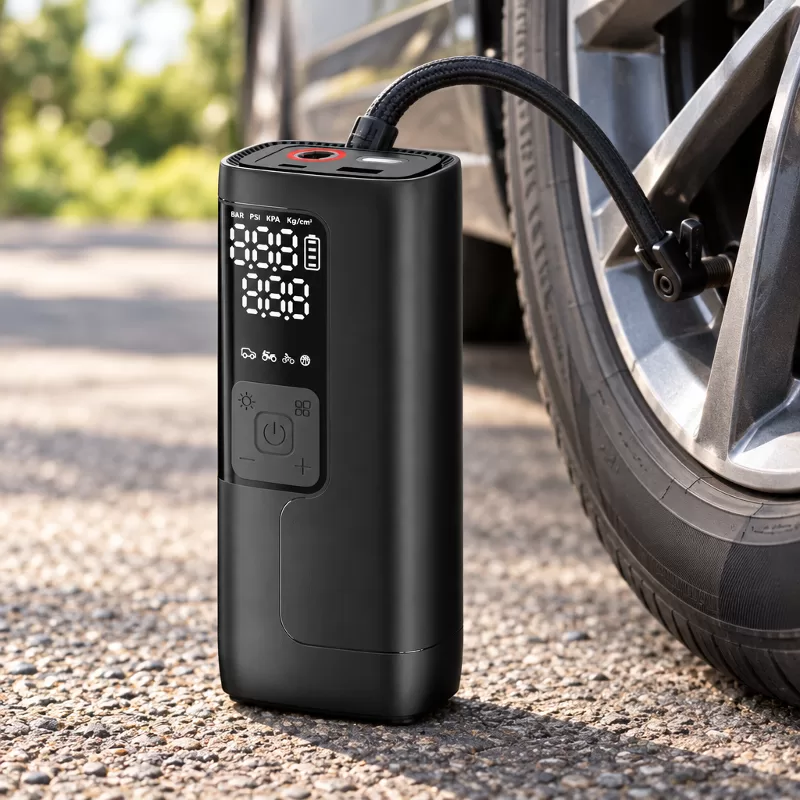
The T22 is rated at 32–36 L/min airflow. Actual inflation time depends on tire size, starting pressure, target pressure, and operating conditions. Understanding airflow in relation to cylinder configuration helps drivers set realistic expectations during pre-trip checks or minor roadside adjustments.
Inflators are engineered for different pressure ranges and volume requirements; check that a model’s rated pressure suits the intended tire or inflatable. High-volume pumps built for recreational air mattresses prioritize air movement at near-zero backpressure, whereas an automotive tire inflator relies on a reciprocating compression assembly engineered to drive airflow against existing chamber pressure.
Power Architectures: Cordless Lithium Cells vs. 12V DC Sockets
Early portable compressors depended exclusively on lengthy 12-volt accessory cords plugged into the vehicle cigarette lighter socket. While wired designs provide continuous power from the vehicle electrical bus, managing tangled cords around wet tires and reaching distant rear wheels can be unwieldy.
Modern cordless inflators incorporate multi-cell lithium battery arrays, providing complete freedom of movement around the chassis. The T22 uses three 18650 rechargeable cells in an 11.1V battery pack, allowing cordless operation. High-discharge lithium cells configured in series deliver steady current directly to the miniature reciprocating motor, eliminating physical cable drag across wet pavement or snowy driveways.
Using self-contained battery packs also decouples tire maintenance from vehicle electrical systems. Drivers can easily top off the tires of parked trailers, detached spares, lawn tractors, or bicycles without needing to position the vehicle close enough for a twelve-foot wire to reach.
Thermal Management and Operating Limits
Compressing atmospheric gas generates substantial heat as gas molecules are forced into smaller volumes under mechanical friction. In a portable unit, this thermal energy concentrates rapidly within the cylinder sleeve, connecting rod, and screw-on air hose fitting.
Effective inflators incorporate perforated ventilation slots and internal heat dissipation channels along the casing to disperse thermal buildup. The supplied specification lists a 20–25 minute runtime. Follow the manufacturer’s operating instructions and stop the unit if it becomes excessively hot; do not present the runtime as a universal duty-cycle rule.
Following the manufacturer operating guidelines helps maintain internal mechanical assemblies over continuous use. If the casing or hose junction becomes noticeably hot during extended inflation tasks, powering down the unit and allowing heat to dissipate prevents unnecessary thermal wear on internal seals and electronic control components.
Engineering Profile: The T22 Compact High-Pressure Inflator
For drivers prioritizing both pocket-sized dimensions and robust pneumatic output, verified specifications provide the clearest purchasing guide. Within this sector, Newo manufactures smart electric air pumps and portable inflation solutions, producing compact equipment that spans portable tire inflators, electric bike pumps, car air pumps, ball pumps, and outdoor pneumatic devices.
Compression System and Operating Range
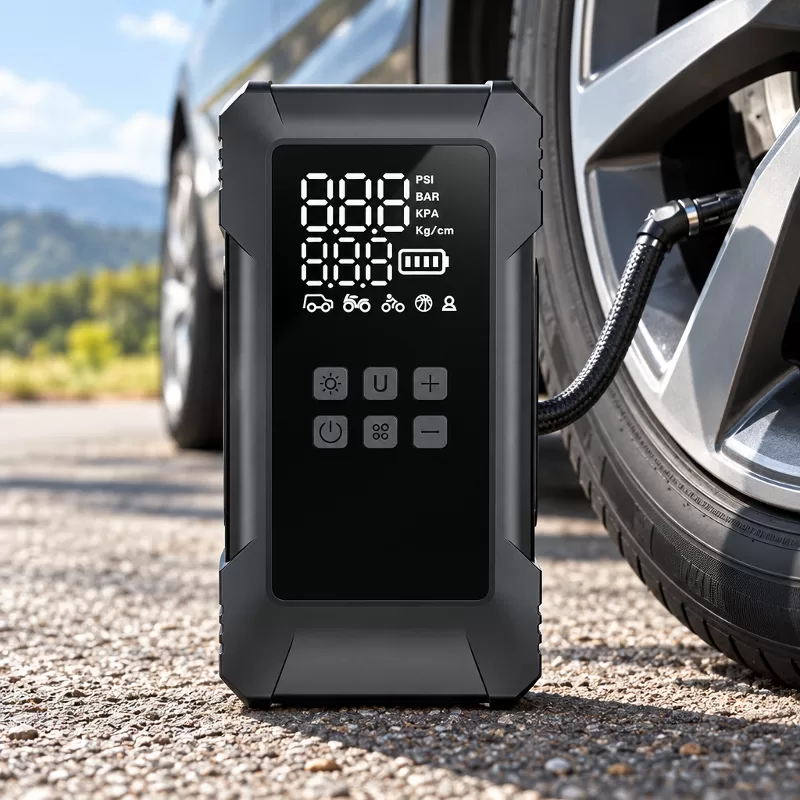
The T22 portable tire inflator utilizes a 22-cylinder compression structure driven by up to 100W of working power. This mechanical setup delivers a rated airflow output of 32 to 36 L/min, enabling prompt pressure adjustments across passenger car tires, motorcycles, and bicycles.
Beyond everyday passenger vehicles, the T22 features a broad pressure range spanning 2 to 160 PSI (0.1 to 11.0 BAR). This high upper ceiling permits the unit to service high-pressure road bicycle tires, e-bikes, and athletic equipment, functioning as an adaptable inflation hub for diverse recreational and commuter transport gear.
The wide pressure bandwidth proves especially practical for multi-vehicle households where garage storage space is limited. Rather than storing a dedicated high-pressure bicycle track pump alongside a bulky automotive compressor, a single handheld unit manages everything from footballs requiring low pressure to racing bike tires requiring high pressure.
Digital Monitoring, Mode Selection, and Auto-Shutoff
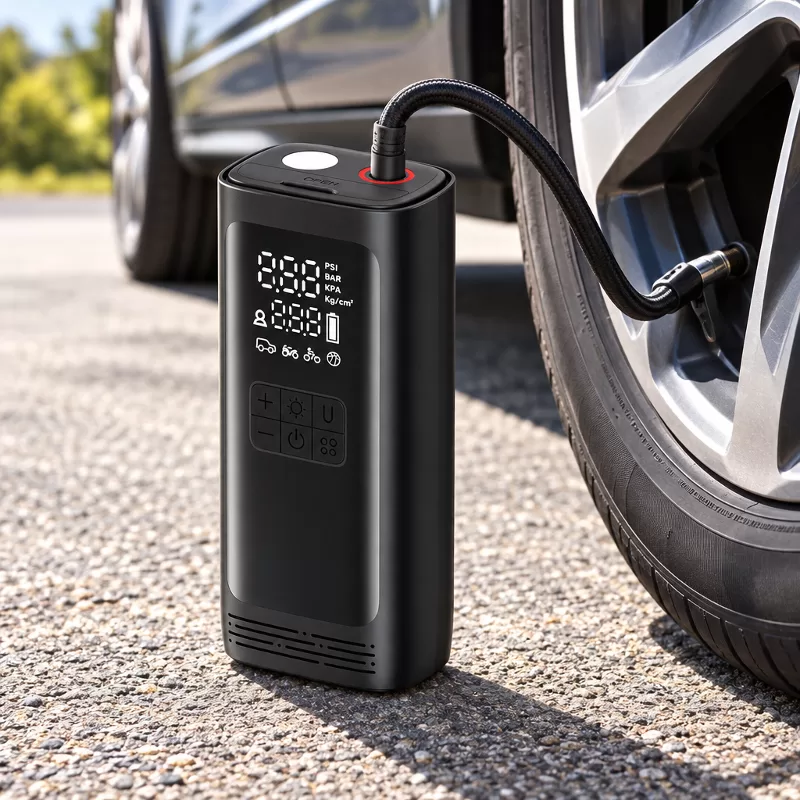
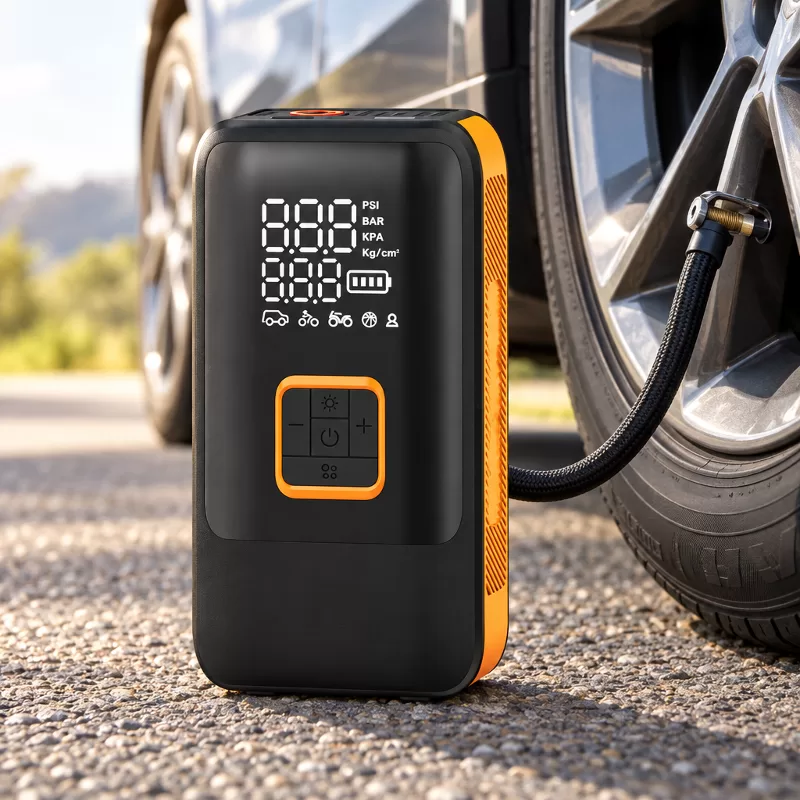
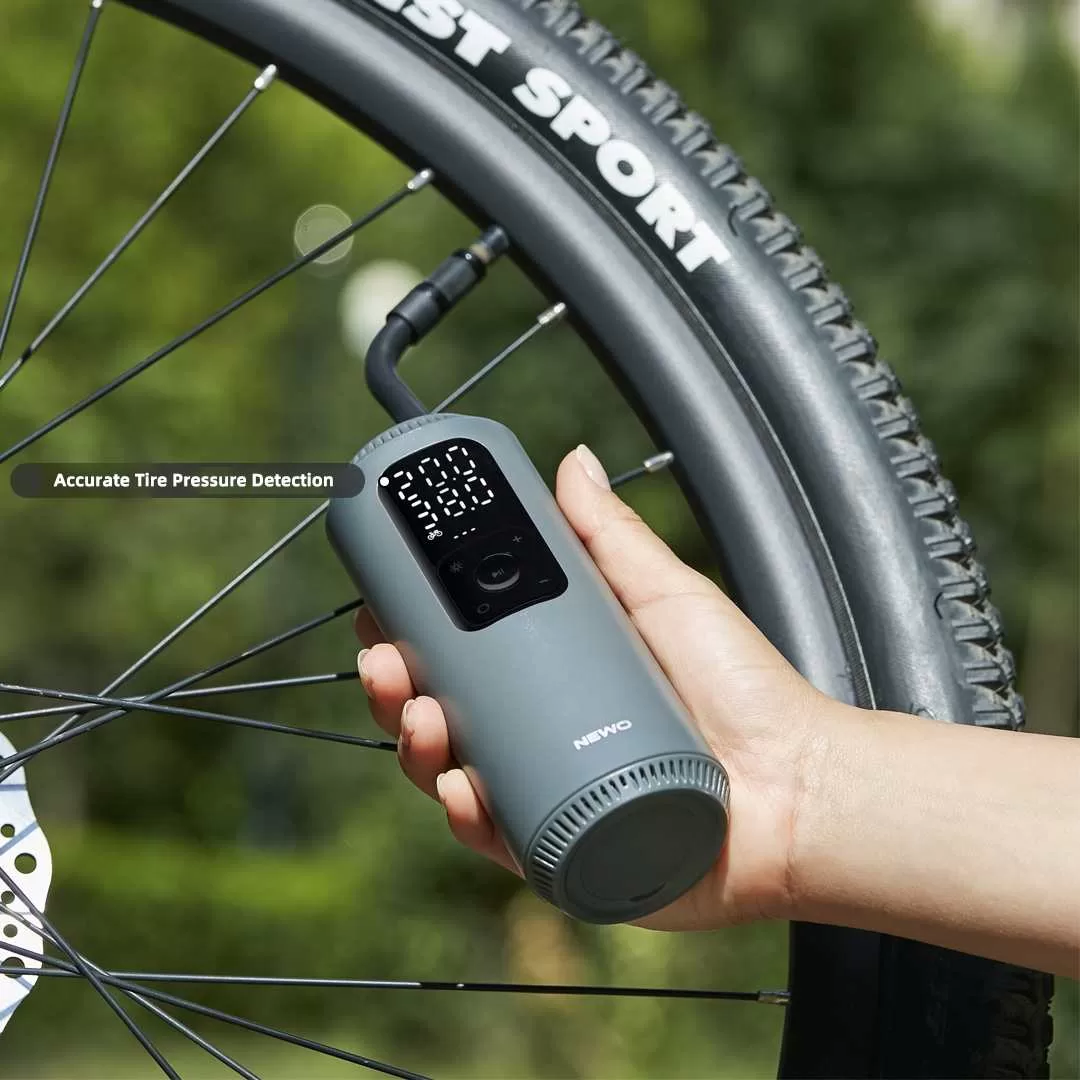
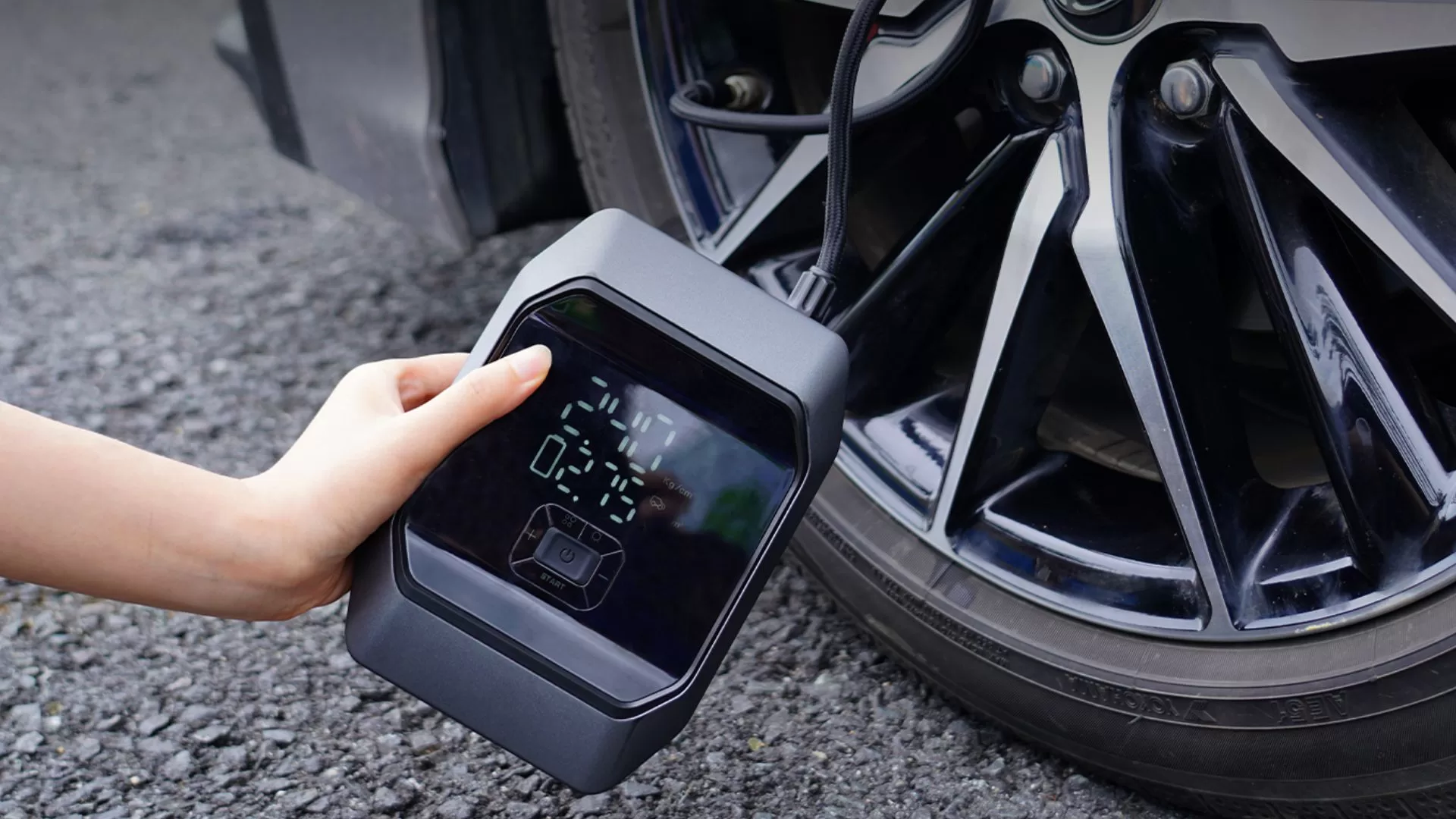
Manual pressure guesswork often leads to improper inflation or inconsistent handling. The T22 integrates a precision pressure sensor coupled with an LED dual numeric display, presenting real-time pressure alongside preset target values.
- Dual Numeric Readout: Displays instantaneous tire pressure alongside user-selected target pressure simultaneously on high-contrast digital panels.
- Five Preset Modes: Offers dedicated settings for Car, Motorcycle, Bicycle, Ball, and Custom operation to streamline routine tasks.
- Multi-Unit Conversion: Toggles freely between PSI, BAR, KPA, and Kg/cm² for compatibility with international vehicle standards.
- Automatic Shut-Off: Automatic shut-off stops inflation at the selected target and helps reduce the risk of over-inflation.
- Four-Stage Battery Meter: Communicates remaining cell capacity clearly through four visual indicators to prevent mid-operation depletion.
The dual numeric arrangement eliminates the traditional back-and-forth squinting required when reading analog needle gauges. By displaying the current pressure and the target threshold on separate lines, the user instantly perceives how close the tire is to the intended mark.
Battery System and Emergency Utility
The internal electrical system comprises three 18650 rechargeable cells yielding an 11.1V working voltage, a 2600mAh capacity, and 28.86Wh of stored energy. Designed with a 5C battery discharge rate, the pack provides steady operational power throughout its rated 20 to 25 minute runtime.
Recharging is handled through a modern Type-C input port supporting 5V/2A or 9V/1.5A profiles, reaching full charge in approximately two to three hours. Additionally, the unit features a 5V/2A USB output port, allowing it to double as an auxiliary power bank to recharge mobile devices during unexpected travel interruptions.
This secondary power capability turns a seasonal emergency tool into an active travel accessory. If a driver finds themselves stuck with a drained smartphone battery during a vehicle breakdown, having a charged 28.86Wh lithium pack readily accessible allows them to place calls for roadside assistance without relying on a flat vehicle battery.
Technical Specifications Overview
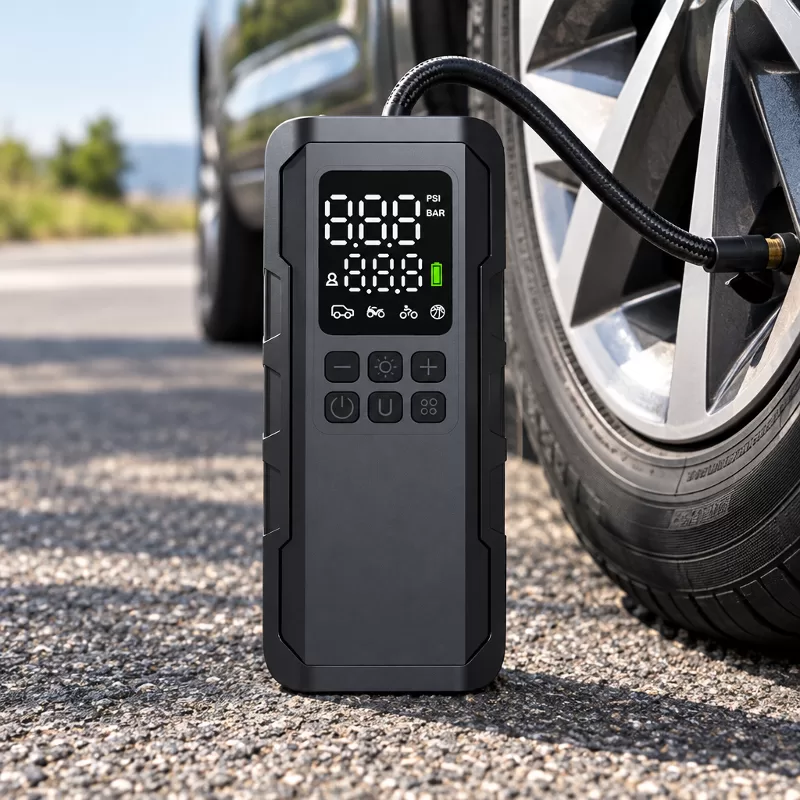
When evaluating an air pump for car tires portable, reviewing documented performance metrics helps align tool capability with expected vehicle requirements. The specifications below outline the verified operational envelope of the T22 platform based on manufacturer-provided documentation.
| Engineering Parameter | T22 Manufacturer Specification |
|---|---|
| Compressor Architecture | 22-cylinder compression structure |
| Working Power | Up to 100W |
| Max Pressure Rating | 160 PSI (0.1 to 11.0 BAR) |
| Adjustable Pressure Range | 2 to 160 PSI |
| Air Delivery Rate | 32 to 36 L/min |
| Battery Array | 3 × 18650 lithium cells (11.1V / 2600mAh / 28.86Wh) |
| Discharge Rate | 5C |
| Runtime per Charge | 20 to 25 minutes |
| Charge Time & Port | 2 to 3 hours via Type-C (5V/2A or 9V/1.5A input) |
| Auxiliary Power Output | 5V / 2A (USB power-bank function) |
| Acoustic Signature | ≤ 85 dB at 1 meter distance |
| Operating Temperature | -10°C to 45°C |
| Product Dimensions | 161 × 68 × 53 mm |
| Net Weight | 508 grams |
| Integrated Protections | Overcharge, undercharge, and auto-cutoff protection |
Note on capacity claims: The manufacturer documents an inflation capacity phrase reading "About 1.5 of 285 tires per full charge." Because test conditions, wheel sizes, and baseline metrics are not clarified in the source document, confirm exact tested parameters before relying on this figure for multi-tire maintenance routines.
Step-by-Step Field Operation: How to Properly Inflate a Car Tire
Operating a portable compressor safely requires systematic handling to avoid valve stem damage, cross-threading, or inaccurate pressure readings. Following a standard sequence ensures fast, predictable results.
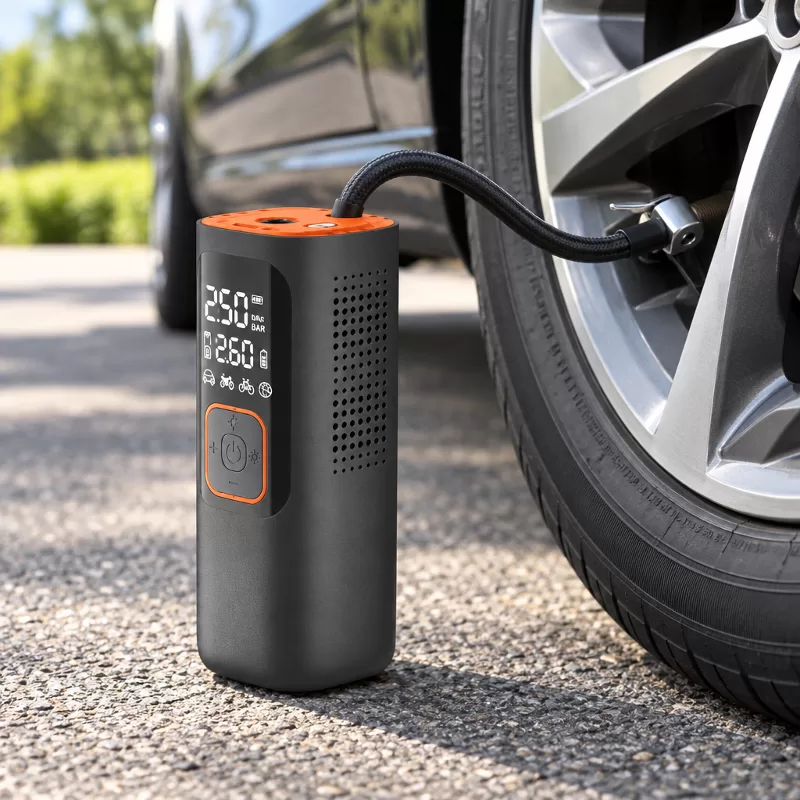
Step 1: Pre-Inflation Assessment and Baseline Measurement
Park your vehicle on a flat, stable surface away from moving traffic, engage the emergency parking brake, and switch on your hazard lights if working near a roadway. Verify that the tires are cold before connecting your inflator to ensure you are working against accurate baseline pressure numbers.
Locate the vehicle specification placard inside the driver-side door frame to confirm the exact cold tire target pressure. Remove the valve stem dust cap from the wheel you intend to service, placing the small cap in a secure spot like your pocket or cupholder to prevent accidental loss.
Take a moment to inspect the tire tread and sidewall visually. Look for embedded drywall screws, nails, or obvious bead deformations that might suggest active puncture damage rather than normal thermal contraction.
Step 2: Valve Attachment and Seal Verification
- Inspect the tire valve stem threads to ensure they are free of road grit, ice, or corrosion before attaching any hardware.
- Attach the supplied chuck according to the product instructions, ensure it is seated securely, and check for an obvious air leak before starting the pump.
- Verify that the connection remains firmly aligned and that excessive hissing ceases once the coupling is seated.
- Power on the inflator to read the tire current static pressure on the digital display before initiating the motor.
If the initial readout on the screen fluctuates or reads zero despite the tire visibly holding pressure, detach the connection immediately. Check that the chuck is correctly seated and consult the product instructions; if the pressure reading remains unreliable, stop and use a separate gauge or contact the manufacturer.
Step 3: Setting Target Pressure and Engaging the Pump
Select the Car preset mode or enter the Custom mode to set your specific target value using the plus and minus adjustment buttons. Once your target pressure matches the door placard specification, press the primary power button to engage the compressor motor.
Allow the inflator to run until the automatic shut-off mechanism halts compression at your chosen threshold. Disconnect the air chuck smoothly according to instructions, replace the valve stem dust cap snugly, and power down the unit before proceeding to the next wheel.
Avoid touching the metal connection junction directly upon disconnecting the air line. While the exterior composite housing remains cool to the touch, the metallic interface where the hose threads into the pump body can become noticeably warm during extended compression runs.
Preventive Maintenance and Storage Best Practices
A tool designed for roadside emergencies must remain fully operational across months of vehicle storage. Neglecting battery charge states or exposing pneumatic components to environmental extremes can leave you stranded when an unexpected pressure drop occurs.
Protecting Lithium Cell Health Across Seasonal Temperature Swings
Automotive interiors experience drastic temperature extremes throughout the year. The listed operating range is -10°C to 45°C. Storing electronic devices in unshaded cabins during peak summer heat can compromise cell chemistry and accelerate degradation.
Store the inflator in a dry location and avoid prolonged exposure to extreme heat, freezing temperatures, moisture, or direct sunlight. Check the battery periodically and recharge it according to the manufacturer’s instructions before travel to ensure full capacity when on the road.
If your vehicle regularly parks in an uncovered driveway during extreme summer heatwaves, keeping the inflator inside a home entryway or climate-controlled utility closet between road trips preserves maximum battery life. For winter road warriors, keeping the inflator wrapped in a padded storage pouch moderates rapid sub-zero temperature swings.
Hose, Fitting, and Dust Seal Upkeep
Repeated cycling under pressure places wear on the internal rubber O-rings located within the air hose chuck. Check these elastomeric seals periodically for cracks, flattening, or foreign debris that could cause pressure leaks during attachment.
Keep the compressor intake ports clean and unobstructed by storing the unit inside a dedicated pouch away from loose trunk carpet fibers or abrasive dust. Wiping down the housing with a clean, dry microfiber cloth prevents grit from entering the internal cylinder chamber through the ventilation slots.
Never wrap the air hose tightly around the unit body with sharp, pinched bends. Store the hose in a gentle coil or straight channel according to the packaging design to avoid fatiguing the internal reinforcement braiding over time.
Frequently Asked Questions (FAQs)
Can a compact portable air pump inflate a completely flat car tire?
It may be able to add air to a severely low tire if the tire, valve, and bead are intact, but the T22 should not be treated as a bead-seating or tire-repair tool. Inspect the tire first, and seek professional or roadside assistance if the bead is unseated, damage is visible, or pressure will not build.
If the tire bead has unseated from the rim flange, escaping air around the wheel rim prevents pressure from building. Never drive on a punctured or structurally compromised tire merely because an inflator temporarily adds air. In the event of an active puncture, install the spare tire or contact roadside assistance, and have the tire inspected by a qualified tire professional before returning the vehicle to service.
Why does the inflator body and air hose get warm during operation?
This temperature increase is an unavoidable physical consequence of thermodynamic compression. As air is rapidly squeezed into a confined space by a reciprocating piston, mechanical energy converts directly into thermal energy, heating the cylinder assembly and transferring outward along the hose connection.
In professional garage setups, massive steel expansion tanks and aluminum fin arrays dissipate this heat over large surface areas. Compact handheld tools manage identical pneumatic physics within a pocket-sized shell, concentrating thermal dissipation near the exhaust junction and threaded coupler.
How often should I check my vehicle’s tire pressure using a portable inflator?
Tire pressure should be checked at least once a month and before embarking on any extended highway journey. Because vehicle TPMS systems only alert drivers after a substantial pressure drop occurs, regular manual checks help identify slow bead leaks or valve seepage before tread damage happens.
Performing these monthly checks during the morning hours yields the most dependable baseline numbers. Checking tires after a spirited highway commute will capture artificially elevated readings caused by tire carcass flexing and road friction.
Does running the pump to 160 PSI mean my car tires should be inflated that high?
No, 160 PSI is the inflator’s maximum rated pressure, not a recommended pressure for a car tire. Always use the pressure on the vehicle placard or in the owner’s manual. Passenger-car pressures often fall in the low-to-mid 30 PSI range, but the correct target is always the vehicle manufacturer’s cold-pressure specification.
The 160 PSI figure is simply the maximum pressure rating of the tool itself. Users must always follow the specific inflation pressure designated for the tire being serviced, rather than operating up to the machine maximum threshold. Exceeding the vehicle placard pressure on passenger tires can negatively alter tire contact and vehicle handling.
How long will an 11.1V cordless pump hold its charge in the car?
Charge level can decline during storage, so check the battery before an extended trip and recharge it when necessary. Factors like ambient temperature variations and gradual natural self-discharge impact available runtime, making periodic visual checks of the four battery-level indicators a sound maintenance habit.
Under temperate ambient conditions, modern lithium cells experience modest self-discharge, but severe cold snaps or prolonged heat can alter available cell voltage. Setting a seasonal calendar reminder to inspect the device every few months ensures it remains ready for roadside duty.
Can I use this inflator in heavy rain or freezing conditions?
The listed operating range is -10°C to 45°C. Because no water-resistance or IP rating is supplied, keep the inflator and charging ports dry and protect the main unit from rain and standing water. When topping off tires during wet conditions, position the inflator inside a dry vehicle doorway or underneath an open trunk lid.
Operating the compressor in heavy standing snow or damp puddles risks pulling moisture into the air intake slots. Keeping the body elevated off soaked asphalt on top of a floor mat or tool case protects the intake valves and internal circuit boards.
Reliable Pressure Management on the Road
Tire pressure maintenance is a cornerstone of automotive safety that directly influences vehicle stability, braking performance, and long-term fuel efficiency. Relying on inconsistent commercial service station equipment introduces needless uncertainty into routine vehicle upkeep. Investing in a dependable air pump for car tires portable provides instant, accurate pressure adjustment wherever your vehicle is parked. By choosing an inflator engineered with verified airflow, intelligent cutoff controls, and reliable thermal design, you ensure lasting confidence and control across every mile ahead.
-

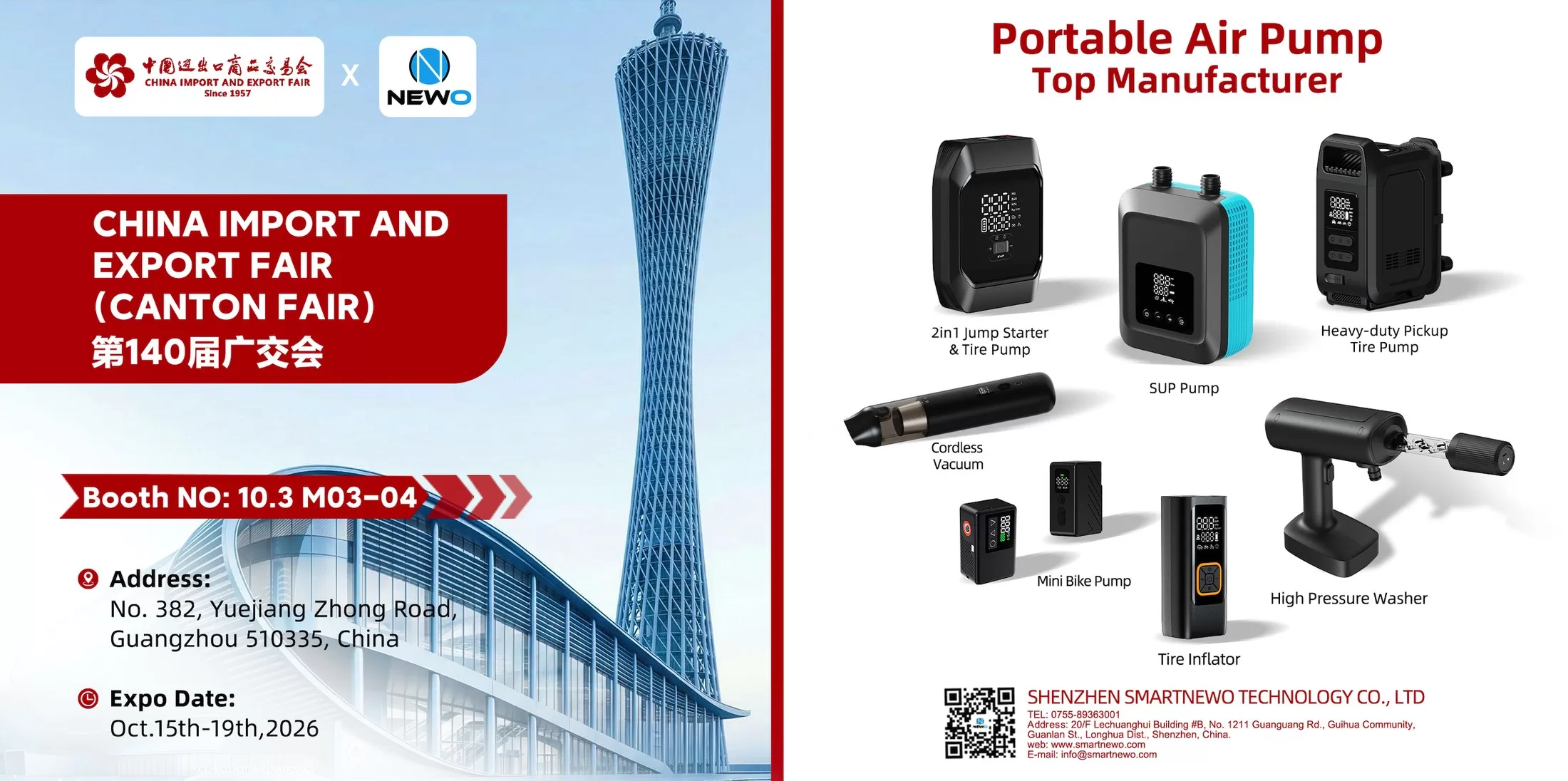
Meet NEWO at the 140th Canton Fair: Visit Booth 10.3 M03–04
Meet NEWO at the 140th Canton Fair in Guangzhou, October 15–19, 2026. Visit Booth 10.3 M03–04 to explore portable air pumps and discuss OEM, ODM and distribution opportunities.... -

As Shenzhen Welcomes the World for APEC 2026, NEWO Welcomes You to Our Factory
As Shenzhen prepares for APEC 2026, NEWO welcomes international buyers and partners to visit our factory, meet our team and explore future cooperation.... -

Leading the Way in Product Innovation and Excellence
Smartnewo exemplifies professionalism in product innovation and manufacturing. Their collaboration with Xiaomi Youpin on the G01 crowdfunding project highlights their expertise in creating compact, powerful inflatable pumps. Rigorous engineering, meticulous production processes, and advanced quality assurance underscore their commitment to excellence. The success of the G01 project, with significant market... -

Essential Qualities of an Excellent Supplier
In today's competitive market, finding a reliable supplier is crucial for business success. Based on insights from Smartnewo and broader internet research, here are key qualities an excellent supplier must possess:... -

NW06 Tire Inflator: Compact Power for Quick Inflation
Summary The NW06 Tire Inflator delivers quick and efficient tire inflation with a powerful 35L/min airflow. It features a user-friendly LCD screen for real-time pressure monitoring, dual power options with a built-in 6000mAh battery, and multiple nozzle attachments for versatile use. Its compact design and integrated LED light ensure convenience and... -

Unleash the Power of Portability: The SmartNewo Jump Starter with Air Compressor KF03
This guide will walk you through the steps to effectively use a portable tire inflator, helping you stay prepared and safe on the road.... -

Newo Attends The 2024 Consumer Electronics Show (CES)
Smartnewo booth is located at 53672, Halls A-D, Level 2, Venetian Expo, Las Vegas Convention Center (LVCC). ... -

Smartnewo’s Dual-Cylinder Air Pump Rocks the Hong Kong Autumn Electronics Fair!
Smartnewo’s Dual-Cylinder Air Pump Rocks the Hong Kong Autumn Electronics Fair!... -

Meet at the Canton Fair! Smartnewo brings dual-cylinder air pumps, making your inflation experience faster and more stable!
NEWO has went deep communication and negotiation with customers from all over the world on booth.... -

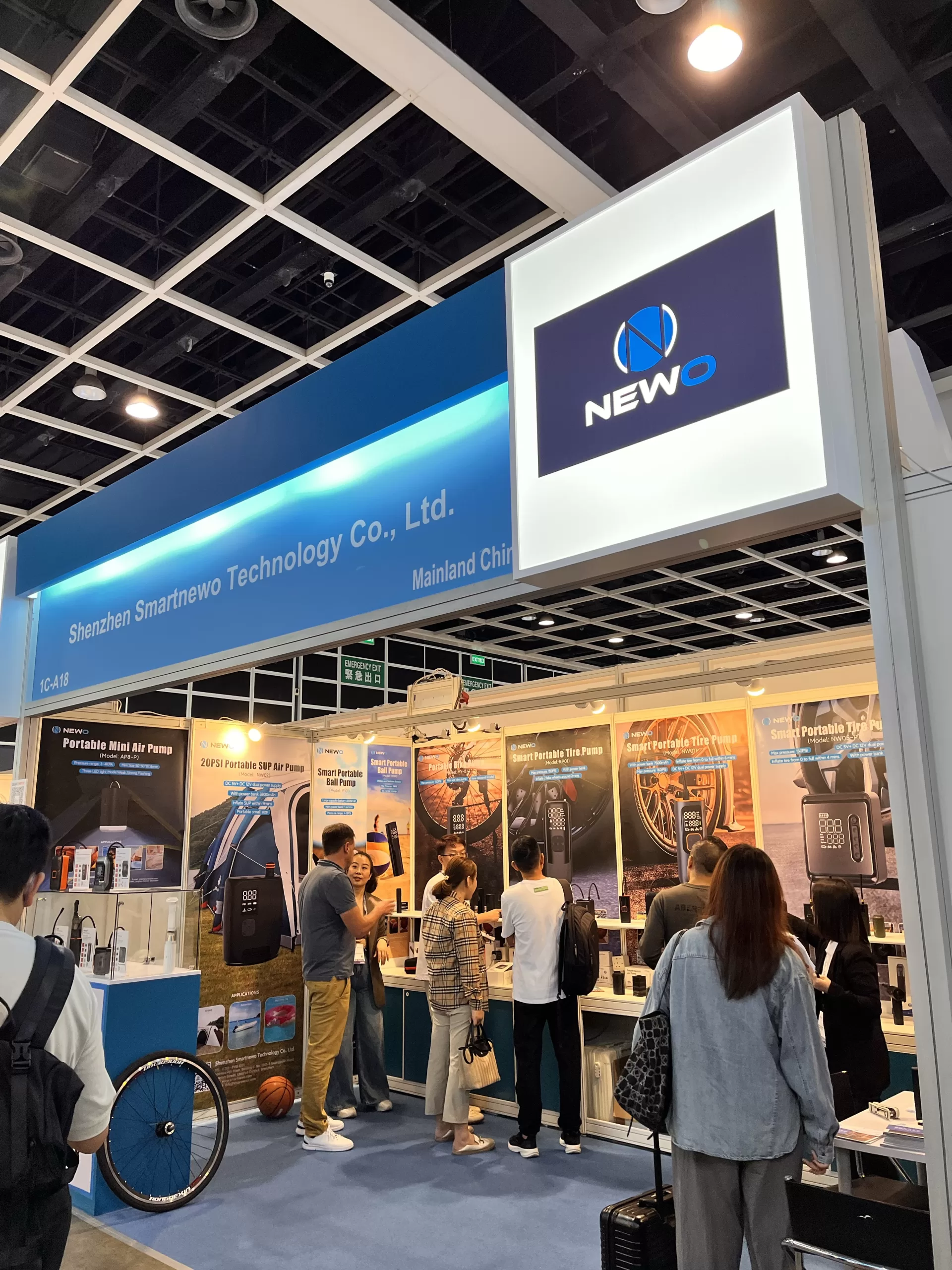
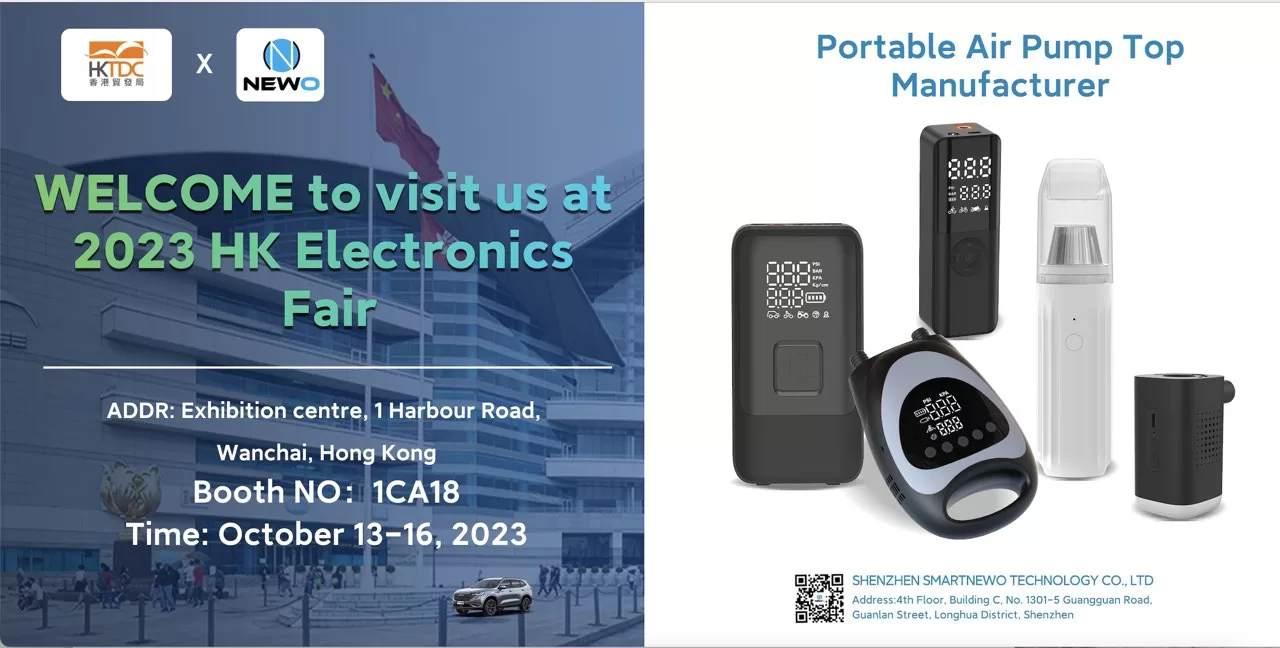
“Hong Kong Autumn Electronics Fair – 1CA18 (October 13th to 16th): Smartnewo invites you to visit our booth!
Hong Kong Autumn Electronics Fair...



-

What to Check Before Ordering Custom Electric Bike Pumps
Plan custom electric bike pumps with a clear requirements freeze for valves, TPU tubes, portability, repeated top-ups, charging, and model-specific documents.... -

OEM vs ODM Air Pumps: Which Manufacturing Model Fits Your Brand?
Compare OEM and ODM air pump projects by design responsibility, change approval, development scope, and written ownership terms before choosing your route.... -
How to Choose a Reliable Tire Inflator Manufacturer in China
Choose a tire inflator manufacturer in China with a focused RFQ, supplier evidence, configuration checks, and clear sample-to-pilot decisions for your brand.... -

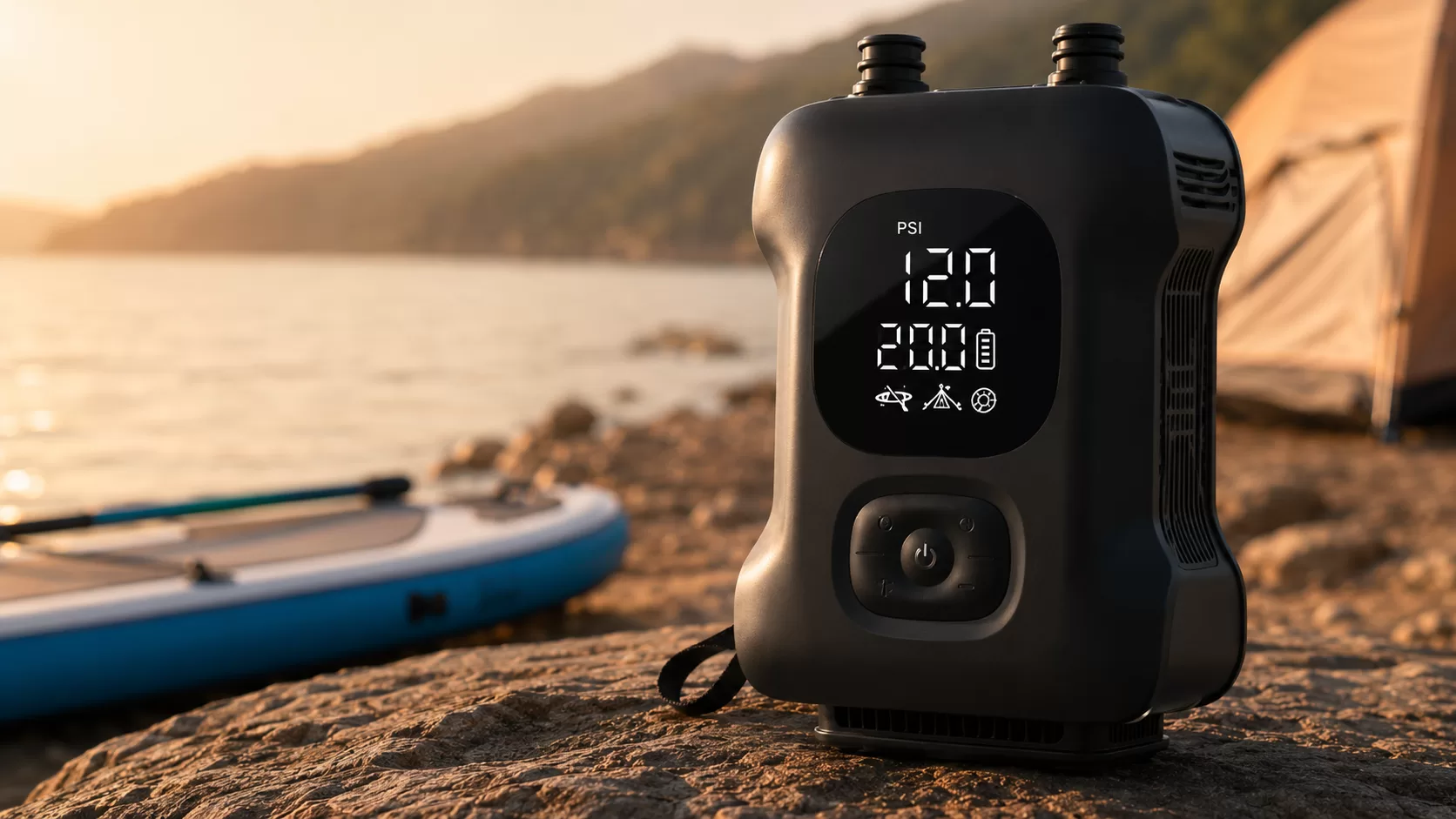
Rechargeable Electric SUP Pump for Paddle Boards: Faster Inflation for SUPs, Kayaks and Inflatable Tents
The BL10-C Portable Electric Bike Tire Inflator is a compact and lightweight mini electric bike pump designed for modern cyclists. With up to 120 PSI pressure, a digital LED display, preset pressure control, automatic shut-off, USB-C charging, and multiple valve adapters, BL10-C offers a convenient inflation solution for road bikes,... -

Are Electric Bike Pumps Worth It in 2026? Electric Pump vs CO₂ vs Mini Hand Pump
Discover whether electric bike pumps are worth it in 2026. This guide compares electric bike pumps, CO₂ inflators, and mini hand pumps for road cycling, gravel riding, commuting, and long-distance rides. Learn the pros, limitations, best use cases, and key features to look for before choosing the right portable tire... -
BL10-C Portable Electric Bike Tire Inflator: Small Size, Reliable Power for Every Ride
The BL10-C Portable Electric Bike Tire Inflator is a compact and lightweight mini electric bike pump designed for modern cyclists. With up to 120 PSI pressure, a digital LED display, preset pressure control, automatic shut-off, USB-C charging, and multiple valve adapters, BL10-C offers a convenient inflation solution for road bikes,... -

Why Mini Electric Bike Pumps Are Becoming Essential for Modern Cycling
Discover why mini electric bike pumps are becoming essential for modern cyclists. Learn how portable electric bike pumps improve tire pressure management, riding safety, and convenience.... -

The Ultimate Smart Solution for Easy Outdoor Adventures in 2026
Discover how a spring travel air pump simplifies outdoor trips with fast inflation, smart features, and powerful performance—perfect for every adventure.... -

Powerful 5-in-1 Portable Car Tire Inflator and Jump Starter: The Ultimate Emergency Tool for Every Driver
Why Every Driver Needs a Portable Car Tire Inflator and Jump Starter Modern drivers face many unexpected situations on the road. A flat tire, low tire pressure, or a dead car battery can happen at the worst possible time. That’s why having a portable car tire inflator and jump starter is... -

7 Real Cycling Scenarios That Show Why Every Rider Should Carry a Mini Bike Pump
Cycling is one of the most freeing activities you can enjoy. Whether you’re commuting to work, riding through city streets, or exploring quiet countryside roads, a bike ride can instantly improve your day. But there’s one small problem that almost every cyclist eventually faces: Low tire pressure. It might happen...



-
How Is a Football Properly Inflated?
The correct inflation of a football - with not too much and not too little air - is a hotly debated topic among footballers.... -
Application Scenarios of Car Inflator Pump
Often long-distance business trips or play car owners because the road may be more remote areas, in this case if you encounter a tire leak....