

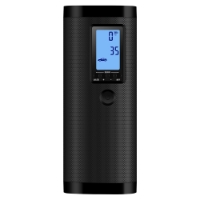
 Portable Tire Inflators
 Electric Air Pumps
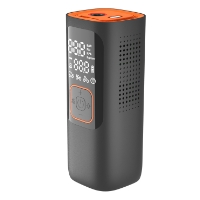 Electric Car Tyre Pumps
 Electric Ball Pumps
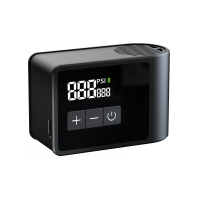 Electric Bike Pump
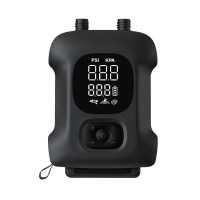 SUP Air Pump
How to Choose the Right Portable Battery Tire Inflator for Your Needs
When your car tire loses pressure on the highway or your bicycle won’t hold air before a weekend ride, you realize how quickly a simple problem becomes inconvenient. A portable battery tire inflator solves this by putting reliable inflation power directly in your hands, without requiring an electrical outlet or a trip to the gas station. But not all inflators are created equal, and understanding what separates a practical tool from a frustrating gadget matters before you make a purchase.
The market has shifted significantly in recent years. Early portable inflators were either bulky manual pumps that exhausted you physically or expensive corded devices tied to your car’s cigarette lighter. Modern rechargeable models now combine compact design with genuine capability, making them realistic emergency tools rather than novelties. Yet choosing between models requires looking past marketing claims to actual performance specifications and real-world use cases.
This guide walks through what defines a quality portable battery tire inflator, how to evaluate the technical specifications that matter, and how to match an inflator to your specific inflation needs.
Understanding Portable Battery Tire Inflators
A portable battery tire inflator is a self-contained device powered by an internal rechargeable battery that pressurizes air and delivers it through a hose or nozzle to inflate tires. Unlike manual pumps, it requires no physical effort. Unlike wall-outlet models, it works anywhere—in your car, at home, or on the side of the road.
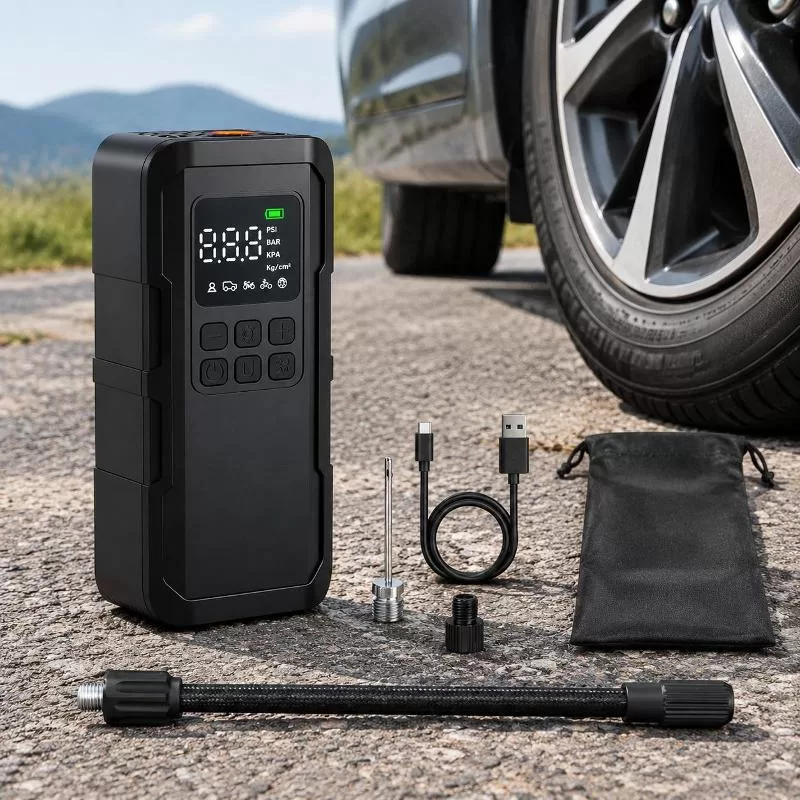
The core components are straightforward: a motor-driven pump chamber, an internal battery, a pressure gauge or digital display, valve adapters for different tire types, and charging circuitry. What differentiates models is how these components are engineered and balanced.
The battery stores electrical energy; the pump converts that energy into air pressure; the display shows you what pressure you’ve reached; and the valve adapters let you connect to car tires, bike tires, sports equipment, or other inflatables. The entire system fits into a lightweight package you can keep in your vehicle or home.
Core Specifications That Impact Real Performance
Pressure capacity and air flow are the two most important technical numbers to understand. Pressure capacity, measured in PSI (pounds per square inch), determines which items you can inflate. Car tires typically need 30–35 PSI, while road bikes need 80–130 PSI, and motorcycle tires may require 40–60 PSI.
A portable battery tire inflator with a maximum capacity of 150 PSI can handle virtually any personal vehicle or sports equipment. Models capped at 60 PSI cannot inflate road bikes or motorcycle tires effectively, which immediately eliminates them if you have either of those needs. This is not a marketing claim—it is a hard physical limit.
Air flow, measured in liters per minute (L/min), determines how fast you can reach your target pressure. A pump delivering 20–22 L/min will fill a car tire in roughly 2–3 minutes. One delivering 8 L/min might take 8–10 minutes for the same task. On a cold morning when you just need to get your car’s tire pressure right and leave, speed matters.
The pump mechanism itself varies. Higher-end models use multi-cylinder designs that generate more consistent pressure and higher flow rates compared to simpler single or dual-cylinder systems. This is not about luxury—it is about thermodynamic efficiency.
Battery capacity, stated in milliamp-hours (mAh) and watt-hours (Wh), determines how many tires you can inflate per charge. A 2000mAh battery (14.8Wh) can inflate roughly 2.5 standard car tires on a full charge, depending on the pressure needed and how depleted your tires are. If you frequently need to inflate three or more tires in one session, you will want a larger battery or the ability to recharge quickly.
Charging time and charging port matter for practical ownership. Type-C charging is now standard and widely compatible. Charging time of 2–3 hours means you can recharge overnight or during a work day. Some models also include a power-bank function, letting you charge your phone or other devices if your portable battery tire inflator has enough charge—a useful secondary feature if the inflator sits in your vehicle unused for weeks.
| Feature | Why It Matters |
|---|---|
| Maximum Pressure | Determines which tires and inflatables you can use |
| Air Flow (L/min) | Affects how quickly you reach target pressure |
| Battery Capacity | How many inflations before needing to recharge |
| Pump Design | Influences efficiency and consistency |
| Charging Time | Determines how quickly you can use it again |
| Display Type | Affects ease of reading pressure and selecting modes |
How Pressure Modes Simplify the Inflation Process
Most modern portable battery tire inflators include preset modes for common tire types. Rather than manually setting pressure each time, you select "car tire" or "bicycle" and the device automatically inflates to the recommended pressure, then stops.
This feature matters more than it initially appears. Setting pressure manually requires you to know the correct pressure for your specific tire. Many people underinflate because they guess or because their tire sidewall displays a range (e.g., 32–36 PSI) and they pick a number without understanding the tradeoff. Preset modes eliminate this decision-making and reduce user error.
Devices with custom pressure settings add flexibility for experienced users who know their exact requirements or need to inflate less common equipment. Digital displays showing exact pressure readings let you verify you have reached your target.
Automatic shut-off is another practical feature. Once the target pressure is reached, the pump stops automatically. Without this, you either stop manually (risking overinflation) or keep watching to avoid overshooting. Automatic shut-off removes this attention requirement and prevents damage from overpressurized tires.
Application Scenarios: Where a Portable Battery Tire Inflator Fits
Vehicle maintenance and roadside emergencies. A car tire slowly losing pressure during daily driving is common. A portable battery tire inflator lets you add air at home before work or fix a low-pressure situation without finding a gas station. It is particularly valuable in locations far from service stations or for people without access to plug-in compressors.
Bicycle and motorcycle care. Road bikes lose air regularly due to their high-pressure requirements and thin tires. Keeping a compact inflator at home eliminates manual pumping effort on a ride day. Motorcycle tires also benefit from the same convenience.
Mobility devices and sports equipment. Wheelchairs, balance bikes, e-bikes, scooters, and sports balls all use pneumatic tires or bladders. A portable battery tire inflator with appropriate valve adapters handles all of these without requiring separate tools.
Emergency preparedness. Keeping one in your car means you are never stranded with a flat or soft tire during a road trip. Unlike manual pumps, a battery-powered model does not depend on your physical condition or strength on the day you need it.
Retail and gift purposes. The accessibility of a compact, rechargeable model makes it practical for retail environments, auto-enthusiast gifts, or starter kits for new bike or scooter owners.
Selecting Based on Your Specific Needs
Start by listing what you actually need to inflate. If you only own a car and occasionally check tire pressure, a simpler model with lower maximum PSI might suffice. If you own a road bike, motorcycle, or e-bike, you need at least 150 PSI capacity.
Next, consider frequency. Do you inflate tires once a month or once a week? High-frequency users benefit from faster air flow and larger batteries to avoid frequent recharging. Casual users can accept slower performance and smaller batteries.
Weight and storage matter if you keep the inflator in your vehicle. A lightweight design (under 500g) fits easily in door pockets, trunk organizers, or commuting bags without feeling like deadweight. Heavier models require dedicated storage space.
Noise level becomes relevant if you inflate in early morning, late evening, or shared living spaces. Most consumer models operate at 85 dB or below at one meter—comparable to a loud alarm clock. Quieter models exist but are less common.
Display clarity affects usability, especially outdoors in sunlight. Larger digital screens with backlight are easier to read than small LCD panels. Some models include battery percentage indicators, which helps you know whether you have enough charge for another inflation session.
Charging flexibility is underrated. If your portable battery tire inflator uses a standard Type-C port, you can charge it with any compatible charger or power bank. Proprietary connectors lock you into manufacturer-supplied cables if yours is lost or damaged.
Technical Considerations: Pump Design and Efficiency
The pump mechanism is where engineering differences become visible. Multi-cylinder pump designs generate pressure more smoothly and achieve higher flow rates than simpler designs. This translates to faster inflation and less heat generation during operation.
Working power consumption (measured in watts) tells you how hard the motor is working. A 30W motor requires a sufficiently large battery to run for extended periods. Underpowered motors may shut down mid-inflation if the battery voltage drops too quickly, which is frustrating but avoidable by choosing models with properly matched battery and motor specifications.
Temperature range specifications indicate how reliably the inflator operates in cold or hot conditions. A working range of -10°C to 45°C covers most climates, from winter parking lots to hot car interiors. Models without this specification may malfunction in extreme temperatures, which limits their usefulness as emergency tools in all seasons.
Runtime capability—how many minutes the device can continuously pump before the battery depletes—affects your ability to complete multiple inflation tasks without recharging. A 20–22 minute runtime is sufficient for inflating 2–3 car tires or several bike tires before needing to recharge.
Battery Technology and Longevity
Most portable battery tire inflators use lithium-ion cells because they offer high energy density relative to weight and are widely available. Lithium-ion battery cells connected in series provide the voltage and capacity needed for practical inflation work.
Battery cycle life—typically stated as how many charge-and-discharge cycles the battery can withstand before degradation becomes noticeable—indicates long-term durability. For casual home users, proper battery management means years of service before noticeable capacity loss.
Charging input and power-bank output specifications matter if you also want to charge your phone or other devices. A 5V/2A power-bank function is modest but useful for topping up a phone battery during an emergency or outdoor activity.
Making Your Purchase Decision
Identify the specific tire types and pressures you need to handle. Write them down rather than relying on memory. Check the maximum PSI requirement for your most demanding application—road bikes typically need the highest pressure. If that requirement exceeds what a given model offers, that model is eliminated regardless of other features.
Compare air flow rates among models that meet your pressure requirement. Faster is better, but diminishing returns exist. Going from 10 L/min to 20 L/min is meaningful; going from 20 L/min to 25 L/min is marginal for most users.
Check battery capacity relative to how many inflation sessions you typically need between recharges. A smaller battery is acceptable if you charge frequently; a larger battery is necessary if weeks pass between charges.
Read user feedback focusing on consistency and reliability over long term. Models that work perfectly for the first month but develop pressure-reading errors or pump failures after 12 months are poor investments, regardless of marketing claims.
Consider the physical form factor. Is the display readable in your typical use environment? Does it fit in your vehicle storage without awkwardness? Are the valve adapters easy to attach and remove?
Verify that replacement parts—especially valve adapters and charging cables—are readily available if you damage them. For us and other manufacturers, offering standard adapters and common connector types ensures you can keep using your inflator even after accidents.
The Bottom Line
A portable battery tire inflator transforms how you handle tire maintenance and emergency pressure situations. The difference between a tool that sits unused and one you actually grab when needed comes down to having the right pressure capacity, adequate speed, sufficient battery life, and user-friendly controls. Understanding the specifications and matching them to your actual inflation scenarios takes the guesswork out of selection and leaves you with a device that genuinely simplifies vehicle and equipment ownership.
The technology itself is straightforward, but thoughtful engineering in pump design, battery management, and user interface separates practical tools from frustrating gadgets. Investing time in choosing the right portable battery tire inflator model for your specific needs pays dividends every time you need reliable inflation without leaving home or finding a service station.
-
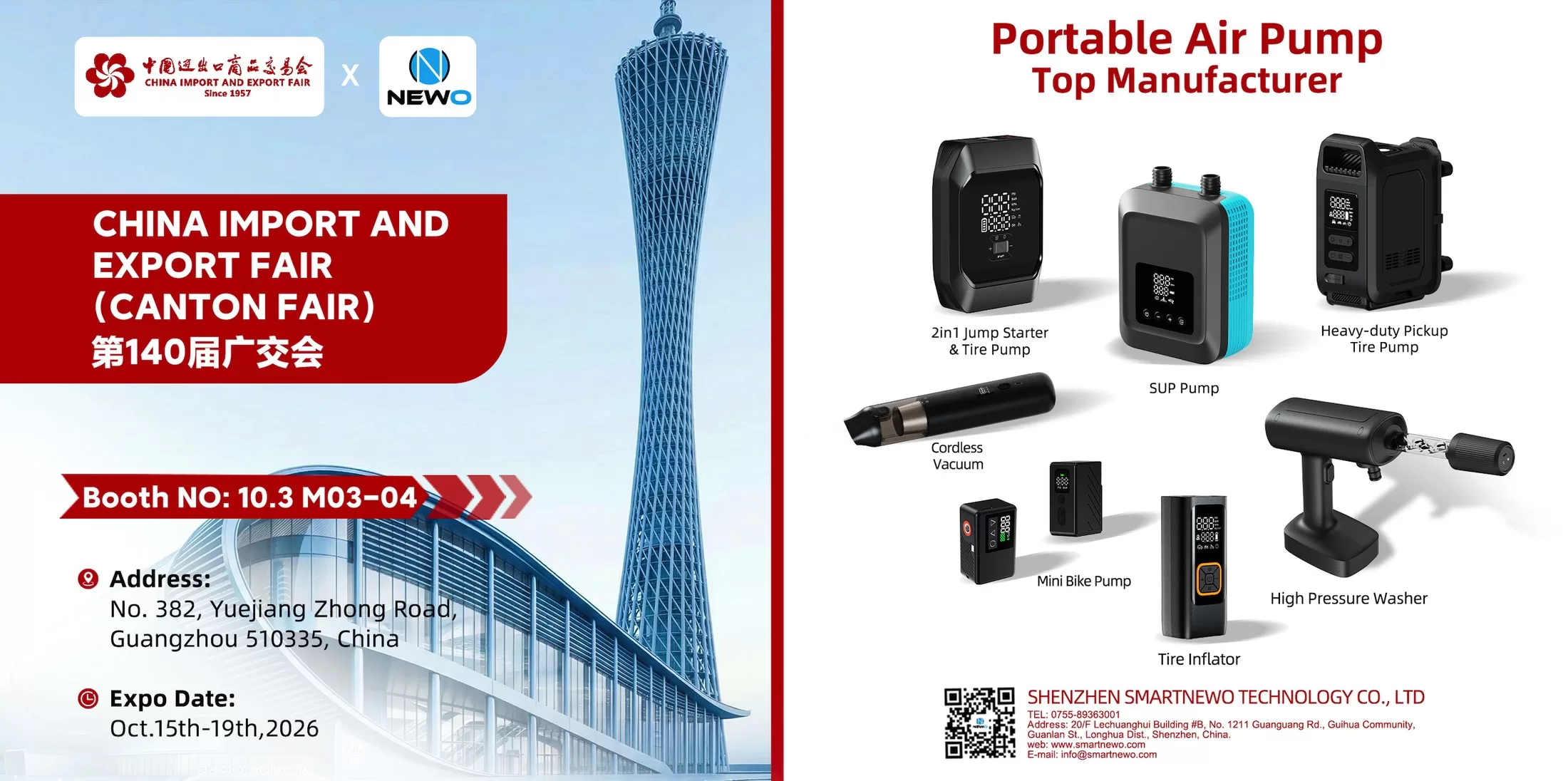
Meet NEWO at the 140th Canton Fair: Visit Booth 10.3 M03–04
Meet NEWO at the 140th Canton Fair in Guangzhou, October 15–19, 2026. Visit Booth 10.3 M03–04 to explore portable air pumps and discuss OEM, ODM and distribution opportunities.... -

As Shenzhen Welcomes the World for APEC 2026, NEWO Welcomes You to Our Factory
As Shenzhen prepares for APEC 2026, NEWO welcomes international buyers and partners to visit our factory, meet our team and explore future cooperation.... -
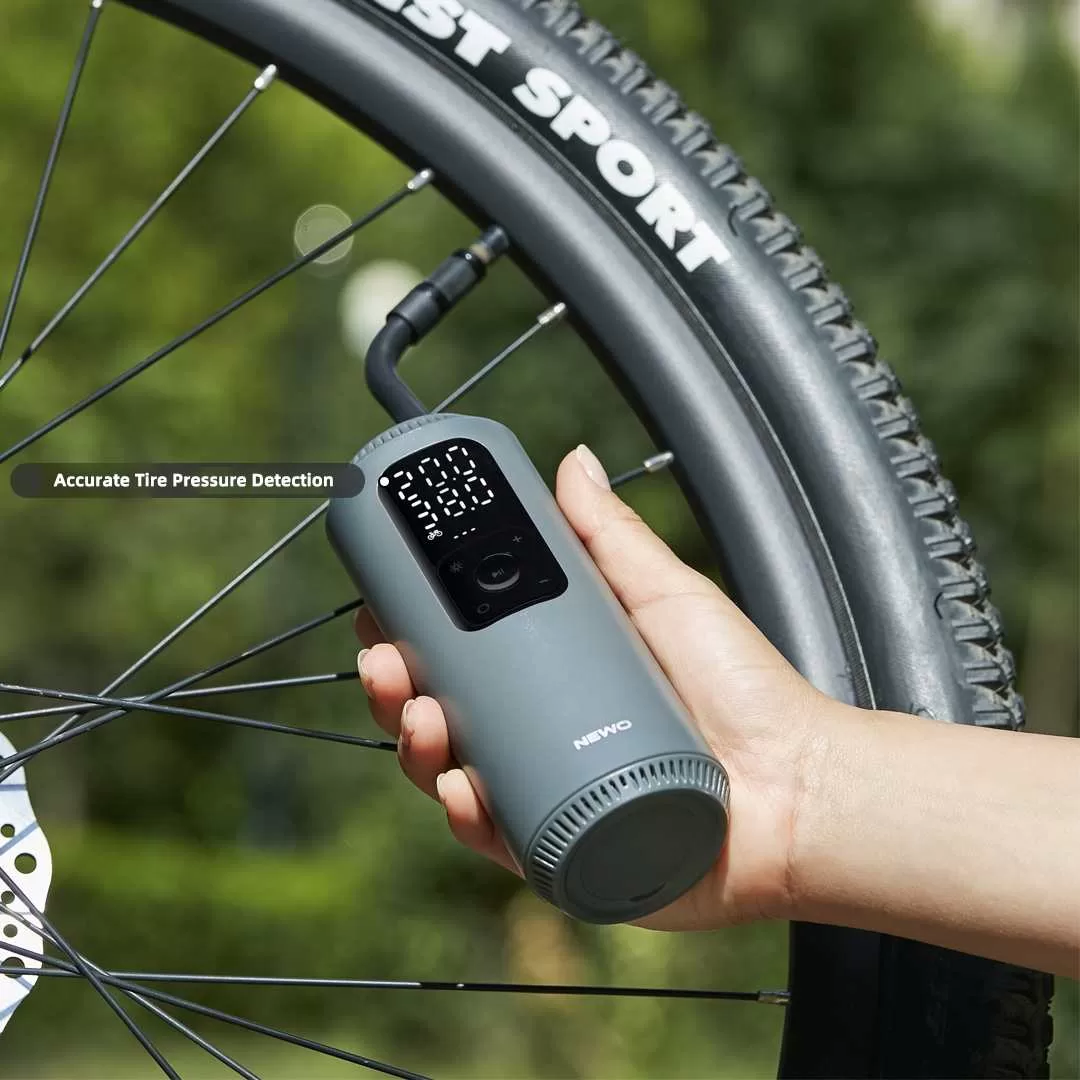
Leading the Way in Product Innovation and Excellence
Smartnewo exemplifies professionalism in product innovation and manufacturing. Their collaboration with Xiaomi Youpin on the G01 crowdfunding project highlights their expertise in creating compact, powerful inflatable pumps. Rigorous engineering, meticulous production processes, and advanced quality assurance underscore their commitment to excellence. The success of the G01 project, with significant market... -
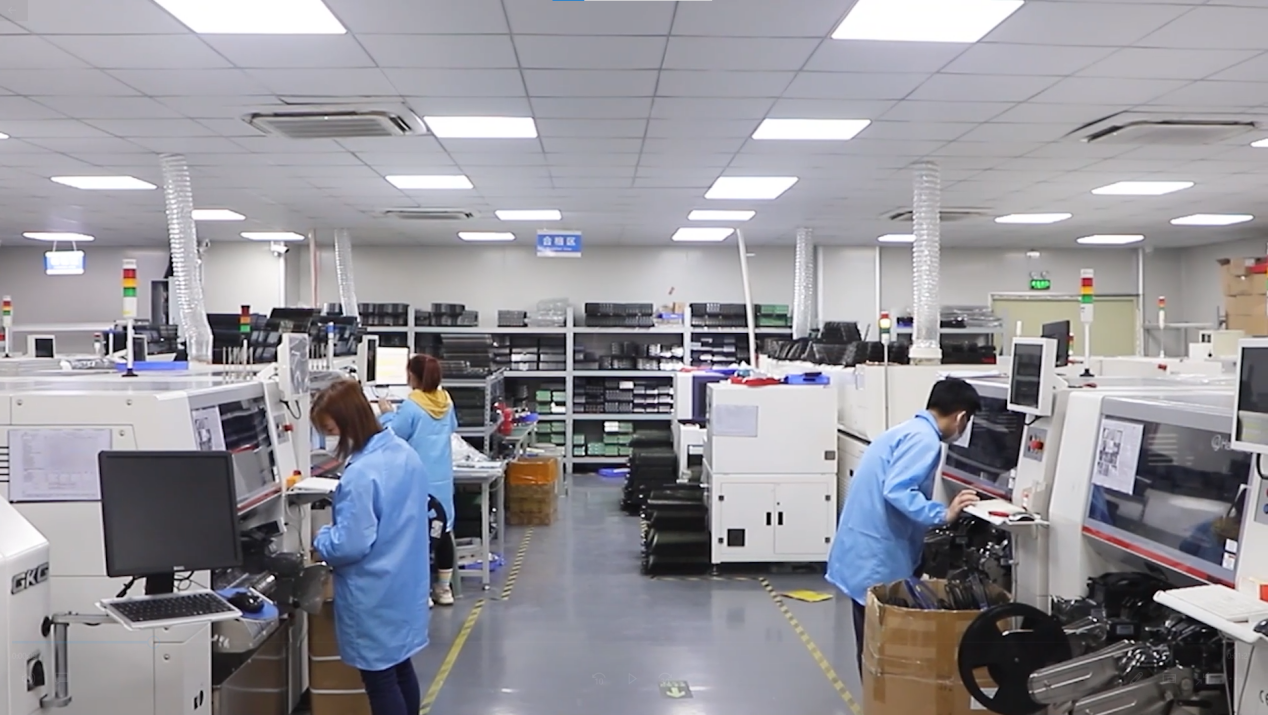
Essential Qualities of an Excellent Supplier
In today's competitive market, finding a reliable supplier is crucial for business success. Based on insights from Smartnewo and broader internet research, here are key qualities an excellent supplier must possess:... -
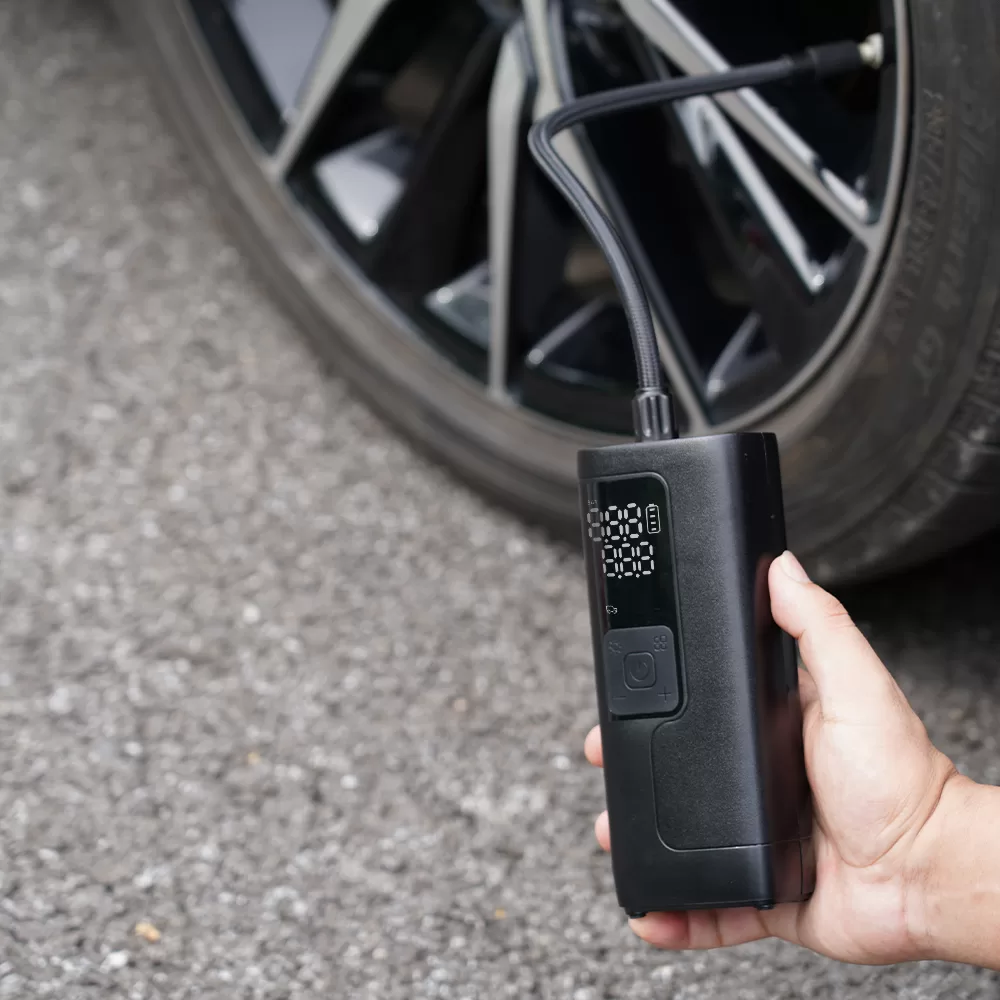
NW06 Tire Inflator: Compact Power for Quick Inflation
Summary The NW06 Tire Inflator delivers quick and efficient tire inflation with a powerful 35L/min airflow. It features a user-friendly LCD screen for real-time pressure monitoring, dual power options with a built-in 6000mAh battery, and multiple nozzle attachments for versatile use. Its compact design and integrated LED light ensure convenience and... -
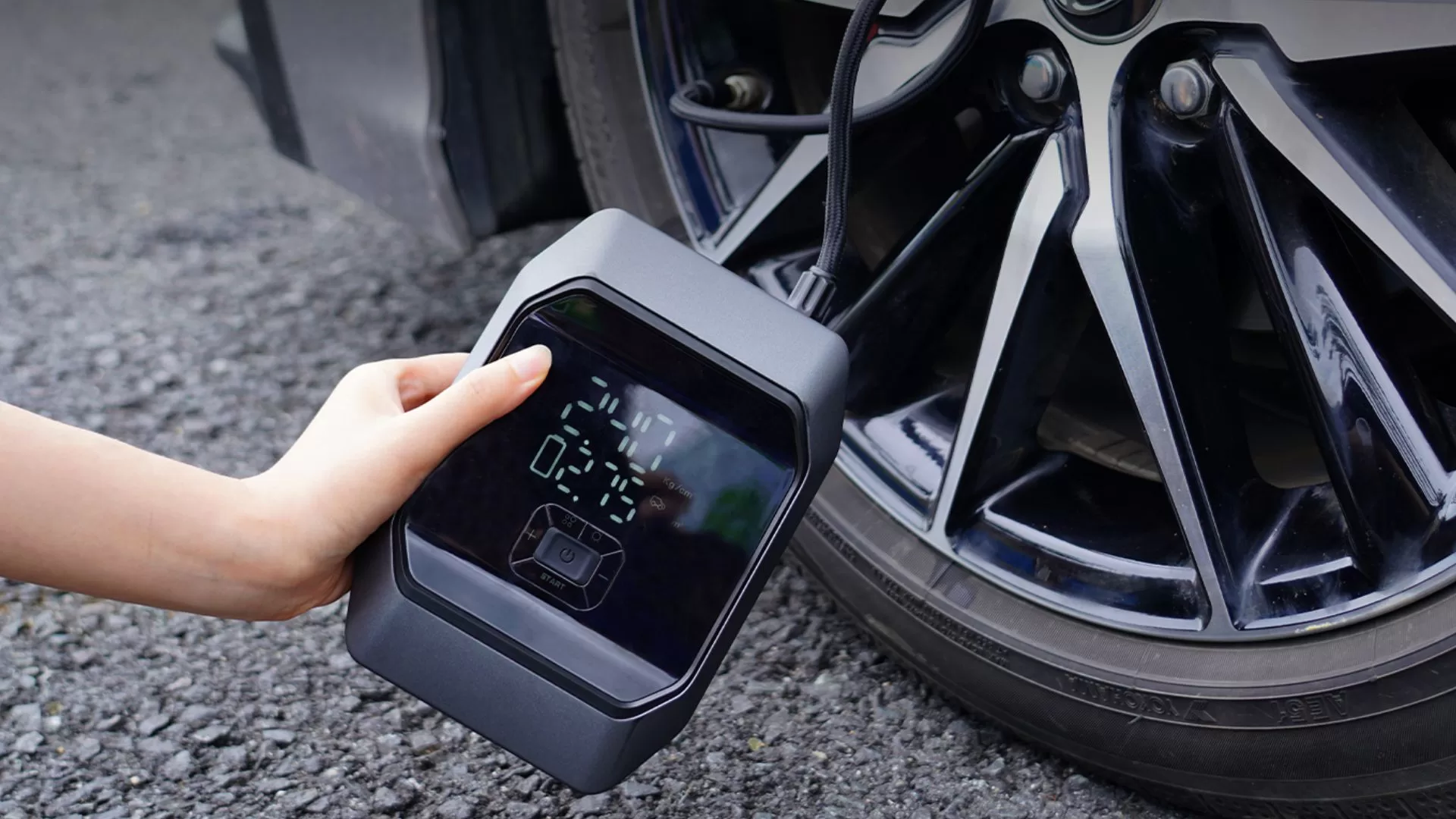
Unleash the Power of Portability: The SmartNewo Jump Starter with Air Compressor KF03
This guide will walk you through the steps to effectively use a portable tire inflator, helping you stay prepared and safe on the road.... -

Newo Attends The 2024 Consumer Electronics Show (CES)
Smartnewo booth is located at 53672, Halls A-D, Level 2, Venetian Expo, Las Vegas Convention Center (LVCC). ... -
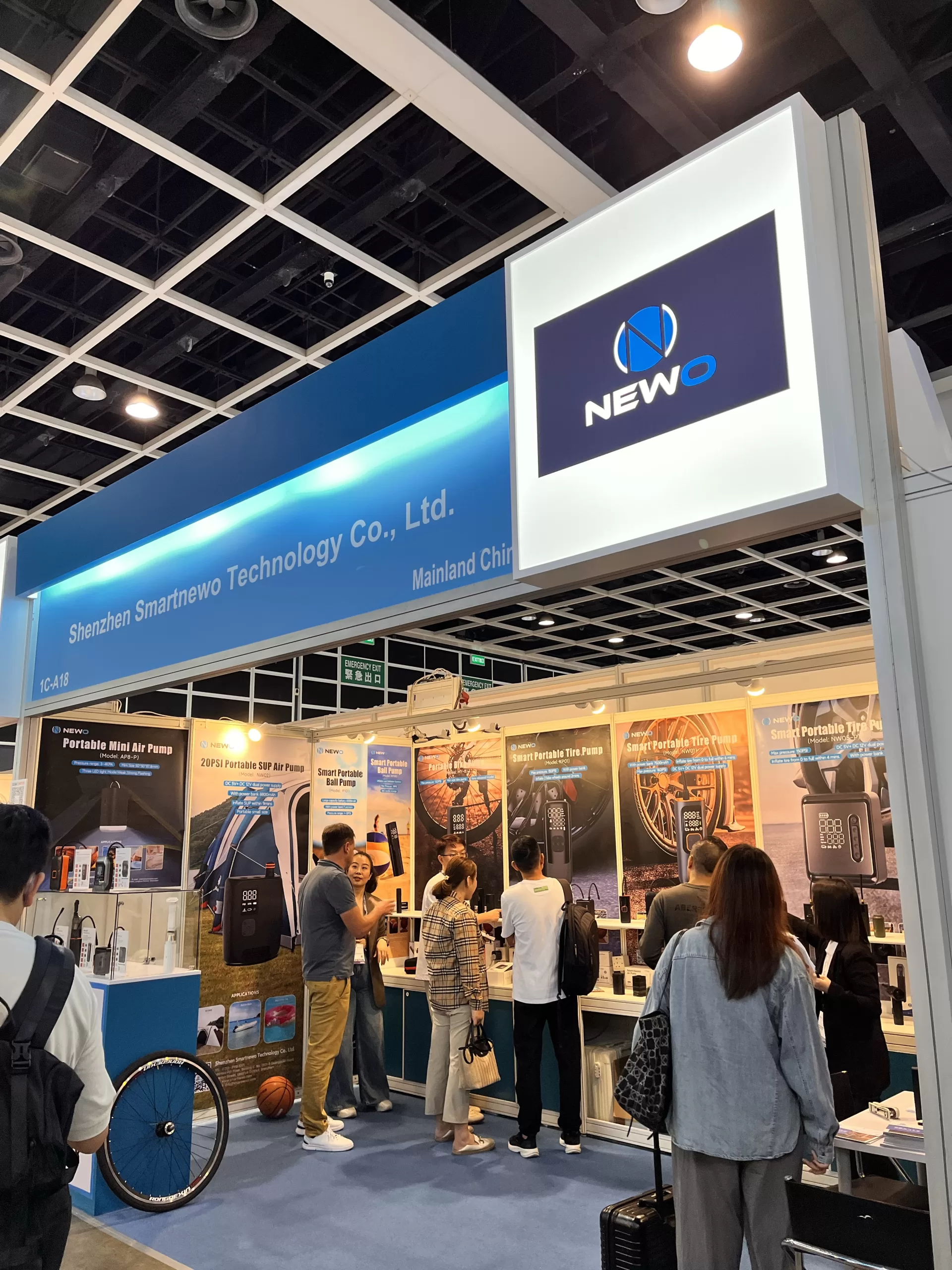
Smartnewo’s Dual-Cylinder Air Pump Rocks the Hong Kong Autumn Electronics Fair!
Smartnewo’s Dual-Cylinder Air Pump Rocks the Hong Kong Autumn Electronics Fair!... -

Meet at the Canton Fair! Smartnewo brings dual-cylinder air pumps, making your inflation experience faster and more stable!
NEWO has went deep communication and negotiation with customers from all over the world on booth.... -
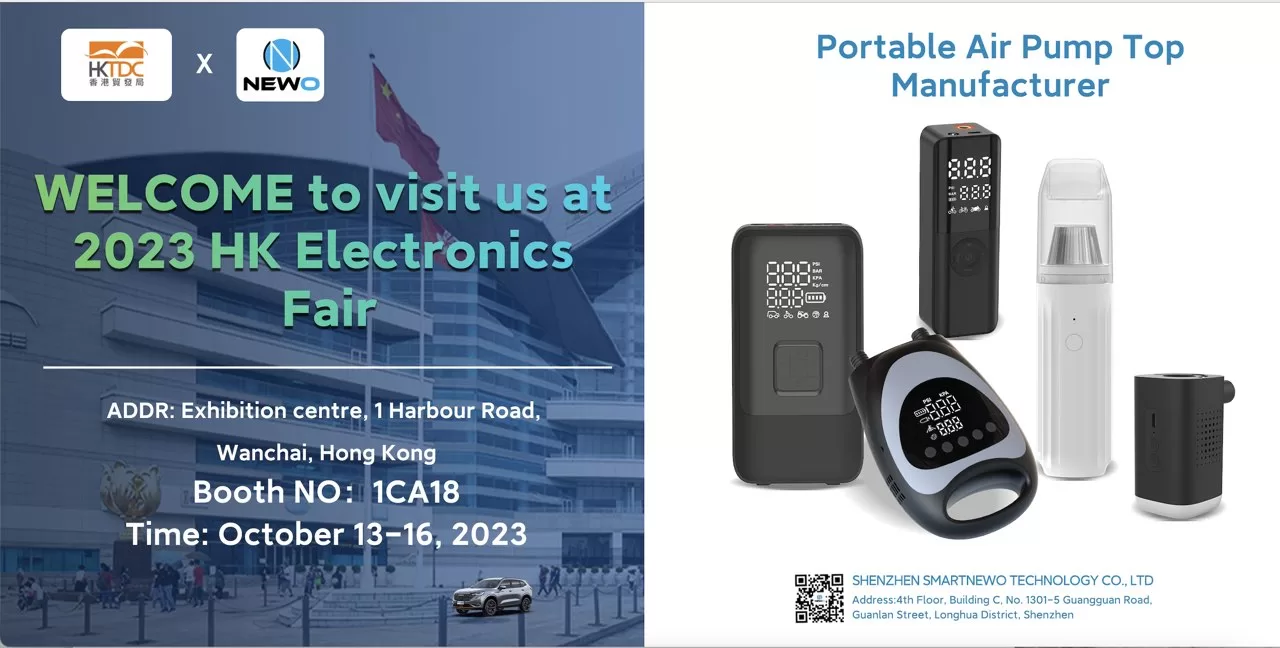
“Hong Kong Autumn Electronics Fair – 1CA18 (October 13th to 16th): Smartnewo invites you to visit our booth!
Hong Kong Autumn Electronics Fair...
-
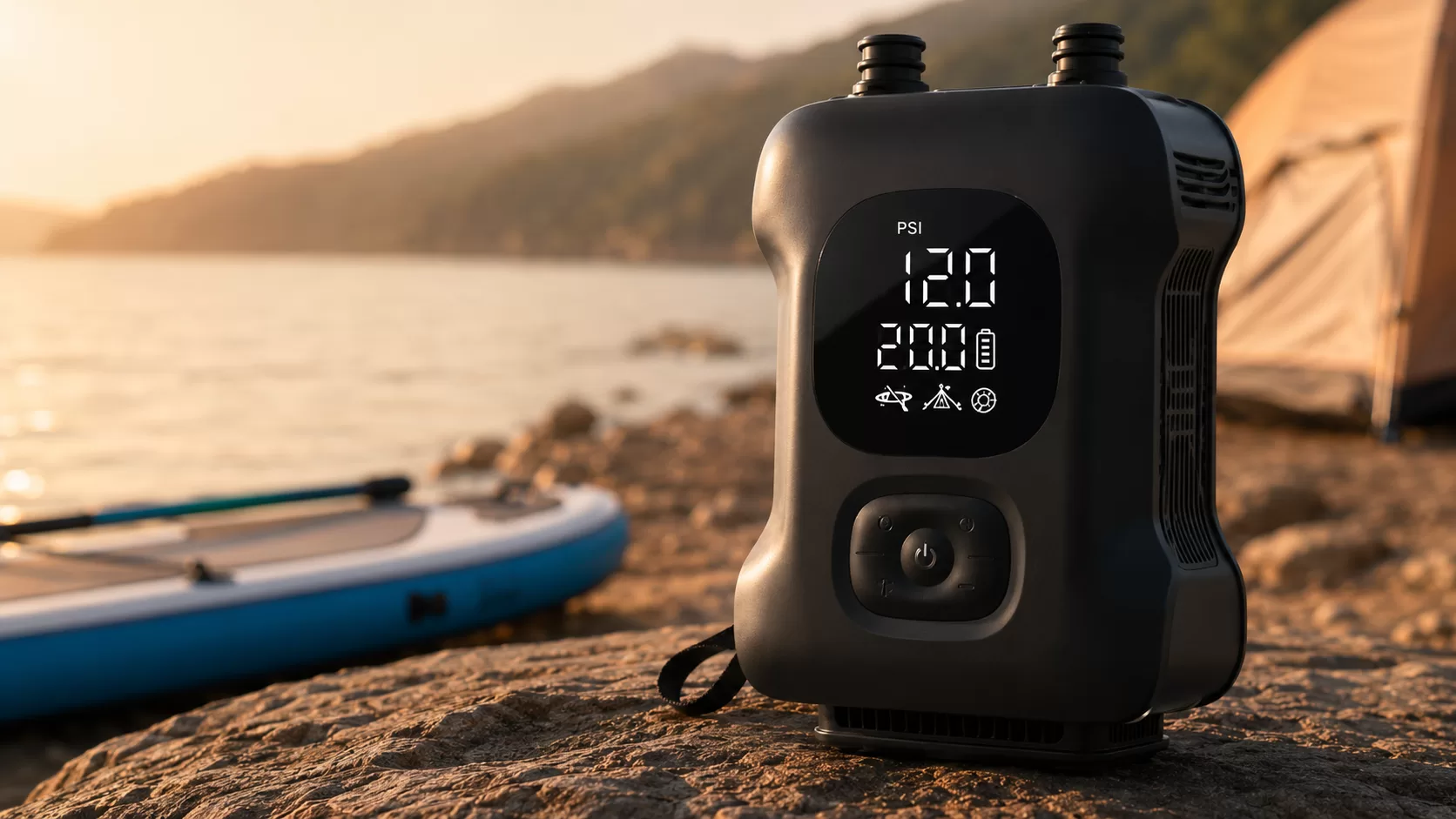
Rechargeable Electric SUP Pump for Paddle Boards: Faster Inflation for SUPs, Kayaks and Inflatable Tents
The BL10-C Portable Electric Bike Tire Inflator is a compact and lightweight mini electric bike pump designed for modern cyclists. With up to 120 PSI pressure, a digital LED display, preset pressure control, automatic shut-off, USB-C charging, and multiple valve adapters, BL10-C offers a convenient inflation solution for road bikes,... -
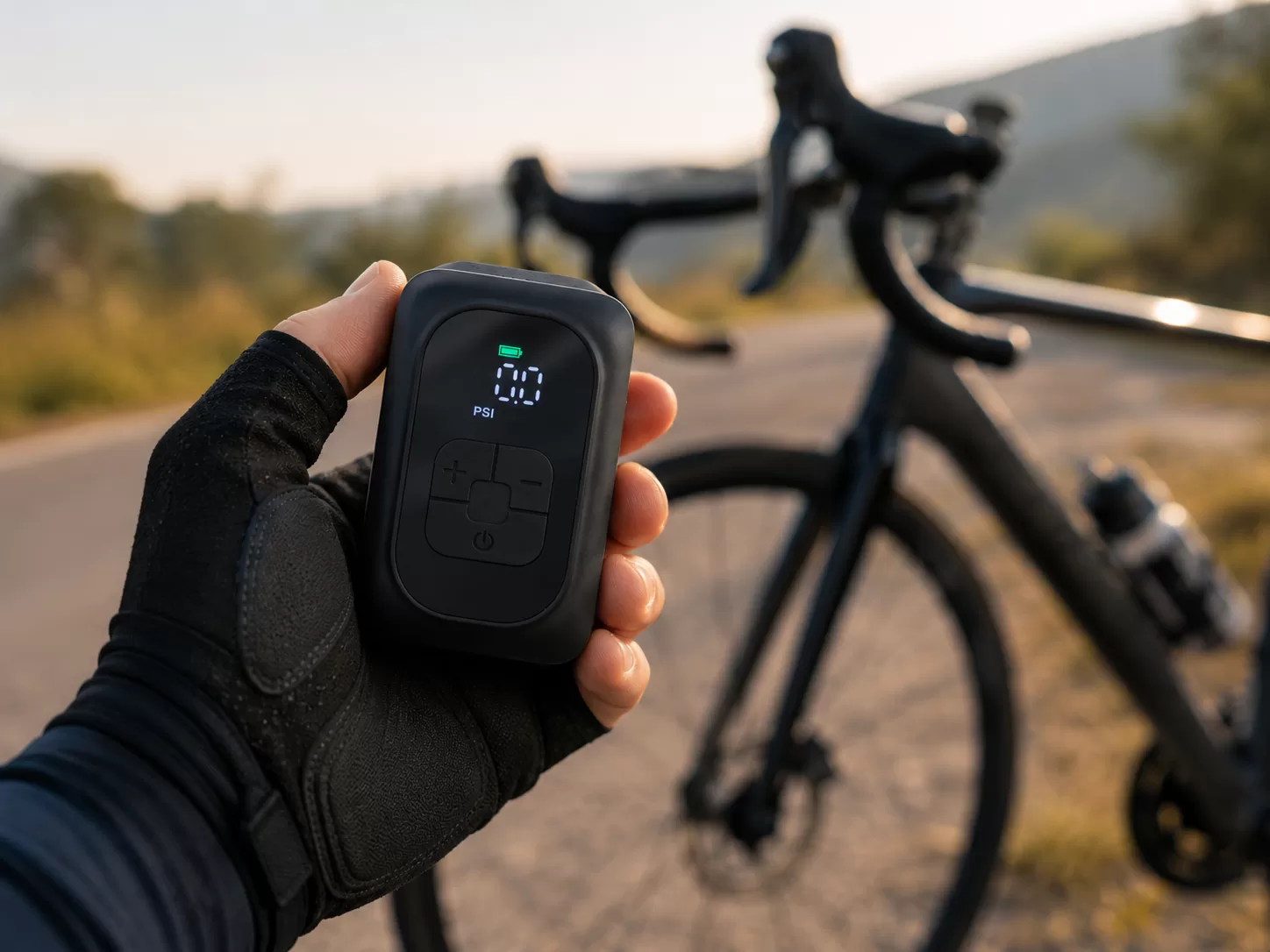
Are Electric Bike Pumps Worth It in 2026? Electric Pump vs CO₂ vs Mini Hand Pump
Discover whether electric bike pumps are worth it in 2026. This guide compares electric bike pumps, CO₂ inflators, and mini hand pumps for road cycling, gravel riding, commuting, and long-distance rides. Learn the pros, limitations, best use cases, and key features to look for before choosing the right portable tire... -
BL10-C Portable Electric Bike Tire Inflator: Small Size, Reliable Power for Every Ride
The BL10-C Portable Electric Bike Tire Inflator is a compact and lightweight mini electric bike pump designed for modern cyclists. With up to 120 PSI pressure, a digital LED display, preset pressure control, automatic shut-off, USB-C charging, and multiple valve adapters, BL10-C offers a convenient inflation solution for road bikes,... -
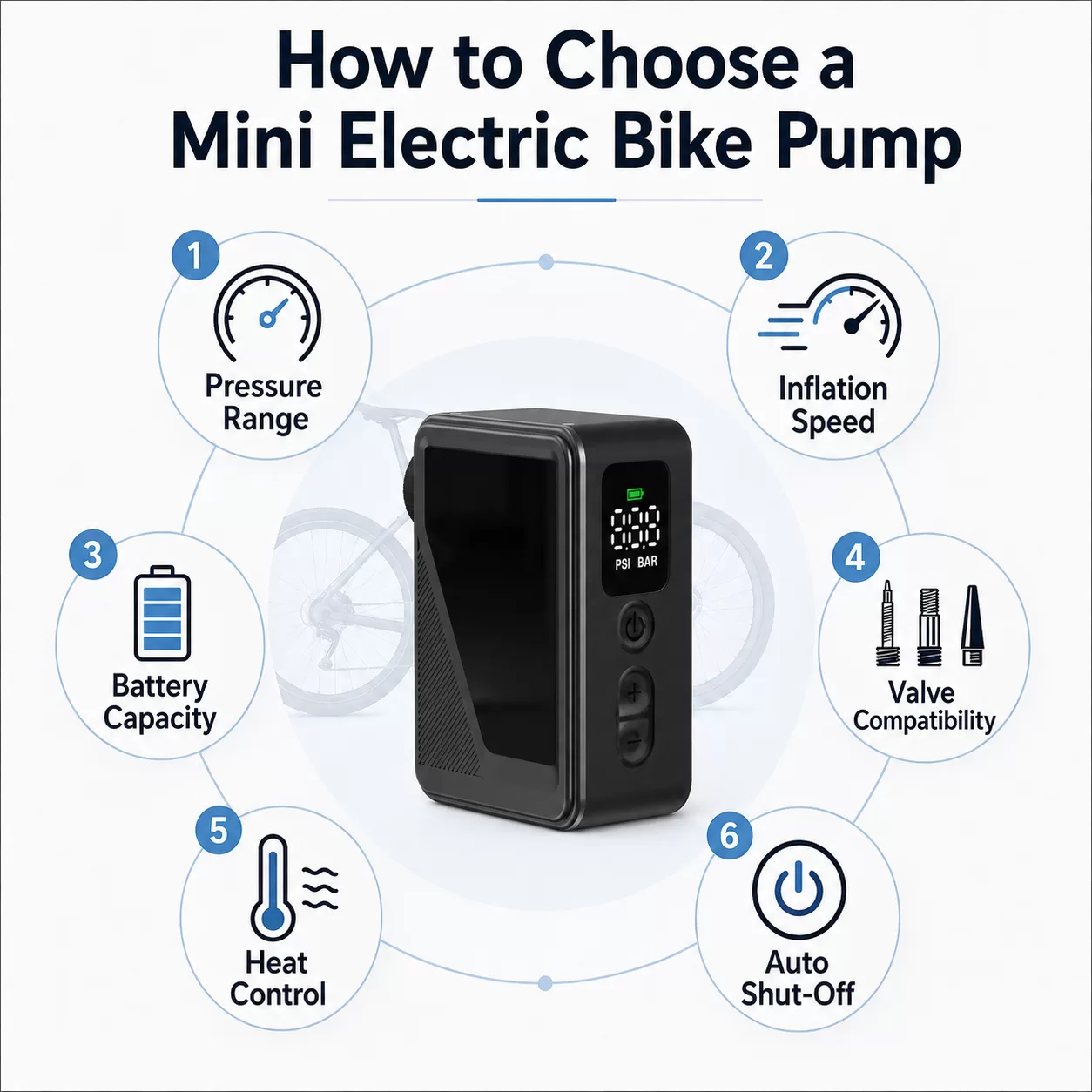
Why Mini Electric Bike Pumps Are Becoming Essential for Modern Cycling
Discover why mini electric bike pumps are becoming essential for modern cyclists. Learn how portable electric bike pumps improve tire pressure management, riding safety, and convenience.... -
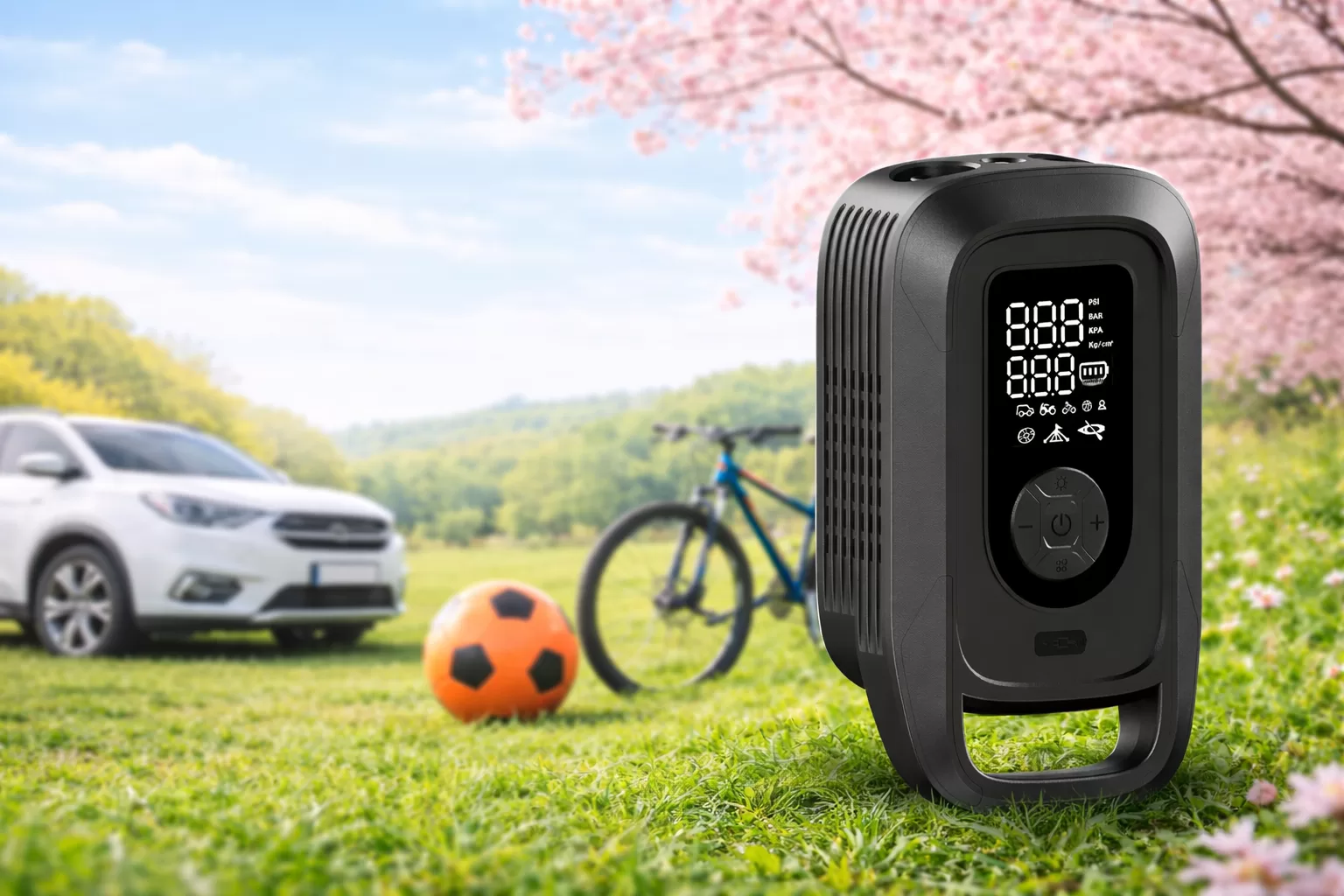
The Ultimate Smart Solution for Easy Outdoor Adventures in 2026
Discover how a spring travel air pump simplifies outdoor trips with fast inflation, smart features, and powerful performance—perfect for every adventure.... -
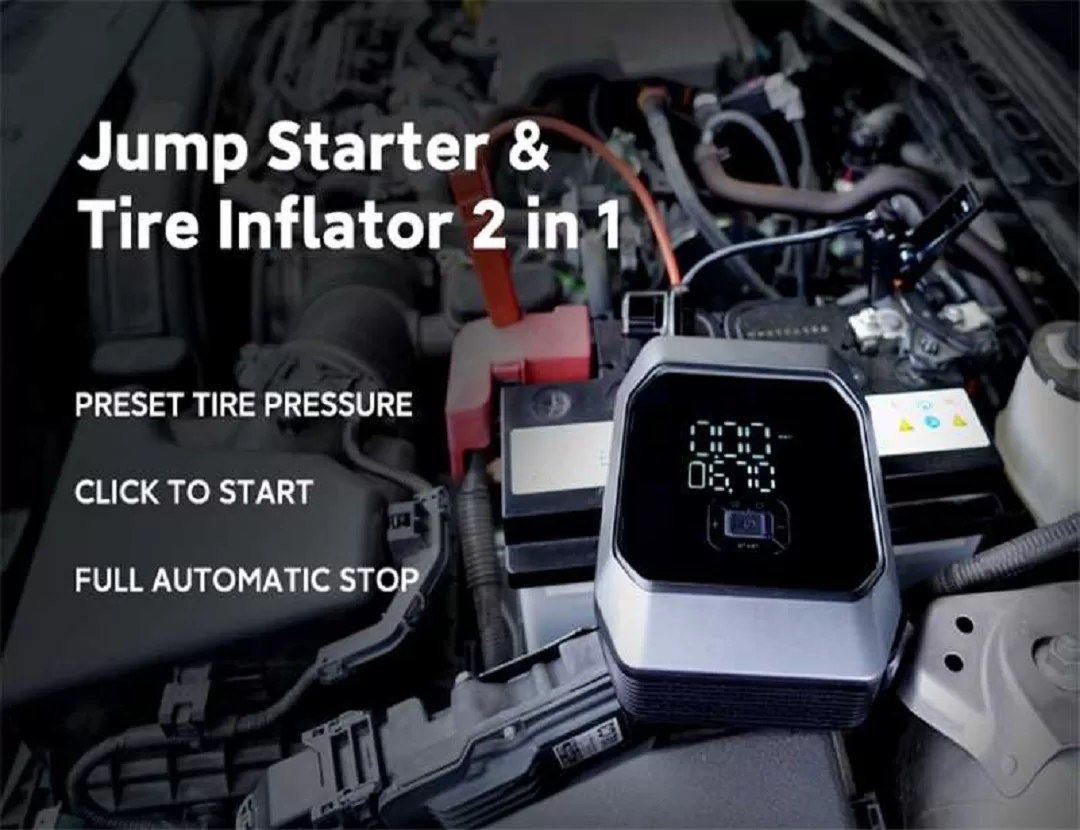
Powerful 5-in-1 Portable Car Tire Inflator and Jump Starter: The Ultimate Emergency Tool for Every Driver
Why Every Driver Needs a Portable Car Tire Inflator and Jump Starter Modern drivers face many unexpected situations on the road. A flat tire, low tire pressure, or a dead car battery can happen at the worst possible time. That’s why having a portable car tire inflator and jump starter is... -
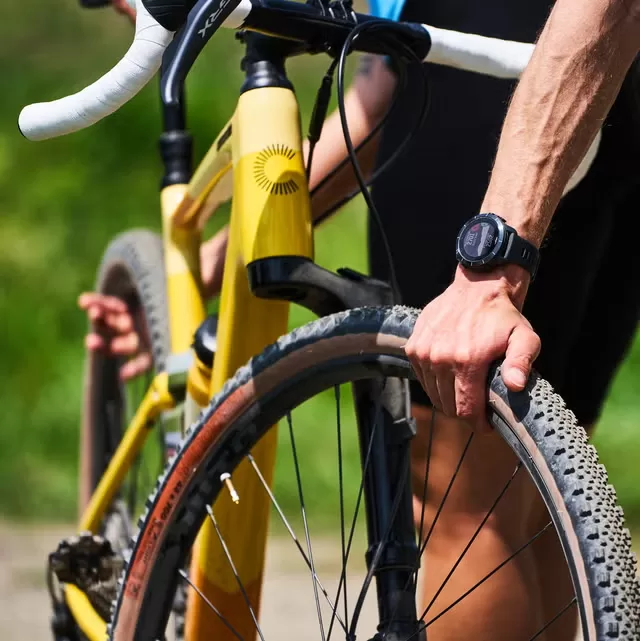
7 Real Cycling Scenarios That Show Why Every Rider Should Carry a Mini Bike Pump
Cycling is one of the most freeing activities you can enjoy. Whether you’re commuting to work, riding through city streets, or exploring quiet countryside roads, a bike ride can instantly improve your day. But there’s one small problem that almost every cyclist eventually faces: Low tire pressure. It might happen... -
BL08-A Portable Electric Bike Pump: A Global Distribution Opportunity with Smartnewo
Smartnewo, a professional manufacturer of portable electric air pumps, introduces the BL08-A model — a compact and efficient inflator designed for global distributors, e-commerce sellers, and outdoor accessory brands seeking reliable OEM/ODM solutions. Table of Contents Main Heading Subtopics 1. Introduction: Expanding the Global Market for Smart Inflation Tools Portable... -
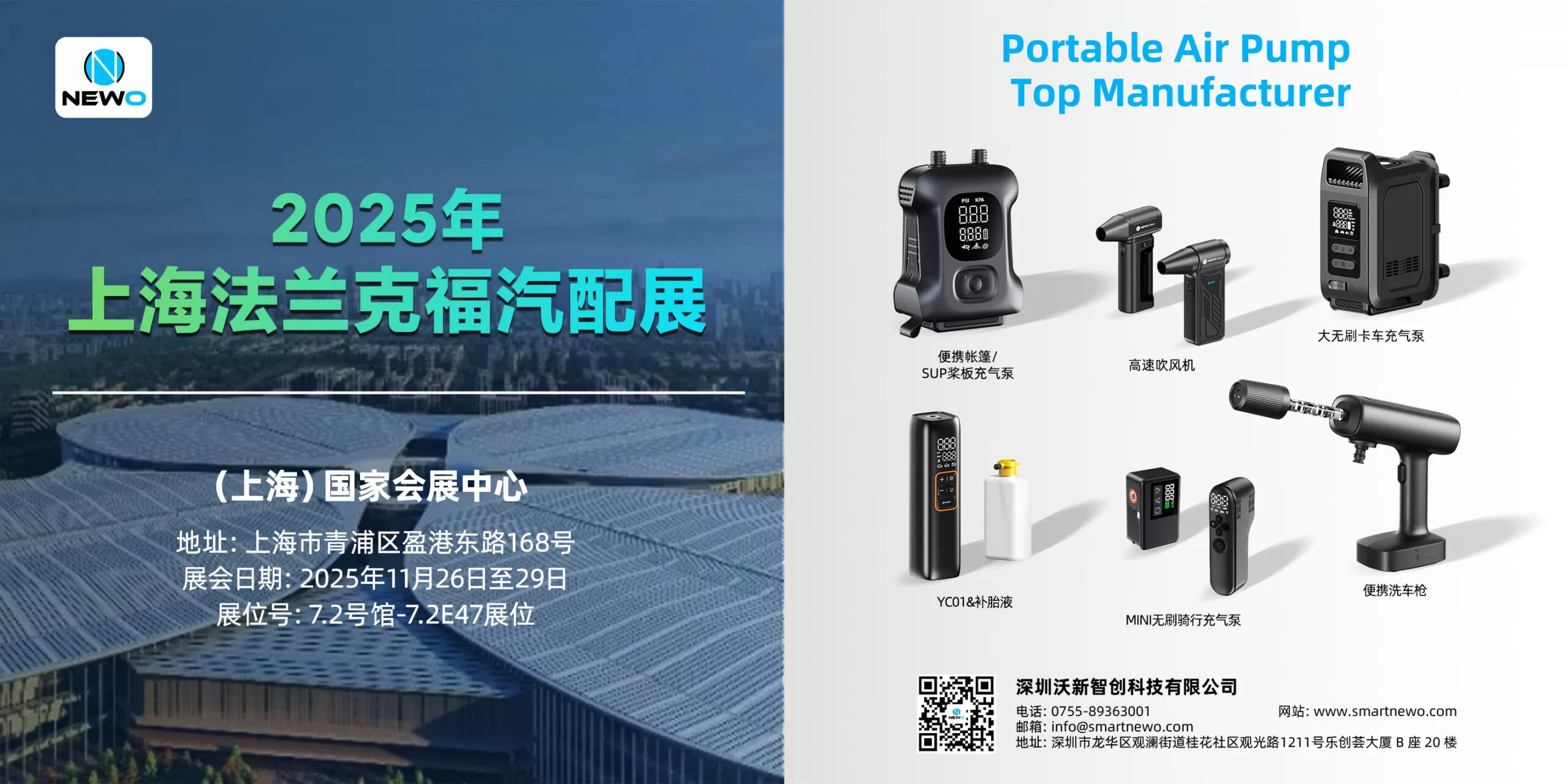
Connecting Opportunities at Automechanika Shanghai 2025 — Smartnewo Exhibition Day 1
Today marks an exciting beginning as Smartnewo officially opens its booth at Automechanika Shanghai 2025. As one of the largest and most influential automotive aftermarket exhibitions in the world, the show provides an exceptional platform for meaningful conversations, partnership building, and global industry exchange. Located at Booth 7.2E47, Smartnewo presents... -

Why Every Outdoor Cyclist Should Carry a Mini Electric Bike Pump
Whether you are an experienced mountain rider or a weekend road-cycling enthusiast, one thing is certain: unexpected tire pressure issues can ruin an entire ride. That’s why more cyclists are turning to mini electric bike pumps—compact, lightweight, and far more reliable than traditional hand pumps. 1. Consistent Pressure, Even in...
-
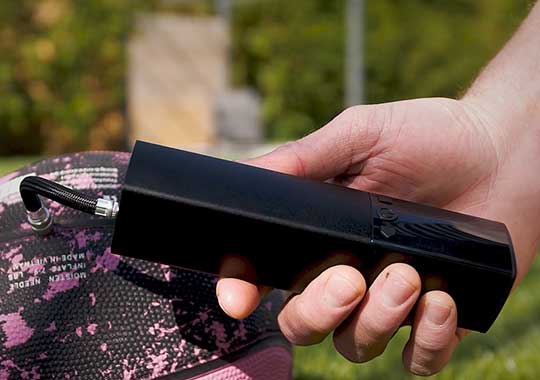
How Is a Football Properly Inflated?
The correct inflation of a football - with not too much and not too little air - is a hotly debated topic among footballers.... -
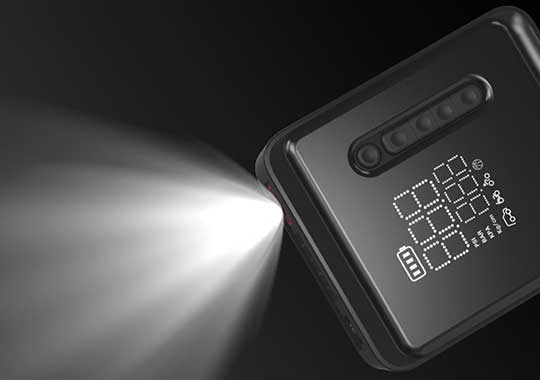
Application Scenarios of Car Inflator Pump
Often long-distance business trips or play car owners because the road may be more remote areas, in this case if you encounter a tire leak....