
 Portable Tire Inflators
 Electric Air Pumps
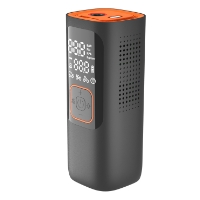 Electric Car Tyre Pumps
 Electric Ball Pumps
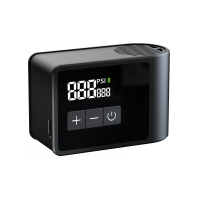 Electric Bike Pump
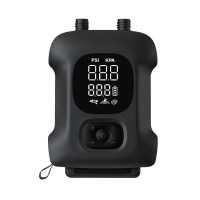 SUP Air Pump
Choosing a Smart Air Pump for Car Tires and Beyond
A flat tire never waits for a convenient moment. It shows up on a cold morning before work, or halfway through a weekend trip when the nearest gas station is twenty minutes away. This is the exact problem a smart air pump for car use is built to solve: a compact, battery-powered device that checks and restores tire pressure without a trip to a service bay. Unlike a traditional foot pump or a bulky garage compressor, these units are small enough to live in a glovebox and smart enough to stop on their own once the target pressure is reached.
Why Tire Pressure Problems Sneak Up on Drivers
Tire pressure drops gradually, often around one to two PSI per month even without a puncture. Temperature swings accelerate this; cold weather alone can pull several PSI out of a tire overnight. Most drivers never notice until handling feels off or a dashboard warning light appears.
The risk isn’t just a rough ride. Underinflated tires increase rolling resistance, which raises fuel consumption and wears tread unevenly along the edges. Overinflation, less common but still an issue, makes tires stiffer and reduces grip on uneven pavement. Both conditions are easy to prevent, but only if there’s a convenient way to check pressure regularly instead of waiting for a warning sign.
How a Smart Air Pump Changes the Routine
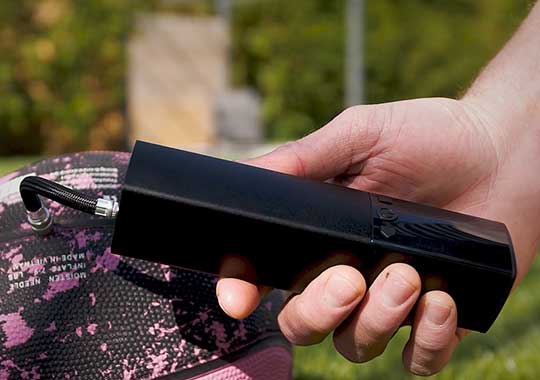
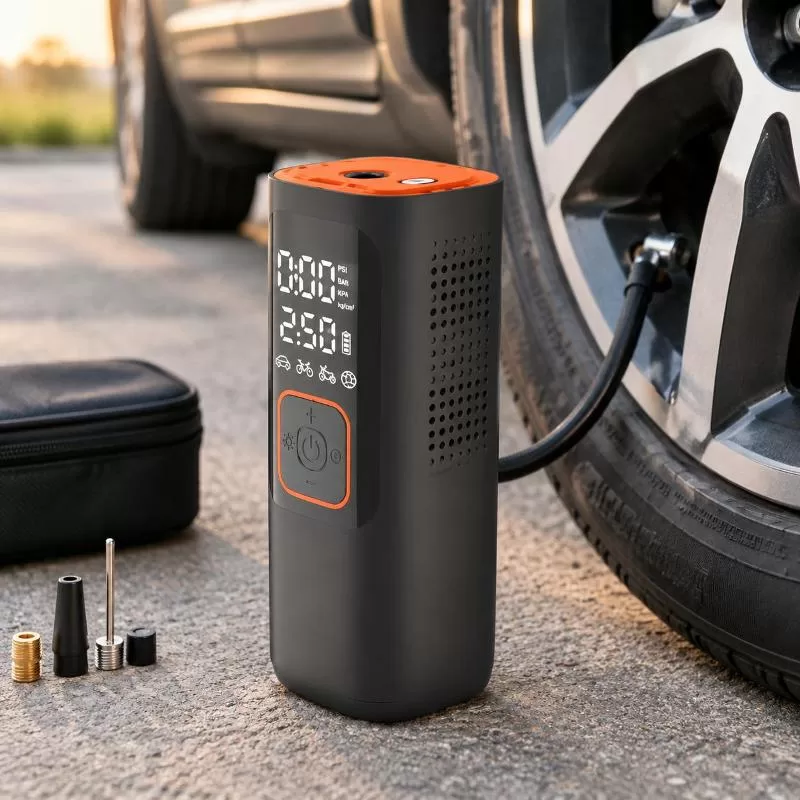
A smart air pump for car tires addresses this by making pressure checks something you can do in two minutes, in your own driveway, without unspooling a hose from a wall-mounted compressor. The LP2-P from our lineup is a good example of how this works in practice.
It runs on a high-precision pressure sensor that reads tire pressure in real time and shuts the motor off automatically once the target is hit. That single feature removes the most common user error with manual pumps: overshooting the pressure because there was no easy way to watch the gauge while pumping. Instead of guessing, the device does the stopping for you.
Setup is handled through five preset modes covering balls, bicycles, motorcycles, cars, and a custom option. Selecting "car" mode sets a sensible default range for passenger tires, so there’s no need to look up a PSI number before every use. For anyone managing multiple vehicles or a mixed fleet of bikes and a car, that preset system saves a surprising amount of friction over time.
Matching Pressure Capability to the Vehicle
Pressure range matters more than most buyers expect going in. A unit built mainly for bicycle tires may top out well below what a car tire needs, while a car-rated pump has headroom for lower-pressure applications too.
| Specification | LP2-P Value |
|---|---|
| Maximum pressure | 150 PSI |
| Pressure range | 0 to 150 PSI |
| Air flow (14-cylinder config) | About 14 L/min |
| Air flow (17-cylinder config) | 18 to 22 L/min |
| Motor power | 35W |
| Battery capacity | 2000mAh, 7.4V, 14.8Wh |
| Charging time | About 2 hours |
| Runtime (14-cylinder config) | 18 to 22 minutes |
A 150 PSI ceiling gives enough margin for standard passenger car tires, which typically sit between 30 and 35 PSI, while still covering higher-pressure needs like certain sports balls or bicycle tires that run well above that range. The two cylinder configurations listed in the specification sheet show a trade-off worth understanding before buying: the 17-cylinder setup inflates faster but drains the battery sooner, while the 14-cylinder configuration trades some speed for a longer runtime per charge.
Reading the Display Without Guesswork
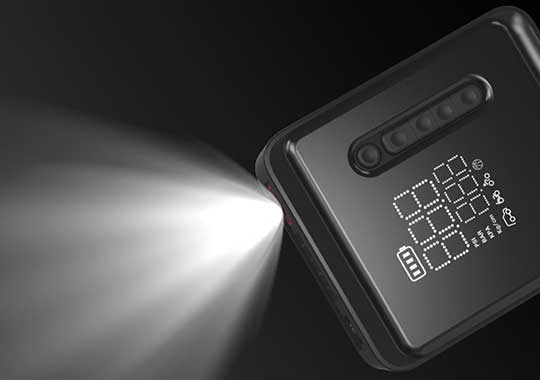
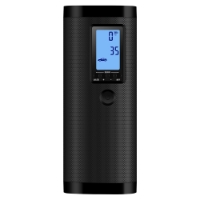
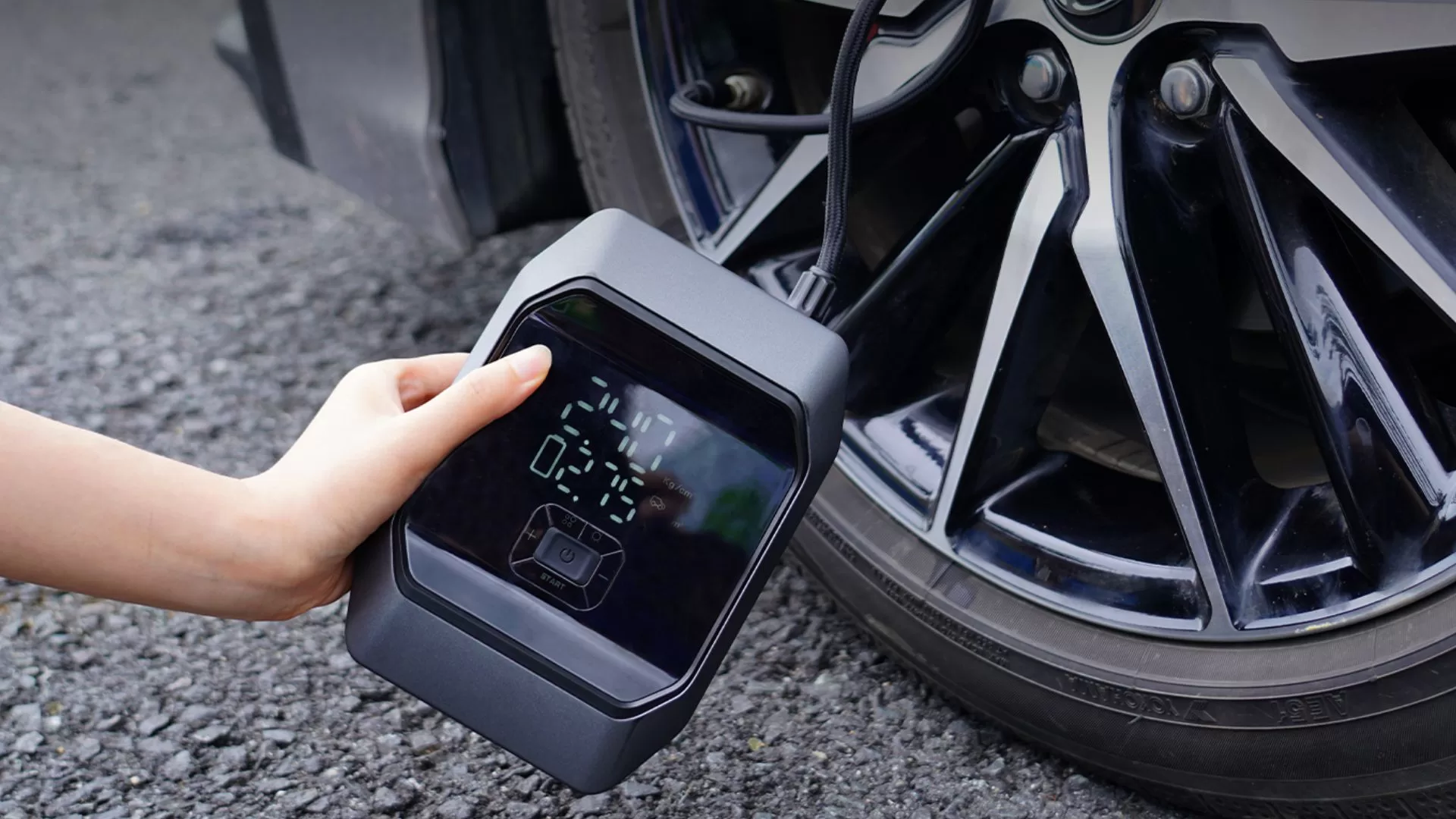
A pressure gauge is only useful if it’s easy to read in poor light, at an awkward angle, or with cold hands fumbling the buttons. The LP2-P uses a large LED display that shows the current pressure value alongside the selected mode and battery level, so there’s no need to squint at a tiny analog needle on a traditional pump.
This matters more than it sounds. Analog pumps are notorious for ambiguous readings, especially once the gauge glass fogs or scratches with age. A digital readout removes that ambiguity, and pairing it with automatic shut-off means the display is more of a confirmation than something you have to actively monitor the entire time.
Built for More Than Just the Car
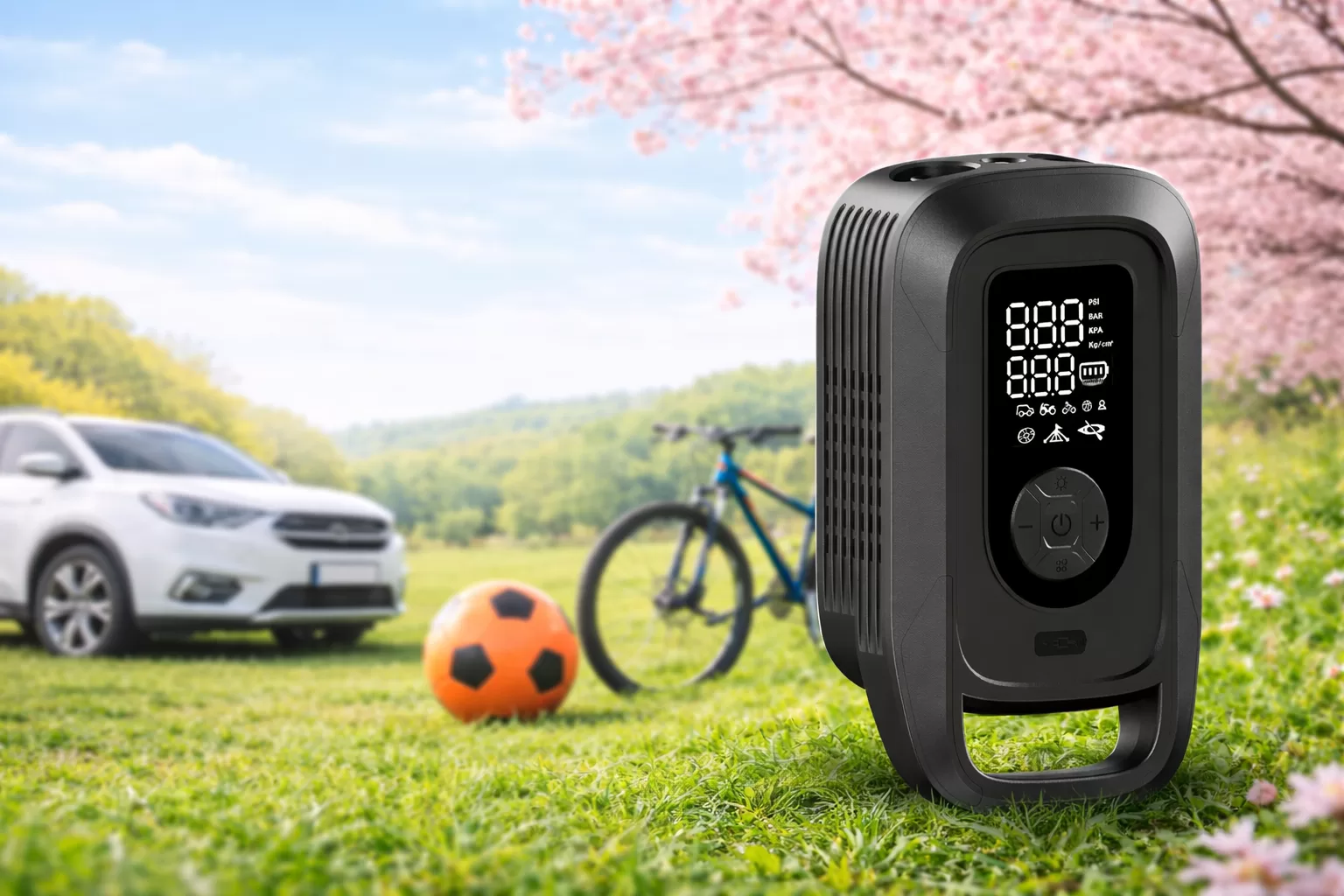
Calling this category a "car air pump" undersells what the devices actually do. The same unit that tops up a sedan’s tires can inflate a bicycle tube, a motorcycle tire, a wheelchair wheel, or a basketball, all from the same housing and the same control pad. According to the product specifications, the LP2-P can handle roughly 12 to 15 bicycle tires on a single charge, depending on cylinder configuration, which is a reasonable benchmark for anyone comparing household use cases.
This versatility shows up most clearly for households with mixed equipment:
- A commuter with both a car and an e-bike no longer needs two separate inflation tools.
- Parents managing bicycles, balance vehicles, and sports balls for kids can rely on one preset menu instead of memorizing different pressure targets.
- A wheelchair user or caregiver gains a lightweight backup option that doesn’t require lifting a heavy shop compressor.
Portability and Power Features That Matter on the Road
Weighing the practical side of ownership, size and charging method tend to decide whether a pump actually gets used or ends up buried in a trunk. At 44 × 64 × 157 mm, the LP2-P is close to the size of a large flashlight, built with a durable ABS housing that tolerates being tossed into a glovebox or backpack repeatedly.
Charging happens over Type-C, which means the same cable used for a phone or tablet can top up the pump, removing the hassle of hunting for a proprietary charger before a trip. According to the manufacturer’s specifications, the device also doubles as a power bank, offering a way to charge a phone in a pinch if a flat tire happens to coincide with a dying battery. That kind of overlap in function is a quiet but genuinely useful detail for long drives or camping trips where outlets aren’t nearby.
Decision Guide: Picking the Right Inflation Tool
Not every household needs the same device, so the choice usually comes down to how pressure problems show up in daily life.
- If the main concern is occasional tire top-ups for one car, a basic pump with a car preset and automatic shut-off, like the LP2-P, covers the need without added complexity.
- If the household also owns bicycles, e-bikes, or sports equipment, a multi-mode device with a broad pressure range avoids owning several single-purpose pumps.
- If frequent long trips or emergencies are a concern, prioritize a model with power-bank functionality and a compact size that fits in a glovebox.
- If noise is a factor, such as using the pump near sleeping children or in shared housing, check the rated noise level; the LP2-P is specified at 80dB or below at a 1.5-meter distance.
Common Questions About Smart Car Air Pumps
Does a smart air pump replace a full-size shop compressor?
Not for heavy-duty jobs like inflating a fully flat tire from zero or running pneumatic tools. It’s designed for maintenance top-ups and emergency inflation, not high-volume industrial use.
Will automatic shut-off actually prevent overinflation?
Based on the product’s stated design, the pressure sensor monitors readings continuously and stops the motor once the target is reached, which removes the manual guesswork that typically causes overinflation.
Can the same pump be used for both a car and a bicycle?
Yes. Devices like the LP2-P include separate preset modes for cars, motorcycles, bicycles, and balls, so switching between vehicle types doesn’t require recalculating pressure targets manually.
How long does a full charge last?
According to the specification sheet, runtime ranges from about 16 to 22 minutes depending on cylinder configuration, which generally covers several tires per charge before a recharge is needed.
Final Thoughts on Everyday Tire Maintenance
Tire pressure maintenance isn’t a dramatic task, but it’s one of the easiest ways to avoid uneven wear, higher fuel costs, and unexpected roadside stops. A smart air pump for car tires turns that maintenance into a two-minute habit instead of a dreaded errand, and the ability to use the same tool across bicycles, motorcycles, and sports equipment adds practical value well beyond the driveway. For drivers weighing options, matching pressure range, runtime, and portability to actual household needs is the most reliable way to pick a device that will still be in use a year from now, not forgotten in a glovebox.
-

As Shenzhen Welcomes the World for APEC 2026, NEWO Welcomes You to Our Factory
As Shenzhen prepares for APEC 2026, NEWO welcomes international buyers and partners to visit our factory, meet our team and explore future cooperation.... -

Leading the Way in Product Innovation and Excellence
Smartnewo exemplifies professionalism in product innovation and manufacturing. Their collaboration with Xiaomi Youpin on the G01 crowdfunding project highlights their expertise in creating compact, powerful inflatable pumps. Rigorous engineering, meticulous production processes, and advanced quality assurance underscore their commitment to excellence. The success of the G01 project, with significant market... -

Essential Qualities of an Excellent Supplier
In today's competitive market, finding a reliable supplier is crucial for business success. Based on insights from Smartnewo and broader internet research, here are key qualities an excellent supplier must possess:... -

NW06 Tire Inflator: Compact Power for Quick Inflation
Summary The NW06 Tire Inflator delivers quick and efficient tire inflation with a powerful 35L/min airflow. It features a user-friendly LCD screen for real-time pressure monitoring, dual power options with a built-in 6000mAh battery, and multiple nozzle attachments for versatile use. Its compact design and integrated LED light ensure convenience and... -

Unleash the Power of Portability: The SmartNewo Jump Starter with Air Compressor KF03
This guide will walk you through the steps to effectively use a portable tire inflator, helping you stay prepared and safe on the road.... -

Newo Attends The 2024 Consumer Electronics Show (CES)
Smartnewo booth is located at 53672, Halls A-D, Level 2, Venetian Expo, Las Vegas Convention Center (LVCC). ... -

Smartnewo’s Dual-Cylinder Air Pump Rocks the Hong Kong Autumn Electronics Fair!
Smartnewo’s Dual-Cylinder Air Pump Rocks the Hong Kong Autumn Electronics Fair!... -

Meet at the Canton Fair! Smartnewo brings dual-cylinder air pumps, making your inflation experience faster and more stable!
NEWO has went deep communication and negotiation with customers from all over the world on booth.... -

“Hong Kong Autumn Electronics Fair – 1CA18 (October 13th to 16th): Smartnewo invites you to visit our booth!
Hong Kong Autumn Electronics Fair... -

Smartnewo showcases its innovative range of electric air pumps at IFA 2023
Smartnewo will participate in the Consumer Electronics Show (IFA) in Berlin, Germany from September 3rd to September 5th....



-

Rechargeable Electric SUP Pump for Paddle Boards: Faster Inflation for SUPs, Kayaks and Inflatable Tents
The BL10-C Portable Electric Bike Tire Inflator is a compact and lightweight mini electric bike pump designed for modern cyclists. With up to 120 PSI pressure, a digital LED display, preset pressure control, automatic shut-off, USB-C charging, and multiple valve adapters, BL10-C offers a convenient inflation solution for road bikes,... -

Are Electric Bike Pumps Worth It in 2026? Electric Pump vs CO₂ vs Mini Hand Pump
Discover whether electric bike pumps are worth it in 2026. This guide compares electric bike pumps, CO₂ inflators, and mini hand pumps for road cycling, gravel riding, commuting, and long-distance rides. Learn the pros, limitations, best use cases, and key features to look for before choosing the right portable tire... -
BL10-C Portable Electric Bike Tire Inflator: Small Size, Reliable Power for Every Ride
The BL10-C Portable Electric Bike Tire Inflator is a compact and lightweight mini electric bike pump designed for modern cyclists. With up to 120 PSI pressure, a digital LED display, preset pressure control, automatic shut-off, USB-C charging, and multiple valve adapters, BL10-C offers a convenient inflation solution for road bikes,... -

Why Mini Electric Bike Pumps Are Becoming Essential for Modern Cycling
Discover why mini electric bike pumps are becoming essential for modern cyclists. Learn how portable electric bike pumps improve tire pressure management, riding safety, and convenience.... -

The Ultimate Smart Solution for Easy Outdoor Adventures in 2026
Discover how a spring travel air pump simplifies outdoor trips with fast inflation, smart features, and powerful performance—perfect for every adventure.... -

Powerful 5-in-1 Portable Car Tire Inflator and Jump Starter: The Ultimate Emergency Tool for Every Driver
Why Every Driver Needs a Portable Car Tire Inflator and Jump Starter Modern drivers face many unexpected situations on the road. A flat tire, low tire pressure, or a dead car battery can happen at the worst possible time. That’s why having a portable car tire inflator and jump starter is... -

7 Real Cycling Scenarios That Show Why Every Rider Should Carry a Mini Bike Pump
Cycling is one of the most freeing activities you can enjoy. Whether you’re commuting to work, riding through city streets, or exploring quiet countryside roads, a bike ride can instantly improve your day. But there’s one small problem that almost every cyclist eventually faces: Low tire pressure. It might happen... -
BL08-A Portable Electric Bike Pump: A Global Distribution Opportunity with Smartnewo
Smartnewo, a professional manufacturer of portable electric air pumps, introduces the BL08-A model — a compact and efficient inflator designed for global distributors, e-commerce sellers, and outdoor accessory brands seeking reliable OEM/ODM solutions. Table of Contents Main Heading Subtopics 1. Introduction: Expanding the Global Market for Smart Inflation Tools Portable... -

Connecting Opportunities at Automechanika Shanghai 2025 — Smartnewo Exhibition Day 1
Today marks an exciting beginning as Smartnewo officially opens its booth at Automechanika Shanghai 2025. As one of the largest and most influential automotive aftermarket exhibitions in the world, the show provides an exceptional platform for meaningful conversations, partnership building, and global industry exchange. Located at Booth 7.2E47, Smartnewo presents... -

Why Every Outdoor Cyclist Should Carry a Mini Electric Bike Pump
Whether you are an experienced mountain rider or a weekend road-cycling enthusiast, one thing is certain: unexpected tire pressure issues can ruin an entire ride. That’s why more cyclists are turning to mini electric bike pumps—compact, lightweight, and far more reliable than traditional hand pumps. 1. Consistent Pressure, Even in...

-
How Is a Football Properly Inflated?
The correct inflation of a football - with not too much and not too little air - is a hotly debated topic among footballers.... -
Application Scenarios of Car Inflator Pump
Often long-distance business trips or play car owners because the road may be more remote areas, in this case if you encounter a tire leak....