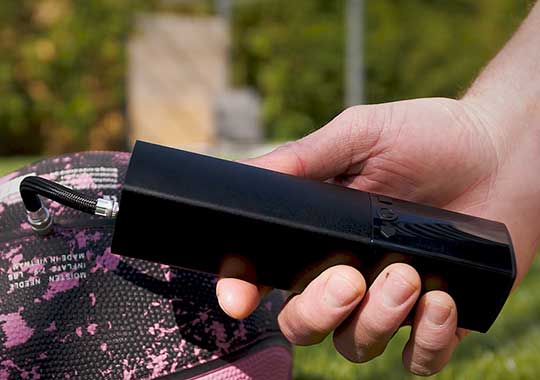

 Portable Tire Inflators
 Electric Air Pumps
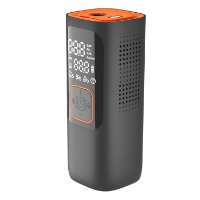 Electric Car Tyre Pumps
 Electric Ball Pumps
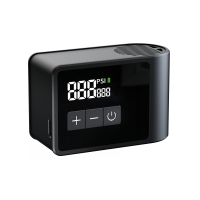 Electric Bike Pump
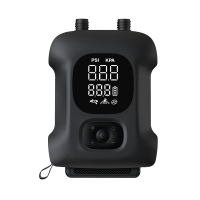 SUP Air Pump

Compact Tire Inflator Guide: How to Choose, Use, and Maintain a Portable Air Pump
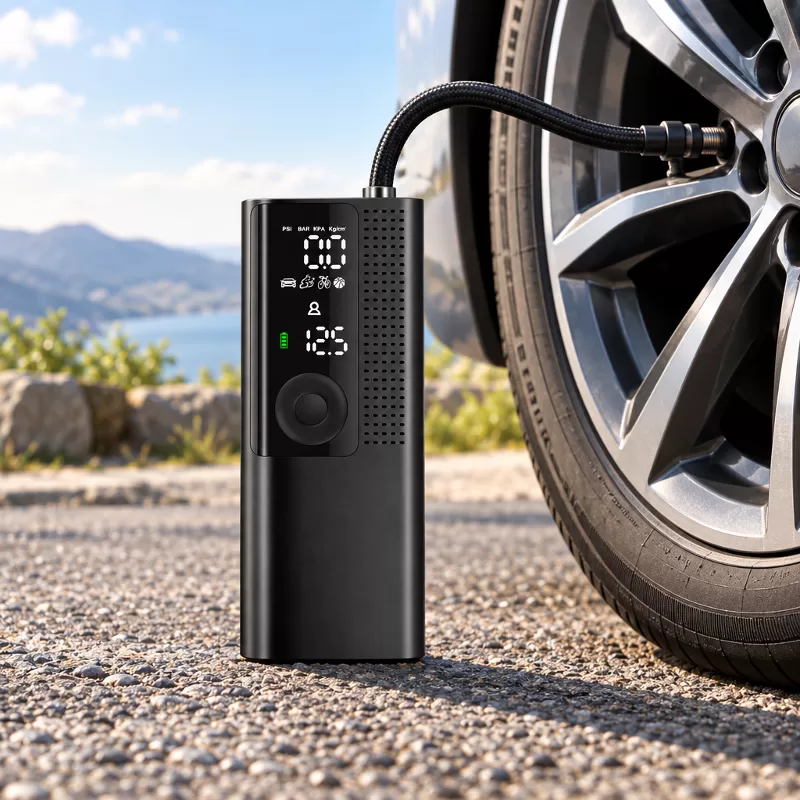
Maintaining correct tire pressure is one of the simplest ways to protect tread life, safeguard fuel efficiency, and ensure stable braking. When a low-pressure warning triggers unexpectedly, relying on a bulky garage compressor or hunting for a functioning gas station air pump causes frustration. Keeping a reliable compact tire inflator in your glove compartment or trunk emergency kit changes that dynamic entirely. A dedicated portable air pump lets you address slow pressure loss on the spot, whether you are managing daily vehicle commutes, weekend cycling routes, or routine motorcycle care.
What Is a Compact Tire Inflator?
Understanding the exact mechanical role of a compact tire inflator prevents unrealistic expectations during severe roadside emergencies. These devices are lightweight, motorized air pumps engineered primarily for pressure maintenance, routine top-ups, and small-volume pneumatic tasks.
How a Portable Inflator Works
At its core, a portable electric pump draws ambient air through intake vents and compresses it using an internal piston or cylinder mechanism. The compressed air travels through a hose into the tire valve stem under guided digital control. Unlike stationary garage compressors that rely on large pressurized holding tanks, a portable unit compresses air on demand. This approach eliminates heavy steel reservoirs while still delivering precise target pressures directly into passenger vehicle tires, bicycle tubes, or sports equipment.
Common Use Cases and Limitations
A mini tire pump excels at regular maintenance cycles where tires lose one or two pounds of pressure over several weeks. It provides an immediate solution for morning cold-tire adjustments, temperature-induced pressure drops in autumn, and topping off recreational sports gear. However, these tools are not designed to seat bead rings on heavy truck tires or reverse structural casing failures. If a tire experiences a complete blowout, sidewall cut, or torn valve stem, a handheld electric pump cannot restore driving integrity. Recognizing these boundaries helps drivers distinguish between simple pressure servicing and necessary tire replacements.
How to Choose a Compact Tire Inflator
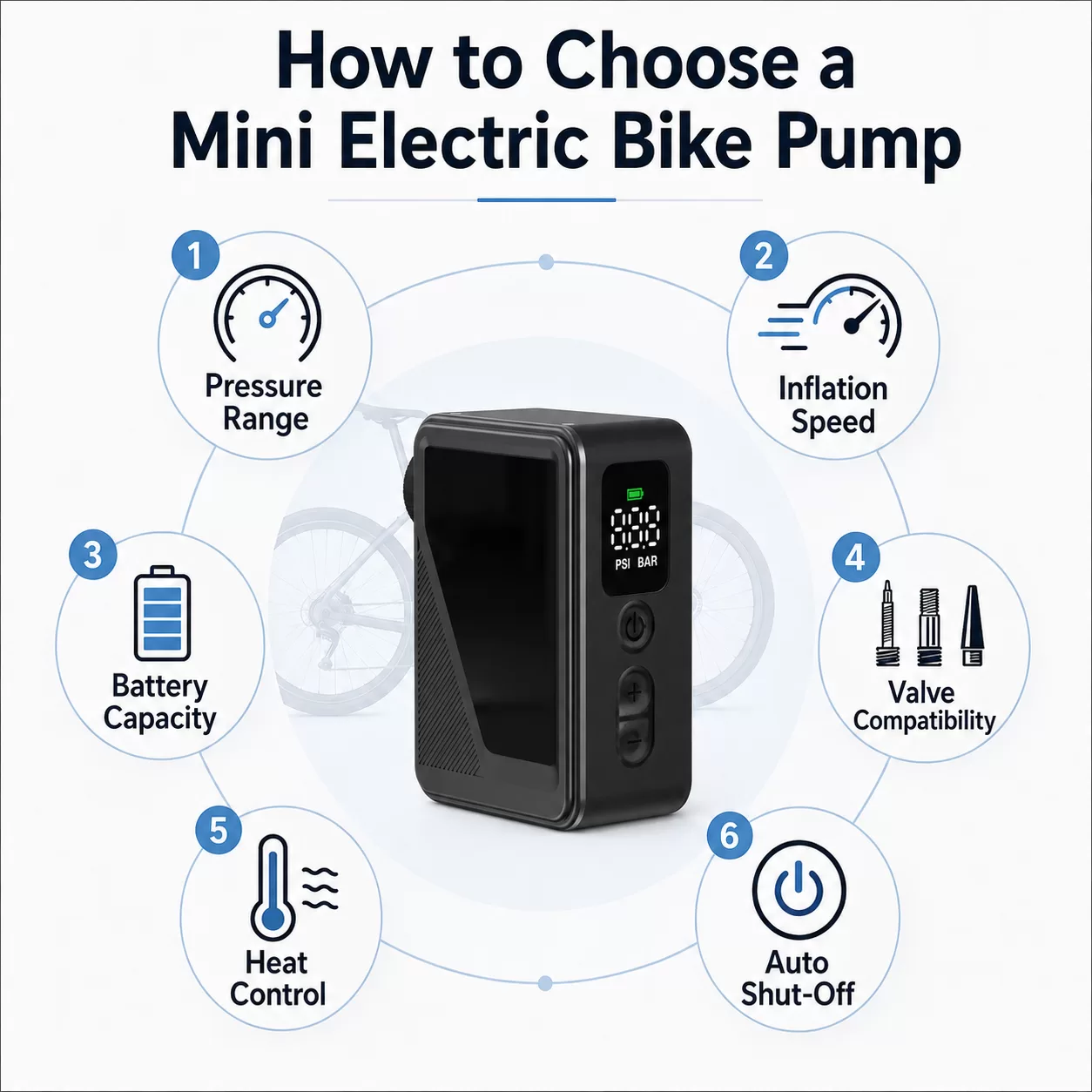
Selecting the right inflation tool requires balancing pressure capacity, flow rate, battery endurance, and physical packaging against your mobility requirements.
Maximum Pressure and Intended Tire Type
Many portable inflators advertise upper limits reaching 120 to 150 PSI. The maximum-pressure rating describes the manufacturer’s stated upper capability; compare airflow, runtime, and application suitability separately. Most passenger cars specify cold operating pressures between 30 and 36 PSI. For vehicle tires, always consult the Tire and Loading Information placard on your vehicle door jamb or the owner’s manual, not the tire sidewall marking. The sidewall shows the maximum permissible pressure the tire casing can withstand, not your vehicle’s recommended operating pressure. For bicycle tires, consult the tire or bicycle manufacturer’s recommended operating pressure for your specific setup and load conditions.
Airflow, Runtime, and Inflation Workload
Airflow measures how much air volume the pump delivers every minute, typically stated in liters per minute. Higher airflow rates shorten the time you spend kneeling beside a tire in bad weather. Because mini compressors generate friction heat within their cylinder housings, continuous runtime is physically constrained. Evaluating your routine workload helps you select a device with sufficient runtime capacity for your typical inflation sessions. Always consult the product specifications to understand the recommended operating limits and any required cool-down intervals.
Battery Capacity, Power Sources, and Portability
Rechargeable cordless inflators provide unrestricted maneuverability around all four vehicle wheels without tangled cords. Modern designs frequently integrate rechargeable battery packs, allowing users to recharge the device at home or in the vehicle. In contrast, corded 12V inflators draw continuous power directly from a vehicle auxiliary socket. While corded models eliminate battery storage degradation, they tether your movement to the car body. A standalone battery-powered inflator offers greater utility across bicycles, balance vehicles, and equipment away from a vehicle cab.
Digital Displays, Preset Modes, and Auto-Shutoff
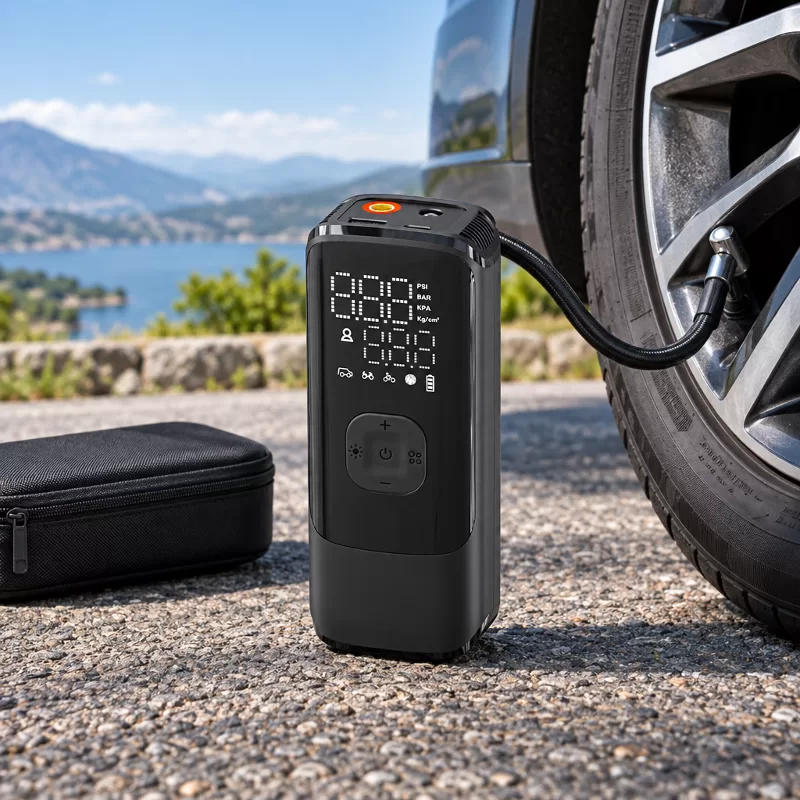
Digital displays present pressure readings numerically, allowing users to monitor target and current pressure levels alongside battery status and active pressure units. Integrated auto-shutoff functionality is equally vital. According to product documentation, inflators equipped with this feature stop inflation when the selected target pressure is reached, helping prevent accidental over-inflation.
A Practical Buying Checklist
When evaluating a compact tire inflator for your vehicle emergency gear, follow this structured decision sequence to ensure the unit matches your practical needs:
- Verify that the operating range supports your lowest requirement, such as 2 PSI for sports balls, up to your highest requirement based on your vehicle and bicycle specifications.
- Review the product specifications to confirm continuous operating runtime under moderate pressure loads.
- Check power delivery specifications, prioritizing convenient charging methods and battery packs with integrated protection circuits.
- Ensure the device features automatic shut-off logic paired with intuitive controls to prevent user errors.
- Confirm that the product includes or can accommodate necessary valve adapters for your specific tire types; consult the product documentation regarding included accessories.
Understanding Tire Pressure Before Inflating
Operating any inflation tool effectively requires understanding how vehicle manufacturers establish pressure targets and how atmospheric heat influences real-world readings.
Finding the Vehicle’s Recommended Cold Tire Pressure
A frequent mistake among motorists is reading the pressure number embossed directly into the tire sidewall. That sidewall marking indicates the absolute maximum pressure the tire casing can safely contain under maximum load, not the vehicle manufacturer recommendation. To find the correct specification, always inspect the Tire and Loading Information placard permanently affixed to the driver side door jamb or review your vehicle owner manual. Following the door placard preserves engineered handling dynamics, ride comfort, and tread wear profiles.
Why Cold-Tire Readings Matter
Tire pressure changes dynamically with internal temperature. As tires roll along pavement, internal friction and flexing heat the air inside, causing thermal expansion that raises measured pressure by several PSI. Authoritative safety guidelines from the National Highway Traffic Safety Administration emphasize measuring pressure when tires are cold. A cold reading is taken after the vehicle has been parked for at least three hours, or after it has been driven less than one mile following that cooling period. Pressure readings taken after driving will be higher than the cold specification due to thermal effects. If you must inflate during travel, apply air according to the manufacturer recommendation and recheck the pressure once the tires have fully cooled.
Pressure Units and Gauge Verification
Tire specifications vary globally across different measurement units. Depending on your region or vehicle origin, targets may be stated in pounds per square inch, bar, or kilopascals. PSI is the standard unit across North America, commonly ranging from 30 to 36 PSI for passenger sedans and crossover vehicles. Bar is a metric pressure unit used widely in Europe; 1 bar equals 100 kPa, or approximately 14.50 PSI. Kilopascal is a metric engineering standard often shown on door stickers alongside PSI. While high-grade digital inflators incorporate reliable internal transducers, periodically cross-checking your inflator reading against an independent mechanical or calibrated pencil gauge ensures long-term sensor accuracy.
How to Use a Portable Tire Inflator Safely
Safe operation requires methodical preparation to avoid stripped valve threads, inaccurate pressure readings, and excessive device heat.
Step 1: Inspect the Tire and Inflator
Before connecting any hose, visually examine the tire tread and sidewall for visible punctures, protruding nails, or severe structural damage. If you observe exposed cords, deep sidewall cracks, or other signs of structural compromise, do not continue driving or attempt to restore pressure with a portable inflator. Instead, use your spare tire or contact roadside assistance and a tire professional. Simultaneously check your inflator battery state. If the battery indicator shows low capacity, performance will drop under load. Ensure the air chuck threads and rubber components are clean and free of abrasive road grit.
Step 2: Set the Correct Target Pressure
Power on the inflator and select your desired pressure unit. Consult the product manual to understand the available preset modes and their intended applications. Adjust your target pressure to match the specification for your specific tire. Manual adjustment buttons allow fine-tuning to exact requirements. Fine-tuning the target ensures full compliance with your vehicle or bicycle manufacturer specifications rather than relying on generic presets.
Step 3: Connect, Inflate, and Verify
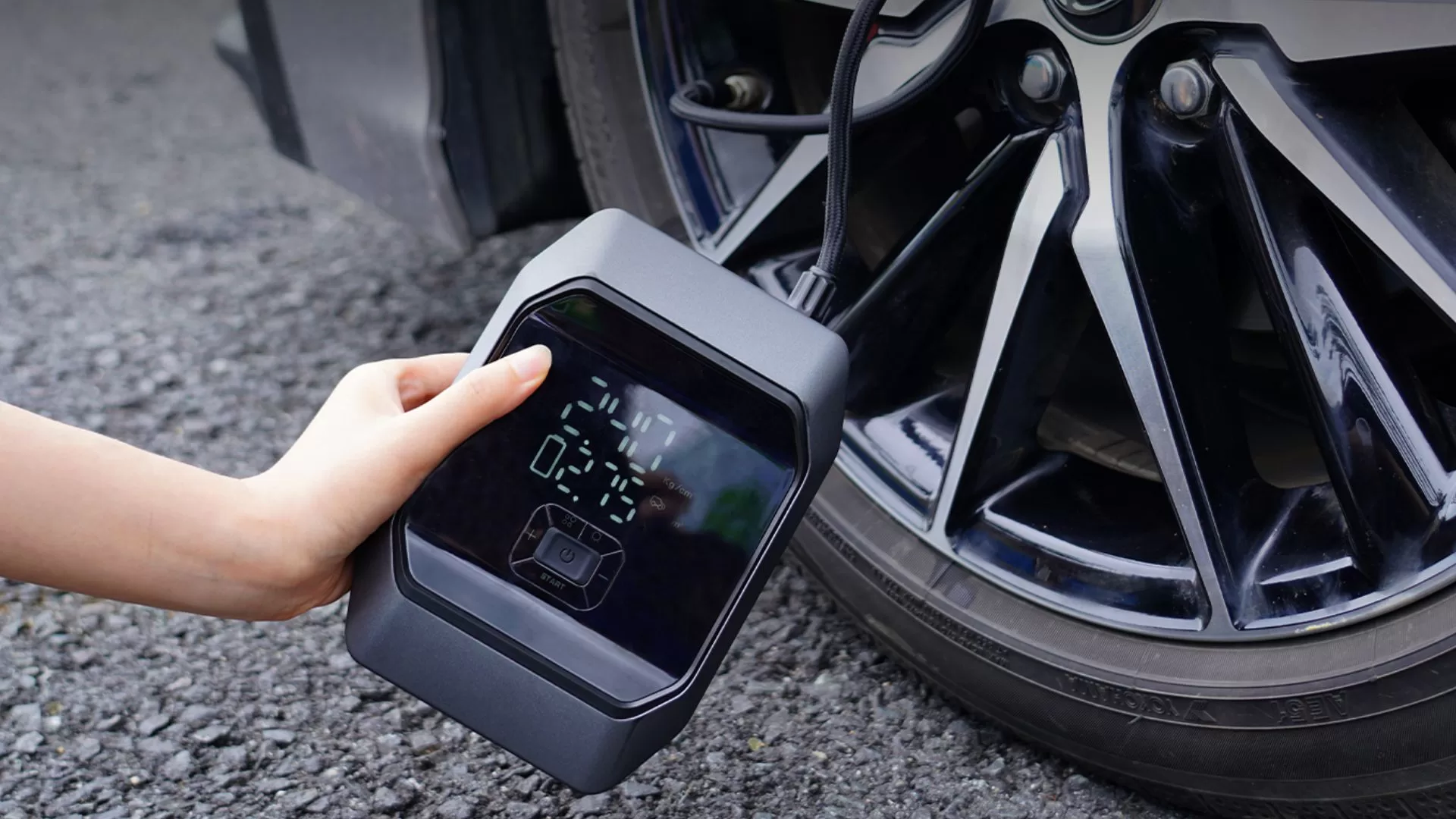
Unscrew the tire valve cap, keeping it in a secure spot. Press the air hose chuck squarely onto the valve stem and tighten it firmly without over-torquing, which can damage delicate valve threads. The digital display will immediately register the tire current static pressure. Press the start switch to begin inflation. The inflator will pump continuously until the internal sensor detects the target value and automatically ceases operation.
Step 4: Manage Duty Cycles and Device Temperature
Compressing air generates thermal energy naturally. During prolonged inflation cycles, the air chuck and device housing will become warm to the touch. To preserve internal components and prevent thermal safety shutdowns, follow the manufacturer’s recommended duty cycle and allow adequate rest periods between inflation sessions. Consult your device manual for specific guidance on continuous runtime limits and appropriate cooling intervals. If servicing multiple heavily deflated tires, allow the device to rest in ambient shade for several minutes between cycles.
Compact Tire Inflator vs. Other Inflation Options
Motorists and cyclists have multiple inflation tools available. Comparing portable electric units with traditional manual alternatives and stationary garage equipment clarifies ideal operational scenarios.
Portable Electric Inflators
Cordless electric inflators reduce physical effort and allow use away from a vehicle outlet. They store easily beneath vehicle cargo floors and operate completely independently of electrical wall outlets. Their primary maintenance requirement involves occasional battery management. Following the manufacturer’s storage and charging guidelines helps maintain battery readiness for emergencies.
Manual Floor and Hand Pumps
Manual floor pumps and frame-mounted bicycle pumps remain standard equipment for cycling enthusiasts. They cost less, operate reliably without batteries, and contain zero electronic circuits that can fail in wet conditions. However, manually inflating a modern passenger car tire with a floor pump is generally time-consuming. For automotive use, manual pumps are thoroughly impractical.
Service-Station Air Compressors
Commercial service-station air stations provide massive air reservoirs that inflate large tires quickly. They are ideal for rapid top-ups when already traveling along major arterial routes. Nevertheless, public air systems present distinct drawbacks. Many stations charge fees, hoses are frequently damaged or leaky, and equipment calibration varies widely. Additionally, after driving to reach a station, tire temperature rises from friction and flexing. When using station air after driving, inflate according to the manufacturer cold-pressure recommendation and recheck pressure once tires have cooled.
Equipment Comparison Table
| Inflation Method | Portability | Power Requirement | Physical Effort | Typical Use Case |
|---|---|---|---|---|
| Compact Electric Inflator | High (glovebox or backpack) | Rechargeable internal battery | Minimal (button press) | Emergency roadside kits and mixed mobility |
| Manual Floor Pump | Low to Medium (bulky frame) | Human physical exertion | High (continuous pumping) | Home bicycle maintenance and sports balls |
| 12V Corded Vehicle Pump | Medium (tethered by wire) | 12V car auxiliary socket | Minimal (button press) | Dedicated car trunks with accessible outlets |
| Commercial Service Station | None (fixed commercial location) | High-voltage grid power | Minimal (lever handle) | Immediate inflation while already en route |
Example Product Profile: Compact Tire Inflator 150PSI KP01
To understand how modern specifications translate into a physical device, consider the Compact Tire Inflator 150PSI KP01. As a manufacturer specializing in smart electric air pumps and portable inflation solutions, we develop pneumatic equipment tailored for everyday mobility. This profile reviews the design characteristics documented in the product specifications.
Specifications Listed in the Provided Product Information
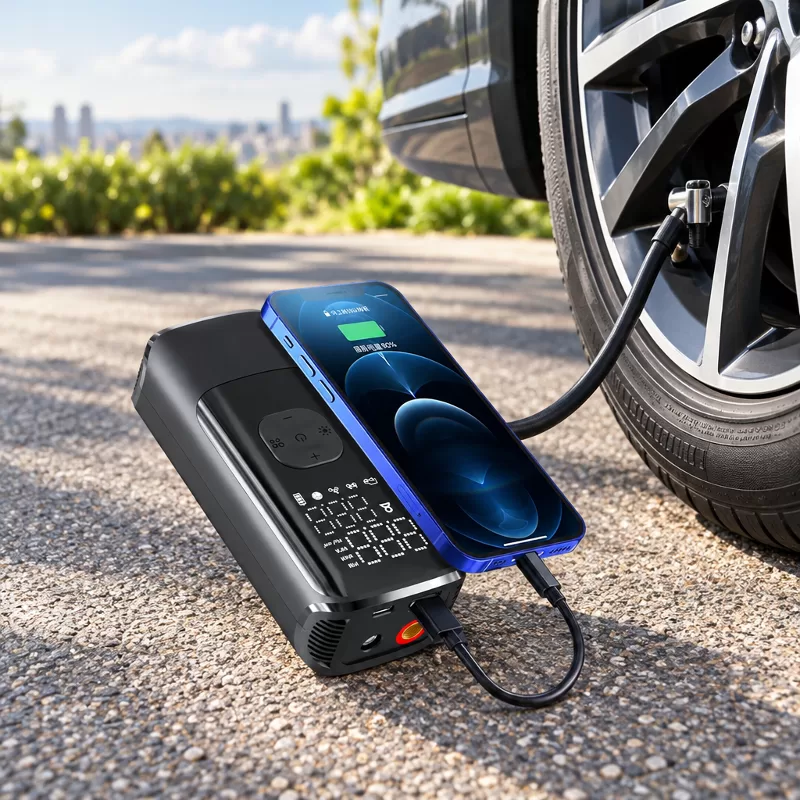
The technical specifications outline a compact profile engineered for balanced everyday inflation duties across light vehicles, bicycles, and personal transit gear. The KP01 is classified as a Portable Tire Inflator with a pressure capability spanning 2 to 150 PSI. According to the supplied product specifications, airflow volume is rated at 18 to 20 liters per minute. The mechanical structure consists of a 17-cylinder brushed-motor setup operating at 35W working power. The battery system comprises a 2000mAh, 7.4V, 14.8Wh rechargeable battery with 8.4V and 6V protection thresholds. Electrical ports include a Type-C charging port with 5V/2A input at 10W. The device also features a 5V/2A power output, which means it can provide power to external devices when compatible connections are available. According to the supplied KP01 product specifications, the device offers 15 to 20 minutes of continuous runtime, with an estimated capacity of approximately 11 bicycle tires per full charge. These estimates depend on the pressure differential, tire volume, and environmental conditions. Physical dimensions measure 160 x 68 x 45 mm with a net weight of 444 grams. The operational environment spans temperatures from -10°C to 45°C, with an acoustic rating of 85dB or below at 1 meter.
Listed Features and Practical Applications
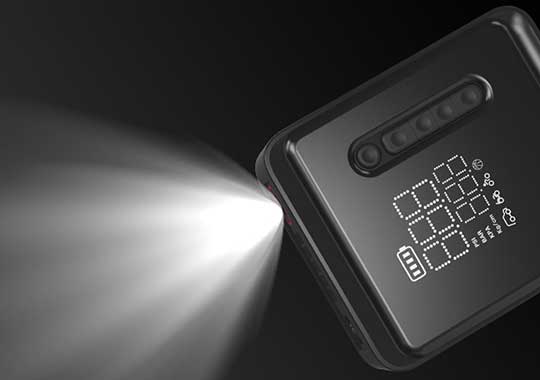
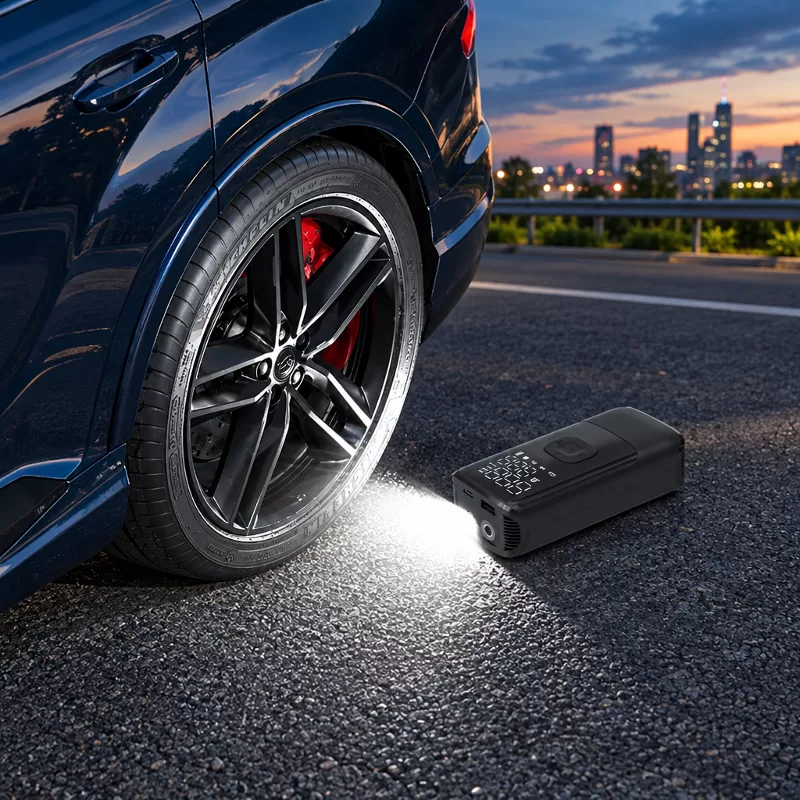
According to the provided product material, the KP01 combines an integrated LED screen with a floating-style back projection to clearly display target and current pressures. It incorporates five preset inflation modes alongside custom manual settings and an automatic shut-off feature that stops air delivery once the target threshold is reached. The physical design measures 160 mm tall and weighs 444 grams, making it convenient for travel and daily carry in bags, backpacks, or vehicle storage compartments. The inclusion of a 5V/2A USB output allows the device to provide power to compatible small USB-powered electronics when needed, though actual charging capability depends on the specific device and cable compatibility.
Clarifying Scope and Verification Boundaries
These specifications represent first-party data supplied directly in the product documentation rather than third-party laboratory benchmark certifications. Pumping speeds, thermal behavior, and real-world battery endurance will naturally fluctuate depending on ambient weather temperatures, initial tire pressure levels, and overall tire volume. Furthermore, while the 150 PSI maximum pressure accommodates specialized high-pressure bicycle tires, it must not be applied to standard passenger cars. Motorists should always reference their vehicle door jamb specifications rather than running the inflator to its maximum mechanical limit.
Care, Storage, and Troubleshooting
Proper maintenance habits ensure your portable electric pump remains functional through changing seasons and extended storage periods.
Storage Guidelines and Battery Preservation
Rechargeable batteries perform best within moderate temperature ranges. Storing a portable inflator inside a vehicle cabin during scorching mid-summer heat or sub-zero winter freezes can accelerate natural cell aging. Store the inflator in a dry, protected location and avoid prolonged exposure to extreme heat or cold. Follow the manufacturer’s storage and charging instructions. Periodic charging according to the product guidelines helps preserve battery capacity over time.
Troubleshooting Common Inflation Issues
When a compact inflator fails to pressurize a tire properly, systematic troubleshooting isolates the problem quickly. If air hisses around the connection during inflation, unscrew the chuck, check that the internal rubber gasket is seated flat and undamaged, and reconnect firmly. When the device shuts off instantly, verify that your set target pressure is higher than the current tire pressure, or consult the device manual regarding mode functions. If the motor produces noticeably weaker airflow or sounds strained, the battery may be depleted. Connect the device to its Type-C charger and allow a complete charging cycle before use. If the device casing becomes excessively warm and the motor stops, overheating or another protection response may be involved. Disconnect the device, allow it to cool, and consult the product manual.
When an Inflator Cannot Resolve the Problem
A portable tire inflator is an essential maintenance instrument, not a tire repair kit. If a tire experiences repeated pressure loss over a short period, persistent low pressure despite repeated inflation, or you observe damage to the tire structure, valve, or bead seal, do not continue to rely on repeated inflation. Instead, have the tire inspected by a tire professional who can diagnose the underlying cause. Depending on the damage, repair or replacement may be necessary. Continuing to drive on an improperly sealed or structurally compromised tire presents serious safety risks.
Frequently Asked Questions
Is 150 PSI the pressure I should pump into my car tires?
No. The 150 PSI rating represents the maximum mechanical pressure threshold the inflator can generate, not the target for an automobile tire. Passenger car tires generally require between 30 and 36 PSI. Always consult the Tire and Loading Information placard located on your vehicle driver door pillar to determine the exact cold pressure required for your car.
Can a compact tire inflator repair a punctured or flat tire?
A compact tire inflator only supplies compressed air; it does not seal holes, patch tread punctures, or repair structural damage to the tire. If a tire has a nail hole or torn sidewall, air will continue escaping as quickly as the inflator supplies it. The tire must be physically repaired by a professional or replaced to restore safe operation.
How many tires can a compact battery inflator top up on one charge?
Battery endurance depends on the pressure deficit and tire internal volume. Topping up four vehicle tires that are low by two or three PSI requires far less energy than inflating a completely flat tire from zero. According to the supplied KP01 product specifications, a fully charged 2000mAh unit offers 15 to 20 minutes of continuous runtime, which is estimated to service about 11 bicycle tires. Actual results vary based on initial tire pressure, tire volume, and environmental conditions.
Can one portable inflator handle car tires, bicycle tires, and sports balls?
Yes, provided the inflator supports an adjustable pressure range and you use appropriate adapter fittings for different valve types. Car tires typically use standard Schrader valves, whereas many road bicycles use narrow Presta valves requiring a threaded adapter. Sports balls require an inflation needle. Always adjust the target pressure according to the manufacturer’s specifications for each item. Consult the product manual to understand which adapters are included or available.
Do I still need a separate tire pressure gauge if my inflator has a digital display?
Keeping an inexpensive, dedicated tire pressure gauge in your glove box remains a sound practice. While modern digital inflators incorporate reliable electronic transducers, external gauges provide a fast secondary reading without needing to uncoil hoses or power up the compressor motor. Cross-checking readings periodically helps ensure long-term accuracy.
Conclusion
A compact tire inflator provides everyday driving security, eliminating dependence on public air stations and keeping your tires properly tuned for safety and fuel efficiency. By selecting a portable inflation device with appropriate airflow, dependable auto-shutoff logic, and convenient power options, you ensure your travel kit is ready for routine maintenance or unexpected pressure drops. Whether you are maintaining passenger vehicle tires, bicycle equipment, or sports gear, a well-chosen compact tire inflator solution delivers practical value across diverse inflation needs. Remember to always calibrate your inflation targets to your vehicle or equipment manufacturer specifications, follow the device duty cycle and storage recommendations, and keep your compact tire inflator charged and ready for every journey.
-

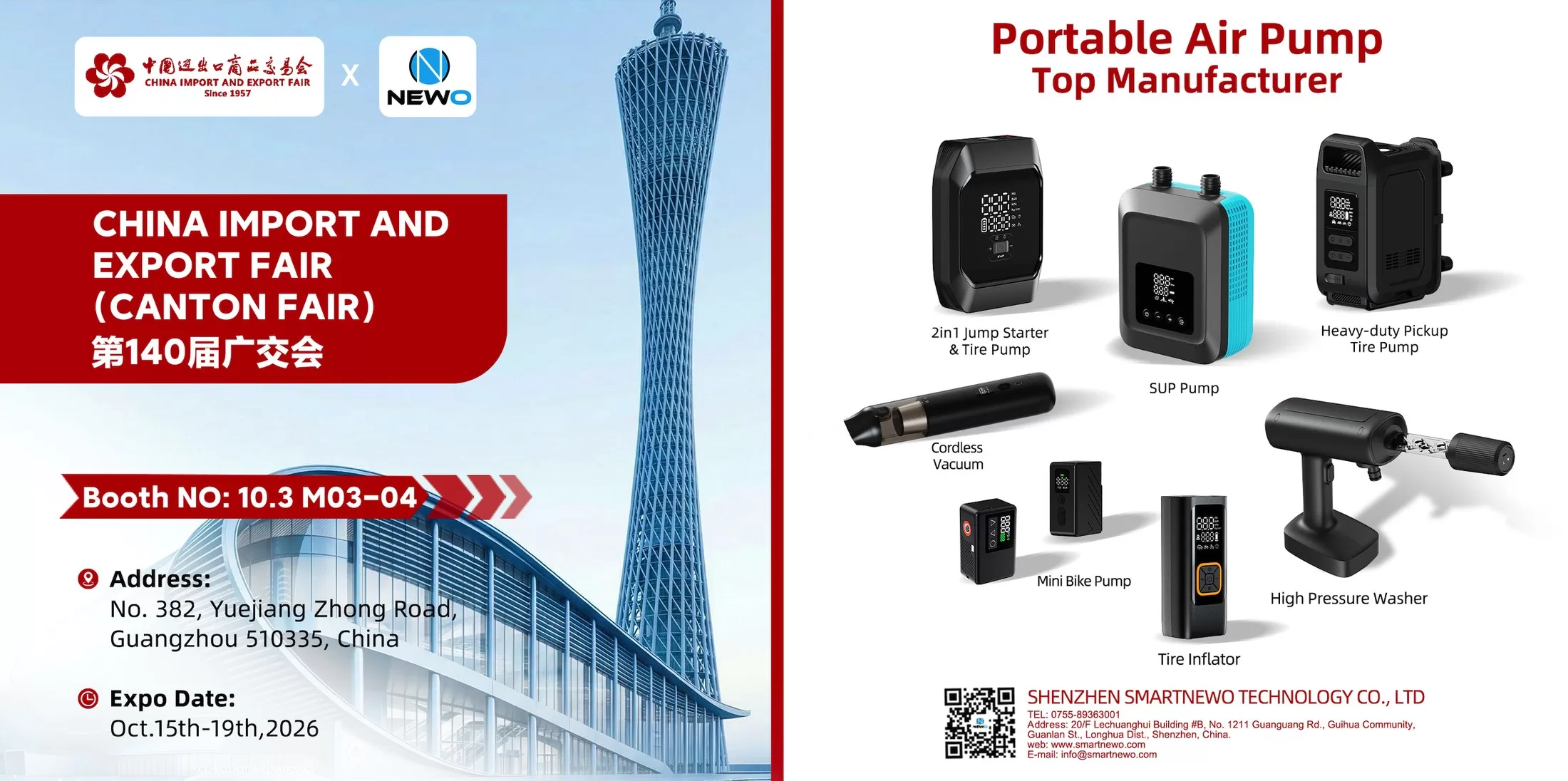
Meet NEWO at the 140th Canton Fair: Visit Booth 10.3 M03–04
Meet NEWO at the 140th Canton Fair in Guangzhou, October 15–19, 2026. Visit Booth 10.3 M03–04 to explore portable air pumps and discuss OEM, ODM and distribution opportunities.... -

As Shenzhen Welcomes the World for APEC 2026, NEWO Welcomes You to Our Factory
As Shenzhen prepares for APEC 2026, NEWO welcomes international buyers and partners to visit our factory, meet our team and explore future cooperation.... -

Leading the Way in Product Innovation and Excellence
Smartnewo exemplifies professionalism in product innovation and manufacturing. Their collaboration with Xiaomi Youpin on the G01 crowdfunding project highlights their expertise in creating compact, powerful inflatable pumps. Rigorous engineering, meticulous production processes, and advanced quality assurance underscore their commitment to excellence. The success of the G01 project, with significant market... -

Essential Qualities of an Excellent Supplier
In today's competitive market, finding a reliable supplier is crucial for business success. Based on insights from Smartnewo and broader internet research, here are key qualities an excellent supplier must possess:... -

NW06 Tire Inflator: Compact Power for Quick Inflation
Summary The NW06 Tire Inflator delivers quick and efficient tire inflation with a powerful 35L/min airflow. It features a user-friendly LCD screen for real-time pressure monitoring, dual power options with a built-in 6000mAh battery, and multiple nozzle attachments for versatile use. Its compact design and integrated LED light ensure convenience and... -

Unleash the Power of Portability: The SmartNewo Jump Starter with Air Compressor KF03
This guide will walk you through the steps to effectively use a portable tire inflator, helping you stay prepared and safe on the road.... -

Newo Attends The 2024 Consumer Electronics Show (CES)
Smartnewo booth is located at 53672, Halls A-D, Level 2, Venetian Expo, Las Vegas Convention Center (LVCC). ... -

Smartnewo’s Dual-Cylinder Air Pump Rocks the Hong Kong Autumn Electronics Fair!
Smartnewo’s Dual-Cylinder Air Pump Rocks the Hong Kong Autumn Electronics Fair!... -

Meet at the Canton Fair! Smartnewo brings dual-cylinder air pumps, making your inflation experience faster and more stable!
NEWO has went deep communication and negotiation with customers from all over the world on booth.... -

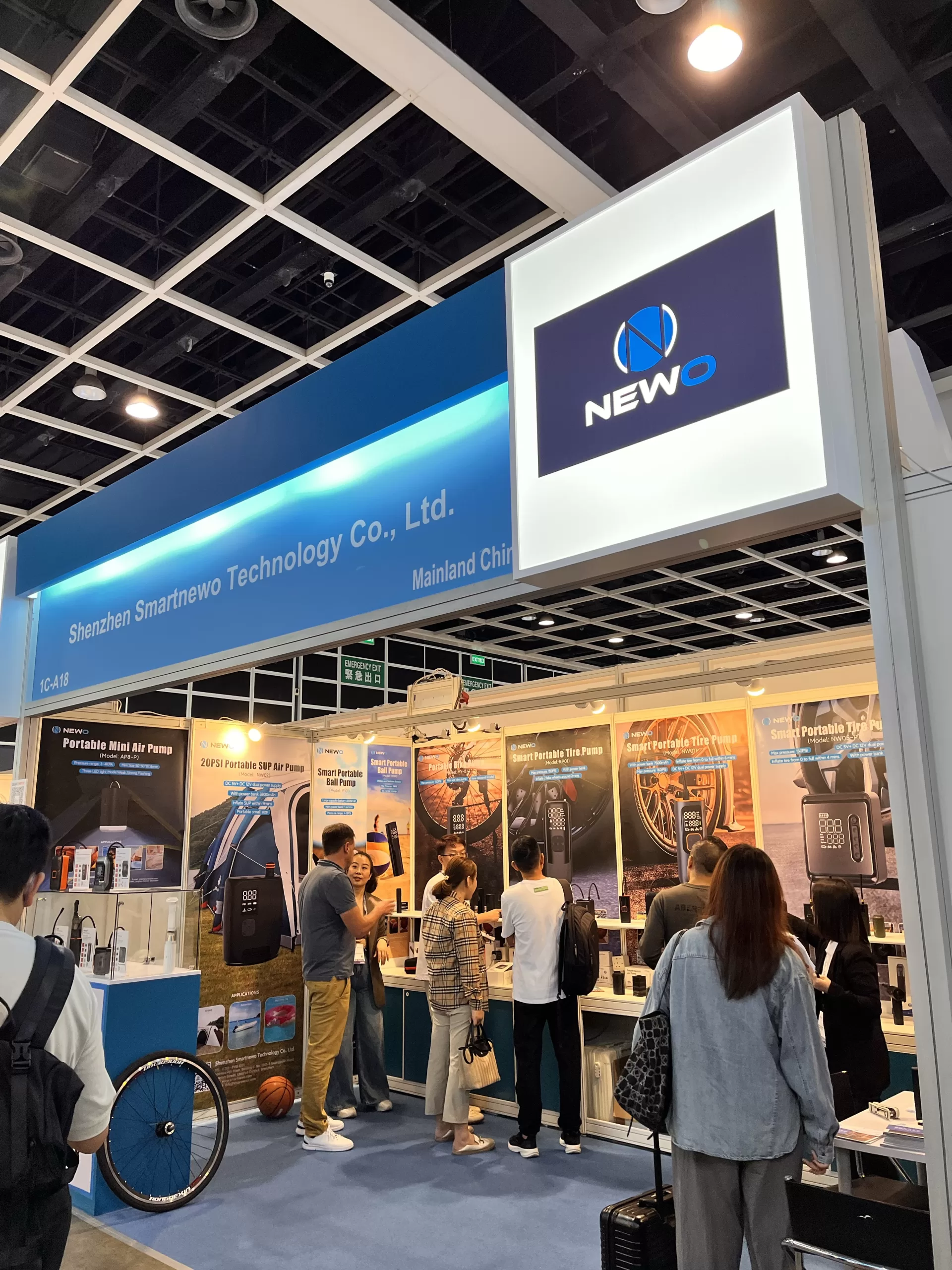
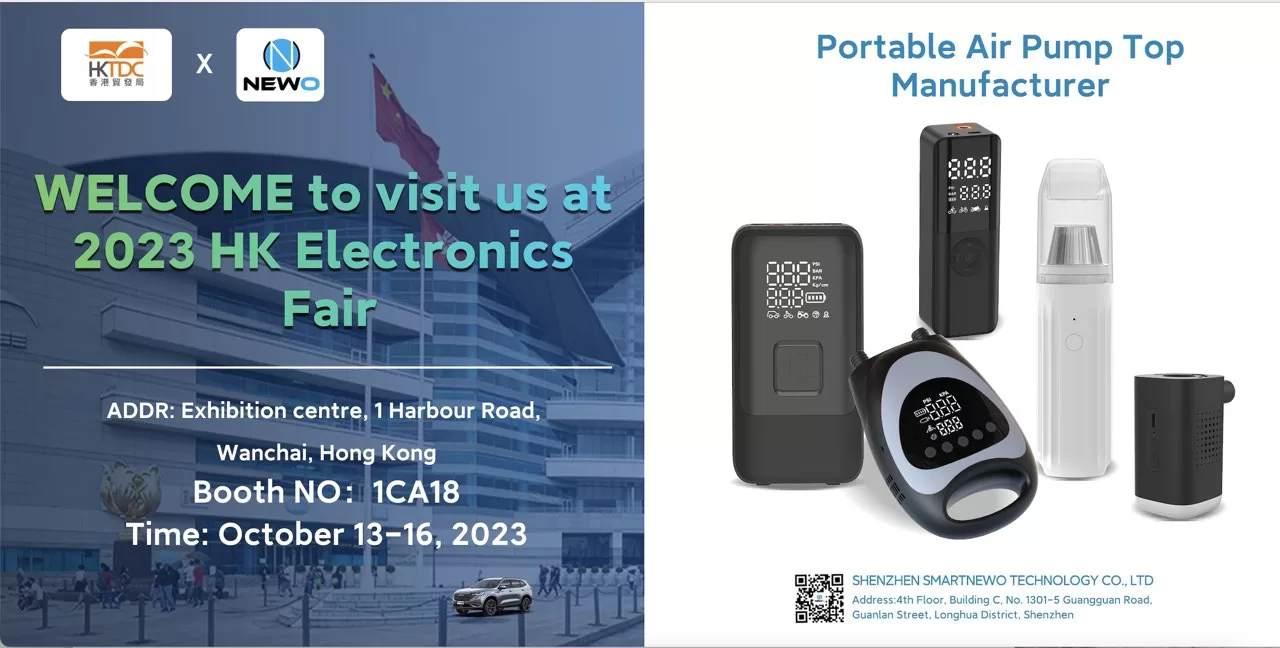
“Hong Kong Autumn Electronics Fair – 1CA18 (October 13th to 16th): Smartnewo invites you to visit our booth!
Hong Kong Autumn Electronics Fair...



-

What to Check Before Ordering Custom Electric Bike Pumps
Plan custom electric bike pumps with a clear requirements freeze for valves, TPU tubes, portability, repeated top-ups, charging, and model-specific documents.... -

OEM vs ODM Air Pumps: Which Manufacturing Model Fits Your Brand?
Compare OEM and ODM air pump projects by design responsibility, change approval, development scope, and written ownership terms before choosing your route.... -
How to Choose a Reliable Tire Inflator Manufacturer in China
Choose a tire inflator manufacturer in China with a focused RFQ, supplier evidence, configuration checks, and clear sample-to-pilot decisions for your brand.... -

Rechargeable Electric SUP Pump for Paddle Boards: Faster Inflation for SUPs, Kayaks and Inflatable Tents
The BL10-C Portable Electric Bike Tire Inflator is a compact and lightweight mini electric bike pump designed for modern cyclists. With up to 120 PSI pressure, a digital LED display, preset pressure control, automatic shut-off, USB-C charging, and multiple valve adapters, BL10-C offers a convenient inflation solution for road bikes,... -

Are Electric Bike Pumps Worth It in 2026? Electric Pump vs CO₂ vs Mini Hand Pump
Discover whether electric bike pumps are worth it in 2026. This guide compares electric bike pumps, CO₂ inflators, and mini hand pumps for road cycling, gravel riding, commuting, and long-distance rides. Learn the pros, limitations, best use cases, and key features to look for before choosing the right portable tire... -
BL10-C Portable Electric Bike Tire Inflator: Small Size, Reliable Power for Every Ride
The BL10-C Portable Electric Bike Tire Inflator is a compact and lightweight mini electric bike pump designed for modern cyclists. With up to 120 PSI pressure, a digital LED display, preset pressure control, automatic shut-off, USB-C charging, and multiple valve adapters, BL10-C offers a convenient inflation solution for road bikes,... -

Why Mini Electric Bike Pumps Are Becoming Essential for Modern Cycling
Discover why mini electric bike pumps are becoming essential for modern cyclists. Learn how portable electric bike pumps improve tire pressure management, riding safety, and convenience.... -

The Ultimate Smart Solution for Easy Outdoor Adventures in 2026
Discover how a spring travel air pump simplifies outdoor trips with fast inflation, smart features, and powerful performance—perfect for every adventure.... -

Powerful 5-in-1 Portable Car Tire Inflator and Jump Starter: The Ultimate Emergency Tool for Every Driver
Why Every Driver Needs a Portable Car Tire Inflator and Jump Starter Modern drivers face many unexpected situations on the road. A flat tire, low tire pressure, or a dead car battery can happen at the worst possible time. That’s why having a portable car tire inflator and jump starter is... -

7 Real Cycling Scenarios That Show Why Every Rider Should Carry a Mini Bike Pump
Cycling is one of the most freeing activities you can enjoy. Whether you’re commuting to work, riding through city streets, or exploring quiet countryside roads, a bike ride can instantly improve your day. But there’s one small problem that almost every cyclist eventually faces: Low tire pressure. It might happen...


-
How Is a Football Properly Inflated?
The correct inflation of a football - with not too much and not too little air - is a hotly debated topic among footballers.... -
Application Scenarios of Car Inflator Pump
Often long-distance business trips or play car owners because the road may be more remote areas, in this case if you encounter a tire leak....