
 Portable Tire Inflators
 Electric Air Pumps
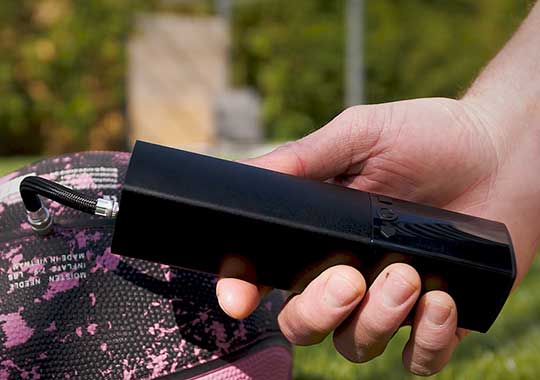
 Electric Car Tyre Pumps
 Electric Ball Pumps
 Electric Bike Pump
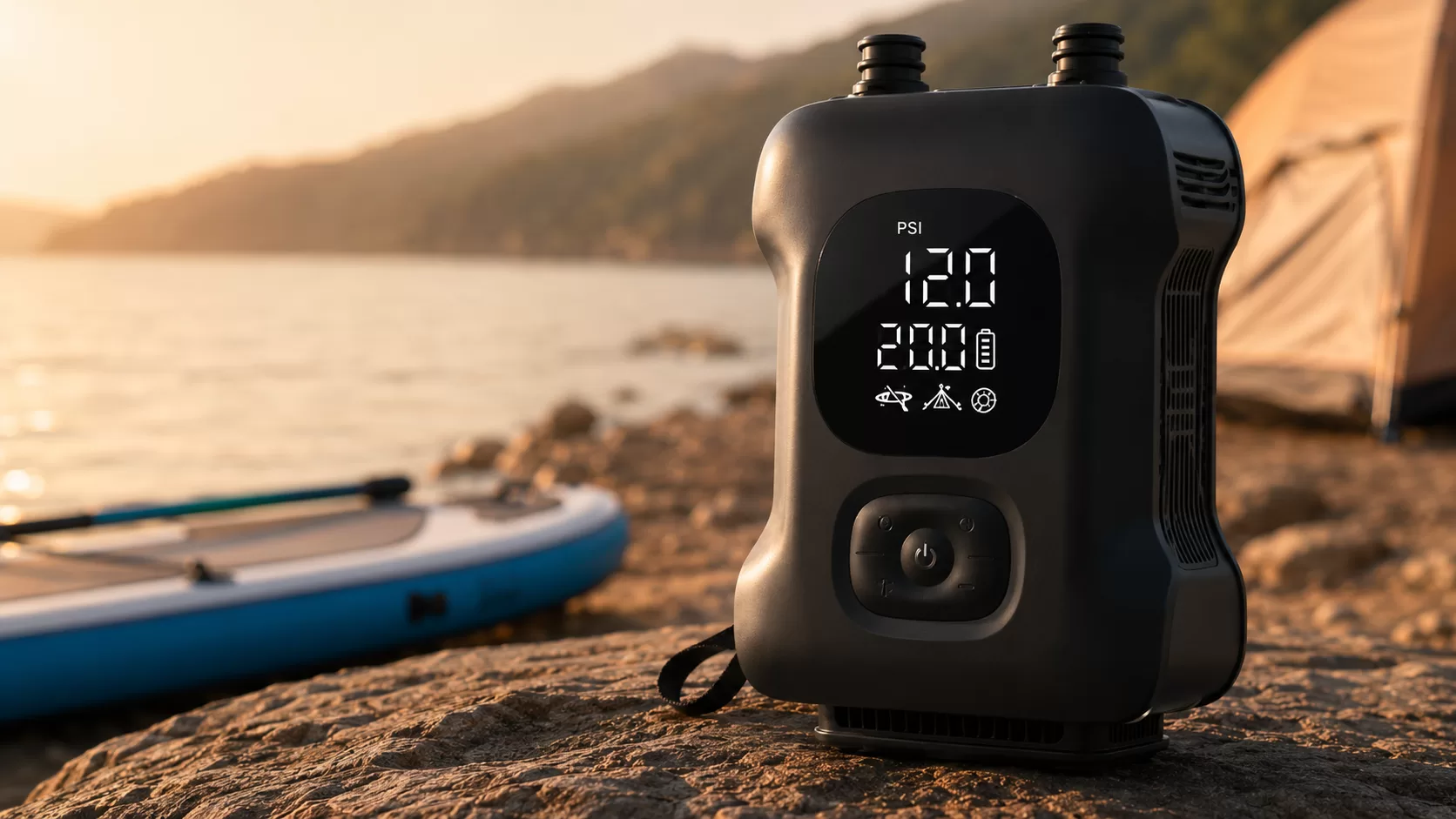
 SUP Air Pump

Essential Guide to Choosing and Using a Car Tire Inflator and Jump Starter
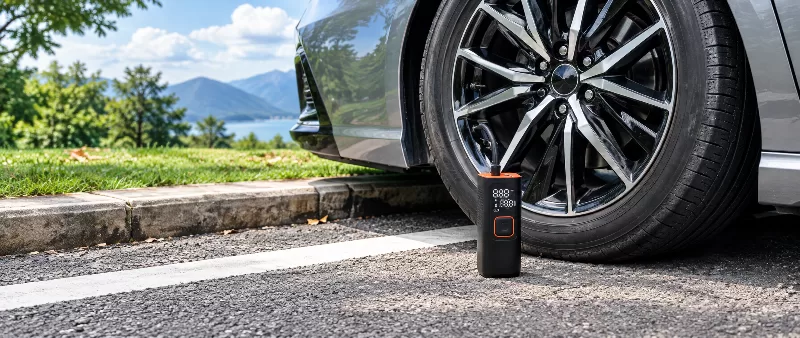
When a vehicle fails on a desolate shoulder, drivers typically face one of two common mechanical failures: a battery drained by extreme weather or a tire slowly collapsing against road debris. Carrying a modern car tire inflator and jump starter eliminates the dangerous vulnerability of waiting for a tow truck in unfamiliar territory. These compact multi-tools combine high-discharge lithium battery cells with miniature reciprocating air compressors, creating a self-sufficient emergency system for your trunk.
Understanding how these dual-purpose power units function transforms roadside anxiety into calculated mechanical preparedness. Modern lithium engineering has compressed bulky lead-acid booster packs and noisy garage compressors into a portable device that fits easily inside a glove compartment. By evaluating working amperage, continuous airflow rates, internal battery protections, and proper procedural sequences, you can choose an emergency device that delivers immediate reliability when starting an engine or adjusting tire pressure.
Understanding the Car Tire Inflator and Jump Starter Combination
Every driver eventually encounters an engine that refuses to crank or a sudden tire-pressure monitoring system alert miles away from the nearest service plaza. Combining these two recovery tools into a single housing addresses the reality of vehicular electrical and pneumatic failures without requiring duplicate batteries or tangled cables.
How Roadside Air Compressors and 12V Jump Packs Converge
Historically, motorists carried bulky copper jumper cables, relying entirely on the goodwill of another motorist to pull nose-to-nose on a narrow shoulder. Portable tire pumps were equally cumbersome, often requiring long cords plugged into a 12V cigarette lighter that blew fuses under heavy motor loads. A combined car tire inflator and jump starter resolves both dilemmas by pairing high-rate lithium cells directly with an internal electric pump motor.
This integration minimizes mechanical packaging while maximizing operational efficiency. The internal battery pack delivers stated starting current ranging from 400A to 600A to turn over high-compression starter motors in short bursts. The same battery pack also powers the unit’s 19-cylinder air pump, which compresses ambient air for tire inflation.
Key Scenarios Where a 2-in-1 Emergency Unit Proves Invaluable
Seasonal temperature drops create a notorious double-hazard for automotive systems. Chemical reactions within automotive lead-acid batteries slow drastically when temperatures plummet, reducing available cranking output precisely when engine oil thickens and requires maximum torque to rotate. As temperature falls, tire pressure generally falls as well—roughly 1 to 2 PSI per 10°F, depending on conditions.
A single portable unit can address either a starting problem or a tire-pressure problem, but available battery capacity may not be sufficient to perform both tasks fully. Prioritize the immediate emergency and follow the product manual. Beyond winter commutes, solo off-highway travel, cross-country expeditions, and everyday urban driving benefit from having independent starting and inflation power on demand.
Critical Technical Specifications You Need to Evaluate
Marketing materials frequently highlight exaggerated peak numbers that fail to reflect actual working capability. Dissecting engineering ratings enables buyers to distinguish capable emergency tools from lightweight gadgets that stall against real automotive loads.
Cranking Amperage Versus Peak Current Ratings
Manufacturers often advertise peak currents ranging into thousands of amperes, yet this metric measures only an instantaneous discharge lasting mere milliseconds. Starting performance depends on the available starting current, battery condition, connection quality, engine requirements, and temperature; peak current alone is not a complete compatibility measure.
| Current Rating | Operational Context | Notes |
|---|---|---|
| 300A – 600A Starting | Sustained turnover current | Typical range for portable lithium jump starters |
| 1000A – 1400A Peak | Millisecond surge threshold | Instantaneous discharge capability during initial crank |
The S02 is specified for 12V vehicle emergency starting with 400A to 600A starting current and 1000A to 1400A peak current. Actual compatibility depends on the vehicle, battery condition, temperature, and connection quality. If the sustained cranking current drops too low, the vehicle starter solenoid will merely click, regardless of how impressive the advertised peak current seems on the retail packaging. Always confirm compatibility with your specific vehicle and follow the manufacturer’s instructions.
Pump Cylinder Displacement, Working Pressure, and Real-World Airflow
Pneumatic performance hinges on cylinder bore diameter and electric motor wattage rather than arbitrary pressure maximums. While a rating of 150 or 160 PSI sounds substantial, passenger vehicle tires operate between 30 and 36 PSI, meaning volume displacement matters far more than theoretical shut-off pressure.
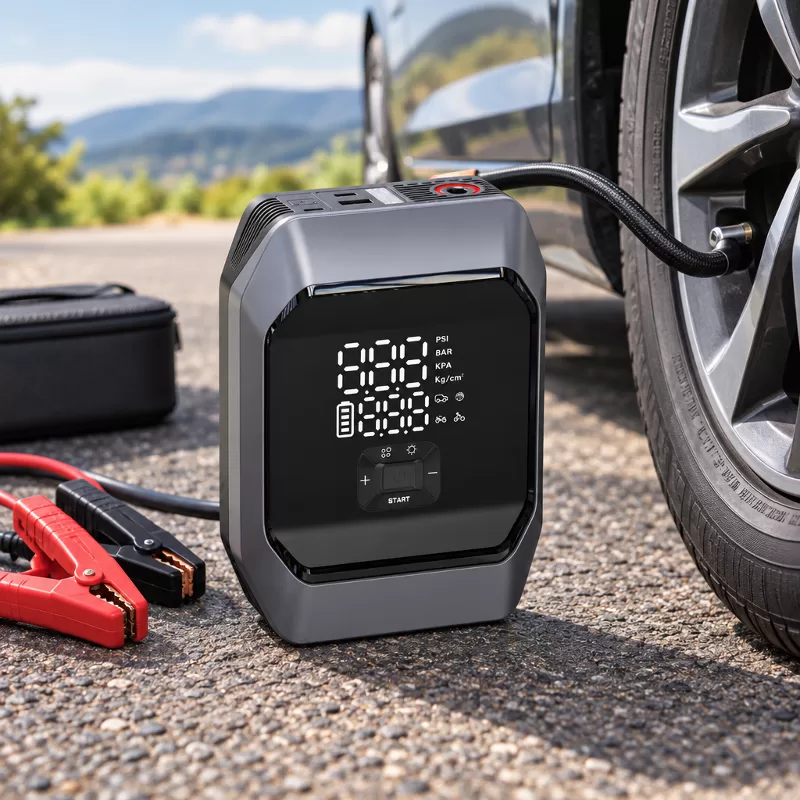
A 19-cylinder reciprocating pump delivering between 26 and 28 liters per minute provides an effective balance between thermal heat management and inflation speed. The S02 is rated at 26 to 28 L/min, and actual inflation time varies by tire size and starting pressure. Inflation time and duty limits depend on the pump design and operating conditions; follow the product manual’s runtime guidance.
Internal Lithium Battery Chemistry, Capacity, and Safe Storage Limits
Energy density within these tools typically relies on high-discharge lithium-ion or lithium-polymer cells wired in series. The S02 is specified with a 2000mAh × 4 battery configuration rated at 14.8V and 29.6Wh. The supplied specifications do not identify the exact cell chemistry or internal wiring arrangement.
- Discharge Efficiency: Multi-cell packs must support high C-rates to discharge hundreds of amps instantly without suffering internal voltage collapse.
- Thermal Operating Envelope: The S02 is specified for operation from 0°C to 45°C. Performance may be reduced outside that range.
- Low Self-Discharge: Lithium-based chemistries hold charge across several months of storage, though routine top-ups prevent deep discharge damage.
Extreme heat degrades cell capacity rapidly, while sub-zero storage temporarily slows ion transfer, reducing available cranking output. Store the unit in a cool, dry location away from direct sunlight and extreme temperatures. Never expose lithium jump starters to direct greenhouse sunlight through windshields or leave them on hot metal surfaces, which can drive enclosure temperatures above safe operating thresholds.
In-Depth Product Profile: S02 2-in-1 Emergency Unit
Examining specific implementations provides clarity on how these systems integrate into everyday automotive ownership. Our team at Newo designs multi-function architectures to withstand challenging roadside environments through strict pneumatic engineering standards.
Hardware Architecture and Manufacturer Specifications
The S02 model integrates a 100W mechanical drive system inside a 187 × 114 × 52.7 mm enclosure. Its 19-cylinder pump is specified for a 2 to 160 PSI pressure setting range, with rated airflow of 26 to 28 L/min. Actual inflation performance varies by tire size, starting pressure, and operating conditions. The unit is powered by a 4-cell 14.8V, 29.6Wh lithium pack.
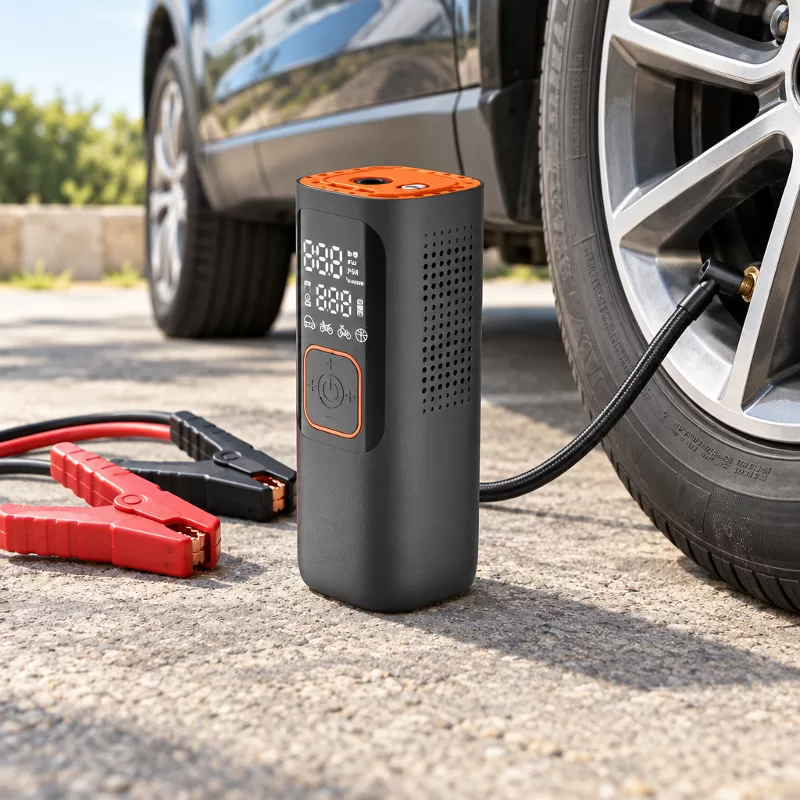
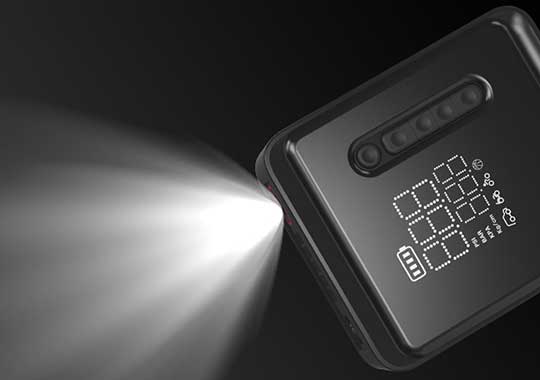
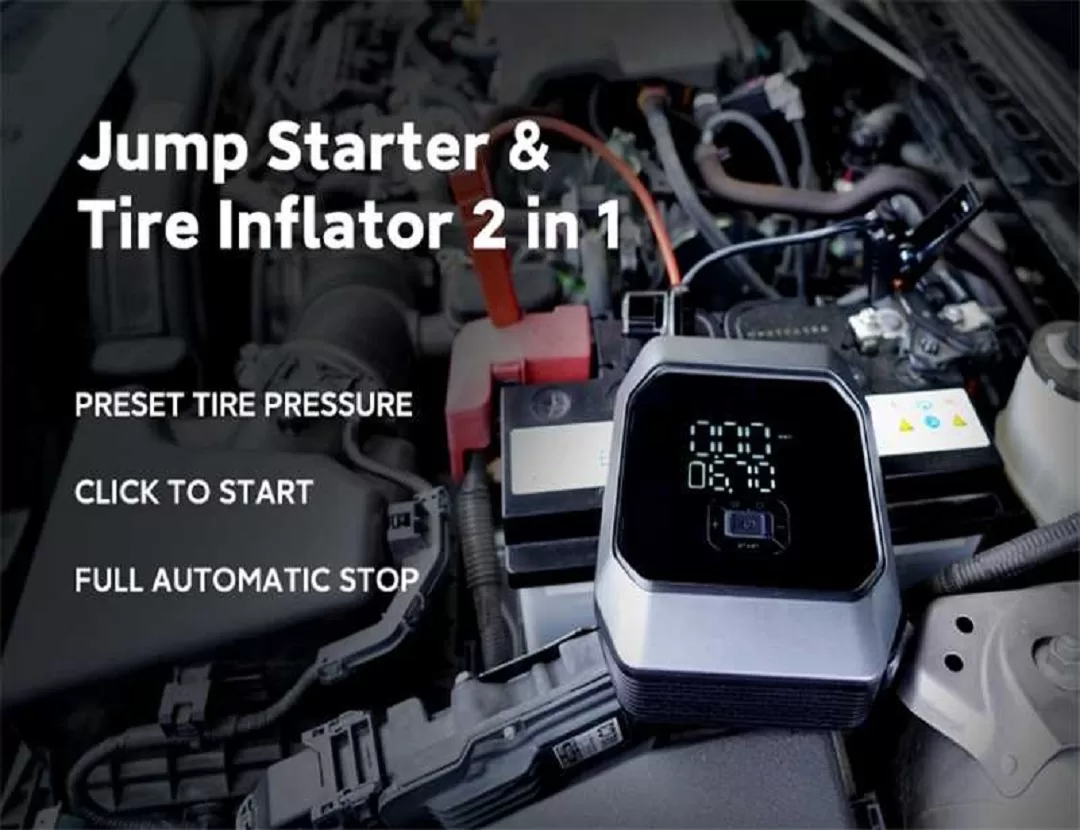
Dual LED screens display target pressure, real-time pressure readouts, and battery status simultaneously, reducing user error during stressful breakdowns. Charging input protocols support 5V/3A up to 20V/1.5A via Type-C connections, achieving a full charge in three to four hours, while a dedicated 5V/2A port provides external power-bank utility for personal devices.
S02 Core Technical Overview:
- Starting Current: 400A / 500A / 600A
- Peak Current: 1000A / 1200A / 1400A
- Pump Mechanics: 19-cylinder assembly (26-28 L/min)
- Pressure Scope: 2 to 160 PSI (Preset auto shut-off)
- Battery Architecture: 4 × 2000mAh cells (14.8V, 29.6Wh)
- Operating Thermal Range: 0°C to 45°C
Built-in safety firmware actively monitors circuit conditions, incorporating protections against high voltage, low voltage, high temperature, reverse connection, and short circuit. The product is specified with zero-volt start; users should follow the supplied jumper-cable instructions and safety indicators because the exact activation procedure is model-specific.
Real-World Inflation and Starting Performance Limits
Manufacturer performance specifications for the S02 indicate a continuous runtime between 25 and 40 minutes per full charge, remaining under 85 dB of acoustic noise at a one-meter distance. On a full charge, the unit can inflate approximately 2.5 large 285/70R17 off-road tires from zero pressure. Routine passenger-tire top-ups generally require less air than inflating a large tire from zero pressure, but the number of top-ups per charge varies with tire size, pressure loss, and operating conditions.
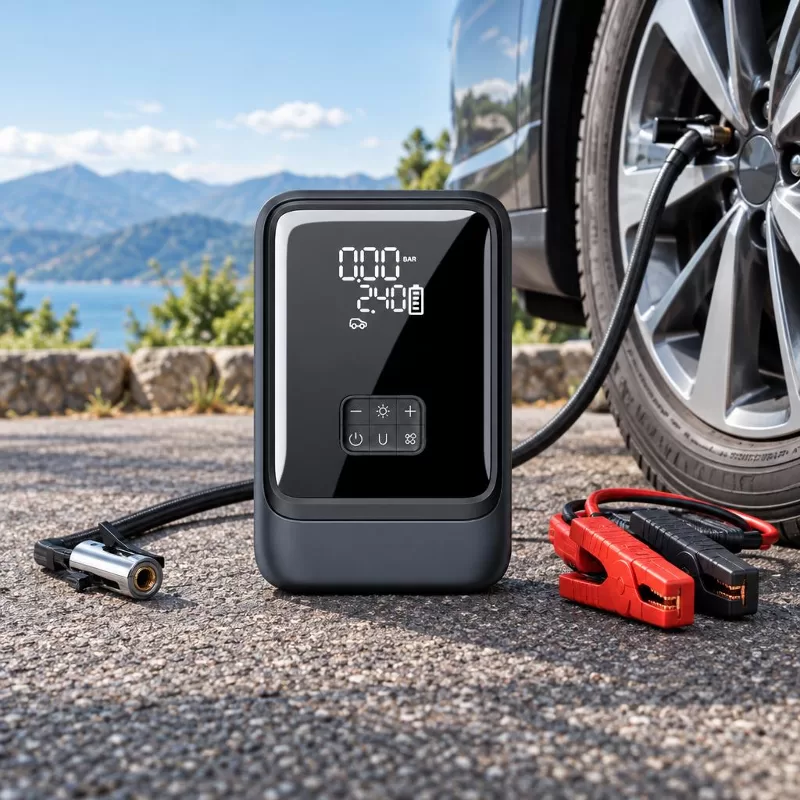
The unit provides five preset modes plus custom pressure settings, with selectable PSI, KPA, BAR, and Kg/cm² units. The exact preset categories should be described only as shown in the product manual or interface. The S02 is intended for 12V vehicle emergency starting, but actual compatibility depends on the vehicle, battery condition, temperature, and connection quality. It is designed for emergency self-rescue rather than industrial tire-shop duty cycles.
Step-by-Step Roadside Operation and Safety Protocols
Operating high-amperage batteries and pressurized pneumatic tools requires strict adherence to safety protocols. A mechanical error around lead-acid batteries can cause sparks, while incorrect tire inflation pressures compromise vehicle traction and braking distances.
Safe Vehicle Jump-Starting Sequence
Before connecting any auxiliary power source, park the disabled vehicle, engage the emergency brake, and switch off all cabin electronics, including headlights, air conditioning, and infotainment screens. This limits unnecessary electrical draws while protecting sensitive automotive computers from voltage spikes.
- Inspect the vehicle battery for structural defects, including swollen case walls, wet chemical leaks, or physical cracks, which indicate internal battery failure.
- Insert the smart jumper cable connector fully into the jump starter port until the terminal indicator confirms a secure connection.
- Connect the clamps only to the terminals or designated jump-start points specified in the vehicle and jump-starter manuals; do not assume a battery post or chassis point is appropriate for every vehicle.
- Confirm the smart cable’s status indication and follow the supplied instructions for the start attempt, including any required activation procedure, crank duration, and wait interval.
- Once the motor fires, disconnect the negative clamp immediately, followed by the positive clamp, then stow the unit.
Follow the supplied instructions for the maximum crank duration and wait interval. If the vehicle does not start, stop and investigate the battery, connections, or vehicle fault rather than repeatedly cranking. Continuous attempts can overheat the lithium battery pack and damage the starter motor windings.
Accurate Tire Inflation Procedure
Maintaining correct tire pressure prevents irregular tread wear, maximizes fuel economy, and reduces blowout risks. NHTSA defines a cold tire as one on a vehicle that has been parked for at least three hours, or driven less than one mile after that period.
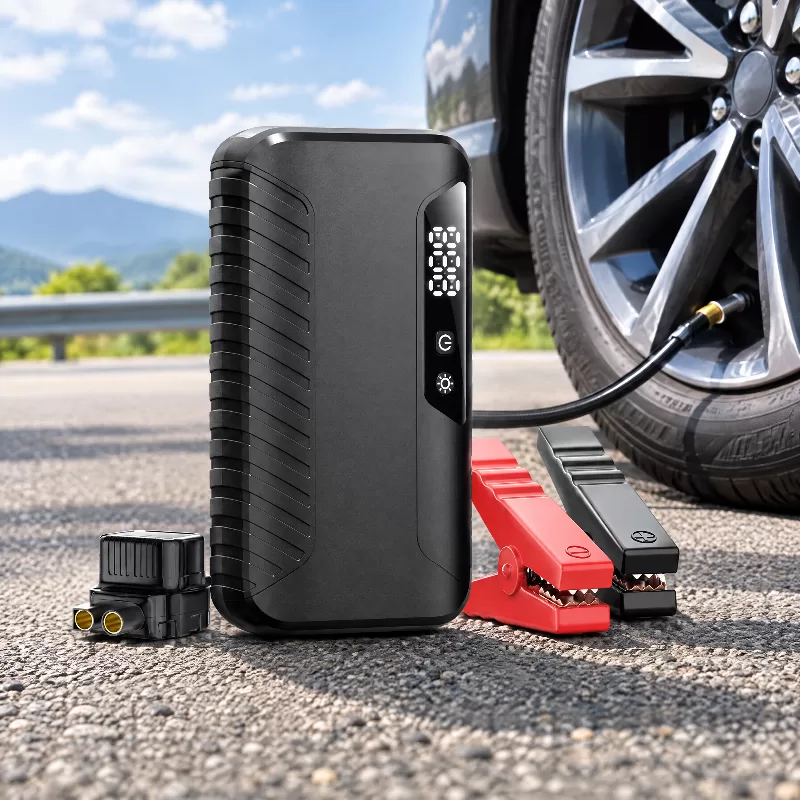
Check the Tire and Loading Information label on the driver-side door edge, doorjamb, or pillar, or consult the owner’s manual. Use the listed vehicle-specific pressure. The sidewall marking states the tire manufacturer’s maximum permitted cold inflation pressure. Do not use the sidewall maximum as the target; follow the vehicle manufacturer’s cold-pressure recommendation on the placard or in the owner’s manual.
- Placard Reference: Locate the official vehicle pressure recommendation on the Tire and Loading Information label or in the owner’s manual.
- Chuck Attachment: Thread or clamp the inflator air chuck directly onto the tire Schrader valve, confirming zero hissing or leakage.
- Preset Configuration: Power on the unit, select the desired measurement unit, and set the digital target using the plus and minus buttons.
- Active Inflation: Start the pump and monitor progress; the internal pressure sensor will automatically disengage the motor once reaching the target.
After automatic shut-off occurs, unthread the chuck briskly and replace the plastic valve stem cap. The valve cap provides secondary protection against dirt and moisture entering the valve core; reinstall it after checking pressure.
Comparative Analysis: 2-in-1 Integrated Units Versus Dedicated Separate Tools
Drivers often debate whether purchasing an integrated multi-tool outperforms carrying a dedicated booster pack alongside a standalone 12V air compressor. Evaluating trunk volume, charging management, and hardware redundancy reveals clear trade-offs for different vehicle owners.
Storage Efficiency, Trunk Weight, and Emergency Readiness
A primary obstacle to emergency preparedness is cargo clutter. Carrying independent jumper cables, a heavy lead-acid jump box, an analog air pump, and extension cords consumes valuable trunk space and often leads drivers to leave essential gear in the garage.
| Evaluation Metric | Integrated 2-in-1 Multi-Tool | Separate Standalone Tools |
|---|---|---|
| Trunk Footprint | Minimal (fits under seats or in gloveboxes) | Substantial (demands dedicated cargo containers) |
| Charging Maintenance | Single Type-C cable connection | Multiple proprietary chargers and plug types |
| Operational Independence | Completely wireless internal battery | Frequently reliant on vehicle 12V auxiliary sockets |
| Setup Time | Quick assembly and connection | Requires untangling separate cords and accessories |
Consolidating these functions ensures that a driver maintains one centralized battery system. Keeping an integrated car tire inflator and jump starter charged via an ordinary cabin USB-C port makes routine readiness far simpler than tracking down disparate charging cables.
Redundancy, Longevity, and Duty-Cycle Trade-offs
Despite distinct storage advantages, integrated tools demand thoughtful energy management. If an operator completely depletes the internal lithium battery inflating multiple flat truck tires, the device will lack the electrical reserve required to jump-start an engine immediately afterward. Prioritize the most critical function based on the immediate failure, and use the unit according to its manual.
For commercial service trucks or fleet mechanics handling dozens of service calls daily, heavy-duty industrial compressors and high-capacity roll-around chargers remain irreplaceable. However, for personal passenger vehicles, highway commuters, and family road trips, an integrated tool provides the optimal balance of functional performance and space savings.
Roadside Kit Integration and Long-Term Maintenance
An emergency tool is only as dependable as its maintenance schedule. Treating a high-output lithium device as an unmonitored trunk accessory invites failure when roadside conditions turn hostile.
Essential Gear to Pair with Your Emergency Tool
A multi-function unit forms the mechanical core of a roadside recovery kit, but physical road safety requires supplementary visibility and diagnostic items. Placing warning gear between incoming traffic and your vehicle creates a safe perimeter for inflation or jumping procedures.
- Reflective Triangles or LED Beacons: Place warning devices at a safe distance appropriate to traffic conditions, road geometry, and local requirements.
- Heavy-Duty Work Gloves: Protect hands from hot engine surfaces, sharp road debris embedded in tire tread, and corrosive battery acid residue.
- Tire Tread Depth Gauge and Plug Kit: Having sticky tire plugs and a rasp tool allows temporary puncture repairs before engaging your inflator.
Storing these accessories together within a weather-resistant soft case prevents loose components from bouncing around the trunk floor. This organization ensures fast access during midnight emergencies on unlit highways.
Battery Preservation and Seasonal Care Guidelines
Avoid leaving the unit fully discharged for extended periods because deep discharge can reduce rechargeable-battery life. Recharge and store it according to the manufacturer’s instructions. Lithium cells experience parasitic drain from internal monitoring circuits even when powered off.
Inspect the battery indicator and recharge the unit according to the manufacturer’s storage guidance, especially before extended travel or seasonal use. Follow the manufacturer’s storage-temperature guidance and avoid exposing the unit to extreme heat or direct sunlight.
Frequently Asked Questions
Can a portable tire inflator and jump starter run entirely flat tires back to full pressure?
The S02 may restore pressure when the tire remains sealed to the rim and is not structurally damaged, but inflation capability varies by tire size and starting condition. Do not drive on a flat or damaged tire. However, if a tire has separated from the rim bead due to driving while completely flat, a compact portable inflator lacks the massive instantaneous air volume required to reseat the bead, requiring professional shop equipment. Inspect the tire for damage before driving and ensure it is properly seated on the rim.
What engine sizes can a 1000A to 1400A peak jump pack realistically turn over?
The S02 is specified for 12V vehicle jump starting with 400A to 600A starting current and 1000A to 1400A peak current. Confirm compatibility with the vehicle and follow the manufacturer’s instructions. Starting requirements depend on engine design, battery condition, temperature, electrical system health, and connection quality, not displacement alone. Extreme sub-zero temperatures may reduce starting performance due to thick engine oil and reduced battery output.
Why shouldn’t I inflate my tires to the maximum PSI printed on the sidewall?
The sidewall marking states the tire manufacturer’s maximum permitted cold inflation pressure, not the vehicle manufacturer’s recommended pressure. Do not use the sidewall maximum as the target; follow the vehicle manufacturer’s cold-pressure recommendation on the placard or in the owner’s manual. Using the correct pressure ensures proper vehicle handling, tire wear, and fuel economy.
What should I do if a vehicle fails to start on the first attempt?
Stop immediately and verify that the jumper clamps maintain a clean, biting connection on unpainted metal. Scrape away any visible lead oxidation or white sulfate powder on the battery terminals. Inspect the battery for swelling, leaks, or cracks. Allow the jump starter to rest briefly, then consult the manufacturer’s instructions for the recommended procedure. If repeated attempts fail, investigate the battery, charging system, starter motor, or other vehicle faults rather than continuing to crank.
Can the device recharge personal electronic devices during extended power outages?
The S02 includes a 5V/2A power-bank output, turning the emergency starter into a functional power bank. It can provide USB power to compatible devices, but the number of charges depends on the device and conversion losses. When using this feature, reserve sufficient battery capacity for the vehicle-starting task and follow the manufacturer’s operating guidance. Depleting the battery completely for device charging will eliminate your ability to jump-start a vehicle.
Practical Roadside Preparedness and Tool Selection
Automotive emergencies rarely happen under ideal conditions; they occur on rainy highway shoulders, in desolate winter parking lots, and during rushed daily commutes. Equipping your vehicle with a well-engineered car tire inflator and jump starter eliminates reliance on unpredictable roadside assistance while providing autonomy over common electrical and pneumatic failures. By prioritizing realistic starting-current specifications, durable 19-cylinder pump mechanics, listed protections against high voltage, low voltage, high temperature, reverse connection, and short circuit, and disciplined seasonal recharging, you ensure your emergency recovery gear delivers dependable power when you need it most.
-

Meet NEWO at the 140th Canton Fair: Visit Booth 10.3 M03–04
Meet NEWO at the 140th Canton Fair in Guangzhou, October 15–19, 2026. Visit Booth 10.3 M03–04 to explore portable air pumps and discuss OEM, ODM and distribution opportunities.... -

As Shenzhen Welcomes the World for APEC 2026, NEWO Welcomes You to Our Factory
As Shenzhen prepares for APEC 2026, NEWO welcomes international buyers and partners to visit our factory, meet our team and explore future cooperation.... -

Leading the Way in Product Innovation and Excellence
Smartnewo exemplifies professionalism in product innovation and manufacturing. Their collaboration with Xiaomi Youpin on the G01 crowdfunding project highlights their expertise in creating compact, powerful inflatable pumps. Rigorous engineering, meticulous production processes, and advanced quality assurance underscore their commitment to excellence. The success of the G01 project, with significant market... -

Essential Qualities of an Excellent Supplier
In today's competitive market, finding a reliable supplier is crucial for business success. Based on insights from Smartnewo and broader internet research, here are key qualities an excellent supplier must possess:... -

NW06 Tire Inflator: Compact Power for Quick Inflation
Summary The NW06 Tire Inflator delivers quick and efficient tire inflation with a powerful 35L/min airflow. It features a user-friendly LCD screen for real-time pressure monitoring, dual power options with a built-in 6000mAh battery, and multiple nozzle attachments for versatile use. Its compact design and integrated LED light ensure convenience and... -

Unleash the Power of Portability: The SmartNewo Jump Starter with Air Compressor KF03
This guide will walk you through the steps to effectively use a portable tire inflator, helping you stay prepared and safe on the road.... -

Newo Attends The 2024 Consumer Electronics Show (CES)
Smartnewo booth is located at 53672, Halls A-D, Level 2, Venetian Expo, Las Vegas Convention Center (LVCC). ... -

Smartnewo’s Dual-Cylinder Air Pump Rocks the Hong Kong Autumn Electronics Fair!
Smartnewo’s Dual-Cylinder Air Pump Rocks the Hong Kong Autumn Electronics Fair!... -

Meet at the Canton Fair! Smartnewo brings dual-cylinder air pumps, making your inflation experience faster and more stable!
NEWO has went deep communication and negotiation with customers from all over the world on booth.... -

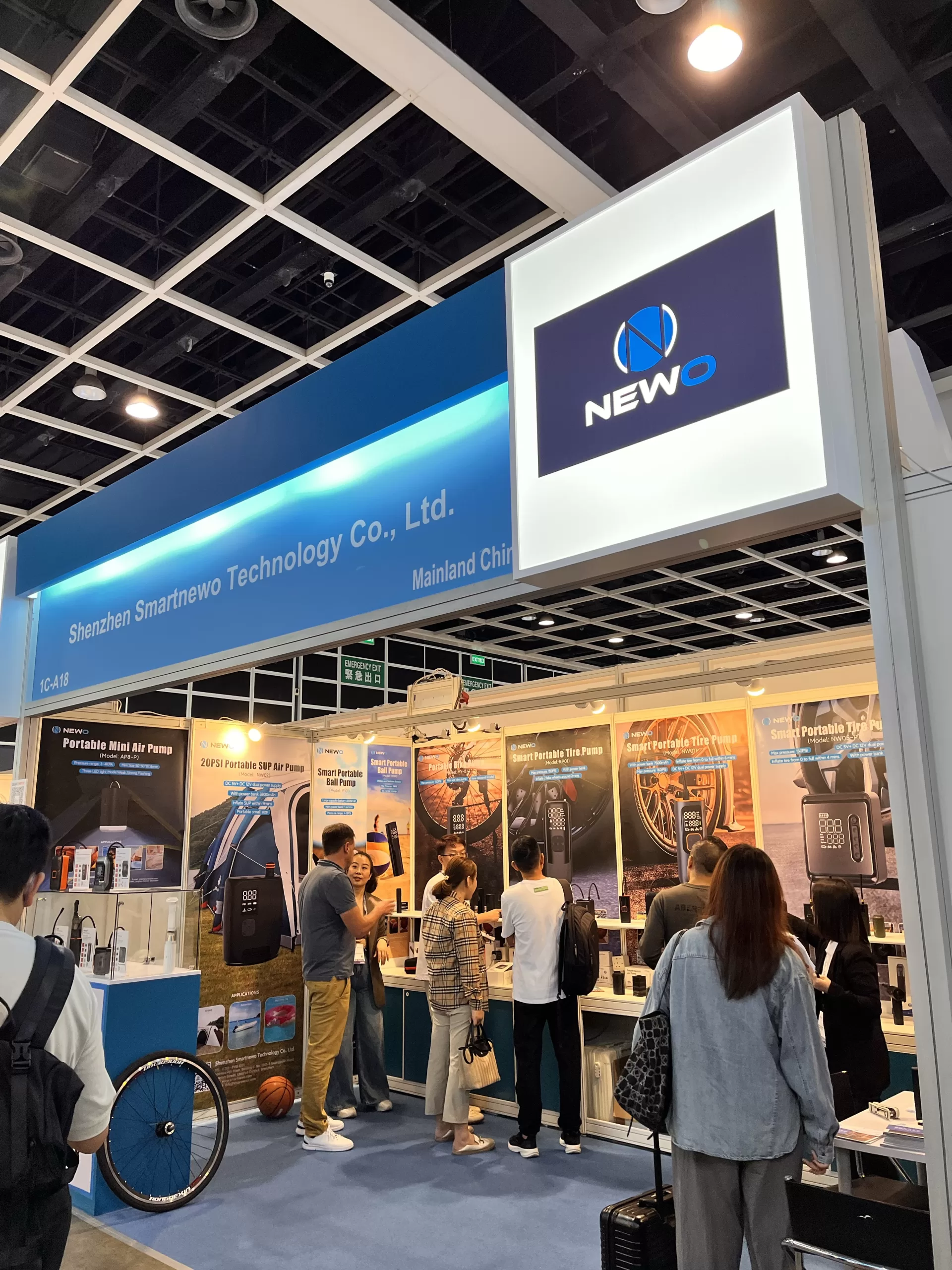
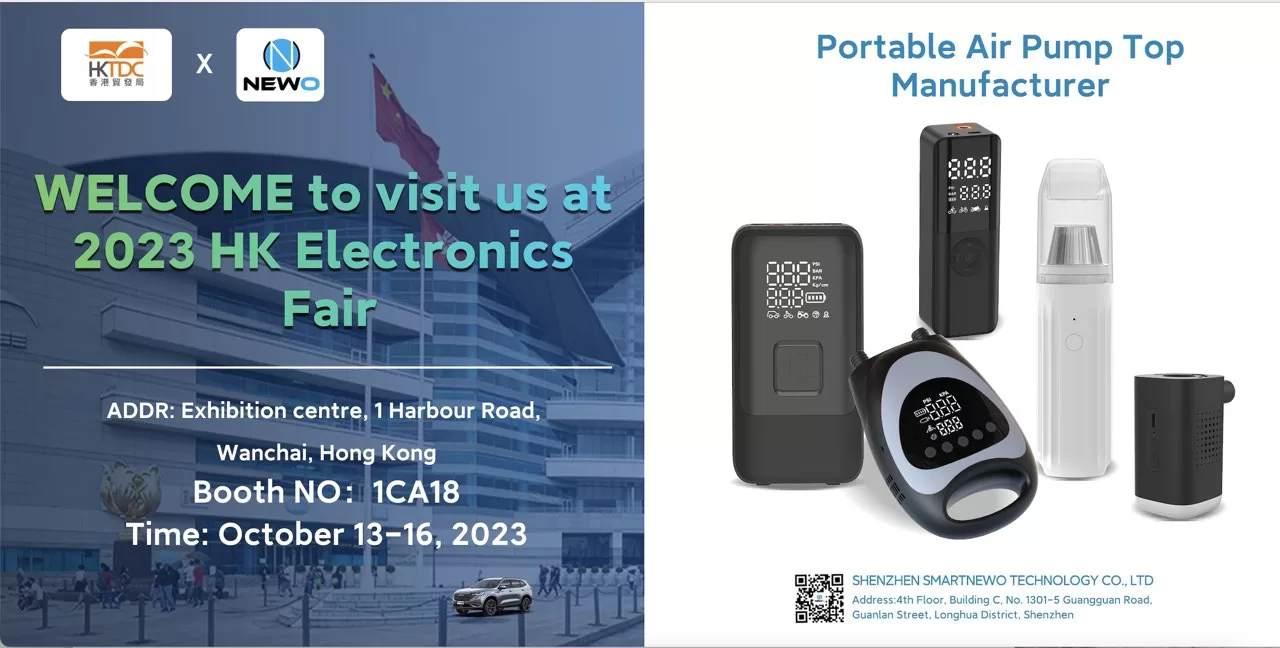
“Hong Kong Autumn Electronics Fair – 1CA18 (October 13th to 16th): Smartnewo invites you to visit our booth!
Hong Kong Autumn Electronics Fair...





-

What to Check Before Ordering Custom Electric Bike Pumps
Plan custom electric bike pumps with a clear requirements freeze for valves, TPU tubes, portability, repeated top-ups, charging, and model-specific documents.... -

OEM vs ODM Air Pumps: Which Manufacturing Model Fits Your Brand?
Compare OEM and ODM air pump projects by design responsibility, change approval, development scope, and written ownership terms before choosing your route.... -
How to Choose a Reliable Tire Inflator Manufacturer in China
Choose a tire inflator manufacturer in China with a focused RFQ, supplier evidence, configuration checks, and clear sample-to-pilot decisions for your brand.... -

Rechargeable Electric SUP Pump for Paddle Boards: Faster Inflation for SUPs, Kayaks and Inflatable Tents
The BL10-C Portable Electric Bike Tire Inflator is a compact and lightweight mini electric bike pump designed for modern cyclists. With up to 120 PSI pressure, a digital LED display, preset pressure control, automatic shut-off, USB-C charging, and multiple valve adapters, BL10-C offers a convenient inflation solution for road bikes,... -

Are Electric Bike Pumps Worth It in 2026? Electric Pump vs CO₂ vs Mini Hand Pump
Discover whether electric bike pumps are worth it in 2026. This guide compares electric bike pumps, CO₂ inflators, and mini hand pumps for road cycling, gravel riding, commuting, and long-distance rides. Learn the pros, limitations, best use cases, and key features to look for before choosing the right portable tire... -
BL10-C Portable Electric Bike Tire Inflator: Small Size, Reliable Power for Every Ride
The BL10-C Portable Electric Bike Tire Inflator is a compact and lightweight mini electric bike pump designed for modern cyclists. With up to 120 PSI pressure, a digital LED display, preset pressure control, automatic shut-off, USB-C charging, and multiple valve adapters, BL10-C offers a convenient inflation solution for road bikes,... -

Why Mini Electric Bike Pumps Are Becoming Essential for Modern Cycling
Discover why mini electric bike pumps are becoming essential for modern cyclists. Learn how portable electric bike pumps improve tire pressure management, riding safety, and convenience.... -

The Ultimate Smart Solution for Easy Outdoor Adventures in 2026
Discover how a spring travel air pump simplifies outdoor trips with fast inflation, smart features, and powerful performance—perfect for every adventure.... -

Powerful 5-in-1 Portable Car Tire Inflator and Jump Starter: The Ultimate Emergency Tool for Every Driver
Why Every Driver Needs a Portable Car Tire Inflator and Jump Starter Modern drivers face many unexpected situations on the road. A flat tire, low tire pressure, or a dead car battery can happen at the worst possible time. That’s why having a portable car tire inflator and jump starter is... -

7 Real Cycling Scenarios That Show Why Every Rider Should Carry a Mini Bike Pump
Cycling is one of the most freeing activities you can enjoy. Whether you’re commuting to work, riding through city streets, or exploring quiet countryside roads, a bike ride can instantly improve your day. But there’s one small problem that almost every cyclist eventually faces: Low tire pressure. It might happen...



-
How Is a Football Properly Inflated?
The correct inflation of a football - with not too much and not too little air - is a hotly debated topic among footballers.... -
Application Scenarios of Car Inflator Pump
Often long-distance business trips or play car owners because the road may be more remote areas, in this case if you encounter a tire leak....