

 Portable Tire Inflators
 Electric Air Pumps
 Electric Car Tyre Pumps
 Electric Ball Pumps
 Electric Bike Pump
 SUP Air Pump

Dual Cylinder Electric Air Pump: The Complete Engineering, Performance, and Selection Guide
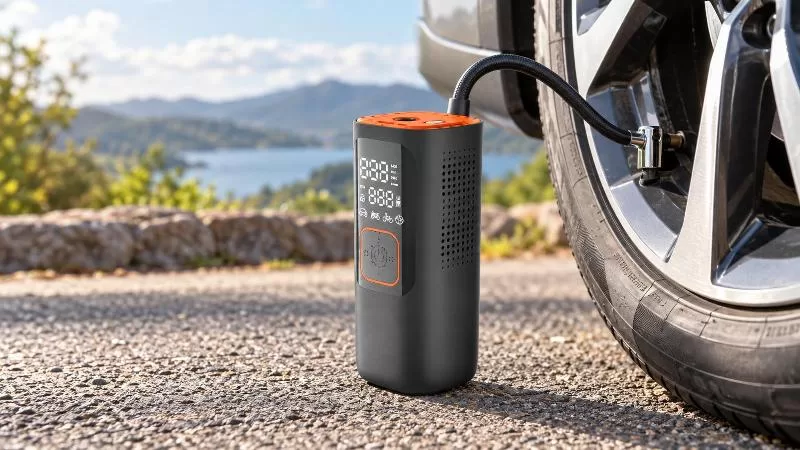
When a driver stands beside a highway shoulder facing a flat tire on a cold night, mechanical reliability is the only metric that matters. For years, motorists relied on compact single-piston tire inflators, and inflation time on these units can stretch out noticeably as tire pressure climbs. A dual cylinder electric air pump approaches this differently. By pairing two displacement chambers inside a handheld footprint, this pneumatic architecture is built, according to the manufacturer’s specifications, to deliver a specific rated airflow figure.
Modern vehicle owners, off-road enthusiasts, and daily commuters need inflation equipment that matches the real-world volume of contemporary truck and SUV tires. A dual cylinder electric air pump bridges the gap between bulky garage-bound workshop compressors and lightweight cordless tools, offering a combination of rated airflow and portability for that use case.
1. The Physics of Fast Inflation: Why Single Piston Pumps Hit the Inflation Wall
1.1 The Mechanics of Back-Pressure and Piston Resistance
Every pneumatic tire acts as a pressurized closed vessel that pushes back against incoming air. In a conventional single-cylinder pump, a lone piston must compress ambient air against the standing pressure of the tire on every upward stroke. As internal pressure rises, the resistance across the piston face increases, which can place more load on the electric motor drive shaft depending on the pump’s design and power rating.
This rising resistance is one reason inflation rate can vary with pressure on some single-cylinder units. The practical effect depends heavily on tire volume, starting pressure, target pressure, and the specific pump’s motor and airflow rating, so inflation time is not fixed and should not be assumed to follow any single formula. A pump sized for low-volume tasks will generally take longer on larger, higher-pressure tires than one rated for higher sustained airflow.
1.2 Thermal Buildup and Volumetric Efficiency Losses
Pneumatic compression follows basic gas behavior: compressing atmospheric air into a fraction of its original volume generates heat. How much heat builds up, and how it affects a given pump, depends on the specific motor, cylinder design, duty cycle, and cooling path, so it varies by product rather than following one universal pattern. As a general principle, sustained heat exposure can affect seals and moving parts in many types of compressors over time, which is part of why cooling design and intended duty cycle matter when comparing inflators.
Rather than asserting a specific failure sequence for any particular pump, it is more accurate to say that thermal management is one of the engineering factors that influences how consistently a pump can sustain its rated airflow during extended use. This is why the cylinder structure, working power rating, and housing design of a given pump are worth checking before relying on it for repeated or extended inflation sessions.
2. Engineering Architecture: How a Dual Cylinder Electric Air Pump Operates
2.1 The Dual 19-Cylinder Structure
Addressing sustained airflow demands calls for a different approach to the mechanical drive than a single small piston can offer. The A01 platform uses a dual 19-cylinder structure, as specified by the manufacturer, pairing two compression chambers rather than relying on one. According to the manufacturer’s specifications, this dual-chamber configuration is rated for an air delivery rate of 30 to 35 L/min, within a stated working pressure range of 2 to 160 PSI.
The supplied data does not specify that this airflow rate is maintained at every point across that pressure range, so it is best understood as the pump’s rated output rather than a constant figure at all pressures. Buyers comparing inflators on paper should treat the 30 to 35 L/min figure and the 2 to 160 PSI range as the manufacturer’s stated ratings for this specific dual-cylinder configuration, rather than as a guarantee of identical performance at every pressure point within that range.
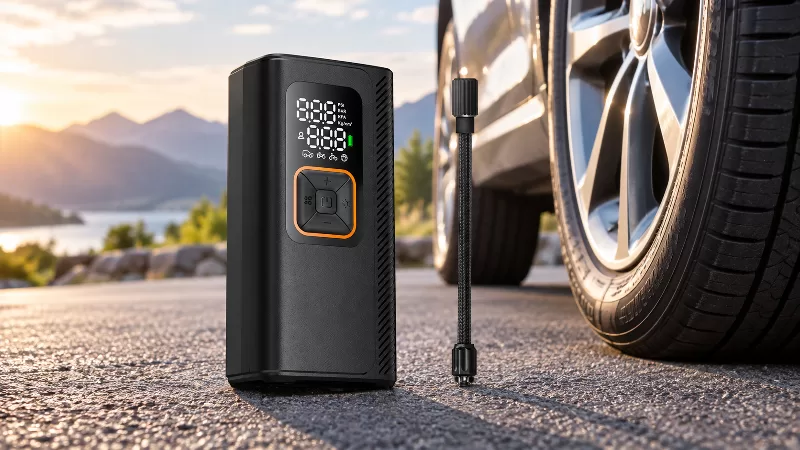
2.2 85W Working Power
The A01 is built around an 85W working power motor assembly according to the manufacturer’s specifications. The product data lists this 85W rating alongside the dual 19-cylinder structure as part of the same specification set, without detailing the internal design relationship between the two figures. The manufacturer also rates the unit’s noise level at 85 dB or below, as measured at 1.5 meters. Both the working power and the noise rating are presented here as stated product specifications rather than an explanation of the pump’s internal engineering or efficiency characteristics, since that level of design detail is not included in the supplied data.
3. Performance Metrics: Understanding the A01’s Rated Specifications
3.1 Airflow, Pressure Range, and Dimensions
Evaluating tire inflators means looking past headline numbers toward the manufacturer’s rated airflow and pressure range, since actual inflation performance also depends on tire volume and starting conditions. The table below lists the A01’s manufacturer-specified figures, which describe the unit’s own rated output rather than a tested comparison against other specific products on the market.
| Specification | A01 Dual-Cylinder Electric Air Pump |
|---|---|
| Cylinder Architecture | Dual 19-Cylinder Structure |
| Working Power | 85W |
| Air Flow Rate | 30 – 35 L/min |
| Working Pressure Range | 2 – 160 PSI |
| Noise Level | 85 dB or below at 1.5 Meters |
| Product Dimensions | 152 x 53 x 76 mm |
These figures are presented here as the manufacturer’s stated ratings to help buyers understand what the unit is designed to deliver, rather than as a benchmark against any other named product. Reading a specification sheet this way, as a description of one product’s own rated performance rather than a head-to-head claim, is generally the more reliable way to evaluate any portable inflator before purchase.
3.2 Battery Architecture: 3-Cell (11.1V) vs. 4-Cell (14.8V) Runtime Capacity
High-output pneumatic tools place real discharge demands on internal lithium cells. The A01 dual cylinder electric air pump uses 18650 lithium-ion power cells rated at 2500mAh each, offered in both three-cell and four-cell series arrangements, according to the manufacturer’s specifications.
-
Three-Cell Configuration (11.1V / 27.75Wh): rated by the manufacturer for about 20 minutes of runtime at a net weight of roughly 610g, with a stated inflation capacity of about 1.5 of 285 tires.
-
Four-Cell Extended Configuration (14.8V / 37Wh): rated by the manufacturer for about 30 minutes of runtime at a net weight of roughly 655g, with a stated inflation capacity of about 2 of 285 tires.
-
Battery Protection Voltage: the manufacturer lists protection voltages of 12.6V and 9V for the 3-cell version, and 16.8V and 12V for the 4-cell version; the supplied data does not specify which figure corresponds to which protection state.
-
Battery Cycle Life: the manufacturer rates the cells to retain 80% or greater of original capacity at the stated cycle count of 300 cycles.
The manufacturer’s inflation-capacity figures for 285 tires do not specify the exact test conditions, such as starting and ending pressure, so they are best read as general manufacturer estimates rather than a guaranteed result in every situation.
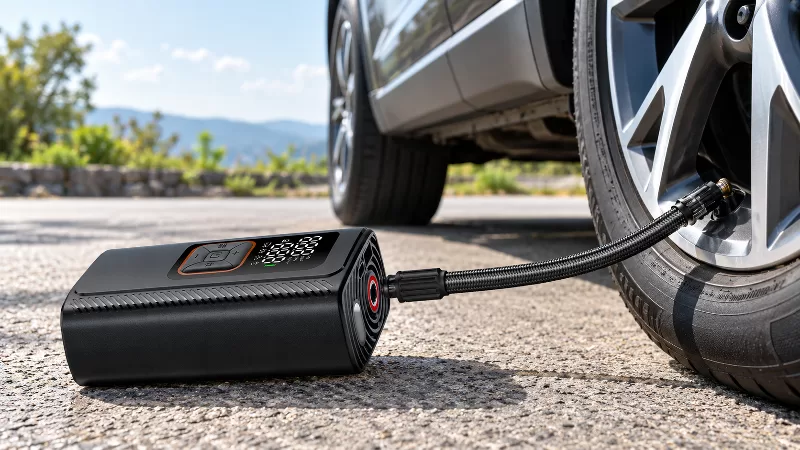
4. Multi-Scenario Field Guide: Matching Airflow to Application Demands
4.1 Heavy Vehicle and High-Volume Off-Road Tires
Off-road driving often means dropping tire pressures to around 15 PSI to traverse sand or jagged shale, then airing back up before re-entering asphalt highways. Inflating a set of four 285/70R17 tires with a lower-output pump can take considerable time, since larger tires hold more air volume.
Actual inflation time with the A01’s rated 30 to 35 L/min airflow will depend on tire size, starting pressure, target pressure, and ambient conditions, so it is reasonable to expect faster results than a lower-rated pump without assuming a fixed time for every tire. To get consistent results during heavy-duty truck inflation, the following sequence is a reasonable operating approach.
-
Thread the braided air hose directly onto the valve stem to establish a leak-free mechanical seal.
-
Power on the unit and check the dual LED screen to confirm the current standing tire pressure before starting airflow.
-
Select the appropriate vehicle preset mode, or manually program a target pressure using the control pad.
-
Place the pump upright on level ground, keeping the side ventilation perforations unobstructed.
-
Press the activation button; the automatic shut-off feature is designed to stop pumping once the target PSI is reached.
4.2 High-Pressure Bicycles, E-Bikes, and Sports Equipment
Not all inflation tasks call for sheer air volume. The right pressure for a bicycle or e-bike tire depends on the specific tire and rim combination, rider weight, and riding conditions, and it varies between clincher setups and tubeless setups rather than following one general rule. Riders should always follow the pressure limits printed on the tire sidewall and the rim manufacturer’s guidance for their particular setup.
The A01 offers five preset modes and a custom pressure setting, along with automatic shut-off when the selected pressure is reached, according to the product specifications. This combination of presets, a manual pressure option, and a 2 to 160 PSI stated range is intended to support tasks ranging from a low-pressure sports ball to a higher-pressure bicycle tire within the pump’s rated capability.
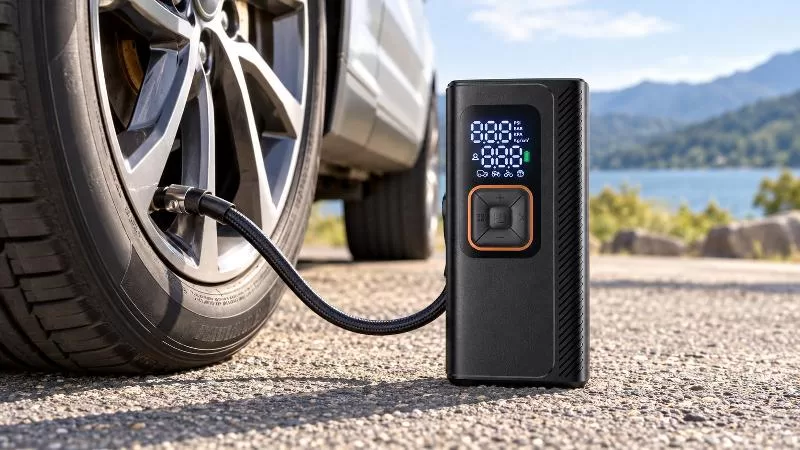
5. Beyond Tire Inflation: Power Integration and Emergency Roadside Utility
5.1 Type-C Input and Output, and 45W External Discharge
A dead roadside tool is not much better than carrying no tool at all. The A01 includes a Type-C port supporting input and output profiles spanning 5V 3A, 9V 2A, 12V 2A, 15V 2A, and 20V 2.25A, with a stated recharge time of roughly 3 to 4 hours for the internal battery, according to the manufacturer’s specifications.
The unit is rated to deliver up to 45W of external fast output power. According to the product specifications, this output is intended to support charging compatible devices from the inflator’s internal 18650 lithium cells. A secondary standard USB output providing 5V 2A and 9V 2A is also included.
5.2 12V-14V Car Power as a Backup Option
Cordless convenience offers real mobility around a vehicle, but cold weather can reduce lithium battery output when equipment sits in a trunk over winter. The A01 includes stated support for 12V-14V car power, which the manufacturer lists as one of the unit’s power-related specifications.
The supplied product information confirms this 12V-14V car-power support but does not specify whether it is used to run the pump directly, to recharge the internal battery, or both, nor does it confirm that a vehicle-power cable is included with every version. Buyers who expect to rely on this feature during a roadside emergency should check the A01 manual or product listing for their specific version to confirm exactly how the car-power support functions and what cable, if any, is supplied.
6. Practical Buying and Operational Checklist for Dual Cylinder Inflators
6.1 Essential Hardware Checklist
Selecting an electric air pump means looking at the pump’s rated specifications rather than exterior styling alone. Buyers evaluating portable inflators for vehicle, cycling, or sports use should check several practical features before purchasing, including ventilation design, hose construction, display type, and shut-off behavior, since these details affect day-to-day usability more than the overall case styling does. The checklist below lists what the A01 offers in each of these areas, based on the manufacturer’s specifications.
-
Ventilation Perforations: continuous compression generates heat, so checking whether the housing includes side ventilation perforations, as seen on the A01, is a reasonable step when comparing portable inflators.
-
Braided Air Line: the A01 is supplied with a braided-exterior air hose; buyers should check the hose material and length suit their intended use, since the supplied information does not specify a pressure rating for the hose itself.
-
Dual LED Display: the A01 includes a dual LED display that, per the manufacturer, shows pressure, units, operating information, and battery status during use.
-
Automatic Shut-Off: the A01 is listed as including automatic shut-off when the selected pressure is reached, which is a useful feature to confirm on any inflator under consideration.
6.2 Operating Boundaries and Temperature Storage
Trunk-stored emergency gear has to cope with real environmental swings. The A01 is rated by the manufacturer to maintain operating integrity across an ambient temperature range from minus 10 degrees Celsius to 45 degrees Celsius.
Avoid leaving any battery-powered inflator exposed on a dashboard under direct summer sunlight, where interior cabin temperatures can climb well above the unit’s rated operating range. For battery storage and recharging intervals during long periods of non-use, follow the A01 manual or the manufacturer’s specific battery-storage guidance rather than a generic schedule, since storage recommendations can vary by battery chemistry and product.
7. Frequently Asked Questions (FAQs)
7.1 How does a dual cylinder electric air pump compare to a single-cylinder model?
A dual cylinder electric air pump like the A01 is rated by the manufacturer for 30 to 35 L/min of airflow. Whether this translates into faster inflation than a specific single-cylinder pump depends on that pump’s own rated airflow, along with tire size and starting and target pressure, so this should be understood as a specification to compare case by case rather than a general rule that dual-cylinder units always outperform single-cylinder ones.
7.2 Can this inflator seat a tubeless tire bead?
Seating a tubeless bead depends on the specific tire and rim combination and often requires a sudden burst of air volume that some setups may need from specialized seating equipment. The supplied product information does not confirm bead-seating compatibility for the A01, so this should not be assumed. Follow the tire and rim manufacturer’s instructions and use the recommended seating method for your specific setup.
7.3 Why does the air hose connector become warm during operation?
Air compression naturally generates heat as atmospheric air molecules are forced into a denser volume, and some of this thermal energy can transfer into the metal chuck and the initial segment of the air hose. The A01 uses a 320 mm braided hose, and it is good practice to let the metal valve fitting cool briefly after extended inflation before unscrewing it by hand.
7.4 What should I do if the battery runs out during an emergency?
If the internal 18650 battery pack is depleted, the A01’s listed 12V-14V car-power support may offer an alternative, according to the manufacturer’s specifications. The supplied information does not confirm whether this support runs the pump directly from the vehicle’s electrical system or is used to recharge the internal battery, so check the manual or product listing for your specific version to confirm the correct cable and method before relying on it in an emergency.
7.5 What does the dual LED display show?
The A01’s dual LED display is listed by the manufacturer as showing pressure, units, operating information, and battery status during use. This is intended to give the user clear visibility into the pump’s operation, including in low-light roadside conditions.
7.6 How long does the internal lithium battery last before needing replacement?
The internal 2500mAh 18650 power cells are rated by the manufacturer for 300 cycles at 80% or greater of original capacity. Actual calendar lifespan will depend on usage frequency, charging habits, and storage conditions, so this cycle rating should be read as a capacity benchmark rather than a guaranteed number of years in service.
8. Conclusion: Modernizing Roadside Preparedness
Pneumatic technology has moved well past the single-piston tire pumps of earlier designs. By combining a dual 19-cylinder structure with an 85W working power motor, the dual cylinder electric air pump is built, according to the manufacturer’s specifications, to deliver a stated 30 to 35 L/min airflow across a 2 to 160 PSI working pressure range. Whether maintaining correct tire pressures for daily driving or responding to an unexpected roadside puncture, choosing a dual-cylinder inflation platform like the A01 is intended to offer a practical balance of rated airflow, power options, and operating convenience based on its stated specifications.
-

Meet NEWO at the 140th Canton Fair: Visit Booth 10.3 M03–04
Meet NEWO at the 140th Canton Fair in Guangzhou, October 15–19, 2026. Visit Booth 10.3 M03–04 to explore portable air pumps and discuss OEM, ODM and distribution opportunities.... -

As Shenzhen Welcomes the World for APEC 2026, NEWO Welcomes You to Our Factory
As Shenzhen prepares for APEC 2026, NEWO welcomes international buyers and partners to visit our factory, meet our team and explore future cooperation.... -

Leading the Way in Product Innovation and Excellence
Smartnewo exemplifies professionalism in product innovation and manufacturing. Their collaboration with Xiaomi Youpin on the G01 crowdfunding project highlights their expertise in creating compact, powerful inflatable pumps. Rigorous engineering, meticulous production processes, and advanced quality assurance underscore their commitment to excellence. The success of the G01 project, with significant market... -

Essential Qualities of an Excellent Supplier
In today's competitive market, finding a reliable supplier is crucial for business success. Based on insights from Smartnewo and broader internet research, here are key qualities an excellent supplier must possess:... -

NW06 Tire Inflator: Compact Power for Quick Inflation
Summary The NW06 Tire Inflator delivers quick and efficient tire inflation with a powerful 35L/min airflow. It features a user-friendly LCD screen for real-time pressure monitoring, dual power options with a built-in 6000mAh battery, and multiple nozzle attachments for versatile use. Its compact design and integrated LED light ensure convenience and... -

Unleash the Power of Portability: The SmartNewo Jump Starter with Air Compressor KF03
This guide will walk you through the steps to effectively use a portable tire inflator, helping you stay prepared and safe on the road.... -

Newo Attends The 2024 Consumer Electronics Show (CES)
Smartnewo booth is located at 53672, Halls A-D, Level 2, Venetian Expo, Las Vegas Convention Center (LVCC). ... -

Smartnewo’s Dual-Cylinder Air Pump Rocks the Hong Kong Autumn Electronics Fair!
Smartnewo’s Dual-Cylinder Air Pump Rocks the Hong Kong Autumn Electronics Fair!... -

Meet at the Canton Fair! Smartnewo brings dual-cylinder air pumps, making your inflation experience faster and more stable!
NEWO has went deep communication and negotiation with customers from all over the world on booth.... -

“Hong Kong Autumn Electronics Fair – 1CA18 (October 13th to 16th): Smartnewo invites you to visit our booth!
Hong Kong Autumn Electronics Fair...










-

How to Choose a Reliable Tire Inflator Manufacturer in China
Choose a tire inflator manufacturer in China with a focused RFQ, supplier evidence, configuration checks, and clear sample-to-pilot decisions for your brand.... -

Rechargeable Electric SUP Pump for Paddle Boards: Faster Inflation for SUPs, Kayaks and Inflatable Tents
The BL10-C Portable Electric Bike Tire Inflator is a compact and lightweight mini electric bike pump designed for modern cyclists. With up to 120 PSI pressure, a digital LED display, preset pressure control, automatic shut-off, USB-C charging, and multiple valve adapters, BL10-C offers a convenient inflation solution for road bikes,... -

Are Electric Bike Pumps Worth It in 2026? Electric Pump vs CO₂ vs Mini Hand Pump
Discover whether electric bike pumps are worth it in 2026. This guide compares electric bike pumps, CO₂ inflators, and mini hand pumps for road cycling, gravel riding, commuting, and long-distance rides. Learn the pros, limitations, best use cases, and key features to look for before choosing the right portable tire... -
BL10-C Portable Electric Bike Tire Inflator: Small Size, Reliable Power for Every Ride
The BL10-C Portable Electric Bike Tire Inflator is a compact and lightweight mini electric bike pump designed for modern cyclists. With up to 120 PSI pressure, a digital LED display, preset pressure control, automatic shut-off, USB-C charging, and multiple valve adapters, BL10-C offers a convenient inflation solution for road bikes,... -

Why Mini Electric Bike Pumps Are Becoming Essential for Modern Cycling
Discover why mini electric bike pumps are becoming essential for modern cyclists. Learn how portable electric bike pumps improve tire pressure management, riding safety, and convenience.... -

The Ultimate Smart Solution for Easy Outdoor Adventures in 2026
Discover how a spring travel air pump simplifies outdoor trips with fast inflation, smart features, and powerful performance—perfect for every adventure.... -

Powerful 5-in-1 Portable Car Tire Inflator and Jump Starter: The Ultimate Emergency Tool for Every Driver
Why Every Driver Needs a Portable Car Tire Inflator and Jump Starter Modern drivers face many unexpected situations on the road. A flat tire, low tire pressure, or a dead car battery can happen at the worst possible time. That’s why having a portable car tire inflator and jump starter is... -

7 Real Cycling Scenarios That Show Why Every Rider Should Carry a Mini Bike Pump
Cycling is one of the most freeing activities you can enjoy. Whether you’re commuting to work, riding through city streets, or exploring quiet countryside roads, a bike ride can instantly improve your day. But there’s one small problem that almost every cyclist eventually faces: Low tire pressure. It might happen... -
BL08-A Portable Electric Bike Pump: A Global Distribution Opportunity with Smartnewo
Smartnewo, a professional manufacturer of portable electric air pumps, introduces the BL08-A model — a compact and efficient inflator designed for global distributors, e-commerce sellers, and outdoor accessory brands seeking reliable OEM/ODM solutions. Table of Contents Main Heading Subtopics 1. Introduction: Expanding the Global Market for Smart Inflation Tools Portable... -

Connecting Opportunities at Automechanika Shanghai 2025 — Smartnewo Exhibition Day 1
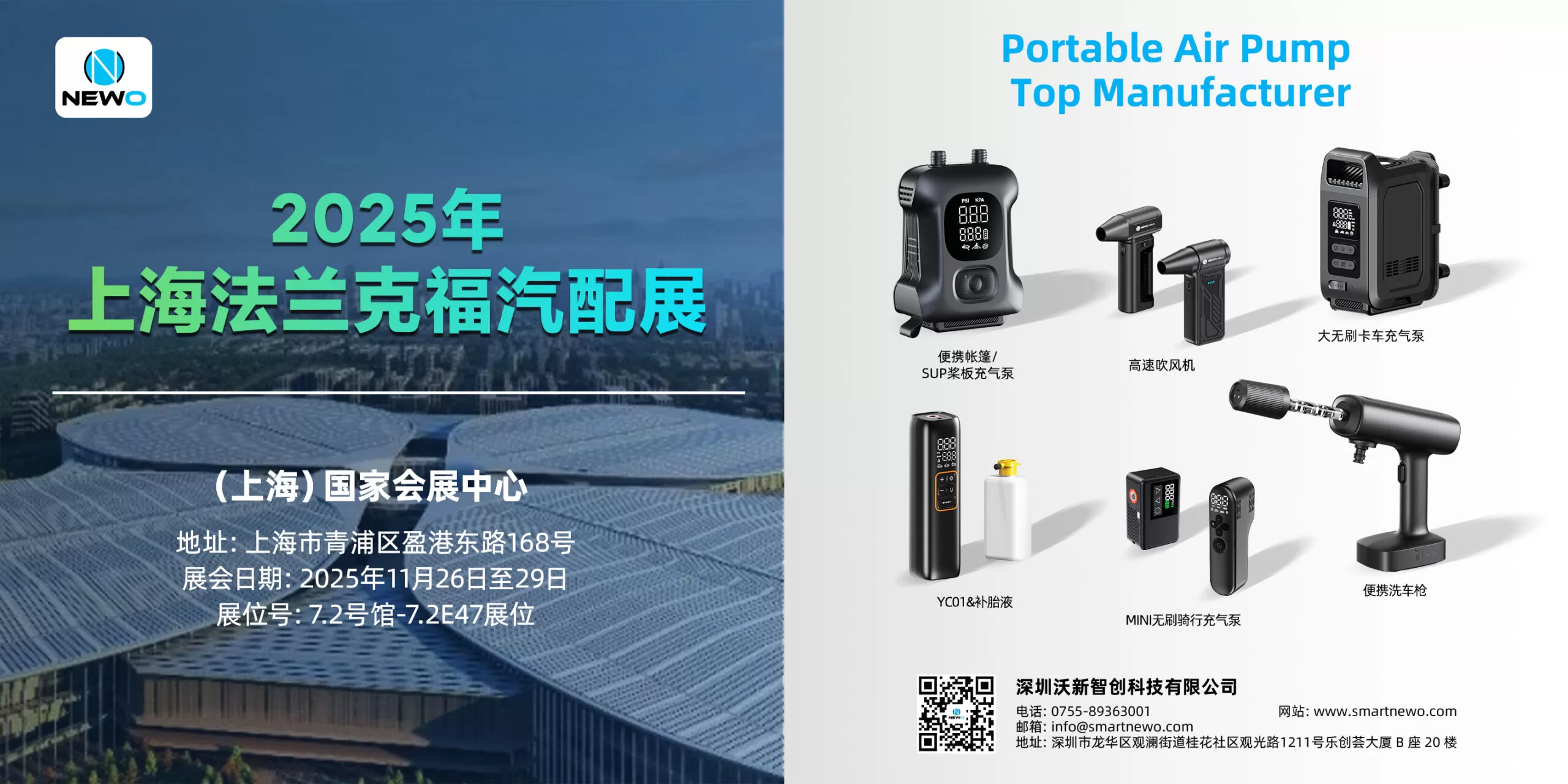
Today marks an exciting beginning as Smartnewo officially opens its booth at Automechanika Shanghai 2025. As one of the largest and most influential automotive aftermarket exhibitions in the world, the show provides an exceptional platform for meaningful conversations, partnership building, and global industry exchange. Located at Booth 7.2E47, Smartnewo presents...







-
How Is a Football Properly Inflated?
The correct inflation of a football - with not too much and not too little air - is a hotly debated topic among footballers.... -
Application Scenarios of Car Inflator Pump
Often long-distance business trips or play car owners because the road may be more remote areas, in this case if you encounter a tire leak....

