
 Portable Tire Inflators
 Electric Air Pumps
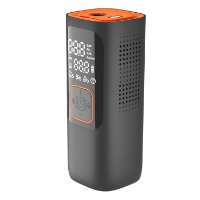 Electric Car Tyre Pumps
 Electric Ball Pumps
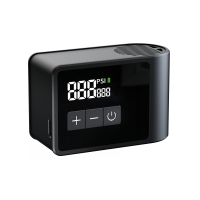 Electric Bike Pump
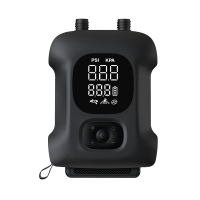 SUP Air Pump

Complete Guide to Digital Cordless Air Compressors: Mechanics, Selection, and Roadside Applications
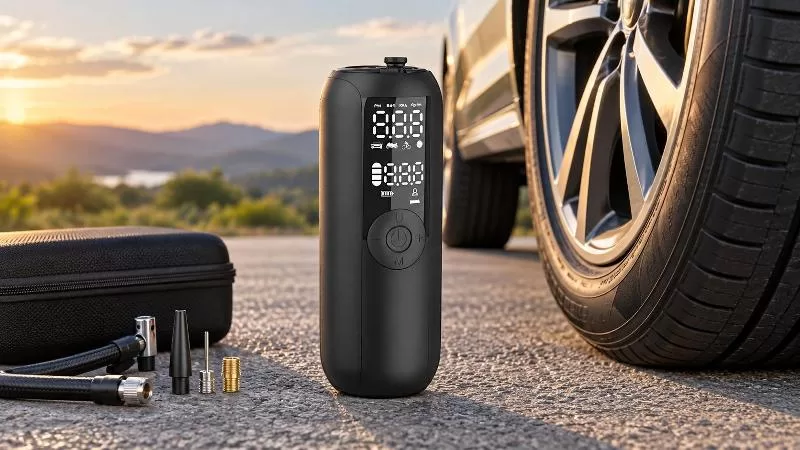
Maintaining correct pneumatic pressure remains one of the most overlooked aspects of vehicle safety and equipment maintenance. Motorists often discover an underinflated tire in poorly lit parking lots or along desolate highways where service stations are nonexistent. Relying on bulky garage compressors or stationary quarter-operated pumps introduces unnecessary friction into routine travel. A modern digital cordless air compressor solves these logistical headaches by combining a rechargeable battery with compact pneumatic engineering. This equipment provides precise pressure management anywhere without tangled extension cords or dependency on automotive electrical circuits.
Compact inflation systems have fundamentally reshaped mobile maintenance routines for passenger vehicles, daily commuter bicycles, and personal recreational equipment. When drivers understand how these tools operate and how to interpret critical specifications, selecting an optimal portable solution becomes straightforward. The following analysis explores the underlying mechanics, operational protocols, and practical field capabilities of handheld cordless inflation technology.
1. The Evolution of Tire Inflation: Cordless Independence vs. Corded Constraints
Traditional roadside inflation methods have long burdened vehicle operators with cumbersome compromises. Drivers traditionally carried 12V direct-current compressors equipped with long cables that plugged into the cabin cigarette lighter socket. These cables frequently tangled around door sills, gathered dirt from road grime, and struggled to reach rear trailer tires. A corded inflator can overload an accessory circuit if its current draw exceeds that circuit’s rating, potentially causing fuse failure and leaving motorists without power. Public service station air pumps present a different set of considerations worth understanding before relying on one during a trip.
Readout accuracy at public air pumps can vary from one location and one machine to the next, since usage levels, upkeep, and equipment age differ widely across stations. Motorists sometimes end up paying coin fees without a clear way to confirm whether the air they are adding matches the number shown. Carrying a personal gauge, or a digital cordless air compressor with its own pressure display, gives drivers an independent reading they can cross-check against any public pump before trusting its output.
1.1 The Architecture of True Portability: Rechargeable Power Meets Pneumatics
A built-in rechargeable battery is what frees a cordless inflator from any dependency on external power outlets or a vehicle’s electrical system. According to the manufacturer’s specifications, the AP2-P runs on a 7.4V battery pack, which supplies the current needed to drive its motor without requiring heavy mains transformers or a dashboard power point. This self-contained setup means the device can be charged ahead of time and carried wherever it is needed, rather than being tied to a specific vehicle outlet.
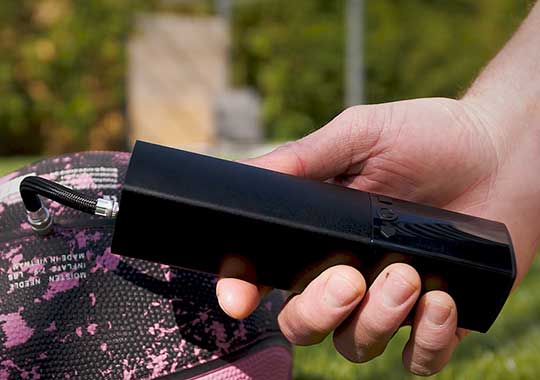
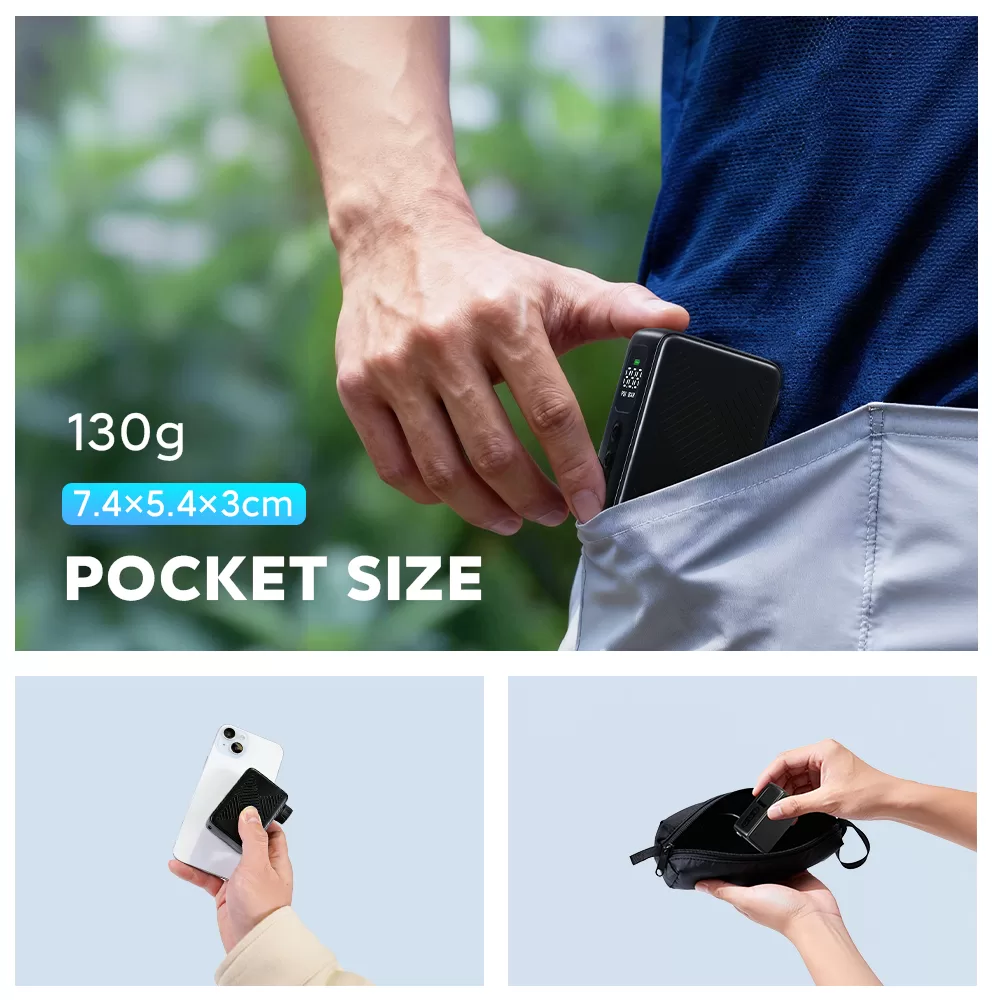
Weight distribution also matters for everyday carry. A fully integrated digital cordless air compressor can weigh as little as 386 grams, based on the manufacturer’s product specifications. Such physical economy permits storage inside motorcycle panniers, glove compartments, or hydration packs, transforming tire upkeep from a dread-inducing chore into a routine check.
2. Core Engineering: How a Handheld Digital Air Compressor Works
Miniaturizing an air compressor requires mechanical compromises that balance volumetric output against thermal stress. While heavy commercial compressors utilize large cast cylinders turning at low shaft speeds, handheld variants rely on compact motors paired with a small pumping chamber. The mechanical powertrain converts rotational motor energy into pneumatic thrust, which the manufacturer’s specifications describe through motor type, motor power, and air flow output rather than a full internal teardown.
Understanding these general dynamics prevents users from treating compact portable pumps like unlimited commercial supply lines. Every inflation cycle generates frictional resistance alongside the thermal byproduct of compressing atmospheric air into a constrained physical chamber.
2.1 The Motor and Airflow Output
According to the product’s technical specifications, the AP2-P uses a brushed motor rated at 35W. The manufacturer’s specification sheet also lists a cylinder reference of 14, though the supplied data does not detail the internal bore dimensions, valve arrangement, or drivetrain components beyond the motor type and power rating, so this article does not speculate on that internal construction and instead sticks to the figures the manufacturer provides.
This motor and pump combination is listed to deliver an airflow rate of 15 to 18 liters per minute under standard conditions, per the manufacturer’s specifications. Sustained use naturally raises operating temperature inside the housing, which is why the product includes thermal management features.
2.2 Digital Pressure Sensing and the Auto Shut-Off Mechanism
Mechanical inflation tools force operators to guess pressure by squinting at small analog needle gradations while air rushes through the hose. Digital inflation instead relies on an internal pressure sensor that reads the pressure building in the hose and tire during inflation. The manufacturer’s product description does not specify the sensor’s exact mounting location, so this article refers to it only as an internal sensor.
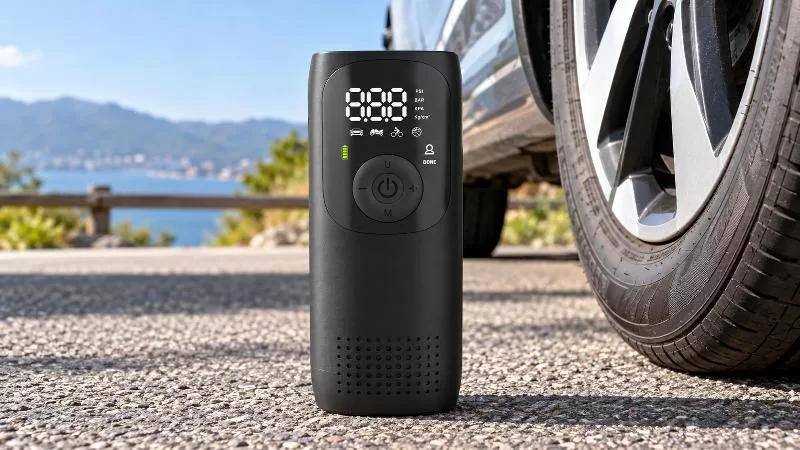
An onboard display continuously shows the measured pressure as inflation proceeds. When the user sets a target threshold, the control system compares the live reading against that stored setting. Once the target pressure is reached, the unit stops the motor automatically. This auto shut-off mechanism, as described in the product’s feature set, is designed to help prevent tire overinflation and reduce the chance of operator error.
2.3 Thermal Dynamics and Active Heat Management
Compressing gas generates heat as a basic consequence of the compression process. In a compact handheld body measuring roughly 42 by 62 by 154 millimeters, this heat can accumulate quickly inside the housing. Without mitigation, excessive thermal buildup can degrade internal seals and motor windings over time.
According to the product’s feature list, the AP2-P includes a built-in fan to help manage internal heat during operation. Users should still avoid prolonged continuous runs beyond the rated duty cycle, since even active cooling has practical limits in a device this small, and giving the motor a short rest between sessions helps protect its long-term performance.
3. Critical Specifications: What Matters When Evaluating Portable Inflators
Spec sheets for portable pneumatic equipment are frequently misread by consumers looking solely for the largest advertised numbers. A consumer might spot a 150 PSI rating and assume the pump can inflate a truck tire in seconds. In reality, pneumatic capability requires understanding the distinct roles of maximum listed pressure, volumetric throughput, and battery discharge capacity.
Evaluating equipment requires aligning specific mechanical parameters with your personal vehicle requirements. The ideal compressor balances working endurance against compact dimensions, avoiding excess bulk while maintaining sufficient output for real-world emergencies.
3.1 Peak Pressure (PSI) vs. Volumetric Airflow (L/min)
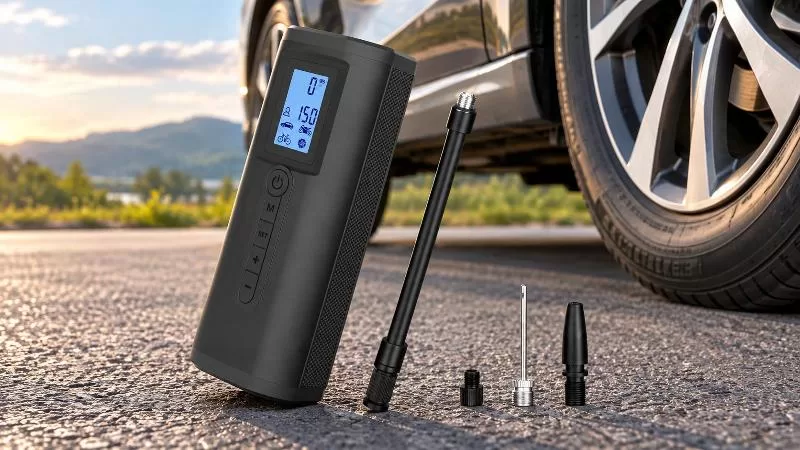
The manufacturer lists a maximum pressure of 150 PSI for the AP2-P, with an adjustable range from 0 to 150 PSI. This figure represents the manufacturer’s stated upper limit for the device rather than an independently tested stall point. Some bicycle tires call for pressures above 100 PSI, though requirements vary by tire width, load, and the manufacturer’s own markings, so riders should always follow the pressure range printed on the tire sidewall or specified by the tire maker.
Volumetric airflow, expressed in liters per minute, is a better indicator of actual inflation duration than the peak pressure figure alone. Passenger vehicle tires hold a large air volume at the pressure specified in the vehicle’s door placard or owner’s manual. An airflow output of 15 to 18 L/min is suited to routine pressure top-ups, though actual inflation time and the number of tires serviceable per session depend on starting pressure, tire volume, and ambient conditions rather than airflow rate alone.
| Technical Parameter | Specification Value | Practical User Benefit |
|---|---|---|
| Maximum Working Pressure | Up to 150 PSI (0–150 PSI adjustable range), per manufacturer specifications | Accommodates a range of tasks from higher-pressure bicycle tires to standard vehicle tires |
| Volumetric Airflow | 15–18 L/min | Supports routine pressure top-ups for commuter cars and everyday mobility gear |
| Battery Pack Architecture | 7.4V, 14.8Wh, per product specifications | Provides cordless self-sufficiency without draining your vehicle’s 12V starter battery |
| Maximum Continuous Runtime | Up to 30 minutes continuous, per listed specifications | Actual number of tires serviced depends on starting pressure and tire volume |
| Physical Chassis Mass | 386 grams | Supports easy carrying during cycling commutes, camping trips, or roadside emergencies |
| Acoustic Noise Profile | Equal to or below 85dB at 1 meter, per listed specifications | Lower mechanical clatter compared to industrial open-frame pumps |
| Operating Temperature Range | -10°C to 45°C, per manufacturer’s working-temperature specification | Supports use across a range of outdoor conditions |
3.2 Battery Specifications and Charging Behavior
The internal battery pack defines the functional lifespan of any cordless emergency device. The manufacturer’s specification table lists the AP2-P’s battery as 2000mAh at 7.4V, with an energy rating of 14.8Wh, while the feature description separately references a 2x2000mAh configuration. Because these two figures are not fully reconciled in the supplied product data, this article cites the 7.4V and 14.8Wh rating as the manufacturer’s stated energy capacity without asserting a specific cell count.
Per the manufacturer’s listed cycle-life data, the battery is rated for approximately 300 charge cycles before capacity drops below 80 percent of its original rating. Using the standard Type-C charging input at 5V/2A allows motorists to recharge the device using existing vehicle USB ports, phone chargers, or laptop battery banks within roughly two to three hours, per the listed specifications.
3.3 Visual Interfaces and Multi-Unit Display
Clear visual feedback helps prevent inflation mistakes. A backlit LCD display presents several metrics at once, including measured tire pressure, target preset value, battery level, and selected mode. Backlighting is useful when reading valve pressures in dark roadside environments.
The interface supports toggling across several measurement units, including PSI, BAR, KPA, and Kg/cm². A memory function retains the last selected target pressure, which reduces the need to reconfigure settings every time you switch between seasonal tire checks. The supplied specifications do not include a stated pressure-accuracy tolerance, so users who need to confirm a critical reading should compare it against a reliable reference gauge.
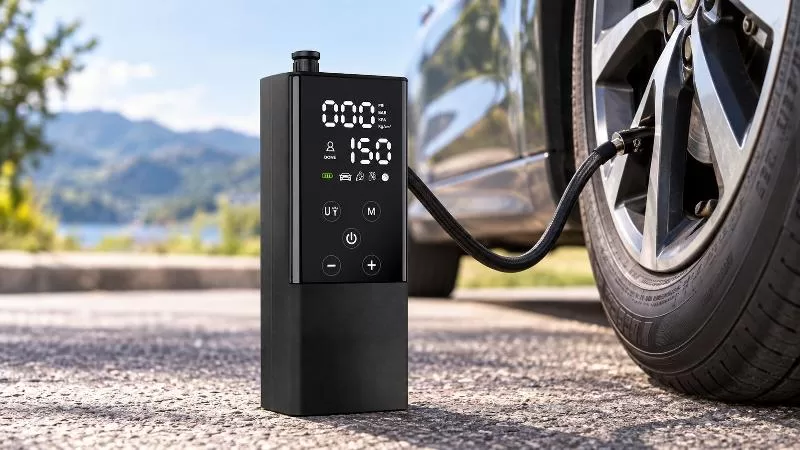
4. Operational Playbook: Step-by-Step Tire and Inflatable Servicing
Using a digital cordless air compressor correctly helps protect both the tire and the tool. Skipping baseline pressure checks before inflating invites mismatched pressure settings and premature seal wear. Following a consistent technique helps maintain even pressure across all tires while protecting the internal pump mechanism.
Motorists should establish a steady maintenance sequence, beginning with cold tire baseline measurements and concluding with proper cooling before storage. The following steps outline general practices for routine servicing.
4.1 Pre-Inflation Setup and Target Pressure Verification
Tire pressure should generally be checked and adjusted when tires are cold, meaning the vehicle has been parked for at least three hours or driven less than one mile. Driving generates friction that heats the air inside the tire, which can temporarily raise pressure readings by a few PSI.
-
Locate the vehicle tire placard on the driver-side door jamb (B-pillar) or consult the owner’s manual to find the manufacturer-recommended cold inflation pressure.
-
Unscrew the valve stem dust cap and inspect the threads for grit, corrosion, or rubber wear.
-
Thread the flexible inflator hose onto the tire valve stem without cross-threading, listening for an initial hiss of air that stops once the chuck seats fully.
-
Read the initial pressure on the backlit LCD to see how much air is needed to reach the target specification.
4.2 Executing Inflation with Preset Smart Modes
According to the product’s feature list, the AP2-P provides dedicated modes for specific inflation tasks, including car, motorcycle, bicycle, ball, and a custom setting. Selecting a preset gives users a starting pressure reference, which can then be fine-tuned using the plus and minus buttons.
-
Step 1: Power On and Mode Selection. Press the power switch to light up the display, then cycle the mode selector to car mode for standard passenger vehicles.
-
Step 2: Calibrate Target Setting. Adjust the preset reading until it matches your door placard or manual specification, selecting your preferred unit of measure, such as PSI or BAR.
-
Step 3: Initiate Pumping. Press the control button to start the motor; the pump begins forcing air into the tire while the display shows the rising live pressure.
-
Step 4: Automatic Cut-Off and Chuck Release. Allow the control circuit to stop the motor once the target pressure is reached, then unscrew the nozzle chuck promptly to limit incidental air escape before replacing the stem dust cap.
4.3 Duty Cycle Discipline and Thermal Rest Periods
While the unit supports continuous runtimes of up to 30 minutes per its specifications, responsible duty cycle management helps reduce unnecessary thermal wear on the brushed motor. Compact pumps generate meaningful heat during extended operation, especially when raising pressure in a near-empty automotive tire, and the time needed depends on the tire’s starting pressure and volume.
If servicing multiple low tires in one session, consider letting the compressor rest for a few minutes between cycles. Use care when handling the hose coupling right after extended inflation, since conductive heat can make metal fittings warm to the touch.
5. Multi-Scenario Utility Beyond Roadside Emergencies
Treating a portable digital compressor solely as a car tire breakdown tool overlooks its versatility across other daily mobility equipment. Smaller pneumatic tires found on electric scooters, wheelchairs, and commuter e-bikes lose pressure relatively quickly due to their small air chambers. Handheld electric pumps make servicing these smaller tires fast and straightforward.
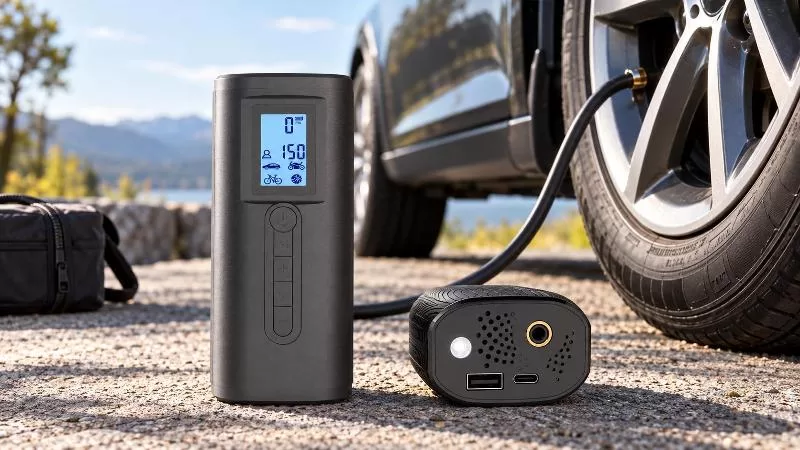
According to the manufacturer’s listed application scenarios, additional built-in features extend the tool’s usefulness beyond emergency tire service into outdoor recreation, daily travel, and portable electronics support.
5.1 Commuter Mobility: Electric Bikes, Scooters, and Wheelchairs
Maintaining correct tire pressure on electric bikes and micro-mobility scooters can help support consistent handling and reduce the risk of pinch flats over road hazards. Manual floor pumps require awkward balancing, while mini frame pumps often lack sufficient stroke volume to reach higher pressures without real effort.
Smaller inflation chambers in mobility wheelchairs and balance vehicles call for more precise pressure control. Overinflating can affect ride comfort and, over time, can contribute to faster wear in the center of the tread. With a digital preset and automatic cut-off, users can target the pressure specified by the tire or equipment maker more consistently than with a manual pump.
5.2 Field Survival and Emergency Support: Power-Bank and Illumination
Roadside emergencies rarely happen on warm, sunlit afternoons. Stranded motorists frequently face dark roadsides with low smartphone batteries, making it harder to reach emergency roadside assistance. According to the product’s listed features, this unit addresses that scenario with a few secondary functions.
-
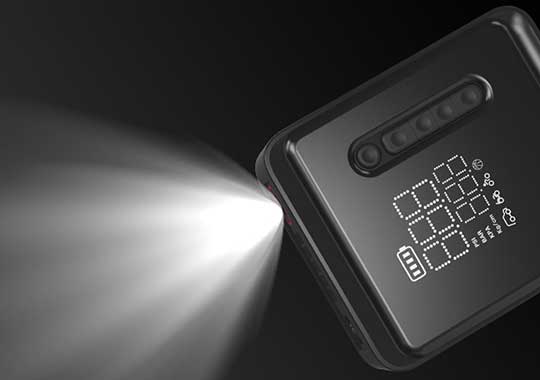
Integrated LED flashlight: A built-in LED light near the hose manifold helps illuminate the valve stem area, keeping hands free while improving visibility to passing motorists.
-
Power-bank output (5V/2A): The internal battery can function as a backup power source for recharging smartphones and navigation devices, per the manufacturer’s specifications.
-
Included multi-adapter kit: The three included adapters allow users to move from vehicle tire maintenance to inflating sports balls or other inflatable items with the same device.
6. Maintenance, Storage, and Battery Longevity
Even well-made pneumatic equipment can fail prematurely if subjected to neglect or poor storage conditions. Internal battery cells, rubber seals, and mechanical valves benefit from periodic care to stay ready for emergency use. Routine maintenance helps your inflator function reliably whenever it’s needed, and proper storage helps preserve battery capacity while keeping moisture out of the internal pump assembly.
6.1 Temperature Considerations for Operation and Storage
Automotive passenger compartments can experience significant temperature swings, with closed vehicle cabins sometimes reaching high temperatures on hot days. Storing battery-powered equipment on dashboard surfaces or rear parcel shelves can expose it to heat extremes well beyond typical room conditions.
The manufacturer lists -10°C to 45°C as the device’s working-temperature range, which applies to operation rather than long-term storage. The supplied specifications do not state a separate storage-temperature range, so for storage guidance beyond general shade and moderate conditions, consult the manufacturer’s manual.
6.2 Seasonal Calibration and Connector O-Ring Upkeep
Air delivery hoses rely on flexible rubber seals within the chuck to create an airtight connection against the valve stem. Over time, road grit and heat can dry out or deform these small seals, allowing pressurized air to leak past the chuck.
Periodically inspect the interior of the air nozzle connector for cracking or debris. Wipe the threads clean with a dry microfiber cloth, and avoid heavy petroleum-based lubricants, which can attract dust into the internal air pathway. For prescribed maintenance intervals specific to the AP2-P, consult the manufacturer’s manual; the following are general suggestions for cordless inflators.
-
Inspect hose seal and clear debris from intake vents regularly
-
Check battery charge level periodically; maintain charge using Type-C
-
Cross-check digital LCD readout against a reference gauge occasionally
-
Wipe down housing and cool metal couplings after use before packing
7. FAQs (Frequently Asked Questions)
Can a handheld digital cordless air compressor inflate a completely flat car tire?
The AP2-P is designed for tire inflation and pressure top-ups, but the supplied specifications do not establish whether it can inflate a completely flat passenger vehicle tire or how long that would take. Actual capability depends on the tire’s volume, starting pressure, and ambient conditions. Do not attempt to inflate or drive on a tire that shows visible damage, sidewall bulges, or a detached bead, as these conditions require professional repair rather than inflation.
How accurate is the digital gauge compared to workshop pressure gauges?
The supplied product specifications do not state a pressure-accuracy tolerance for the digital display, so this article does not claim a specific accuracy level or a direct comparison with mechanical dial gauges. A digital readout does remove the risk of misreading an analog needle from an awkward viewing angle. If a reading needs to be confirmed for a critical application, compare it against a reliable reference gauge.
What is the advantage of having dedicated vehicle and sports ball modes?
According to the product’s feature list, the AP2-P offers five inflation modes: car, motorcycle, bicycle, ball, and custom. The ball mode is a listed operating mode, though the supplied specifications do not state its default pressure setting. When inflating sports balls, always check the pressure marking printed on the ball itself or consult the manufacturer’s instructions, since different balls require different pressures.
Can I use the device while it is plugged into a Type-C charger?
The supplied specifications list a 5V/2A Type-C charging input and a 35W motor, but they do not state whether the device supports operating while connected to the charger. Rather than inferring compatibility or incompatibility from those numbers alone, check the manufacturer’s manual for guidance on charging-while-operating before attempting it.
How do extreme hot and cold temperatures affect cordless compressor performance?
The manufacturer lists a working-temperature range of -10°C to 45°C for the device. The supplied specifications do not include test data on how airflow or runtime changes at the extremes of that range, so this article does not assert a specific performance drop in cold or hot conditions. As a general practice with battery-powered tools, users should still observe rest intervals between inflation cycles to avoid excess heat buildup during warm-weather use.
8. Conclusion: The Smart Choice for Modern Mobile Independence
Pneumatic reliability no longer requires heavy equipment, tangled cords, or a search for a working gas station pump. Combining a pressure sensor with a compact rechargeable battery brings practical inflation capability into a package that fits inside a jacket pocket. Digital auto shut-off, as described in the product’s feature set, is designed to reduce the guesswork around overinflation while supporting more consistent tire pressure.
At Newo, our work centers on developing smart pneumatic technology and portable charging solutions for everyday travel needs across global markets. Adding a digital cordless air compressor with auto shut-off to your travel kit can turn routine tire checks into a quicker, more consistent habit, supporting safer and more confident trips.
-

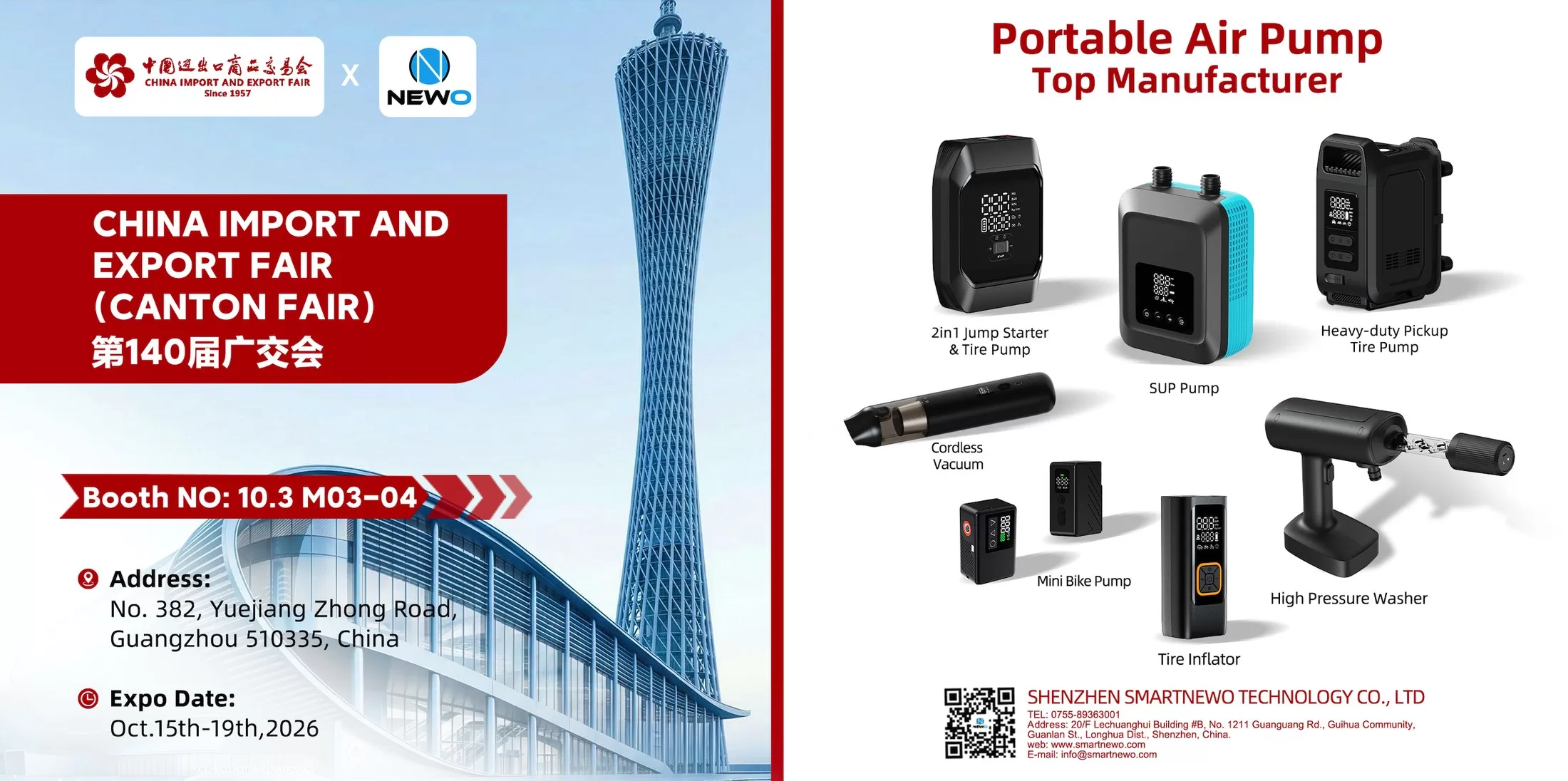
Meet NEWO at the 140th Canton Fair: Visit Booth 10.3 M03–04
Meet NEWO at the 140th Canton Fair in Guangzhou, October 15–19, 2026. Visit Booth 10.3 M03–04 to explore portable air pumps and discuss OEM, ODM and distribution opportunities.... -

As Shenzhen Welcomes the World for APEC 2026, NEWO Welcomes You to Our Factory
As Shenzhen prepares for APEC 2026, NEWO welcomes international buyers and partners to visit our factory, meet our team and explore future cooperation.... -

Leading the Way in Product Innovation and Excellence
Smartnewo exemplifies professionalism in product innovation and manufacturing. Their collaboration with Xiaomi Youpin on the G01 crowdfunding project highlights their expertise in creating compact, powerful inflatable pumps. Rigorous engineering, meticulous production processes, and advanced quality assurance underscore their commitment to excellence. The success of the G01 project, with significant market... -

Essential Qualities of an Excellent Supplier
In today's competitive market, finding a reliable supplier is crucial for business success. Based on insights from Smartnewo and broader internet research, here are key qualities an excellent supplier must possess:... -

NW06 Tire Inflator: Compact Power for Quick Inflation
Summary The NW06 Tire Inflator delivers quick and efficient tire inflation with a powerful 35L/min airflow. It features a user-friendly LCD screen for real-time pressure monitoring, dual power options with a built-in 6000mAh battery, and multiple nozzle attachments for versatile use. Its compact design and integrated LED light ensure convenience and... -

Unleash the Power of Portability: The SmartNewo Jump Starter with Air Compressor KF03
This guide will walk you through the steps to effectively use a portable tire inflator, helping you stay prepared and safe on the road.... -

Newo Attends The 2024 Consumer Electronics Show (CES)
Smartnewo booth is located at 53672, Halls A-D, Level 2, Venetian Expo, Las Vegas Convention Center (LVCC). ... -

Smartnewo’s Dual-Cylinder Air Pump Rocks the Hong Kong Autumn Electronics Fair!
Smartnewo’s Dual-Cylinder Air Pump Rocks the Hong Kong Autumn Electronics Fair!... -

Meet at the Canton Fair! Smartnewo brings dual-cylinder air pumps, making your inflation experience faster and more stable!
NEWO has went deep communication and negotiation with customers from all over the world on booth.... -

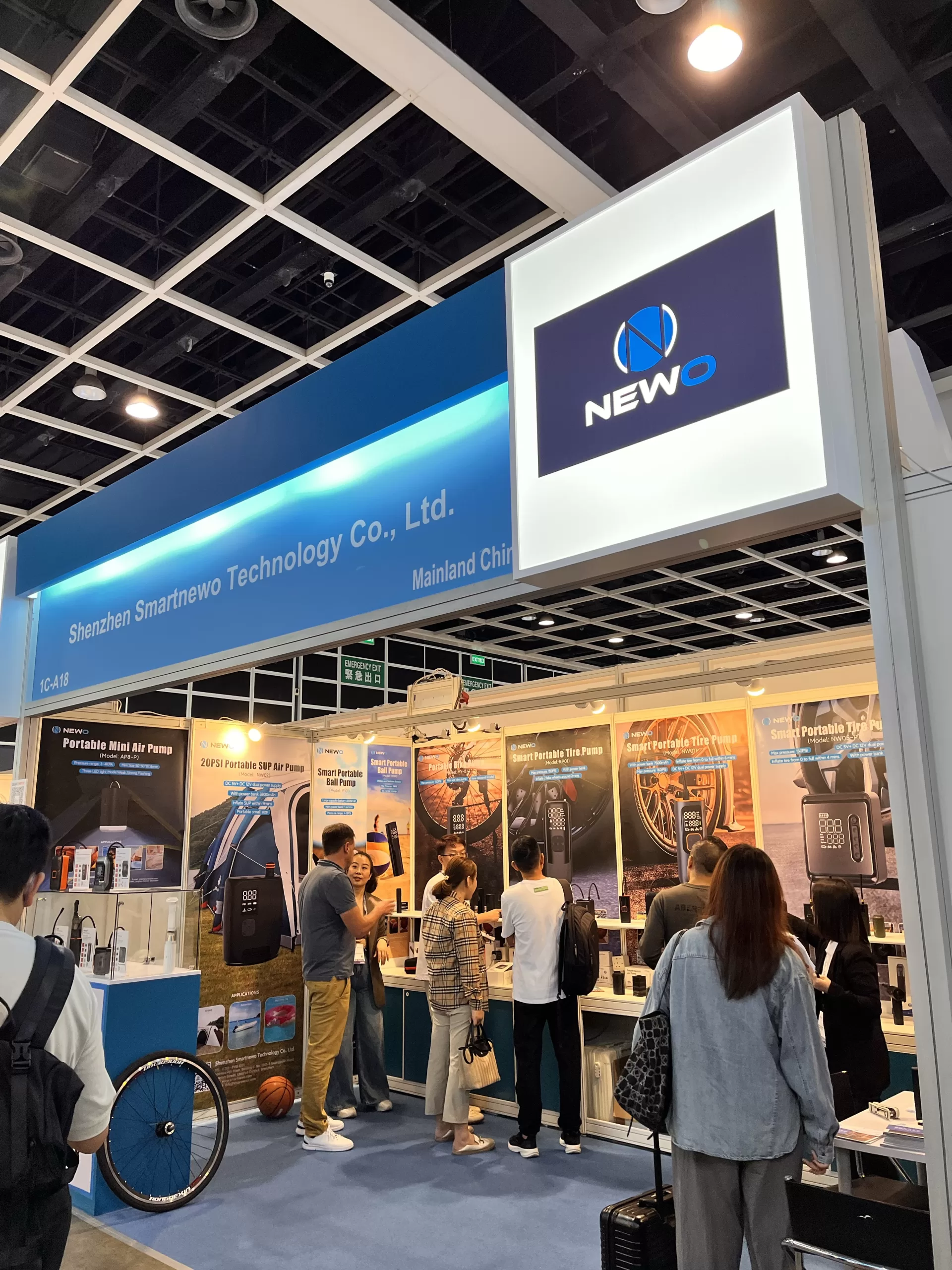
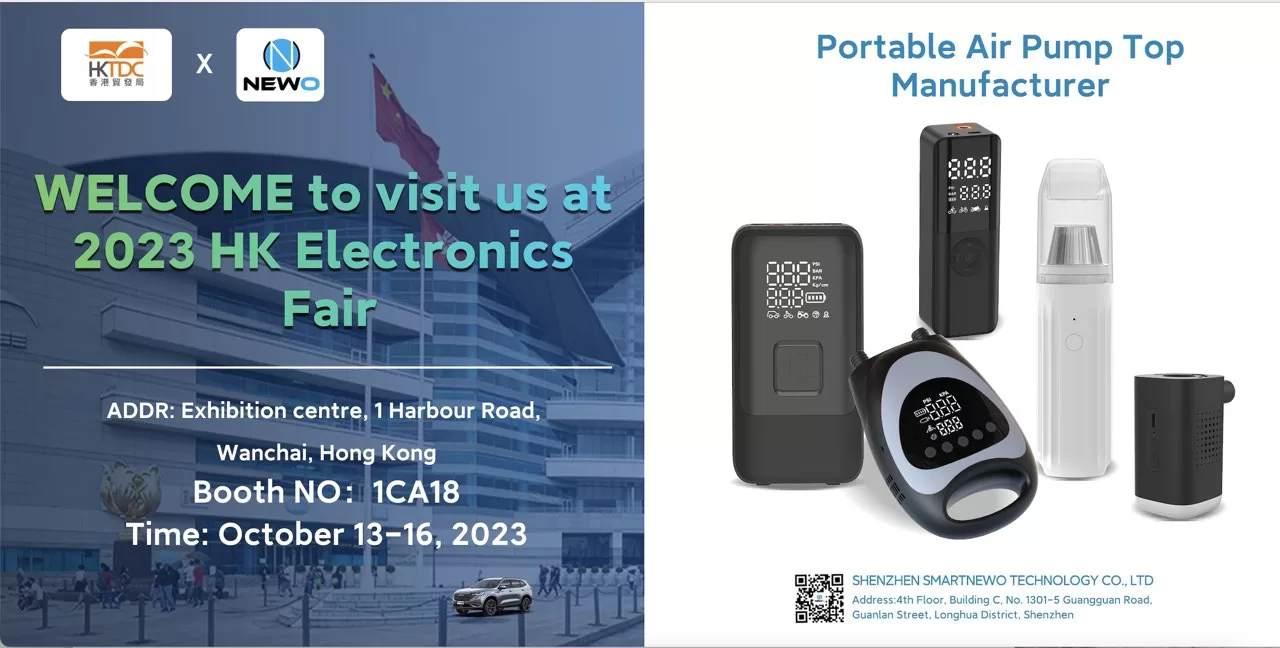
“Hong Kong Autumn Electronics Fair – 1CA18 (October 13th to 16th): Smartnewo invites you to visit our booth!
Hong Kong Autumn Electronics Fair...



-

How to Choose a Reliable Tire Inflator Manufacturer in China
Choose a tire inflator manufacturer in China with a focused RFQ, supplier evidence, configuration checks, and clear sample-to-pilot decisions for your brand.... -

Rechargeable Electric SUP Pump for Paddle Boards: Faster Inflation for SUPs, Kayaks and Inflatable Tents
The BL10-C Portable Electric Bike Tire Inflator is a compact and lightweight mini electric bike pump designed for modern cyclists. With up to 120 PSI pressure, a digital LED display, preset pressure control, automatic shut-off, USB-C charging, and multiple valve adapters, BL10-C offers a convenient inflation solution for road bikes,... -

Are Electric Bike Pumps Worth It in 2026? Electric Pump vs CO₂ vs Mini Hand Pump
Discover whether electric bike pumps are worth it in 2026. This guide compares electric bike pumps, CO₂ inflators, and mini hand pumps for road cycling, gravel riding, commuting, and long-distance rides. Learn the pros, limitations, best use cases, and key features to look for before choosing the right portable tire... -
BL10-C Portable Electric Bike Tire Inflator: Small Size, Reliable Power for Every Ride
The BL10-C Portable Electric Bike Tire Inflator is a compact and lightweight mini electric bike pump designed for modern cyclists. With up to 120 PSI pressure, a digital LED display, preset pressure control, automatic shut-off, USB-C charging, and multiple valve adapters, BL10-C offers a convenient inflation solution for road bikes,... -

Why Mini Electric Bike Pumps Are Becoming Essential for Modern Cycling
Discover why mini electric bike pumps are becoming essential for modern cyclists. Learn how portable electric bike pumps improve tire pressure management, riding safety, and convenience.... -

The Ultimate Smart Solution for Easy Outdoor Adventures in 2026
Discover how a spring travel air pump simplifies outdoor trips with fast inflation, smart features, and powerful performance—perfect for every adventure.... -

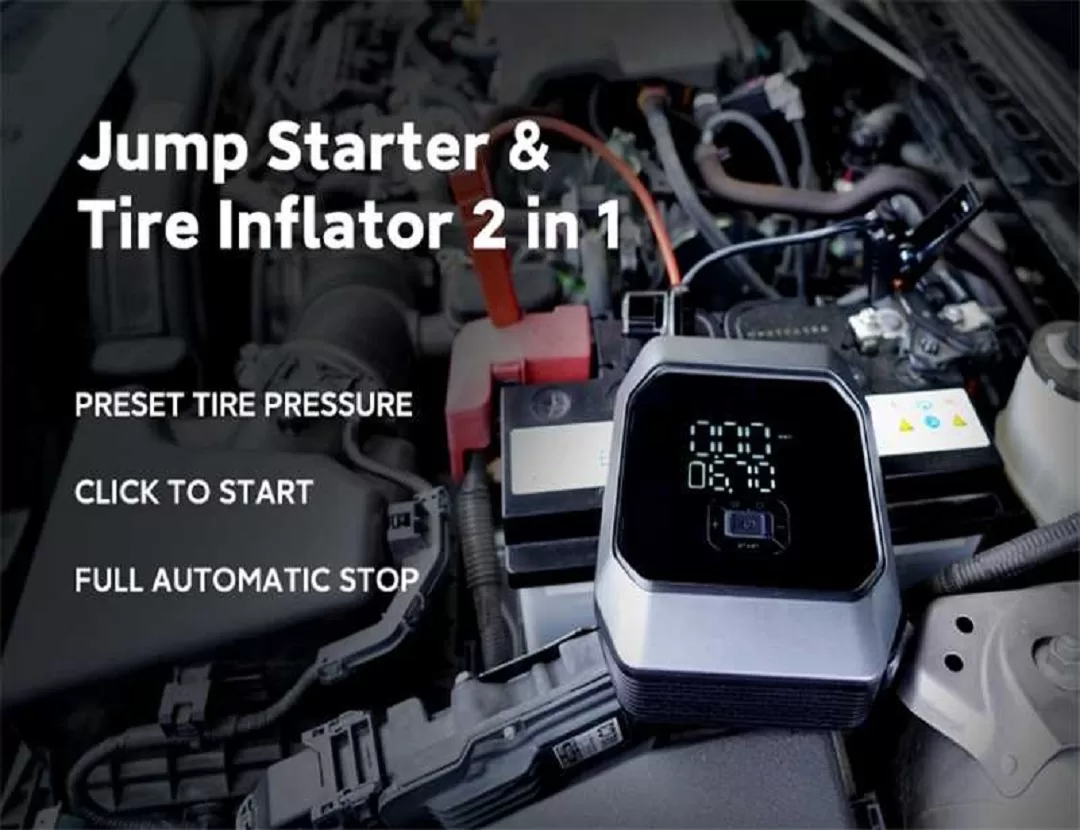
Powerful 5-in-1 Portable Car Tire Inflator and Jump Starter: The Ultimate Emergency Tool for Every Driver
Why Every Driver Needs a Portable Car Tire Inflator and Jump Starter Modern drivers face many unexpected situations on the road. A flat tire, low tire pressure, or a dead car battery can happen at the worst possible time. That’s why having a portable car tire inflator and jump starter is... -

7 Real Cycling Scenarios That Show Why Every Rider Should Carry a Mini Bike Pump
Cycling is one of the most freeing activities you can enjoy. Whether you’re commuting to work, riding through city streets, or exploring quiet countryside roads, a bike ride can instantly improve your day. But there’s one small problem that almost every cyclist eventually faces: Low tire pressure. It might happen... -
BL08-A Portable Electric Bike Pump: A Global Distribution Opportunity with Smartnewo
Smartnewo, a professional manufacturer of portable electric air pumps, introduces the BL08-A model — a compact and efficient inflator designed for global distributors, e-commerce sellers, and outdoor accessory brands seeking reliable OEM/ODM solutions. Table of Contents Main Heading Subtopics 1. Introduction: Expanding the Global Market for Smart Inflation Tools Portable... -

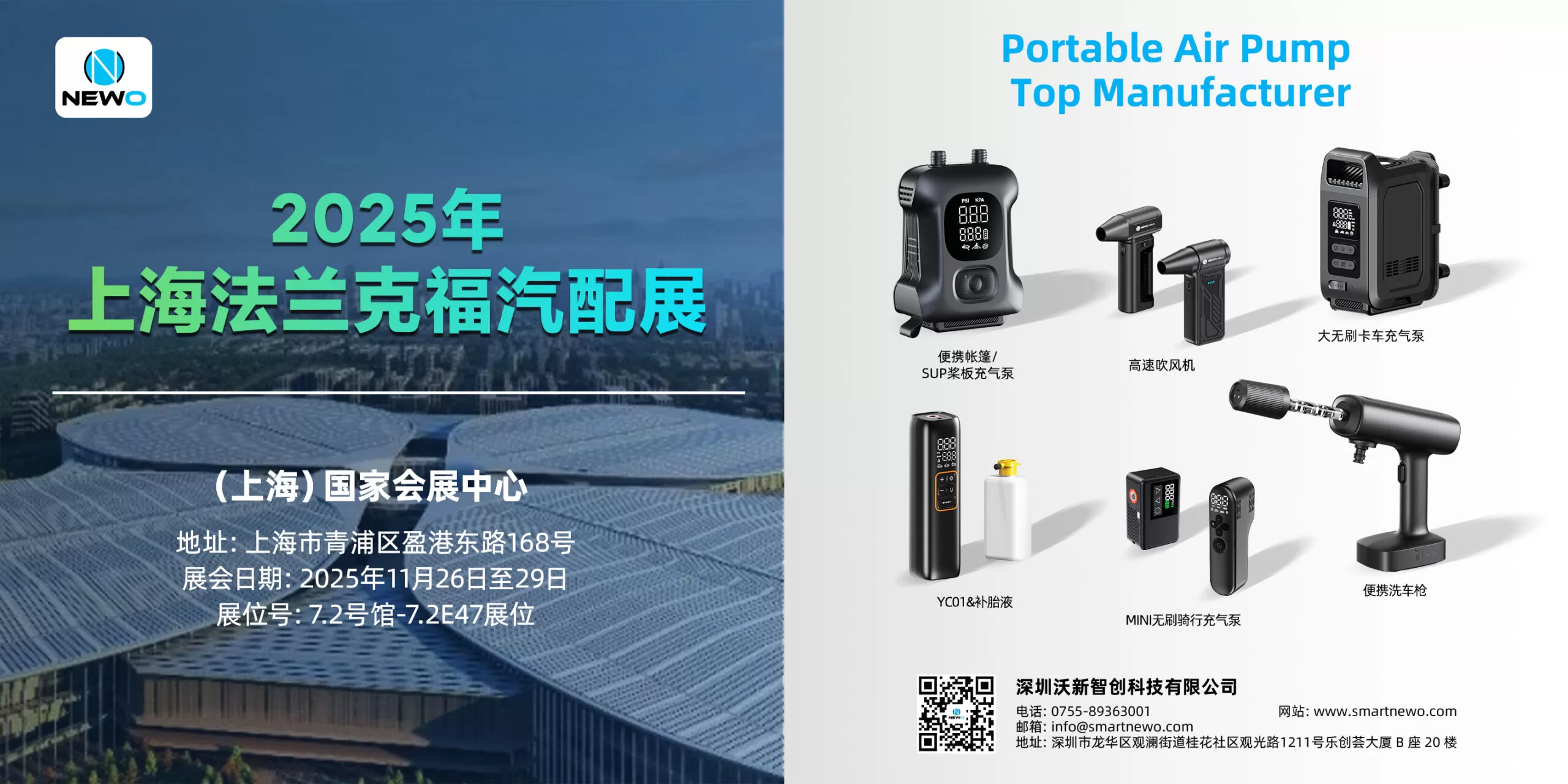
Connecting Opportunities at Automechanika Shanghai 2025 — Smartnewo Exhibition Day 1
Today marks an exciting beginning as Smartnewo officially opens its booth at Automechanika Shanghai 2025. As one of the largest and most influential automotive aftermarket exhibitions in the world, the show provides an exceptional platform for meaningful conversations, partnership building, and global industry exchange. Located at Booth 7.2E47, Smartnewo presents...


-
How Is a Football Properly Inflated?
The correct inflation of a football - with not too much and not too little air - is a hotly debated topic among footballers.... -
Application Scenarios of Car Inflator Pump
Often long-distance business trips or play car owners because the road may be more remote areas, in this case if you encounter a tire leak....