

 Portable Tire Inflators
 Electric Air Pumps
 Electric Car Tyre Pumps
 Electric Ball Pumps
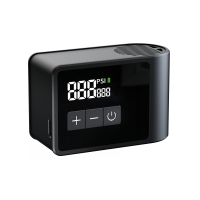 Electric Bike Pump
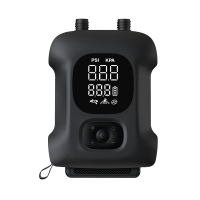 SUP Air Pump

High Volume Electric Air Pump Guide: Airflow Physics, Selection Criteria, and Practical Applications
Setting up camp at dusk or preparing pool floats for a weekend gathering often reveals a frustrating bottleneck. Manual foot bellows leave users exhausted before the trip begins, while choosing the wrong motorized inflator turns a five-minute chore into a noisy half-hour ordeal. A high volume electric air pump addresses this problem by prioritizing fast air delivery for large, low-pressure inflatables instead of high-pressure compression.
Many buyers assume that any motorized pump in the garage can fill every inflatable item they own. In practice, pumps are designed around different goals, and the airflow rate and the maximum pressure on a spec sheet reveal which goal a given model serves. Understanding how a portable high volume electric air pump is specified helps both everyday consumers and commercial buyers choose equipment that matches their inflation tasks.
The Physics of Fast Inflation: High Volume vs. High Pressure
When buyers shop for inflation equipment, they frequently encounter two performance metrics that describe very different jobs: airflow rate and maximum pressure. A pump aimed at a heavy-duty pickup truck tire is specified around pressure, while a device built for a queen-sized camping mattress is specified around how much air it can move. Reading both numbers together prevents costly purchasing mistakes.
Why Tire Inflators Are a Poor Match for Air Mattresses
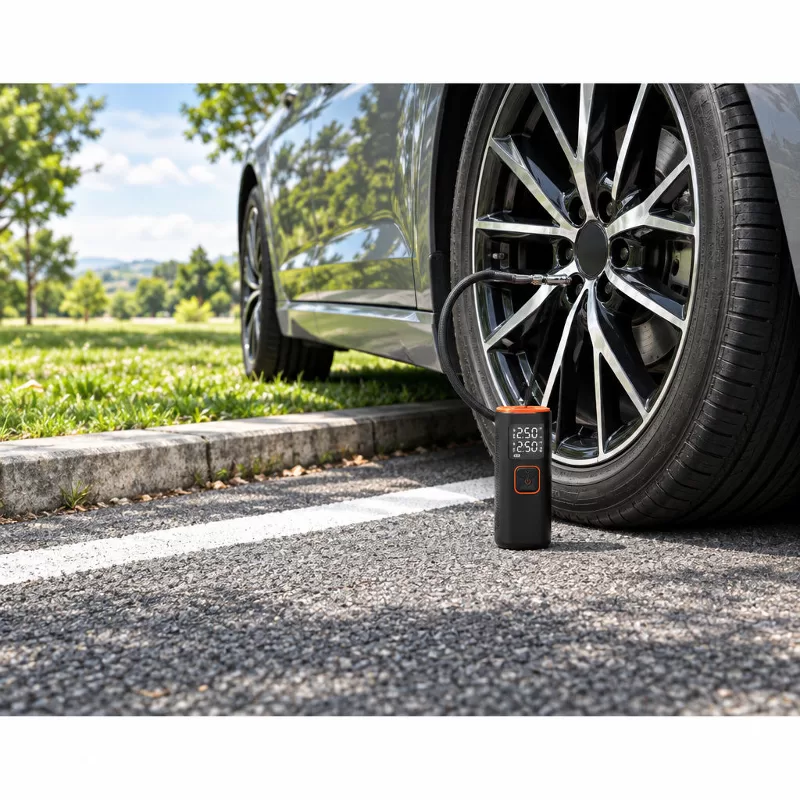
Imagine trying to fill a backyard swimming pool using a high-pressure car wash sprayer instead of a wide garden hose. The sprayer delivers water forcefully, yet the volume it moves per minute is modest compared with the hose. A typical portable tire inflator behaves like that sprayer when connected to an air mattress or inflatable sofa.
Many high-pressure tire inflators are designed around pressure delivery, because tires are filled to far higher pressures than air mattresses or swim rings. An air mattress needs very little pressure to take shape, yet its internal chamber holds a large volume of air. A typical tire inflator is therefore not the right tool when fast, high-volume filling is the priority.
Combination inflators exist, so it is worth checking each model’s own specifications rather than assuming a category rule. For large, low-pressure inflatables, the more useful question is how much air the pump is rated to deliver and how low its maximum pressure sits. That is the niche a high volume electric air pump is specified to fill.
Decoding L/min and KPa in Real-World Scenarios
Product specification sheets typically express airflow in liters per minute (L/min) and pressure in kilopascals (KPa) or pounds per square inch (PSI). One PSI equals approximately 6.895 KPa, so a pump rated at 4.5 KPa has a maximum pressure of roughly 0.65 PSI. This figure describes the pump’s capability, not a universal inflation target, since every inflatable has its own manufacturer-specified pressure requirements.
Comparing pump categories side by side makes these specifications easier to read in context. The table below summarizes the design focus of a low-pressure, high-volume pump such as the AP5 and of a typical high-pressure tire inflator, using only the figures supplied in the AP5 product information and leaving other models to their own spec sheets.
| Pump Category | Design Focus | Listed Airflow and Pressure | Typical Applications |
|---|---|---|---|
| Mini High Volume Electric Air Pump (e.g., AP5) | Fast filling of low-pressure inflatables | 190–200 L/min airflow; maximum pressure 4.5 KPa (~0.65 PSI), per the manufacturer listing | Air mattresses, swim rings, inflatable sofas, seat cushions, pool floats |
| High-Pressure Tire Inflator | Pressure-oriented filling | Varies by model; check the manufacturer’s specifications | Vehicle tires, bicycle tires, sports balls |
As the comparison shows, matching the pump’s design focus to the target inflatable matters more than any single number. The High Volume Electric Air Pump AP5 is listed by the manufacturer at 190 to 200 L/min with a 4.5 KPa maximum pressure, and it is intended for fast volume filling rather than high-pressure tire inflation. That distinction guides every selection decision that follows.
Core Engineering Metrics When Evaluating a High Volume Electric Air Pump
Once a buyer narrows their search to a dedicated low-pressure inflator, the spec sheet still requires careful scrutiny. Two pocket-sized pumps can look nearly identical on an e-commerce listing while differing in battery, charging, and noise specifications. Examining nozzle fit, battery details, temperature limits, and acoustic output reveals how well a unit suits the way you plan to use it.
Airflow Velocity and Nozzle Geometry
Rated airflow numbers only tell part of the story because air must pass through a nozzle adapter and the inflatable’s own valve before entering the item. A very narrow tip or a poorly fitting adapter can restrict the stream and slow filling. The manufacturer-listed airflow is a rating for the pump, not a guaranteed rate through every attached nozzle and valve.
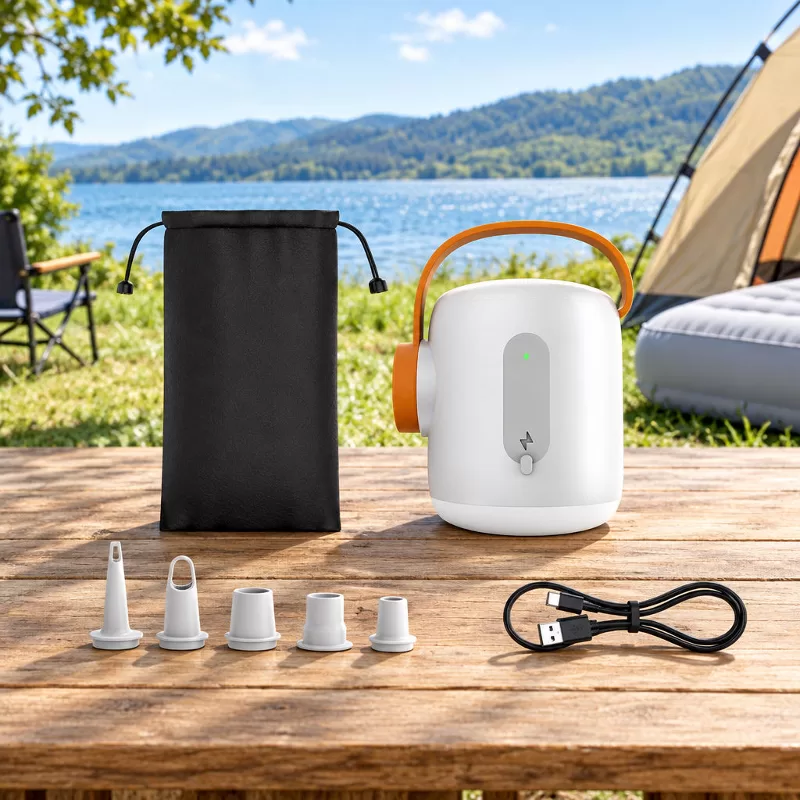
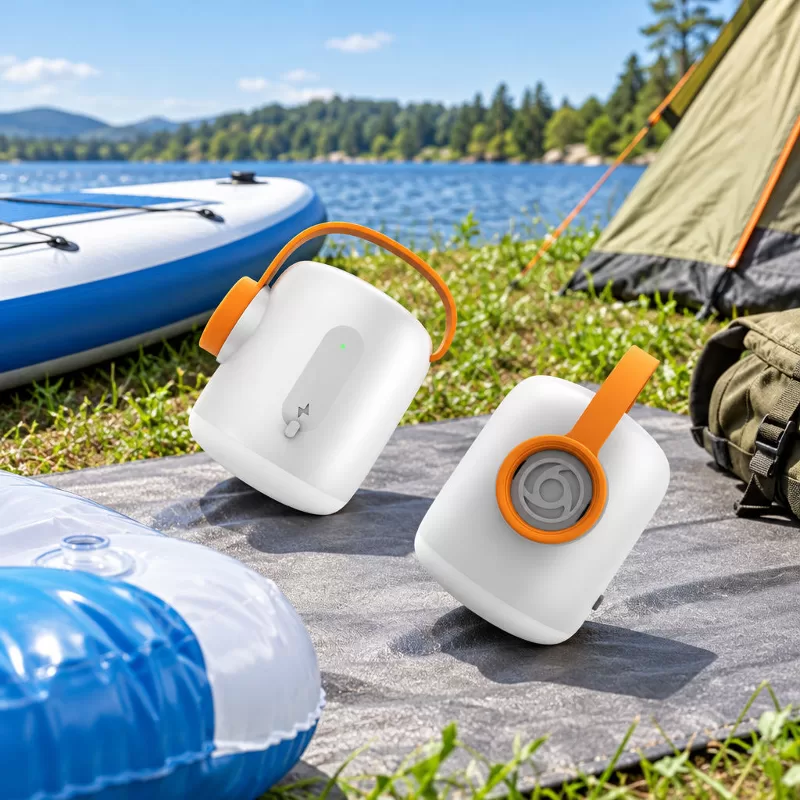
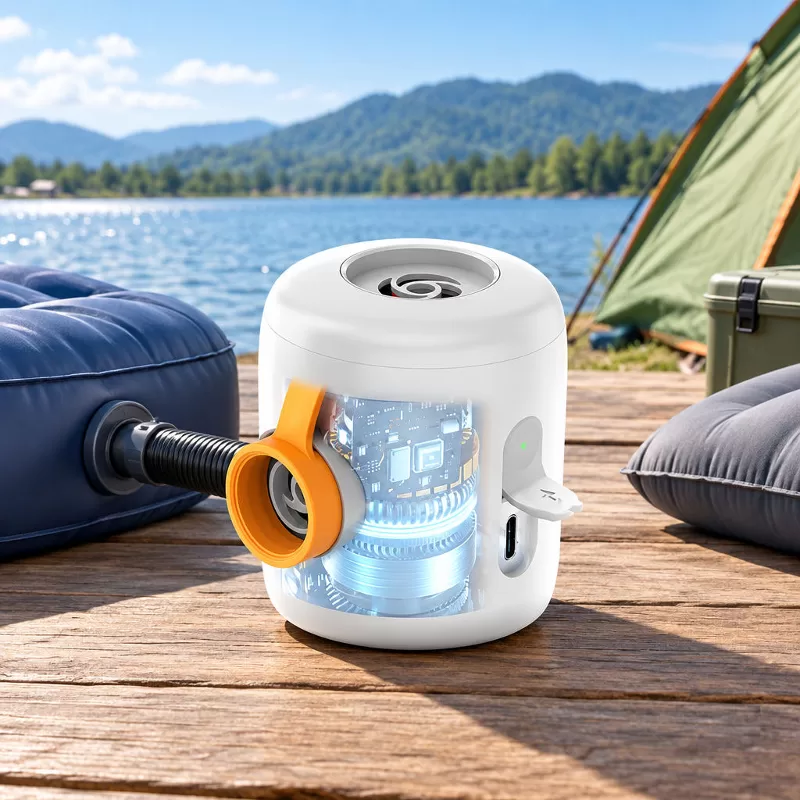
In the product photos, the AP5 mini electric air pump shows a wide, orange-rimmed cylindrical outlet projecting from the side. A well-fitting, compatible adapter can help avoid unnecessary restriction between that outlet and the inflatable’s valve. Users should choose the widest adapter that fits their valve snugly, and treat the 190–200 L/min figure as the manufacturer-listed airflow rating.
Battery Architecture and Thermal Limits
Cordless convenience has largely replaced old cigarette-lighter cables and disposable battery packs in modern outdoor gear. Fitting a motor and a rechargeable power cell into a palm-sized casing involves trade-offs between size and runtime. Buyers evaluating a rechargeable high volume electric air pump should examine the battery and charging specifications before relying on the pump for a full day of inflation tasks.
The AP5 integrates a 1000mAh lithium battery operating at a rated voltage of 3.7V. The product listing also states a rated energy of 7.4Wh; however, 1000mAh × 3.7V yields approximately 3.7Wh, which is an internal specification inconsistency. Buyers should confirm the figure with the manufacturer before making runtime or shipping assumptions based on the stated watt-hour rating.
The AP5 charges through a Type-C port, with a listed charging time of about 1.5 to 2 hours. Using a compatible USB-C power source is the safest approach. The manufacturer lists a discharge working-temperature range of -10°C to 45°C and a charging temperature range of 0°C to 45°C, and users should operate and charge the unit within those ranges.
Acoustic Footprint and Pocket-Sized Portability
Anyone who has switched on a mains-powered mattress pump inside a quiet campground knows how far the sound carries. Noise is therefore a practical selection criterion, not a footnote. The AP5 listing gives a noise level below 85dB at 1 meter, which lets buyers compare it against other pumps that publish a measurement at the same distance.
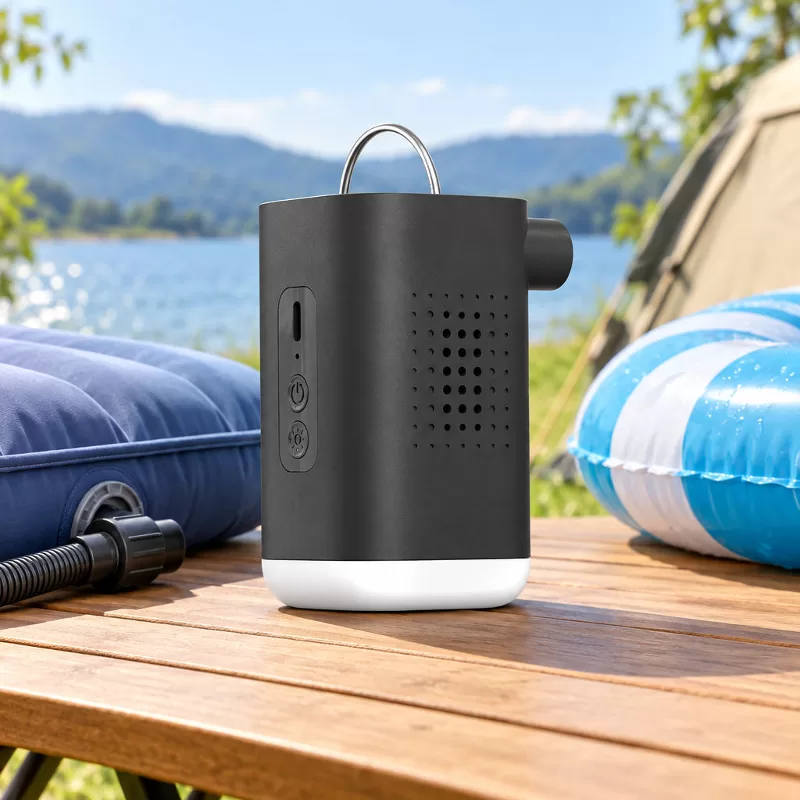
Portability is the other half of the equation. The AP5 measures 68 × 60 × 55 mm, small enough to slip into a backpack pocket or glovebox. Its integrated lighting modes are listed as a feature for added convenience during use, and buyers who set up in low light may find that helpful, though the listing does not position it as a replacement for a dedicated lantern.
Matching the Right Pump to Your Inflatable Gear: A Practical Breakdown
Different inflatable products use distinct valve geometries, material thicknesses, and internal structures. A compact high volume electric air pump suits flexible chambers designed to be filled at low pressure. Reviewing specific domestic, recreational, and commercial use cases clarifies where a 4.5 KPa mini inflator fits and which applications match the pump’s stated design.
Home, Leisure, and Water Recreation Applications
During summer months, families routinely inflate several swim rings, pool loungers, and backyard water toys in a single afternoon. Doing this by mouth is tiring and slow. A cordless electric pump fills swim rings with ambient air and takes the effort out of preparation, which leaves more of the afternoon for the water itself.
Indoor and patio living spaces also benefit from rapid low-pressure inflation. Inflatable sofas, guest airbeds, and seat cushions all rely on a large internal air volume. Users should follow the inflatable manufacturer’s inflation guidance and monitor the item during filling, because overinflation can strain seams regardless of which pump is used.
Camping Sleep Systems and Travel Packing
When travelers pack for road trips or flights, a compact inflator earns its place by being easy to carry. The AP5 is described as a mini lightweight pump suited to indoor use, outdoor activities, travel, and storage. For camping, it pairs naturally with air mattresses and inflatable seat cushions that need a lot of air at low pressure.
The packing-list graphic supplied with the product shows a black drawstring storage pouch, several nozzle adapters, and a USB charging cable alongside the pump. Keeping those items together in one pouch means the right adapter and the charging cable are always at hand, which is especially useful on multi-day trips where a missing accessory is hard to replace.
Commercial Sourcing: E-Commerce, Seasonal Retail, and Promotional Programs
From a retail merchandising perspective, many inflatable products are sold without a way to fill them quickly. Pairing an inflatable sofa, air mattress, or pool float with a compact electric pump is one possible merchandising choice, and it gives the buyer a compatible way to inflate the item on first use. The AP5 information lists e-commerce and seasonal leisure product lines among its intended applications.
Gift and promotional retail programs form another listed application area. A palm-sized inflator with an orange carrying strap and integrated lighting modes is a practical item that recipients can keep with their travel or leisure gear. Buyers planning such programs should evaluate the pump against their own audience, price point, and any shipping rules that apply to lithium batteries.
For us at Newo, engineering pneumatic tools means matching the exact hardware to the user’s environment. We specialize in the research, development, and production of smart electric air pumps and portable inflation solutions. Supported by advanced production capabilities, experienced engineers, and strict quality management, we develop everything from low-pressure outdoor inflation solutions like the AP5 to portable tire inflators, electric bike pumps, car air pumps, and ball pumps for long-term partners worldwide.
Step-by-Step Selection and Operating Protocol for Maximum Efficiency
Even a well-specified pneumatic tool will underperform if paired with an incompatible valve or used without basic care. Both retail buyers sourcing inventory and individual adventurers gearing up for a trip can follow a structured process. The steps below cover how to choose a pump and how to use it sensibly once it arrives.
Five-Step Decision Framework for Buyers
Before purchasing a portable inflator, run through this sequential checklist to verify compatibility and make sure the pump matches your specific inflation needs:
-
Verify Target Pressure Requirements: Check the manufacturer label on your inflatable item to confirm its required inflation pressure. If the item is designed for low-pressure volume filling, such as airbeds, pool floats, or inflatable sofas, a high volume electric air pump is the better fit. The AP5’s listed maximum pressure is 4.5 KPa (roughly 0.65 PSI); always follow the inflatable manufacturer’s guidance rather than treating that figure as a target.
-
Estimate the Total Volume per Session: Count how many mattresses or swim rings you need to fill consecutively, and compare that against the listed 190–200 L/min airflow rating. Actual inflation time and the number of inflations per charge depend on inflatable volume, valve restriction, and battery condition, so test the pump with your own items to set realistic expectations.
-
Inspect Valve Styles and Adapter Fit: Compare your gear’s valve openings, such as pinch valves or wide mattress ports, against the nozzle adapters supplied with the pump. A snug, compatible fit reduces air leakage during filling and avoids unnecessary restriction.
-
Assess Charging and Temperature Conditions: Confirm that you have a compatible USB-C power source for the approximate 1.5–2 hour charging time, and verify that your destination’s climate falls within the manufacturer’s stated working-temperature ranges. Planning charging opportunities on multi-day trips avoids arriving at the campsite with a flat battery.
-
Evaluate Secondary Utility and Form Factor: Confirm that the physical dimensions of 68 × 60 × 55 mm fit your storage constraints, and decide whether the integrated lighting modes add convenience for your typical use, such as setting up in the evening.
Field Operating Best Practices
Using a small rechargeable pump with care helps keep it working as intended. The following practical precautions are general good habits rather than manufacturer guarantees of service life:
-
Choose a Well-Fitting Nozzle Adapter: Attach the widest adapter that fits snugly into the valve opening, and open flat check valves with the adapter tip if the valve design requires it. This helps avoid unnecessary restriction between the pump outlet and the inflatable.
-
Keep the Intake Clear: Hold the pump by its body or carrying strap so fingers, sand, grass, or loose tent fabric do not block the air intake during inflation. A clear intake lets the pump operate as designed.
-
Monitor Inflation and Follow Manufacturer Guidelines: Watch the item during filling and follow the inflatable manufacturer’s inflation guidance. Stop the pump when the item reaches its recommended firmness, because the AP5 information does not describe an automatic shut-off, and continuing to run the pump against a full chamber serves no purpose.
-
Respect Temperature Windows: Let a sun-soaked pump cool toward the listed range before running it, and bring a cold pump into a tent or vehicle before connecting the Type-C charging cable. Staying within the manufacturer’s stated temperature ranges is the simplest way to treat the battery sensibly.
Frequently Asked Questions (FAQs)
Can a high volume electric air pump inflate car tires, bicycles, or stand-up paddleboards?
No, a low-pressure high volume electric air pump is not intended for automotive tires, bicycle tubes, or rigid drop-stitch paddleboards. The AP5 has a listed maximum pressure of 4.5 KPa (roughly 0.65 PSI) and is designed for fast volume transfer into low-pressure inflatables. For high-pressure items, use equipment rated for the pressure specified by the tire or board manufacturer.
How do I know how many items a mini pump can inflate on a single charge?
The number of inflations per charge depends on the internal volume of each item, valve restriction, and battery condition. The AP5 is listed at 190 to 200 L/min of airflow, so small items such as swim rings or seat cushions need less filling than a large air mattress. For precise expectations, test the pump with your own inflatables and note how the battery performs under your typical conditions.
Why does my air mattress still feel slightly soft after using an electric volume pump, and is that normal?
Some air mattresses may soften during initial use as new vinyl stretches, and that temporary softness does not necessarily point to a defective pump. Check the specific mattress manufacturer’s instructions to confirm the correct inflation level, and avoid overinflating, which can strain seams. Some designs allow topping off after the first inflation, while others specify a maximum firmness.
What temperature range can I use a rechargeable mini air pump in?
The AP5 manufacturer lists a discharge working-temperature range of -10°C to 45°C, which spans cold-weather camping and summer beach days. Charging is listed for temperatures between 0°C and 45°C. Always follow the manufacturer’s temperature specifications, and allow the pump to return to a suitable temperature before operating or charging it if it has been stored in extreme heat or cold.
Conclusion: Choosing the Right Airflow Tool for Effortless Inflation
Eliminating the frustration of slow, exhausting camp or poolside setup starts with reading the right numbers and matching pump capabilities to inflatable requirements. Pressure-oriented tire inflators belong with vehicle and bicycle maintenance, while high-volume airflow tools suit the travel pack and the home utility drawer for seasonal leisure gear and camping equipment.
Whether you are an outdoor enthusiast packing light for a weekend trail or a product manager building seasonal retail bundles, a high volume electric air pump gives large, low-pressure inflatables a faster and less tiring way to fill. With compact 68 × 60 × 55 mm dimensions, Type-C rechargeability, and a listed 190–200 L/min airflow, a rechargeable high volume electric air pump for air mattresses and swim rings offers practical convenience wherever your travels lead.
-
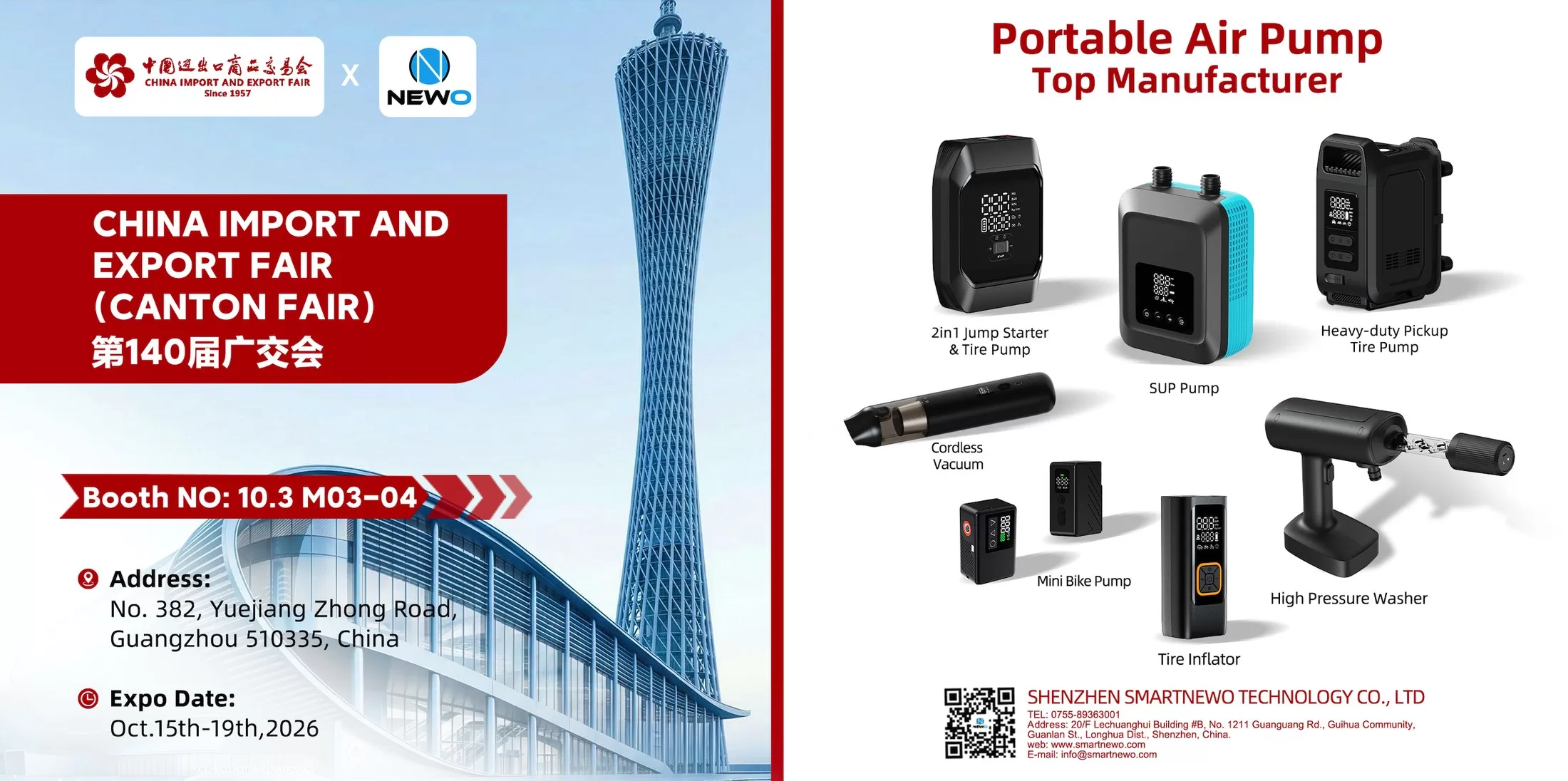
Meet NEWO at the 140th Canton Fair: Visit Booth 10.3 M03–04
Meet NEWO at the 140th Canton Fair in Guangzhou, October 15–19, 2026. Visit Booth 10.3 M03–04 to explore portable air pumps and discuss OEM, ODM and distribution opportunities.... -

As Shenzhen Welcomes the World for APEC 2026, NEWO Welcomes You to Our Factory
As Shenzhen prepares for APEC 2026, NEWO welcomes international buyers and partners to visit our factory, meet our team and explore future cooperation.... -
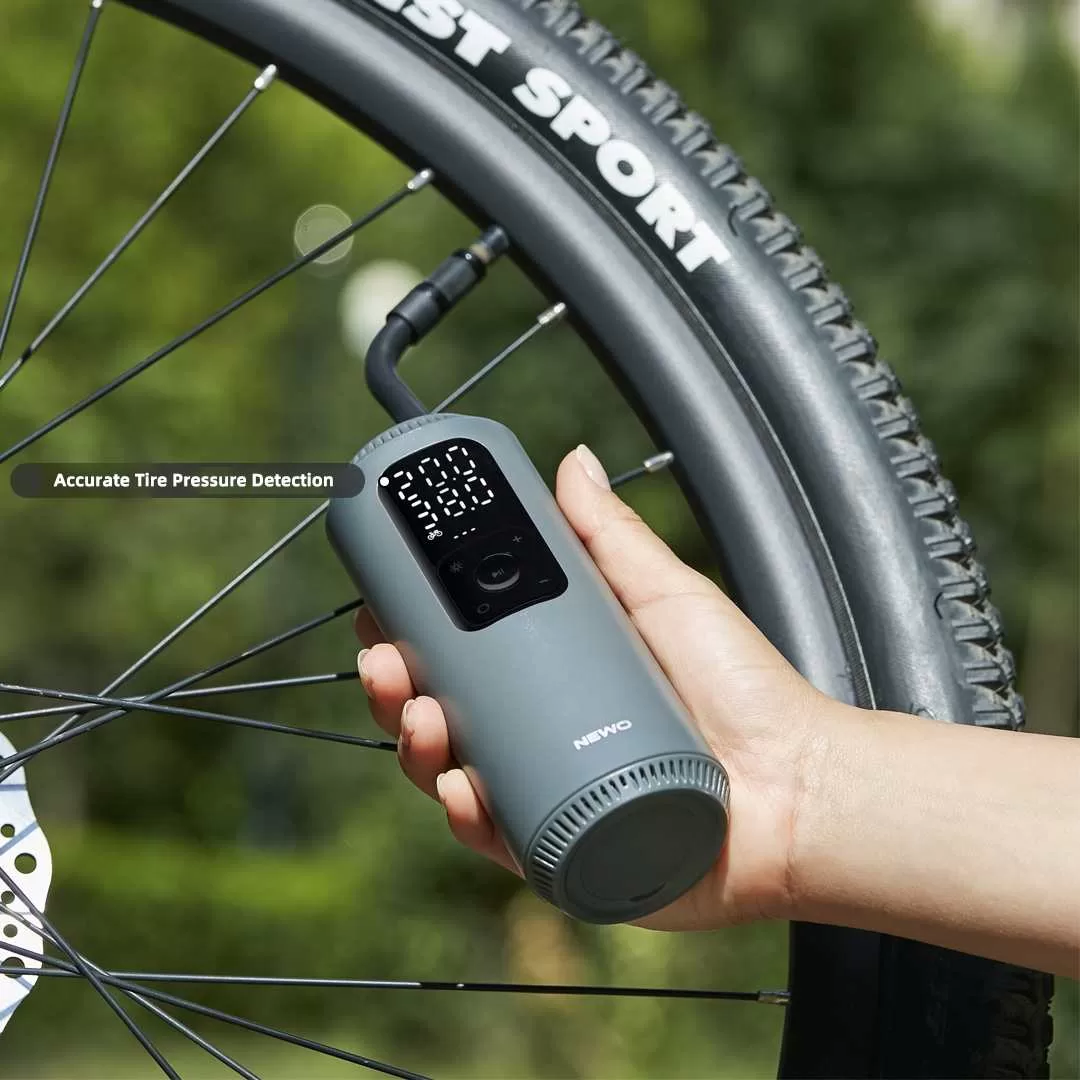
Leading the Way in Product Innovation and Excellence
Smartnewo exemplifies professionalism in product innovation and manufacturing. Their collaboration with Xiaomi Youpin on the G01 crowdfunding project highlights their expertise in creating compact, powerful inflatable pumps. Rigorous engineering, meticulous production processes, and advanced quality assurance underscore their commitment to excellence. The success of the G01 project, with significant market... -
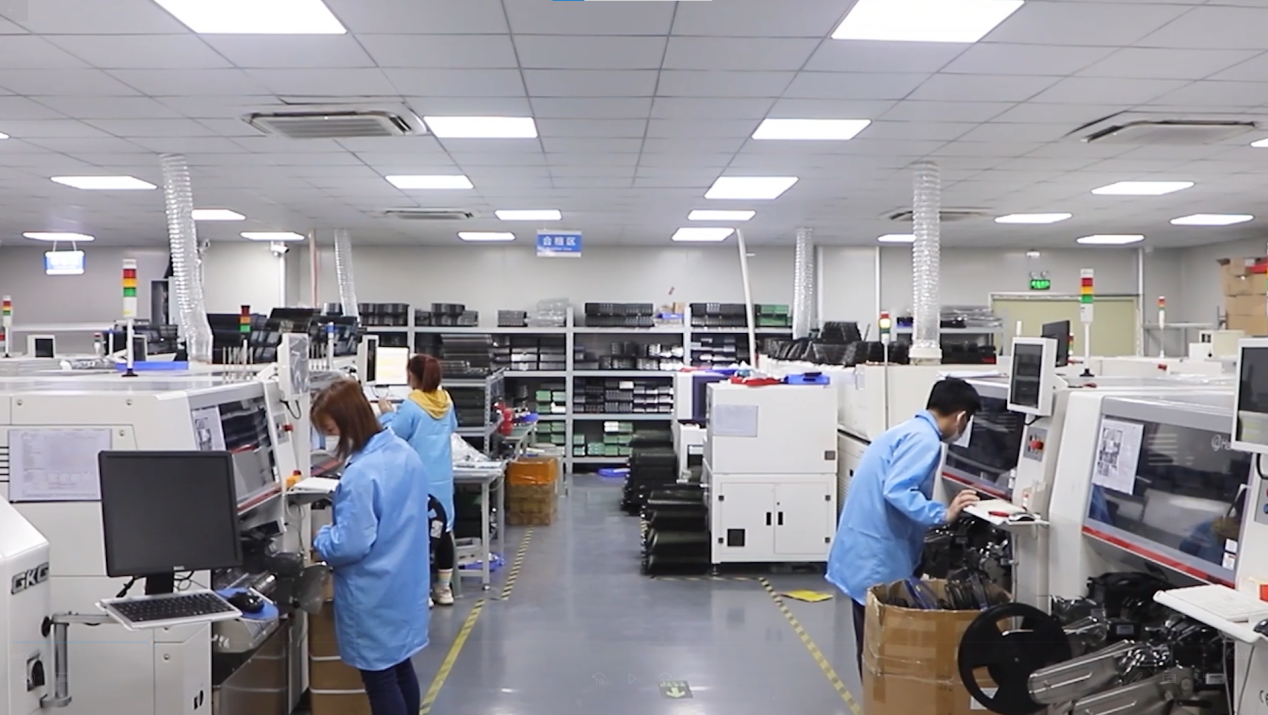
Essential Qualities of an Excellent Supplier
In today's competitive market, finding a reliable supplier is crucial for business success. Based on insights from Smartnewo and broader internet research, here are key qualities an excellent supplier must possess:... -
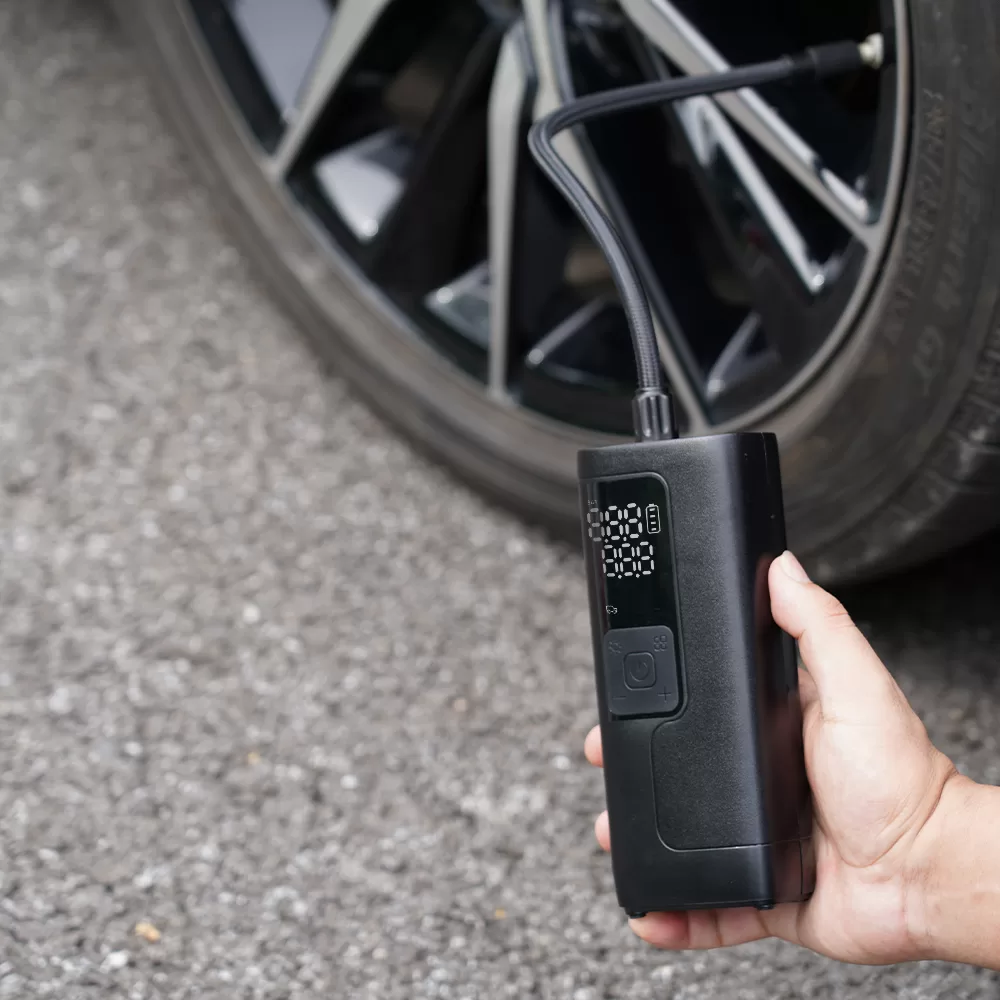
NW06 Tire Inflator: Compact Power for Quick Inflation
Summary The NW06 Tire Inflator delivers quick and efficient tire inflation with a powerful 35L/min airflow. It features a user-friendly LCD screen for real-time pressure monitoring, dual power options with a built-in 6000mAh battery, and multiple nozzle attachments for versatile use. Its compact design and integrated LED light ensure convenience and... -
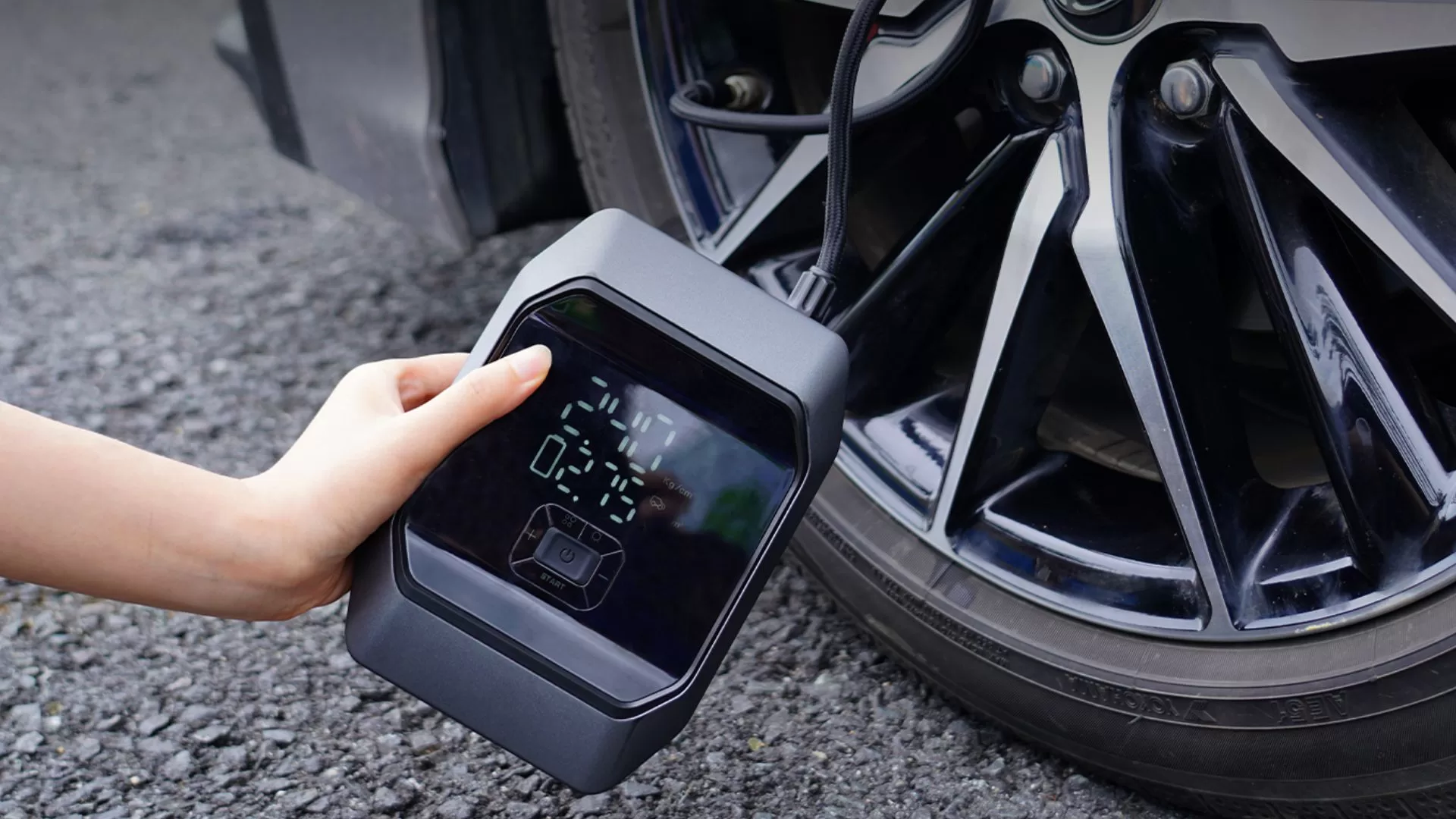
Unleash the Power of Portability: The SmartNewo Jump Starter with Air Compressor KF03
This guide will walk you through the steps to effectively use a portable tire inflator, helping you stay prepared and safe on the road.... -
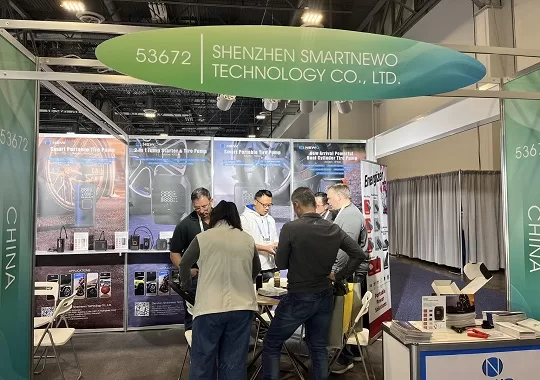
Newo Attends The 2024 Consumer Electronics Show (CES)
Smartnewo booth is located at 53672, Halls A-D, Level 2, Venetian Expo, Las Vegas Convention Center (LVCC). ... -
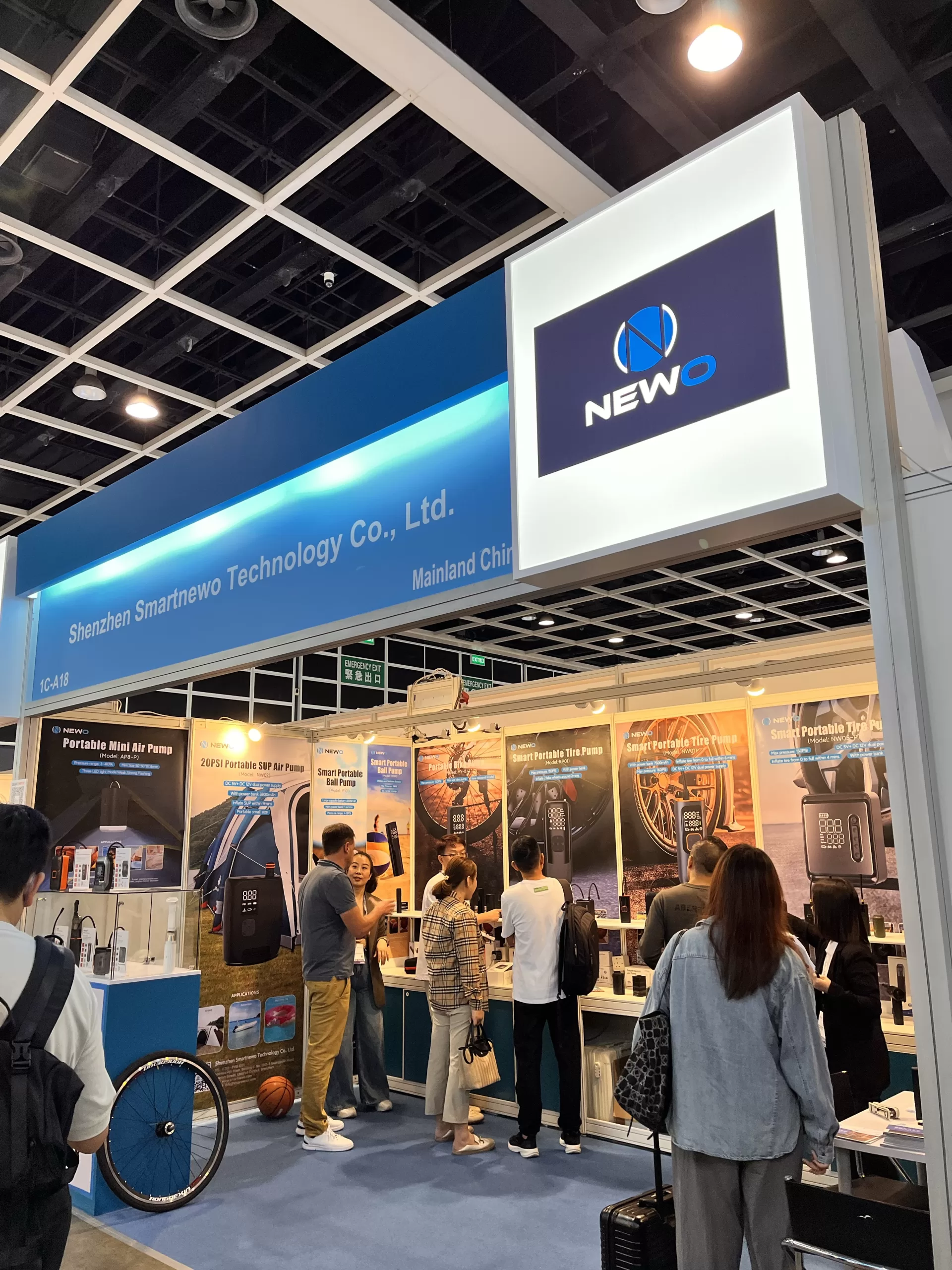
Smartnewo’s Dual-Cylinder Air Pump Rocks the Hong Kong Autumn Electronics Fair!
Smartnewo’s Dual-Cylinder Air Pump Rocks the Hong Kong Autumn Electronics Fair!... -

Meet at the Canton Fair! Smartnewo brings dual-cylinder air pumps, making your inflation experience faster and more stable!
NEWO has went deep communication and negotiation with customers from all over the world on booth.... -
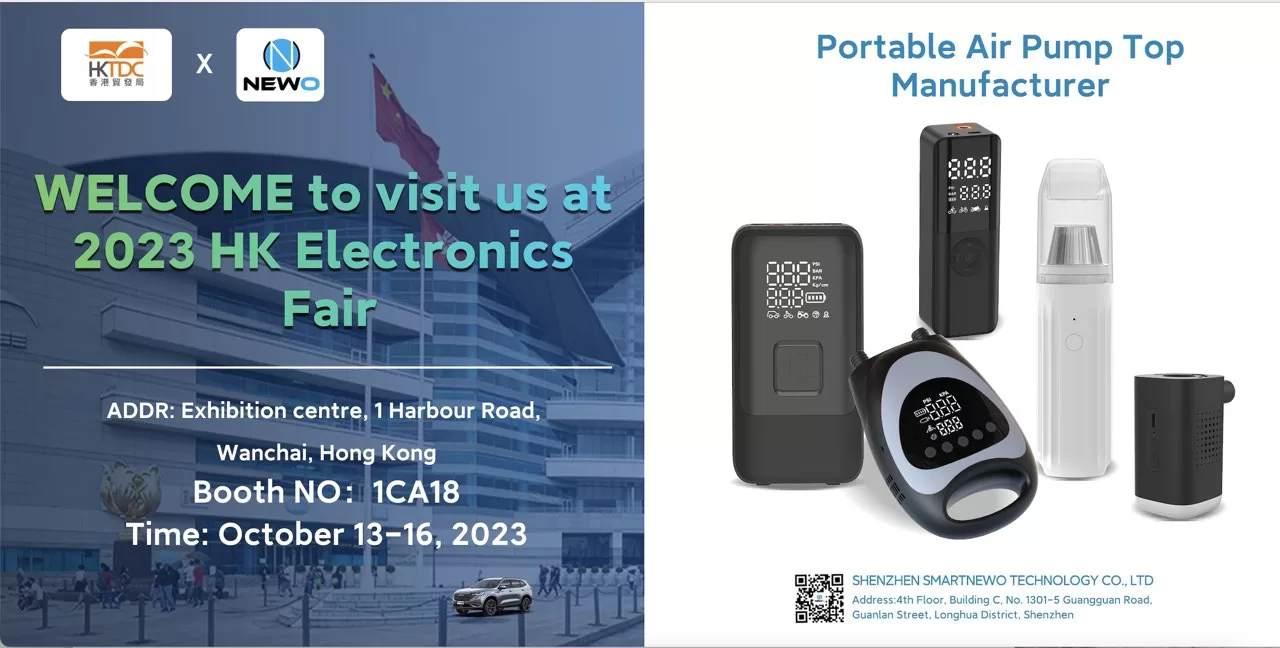
“Hong Kong Autumn Electronics Fair – 1CA18 (October 13th to 16th): Smartnewo invites you to visit our booth!
Hong Kong Autumn Electronics Fair...
-

How to Choose a Reliable Tire Inflator Manufacturer in China
Choose a tire inflator manufacturer in China with a focused RFQ, supplier evidence, configuration checks, and clear sample-to-pilot decisions for your brand.... -
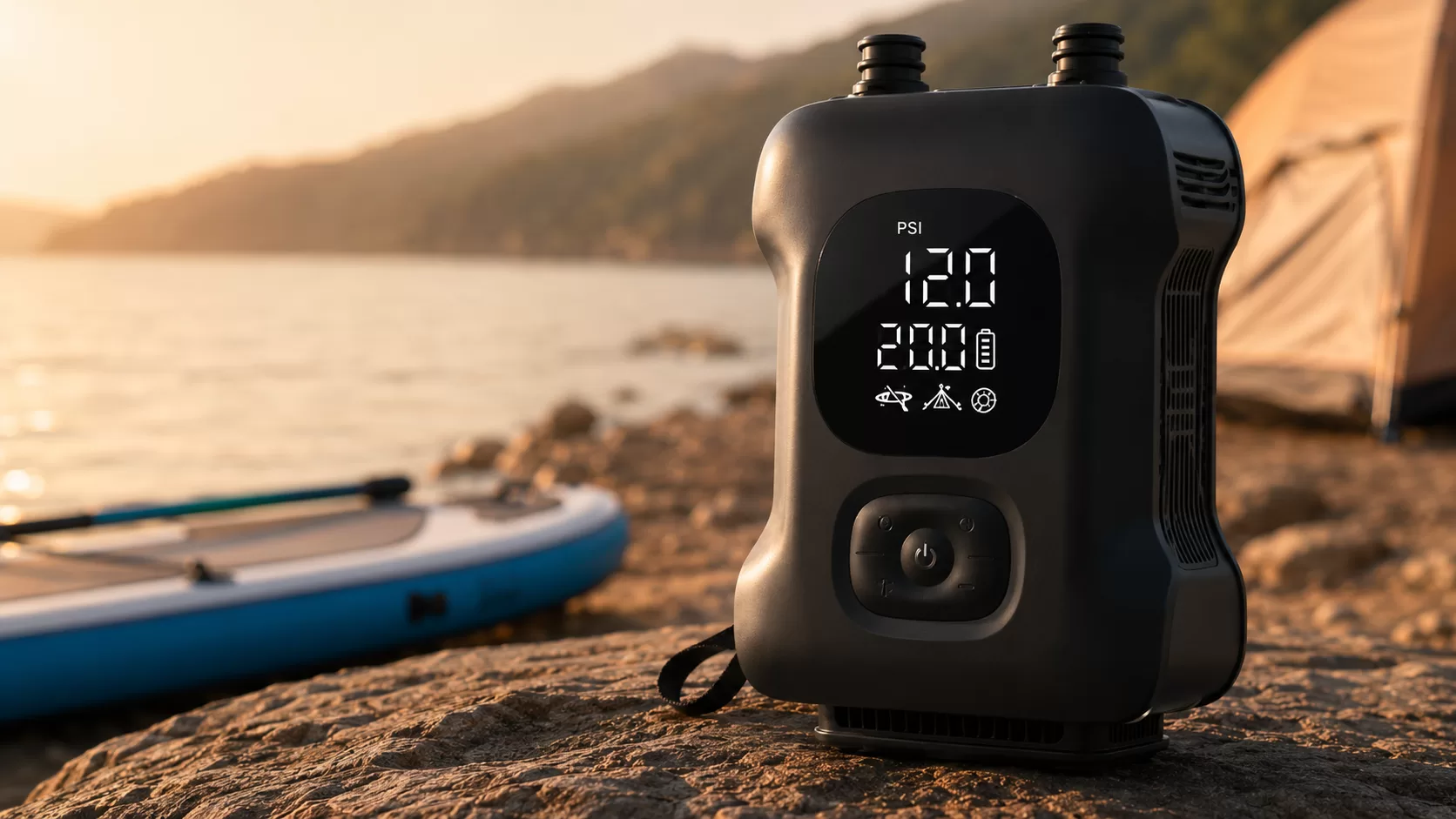
Rechargeable Electric SUP Pump for Paddle Boards: Faster Inflation for SUPs, Kayaks and Inflatable Tents
The BL10-C Portable Electric Bike Tire Inflator is a compact and lightweight mini electric bike pump designed for modern cyclists. With up to 120 PSI pressure, a digital LED display, preset pressure control, automatic shut-off, USB-C charging, and multiple valve adapters, BL10-C offers a convenient inflation solution for road bikes,... -
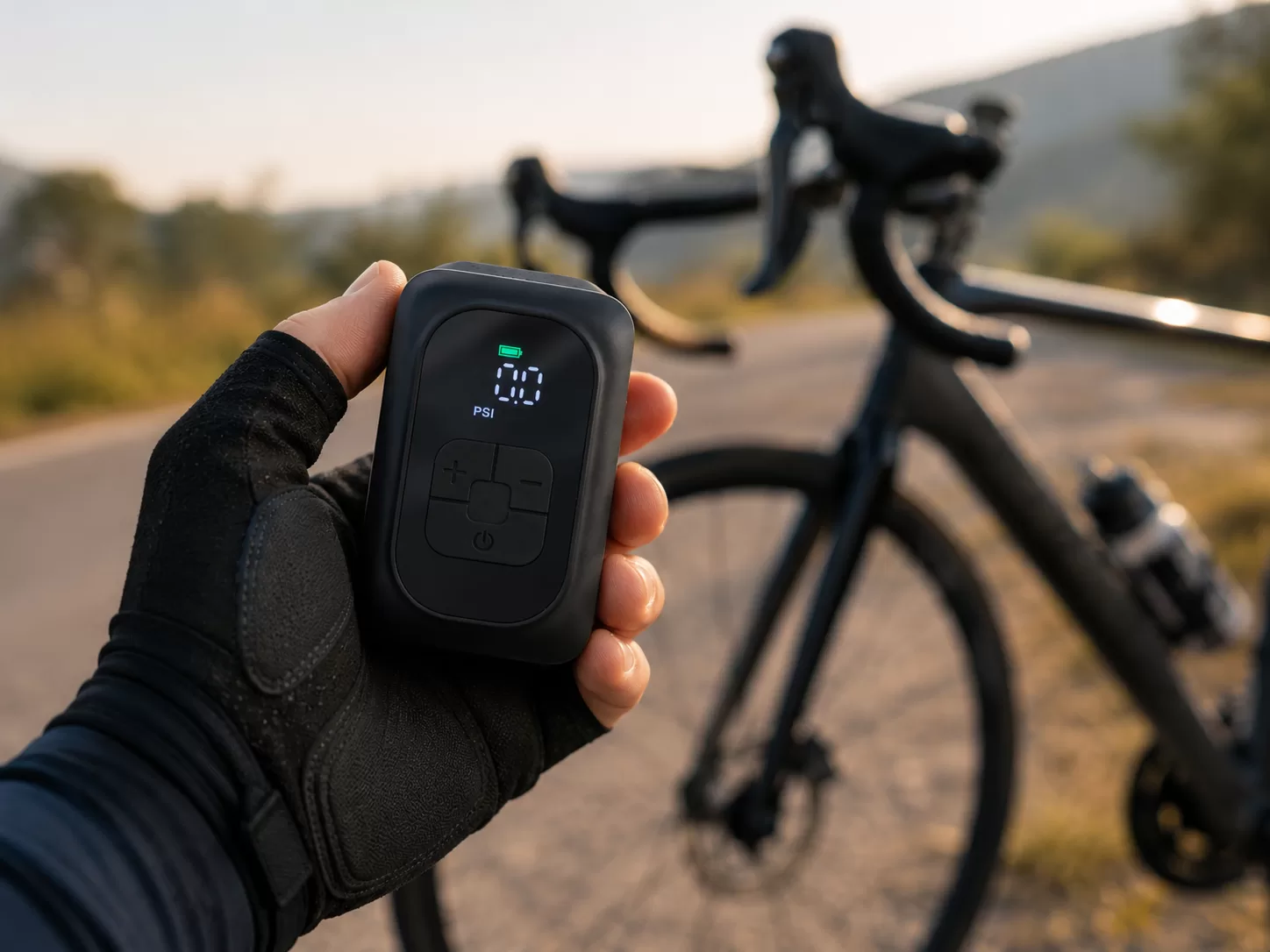
Are Electric Bike Pumps Worth It in 2026? Electric Pump vs CO₂ vs Mini Hand Pump
Discover whether electric bike pumps are worth it in 2026. This guide compares electric bike pumps, CO₂ inflators, and mini hand pumps for road cycling, gravel riding, commuting, and long-distance rides. Learn the pros, limitations, best use cases, and key features to look for before choosing the right portable tire... -
BL10-C Portable Electric Bike Tire Inflator: Small Size, Reliable Power for Every Ride
The BL10-C Portable Electric Bike Tire Inflator is a compact and lightweight mini electric bike pump designed for modern cyclists. With up to 120 PSI pressure, a digital LED display, preset pressure control, automatic shut-off, USB-C charging, and multiple valve adapters, BL10-C offers a convenient inflation solution for road bikes,... -
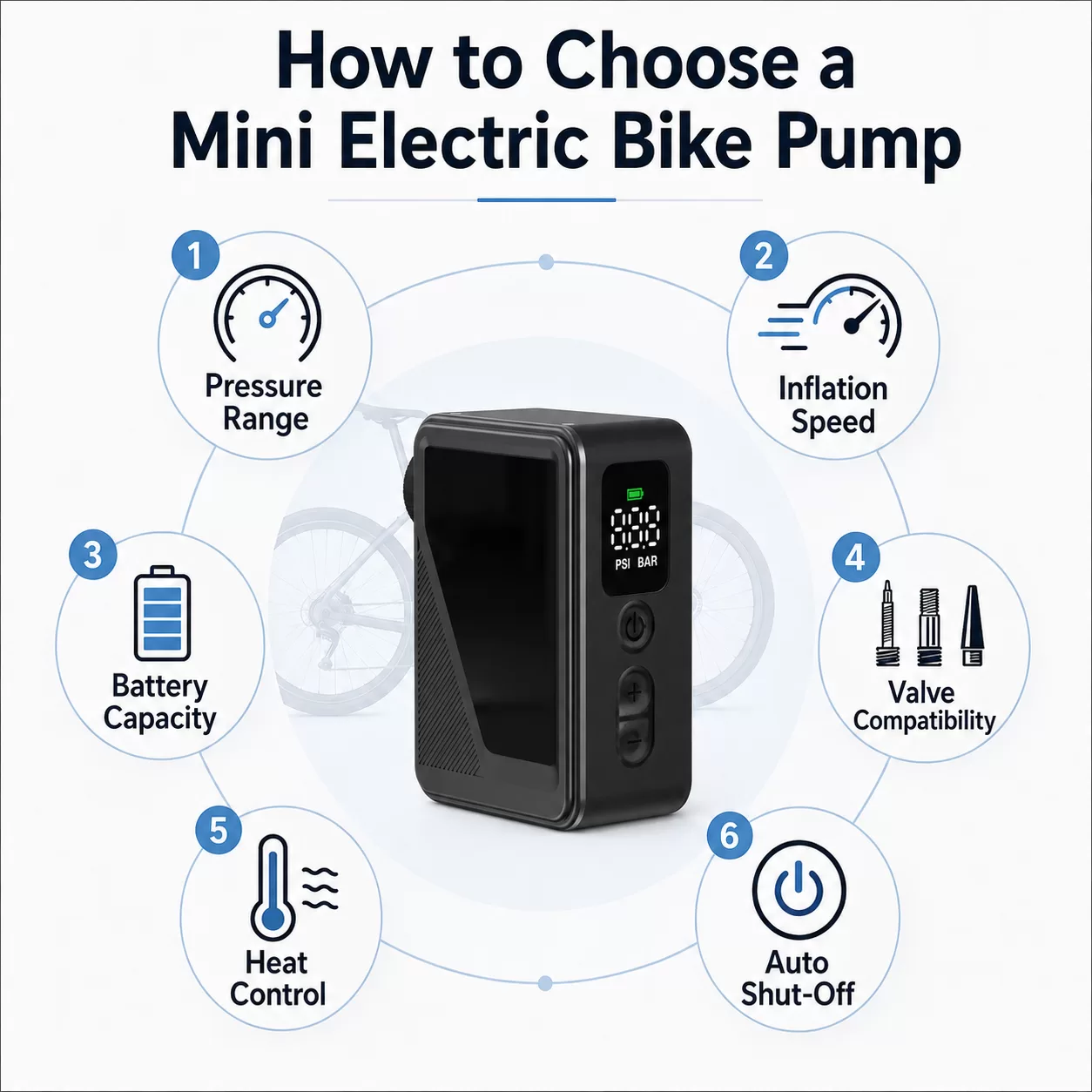
Why Mini Electric Bike Pumps Are Becoming Essential for Modern Cycling
Discover why mini electric bike pumps are becoming essential for modern cyclists. Learn how portable electric bike pumps improve tire pressure management, riding safety, and convenience.... -
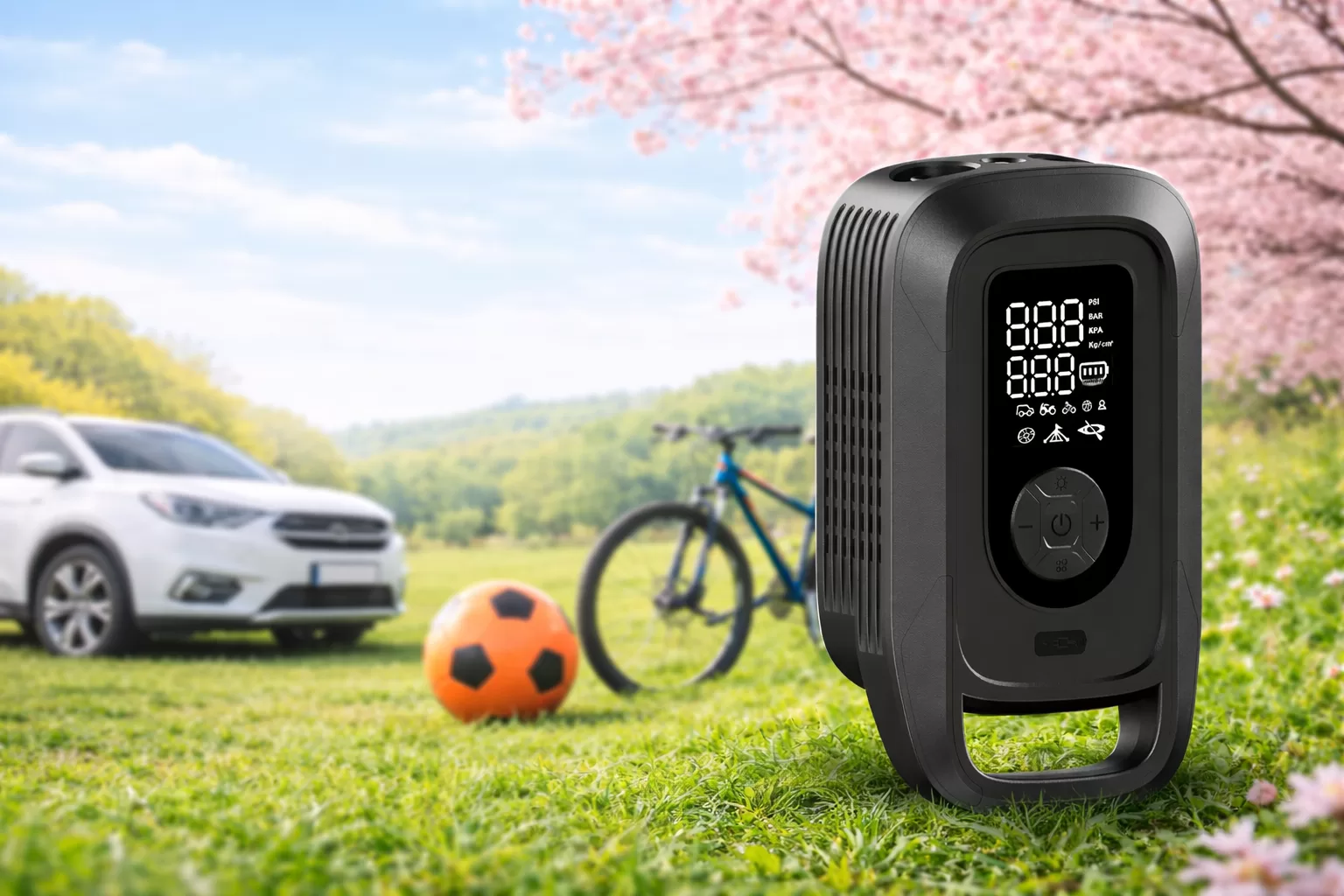
The Ultimate Smart Solution for Easy Outdoor Adventures in 2026
Discover how a spring travel air pump simplifies outdoor trips with fast inflation, smart features, and powerful performance—perfect for every adventure.... -
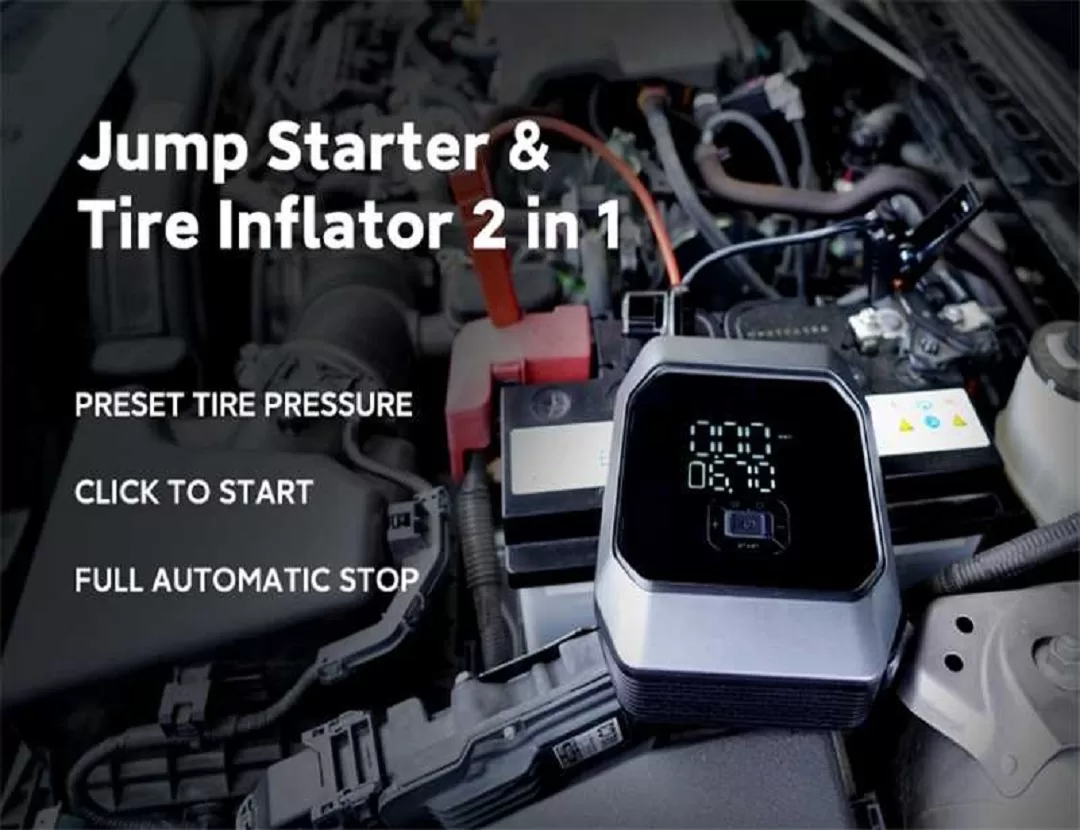
Powerful 5-in-1 Portable Car Tire Inflator and Jump Starter: The Ultimate Emergency Tool for Every Driver
Why Every Driver Needs a Portable Car Tire Inflator and Jump Starter Modern drivers face many unexpected situations on the road. A flat tire, low tire pressure, or a dead car battery can happen at the worst possible time. That’s why having a portable car tire inflator and jump starter is... -

7 Real Cycling Scenarios That Show Why Every Rider Should Carry a Mini Bike Pump
Cycling is one of the most freeing activities you can enjoy. Whether you’re commuting to work, riding through city streets, or exploring quiet countryside roads, a bike ride can instantly improve your day. But there’s one small problem that almost every cyclist eventually faces: Low tire pressure. It might happen... -
BL08-A Portable Electric Bike Pump: A Global Distribution Opportunity with Smartnewo
Smartnewo, a professional manufacturer of portable electric air pumps, introduces the BL08-A model — a compact and efficient inflator designed for global distributors, e-commerce sellers, and outdoor accessory brands seeking reliable OEM/ODM solutions. Table of Contents Main Heading Subtopics 1. Introduction: Expanding the Global Market for Smart Inflation Tools Portable... -
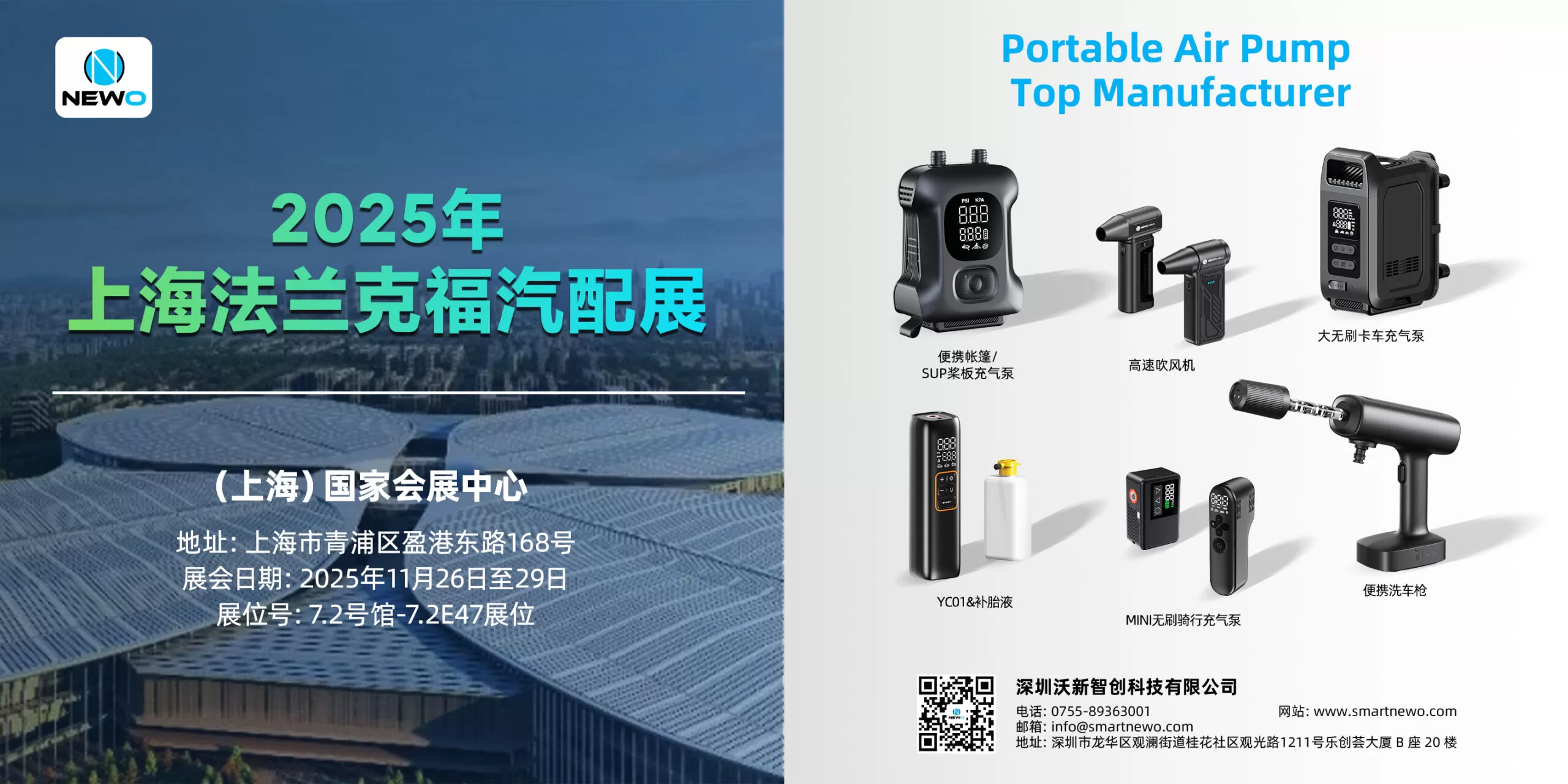
Connecting Opportunities at Automechanika Shanghai 2025 — Smartnewo Exhibition Day 1
Today marks an exciting beginning as Smartnewo officially opens its booth at Automechanika Shanghai 2025. As one of the largest and most influential automotive aftermarket exhibitions in the world, the show provides an exceptional platform for meaningful conversations, partnership building, and global industry exchange. Located at Booth 7.2E47, Smartnewo presents...
-
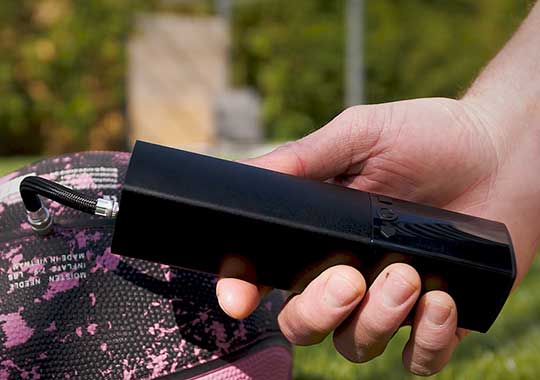
How Is a Football Properly Inflated?
The correct inflation of a football - with not too much and not too little air - is a hotly debated topic among footballers.... -
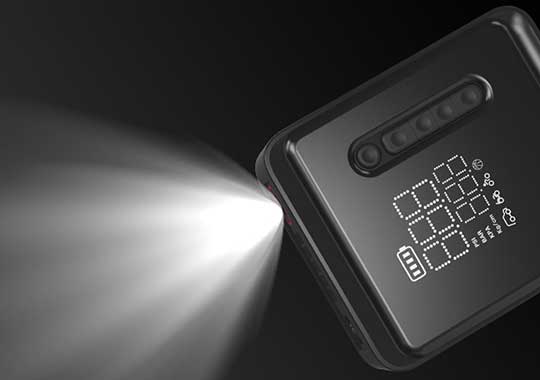
Application Scenarios of Car Inflator Pump
Often long-distance business trips or play car owners because the road may be more remote areas, in this case if you encounter a tire leak....