

 Portable Tire Inflators
 Electric Air Pumps
 Electric Car Tyre Pumps
 Electric Ball Pumps
 Electric Bike Pump
 SUP Air Pump

Mini Portable Air Pump: How to Choose, Use, and Evaluate a Compact Cordless Inflator
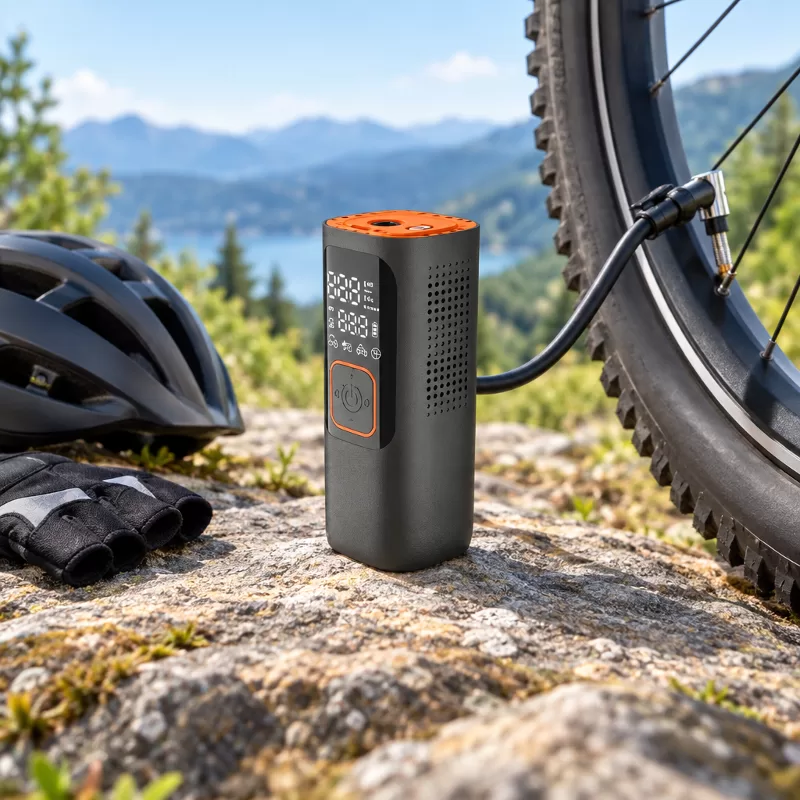
A mini portable air pump gives drivers, cyclists, and outdoor users a way to manage tire pressure without hauling workshop equipment. A compact cordless inflator can top up a car tire in a parking lot, bring a bicycle tire back to riding pressure before a commute, or handle a slow leak at the roadside. Choosing one becomes much easier once you understand three things: how pressure ratings work, how much air the pump actually moves, and how long it can run before it needs a rest.
Specification sheets can mislead if you read only the headline number. A high maximum pressure does not mean a pump will fill a car tire quickly. A small housing does not guarantee convenience either, because a pump with a weak battery may stop halfway through a job. This guide explains the specifications that matter, walks through careful inflation, and uses the published data for the BP198 as a working example.
What Is a Mini Portable Air Pump?
Defining the compact cordless inflator category
A mini portable air pump sits between a hand-operated frame pump and a stationary garage compressor. A manual pump depends on your arm strength. An electric inflator uses a small motor to drive a piston that compresses outside air and pushes it through a hose into the tire. Unlike a 12-volt car compressor, which plugs into the accessory socket, a cordless model runs on its own built-in rechargeable battery.
That battery is what makes the format useful. You can walk around a parked car without stretching a cable across the ground, top up a bike tire on a trail, or inflate wheelchair tires indoors. The trade-off is output. A handheld inflator is built for maintenance and top-ups with precise digital control. It cannot replace a workshop compressor with a storage tank, and it is not meant to.
Core real-world use scenarios
Drivers often lose a few PSI as outside temperatures fall or as a valve slowly seeps. A compact inflator kept in the glovebox or door pocket lets you restore the recommended cold pressure without searching for a working air machine at a gas station. Because the pump carries its own battery, you also avoid running a corded compressor from the car’s accessory socket for a small job.
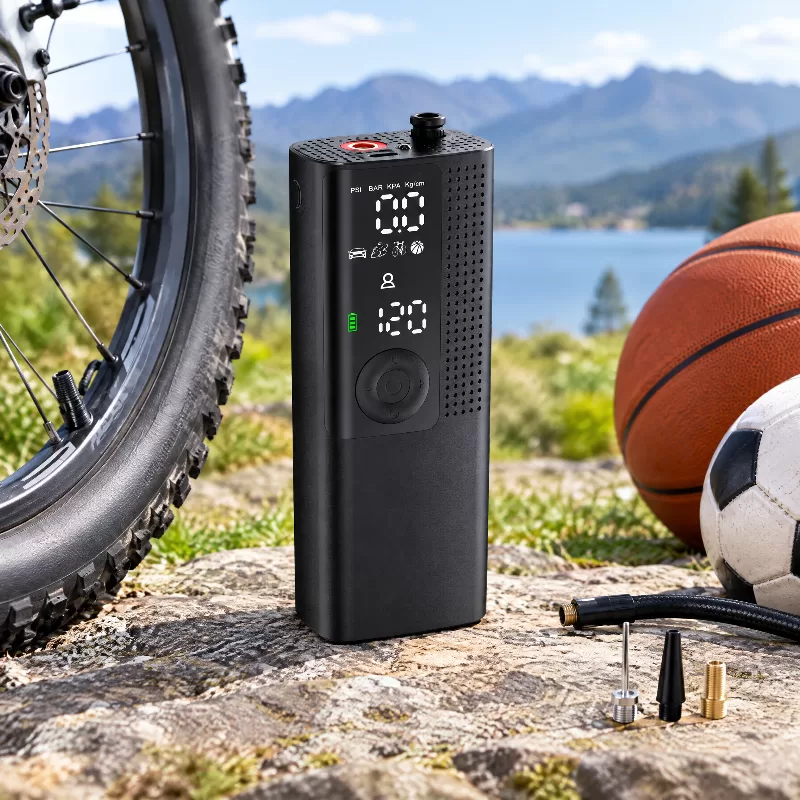
Cyclists deal with narrower pressure windows and two common valve types. Inner tubes are slightly permeable, so high-pressure road tires can lose a noticeable amount of air over a week, which changes handling and raises the risk of pinch flats. With the right nozzles, the same pump can also serve motorcycle tires, balance vehicles, wheelchair tires, sports balls, and small pool floats.
Key Technical Factors to Evaluate in a Mini Inflator
Working pressure versus volumetric airflow
Maximum pressure, shown in PSI or bar, is a manufacturer-rated upper limit. Airflow, usually listed in liters per minute (L/min), is a separate capacity figure for how much air the pump moves. Many buyers assume a 150 PSI pump will fill a car tire faster than a 100 PSI pump, but a higher pressure rating says little about speed. Neither number alone predicts inflation time. Actual performance also depends on tire volume, starting pressure, valve losses, battery state, and heat management.
The BP198 lists an airflow rate of 15 to 18 L/min. For a bicycle tire, which holds only a small volume of air, that rate brings the tire up quickly. For a car tire, which holds far more air at lower pressure, the same rate is enough for routine top-ups of a few PSI. Expect a longer wait when the tire is very low.
Battery capacity, working voltage, and motor load
Battery ratings confuse shoppers who look only at milliamp-hours. Energy depends on voltage too. A 2000 mAh pack at 7.4 volts stores 14.8 watt-hours (Wh), while a 2000 mAh pack at 3.7 volts stores half that amount. Watt-hours tell you how much work the battery can do driving the motor against the tire’s rising back pressure.
That load grows as pressure builds inside the tire. The motor draws more current, and runtime falls. The BP198 product data lists motor overcurrent protection and battery protection voltages of 8.4V and 6V. According to the supplied specifications, its 14.8 Wh pack gives 20 to 30 minutes of runtime. The same data lists about 10 to 15 bicycle tires, or up to three car tires, per full charge.
Pressure sensing, preset logic, and auto shut-off
A needle gauge is hard to read accurately at the roadside, especially at night. Digital inflators use an electronic pressure sensor and show the result as a number on screen. A dual readout helps further. One number shows the current tire pressure, and the other shows the target you have set, so you can see how close you are at a glance.
Automatic shut-off is the main safeguard against overinflation. When the measured pressure reaches the preset value, the pump stops the motor. Selectable units, such as PSI, BAR, KPA, and Kg/cm², let you match the numbers on a vehicle placard or rim without converting them by hand. Preset modes for cars, bicycles, motorcycles, and balls save you from re-entering common targets each time.
Heat, operating noise, and physical size
Compressing air produces heat, however small the pump. The work done on the air raises its temperature, and that heat passes into the cylinder, the piston seal, and the hose. This is why ventilation openings on the housing matter, and why the hose fitting can feel warm after a long fill. Let the pump cool between long jobs rather than running it back to back.
Noise is unavoidable with a small, fast motor. The BP198 lists a noise level of 85 dB or below at one meter, which is loud enough to notice in a quiet garage but brief during a top-up. Size matters for carrying. At 41 × 61 × 155 mm and 430 grams, the BP198 fits a backpack side pocket or a car’s center console.
Product Spotlight: Engineering Profile of the BP198
Architecture, portability, and built-in features
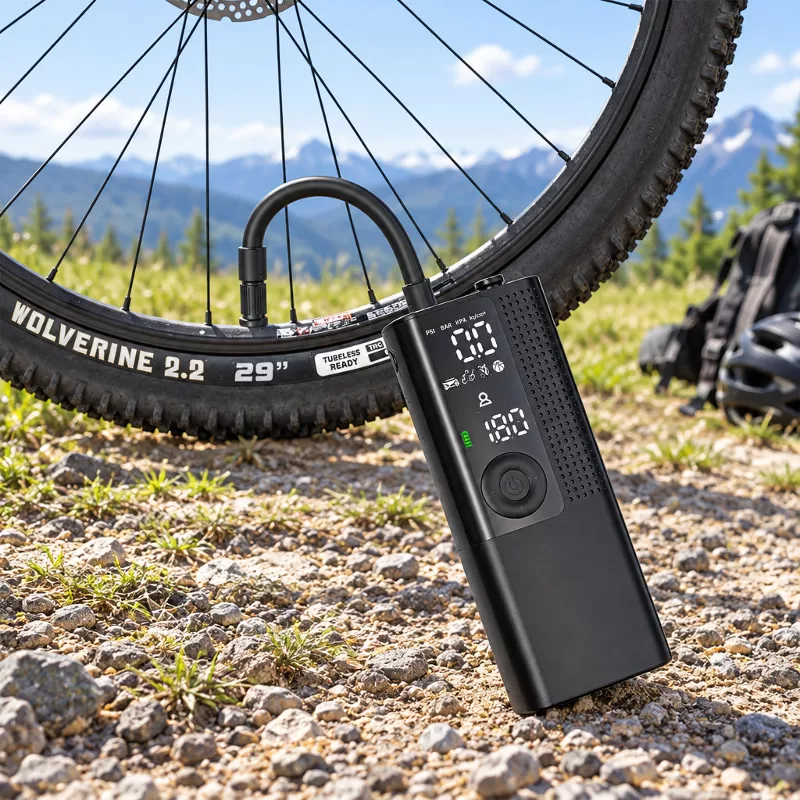
The BP198 is a portable electric air pump from Newo, a manufacturer of smart electric air pumps, tire inflators, bike pumps, and ball pumps. The housing is a slim black rectangle with a perforated ventilation area on the upper side. Inside, a 35-watt brushed motor drives the pump, and the product data lists the cylinder size as 14.
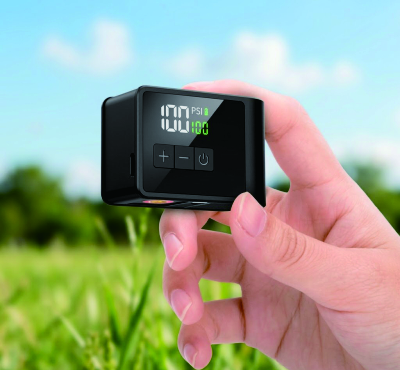
The air hose stores in the housing, so it stays out of the way when the pump rides in a bag. The front carries a floating LED screen with a dual readout for current and target pressure. Five modes cover custom, car, bicycle, motorcycle, and ball inflation. A side control releases air manually, and a top-mounted LED emergency light helps when you inflate a tire after dark.
Technical specifications from the product data
The table below summarizes the physical, electrical, and pneumatic specifications supplied for the BP198 mini portable air pump:
| Specification | BP198 Product Data |
|---|---|
| Model | BP198 |
| Product type | Portable electric air pump |
| Maximum pressure | 120 PSI (0 to 120 PSI range) |
| Air flow | 15 to 18 L/min |
| Battery | 7.4V / 2000mAh / 14.8Wh |
| Battery protection voltage | 8.4V / 6V |
| Battery cycle life | 300 cycles, 80% or more of original capacity |
| Charging | Type-C, 5V/2A input, 10W |
| Charging time | 2 to 3 hours |
| Runtime | 20 to 30 minutes |
| Cylinder size | 14 |
| Motor | 35W brushed motor with overcurrent protection |
| Motor service life | 200 to 400 hours |
| Display and control | Floating LED display, 5 preset modes, auto shut-off |
| Pressure units | PSI, BAR, KPA, Kg/cm² |
| Size | 41 × 61 × 155 mm |
| Net weight | 430 g |
| Working temperature | -10°C to 45°C |
| Noise level | 85 dB or below at 1 meter |
| Air accessories | Three additional air nozzles |
| Listed full-charge capability | About 10 to 15 bicycle tires, up to 3 car tires |
One descriptive paragraph in the product data mentions a 150 PSI maximum, while the product title, summary specifications, and specification table all state 120 PSI. For safe use, treat 120 PSI as the working limit. That ceiling covers passenger car and motorcycle tires and many road bicycle setups, but always follow the lower pressure limit marked on the tire or specified for the rim.
How to Inflate a Tire Carefully
Set the correct target pressure first
Good tire performance starts with the right target. For a car, do not inflate to the maximum pressure molded into the sidewall. That figure is the most the tire is rated to hold when carrying its maximum load, not a recommended everyday setting. Use the placard on the driver’s door jamb or the owner’s manual, which give the recommended cold pressure for your vehicle.
Cold pressure means the tire has not been driven recently, usually after the car has been parked for a few hours. Bicycles are less uniform. The right pressure depends on tire width, rim width, rider weight, and whether the setup is tubed or tubeless. Road tires often run somewhere around 70 to 100 PSI, while wide gravel and mountain bike tires run far lower. Check both the tire and rim markings, and never exceed the lower of the two maximums.
A careful step-by-step inflation sequence
With the target settled, the inflation itself follows a short routine:
- Inspect the tire and valve. Look for glass, screws, or sidewall cracks before adding air. Wipe dirt away from the valve threads and remove the dust cap.
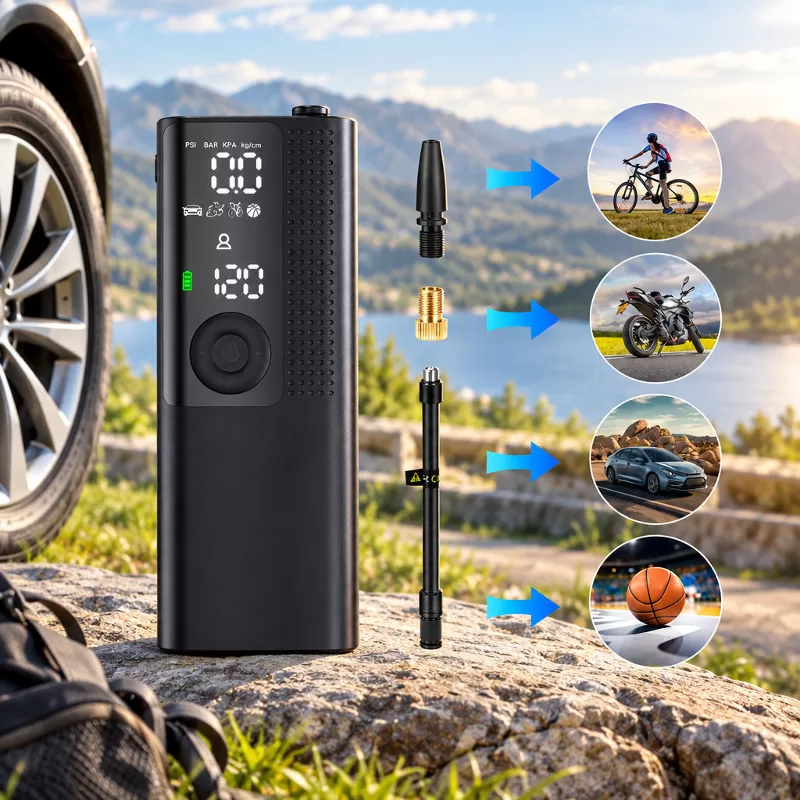
- Connect the hose securely. Pull the hose out of its storage slot and attach the connector to the valve using the appropriate supplied adapter. Confirm that a compatible adapter is included or available separately before relying on the pump for Presta-valve tires or other specialized inflation tasks. A good seal shows as a stable reading with no hissing.
- Power on and choose the unit. Turn on the mini portable air pump and select PSI, BAR, KPA, or Kg/cm² to match your placard or tire marking.
- Set the target. Pick the matching mode, or use the plus and minus buttons to set the exact value on the preset readout.
- Start inflating and watch the display. Start the motor and hold the pump steady or set it on a clean surface. The live reading should climb gradually.
- Let auto shut-off finish the job. The pump stops at the preset value. Switch it off, remove the connector quickly to limit air loss, and refit the dust cap.
This routine prevents the usual roadside mistakes. It keeps sideways force off the valve stem, gives you repeatable readings, and keeps you close enough to notice if the pump is getting hot.
Use manual air release only for controlled adjustment
The BP198 has a manual deflation control on the side of the housing. It lets you release small amounts of air without removing the hose or pressing the valve pin with a fingernail. That is useful when a fill overshoots, for example when a ball or bike tube was inflated by hand beforehand or the target was set too high by mistake.
Do not release air merely because a recently driven tire reads above its cold target. Driving warms the tire and raises its pressure, and that rise is normal. Let the tire cool, then check and adjust it to the vehicle manufacturer’s recommended cold pressure. Use manual deflation only for genuine overinflation confirmed by a cold reading.
When deflation is needed, press the release control in short bursts and watch the live reading between each one. Small-volume items, such as road bike tubes and sports balls, lose pressure fast, so a brief press is often enough. Wait a few seconds after each release for the reading to settle before deciding whether to let out more.
Store and charge the battery sensibly
A cordless pump is only useful in an emergency if its battery is charged. The BP198 charges through a Type-C port at 5V/2A, and the product data lists two to three hours from empty. A standard USB charger, power bank, or car USB port that supplies 5V/2A will work. Charge it before a long trip rather than discovering a flat battery at the roadside.
Car interiors get much hotter than outside air in summer sun and can drop well below freezing on winter nights. The BP198’s listed working range is -10°C to 45°C, and long exposure to extremes outside that range speeds up battery wear. If you keep the pump in the car, store it in a pouch away from direct sun, and bring it indoors to recharge every couple of months even when unused.
Where a Mini Inflator Works and Where It Falls Short
Passenger car tires: routine maintenance and emergencies
For passenger cars, a mini portable air pump suits routine maintenance well, as long as you respect its limits. Raising a tire from around 28 PSI to a recommended 33 PSI means moving a moderate amount of air against moderate pressure. That kind of top-up is exactly what the format is built for, and it makes seasonal pressure checks easy to keep up with.
A severely deflated tire is a harder job. The pump has to run for a long time under load, and heat builds in the cylinder. It may raise such a tire to its recommended pressure if the tire is undamaged and the bead remains seated, but inflation time varies. Do not drive on a damaged, punctured, or unseated tire; have it inspected or repaired.
The product data lists up to three car tires per full charge, but running the pump continuously across several low tires adds stress. If you do need to fill more than one badly deflated tire, pause between fills, let the housing cool, and follow the duty guidance in the manual.
Bicycle, e-bike, and motorcycle tires
Two-wheelers are where small cordless pumps fit best. Bicycle tires hold much less air than car tires but often need higher pressure. The BP198’s 120 PSI ceiling covers many road-bike setups without a floor pump, but always follow the lower pressure limit marked on the tire or specified for the rim. The bicycle mode spares you from setting the target every time.
E-bikes, cargo bikes, and scooters gain the most from regular checks. Their extra weight makes an underinflated tire feel sluggish, cuts battery range, and raises the risk of pinch flats and rim damage. At 430 g, the pump can be carried in a suitable pannier, backpack, or securely mounted bag, allowing pressure adjustments away from home.
Sports balls and compact inflatables
Sports balls need precise low pressure, not high airflow. Most balls use low pressures, typically well under 20 PSI, and the correct value is usually printed near the valve. A hand pump makes it easy to overshoot, which strains the bladder and seams. Setting the exact value on a digital display, then letting auto shut-off stop the motor, removes the guesswork.
The supplied nozzles also let the pump inflate small beach balls, arm floats, and swimming rings. Large inflatables are another matter. A stand-up paddleboard holds hundreds of liters of air, and a camping air mattress needs a large volume at very low pressure. A pump moving 15 to 18 L/min would take a very long time and would run hot well before the job was done. Use a dedicated high-volume pump for those.
Comparing a Cordless Pump with Other Options
Cordless inflator versus manual pump
Manual floor pumps and mini hand pumps are simple. They have no circuit boards, never need charging, and still work after years in a damp shed. For remote touring far from any power source, a mechanical pump remains a sensible backup, and many riders carry one regardless.
The downside is effort. Pushing a high-pressure road tire to 90 PSI with a mini hand pump can be tiring. Poor alignment or excessive side loading during pumping can also damage a Presta valve stem. A cordless mini portable air pump stays still while it works, which reduces strain on the valve and turns inflation into a button press.
Cordless inflator versus 12-volt vehicle compressor
A 12-volt compressor draws power from the vehicle rather than an internal battery, so its available operating time depends on the vehicle’s electrical system. Some models can handle repeated inflation better than handheld units, which is why delivery drivers and off-road owners often consider one. Check the compressor’s duty rating and follow both the vehicle and compressor instructions.
For small jobs, though, a corded compressor is clumsy. Depending on the compressor and the car, the engine may need to run to protect the car battery, and you have to route the cable around the car. A 12V unit is also no help to a cyclist on a trail or someone inflating a ball at a park with no car nearby.
Cordless inflator versus workshop air compressor
A workshop compressor with a storage tank delivers far more air than any handheld pump. Running on mains power, it can drive impact wrenches and spray guns and can help seat tubeless tire beads. For a garage that does that kind of work, nothing smaller compares.
That capability comes at the cost of portability. These machines are heavy, need a suitable power outlet, are loud, and need their tanks drained regularly to limit corrosion. A handheld mini portable air pump covers everyday pressure maintenance, where being able to carry the pump anywhere matters more than raw output.
Mini Portable Air Pump Buying Checklist
Match the pump to your primary equipment
Before buying, list what you will inflate most often and compare it with each pump’s published specifications. These points cover the decisions that matter:
- Pressure requirement: The pump’s maximum should sit comfortably above your highest target. For road bikes, check the pressure your tires and rims actually call for; many road setups fall within a 120 PSI ceiling, while passenger car tires need far less.
- Airflow: Airflow strongly affects how long car tires take, along with tire volume and starting pressure. Compare listed L/min figures between models of similar size, and treat unusually high numbers from very small pumps with caution.
- Battery energy: Check both voltage and mAh, then work out watt-hours. A 7.4V, 2000mAh pack gives 14.8Wh, which is what the BP198 uses to drive its 35W motor.
- Valve and nozzle fit: Confirm the pump fits Schrader valves and verify what adapters are included or sold separately. A loose connection leaks air and makes the reading less reliable.
- Charging port: A Type-C port with standard 5V/2A input means you can charge from common cables, power banks, and car USB ports.
- Protection and cooling: Look for motor overcurrent protection, automatic shut-off, and visible ventilation, which together help the pump handle heat and load safely.
Prioritize clear data over exaggerated claims
Some listings promise that pocket-sized pumps fill many truck tires on one charge or hit very high pressures in seconds. A small motor on a 14.8 Wh battery has real limits, and physics does not bend for marketing copy. Clear, consistent specifications are a better sign of a product you can rely on than a headline number.
The BP198’s listed figures give a useful reference point: a 120 PSI working limit, 15 to 18 L/min airflow, 20 to 30 minutes of runtime, and a 430 g body. These are manufacturer-supplied figures; actual results vary with tire size, starting pressure, temperature, connection losses, and battery condition. Weigh them alongside display readability, hose storage, ventilation, and charging convenience, and choose a pump that suits the tires you actually own.
Frequently Asked Questions
What is a mini portable air pump mainly used for?
A mini portable air pump is mainly used for mobile tire maintenance on cars, motorcycles, bicycles, e-bikes, and wheelchairs, plus sports balls and small inflatables. It corrects seasonal pressure loss, tops up tires before a trip, and helps after a slow leak without a manual pump or a power outlet.
Can a mini portable air pump inflate a completely flat car tire?
It may raise a severely deflated passenger car tire if the tire is undamaged and the bead remains seated, but inflation time varies with tire size and starting pressure, and the job uses a large share of the battery. Let the pump cool after a long fill. Do not drive on a damaged, punctured, or unseated tire; have it inspected or repaired.
Why does the BP198 product data mention both 120 PSI and 150 PSI?
The supplied product data contains both figures. The product title, summary specifications, and specification table state 120 PSI, while one descriptive paragraph mentions 150 PSI. Treat 120 PSI as the working limit. It covers car and motorcycle tires and many road bicycle setups, provided you stay within the tire and rim limits.
How long does the internal battery take to recharge?
According to the product data, the BP198’s 7.4V, 2000mAh (14.8Wh) battery takes two to three hours to charge from empty. It uses a Type-C port with 5V/2A input, so a standard phone charger, power bank, or car USB port that supplies that output will work.
Can I leave a mini portable air pump inside my car year-round?
The BP198 lists a working temperature range of -10°C to 45°C. A parked car can go well beyond that range in summer sun or on winter nights, which speeds up battery wear. Keep the pump in a pouch away from direct sun, and bring it indoors every couple of months to recharge.
How accurate are the digital pressure readings on compact inflators?
Accuracy varies by model, so it is worth comparing the pump’s reading against a gauge you trust when you first get it. A secure, leak-free connection matters most for a stable reading. Checking pressure on cold tires also gives more consistent results than checking right after driving.
Can this mini inflator pump up a stand-up paddleboard or large air mattress?
No. Paddleboards and air mattresses need a large volume of air, and a pump rated at 15 to 18 L/min is built for higher-pressure, lower-volume jobs such as tires and balls. It would take a very long time and run hot. Use a dedicated high-volume pump for large inflatables.
Conclusion
A compact cordless inflator replaces manual pumping with a motor and replaces hard-to-read needle gauges with a clear digital target. Knowing the difference between maximum pressure and airflow, and respecting battery runtime and cooling, lets you match the pump to the tires you actually own. Models like the BP198 show what realistic specifications look like at this size. Keep it charged, let it rest between long fills, and a mini portable air pump becomes one of the most practical tools in your car or bike kit.
-

Meet NEWO at the 140th Canton Fair: Visit Booth 10.3 M03–04
Meet NEWO at the 140th Canton Fair in Guangzhou, October 15–19, 2026. Visit Booth 10.3 M03–04 to explore portable air pumps and discuss OEM, ODM and distribution opportunities.... -

As Shenzhen Welcomes the World for APEC 2026, NEWO Welcomes You to Our Factory
As Shenzhen prepares for APEC 2026, NEWO welcomes international buyers and partners to visit our factory, meet our team and explore future cooperation.... -

Leading the Way in Product Innovation and Excellence
Smartnewo exemplifies professionalism in product innovation and manufacturing. Their collaboration with Xiaomi Youpin on the G01 crowdfunding project highlights their expertise in creating compact, powerful inflatable pumps. Rigorous engineering, meticulous production processes, and advanced quality assurance underscore their commitment to excellence. The success of the G01 project, with significant market... -

Essential Qualities of an Excellent Supplier
In today's competitive market, finding a reliable supplier is crucial for business success. Based on insights from Smartnewo and broader internet research, here are key qualities an excellent supplier must possess:... -

NW06 Tire Inflator: Compact Power for Quick Inflation
Summary The NW06 Tire Inflator delivers quick and efficient tire inflation with a powerful 35L/min airflow. It features a user-friendly LCD screen for real-time pressure monitoring, dual power options with a built-in 6000mAh battery, and multiple nozzle attachments for versatile use. Its compact design and integrated LED light ensure convenience and... -

Unleash the Power of Portability: The SmartNewo Jump Starter with Air Compressor KF03
This guide will walk you through the steps to effectively use a portable tire inflator, helping you stay prepared and safe on the road.... -

Newo Attends The 2024 Consumer Electronics Show (CES)
Smartnewo booth is located at 53672, Halls A-D, Level 2, Venetian Expo, Las Vegas Convention Center (LVCC). ... -

Smartnewo’s Dual-Cylinder Air Pump Rocks the Hong Kong Autumn Electronics Fair!
Smartnewo’s Dual-Cylinder Air Pump Rocks the Hong Kong Autumn Electronics Fair!... -

Meet at the Canton Fair! Smartnewo brings dual-cylinder air pumps, making your inflation experience faster and more stable!
NEWO has went deep communication and negotiation with customers from all over the world on booth.... -

“Hong Kong Autumn Electronics Fair – 1CA18 (October 13th to 16th): Smartnewo invites you to visit our booth!
Hong Kong Autumn Electronics Fair...
-
What to Check Before Ordering Custom Electric Bike Pumps
Plan custom electric bike pumps with a clear requirements freeze for valves, TPU tubes, portability, repeated top-ups, charging, and model-specific documents.... -

OEM vs ODM Air Pumps: Which Manufacturing Model Fits Your Brand?
Compare OEM and ODM air pump projects by design responsibility, change approval, development scope, and written ownership terms before choosing your route.... -

How to Choose a Reliable Tire Inflator Manufacturer in China
Choose a tire inflator manufacturer in China with a focused RFQ, supplier evidence, configuration checks, and clear sample-to-pilot decisions for your brand.... -

Rechargeable Electric SUP Pump for Paddle Boards: Faster Inflation for SUPs, Kayaks and Inflatable Tents
The BL10-C Portable Electric Bike Tire Inflator is a compact and lightweight mini electric bike pump designed for modern cyclists. With up to 120 PSI pressure, a digital LED display, preset pressure control, automatic shut-off, USB-C charging, and multiple valve adapters, BL10-C offers a convenient inflation solution for road bikes,... -

Are Electric Bike Pumps Worth It in 2026? Electric Pump vs CO₂ vs Mini Hand Pump
Discover whether electric bike pumps are worth it in 2026. This guide compares electric bike pumps, CO₂ inflators, and mini hand pumps for road cycling, gravel riding, commuting, and long-distance rides. Learn the pros, limitations, best use cases, and key features to look for before choosing the right portable tire... -
BL10-C Portable Electric Bike Tire Inflator: Small Size, Reliable Power for Every Ride
The BL10-C Portable Electric Bike Tire Inflator is a compact and lightweight mini electric bike pump designed for modern cyclists. With up to 120 PSI pressure, a digital LED display, preset pressure control, automatic shut-off, USB-C charging, and multiple valve adapters, BL10-C offers a convenient inflation solution for road bikes,... -

Why Mini Electric Bike Pumps Are Becoming Essential for Modern Cycling
Discover why mini electric bike pumps are becoming essential for modern cyclists. Learn how portable electric bike pumps improve tire pressure management, riding safety, and convenience.... -

The Ultimate Smart Solution for Easy Outdoor Adventures in 2026
Discover how a spring travel air pump simplifies outdoor trips with fast inflation, smart features, and powerful performance—perfect for every adventure.... -

Powerful 5-in-1 Portable Car Tire Inflator and Jump Starter: The Ultimate Emergency Tool for Every Driver
Why Every Driver Needs a Portable Car Tire Inflator and Jump Starter Modern drivers face many unexpected situations on the road. A flat tire, low tire pressure, or a dead car battery can happen at the worst possible time. That’s why having a portable car tire inflator and jump starter is... -

7 Real Cycling Scenarios That Show Why Every Rider Should Carry a Mini Bike Pump
Cycling is one of the most freeing activities you can enjoy. Whether you’re commuting to work, riding through city streets, or exploring quiet countryside roads, a bike ride can instantly improve your day. But there’s one small problem that almost every cyclist eventually faces: Low tire pressure. It might happen...
-

How Is a Football Properly Inflated?
The correct inflation of a football - with not too much and not too little air - is a hotly debated topic among footballers.... -

Application Scenarios of Car Inflator Pump
Often long-distance business trips or play car owners because the road may be more remote areas, in this case if you encounter a tire leak....