

 Portable Tire Inflators
 Electric Air Pumps
 Electric Car Tyre Pumps
 Electric Ball Pumps
 Electric Bike Pump
 SUP Air Pump

Portable Tire Inflator: How to Choose and Safely Operate a Handheld Air Compressor
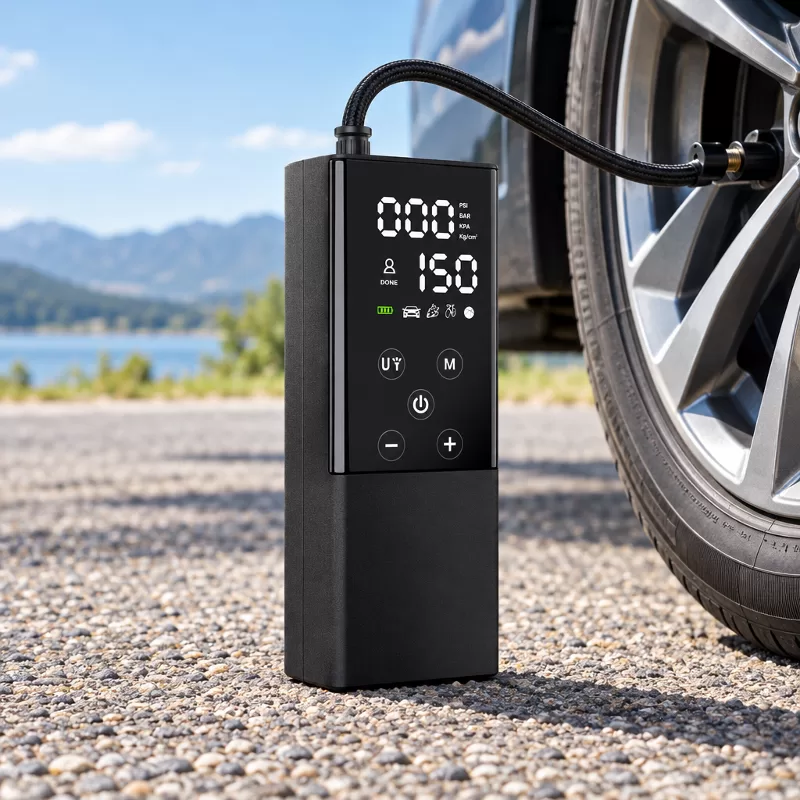
Underinflated tires can adversely affect vehicle handling, increase rolling resistance, and contribute to uneven or accelerated tire wear long before a dashboard warning indicator catches your attention. Having a reliable portable tire inflator in your trunk transforms tire maintenance from an inconvenient chore at a crowded gas station into a quick routine you can handle on your driveway. Whether you want to top off passenger car tires before a long highway trip or prepare bicycle tires for an early morning commute, modern handheld electric air pumps provide direct control over tire pressure. Understanding how these tools function helps motorists make informed purchasing choices and maintain pneumatic safety across diverse applications.
What Is a Portable Tire Inflator and How Does It Work?
A portable tire inflator is a compact electric air pump designed to inflate compatible tires and other inflatable items without relying on heavy stationary equipment. Compatibility depends on the pump’s pressure range, airflow capacity, and the supplied adapters. Unlike workshop piston compressors powered by industrial electric circuits, these compact instruments prioritize agility, space conservation, and rapid deployment during travel.
Mechanical Operation of Compact Electric Air Pumps
At the mechanical core of a compact cordless air pump lies a miniature direct-current motor that drives an internal compression mechanism. The motor draws atmospheric air through intake vents and pressurizes it within a small internal chamber before forcing the compressed air through a discharge valve into the hose connected to your tire stem.
Because these compact electric pumps are designed for portability, they build air pressure through continuous operation rather than large single-stroke displacement, making them suitable for routine pressure adjustments and moderate inflation tasks.
Application Scope and Real-World Functional Boundaries
A cordless handheld air pump excels at pressure adjustments, routine top-offs, and weekend recreational inflation tasks. Commuters frequently use them to correct pressure drops caused by seasonal cooling, replenish motorcycle and electric bicycle tires, or adjust soccer balls and balance vehicle tires.
However, recognizing physical boundaries is crucial for road safety. A handheld inflator supplies pressurized air but does not seal or repair punctures, sidewall splits, or damaged rim beads. If a tire has structural damage, the inflator alone cannot address the problem; repair or replacement requires separate appropriate measures. When road debris pierces a tire carcass, pumping air into the chamber without sealing the puncture only creates temporary pressure that bleeds off within minutes. In cases of structural tire damage, an air pump must serve as an inspection aid rather than an emergency substitute for a spare tire or roadside service technician.
Key Factors to Consider When Selecting an Air Pump
Selecting an appropriate portable tire inflator requires looking beyond simple aesthetic choices. Motorists must analyze engineering specifications to match equipment against real-world inflation needs.
Maximum Pressure Versus Continuous Airflow Volume
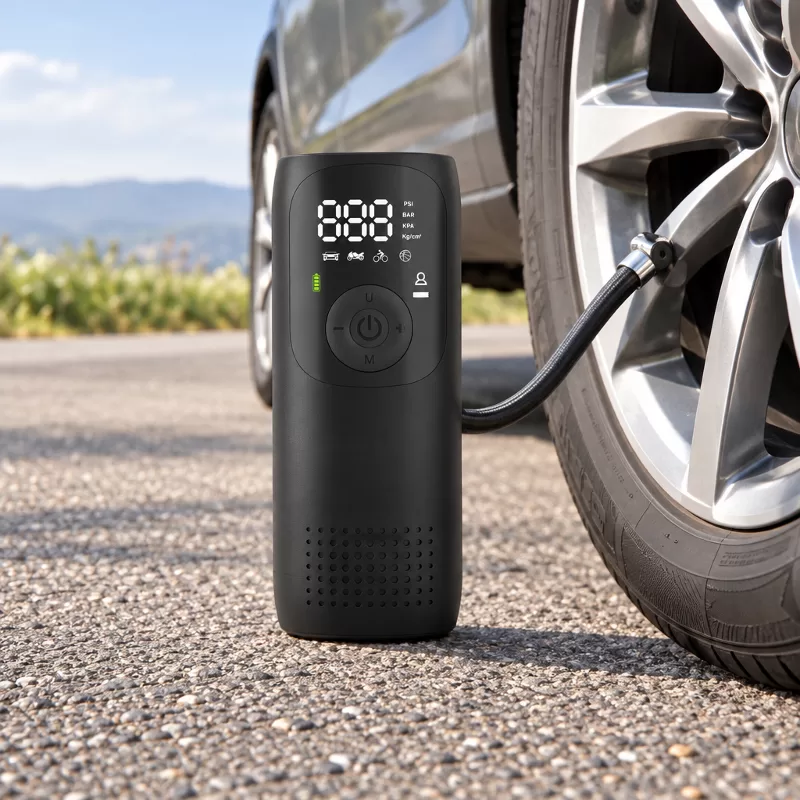
Shoppers often confuse high maximum pressure with rapid inflation speed. A 150 PSI maximum rating describes the pump’s stated pressure range; it does not by itself indicate airflow or inflation speed.
Airflow measured in liters per minute determines how quickly an air chamber expands. Actual inflation time depends on tire volume, starting pressure, and pump performance. A pump with moderate airflow takes longer to inflate a high-volume light truck tire than a high-output stationary air station, even though both can reach identical pressure figures. Evaluating both pressure capacity and airflow prevents unrealistic expectations when working on large tires.
Internal Battery Architecture Versus 12V Auxiliary Power
Power supply architecture determines how freely you can maneuver around your vehicle. Battery-powered cordless inflators eliminate the tangle of 12-volt auxiliary cords, letting you service bicycles on backyard lawns or reach trailer tires parked far from vehicle dash sockets. Conversely, direct 12-volt corded compressors draw current directly from vehicle alternators, providing continuous power without battery discharge limits.
| Power Configuration | Primary Advantages | Operational Limitations | Ideal Use Case |
|---|---|---|---|
| Internal Lithium Battery | Cordless freedom, pocket mobility, multi-vehicle versatility | Finite runtime per charge, requires periodic battery maintenance | Daily commuting, cycling, sports equipment, quick top-offs |
| 12V Auxiliary Car Plug | Continuous runtime, no battery degradation concerns | Tethered to car cabin socket, cord tangling, vehicle engine must idle | Long road trips, multiple vehicle top-offs, remote overlanding |
| Dual-Power Hybrid | Maximum operational flexibility, redundant power sources | Larger physical chassis, higher purchase price, heavier weight | General household garage storage, mixed recreation and driving |
Pressure Preset Accuracy and Automatic Shut-Off Protection
Analog dial gauges rely on mechanical bourdon tubes that can fall out of calibration after vehicle vibrations or sudden impacts. Digital pressure sensors provide clearer, backlit readouts with granular increments in units such as PSI, BAR, KPA, and Kg/cm².
Automated shut-off mechanisms represent an essential safety engineering feature. By permitting users to dial in an exact target number, the inflator controller monitors chamber pressure and stops the motor once the preset threshold is detected. This automated cycle helps prevent accidental overinflation caused by momentary user inattention.
Continuous Operating Time and Thermal Considerations
Compressing atmospheric gas generates heat as kinetic energy transfers into internal air molecules and pump components. Small electric air compressors are designed with specific continuous operating limits to maintain safe internal temperatures during use.
The manufacturer lists a runtime of 20 to 30 minutes and continuous working time of up to 30 minutes for the AP2-P; consult the manual for operating limits. Users should allow the unit to cool if the housing becomes noticeably warm during extended inflation tasks.
Stem Compatibility and Specialty Adapters
Pneumatic tires utilize varied stem standards depending on their engineering origins. Automotive and motorcycle wheels employ standard Schrader valves with threaded outer shells and spring-loaded internal pins. Road bicycles frequently use slender Presta valves requiring dedicated brass adapters to depress the core pin.
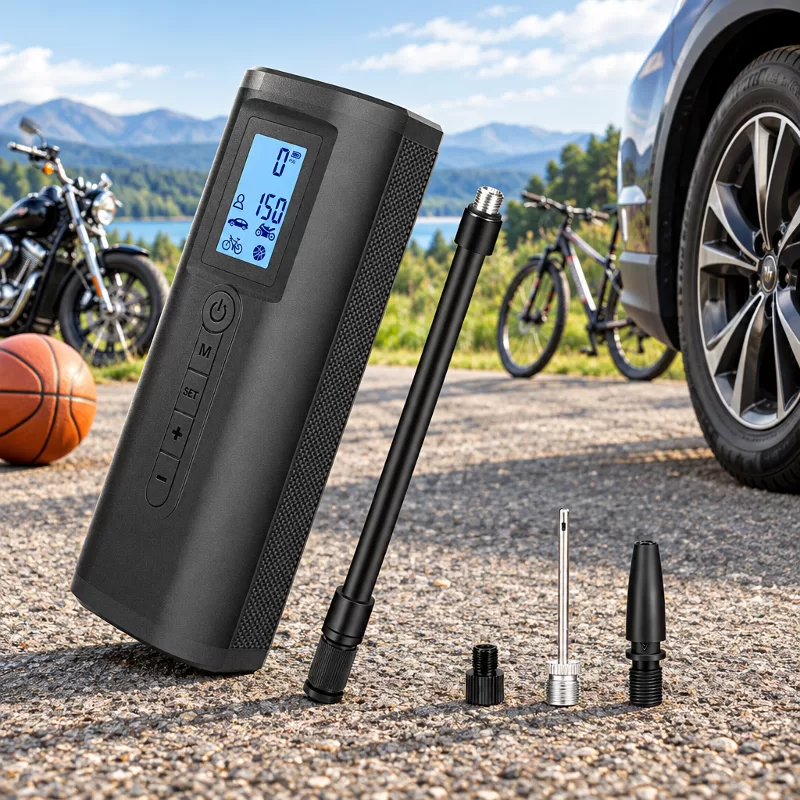
Sports balls require narrow inflation needles, while recreational water floats need tapered plastic cones. When selecting an inflator, verify valve compatibility and confirm what adapters are included. The AP2-P, for instance, comes with three adapters; readers should check the product documentation or contact the manufacturer to confirm which valve types these adapters support.
Practical Walkthrough: Safe Vehicle Tire Inflation
Operating an automated electric air pump safely demands adherence to basic pneumatic practices and vehicle manufacturer guidelines.
Identifying Cold Inflation Recommendations on the Door Placard
One of the most persistent mistakes drivers make is reading the maximum pressure stamped along the outer tire sidewall. Sidewall markings indicate the structural bursting threshold permitted under maximum gross vehicle loading, not the pressure intended for daily driving.
Always open the driver-side door frame and locate the vehicle certification placard affixed to the B-pillar, or consult the owner manual. This placard specifies the vehicle manufacturer recommended cold inflation pressure engineered for optimal braking, steering control, and tread life. A tire is considered cold after the vehicle has been stationary for at least three hours, or after it has been driven less than one mile following that period.
Five-Step Safe Inflation Procedure
Executing inflation with disciplined methodology protects both the operator and the internal compressor mechanisms.
- Park the vehicle on a stable, level surface away from active traffic lanes, engage the parking brake firmly, and visually check the tire for embedded screws, sidewall lacerations, or rim bending.
- Locate the vehicle door placard to identify the exact cold inflation specification for front and rear axles, noting that pressure ratings often differ between axles.
- Remove the plastic valve cap from the tire stem, verify the valve threads are clear of grit, and screw the inflator hose connector straight onto the stem.
- Power on the inflator following the product manual, check the displayed current tire pressure, select the appropriate measurement unit, and adjust the preset target value using the plus and minus buttons to match your door placard.
- Press the start button and observe the pump as it operates, staying nearby to monitor the digital gauge readout, and once the motor cuts out at the preset target, unscrew the hose quickly and replace the valve dust cap.
Distinguishing Normal Pressure Loss from Structural Tire Failure
Tires naturally shed minor amounts of air over time through microscopic pores in butyl rubber liners and bead seating interfaces. Ambient temperature fluctuations also create predictable pressure swings.
However, if a freshly inflated tire loses several PSI within a few hours or will not hold pressure, inspect the tire for visible damage such as punctures, cuts, or bulges. Persistent pressure loss typically indicates an active leak or structural failure. Cease driving on a tire with unaddressed structural damage, as it risks catastrophic blowout, rim degradation, and loss of directional vehicle control. Seek professional tire service to diagnose and address the underlying problem.
Technical Profile: The Newo AP2-P Portable Tire Inflator
For readers seeking a concrete example of contemporary compact compressor engineering, examining the Newo AP2-P illustrates how modern components combine within a handheld footprint. For us at Newo, as a specialized manufacturer developing smart electric air pumps and portable inflation solutions, pneumatic precision and user accessibility remain paramount design priorities.
Engineering Specifications and Physical Dimensions
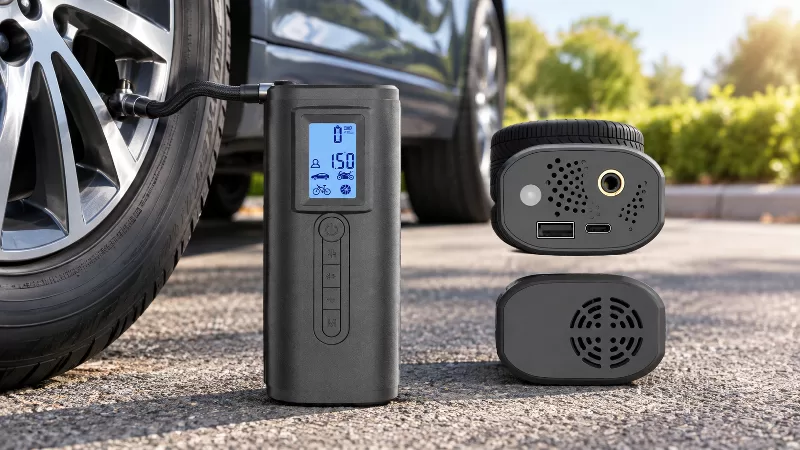
The AP2-P is driven by a 35-watt brushed motor housed in a compact chassis. The device measures 42 by 62 by 154 millimeters and carries a net weight of approximately 386 grams.
Operating across a pressure range of 0 to 150 PSI, the internal compressor generates an airflow output of 15 to 18 liters per minute according to the manufacturer’s published specifications. The manufacturer lists the noise level as no more than 85 decibels at one meter.
| Technical Attribute | Manufacturer Specification | Operational Significance |
|---|---|---|
| Product Model | AP2-P | Handheld cordless electric air pump |
| Pressure Range | 0–150 PSI (0–10.3 BAR) | Broad coverage from sports balls to high-pressure bicycle tires |
| Volumetric Airflow | 15–18 L/min | Steady output for top-offs and recreation gear |
| Motor Power Rating | 35W (Brushed motor) | Compact brushed-motor design |
| Battery Architecture | Built-in battery (listed as both 2×2000mAh and 2000mAh, 7.4V, 14.8Wh in source data) | Cordless convenience for remote and roadside deployment |
| Charging Input | Type-C 5V/2A (2–3 hours charge time) | Universal charging compatibility using standard mobile chargers |
| Auxiliary Output | USB-A 5V/2A | Serves as an emergency power reserve for mobile devices |
| Net Weight & Size | 386g / 42 × 62 × 154 mm | Compact storage in glovebox, backpack, or center console |
| Rated Runtime | 20–30 minutes; up to 30 minutes continuous | Adequate duration for multi-tire pressure adjustments |
Integrated Controls and Everyday Practical Functions
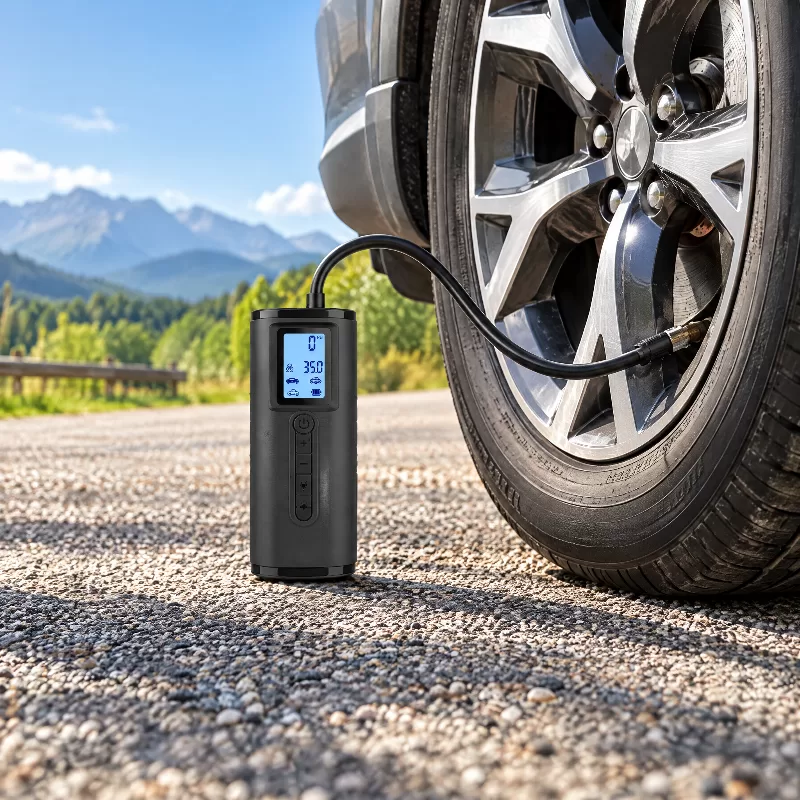
The front interface features a backlit segmented LCD screen that displays current chamber pressure, preset target values, battery reserves, active measurement units, and selected user profiles. Five distinct operation modes are available: car, motorcycle, bicycle, ball, and manual custom, allowing users to configure pressure settings for different applications.
An internal memory chip preserves your last selected target pressure, eliminating the hassle of reconfiguring settings across successive tires. An integrated LED flashlight assists with nighttime valve stem location along dark roadways, while a 5V/2A USB output allows the unit to double as a power bank for mobile phones during travel emergencies.
Charging and Battery Management
The AP2-P accepts charging through a Type-C port, drawing 5 volts at 2 amps from standard USB power adapters, laptop ports, or portable power banks. A full charge cycle takes approximately 2 to 3 hours according to the manufacturer’s documentation.
The manufacturer lists a battery cycle life of 300 cycles at at least 80 percent of original capacity; confirm the test conditions and warranty coverage with the manufacturer. Users should store the unit with a partial charge when not in regular use and recharge it periodically to maintain battery health over time.
Understanding First-Party Data Parameters
When evaluating technical specifications provided in manufacturer documentation, readers should approach data entries with professional clarity. The AP2-P documentation lists the battery capacity in two forms: the feature description states "Built-in 2×2000mAh lithium battery," while the technical specifications table states "2000mAh, 7.4V, 14.8Wh." Readers should confirm the rated capacity with the manufacturer before relying on a single figure.
In addition, the source documentation lists motor speed as "1.5W rpm," which represents an ambiguous typographical format in the original data rather than a standardized revolutions-per-minute metric. First-party bench data indicates the unit can service roughly 10 to 15 bicycle tires per full charge cycle. However, real-world vehicle inflation times depend on initial tire volume, target pressure rise, and ambient operating temperatures.
Handheld Compressors Versus Traditional Inflation Methods
Motorists have relied on varied methods to maintain tire inflation, ranging from manual foot pumps to high-powered commercial garage compressors. Comparing these methodologies highlights where a cordless portable tire inflator delivers unique value.
Evaluating Ergonomics, Portability, and Readiness
Manual floor pumps can require repeated physical effort to inflate a tire, with the amount of effort depending on the pump and tire. In extreme heat or pouring rain, manual pumping proves physically taxing and inefficient.
Gas station air towers offer high-volume delivery, but their gauges can lose accuracy from constant outdoor exposure and heavy use. Driving to a station also warms your tires, which raises internal air pressure; this means the reading at the station may not represent the cold inflation pressure specified on your vehicle placard, though a warm tire should not be deflated based solely on that difference.
| Inflation Method | Setup Complexity | Physical Strain | Readout Precision | Portability Level |
|---|---|---|---|---|
| Cordless Handheld Pump | Low: Connect hose, preset, press button | None (automated) | High (digital sensor) | Exceptional (fits in glove compartment) |
| Manual Floor Pump | Medium: Clamp chuck, balance footplate | Varies (repetitive physical effort) | Moderate to Low (analog dial) | Moderate (tall, awkward frame) |
| 12V Corded Compressor | Moderate: Route long power cord through car doors | Low (automated) | Moderate to High | High (stowed in vehicle trunk) |
| Commercial Gas Station Air | Variable: Requires travel, payment, queuing | Minimal to Moderate | Variable (depends on maintenance) | None (fixed commercial installation) |
Selecting the Right Equipment for Your Driving Profile
Matching equipment to your lifestyle requires honest appraisal of travel patterns. Urban commuters navigating daily city routes benefit immensely from a compact cordless pump because it stows cleanly out of sight and addresses sudden tire pressure monitoring system warnings instantly.
Cross-country travelers or overland enthusiasts hauling heavily loaded trailers may prefer a dual-power hybrid setup, keeping a battery-powered pump for fast adjustments and a hardwired 12-volt heavy-duty compressor for large all-terrain vehicle tires. Cyclists and urban e-bike riders find pocket-sized handheld units indispensable, as they handle delicate Schrader and Presta stems without cumbersome frame attachments.
Critical Tire Inflation Mistakes to Avoid
Even quality maintenance tools cannot compensate for flawed operational practices. Avoiding fundamental errors ensures passenger safety and preserves equipment longevity.
Relying on the Sidewall Maximum Pressure Marking
Novice drivers frequently inspect their tire sidewall, locate a marking such as "50 PSI MAX," and inflate their car tires to that exact ceiling. Doing so overinflates the tire relative to vehicle suspension design.
Excessive inflation pressure can reduce traction and contribute to uneven tread wear, depending on tire design and driving conditions. Always follow the door placard figures, which typically range between 30 and 36 PSI for modern passenger sedans, keeping the tire geometry properly matched to vehicle weight.
Ignoring Ambient Temperature Impacts
Tire pressure is directly tied to atmospheric temperature through fundamental gas expansion principles. As outdoor temperatures fall during late autumn and winter transitions, the air molecules inside your tires lose thermal energy and contract.
Tire pressure can change by about 1 to 2 PSI for every 10 degrees Fahrenheit temperature change, though the exact change varies. A vehicle parked overnight in freezing weather can easily register a 3 to 4 PSI deficit compared to its late-afternoon reading. Failing to check cold pressures during seasonal weather changes often leaves vehicles running on dangerously soft tires.
Overworking Internal Pump Mechanisms
Small electric air compressors pack motors, gears, and piston cylinders into compact shells. Continuous operation generates heat, and exceeding the manufacturer’s recommended operating duration can stress internal components.
Consult your product manual for guidance on continuous operating limits. If you must adjust all four vehicle tires substantially, allow the inflator to cool between tires if recommended by the manufacturer or if the housing becomes noticeably warm.
Frequently Asked Questions (FAQs)
What PSI setting should I use for my passenger car?
Always use the cold inflation pressure printed on the vehicle safety certification label positioned along the driver-side door jamb or within the vehicle owner manual. Passenger cars usually require between 30 and 36 PSI under normal loading conditions. Do not use the maximum pressure printed on the tire sidewall, as that number represents the structural limitation of the tire carcass rather than the optimal operating pressure designed for your automobile.
Can a 150 PSI handheld inflator inflate heavy commercial truck tires?
While a 150 PSI maximum pressure rating indicates the pump’s stated pressure capability, it does not imply practical suitability for massive commercial truck tires. Commercial haulers and heavy multi-axle trailers contain high air volumes that require substantial airflow delivery. Inflating a completely flat heavy commercial tire using a compact handheld compressor would take an excessive amount of time and exceed the continuous duty cycle limits of small handheld pumps.
Will a portable tire inflator fix a tire punctured by a nail?
No, an air compressor only supplies pressurized air and possesses no mechanical puncture sealing capabilities. If a nail, glass shard, or screw has penetrated the tread rubber, air will continue escaping through the hole. You may use the inflator to add sufficient air to drive a short distance to a safe parking location or tire repair shop, provided the puncture leak rate is slow. However, if air escapes rapidly or the sidewall bulges, stop immediately and fit a spare tire.
How often should tire pressure be inspected?
Automotive safety organizations recommend checking cold tire pressure at least once every month and conducting a thorough pressure and tread inspection before embarking on long road trips. Ambient temperature shifts and natural rubber permeation cause steady, gradual pressure loss. Relying solely on dashboard tire pressure warning indicators is inadvisable; TPMS warnings are not a substitute for regular manual checks.
Why do the air hose and connection nozzle get hot during use?
The thermodynamic compression of air naturally generates heat as atmospheric gas molecules are squeezed rapidly into a confined chamber. This thermal energy can transfer through the pump components and hose connections. Follow your product manual for safe handling guidance and avoid touching fittings that may become hot during extended operation.
How does the automatic shut-off feature protect against tire damage?
The automatic shut-off feature monitors air pressure and stops the pump motor when the selected preset pressure is reached. This automated cut-off prevents tire overpressurization caused by user distraction, ensuring tires receive the recommended pressure for safe road operation.
Conclusion
Integrating a well-engineered portable tire inflator into your automotive toolkit provides peace of mind and supports vehicle maintenance when used to maintain the vehicle-recommended pressure. Proper tire inflation can improve fuel efficiency and protect tire lifespan against seasonal temperature drops and gradual air permeation. By understanding the critical distinction between maximum pressure ratings and actual airflow volume, observing cold pressure guidelines on the vehicle door placard, and adhering to recommended operating limits, drivers can manage tire pressure with confidence. Whether performing a fast morning top-off before a family excursion or maintaining sports gear and bicycles at the park, an automated cordless electric air pump represents a practical, safety-focused investment for every vehicle owner.
-

Meet NEWO at the 140th Canton Fair: Visit Booth 10.3 M03–04
Meet NEWO at the 140th Canton Fair in Guangzhou, October 15–19, 2026. Visit Booth 10.3 M03–04 to explore portable air pumps and discuss OEM, ODM and distribution opportunities.... -

As Shenzhen Welcomes the World for APEC 2026, NEWO Welcomes You to Our Factory
As Shenzhen prepares for APEC 2026, NEWO welcomes international buyers and partners to visit our factory, meet our team and explore future cooperation.... -

Leading the Way in Product Innovation and Excellence
Smartnewo exemplifies professionalism in product innovation and manufacturing. Their collaboration with Xiaomi Youpin on the G01 crowdfunding project highlights their expertise in creating compact, powerful inflatable pumps. Rigorous engineering, meticulous production processes, and advanced quality assurance underscore their commitment to excellence. The success of the G01 project, with significant market... -

Essential Qualities of an Excellent Supplier
In today's competitive market, finding a reliable supplier is crucial for business success. Based on insights from Smartnewo and broader internet research, here are key qualities an excellent supplier must possess:... -

NW06 Tire Inflator: Compact Power for Quick Inflation
Summary The NW06 Tire Inflator delivers quick and efficient tire inflation with a powerful 35L/min airflow. It features a user-friendly LCD screen for real-time pressure monitoring, dual power options with a built-in 6000mAh battery, and multiple nozzle attachments for versatile use. Its compact design and integrated LED light ensure convenience and... -

Unleash the Power of Portability: The SmartNewo Jump Starter with Air Compressor KF03
This guide will walk you through the steps to effectively use a portable tire inflator, helping you stay prepared and safe on the road.... -

Newo Attends The 2024 Consumer Electronics Show (CES)
Smartnewo booth is located at 53672, Halls A-D, Level 2, Venetian Expo, Las Vegas Convention Center (LVCC). ... -

Smartnewo’s Dual-Cylinder Air Pump Rocks the Hong Kong Autumn Electronics Fair!
Smartnewo’s Dual-Cylinder Air Pump Rocks the Hong Kong Autumn Electronics Fair!... -

Meet at the Canton Fair! Smartnewo brings dual-cylinder air pumps, making your inflation experience faster and more stable!
NEWO has went deep communication and negotiation with customers from all over the world on booth.... -

“Hong Kong Autumn Electronics Fair – 1CA18 (October 13th to 16th): Smartnewo invites you to visit our booth!
Hong Kong Autumn Electronics Fair...










-

What to Check Before Ordering Custom Electric Bike Pumps
Plan custom electric bike pumps with a clear requirements freeze for valves, TPU tubes, portability, repeated top-ups, charging, and model-specific documents.... -

OEM vs ODM Air Pumps: Which Manufacturing Model Fits Your Brand?
Compare OEM and ODM air pump projects by design responsibility, change approval, development scope, and written ownership terms before choosing your route.... -
How to Choose a Reliable Tire Inflator Manufacturer in China
Choose a tire inflator manufacturer in China with a focused RFQ, supplier evidence, configuration checks, and clear sample-to-pilot decisions for your brand.... -

Rechargeable Electric SUP Pump for Paddle Boards: Faster Inflation for SUPs, Kayaks and Inflatable Tents
The BL10-C Portable Electric Bike Tire Inflator is a compact and lightweight mini electric bike pump designed for modern cyclists. With up to 120 PSI pressure, a digital LED display, preset pressure control, automatic shut-off, USB-C charging, and multiple valve adapters, BL10-C offers a convenient inflation solution for road bikes,... -

Are Electric Bike Pumps Worth It in 2026? Electric Pump vs CO₂ vs Mini Hand Pump
Discover whether electric bike pumps are worth it in 2026. This guide compares electric bike pumps, CO₂ inflators, and mini hand pumps for road cycling, gravel riding, commuting, and long-distance rides. Learn the pros, limitations, best use cases, and key features to look for before choosing the right portable tire... -
BL10-C Portable Electric Bike Tire Inflator: Small Size, Reliable Power for Every Ride
The BL10-C Portable Electric Bike Tire Inflator is a compact and lightweight mini electric bike pump designed for modern cyclists. With up to 120 PSI pressure, a digital LED display, preset pressure control, automatic shut-off, USB-C charging, and multiple valve adapters, BL10-C offers a convenient inflation solution for road bikes,... -

Why Mini Electric Bike Pumps Are Becoming Essential for Modern Cycling
Discover why mini electric bike pumps are becoming essential for modern cyclists. Learn how portable electric bike pumps improve tire pressure management, riding safety, and convenience.... -

The Ultimate Smart Solution for Easy Outdoor Adventures in 2026
Discover how a spring travel air pump simplifies outdoor trips with fast inflation, smart features, and powerful performance—perfect for every adventure.... -

Powerful 5-in-1 Portable Car Tire Inflator and Jump Starter: The Ultimate Emergency Tool for Every Driver
Why Every Driver Needs a Portable Car Tire Inflator and Jump Starter Modern drivers face many unexpected situations on the road. A flat tire, low tire pressure, or a dead car battery can happen at the worst possible time. That’s why having a portable car tire inflator and jump starter is... -

7 Real Cycling Scenarios That Show Why Every Rider Should Carry a Mini Bike Pump
Cycling is one of the most freeing activities you can enjoy. Whether you’re commuting to work, riding through city streets, or exploring quiet countryside roads, a bike ride can instantly improve your day. But there’s one small problem that almost every cyclist eventually faces: Low tire pressure. It might happen...









-
How Is a Football Properly Inflated?
The correct inflation of a football - with not too much and not too little air - is a hotly debated topic among footballers.... -
Application Scenarios of Car Inflator Pump
Often long-distance business trips or play car owners because the road may be more remote areas, in this case if you encounter a tire leak....

