

 Portable Tire Inflators
 Electric Air Pumps
 Electric Car Tyre Pumps
 Electric Ball Pumps
 Electric Bike Pump
 SUP Air Pump

Portable Air Inflator for Car Tires: Technical Guide to Selection, Pressure Physics, and Roadside Operation
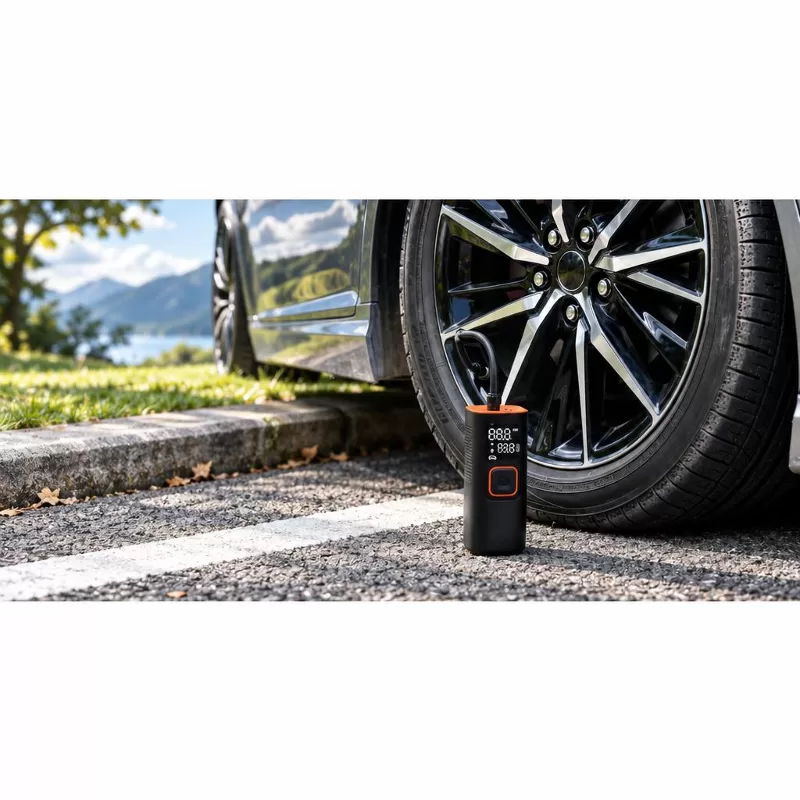
Maintaining correct tire pressure is one of the most neglected aspects of vehicle ownership, yet it directly governs braking distance, directional stability, and fuel economy. A portable air inflator for car tires provides drivers with the autonomy to manage pneumatic pressure anywhere, removing dependence on unreliable service station air pumps. Understanding how these compact compressors operate, how thermal dynamics change inflation values, and how internal mechanical assemblies deliver airflow allows vehicle owners to select equipment that protects their tires and ensures roadside safety across changing driving seasons.
Understanding What a Portable Air Inflator for Car Tires Solves
Routine Seasonal Drop vs. Rapid Pressure Loss
Tires are not hermetically sealed chambers; gas molecules slowly permeate through the butyl rubber liner over time. Under normal operating conditions, a healthy passenger tire loses roughly 1 to 1.5 PSI per month due to natural permeation. When seasonal ambient temperatures plummet, this pressure loss accelerates dramatically through physical gas contraction rather than mechanical failure.
Using a portable air inflator for car tires during routine cold-weather drops restores the tire carcass to its designated geometry. However, an inflator cannot repair active physical punctures. Distinguishing between normal thermal deflation and a puncture from road debris prevents motorists from continuously repressurizing a structurally compromised tire that could suffer tread separation under highway speeds.
The Hidden Costs of Under-Inflation on Rolling Resistance and Tread Wear
When a tire operates below its recommended pressure, the contact patch distorts, shifting the load concentration from the center of the tread toward the outer shoulders. This uneven footprint increases rolling resistance, forcing the engine or electric drivetrain to consume more energy to maintain forward momentum. The resulting inefficiency degrades fuel economy by noticeable margins over extended mileage.
Beyond energy waste, under-inflation generates extreme internal friction within the sidewall plies. As the under-inflated tire rotates thousands of times per mile, rapid flexing creates internal heat build-up. This mechanical stress breaks down the rubber bonding layers, drastically accelerating shoulder wear and paving the way toward sudden blowout events during sustained high-speed travel.
Identifying Field Scenarios Where Roadside Assistance Is Mandatory
A handheld air pump excels at topping off low tires and addressing slow bead leaks, but it cannot solve severe structural damage. If a tire suffers sidewall tears, shoulder gouges, rim flange separation, or fails to retain pressure after inflation, running an electric compressor is futile and unsafe. Compact compressors push air volume into a closed pneumatic chamber, which cannot overcome structural casing failure.
Motorists must recognize when roadside assistance or a physical spare tire change is the only viable remedy. Pumping air into a tire that fails to register pressure gain within two minutes risks motor wear and exposes the driver to roadside hazards. Whether a tread puncture can be safely repaired depends on its exact location, internal casing conditions, and formal inspection by a tire technician, rather than simple roadside guesswork.
Technical Criteria for Evaluating a Compact Electric Pump
Compression Architecture and Airflow Delivery
The core mechanism inside a handheld compressor relies on a reciprocating miniature piston running inside a cylinder configuration. In compact units, the physical cylinder displacement determines the volume of free air delivery per stroke, directly impacting flow rate, measured in liters per minute (L/min). An inflator engineered with larger internal air displacement can deliver greater volume at moderate operating speeds, reducing the overall time required to elevate pressure.
In manufacturer specifications, pump designs such as the 22-cylinder structure found in the T22 model are documented to provide an airflow rate of approximately 32 to 36 L/min while operating at up to 100 watts of working power. Actual inflation speed in field conditions will naturally vary depending on tire dimensions, starting pressure, ambient temperature, and target pressure thresholds.
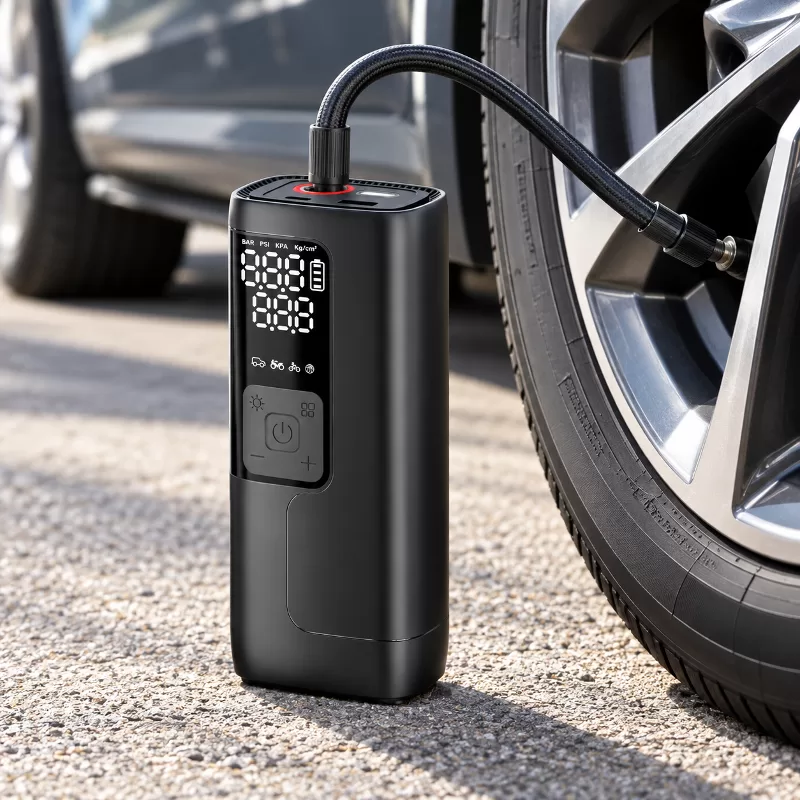
Lithium-Ion Battery Discharge and Power Architecture
Cordless convenience depends on how battery cells deliver electrical current during active motor compression. Standard consumer electronics batteries designed for low-drain devices can struggle when subjected to the operating loads of a motor-driven air pump. Compact tire inflators therefore require dedicated cell configurations engineered to deliver steady electrical power.
Battery configurations combining three series-connected 18650 cells at 11.1 volts with a stated 5C discharge rate provide the electrical foundation for driving working powers up to 100 watts. The 28.86 watt-hours battery specification indicates stored electrical energy, but the number of inflation sessions achievable depends on tire size, starting pressure, and operating conditions, with safety supported by manufacturer-specified overcharge and undercharge protection circuits.
Digital Pressure Sensing and Automatic Shut-off Operation
Analog dial gauges often present reading inaccuracies due to mechanical vibration while the motor runs during active inflation. In contrast, modern electric inflators utilize integrated digital pressure sensing to detect line pressure accurately and show the values clearly on electronic numeric screens.
An automatic shut-off feature helps prevent over-inflation by monitoring the target threshold set by the user. Once the integrated sensor detects that the selected pressure has been achieved, the control circuit cuts power to the compression motor automatically. This automated cycle eliminates the guesswork of manual monitoring, letting the device reach target values without requiring constant user intervention.
Form Factor, Weight, and Thermal Management
A tool left on a garage shelf offers no value during a highway low-pressure warning. Handheld form factors measuring under 170 millimeters in length and weighing around 500 grams fit comfortably inside door pockets, center consoles, or under-floor trunk compartments. Portability ensures the safety tool is present inside the vehicle cabin during daily commutes and remote journeys.
Compressing atmospheric air naturally generates friction and thermal output around the pump head during extended duty cycles. Practical tool housings incorporate passive airflow ventilation slots along the chassis. These cooling openings facilitate ambient heat dissipation, helping manage operating temperatures while protecting internal components across repeated inflation cycles.
Fundamental Tire Pressure Rules Every Driver Should Know
Door Placard Recommendations vs. Tire Sidewall Markings
A frequent error among drivers is reading the pressure figure stamped on the tire sidewall and adopting it as their daily inflation target. The sidewall stamp indicates the maximum permissible inflation pressure marked on the tire by the tire manufacturer under its maximum rated load capacity. It is an engineering safety boundary, not an operational driving recommendation.
The correct inflation pressure for your car is determined exclusively by the vehicle manufacturer. This target accounts for chassis balance, suspension kinematics, gross vehicle weight distribution, and emergency handling dynamics. Drivers should always locate the Tire and Loading Information placard affixed to the driver-side B-pillar door jamb to determine the correct cold pressure specifications.
The Thermodynamics of Cold Tire Pressure
Pneumatic tire behavior adheres strictly to gas laws: as internal air temperature rises, pressure climbs proportionately. For every 10 degrees Fahrenheit (approximately 5.6 degrees Celsius) drop in ambient temperature, internal tire pressure decreases by approximately 1 to 2 PSI. This physical reality causes Tire Pressure Monitoring System (TPMS) warning indicators to illuminate widely during the first sharp temperature drops of autumn.
Automotive pressure specifications are universally defined as cold tire pressure. A cold tire has not been driven for at least three hours, or has been driven less than one mile after sitting for at least three hours. Checking pressure after an extended highway drive yields higher readings due to friction heat, which will lead to under-inflation if air is bled off while the tire is hot.
Navigating Standard Pressure Units Across Vehicle Classes
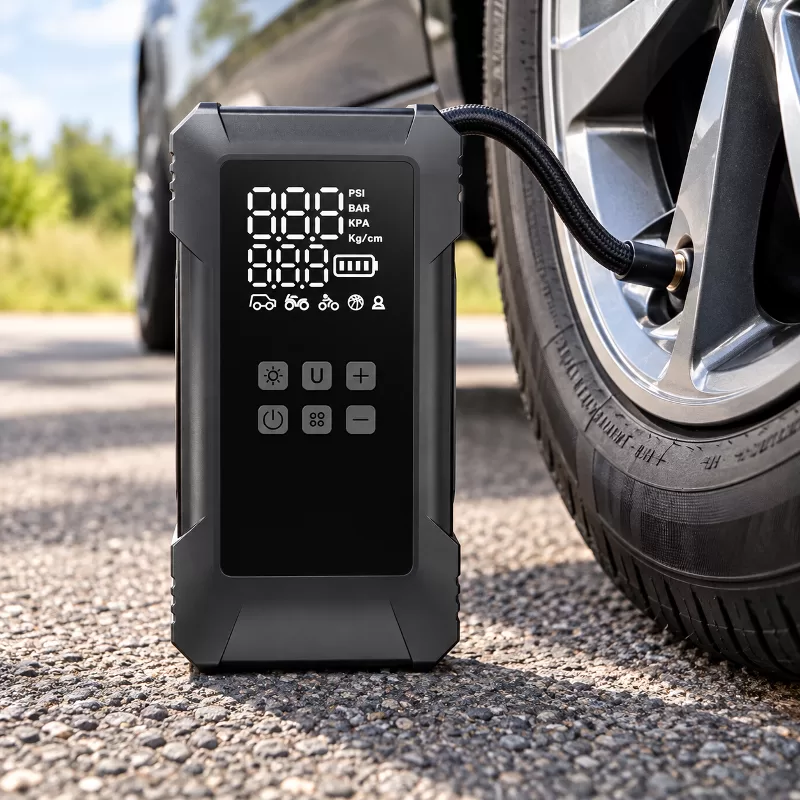
Different vehicle manufacturers and geographical regions utilize distinct units of measurement to quantify air pressure. A modern portable air inflator for car tires must support easy switching across multiple display units so drivers avoid calculation mistakes when interpreting maintenance manuals.
Understanding the mathematical conversion between the four primary automotive standards prevents dangerous inflation discrepancies during maintenance:
- Pounds per Square Inch (PSI): Passenger-vehicle recommendations vary by vehicle; use the pressure on the driver-door placard or in the owner’s manual.
- Bar (BAR): Common across European vehicles and industrial machinery, where 1 BAR roughly equals atmospheric pressure at sea level (14.5038 PSI).
- Kilopascals (KPA): The metric international standard used in many Asian and international automotive maintenance schedules, where 100 KPA equals 1 BAR.
- Kilograms per Square Centimeter (Kg/cm²): A metric legacy unit closely matching BAR, frequently seen on older Japanese and domestic industrial commercial equipment.
Step-by-Step Procedure: Safe Roadside and Garage Inflation
Step 1: Vehicle Staging and Valve Stem Inspection
Before handling any inflation equipment, park the vehicle on solid, level ground away from moving traffic lanes. Engage the mechanical parking brake fully and switch on hazard warning flashers if parked along a roadside shoulder. This ensures the vehicle cannot shift unexpectedly while you are kneeling near the wheel assembly.
Unscrew the dust cap from the tire valve stem and check the brass or aluminum threads for visible corrosion, physical distortion, or grit accumulation. Dirt particles forced into the Schrader core by pressurized air can damage the internal spring-loaded seal, resulting in an unyielding slow leak after you remove the pump hose.
Step 2: Configuring Pressure Targets and Mode Selection
Power on your portable air inflator for car tires and inspect the remaining battery capacity on the digital display. Choose the designated vehicle operating mode or switch to manual user mode to set your specific pressure. Review the driver door placard value beforehand to confirm whether front and rear axles require identical or staggered pressures.
Set the target using the adjustment increments supported by the device, and confirm the selected unit matches the vehicle placard. Taking a moment to verify that your selected unit (PSI vs. BAR) matches your reference chart avoids accidental over-pressurization or under-pressurization.
Step 3: Coupling the Chuck and Verifying Real-Time Pressure
Align the air hose chuck squarely with the tire valve stem threads. Thread the connector smoothly clockwise until fully seated, or clamp the thumb-latch lever down firmly if using a quick-release pneumatic fitting. A brief hiss of escaping air is normal during attachment, but sustained hissing indicates a misaligned chuck gasket that must be reseated.
Once coupled, observe the primary display on the digital gauge. A dual-display inflator automatically presents the tire’s current resting cold pressure alongside your preset target. If the reading is substantially lower than expected, inspect the tread circumference for punctures or structural damage before proceeding with inflation.
Step 4: Running the Compressor and Post-Inflation Verification
Depress the start button to engage the motor. The pump will produce a steady mechanical hum as the internal reciprocating piston compresses atmospheric air and drives it into the tire bladder. Keep the inflator upright or place it on clean dry ground to prevent road debris and loose gravel from being drawn into the motor cooling vents.
The inflator will stop automatically once the internal pressure sensor registers the preset target value. Following equipment instructions, disconnect the air chuck from the tire valve stem, taking care as the metal connector may feel warm after operation. Swiftly reinstall the valve stem dust cap to shield the internal core from moisture and road grit, then verify final pressure with an independent gauge if available.
Deep-Dive Case Study: Engineering Specifications of the T22 System
Mechanical and Electrical Architecture of the T22
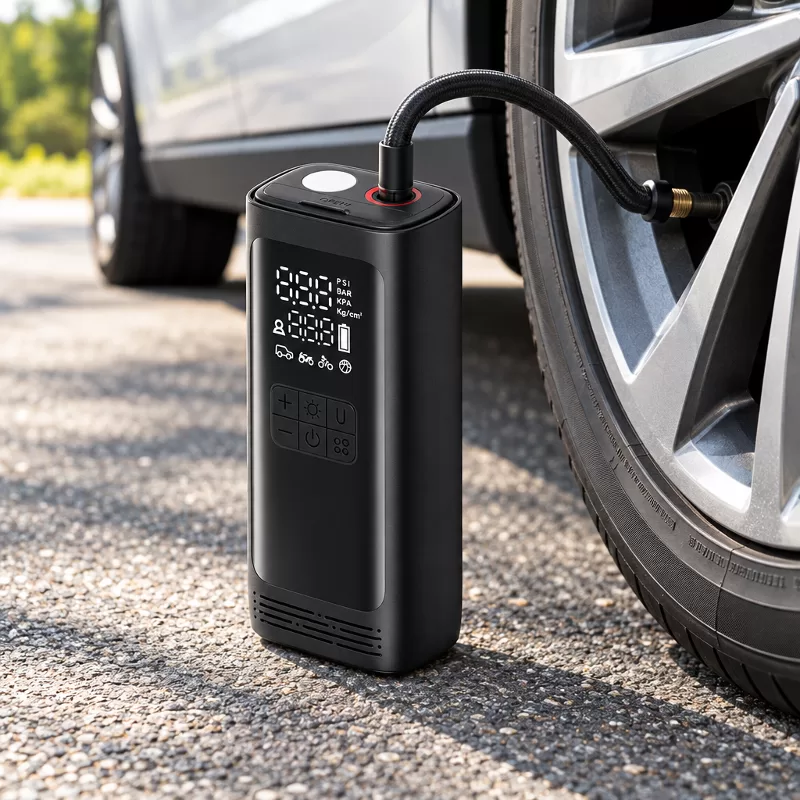
As a professional manufacturer specializing in pneumatic technology and portable inflation equipment, Newo develops high-performance components tailored for consumer mobility. For us, addressing real-world tire emergencies requires balancing motor output, battery discharge safety, and physical footprint. The T22 electric air pump embodies this design approach, integrating a 22-cylinder compression assembly into a handheld chassis weighing only 508 grams.
The mechanical drive delivers between 32 and 36 liters of airflow per minute, drawing up to 100 watts of working power during active compression. Power delivery relies on an integrated three-cell 18650 lithium battery array generating 11.1 volts and 28.86 watt-hours of capacity. Supported by a 5C discharge rate, the manufacturer lists a runtime of 20 to 25 minutes; actual runtime depends on load, pressure, temperature, and operating conditions.
Specification Breakdown and Technical Ratings
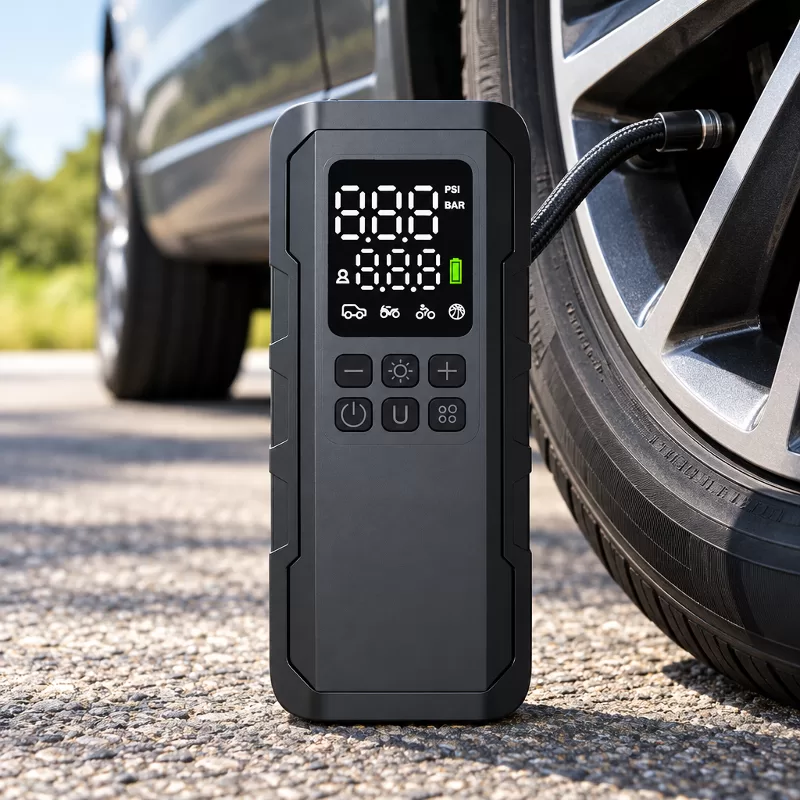
The T22 features a broad pressure calibration range from 2 to 160 PSI (0.1 to 11.0 BAR), making it versatile across diverse pneumatic vessels. Equipped with five operational modes—Ball, Bicycle, Motorcycle, Car, and Custom—the unit features a dual LED numeric readout that displays real-time pressure alongside preset targets.
To help drivers assess practical performance limits, the primary technical specifications of the T22 inflator are detailed below:
| Specification Parameter | Technical Rating / Scope |
|---|---|
| Model Designation | T22 Portable Tire Inflator |
| Maximum Output Pressure | 160 PSI (0.1 to 11.0 BAR) |
| Adjustable Range | 2 to 160 PSI (Custom mode) |
| Free Air Flow Rate | 32 to 36 L/min |
| Battery Configuration | 3 × 18650 Rechargeable Cells (11.1V / 2600mAh) |
| Total Battery Energy | 28.86 Wh (5C Discharge Rate) |
| Motor Working Power | Up to 100W (22-cylinder structure) |
| Runtime & Cycle Life | 20–25 mins; ≥100 cycles at ≥80% original capacity |
| Battery Safety Features | Overcharge and undercharge protection |
| Display & Units | Dual LED display; PSI, BAR, KPA, Kg/cm² |
| Charging Inputs / Ports | Type-C (5V/2A or 9V/1.5A); 2–3 hour charge time |
| Emergency Power Output | 5V / 2A Power-Bank USB port |
| Acoustic Noise Rating | ≤85 dB at 1 meter distance |
| Operating Temperatures | -10°C to 45°C (Working temperature) |
| Dimensions & Weight | 161 × 68 × 53 mm; 508 grams |
Multi-Vehicle and Outdoor Utility Scenarios
While designed primarily for passenger car tire top-ups, the T22 addresses varied inflation requirements across suburban and outdoor environments. In motorcycle and e-bike applications, where tire air volumes are smaller but pressure tolerances are tight, the pressure-sensing and automatic shut-off functions are intended to help reduce the risk of over-inflation; users should still verify the vehicle’s recommended cold pressure and inspect the final reading.
Beyond rolling transport, the 5V/2A emergency power-bank output provides emergency charging for smartphones during stranded roadside delays. Its stated pressure range may suit some high-pressure bicycle applications, provided the correct connector and the tire manufacturer’s pressure limit are used. The unit serves as an all-in-one companion for camping, sporting events, and weekend road trips.
Common Mistakes When Operating Portable Car Compressors
Mistaking Peak Gauge Rating for Heavy Commercial Truck Capacity
A frequent point of confusion among motorists is assuming that a portable pump rated to 160 PSI is designed to service commercial transport trucks, heavy RVs, or large dual-axle equipment trailers. The 160 PSI figure is the manufacturer-listed maximum pressure rating; it does not establish the airflow, duty cycle, or suitability required for commercial truck, RV, or trailer tires.
Passenger car inflators are calibrated for air volumes typical of commuter sedans, crossovers, and compact SUVs. Commercial tires require massive air volumes that exceed the intended scope of compact consumer units. Always evaluate an inflator’s intended volume capacity alongside the physical air volume demand of your specific vehicle tire.
Following Sensible Operating Habits and Manufacturer Instructions
Extended operation can heat a compact inflator. To protect equipment and promote reliable performance, operators should consistently consult the product manual for recommended runtimes and cooling procedures.
To ensure proper care, drivers should practice prudent operational routines:
- Follow the manufacturer’s specific operating and cooling instructions, allowing adequate rest between tires if the device begins to feel hot.
- Discontinue operation promptly if the pump casing or hose connections show signs of excessive surface temperature.
- Avoid setting the metal hose fitting directly against delicate automotive surfaces immediately after heavy use.
- Disconnect the flexible air hose during long-term storage according to the manufacturer’s user manual.
Improper Storage Conditions Inside Hot or Freezing Cabins
Storing a lithium-ion powered compressor inside an unventilated vehicle cabin during summer heatwaves exposes internal battery chemistries to extreme temperatures. Sustained high heat accelerates chemical aging in lithium-ion cells, which can reduce usable battery capacity and shorten long-term service life.
Similarly, sub-zero winter temperatures temporarily increase the internal resistance of lithium cells, reducing operating runtime during cold-morning top-ups. Store the inflator inside a protective case tucked into the trunk floor or spare tire compartment, where temperatures fluctuate less abruptly than on exposed dashboards.
Frequently Asked Questions
What tire pressure should I set on my portable air inflator?
You should set the target pressure to the exact cold inflation specification listed on the vehicle’s Tire and Loading Information placard on your driver-side door jamb. Never inflate your tires to the maximum pressure printed on the tire sidewall, as that number represents the maximum permissible pressure under full load, not your car’s engineered operating pressure.
Can a compact electric tire inflator seat a popped tire bead?
No, a compact handheld inflator cannot seat a bead that has slipped entirely off the rim flange. Reseating a detached tire bead requires an instantaneous, high-volume surge of compressed air from an industrial air receiver tank. Portable mini-compressors deliver steady volume for sealed assemblies, not the blast required to force unseated beads outward.
Why does my inflator show a higher PSI while running than when stopped?
Readings shown while the motor is operating can reflect conditions at the measurement point during active airflow. After the pump shuts down and airflow stops, check the resting pressure reading or use an accurate independent tire pressure gauge to verify against the vehicle’s recommended cold pressure.
How does seasonal temperature change affect cold tire inflation?
Tire pressure fluctuates by approximately 1 to 2 PSI for every 10 degrees Fahrenheit drop or rise in ambient air temperature. In autumn and winter, colder air contracts inside the tire bladder, frequently tripping low-pressure warning sensors even without physical punctures. Always check and calibrate tires cold before the sun heats the rubber tread.
Can I run a lithium-powered pump while it is connected to a charger?
The T22 specifications do not state whether motor operation is supported during charging. Unless the user manual confirms passthrough operation, charge the unit before inflation and do not assume it can run while connected. Relying on pre-charged internal cells prevents unintended strain on external power sources.
Is 160 PSI necessary if passenger car tires only take standard commuter pressures?
The 160 PSI maximum pressure rating exceeds the pressure required by many passenger-car tires, but the vehicle placard—not the inflator’s maximum—sets the target. The wider operational range allows the device to accommodate select high-pressure applications, such as certain bicycle tires, while remaining compliant with individual manufacturer limits.
Essential Best Practices for Mobile Tire Care
Regular tire maintenance remains one of the simplest and most cost-effective habits any driver can adopt to guarantee road safety, preserve tread life, and optimize vehicle handling. Relying on gas station air towers often introduces calibration errors from neglected mechanical gauges, while leaving low tires unaddressed accelerates expensive shoulder wear. Integrating a reliable, self-powered compressor into your vehicle emergency kit ensures that you remain fully prepared for seasonal temperature fluctuations, remote road trips, and unexpected tire-pressure alerts.
Adopting a consistent monthly tire inspection routine transforms how your vehicle performs over its mechanical lifespan. By verifying cold pressures at home, honoring factory door-jamb values, and practicing proper compressor duty cycles, you protect both your investment and your passengers. A well-engineered portable air inflator for car tires provides dependable roadside autonomy, turning potentially hazardous under-inflation warnings into manageable, stress-free maintenance stops wherever your travels lead.
-

Meet NEWO at the 140th Canton Fair: Visit Booth 10.3 M03–04
Meet NEWO at the 140th Canton Fair in Guangzhou, October 15–19, 2026. Visit Booth 10.3 M03–04 to explore portable air pumps and discuss OEM, ODM and distribution opportunities.... -

As Shenzhen Welcomes the World for APEC 2026, NEWO Welcomes You to Our Factory
As Shenzhen prepares for APEC 2026, NEWO welcomes international buyers and partners to visit our factory, meet our team and explore future cooperation.... -

Leading the Way in Product Innovation and Excellence
Smartnewo exemplifies professionalism in product innovation and manufacturing. Their collaboration with Xiaomi Youpin on the G01 crowdfunding project highlights their expertise in creating compact, powerful inflatable pumps. Rigorous engineering, meticulous production processes, and advanced quality assurance underscore their commitment to excellence. The success of the G01 project, with significant market... -

Essential Qualities of an Excellent Supplier
In today's competitive market, finding a reliable supplier is crucial for business success. Based on insights from Smartnewo and broader internet research, here are key qualities an excellent supplier must possess:... -

NW06 Tire Inflator: Compact Power for Quick Inflation
Summary The NW06 Tire Inflator delivers quick and efficient tire inflation with a powerful 35L/min airflow. It features a user-friendly LCD screen for real-time pressure monitoring, dual power options with a built-in 6000mAh battery, and multiple nozzle attachments for versatile use. Its compact design and integrated LED light ensure convenience and... -

Unleash the Power of Portability: The SmartNewo Jump Starter with Air Compressor KF03
This guide will walk you through the steps to effectively use a portable tire inflator, helping you stay prepared and safe on the road.... -

Newo Attends The 2024 Consumer Electronics Show (CES)
Smartnewo booth is located at 53672, Halls A-D, Level 2, Venetian Expo, Las Vegas Convention Center (LVCC). ... -

Smartnewo’s Dual-Cylinder Air Pump Rocks the Hong Kong Autumn Electronics Fair!
Smartnewo’s Dual-Cylinder Air Pump Rocks the Hong Kong Autumn Electronics Fair!... -

Meet at the Canton Fair! Smartnewo brings dual-cylinder air pumps, making your inflation experience faster and more stable!
NEWO has went deep communication and negotiation with customers from all over the world on booth.... -

“Hong Kong Autumn Electronics Fair – 1CA18 (October 13th to 16th): Smartnewo invites you to visit our booth!
Hong Kong Autumn Electronics Fair...
-
What to Check Before Ordering Custom Electric Bike Pumps
Plan custom electric bike pumps with a clear requirements freeze for valves, TPU tubes, portability, repeated top-ups, charging, and model-specific documents.... -

OEM vs ODM Air Pumps: Which Manufacturing Model Fits Your Brand?
Compare OEM and ODM air pump projects by design responsibility, change approval, development scope, and written ownership terms before choosing your route.... -

How to Choose a Reliable Tire Inflator Manufacturer in China
Choose a tire inflator manufacturer in China with a focused RFQ, supplier evidence, configuration checks, and clear sample-to-pilot decisions for your brand.... -

Rechargeable Electric SUP Pump for Paddle Boards: Faster Inflation for SUPs, Kayaks and Inflatable Tents
The BL10-C Portable Electric Bike Tire Inflator is a compact and lightweight mini electric bike pump designed for modern cyclists. With up to 120 PSI pressure, a digital LED display, preset pressure control, automatic shut-off, USB-C charging, and multiple valve adapters, BL10-C offers a convenient inflation solution for road bikes,... -

Are Electric Bike Pumps Worth It in 2026? Electric Pump vs CO₂ vs Mini Hand Pump
Discover whether electric bike pumps are worth it in 2026. This guide compares electric bike pumps, CO₂ inflators, and mini hand pumps for road cycling, gravel riding, commuting, and long-distance rides. Learn the pros, limitations, best use cases, and key features to look for before choosing the right portable tire... -
BL10-C Portable Electric Bike Tire Inflator: Small Size, Reliable Power for Every Ride
The BL10-C Portable Electric Bike Tire Inflator is a compact and lightweight mini electric bike pump designed for modern cyclists. With up to 120 PSI pressure, a digital LED display, preset pressure control, automatic shut-off, USB-C charging, and multiple valve adapters, BL10-C offers a convenient inflation solution for road bikes,... -

Why Mini Electric Bike Pumps Are Becoming Essential for Modern Cycling
Discover why mini electric bike pumps are becoming essential for modern cyclists. Learn how portable electric bike pumps improve tire pressure management, riding safety, and convenience.... -

The Ultimate Smart Solution for Easy Outdoor Adventures in 2026
Discover how a spring travel air pump simplifies outdoor trips with fast inflation, smart features, and powerful performance—perfect for every adventure.... -

Powerful 5-in-1 Portable Car Tire Inflator and Jump Starter: The Ultimate Emergency Tool for Every Driver
Why Every Driver Needs a Portable Car Tire Inflator and Jump Starter Modern drivers face many unexpected situations on the road. A flat tire, low tire pressure, or a dead car battery can happen at the worst possible time. That’s why having a portable car tire inflator and jump starter is... -

7 Real Cycling Scenarios That Show Why Every Rider Should Carry a Mini Bike Pump
Cycling is one of the most freeing activities you can enjoy. Whether you’re commuting to work, riding through city streets, or exploring quiet countryside roads, a bike ride can instantly improve your day. But there’s one small problem that almost every cyclist eventually faces: Low tire pressure. It might happen...
-

How Is a Football Properly Inflated?
The correct inflation of a football - with not too much and not too little air - is a hotly debated topic among footballers.... -

Application Scenarios of Car Inflator Pump
Often long-distance business trips or play car owners because the road may be more remote areas, in this case if you encounter a tire leak....