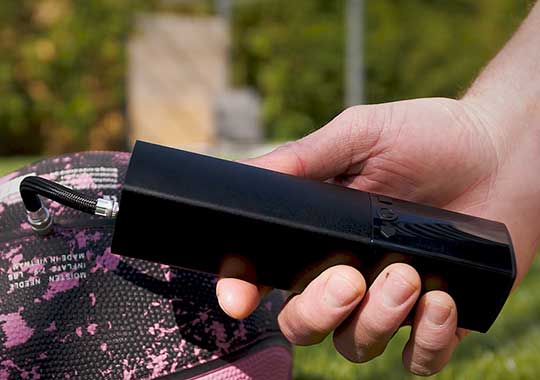

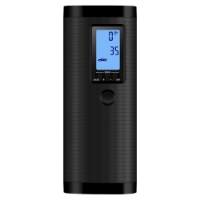
 Portable Tire Inflators
 Electric Air Pumps
 Electric Car Tyre Pumps
 Electric Ball Pumps
 Electric Bike Pump
 SUP Air Pump

Portable Auto Tire Air Pump Guide: How to Select and Operate a Compact Inflator
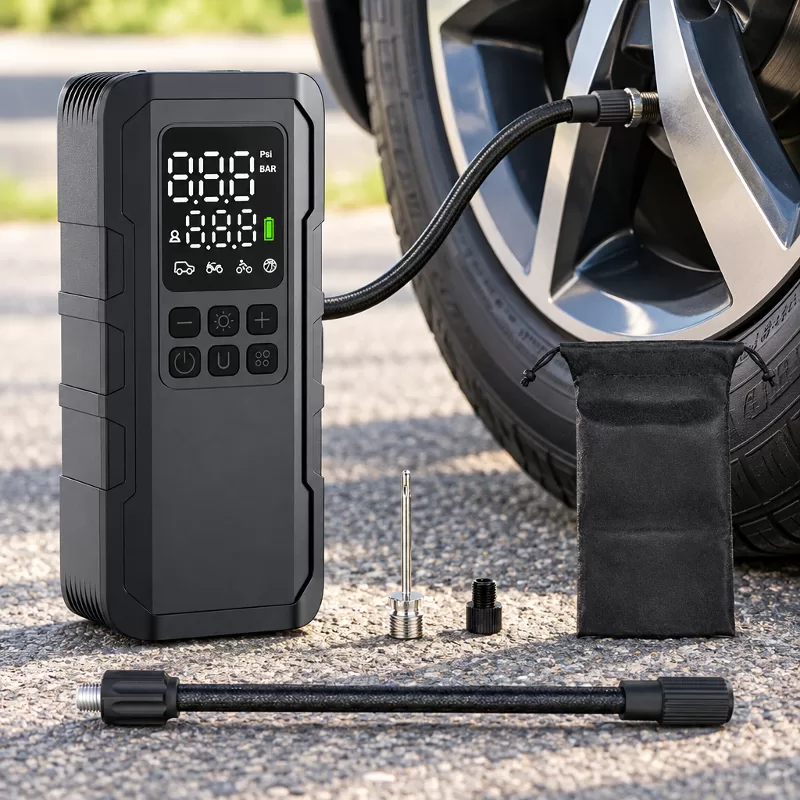
A dependable auto tire air pump portable unit transforms how drivers handle tire pressure management, giving motorists a practical way to manage routine maintenance without relying on commercial service-station compressors. Motorists frequently face sudden tire pressure warnings when seasonal weather shifts or slow valve leaks develop overnight. Having an autonomous, battery-driven compressor directly inside your glove box or trunk organizer restores immediate driving confidence. Instead of maneuvering a vehicle around awkward commercial air hoses or feeding coins into broken pumps, a cordless inflator delivers accessible airflow for scheduled top-ups and temporary pressure adjustments.
Understanding Search Intent Behind an Auto Tire Air Pump Portable
Why Modern Drivers Carry a Dedicated Cordless Inflator
Service station air compressors were once the default option for maintaining passenger vehicle tires, yet they carry well-documented drawbacks. Drivers often arrive at a fuel plaza only to find cut hoses, defective pressure gauges, or payment mechanisms that reject local cards. Navigating a long chassis to position all four valve stems within reach of a stiff, dirty line creates needless hassle. A personal inflator removes these frictions entirely, giving you autonomous control over vehicle readiness before pulling out of the garage.
Seasonal temperature swings represent another primary catalyst that prompts drivers to seek a portable compressor. As a general rule, tire pressure changes by about 1 PSI for every 10°F change in ambient temperature, although the exact result varies with environmental conditions. A sudden temperature drop can cause some vehicles’ TPMS warnings to illuminate when tire pressure falls below the vehicle’s warning threshold. Motorists equipped with a battery-powered device can resolve these low-pressure alerts at home, eliminating unnecessary detours on cold mornings.
Extended highway travel and rural exploration further elevate the value of carrying dedicated pneumatic gear. Striking road debris or sustaining a slow rim-bead leak miles away from metropolitan service centers can leave motorists stranded in low-reception zones. While a portable pump cannot mend physical sidewall punctures, it provides operational airflow to stabilize minor pressure drops, enabling transit toward an authorized service facility.
Routine Maintenance Versus Emergency Roadside Realities
Tire inflation needs fall into two distinct mechanical categories: scheduled cold-tire pressure compensation and unexpected roadside containment. Routine maintenance involves checking each tire and adding only the amount needed to reach the vehicle manufacturer’s cold-pressure specification. Underinflated tires experience accelerated shoulder wear, diminished fuel economy, and elongated braking distances on wet road surfaces. Catching pressure deficits during cold morning inspections protects both your wallet and tire longevity.
Roadside emergencies present entirely different operational constraints that require realistic assessment. If a tire suffers a slow puncture from a small nail embedded squarely in the central tread, a pump may provide temporary pressure for reaching the nearest tire professional after inspecting the casing and confirming it is safe to move. Do not continue driving if pressure falls again or damage is visible. Recognizing the clear boundary between slow air loss and catastrophic structural casing damage keeps drivers safe.
Core Engineering Principles: How Compact Tire Compressors Work
Mechanical Architecture: From Motor to Valve Stem
In typical small electric tire compressors, an electric drive motor couples to an internal compression mechanism to generate pneumatic pressure. One common configuration employs a miniature reciprocating piston assembly housed inside an engineered cylinder structure. In the case of the LP8, the unit is specified with a 19-cylinder compressor that delivers air through its high-pressure conduit toward the tire valve stem.
Converting mechanical movement into pneumatic pressure naturally generates thermal energy as air molecules compress rapidly during operation. In typical small compressor designs, heat concentrates around the cylinder sleeve and the output air conduit. The LP8 housing includes visible ventilation openings along the side and back shell, which users should keep unobstructed during operation. Understanding this thermodynamic reality helps operators appreciate why cooling pauses between extended inflation tasks preserve equipment reliability.
Maximum PSI Versus Usable Airflow Output
Consumer packaging frequently showcases high headline numbers, with many compact pumps advertising maximum pressures reaching up to 150 PSI. While this high-pressure capability is genuine, it reflects the maximum resistance the internal valving and drive torque can overcome, rather than the speed of inflation. High-pressure bicycle road tires demand high resistance with minimal air volume, making maximum PSI a critical metric for cyclists. Automotive tires, however, operate on an inverted pneumatic demand curve.
Passenger vehicle tires commonly operate at moderate pressures, but the correct target varies by vehicle and must come from the door placard or owner’s manual. A pump generating 26 to 28 liters per minute fills the vast internal chamber of an automotive tire at a practical, steady rate. If a device possessed an extraordinary pressure ceiling but delivered an anemic airflow rate, topping up a vehicle tire would become an agonizingly sluggish exercise. Real-world utility depends entirely upon the balanced pairing of continuous operating power and volumetric cylinder throughput.
Key Technical Evaluation Criteria for Buyers
Airflow Delivery and Cylinder Sizing Dynamics
Selecting a portable inflator requires evaluating the direct relationship between cylinder dimensions and motor power. A micro-compressor operating with 60W working power and a 19-cylinder design strikes an equilibrium between portable electrical consumption and pneumatic velocity. Rather than relying on cylinder labels alone, buyers should evaluate verified airflow, runtime, and duty-cycle specifications to judge real-world speed.
When evaluating airflow metrics, consider standard passenger tire dimensions, such as a 205/55 R16 tire requiring a routine pressure adjustment. An inflator pushing 26 to 28 liters per minute provides steady, practical throughput for passenger vehicle maintenance. That predictable airflow delivery helps motorists complete regular top-ups without triggering internal thermal protection or draining internal power cells prematurely.
Battery Configuration and Usable Runtime
Cordless convenience depends strictly upon the battery cell architecture engineered into the inflator housing. Dependable portable compressors utilize multiple lithium-ion cells arranged in series, such as three 18650 cells yielding an 11.1-volt nominal rail with 22.2 watt-hours of capacity. This series configuration supplies the high discharge amperage necessary to drive a mechanical piston against rising counter-pressure without experiencing severe voltage sag.
Battery cycle life dictates how many seasons the device will remain serviceable in your vehicle. Systems evaluated to maintain 80 percent or greater of their original capacity across 300 charge cycles deliver dependable performance over years of monthly top-ups. Moreover, lithium chemistry requires conscious management during freezing winter conditions. Storing the inflator in a climate-controlled space before winter road trips ensures maximum discharge performance when cold roadside emergencies occur.
Form Factor, Ergonomics, and Trunk Storage
Automotive utility gear must fit seamlessly into everyday vehicle storage without occupying valuable passenger room. Units built to compact dimensions—roughly 70.5 by 50 by 165 millimeters—slide directly into door pockets, under-seat trays, or spare tire wells. At approximately 522 grams, the device is designed for handheld use, though users should place it on a stable surface when the hose position or operating conditions make handheld operation inconvenient.
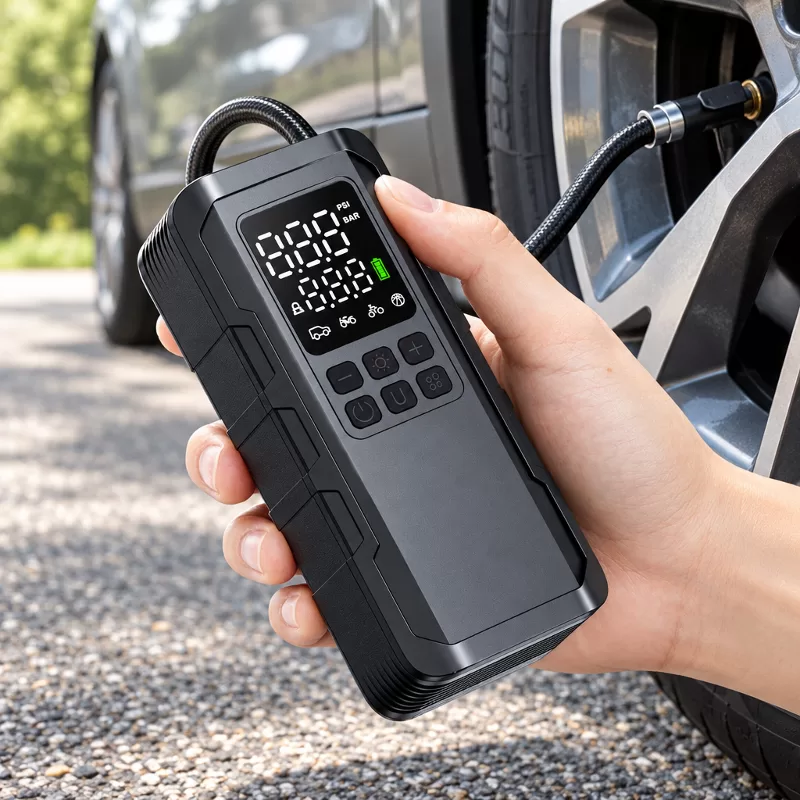
Vehicle interiors experience severe environmental swings, ranging from intense cabin solar heating to freezing overnight conditions. The LP8 features a matte molded housing with raised side contours and protective-looking ribs. These molded contours provide structured handling when setting up connections beside a vehicle wheel on the roadside.
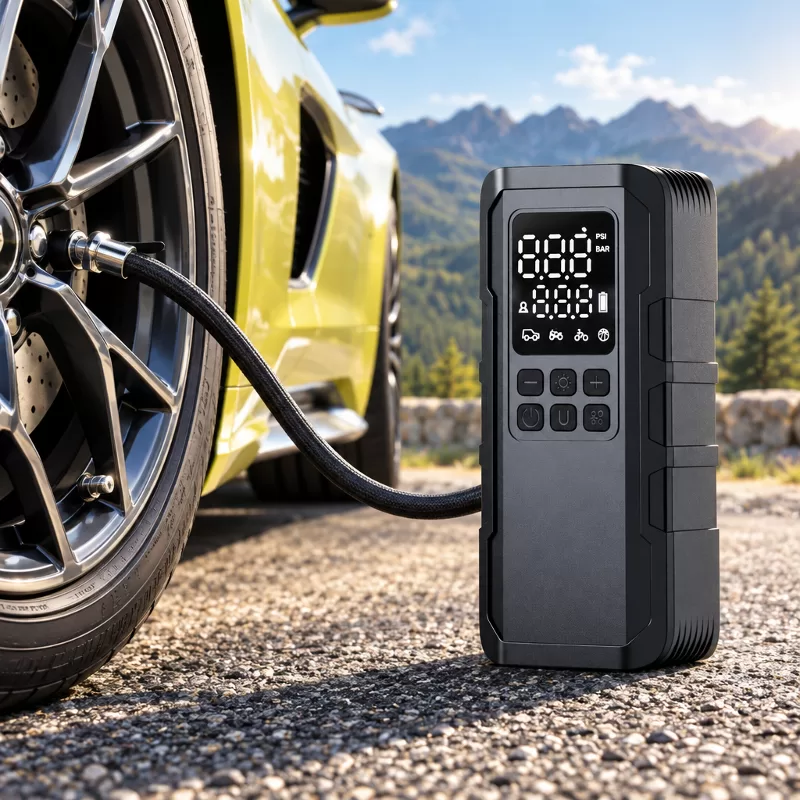
Product Spotlight: LP8 150 PSI Portable Electric Car Tire Air Pump
Technical Specifications and Build Architecture
Manufactured by Newo, a company specializing in pneumatic technology and smart electric inflation solutions, the LP8 embodies balanced engineering for demanding automotive and outdoor environments. Engineered with a 19-cylinder compressor and 60W working power, this inflator bridges the gap between pocket-sized convenience and dependable inflation power. It functions within an operating temperature window from minus 10 degrees Celsius to 45 degrees Celsius, making it viable across varied climates.
| Engineering Specification | LP8 Parameter Standard |
|---|---|
| Compressor Cylinder Size | 19 cylinder |
| Working Power | 60W |
| Airflow Output | 26 to 28 L/min |
| Pressure Operating Range | 2 to 150 PSI |
| Pressure Measurement Units | PSI, BAR |
| Internal Battery Pack | 3 × 18650, 2000mAh, 11.1V, 22.2Wh |
| Charging Protocol & Input | Type-C (5V / 2A, 9V / 1.5A) |
| Power Output Rating | 5V / 2A, 9V / 1.5A |
| Recharge Duration | 2 to 3 hours |
| Runtime (Manufacturer Rating) | 20 to 25 minutes |
| Acoustic Sound Level | 85 dB or below at 1 meter |
| Product Dimensions | 70.5 × 50 × 165 mm |
| Net Weight | 522 g |
Dual LED Interface and Smart Auto-Stop Automation
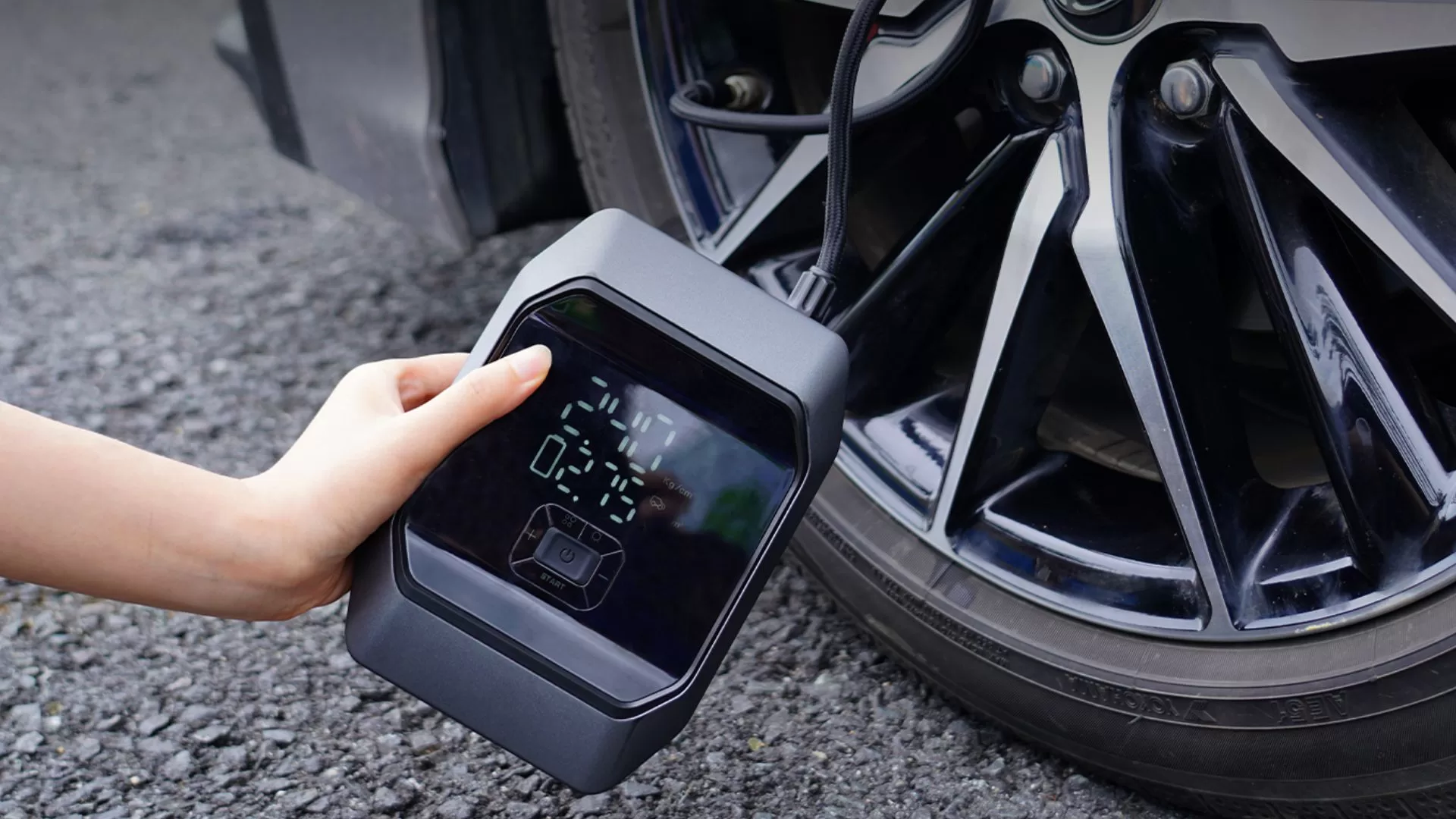
Manual pressure checks often lead to guesswork and inconsistent tire readings across different wheels. The LP8 eliminates this friction by integrating a dual LED display for pressure information and controls, providing direct visual feedback during setup and operation. Users can toggle seamlessly between imperial PSI and metric BAR readouts depending on their regional vehicle specifications or user preference.
Smart pressure regulation relies on internal digital sensors that monitor line pressure continuously. The automatic shut-off is designed to stop inflation at the selected target, but users should still verify the final pressure with a reliable gauge and use the vehicle placard specification. This automatic cutoff helps prevent accidental overinflation during daily operation.
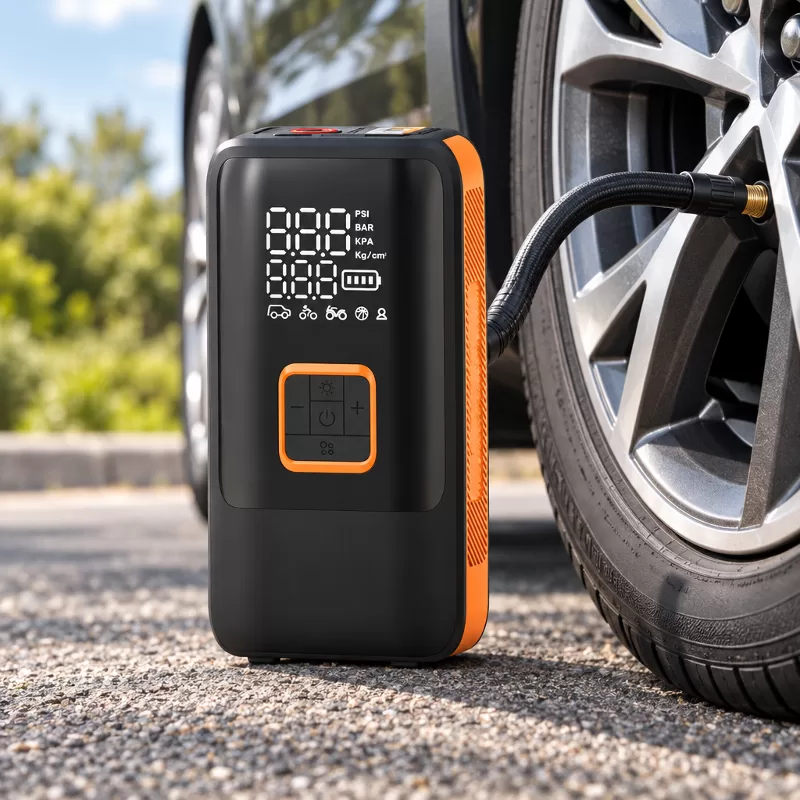
Multi-Function Features: Type-C Fast Input/Output and Lighting
Modern automotive travel benefits from versatile power options, and the LP8 incorporates Type-C charging and listed power-output support with ratings of 5V/2A and 9V/1.5A. The unit completes a full replenishment cycle within two to three hours when connected to compatible power sources. In addition, external device charging is supported for compatible electronic devices when appropriate cables and supported protocols are utilized.
Roadside tire emergencies rarely happen under ideal daylight conditions, making onboard lighting a valuable safety feature. The LP8 incorporates a multi-mode LED array capable of constant illumination, continuous flashing, or standard SOS distress signaling. The light modes can improve visibility around the valve and wheel during low-light work.
Real-World Capacity: The Meaning of 3.5 Tires per Charge
Manufacturer performance benchmarks state that the LP8 provides an inflation capacity of approximately 3.5 tires of size 205/55 R16 per full charge. Actual coverage across vehicles depends heavily on tire dimensions, baseline pressure, ambient temperature, and hose coupling efficiency. Routine top-ups require far less air displacement than full inflations, allowing drivers to conduct periodic maintenance smoothly within the rated capacity.
If an operator encounters a completely flat tire, the compressor must work against continuous mechanical resistance over an extended duration, requiring significantly more runtime than a standard pressure top-up. Before attempting to inflate an empty tire, always inspect the tire structure and bead seating thoroughly to ensure the casing remains safe to hold pressure.
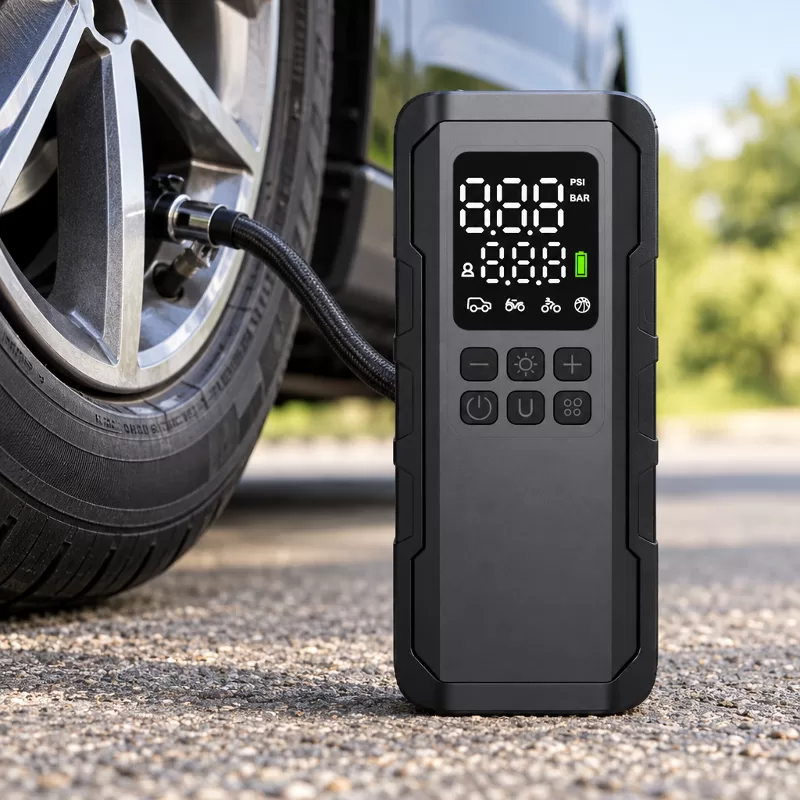
Step-by-Step Guide: Safe and Accurate Tire Inflation
Step 1: Locating Vehicle Placard Pressure
Before powering on your auto tire air pump portable device, locate the official tire and loading information label placed inside your vehicle. This placard resides on the driver-side door pillar (the B-pillar) and provides the precise cold inflation pressure engineered for your chassis weight and tire dimensions. Never rely on the maximum PSI rating molded directly onto the tire sidewall, as that number represents the absolute structural limit of the tire rubber, not the vehicle manufacturer’s recommended operating level.
Inspect the door jamb label carefully to determine if different pressures are specified for the front and rear axles. Modern vehicles, particularly front-wheel-drive or rear-engine models, often require varying pressure levels to optimize steering response and load distribution. Adhering to these vehicle-specific figures ensures even tread contact with the road, prevents irregular cupping, and maintains predictable handling.
Step 2: Inspecting the Tire and Valve Stem
Examine the tire surface closely before attaching any inflation hardware to identify potential safety risks. Look for embedded nails, sharp gravel shards, sidewall cuts, or localized cracking along the tread grooves. Do not inflate or drive on a tire showing a visible sidewall bulge or bubble; have the tire professionally inspected and replaced, replacing the wheel only if it also shows physical damage.
Remove the protective dust cap from the tire valve stem and check the brass threads for road grime, grit, or corrosion. Debris resting on the valve core pin can prevent the pump nozzle from establishing an airtight seal or become forced into the valve body itself. A quick wipe with a clean cloth ensures that the pump chuck mates squarely without venting pressurized air.
Step 3: Secure Hose Connection and Cold Pressure Baseline
Connect the inflator’s braided high-pressure hose by threading or clamping the chuck firmly onto the brass tire valve stem. When properly seated, the internal pin depressor opens the Schrader valve smoothly, allowing internal tire air to reach the digital pressure transducer inside the inflator. A loose connection manifests as a continuous hissing sound, which must be corrected by re-aligning and tightening the chuck before proceeding.
Power on the inflator to read the baseline static pressure displayed on the digital screen. For genuine accuracy, this measurement must occur when the tires are cold, meaning the vehicle has remained stationary for at least three hours or driven less than one mile at moderate speed. Rolling across asphalt generates internal friction that temporarily raises internal air temperature and pressure, distorting baseline maintenance readings.
Step 4: Preset Target Configuration and Auto-Stop Operation
Using the front keypad controls, select the automotive operating preset or manually adjust the target pressure using the plus and minus buttons until the screen matches the door jamb specification. Confirm that the measurement unit indicates your intended metric, switching between PSI and BAR via the mode interface if necessary. Setting this target precisely ensures the micro-controller manages shut-off without manual intervention.
Press the power button to initiate inflation, keeping the unit standing upright on level pavement beside the wheel. As the motor runs, observe the rising pressure reading on the real-time display while keeping fingers and clothing clear of the ventilation openings and moving or hot surfaces, following the product manual. When the indicated pressure reaches the selected target, the automatic shut-off is designed to stop inflation; verify the final pressure with a reliable gauge.
Step 5: Post-Inflation Gauge Verification and Cap Replacement
Decouple the hose chuck from the valve stem swiftly using a crisp, unthreading motion to minimize parasitic air loss. While high-grade digital inflators offer dependable internal accuracy, performing a secondary verification using an independent mechanical or digital dial gauge remains an industry best practice. Cross-verifying pressure confirms that the valve stem core has reseated tightly without silent micro-leaking.
Conclude the process by replacing the valve cap to help keep dirt and moisture away from the valve. Storing the inflator and braided hose inside its protective pouch afterward shields internal components from dust and transit vibrations.
Multi-Vehicle Versatility and Adapter Utilization
Bicycle and E-Bike Applications
While automotive support represents a primary objective, an auto tire air pump portable system excels across diverse light-mobility equipment. High-pressure road bicycles, gravel rigs, and commuter e-bikes require consistent pressure monitoring to prevent rim strikes and excessive rolling resistance. Bicycles often incorporate delicate Presta valves that differ from automotive Schrader fittings, requiring a dedicated threaded brass adapter.
Heavy modern e-bikes run higher-volume tires under continuous heavy payload strain, making manual hand pumping an exhausting chore. The LP8 is specified for a 2 to 150 PSI pressure range and can be used with compatible bicycle valves and adapters; follow the bicycle or tire manufacturer’s pressure specification. The integrated auto-stop mechanism provides targeted control when filling bicycle inner tubes, delivering smooth operation for everyday cyclists.
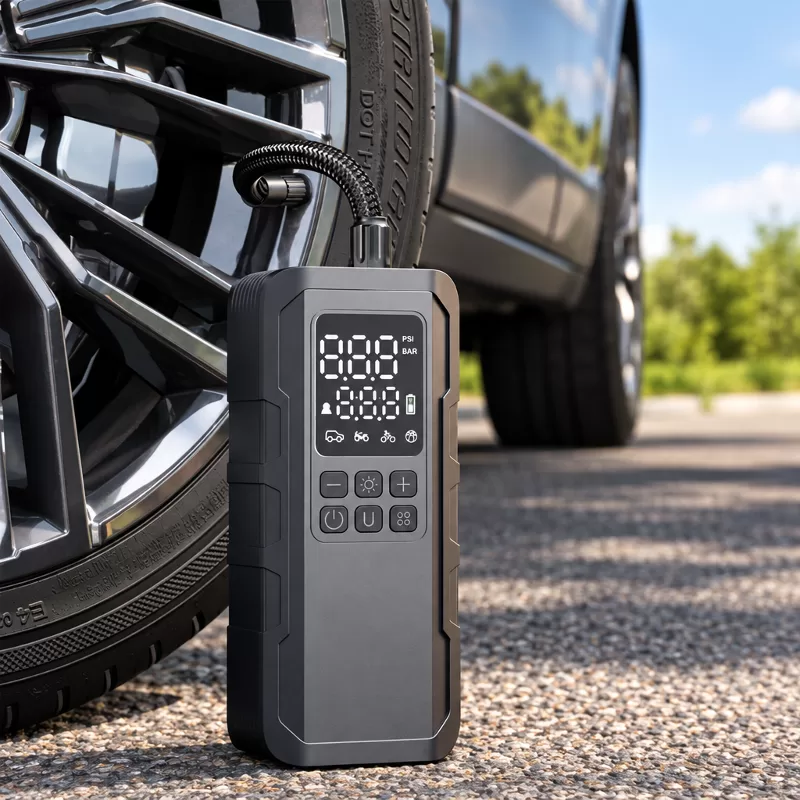
Motorcycles, Scooters, and Mobility Equipment
Motorcycles and electric scooters operate on sensitive contact patches where a discrepancy of just two PSI alters cornering stability and rider feel. Tight clearances around dual front brake discs and large sprockets often make rigid gas-station air chucks impossible to attach. The flexible braided hose of a compact inflator routes cleanly through cramped spokes to reach recessed valve stems effortlessly.
Wheelchairs, personal balance vehicles, and mobility carts also depend upon properly pressurized pneumatic tires for smooth maneuverability and motor range. These smaller utility tires feature compact air chambers that inflate very rapidly. Custom pressure mode allows the user to set a target, while final pressure should be checked against the applicable vehicle or equipment specification.
Sports Equipment and Recreation Inflatables
Recreational gear demands a gentle, low-pressure pneumatic delivery approach. The LP8 includes dedicated ball needle adapters engineered to engage standard athletic bladders, including soccer balls, basketballs, and volleyballs. These athletic balls operate within low-pressure brackets, typically between 7 and 13 PSI, where guesswork with high-volume pumps can easily rupture inner synthetic bladders.
The 2 PSI lower range allows use with some low-pressure equipment, but users should follow the ball or equipment manufacturer’s specified pressure and verify it with a suitable gauge when accuracy matters. The device handles low-pressure monitoring with digital display support, expanding its utility across household sports gear.
Comparing Inflation Solutions: Cordless Inflator Versus Alternatives
Cordless Lithium-Ion Pumps Versus 12V Corded Compressors
Traditional portable car inflators rely on long 12-volt accessory cords plugged directly into the vehicle’s cigarette lighter socket. While these corded units draw continuous power without battery limits, the physical cord presents persistent usability challenges. Trailing a long power cable around vehicle bodywork, threading it through car doors, and untangling snarls consumes unnecessary time and soils clothing.
Cordless lithium-ion units eliminate cable tethering entirely, enabling swift movement from wheel to wheel around the vehicle perimeter. They also protect the vehicle’s primary starting battery from deep discharge during engine-off pumping. The sole operational requirement is maintaining periodic charging cycles for the lithium cells, a modest trade-off for true untethered mobility.
Portable Electric Inflators Versus Service Station Air Outlets
Service station air dispensers supply heavy industrial airflow rates, yet public equipment often suffers from rough handling and worn fittings. Worn chuck gaskets can leak air during coupling, and public air meters may be poorly maintained or improperly calibrated over time. Drivers relying on service stations must also verify pressure with their own gauge to ensure accuracy.
Carrying an autonomous inflator puts pressure maintenance under your direct personal oversight. You inspect tires in your own driveway on cold rubber, exactly as tire manufacturers prescribe. There is no waiting in idling queues, no searching for pocket coins or digital pay stations, and no risk of finding yourself stranded late at night before an out-of-order service booth.
Compact Electric Pumps Versus Manual Floor and Hand Pumps
Manual floor pumps represent the traditional backup choice for cyclists and mechanical purists seeking absolute mechanical independence. However, using human muscle to push automotive air volumes up to recommended vehicle pressures requires intense physical exertion that is impractical for many motorists. In hot summer weather or pouring rain, manually pumping a large automotive tire creates unwelcome physical strain.
Compact electric compressors automate mechanical compression entirely, delivering uniform pneumatic delivery with the press of a button. Manual pumps do not depend on a battery, while rechargeable inflators require periodic charging and appropriate storage. The cordless format and digital target setting can make an electric pump practical for many automotive owners, provided its capacity and charging requirements fit the intended use.
| Feature Comparison | Cordless Electric Inflator (LP8) | 12V Corded Air Compressor | Commercial Gas Station Air | Manual Dual-Action Floor Pump |
|---|---|---|---|---|
| Primary Power Source | Internal 11.1V Lithium Battery | Vehicle 12V DC Socket | Commercial Facility Power | Human Physical Energy |
| Portability & Handling | Handheld Cord-Free (522 g) | Moderate (Requires Cord Reel) | Stationary (Zero Portability) | Rigid Tall Frame |
| Deployment Workflow | Direct Hose Connection | Requires Vehicle Socket Power | Travel to Commercial Facility | Manual Hose Connection |
| Target Pressure Control | Digital Preset with Auto-Stop | Often Manual Analog Dial | Varies by Station Equipment | Visual Analog Gauge Only |
| Primary Use Scenario | Mobile Multi-Vehicle / Roadside | Roadside Vehicle Tire Repairs | Fleet or Service Stations | Home Bicycle / Athletic Maintenance |
Safety Boundaries, Thermal Control, and Battery Longevity
Managing Internal Operating Heat and Duty Cycles
Compressing atmospheric gas generates heat naturally through molecular thermodynamics. When the compressor runs under load, thermal energy builds within the cylinder assembly and surrounding components. The LP8 provides a rated runtime of 20 to 25 minutes; if the unit becomes excessively hot during demanding tasks, stop operation and consult the product manual for cooling intervals.
Allowing the compressor housing to cool down between heavy inflation cycles preserves internal seal integrity and prevents automatic thermal protection cutoffs from interrupting your work. Observing these manufacturer guidelines safeguards internal mechanical tolerances and ensures consistent operation over the lifecycle of the device.
Battery Storage Precautions Inside Vehicles
Lithium-ion cells require responsible handling when stored inside a passenger cabin or vehicle trunk. Prolonged exposure to extreme heat—such as a vehicle interior parked under direct midsummer sun reaching high cabin temperatures—accelerates internal chemical degradation. To protect battery health, store your portable inflator inside a shaded glove box or beneath an insulated lower trunk cargo floor.
For long-term vehicle storage, follow the manufacturer’s battery maintenance guidelines and avoid storing or charging the unit in extreme heat. Periodically checking the battery status ensures that the lithium cells retain adequate energy to power the compressor during an unforeseen roadside emergency.
When Inflation Cannot Solve the Problem
A portable tire inflator serves as an essential pressure maintenance tool, but it cannot repair structural tire failures. Motorists must recognize damage patterns that make inflation dangerous. A puncture outside the repairable tread area, or one exceeding the tire manufacturer’s repair limits, requires professional evaluation. Do not continue inflating a visibly damaged or rapidly leaking tire.
If the compressor fails to raise the tire pressure after several minutes of operation, immediately stop and check the chuck connection, braided hose, valve core, battery charge, and overall tire condition. If air continues to escape and pressure will not rise, do not drive on the wheel; mount your spare tire or contact professional roadside towing services.
Frequently Asked Questions
Can an auto tire air pump portable inflate a completely flat car tire?
The LP8 may be able to add air to some low tires, but it is not a substitute for professional inspection of a completely deflated tire. Do not attempt to inflate or drive on a tire with bead damage, visible structural damage, or suspected run-flat damage. If the bead is intact and the tire simply lost pressure from a minor valve pin leak or slow puncture, the compressor can add air, though restoring standard pressure depends on tire volume, temperature, and actual airflow under resistance.
Why should tire pressure be measured only when tires are cold?
Vehicle manufacturers calculate tire pressure recommendations specifically for cold operating conditions. Driving can raise tire pressure by several PSI as the tire warms from friction and mechanical flexing. If you adjust air into hot tires to match the vehicle placard value, the tire will become significantly underinflated once it cools down. For accurate results, always check and adjust pressure when the vehicle has rested stationary for at least three hours or driven less than one mile at moderate speed.
How does seasonal cold weather trigger TPMS dashboard lights?
Automotive Tire Pressure Monitoring Systems alert drivers when tire pressure falls significantly below recommended operating levels. TPMS warning thresholds vary by vehicle; a warning light indicates significant underinflation that warrants immediate attention. As winter temperatures arrive, air inside the tire contracts, reducing pressure by approximately 1 PSI for every 10°F drop. This cold-induced pressure decline frequently triggers dashboard warning lights, which can be quickly resolved with a portable pump.
Can the LP8 inflator be charged using standard vehicle USB ports?
The LP8 features a universal Type-C charging port supporting 5V/2A and 9V/1.5A input profiles. It can recharge from standard vehicle accessory ports, modern USB wall chargers, or compatible portable power supplies. Achieving the rated two-to-three-hour recharge time requires connecting to a power adapter capable of delivering supported voltage and amperage levels as specified by the manufacturer.
Does auto shut-off eliminate the need for a secondary pressure gauge?
Integrated digital auto-stop automation provides reliable pressure regulation, stopping airflow near your targeted threshold. However, maintaining an independent mechanical dial or digital tire gauge in your glove box remains an established automotive industry best practice. Periodic cross-verification ensures that the inflator’s internal digital transducer remains accurately calibrated over years of temperature cycling, while giving you a rapid tool for spot checks without unpacking the compressor.
How many vehicle tires can a fully charged inflator adjust?
The manufacturer rates the LP8 for approximately 3.5 tires of size 205/55 R16 per full charge. Actual tire coverage depends directly on tire dimensions, starting pressure levels, ambient working temperatures, and connection efficiency. In everyday maintenance where tires only require topping up by a few PSI, a single charge easily manages regular multi-tire adjustments.
Conclusion: Essential Roadside Readiness with Modern Portable Inflators
Investing in an auto tire air pump portable device elevates everyday driving safety, transforming routine vehicle upkeep from a dreaded chore into a swift, effortless habit. Consistent tire maintenance optimizes vehicle fuel efficiency, ensures balanced tread wear across all four tires, and preserves reliable braking grip on slick highways. Carrying the LP8—equipped with a 19-cylinder compressor with 60W working power delivering 26 to 28 liters per minute, dual LED display pressure control, 150 PSI capability, and universal Type-C charging—can reduce reliance on commercial air stations for routine top-ups and temporary roadside pressure adjustments, subject to its published runtime and capacity. Equipping your vehicle with compact pneumatic equipment ensures that seasonal pressure drops and slow valve leaks never compromise your travel safety, keeping you prepared for every mile ahead.
-

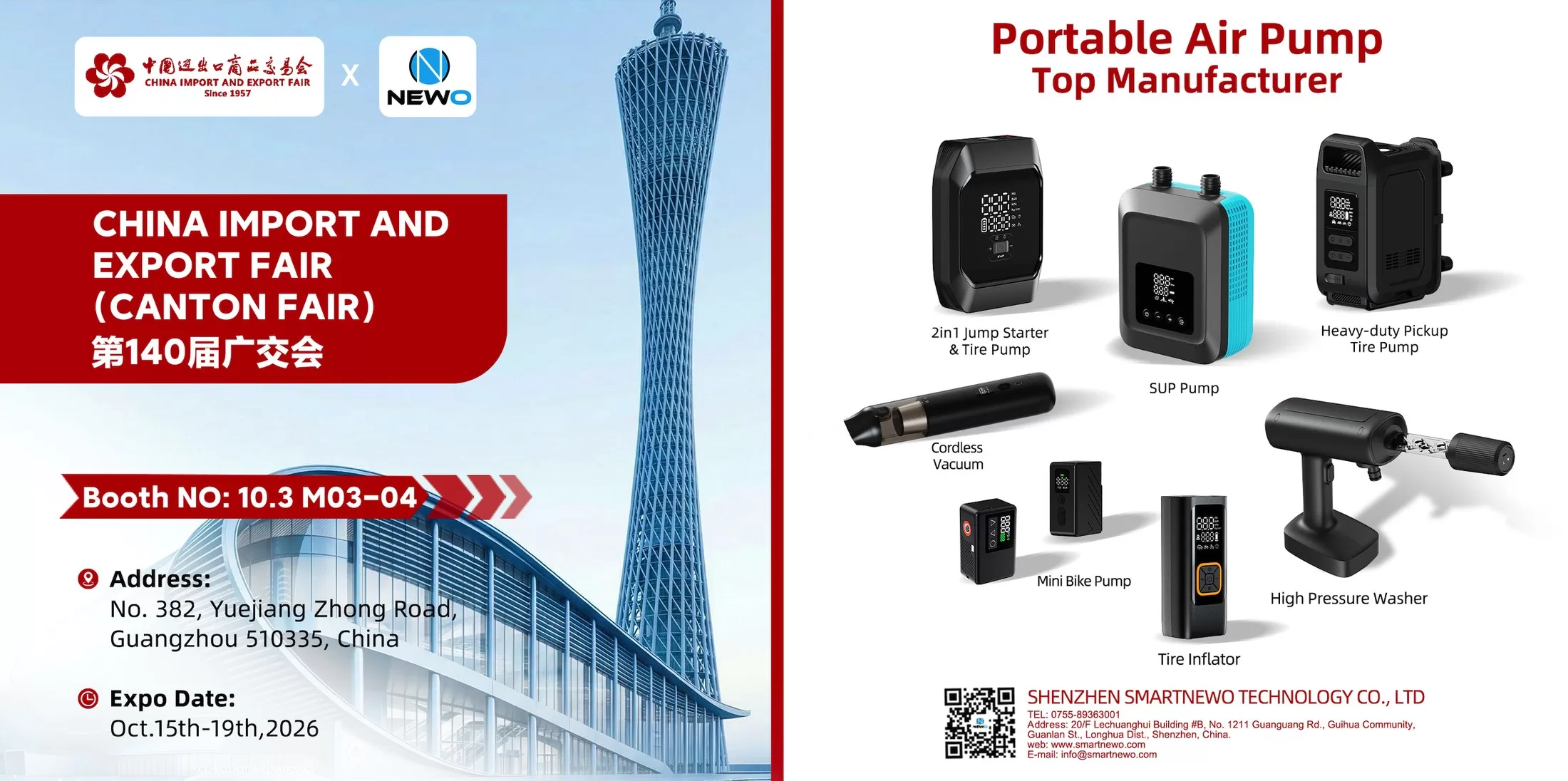
Meet NEWO at the 140th Canton Fair: Visit Booth 10.3 M03–04
Meet NEWO at the 140th Canton Fair in Guangzhou, October 15–19, 2026. Visit Booth 10.3 M03–04 to explore portable air pumps and discuss OEM, ODM and distribution opportunities.... -

As Shenzhen Welcomes the World for APEC 2026, NEWO Welcomes You to Our Factory
As Shenzhen prepares for APEC 2026, NEWO welcomes international buyers and partners to visit our factory, meet our team and explore future cooperation.... -

Leading the Way in Product Innovation and Excellence
Smartnewo exemplifies professionalism in product innovation and manufacturing. Their collaboration with Xiaomi Youpin on the G01 crowdfunding project highlights their expertise in creating compact, powerful inflatable pumps. Rigorous engineering, meticulous production processes, and advanced quality assurance underscore their commitment to excellence. The success of the G01 project, with significant market... -

Essential Qualities of an Excellent Supplier
In today's competitive market, finding a reliable supplier is crucial for business success. Based on insights from Smartnewo and broader internet research, here are key qualities an excellent supplier must possess:... -

NW06 Tire Inflator: Compact Power for Quick Inflation
Summary The NW06 Tire Inflator delivers quick and efficient tire inflation with a powerful 35L/min airflow. It features a user-friendly LCD screen for real-time pressure monitoring, dual power options with a built-in 6000mAh battery, and multiple nozzle attachments for versatile use. Its compact design and integrated LED light ensure convenience and... -

Unleash the Power of Portability: The SmartNewo Jump Starter with Air Compressor KF03
This guide will walk you through the steps to effectively use a portable tire inflator, helping you stay prepared and safe on the road.... -

Newo Attends The 2024 Consumer Electronics Show (CES)
Smartnewo booth is located at 53672, Halls A-D, Level 2, Venetian Expo, Las Vegas Convention Center (LVCC). ... -

Smartnewo’s Dual-Cylinder Air Pump Rocks the Hong Kong Autumn Electronics Fair!
Smartnewo’s Dual-Cylinder Air Pump Rocks the Hong Kong Autumn Electronics Fair!... -

Meet at the Canton Fair! Smartnewo brings dual-cylinder air pumps, making your inflation experience faster and more stable!
NEWO has went deep communication and negotiation with customers from all over the world on booth.... -

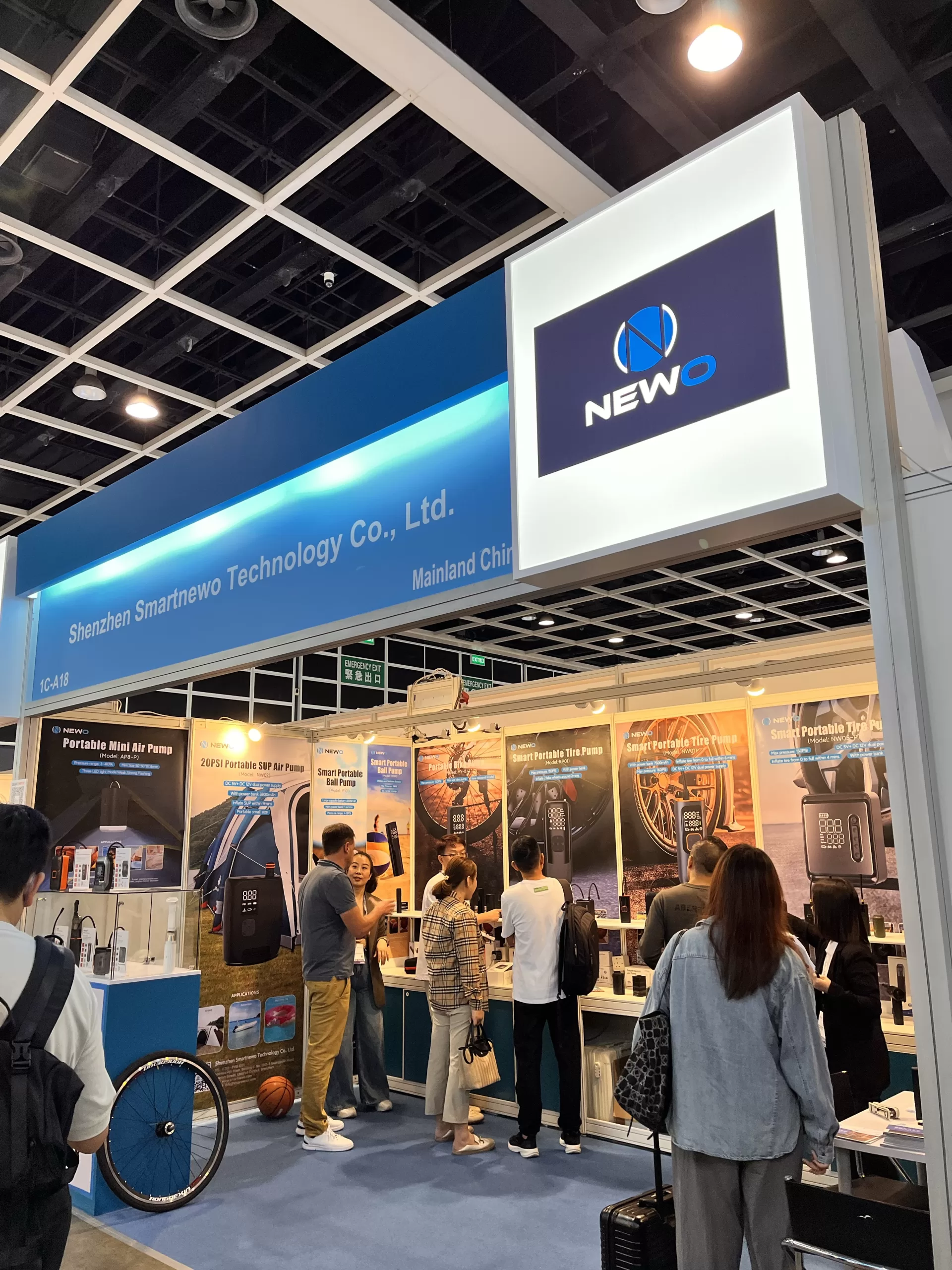
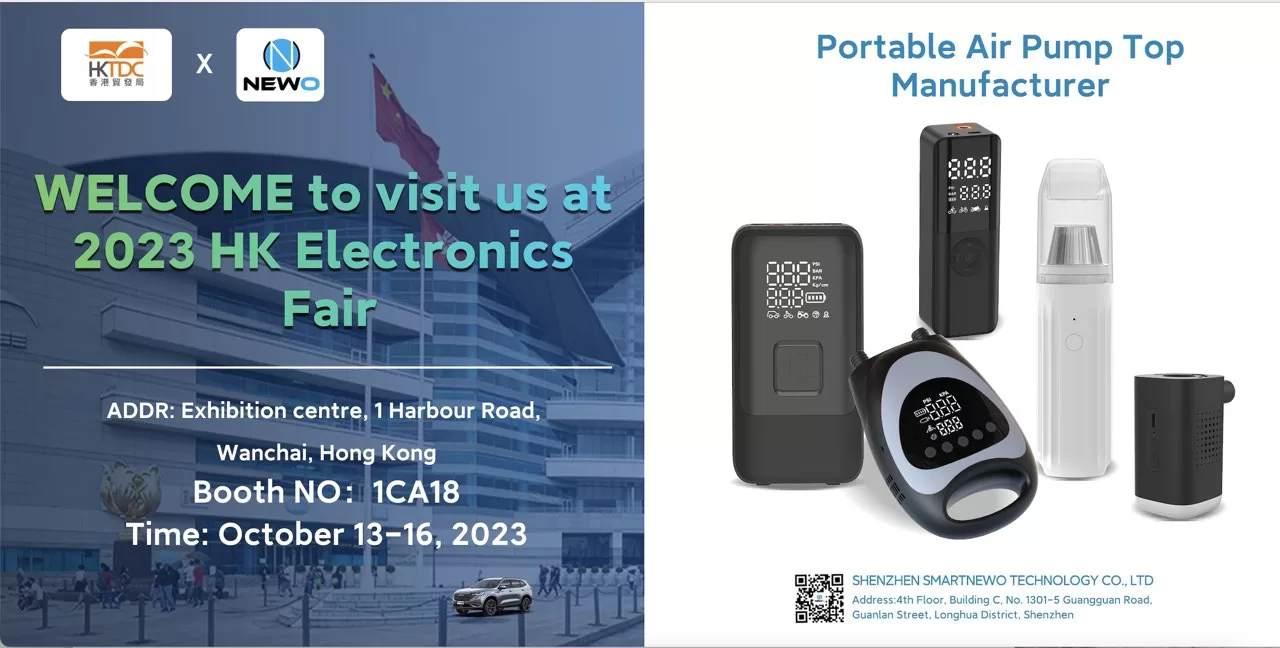
“Hong Kong Autumn Electronics Fair – 1CA18 (October 13th to 16th): Smartnewo invites you to visit our booth!
Hong Kong Autumn Electronics Fair...



-

What to Check Before Ordering Custom Electric Bike Pumps
Plan custom electric bike pumps with a clear requirements freeze for valves, TPU tubes, portability, repeated top-ups, charging, and model-specific documents.... -

OEM vs ODM Air Pumps: Which Manufacturing Model Fits Your Brand?
Compare OEM and ODM air pump projects by design responsibility, change approval, development scope, and written ownership terms before choosing your route.... -
How to Choose a Reliable Tire Inflator Manufacturer in China
Choose a tire inflator manufacturer in China with a focused RFQ, supplier evidence, configuration checks, and clear sample-to-pilot decisions for your brand.... -

Rechargeable Electric SUP Pump for Paddle Boards: Faster Inflation for SUPs, Kayaks and Inflatable Tents
The BL10-C Portable Electric Bike Tire Inflator is a compact and lightweight mini electric bike pump designed for modern cyclists. With up to 120 PSI pressure, a digital LED display, preset pressure control, automatic shut-off, USB-C charging, and multiple valve adapters, BL10-C offers a convenient inflation solution for road bikes,... -

Are Electric Bike Pumps Worth It in 2026? Electric Pump vs CO₂ vs Mini Hand Pump
Discover whether electric bike pumps are worth it in 2026. This guide compares electric bike pumps, CO₂ inflators, and mini hand pumps for road cycling, gravel riding, commuting, and long-distance rides. Learn the pros, limitations, best use cases, and key features to look for before choosing the right portable tire... -
BL10-C Portable Electric Bike Tire Inflator: Small Size, Reliable Power for Every Ride
The BL10-C Portable Electric Bike Tire Inflator is a compact and lightweight mini electric bike pump designed for modern cyclists. With up to 120 PSI pressure, a digital LED display, preset pressure control, automatic shut-off, USB-C charging, and multiple valve adapters, BL10-C offers a convenient inflation solution for road bikes,... -

Why Mini Electric Bike Pumps Are Becoming Essential for Modern Cycling
Discover why mini electric bike pumps are becoming essential for modern cyclists. Learn how portable electric bike pumps improve tire pressure management, riding safety, and convenience.... -

The Ultimate Smart Solution for Easy Outdoor Adventures in 2026
Discover how a spring travel air pump simplifies outdoor trips with fast inflation, smart features, and powerful performance—perfect for every adventure.... -

Powerful 5-in-1 Portable Car Tire Inflator and Jump Starter: The Ultimate Emergency Tool for Every Driver
Why Every Driver Needs a Portable Car Tire Inflator and Jump Starter Modern drivers face many unexpected situations on the road. A flat tire, low tire pressure, or a dead car battery can happen at the worst possible time. That’s why having a portable car tire inflator and jump starter is... -

7 Real Cycling Scenarios That Show Why Every Rider Should Carry a Mini Bike Pump
Cycling is one of the most freeing activities you can enjoy. Whether you’re commuting to work, riding through city streets, or exploring quiet countryside roads, a bike ride can instantly improve your day. But there’s one small problem that almost every cyclist eventually faces: Low tire pressure. It might happen...




-
How Is a Football Properly Inflated?
The correct inflation of a football - with not too much and not too little air - is a hotly debated topic among footballers.... -
Application Scenarios of Car Inflator Pump
Often long-distance business trips or play car owners because the road may be more remote areas, in this case if you encounter a tire leak....