

 Portable Tire Inflators
 Electric Air Pumps
 Electric Car Tyre Pumps
 Electric Ball Pumps
 Electric Bike Pump
 SUP Air Pump

Portable Battery Powered Tire Inflator: Selection, Operation, and Field Reliability
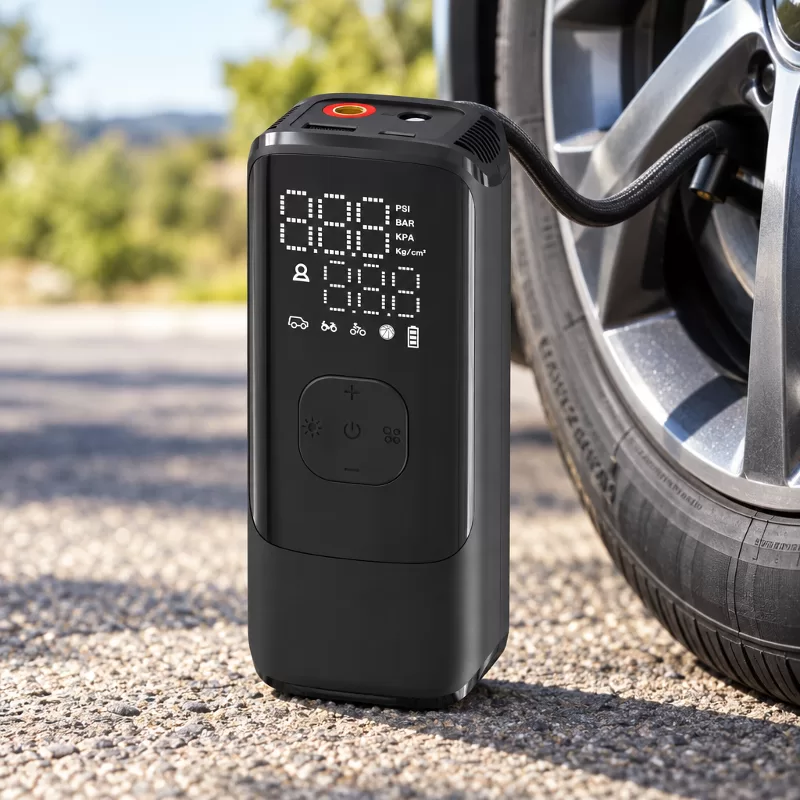
A dependable portable battery powered tire inflator has shifted from a novel car accessory into a practical roadside tool. For decades, drivers relied on manual hand pumps, service station air lines, or 12V compressors tied to a vehicle socket. Cordless pneumatic engineering alters that equation. Drivers, motorcyclists, and urban cyclists can manage routine pressure drops without searching for a commercial compressor or dealing with power cords across traffic. Carrying a self-contained device ensures pneumatic autonomy during daily urban commutes or long highway travel.
Maintaining correct tire pressure is not merely about preserving tread life; it directly governs braking distance, rolling resistance, and vehicle handling. When seasonal cold weather arrives, air density changes inside the tire cavity, frequently triggering low-pressure dashboard warnings. A charged portable battery powered tire inflator can help you restore pressure to the vehicle manufacturer’s recommended cold value. Regular pressure checks support intended tire handling and wear characteristics, ensuring baseline safety across varied driving conditions.
Understanding the Modern Portable Battery Powered Tire Inflator
How Miniature Compressors Function Cordlessly
At the mechanical core of a compact cordless air pump sits an electric motor coupled to a dedicated compression system. For instance, the LP6 uses a 17-cylinder pumping system powered by a 30W motor to compress air and deliver it through the attached hose. Many miniature compressors use an electric motor and internal compression mechanism to move air into the pneumatic line; the supplied LP6 information does not specify its internal valve design.
Operating away from a continuous external power source requires a specialized energy reservoir. Modern units integrate rechargeable lithium-ion battery configurations designed to handle the electrical load required when pumping air against counter-pressure inside an inflated tire. The single LED screen displays pressure information, and the automatic shut-off is designed to stop inflation at the selected target, allowing users to monitor progress cleanly without relying on fluctuating mechanical dials.
Primary Application Scenarios: Beyond Passenger Vehicles
While maintaining passenger car tires represents a primary role, compact cordless inflators accommodate various forms of transportation. Commuters operating lightweight electric bikes, city scooters, and standard bicycles frequently encounter gradual pressure loss across inner tubes or tubeless rims. Routine calibration helps prevent pinch flats and rim damage along uneven roadways, preserving comfortable ride quality across city infrastructure without requiring specialized floor pumps.
Motorcycle handling can be sensitive to incorrect tire pressure, so users should follow the pressure specified by the motorcycle or tire manufacturer rather than guessing. Carrying a compact handheld inflator provides peace of mind on remote secondary routes where gas stations are absent. Wheelchairs, mobility scooters, and recreational sports gear also utilize these portable units for straightforward pressure management across domestic, athletic, and urban commuting settings.
Operational Boundaries: What a Battery Inflator Can and Cannot Do
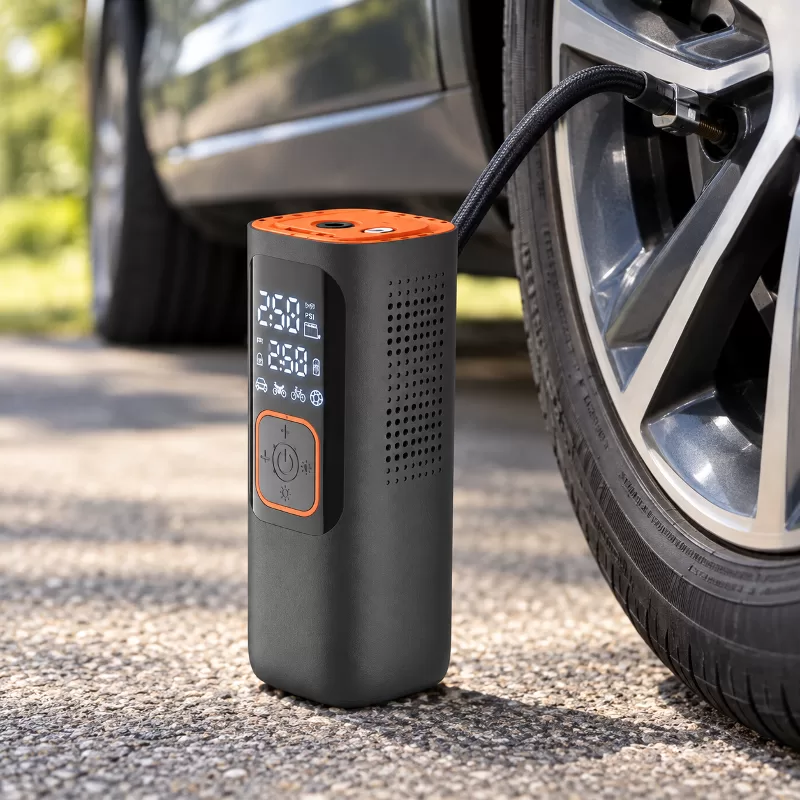
Understanding equipment limits prevents premature wear and operational disappointment. The LP6’s published 20 to 22 L/min airflow is specified for portable inflation applications such as tire top-ups and the compatible vehicle, mobility, and sports equipment listed by the manufacturer. Miniature compressors emphasize portable accessibility over industrial speed, providing consistent airflow for personal transport without requiring bulky dedicated storage setups.
A handheld cordless unit cannot substitute for a high-displacement workshop compressor capable of powering pneumatic shop tools or seating bead tires on heavy commercial trucks. Recognizing that handheld devices trade large-scale volume output for compact portability ensures you employ the tool safely within its intended operating scope, protecting both the pneumatic hardware and the connected inflatables over time.
Core Technical Criteria for Evaluating Cordless Inflators
Rated Maximum Pressure vs. Practical Operating Range
Packaging specifications often highlight maximum pressure capabilities up to 150 PSI. For the LP6, 150 PSI is the published maximum pressure and 2 to 150 PSI is the published operating range; actual suitability depends on the tire or inflatable manufacturer’s pressure requirement. Passenger-vehicle tire pressures are usually far below 150 PSI, but the correct value varies by vehicle and must come from the door-jamb placard or owner’s manual.
Some road-bike tires require substantially higher pressure than car tires; follow the pressure range printed on the tire sidewall and the bicycle or tire manufacturer’s guidance. Higher-pressure inflation can take longer and may consume more battery capacity, depending on the pump design, tire size, and starting pressure, which naturally draws more energy than standard low-pressure displacement tasks.
Airflow Capacity, Battery Chemistry, and Real-World Runtime
Pneumatic performance depends directly on motor configuration and cylinder sizing. For example, the LP6 combines a published 17-cylinder, 30W system with an advertised airflow of 20 to 22 L/min. The 20 to 22 L/min published airflow is intended for routine top-ups, but actual inflation time depends on tire size, ambient conditions, and starting pressure across different seasons.
Battery pack architecture governs total runtime and operational lifespan. Newo’s published specifications list a battery of 2 x 18650 cells, 2000mAh, 7.4V, and 14.8Wh, along with a stated working runtime of 20 to 22 minutes and capacity of about 2.5 205/R55 tires per full charge. The published battery cycle life is rated at 100 cycles at 80% original capacity or above under regular operational parameters.
- Displacement and Motor Power: Influences linear airflow delivery under back-pressure while balancing current draw from the internal battery.
- Recharge Recovery Intervals: Standard 5V/2A input profiles typically replenish dual-cell packs in approximately 2 to 3 hours through modern Type-C ports.
- Operational Runtime: The published working runtime is 20 to 22 minutes; follow the manufacturer’s instructions for any cooling intervals during extended use.
- Environmental Limits: Products specify defined operating ranges, such as -10°C to 45°C, to ensure stable battery discharge and mechanical movement.
Digital Sensing, Preset Modes, and Auto-Stop Tolerances
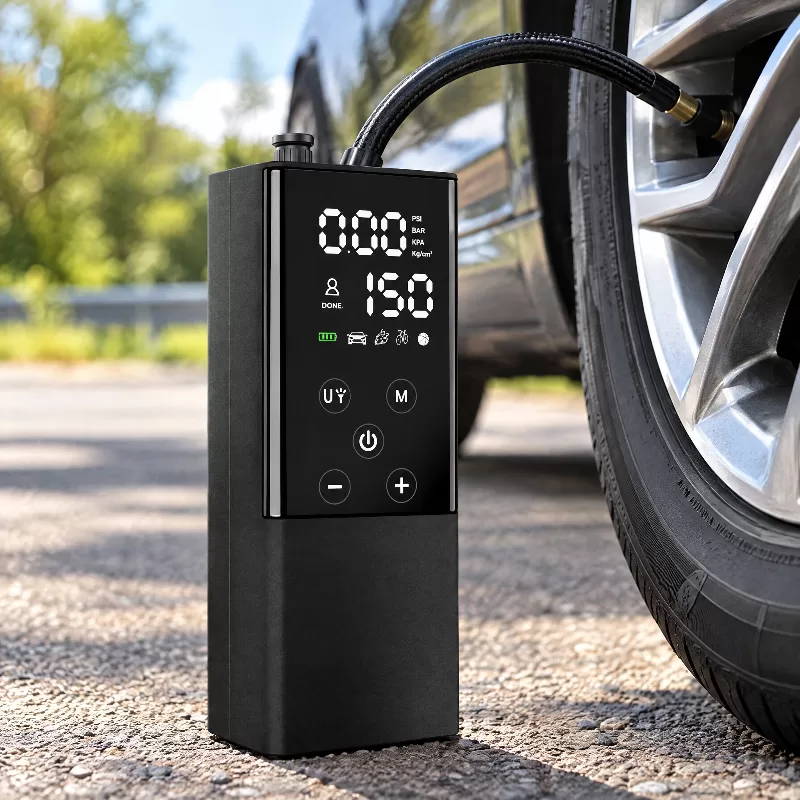
Analogue gauges with moving needles can introduce parallax reading errors and require constant manual oversight during pumping. Modern digital inflator interfaces utilize segmented LED screens displaying real-time pressure readouts alongside pre-programmed mode presets. These displays allow drivers to confirm tire values under varying ambient lighting without squinting at mechanical graduation marks.
The LP6 features five preset modes, custom pressure setting, and an automatic shut-off function. The automatic shut-off is designed to stop inflation at the selected target and can reduce the risk of over-inflation, but users should verify pressure with a suitable separate gauge when precision is critical, especially before embarking on high-speed highway journeys.
Physical Footprint, Weight, and Multi-Use Functionality
True roadside utility hinges on accessible storage. Heavy compressors are frequently left behind in home garages, leaving drivers unsupported during travel. Modern portable designs prioritize compact footprints; the LP6 measures 46 x 68 x 152 mm with a net weight of 442 grams, fitting inside glove compartments, door pockets, or commuting bags without consuming valuable cargo volume.
Standard Type-C charging inputs allow drivers to recharge the device using common household or vehicle USB charging ports. In addition, the 5V/2A output can power or charge compatible USB devices, subject to the inflator’s remaining battery capacity and the connected device’s charging requirements, adding secondary utility for mobile gear during remote travel.
Pressure Management and Valve Matching
Identifying Correct Target Pressures (Placard vs. Sidewall)
A frequent tire maintenance mistake involves inflating a tire to the PSI figure molded onto the tire sidewall. The sidewall value is not the vehicle-specific recommended pressure; using an inappropriate pressure can affect ride, handling, and tire wear over time. Setting pressure according to vehicle specifications remains essential for balanced driving dynamics.
To identify the correct pressure target, check the vehicle tire information placard permanently mounted on the driver-side door jamb or detailed in the owner manual. The vehicle manufacturer sets these cold values for the vehicle’s design, loading requirements, ride, and handling characteristics under real-world driving conditions.
[Vehicle Door Jamb Sticker] --------> Specifies Cold Operating Pressure (e.g., 32–35 PSI)
[Tire Sidewall Molded Text] -------> Specifies Maximum Safety Pressure Limit (e.g., 44–51 PSI)
Measuring Tire Pressure Under Cold Conditions
Temperature changes directly alter internal air pressure across all tire classes. As a practical approximation, tire pressure often changes by about 1 PSI for a 10–12°F temperature change; check the tires cold and follow the vehicle placard recommendations to maintain consistent handling throughout fluctuating weather patterns.
Check tire pressure cold whenever practical. A tire is generally considered cold after the vehicle has been parked for at least three hours, or after it has been driven less than one mile following that cool-down period. If a tire is underinflated during travel, add air to a safe pressure according to the vehicle or tire guidance, then recheck and adjust it when cold.
Matching Valve Types and Nozzle Interfaces
Automotive tires, trailers, wheelbarrows, and many common bicycles feature standard Schrader valves with internal spring-loaded cores. Use the supplied connector or the correct adapter for the valve type, and confirm that it is seated securely before starting inflation to ensure consistent pressure delivery and avoid line leakage.
Presta valves have a small tip nut that must be loosened before inflation. If the inflator does not accept Presta valves directly, use the appropriate adapter to complete the pneumatic seal. Sports equipment utilizes slender steel needles, while inflatable recreational accessories rely on tapered conical nozzles, making modular adapter sets indispensable for broader household utility.
Step-by-Step Field Operation Protocol
Pre-Inflation Preparation and Target Calibration
- Move the vehicle to a safe, level area away from active traffic lanes, apply the parking brake, and activate hazard warning flashers.
- If stopped on a highway shoulder or in active traffic, prioritize personal safety, stay away from traffic, and call roadside assistance when the location or tire condition is unsafe.
- Do not attempt to reinflate a tire with a bulge, major sidewall damage, suspected bead or rim damage, or a tire that has been driven significantly underinflated; seek professional inspection.
- Remove the valve stem dust cap and clear away loose dirt or grit from the stem to protect the inner valve core and pump connectors.
- Turn on the portable battery powered tire inflator, check the battery level on the single LED screen, and select your preferred measurement unit.
- Choose the appropriate preset mode or adjust the custom pressure setting to match the cold specification stated on your vehicle placard.
Securing the Air Hose Connection
- Attach the supplied hose or connector securely according to the product instructions until firmly seated on the valve stem.
- If continuous leakage remains after connection, stop and reseat the connector before inflating to ensure an effective seal.
- Check the LED display to review the current resting cold tire pressure reported by the internal sensor.
- Verify that the indicated baseline pressure is below your desired target before triggering the inflation cycle.
Active Inflation, Sound Signatures, and Heat Management
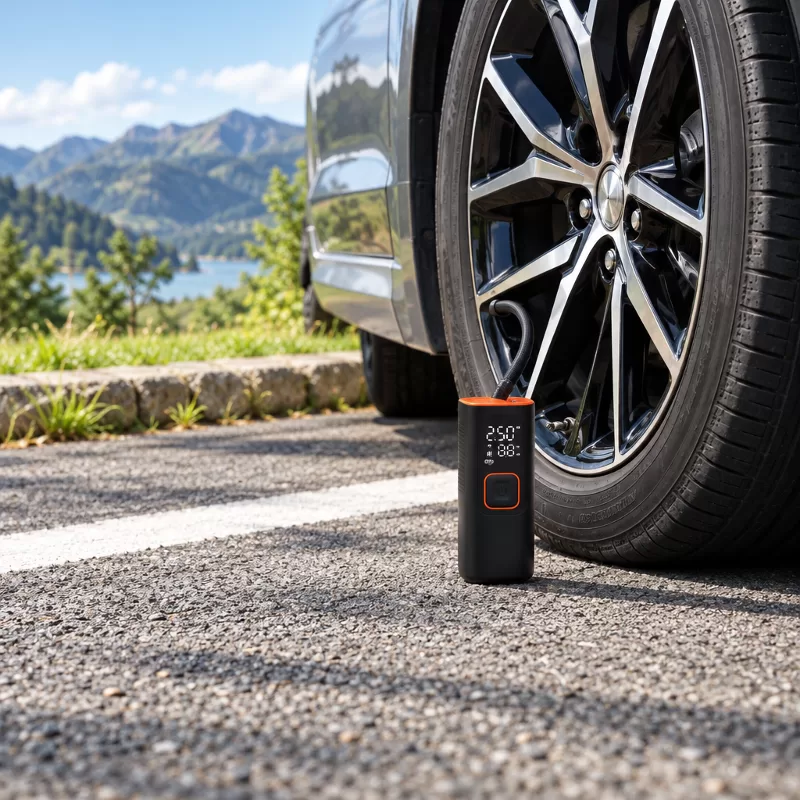
- Press the start button to activate the pump, keeping the unit stable on the ground or holding it securely.
- The published noise rating is 85 dB or below at one meter. Keep hands and clothing clear of moving or hot parts, and stop if the unit behaves abnormally.
- Allow the automatic shut-off to stop the cycle once the target pressure is reached on the display.
- Disconnect the hose carefully after the cycle stops, because parts of the pump or hose may be warm after operation.
- Replace the valve stem dust cap tightly to prevent water, mud, and highway salt from entering the valve assembly.
Comparative Trade-offs: Cordless Battery Inflator vs. Alternatives
Evaluating tire maintenance equipment involves balancing portability against power availability and output rates. The following overview contrasts key operational attributes across common inflator categories:
| Operational Feature | Portable Battery Powered Tire Inflator (LP6 Specifications) | 12V DC Corded Air Inflator (Typical Category Profile) | Stationary Workshop Air Compressor (Typical Shop Profile) |
|---|---|---|---|
| Power Source | Internal rechargeable battery (LP6: 2 x 18650 cells, 7.4V, 14.8Wh) | Vehicle 12V DC auxiliary cigarette lighter receptacle | Dedicated 120V/240V AC building electrical mains |
| Physical Portability | Cordless handheld format (LP6: 442 g net weight) | Tethered to the vehicle’s 12V outlet by the pump’s supplied cable; reach depends on the model | Stationary floor unit requiring dedicated workshop space |
| Air Delivery Profile | Published 20–22 L/min airflow for LP6 | Varies by motor size and model; designed for passenger vehicle top-ups | High-volume delivery from a pressurized storage tank; model-dependent output |
| Pressure Rating | Published 2–150 PSI range for LP6 | Model-dependent ratings; typically engineered for standard automotive ranges | Regulated shop output; model-dependent pressure thresholds |
| Stowage Footprint | Fits inside glovebox or door console (LP6: 46 x 68 x 152 mm) | Stored in vehicle trunk or beneath rear passenger seats | Requires dedicated garage floor space or permanent wall bracket mounting |
| Power Independence | Can operate independently of the vehicle battery when the inflator itself is charged | Inoperable if the vehicle battery is fully drained | Dependent on domestic electrical grid power availability |
| Application Versatility | High: Bicycles, e-bikes, wheelchairs, balls, and passenger cars | Moderate: Restricted to reach around 12V power sockets | High workshop utility: Supports air tools, rapid fills, and tire seating |
Product Case Study: The Newo LP6 Compact Architecture
Newo is a professional manufacturer specializing in the research, development, and production of smart electric air pumps and portable inflation solutions. With strong expertise in pneumatic technology, product design, and manufacturing, we provide a wide range of innovative products, including portable tire inflators, electric bike pumps, car air pumps, ball pumps, and outdoor inflation solutions. Our products are designed to deliver convenience, efficiency, and reliability for customers worldwide. Supported by advanced production capabilities, experienced engineers, and strict quality management, we are committed to creating high-quality smart inflation products and building long-term partnerships with customers around the world.
Engineering Profile and Published Specifications
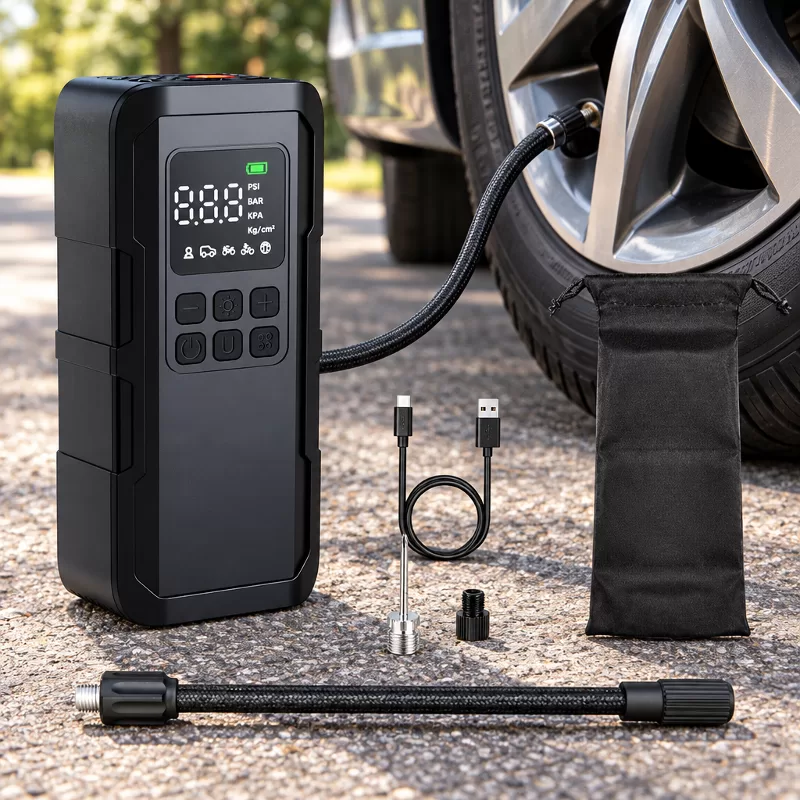
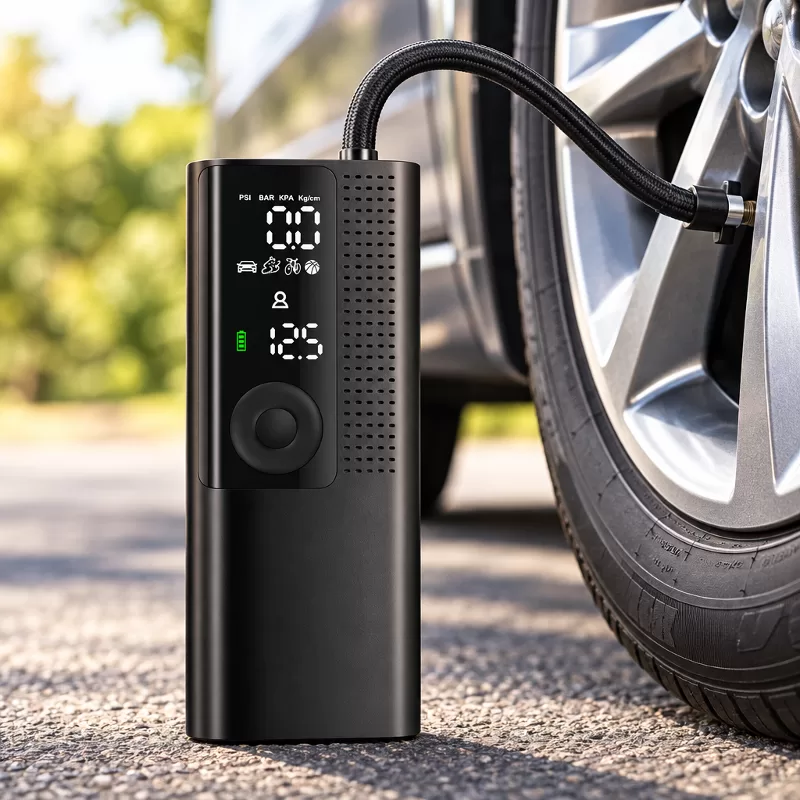
The LP6 is a compact handheld inflator with a published 17-cylinder, 30W system, 20 to 22 L/min airflow, 2 to 150 PSI range, 442 g net weight, and 46 x 68 x 152 mm dimensions. According to Newo’s product documentation, the device combines this miniature mechanical assembly with digital monitoring to deliver controlled inflation for everyday consumer maintenance tasks.
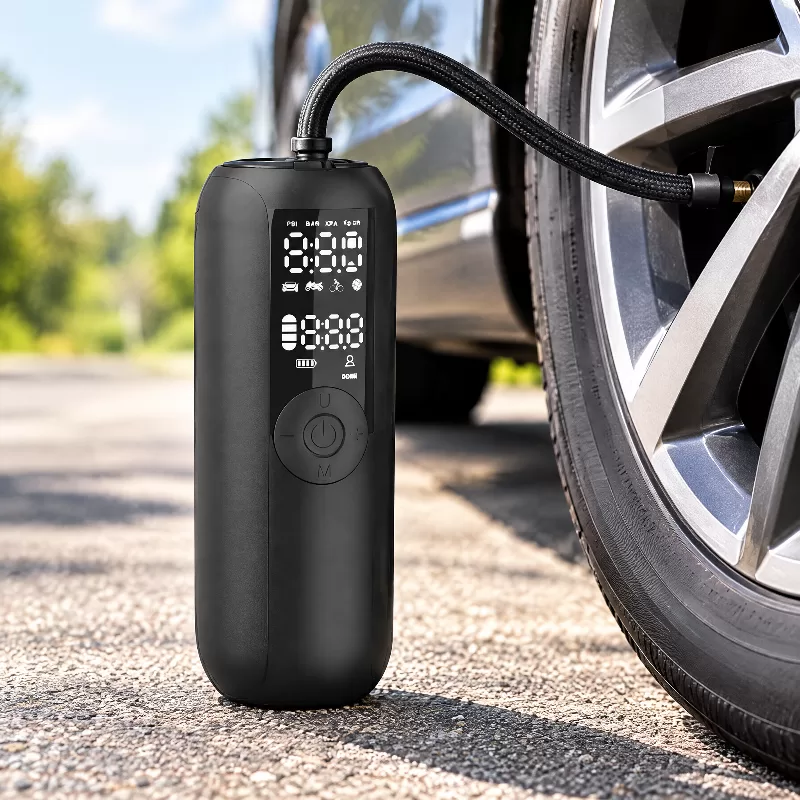
The published battery specification is 2 x 18650 cells, 2000mAh, 7.4V, and 14.8Wh. The product data states that charging requires 2 to 3 hours using a 5V/2A Type-C input, and the battery cycle life is rated at 100 cycles at 80% original capacity or above. This energy platform supports a published runtime of 20 to 22 minutes, providing an inflation capacity of about 2.5 205/R55 tires per full charge when operated within its published working temperature range of -10°C to 45°C.
[Type-C 5V/2A Input]  ====>  [Published Battery: 2 x 18650, 7.4V, 14.8Wh]  ====>  [30W Motor / 17-Cylinder]
                                             ||                                                   ||
                                    [5V/2A USB Output]                                  [20–22 L/min Airflow]
                               (Power-Bank Functionality)                             (Auto-Stop to Set Target)
Intended Field Scenarios for the LP6 Form Factor
The LP6 is designed for multiple practical applications across commuting, domestic, and travel environments. Its single LED screen, five preset modes, custom pressure setting, and automatic shut-off are intended to simplify inflation for common vehicle and recreational applications, including passenger car tires, bicycles, motorcycles, e-bikes, wheelchairs, balance vehicles, and sports balls using the appropriate connector or adapter and a pressure target suited to the equipment.
Beyond basic pneumatic tasks, the 5V/2A output can power or charge compatible USB devices, subject to the inflator’s remaining battery capacity and the device’s charging requirements. Its compact form factor is intended for daily commuting, vehicle storage, home use, retail assortments, and entry-level practical gift applications for carrying in a vehicle or commuting bag.
Maintenance, Charging Protocols, and Storage Safety
Lithium-Ion Battery Care in Vehicle Environments
Vehicle cabins experience wide temperature swings between freezing winter conditions and summer heat waves. The LP6 is published for operation from -10°C to 45°C. For long-term storage, keep the unit indoors in a cool, dry place when practical. If it is carried in a vehicle, avoid direct sunlight and prolonged exposure to temperatures outside the manufacturer’s stated limits.
Rechargeable lithium batteries undergo gradual self-discharge during long periods of disuse. Check the charge periodically during storage and recharge it according to the manufacturer’s instructions before a trip. Keeping the battery reasonably charged helps avoid deep discharge conditions and preserves long-term cell reliability across seasonal changes.
Mechanical Care of Hoses, Seals, and Air Inlets
The air hose and connection fittings handle recurring pneumatic pressure and mechanical bending during use. Routinely examine the hose jacket, threaded fittings, and internal valve seals for cracks, debris, or flattening. A worn rubber seal inside the connector can allow air to bypass the valve stem, causing inaccurate pressure tracking during active inflation cycles.
Keep the housing openings clear and follow the product instructions for cleaning and any required cooling intervals. Maintaining clean external surfaces allows the device to operate as designed without dust accumulation around mechanical moving areas. Wipe the outer plastic casing with a dry or lightly dampened microfiber cloth, avoid harsh chemical cleaners, and stow the hose without acute kinks inside a clean storage bag.
Frequently Asked Questions (FAQs)
Does a 150 PSI maximum rating mean it will over-inflate passenger car tires?
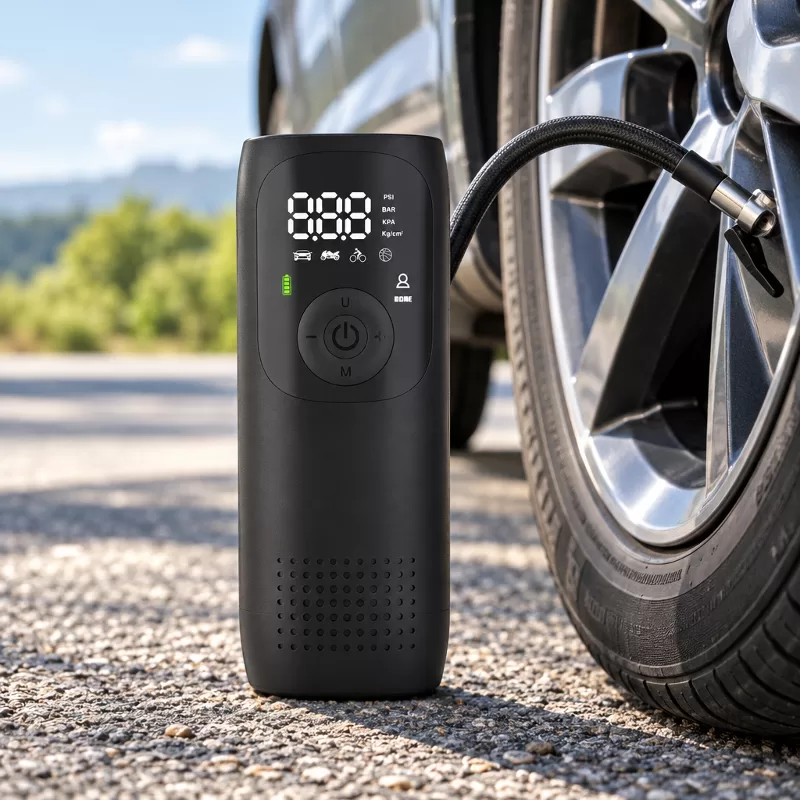
No. The 150 PSI figure indicates the upper limit of the product’s pressure range. The LP6 features selectable preset modes, custom pressure setting, and an automatic shut-off mechanism that stops inflation once the chosen target is reached. This feature is intended to reduce the risk of over-inflation when the user enters the vehicle’s recommended cold pressure; verify the final pressure with a suitable gauge when accuracy matters.
Why should tire pressure be calibrated against the door jamb sticker rather than the tire sidewall?
The sidewall marking is the tire’s maximum permissible inflation pressure and is not the vehicle-specific recommended cold pressure. The vehicle tire placard on the driver-side door jamb contains the specific cold pressure calculated by vehicle engineers to match the vehicle’s chassis weight, suspension tuning, and handling characteristics.
How many tires can a portable battery inflator top off on a single charge?
The published capacity for the LP6 is about 2.5 205/R55 tires per full charge; actual results vary with tire size, starting pressure, temperature, and battery condition. Routine top-ups of tires that are only slightly under-inflated will consume substantially less battery capacity per wheel than inflating a completely flat tire.
Can I leave a battery-powered tire inflator in my car during summer or winter?
The LP6 has a published working temperature range of -10°C to 45°C. While suited for typical vehicle travel environments, parked cars exposed to direct summer sun can easily exceed recommended ambient temperatures. Storing the unit away from windows helps shield internal components, but it should be brought indoors during severe heat waves or deep winter freezes.
Does the automatic shut-off function eliminate the need for a separate pressure gauge?
No. The LP6’s display and automatic shut-off can simplify inflation, but users should periodically verify pressure with a suitable gauge, especially before long trips or when tire safety is in doubt. A separate gauge provides an independent check if the displayed pressure or connection reading seems unreliable.
Can a portable inflator operate while connected to a USB charger?
The LP6 is specified with a 5V/2A charging input and 30W working power, so users should not assume it can inflate while charging. Follow the manufacturer’s instructions and charge the internal battery before use to ensure the system can deliver the power required during active inflation cycles.
Practical Field Selection and Readiness
Selecting a suitable portable battery powered tire inflator provides drivers and commuters with independent pneumatic support for everyday journeys. By focusing on verified technical parameters—such as the LP6’s published 20 to 22 L/min airflow, 2 to 150 PSI operating range, automatic shut-off, and compact 442-gram footprint—users can select equipment that reliably meets their mobility needs. Routine checks against the vehicle manufacturer’s recommended pressure support appropriate tire maintenance, handling, and travel safety.
-

Meet NEWO at the 140th Canton Fair: Visit Booth 10.3 M03–04
Meet NEWO at the 140th Canton Fair in Guangzhou, October 15–19, 2026. Visit Booth 10.3 M03–04 to explore portable air pumps and discuss OEM, ODM and distribution opportunities.... -

As Shenzhen Welcomes the World for APEC 2026, NEWO Welcomes You to Our Factory
As Shenzhen prepares for APEC 2026, NEWO welcomes international buyers and partners to visit our factory, meet our team and explore future cooperation.... -

Leading the Way in Product Innovation and Excellence
Smartnewo exemplifies professionalism in product innovation and manufacturing. Their collaboration with Xiaomi Youpin on the G01 crowdfunding project highlights their expertise in creating compact, powerful inflatable pumps. Rigorous engineering, meticulous production processes, and advanced quality assurance underscore their commitment to excellence. The success of the G01 project, with significant market... -

Essential Qualities of an Excellent Supplier
In today's competitive market, finding a reliable supplier is crucial for business success. Based on insights from Smartnewo and broader internet research, here are key qualities an excellent supplier must possess:... -

NW06 Tire Inflator: Compact Power for Quick Inflation
Summary The NW06 Tire Inflator delivers quick and efficient tire inflation with a powerful 35L/min airflow. It features a user-friendly LCD screen for real-time pressure monitoring, dual power options with a built-in 6000mAh battery, and multiple nozzle attachments for versatile use. Its compact design and integrated LED light ensure convenience and... -

Unleash the Power of Portability: The SmartNewo Jump Starter with Air Compressor KF03
This guide will walk you through the steps to effectively use a portable tire inflator, helping you stay prepared and safe on the road.... -

Newo Attends The 2024 Consumer Electronics Show (CES)
Smartnewo booth is located at 53672, Halls A-D, Level 2, Venetian Expo, Las Vegas Convention Center (LVCC). ... -

Smartnewo’s Dual-Cylinder Air Pump Rocks the Hong Kong Autumn Electronics Fair!
Smartnewo’s Dual-Cylinder Air Pump Rocks the Hong Kong Autumn Electronics Fair!... -

Meet at the Canton Fair! Smartnewo brings dual-cylinder air pumps, making your inflation experience faster and more stable!
NEWO has went deep communication and negotiation with customers from all over the world on booth.... -

“Hong Kong Autumn Electronics Fair – 1CA18 (October 13th to 16th): Smartnewo invites you to visit our booth!
Hong Kong Autumn Electronics Fair...
-
What to Check Before Ordering Custom Electric Bike Pumps
Plan custom electric bike pumps with a clear requirements freeze for valves, TPU tubes, portability, repeated top-ups, charging, and model-specific documents.... -

OEM vs ODM Air Pumps: Which Manufacturing Model Fits Your Brand?
Compare OEM and ODM air pump projects by design responsibility, change approval, development scope, and written ownership terms before choosing your route.... -

How to Choose a Reliable Tire Inflator Manufacturer in China
Choose a tire inflator manufacturer in China with a focused RFQ, supplier evidence, configuration checks, and clear sample-to-pilot decisions for your brand.... -

Rechargeable Electric SUP Pump for Paddle Boards: Faster Inflation for SUPs, Kayaks and Inflatable Tents
The BL10-C Portable Electric Bike Tire Inflator is a compact and lightweight mini electric bike pump designed for modern cyclists. With up to 120 PSI pressure, a digital LED display, preset pressure control, automatic shut-off, USB-C charging, and multiple valve adapters, BL10-C offers a convenient inflation solution for road bikes,... -

Are Electric Bike Pumps Worth It in 2026? Electric Pump vs CO₂ vs Mini Hand Pump
Discover whether electric bike pumps are worth it in 2026. This guide compares electric bike pumps, CO₂ inflators, and mini hand pumps for road cycling, gravel riding, commuting, and long-distance rides. Learn the pros, limitations, best use cases, and key features to look for before choosing the right portable tire... -
BL10-C Portable Electric Bike Tire Inflator: Small Size, Reliable Power for Every Ride
The BL10-C Portable Electric Bike Tire Inflator is a compact and lightweight mini electric bike pump designed for modern cyclists. With up to 120 PSI pressure, a digital LED display, preset pressure control, automatic shut-off, USB-C charging, and multiple valve adapters, BL10-C offers a convenient inflation solution for road bikes,... -

Why Mini Electric Bike Pumps Are Becoming Essential for Modern Cycling
Discover why mini electric bike pumps are becoming essential for modern cyclists. Learn how portable electric bike pumps improve tire pressure management, riding safety, and convenience.... -

The Ultimate Smart Solution for Easy Outdoor Adventures in 2026
Discover how a spring travel air pump simplifies outdoor trips with fast inflation, smart features, and powerful performance—perfect for every adventure.... -

Powerful 5-in-1 Portable Car Tire Inflator and Jump Starter: The Ultimate Emergency Tool for Every Driver
Why Every Driver Needs a Portable Car Tire Inflator and Jump Starter Modern drivers face many unexpected situations on the road. A flat tire, low tire pressure, or a dead car battery can happen at the worst possible time. That’s why having a portable car tire inflator and jump starter is... -

7 Real Cycling Scenarios That Show Why Every Rider Should Carry a Mini Bike Pump
Cycling is one of the most freeing activities you can enjoy. Whether you’re commuting to work, riding through city streets, or exploring quiet countryside roads, a bike ride can instantly improve your day. But there’s one small problem that almost every cyclist eventually faces: Low tire pressure. It might happen...
-

How Is a Football Properly Inflated?
The correct inflation of a football - with not too much and not too little air - is a hotly debated topic among footballers.... -

Application Scenarios of Car Inflator Pump
Often long-distance business trips or play car owners because the road may be more remote areas, in this case if you encounter a tire leak....