

 Portable Tire Inflators
 Electric Air Pumps
 Electric Car Tyre Pumps
 Electric Ball Pumps
 Electric Bike Pump
 SUP Air Pump

Rechargeable Sports Ball Inflator Guide: Precision Pressure Control for Athletes and Coaches
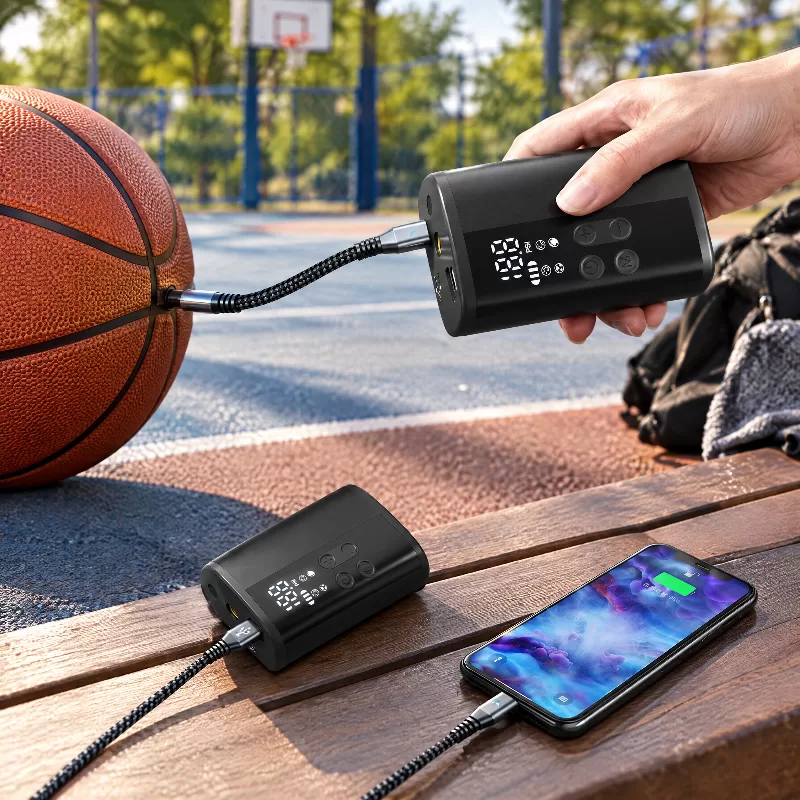
Every coach knows the pre-game ritual of pressing two thumbs into a leather ball to guess its readiness. Relying on that subjective thumb test instead of a rechargeable sports ball inflator introduces hidden inconsistencies before the whistle even blows. Whether you need a portable electric ball pump for a school equipment cage or a battery-powered ball pump for a weekend tournament bag, precision matters. A difference of just a pound or two per square inch can alter how a basketball leaves the fingertips or how a volleyball responds to a forearm pass. Replacing guesswork with measured digital air control protects athletic performance and equipment budgets alike.
Why Manual Pumping and the "Thumb Squeeze Test" Fail Modern Sports
Understanding why manual inflation falls short requires looking past the outer panels of a sports ball to the pneumatic mechanics inside. Coaches and players frequently attribute dead spots or erratic flight paths to worn outer casings, when the real culprit is often an uncalibrated internal pressure state.
The Physics of Internal Bladder Pressure and Rebound Consistency
A sports ball acts as a pressurized elastic spring where internal air molecules push against a flexible butyl or natural latex bladder. When a player dribbles or kicks the ball, the impact deforms the sphere, compressing the trapped gas and storing kinetic energy that returns as rebound force. Governing bodies and equipment rules for sports such as basketball address ball rebound behavior and construction, and separately, leagues and manufacturers typically print or recommend a target pressure range for each ball. The safest practice is to treat the pressure printed on the ball itself, or the guidance from the applicable league, as the target, and to recognize that even a modest deviation can alter feel and bounce.
Human thumbs cannot reliably detect a one or two pound pressure variance because outer panel stiffness can mask the true internal air pressure. A cold synthetic leather cover can feel firm to the fingers even when the internal bladder is underinflated. Conversely, a broken-in indoor game ball with supple microfiber panels can feel soft to the touch while still sitting within its regulation range. Consequently, athletes who rely on hand-squeezing risk overinflating older balls and underinflating stiffer new ones without realizing it.
Equipment Risk from Unregulated Hand Pumps
Manual reciprocating hand pumps introduce a practical risk that equipment managers often only notice once a ball starts leaking air. Every manual stroke requires the user to push and pull a rigid handle while the metal inflation needle sits inside a rubber valve core, and careless handling can tilt the needle sideways or strain the valve opening.
Most basic hand cylinders also lack an integrated pressure gauge, which turns inflation into a guessing game rather than a measured process. Pushing air well past a ball’s design limit can overstress the internal bladder and the seams holding the outer panels together. Avoiding forced insertion, keeping the needle aligned straight, and stopping at the pressure marked on the ball are simple habits that reduce this risk considerably.
Time and Labor Costs in School and Club Equipment Rooms
Walk into a high school gymnasium or youth soccer academy thirty minutes before practice, and you will see coaches hunched over mesh bags of flat balls. Topping up thirty basketballs or footballs with a short-stroke hand pump consumes a meaningful chunk of instructional time and leaves the staff with tired forearms. Because manual pumping is tedious, hurried assistants frequently skip checking half the rack, sending athletes onto the court with mismatched equipment.
How a Dedicated Rechargeable Sports Ball Inflator Solves Low-Pressure Challenges
Transitioning from manual cylinders to an automated rechargeable sports ball inflator reduces both physical fatigue and pressure variability. However, not all electric air pumps are suited to the delicate pneumatic profile of athletic spheres.
Dedicated Low-Pressure Range vs. High-Pressure Automotive Compressors
A common mistake among well-meaning parents and coaches is grabbing a heavy-duty automotive tire compressor from a car trunk to pump up a flat football. Vehicle tire inflators are generally built around a much wider pressure window than sports balls require, since they are designed with passenger and bicycle tires in mind rather than thin ball bladders. The practical guidance here is straightforward: check the specific pump’s stated pressure range before using it, and only use it on a sports ball if that range actually covers the ball’s target pressure.
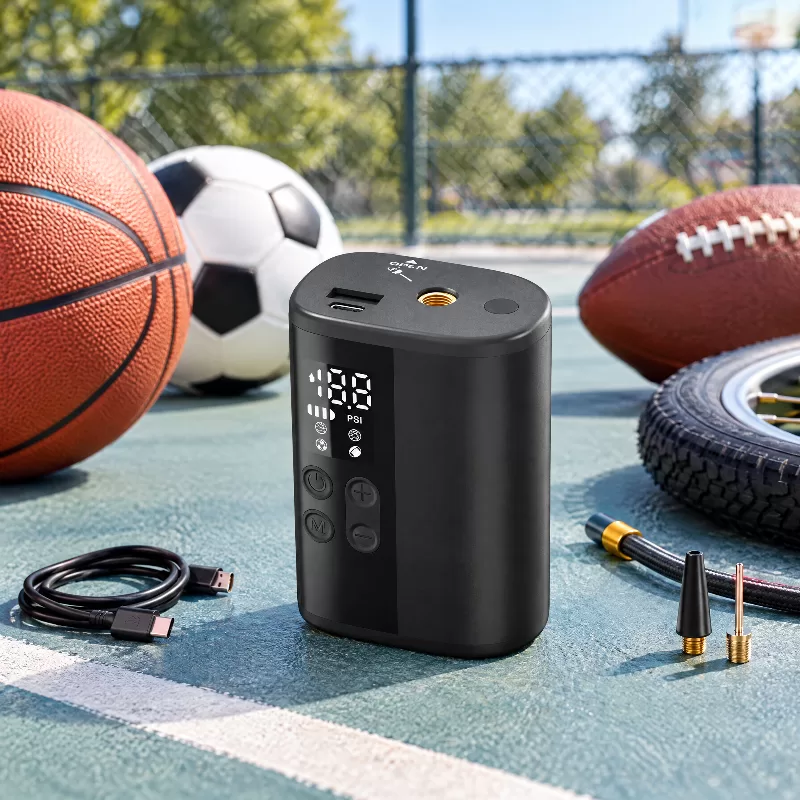
A purpose-built portable electric ball pump like the P101 is specified for a dedicated 2 to 12 PSI range with a 3.5 L/min airflow rate, according to the manufacturer’s listed specifications. That narrower range is designed around sports balls and similar low-pressure inflatables rather than vehicle tires, which is the main distinction worth checking before buying any ball inflator.
Preset Modes and Automatic Shut-Off Logic
Modern digital ball pumps replace visual gauge watching with automated control logic. On the P101, users select from five preset ball modes on a front LED screen, and the manufacturer states that the unit manages the inflation curve and triggers an automatic shut-off once the selected target pressure is reached.
This hands-free shut-off capability changes pre-practice preparation for busy coaching staff. While one ball is inflating on the equipment table, a coach can lay out training cones, review clipboard drills, or inspect the next ball in the bag. Relying on the preset modes rather than eyeballing a gauge helps keep balls closer to a consistent pressure, which reduces equipment inconsistency as a variable during shooting or passing drills.
Acoustic Comfort and Portable Power in Indoor Training Environments
Traditional portable air compressors generate a mechanical clatter that can echo across hardwood gymnasiums and disturb classroom instruction or quiet locker rooms. By comparison, the P101 is rated by the manufacturer to operate at 30 dB or below when measured at a distance of one meter. That quiet acoustic profile allows trainers to top up equipment courtside during active coaching briefings or late at night in a family living room without disturbing anyone nearby.
Beyond quiet inflation, field equipment earns its space in a crowded coaching backpack by serving more than one role during away games. Built around an internal 4000mAh rechargeable battery with a Type-C charging input, the unit also provides a 5V/1.5A USB power-bank output for compatible devices, according to its specifications. When a coach’s smartphone or another small USB-charged accessory runs low during an all-day outdoor tournament, the pump can serve as a backup power source on the sidelines, provided the device’s charging input matches the pump’s 5V/1.5A output.
General PSI Reference Chart and Inflation Scenarios Across Major Sports
Having an accurate digital gauge only delivers value if the operator knows the target pressure required by each sport. Different athletic disciplines call for different internal pressures depending on whether the ball is struck with bare hands, forearms, or cleated boots, and the figures below are general reference points rather than a substitute for the pressure printed on a specific ball.
General Pressure Ranges for Basketball, Football, Volleyball, and Rugby
Even within a single sport, optimal pressure varies based on player age, playing surface, and specific ball construction. The table below outlines commonly cited pressure ranges for sports balls and recreational inflatables, several of which extend beyond the 2 to 12 PSI range covered by the P101.
| Inflatable Type | Commonly Cited Pressure Range | Typical Use Scenario | Inflation & Handling Notes |
|---|---|---|---|
| Basketball (Indoor / Outdoor) | 7.5 to 8.5 PSI | School gyms, street courts, competitive league play | Follow the recommended 7.5 to 8.5 PSI range, and check the pressure marked on the specific ball or applicable league guidance rather than assuming one fixed number suits every court surface. |
| Volleyball (Indoor Standard) | 4.26 to 4.61 PSI | Indoor court training and official match play | Requires good low-pressure accuracy; exceeding the upper end can make the ball uncomfortable on players’ forearms during dig drills. |
| Rugby Ball | 9.5 to 10.0 PSI | Club rugby practices and match kickoffs | Check pressure before every session, since oval bladders can lose stability when underinflated. |
| Football / Soccer (Match Ball, IFAB) | 8.5 to 15.6 PSI | Competitive match play under IFAB Laws of the Game | Always follow the pressure printed on the specific ball; a 2 to 12 PSI pump such as the P101 can cover youth and training balls lower in this range but cannot reach pressures above 12 PSI. |
| Football / Soccer (Youth & Training) | Varies by ball, commonly below 12 PSI | Youth leagues, school PE classes, daily club drills | Check the pressure marked on the ball rather than assuming a single fixed number across all youth equipment. |
| Children’s Swim Rings & Balloons | Varies by item | Family leisure, pool play, school event decoration | Follow the inflation instructions printed on the specific product rather than a generic pressure target, and avoid over-stretching thin PVC seams or latex membranes. |
Adapting to Temperature Shifts Between Storage and Playing Surfaces
Balls do not exist in a climate-controlled vacuum, and basic gas physics means that air pressure shifts as a ball’s temperature changes. When a bag of soccer balls or rugby balls moves from a warm indoor equipment closet onto a cold autumn pitch, the internal air contracts somewhat as it cools, and the exact pressure drop depends on how large that temperature change is and how long the ball has been exposed to it. Conversely, leaving dark-colored basketballs under direct summer sunlight on an asphalt court heats the internal air, which can push pressure higher than intended.
Carrying a compact rechargeable sports ball inflator rated by the manufacturer for a working temperature range of minus 10 degrees C to 45 degrees C lets coaches correct this kind of pressure drift right on the playing surface. Instead of guessing at an offset to compensate for cold or hot weather, trainers can let the ball acclimate to outdoor conditions for a few minutes and then check and adjust the pressure against the range marked on the ball before kickoff.
Key Evaluation Metrics When Selecting a Battery-Powered Ball Pump
Choosing a reliable electric ball pump for a school athletic department, retail product line, or family garage requires looking past surface aesthetics to verify the underlying electromechanical specifications.
Pressure Range and Airflow Specifications
When comparing technical specification sheets, buyers should evaluate several core benchmarks that separate dedicated ball inflators from generic mini compressors:
- Target Pressure Window (2 to 12 PSI): A low-pressure ceiling keeps the pump within the range needed for items like indoor volleyballs, basketballs, rugby balls, and training footballs, though it will not reach higher pressures required by some adult match footballs.
- Airflow Rate (3.5 L/min): The manufacturer lists an airflow rate of 3.5 L/min for the P101, which buyers can compare against other pumps when weighing expected fill time.
- Battery Capacity (4000mAh / 11Wh): Operating at 3.7V with 11Wh of stored energy, the specified 4000mAh cell provides up to 3 hours and 52 minutes of runtime, which the manufacturer states translates to roughly 150 basketball inflations on a single full charge.
- Stated Battery Cycle Life (300 Cycles at 80% or Above Capacity): According to the product data, the cell retains at least 80% of its original capacity after 300 complete charge-discharge cycles, which supports multi-season use for school and team equipment rooms.
- Voltage Protection Specification (4.2V / 3V): The listed specifications include protection voltages of 4.2V and 3V, figures worth comparing against other battery-powered pumps when evaluating build quality.
Battery Chemistry, Cycle Life, and Multi-Device Utility
Battery endurance directly determines whether an electric pump becomes a trusted daily tool or another dead gadget left at the bottom of a locker. With a 5V/2A Type-C charging input, the 4000mAh unit restores full capacity in 2 to 3 hours using the same cables that charge modern laptops and phones. That capacity means a school physical education teacher can inflate a large number of basketballs across a season, up to about 150 balls per full charge according to the manufacturer, without hunting for a wall outlet every week.
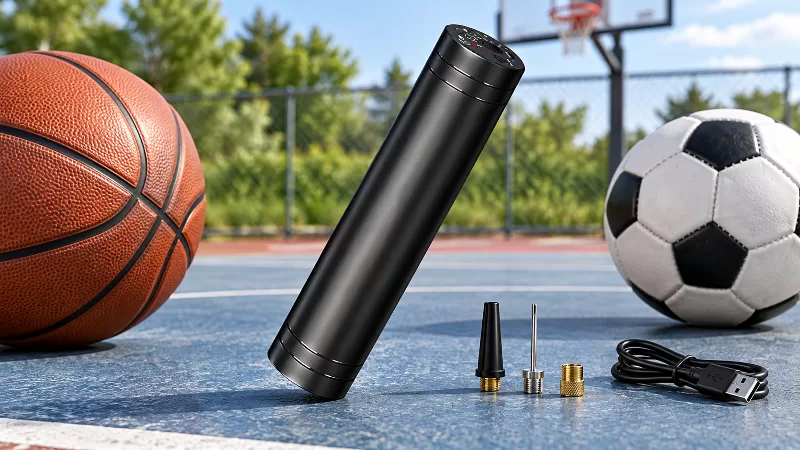
Hardware versatility also depends on the included pneumatic attachments that bridge the pump outlet to different valve standards. A complete kit pairs the main housing with a flexible braided inflation hose, metal ball needles, and small threaded tapered adapters for swim rings and party balloons. Using a flexible extension hose rather than threading a brass needle directly into a rigid pump body helps isolate the ball valve from hand movement during operation.
Form Factor, Weight, and Manufacturer Engineering Standards
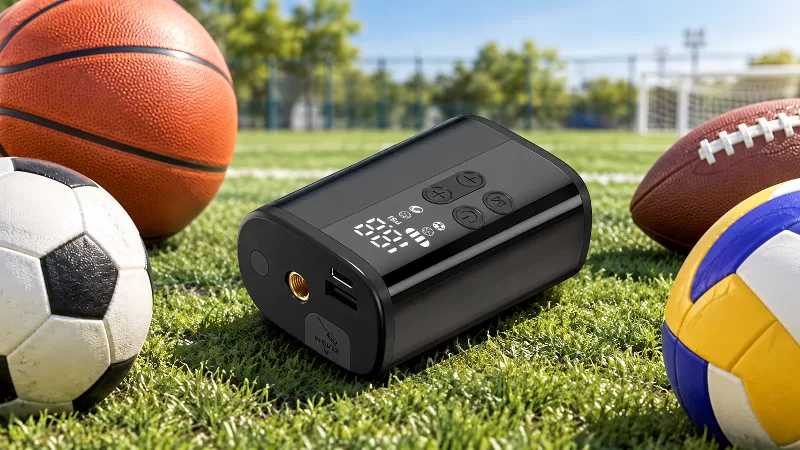
Physical portability dictates whether coaches actually carry an inflator to away games. Measuring 90 by 63 by 40 mm with a net weight of 224.4 g, the P101 occupies about the same space as a rolled-up pair of athletic socks and fits easily into a side pocket of a ball bag or a desk drawer. Some users prefer a pocket-sized rectangular housing like the P101, while others look at slim cylindrical wand styles within a broader smart ball pump lineup depending on how they organize their gear.
Hardware reliability ultimately traces back to the engineering discipline of the manufacturer behind the product. Newo is a professional manufacturer specializing in the research, development, and production of smart electric air pumps and portable inflation solutions, ranging from portable tire inflators and electric bike pumps to car air pumps, ball pumps, and outdoor inflation gear. Supported by experienced pneumatic engineers and strict quality management, we aim to build dependable smart inflation hardware and long-term partnerships for retail, team, and recreational users worldwide.
Step-by-Step Operational Protocol to Maximize Ball and Valve Lifespan
Owning a precision rechargeable sports ball inflator is only half the equation; following a disciplined routine during inflation helps protect both the valve and the pump.
Pre-Inflation Needle Lubrication and Valve Alignment
Avoid pushing a dry metal inflation needle straight into a rubber sports ball valve. Dry metal creates more friction against cured rubber, which can make insertion harder and increase the chance of straining the valve opening. Moisten the tip of the metal needle with a drop of water or a small amount of silicone valve lubricant before insertion, and align the needle perpendicular to the ball surface so it glides smoothly through the center channel.
Executing a Precision Inflation Cycle
Following a standardized sequence helps protect both the ball and the pump mechanism while supporting accurate pressure readings:
-
Attach the Flexible Braided Hose: Thread the braided extension hose securely onto the air outlet at the top of the pump, then screw the rounded metal ball needle onto the opposite end of the hose.
-
Power On and Check Battery Status: Press the power button to wake the front LED status display and verify that the battery indicator shows sufficient charge for your session.
-
Select the Appropriate Preset Mode: Cycle through the five preset modes until the icon matches your specific ball type, checking the pressure printed around the ball’s valve stem to confirm it falls within the pump’s 2 to 12 PSI range before proceeding.
-
Insert the Lubricated Needle: Moisten the needle tip and gently slide it straight into the ball valve until the shoulder of the needle rests comfortably against the outer panel without forcing it.
-
Initiate Automated Inflation: Place the ball and the pump on a flat surface or hold them loosely by the hose, press the start button, and let the airflow fill the bladder until automatic shut-off engages.
-
Extract Cleanly by the Needle Collar: Grip the knurled metal collar of the needle, never pull by the flexible rubber hose or the pump body, and draw the needle straight out along the valve axis.
Post-Use Battery Maintenance and Seasonal Storage
When athletic seasons wrap up for summer break or winter holidays, proper battery care helps preserve the rated cycle life of the rechargeable battery. The listed specifications include protection voltages of 4.2V and 3V. For specific guidance on storage charge level and long-term care between seasons, follow the instructions provided with the P101, since the supplied product specifications do not detail a particular storage percentage, recharge interval, or battery chemistry.
Frequently Asked Questions About Rechargeable Sports Ball Inflators
Can I use a car tire inflator instead of a dedicated rechargeable sports ball inflator?
While a car tire inflator can physically push air into a ball using a needle adapter, it is generally built around a much higher pressure range than sports balls need. A dedicated rechargeable sports ball inflator such as the P101 is specified for a 2 to 12 PSI range, which is a closer match for sports ball bladders than a typical automotive inflator, so it is worth checking a pump’s stated range before using it on a ball.
Why does my digital ball pump reading drop slightly right after starting inflation?
A reading that shifts slightly once inflation begins can depend on the specific pump, how securely the needle or hose connection is seated, and the measurement conditions at that moment. If you notice this on your unit, check the connection for a secure fit, consult the pump’s manual for guidance on reading the display, and recheck the final pressure once inflation has finished using a reliable gauge.
How often should sports balls be topped up during an active training season?
Inflation frequency depends on bladder material, construction, and usage intensity, so there is no single fixed schedule that applies to every ball. As a practical habit, check each ball’s pressure regularly against the range marked on it and top it up whenever a measurement falls below that range, rather than relying on a calendar-based guess.
Is a 12 PSI maximum pressure enough for all standard team sports balls?
A 2 to 12 PSI operating range covers many recreational and competitive team items, including basketballs, indoor volleyballs, rugby balls, and youth or training footballs that fall within that band. It does not cover every scenario, however: adult match footballs under IFAB rules can require pressures up to 15.6 PSI, and applications like road bicycle tires sit well above 12 PSI, so buyers should always check the ball’s marked pressure against the pump’s stated range before purchase.
Conclusion: Building Consistent Game Readiness Through Smart Inflation
Consistent athletic execution starts with predictable equipment, and no amount of coaching can fully compensate for a basketball that rebounds unpredictably off the hardwood or a volleyball that feels wrong against a player’s forearms. Replacing manual guesswork with a dedicated rechargeable sports ball inflator turns pre-game maintenance from a tiring chore into a quick, repeatable routine. Whether you are outfitting a school physical education department with a quiet battery-powered ball pump or packing a compact portable electric ball pump with power-bank utility into a family sports bag, checking pressure with a digital tool and following the range printed on each ball helps protect your gear and keeps every game fair.
-

Meet NEWO at the 140th Canton Fair: Visit Booth 10.3 M03–04
Meet NEWO at the 140th Canton Fair in Guangzhou, October 15–19, 2026. Visit Booth 10.3 M03–04 to explore portable air pumps and discuss OEM, ODM and distribution opportunities.... -

As Shenzhen Welcomes the World for APEC 2026, NEWO Welcomes You to Our Factory
As Shenzhen prepares for APEC 2026, NEWO welcomes international buyers and partners to visit our factory, meet our team and explore future cooperation.... -

Leading the Way in Product Innovation and Excellence
Smartnewo exemplifies professionalism in product innovation and manufacturing. Their collaboration with Xiaomi Youpin on the G01 crowdfunding project highlights their expertise in creating compact, powerful inflatable pumps. Rigorous engineering, meticulous production processes, and advanced quality assurance underscore their commitment to excellence. The success of the G01 project, with significant market... -

Essential Qualities of an Excellent Supplier
In today's competitive market, finding a reliable supplier is crucial for business success. Based on insights from Smartnewo and broader internet research, here are key qualities an excellent supplier must possess:... -

NW06 Tire Inflator: Compact Power for Quick Inflation
Summary The NW06 Tire Inflator delivers quick and efficient tire inflation with a powerful 35L/min airflow. It features a user-friendly LCD screen for real-time pressure monitoring, dual power options with a built-in 6000mAh battery, and multiple nozzle attachments for versatile use. Its compact design and integrated LED light ensure convenience and... -

Unleash the Power of Portability: The SmartNewo Jump Starter with Air Compressor KF03
This guide will walk you through the steps to effectively use a portable tire inflator, helping you stay prepared and safe on the road.... -

Newo Attends The 2024 Consumer Electronics Show (CES)
Smartnewo booth is located at 53672, Halls A-D, Level 2, Venetian Expo, Las Vegas Convention Center (LVCC). ... -

Smartnewo’s Dual-Cylinder Air Pump Rocks the Hong Kong Autumn Electronics Fair!
Smartnewo’s Dual-Cylinder Air Pump Rocks the Hong Kong Autumn Electronics Fair!... -

Meet at the Canton Fair! Smartnewo brings dual-cylinder air pumps, making your inflation experience faster and more stable!
NEWO has went deep communication and negotiation with customers from all over the world on booth.... -

“Hong Kong Autumn Electronics Fair – 1CA18 (October 13th to 16th): Smartnewo invites you to visit our booth!
Hong Kong Autumn Electronics Fair...
-

How to Choose a Reliable Tire Inflator Manufacturer in China
Choose a tire inflator manufacturer in China with a focused RFQ, supplier evidence, configuration checks, and clear sample-to-pilot decisions for your brand.... -

Rechargeable Electric SUP Pump for Paddle Boards: Faster Inflation for SUPs, Kayaks and Inflatable Tents
The BL10-C Portable Electric Bike Tire Inflator is a compact and lightweight mini electric bike pump designed for modern cyclists. With up to 120 PSI pressure, a digital LED display, preset pressure control, automatic shut-off, USB-C charging, and multiple valve adapters, BL10-C offers a convenient inflation solution for road bikes,... -

Are Electric Bike Pumps Worth It in 2026? Electric Pump vs CO₂ vs Mini Hand Pump
Discover whether electric bike pumps are worth it in 2026. This guide compares electric bike pumps, CO₂ inflators, and mini hand pumps for road cycling, gravel riding, commuting, and long-distance rides. Learn the pros, limitations, best use cases, and key features to look for before choosing the right portable tire... -
BL10-C Portable Electric Bike Tire Inflator: Small Size, Reliable Power for Every Ride
The BL10-C Portable Electric Bike Tire Inflator is a compact and lightweight mini electric bike pump designed for modern cyclists. With up to 120 PSI pressure, a digital LED display, preset pressure control, automatic shut-off, USB-C charging, and multiple valve adapters, BL10-C offers a convenient inflation solution for road bikes,... -

Why Mini Electric Bike Pumps Are Becoming Essential for Modern Cycling
Discover why mini electric bike pumps are becoming essential for modern cyclists. Learn how portable electric bike pumps improve tire pressure management, riding safety, and convenience.... -

The Ultimate Smart Solution for Easy Outdoor Adventures in 2026
Discover how a spring travel air pump simplifies outdoor trips with fast inflation, smart features, and powerful performance—perfect for every adventure.... -

Powerful 5-in-1 Portable Car Tire Inflator and Jump Starter: The Ultimate Emergency Tool for Every Driver
Why Every Driver Needs a Portable Car Tire Inflator and Jump Starter Modern drivers face many unexpected situations on the road. A flat tire, low tire pressure, or a dead car battery can happen at the worst possible time. That’s why having a portable car tire inflator and jump starter is... -

7 Real Cycling Scenarios That Show Why Every Rider Should Carry a Mini Bike Pump
Cycling is one of the most freeing activities you can enjoy. Whether you’re commuting to work, riding through city streets, or exploring quiet countryside roads, a bike ride can instantly improve your day. But there’s one small problem that almost every cyclist eventually faces: Low tire pressure. It might happen... -
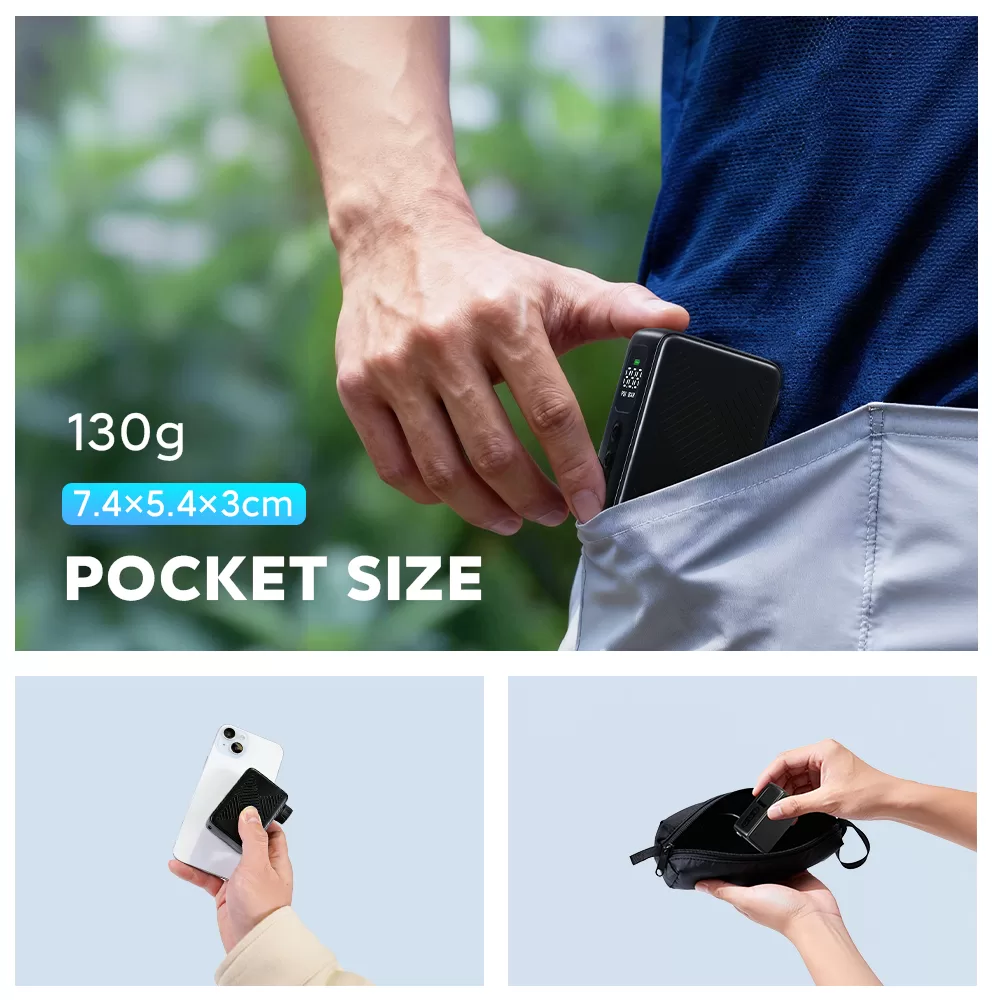
BL08-A Portable Electric Bike Pump: A Global Distribution Opportunity with Smartnewo
Smartnewo, a professional manufacturer of portable electric air pumps, introduces the BL08-A model — a compact and efficient inflator designed for global distributors, e-commerce sellers, and outdoor accessory brands seeking reliable OEM/ODM solutions. Table of Contents Main Heading Subtopics 1. Introduction: Expanding the Global Market for Smart Inflation Tools Portable... -
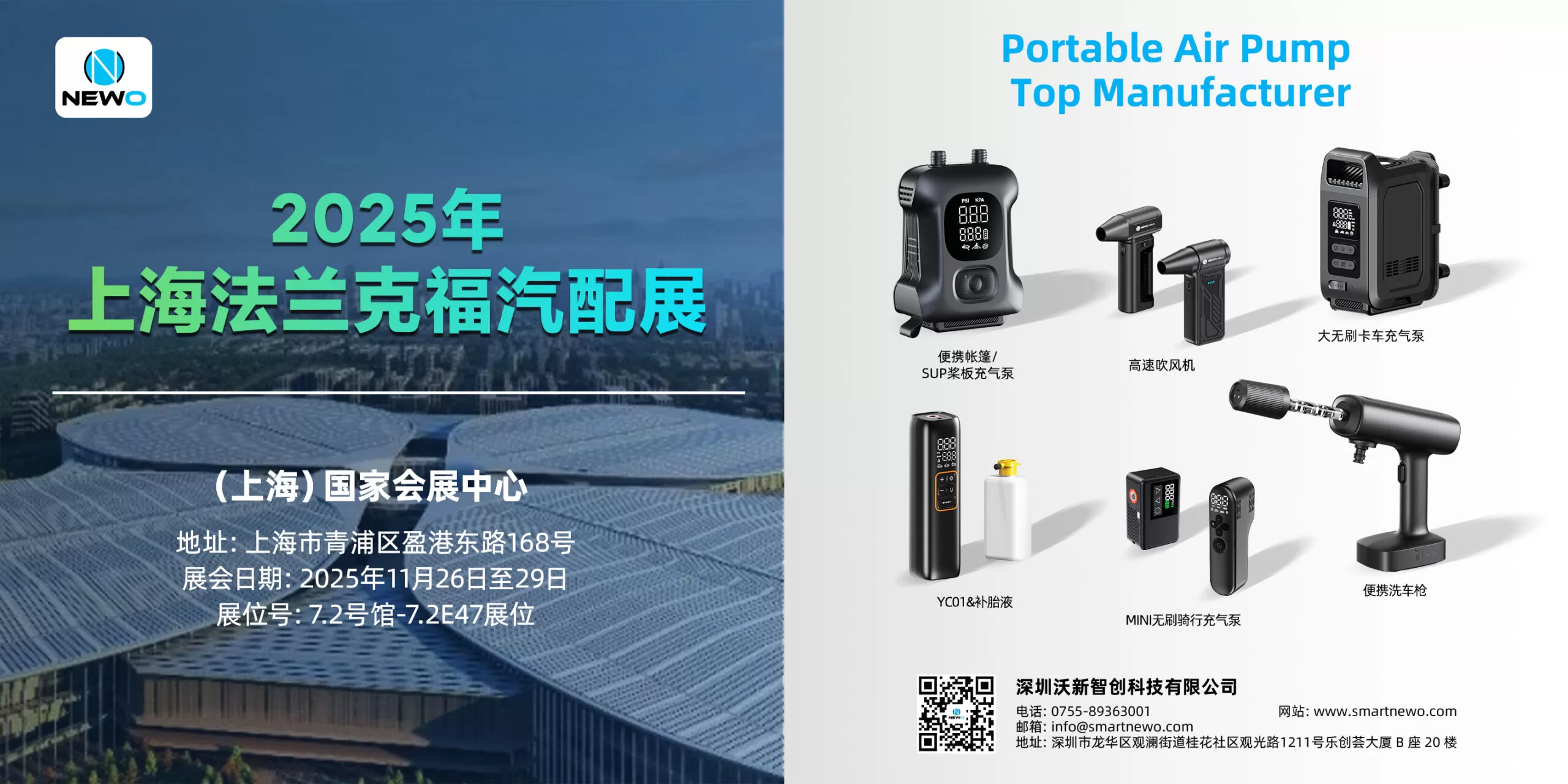
Connecting Opportunities at Automechanika Shanghai 2025 — Smartnewo Exhibition Day 1
Today marks an exciting beginning as Smartnewo officially opens its booth at Automechanika Shanghai 2025. As one of the largest and most influential automotive aftermarket exhibitions in the world, the show provides an exceptional platform for meaningful conversations, partnership building, and global industry exchange. Located at Booth 7.2E47, Smartnewo presents...
-

How Is a Football Properly Inflated?
The correct inflation of a football - with not too much and not too little air - is a hotly debated topic among footballers.... -

Application Scenarios of Car Inflator Pump
Often long-distance business trips or play car owners because the road may be more remote areas, in this case if you encounter a tire leak....