

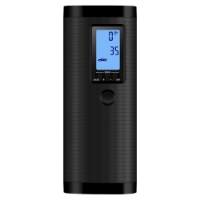
 Portable Tire Inflators
 Electric Air Pumps
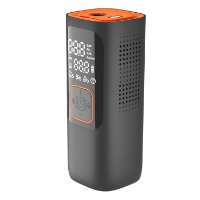 Electric Car Tyre Pumps
 Electric Ball Pumps
 Electric Bike Pump
 SUP Air Pump

The Complete Guide to Portable Tire Pumps: How to Choose, Use, and Maintain Roadside Reliability
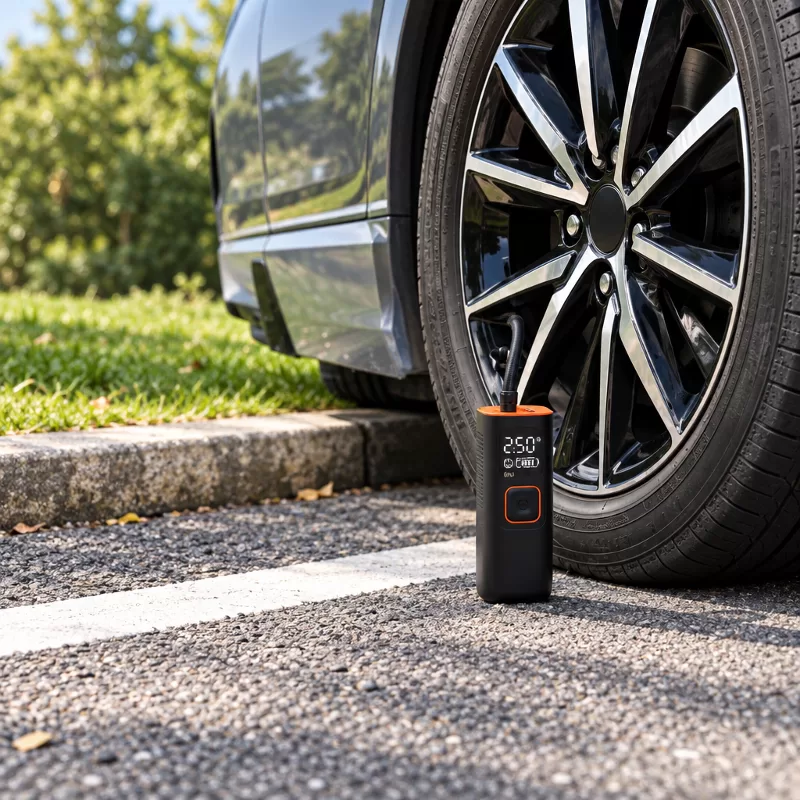
A modern portable tire pump has transformed vehicle readiness from a dirty roadside chore into a clean, controlled operation. Motorists no longer need to hunt down faulty gas station air towers or exhaust themselves over manual floor pumps in the rain. Whether dealing with a seasonal temperature drop that trips the dashboard warning light or prepping mountain bikes for a weekend descent, having autonomous inflation capability in your trunk solves problems before they strand you.
Understanding how these compact pneumatic tools operate, where their mechanical boundaries lie, and how to calibrate tire pressure correctly ensures that your tires wear evenly, grip reliably, and preserve fuel efficiency across every journey.
Understanding the Portable Tire Pump: Everyday Tool vs. Emergency Fix
How Portable Electric Inflators Differ from Manual and Shop Compressors
Traditional pneumatic equipment lives at two extreme ends of the spectrum. Massive garage air compressors deliver immense volume through heavy cast-iron tanks, yet they remain bolted to workshop floors. At the opposite end, manual foot and hand pumps rely entirely on human endurance, demanding hundreds of vigorous strokes to lift a car tire even a few pounds per square inch.
A compact electric inflator bridges this gap by shrinking industrial mechanics into a handheld shell. In typical designs, an electric direct-current motor drives a compact reciprocating piston mechanism inside a dedicated cylinder, drawing ambient air through intake ports, compressing it, and directing it through a high-pressure hose. The entire cycle occurs without physical strain from the operator.
Versatility Across Transport: Cars, Bicycles, E-Bikes, and Sports Gear
The utility of a portable tire pump extends across diverse wheel formats, tire carcasses, and valve mechanisms. Commuter cars and crossover SUVs run high-volume, moderate-pressure radial tires that demand steady displacement. In contrast, road bicycles and modern tubeless e-bikes demand high pressures delivered into low-volume chambers.
Many inflators accommodate these interface differences by offering interchangeable nozzle adapters and selectable preset modes. A versatile portable air unit can typically handle standard automotive stems, bicycle valves, mobility equipment like wheelchairs, and sports balls. This multi-application scope turns an emergency trunk tool into a practical everyday asset for varied household gear.
Distinguishing Pressure Top-Ups from Structural Puncture Repairs
Pneumatic devices solve air-loss problems, but they cannot mend mechanical failures. Tires can lose pressure naturally over time, even without a puncture, requiring periodic maintenance to sustain correct inflation. Cold weather can also lower internal pressure without any puncture present, yet a TPMS alert still signals an active pressure deficit that demands attention.
When a tire suffers physical damage—such as an embedded screw, a bead detachment from a rim impact, or a sidewall gash—a tire inflator acts strictly as a diagnostic tool or a temporary bridge. If an active puncture vents air faster than the unit delivers volume, operating the pump accomplishes nothing beyond stressing its internal motor. Drivers must recognize when to switch from pumping air to deploying an emergency plug kit, mounting a spare tire, or calling roadside recovery.
Critical Engineering and Selection Factors
Matching Airflow and Cylinder Capacity to Tire Volume
Inflator descriptions often highlight maximum pressure ratings while masking the metric that directly influences filling pace: free airflow displacement measured in liters per minute. A unit rated to a high PSI ceiling may sound formidable, but if its displacement volume is small, lifting a vehicle tire several pounds will require substantial patience.
Cylinder capacity and motor wattage determine how much ambient air is compressed and delivered per cycle against back-pressure. When selecting hardware for passenger cars and light trucks, evaluating manufacturer-rated airflow alongside continuous run limits provides a clearer expectation of real-world convenience than maximum pressure capability alone.
| Mechanical Specification Parameter | Model Specification (Example: NW05-P) | Practical Operational Relevance |
|---|---|---|
| Cylinder Structure | 26-cylinder structure | Manufacturer-stated mechanical core designed for inflation output. |
| Free Airflow Rate | 34 to 36 L/min | Determines volume displacement rate into automotive tire chambers. |
| Maximum Pressure | 150 PSI (Range: 2 to 150 PSI) | Stated pressure capability accommodating diverse tire and equipment formats. |
| Motor Working Power | 120W | Rated electrical power driving compression against tire back-pressure. |
| Noise Level Rating | 85 dB or below at 1 meter | Operating acoustic level during roadside or driveway inflation. |
Power Architectures: Cordless Lithium-Ion vs. 12V Cigarette-Lighter Tethering
Energy delivery fundamentally shapes the user experience during roadside top-offs. Traditional 12-volt inflators draw steady direct current straight from the vehicle accessory socket. This provides continuous power without runtime degradation from a depleted internal pack, yet it requires managing long cords around wheels and keeping vehicle battery health in mind.
Cordless inflators powered by internal lithium-ion cells remove spatial tethering entirely. You pick up the tool, approach any wheel, and initiate inflation immediately. The trade-off involves battery management: rechargeable cells self-discharge over months of storage and require periodic top-ups. Hybrid configurations that merge internal rechargeable packs with an auxiliary 12V to 14V vehicle socket cable combine cordless ease with corded backup certainty.
Pressure Gauges, Auto-Shutoff Mechanisms, and Target Accuracy
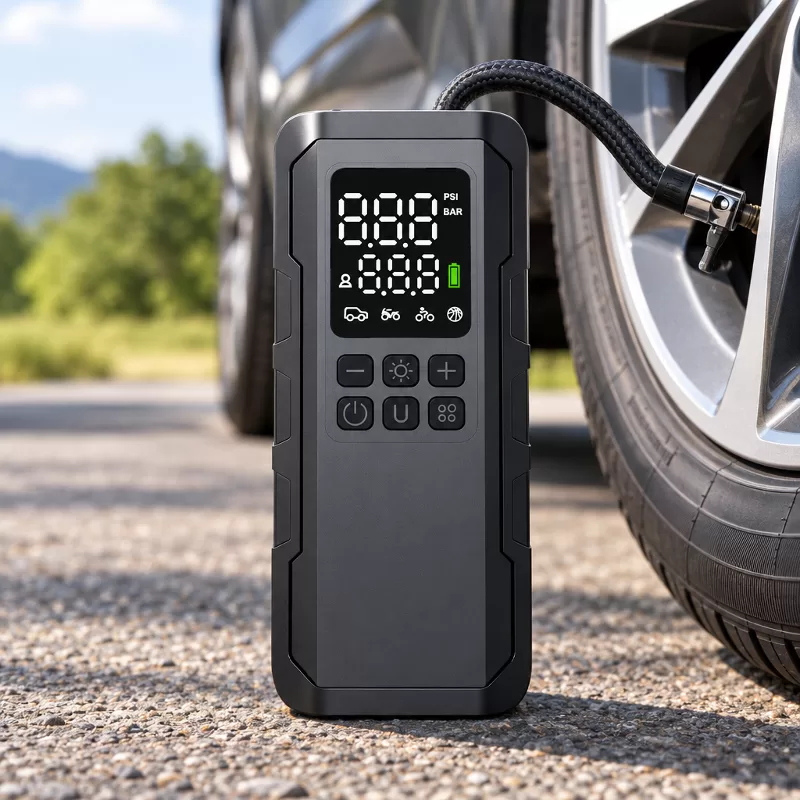
Mechanical analog gauges depend on internal mechanical springs and Bourdon tubes that can lose accuracy after severe vibration or accidental drops. Modern digital sensors measure internal pneumatic pressure electronically, converting sensor readings into clear numerical values shown on an integrated digital screen.
- Digital Pressure Monitoring: Integrated screens provide real-time pressure readouts, allowing users to assess resting tire conditions before running the motor.
- Automatic Shut-Off Functionality: Built-in control logic halts the motor automatically when line pressure reaches the preselected target, helping prevent accidental overinflation.
- Dedicated Application Presets: Available on many modern models, preset modes set standard baseline targets for vehicles, bicycles, or sporting goods, while permitting fine manual calibration.
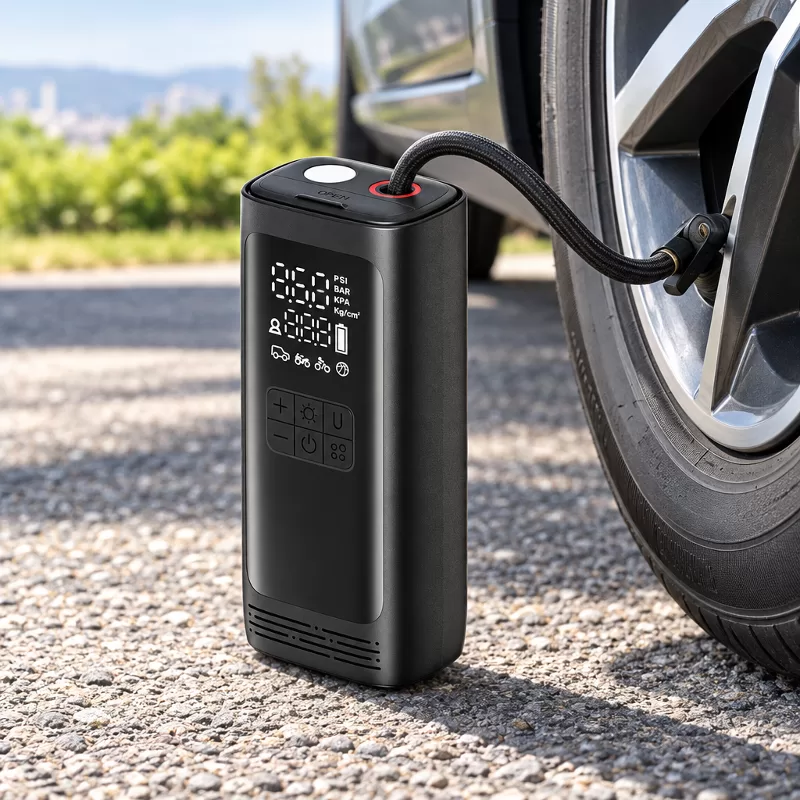
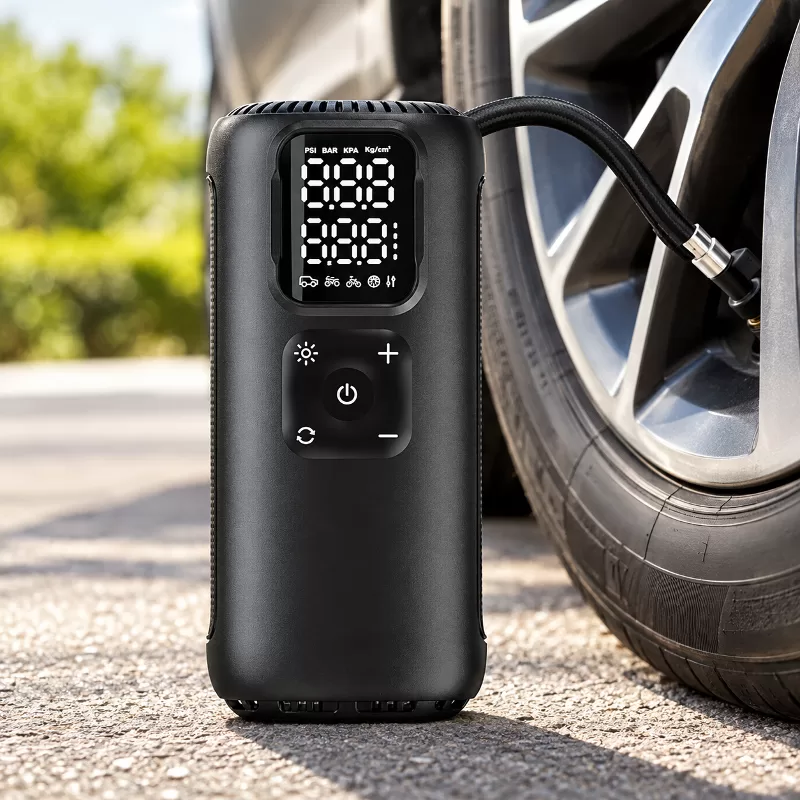
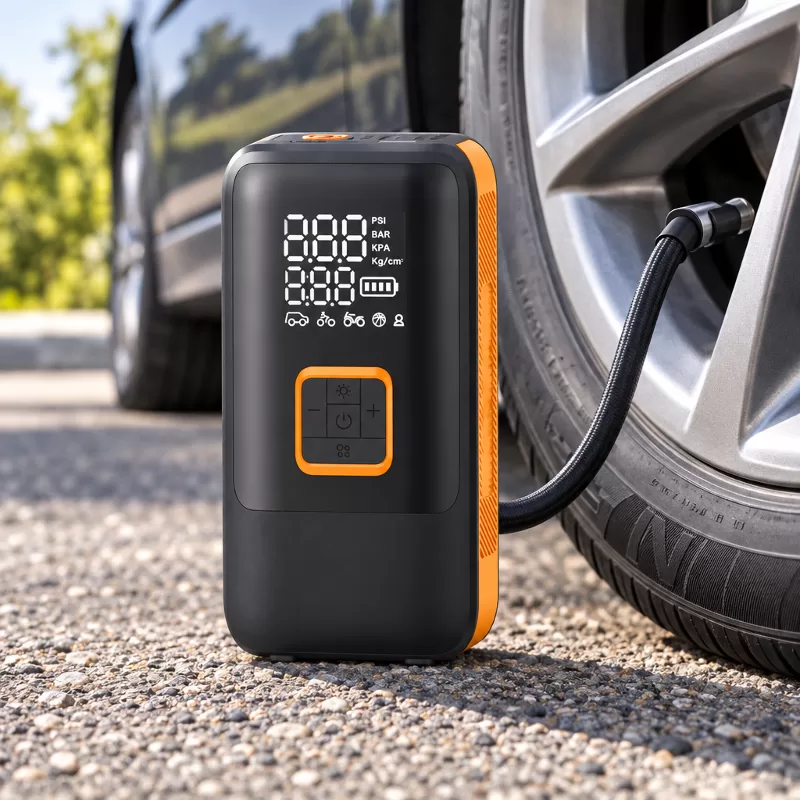
- Selectable Pressure Units: Many digital inflators support switching between standard scales such as PSI, BAR, KPA, or Kg/cm² to match vehicle placard recommendations.
Thermal Management, Duty Cycles, and Portability Trade-offs
Compressing air generates thermal energy as work converts into heat. In compact inflators, internal temperatures rise steadily during continuous operation. Without appropriate thermal dissipation, excessive heat can stress mechanical parts, internal lubricants, and sealing components.
Portable designs balance external dimensions against airflow vents and heat dissipation paths. Always observe the manufacturer’s stated duty cycle and runtime limits. Allowing the pump to cool down as specified by the user manual prevents premature motor fatigue and maintains reliable performance over repeated seasons.
Step-by-Step: How to Safely Inflate Tires Using a Portable Pump
Locating Correct Inflation Values: Placard vs. Sidewall Pressure
The most frequent operational error among drivers is reading inflation figures stamped directly into the tire sidewall. That sidewall marking specifies the absolute maximum cold pressure the tire casing is rated to withstand under maximum permissible load. It is not the vehicle’s recommended operating pressure.
Correct operational pressure is calculated by vehicle manufacturers to balance road grip, tread contact, braking distances, and vehicle handling. These vehicle-specific figures are listed on the safety placard affixed to the driver-side door jamb, the fuel door, or in the owner’s manual. Always set your portable tire pump to match this placard specification, taking note of any specific load adjustments noted by the automaker.
Pre-Inflation Setup: Valve Inspection, Chuck Engagement, and Cold Tire Timing
Proper preparation prevents air leaks, protects valve hardware, and guarantees accurate sensor measurements. Follow this sequential operational checklist before triggering the motor:
- Verify Cold Inflation State: Ensure the vehicle has remained parked for at least three full hours, or has been driven less than one mile after a three-hour rest period, ensuring tires reflect cold ambient conditions.
- Inspect Valve Hardware: Unscrew the valve dust cap; check the stem threads for debris, dirt accumulation, or obvious damage.
- Engage Connector Firmly: Attach the inflator hose connector securely to the valve stem according to your pump’s design, ensuring a snug, airtight connection.
- Check Initial Reading: Read the current pressure indicated on the inflator screen to verify the tire’s resting internal pressure before initiating the cycle.
- Inspect Cable Routing: If utilizing an auxiliary 12V vehicle cord, route the cable away from sharp body panels, hot exhaust components, or moving parts.
Executing Inflation: Setting Presets and Monitoring Runtime
Once the connection creates an airtight seal, configure your target inflation parameters. Select the desired preset mode or manually adjust the pressure value up or down to align with your vehicle placard. Initiate inflation with the power control switch.
Remain near the device while it operates. Keep the pump on clean ground or a firm surface rather than loose sand to reduce intake of dust. The unit will vibrate rhythmically as pressure rises. Built-in auto-shutoff features will halt operation once target pressure is detected on the internal sensor line.
Post-Inflation Protocol: Verification, Stem Capping, and Safe Disconnect
When the motor stops, observe the digital display to confirm final resting line pressure. Disconnect the hose fitting promptly to prevent unnecessary air release while detaching the chuck from the stem pin.
The metal fittings near the hose connection can absorb heat during continuous pumping. Avoid handling bare metal connectors immediately following extended runs, grasping insulated hose jackets instead. Reinstall the valve stem dust cap firmly to shield the internal valve core from moisture, road grime, and salt corrosion.
Real-World Tire Pressure Dynamics: Why Regular Top-Ups Matter
Ambient Temperature Swings and the Ideal Gas Law
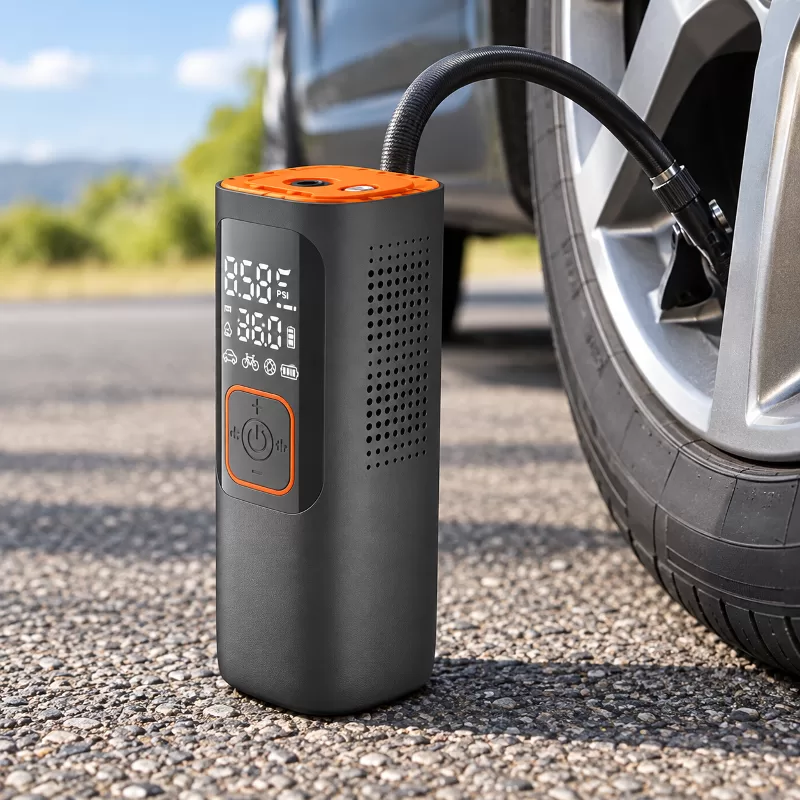
Tire pressure is not static; it fluctuates continuously in response to seasonal weather shifts and driving conditions. As governed by the ideal gas law, the pressure of a sealed volume of gas drops when temperature decreases. In real-world driving environments, tire pressure typically shifts by about 1 PSI for every 10°F to 12°F change in ambient temperature.
When seasonal cold fronts arrive, overnight temperature drops can cause tires to lose several pounds of pressure without any puncture present. Tires inflated correctly in moderate weather may roll onto winter roads significantly under-inflated. Carrying a portable tire pump enables drivers to offset these predictable weather-driven pressure drops directly from their home driveway.
The Limitations of Vehicle TPMS Warning Systems
Many modern motorists rely passively on their dashboard Tire Pressure Monitoring System (TPMS), assuming no dash light means all four tires are properly inflated. This reliance creates an unintended safety gap. Under Federal Motor Vehicle Safety Standard (FMVSS) 138, TPMS warnings are generally mandated to illuminate when a tire drops 25 percent below the manufacturer’s recommended cold placard pressure or reaches a specified minimum threshold, whichever is higher.
A tire can lose substantial pressure, experience accelerated shoulder tread wear, and incur reduced fuel economy well before the dashboard alert illuminates. The TPMS acts as an urgent safety warning, not an everyday pressure gauge. Proactive monthly checks with an accurate portable tire pump identify gradual deflation before critical warning thresholds are reached.
Engineering Spotlight: Evaluating Modern Portable Pumps (e.g., NW05-P)
Mechanical Architecture: 26-Cylinder Displacement and 120W Power
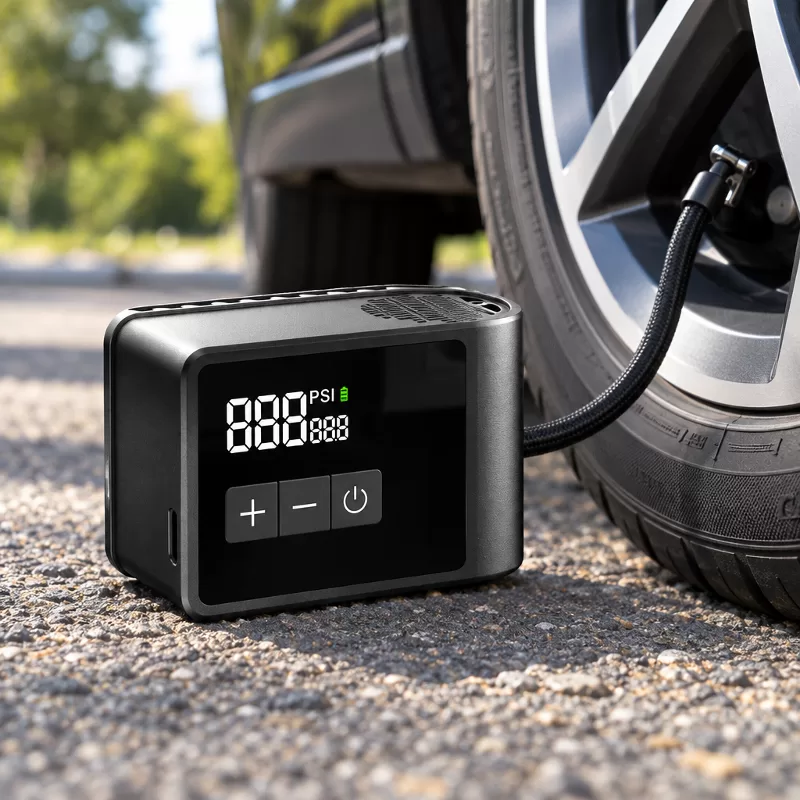
Examining dedicated pneumatic hardware illustrates how specific engineering metrics define real-world utility. For example, the Portable Electric Tire Pump 150PSI NW05-P is built around a manufacturer-specified 26-cylinder structure paired with 120W of working power. This mechanical setup delivers a rated airflow of 34 to 36 liters per minute, supporting inflation tasks across cars, bicycles, e-bikes, and balance vehicles.
Operating within a pressure range of 2 to 150 PSI, the device produces an acoustic output rated at 85 dB or below at one meter. Supported by advanced production capabilities, experienced engineers, and strict quality management, Newo manufactures smart electric air pumps and portable inflation solutions designed for dependable field use. The unit provides practical inflation capacity across diverse mobility equipment while keeping working sound manageable.
Power Flexibility: Triple 2600mAh Pack and 12V Auxiliary Car Backup
Practical readiness during roadside scenarios depends on flexible power sources. The NW05-P incorporates an internal battery capacity rated at 2600mAh × 3 (11.1V, 28.86Wh), supporting Type-C charging via 5V/2A or 9V/1.5A inputs with a recharge time of 2.5 to 3.5 hours. According to manufacturer specifications, this pack provides approximately 15 to 18 minutes of runtime, capable of inflating about 30 mountain-bike tires per full charge.
To ensure operational readiness even when the internal battery is low, the device also supports 12V to 14V vehicle cigarette-lighter power. Drivers can plug into the vehicle’s auxiliary outlet to complete tire top-ups without delay. In addition, an integrated 5V/1.5A power-bank output provides auxiliary power delivery when portable electronic devices require backup power on the road.
| Specification Parameter | NW05-P Manufacturer Specification | Operational Utility |
|---|---|---|
| Model Designation | NW05-P Portable Electric Air Pump | Compact multi-application pneumatic tool. |
| Cylinder Design | 26-cylinder structure | Manufacturer-engineered mechanical core. |
| Working Power | 120W | Electric motor rated for sustained output. |
| Pressure Range | 2 to 150 PSI | Covers low-pressure balls up to high-pressure tires. |
| Rated Airflow | 34 to 36 L/min | Delivers steady volume for everyday top-ups. |
| Battery Rating | 2600mAh × 3 (11.1V, 28.86Wh) | Cordless pack rated for $\ge$80% capacity after 300 cycles. |
| External Power Support | 12V to 14V cigarette-lighter socket | Vehicle-tethered operation when battery is uncharged. |
| Dimensions & Weight | 130 × 112 × 56 mm; 650g net | Fits conveniently in trunks, door bins, or tool kits. |
Maintenance, Battery Health, and Thermal Longevity
Thermal Duty Cycles: Following Runtime and Cooling Guidelines
Compact reciprocating compressors generate heat during rapid gas compression. Operating an inflator continuously beyond its thermal boundaries accelerates component fatigue and reduces seal lifespan. Adhering to manufacturer guidelines preserves equipment integrity over years of use.
- Observe Stated Runtime Limits: Respect the product’s continuous operational ceiling, avoiding runs that exceed the manufacturer’s specified duration.
- Allow Adequate Cooling Intervals: Give the unit several minutes of passive cooling between consecutive high-load tire operations.
- Protect Housing Ventilation: Keep ventilation slots clear of dust, pet hair, and trunk debris to facilitate natural convective cooling.
- Operate in Open Spaces: Avoid running the pump inside cramped compartments, cases, or closed vehicle trunks during operation.
Lithium-Ion Battery Storage in Vehicle Cabin Environments
Keeping lithium-ion batteries inside passenger vehicles exposes them to significant thermal shifts. Summer parked interiors can warm rapidly, while winter weather drops cabin temperatures below freezing. Over time, extreme thermal stress can accelerate battery capacity loss and self-discharge rates.
To maintain battery longevity, store the portable tire pump at roughly 50 to 70 percent charge if kept inside a vehicle for extended seasons. Avoid leaving the battery completely flat for long periods, as deep discharge can impair cell chemistry. Checking the charge level every few months ensures sufficient reserves whenever a roadside situation arises.
Hose Care, Brass Threads, and Air Leak Prevention
The flexible air hose assembly endures frequent mechanical stress, including bending, road contact, and thermal changes during operation. Inspect the outer rubber lining periodically for signs of excessive wear, deep kinks, or loose crimps around the fittings.
Ensure that the sealing washer inside the connector remains seated, pliable, and free of dirt or grit. A worn washer can allow air to escape around the valve stem, causing sensor fluctuations during measurement. Keeping threads clean and applying an occasional drop of silicone lubricant protects connection fittings against premature wear and corrosion.
Frequently Asked Questions (FAQs)
What pressure should I set on a portable tire pump for my car?
Always set the pump to the cold tire pressure specified on your vehicle’s tire information placard, typically affixed to the driver-side door jamb, or check the vehicle owner’s manual. Never set the target using the maximum pressure stamped onto the tire sidewall, as that number represents the highest structural pressure rating under maximum load rather than the vehicle manufacturer’s engineered operating baseline.
Can a portable tire pump inflate a completely flat car tire?
A portable inflator may be able to inflate a flat car tire if the casing remains structurally undamaged and the bead stays seated against the wheel rim. Before attempting inflation, thoroughly inspect the tire for sidewall cuts, deep tread gashes, or signs of running flat; never drive on a flat or compromised tire. A pump cannot make a punctured or structurally compromised tire safe. If there is ongoing air leakage or uncertainty regarding carcass damage, mount a spare tire or call professional roadside recovery.
Does a 150 PSI maximum rating mean the pump fills car tires faster?
No. The maximum pressure rating is the manufacturer-stated pressure capability of the pump, indicating how high a pressure the unit can deliver. Inflation speed is determined by airflow rate, expressed in liters per minute (L/min), along with cylinder displacement and motor power. While a 150 PSI ceiling is valuable for high-pressure bicycle tires, airflow volume is what governs how quickly passenger car tires reach their placard target.
How often should I check and top up my tires using an electric pump?
Tire pressure should be checked at least once a month and prior to extended highway road trips. Because ambient temperatures cause pressure to shift by approximately 1 PSI for every 10°F to 12°F change, seasonal temperature drops require closer monitoring. For accurate readings, always check pressures when tires are cold, having rested for at least three hours.
Should I choose a cordless battery model or a 12V cigarette-lighter pump?
Cordless models offer exceptional convenience, letting you move easily around the vehicle without tangling cables or running your engine. However, their readiness depends on battery charge maintenance. A 12V plug-in pump draws power directly from the car socket, avoiding battery storage concerns. A hybrid model supporting both internal rechargeable battery operation and 12V vehicle-power input delivers the benefits of cordless ease alongside reliable backup power.
Summary: Road Readiness and Proactive Tire Care
Maintaining correct tire pressure is essential for vehicle safety, predictable wet-weather handling, even tread wear, and optimal fuel economy. Waiting for dashboard warning indicators to light up allows minor under-inflation to persist unchecked, increasing rolling resistance and tire wear over time.
Keeping a reliable portable tire pump in your trunk makes pressure maintenance an effortless monthly habit rather than an inconvenient chore. By understanding placard specifications, observing proper cooling intervals, and choosing capable equipment with clear digital controls and dependable power options, drivers can protect their tires and travel with peace of mind.
-
Meet NEWO at the 140th Canton Fair: Visit Booth 10.3 M03–04
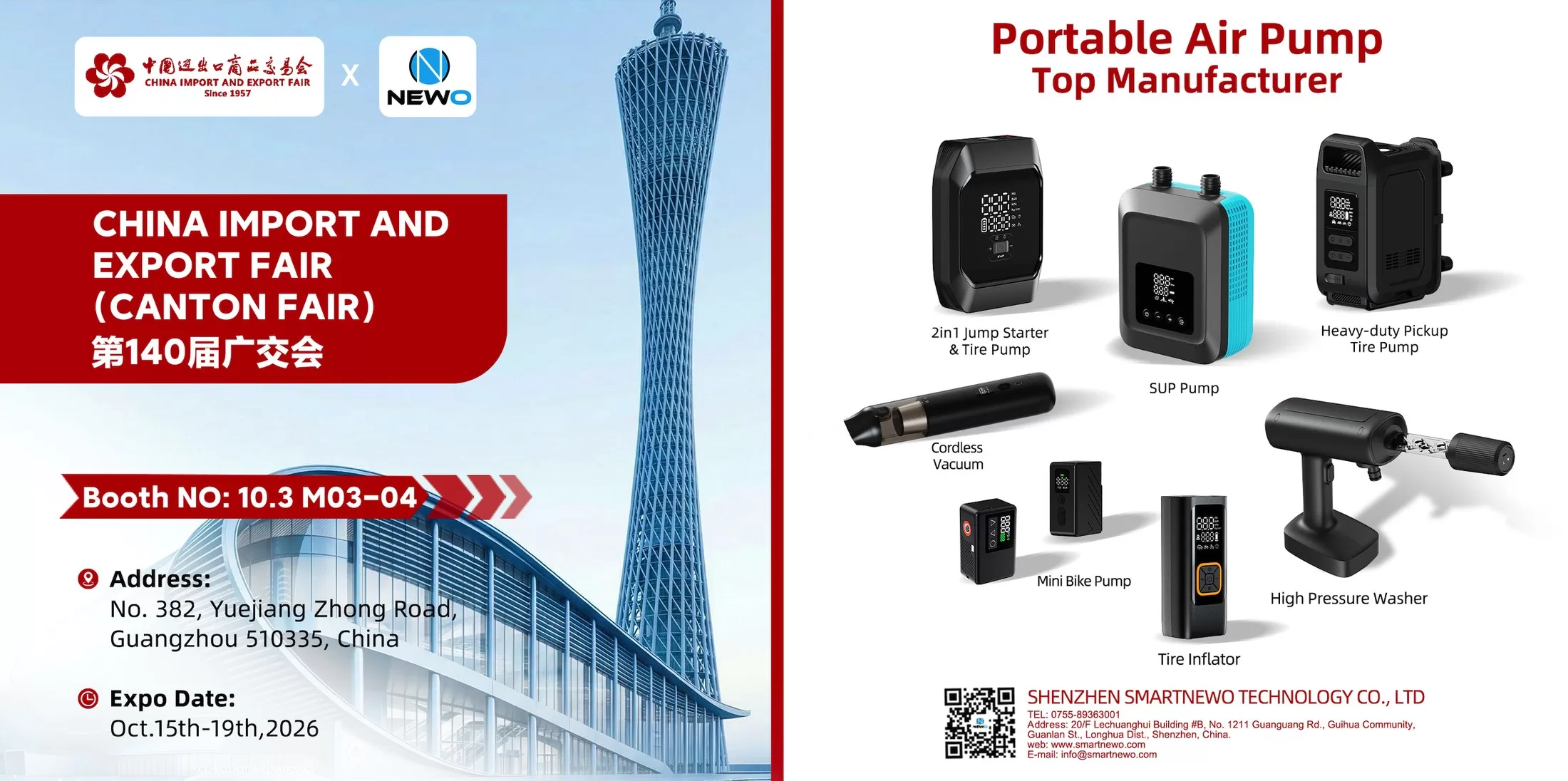
Meet NEWO at the 140th Canton Fair in Guangzhou, October 15–19, 2026. Visit Booth 10.3 M03–04 to explore portable air pumps and discuss OEM, ODM and distribution opportunities.... -

As Shenzhen Welcomes the World for APEC 2026, NEWO Welcomes You to Our Factory
As Shenzhen prepares for APEC 2026, NEWO welcomes international buyers and partners to visit our factory, meet our team and explore future cooperation.... -
Leading the Way in Product Innovation and Excellence
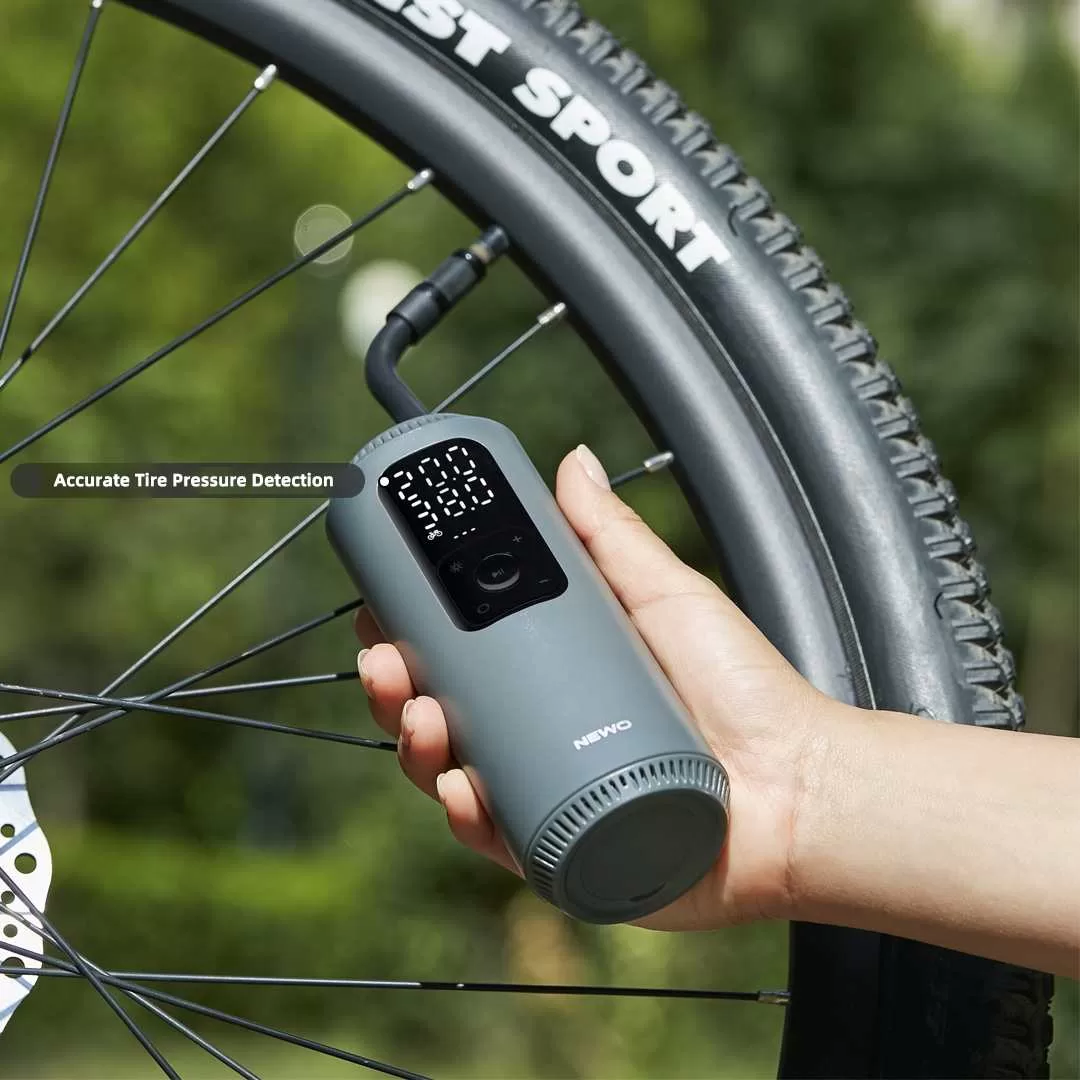
Smartnewo exemplifies professionalism in product innovation and manufacturing. Their collaboration with Xiaomi Youpin on the G01 crowdfunding project highlights their expertise in creating compact, powerful inflatable pumps. Rigorous engineering, meticulous production processes, and advanced quality assurance underscore their commitment to excellence. The success of the G01 project, with significant market... -
Essential Qualities of an Excellent Supplier
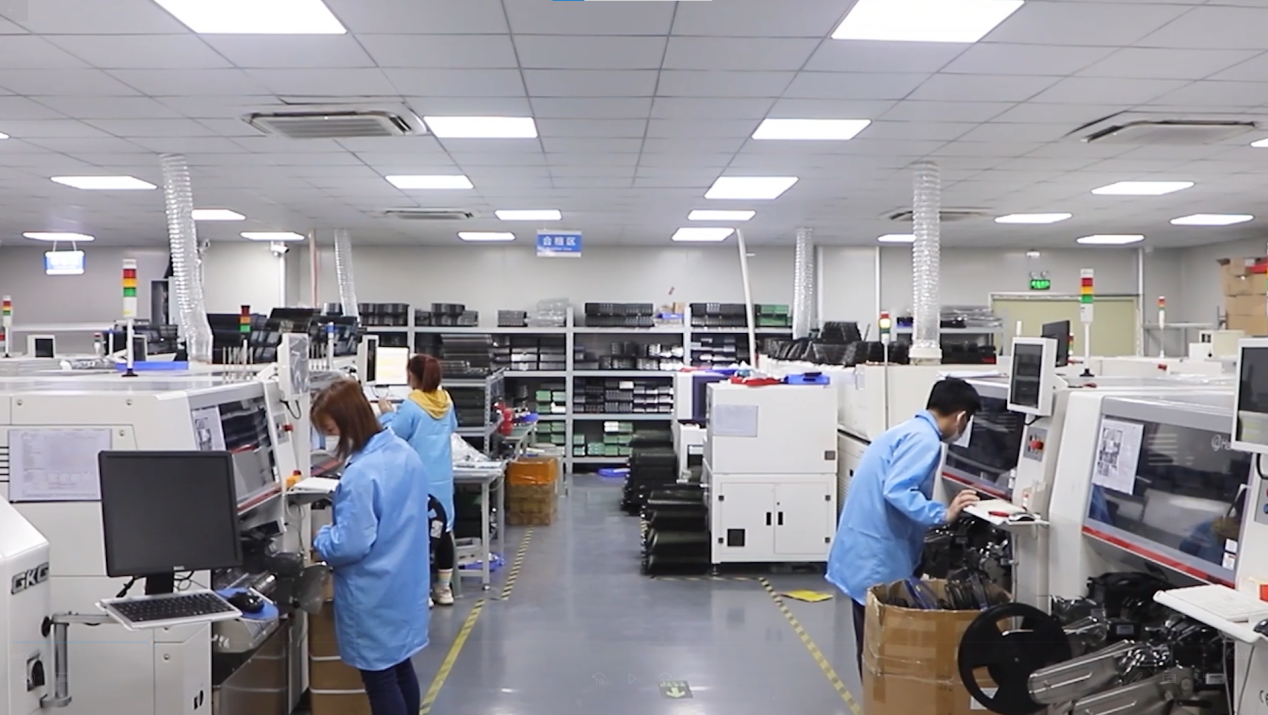
In today's competitive market, finding a reliable supplier is crucial for business success. Based on insights from Smartnewo and broader internet research, here are key qualities an excellent supplier must possess:... -
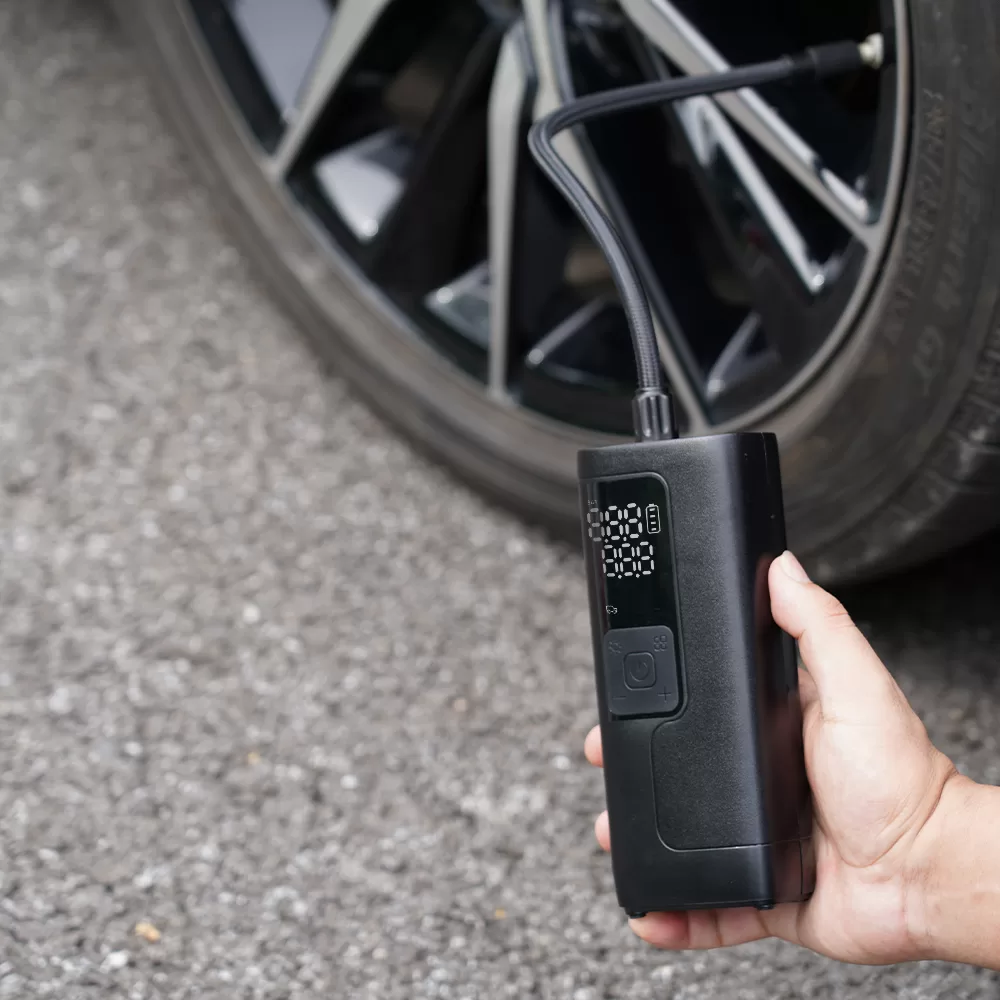
NW06 Tire Inflator: Compact Power for Quick Inflation
Summary The NW06 Tire Inflator delivers quick and efficient tire inflation with a powerful 35L/min airflow. It features a user-friendly LCD screen for real-time pressure monitoring, dual power options with a built-in 6000mAh battery, and multiple nozzle attachments for versatile use. Its compact design and integrated LED light ensure convenience and... -
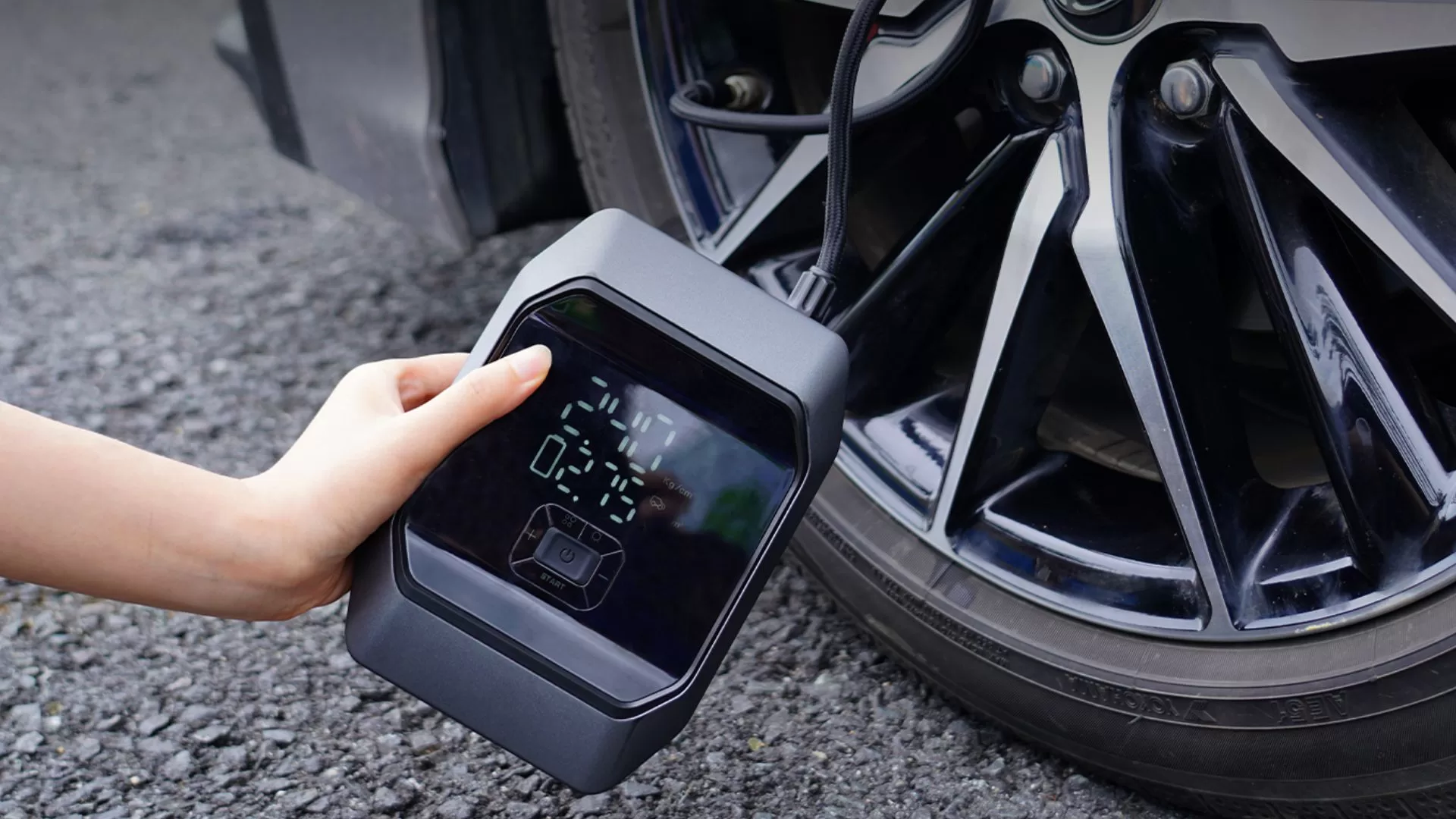
Unleash the Power of Portability: The SmartNewo Jump Starter with Air Compressor KF03
This guide will walk you through the steps to effectively use a portable tire inflator, helping you stay prepared and safe on the road.... -

Newo Attends The 2024 Consumer Electronics Show (CES)
Smartnewo booth is located at 53672, Halls A-D, Level 2, Venetian Expo, Las Vegas Convention Center (LVCC). ... -
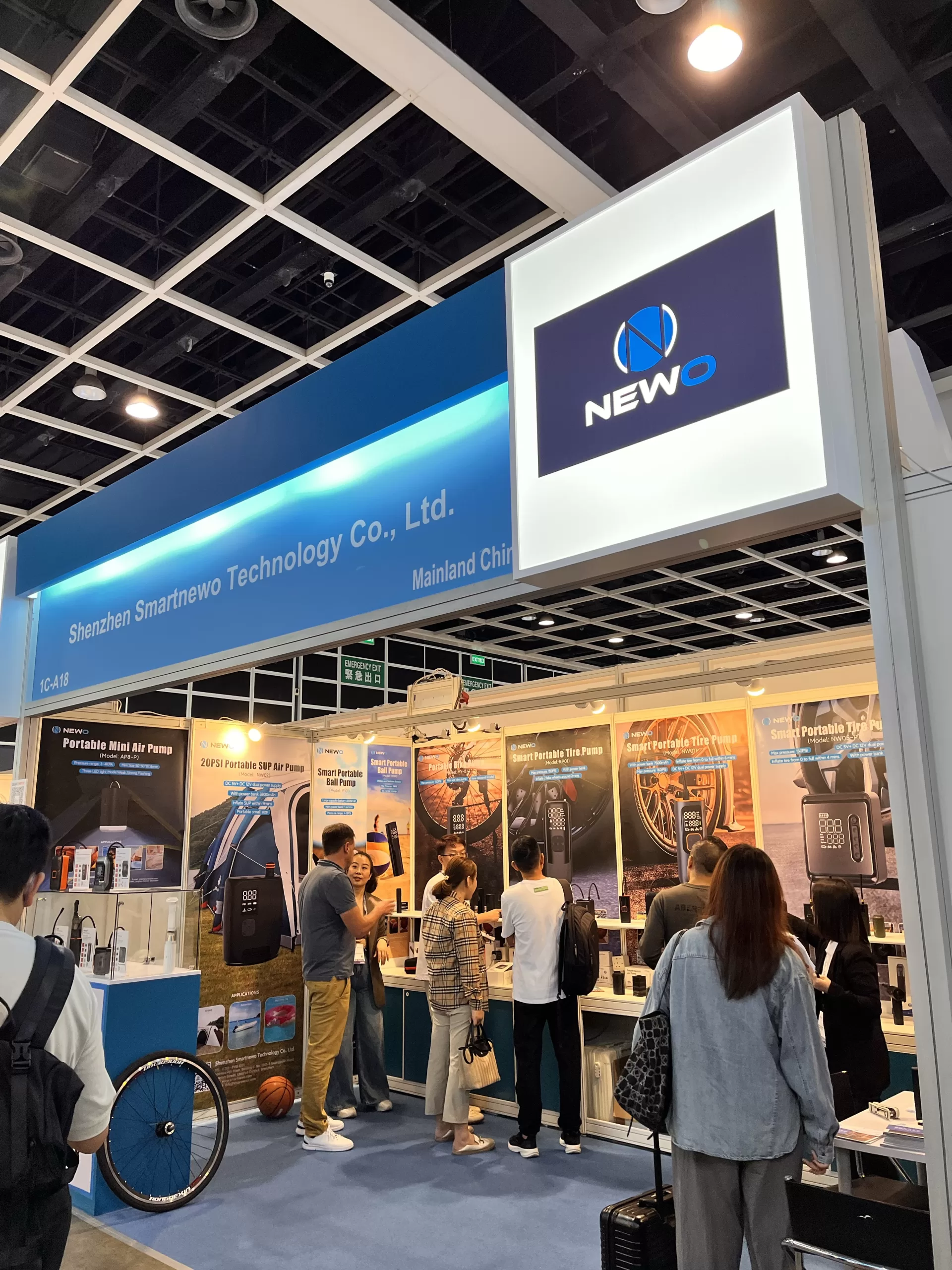
Smartnewo’s Dual-Cylinder Air Pump Rocks the Hong Kong Autumn Electronics Fair!
Smartnewo’s Dual-Cylinder Air Pump Rocks the Hong Kong Autumn Electronics Fair!... -

Meet at the Canton Fair! Smartnewo brings dual-cylinder air pumps, making your inflation experience faster and more stable!
NEWO has went deep communication and negotiation with customers from all over the world on booth.... -
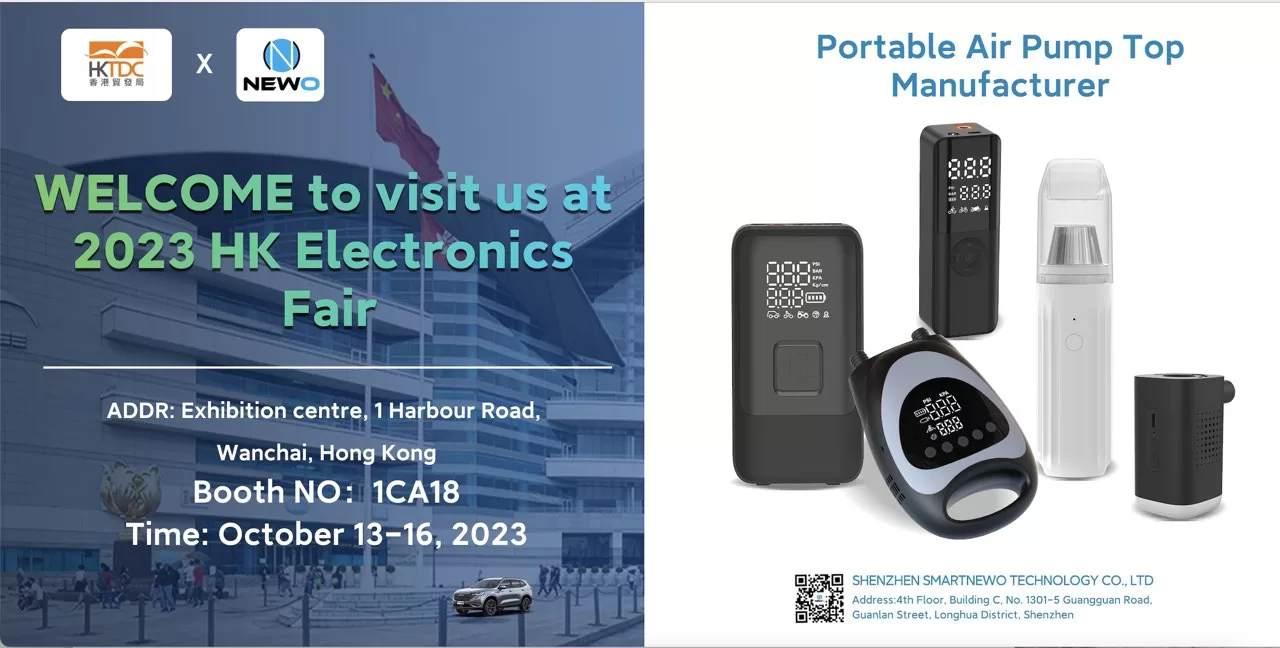
“Hong Kong Autumn Electronics Fair – 1CA18 (October 13th to 16th): Smartnewo invites you to visit our booth!
Hong Kong Autumn Electronics Fair...
-
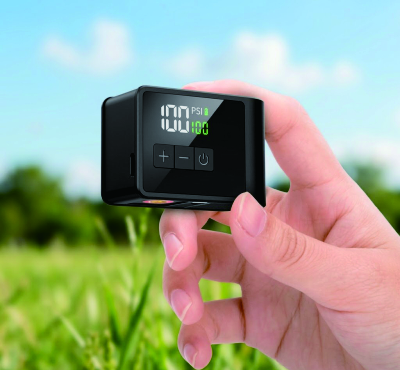
What to Check Before Ordering Custom Electric Bike Pumps
Plan custom electric bike pumps with a clear requirements freeze for valves, TPU tubes, portability, repeated top-ups, charging, and model-specific documents.... -

OEM vs ODM Air Pumps: Which Manufacturing Model Fits Your Brand?
Compare OEM and ODM air pump projects by design responsibility, change approval, development scope, and written ownership terms before choosing your route.... -

How to Choose a Reliable Tire Inflator Manufacturer in China
Choose a tire inflator manufacturer in China with a focused RFQ, supplier evidence, configuration checks, and clear sample-to-pilot decisions for your brand.... -
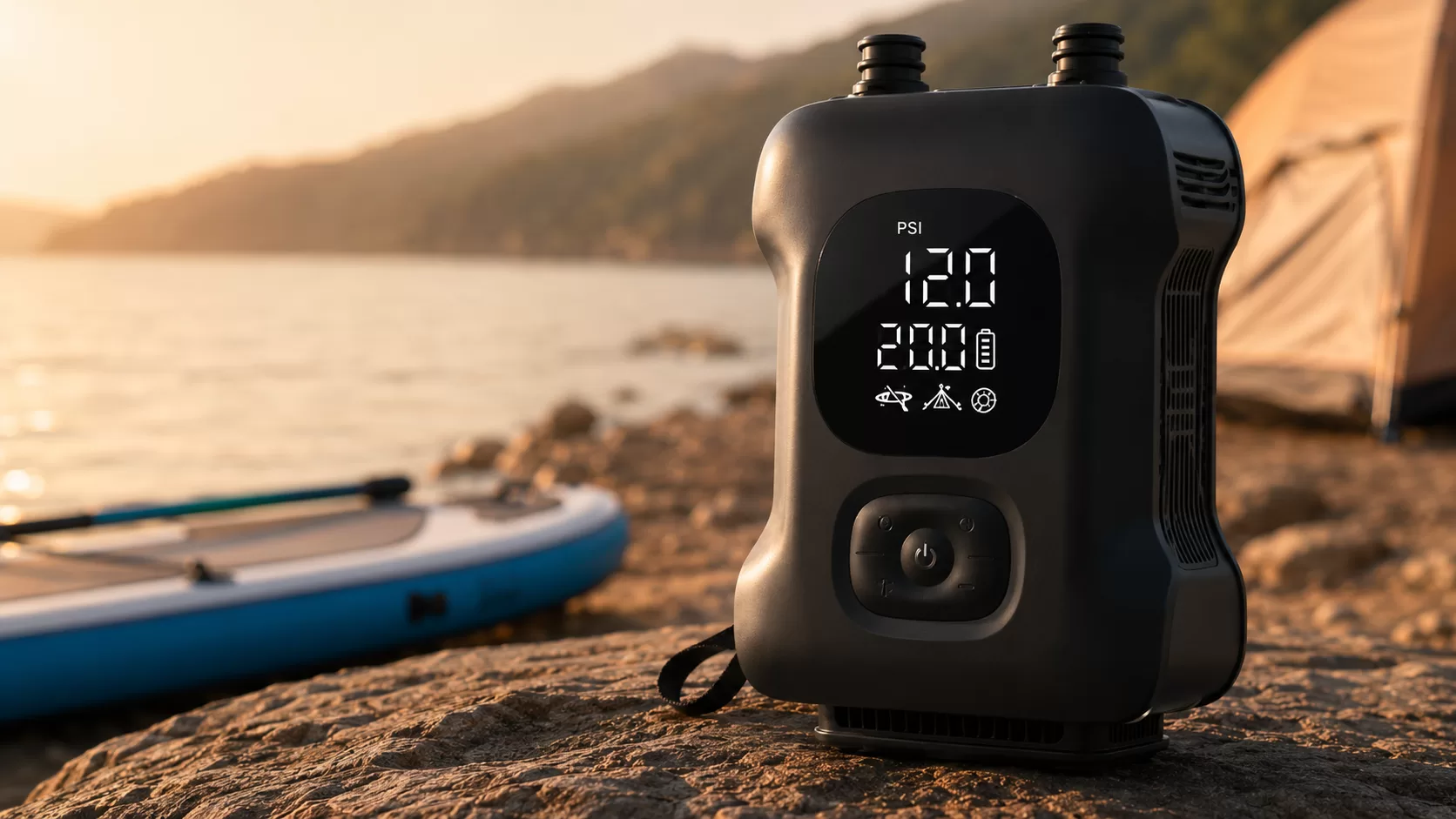
Rechargeable Electric SUP Pump for Paddle Boards: Faster Inflation for SUPs, Kayaks and Inflatable Tents
The BL10-C Portable Electric Bike Tire Inflator is a compact and lightweight mini electric bike pump designed for modern cyclists. With up to 120 PSI pressure, a digital LED display, preset pressure control, automatic shut-off, USB-C charging, and multiple valve adapters, BL10-C offers a convenient inflation solution for road bikes,... -
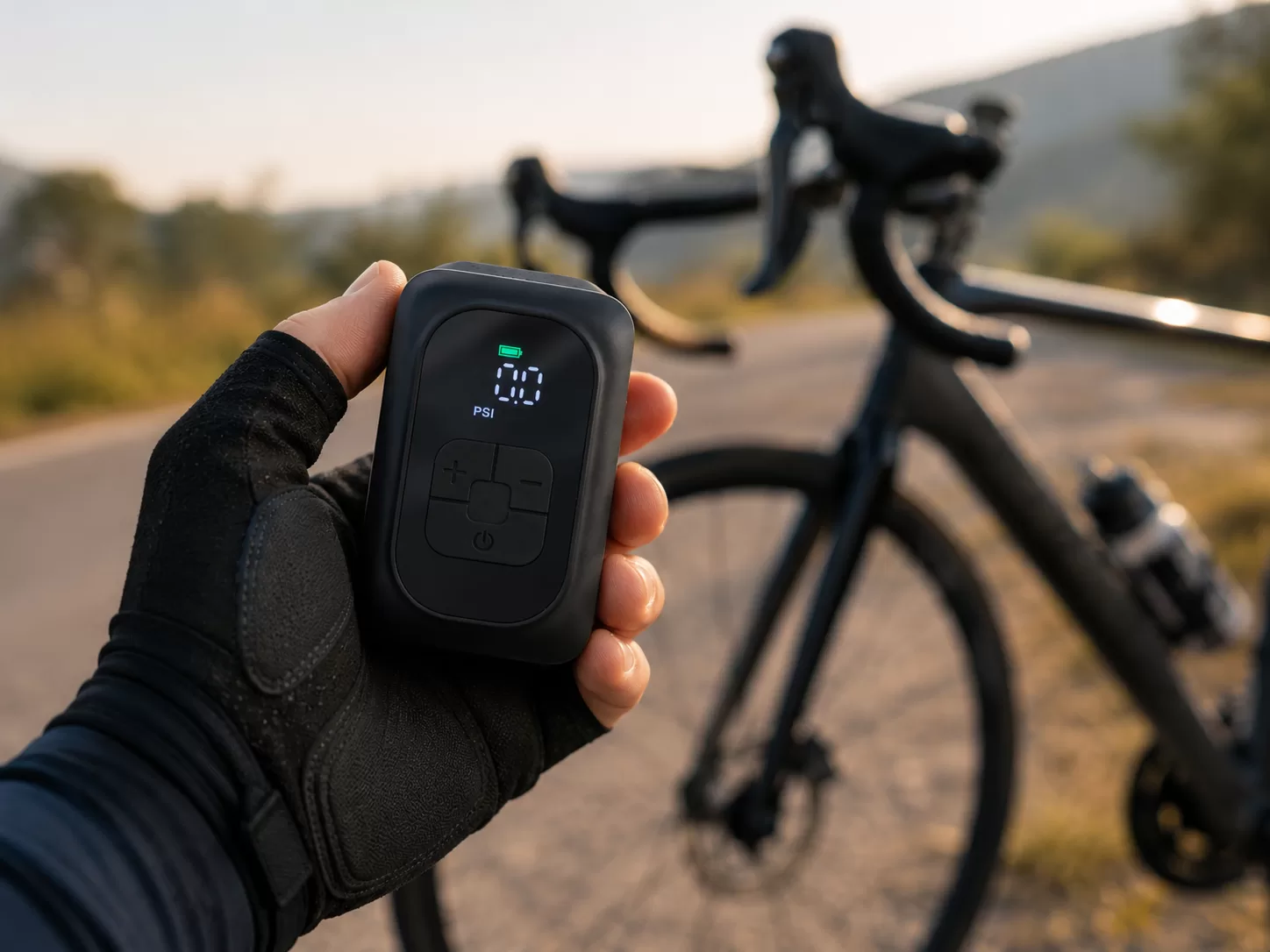
Are Electric Bike Pumps Worth It in 2026? Electric Pump vs CO₂ vs Mini Hand Pump
Discover whether electric bike pumps are worth it in 2026. This guide compares electric bike pumps, CO₂ inflators, and mini hand pumps for road cycling, gravel riding, commuting, and long-distance rides. Learn the pros, limitations, best use cases, and key features to look for before choosing the right portable tire... -
BL10-C Portable Electric Bike Tire Inflator: Small Size, Reliable Power for Every Ride
The BL10-C Portable Electric Bike Tire Inflator is a compact and lightweight mini electric bike pump designed for modern cyclists. With up to 120 PSI pressure, a digital LED display, preset pressure control, automatic shut-off, USB-C charging, and multiple valve adapters, BL10-C offers a convenient inflation solution for road bikes,... -
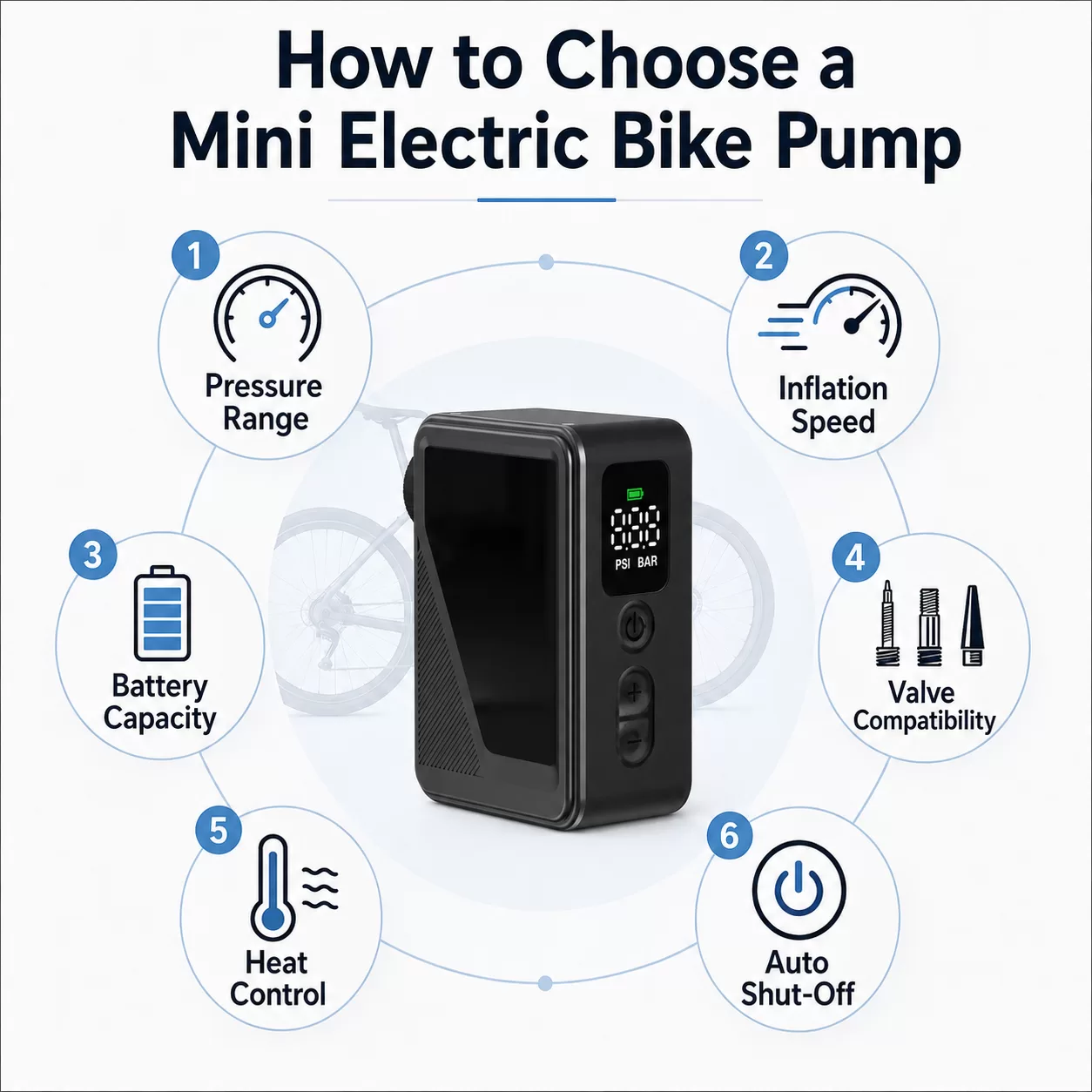
Why Mini Electric Bike Pumps Are Becoming Essential for Modern Cycling
Discover why mini electric bike pumps are becoming essential for modern cyclists. Learn how portable electric bike pumps improve tire pressure management, riding safety, and convenience.... -
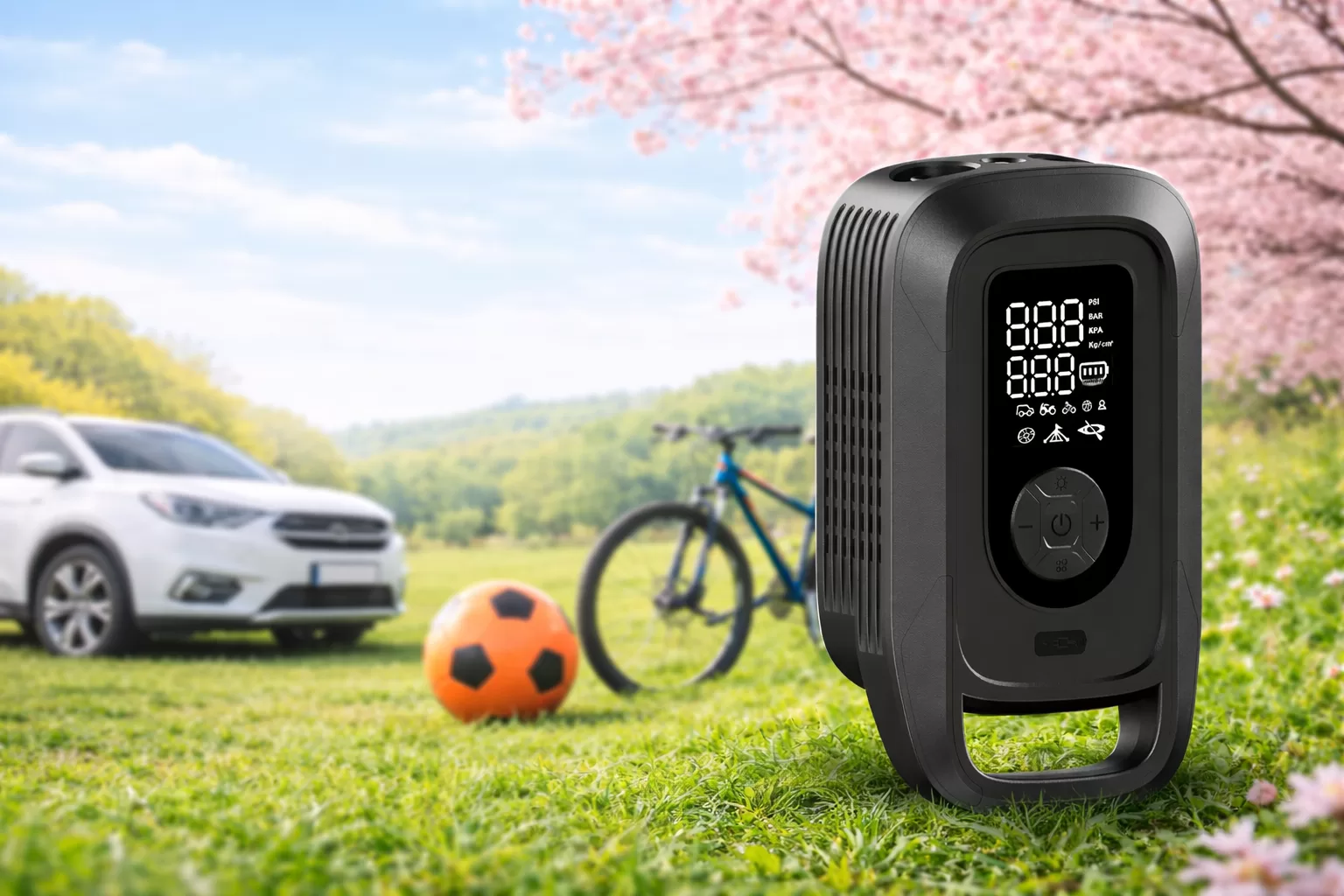
The Ultimate Smart Solution for Easy Outdoor Adventures in 2026
Discover how a spring travel air pump simplifies outdoor trips with fast inflation, smart features, and powerful performance—perfect for every adventure.... -
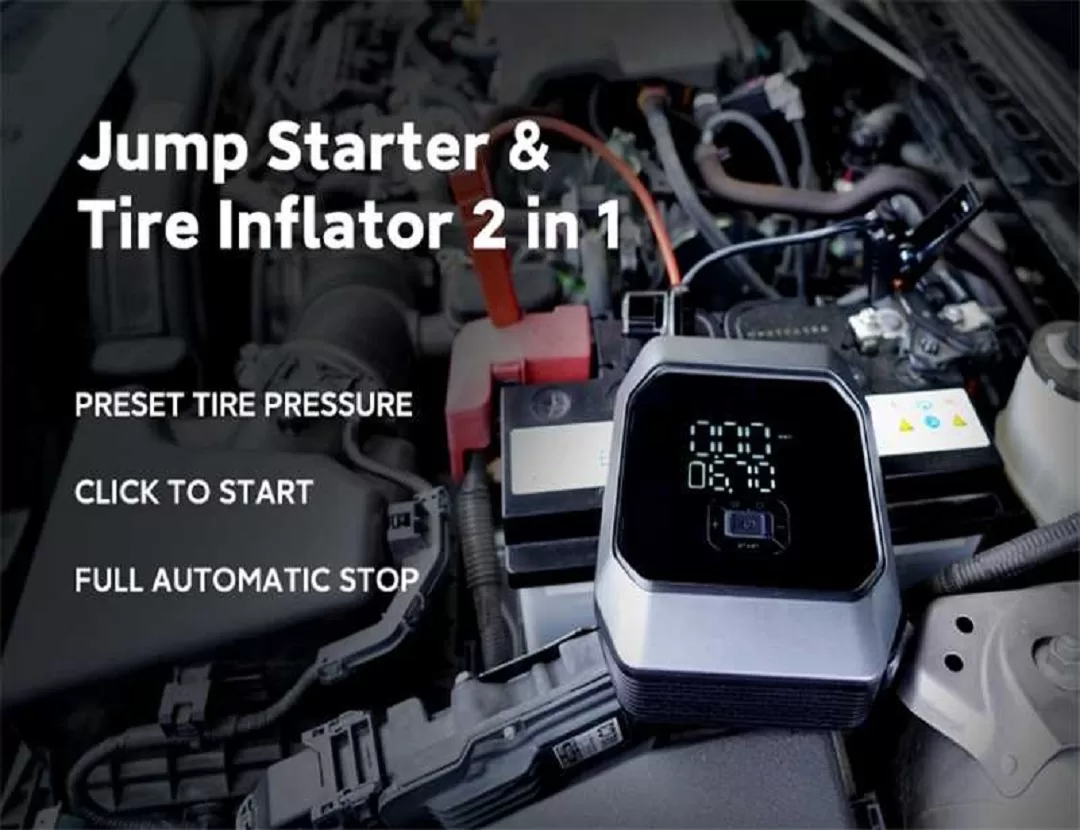
Powerful 5-in-1 Portable Car Tire Inflator and Jump Starter: The Ultimate Emergency Tool for Every Driver
Why Every Driver Needs a Portable Car Tire Inflator and Jump Starter Modern drivers face many unexpected situations on the road. A flat tire, low tire pressure, or a dead car battery can happen at the worst possible time. That’s why having a portable car tire inflator and jump starter is... -

7 Real Cycling Scenarios That Show Why Every Rider Should Carry a Mini Bike Pump
Cycling is one of the most freeing activities you can enjoy. Whether you’re commuting to work, riding through city streets, or exploring quiet countryside roads, a bike ride can instantly improve your day. But there’s one small problem that almost every cyclist eventually faces: Low tire pressure. It might happen...
-
How Is a Football Properly Inflated?
The correct inflation of a football - with not too much and not too little air - is a hotly debated topic among footballers.... -

Application Scenarios of Car Inflator Pump
Often long-distance business trips or play car owners because the road may be more remote areas, in this case if you encounter a tire leak....