

 Portable Tire Inflators
 Electric Air Pumps
 Electric Car Tyre Pumps
 Electric Ball Pumps
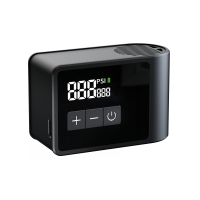 Electric Bike Pump
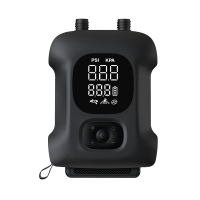 SUP Air Pump

The Definitive Guide to Battery Powered Tire Inflators: Cordless Pneumatics, Performance Benchmarks,
Every driver eventually confronts the same sinking feeling on a cold morning: the tire-pressure warning light comes on, signaling that something needs attention. The exact meaning of that indicator, whether it points to low pressure or a sensor issue, varies by vehicle, so checking the owner’s manual is the first sensible step. In that moment, dragging out a tangled 12-volt cord or searching for a functioning gas station compressor creates unnecessary friction. A modern battery powered tire inflator transforms this routine headache into a controlled, self-paced top-off, freeing motorists and cyclists from fixed power outlets. Choosing the right cordless air compressor requires understanding how miniature motors, lithium cells, and pneumatic valves interact under load. This guide examines the engineering principles, practical selection criteria, and operational techniques that define dependable portable tire inflation.
1. The Anatomy of Modern Cordless Inflation: How Pocket Compressors Deliver High Pressure
1.1 The Piston and Motor Dilemma: Engineering 150 PSI in a Handheld Enclosure
Miniaturizing an air compressor involves severe mechanical trade-offs between displacement volume and peak operating pressure. Handheld inflators cannot house the massive flywheels or induction motors found in stationary garage compressors, so they rely instead on compact high-speed direct-current motors. According to the product listing, this inflator pairs a 17-cylinder configuration with a 30W motor to reach a maximum rating of 150 PSI. The listing does not detail the internal piston mechanism or confirm how the motor behaves under peak backpressure, so those specific engineering claims are best left to the manufacturer’s own documentation rather than assumed here.
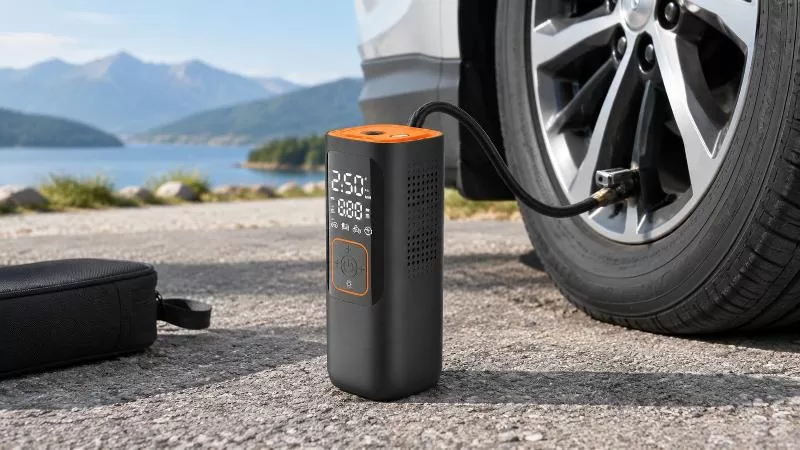
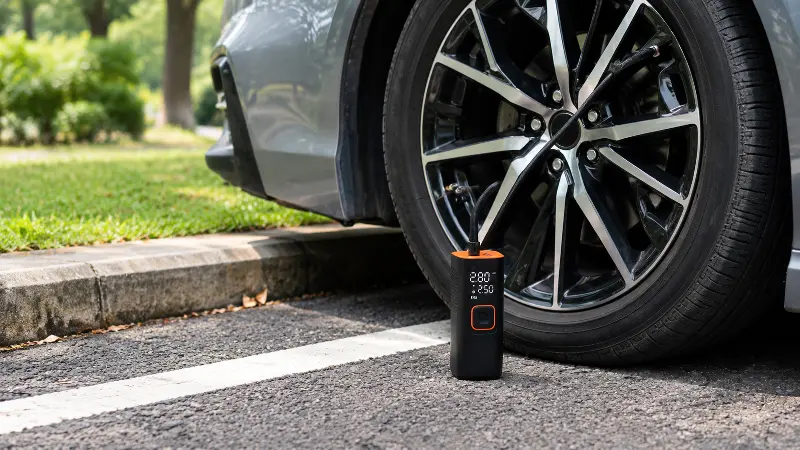
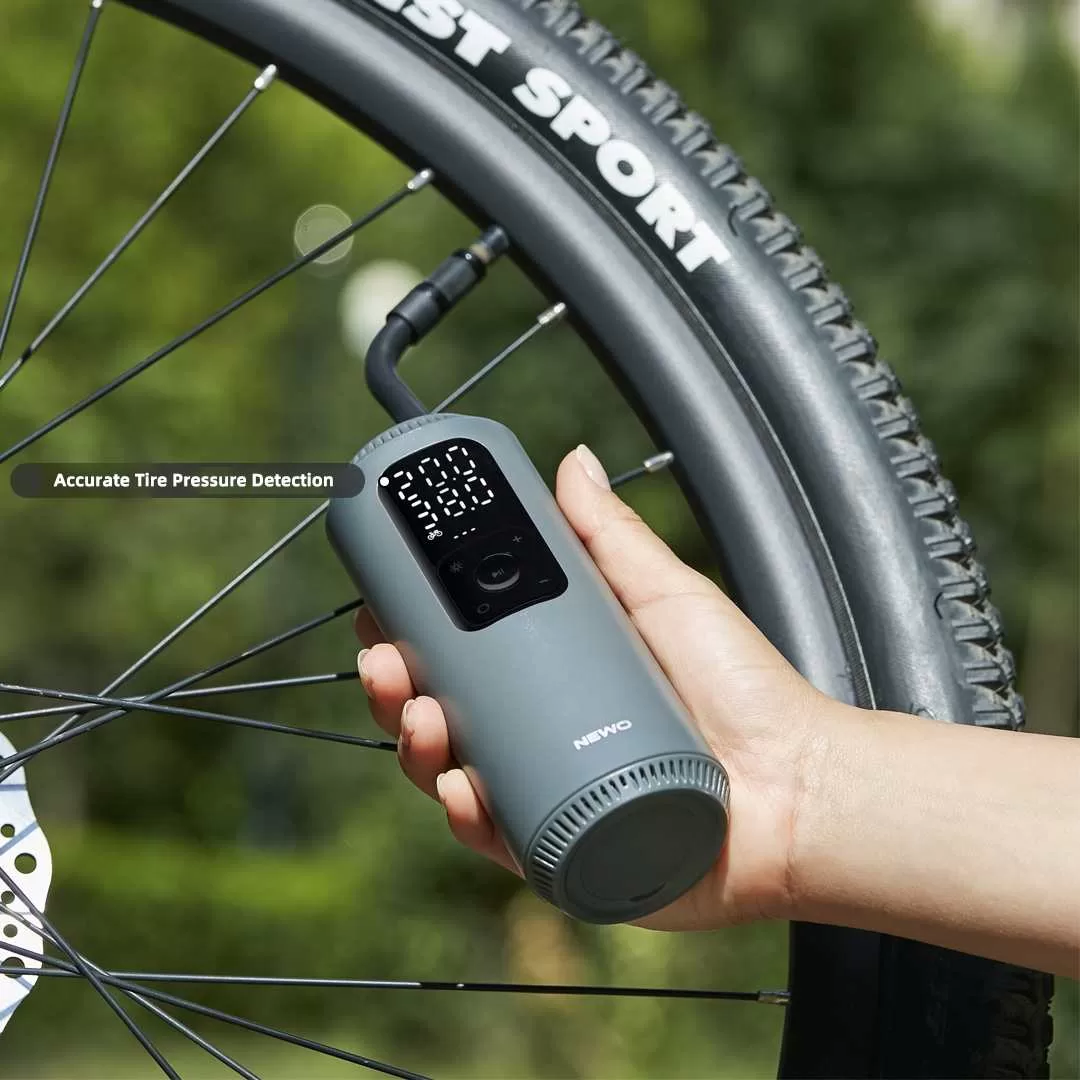
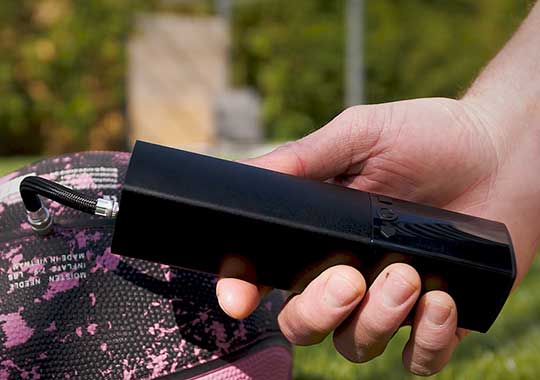
The image above shows a different inflator model from the same general product category, included here to illustrate the compact handheld form factor this class of device typically takes rather than the LP6 unit itself. The trade-off for this kind of pressure capability generally appears in volumetric output. While a garage compressor moves hundreds of liters each minute, this pocket-sized battery powered tire inflator is rated for 20 to 22 L/min. The product specifications do not state the exact test pressure or working conditions behind that figure, so actual fill times will vary with tire size, starting pressure, and ambient conditions rather than following a fixed countdown. That airflow figure still represents a meaningful compromise: enough volume to be useful for passenger tires and sporting goods, in a body small enough to hold in one hand.
1.2 Thermal Dynamics and Duty Cycles: Managing Compression Heat in 18650 Battery Systems
Compressing atmospheric gas inevitably produces heat, since forcing gas molecules into a smaller volume raises their kinetic energy and transfers warmth into the cylinder head, internal valves, and connecting air hose. In corded workshop tools, aluminum cooling fins and auxiliary fan shrouds dissipate this thermal load. Portable units, by contrast, manage heat dissipation through compact vented enclosures with no separate fan, which is part of why continuous runtime on a handheld device is more limited than on a shop compressor.
Lithium-ion cells generally perform best when continuous operation stays within sensible limits. A typical handheld system in this category uses two 18650 cells arranged in series, producing 7.4 volts with a rated energy of 14.8Wh (2000mAh). During active inflation, the continuous current draw generates some internal cell heating, while adjacent pneumatic components also contribute warmth to the housing.
According to the product specifications, this inflator is rated for a runtime of 20 to 22 minutes and a working temperature range of -10°C to 45°C. The listing does not specify whether this runtime figure represents a strict continuous-duty ceiling or detail any internal thermal cutoff mechanism, so it is best treated as the manufacturer’s general operating guidance rather than a laboratory-verified limit. As a conservative practice, letting the unit rest briefly between several consecutive tires is a reasonable precaution, even though the listing does not prescribe a specific cool-down duration.
1.3 Airflow (L/min) vs. Maximum Pressure (PSI): Debunking Common Metric Confusions
Consumer marketing often blends maximum pressure with flow rate, causing widespread misunderstanding during equipment evaluation. High pressure does not indicate rapid inflation speed, and high airflow does not guarantee sufficient force to seat a stubborn tire bead. Understanding how these two distinct metrics behave clarifies actual field capabilities, and it helps explain why two inflators with the same PSI rating can feel very different in practice.
Maximum pressure is the highest pressure the manufacturer specifies the pump can produce; it does not by itself indicate inflation speed. A pump rated for 150 PSI has pressure headroom well above what narrow road bicycle tires typically need, since the total volume of air required for a bicycle tire is small. Volumetric flow (L/min), on the other hand, determines how fast a large air cavity expands. Larger tires generally require more air volume to fill, while the pressure they need varies by tire type and load and can itself be high rather than modest, so flow rate and pressure rating should be weighed separately rather than assumed to move together.
When evaluating a battery powered tire inflator, it helps to treat the rated flow figure as a general indicator of scale rather than a promise of a specific fill time. A flow rating of 20 to 22 L/min, as listed for this device, is sized for passenger sedans, balance vehicles, and sporting goods rather than high-volume commercial applications, and actual results will depend on the tire being filled and its starting pressure.
2. Real-World Use Cases: Where a Battery Powered Tire Inflator Fits Everyday Needs
2.1 Roadside Pressure Loss and Seasonal Cold-Tire Maintenance
Ambient temperature drops cause measurable air pressure reduction inside pneumatic tires, a well-documented effect of roughly 1 PSI for every 10°F decrease in air temperature. When autumn transitions into winter, many drivers discover underinflated tires before their morning commute. Driving on soft rubber accelerates shoulder tread wear and can compromise handling and braking stability, which is exactly the kind of small, preventable problem this type of tool is meant to address before it becomes a bigger one.
A cordless battery powered tire inflator addresses this friction right on the driveway. Rather than wrestling with tangled extension cords or dirty coin-operated air lines, the driver threads the hose directly onto the valve stem at the curb. The inflator reads the initial pressure at the valve, runs to bring the tire toward the target pressure the driver sets, and cuts off automatically once that value is reached. Because that initial reading may reflect a tire that was recently driven on rather than a true cold-tire baseline, it is worth setting the target according to the vehicle’s door-placard cold-pressure specification rather than treating the inflator’s first readout as the reference point.
According to the product specifications, a fully charged battery can inflate approximately 2.5 tires of the size referenced in the listing on a single charge. The listing does not specify the starting pressure used to produce that figure, so it should be read as a general capacity benchmark rather than a guarantee for a specific flat-tire scenario. Even so, having that reserve on hand reduces dependence on roadside service calls for routine pressure drops.
2.2 High-Pressure Micro-Mobility: Bicycles, E-Bikes, and Mobility Devices
Urban mobility has expanded far beyond conventional automobiles, introducing diverse tire profiles that challenge traditional floor pumps. Commuter e-bikes, wheelchairs, and road bicycles feature a range of valve geometries and pressure requirements that manual hand pumps can struggle to service conveniently. The product listing confirms use across car tires, bicycles, motorcycles, e-bikes, wheelchairs, and balance vehicles, though specific valve-type compatibility, such as whether a Presta fitting is included, is a detail worth confirming against the unit’s own manual rather than assuming; riders using other micro-mobility devices, such as electric scooters, should likewise check tire and valve fitment before relying on this inflator.
Appropriate tire pressure for a road bicycle varies with tire width, rider and bike weight, rim type, and riding conditions, so riders should set pressure according to the tire or rim manufacturer’s guidance rather than a single fixed number. What a 2 to 150 PSI capable inflator offers is headroom across that range, along with a way to dial in a precise custom value instead of estimating by feel with a hand pump. Manual frame pumps also demand considerable physical effort at higher pressures and can risk damaging fragile valve cores during hurried roadside use.
For micro-mobility riders, carrying a tool that weighs roughly 442 grams inside a backpack or pannier offers real peace of mind. The listing specifies five preset modes alongside a custom pressure setting, which in general terms lets riders move between different inflation categories rather than recalculating a target value from scratch each time; the exact labels assigned to each preset are best confirmed from the product’s own interface or manual.
2.3 Off-Grid Utility and Dual-Purpose Power Delivery
Emergencies rarely occur within comfortable reach of municipal power grids. Whether camping in remote terrain, coaching on community athletic fields, or commuting across suburban transit gaps, carrying versatile tools reduces packing bulk and logistical complexity, and a single device that handles both air and a backup charge covers more ground than a dedicated inflator alone.
Beyond pneumatic service, this cordless inflator design integrates supplementary electrical capabilities into its compact frame. The listed charging input is 5V/2A over Type-C, so standard vehicle USB ports, wall bricks, or portable solar packs can recharge the unit provided they offer a compatible Type-C connection and can supply that specified input. Furthermore, an integrated 5V/2A power-bank output lets the internal lithium battery double as a backup energy source for topping up a smartphone or GPS device in a pinch.
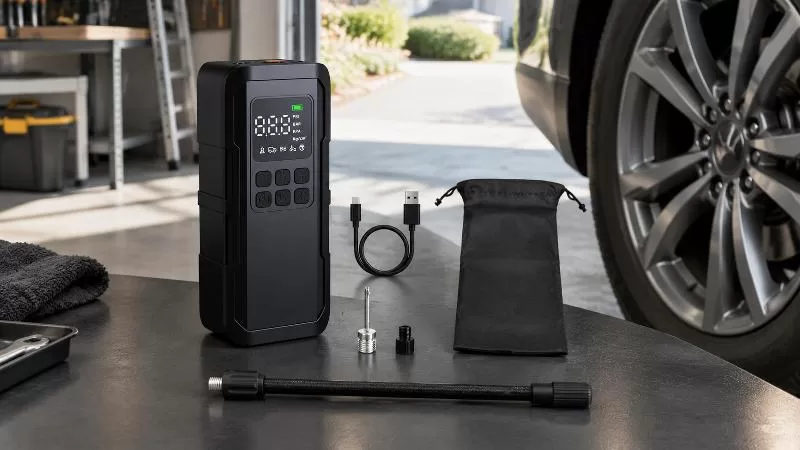
The accessory layout pictured, including the carrying pouch, hose, and adapters, illustrates a typical kit arrangement for inflators in this general product line rather than a confirmed inventory of everything bundled specifically with the LP6. An integrated LED screen on the device itself shows real-time battery status and pressure readouts in dim environments, which is useful for understanding available energy reserves before beginning remote maintenance tasks.
3. Engineering Specifications That Matter: How to Evaluate a Portable Air Pump
3.1 Cylinder Architecture and Motor Wattage Trade-Offs
Pneumatic hardware design requires deliberate balancing among operational speed, acoustic output, and physical device dimensions. Oversized motors deliver rapid fill rates but generate intrusive noise and require heavier battery arrays that undermine genuine portability. Compact engineering instead favors components sized for targeted, everyday utility rather than maximum throughput, and that trade-off shows up directly in how this unit is specified.
A 17-cylinder layout paired with a 30W motor, as specified for this inflator, represents that kind of balanced configuration for personal use rather than commercial duty. Keeping the rated acoustic output at or below 85 dB measured at one meter is a reasonable level for driveways and parking structures, though actual perceived loudness will still depend on surrounding surfaces and ambient noise.
3.2 Battery Chemistry, Discharge Rates, and Storage Life
The internal energy storage configuration affects how a portable inflator performs after sitting unused for a while. At Newo, product development for smart electric air pumps focuses on pairing lithium cell chemistry with circuit management suited to intermittent, on-demand use.
A dual-cell 18650 layout supplying 7.4 volts provides the discharge rate needed to drive an electric motor continuously under load. When evaluating battery performance, several electrical parameters from the product specifications warrant close inspection:
-
Pack capacity and energy: A rating of 2000mAh at 7.4V equates to a rated energy of 14.8Wh, which the listing ties to the multi-tire top-off figure discussed earlier.
-
Charge intake rate: Standard 5V/2A Type-C inputs allow a full recharge within 2 to 3 hours per the listed charging time.
-
Cycle longevity: The product specifications state 100 cycles while retaining at least 80% of original capacity, without detailing the specific test method used to reach that figure.
-
Working temperature: The listed operating range spans -10°C to 45°C; this figure describes conditions for running the pump rather than guidance for long-term storage.
3.3 Display, Pressure Readout, and Auto Shut-Off
Manual pressure gauges rely on mechanical bourdon tubes or spring-loaded plastic sliders, components that are mechanically simple but can be affected by vibration and physical drops over time. A clear, legible readout during inflation makes it easier to confirm a tire is reaching the intended pressure rather than estimating by feel or sound, which is one of the more practical advantages a digital display offers over an old analog clip-on gauge.
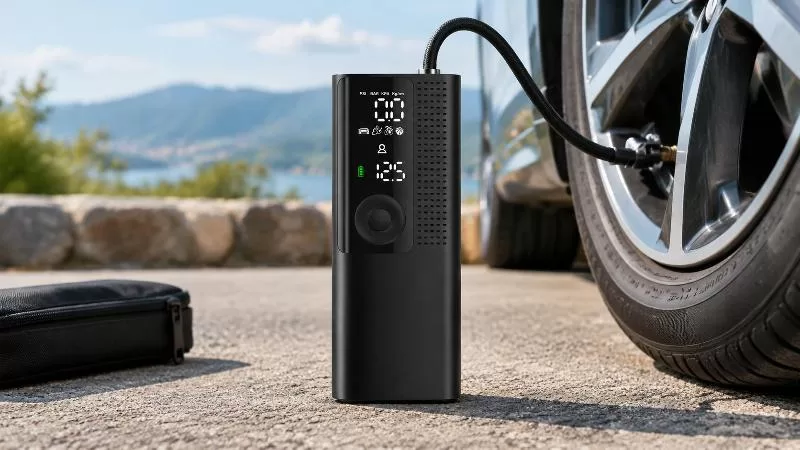
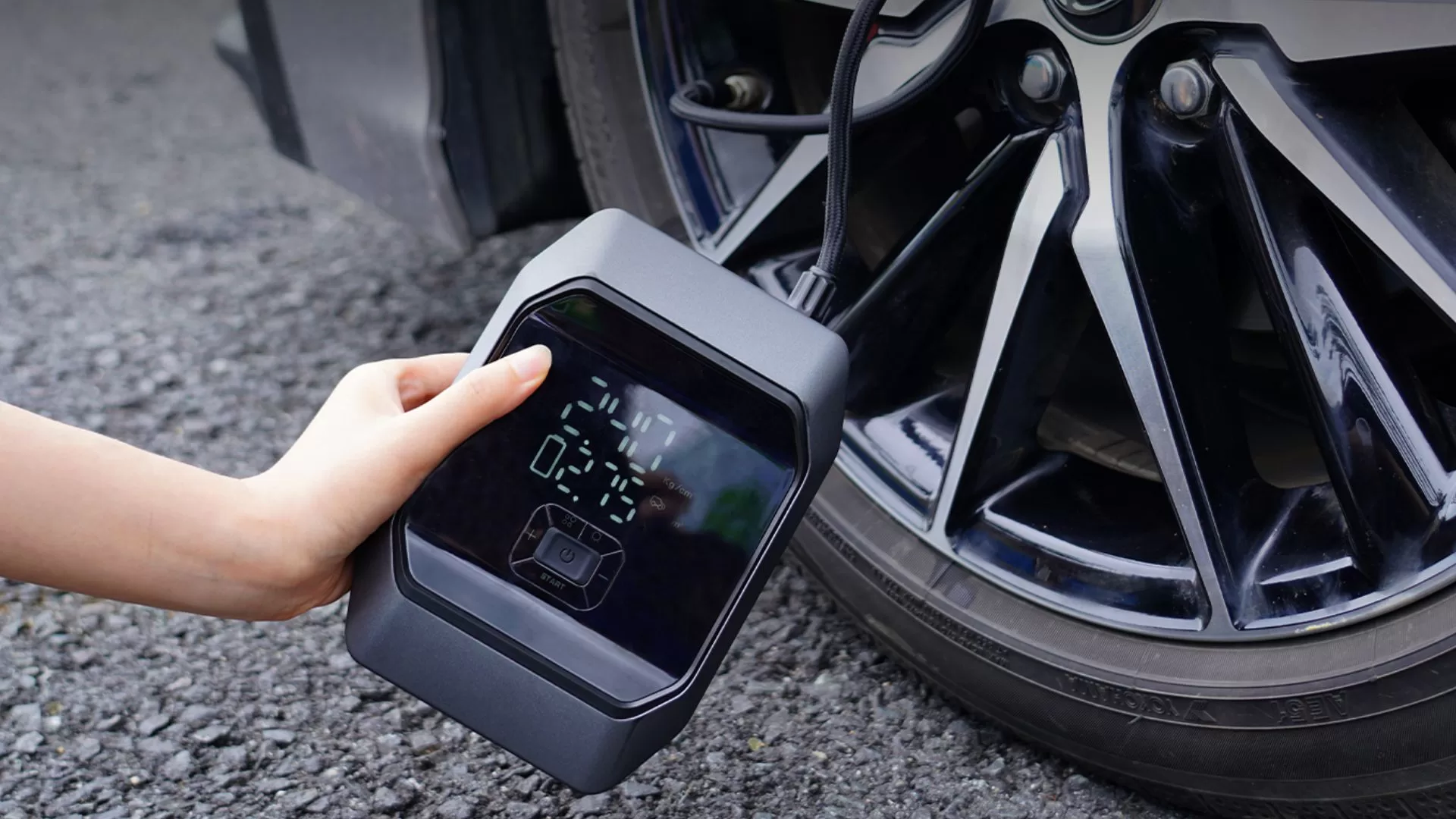
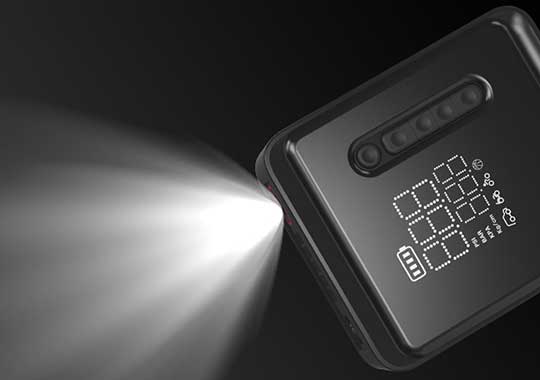
The image above shows another inflator model from the broader product line, used here to illustrate a typical digital display layout rather than to depict the LP6 itself. This inflator uses a single LED screen to display pressure and battery status, along with five preset modes and a custom pressure setting. Once the chosen target pressure is reached, the unit’s automatic shut-off stops the motor, which is a convenience feature rather than a certified precision instrument. The product specifications do not state a sensor accuracy tolerance, so for situations where exact pressure matters, such as performance driving or track use, checking the result with a separate, known-accurate gauge is a sensible extra step.
4. Architectural Comparison: Cordless vs. 12V Wired vs. Station Air
4.1 Comparative Overview: Portability, Power Source, and Convenience
Selecting the ideal inflation solution requires weighing mechanical independence against continuous volume capabilities. Commercial gas station units are generally well suited to rapid, high-volume tire service, but their fixed locations limit convenience. Wired 12-volt vehicle compressors remove the need to drive somewhere, but they tie the user to the vehicle’s cigarette-lighter socket and a trailing cord. Rather than assigning precise pressure or flow numbers to broad equipment categories that vary widely by brand and model, the comparison below focuses on verifiable specifications for this inflator alongside general, qualitative characteristics of the alternatives.
| Technical Parameter | Cordless Battery Inflator (LP6, per product specifications) | 12V DC Cigarette-Lighter Pump | Commercial Gas Station Air | Floor-Standing Hand Pump |
|---|---|---|---|---|
| Power Independence | Fully autonomous, internal battery | Tethered to vehicle 12V socket | Grid dependent, fixed location | Fully manual, human effort |
| Maximum Pressure | 150 PSI (2 to 150 PSI range) | Varies by model | Varies by site and equipment | Varies by model and user effort |
| Rated Air Flow | 20 to 22 L/min | Varies widely by model | Generally high volume, varies by equipment | Manual, depends on user effort |
| Net Weight | 442 g | Generally heavier due to cord and housing | Not applicable, stationary equipment | Varies by model |
| Portability | Pocket-sized, carried independently of a vehicle | Portable but requires a running or accessory-powered vehicle | Not portable | Portable but bulkier for high pressure |
| Secondary Utility | Power bank output (5V/2A), LED screen | Rare, vehicle-dependent | None | None |
4.2 Form Factor and Packing Efficiency for Vehicle and Commuter Stowage
Storage constraints often dictate whether emergency tools remain inside a vehicle or get left behind in a home garage. Bulky plastic compressor cases with tangled power cords and coiled hoses clutter vehicle cargo areas, frequently getting buried beneath groceries or sports gear, and a tool left behind on a closet shelf obviously cannot help during a roadside pressure drop. A smaller, self-contained unit sidesteps that problem simply by being easy enough to keep within reach at all times.
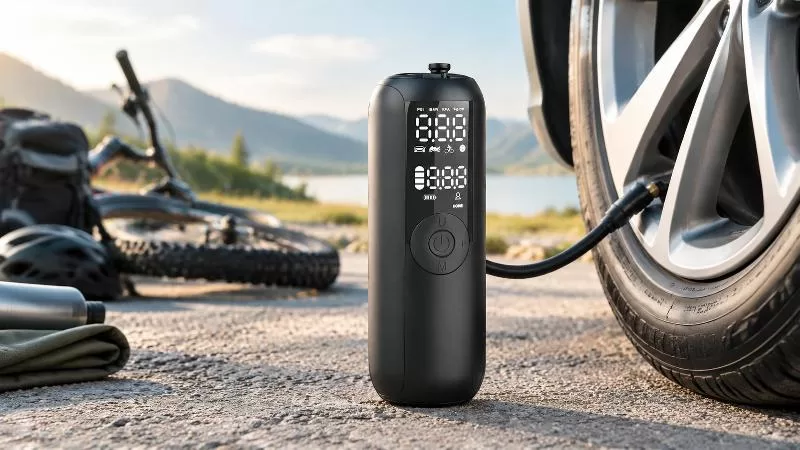
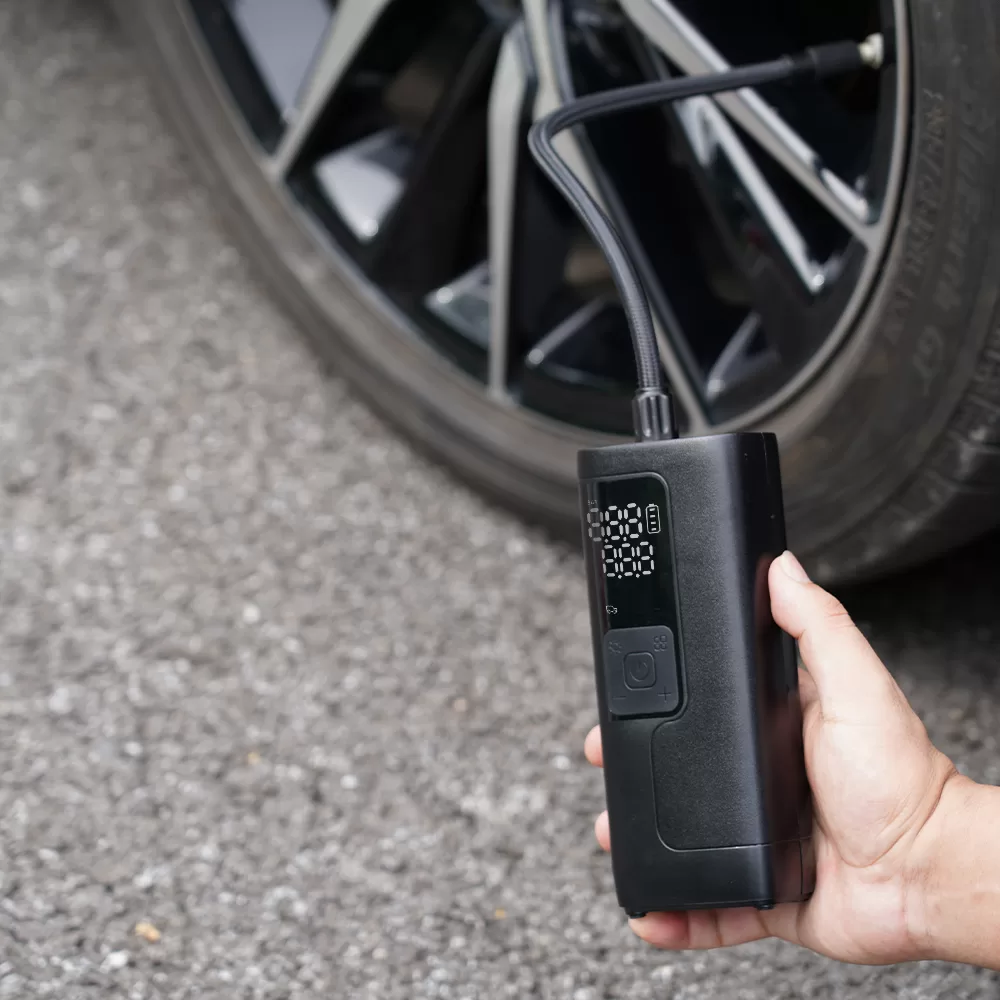
The product pictured here represents another model in the same general inflator category rather than this exact LP6 unit, but it illustrates the kind of compact footprint this class of device typically offers. According to its own listed dimensions, this inflator measures 46 by 68 by 152 mm and weighs 442 grams, small enough to fit into vehicle door pockets, center consoles, or glove compartments, or to slip into a messenger bag or hydration pack without adding noticeable bulk.
5. Step-by-Step Operation and Care Guidance
5.1 Pre-Inflation Connection: Valve Sealing and Pressure Gauge Verification
Proper mechanical coupling is essential for accurate digital sensor readings and efficient air delivery. Air leaking through loose threads creates false backpressure readings, confusing the internal microprocessor and extending motor runtime unnecessarily. Following a structured procedure, consistent with the unit’s own manual, helps ensure a solid pneumatic seal.
-
Ensure the tire valve stem is clean and free of abrasive grit, road salt, or moisture before attaching equipment.
-
Connect the hose securely into the inflator’s outlet port, following the fitting method described in the product manual.
-
Attach the connector onto the tire valve stem, then turn on and operate the unit according to its manual before checking the displayed pressure reading.
-
Review that initial reading against the vehicle’s door-jamb placard specification rather than the maximum pressure stamped on the tire sidewall, keeping in mind the reading may not reflect a true cold-tire baseline if the car was recently driven.
-
Select the appropriate preset category, such as car, motorcycle, bicycle, or custom, and adjust the digital target to match the intended specification.
5.2 Operating Within Sensible Limits
Running any small motor against high backpressure for an extended period generates heat inside the pump, so staying within the manufacturer’s listed operating guidance is a sound practice even without a documented internal cutoff mechanism. The following habits are conservative precautions rather than manufacturer-specified rules, and they are worth following alongside whatever the unit’s own manual recommends.
-
Treat the listed 20 to 22 minute runtime as general guidance rather than a laboratory-verified ceiling, and avoid trying to inflate several large vehicle tires from very low pressure in one unbroken session.
-
As a conservative precaution, pausing briefly if the housing feels noticeably warm after several tires in a row is a reasonable habit, even though the listing does not specify an exact cool-down duration.
-
Avoid handling the hose connector immediately after extended use, and follow the manual’s guidance on letting components cool before adjusting or disconnecting them.
-
Keep air intake perforations clear of leaves, dust, and road grime so that air can move freely around the internal motor.
5.3 Battery Care and Everyday Storage
The product specifications list a working temperature range of -10°C to 45°C for operating the pump, but they do not provide separate guidance for long-term storage conditions or recommended storage charge levels, so those two should not be treated as the same thing.
In the absence of model-specific storage instructions, a generally sound habit for any lithium-ion device is to avoid leaving it fully depleted for long stretches and to recharge it periodically through its Type-C port, which this unit’s own listing confirms takes 2 to 3 hours for a full charge. Checking the battery indicator before a trip, rather than assuming a glovebox-stored unit is still ready, is a simple way to avoid surprises when low tire pressure comes up unexpectedly.
6. Frequently Asked Questions (FAQs)
Can a compact battery powered tire inflator fill a completely flat car tire?
According to the product specifications, a full charge on this inflator’s battery can inflate approximately 2.5 tires of the size referenced in the listing. The listing does not state the starting pressure used for that figure, so it should not be read as a confirmed claim about refilling a completely flat tire from zero. For routine top-offs of a few PSI across several tires, the stated capacity is a reasonable general benchmark.
How often do I need to recharge the lithium battery if kept in a glovebox?
The product specifications list a working temperature range for operating the pump, not a storage charge interval or recommended storage charge level, so there is no model-specific figure to cite here. As a general precaution for lithium-ion devices left unused, checking the battery indicator periodically and recharging via the Type-C port before a trip is a reasonable habit, rather than assuming the unit will hold a usable charge indefinitely in a glovebox.
Why does the hose connector feel warm during prolonged use?
Compressing ambient air into a pressurized tire generates heat inside the pump, and components near the compression chamber can feel warm to the touch after extended use. The product documentation does not detail the exact connector material or a specific cooldown time, so the safest approach is to follow the included manual and allow any warm component to cool before handling or disconnecting it.
How accurate is the digital pressure reading and auto shut-off compared to a separate gauge?
The product specifications describe a single LED screen with pressure display and an automatic shut-off once the target pressure is reached, but they do not state a specific sensor accuracy tolerance. For that reason, the built-in display is best treated as a convenient working reference rather than a certified measurement tool. When exact pressure matters, confirming the result with a separate, known-accurate gauge is a sensible extra step.
What is the difference between CFM and L/min ratings when shopping for inflators?
Cubic feet per minute (CFM) and liters per minute (L/min) are two units measuring the same physical attribute: volumetric airflow. One CFM equals approximately 28.3 L/min. Heavy shop compressors are often rated in CFM because they power pneumatic air tools requiring large volumes of air. Compact portable inflators operate on a smaller scale, and this model is rated at 20 to 22 L/min, a figure sized for personal automotive, motorcycle, and bicycle tire maintenance rather than workshop air tools.
7. Conclusion: Integrating Cordless Pumping Reliability into Everyday Mobility
Modern vehicle safety depends heavily on consistent tire maintenance, yet traditional inflation tools often introduce unnecessary obstacles. Bulky cords, unreliable commercial pumps, and manual floor pumps can discourage drivers and riders from addressing small pressure drops promptly. Integrating a compact battery powered tire inflator into your regular vehicle gear supports real independence, turning a tire pressure check into something you can handle on your own schedule rather than a trip to a fuel station. By combining a 150 PSI pressure ceiling with a lightweight 442g form factor, an automatic shut-off at the target pressure, and a secondary power-bank function, this pocket-sized compressor offers a practical, well-specified option for everyday tire management wherever your travel leads.
-
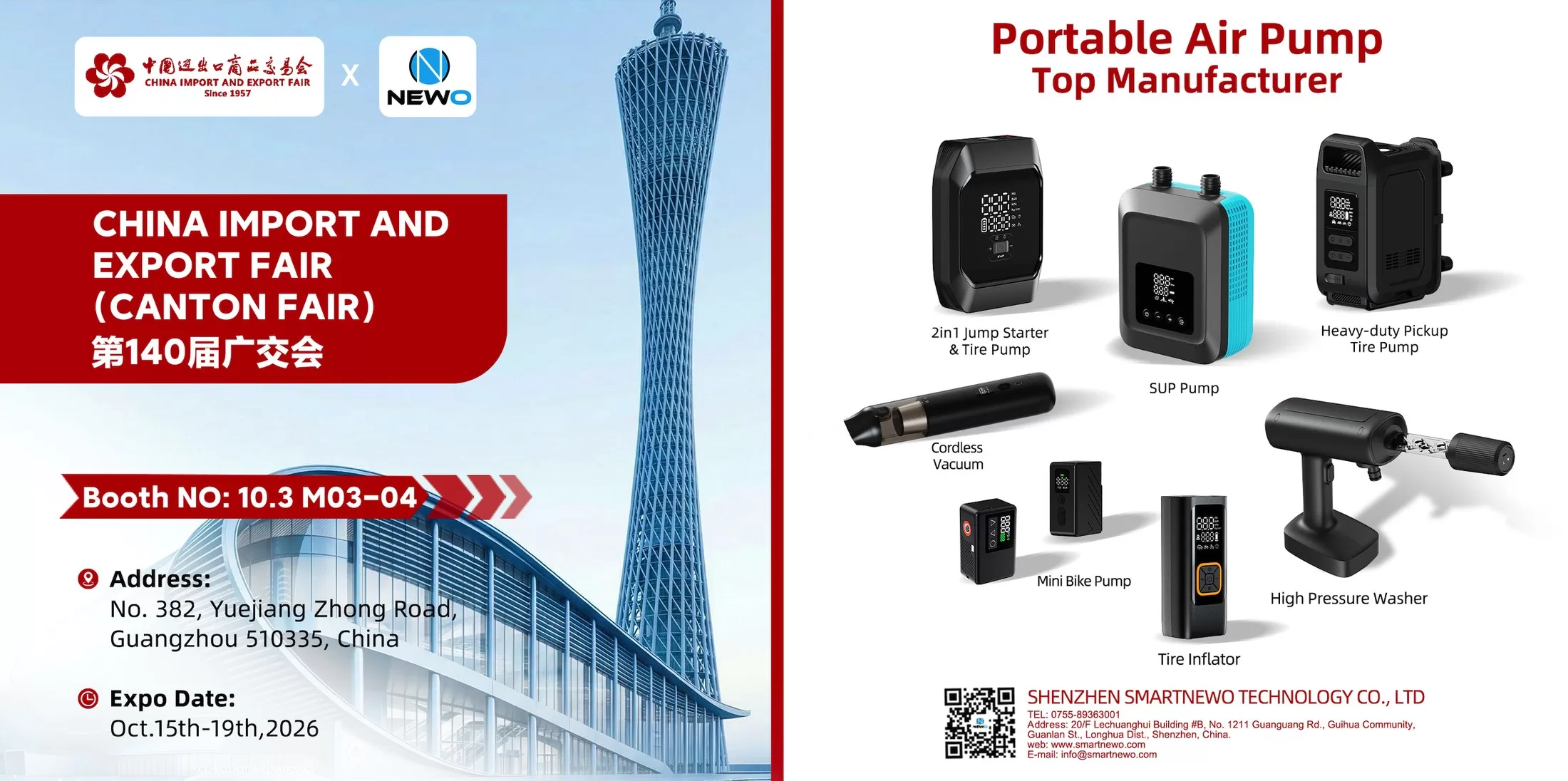
Meet NEWO at the 140th Canton Fair: Visit Booth 10.3 M03–04
Meet NEWO at the 140th Canton Fair in Guangzhou, October 15–19, 2026. Visit Booth 10.3 M03–04 to explore portable air pumps and discuss OEM, ODM and distribution opportunities.... -

As Shenzhen Welcomes the World for APEC 2026, NEWO Welcomes You to Our Factory
As Shenzhen prepares for APEC 2026, NEWO welcomes international buyers and partners to visit our factory, meet our team and explore future cooperation.... -
Leading the Way in Product Innovation and Excellence
Smartnewo exemplifies professionalism in product innovation and manufacturing. Their collaboration with Xiaomi Youpin on the G01 crowdfunding project highlights their expertise in creating compact, powerful inflatable pumps. Rigorous engineering, meticulous production processes, and advanced quality assurance underscore their commitment to excellence. The success of the G01 project, with significant market... -
Essential Qualities of an Excellent Supplier
In today's competitive market, finding a reliable supplier is crucial for business success. Based on insights from Smartnewo and broader internet research, here are key qualities an excellent supplier must possess:... -
NW06 Tire Inflator: Compact Power for Quick Inflation
Summary The NW06 Tire Inflator delivers quick and efficient tire inflation with a powerful 35L/min airflow. It features a user-friendly LCD screen for real-time pressure monitoring, dual power options with a built-in 6000mAh battery, and multiple nozzle attachments for versatile use. Its compact design and integrated LED light ensure convenience and... -
Unleash the Power of Portability: The SmartNewo Jump Starter with Air Compressor KF03
This guide will walk you through the steps to effectively use a portable tire inflator, helping you stay prepared and safe on the road.... -

Newo Attends The 2024 Consumer Electronics Show (CES)
Smartnewo booth is located at 53672, Halls A-D, Level 2, Venetian Expo, Las Vegas Convention Center (LVCC). ... -
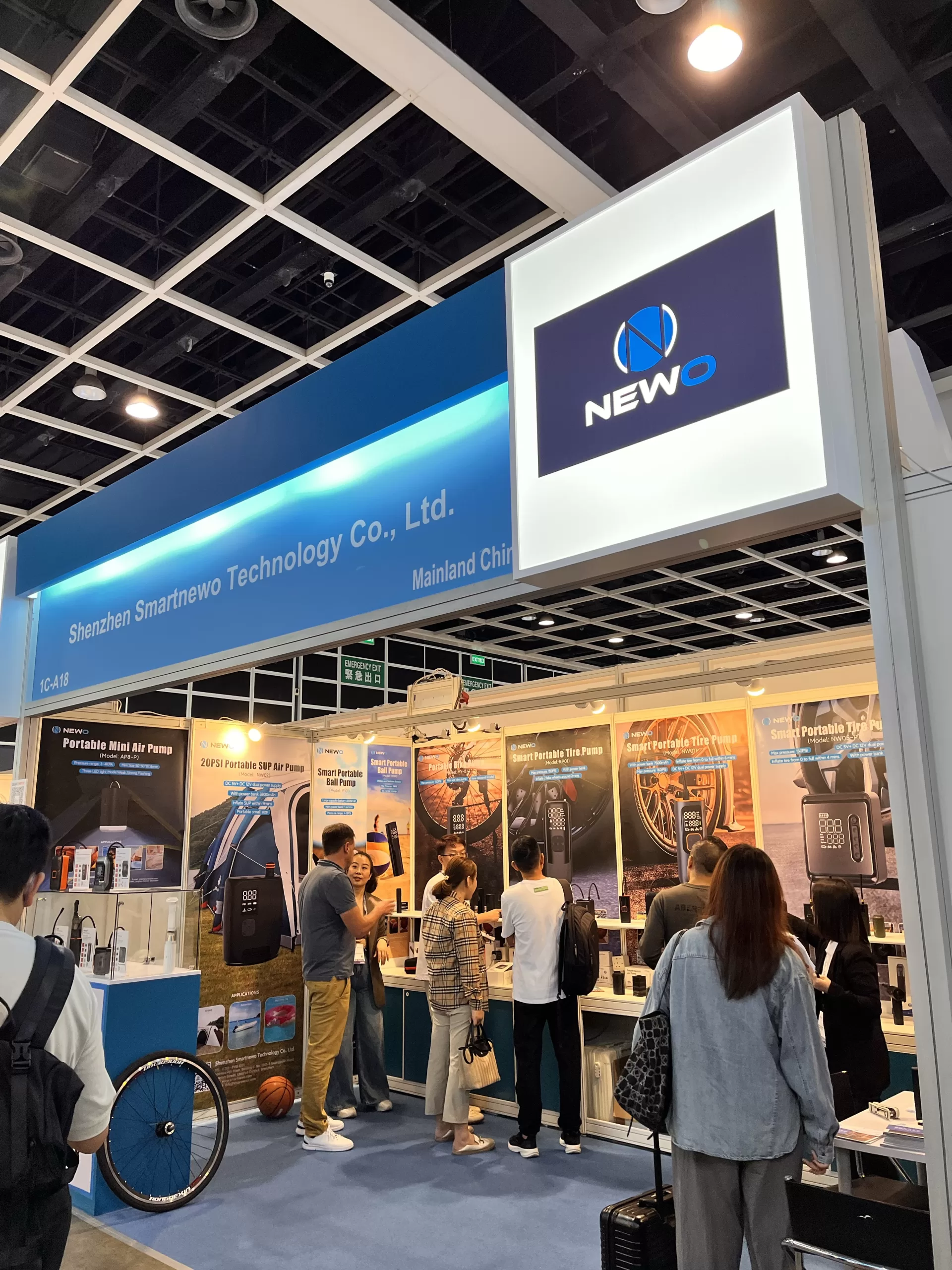
Smartnewo’s Dual-Cylinder Air Pump Rocks the Hong Kong Autumn Electronics Fair!
Smartnewo’s Dual-Cylinder Air Pump Rocks the Hong Kong Autumn Electronics Fair!... -

Meet at the Canton Fair! Smartnewo brings dual-cylinder air pumps, making your inflation experience faster and more stable!
NEWO has went deep communication and negotiation with customers from all over the world on booth.... -
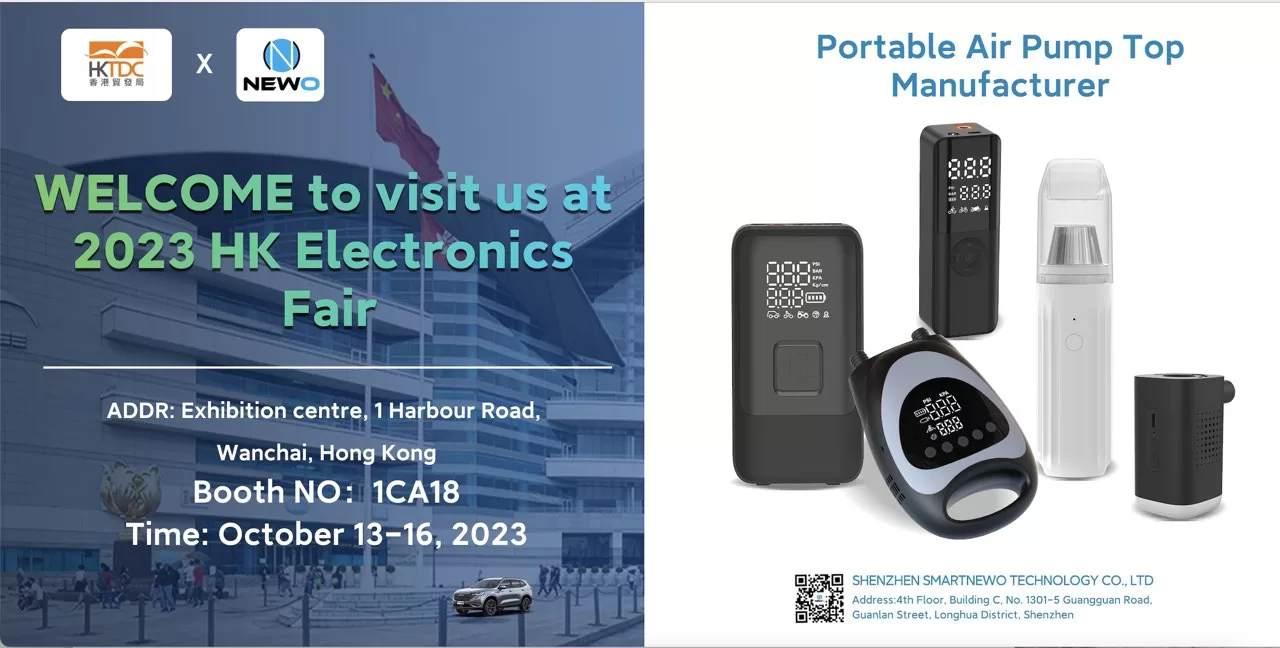
“Hong Kong Autumn Electronics Fair – 1CA18 (October 13th to 16th): Smartnewo invites you to visit our booth!
Hong Kong Autumn Electronics Fair...
-
What to Check Before Ordering Custom Electric Bike Pumps
Plan custom electric bike pumps with a clear requirements freeze for valves, TPU tubes, portability, repeated top-ups, charging, and model-specific documents.... -

OEM vs ODM Air Pumps: Which Manufacturing Model Fits Your Brand?
Compare OEM and ODM air pump projects by design responsibility, change approval, development scope, and written ownership terms before choosing your route.... -

How to Choose a Reliable Tire Inflator Manufacturer in China
Choose a tire inflator manufacturer in China with a focused RFQ, supplier evidence, configuration checks, and clear sample-to-pilot decisions for your brand.... -
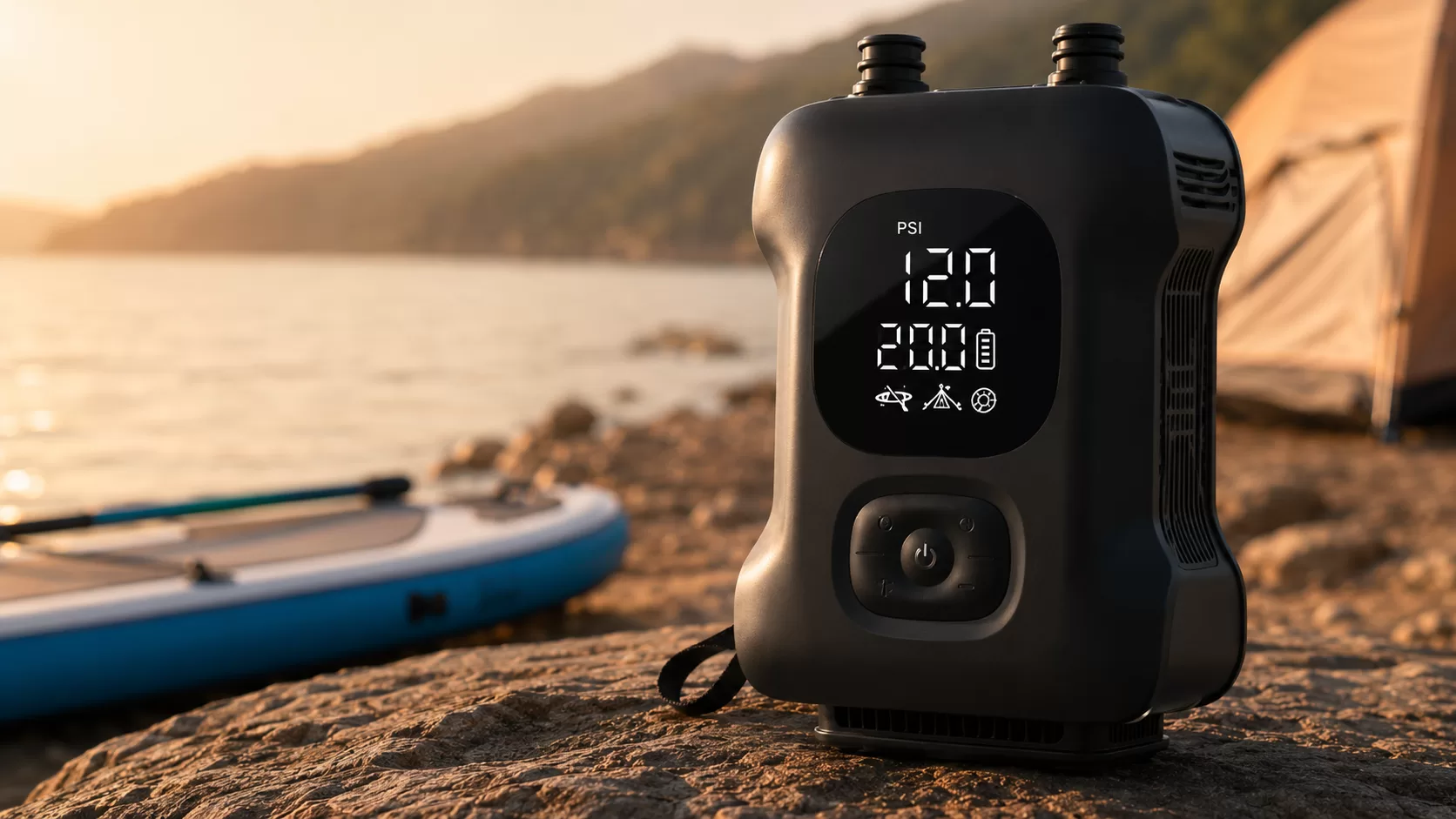
Rechargeable Electric SUP Pump for Paddle Boards: Faster Inflation for SUPs, Kayaks and Inflatable Tents
The BL10-C Portable Electric Bike Tire Inflator is a compact and lightweight mini electric bike pump designed for modern cyclists. With up to 120 PSI pressure, a digital LED display, preset pressure control, automatic shut-off, USB-C charging, and multiple valve adapters, BL10-C offers a convenient inflation solution for road bikes,... -
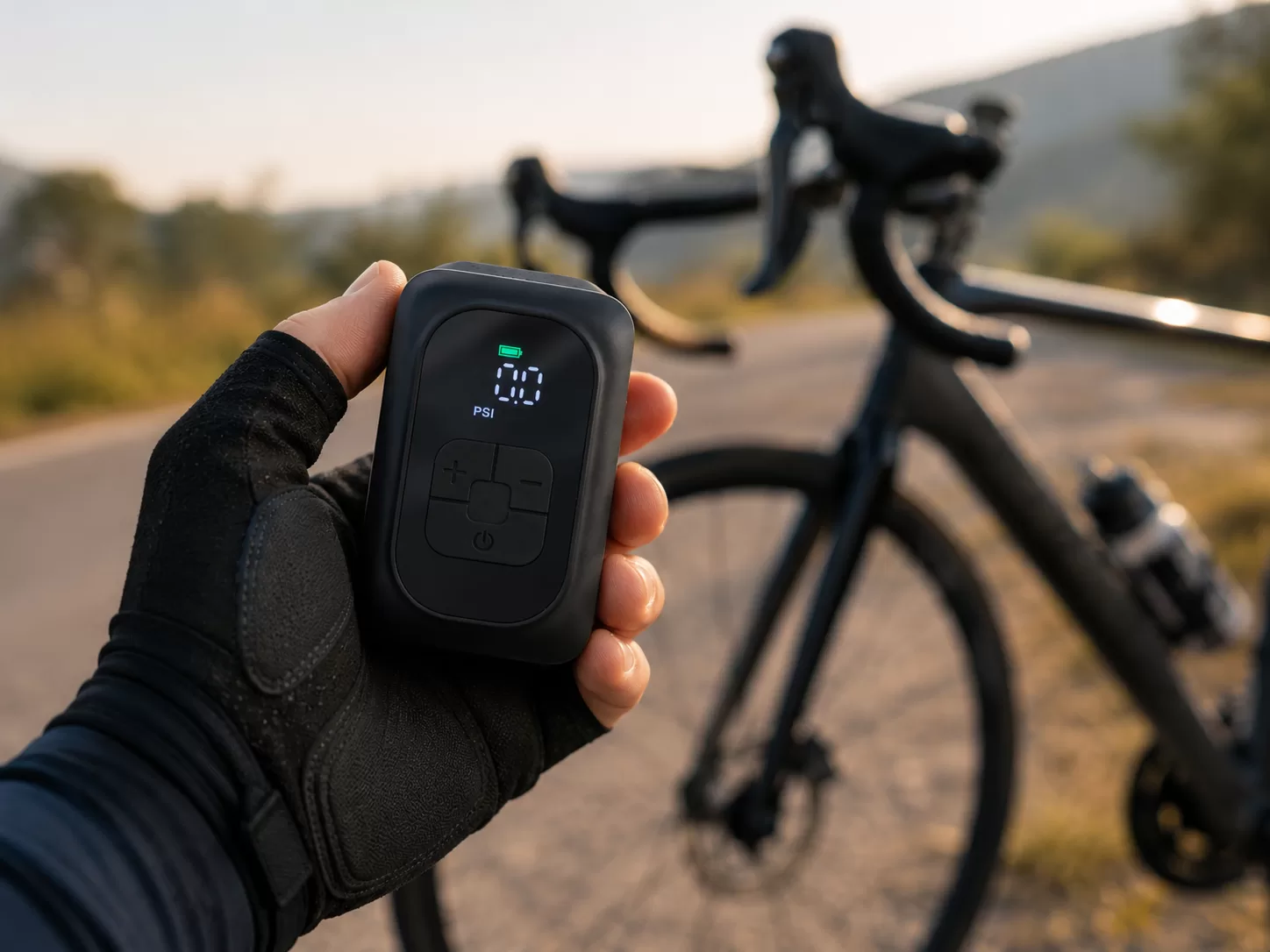
Are Electric Bike Pumps Worth It in 2026? Electric Pump vs CO₂ vs Mini Hand Pump
Discover whether electric bike pumps are worth it in 2026. This guide compares electric bike pumps, CO₂ inflators, and mini hand pumps for road cycling, gravel riding, commuting, and long-distance rides. Learn the pros, limitations, best use cases, and key features to look for before choosing the right portable tire... -
BL10-C Portable Electric Bike Tire Inflator: Small Size, Reliable Power for Every Ride
The BL10-C Portable Electric Bike Tire Inflator is a compact and lightweight mini electric bike pump designed for modern cyclists. With up to 120 PSI pressure, a digital LED display, preset pressure control, automatic shut-off, USB-C charging, and multiple valve adapters, BL10-C offers a convenient inflation solution for road bikes,... -
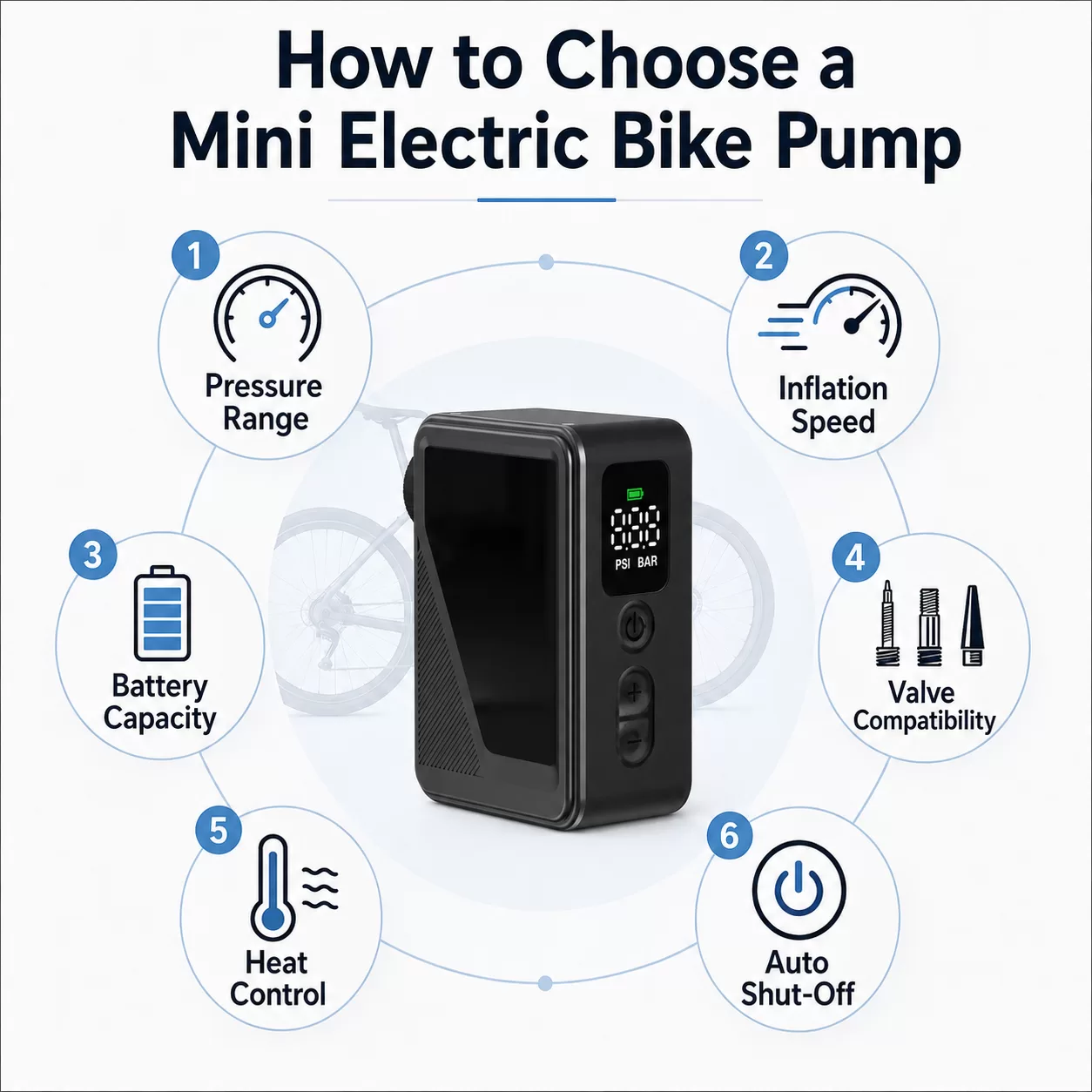
Why Mini Electric Bike Pumps Are Becoming Essential for Modern Cycling
Discover why mini electric bike pumps are becoming essential for modern cyclists. Learn how portable electric bike pumps improve tire pressure management, riding safety, and convenience.... -
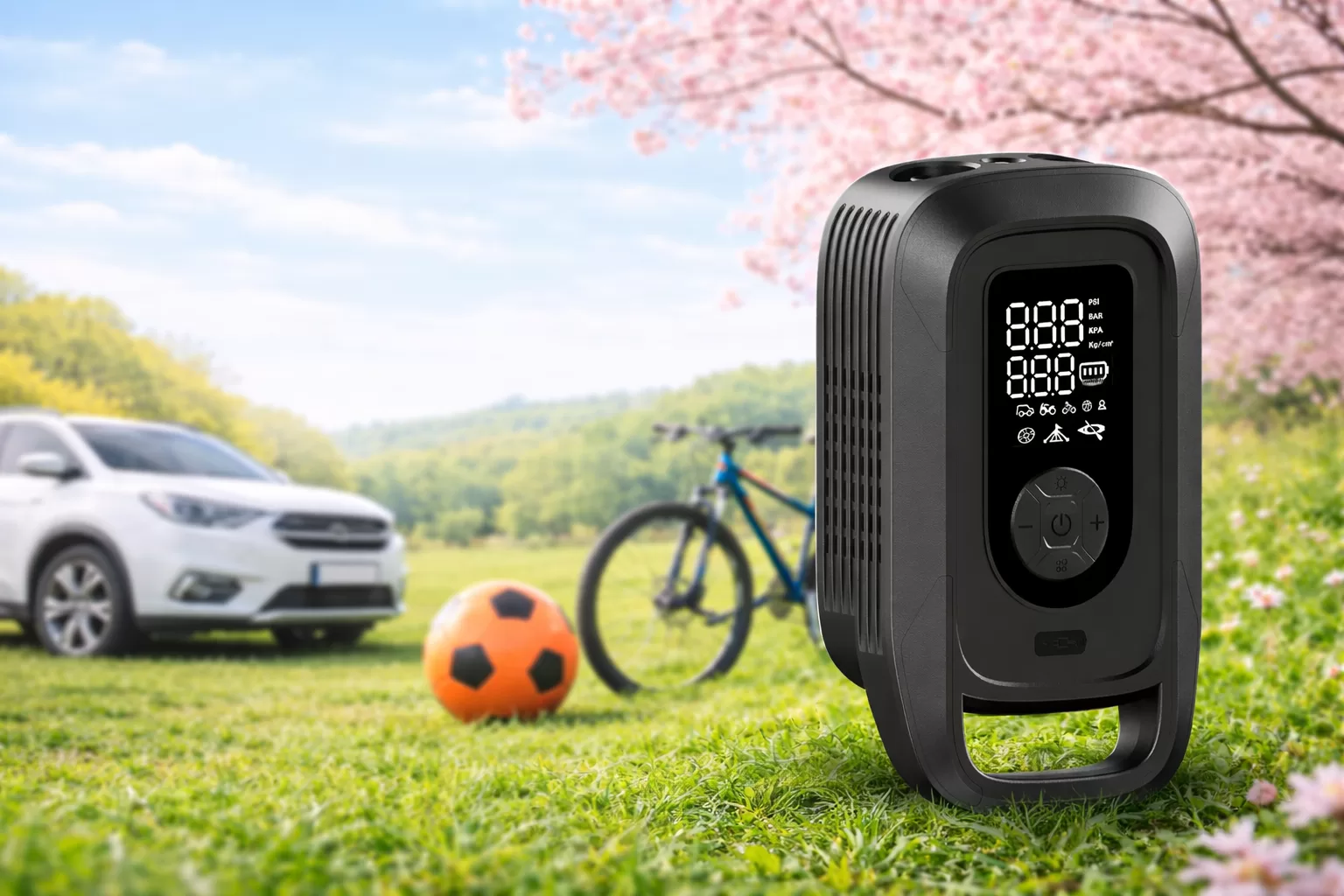
The Ultimate Smart Solution for Easy Outdoor Adventures in 2026
Discover how a spring travel air pump simplifies outdoor trips with fast inflation, smart features, and powerful performance—perfect for every adventure.... -
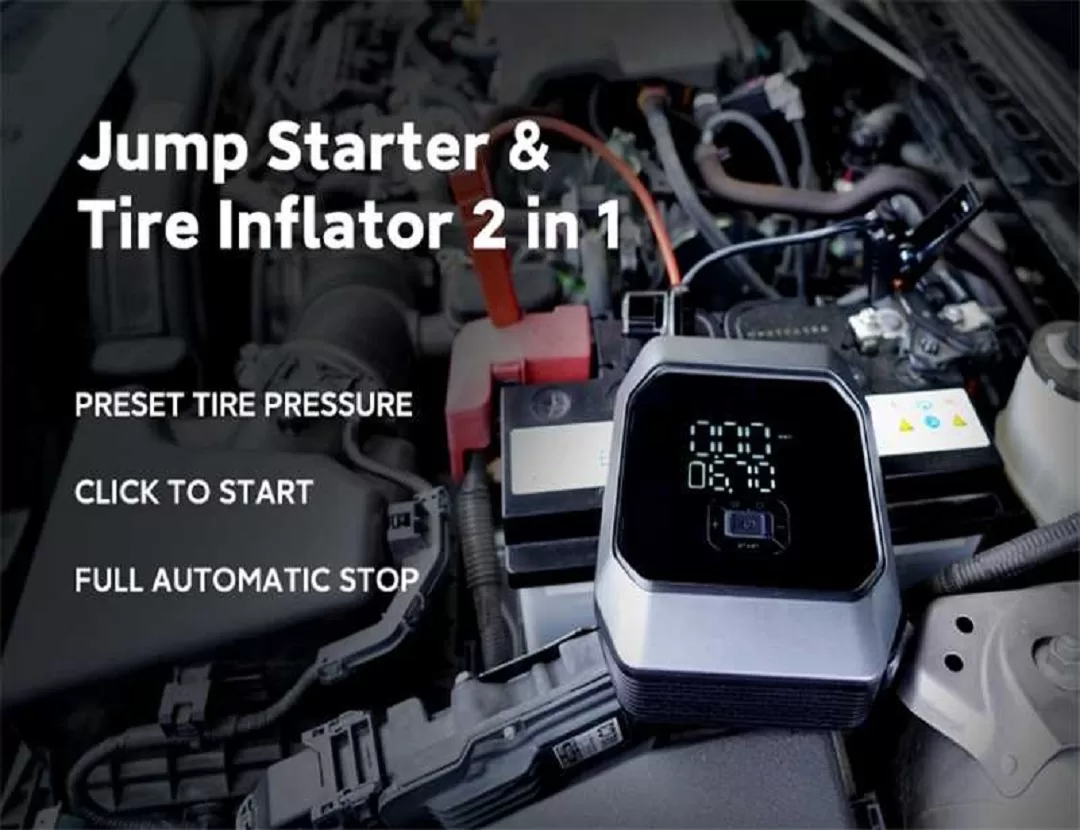
Powerful 5-in-1 Portable Car Tire Inflator and Jump Starter: The Ultimate Emergency Tool for Every Driver
Why Every Driver Needs a Portable Car Tire Inflator and Jump Starter Modern drivers face many unexpected situations on the road. A flat tire, low tire pressure, or a dead car battery can happen at the worst possible time. That’s why having a portable car tire inflator and jump starter is... -

7 Real Cycling Scenarios That Show Why Every Rider Should Carry a Mini Bike Pump
Cycling is one of the most freeing activities you can enjoy. Whether you’re commuting to work, riding through city streets, or exploring quiet countryside roads, a bike ride can instantly improve your day. But there’s one small problem that almost every cyclist eventually faces: Low tire pressure. It might happen...
-
How Is a Football Properly Inflated?
The correct inflation of a football - with not too much and not too little air - is a hotly debated topic among footballers.... -
Application Scenarios of Car Inflator Pump
Often long-distance business trips or play car owners because the road may be more remote areas, in this case if you encounter a tire leak....