

 Portable Tire Inflators
 Electric Air Pumps
 Electric Car Tyre Pumps
 Electric Ball Pumps
 Electric Bike Pump
 SUP Air Pump

Tire Portable Air Pump Guide: Engineering, Field Operation, and Compact Inflation Solutions
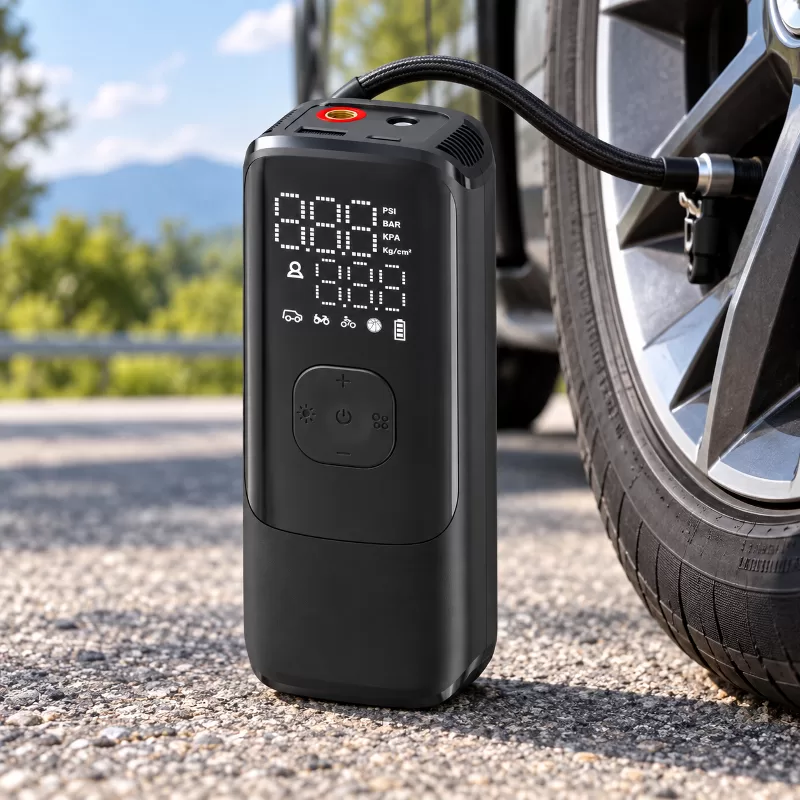
Maintaining calibrated pneumatic pressure in vehicle tires represents one of the most critical yet neglected facets of preventive automotive care. A reliable tire portable air pump transforms an otherwise disruptive mechanical warning into a manageable roadside routine. A charged portable inflator can give drivers a practical way to restore pressure during routine maintenance or some roadside situations. Carrying an accessible inflation system inside your trunk offers added readiness across seasonal weather fluctuations and daily commutes, ensuring that slow leaks or minor pressure drops do not interrupt your travel schedule.
Newo is a professional manufacturer specializing in the research, development, and production of smart electric air pumps and portable inflation solutions. With strong expertise in pneumatic technology, product design, and manufacturing, we provide a wide range of innovative products, including portable tire inflators, electric bike pumps, car air pumps, ball pumps, and outdoor inflation solutions. Understanding mechanical tolerances, battery architectures, and thermal behavior ensures that vehicle operators select equipment well suited to their regular driving routines and maintenance requirements.
Understanding the Role of a Modern Tire Portable Air Pump
Routine Cold-Pressure Maintenance vs. Roadside Emergencies
Motorists often conflate emergency puncture management with routine pressure upkeep, yet their operational demands diverge significantly. Tires can gradually lose pressure over time through natural permeation or ambient cooling, so manufacturers and safety organizations recommend regular checks. Addressing gradual pressure depletion in the driveway prevents asymmetric shoulder tread wear, improves rolling resistance, and maintains vehicle handling profiles under everyday driving conditions, protecting the structural integrity of your tire investment.
Roadside emergencies present a far harsher mechanical environment. In these critical situations, an onboard pump must deliver volume against backpressure while operating safely on unpaved shoulders or damp highway corridors. A dedicated tire portable air pump bridges this operational divide, serving both as a deliberate maintenance tool on cold mornings and as a convenient safeguard when addressing minor pressure loss before reaching a service garage.
What Compact Pneumatic Units Can and Cannot Resolve
Portable compressors assist in restoring volume lost to thermal contraction, minute valve stem imperfections, and minor slow leaks while a driver prepares to visit a repair facility. Because these compact compressors generate consistent displacement over several continuous minutes, they may allow a vehicle to reach a certified tire center without immediately mounting a spare wheel, saving significant time during unexpected travel delays.
These compact tools cannot cure major mechanical structural compromises. A sliced sidewall, an unseated tire bead, or an impact fracture across the wheel rim cannot hold air regardless of compressor pressure output. Understanding this physical boundary prevents hazardous roadside attempts to inflate structurally compromised carcasses that demand immediate professional replacement or towing assistance from certified automotive recovery providers.
Core Mechanical and Electrical Metrics to Evaluate
Pressure Ratings and Standard Pressure Units
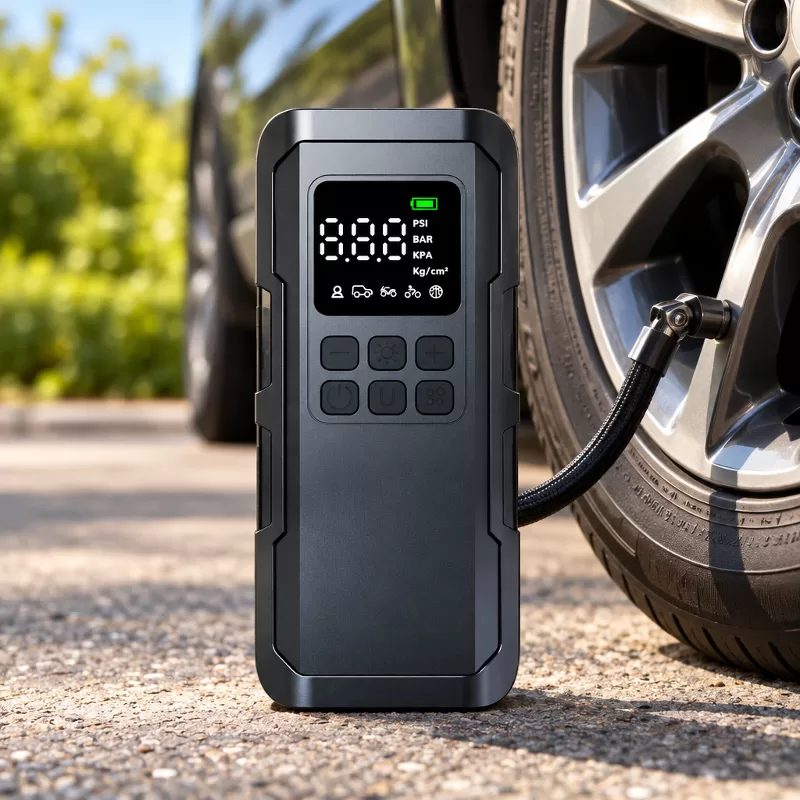
Evaluating pneumatic gear begins with understanding the difference between hydrostatic pressure capacity and continuous air delivery. Many digital inflators may support PSI, bar, or kPa; confirm the units available on the model you are evaluating before purchase. Many passenger vehicles use cold pressures in the approximate 30–36 PSI range, but the correct value is always the vehicle manufacturer’s placard or owner’s-manual specification, whereas high-pressure bicycle tires often demand upward of 80 to 110 PSI.
A 150 PSI maximum rating covers the pressure range needed for the listed vehicle, bicycle, motorcycle, mobility, and sports-ball applications, but it should not be interpreted as a burst-pressure rating. Operating within the specified range provides adequate pressure capability across diverse vehicle formats. Use the pressure unit and setting provided by the vehicle or equipment manufacturer, and confirm which units the LP17A-P supports in its operating manual to prevent miscalculations.
Airflow Dynamics: Differentiating Volume from Pressure
One common engineering misunderstanding is assuming that high maximum pressure guarantees rapid tire inflation. Maximum pressure defines the highest resistance against which the piston can drive air, whereas airflow rate—measured in liters per minute (L/min)—determines inflation speed. A pump capable of delivering elevated pressures might output only modest displacement, requiring more time to fill large tire cavities found on trucks and trailers.
The product specification for the LP17A-P lists 17–18 L/min airflow and a 2–150 PSI pressure range. The manufacturer lists 17–18 L/min airflow; actual inflation time depends on tire size, starting pressure, target pressure, and back pressure. This displacement rate offers a practical balance for portable hardware, allowing regular passenger tires to be topped off steadily without requiring oversized motor housings that compromise trunk portability.
Power Delivery: Dedicated Rechargeable Cells vs. 12V Auxiliary Sockets
Pneumatic tools employ distinct electrical architectures to drive their internal DC motors, each offering specific functional advantages:
- Lithium-Ion Rechargeable Arrays: Internal 7.4V battery assemblies eliminate trailing cables, granting complete mobility around all four vehicle corners or down tight urban bicycle racks.
- 12V–14V Direct Auxiliary Cables: A 12V–14V vehicle connection can provide an alternate power source, subject to the vehicle socket, cable, and electrical-system limits.
- Dual-Power Hybrid Architecture: Hardware that combines an internal rechargeable cell with vehicle power support provides operational redundancy if the internal battery charge is depleted.
Cordless battery operation provides high convenience during quick pressure checks, while a supplementary vehicle power connection helps ensure that a depleted battery pack does not leave an operator without inflation capabilities during prolonged journeys through remote territories.
Thermal Dissipation and Cylinder Duty Cycles
Compacting ambient air generates heat in accordance with thermodynamic gas laws. As the internal piston repeatedly pressurizes air inside a compact cylinder sleeve, friction and thermal compression raise internal temperatures significantly. Without effective thermal management, continuous heat buildup can degrade synthetic seals and trigger automated thermal cutoff switches designed to protect the internal electrical components.
Manufacturers address this operational heat load by integrating dedicated heat sinks, ventilated outer chassis panels, and thermally stable seals. The listed runtime for the LP17A-P is about 20 minutes. Follow the product manual for operating and cooldown intervals, and stop if the unit becomes excessively hot during extended inflation tasks to protect the longevity of the mechanical assemblies.
Engineering Deep Dive: The LP17A-P Dual-Power Architecture
Piston and 17-Cylinder Configuration
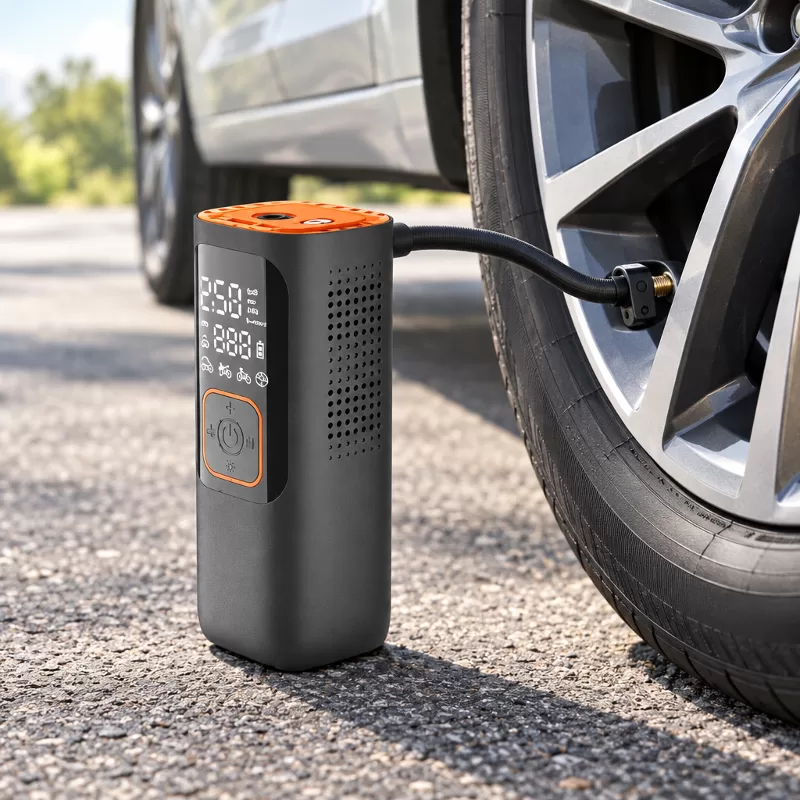
The LP17A-P portable tire inflator is built around a 17-cylinder mechanical structure. The manufacturer specifies a 17-cylinder structure and 17–18 L/min airflow in the handheld chassis, operating at a maximum working power of 50W across a 2 to 150 PSI pressure range. According to product specifications, the manufacturer lists noise at 85 dB or below at 1 meter, so users should expect noticeable operating noise during active compression cycles.
Managing acoustic output during operation is an essential consideration for roadside and residential usability. Maintaining verified noise thresholds ensures that maintenance routines performed in parking structures, enclosed garages, or open driveways remain predictable, allowing users to monitor the mechanical hum of the motor while the pump actively inflates the attached vessel.
Power Supply Redundancy: 14.8Wh Battery and 12V–14V DC Input
Energy storage on the LP17A-P relies on two integrated 18650 lithium-ion cells delivering 2000mAh at 7.4V, equating to a total energy capacity of 14.8Wh. According to product specifications, this internal battery pack charges via a 5V/2A Type-C input in about 2 hours, with a listed battery cycle life of 100 cycles to 80% original capacity or above under standard operating environments.
When compatible vehicle-power accessories are supplied or available, the 12V–14V input may provide an alternate way to power the inflator; confirm the included accessories and operating procedure in the package documentation. This dual-power option offers flexibility when servicing tires on extended trips where recharging stations are not readily accessible, ensuring the inflator remains ready when needed most.
Display Logic, Auto-Shutoff Accuracy, and Secondary 5V/2A Utility
The LP17A-P uses a dual LED display; confirm in the model manual which pressure and status values each display shows. Five preset modes are provided for common inflation tasks, with custom pressure setting available; select the target using the vehicle or equipment manufacturer’s recommendation. Automatic shutoff is intended to stop inflation at the selected target, but users should select the correct pressure and verify the reading.
Beyond pneumatic tasks, the device provides a 5V/2A power-bank output. This utility allows the unit’s 14.8Wh battery reserve to assist in charging personal electronics or mobile phones during travel, packaging secondary power utility into a compact 453.1 g housing measuring approximately 68 × 46 × 160 mm for easy trunk or glovebox storage.
Comparative Evaluation of Portable Inflation Technologies
Operational Trade-offs Across Power Architectures
Choosing an inflation format requires balancing physical weight, continuous run time, and deployment speed. Standalone 12V corded units avoid battery aging entirely but restrict the user’s operational radius to the reach of the vehicle power cord. Purely cordless units maximize ergonomic freedom around workbenches and outdoor trails, yet their availability depends on maintaining a charged battery pack.
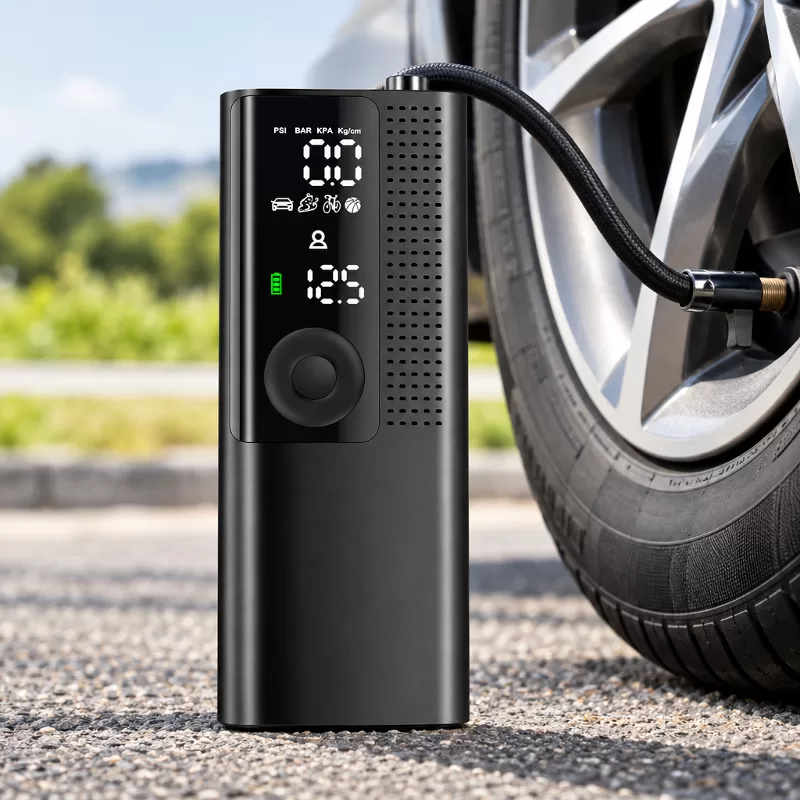
A dual-power model combines both operational methods into a single chassis, giving motorists the choice between cordless freedom and continuous car-powered backup. The following table illustrates verified parameters of the LP17A-P alongside general structural characteristics of common alternative power formats:
| Technical Parameter | Dedicated 12V Corded Format | Pure Cordless Battery Format | LP17A-P Dual-Power Architecture |
|---|---|---|---|
| Power Source Mechanism | External 12V Vehicle Socket | Internal Rechargeable Battery Pack | 7.4V Battery (14.8Wh) + 12V–14V Car Power |
| Cord Independence | Tethered to vehicle interior | Completely untethered | Operates untethered or via vehicle socket |
| Airflow | Not specified—varies by model | Not specified—varies by model | 17 to 18 L/min (manufacturer rated) |
| Pressure Range | Not specified—varies by model | Not specified—varies by model | 2 to 150 PSI (manufacturer rated) |
| Listed Runtime | Not specified—varies by model | Not specified—varies by model | About 20 minutes (manufacturer rated) |
| Form Factor & Weight | Often bulkier due to cable wrap | Compact handheld design | Handheld: 68 × 46 × 160 mm, ~453.1 g |
| Secondary Electronics Charging | Typically unavailable | Model-dependent feature | 5V / 2A Output supported |
Selecting equipment with dual-power capability gives users the freedom to inflate equipment away from the car, while retaining 12V–14V vehicle connectivity as an operational backup whenever the rechargeable cells run low.
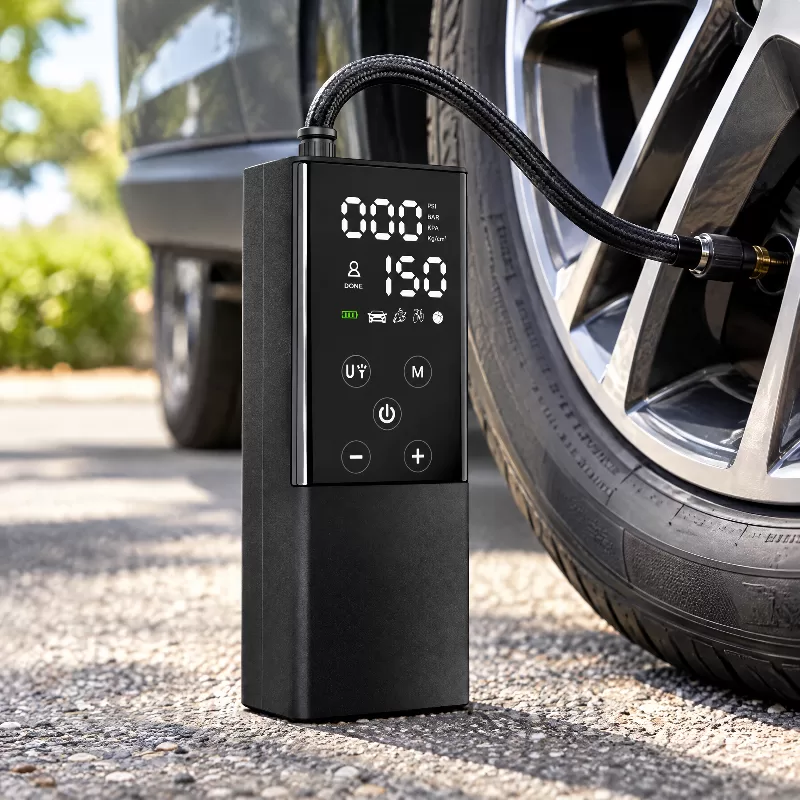
Step-by-Step Procedure for Accurate Field Inflation
Step 1: Locating True Cold Inflation Placard Figures
Before attaching any pneumatic hardware, operators must identify the vehicle manufacturer’s engineered cold tire inflation specification. This figure is printed on the safety certification label affixed to the driver-side door jamb (B-pillar) or recorded in the owner’s manual. Never rely on the pressure rating stamped into the tire’s outer sidewall, as that figure reflects the maximum permissible hydrostatic pressure of the tire casing, not the calibrated vehicle operating pressure.
For a cold reading, the vehicle should generally have been stationary for at least three hours, or have been driven less than one mile after that three-hour period. Inflating a tire heated by highway driving yields inaccurate readings due to thermal expansion, resulting in under-inflation once the tire cools to ambient outdoor levels after parking.
Step 2: Stem Preparation and Air Chuck Engagement
Carefully unscrew the protective valve dust cap from the rubber or metal valve stem and check the brass threads for road grime or oxidation. Fasten the inflator’s air hose securely onto the valve stem threads without cross-threading the connector. A momentary hiss of escaping air is normal during engagement, but this must cease completely once the chuck is fully threaded or the quick-release lever is clamped.
After the connection is secure, the display can be used to check the tire pressure according to the product’s operating instructions. If the baseline reading differs unexpectedly from recent measurements, confirm that the hose connector is depressing the internal Schrader valve core pin properly before starting the motor to ensure accurate pressure detection.
Step 3: Setting Unit Targets and Safety Cutoffs
Power on the device and select the appropriate preset mode or choose custom mode for manual calibration. Use the plus and minus buttons to program the exact pressure setting indicated on your door jamb sticker. Verify that the unit display highlights the intended unit of measurement before starting, preventing dangerous unit conversion mistakes between metric and imperial scales.
Engage the compressor start switch. The motor will start immediately, delivering air through the high-pressure hose into the tire chamber. The digital display tracks pressure progression as the internal cylinder works against incoming valve resistance, showing clear numerical progression until the desired pressure threshold is satisfied.
Step 4: Monitoring Heat and Operating Intervals During Pumping
Keep the portable tire inflator positioned upright on a flat surface or hold it steady, avoiding severe kinks in the air delivery hose. As the internal piston works against the rising tire pressure, the upper manifold and metal air fittings will naturally accumulate heat. This thermal rise is a standard consequence of pneumatic compression across small mechanical cylinders.
Avoid obstructing the side ventilation perforations on the device body during operation. Follow the product manual for duty-cycle and cooldown instructions, and allow the unit to cool if it becomes excessively hot or if the manual requires an operational pause before continuing with subsequent wheels.
Step 5: Post-Inflation Check and Stem Sealing
Once the internal pressure sensor registers the preset target value, the automatic shut-off mechanism is designed to stop the electric motor. Press the power toggle to shut down the display electronics, then smoothly detach the air chuck from the tire stem. Disengage the chuck promptly to minimize minor air release during removal.
Thread the protective dust cap back over the valve stem to shield the delicate internal valve core from moisture, sand, and corrosive winter road salts. Store the compressor, power cords, and hose in their dedicated travel case within your vehicle interior or trunk compartment so they remain accessible for the next inspection.
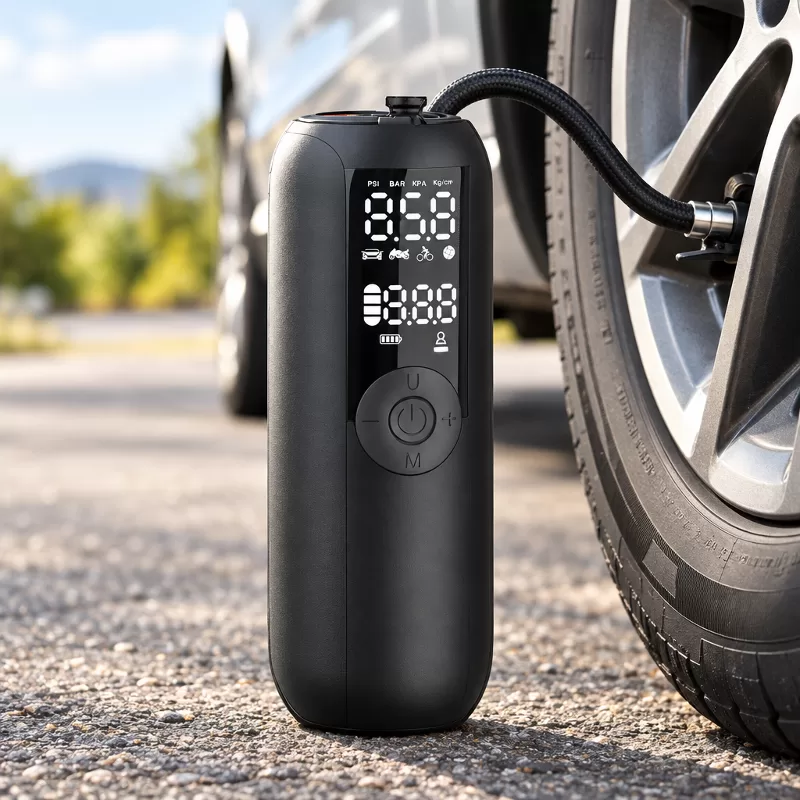
Versatility Across Vehicle and Mobility Formats
Passenger Sedans and Crossover Commuters
Compact passenger cars and crossovers operate with large air volumes at moderate pressures, typically ranging between 30 and 35 PSI. The manufacturer lists an inflation capacity of about two 205 tires per full charge; actual results depend on tire size, starting pressure, target pressure, temperature, and battery condition. This capacity makes it a practical tool for regular driveway top-offs.
Drivers dealing with slight pressure loss can restore proper inflation, stow the 453.1 g unit in the glovebox or door side pocket, and proceed safely on their daily route without needing to locate an operational service station compressor, saving valuable commuting time.
Motorcycles and Light Scooters
Motorcycle handling depends heavily on accurate tire pressure, where a deviation of a few PSI can alter cornering feel and steering response. Motorcycle tires generally have less air volume than car tires, so inflation may be quicker, but actual time depends on the starting and target pressures.
The portable form factor is especially valuable for motorcycle touring, where luggage capacity is limited. The inflator fits conveniently into hard panniers, tail packs, or tank bags, providing reliable pneumatic maintenance across long rural journeys where commercial service stations may be far apart and mechanical support is sparse.
Bicycles, E-Bikes, and Personal Mobility Chairs
Bicycle tires span an exceptionally broad pressure spectrum, from lower-pressure tubeless mountain bike tires to higher-pressure road bicycle tires. Electric bicycles and commuter bikes demand consistent pressure to safeguard wheel rims against pinch flats and preserve battery efficiency. Wheelchairs and personal balance vehicles similarly rely on accurate inflation for predictable braking and directional control.
The listed 2–150 PSI range covers the pressure levels used by the supported applications, but users should confirm the correct adapter and target pressure for each tire or inflatable. Automatic shutoff helps prevent continuous inflation once the programmed pressure is reached, provided the user enters the equipment manufacturer’s recommended target accurately.
Sports Equipment and Low-Pressure Inflatables
Inflating athletic equipment like basketballs, soccer balls, and volleyballs requires gentle low-pressure precision, typically between 7 and 13 PSI. A ball should be inflated gradually to its specified pressure; uncontrolled or excessive pressure can damage the ball. A smart inflator with an appropriate preset delivers controlled air volume through an adapter needle, helping operators achieve accurate regulation inflation without over-pressurizing delicate internal bladders.
Using an accurate portable inflator prevents seam distortion and maintains regulation bounce across recreational and competitive athletic gear. The compact unit easily stows in equipment bags alongside sports gear, offering practical utility during school practices or community matches.
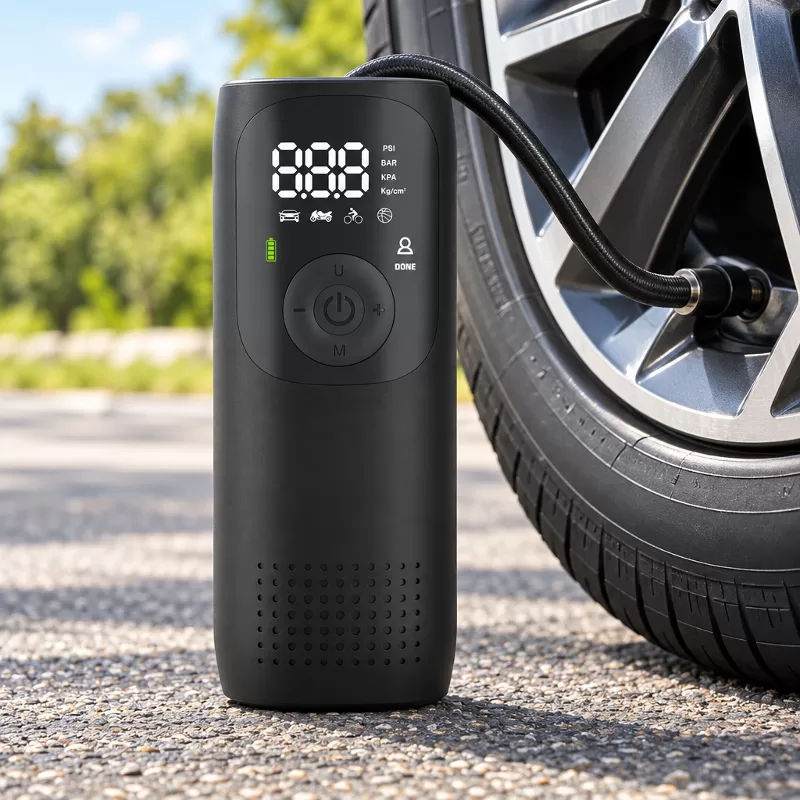
Environmental Factors and Sensor Diagnostics
Temperature Swings and Cold-Weather Pressure Loss
Seasonal weather shifts frequently trigger Tire Pressure Monitoring System (TPMS) dashboard warnings across commuter fleets. This phenomenon is explained by basic thermodynamics: the pressure of a fixed volume of gas changes directly with its temperature. As ambient temperatures drop, internal air molecules exert reduced outward force on the tire carcass.
Tire pressure changes as temperature changes; a commonly cited approximation is about 1 PSI for every 10–12°F change, but the exact change varies. Check the pressure cold and follow the vehicle placard. Seasonal temperature drops in late autumn often cause dashboard warning lights to illuminate without any puncture present, making a garage pressure check the ideal first response.
Responding to In-Cabin TPMS Warnings Under Highway Load
When a TPMS warning illuminates while driving at highway speeds, an operator should respond deliberately to maintain safety:
- Avoid abrupt maneuvers: Maintain calm steering control and decelerate steadily while looking for a safe, flat turnout or roadside shoulder.
- Park safely clear of traffic: Position the vehicle well away from active traffic lanes, engage the emergency brake, and activate your hazard lights.
- Perform an initial visual check: Inspect all four tires for visible deflation, sidewall damage, or foreign objects embedded in the tread pattern.
- Verify actual pressure: Connect the inflator chuck to read the current retained pressure on the digital screen.
- Evaluate air retention carefully: If the tire is only slightly low and retains air, bring it to the placard specification and monitor whether it holds pressure. Do not continue driving on a visibly damaged tire, a tire that has lost most or all pressure, or one that may have been driven while severely underinflated; use the spare or contact a tire professional for inspection.
Carrying an onboard digital inflator provides clear numerical pressure readings, helping drivers determine whether a tire can be safely topped off or requires immediate professional attention before proceeding.
Frequently Asked Questions
What is the primary operational difference between a tire portable air pump and a garage air tank?
A stationary workshop air compressor typically uses a motor-driven compressor and receiver tank to store compressed air, while a portable tire inflator generally compresses air on demand without a large tank. Instead of discharging from a pre-filled reservoir, the compact unit compresses atmospheric air directly into the tire, trading high-volume instantaneous discharge for exceptional portability and glovebox convenience.
Can a pump rated up to 150 PSI over-inflate a standard 32 PSI passenger car tire?
Not when the automatic shut-off function is set and operating properly. The 150 PSI rating represents the maximum mechanical pressure the unit can deliver, not the continuous pressure applied to all inflatables. When an operator programs a target of 32 PSI, the digital sensor monitors line pressure and disengages the motor when that target is achieved. Users must always verify that they have entered the correct placard value.
How long should an operator wait between inflating multiple tires?
Because heat naturally accumulates inside small compression cylinders, allowing cooldown intervals helps maintain equipment life. The listed runtime for the LP17A-P is about 20 minutes. Follow the product manual for duty-cycle and cooldown instructions, and stop if the unit becomes excessively hot during extended inflation tasks to protect synthetic internal seals from heat degradation.
Why do vehicle manufacturers advise against following the pressure printed on tire sidewalls?
The pressure molded into the tire sidewall is the tire’s maximum permissible inflation pressure, not the vehicle manufacturer’s recommended operating pressure. It is not calibrated for your specific vehicle’s weight distribution, braking dynamics, or suspension tuning. Always follow the cold inflation figures printed on your vehicle’s driver-side B-pillar door placard.
How should internal lithium-ion battery cells be maintained in extreme seasonal weather?
The listed working temperature for the LP17A-P is minus 10°C to 45°C. Follow the manufacturer’s manual for storage, charging, and cold-weather operation. Storing the unit away from direct, high-heat sunlight and recharging the battery pack periodically ensures the device remains ready for service whenever needed during seasonal driving trips.
What accessories should be kept alongside a portable tire inflator for full roadside readiness?
A portable inflator functions best alongside a basic tire inspection and maintenance kit. Keeping spare valve dust caps, a manual depth gauge, and a reliable pressure gauge ensures comprehensive tire oversight. Use the inflator only to restore pressure temporarily when the tire is otherwise safe to move. Do not treat an external plug kit as a complete repair; have a qualified tire professional inspect and repair the tire according to industry safety standards.
Reliable Pneumatic Preparation for Every Journey
Maintaining correct pneumatic tire pressure is essential for driving safety, vehicle efficiency, and tire longevity. Underinflation can reduce handling and fuel efficiency, increase heat buildup, and contribute to tire damage or failure, especially when severe or combined with high-speed driving. Integrating a dependable tire portable air pump into your vehicle kit provides an easy way to verify cold pressure and manage seasonal pressure loss without relying on gas station equipment. With a listed pressure range of 2–150 PSI and both rechargeable-battery and 12V–14V vehicle-power support, drivers can maintain their tires with confidence on every journey.
-

Meet NEWO at the 140th Canton Fair: Visit Booth 10.3 M03–04
Meet NEWO at the 140th Canton Fair in Guangzhou, October 15–19, 2026. Visit Booth 10.3 M03–04 to explore portable air pumps and discuss OEM, ODM and distribution opportunities.... -

As Shenzhen Welcomes the World for APEC 2026, NEWO Welcomes You to Our Factory
As Shenzhen prepares for APEC 2026, NEWO welcomes international buyers and partners to visit our factory, meet our team and explore future cooperation.... -

Leading the Way in Product Innovation and Excellence
Smartnewo exemplifies professionalism in product innovation and manufacturing. Their collaboration with Xiaomi Youpin on the G01 crowdfunding project highlights their expertise in creating compact, powerful inflatable pumps. Rigorous engineering, meticulous production processes, and advanced quality assurance underscore their commitment to excellence. The success of the G01 project, with significant market... -

Essential Qualities of an Excellent Supplier
In today's competitive market, finding a reliable supplier is crucial for business success. Based on insights from Smartnewo and broader internet research, here are key qualities an excellent supplier must possess:... -

NW06 Tire Inflator: Compact Power for Quick Inflation
Summary The NW06 Tire Inflator delivers quick and efficient tire inflation with a powerful 35L/min airflow. It features a user-friendly LCD screen for real-time pressure monitoring, dual power options with a built-in 6000mAh battery, and multiple nozzle attachments for versatile use. Its compact design and integrated LED light ensure convenience and... -

Unleash the Power of Portability: The SmartNewo Jump Starter with Air Compressor KF03
This guide will walk you through the steps to effectively use a portable tire inflator, helping you stay prepared and safe on the road.... -

Newo Attends The 2024 Consumer Electronics Show (CES)
Smartnewo booth is located at 53672, Halls A-D, Level 2, Venetian Expo, Las Vegas Convention Center (LVCC). ... -

Smartnewo’s Dual-Cylinder Air Pump Rocks the Hong Kong Autumn Electronics Fair!
Smartnewo’s Dual-Cylinder Air Pump Rocks the Hong Kong Autumn Electronics Fair!... -

Meet at the Canton Fair! Smartnewo brings dual-cylinder air pumps, making your inflation experience faster and more stable!
NEWO has went deep communication and negotiation with customers from all over the world on booth.... -

“Hong Kong Autumn Electronics Fair – 1CA18 (October 13th to 16th): Smartnewo invites you to visit our booth!
Hong Kong Autumn Electronics Fair...










-

What to Check Before Ordering Custom Electric Bike Pumps
Plan custom electric bike pumps with a clear requirements freeze for valves, TPU tubes, portability, repeated top-ups, charging, and model-specific documents.... -

OEM vs ODM Air Pumps: Which Manufacturing Model Fits Your Brand?
Compare OEM and ODM air pump projects by design responsibility, change approval, development scope, and written ownership terms before choosing your route.... -
How to Choose a Reliable Tire Inflator Manufacturer in China
Choose a tire inflator manufacturer in China with a focused RFQ, supplier evidence, configuration checks, and clear sample-to-pilot decisions for your brand.... -

Rechargeable Electric SUP Pump for Paddle Boards: Faster Inflation for SUPs, Kayaks and Inflatable Tents
The BL10-C Portable Electric Bike Tire Inflator is a compact and lightweight mini electric bike pump designed for modern cyclists. With up to 120 PSI pressure, a digital LED display, preset pressure control, automatic shut-off, USB-C charging, and multiple valve adapters, BL10-C offers a convenient inflation solution for road bikes,... -

Are Electric Bike Pumps Worth It in 2026? Electric Pump vs CO₂ vs Mini Hand Pump
Discover whether electric bike pumps are worth it in 2026. This guide compares electric bike pumps, CO₂ inflators, and mini hand pumps for road cycling, gravel riding, commuting, and long-distance rides. Learn the pros, limitations, best use cases, and key features to look for before choosing the right portable tire... -
BL10-C Portable Electric Bike Tire Inflator: Small Size, Reliable Power for Every Ride
The BL10-C Portable Electric Bike Tire Inflator is a compact and lightweight mini electric bike pump designed for modern cyclists. With up to 120 PSI pressure, a digital LED display, preset pressure control, automatic shut-off, USB-C charging, and multiple valve adapters, BL10-C offers a convenient inflation solution for road bikes,... -

Why Mini Electric Bike Pumps Are Becoming Essential for Modern Cycling
Discover why mini electric bike pumps are becoming essential for modern cyclists. Learn how portable electric bike pumps improve tire pressure management, riding safety, and convenience.... -

The Ultimate Smart Solution for Easy Outdoor Adventures in 2026
Discover how a spring travel air pump simplifies outdoor trips with fast inflation, smart features, and powerful performance—perfect for every adventure.... -

Powerful 5-in-1 Portable Car Tire Inflator and Jump Starter: The Ultimate Emergency Tool for Every Driver
Why Every Driver Needs a Portable Car Tire Inflator and Jump Starter Modern drivers face many unexpected situations on the road. A flat tire, low tire pressure, or a dead car battery can happen at the worst possible time. That’s why having a portable car tire inflator and jump starter is... -

7 Real Cycling Scenarios That Show Why Every Rider Should Carry a Mini Bike Pump
Cycling is one of the most freeing activities you can enjoy. Whether you’re commuting to work, riding through city streets, or exploring quiet countryside roads, a bike ride can instantly improve your day. But there’s one small problem that almost every cyclist eventually faces: Low tire pressure. It might happen...









-
How Is a Football Properly Inflated?
The correct inflation of a football - with not too much and not too little air - is a hotly debated topic among footballers.... -
Application Scenarios of Car Inflator Pump
Often long-distance business trips or play car owners because the road may be more remote areas, in this case if you encounter a tire leak....

