
 Portable Tire Inflators
 Electric Air Pumps
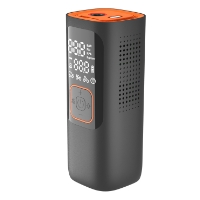 Electric Car Tyre Pumps
 Electric Ball Pumps
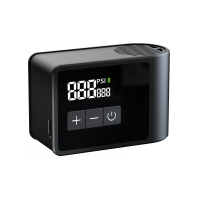 Electric Bike Pump
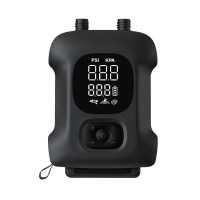 SUP Air Pump
What to Check Before Choosing an OEM Electric Air Pump Manufacturer
Sourcing inflatable accessories at scale usually comes down to one decision that gets rushed: picking the right factory partner. An oem electric air pump manufacturer shapes everything downstream, from airflow performance to how fast a shipment clears quality checks. Get the fit wrong and you inherit returns, slow charging complaints, and a product line that underperforms against buyer expectations.
This guide walks through the practical criteria that matter when evaluating a manufacturing partner for electric air pumps, using a real product spec, the AP5 high-volume pump, as a working reference point throughout.
Why Airflow Numbers Matter More Than Marketing Copy
Buyers often get sold on sleek casings and app-ready features, then discover the pump can’t fill a pool float in reasonable time. Airflow rate, measured in liters per minute, is the number that actually predicts user satisfaction.
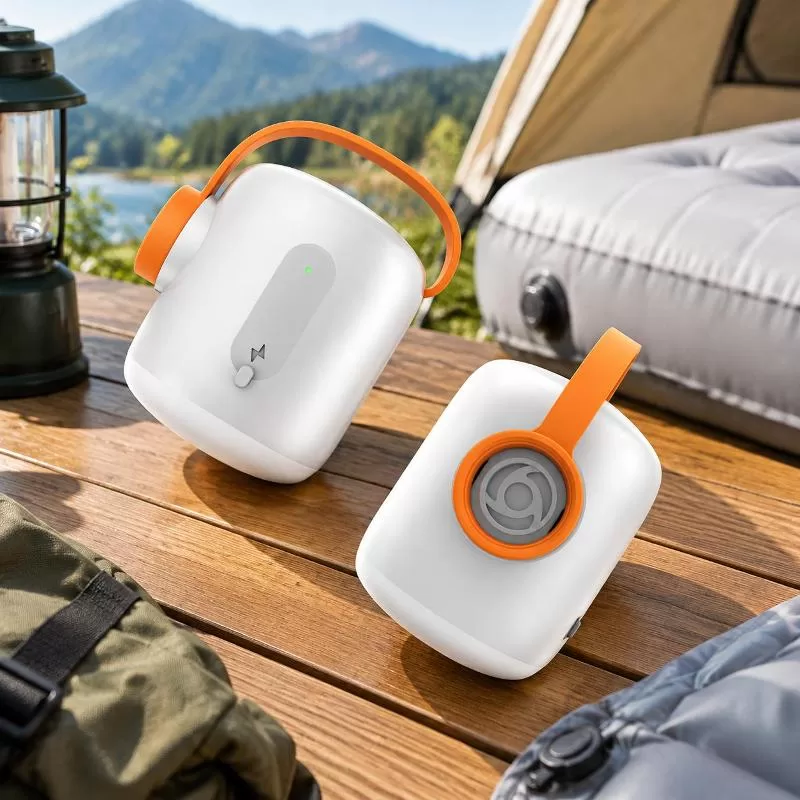
The AP5, for instance, is built for high-volume, low-pressure inflatables rather than tire work. It pushes 190–200 L/min at a maximum pressure of 4.5 KPa. That combination suits swim rings, air mattresses, inflatable sofas, and seat cushions, items where speed of fill matters more than psi.
A manufacturer who understands this distinction will steer you toward the right pump category instead of pushing a one-size-fits-all unit. Pumps designed for high pressure and pumps designed for high volume solve different physical problems, and conflating them is where a lot of OEM projects go wrong before production even starts.
Matching Pump Specs to Your Product Line
Before locking in a design, map the pump’s output against your actual use case. A seat cushion and a tire don’t share the same inflation physics, so the sourcing checklist should start with the application, not the housing color.
- Define the inflatable category: large low-pressure items (mattresses, sofas, floats) need high L/min, low kPa pumps.
- Confirm battery runtime against expected cycle count per charge, especially for rental, event, or promotional use.
- Check charging method. Type-C has become the practical standard for portable electronics, and the AP5 uses it with a roughly 1.5–2 hour charge time.
- Review physical size constraints if the pump will ship bundled inside packaging with the inflatable itself.
- Ask about noise level if the end use is indoor, hotel amenity, or baby product adjacent.
Skipping this mapping step is how companies end up with a pump that technically works but frustrates end users with slow fills or short runtime.
Battery and Charging: The Part Buyers Underestimate
Battery specs rarely make it into marketing bullet points, yet they determine real-world usability more than almost anything else. A pump with a weak cell will disappoint customers even if the airflow numbers look good on paper.
The AP5 runs on a 1000mAh lithium battery at 3.7V rated voltage, which works out to 3.7Wh of rated energy. Framed plainly, that’s enough for several inflation cycles on items like swim rings or cushions before a recharge is needed, not an all-day industrial duty cycle. For buyers positioning a product as a lightweight travel or leisure accessory, that profile is appropriate. For heavier commercial use, it’s worth asking your manufacturer for cycle-life expectations under repeated short bursts rather than a single long run.
Working temperature range also deserves attention if your target market has seasonal extremes. The AP5’s listed range covers charging from 0°C to 45°C and discharge from -10°C to 45°C, which is relevant for brands selling into colder climates or outdoor recreation channels.
Comparing Core Specs at a Glance
When you’re reviewing multiple pump options from a factory’s catalog, a side-by-side table makes the tradeoffs obvious faster than paragraphs of description.
| Specification | AP5 Detail |
|---|---|
| Air flow | 190–200 L/min |
| Maximum pressure | 4.5 KPa |
| Battery capacity | 1000mAh |
| Rated voltage | 3.7V |
| Rated energy | 7.4Wh |
| Charging time | ~1.5–2 hours |
| Charging interface | Type-C |
| Noise level | Below 85dB at 1 meter |
| Sensor accuracy | ±1 PSI |
| Product size | 68 × 60 × 55 mm |
Notice the sensor accuracy figure. A ±1 PSI tolerance matters less for a swim ring than it would for anything pressure-sensitive, which reinforces that this pump category is built around volume and convenience rather than pressure precision.
Why Physical Footprint Is a Sourcing Decision, Not Just a Design Choice
Size seems like a cosmetic detail until you’re calculating freight costs or packaging dimensions for retail shelving. A pump measuring 68 × 60 × 55 mm, like the AP5, fits easily into gift sets, travel kits, or bundled e-commerce packaging without forcing a box redesign.
This matters especially for brands running seasonal or promotional product lines, where the pump might ship alongside a float or cushion rather than as a standalone item. A compact body also reduces the chance of damage during transit, since smaller rigid housings generally handle warehouse handling better than oddly shaped larger units.
Consequently, when a factory presents you with a pump design, ask how the dimensions interact with your existing packaging specs. It’s a question that gets skipped often, and it’s one that saves a redesign cycle later.
Where Extra Functions Add Value Without Adding Risk
Some buyers assume added features like integrated lighting are gimmicks. In practice, they can serve a real function depending on the end use. A lighting mode on a portable pump is genuinely useful for camping, nighttime pool setups, or low-light storage areas, and it’s a low-risk feature to include since it doesn’t interfere with the pump’s core airflow performance.
That said, feature creep is a legitimate concern in OEM development. Every added function is another point of potential failure and another cost line. A manufacturer worth working with will tell you plainly which features earn their place and which ones just inflate the bill of materials, so to speak.
Common Questions Buyers Ask Before Placing an Order
Does a higher airflow rating always mean a better pump?
Not necessarily. Airflow should match the application. A high L/min pump built for mattresses and sofas isn’t the right tool for tire inflation, where pressure control matters more than raw volume.
How long should charging realistically take?
For a compact battery in the 1000mAh range, roughly 1.5 to 2 hours is a reasonable benchmark, as reflected in the AP5’s charging time. Anything dramatically faster on a similarly sized battery is worth questioning.
Is Type-C charging actually necessary, or is it just a trend?
It’s become the practical standard because it’s reversible, widely available, and compatible with existing phone chargers most households already own, which reduces friction for end users and cuts down on accessory waste.
What noise level is acceptable for an indoor product?
Below 85dB at 1 meter, as listed for the AP5, is generally tolerable for short-duration home use. Products marketed for bedrooms or hotel amenities may warrant asking for quieter variants if available.
Choosing a Partner Who Understands the Application, Not Just the Component
The real differentiator among manufacturers isn’t who can quote the lowest unit price. It’s who asks the right questions before production starts: what’s being inflated, how often, in what climate, and through what sales channel. A factory that treats a swim ring pump and a bike tire pump as interchangeable products is signaling a lack of application-level understanding, and that gap tends to surface later as customer complaints.
For us, that distinction shapes how pump lines like the AP5 get positioned, built specifically around high-volume, low-pressure inflatables such as air mattresses, inflatable sofas, and seat cushions, rather than marketed as an all-purpose inflation device it was never engineered to be.
Ultimately, working with an oem electric air pump manufacturer that documents real specs, airflow, battery energy, charging interface, and physical dimensions, rather than vague claims, gives buyers a far more reliable foundation for building out a product line that performs the way customers expect it to.
-

As Shenzhen Welcomes the World for APEC 2026, NEWO Welcomes You to Our Factory
As Shenzhen prepares for APEC 2026, NEWO welcomes international buyers and partners to visit our factory, meet our team and explore future cooperation.... -

Leading the Way in Product Innovation and Excellence
Smartnewo exemplifies professionalism in product innovation and manufacturing. Their collaboration with Xiaomi Youpin on the G01 crowdfunding project highlights their expertise in creating compact, powerful inflatable pumps. Rigorous engineering, meticulous production processes, and advanced quality assurance underscore their commitment to excellence. The success of the G01 project, with significant market... -

Essential Qualities of an Excellent Supplier
In today's competitive market, finding a reliable supplier is crucial for business success. Based on insights from Smartnewo and broader internet research, here are key qualities an excellent supplier must possess:... -

NW06 Tire Inflator: Compact Power for Quick Inflation
Summary The NW06 Tire Inflator delivers quick and efficient tire inflation with a powerful 35L/min airflow. It features a user-friendly LCD screen for real-time pressure monitoring, dual power options with a built-in 6000mAh battery, and multiple nozzle attachments for versatile use. Its compact design and integrated LED light ensure convenience and... -

Unleash the Power of Portability: The SmartNewo Jump Starter with Air Compressor KF03
This guide will walk you through the steps to effectively use a portable tire inflator, helping you stay prepared and safe on the road.... -

Newo Attends The 2024 Consumer Electronics Show (CES)
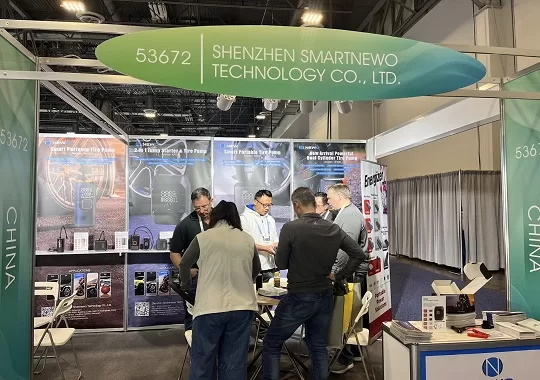
Smartnewo booth is located at 53672, Halls A-D, Level 2, Venetian Expo, Las Vegas Convention Center (LVCC). ... -

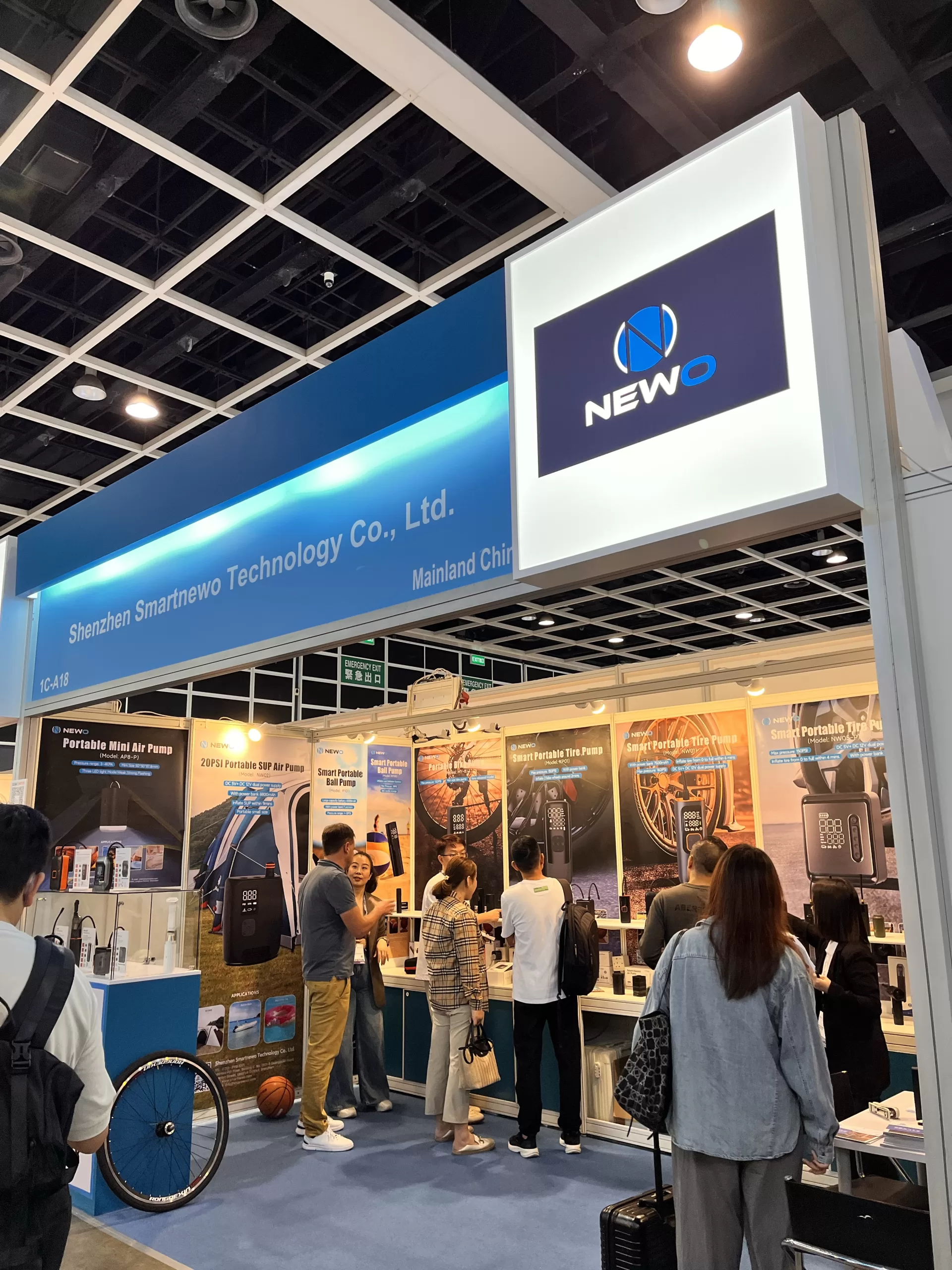
Smartnewo’s Dual-Cylinder Air Pump Rocks the Hong Kong Autumn Electronics Fair!
Smartnewo’s Dual-Cylinder Air Pump Rocks the Hong Kong Autumn Electronics Fair!... -

Meet at the Canton Fair! Smartnewo brings dual-cylinder air pumps, making your inflation experience faster and more stable!
NEWO has went deep communication and negotiation with customers from all over the world on booth.... -

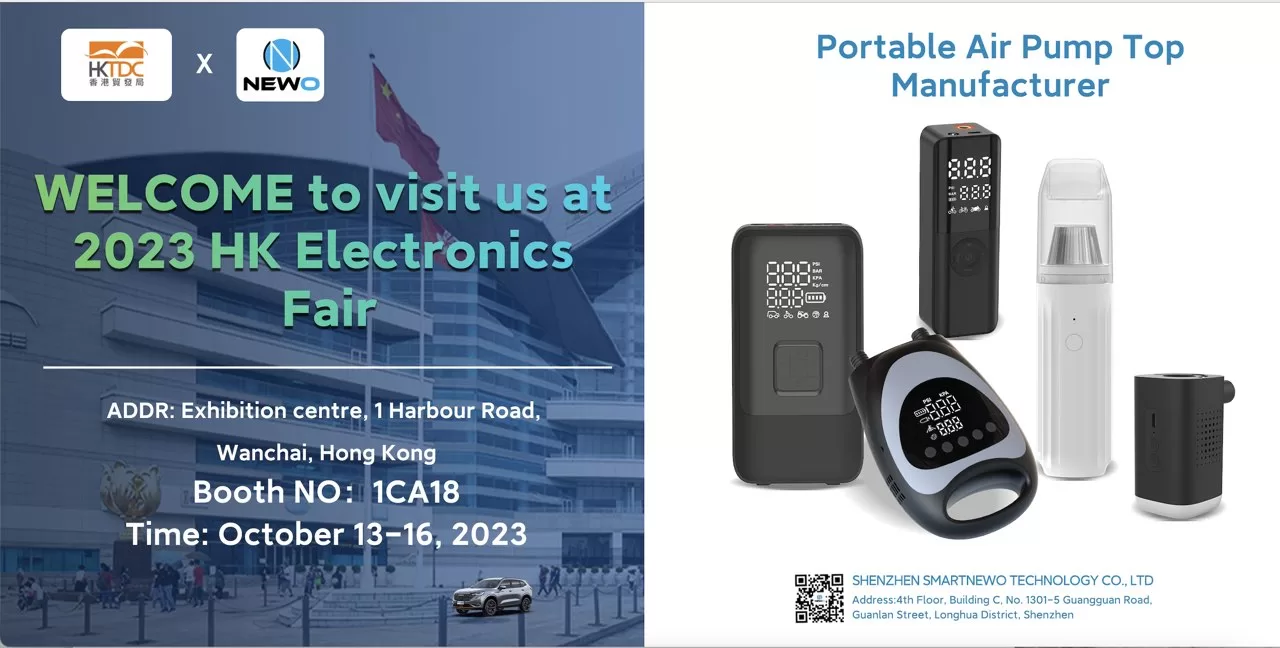
“Hong Kong Autumn Electronics Fair – 1CA18 (October 13th to 16th): Smartnewo invites you to visit our booth!
Hong Kong Autumn Electronics Fair... -

Smartnewo showcases its innovative range of electric air pumps at IFA 2023
Smartnewo will participate in the Consumer Electronics Show (IFA) in Berlin, Germany from September 3rd to September 5th....

-

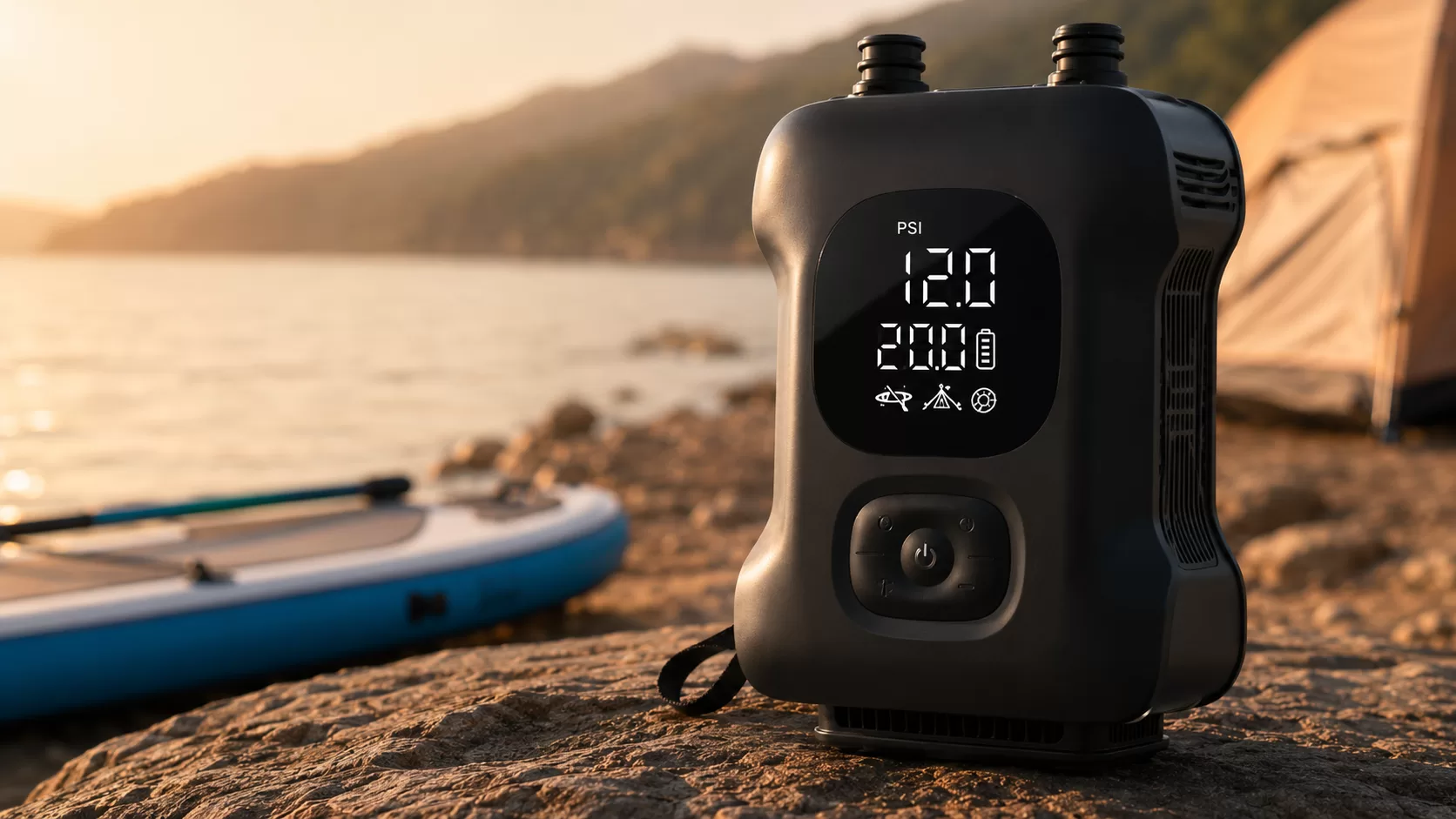
Rechargeable Electric SUP Pump for Paddle Boards: Faster Inflation for SUPs, Kayaks and Inflatable Tents
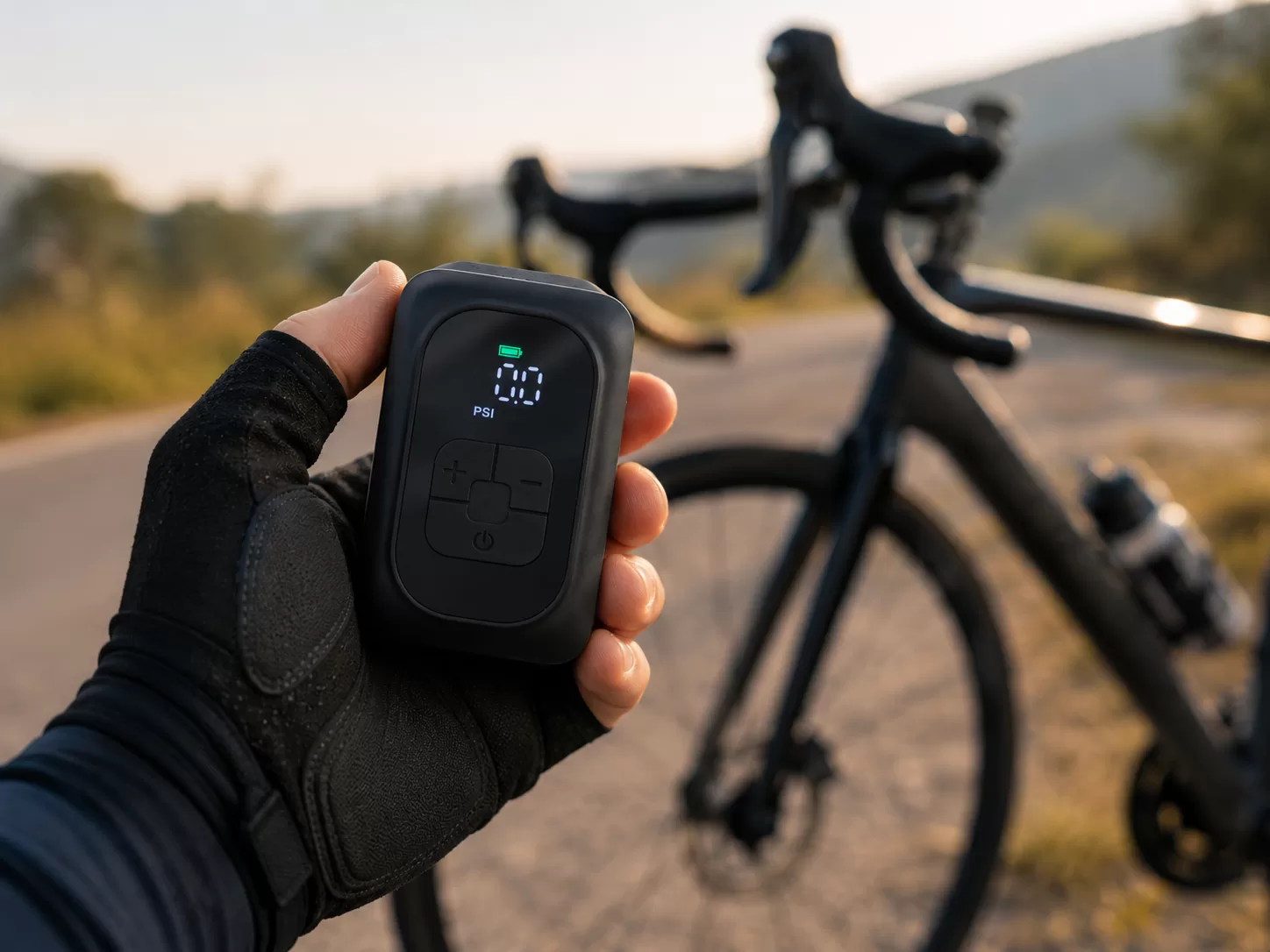
The BL10-C Portable Electric Bike Tire Inflator is a compact and lightweight mini electric bike pump designed for modern cyclists. With up to 120 PSI pressure, a digital LED display, preset pressure control, automatic shut-off, USB-C charging, and multiple valve adapters, BL10-C offers a convenient inflation solution for road bikes,... -

Are Electric Bike Pumps Worth It in 2026? Electric Pump vs CO₂ vs Mini Hand Pump
Discover whether electric bike pumps are worth it in 2026. This guide compares electric bike pumps, CO₂ inflators, and mini hand pumps for road cycling, gravel riding, commuting, and long-distance rides. Learn the pros, limitations, best use cases, and key features to look for before choosing the right portable tire... -
BL10-C Portable Electric Bike Tire Inflator: Small Size, Reliable Power for Every Ride
The BL10-C Portable Electric Bike Tire Inflator is a compact and lightweight mini electric bike pump designed for modern cyclists. With up to 120 PSI pressure, a digital LED display, preset pressure control, automatic shut-off, USB-C charging, and multiple valve adapters, BL10-C offers a convenient inflation solution for road bikes,... -

Why Mini Electric Bike Pumps Are Becoming Essential for Modern Cycling
Discover why mini electric bike pumps are becoming essential for modern cyclists. Learn how portable electric bike pumps improve tire pressure management, riding safety, and convenience.... -

The Ultimate Smart Solution for Easy Outdoor Adventures in 2026
Discover how a spring travel air pump simplifies outdoor trips with fast inflation, smart features, and powerful performance—perfect for every adventure.... -

Powerful 5-in-1 Portable Car Tire Inflator and Jump Starter: The Ultimate Emergency Tool for Every Driver
Why Every Driver Needs a Portable Car Tire Inflator and Jump Starter Modern drivers face many unexpected situations on the road. A flat tire, low tire pressure, or a dead car battery can happen at the worst possible time. That’s why having a portable car tire inflator and jump starter is... -

7 Real Cycling Scenarios That Show Why Every Rider Should Carry a Mini Bike Pump
Cycling is one of the most freeing activities you can enjoy. Whether you’re commuting to work, riding through city streets, or exploring quiet countryside roads, a bike ride can instantly improve your day. But there’s one small problem that almost every cyclist eventually faces: Low tire pressure. It might happen... -
BL08-A Portable Electric Bike Pump: A Global Distribution Opportunity with Smartnewo
Smartnewo, a professional manufacturer of portable electric air pumps, introduces the BL08-A model — a compact and efficient inflator designed for global distributors, e-commerce sellers, and outdoor accessory brands seeking reliable OEM/ODM solutions. Table of Contents Main Heading Subtopics 1. Introduction: Expanding the Global Market for Smart Inflation Tools Portable... -

Connecting Opportunities at Automechanika Shanghai 2025 — Smartnewo Exhibition Day 1
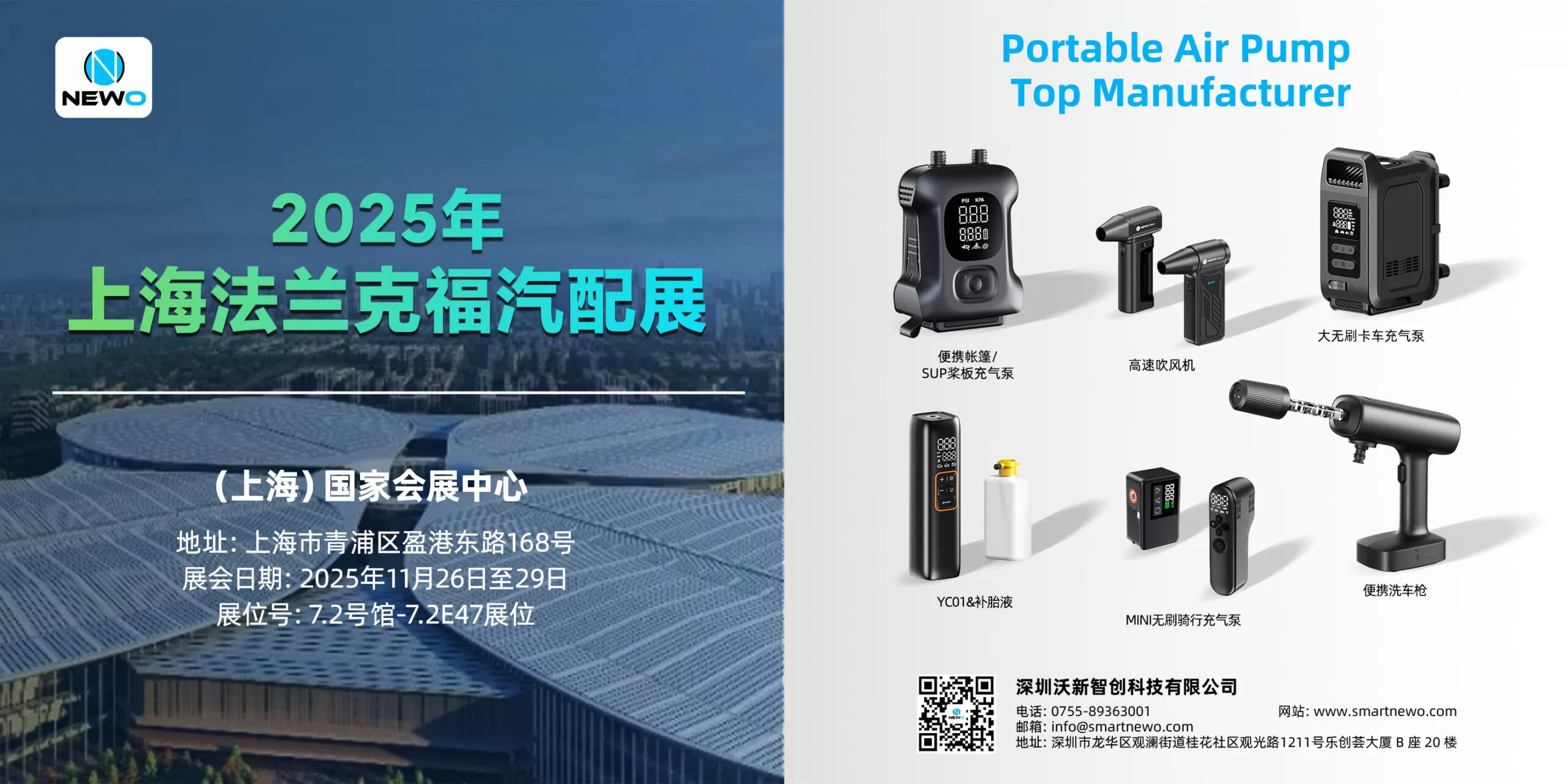
Today marks an exciting beginning as Smartnewo officially opens its booth at Automechanika Shanghai 2025. As one of the largest and most influential automotive aftermarket exhibitions in the world, the show provides an exceptional platform for meaningful conversations, partnership building, and global industry exchange. Located at Booth 7.2E47, Smartnewo presents... -

Why Every Outdoor Cyclist Should Carry a Mini Electric Bike Pump
Whether you are an experienced mountain rider or a weekend road-cycling enthusiast, one thing is certain: unexpected tire pressure issues can ruin an entire ride. That’s why more cyclists are turning to mini electric bike pumps—compact, lightweight, and far more reliable than traditional hand pumps. 1. Consistent Pressure, Even in...

-
How Is a Football Properly Inflated?
The correct inflation of a football - with not too much and not too little air - is a hotly debated topic among footballers.... -
Application Scenarios of Car Inflator Pump
Often long-distance business trips or play car owners because the road may be more remote areas, in this case if you encounter a tire leak....