
 Portable Tire Inflators
 Electric Air Pumps
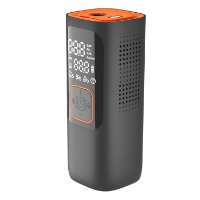 Electric Car Tyre Pumps
 Electric Ball Pumps
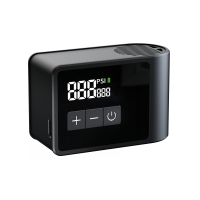 Electric Bike Pump
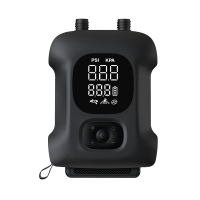 SUP Air Pump

Wholesale Electric Bike Pumps: The Technical Sourcing and OEM Vetting Guide for Distributors
Sourcing wholesale electric bike pumps can shape margins for cycling distributors, e-bike fleet operators, and outdoor retail buyers. Yet many procurement teams treat bulk cordless tire inflators as simple plastic accessories. The result can be higher return rates from thermal cutoffs, drifting pressure readings, and weak battery packs. When evaluating bulk electric bike tire inflators for private-label or retail channels, look past the glossy shell. Audit the pneumatic design, the battery energy, and the freight paperwork.
Manual hand pumps still have a place on a home workbench, and many riders keep one as a backup tool. But heavier electric bicycles and growing urban micromobility fleets are changing what riders expect from a daily inflation tool. Distributors who understand motor and airflow specifications, thermal behavior under load, and lithium battery shipping rules are better placed to secure reliable inventory. They also protect their brand from costly post-sale failures and avoidable return cycles.
Why Retail and Fleet Demand for Wholesale Electric Bike Pumps Is Shifting
The E-Bike Weight Penalty and Tire Pressure Sensitivity
Electric bicycles generally weigh more than traditional pedal bikes because of hub or mid-drive motors and bulky battery packs. Exact weights vary widely by model, frame material, and battery size, so buyers should treat any single figure as an example rather than a category norm. What matters for sourcing is the general direction: added motor and battery mass tends to push total vehicle weight well above that of an unpowered bicycle.
That extra mass makes small pressure losses matter more. An underinflated tire on a heavier frame deflects more, raises rolling resistance, and can make the motor work harder for the same distance. It also increases the chance of pinch flats and rim strikes against urban curbs. Regular pressure checks are therefore part of basic e-bike maintenance, not an optional extra.
Riders quickly learn that filling a wide e-bike tire with a miniature manual pump takes many tiring strokes. A garage floor pump works well at home, but it is too bulky for a daily commute or a saddlebag. A portable electric bike pump closes that gap by making repeatable pressure top-ups quick and nearly effortless, without requiring the rider to carry a full-size floor pump.
Multi-Scenario Utility Beyond the Bike Lane
From a merchandising view, single-purpose cycling tools often follow the seasons, selling well in spring and summer and sitting idle on shelves the rest of the year. Sourcing wholesale electric bike pumps built for multi-scenario inflation lets distributors tap demand across automotive, recreational, and mobility categories throughout the year instead of relying on one narrow sales window.
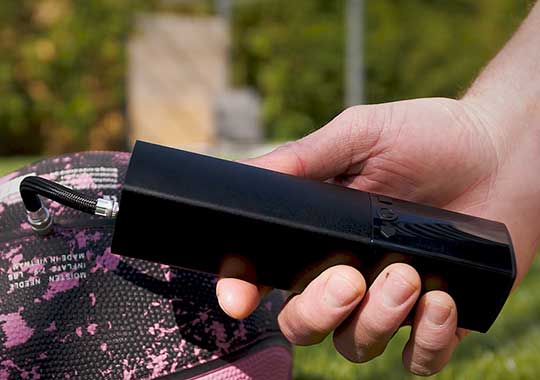
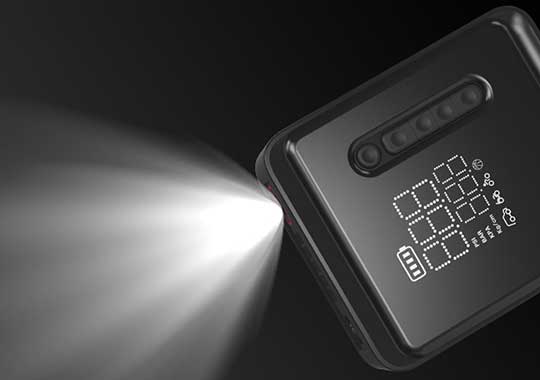
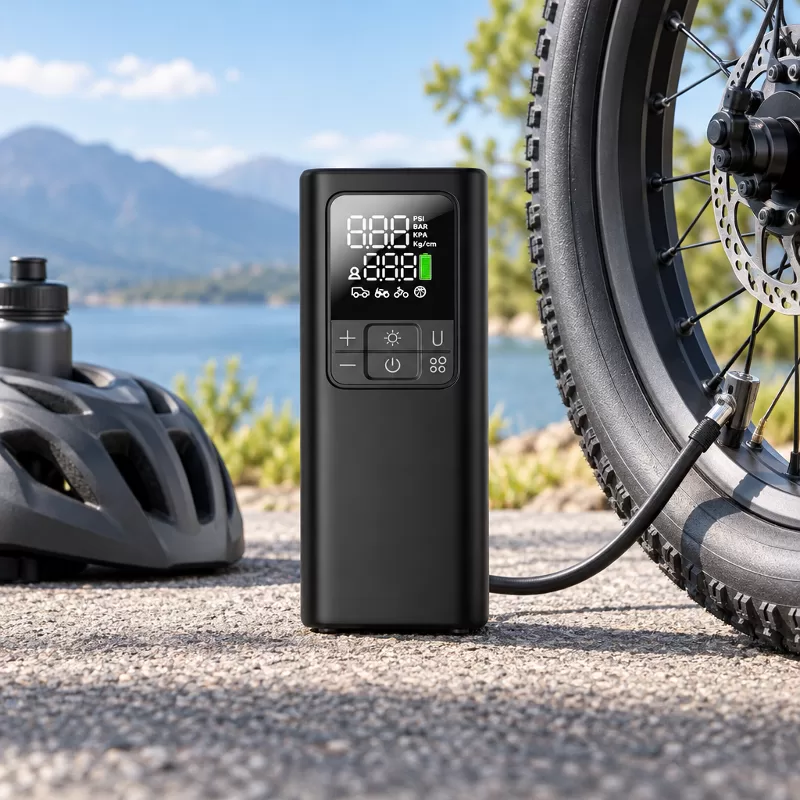
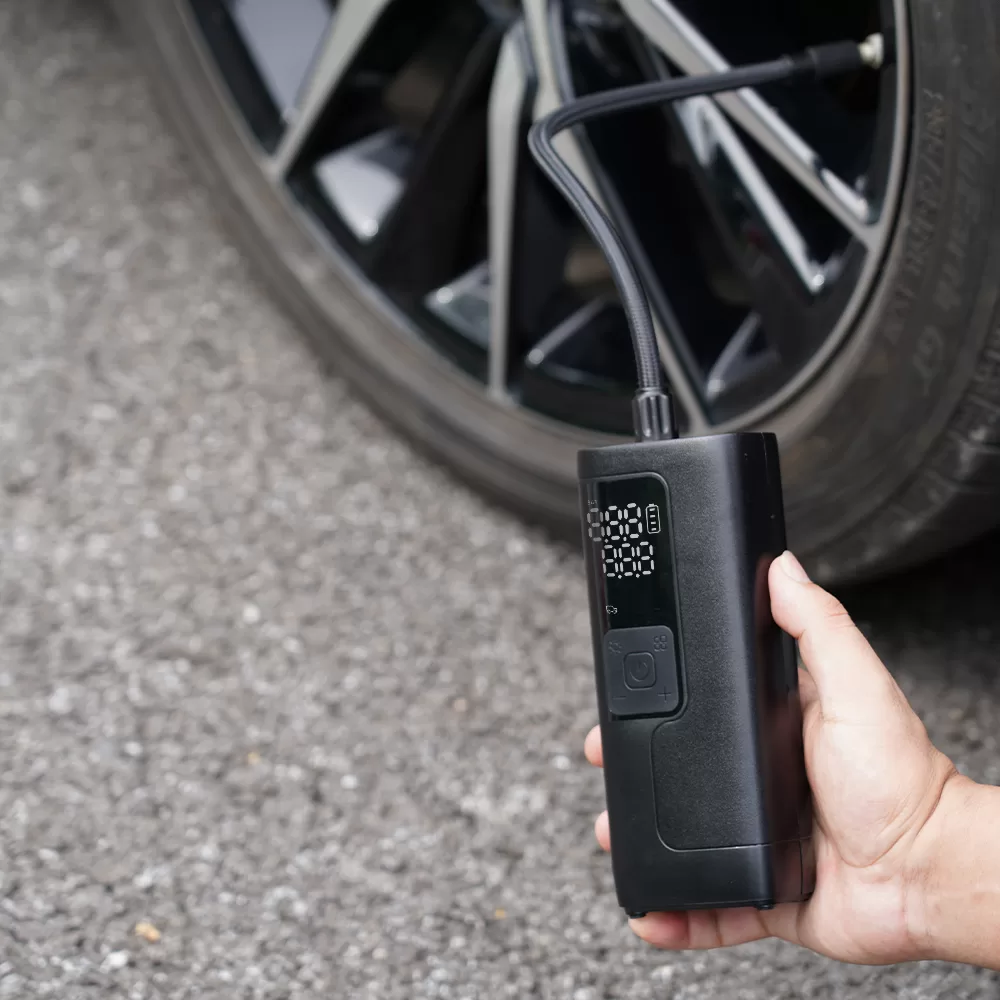
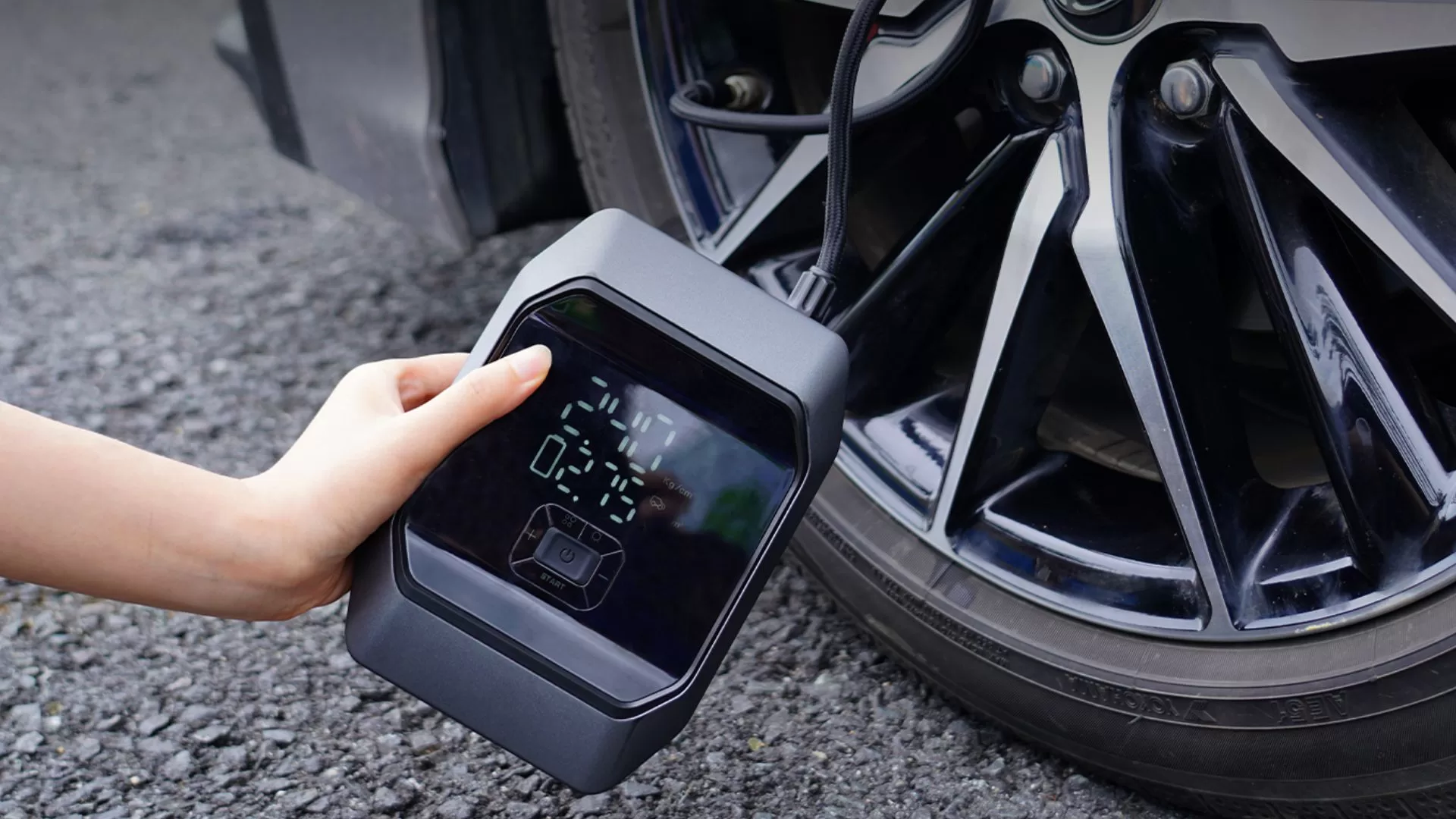
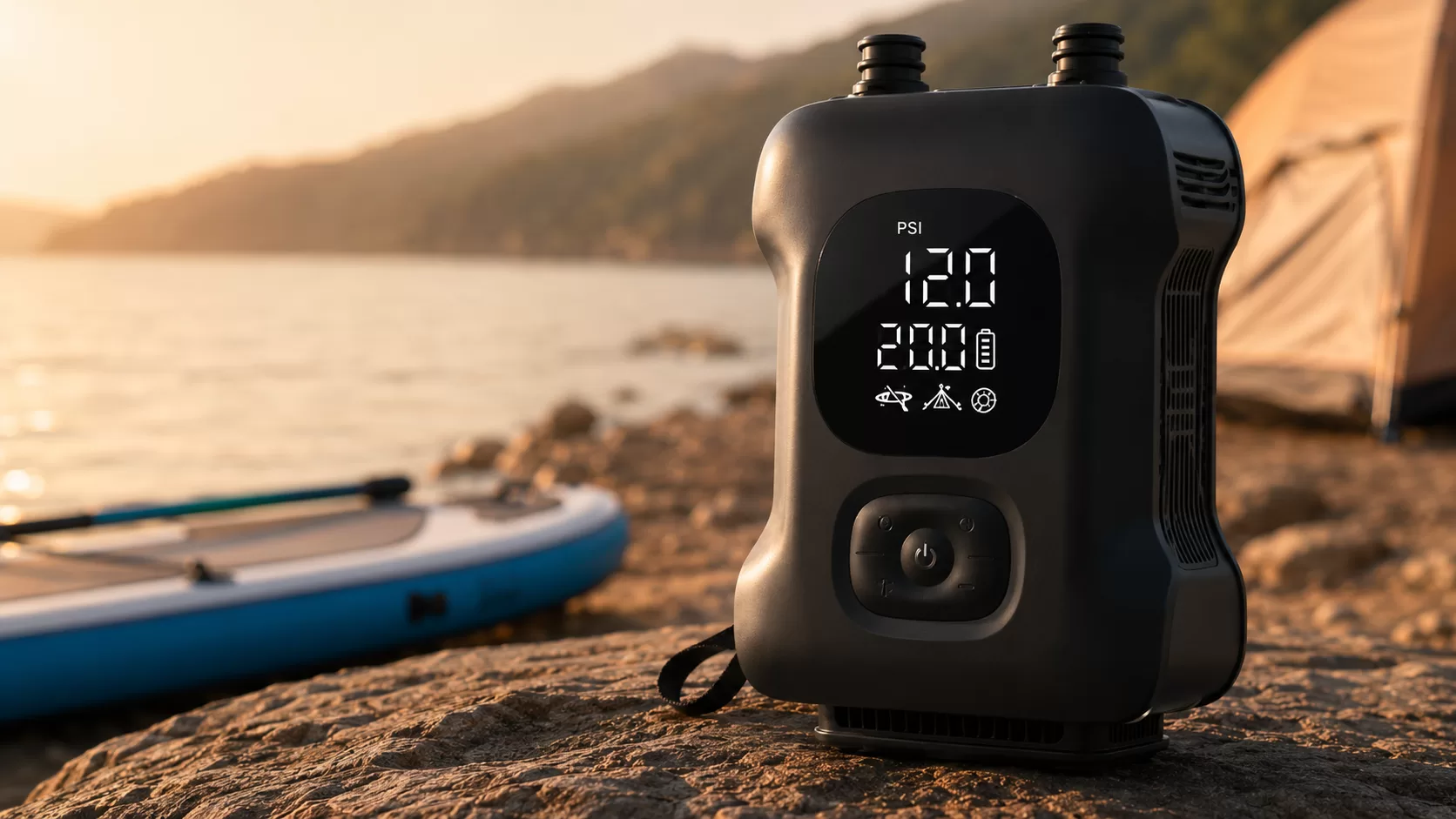
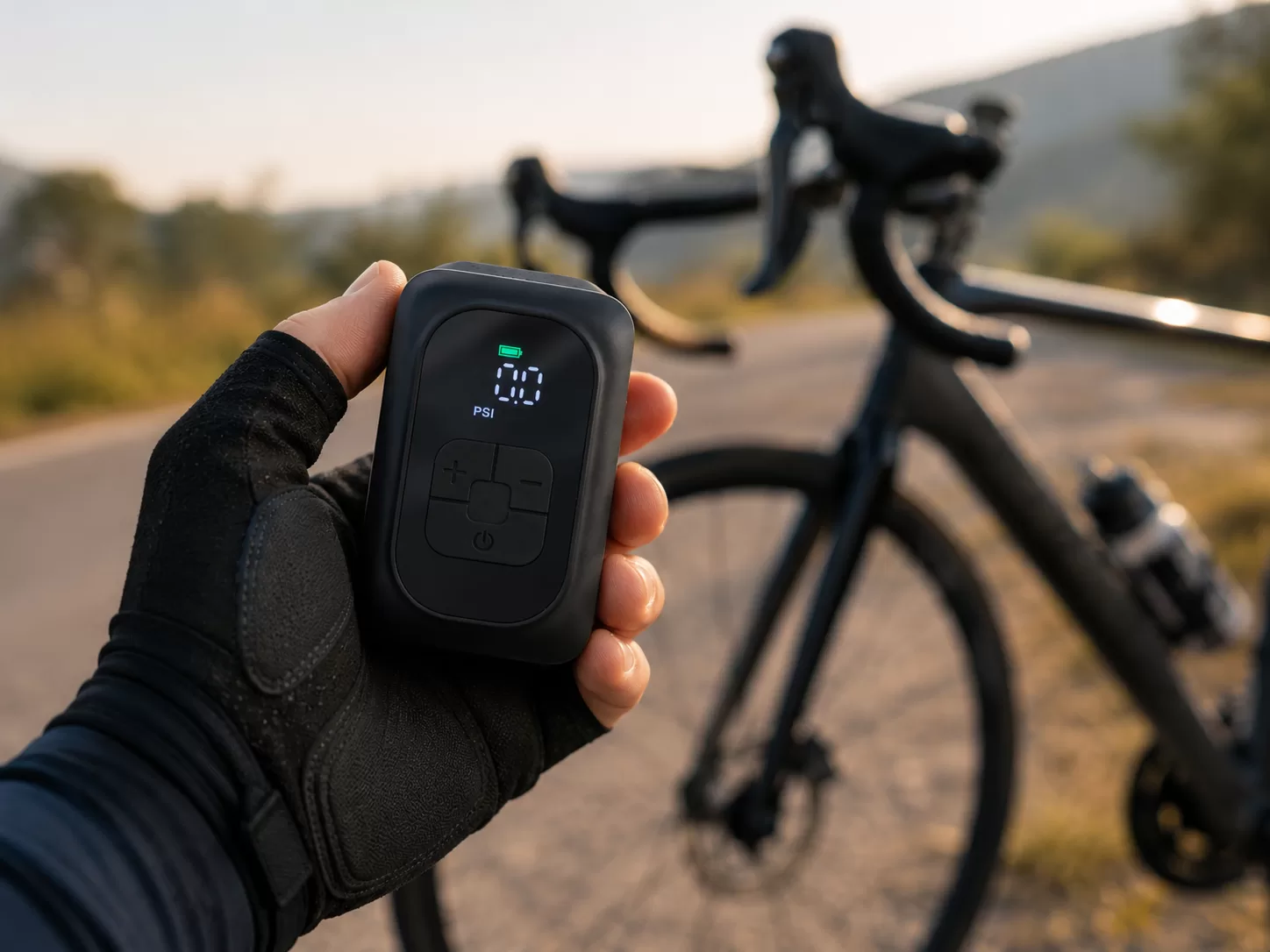
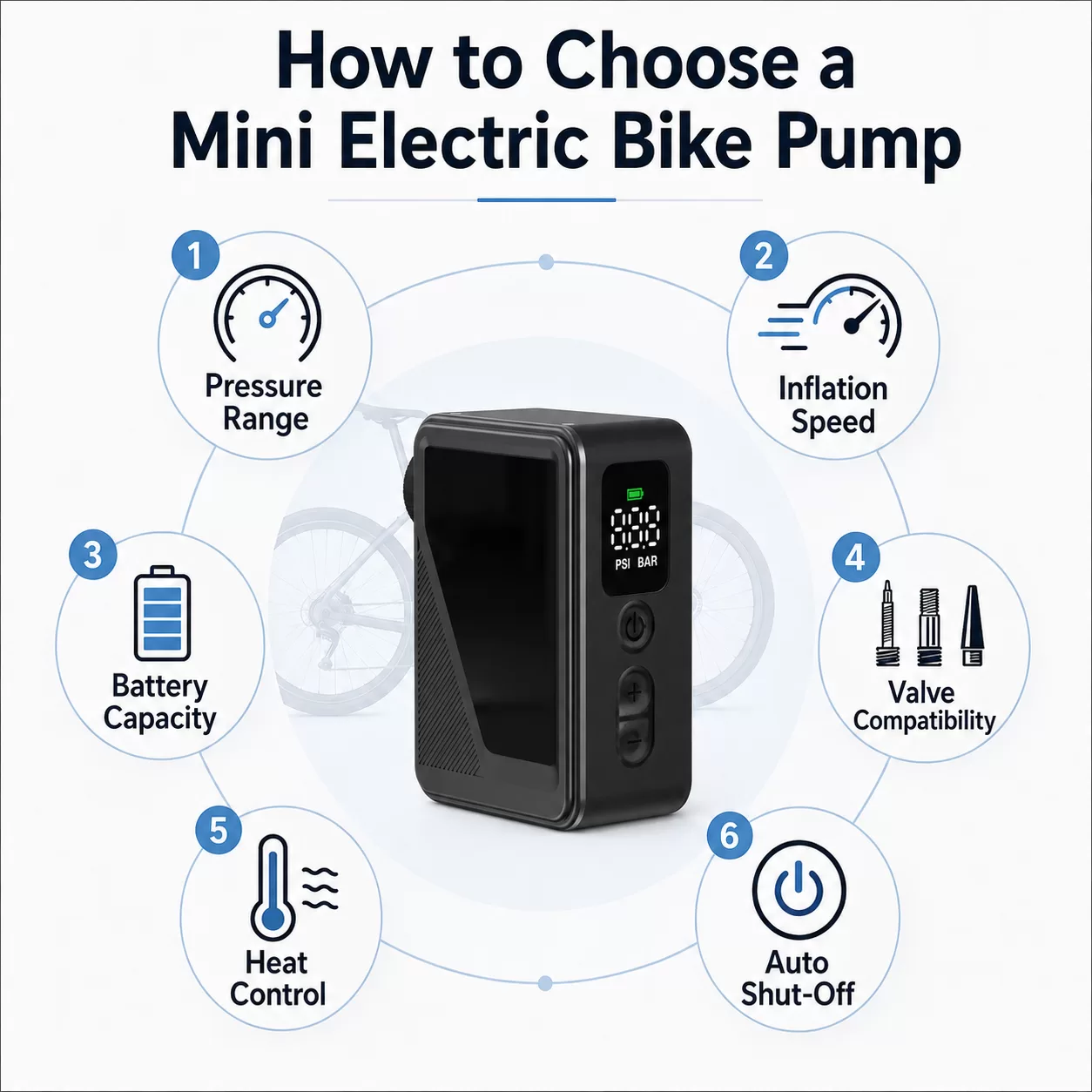
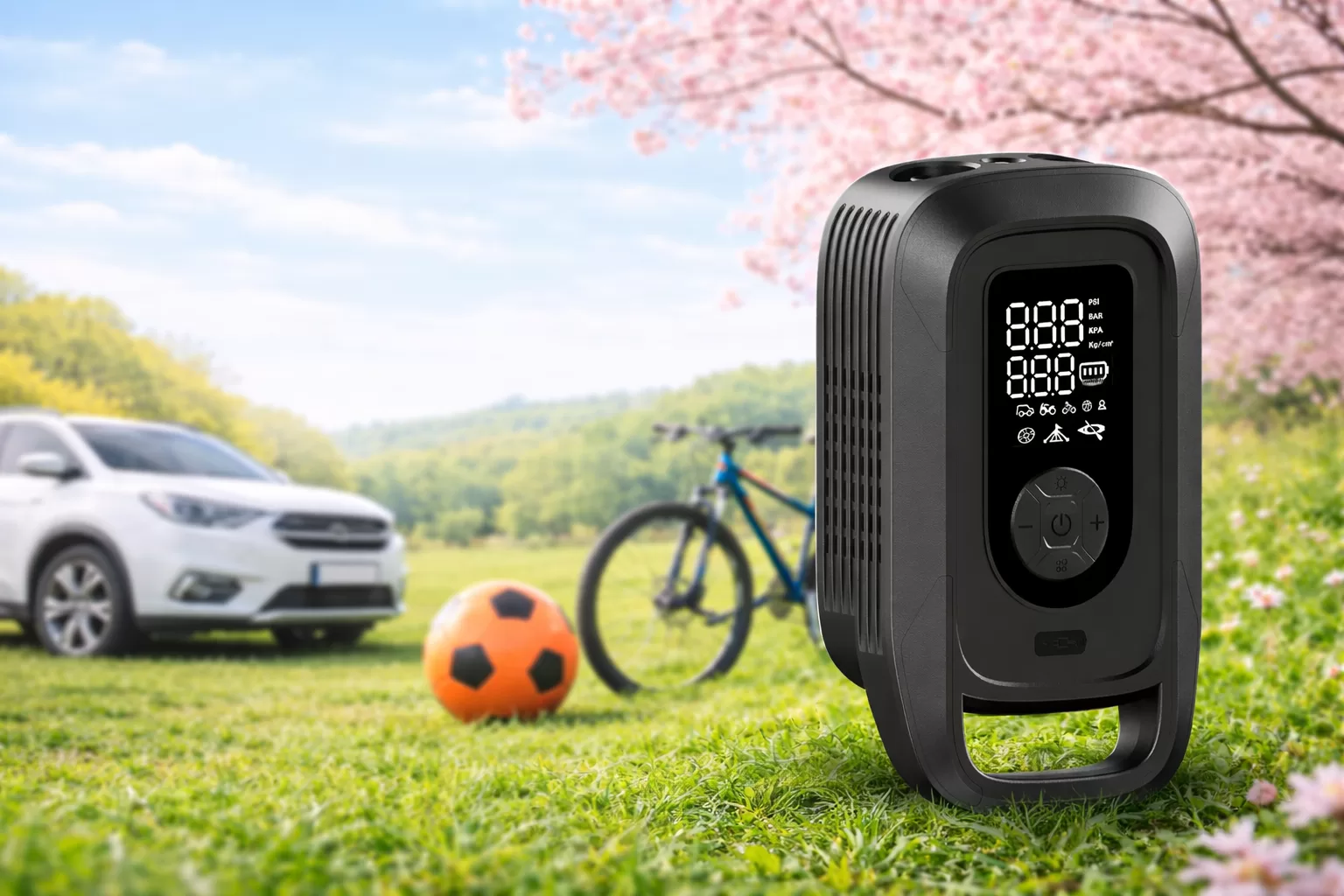
A note on the photos in this guide: they show compact cordless inflators as a product category. The supplied materials do not confirm that any of them depicts the AP2 itself, so readers should not treat them as pictures of the AP2 or as proof of its specific features. Buyers should ask their supplier for confirmed product photography before using any image in retail materials.
The Electric Bike Tire Pump 150PSI AP2 is a useful benchmark for cross-category utility. It ships with three adapters and, according to the product data, supports car tires, motorcycles, bicycles, e-bikes, wheelchairs, balance vehicles, and sports balls. One SKU can sit on a bike shop counter, an automotive emergency aisle, or a sporting goods shelf.
For commercial buyers, a single multi-purpose 150 PSI platform can also simplify stock. Fleet managers who maintain shared e-bikes, delivery trikes, and service vans can give technicians one standard tool instead of several specialized ones. That approach beats juggling separate gauges and compressors for each vehicle type, and it reduces the training burden when new staff join a maintenance team.
Core Engineering Metrics to Audit When Sourcing Bulk Electric Bike Inflators
Cylinder Specification, Motor Power, and Real Airflow Rates
The most common trap in pneumatic sourcing is confusing maximum pressure with airflow. A maximum pressure rating tells you the ceiling, not how fast a tire fills. Real user satisfaction depends on how many liters per minute the pump delivers as backpressure rises inside the tire. That is a separate figure from the pressure ceiling printed on the box, and buyers should always ask for both numbers before comparing two models.
The AP2 product data lists a "14 cylinder" specification, a 35W brushed motor, and a rated airflow of 15 to 18 L/min. The cylinder figure is presented here exactly as the supplier states it; no unit or dimension is given in the available data, so it should be treated as a manufacturer specification term rather than interpreted as a size comparison against other pumps. Buyers who want to understand what that number means for a specific batch should request clarification directly from the factory rather than assume it indicates a larger or smaller bore.
Tire pressure needs vary by tire width, casing construction, rim type, total vehicle and rider weight, and riding conditions, so there is no single pressure figure that applies across an entire category of bicycles or e-bikes. The table below is offered only as a rough illustration of relative pressure demands between vehicle types, not as a recommended setting for any individual tire.
| Application Category | Illustrative Pressure Range | Primary Valve Interface | Key Demand on the Inflator |
|---|---|---|---|
| Road and Gravel Bicycles | Generally higher than wide-tire categories | Presta / Schrader | Accurate control near the upper end of the inflator’s range |
| Commuter and Fat-Tire E-Bikes | Generally lower than narrow road tires | Schrader / Presta | Steady airflow to fill larger tire volumes |
| Motorcycles | Moderate, model-dependent | Schrader | Stable operation over several minutes of use |
| Passenger Car Tires (Top-Off) | Set by vehicle manufacturer, usually mid-range | Schrader | Heat dissipation and enough battery energy for a full tire |
| Wheelchairs and Balance Vehicles | Set by equipment manufacturer | Schrader | Compact hose clearance and accurate low-volume sensing |
| Sports Balls | Low pressure relative to tires | Needle adapter | Fine low-pressure control to avoid overinflation |
Because actual target figures depend on the specific tire, rim, and vehicle, never treat the sidewall marking as a target to reach. Instead, do not exceed the maximum pressure printed on the tire sidewall or rim, and follow the specific pressure recommended by the bicycle, vehicle, or tire manufacturer for that exact model and load. Retail packaging and quick-start guides should repeat this advice clearly.
Thermal Management and Acoustic Boundaries Under Load
Compressing air in a small chamber produces heat at the cylinder head. In a compact housing, that heat has limited room to escape compared with a larger stand-alone compressor. Buyers should ask how each design manages it, because sustained heat can shorten the service life of plastic parts and electronic components over repeated use. Cooling is a design question, not an afterthought.
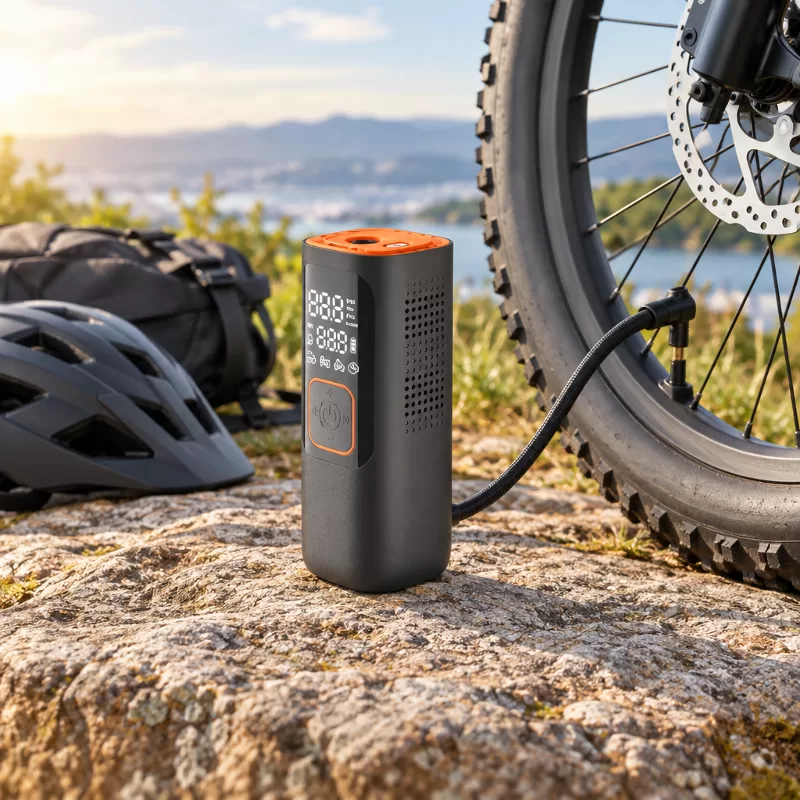
When evaluating wholesale electric bike pumps, inspect how heat leaves the enclosure during continuous operation. The AP2 includes an internal heat-dissipation fan, and the product data states a working temperature range of -10°C to 45°C. Check the ventilation openings on the housing and run a continuous test on every sample to see how it behaves after several back-to-back inflation cycles rather than relying on a single short test.
Noise also affects retail acceptance, since a harsh motor sound can trigger returns even when the pump performs correctly. The AP2 is specified at ≤85dB measured at 1 meter, which is an upper limit rather than a typical reading. Measure the noise level on your own samples under realistic conditions, then judge whether it meets the expectations of your target market and sales channel. Buyers in different regions may accept very different sound levels.
Battery Architecture and Per-Charge Tire Yield
Battery claims on trading platforms can be hard to compare across suppliers. Some listings quote milliamp-hours alone and leave out voltage, so buyers cannot see the actual stored energy behind the headline number. Converting every rating to watt-hours (Wh) removes that ambiguity and gives a consistent basis for comparing different pumps, whatever the cell configuration or the marketing language on the listing.
For a transparent audit, check the points below against the supplier data and your own bench results. Each one connects a printed specification to something a customer can actually experience after purchase, which is the standard that matters for return rates and repeat orders:
- Battery rating: The AP2 lists 2000mAh at 7.4V, or 14.8Wh. The product description states a built-in 2 × 2000mAh lithium battery arrangement.
- Runtime: The specification gives approximately 20 to 30 minutes of cordless operation per charge.
- Tire yield: Riders judge value by completed tires rather than abstract runtime figures; the AP2 data cites about 10 to 15 bicycle tires per full charge.
- Charging: A 5V/2A Type-C input recharges the pack in 2 to 3 hours, according to the specifications.
Evaluating a Reference Model: Inside the 150PSI AP2 Portable Platform
Form Factor, Weight, and Rider Portability
A portable inflator only helps a rider if it is small and light enough to actually carry on a ride rather than leaving it at home. If a cordless unit feels bulky or heavy, it will end up on the garage workbench instead of in the saddlebag, which defeats the purpose of buying a portable model in the first place. Size and weight deserve real attention during sample review.
The AP2 measures 38 × 60 × 151 mm and has a net weight of 385g. That is compact enough for a jersey pocket, saddlebag, or scooter stem bag. For retail buyers, a small footprint can also mean easier shelf display and potentially lower per-unit shipping costs compared with bulkier compressor-style inflators, though freight quotes should be confirmed against the final carton dimensions.
Sensor Accuracy, Preset Modes, and Automatic Shut-Off
Novice riders and rental customers rarely memorize exact tire pressure targets for every vehicle they use. Even experienced cyclists find analog dial gauges hard to read while crouching beside a wheel at dusk or in a dim parking garage. Digital sensing paired with automatic cutoff takes much of the guesswork out of the job, and it shortens the learning curve for new users.
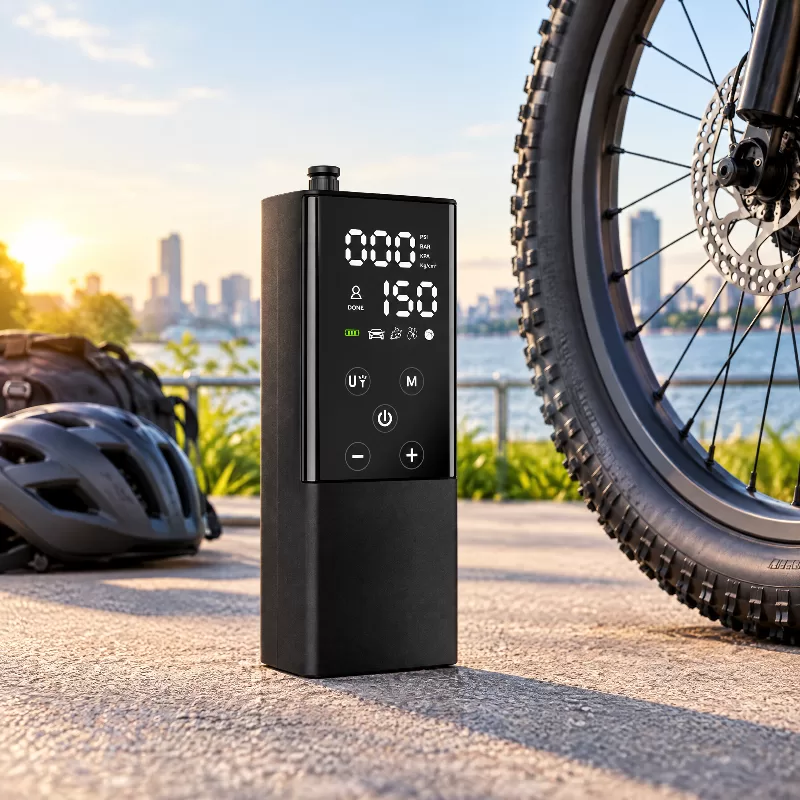
The AP2 has a backlit LCD that shows live pressure readings during inflation. Users can switch between PSI, BAR, KPA, and Kg/cm² depending on personal or regional preference. The product offers car, motorcycle, bicycle, ball, and custom modes, with adjustable pressure from 0 to 150 PSI, according to the supplied specifications. Four selectable units make the same SKU easier to sell across different regional markets.
Once a target is set, the memory function keeps the setting for repeat sessions, which is useful for anyone maintaining the same vehicle over time. The automatic shut-off stops inflation when the preset pressure is reached, which helps prevent overinflation. That matters most for delicate sports balls and for higher-pressure tires, where small dosing errors carry more consequence.
Emergency Functions: Power-Bank Output and Nighttime Use
Roadside failures rarely happen under convenient, well-lit conditions. A commuter dealing with a slow puncture after sunset needs enough light to see the valve clearly and, ideally, a way to keep a phone charged in case they need to call for help. Those two needs shape how useful a portable inflator really is in an emergency.
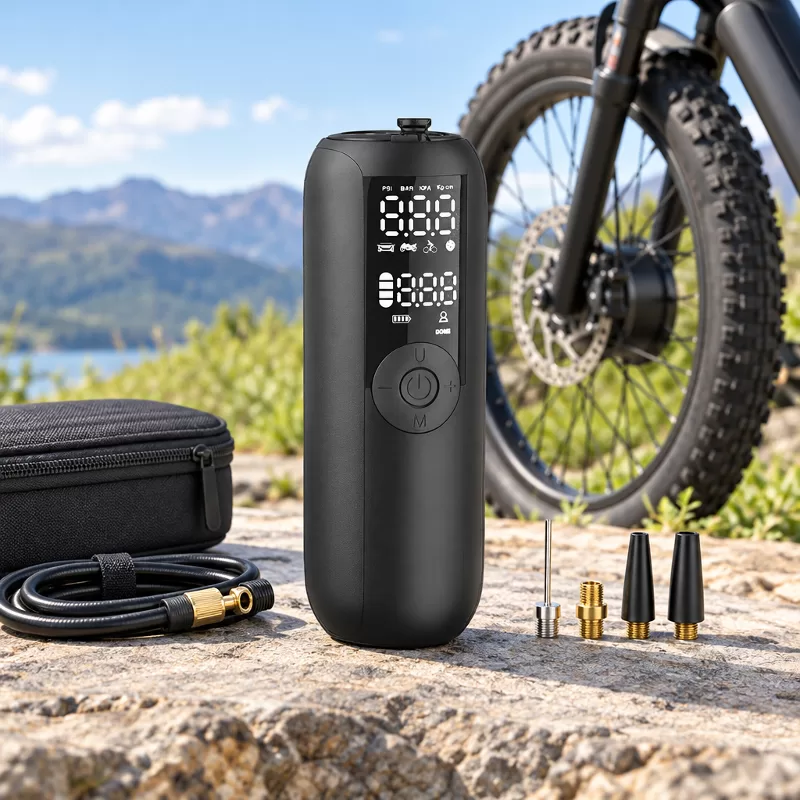
The AP2 includes a built-in LED light intended for dark or poorly lit areas. It also works as a power bank through a 5V/1.5A output, so it can charge Android or iOS devices in an emergency situation. Combining inflation, lighting, and phone charging in a single 385g body gives retail buyers a clear, practical story to tell shoppers browsing the shelf.
Step-by-Step Vetting Protocol for B2B Buyers and Private-Label Brands
Conducting Sample Audits Before You Order
Before signing a purchase contract for wholesale electric bike pumps, test golden samples in a structured way rather than relying on the supplier’s own marketing claims. A spec sheet alone cannot show batch consistency or how a unit behaves after repeated, real-world use over weeks of testing. A short, repeatable bench routine gives you evidence you can compare across suppliers.
Follow this five-step bench sequence when evaluating pre-production samples. Each step checks one specification from the supplier data against what the unit actually does on your bench, so any gap between the claim and the result becomes visible before you commit to a larger order:
- Gauge cross-check: Connect the sample to a calibrated master digital manometer. Verify that the LCD readout and auto shut-off land within acceptable tolerance at several points across the pump’s working range.
- Consecutive tire run: Inflate ten tires in a row, with short pauses for valve changes. Use the same tire specification, the same starting pressure, and the same target pressure for every sample, and record the time per tire under identical test conditions. Only results gathered this way can be compared between samples or set against the stated 10 to 15 tire yield.
- Thermal check: Run the unit in a controlled workspace and watch for housing warmth or deformation. Test at the edges of the stated -10°C to 45°C working range if you have the equipment to do so safely.
- Noise measurement: Place a sound level meter 1 meter from the running unit in a quiet room. Confirm the result against the ≤85dB specification.
- Port load test: Discharge the power-bank output at 5V/1.5A into an electronic load. Then recharge through the Type-C port at 5V/2A and compare the time with the 2 to 3 hour claim.
Valve Compatibility, Adapter Kits, and Packaging
Valve confusion can be a source of user frustration with portable electric air pumps, since bicycles use either Schrader valves, which match automotive stems, or narrower Presta valves with a locking nut. Buyers should verify the included adapters and instructions rather than assume riders will intuitively know which fitting to use. A confused customer often blames the pump, even when the fitting is the real cause.
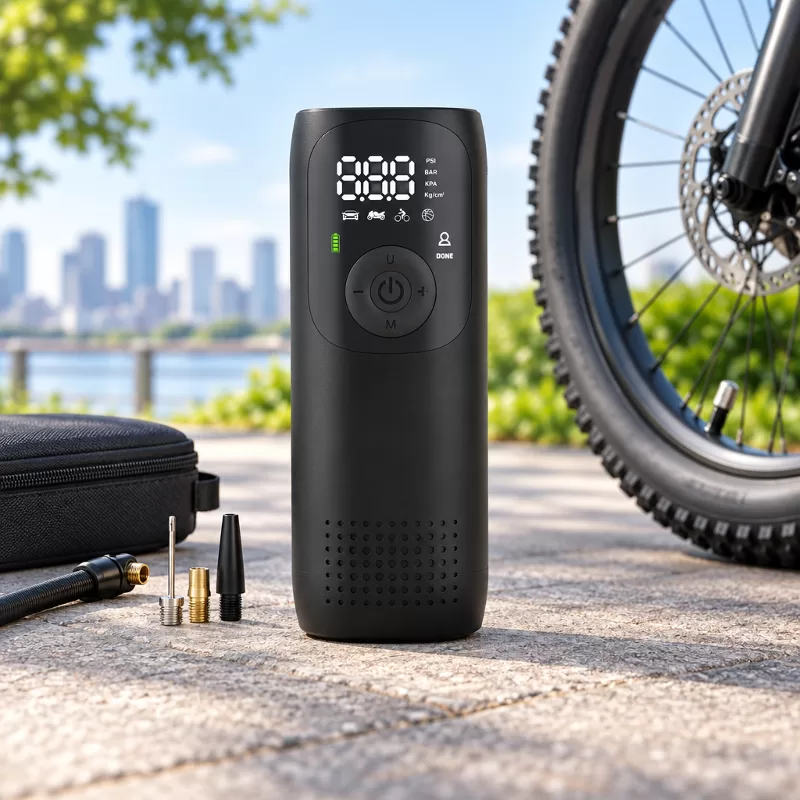
When configuring bulk OEM orders, check that the three adapters thread on cleanly and seal well under pressure. A leaking connection can distort the pressure reading and slow the fill, which may lead a customer to assume the pump itself is faulty. Clear, illustrated quick-start diagrams inside the retail box also help reduce support tickets and return requests tied to valve confusion rather than actual product defects.
International Logistics Compliance for Lithium-Ion Inflators
Cordless inflators contain rechargeable lithium-ion batteries, so international freight needs careful handling at every stage of the supply chain. Equipment with built-in lithium-ion batteries is commonly shipped under UN 3481. Confirm the exact classification and packing requirements with your freight forwarder for each shipment, since rules can vary by carrier and route.
The AP2 battery is rated at 14.8Wh. That is below thresholds used in some battery-transport provisions, but that figure alone does not determine the requirements or exempt a shipment. Packaging, marking, documentation, and carrier requirements can still apply. Confirm the applicable rules and carrier requirements for your route and transport mode before you book.
B2B buyers should request a UN 38.3 test summary and a current safety data sheet from the manufacturer before booking air or ocean cargo. Collecting these documents early in the process helps avoid customs holds and rejected bookings later on. It also gives your compliance team time to review the paperwork before the cargo is scheduled to move.
Partnering with an Experienced Manufacturer for Long-Term Supply Stability
The right factory partner decides whether a wholesale program scales smoothly or stalls on inconsistent batches. Newo is a professional manufacturer specializing in the research, development, and production of smart electric air pumps and portable inflation solutions. With expertise in pneumatic technology, product design, and manufacturing, we offer portable tire inflators, electric bike pumps, car air pumps, ball pumps, and outdoor inflation solutions, built for convenience, efficiency, and reliability.
Our production capabilities, experienced engineers, and strict quality management support our goal of building long-term partnerships with customers around the world. For buyers weighing a first order, the AP2 carries a 1-year warranty, which gives wholesale buyers and private-label brands a clear support baseline as they expand into new regions and product categories and plan their after-sales process.
Frequently Asked Questions About Wholesale Electric Bike Pumps
What PSI ceiling should I look for when ordering wholesale electric bike pumps for mixed retail?
A 150 PSI maximum is a practical ceiling for mixed retail stock, since it covers most car, motorcycle, bicycle, and ball inflation needs within one device. Actual target pressures vary widely by tire, rim, and vehicle manufacturer recommendation, so a high ceiling is about flexibility across product categories rather than a fixed setting. A 0 to 150 PSI model like the AP2 lets one product line serve road cyclists, e-bike commuters, motorcyclists, and drivers who need a roadside top-off, as long as each user sets the pressure appropriate to their own tire and equipment.
How do air and ocean freight rules affect bulk orders of cordless tire inflators?
Cordless inflators with built-in lithium batteries are commonly shipped under UN 3481. Ask your factory for UN 38.3 test documentation and a safety data sheet before dispatch. The AP2 uses a 7.4V, 14.8Wh battery, which is below thresholds used in some battery-transport provisions. That alone does not exempt a shipment or set its requirements, so your forwarder should confirm the rules and carrier requirements for your specific route and transport mode.
How many tires can a compact 7.4V lithium battery pump inflate on one charge?
According to the AP2 specifications, its 2000mAh, 7.4V, 14.8Wh battery supports approximately 20 to 30 minutes of operation per charge. That equals about 10 to 15 bicycle tires per full charge, based on the supplier’s stated figures. Once depleted, the pack recharges in 2 to 3 hours through the 5V/2A Type-C input port. Actual results will depend on tire size and starting pressure, so verify the yield on your own samples.
Why do memory and auto shut-off matter for commercial e-bike fleets?
Fleet technicians and rental operators service many similar e-bikes every day, often under time pressure between shifts. A memory function stores the preset pressure, which saves repeated button presses between vehicles that share the same target setting. Automatic shut-off stops the pump once the target is reached, so staff can step away briefly and move on to the next inspection task while the current tire finishes filling.
Conclusion: Building a Dependable Inflation Category
Profitable procurement in the micromobility sector means looking beneath the exterior styling to verify mechanical and electrical basics rather than trusting a glossy product photo alone. When vetting wholesale electric bike pumps, check the rated airflow of 15 to 18 L/min, the stated working range of -10°C to 45°C, the 14.8Wh battery endurance, and valve versatility against your own bench testing results.
By anchoring your catalog around a well-documented platform like the 150PSI AP2 portable electric air pump, you can serve e-bike commuters, road cyclists, wheelchair users, and drivers with one compact 385g tool. Whether you are building a private-label cycling accessory line or equipping a maintenance fleet, careful sourcing of wholesale electric bike pumps protects your margins and builds lasting customer trust over multiple ordering cycles.
-

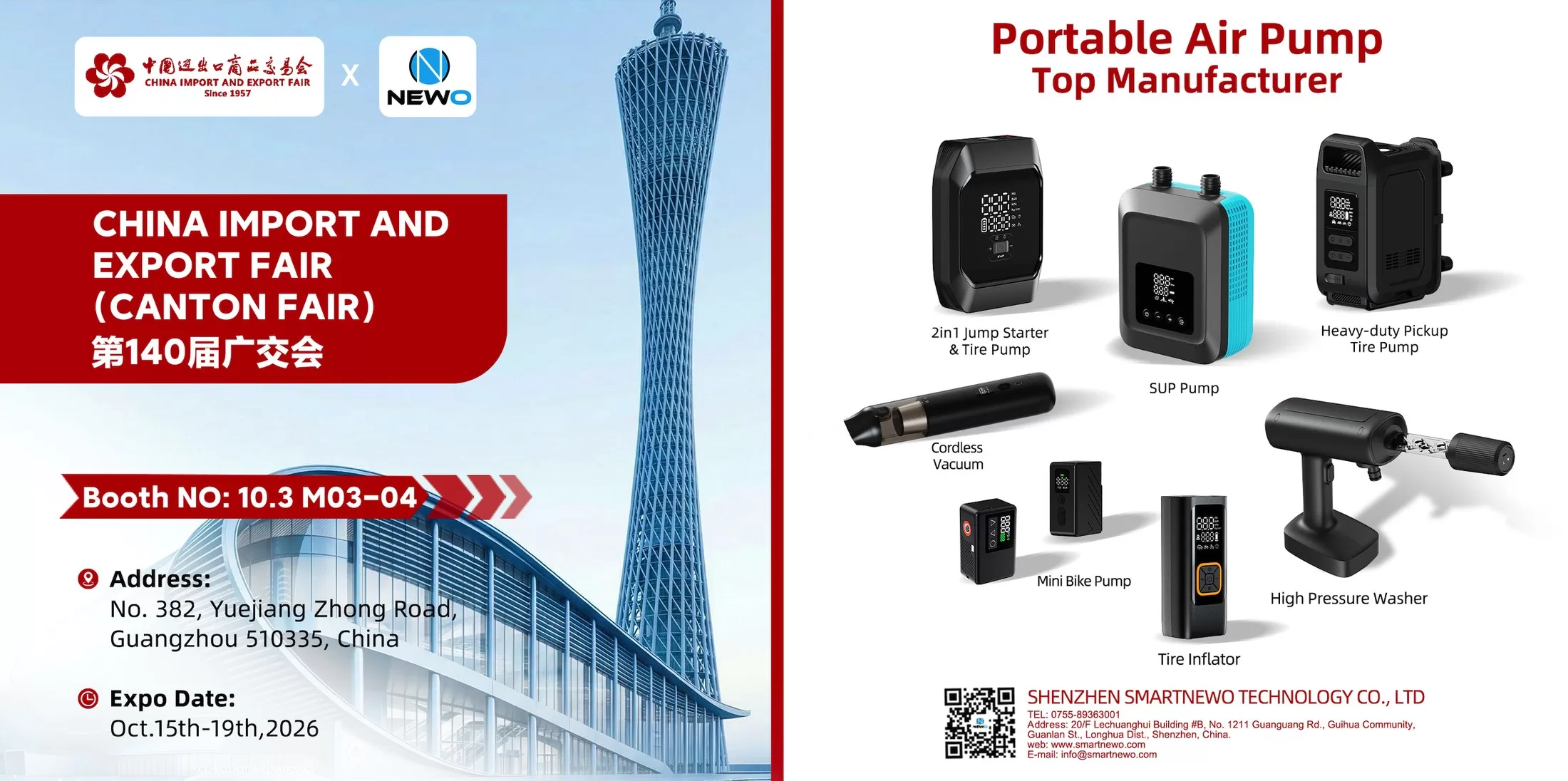
Meet NEWO at the 140th Canton Fair: Visit Booth 10.3 M03–04
Meet NEWO at the 140th Canton Fair in Guangzhou, October 15–19, 2026. Visit Booth 10.3 M03–04 to explore portable air pumps and discuss OEM, ODM and distribution opportunities.... -

As Shenzhen Welcomes the World for APEC 2026, NEWO Welcomes You to Our Factory
As Shenzhen prepares for APEC 2026, NEWO welcomes international buyers and partners to visit our factory, meet our team and explore future cooperation.... -

Leading the Way in Product Innovation and Excellence
Smartnewo exemplifies professionalism in product innovation and manufacturing. Their collaboration with Xiaomi Youpin on the G01 crowdfunding project highlights their expertise in creating compact, powerful inflatable pumps. Rigorous engineering, meticulous production processes, and advanced quality assurance underscore their commitment to excellence. The success of the G01 project, with significant market... -

Essential Qualities of an Excellent Supplier
In today's competitive market, finding a reliable supplier is crucial for business success. Based on insights from Smartnewo and broader internet research, here are key qualities an excellent supplier must possess:... -

NW06 Tire Inflator: Compact Power for Quick Inflation
Summary The NW06 Tire Inflator delivers quick and efficient tire inflation with a powerful 35L/min airflow. It features a user-friendly LCD screen for real-time pressure monitoring, dual power options with a built-in 6000mAh battery, and multiple nozzle attachments for versatile use. Its compact design and integrated LED light ensure convenience and... -

Unleash the Power of Portability: The SmartNewo Jump Starter with Air Compressor KF03
This guide will walk you through the steps to effectively use a portable tire inflator, helping you stay prepared and safe on the road.... -

Newo Attends The 2024 Consumer Electronics Show (CES)
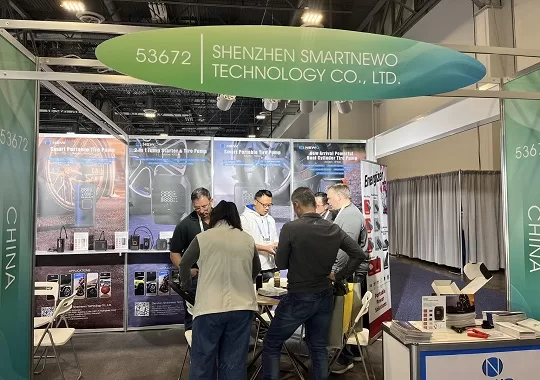
Smartnewo booth is located at 53672, Halls A-D, Level 2, Venetian Expo, Las Vegas Convention Center (LVCC). ... -

Smartnewo’s Dual-Cylinder Air Pump Rocks the Hong Kong Autumn Electronics Fair!
Smartnewo’s Dual-Cylinder Air Pump Rocks the Hong Kong Autumn Electronics Fair!... -

Meet at the Canton Fair! Smartnewo brings dual-cylinder air pumps, making your inflation experience faster and more stable!
NEWO has went deep communication and negotiation with customers from all over the world on booth.... -

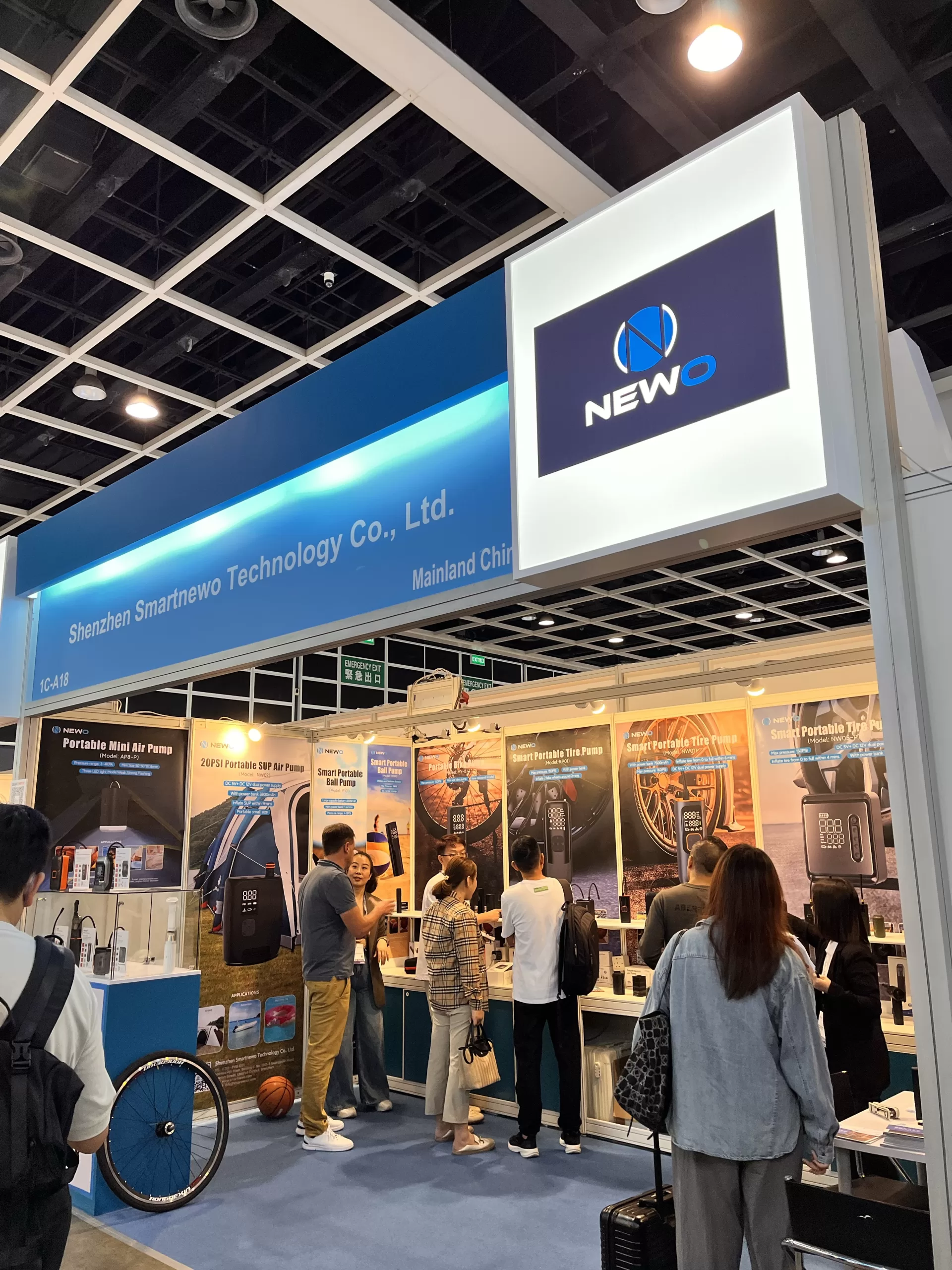
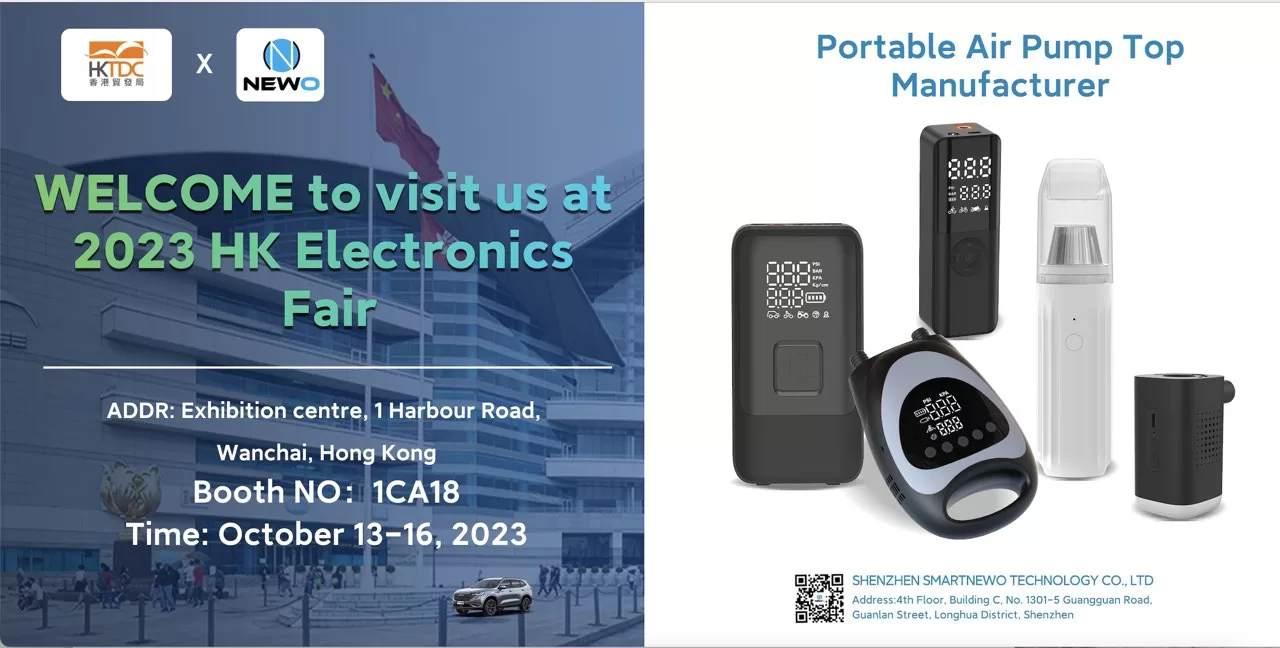
“Hong Kong Autumn Electronics Fair – 1CA18 (October 13th to 16th): Smartnewo invites you to visit our booth!
Hong Kong Autumn Electronics Fair...
-

How to Choose a Reliable Tire Inflator Manufacturer in China
Choose a tire inflator manufacturer in China with a focused RFQ, supplier evidence, configuration checks, and clear sample-to-pilot decisions for your brand.... -

Rechargeable Electric SUP Pump for Paddle Boards: Faster Inflation for SUPs, Kayaks and Inflatable Tents
The BL10-C Portable Electric Bike Tire Inflator is a compact and lightweight mini electric bike pump designed for modern cyclists. With up to 120 PSI pressure, a digital LED display, preset pressure control, automatic shut-off, USB-C charging, and multiple valve adapters, BL10-C offers a convenient inflation solution for road bikes,... -

Are Electric Bike Pumps Worth It in 2026? Electric Pump vs CO₂ vs Mini Hand Pump
Discover whether electric bike pumps are worth it in 2026. This guide compares electric bike pumps, CO₂ inflators, and mini hand pumps for road cycling, gravel riding, commuting, and long-distance rides. Learn the pros, limitations, best use cases, and key features to look for before choosing the right portable tire... -
BL10-C Portable Electric Bike Tire Inflator: Small Size, Reliable Power for Every Ride
The BL10-C Portable Electric Bike Tire Inflator is a compact and lightweight mini electric bike pump designed for modern cyclists. With up to 120 PSI pressure, a digital LED display, preset pressure control, automatic shut-off, USB-C charging, and multiple valve adapters, BL10-C offers a convenient inflation solution for road bikes,... -

Why Mini Electric Bike Pumps Are Becoming Essential for Modern Cycling
Discover why mini electric bike pumps are becoming essential for modern cyclists. Learn how portable electric bike pumps improve tire pressure management, riding safety, and convenience.... -

The Ultimate Smart Solution for Easy Outdoor Adventures in 2026
Discover how a spring travel air pump simplifies outdoor trips with fast inflation, smart features, and powerful performance—perfect for every adventure.... -

Powerful 5-in-1 Portable Car Tire Inflator and Jump Starter: The Ultimate Emergency Tool for Every Driver
Why Every Driver Needs a Portable Car Tire Inflator and Jump Starter Modern drivers face many unexpected situations on the road. A flat tire, low tire pressure, or a dead car battery can happen at the worst possible time. That’s why having a portable car tire inflator and jump starter is... -

7 Real Cycling Scenarios That Show Why Every Rider Should Carry a Mini Bike Pump
Cycling is one of the most freeing activities you can enjoy. Whether you’re commuting to work, riding through city streets, or exploring quiet countryside roads, a bike ride can instantly improve your day. But there’s one small problem that almost every cyclist eventually faces: Low tire pressure. It might happen... -
BL08-A Portable Electric Bike Pump: A Global Distribution Opportunity with Smartnewo
Smartnewo, a professional manufacturer of portable electric air pumps, introduces the BL08-A model — a compact and efficient inflator designed for global distributors, e-commerce sellers, and outdoor accessory brands seeking reliable OEM/ODM solutions. Table of Contents Main Heading Subtopics 1. Introduction: Expanding the Global Market for Smart Inflation Tools Portable... -

Connecting Opportunities at Automechanika Shanghai 2025 — Smartnewo Exhibition Day 1
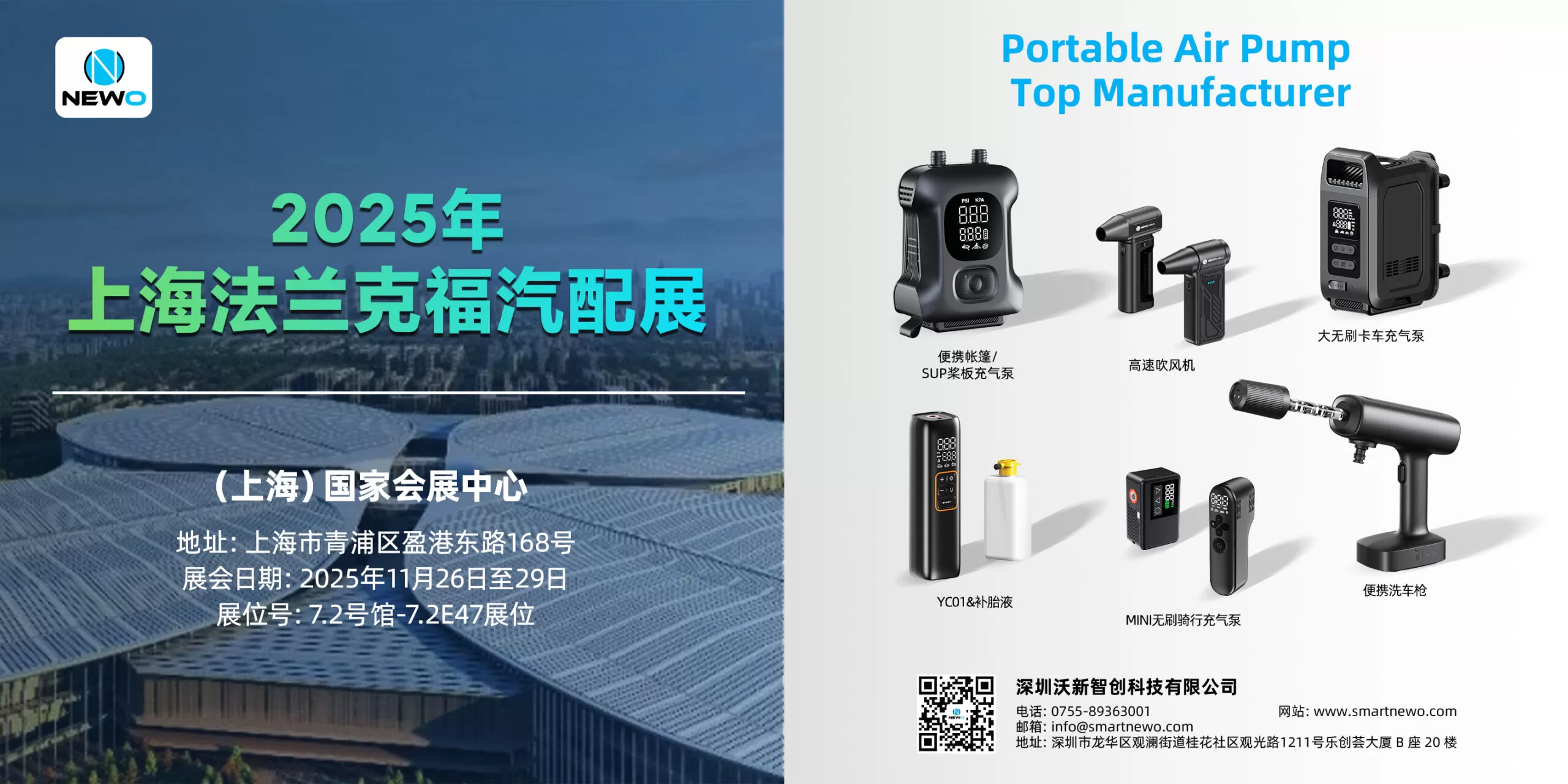
Today marks an exciting beginning as Smartnewo officially opens its booth at Automechanika Shanghai 2025. As one of the largest and most influential automotive aftermarket exhibitions in the world, the show provides an exceptional platform for meaningful conversations, partnership building, and global industry exchange. Located at Booth 7.2E47, Smartnewo presents...
-
How Is a Football Properly Inflated?
The correct inflation of a football - with not too much and not too little air - is a hotly debated topic among footballers.... -
Application Scenarios of Car Inflator Pump
Often long-distance business trips or play car owners because the road may be more remote areas, in this case if you encounter a tire leak....