

 Portable Tire Inflators
 Electric Air Pumps
 Electric Car Tyre Pumps
 Electric Ball Pumps
 Electric Bike Pump
 SUP Air Pump

Air Pump for Tires Portable: The Complete Guide to Selection, Safe Inflation, and Compact Performance
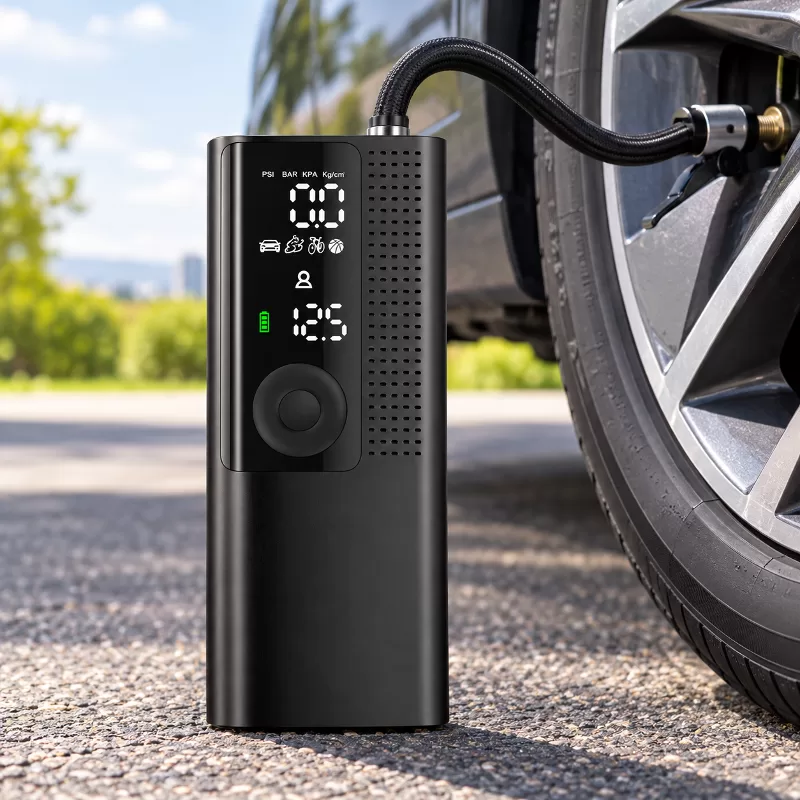
Maintaining correct tire pressure is one of the most neglected aspects of vehicle maintenance, directly affecting handling, tread longevity, and fuel economy. A dependable air pump for tires portable provides drivers with mechanical independence, eliminating frantic searches for functioning service station pumps during low-pressure warnings. Whether dealing with seasonal temperature fluctuations or an unexpected slow leak on a deserted highway, having a dedicated portable tire inflator inside your vehicle bridges the gap between stranded downtime and safe driving.
Modern pneumatic engineering has shrunk heavy workshop compressors into handheld, battery-powered and dual-power devices that store easily in a glove compartment or trunk well. Understanding the engineering, operational boundaries, and practical use of these tools ensures you select the correct equipment for your vehicle and avoid hazardous inflation mistakes.
Understanding the Portable Tire Inflator: Mechanics, Capability, and Boundaries
What Is an Air Pump for Tires Portable?
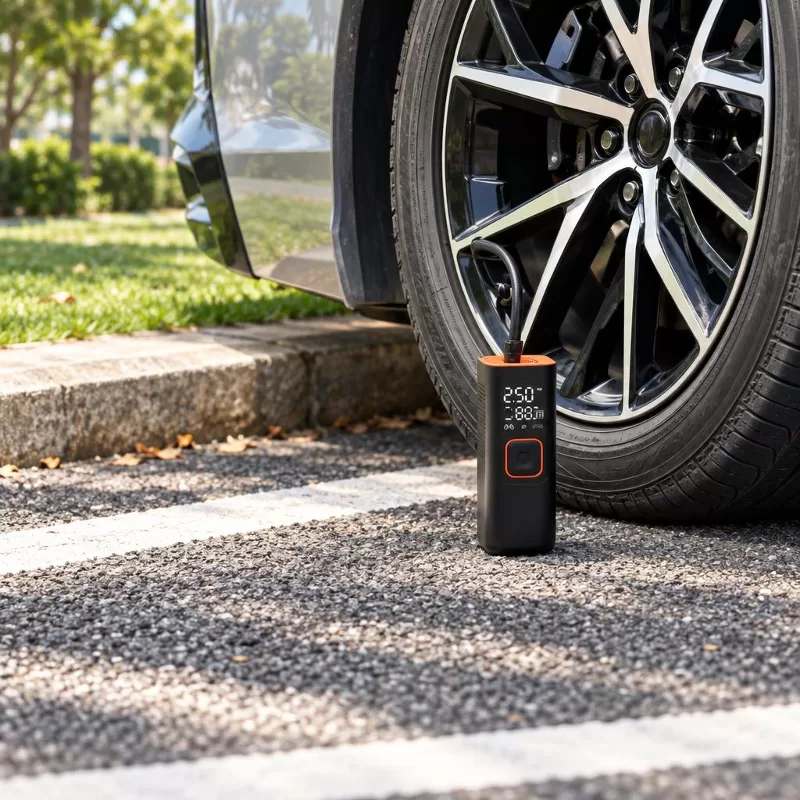
A portable tire inflator is an electrically driven, compact reciprocating compressor engineered to force atmospheric air into an enclosed pneumatic tire cavity. Unlike bulky workshop compressors that rely on large pressurized receiver tanks, portable units compress air dynamically on demand using an electric motor coupled to a small cylinder and piston assembly.
Power typically comes from internal rechargeable lithium-ion battery cells, a 12V direct-current auxiliary vehicle outlet, or a hybrid system supporting both inputs. The primary purpose of this tool is to restore lost air volume quickly, ensuring your tire operates within its specified pressure envelope without relying on external pneumatic infrastructure.
Pressure Maintenance vs. Emergency Repair: What an Inflator Cannot Do
A clear distinction exists between routine pressure maintenance and structural tire repair. Passenger tires may normally lose about 1–2 PSI per month, although faster or repeated pressure loss can indicate a puncture, valve problem, wheel damage, or another service issue that requires professional attention.
An inflator cannot repair a puncture or structural damage. If the tire has a puncture, sidewall bulge, exposed cords, bead damage, or suspected internal damage, stop and have it inspected by a qualified tire professional. Pumping air into a structurally compromised tire is dangerous, as continued inflation risks sudden casing failure or blowout.
The Critical Role of Pressure Transducers and Shut-Off Thresholds
Digital inflators use an internal pressure-sensing and control system to monitor pressure and manage automatic shut-off. The exact sensor and control architecture varies by model, with digital systems generally reading cavity back-pressure to report line values.
Automatic shut-off programming stops motor operation once the sensed pressure matches the user-selected value. Public air pumps vary in condition, interface, and pressure-control features, so verify the final reading with a reliable gauge when practical, especially when using unfamiliar forecourt equipment.
Why Keep an Air Pump for Tires Portable in Your Vehicle?
The Inconvenience and Inaccuracy of Gas Station Air Pumps
Relying on commercial gas station pumps presents logistical friction and mechanical inaccuracy. Many service station air machines suffer neglect, featuring damaged chucks, missing analog pressure gauges, or broken coin mechanisms that leave motorists stranded.
The condition and accuracy of public air-station gauges can vary, so a separate quality tire-pressure gauge is useful for verification. Keeping a personal inflator inside your vehicle avoids reliance on unpredictable commercial equipment altogether.
Cold Tire Pressure Maintenance and Real-World Physics
Vehicle manufacturers specify tire pressure ratings based strictly on cold readings, defined by automotive safety authorities as measurements taken after a vehicle has rested for at least three hours or traveled under one mile at moderate speed. Driving several miles to a local gas station heats the air inside the tire via frictional interaction with the road surface.
Driving warms the tire and can raise the pressure reading. The change depends on tire temperature and conditions, so use the vehicle manufacturer’s cold-pressure specification and avoid bleeding air from a hot tire to match that number. Adjusting tires at home with a portable unit ensures you measure true baseline cold inflation.
Rolling Resistance, Fuel Economy, and Tread Wear Dynamics
Under-inflation increases the rolling resistance of a vehicle, forcing the engine or electric powertrain to consume more energy per mile. When internal air support drops, the center of the tire tread buckles slightly inward, shifting vehicle load onto the outer shoulders.
- Shoulder Tread Degradation: Sustained underinflation can accelerate shoulder wear and shorten tire service life, but the effect varies with the tire, vehicle, load, alignment, and driving conditions.
- Increased Rolling Drag: The U.S. Department of Energy reports an average fuel-economy improvement of about 0.6% from maintaining proper tire pressure, with improvements of up to 3% in some cases.
- Hydroplaning Vulnerability: Under-inflated tread grooves deform under load, diminishing water evacuation channels and lengthening wet-braking distances on wet highways.
- Excessive Heat Buildup: Increased sidewall flexing under low pressure generates internal mechanical heat, which degrades rubber compounds and increases high-speed blowout risks.
Essential Technical Factors When Choosing a Portable Tire Inflator
Power Source Architecture: Cordless vs. 12V Car Power vs. Dual-Power
The method an inflator uses to draw electrical power governs its roadside utility, runtime duration, and convenience. Deciding between a cordless model, a 12V DC vehicle plug-in unit, or a hybrid dual-power configuration requires evaluating your typical driving habits.
| Power Architecture | Primary Energy Source | Continuous Runtime Envelope | Cold Weather Behavior | Practical Portability |
|---|---|---|---|---|
| Cordless Battery | Rechargeable Li-ion Pack | Dependent on battery capacity and model limits | Battery performance varies by chemistry and temperature | Complete freedom of movement |
| 12V DC Auxiliary | Vehicle Electrical Port | Governed by vehicle socket and compressor thermal duty cycle | Consistent vehicle power supply | Restricted by power cord reach |
| Dual-Power Hybrid | Internal Battery + 12V DC | Model-dependent; LP17A-P specifies ~20 min on battery with 12V car support | High operational adaptability across seasons | Maximum operational flexibility |
Cordless inflators deliver quick top-ups without untangling long electrical cords around vehicle bumpers, making them ideal for bicycles, motorcycles, and quick morning adjustments. However, in cold winter climates, battery discharge behavior can vary by model, making a backup 12V DC vehicle adapter invaluable for emergencies.
Maximum Pressure (PSI) vs. Real-World Airflow Delivery (L/min)
Many consumer inflators highlight maximum pressure ratings like 150 PSI. While high peak pressure proves crucial for small-volume, high-pressure bicycle tires, it does not determine how fast a pump inflates a standard passenger car tire.
Inflation speed depends on volumetric airflow, expressed in liters per minute (L/min). A standard passenger tire requires a substantial volume of air at moderate pressure, typically around 32 to 36 PSI. Higher airflow can reduce inflation time, but actual performance depends on tire size, starting pressure, temperature, and the pump’s pressure curve, meaning a high PSI rating alone does not guarantee rapid automotive inflation.
Cylinder Dimensions, Motor Wattage, and Thermal Dissipation
A portable compressor’s mechanical heart consists of an electric motor driving a piston inside a cylinder sleeve. Cylinder bore diameter directly governs volumetric displacement per stroke, while motor wattage determines the mechanical torque available to compress incoming air.
Portable inflators need adequate ventilation and thermal protection because compression generates heat. Follow the specific model’s operating and cooling instructions, and allow sufficient ventilation around the casing during prolonged inflation cycles.
Interface Design, Dual Displays, and Preset Modes
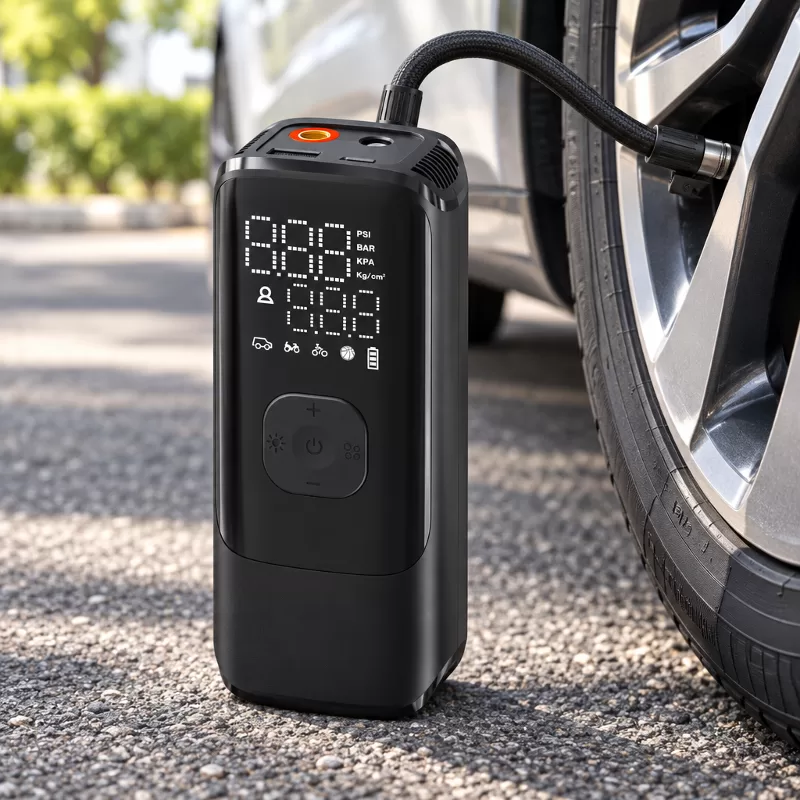
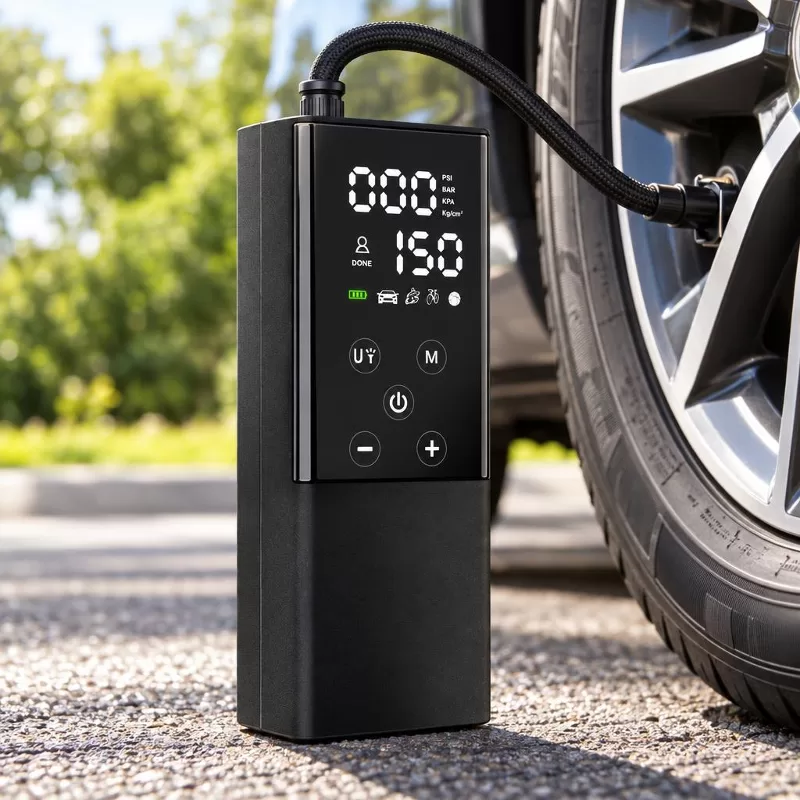
Modern digital inflators feature illuminated screens that display target pressure values and live pressure readings simultaneously. This dual-screen visualization prevents confusion, letting you observe active pressure rise toward your chosen cutoff point.
Preset modes configure standard baseline pressures for cars, motorcycles, bicycles, and athletic equipment with a single touch. These presets streamline operation for non-technical users while preserving manual adjustments for custom pressure settings.
Understanding Proper Tire Pressure Before Connecting an Air Pump
Locating True Vehicle Placard Specifications (Never the Sidewall Max)
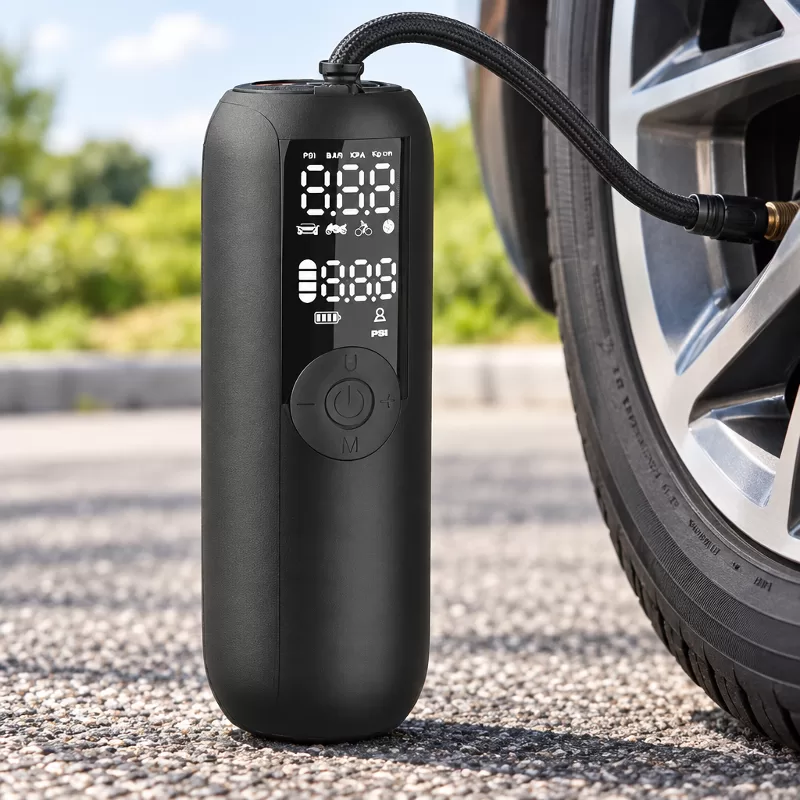
A common mistake among vehicle owners is reading the pressure number molded directly onto the tire sidewall. That sidewall marking indicates the tire manufacturer’s maximum cold inflation pressure permissible for the tire carcass under maximum load, not your car’s engineered operating pressure.
Check the Tire and Loading Information label on the driver-side door edge or doorjamb, or consult the owner’s manual if it is not there. Automotive chassis engineers calculate these specific front and rear pressures to balance braking grip, directional stability, load carrying capacity, and passenger ride comfort.
Interpreting Dashboard TPMS Warnings Accurately
Tire Pressure Monitoring Systems (TPMS) alert drivers via a dashboard warning icon when tire pressure drops significantly below the required baseline. TPMS warns when tire pressure is significantly low; it is not a substitute for monthly pressure checks with a gauge.
Because warning systems are designed to trigger when pressure has already dropped substantially, you should never wait for the TPMS light before checking your tires. A portable inflator equipped with an accurate digital gauge lets you check and correct minor deviations monthly before safety sensors trigger an alert.
Step-by-Step Guide: How to Safely Inflate Tires with a Portable Compressor
Operating a portable compressor safely requires a disciplined mechanical routine. Following an orderly checklist prevents thread damage on valve stems, avoids blown vehicle fuses, and ensures accurate pressure settings.
-
Inspect the Tire and Valve Stem Surface
Before connecting the inflator hose, visually check the tire tread for embedded screws, sharp stones, or visible sidewall bulges. Remove the protective plastic dust cap from the Schrader valve stem and clear away road grit or debris from the brass threading using a dry cloth. -
Establish Power and Verify Device Operating Requirements
If operating cordlessly, check that your inflator has sufficient battery charge indicated on its screen. For 12V vehicle power, follow the vehicle and inflator manuals for outlet use. If the vehicle must be running, do so only outdoors in a well-ventilated area to eliminate any risk of exhaust fumes or carbon monoxide accumulation. -
Connect the Air Hose and Lock the Chuck Firmly
Thread or clamp the brass air chuck squarely onto the tire valve stem. Listen for a brief hiss of escaping air that stops once the chuck seals properly against the internal Schrader pin. The digital screen should immediately show the tire’s active internal pressure. -
Select Pressure Unit and Set the Target Cutoff
Switch the inflator display to your preferred measurement unit (PSI, BAR, or KPA) matching your vehicle placard. Adjust the target pressure value upward or downward using the interface buttons, or choose the dedicated automobile preset profile. -
Initiate Inflation and Monitor the Work Area
Press the power button to start the reciprocating motor. Stand clear of the tire tread line and let the pump run on a clean, dry surface to keep the intake vents clear of loose dirt. Monitor the digital display as back-pressure readings climb toward your target. -
Allow Automatic Cutoff and Safely Disconnect
Once the compressor reaches your preset pressure, the automatic shut-off mechanism halts the motor. Unclamp or unthread the air chuck quickly to minimize air bleed, install the protective valve cap tightly, and store the inflator in its travel pouch.
Detailed Technical Profile: Portable Tire Inflator 150 PSI (LP17A-P)
Pneumatic Performance and Dual-Power Engineering
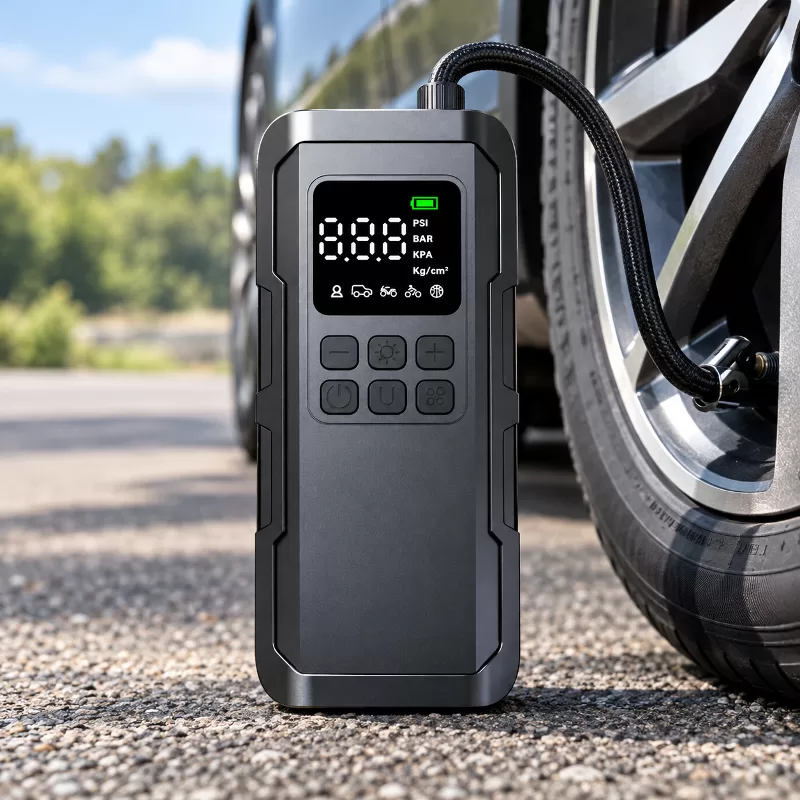
Examining specific engineering implementations shows how modern inflators balance size against pneumatic output. For us at Newo, specialized manufacturing and pneumatic research led to development of the Portable Tire Inflator Air Pump 150PSI LP17A-P, built to provide balanced mobile inflation performance.
According to product specifications, the LP17A-P utilizes a 17-cylinder displacement structure that produces an airflow rate of 17 to 18 liters per minute. The system operates across a pressure range from 2 to 150 PSI, accommodating sports balls alongside high-pressure bicycle tires.
Electrical delivery uses a dual-power architecture. An internal rechargeable battery pack featuring two 18650 lithium-ion cells provides 7.4V, 2000mAh capacity (14.8Wh) for cord-free operation. When battery power is depleted, the unit runs directly from a standard 12V to 14V vehicle auxiliary power socket, with a maximum working power rating of 50W.
Display Systems, Preset Architecture, and Peripheral Utility
The device integrates a dual LED display that presents live working pressure and user-defined target thresholds side by side. Five programmed preset modes simplify operation across common equipment, while manual adjustment handles custom requirements with automatic shut-off upon reaching target pressure.
Recharging takes approximately two hours through a standard 5V/2A Type-C input port. An auxiliary 5V/2A USB output port allows the device to function as an emergency power bank for mobile phones during travel. At approximately 453.1 grams and 68 × 46 × 160 mm, the inflator is designed for compact storage; confirm the available space in a particular door pocket, saddlebag, or tool roll.
Comprehensive Specification Matrix
| Technical Parameter | Specification Rating (LP17A-P First-Party Data) |
|---|---|
| Model Designation | LP17A-P Portable Tire Inflator |
| Pressure Range | 2 to 150 PSI (Supports preset and custom modes) |
| Air Delivery Flow | 17 to 18 Liters per minute |
| Internal Cylinder Size | 17-cylinder structure |
| Battery Architecture | 2 × 18650 Li-ion cells, 7.4V, 2000mAh (14.8Wh) |
| Battery Cycle Durability | 100 cycles maintaining ≥80% original capacity |
| Vehicle Power Input | 12V to 14V DC Car Power Socket |
| Maximum Working Power | 50 Watts maximum |
| Operating Runtime | Approximately 20 minutes continuous run |
| Manufacturer Inflation Metric | Listed at about 2 of 205 tires per full charge |
| Charging Input / Time | Type-C 5V / 2A; Approximately 2 hours |
| Auxiliary Bank Output | 5V / 2A Standard USB output |
| Acoustic Noise Profile | ≤85 dB measured at 1 meter distance |
| Operating Temperature | Minus 10°C to 45°C operating range |
| Dimensions & Weight | 68 × 46 × 160 mm; Approximately 453.1 g |
Supported Everyday Inflation Applications
- Passenger Cars: The manufacturer lists an inflation capacity of about two 205 tires per full charge; confirm the test tire size and starting pressure before applying that figure to a specific vehicle.
- Bicycles and E-Bikes: Supports bicycle and e-bike applications within the tire manufacturer’s specified pressure range; do not treat the pump’s 150 PSI maximum as the correct pressure for every tire.
- Motorcycles and Scooters: Maintaining front and rear balance where subtle pressure differences affect cornering stability.
- Wheelchairs and Mobility Gear: Low-effort inflation for daily mobility aids that require consistent pneumatic pressure for smooth rolling.
- Sports Equipment: The product is specified for sports balls and supports settings from 2 to 150 PSI. Confirm the required ball needle or other adapter in the package contents before setting pressure.
Common Pitfalls When Buying and Using a Portable Tire Inflator
Prioritizing Advertised Maximum PSI Over Real Airflow
A common marketing pitfall is buying an inflator based entirely on an advertised high peak rating. Many inexpensive micro-pumps can generate high pressure against a dead-end sensor, but their tiny displacement delivers low volumetric airflow.
Inflating an automotive tire requires displacing a high volume of atmospheric air into the rim chamber. If an inflator generates very low airflow, inflation takes considerably longer, increasing thermal stress on the motor. Always prioritize cylinder displacement and rated airflow output (L/min) over extreme peak pressure numbers.
Ignoring Battery State of Charge in Cold Storage
Drivers often store a portable tire pump inside their vehicle’s trunk and forget about it for months. Lithium-ion batteries experience self-discharge over time, and cold winter temperatures can temporarily reduce discharge efficiency.
- Sub-Zero Capacity Behavior: Storing lithium batteries in unheated vehicles can affect ion mobility and reduce available capacity until the unit warms up.
- Periodic Maintenance: Check the battery periodically and follow the manufacturer’s storage and charging instructions; do not leave the unit deeply discharged for long periods.
- Thermal Conditioning: In cold weather, allowing the inflator to warm slightly inside the passenger cabin before starting inflation can help restore nominal battery discharge performance.
Overrunning Continuous Duty Cycles and Thermal Saturation
Compact air compressors generate intense localized heat within the piston sleeve. Compared with larger workshop compressors, compact inflators generally have less thermal mass and may require stricter runtime and cooling limits.
Do not run the pump beyond the model’s stated runtime or thermal limits. If the housing or hose becomes hot, stop the unit and allow it to cool according to the manufacturer’s instructions before resuming operation on subsequent tires.
Frequently Asked Questions (FAQs)
What makes an air pump for tires portable enough for everyday carry?
Portability depends on whether the unit’s dimensions, physical weight, and power arrangement suit the user’s intended storage and transport routines. An internal battery and Type-C charging can simplify transport and recharging; confirm cable, adapter, and hose-storage details for the specific model before designating a permanent vehicle storage spot.
Can a 150 PSI portable inflator damage or over-inflate a standard car tire?
Automatic shut-off can reduce overinflation risk when the target is set correctly, but verify the vehicle placard pressure and check the final reading with a reliable gauge when practical. While the pump’s internal piston can generate pressures up to 150 PSI for high-pressure bicycle tires, the digital control board halts air delivery once line pressure matches the target cutoff value entered by the operator.
How long does a portable air pump take to inflate a car tire?
Actual time varies by tire size, starting pressure, temperature, and the pump’s pressure curve; consult controlled manufacturer test data for a reliable estimate. The LP17A-P delivers an airflow rating of 17 to 18 L/min, which provides practical top-up speed, but specific filling durations depend entirely on total air volume required by the tire.
Is a cordless battery inflator better than a 12V car cigarette lighter plug-in model?
Neither format is universally superior; each serves distinct operational needs. Cordless battery units provide complete freedom of movement without cords tangling around car bumpers, making them ideal for bicycles, wheelchairs, and rapid roadside checks. A 12V plug-in model provides continuous electrical runtime from the car electrical system, unaffected by battery discharge. Dual-power hybrid designs combine internal battery operation with a 12V auxiliary vehicle override for balanced utility.
Why does the air hose fitting become hot during operation?
Air hose fittings get hot due to the thermodynamic heat of compression. Compressing ambient air molecules into a smaller volume forces them together, generating thermal energy as a natural physical byproduct. This heat conducts outward through the cylinder head into the brass screw coupling and air hose sleeve. It is normal compressor behavior, but you should handle metal couplings carefully after prolonged inflation.
Can a portable inflator seat a tubeless tire bead onto a wheel rim?
A small portable inflator may not provide enough airflow to seat a completely unseated tubeless bead. Use the tire and wheel manufacturer’s procedure and appropriate professional equipment; never attempt bead seating with an unsafe or improvised air burst.
Should I check or inflate my tires immediately after driving off the highway?
Highway driving can raise tire temperature and pressure by a variable amount. Do not bleed air from a hot tire to reach the cold placard number; check and adjust it again when cold. Unless you are addressing an emergency low-pressure situation, wait until tires have rested for at least three hours before making precise pressure calibrations.
Concluding Thoughts
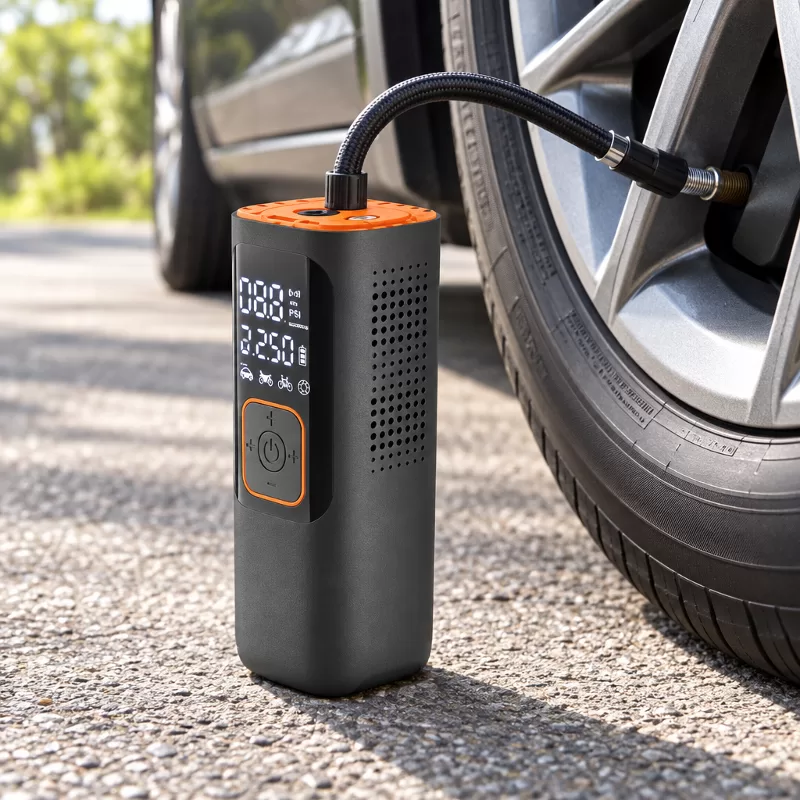
Investing in a dedicated air pump for tires portable shifts tire maintenance from a neglected chore into a simple, proactive routine. Maintaining correct tire pressure safeguards vehicle handling, shortens wet stopping distances, extends tire tread life, and preserves fuel economy across every mile driven. Modern dual-power architectures provide the flexibility of cordless inflation alongside the reassurance of 12V vehicle power, ensuring you stay prepared for changing seasons and unexpected highway delays alike. By understanding vehicle placard ratings, respecting compressor cooling limits, and keeping an accurate air pump for tires portable inside your vehicle, you take direct control over your journey’s safety and reliability.
-

Meet NEWO at the 140th Canton Fair: Visit Booth 10.3 M03–04
Meet NEWO at the 140th Canton Fair in Guangzhou, October 15–19, 2026. Visit Booth 10.3 M03–04 to explore portable air pumps and discuss OEM, ODM and distribution opportunities.... -

As Shenzhen Welcomes the World for APEC 2026, NEWO Welcomes You to Our Factory
As Shenzhen prepares for APEC 2026, NEWO welcomes international buyers and partners to visit our factory, meet our team and explore future cooperation.... -

Leading the Way in Product Innovation and Excellence
Smartnewo exemplifies professionalism in product innovation and manufacturing. Their collaboration with Xiaomi Youpin on the G01 crowdfunding project highlights their expertise in creating compact, powerful inflatable pumps. Rigorous engineering, meticulous production processes, and advanced quality assurance underscore their commitment to excellence. The success of the G01 project, with significant market... -

Essential Qualities of an Excellent Supplier
In today's competitive market, finding a reliable supplier is crucial for business success. Based on insights from Smartnewo and broader internet research, here are key qualities an excellent supplier must possess:... -

NW06 Tire Inflator: Compact Power for Quick Inflation
Summary The NW06 Tire Inflator delivers quick and efficient tire inflation with a powerful 35L/min airflow. It features a user-friendly LCD screen for real-time pressure monitoring, dual power options with a built-in 6000mAh battery, and multiple nozzle attachments for versatile use. Its compact design and integrated LED light ensure convenience and... -

Unleash the Power of Portability: The SmartNewo Jump Starter with Air Compressor KF03
This guide will walk you through the steps to effectively use a portable tire inflator, helping you stay prepared and safe on the road.... -

Newo Attends The 2024 Consumer Electronics Show (CES)
Smartnewo booth is located at 53672, Halls A-D, Level 2, Venetian Expo, Las Vegas Convention Center (LVCC). ... -

Smartnewo’s Dual-Cylinder Air Pump Rocks the Hong Kong Autumn Electronics Fair!
Smartnewo’s Dual-Cylinder Air Pump Rocks the Hong Kong Autumn Electronics Fair!... -

Meet at the Canton Fair! Smartnewo brings dual-cylinder air pumps, making your inflation experience faster and more stable!
NEWO has went deep communication and negotiation with customers from all over the world on booth.... -

“Hong Kong Autumn Electronics Fair – 1CA18 (October 13th to 16th): Smartnewo invites you to visit our booth!
Hong Kong Autumn Electronics Fair...










-

What to Check Before Ordering Custom Electric Bike Pumps
Plan custom electric bike pumps with a clear requirements freeze for valves, TPU tubes, portability, repeated top-ups, charging, and model-specific documents.... -

OEM vs ODM Air Pumps: Which Manufacturing Model Fits Your Brand?
Compare OEM and ODM air pump projects by design responsibility, change approval, development scope, and written ownership terms before choosing your route.... -
How to Choose a Reliable Tire Inflator Manufacturer in China
Choose a tire inflator manufacturer in China with a focused RFQ, supplier evidence, configuration checks, and clear sample-to-pilot decisions for your brand.... -

Rechargeable Electric SUP Pump for Paddle Boards: Faster Inflation for SUPs, Kayaks and Inflatable Tents
The BL10-C Portable Electric Bike Tire Inflator is a compact and lightweight mini electric bike pump designed for modern cyclists. With up to 120 PSI pressure, a digital LED display, preset pressure control, automatic shut-off, USB-C charging, and multiple valve adapters, BL10-C offers a convenient inflation solution for road bikes,... -

Are Electric Bike Pumps Worth It in 2026? Electric Pump vs CO₂ vs Mini Hand Pump
Discover whether electric bike pumps are worth it in 2026. This guide compares electric bike pumps, CO₂ inflators, and mini hand pumps for road cycling, gravel riding, commuting, and long-distance rides. Learn the pros, limitations, best use cases, and key features to look for before choosing the right portable tire... -
BL10-C Portable Electric Bike Tire Inflator: Small Size, Reliable Power for Every Ride
The BL10-C Portable Electric Bike Tire Inflator is a compact and lightweight mini electric bike pump designed for modern cyclists. With up to 120 PSI pressure, a digital LED display, preset pressure control, automatic shut-off, USB-C charging, and multiple valve adapters, BL10-C offers a convenient inflation solution for road bikes,... -

Why Mini Electric Bike Pumps Are Becoming Essential for Modern Cycling
Discover why mini electric bike pumps are becoming essential for modern cyclists. Learn how portable electric bike pumps improve tire pressure management, riding safety, and convenience.... -

The Ultimate Smart Solution for Easy Outdoor Adventures in 2026
Discover how a spring travel air pump simplifies outdoor trips with fast inflation, smart features, and powerful performance—perfect for every adventure.... -

Powerful 5-in-1 Portable Car Tire Inflator and Jump Starter: The Ultimate Emergency Tool for Every Driver
Why Every Driver Needs a Portable Car Tire Inflator and Jump Starter Modern drivers face many unexpected situations on the road. A flat tire, low tire pressure, or a dead car battery can happen at the worst possible time. That’s why having a portable car tire inflator and jump starter is... -

7 Real Cycling Scenarios That Show Why Every Rider Should Carry a Mini Bike Pump
Cycling is one of the most freeing activities you can enjoy. Whether you’re commuting to work, riding through city streets, or exploring quiet countryside roads, a bike ride can instantly improve your day. But there’s one small problem that almost every cyclist eventually faces: Low tire pressure. It might happen...









-
How Is a Football Properly Inflated?
The correct inflation of a football - with not too much and not too little air - is a hotly debated topic among footballers.... -
Application Scenarios of Car Inflator Pump
Often long-distance business trips or play car owners because the road may be more remote areas, in this case if you encounter a tire leak....

