
 Portable Tire Inflators
 Electric Air Pumps
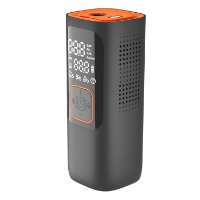 Electric Car Tyre Pumps
 Electric Ball Pumps
 Electric Bike Pump
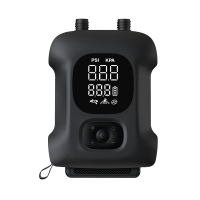 SUP Air Pump

Car Tire Portable Air Pump: The Complete Guide to Selection, Operation, and Roadside Reliability
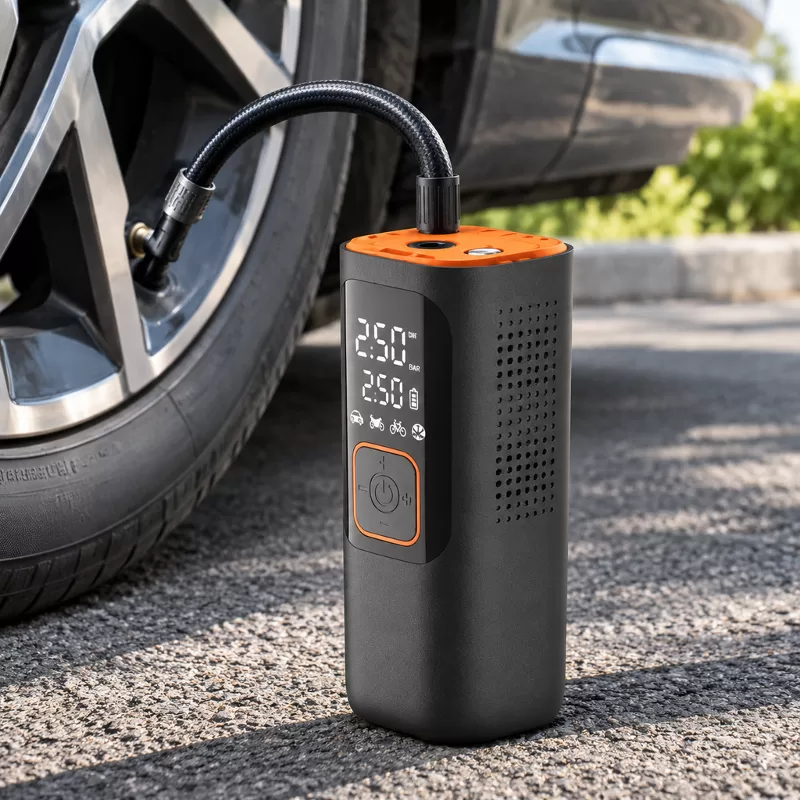
Maintaining correct pneumatic pressure in radial tires is an essential baseline for vehicle safety, predictable steering response, and fuel efficiency. A modern car tire portable air pump transforms regular tire maintenance from a tedious chore into a straightforward procedure in your home driveway. Instead of hunting down functioning commercial service station air dispensers or driving on an under-inflated tire that risks rim damage, keeping a compact portable tire inflator for car use provides immediate self-reliance.
Every pneumatic tire naturally experiences slow pressure loss over time through microscopic rubber permeation and seasonal temperature swings. Relying solely on dashboard warning lamps leaves drivers vulnerable, because passive monitors often alert only after a tire has lost substantial volume. Equipping your vehicle with an intelligent, battery-driven portable inflator ensures that subtle pressure variances can be corrected immediately before tread wear patterns become irregular.
Understanding the Modern Car Tire Portable Air Pump
Small-scale pneumatic engineering has advanced significantly beyond the bulky, noisy compressors of previous decades. Today’s handheld inflators utilize electric motor systems that balance energy draw, internal volume displacement, and heat management in a package that fits easily into a door pocket or glovebox.
Core Mechanical Principles of Miniaturized Compressors
At the center of a portable air pump sits a compact electric motor paired with an internal compression assembly. This mechanism draws ambient air through intake vents and transfers it through internal valves into the high-pressure inflation hose line.
Because compressing gas generates immediate thermal energy through adiabatic heating, the mechanical tolerances inside small cylinders must withstand rapid temperature changes. Compact units like the LP2-P utilize 35W brushed motors configured in either a 14-cylinder or 17-cylinder configuration, delivering practical airflow rates without draining excessive battery current or inducing premature mechanical failure.
Handheld Battery Units vs. Traditional Garage Compressors
A common misconception is that a compact handheld inflator should mirror the instant cubic-feet-per-minute output of a large stationary workshop air compressor. Stationary workshop units utilize heavy induction motors connected to large reservoirs, displacing massive volumes in seconds to seat tire beads or run pneumatic wrenches.
Cordless handheld pumps focus on controlled pressure delivery and grab-and-go convenience. While a garage unit demands dedicated utility power and cumbersome lines, a modern car tire portable air pump offers targeted, tether-free pressure top-ups. This makes it practical to top up tires anywhere, without dragging fifty feet of heavy rubber hose across greasy shop floors.
Why Correct Inflation Pressures Determine Road Safety
Tire pressure represents the invisible structural support that holds a vehicle off the road surface. The tire casing itself is simply an engineered container; it is the compressed air trapped inside that actually carries the gross vehicle weight under braking, acceleration, and lateral cornering forces.
Contact Patch Geometry and Tread Longevity
When tire pressure drops below the vehicle manufacturer’s cold specification, the tire casing experiences abnormal structural flexing. This under-inflation increases internal operating temperatures, places uneven mechanical stress across the internal belt structure, and significantly elevates the risk of irregular tread wear across the tire shoulders.
Conversely, excessive internal pressure reduces the intended contact patch area between the rubber and the road surface. Both under-inflation and over-inflation can adversely affect overall vehicle handling, accelerate uneven tread wear patterns, and reduce braking stability, forcing vehicle owners into premature tire replacement cycles.
Fuel Efficiency and Dynamic Rolling Resistance
Pneumatic tires that lack proper internal pressure deform excessively as they rotate against the pavement. This recurring mechanical flexing generates internal hysteresis, absorbing mechanical kinetic energy from the engine or electric drivetrain and converting it directly into useless friction heat.
A vehicle running on under-inflated tires experiences elevated rolling resistance, which can reduce fuel economy and diminish driving range on electric powertrains. Routine checks using a handheld car tire portable air pump help maintain vehicle efficiency by keeping rolling resistance within standard operational limits.
The Limits of Visual Inspection and Passive TPMS
A visual inspection cannot accurately determine modern steel-belted radial tire pressure. Radial tires are constructed to flex naturally at the lower sidewall, which means a tire operating several pounds low can look identical to a correctly inflated neighbor.
Furthermore, TPMS is a warning system for significant underinflation, not a substitute for regular pressure checks. The federal standard generally requires a warning at 25% below the recommended cold pressure or the specified minimum activation pressure, whichever is higher. A driver should not wait for the dashboard indicator to illuminate before checking and adjusting tire pressure.
Key Technical Criteria for Selecting a Portable Tire Inflator
Selecting an inflator requires evaluating mechanical and electrical specifications rather than exterior aesthetics. Matching internal hardware to vehicle tire volume ensures the pump performs reliably when needed along a dark highway shoulder.
Working Pressure Range vs. Realistic Vehicle Needs
Most passenger sedans, crossovers, and minivans operate within an inflation window of 30 to 36 PSI. Commercial delivery vans, specialized utility trailers, and temporary spare tires frequently specify different pressures, while specialized road bicycles can demand up to 100 PSI.
The LP2-P features a nominal maximum pressure limit of 150 PSI with a 0 to 150 PSI adjustable custom range. Regardless of an inflator’s maximum pressure rating, the actual target pressure must always be set according to the vehicle’s certification label or owner’s manual rather than arbitrary estimates.
Cylinder Sizing, Displacement Rate, and Thermal Duty Cycle
Internal cylinder configurations determine the rate at which an inflator introduces air volume into a tire. The displacement rate influences the liters-per-minute (L/min) airflow rating under load according to specific engineering configurations.
- 14-Cylinder Configuration: The manufacturer rates this configuration for approximately 14 L/min airflow, with an operating runtime specification of 18 to 22 minutes.
- 17-Cylinder Configuration: The manufacturer rates this configuration for approximately 18 to 22 L/min airflow, with an operating runtime specification of about 16 minutes.
- Thermal Pauses: Both cylinder configurations convert motor energy into heat; observing manufacturer runtime limits prevents overheating of internal seals and motor components.
[Low Air Volume Detected]
           │
           ▼
[Evaluate Application: Spare vs Routine Commuter Top-Up]
           │
  ┌────────┴────────┐
  ▼                 ▼
[14-Cylinder Spec]  [17-Cylinder Spec]
(~14 L/min output)  (18-22 L/min output)
18-22 min runtime   ~16 min runtime
  │                 │
  └────────┬────────┘
           ▼
[Integrated Sensor Auto Stop at Target]
Pressure Sensing and Automatic Cut-Off Mechanisms
Analog dial gauges rely on internal mechanical Bourdon tubes that can lose calibration if the tool is dropped on concrete. Digital inflators utilize electronic pressure sensors that monitor line pressure and display values clearly on a high-contrast digital screen.
The LP2-P uses a pressure sensor to monitor pressure and is designed to stop automatically at the selected target. Once a driver inputs the target pressure, the device pumps air until the sensor detects that threshold, reducing the risk of accidental over-inflation.
Battery Systems, Type-C Recharging, and Power Bank Capability
Tethered 12V cigarette-lighter cables can tangle, blow cabin dashboard fuses, and struggle to reach the rear tires of longer SUVs. Integrated battery packs eliminate these exterior wiring hassles.
The LP2-P incorporates an internal 2000mAh, 7.4V battery pack (14.8Wh) managed by battery protection voltage limits (8.4V upper limit, 6V lower limit). Utilizing a standard 5V/2A Type-C charging port, the system fully recharges in roughly 2 hours and includes an integrated power-bank function for emergency charging of small electronic devices.
Form Factor Ergonomics, Valve Adapters, and Thermal Enclosures
A practical roadside tool must fit neatly inside the vehicle without adding excessive bulk. Enclosed in durable ABS housing, the listed product dimensions of 44 × 64 × 157 mm allow the inflator to slide into center consoles or rear cargo organizers effortlessly.
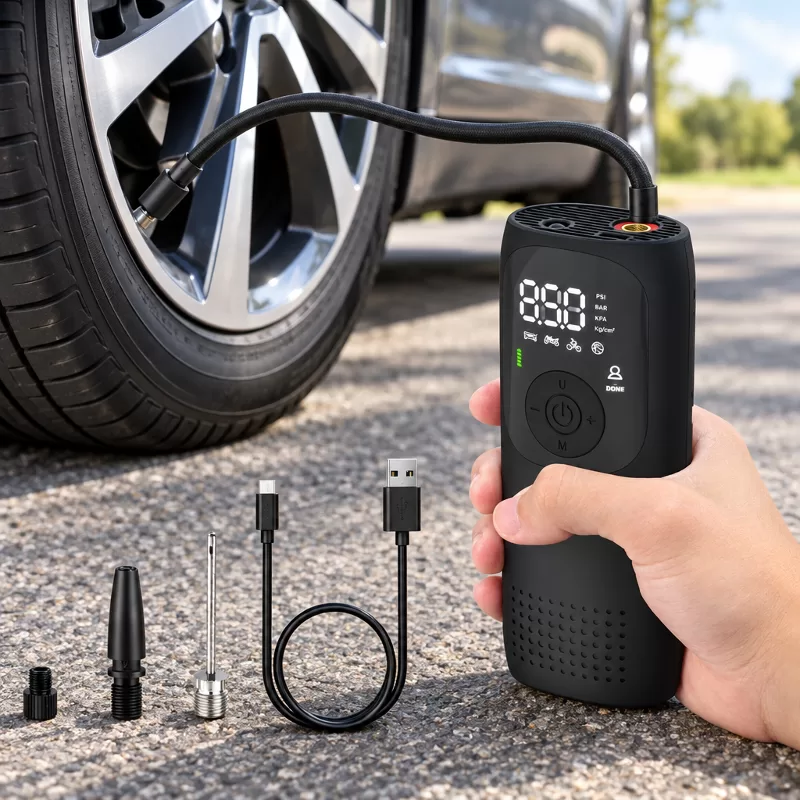
Pneumatic versatility depends on adapter accessories. While standard passenger vehicle stems rely on universal brass Schrader fittings, multi-use households frequently require screw-on Presta adapters for road bikes, plastic tapered nozzles for inflatables, and hardened steel needles for sports balls.
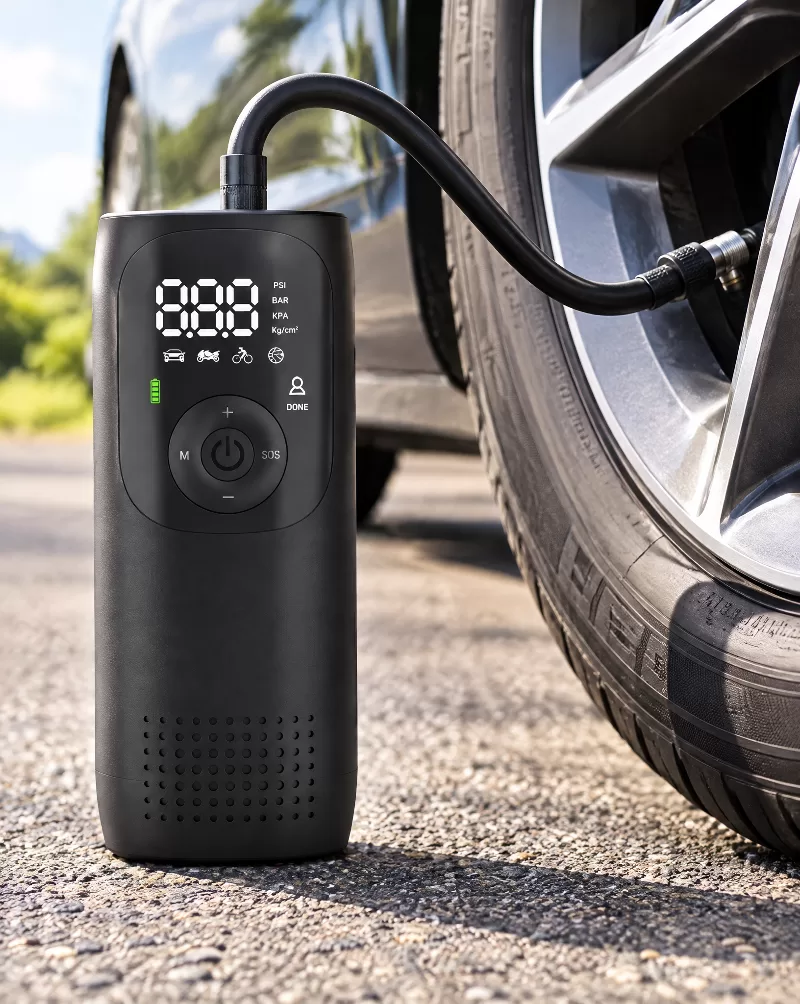
LP2-P Smart Air Pump: First-Party Architecture and Performance Profile
Newo is a professional manufacturer specializing in the research, development, and production of smart electric air pumps and portable inflation solutions. With strong expertise in pneumatic technology, product design, and manufacturing, we provide a wide range of innovative products, including portable tire inflators, electric bike pumps, car air pumps, ball pumps, and outdoor inflation solutions. Our products are designed to deliver convenience, efficiency, and reliability for customers worldwide.
The LP2-P portable electric air pump serves as an engineered solution for everyday passenger tire maintenance, cycling adjustments, and utility needs. The table below details its technical specifications based on direct manufacturer production data.
| Technical Parameter | Engineering Specification |
|---|---|
| Model Designation | LP2-P Smart Air Pump |
| Working Pressure Limit | 150 PSI maximum (0 to 150 PSI custom setting range) |
| Cylinder Configuration | 17-cylinder compatible with 14-cylinder configuration |
| Displacement Airflow | ~14 L/min (14-cylinder); 18 to 22 L/min (17-cylinder) |
| Continuous Run Duration | 18 to 22 min (14-cylinder); ~16 min (17-cylinder) |
| Internal Battery Pack | 2000mAh, 7.4V battery pack (14.8Wh energy capacity) |
| Recharge Standard | Type-C port, 5V/2A input (approx. 2 hours charging time) |
| Electric Drive Motor | 35W brushed motor with overcurrent protection |
| Operating Envelope | -10°C to 45°C ambient working temperature range |
| Acoustic Signature | 80 dB or below measured at a 1.5-meter radius |
| Physical Enclosure | Durable ABS housing, listed dimensions 44 × 64 × 157 mm |
Preset Dynamic Modes and Sensor Feedback
Operating setup is simplified by five user-selectable inflation modes: Ball, Bicycle, Motorcycle, Car, and Custom. Each dedicated mode offers preset configurations, allowing the user to begin inflation without calculating pressure units on the fly.
The large integrated LED display provides clear readouts of target setpoints alongside real-time line pressure readings. This continuous feedback lets drivers verify pressure readings instantly upon attaching the threaded air hose.
Operational Scope and Performance Boundaries
While the LP2-P delivers solid utility across passenger cars, motorcycles, wheelchairs, and sports gear, understanding its mechanical boundaries is vital. Handheld battery-powered inflators are intended for pressure top-ups, seasonal adjustments, and routine maintenance.
They are not designed to seat heavy commercial beads on completely unseated off-road tires, nor do they replace high-volume continuous industrial air supplies. Operating within these defined boundaries prevents motor brush wear and preserves long-term battery cell health.
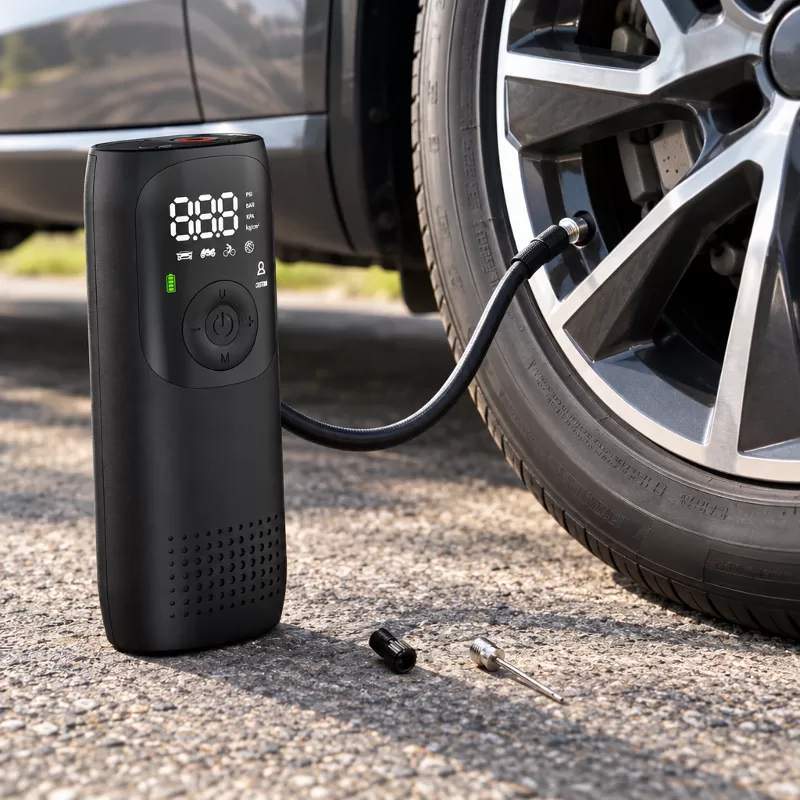
Step-by-Step Field Operation: Safe Tire Inflation Procedures
Field deployment of a car tire portable air pump requires an orderly inspection process to ensure safety and precision. Following these structured steps will help protect both the user and the tire casing.
Step 1: Identifying Cold Tire Pressure Specifications
Never inflate a vehicle tire to the pressure number stamped on the tire sidewall. That sidewall figure represents the absolute maximum cold pressure the tire structure can hold at its maximum certified load, not the target tuned for your vehicle.
Open the driver’s door and locate the vehicle safety placard bonded to the B-pillar door frame, or consult the vehicle owner’s manual. This placard lists the exact cold inflation specification determined by automotive engineers for that vehicle’s weight distribution, suspension setup, and original tire dimensions.
Step 2: Pre-Inflation Structural and Tread Inspection
Before attaching the air chuck, examine the tire body. Look closely for embedded drywall screws, steel nails, exterior sidewall bulges, rubber dry-rot cracking, or severe rim flange dents.
- Tread Surface: Check between tread grooves for foreign debris or puncture sources.
- Sidewall Integrity: Look for bubbles or blisters, which indicate broken internal carcass plies; never inflate a tire with sidewall blistering.
- Valve Stem Check: Ensure the rubber valve stem is free from cracking and that the valve core is seated straight.
Step 3: Valve Coupling and Baseline Measurement
Unthread the plastic dust cap from the valve stem and store it safely in your pocket or vehicle cup holder. Align the brass coupling of the inflator hose with the threads of the Schrader stem, keeping the connector straight to avoid cross-threading.
Screw the threaded connector clockwise until you feel firm resistance. Once connected, confirm that the coupling is fully sealed and that there is no continuous hissing sound of escaping air; if air leaks continuously, loosen and reseat the connector. When properly sealed, the real-time sensor inside the inflator will display the tire’s baseline pressure on the digital screen.
Step 4: Mode Selection and Target Calibration
Power on the inflator and select Car Mode. Adjust the pressure setpoint using the plus and minus buttons until the screen matches the cold PSI rating shown on your driver’s door placard.
Once the setpoint is confirmed, engage the motor. The pump is designed to stop automatically when it reaches the selected target; check the final pressure with a reliable gauge if accuracy is critical.
Step 5: Thermal Monitoring During Active Pumping
During active inflation, keep the air pump resting on clean pavement or hold it steadily by its plastic shell. Avoid covering the ventilation slots, as the housing allows cooling airflow across the motor assembly.
Take care not to grasp the metal junction between the air hose and the inflator body immediately after cycling. This connector absorbs heat generated by adiabatic compression, making it noticeably warm to the touch right after use.
Step 6: Managing Hot vs. Cold Tire Pressure
Tire pressure should preferably be set when tires are cold, which is typically defined as after the vehicle has been parked for at least three hours. Driving generates internal friction that warms the casing, causing the internal pressure to read higher than the cold baseline.
Avoid bleeding air from a warm tire merely to match the cold placard value. If inflation is necessary while traveling on the road because a tire is suspected to be underinflated, inflate it to the recommended cold pressure shown on the vehicle placard; once the vehicle has been parked for at least three hours and the tires have fully cooled, recheck and adjust the pressure to specification.
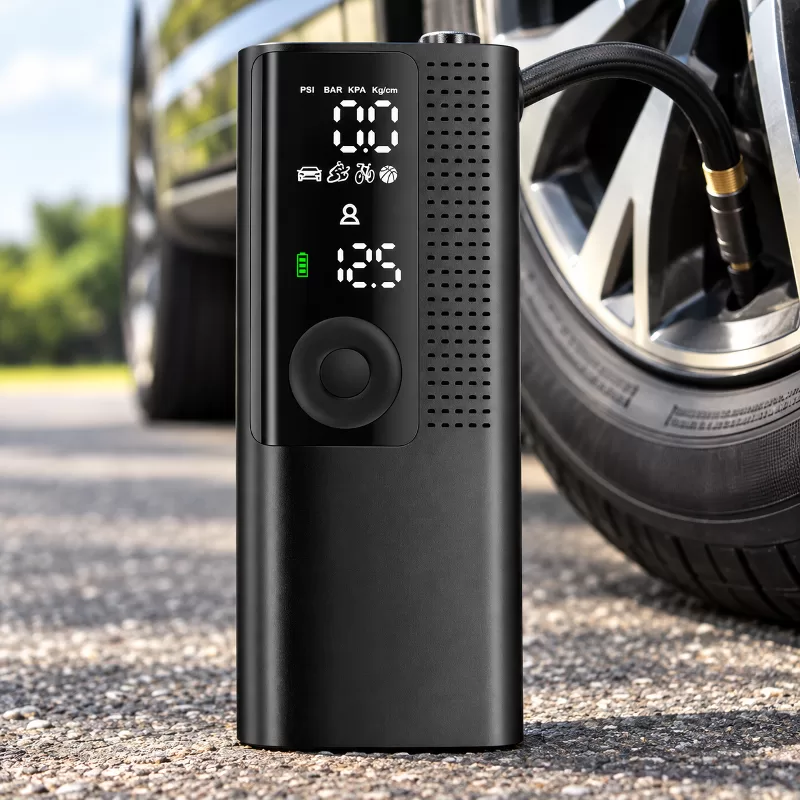
Cross-Category Comparison: Portable Electric Inflator vs. Alternatives
Choosing the right inflation tool means balancing physical storage constraints against required airflow volume. The comparison below reviews common inflation systems across real-world automotive use cases.
| Inflation System | Power Delivery | Portability Index | Primary Application Focus | Pressure Control | Roadside Utility Rating |
|---|---|---|---|---|---|
| Cordless Mini Inflator (LP2-P) | Integrated 7.4V Battery Pack | High (Glovebox / Door pocket) | Commuter & routine pressure top-ups | Digital preset auto-stop | Superior (Zero cables, self-contained) |
| 12V Cigarette Socket Pump | Tethered vehicle 12V DC cable | Moderate (Requires cable stowage) | General vehicle top-ups | Dials or digital auto-stop | Fair (Limited reach, cord clutter) |
| Gas-Station Air Tower | Fixed 120V/240V utility line | None (Fixed station facility) | Fast commercial top-ups | Mechanical chime or basic digital | Poor (Inconvenient, often out of order) |
| Pneumatic Workshop Tank | Heavy stationary workshop power | Immobile (Workshop only) | Bead seating & high-volume shop tools | Manual valve trigger | Zero (Cannot be carried in a vehicle) |
| Dual-Action Floor Bike Pump | Manual human muscle power | Fair (Awkward long shape) | Bicycle tires & emergency backups | Visual analog gauge | Emergency fallback only (High fatigue) |
Common Inflation Errors and How to Prevent Them
Pneumatic tires operate on balance and physics. Avoiding several frequent operating mistakes will help maximize vehicle safety and prolong the working life of your portable air pump.
Conflating Maximum Sidewall Rating with Target Operating Pressure
One of the most persistent vehicle maintenance errors is filling a tire to the maximum PSI molded on its rubber sidewall. That figure represents the outer structural limit for the tire carcass under maximum load conditions, not the recommended running pressure for standard vehicle operation.
Drivers should always establish their target pressure from the vehicle manufacturer’s door placard or owner’s manual, ensuring that the pressure never exceeds the maximum inflation limit indicated on the tire sidewall. Operating a tire beyond vehicle-specific recommendations alters handling dynamics and makes the tire casing more vulnerable to damage from road debris and pothole impacts.
Overlooking Ambient Temperature Shifts
Tire pressure responds directly to changes in atmospheric temperature. In general, tire pressure drops by approximately 1 PSI for every 10°F (5.5°C) dip in ambient temperature.
When autumn shifts into cold winter conditions, a sharp temperature drop can lower tire pressure noticeably without any actual puncture. Drivers who neglect seasonal checks often trigger early-morning TPMS warnings simply because the colder ambient air condensed inside the casing.
Disregarding Inflator Thermal Limits
Every compact mechanical pump produces localized heat during gas compression. Running a small handheld unit continuously beyond its rated runtime without cool-down breaks can degrade internal seals or motor brushes.
When topping up multiple low tires on a large vehicle, allow the unit a brief pause after several minutes of continuous operation. Observing these thermal limits preserves internal motor components well within their 200 to 400-hour service life.
Misdiagnosing Continuous Slow Leaks
If one tire loses pressure noticeably while your other three wheels hold steady, you are likely dealing with an active slow leak rather than normal gas permeation. Using a car tire portable air pump makes it easy to maintain safe driving pressure, but the root cause still requires attention.
- Schrader Core Leak: A loose or dirt-fouled valve core can allow micro-leaks; tighten the core using an inexpensive four-way valve tool.
- Alloy Wheel Corrosion: Road salt can induce wheel bead oxidation, forming rough deposits that prevent tires from sealing cleanly.
- Hidden Fastener: A small sheet-metal screw embedded in the center tread can create a slow leak that mimics regular temperature loss.
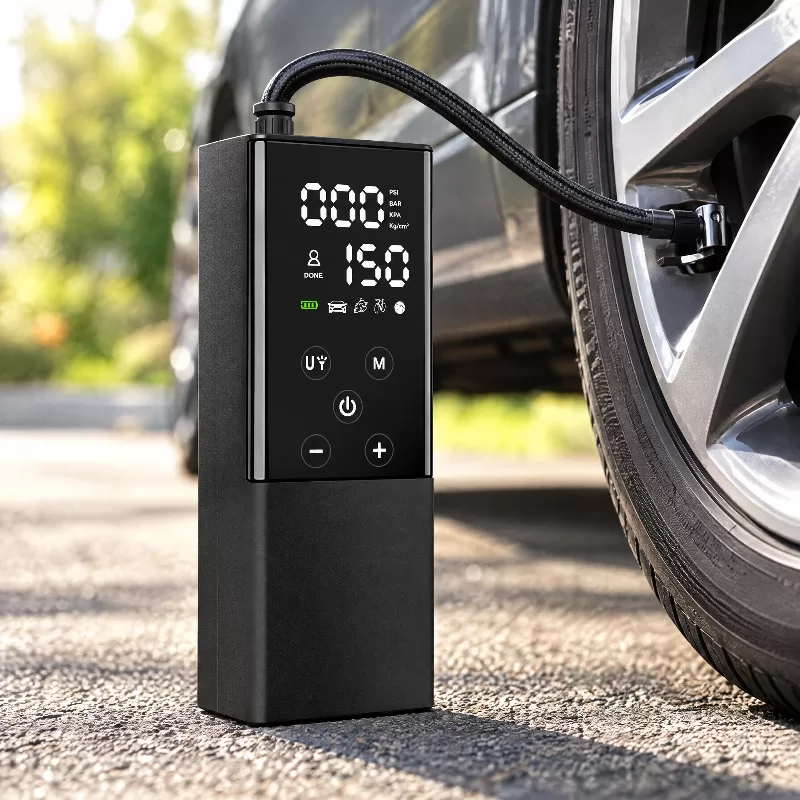
Routine Maintenance, Battery Conditioning, and Glovebox Storage
A vehicle safety tool must be ready to work reliably even after months of sitting quietly inside your car. Taking simple steps to care for its battery and connections ensures it operates properly when an unexpected roadside issue arises.
Battery Health and Temperature-Resilient Storage
Rechargeable battery packs perform best when shielded from extreme temperature swings. Leaving a battery-driven inflator baking on an open dashboard under direct summer sunlight can drive internal casing temperatures to excessive levels, degrading capacity prematurely.
Store your inflator low in the vehicle, such as beneath the rear cargo load floor, inside a center console box, or under the passenger seat. Follow the storage and maintenance guidelines provided in the product manual, and regularly confirm that the unit has adequate charge before embarking on long highway trips.
Hose Thread Care and Debris Prevention
The small brass threads on the air hose connector are exposed to gritty road dust, salt, and sand every time you access a tire valve stem. Inspect these threads periodically to ensure no abrasive debris gets forced into the tire valve.
Periodically clean the threads of the brass air chuck with a clean dry cloth. Check that the small internal rubber sealing washer remains pliable and properly seated, ensuring airtight connections without leaking air during inflation.
Frequently Asked Questions (FAQs)
What PSI should I put in my car tires?
You should always inflate your tires to the specific pressure indicated on the vehicle’s certification label, located on the driver’s B-pillar door frame or in your vehicle owner’s manual. For most standard passenger sedans, hatchbacks, and small crossovers, this figure generally falls between 30 and 36 PSI cold. Avoid using the pressure printed on the tire sidewall, as that represents the maximum structural rating rather than your car’s tuned baseline.
Can a portable tire inflator run off a car’s 12V socket if the battery is depleted?
Cordless inflators powered strictly by an internal battery, such as the LP2-P, operate from their internal cells and charge via a 5V/2A Type-C input rather than drawing high-amperage 12V motor power directly. If the battery is completely exhausted, the pump must be allowed to charge briefly before it can drive the compressor motor again. Drivers seeking backup charging options should keep a compatible Type-C vehicle adapter in their car.
How many tires can a compact cordless inflator top up on one charge?
The available product specifications list bicycle-tire inflation capacity—such as about 12 bicycle tires for the 14-cylinder configuration and about 15 for the 17-cylinder configuration—but do not establish a tested number of car tires per charge. Battery runtime depends on starting pressure, tire volume, and ambient temperature, making compact inflators primarily suited for routine pressure top-ups rather than multiple full inflations from zero pressure.
Why does the air hose become hot after several minutes of use?
The brass connector and hose become warm during normal use due to adiabatic heating. Compressing air molecules forces them into a much smaller space, naturally generating heat that transfers to the cylinder head, hose adapter, and threaded valve. This thermal transfer is a normal physical outcome of compression; allow the hose fitting a moment to cool before disconnecting it from the tire valve stem.
Will a portable air pump reseat a tire that has come off the bead?
No, compact portable inflators cannot reseat a tire bead that has slipped off the wheel rim. Reseating an unseated bead requires an instantaneous burst of high-volume air to force the heavy rubber against the rim flange before air escapes. Handheld portable pumps deliver steady pressure rather than high-volume bursts, so an unseated tire requires professional shop equipment.
What pressure should I use for a spare tire?
Spare-tire pressure varies significantly depending on whether the vehicle is equipped with a full-size spare or a temporary compact spare. You must check the specific label on the spare wheel or consult the vehicle owner’s manual for the correct cold pressure rating. Never assume a generic pressure target for spare tires, as proper calibration is critical for safe emergency operation.
Safe Driving Starts with Reliable Pressure Management
Maintaining correct tire pressure remains one of the simplest and most effective vehicle maintenance habits. Properly inflated tires help ensure stable braking, predictable wet-weather handling, extended tread life, and dependable fuel economy across all driving conditions.
Investing in a dedicated car tire portable air pump ensures complete independence from out-of-order service station air pumps and unpredictable TPMS alerts. A well-engineered, battery-powered portable tire inflator for car use provides the practical utility and peace of mind needed to keep your vehicle operating smoothly wherever the road leads.
-

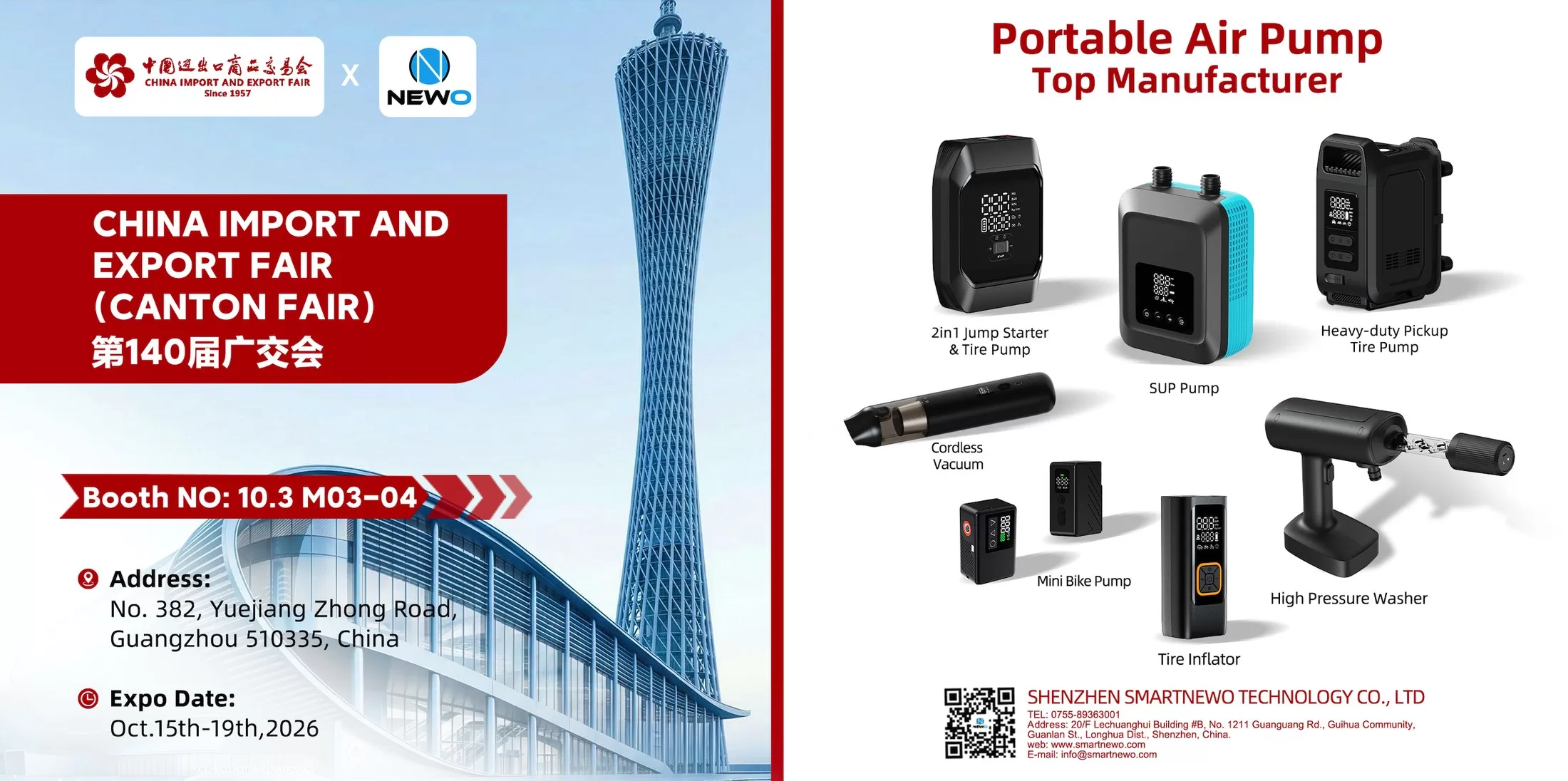
Meet NEWO at the 140th Canton Fair: Visit Booth 10.3 M03–04
Meet NEWO at the 140th Canton Fair in Guangzhou, October 15–19, 2026. Visit Booth 10.3 M03–04 to explore portable air pumps and discuss OEM, ODM and distribution opportunities.... -

As Shenzhen Welcomes the World for APEC 2026, NEWO Welcomes You to Our Factory
As Shenzhen prepares for APEC 2026, NEWO welcomes international buyers and partners to visit our factory, meet our team and explore future cooperation.... -

Leading the Way in Product Innovation and Excellence
Smartnewo exemplifies professionalism in product innovation and manufacturing. Their collaboration with Xiaomi Youpin on the G01 crowdfunding project highlights their expertise in creating compact, powerful inflatable pumps. Rigorous engineering, meticulous production processes, and advanced quality assurance underscore their commitment to excellence. The success of the G01 project, with significant market... -

Essential Qualities of an Excellent Supplier
In today's competitive market, finding a reliable supplier is crucial for business success. Based on insights from Smartnewo and broader internet research, here are key qualities an excellent supplier must possess:... -

NW06 Tire Inflator: Compact Power for Quick Inflation
Summary The NW06 Tire Inflator delivers quick and efficient tire inflation with a powerful 35L/min airflow. It features a user-friendly LCD screen for real-time pressure monitoring, dual power options with a built-in 6000mAh battery, and multiple nozzle attachments for versatile use. Its compact design and integrated LED light ensure convenience and... -

Unleash the Power of Portability: The SmartNewo Jump Starter with Air Compressor KF03
This guide will walk you through the steps to effectively use a portable tire inflator, helping you stay prepared and safe on the road.... -

Newo Attends The 2024 Consumer Electronics Show (CES)
Smartnewo booth is located at 53672, Halls A-D, Level 2, Venetian Expo, Las Vegas Convention Center (LVCC). ... -

Smartnewo’s Dual-Cylinder Air Pump Rocks the Hong Kong Autumn Electronics Fair!
Smartnewo’s Dual-Cylinder Air Pump Rocks the Hong Kong Autumn Electronics Fair!... -

Meet at the Canton Fair! Smartnewo brings dual-cylinder air pumps, making your inflation experience faster and more stable!
NEWO has went deep communication and negotiation with customers from all over the world on booth.... -

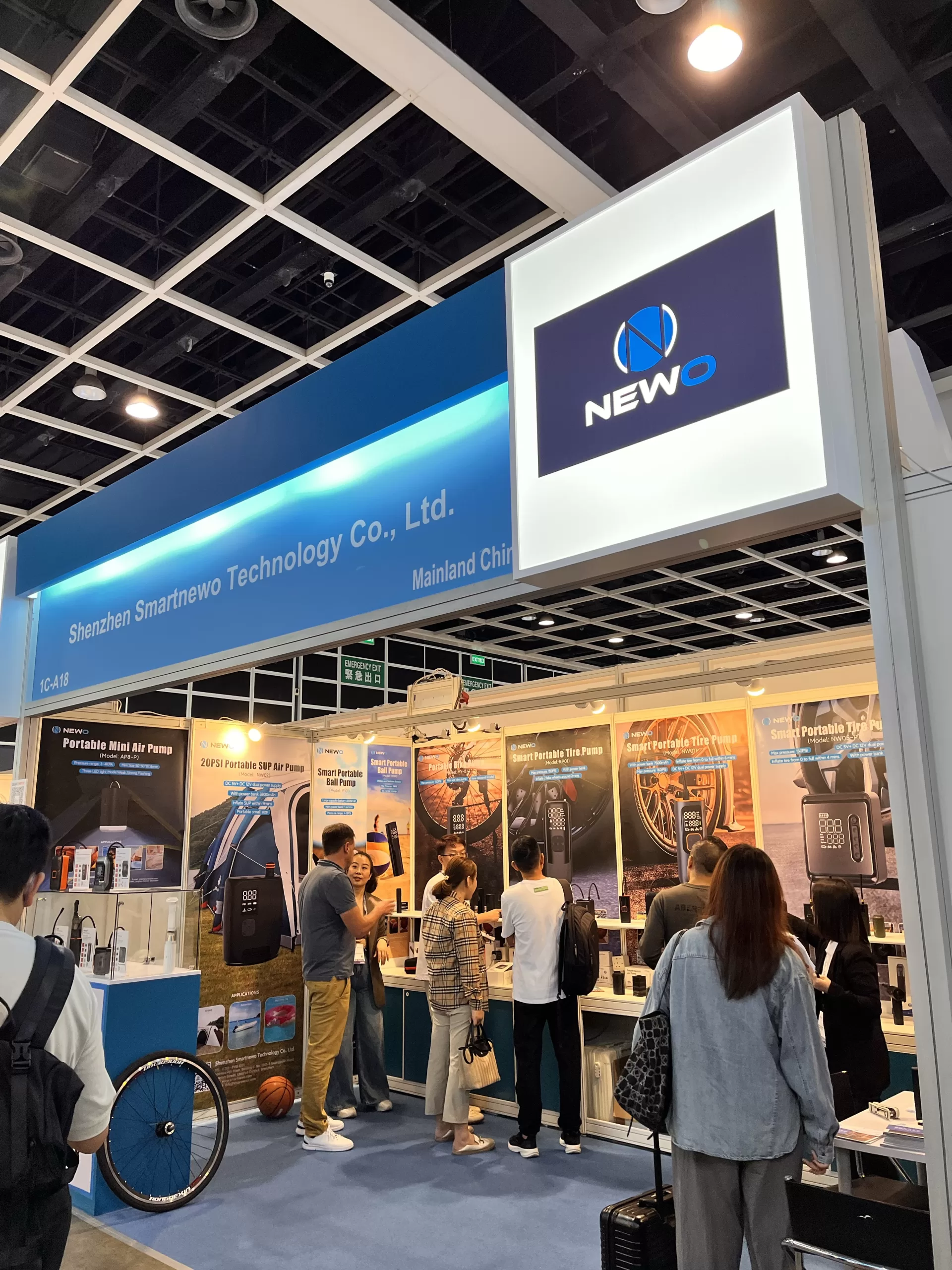
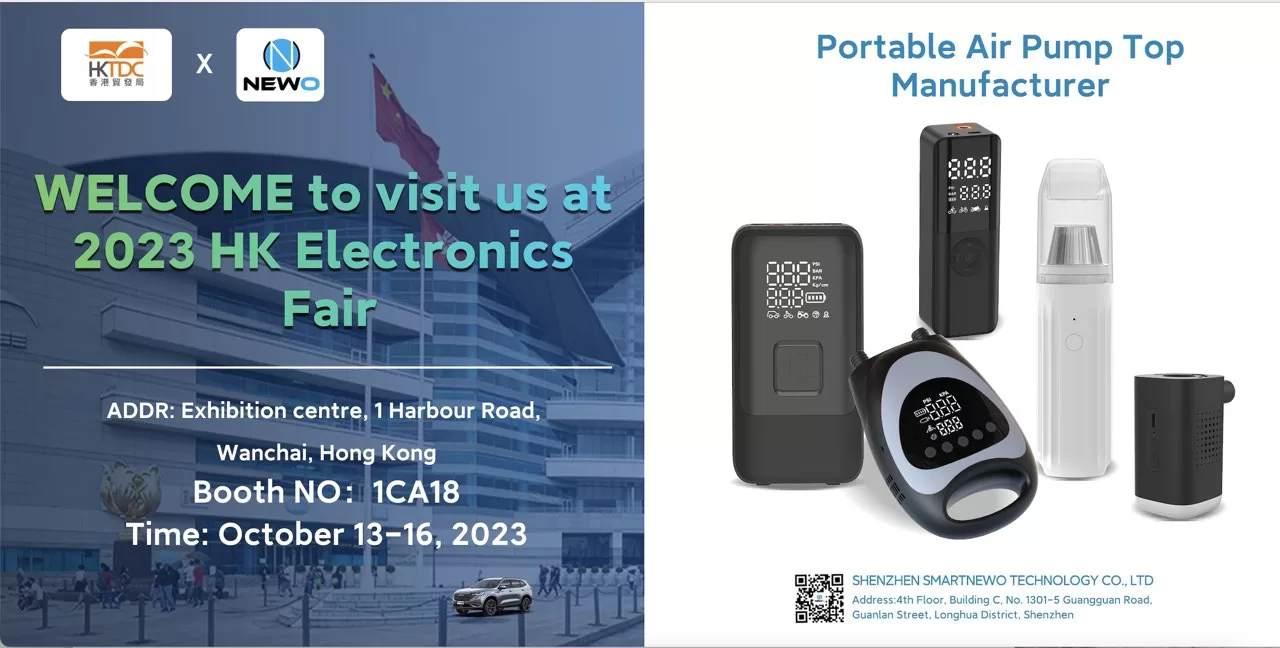
“Hong Kong Autumn Electronics Fair – 1CA18 (October 13th to 16th): Smartnewo invites you to visit our booth!
Hong Kong Autumn Electronics Fair...



-

What to Check Before Ordering Custom Electric Bike Pumps
Plan custom electric bike pumps with a clear requirements freeze for valves, TPU tubes, portability, repeated top-ups, charging, and model-specific documents.... -

OEM vs ODM Air Pumps: Which Manufacturing Model Fits Your Brand?
Compare OEM and ODM air pump projects by design responsibility, change approval, development scope, and written ownership terms before choosing your route.... -
How to Choose a Reliable Tire Inflator Manufacturer in China
Choose a tire inflator manufacturer in China with a focused RFQ, supplier evidence, configuration checks, and clear sample-to-pilot decisions for your brand.... -

Rechargeable Electric SUP Pump for Paddle Boards: Faster Inflation for SUPs, Kayaks and Inflatable Tents
The BL10-C Portable Electric Bike Tire Inflator is a compact and lightweight mini electric bike pump designed for modern cyclists. With up to 120 PSI pressure, a digital LED display, preset pressure control, automatic shut-off, USB-C charging, and multiple valve adapters, BL10-C offers a convenient inflation solution for road bikes,... -

Are Electric Bike Pumps Worth It in 2026? Electric Pump vs CO₂ vs Mini Hand Pump
Discover whether electric bike pumps are worth it in 2026. This guide compares electric bike pumps, CO₂ inflators, and mini hand pumps for road cycling, gravel riding, commuting, and long-distance rides. Learn the pros, limitations, best use cases, and key features to look for before choosing the right portable tire... -
BL10-C Portable Electric Bike Tire Inflator: Small Size, Reliable Power for Every Ride
The BL10-C Portable Electric Bike Tire Inflator is a compact and lightweight mini electric bike pump designed for modern cyclists. With up to 120 PSI pressure, a digital LED display, preset pressure control, automatic shut-off, USB-C charging, and multiple valve adapters, BL10-C offers a convenient inflation solution for road bikes,... -

Why Mini Electric Bike Pumps Are Becoming Essential for Modern Cycling
Discover why mini electric bike pumps are becoming essential for modern cyclists. Learn how portable electric bike pumps improve tire pressure management, riding safety, and convenience.... -

The Ultimate Smart Solution for Easy Outdoor Adventures in 2026
Discover how a spring travel air pump simplifies outdoor trips with fast inflation, smart features, and powerful performance—perfect for every adventure.... -

Powerful 5-in-1 Portable Car Tire Inflator and Jump Starter: The Ultimate Emergency Tool for Every Driver
Why Every Driver Needs a Portable Car Tire Inflator and Jump Starter Modern drivers face many unexpected situations on the road. A flat tire, low tire pressure, or a dead car battery can happen at the worst possible time. That’s why having a portable car tire inflator and jump starter is... -

7 Real Cycling Scenarios That Show Why Every Rider Should Carry a Mini Bike Pump
Cycling is one of the most freeing activities you can enjoy. Whether you’re commuting to work, riding through city streets, or exploring quiet countryside roads, a bike ride can instantly improve your day. But there’s one small problem that almost every cyclist eventually faces: Low tire pressure. It might happen...



-
How Is a Football Properly Inflated?
The correct inflation of a football - with not too much and not too little air - is a hotly debated topic among footballers.... -
Application Scenarios of Car Inflator Pump
Often long-distance business trips or play car owners because the road may be more remote areas, in this case if you encounter a tire leak....