

 Portable Tire Inflators
 Electric Air Pumps
 Electric Car Tyre Pumps
 Electric Ball Pumps
 Electric Bike Pump
 SUP Air Pump

Car Tyre Inflator Portable: Engineering, Real-World Use, and Selection Guide
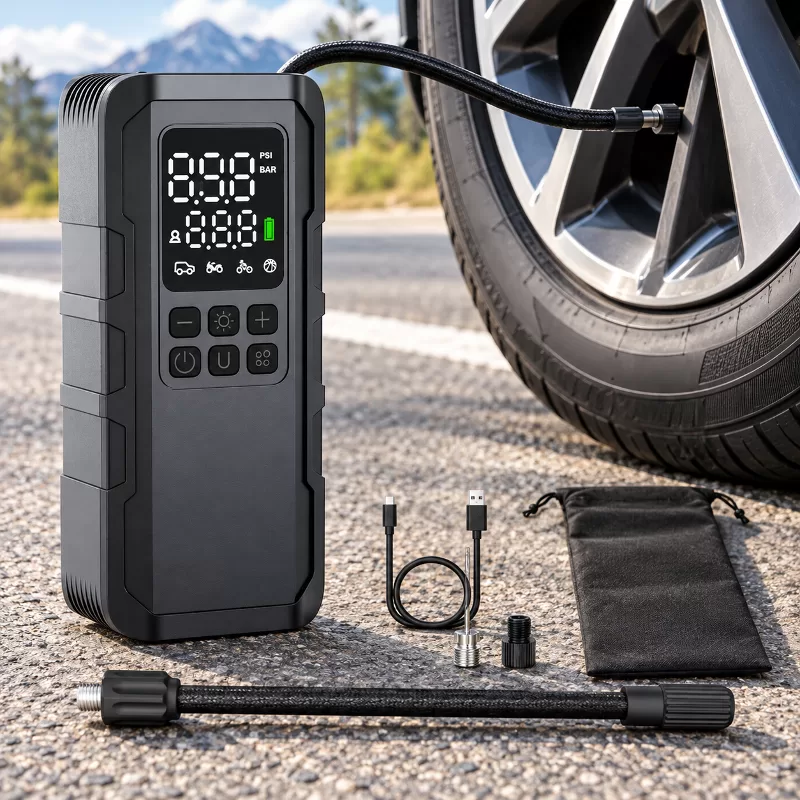
A dependable car tyre inflator portable unit has evolved from an optional roadside accessory into an essential piece of equipment for modern drivers. Maintaining accurate tire pressure is not merely about preventing a flat tire on a rainy morning; it directly dictates your vehicle handling, braking distances, fuel efficiency, and tread longevity. When a dashboard tire pressure light illuminates unexpectedly, having an independent, battery-powered air source eliminates the frustrating search for operational gas station air pumps.
Technological progress in miniature pneumatic design and high-density lithium-ion cells now allows pocket-sized compressors to deliver genuine automotive pressure. However, choosing the right tool requires understanding how reciprocating mini-compressors function under load, how to interpret manufacturer ratings, and how to operate portable units safely without damaging valve stems or overheating internal motor windings.
What Is a Portable Car Tyre Inflator?
Core Mechanics and Internal Architecture
At its mechanical foundation, a modern compact air pump uses a miniature electric motor linked directly to a reciprocating piston inside an engineered cylinder chamber. As the motor turns, the piston draws ambient air past an inlet seal and compresses it against an outlet check valve on each stroke, forcing pressurized air into the tire stem.
Unlike bulky workshop compressors that rely on large storage tanks, a compact car air pump operates as a continuous direct-displacement system. The air moved into the tire is pressurized continuously during operation, which naturally creates heat as mechanical energy compresses ambient air into a smaller volume.
Primary Applications and Everyday Utility
Drivers often face low-pressure warnings caused by seasonal temperature drops, as tire pressure naturally falls when ambient temperature drops. A portable device lets you adjust cold tire pressures in your own driveway before driving creates friction and artificial pressure increases.
Beyond routine passenger vehicle top-ups, these versatile devices support e-bikes, standard bicycles, commuter scooters, balance boards, and recreational sports equipment. Having multiple attachments turns a single device into an all-around pneumatic pump for domestic garages and long-distance road trips.
Key Performance Factors When Evaluating an Inflator
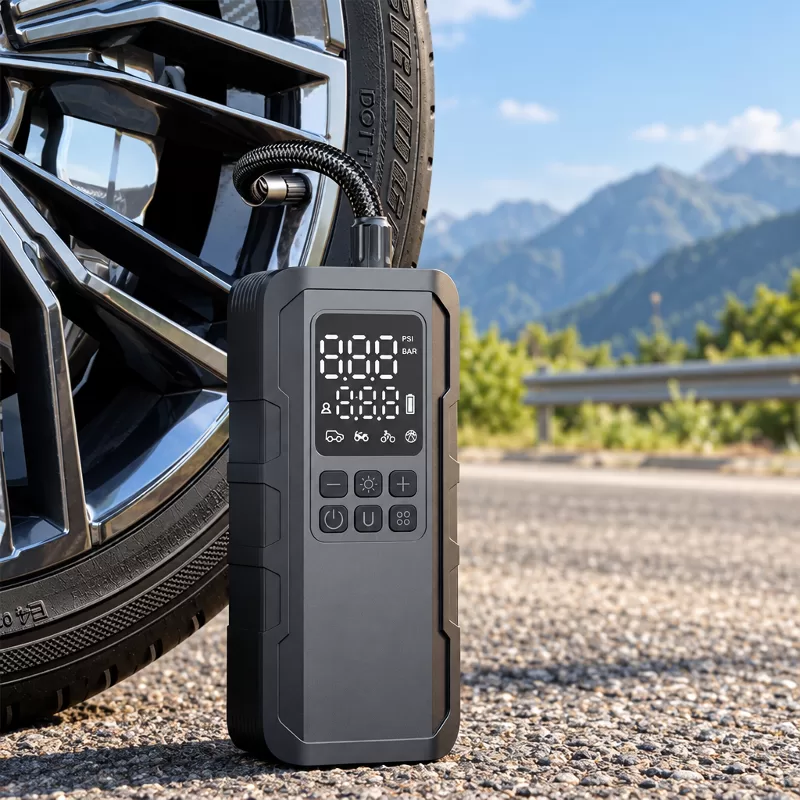
Maximum Pressure vs. Usable Airflow Output
Many consumers mistakenly evaluate air pumps strictly by maximum pressure ratings, often assuming higher PSI automatically equals faster performance. In reality, a high pressure ceiling, such as 150 PSI, may be useful for some high-pressure bicycle tires, though riders should always verify specific tire and rim limits, whereas top-up speed on a passenger car tire depends primarily on usable volumetric airflow measured in liters per minute.
A pump delivering high pressure with low flow might take an extended period to inflate an under-inflated car tire, risking motor strain. Balancing a realistic 19-cylinder design with adequate volumetric output ensures steady, dependable inflation across passenger sedans and light crossovers.
Battery Architecture and Operating Autonomy
Cordless inflator performance depends heavily on the internal battery configuration, cell ratings, and onboard power management. Driving a mechanical piston against rising tire back-pressure requires steady electrical power, making continuous wattage and voltage stability vital.
The LP8 uses three 18650 cells rated at 11.1 V and 22.2 Wh. Its published runtime of 20 to 25 minutes and per-charge tire estimate are manufacturer specifications, and actual results will vary depending on operating conditions and pressure requirements. For recharging, using a power source compatible with the listed charging input profile (5V/2A or 9V/1.5A via Type-C) ensures proper power intake.
Pressure Sensing Accuracy and Auto Shut-Off
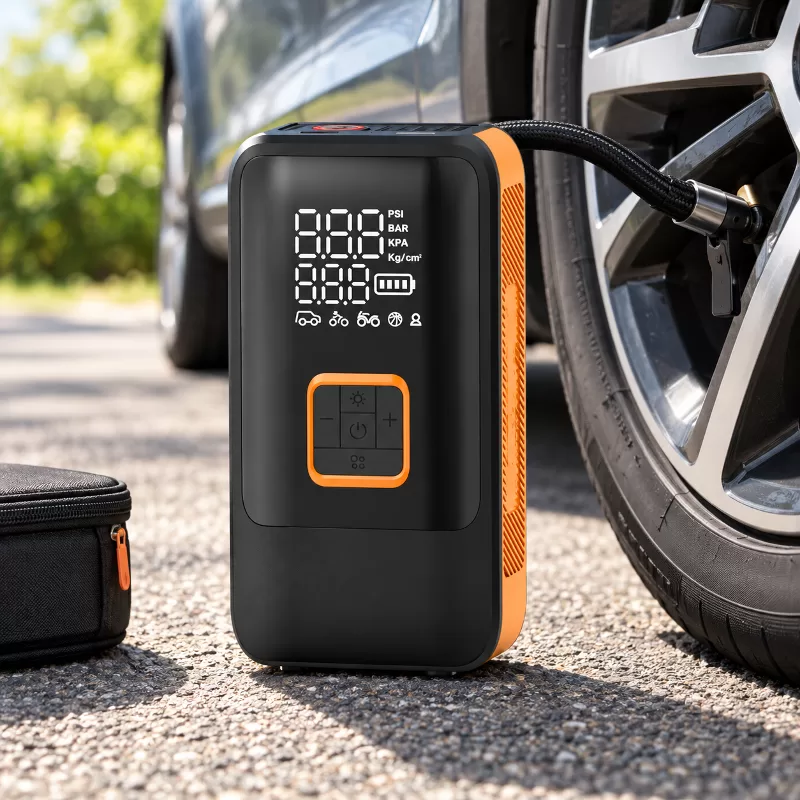
Accurate pressure measurement protects your tires from improper inflation. Overinflation can affect handling and ride comfort and can make tires more vulnerable to impact damage, so following the vehicle placard rather than the tire sidewall maximum is vital. Built-in digital pressure sensors sample pressure pulses directly from the hose line during brief pauses in the piston stroke.
The LP8 is equipped with a dual LED display; users should consult the product manual for the specific data layout and metrics shown on each screen. Once the detected pressure reaches the selected target value in PSI or BAR, automatic shut-off logic cuts power to the motor, preventing continuous over-pressurization.
Technical Deep-Dive: LP8 Compact Inflator Architecture
Engineering Specifications at a Glance
Understanding the physical and electrical parameters of a dedicated inflator helps drivers align equipment capabilities with real-world automotive demands. The LP8 is a rechargeable inflator measuring 70.5 × 50 × 165 mm and weighing 522 g, designed for portable carry and storage.
| Technical Parameter | Specification Value | Real-World Automotive Context |
|---|---|---|
| Model | LP8 | Compact handheld electric compressor |
| Operating Pressure | 2 to 150 PSI | Accommodates sports balls up to high-pressure bicycle tires |
| Air Delivery Rate | 26 to 28 L/min | Manufacturer-listed airflow; actual inflation time varies with conditions |
| Compressor Cylinder | 19 cylinder | Manufacturer-listed cylinder size |
| Motor Power | 60W | Manufacturer-listed working-power rating |
| Battery Pack | 3 × 18650 (2000mAh, 11.1V, 22.2Wh) | Cell assembly for off-grid operation |
| Recharge Duration | 2 to 3 hours | Type-C input support (5V/2A, 9V/1.5A) |
| Continuous Runtime | 20 to 25 minutes | Manufacturer-rated continuous operational window |
| Acoustic Rating | 85 dB or below at 1 meter | Typical operational volume for compact piston pumps |
| Chassis Dimensions | 70.5 × 50 × 165 mm | Stores easily in glove compartments or door pockets |
| Total Weight | 522 g | Lightweight build for effortless one-handed use |
Realistic Inflation Capacities
In practical automotive scenarios, the LP8 provides a runtime specification of 20 to 25 minutes on a full charge. According to manufacturer specifications, the device provides an inflation capacity of approximately 3.5 tires of size 205/R55 16 per full charge.
Actual inflation yield per charge depends heavily on starting pressure, target pressure, ambient temperature, and tire dimensions. Routine maintenance top-ups demand far less capacity than inflating a completely flat tire from zero, allowing efficient pressure maintenance under normal driving conditions.
Step-by-Step Safe Operating Guide
Step 1: Identifying Placard Cold Inflation Pressure
Always locate your vehicle manufacturer’s tire information placard, typically affixed to the driver-side door jamb, B-pillar, or inside the fuel filler flap. This label defines the engineered cold tire inflation pressure tailored to your car’s suspension and gross vehicle weight rating.
Never use the maximum pressure molded into the tire sidewall rubber as your daily target. That sidewall marking indicates only the maximum inflation pressure for the tire, not the proper operating pressure chosen by vehicle safety engineers.
Step 2: Pre-Inspection of Tire Structural Integrity
Before connecting the air hose, carefully inspect the tread surface and sidewalls for foreign objects, cracks, or visible distortions. Do not reinflate a tire with suspected structural damage, such as a bulge, cut, or sidewall separation; instead, use the spare tire or call roadside assistance and have the tire professionally inspected.
Ensure the vehicle is parked on a firm, level surface away from moving traffic with the parking brake fully engaged. If working on a dark roadside shoulder, switch on your hazard lights and set the inflator’s built-in LED into constant, flashing, or SOS emergency mode depending on visibility needs.
Step 3: Secure Hose Connection and Air Seal Verification
Unthread the plastic dust cap from the tire’s valve stem and store it safely. Attach the hose to the tire valve as directed in the LP8 manual, and check for escaping air around the connection to confirm a secure air seal.
Consult the user manual for model-specific power startup instructions and display readings when connected to a valve. Ensuring a tight fit prevents unintentional pressure loss while establishing the pneumatic line before starting the compression cycle.
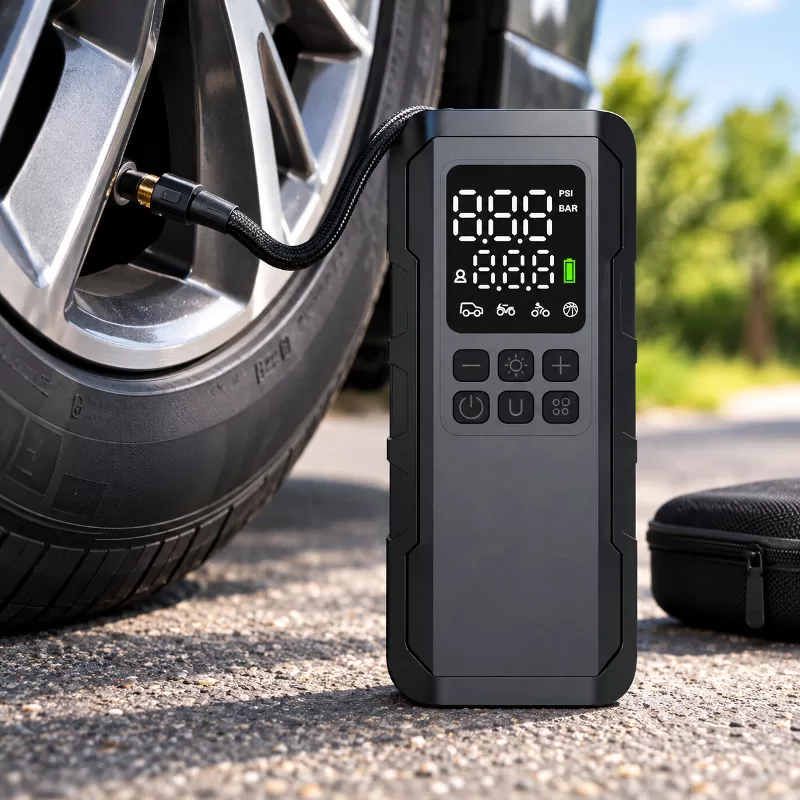
Step 4: Selecting Target Values and Operating the Cycle
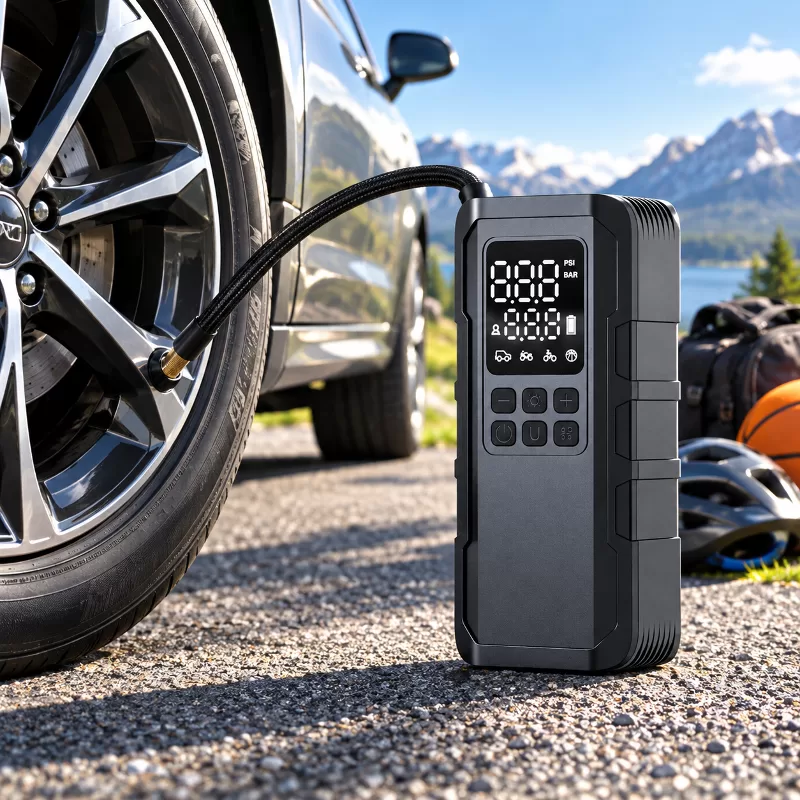
Use the mode button to choose the appropriate vehicle profile, or manually adjust your target pressure using the controls on the front panel. Confirm whether the unit is set to PSI or BAR according to your door jamb specification.
- Select Mode: Cycle through presets to car, motorcycle, bicycle, ball, or custom mode.
- Adjust Pressure: Set the digital readout to match your door placard cold pressure.
- Initiate Motor: Press the power button to start reciprocating compression.
- Monitor Cycle: Stand clear of the tire tread line while observing the live readout.
- Automatic Stop: Allow the internal circuit to automatically cut power when target pressure is reached.
Step 5: Post-Inflation Disconnection and Pressure Cross-Check
Once the motor shuts off automatically, switch off the control interface before detaching the hardware. Unscrew the chuck briskly to minimize escaping air, taking care as the metal connector near the pump body may feel warm after extended compression.
Reinstall the protective valve cap tightly to seal out road grime, salt, and water. A missing cap allows moisture and grit to enter the valve core, potentially causing slow valve seal leaks over time.
Comparing Inflation Solutions: Cordless, 12V Corded, and Forecourt Air
Cordless Portable Battery Inflators
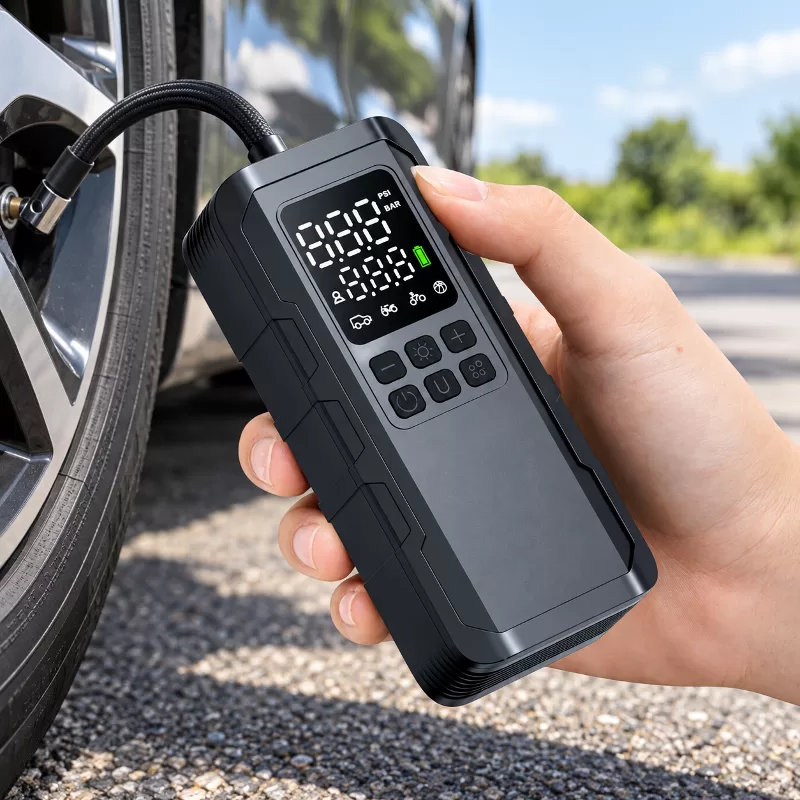
Battery-powered cordless units provide unmatched independence and freedom of movement. You never need to untangle long electrical wires, maneuver cables through car interiors, or rely on a vehicle auxiliary socket during roadside stops.
Their main operational consideration is battery discipline. Because lithium-ion cells self-discharge gradually over time, users should consult the manufacturer’s manual regarding recommended recharge intervals to ensure reliable emergency readiness.
12V Cigarette Lighter Plug-In Pumps
Traditional 12V DC plug-in pumps draw power directly from your car’s auxiliary socket, providing continuous power without concern for internal battery depletion. They remain a familiar choice for drivers prioritizing continuous direct vehicle power.
However, corded units require connecting to a live vehicle 12V port and carefully routing cables around tires and doors. Managing cord length and preventing wires from dragging through mud or rain are common practical trade-offs.
Gas Station Forecourt Air Stations
Commercial forecourt air dispensers draw air from stationary receiver systems and can inflate tires quickly. However, public dispensers present notable practical drawbacks for routine tire health maintenance.
Tires naturally warm up during driving, which temporarily elevates internal pressure readings. When possible, check tire pressure while tires are cold; if air must be added while tires are warm, refer to vehicle manufacturer guidelines and recheck pressure when cold, rather than releasing air solely because the warm measurement exceeds the placard level. In addition, forecourt equipment varies widely by location, and stations often feature worn valve chucks or payment meter requirements.
| Feature Category | Cordless Portable Pump | 12V Plug-In Corded Pump | Gas Station Air Tower |
|---|---|---|---|
| Power Dependency | Self-contained lithium pack | Car 12V auxiliary socket | Commercial mains power |
| Setup Convenience | Immediate; screw and press | Requires routing vehicle cable | Requires driving to station |
| Cold Check Accuracy | High (measured at home) | High (measured at home) | Variable (measures warm tires) |
| Stowage Footprint | Fits in glove compartment (522 g) | Bulky housing with cord bundles | Fixed station equipment |
| Versatility | Cars, bikes, inflatables | Restricted to vehicle cord reach | Rigid commercial bay only |
Maintenance, Safe Handling, and Storage
Lithium-Ion Pack Maintenance and Cold Weather Storage
Operating conditions influence battery chemistry and available electrical discharge. The LP8 specifies an operating working temperature range from minus 10°C to 45°C for functional inflation.
- Operating Range: Operate the device within its stated working range of minus 10°C to 45°C.
- Battery Upkeep: Refer to the user manual for proper storage procedures and routine recharge guidance.
- Operational Duty Cycle: Follow the manufacturer’s duty cycle guidelines and allow the unit to rest between long cycles.
- Clean Terminals: Keep the Type-C port dry and free of dirt using a clean, soft cloth.
Newo is a professional manufacturer specializing in the research, development, and production of smart electric air pumps and portable inflation solutions. With strong expertise in pneumatic technology, product design, and manufacturing, we provide a wide range of innovative products designed to deliver convenience, efficiency, and reliability for customers worldwide.
Valve Chuck and Braided Hose Preservation
The LP8 is equipped with a flexible braided inflation hose designed to link the compressor to valve stems. Inspect the hose regularly for cuts, kinks, or abrasions that could compromise a tight air seal.
Avoid dragging the hose chuck across asphalt, sand, or gravel when moving between vehicle wheels. Foreign particles lodged in the chuck threads can damage tire valve stems, creating persistent slow leaks that trigger low-pressure warnings.
Buyer’s Checklist for Portable Tire Inflators
Essential Hardware Features
Selecting a durable inflator requires matching functional hardware details to your expected vehicle and recreational uses. Evaluating key design features ensures you invest in a practical, lasting tool rather than an under-powered accessory.
- Automatic Shut-Off: Verifying that the pressure controller stops automatically when reaching the preset target.
- Balanced Cylinder Design: A 19-cylinder configuration provides adequate displacement for everyday vehicle tires.
- Dual LED Display: Dual LED screen layout for reviewing target and pressure values based on the manual’s specifications.
- Multi-Mode Lighting: Emergency lighting with constant, flashing, and SOS options for night roadside safety.
- Compact Portability: Lightweight construction (such as 522 grams) that packs neatly into glove compartments.
Frequently Asked Questions (FAQs)
Why does my vehicle door sticker show a lower PSI than the tire sidewall?
The figure printed on your vehicle door jamb is the engineered cold tire pressure calculated specifically for your car’s weight distribution, braking balance, and suspension setup. The value molded into the tire sidewall represents only the maximum inflation pressure for the tire, not the ideal setting for daily driving.
Can a portable tyre inflator seat a completely unseated tire bead?
A compact electric inflator is designed for controlled pressure delivery, producing between 26 and 28 liters per minute. Reseating a detached tire bead typically requires an instant blast of high-volume air, which only high-displacement workshop receiver tanks can supply.
How long does a cordless air pump take to add pressure to a passenger car tire?
Inflation duration depends on tire size, current internal pressure, and target pressure. While compact compressors provide a continuous airflow rate of 26 to 28 L/min, total top-up time will vary based on starting conditions and vehicle tire volume.
Does cold ambient winter weather affect the LP8 battery performance?
Cold ambient temperatures slow down chemical activity inside lithium-ion batteries, which can temporarily reduce available runtime. The LP8 has an operating working temperature down to minus 10°C, and keeping the unit inside a warm vehicle cabin prior to use helps support battery efficiency.
Can the LP8 be used safely on high-pressure road bicycle tires?
The LP8’s stated maximum operating pressure is 150 PSI. Check your specific tire and rim pressure limits, and confirm the required valve adapter and LP8 compatibility in the manual before use.
Conclusion
Investing in a quality car tyre inflator portable solution gives you complete independence from inconsistent, out-of-order gas station air pumps while reinforcing proactive road safety. By pairing a 19-cylinder 60W motor, an airflow delivery rate of 26 to 28 L/min, and smart automatic shut-off functionality, modern units like the LP8 combine compact handheld convenience with dependable automotive inflation performance. Keeping an electric car tire air pump charged in your glove compartment ensures you are always prepared to handle unexpected TPMS warnings, seasonal temperature shifts, and routine pressure adjustments wherever your travels take you.
-

Meet NEWO at the 140th Canton Fair: Visit Booth 10.3 M03–04
Meet NEWO at the 140th Canton Fair in Guangzhou, October 15–19, 2026. Visit Booth 10.3 M03–04 to explore portable air pumps and discuss OEM, ODM and distribution opportunities.... -

As Shenzhen Welcomes the World for APEC 2026, NEWO Welcomes You to Our Factory
As Shenzhen prepares for APEC 2026, NEWO welcomes international buyers and partners to visit our factory, meet our team and explore future cooperation.... -

Leading the Way in Product Innovation and Excellence
Smartnewo exemplifies professionalism in product innovation and manufacturing. Their collaboration with Xiaomi Youpin on the G01 crowdfunding project highlights their expertise in creating compact, powerful inflatable pumps. Rigorous engineering, meticulous production processes, and advanced quality assurance underscore their commitment to excellence. The success of the G01 project, with significant market... -

Essential Qualities of an Excellent Supplier
In today's competitive market, finding a reliable supplier is crucial for business success. Based on insights from Smartnewo and broader internet research, here are key qualities an excellent supplier must possess:... -

NW06 Tire Inflator: Compact Power for Quick Inflation
Summary The NW06 Tire Inflator delivers quick and efficient tire inflation with a powerful 35L/min airflow. It features a user-friendly LCD screen for real-time pressure monitoring, dual power options with a built-in 6000mAh battery, and multiple nozzle attachments for versatile use. Its compact design and integrated LED light ensure convenience and... -

Unleash the Power of Portability: The SmartNewo Jump Starter with Air Compressor KF03
This guide will walk you through the steps to effectively use a portable tire inflator, helping you stay prepared and safe on the road.... -

Newo Attends The 2024 Consumer Electronics Show (CES)
Smartnewo booth is located at 53672, Halls A-D, Level 2, Venetian Expo, Las Vegas Convention Center (LVCC). ... -

Smartnewo’s Dual-Cylinder Air Pump Rocks the Hong Kong Autumn Electronics Fair!
Smartnewo’s Dual-Cylinder Air Pump Rocks the Hong Kong Autumn Electronics Fair!... -

Meet at the Canton Fair! Smartnewo brings dual-cylinder air pumps, making your inflation experience faster and more stable!
NEWO has went deep communication and negotiation with customers from all over the world on booth.... -

“Hong Kong Autumn Electronics Fair – 1CA18 (October 13th to 16th): Smartnewo invites you to visit our booth!
Hong Kong Autumn Electronics Fair...
-

What to Check Before Ordering Custom Electric Bike Pumps
Plan custom electric bike pumps with a clear requirements freeze for valves, TPU tubes, portability, repeated top-ups, charging, and model-specific documents.... -

OEM vs ODM Air Pumps: Which Manufacturing Model Fits Your Brand?
Compare OEM and ODM air pump projects by design responsibility, change approval, development scope, and written ownership terms before choosing your route.... -

How to Choose a Reliable Tire Inflator Manufacturer in China
Choose a tire inflator manufacturer in China with a focused RFQ, supplier evidence, configuration checks, and clear sample-to-pilot decisions for your brand.... -

Rechargeable Electric SUP Pump for Paddle Boards: Faster Inflation for SUPs, Kayaks and Inflatable Tents
The BL10-C Portable Electric Bike Tire Inflator is a compact and lightweight mini electric bike pump designed for modern cyclists. With up to 120 PSI pressure, a digital LED display, preset pressure control, automatic shut-off, USB-C charging, and multiple valve adapters, BL10-C offers a convenient inflation solution for road bikes,... -

Are Electric Bike Pumps Worth It in 2026? Electric Pump vs CO₂ vs Mini Hand Pump
Discover whether electric bike pumps are worth it in 2026. This guide compares electric bike pumps, CO₂ inflators, and mini hand pumps for road cycling, gravel riding, commuting, and long-distance rides. Learn the pros, limitations, best use cases, and key features to look for before choosing the right portable tire... -
BL10-C Portable Electric Bike Tire Inflator: Small Size, Reliable Power for Every Ride
The BL10-C Portable Electric Bike Tire Inflator is a compact and lightweight mini electric bike pump designed for modern cyclists. With up to 120 PSI pressure, a digital LED display, preset pressure control, automatic shut-off, USB-C charging, and multiple valve adapters, BL10-C offers a convenient inflation solution for road bikes,... -

Why Mini Electric Bike Pumps Are Becoming Essential for Modern Cycling
Discover why mini electric bike pumps are becoming essential for modern cyclists. Learn how portable electric bike pumps improve tire pressure management, riding safety, and convenience.... -

The Ultimate Smart Solution for Easy Outdoor Adventures in 2026
Discover how a spring travel air pump simplifies outdoor trips with fast inflation, smart features, and powerful performance—perfect for every adventure.... -

Powerful 5-in-1 Portable Car Tire Inflator and Jump Starter: The Ultimate Emergency Tool for Every Driver
Why Every Driver Needs a Portable Car Tire Inflator and Jump Starter Modern drivers face many unexpected situations on the road. A flat tire, low tire pressure, or a dead car battery can happen at the worst possible time. That’s why having a portable car tire inflator and jump starter is... -

7 Real Cycling Scenarios That Show Why Every Rider Should Carry a Mini Bike Pump
Cycling is one of the most freeing activities you can enjoy. Whether you’re commuting to work, riding through city streets, or exploring quiet countryside roads, a bike ride can instantly improve your day. But there’s one small problem that almost every cyclist eventually faces: Low tire pressure. It might happen...
-

How Is a Football Properly Inflated?
The correct inflation of a football - with not too much and not too little air - is a hotly debated topic among footballers.... -

Application Scenarios of Car Inflator Pump
Often long-distance business trips or play car owners because the road may be more remote areas, in this case if you encounter a tire leak....