
 Portable Tire Inflators
 Electric Air Pumps
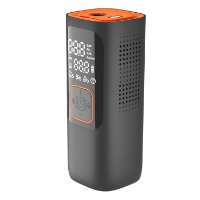 Electric Car Tyre Pumps
 Electric Ball Pumps
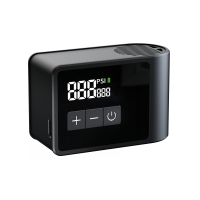 Electric Bike Pump
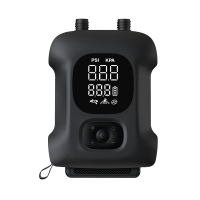 SUP Air Pump

The Definitive Engineering and Field Guide to Cordless Tire Inflators
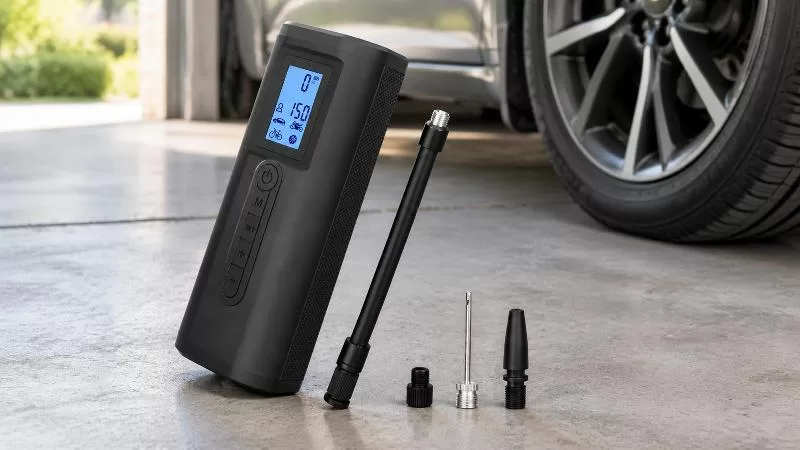
Tire pressure is an elusive variable that quietly governs vehicular safety, rolling resistance, and braking distance. A cold morning arrives, the temperature plummets, and your dashboard suddenly greets you with an amber low-pressure warning. Searching for a reliable cordless tire inflator is often born out of that exact moment of quiet frustration. You realize that relying on rusted gas station compressors or brittle cables plugged into a cigarette lighter is no longer sustainable.
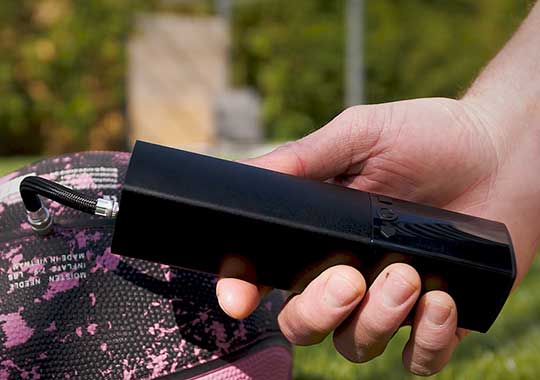
A handheld cordless tire inflator bridges the gap between bulky garage machinery and the unpredictable demands of daily transit. Modern pneumatic engineering has managed to pack a high-pressure piston, lithium cells, and a digital pressure display into a chassis barely larger than a water bottle. Understanding how these miniature machines function allows you to maintain optimal pneumatic health across commuter sedans, high-pressure bicycle tires, and off-road motorcycles without guesswork.
1. The Anatomy of Modern Tire Pressure Management: Why Traditional Tools Fail
1.1 The Thermodynamics of Pressure Drop: A Practical Rule of Thumb
Tire pressure drops naturally over time because pressurized air molecules continuously permeate through the microscopic pores of vulcanized butyl rubber. This physical reality is compounded whenever seasons transition and ambient temperatures fall. As a rough rule of thumb, air pressure tends to decrease by roughly one pound per square inch for every ten-degree Fahrenheit decline in temperature, though the actual change varies with tire volume, altitude, and how the tire was last used.
When a tire drops several pounds per square inch below its rated placard value, the structural sidewall flexes excessively under vehicle load. This cyclic deflection produces parasitic rolling drag, scrubs the outer shoulder treads, and elevates internal rubber temperatures. A cordless tire inflator allows drivers to perform cold tire adjustments on their home driveway before road friction artificially warms the tire carcass, which is why checking pressure before a drive rather than after one remains the more reliable habit.
1.2 Gas Station Compressors vs. 12V Cords: The Friction of Traditional Solutions
For decades, motorists relied on municipal fuel station air pumps to manage seasonal deflation. These commercial air towers present numerous practical hurdles: uncalibrated analog gauges damaged by careless handling, severed hoses, and awkward coin mechanisms that fail in mid-winter sleet. Even when functional, driving several miles to reach a station warms the tire before you even start, skewing every reading away from true cold inflation baselines.
Corded twelve-volt portable compressors addressed remote availability, yet they introduced their own physical hindrances. Snaking a stiff wire across wet paintwork, threading cords through dirty door frames, and blowing internal cabin fuses under inductive motor surges remain common complaints. Tangled cabling creates ergonomic friction, which inevitably leads vehicle owners to delay routine air maintenance until dangerous underinflation occurs.
1.3 How Miniaturized Pneumatics Solved the Roadside Equation
Recent gains in lithium energy density transformed portable air delivery from a cumbersome maintenance chore into an effortless habit. Compact electric inflators replace long copper power lines with self-contained energy packs, driving a high-speed motor and compression mechanism on demand. Designs across the category vary in their internal gear and piston arrangements, and this article does not assume a specific internal construction beyond what a given manufacturer states.
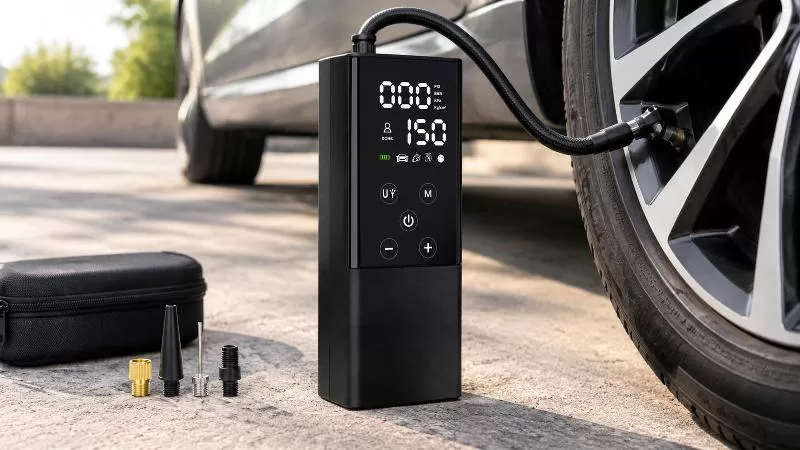
A modern handheld inflator is built to operate with minimal supervision. The user connects the threaded chuck, dials in the target figure, and the device stops inflating once the selected pressure is reached, a behavior the Newo AP2-P specifically lists among its functions.
2. Core Mechanical Architecture: Inside a Pocket Compressor
2.1 The Piston and Cylinder Chamber: What the Specifications Tell Us
At the mechanical heart of a compact compressor sits a cylinder and compression assembly that forces outside air into the tire at pressure. The Newo AP2-P specification sheet lists its cylinder size as "14 cylinder" and its motor as a brushed motor. The manufacturer’s data does not define the cylinder figure as a bore diameter in millimeters, nor does it describe the piston, sleeve, or geartrain construction in detail, so this article presents only the listed cylinder and motor-type specifications rather than an interpreted internal design.
What is confirmed is the pressure outcome: according to the product’s listed specifications, the AP2-P supports custom pressure settings from 0 to 150 PSI, which covers both automotive volume requirements and demanding road bike pressures within one device.
2.2 Motor Output and Airflow Delivery: Reading the Numbers Realistically
Compressor output is typically quantified in liters per minute rather than raw motor rotation speeds, since peak rotational speed alone tells you little about how quickly a device can push air against resistance. The AP2-P’s listed airflow of 15 to 18 liters per minute, paired with a 35-watt brushed motor, places it in the practical range for handheld maintenance tools rather than shop-grade equipment, where larger motors and tanks move far greater volumes but sacrifice portability.
The manufacturer’s data does not specify a tested fill time for a particular car tire size, so no exact minutes-per-tire figure can be stated with confidence. What is documented is the broader inflation capacity: the AP2-P is rated for roughly ten to fifteen bicycle tires per full charge, and a continuous working time of up to thirty minutes, giving a practical sense of how much inflation work one charge can cover across a typical household’s tires and sporting equipment.
2.3 Duty Cycles and Operating Limits Under Repeated Use
Compressing atmospheric gas generates heat as mechanical work is imparted into air molecules, and in a compact chassis that heat transfers into the housing and connector assembly fairly quickly. This is a normal characteristic of small compressors rather than a defect, and it explains why handheld units are not designed to run indefinitely the way a stationary tank compressor might.
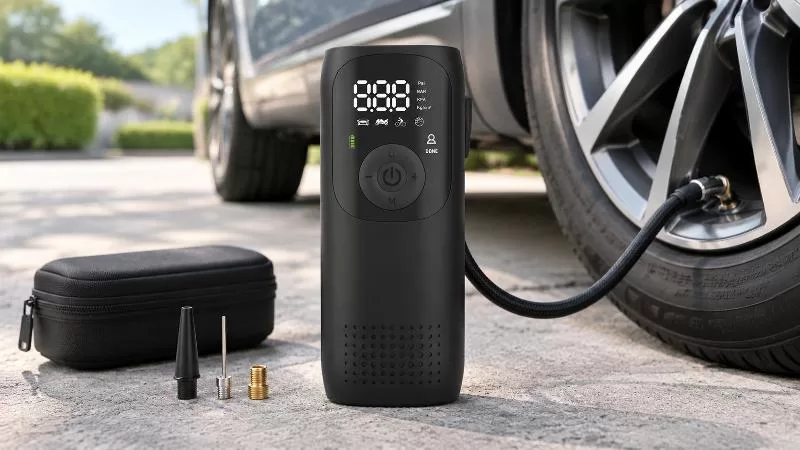
The AP2-P includes a built-in fan intended to help with heat management, and its listed runtime is twenty to thirty minutes, with a continuous working time of up to thirty minutes. Treating this as the practical ceiling for one session, then allowing the housing to cool before resuming, fits within the manufacturer’s stated operating parameters and should help preserve the unit over repeated use, particularly during a multi-tire seasonal top-off.
3. Battery Power in Harsh Working Conditions
3.1 What the Battery Specification Actually States
Pneumatic compression demands bursts of discharge current from the internal battery, and the supplied specification lists the AP2-P’s battery as a built-in 2000mAh, 7.4V pack rated at 14.8Wh. Separate feature text in the same product material describes it as "2*2000mAh," so this article treats the capacity figures as the manufacturer’s stated specification rather than resolving the wording difference into a specific cell count or series arrangement.
What can be said with confidence is that the pack is designed to drive a 35-watt motor through pressure build-up, and that the listed charging time is two to three hours over the Type-C port. Claims about internal protection circuitry, surge handling, or sustained torque under partial discharge are not part of the supplied specification, so this article does not assert them.
-
Stated battery figures: built-in 2000mAh lithium battery, 7.4V, 14.8Wh, as listed in the manufacturer’s specification sheet.
-
Cycle life: the manufacturer states the battery retains at least eighty percent of its original capacity after 300 charge cycles.
-
Charging: a 5V/2A Type-C input brings the unit to full charge in roughly two to three hours, per the listed specification.
3.2 Temperature Extremes: Operating Within the Rated Range
Tire failures rarely happen inside climate-controlled garages. They occur on sun-baked highway shoulders or in freezing driveway drifts after a sudden blizzard. Lithium-ion batteries generally lose some usable current at low temperatures, which is a widely recognized characteristic of the chemistry rather than a specific claim about this unit’s internal performance.
The AP2-P carries a stated working temperature range of minus ten degrees Celsius to forty-five degrees Celsius. This tells you the range within which the manufacturer expects the device to operate during active use, though the article does not have independent data on how much runtime narrows at either extreme, and this figure should not be treated as a storage-temperature limit.
3.3 Power-Bank Output and Practical Charging Habits
A tool that sits untouched in a vehicle console for weeks at a time needs to hold a usable charge, though the supplied specification does not state a specific standby discharge rate, so this article avoids quoting one.
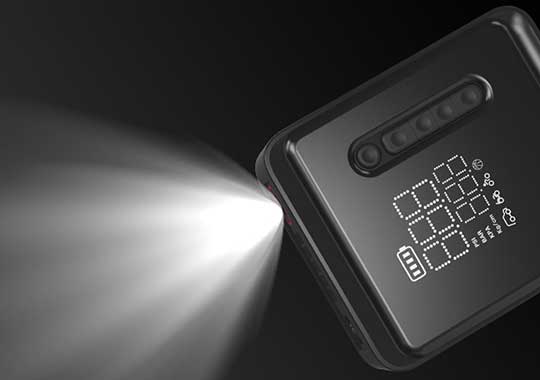
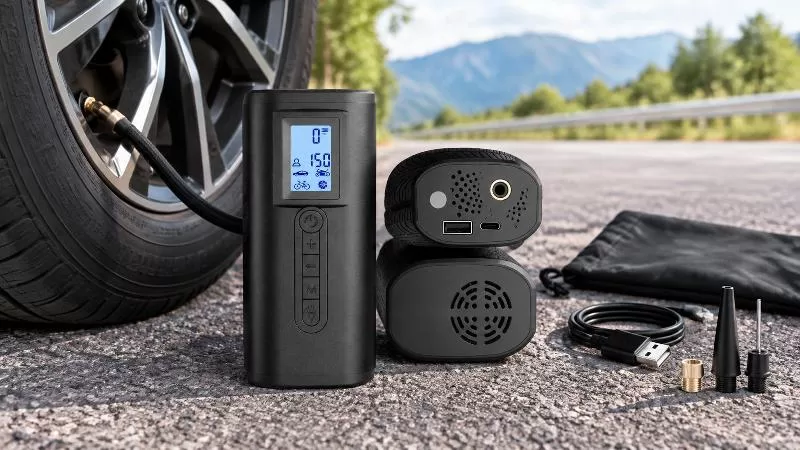
What is documented is that the AP2-P charges through its Type-C port and separately offers a 5V/2A power-bank output that can charge external devices such as a phone during a roadside breakdown. The unit also includes a built-in LED light as a distinct feature for roadside visibility, which the manufacturer lists alongside, rather than as part of, the power-bank function. Checking the charge level periodically, rather than assuming indefinite shelf readiness, is a reasonable precaution with any lithium-powered tool stored for long stretches.
4. Display, Presets, and Operational Behavior
4.1 Digital Display vs. Mechanical Gauges
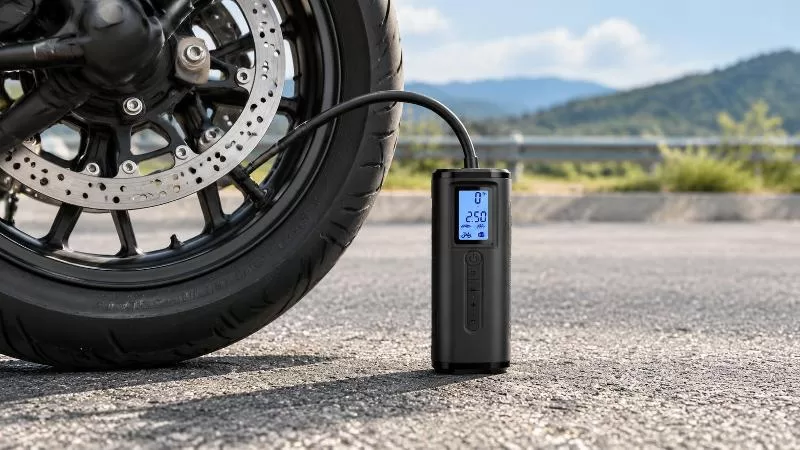
Traditional analog tire gauges rely on a curved Bourdon tube or an internal sliding piston with a mechanical spring, mechanisms that are generally understood to be sensitive to vibration, age, and physical drops over time. The AP2-P instead presents its readings on a backlit LCD screen, showing measured pressure, preset pressure, battery level, unit, and mode information, which is useful in dark or low-light roadside conditions.
The manufacturer’s materials do not specify the sensor technology inside the unit or publish an accuracy tolerance, so this article does not characterize its precision relative to analog gauges beyond noting the readable digital display and the four supported units: PSI, BAR, KPA, and Kg/cm².
4.2 Automatic Shut-Off: What It Does and Why It Matters
Over-inflating a tire beyond its recommended rating can alter handling and contribute to uneven center-tread wear, which is why matching pressure to the vehicle or equipment manufacturer’s recommendation, rather than guessing, remains the safer approach. Continuous human attention is also an easy thing to lose track of during a noisy inflation cycle, especially at a dim roadside.
The Newo AP2-P addresses this by stopping inflation automatically once the pressure you set is reached, a function the manufacturer lists directly among its core features. This removes the need to watch a gauge continuously and reduces the chance of stopping too late by relying on reaction time alone.
4.3 Multi-Vehicle Pressure Profiles: From Passenger Tires to High-Pressure Tubes
Different inflation tasks call for different baseline parameters, and the AP2-P provides five inflation modes, listed by the manufacturer as car, motorcycle, bicycle, ball, and custom settings, to simplify setup without repeated manual reconfiguration.
-
Passenger Car Profile: Suited to typical cold sedan and crossover targets, which generally fall in the thirty to thirty-six pounds per square inch range depending on the vehicle manufacturer’s recommendation.
-
Motorcycle Setting: Structured for quick top-offs on motorcycles and similar two-wheeled vehicles.
-
Bicycle Mode: Supports the higher pressures used by bicycle tires, up to the unit’s rated maximum of 150 PSI; the specific target still depends on what the tire and rim are rated for.
-
Sports Ball Mode: Offers a dedicated setting for inflating basketballs and similar sports equipment; the manufacturer’s data does not publish a calibrated preset pressure for this mode, so readers should follow the ball manufacturer’s recommended inflation pressure rather than a fixed figure.
-
Manual Custom Parameter: Lets the operator set any threshold from zero up to the maximum capacity, with the last value stored by the built-in memory function.
5. Comparing Inflator Types: Handheld Cordless, 12V Corded, and Garage Compressors
5.1 A Qualitative Look at Where Each Type Fits
Selecting pneumatic gear involves balancing portability, power source independence, continuous duty cycle, and storage footprint. Rather than listing precise numbers for product categories that were not independently tested for this comparison, the table below describes general, widely understood tendencies of each format, with garage compressors noted as varying by model rather than treated as a single fixed category.
| Comparison Point | Compact Cordless Inflator | 12V DC Corded Inflator | Garage Tank Air Compressor |
|---|---|---|---|
| Primary Power Source | Internal rechargeable battery pack | Vehicle 12V auxiliary socket | Typically an AC mains wall outlet, though some models use other power sources |
| Typical Pressure Range | Supports high-pressure tasks; the AP2-P is rated up to 150 PSI | Generally suited to everyday car and light-duty tasks | Varies by model; often suited to longer or higher-flow shop work |
| Portability | Fully cordless; carried and used anywhere | Tethered to a vehicle power socket and cable length | Typically stationary and less suited to roadside use, though portability varies by model |
| Typical Carry Weight | Lightweight handheld design; the AP2-P is listed at 386 g | Noticeably heavier due to the cord and housing | Substantially heavier, intended to stay in one place |
| Setup Speed | Ready to use almost immediately | Requires uncoiling and plugging in a cable | Requires the tank to build pressure before use |
| Ideal Primary Function | Routine top-offs, travel, and emergencies away from a vehicle | Emergency roadside flats near a running vehicle | Shop tasks such as rim seating or running pneumatic tools |
5.2 Step-by-Step Selection Logic for Commuters, Cyclists, and Fleet Owners
Choosing the correct device requires matching mechanical characteristics to your daily operational routine rather than chasing raw capacity numbers you will never deploy. The following considerations walk through how portability, storage space, pressure requirements, and backup power needs should shape that decision.
-
Assess Primary Maintenance Frequency: If your goal is monthly seasonal tire pressure maintenance and topping off family bicycles, prioritize cordless portability and automatic shut-off to remove procedural setup barriers.
-
Evaluate Storage Constraints: Urban dwellers and motorcycle commuters with limited under-seat or trunk storage should consider a lightweight handheld chassis, such as the 386-gram AP2-P.
-
Identify Pressure Ceilings: Cyclists running narrow road wheelsets need a device rated well above typical passenger car pressures, though the tire and rim’s own printed limits, not just the pump’s maximum, should set the actual inflation target.
-
Factor in Emergency Self-Sufficiency: If your vehicle battery is prone to weak cold cranking in winter, a self-powered cordless unit avoids drawing on your starter battery while maintaining tire pressure.
When developing electric air pumps and portable inflation equipment, our engineering focus at Newo centers on pneumatic component testing across models like the AP2-P. Delivering workable pressure control within a palm-sized chassis requires attention to the cylinder assembly, the display and control electronics, and the battery pack working together.
6. Practical Field Operation: Step-by-Step Maintenance and Safety Protocol
6.1 Cold Tire Pressure Verification Protocol
Accurate inflation relies on measuring cold tire pressures, meaning the tire has not been driven on recently and has not sat in direct sun long enough to warm up. Most vehicle and tire guidance defines a cold tire as one that has been parked for at least a few hours or driven less than a mile at low speed, since driving warms the air inside and can raise the reading somewhat, though the exact increase depends on distance, speed, and ambient temperature rather than a fixed figure.
-
Locate the Vehicle Placard: Check the driver-side door jamb sticker for the exact cold tire rating recommended by the chassis manufacturer; never use the maximum pressure molded on the tire sidewall.
-
Park on Flat Ground: Ensure the vehicle sits on a level surface with the handbrake engaged, which keeps the vehicle secure and stable while you work around each wheel.
-
Clear Valve Stems: Remove the valve stem dust cap, clearing away road grit or salt crust that could contaminate the inflator chuck seal.
-
Firmly Seat the Connector: Thread or clamp the air chuck cleanly onto the valve stem; the backlit screen will immediately register and display the current resting baseline.
-
Select Mode and Target: Adjust the target pressure to the recommended placard rating using the plus or minus buttons.
-
Initiate Inflation: Press the central start button and step back; the unit will run until the pressure you set is reached, then stop automatically.
6.2 Managing Valve Stems, Adapters, and Nozzle Seals Without Pressure Bleed
Pneumatic loss often occurs during the brief moments when screwing or unscrewing the hose connector from threaded Schrader valves. Minimizing this requires deliberate handling techniques.
Keep the flexible rubber air hose aligned with the valve stem rather than tugging on it at an angle, and make sure the chuck is seated firmly before starting the pump. A loose or poorly seated connection, or a worn valve core, is a more likely source of air leakage than the angle of the hose itself. When utilizing needle or tapered adapters, such as the three adapters included with the AP2-P for sporting gear or inflatable items, ensure the accessory is threaded completely into the primary chuck before pressing the device into the item.
6.3 Post-Inflation Storage and Battery Care
High temperature accelerates lithium battery degradation more than cold does, so leaving a portable inflator on a rear parcel shelf under unshaded summer sunlight is worth avoiding where practical. The manufacturer’s specification lists a working temperature range of minus ten to forty-five degrees Celsius for active use, but it does not publish a separate storage-temperature limit, so that figure should not be used to judge how hot a glove box or trunk can safely get while the device sits unused.
Keeping the pump in a glove compartment, door pocket, or trunk organizer out of direct sun is a reasonable storage habit. The manufacturer lists a charging time of two to three hours over Type-C, so periodically checking the charge level before a trip, rather than assuming it is always ready, helps avoid being caught out during an actual roadside need.
7. Frequently Asked Questions (FAQs)
How long does it take a compact cordless tire inflator to top off a typical car tire?
The manufacturer’s specifications for the AP2-P do not publish an exact fill time for a specific car tire size, so no precise minutes-per-tire figure can be stated with confidence here. What is documented is the airflow rating of 15 to 18 liters per minute and an inflation capacity of roughly ten to fifteen bicycle tires per full charge, which gives a general sense of the device’s output relative to a shop-grade compressor.
Can a portable inflator with a 150 PSI limit safely inflate high-pressure bicycle tires?
A 150 PSI rating describes the inflator’s maximum output capability, not a recommended target for every bicycle tire. The AP2-P’s bicycle mode and custom setting allow pressures up to that maximum, but the actual target should always follow the pressure limits printed on the specific tire and rim, since those vary by tire type and are not determined by the pump alone.
Why does the air hose and connector become warm to the touch during operation?
Compressing air converts some mechanical work into heat, and in a compact cylinder that heat can transfer into the chuck and hose line during use. This is a normal characteristic of small compressors rather than a malfunction; handling the hose by its outer sleeve rather than the metal coupler immediately after extended use is a reasonable precaution.
How often should a cordless tire inflator be recharged if stored in a vehicle trunk?
Lithium batteries generally lose some charge gradually when idle, though the manufacturer’s specification for the AP2-P does not state a specific standby discharge rate. Checking the charge level every few months and topping it up through the Type-C port, which the manufacturer lists as taking two to three hours, is a reasonable habit to keep the unit ready for unexpected use.
Does a cordless tire inflator replace the need for a spare tire or roadside puncture kit?
A portable air compressor restores lost pressure, but it cannot seal structural sidewall gashes or major tread punctures caused by heavy road debris. For complete peace of mind during long-distance highway travel, carry a portable pump alongside a temporary tubeless tire plug kit or a properly inflated full-size spare wheel.
8. Conclusion: Predictable Pneumatic Readiness on Demand
Tire pressure maintenance should not be a neglected chore contingent on broken service station compressors or messy cords. Equipping your vehicle with a modern cordless tire inflator transforms a potentially hazardous tire issue into a clean, controlled routine that you can run in your own driveway. By understanding what the device’s specifications actually confirm, from its pressure range and digital display to its battery and charging behavior, you can maintain predictable pneumatic readiness wherever the road leads.
-

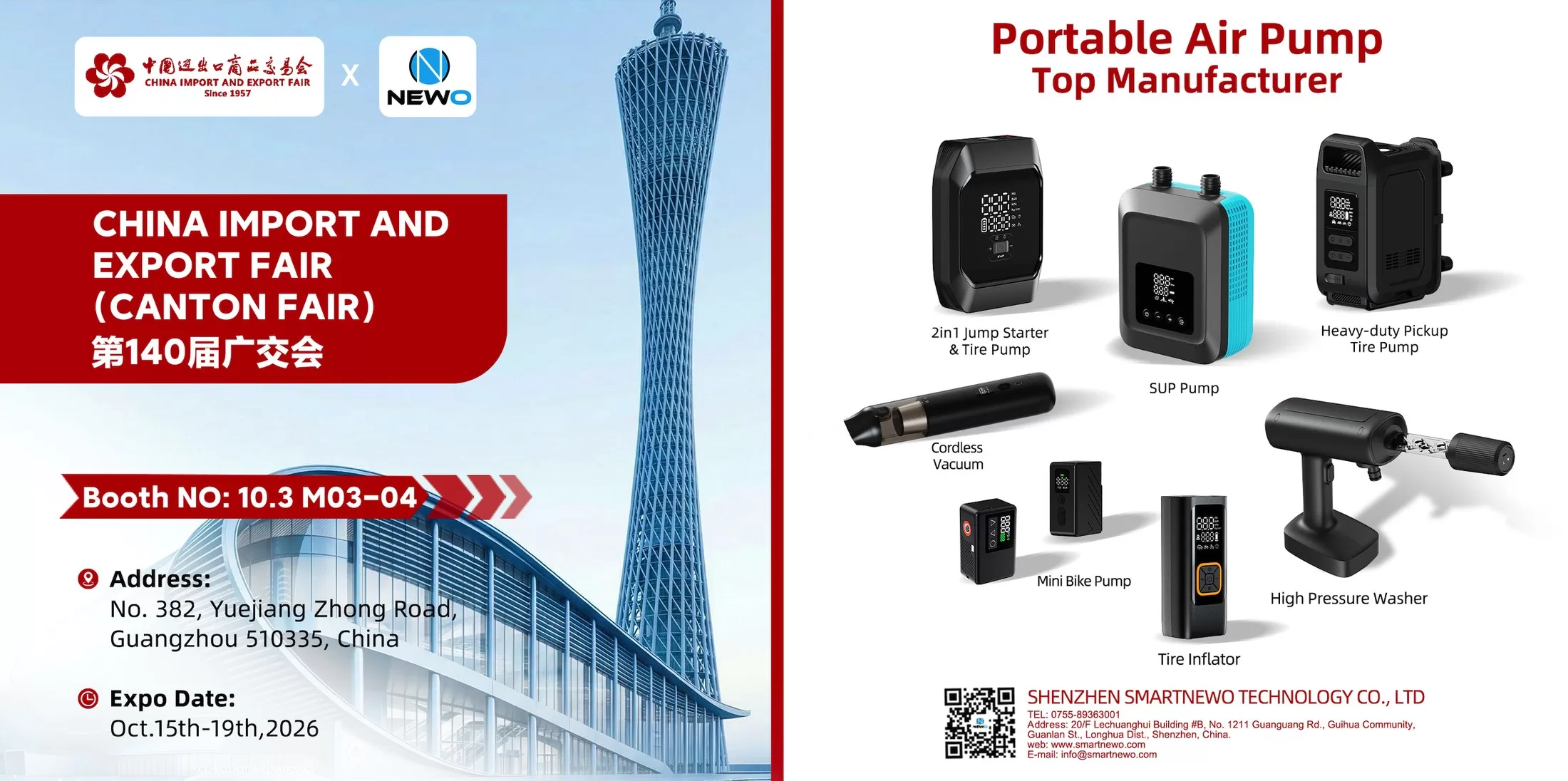
Meet NEWO at the 140th Canton Fair: Visit Booth 10.3 M03–04
Meet NEWO at the 140th Canton Fair in Guangzhou, October 15–19, 2026. Visit Booth 10.3 M03–04 to explore portable air pumps and discuss OEM, ODM and distribution opportunities.... -

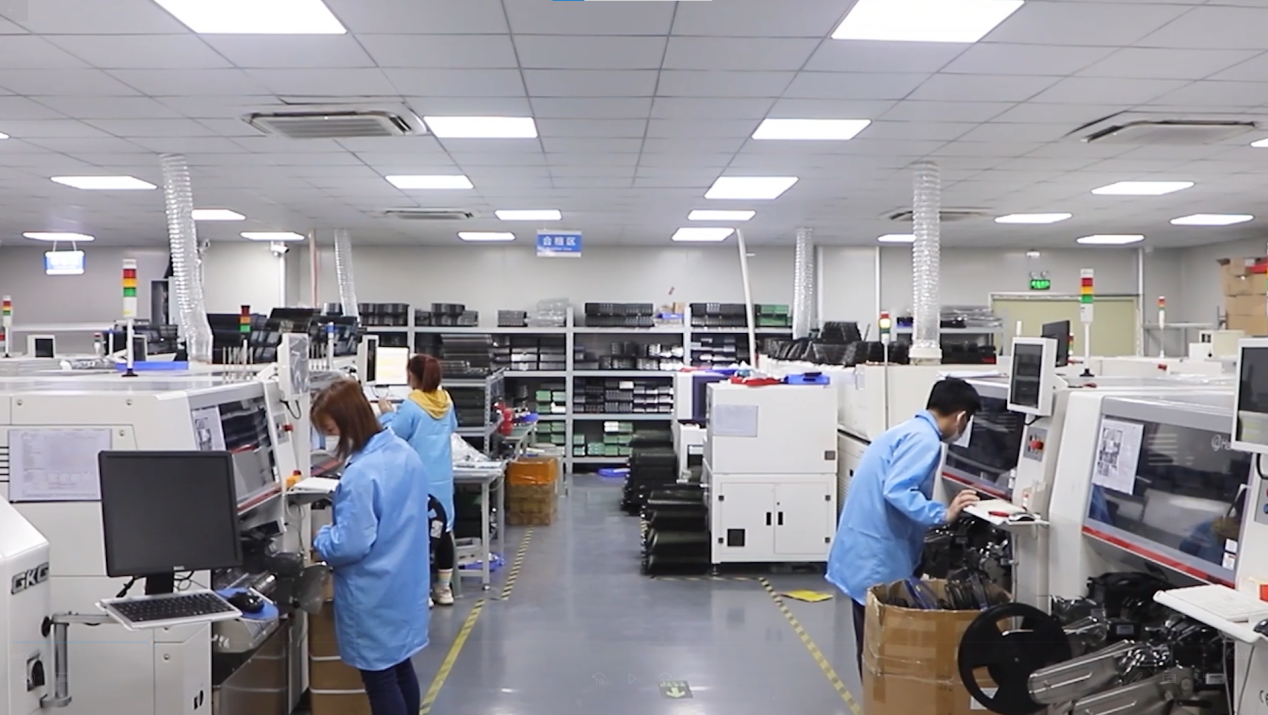
As Shenzhen Welcomes the World for APEC 2026, NEWO Welcomes You to Our Factory
As Shenzhen prepares for APEC 2026, NEWO welcomes international buyers and partners to visit our factory, meet our team and explore future cooperation.... -

Leading the Way in Product Innovation and Excellence
Smartnewo exemplifies professionalism in product innovation and manufacturing. Their collaboration with Xiaomi Youpin on the G01 crowdfunding project highlights their expertise in creating compact, powerful inflatable pumps. Rigorous engineering, meticulous production processes, and advanced quality assurance underscore their commitment to excellence. The success of the G01 project, with significant market... -

Essential Qualities of an Excellent Supplier
In today's competitive market, finding a reliable supplier is crucial for business success. Based on insights from Smartnewo and broader internet research, here are key qualities an excellent supplier must possess:... -

NW06 Tire Inflator: Compact Power for Quick Inflation
Summary The NW06 Tire Inflator delivers quick and efficient tire inflation with a powerful 35L/min airflow. It features a user-friendly LCD screen for real-time pressure monitoring, dual power options with a built-in 6000mAh battery, and multiple nozzle attachments for versatile use. Its compact design and integrated LED light ensure convenience and... -

Unleash the Power of Portability: The SmartNewo Jump Starter with Air Compressor KF03
This guide will walk you through the steps to effectively use a portable tire inflator, helping you stay prepared and safe on the road.... -

Newo Attends The 2024 Consumer Electronics Show (CES)
Smartnewo booth is located at 53672, Halls A-D, Level 2, Venetian Expo, Las Vegas Convention Center (LVCC). ... -

Smartnewo’s Dual-Cylinder Air Pump Rocks the Hong Kong Autumn Electronics Fair!
Smartnewo’s Dual-Cylinder Air Pump Rocks the Hong Kong Autumn Electronics Fair!... -

Meet at the Canton Fair! Smartnewo brings dual-cylinder air pumps, making your inflation experience faster and more stable!
NEWO has went deep communication and negotiation with customers from all over the world on booth.... -

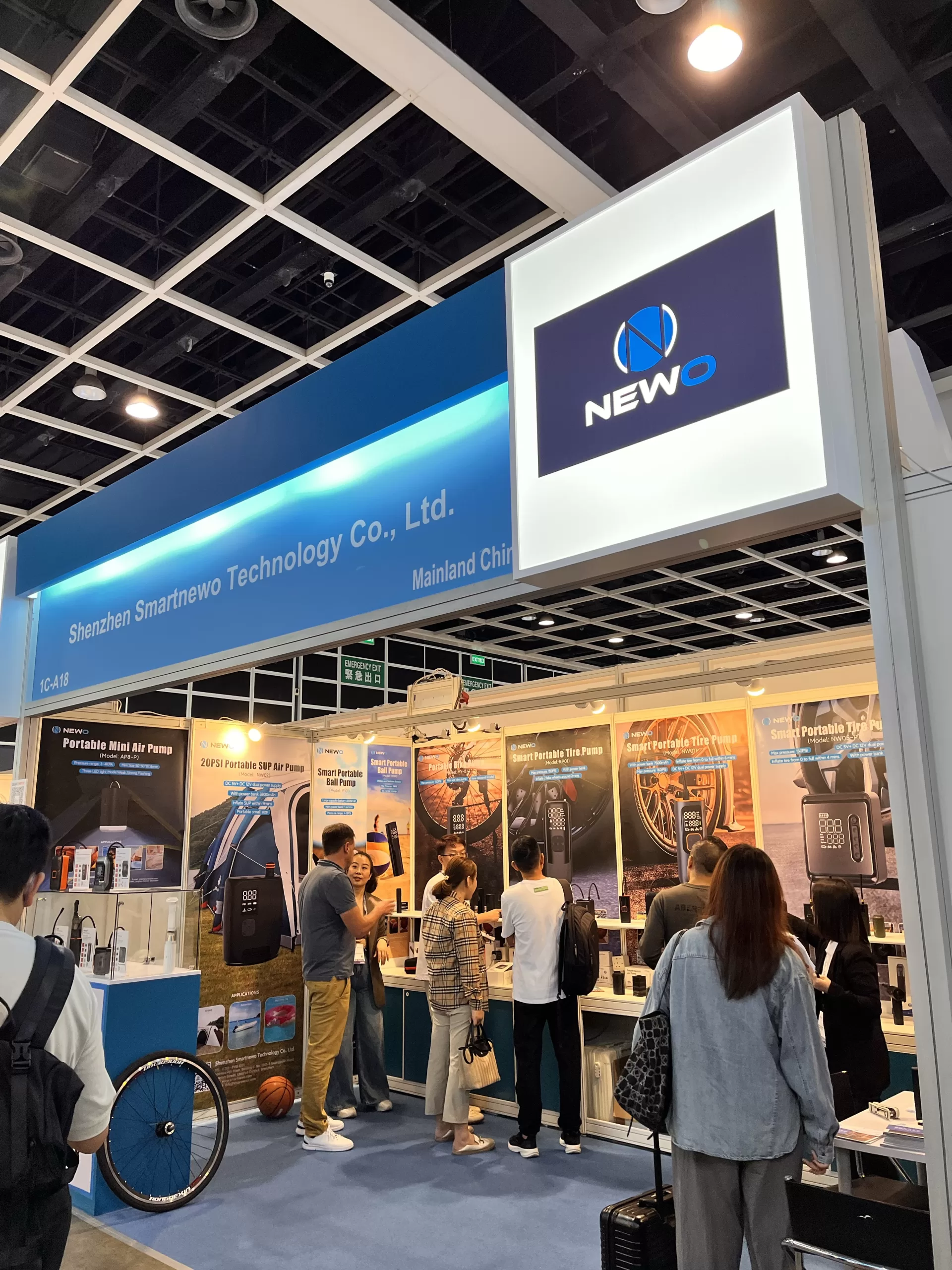
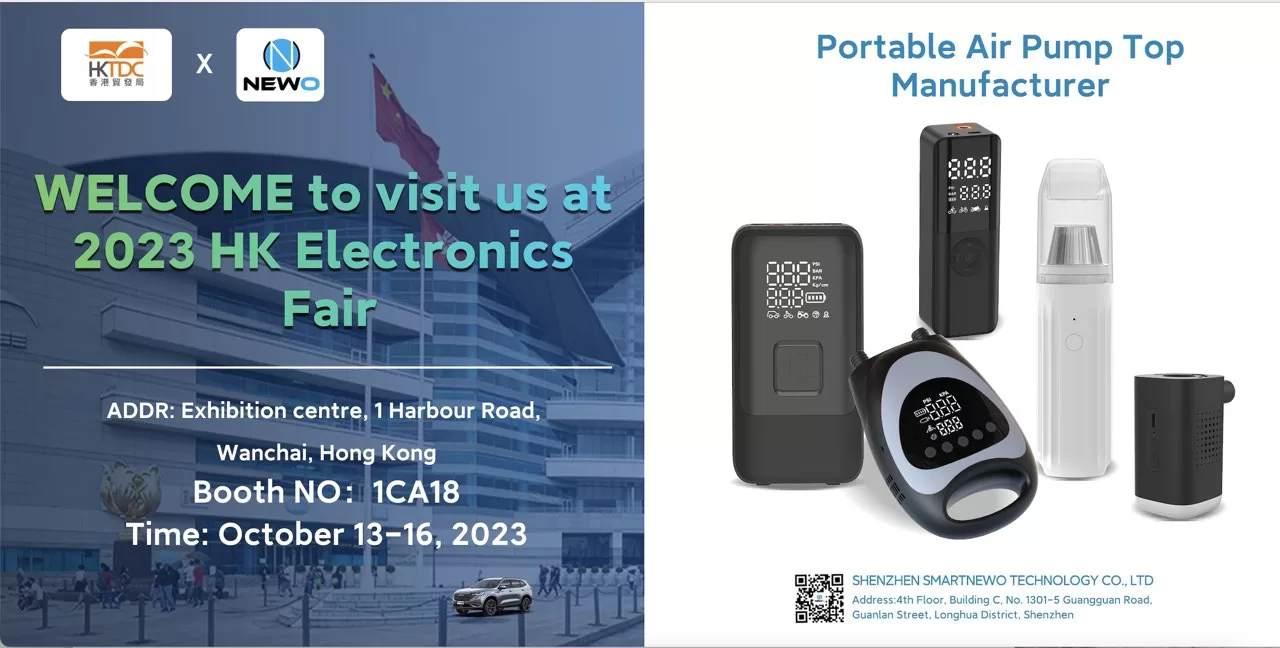
“Hong Kong Autumn Electronics Fair – 1CA18 (October 13th to 16th): Smartnewo invites you to visit our booth!
Hong Kong Autumn Electronics Fair...



-

How to Choose a Reliable Tire Inflator Manufacturer in China
Choose a tire inflator manufacturer in China with a focused RFQ, supplier evidence, configuration checks, and clear sample-to-pilot decisions for your brand.... -

Rechargeable Electric SUP Pump for Paddle Boards: Faster Inflation for SUPs, Kayaks and Inflatable Tents
The BL10-C Portable Electric Bike Tire Inflator is a compact and lightweight mini electric bike pump designed for modern cyclists. With up to 120 PSI pressure, a digital LED display, preset pressure control, automatic shut-off, USB-C charging, and multiple valve adapters, BL10-C offers a convenient inflation solution for road bikes,... -

Are Electric Bike Pumps Worth It in 2026? Electric Pump vs CO₂ vs Mini Hand Pump
Discover whether electric bike pumps are worth it in 2026. This guide compares electric bike pumps, CO₂ inflators, and mini hand pumps for road cycling, gravel riding, commuting, and long-distance rides. Learn the pros, limitations, best use cases, and key features to look for before choosing the right portable tire... -
BL10-C Portable Electric Bike Tire Inflator: Small Size, Reliable Power for Every Ride
The BL10-C Portable Electric Bike Tire Inflator is a compact and lightweight mini electric bike pump designed for modern cyclists. With up to 120 PSI pressure, a digital LED display, preset pressure control, automatic shut-off, USB-C charging, and multiple valve adapters, BL10-C offers a convenient inflation solution for road bikes,... -

Why Mini Electric Bike Pumps Are Becoming Essential for Modern Cycling
Discover why mini electric bike pumps are becoming essential for modern cyclists. Learn how portable electric bike pumps improve tire pressure management, riding safety, and convenience.... -

The Ultimate Smart Solution for Easy Outdoor Adventures in 2026
Discover how a spring travel air pump simplifies outdoor trips with fast inflation, smart features, and powerful performance—perfect for every adventure.... -

Powerful 5-in-1 Portable Car Tire Inflator and Jump Starter: The Ultimate Emergency Tool for Every Driver
Why Every Driver Needs a Portable Car Tire Inflator and Jump Starter Modern drivers face many unexpected situations on the road. A flat tire, low tire pressure, or a dead car battery can happen at the worst possible time. That’s why having a portable car tire inflator and jump starter is... -

7 Real Cycling Scenarios That Show Why Every Rider Should Carry a Mini Bike Pump
Cycling is one of the most freeing activities you can enjoy. Whether you’re commuting to work, riding through city streets, or exploring quiet countryside roads, a bike ride can instantly improve your day. But there’s one small problem that almost every cyclist eventually faces: Low tire pressure. It might happen... -
BL08-A Portable Electric Bike Pump: A Global Distribution Opportunity with Smartnewo
Smartnewo, a professional manufacturer of portable electric air pumps, introduces the BL08-A model — a compact and efficient inflator designed for global distributors, e-commerce sellers, and outdoor accessory brands seeking reliable OEM/ODM solutions. Table of Contents Main Heading Subtopics 1. Introduction: Expanding the Global Market for Smart Inflation Tools Portable... -

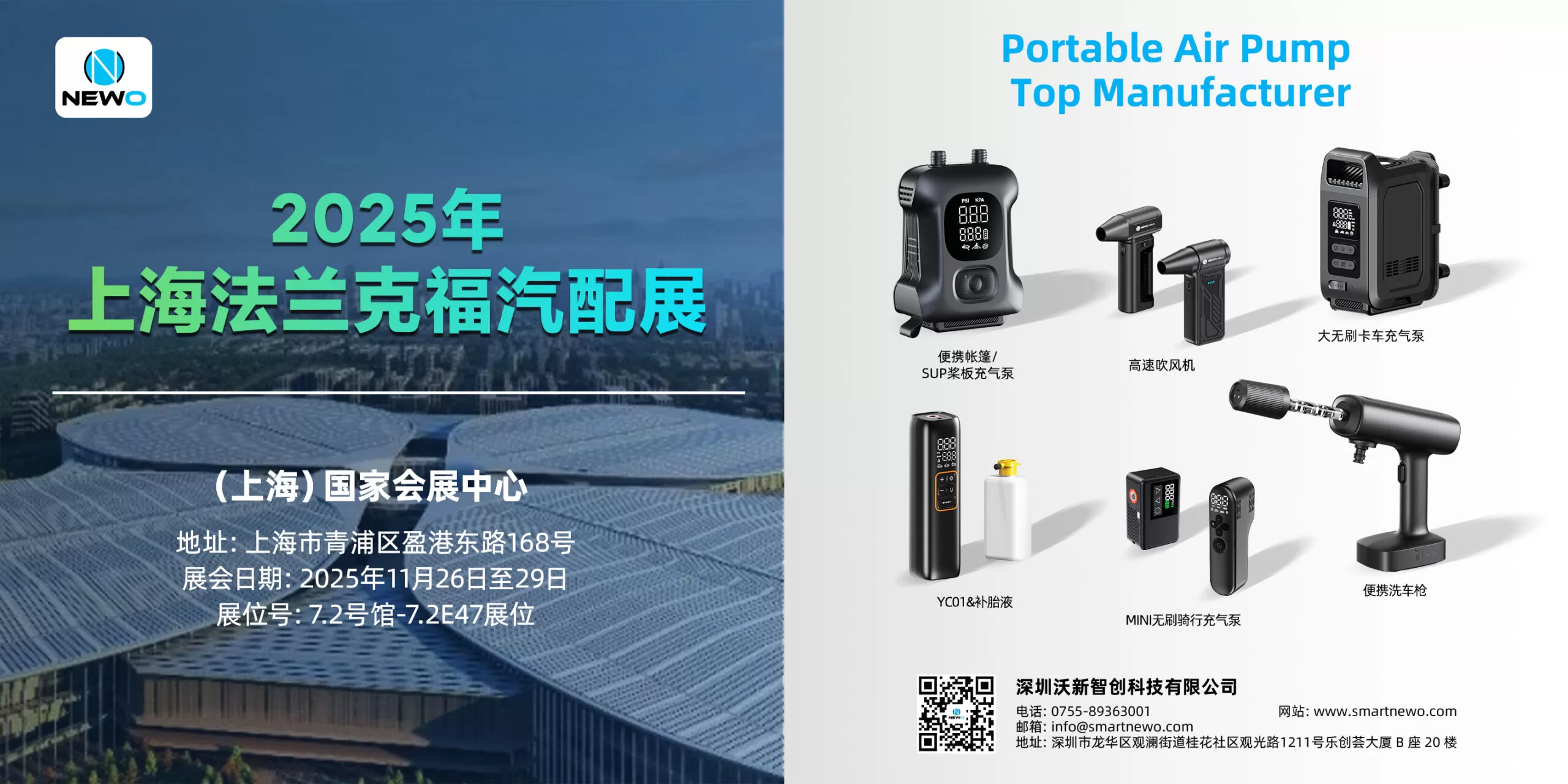
Connecting Opportunities at Automechanika Shanghai 2025 — Smartnewo Exhibition Day 1
Today marks an exciting beginning as Smartnewo officially opens its booth at Automechanika Shanghai 2025. As one of the largest and most influential automotive aftermarket exhibitions in the world, the show provides an exceptional platform for meaningful conversations, partnership building, and global industry exchange. Located at Booth 7.2E47, Smartnewo presents...


-
How Is a Football Properly Inflated?
The correct inflation of a football - with not too much and not too little air - is a hotly debated topic among footballers.... -
Application Scenarios of Car Inflator Pump
Often long-distance business trips or play car owners because the road may be more remote areas, in this case if you encounter a tire leak....