

 Portable Tire Inflators
 Electric Air Pumps
 Electric Car Tyre Pumps
 Electric Ball Pumps
 Electric Bike Pump
 SUP Air Pump

Fast Inflating Electric Air Pump: Practical Guide to Airflow, Pressure, and Safe Inflatable Setup
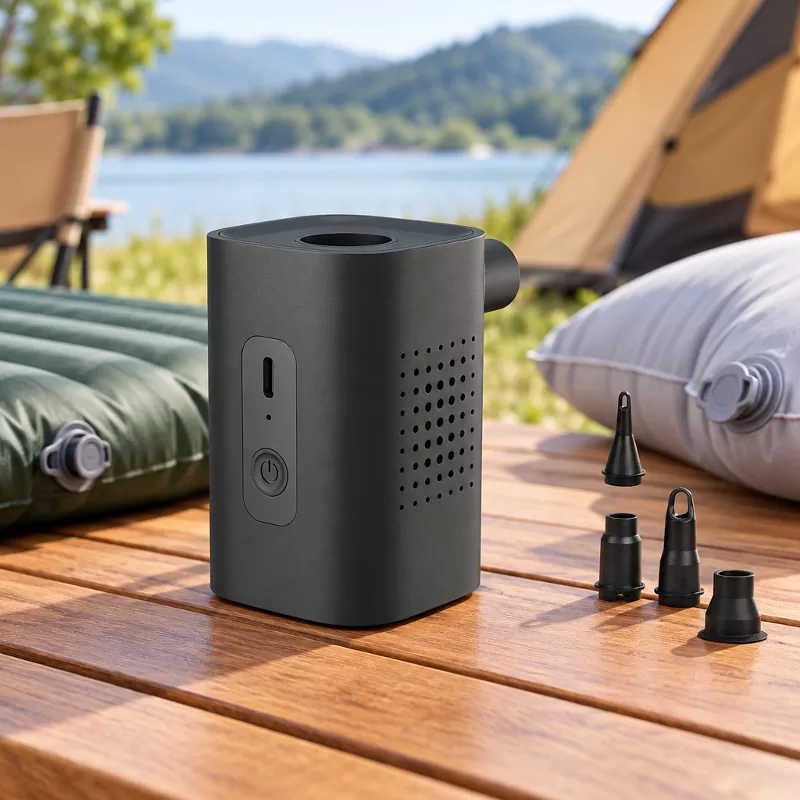
Setting up camp after a long drive or preparing water toys on a windy shoreline often comes down to a single frustrating bottleneck: inflation time. A fast inflating electric air pump solves this problem by replacing manual lung power or repetitive foot pumping with steady, motorized air delivery. Choosing the right device requires understanding how volume displacement and operating pressure interact. Without matching a pump’s internal mechanism to the specific inflatable chamber, even a high-powered tool may struggle to reach the firmness your gear requires.
For us at Newo, pneumatic performance starts with precise alignment between motor engineering and user intent. As a specialized manufacturer of smart electric air pumps and portable inflation solutions, our focus centers on creating reliable airflow systems that balance compact portability with practical field endurance across diverse recreational and home scenarios.
What Does Fast Inflation Actually Mean for Electric Air Pumps?
Speed in pneumatic tools is frequently misunderstood because marketing specifications tend to blur the boundary between volume flow and structural pressure. Many high-volume, low-pressure pumps can fill large mattresses quickly but are unsuitable for bicycle tires because their maximum pressure is too low. Recognizing how flow behaves under differing resistances is essential before selecting any fast electric pump for camping or home storage.
The Buyer’s Intent: Cutting Setup Time Without Ruining Equipment
Most buyers searching for a fast inflating electric air pump want to reduce tedious setup chores. Whether you are assembling a campsite at dusk or packing seasonal clothing into airtight bags, waiting for slow inflation wastes valuable personal time.
However, true efficiency does not merely mean high-velocity air movement. It also involves avoiding over-pressurization, seam stretching, or equipment damage midway through the job.
Users require predictable inflation rates where air cushions expand rapidly while fabrics and internal baffles remain within their designed operational limits.
Airflow Versus Pressure: The Mechanics of Inflation Speed
Air movement follows basic fluid dynamics, where total volume displacement per unit time is measured in liters per minute (L/min) and internal resistance is measured in kilopascals (kPa) or pounds per square inch (PSI).
When inflating large hollow chambers with minimal wall tension, such as pool lounges, airflow volume is the primary metric determining how quickly the object takes shape.
Once an inflatable reaches its physical boundaries, internal chamber resistance escalates dramatically, requiring mechanical pressure to push further air molecules past the valve seal.
High Volume vs. High Pressure: Choosing the Correct Pump Category
Different pump designs are engineered for different pressure ranges and airflow capacities. The practical distinction lies in the pump’s rated pressure and flow performance, which must match the inflatable’s requirements. Attempting to use a pump outside its rated capability can result in poor performance or equipment damage.
High-Volume, Low-Pressure (HVLP) Pumps
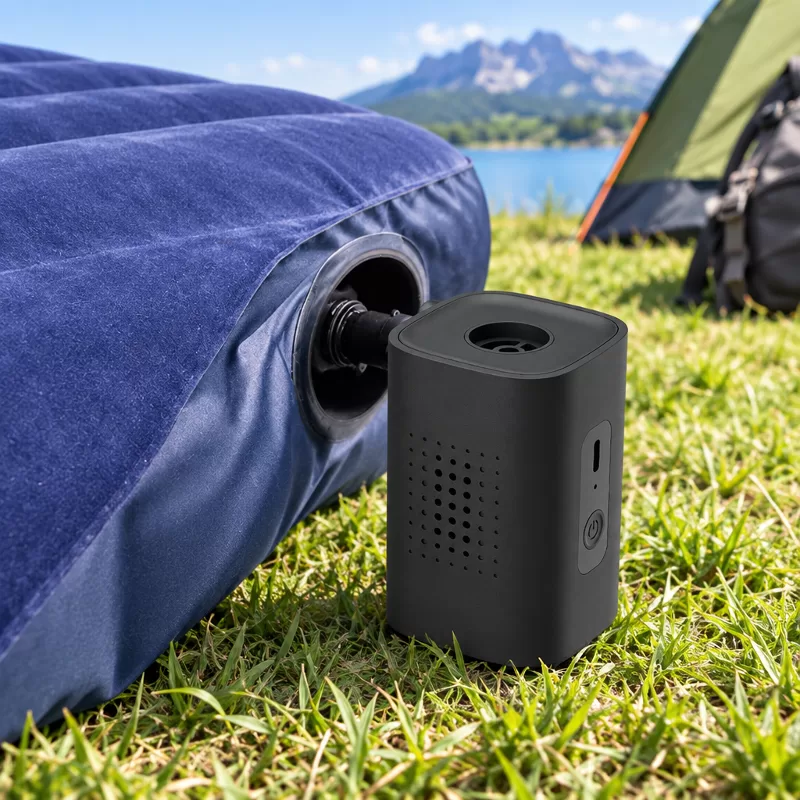
High-volume, low-pressure inflators are intended for large-volume products, but users must still follow the inflatable manufacturer’s pressure and operating instructions.
These systems typically operate within defined pressure ceilings that vary by model, making them suitable for pool floats, inflatable couches, blow-up guest beds, and low-pressure sleeping pads.
Their high airflow rating allows them to fill large-volume, low-pressure products quickly. Always follow the equipment manufacturer’s instructions and your pump’s rated specifications when selecting gear to inflate.
High-Pressure Inflators and Staged Systems
High-pressure inflators are designed to deliver compressed air past stiff resistance, making them mandatory for vehicle tires, high-pressure bicycle tubes, and athletic balls.
Certain watercraft, like stand-up paddleboards with drop-stitch construction, require higher pressures to achieve structural rigidity. Different board types and designs carry different pressure requirements.
Achieving the necessary stiffness often requires a staged system: an initial stage fills the empty volume quickly, followed by a compression stage that raises the chamber to the target operational pressure.
The Pre-Purchase Compatibility Checklist
Matching your specific inflatables to the correct pump category prevents equipment failures, wasted purchases, and field frustration before heading outdoors.
- Inflatable Type: Categorize your equipment into low-pressure recreation (airbeds, lounge floats) versus high-pressure rigid hulls or tires.
- Pressure Tolerance: Verify the manufacturer-specified pressure rating printed near the valve stem, noting whether it requires kPa or PSI measurements.
- Target Chamber Volume: Consider total cubic displacement, prioritizing appropriate airflow ratings when handling larger inflatables.
- Portability Requirements: Determine whether your destination provides continuous mains power, 12V automotive sockets, or mandates a cordless battery-powered unit.
| Pump Type Example | Airflow Rating | Intended Use | Selection Note |
|---|---|---|---|
| AP8-P (Low-Pressure) | 200–250 L/min | Air mattresses, pool toys, sleeping mats, vacuum bags | Follow pump and inflatable pressure ratings |
| Dual-Stage Systems | Varies by model | Drop-stitch paddleboards, rigid inflatable watercraft | Pressure varies by board model; verify maker specs |
| High-Pressure Inflators | Varies by model | Automotive tires, bicycle tires, sports balls | Designed for high-pressure applications only |
Deconstructing Electric Air Pump Specifications
Technical spec sheets contain precise measurements that directly govern field performance. Learning how to translate ratings such as battery watt-hours, motor wattage, and sound decibels allows consumers to set realistic expectations for cordless runtime, continuous duty limits, and acoustic comfort during quiet wilderness outings.
Airflow and Pressure Explained
Airflow, stated in liters per minute, represents the unencumbered volume displacement of the pump operating under minimal restriction. When an airbed is flat, high airflow can help it expand rapidly, although actual time depends on the mattress and valve.
Pressure, stated in kilopascals (where 1 kPa equals roughly 0.145 PSI), measures the force applied to overcome chamber elasticity and valve resistance. A pump’s rated pressure defines its capability; whether that pressure is suitable for your specific gear depends on the inflatable’s own design and manufacturer requirements.
Battery Capacity, Voltage, and No-Load Runtime
Cordless convenience depends fundamentally on the onboard rechargeable battery pack, typically evaluated by its milliampere-hour (mAh) capacity and working voltage.
Battery energy is expressed in watt-hours (Wh), which reflects both voltage and capacity. Higher watt-hour capacity can support longer runtime under a comparable load; maximum power output depends on the battery, motor, and control electronics.
No-load runtime specifications represent continuous operational spinning in clear open air without restriction. Once attached to an airtight chamber, active pneumatic resistance increases motor workload, meaning real-world runtime under full backpressure will naturally run shorter than open bench figures.
Housing, Thermal Management, and Noise Ratings
Motor efficiency translates partially into fluid movement and partially into waste heat, which must dissipate rapidly through structural housing vents to prevent thermal degradation.
The AP8-P uses an ABS housing. Its compact body is intended for portable storage, but no impact-resistance test result is provided.
Noise levels vary by model. Check the manufacturer’s specification sheet for the acoustic output at a specified distance to determine whether the pump suits your intended environment.
Real-World Specification Analysis: The AP8-P Cordless Pump
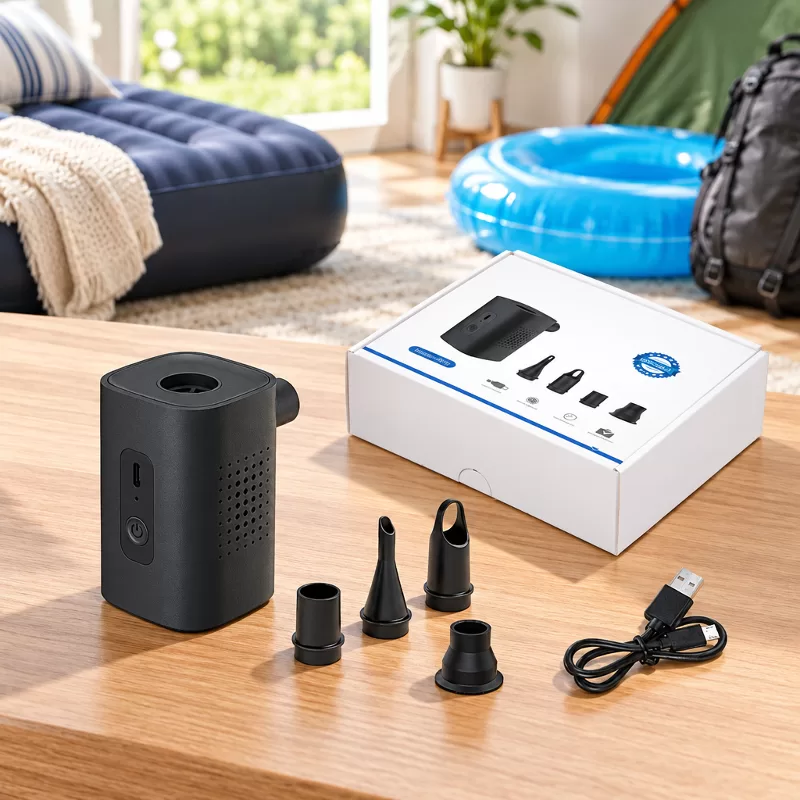
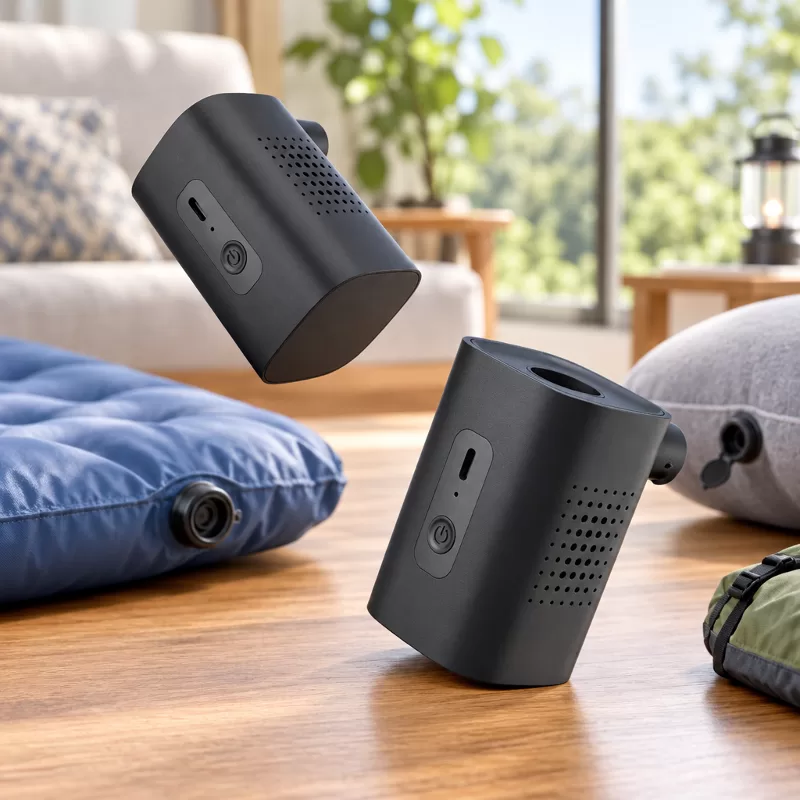
To ground these principles in concrete hardware, examining a specific commercial model illustrates how component trade-offs balance size, runtime, and volumetric output. The AP8-P represents a dedicated, handheld low-pressure solution designed around complete cordless freedom for travel, home organization, and outdoor leisure.
Manufacturer Technical Baseline
According to manufacturer technical specifications, the AP8-P delivers an inflation pressure of 3 to 4 kPa combined with an airflow displacement between 200 and 250 L/min. It is driven by an internal 35W brushed electric motor operating off a rechargeable 1200mAh, 7.4V (8.8Wh) battery module.
The housing measures an ultra-compact 50 by 50 by 87.8 mm and weighs approximately 161 grams, making it small enough to slip into a jacket pocket. Its charging circuit accepts 5V/2A input through a standard Type-C interface, requiring approximately 1 to 2 hours for a full replenishment cycle.
The manufacturer lists the AP8-P at 80 dB or below at 1 meter.
Dual-Port Operation: Inflation and Active Deflation
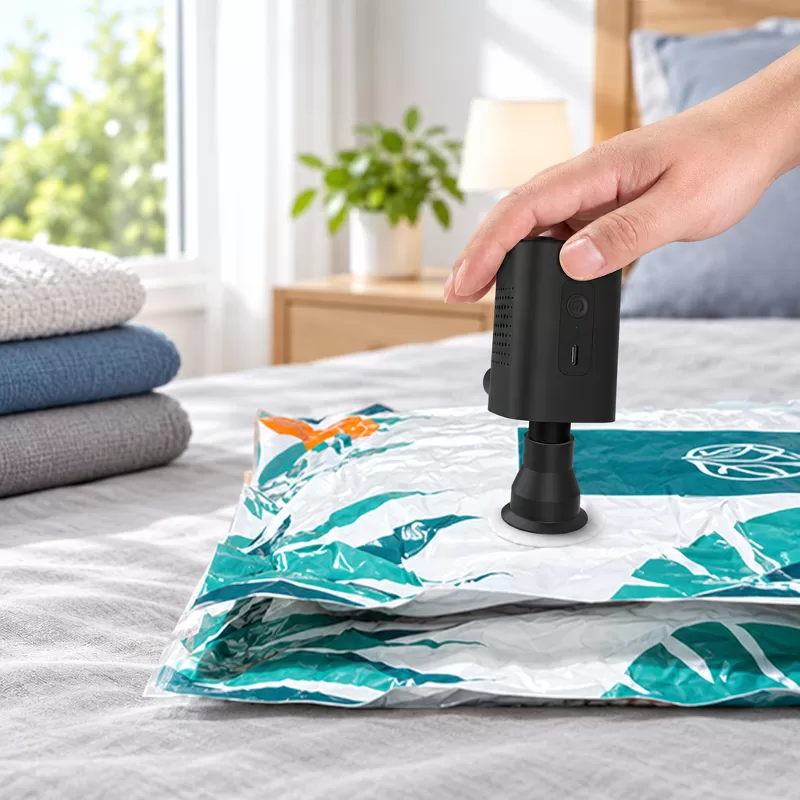
The AP8-P supports both inflation and deflation functions, expanding versatility for both filling inflatables and compressing vacuum storage bags.
According to the product specifications, the pump handles both filling inflatable products and extracting air from vacuum storage bags, making it suitable for seasonal packing and travel organization.
Intended Application Scope and Definite Exclusions
The AP8-P is explicitly engineered for low-pressure consumer goods, including beach swim rings, vinyl air mattresses, camp sleeping pads, floating seat cushions, and household vacuum-compression bags. When used within its rated 3–4 kPa pressure range, it is suitable for these applications according to its design.
Conversely, its low-pressure rating makes it unsuitable for vehicle tires, road bicycles, basketballs, or rigid drop-stitch paddleboards. These applications require much higher operating pressures than the AP8-P was designed to deliver. Always verify that any pump’s pressure rating matches your inflatable’s requirements before attempting to use them together.
Step-by-Step Selection Guide for Outdoor and Home Use
Choosing the optimal portable fast electric pump requires examining where, when, and how frequently you intend to inflate gear. Factors like proximity to power sources, variety of valve geometries, and lighting conditions during wilderness use dictate whether a specific model delivers effortless convenience or unexpected operational headaches.
Power Source Selection: Portability Versus Continuous Duty
Power supply choices divide broadly into internal rechargeable batteries, 12V direct-current automotive plugs, and 120V/230V alternating-current household cords.
Cordless battery units offer unmatched versatility along lakeshores, deep backcountry tent pitches, and living rooms devoid of nearby wall sockets.
For repeated commercial use, a corded model may avoid battery depletion, but its manufacturer-rated duty cycle and cooling requirements must still be checked.
Valve Types and Adapter Fitment
An electric pump is only as effective as its mechanical coupling to the inflatable. Valve designs vary widely across different products, and each inflatable may require a specific adapter type.
The AP8-P includes multiple nozzle attachments according to the manufacturer. Always use an adapter that fits the valve securely and is approved for your specific inflatable. Consult both the pump instructions and the inflatable manufacturer’s guidelines to ensure proper compatibility.
Pack Size, Ergonomics, and Secondary Features
At 161 g net weight, the AP8-P adds relatively little weight to a travel or camping kit.
Consider whether the switch is easy to operate and protected from accidental activation during storage.
The manufacturer lists a full-panel ambient light feature on the AP8-P. Check the product instructions for its intended use and operational details.
Operating Guidelines for Maximum Inflation and Deflation Efficiency
Operating an electric air pump requires adhering to practical field steps to extract maximum airflow while safeguarding the motor against thermal stress. Simple operational blunders, like obstructing cooling slots or misaligning friction nozzles, can dramatically extend inflation intervals and reduce battery longevity.
The Efficient Inflation Sequence
Executing a deliberate setup sequence ensures your inflatable fills in the shortest possible timeframe while minimizing air escape during disconnects.
- Clear the Surrounding Ground: Remove sharp gravel, twigs, and burrs from underneath the inflatable before filling to prevent puncture points under concentrated body weight.
- Select and Seat the Matching Nozzle: Firmly press the correct adapter into the discharge port of the pump, ensuring a snug mechanical press-fit without wobble.
- Seat Adapter Into Valve: Push the nozzle firmly into the inflatable valve, following the inflatable manufacturer’s connection instructions.
- Power On and Support the Pump: Engage the power switch and support the lightweight housing gently, keeping the intake vents clear of bedding fabric or sand.
- Seal Immediately Upon Fullness: Disengage the switch when the chamber reaches the manufacturer’s recommended firmness, pulling the pump out and sealing the valve according to the inflatable’s instructions.
Deflation and Packing with Vacuum Bags
Extracting air is just as vital as pumping it in, especially when packing large household textiles into compact compression bags for cross-country moves.
Attach the appropriate adapter to the pump port designated for deflation, ensuring a tight seal against the bag valve.
Smooth the clothing flat by hand before running the motor, allowing the pump to draw air evenly without pulling excess plastic film directly into the intake grille.
Troubleshooting Slow Inflation and Air Loss
If inflation speed slows noticeably, check the intake holes immediately. In outdoor conditions, dry grass, fallen leaves, or loose sleeping bag nylon can block the casing, restricting air intake volume.
Another common issue involves loose adapter interfaces. If air hisses outward around the perimeter of the valve, volumetric pressure drops instantly, extending inflation cycles and wasting battery power.
Ensure that the selected nozzle matches the valve securely. Follow the manufacturer’s adapter-selection guide to achieve proper fitment.
Safety Precautions and Equipment Longevity
Modern rechargeable air pumps represent sophisticated mechatronic assemblies that require reasonable environmental care. Respecting motor duty cycles, keeping passages debris-free, and maintaining battery health guarantees dependable operation season after season.
Adhering to Inflatable Seam and Pressure Limits
Inflatable products use different seam and material constructions, so follow the product manufacturer’s pressure and inflation instructions.
Always monitor the inflation progression manually and follow your inflatable’s manufacturer guidelines regarding target pressure and when to stop filling. Different inflatables have different pressure tolerances and design limits.
Air Intake Maintenance and Thermal Cycles
The brushed motor may become warm during extended operation, particularly when drawing continuous power under load.
Obstructing the air intake severely restricts the motor’s internal cooling flow. Keep the air passages clear and follow the manufacturer’s operating and cooling instructions.
Consult your pump’s user manual for recommended operation intervals and cooling requirements. Do not exceed the operating guidelines provided by the manufacturer.
Realistic Battery Care and Storage
The AP8-P contains a rechargeable battery. Follow the product documentation for storage, charging, and temperature guidance.
Avoid extreme temperature environments when possible. Batteries stored at elevated temperatures or left completely discharged over long periods may suffer premature capacity loss.
Frequently Asked Questions (FAQs)
Can a Fast Inflating Electric Air Pump Be Used for Car Tires?
Low-pressure electric air pumps are not designed for vehicle tire inflation. Vehicle tires require pressures significantly higher than what a pump rated at 3 to 4 kPa can deliver. For car and bicycle tire inflation, use a pump specifically rated for high-pressure applications.
Does Higher Airflow Guarantee Faster Setup for Every Inflatable?
Higher airflow accelerates inflation only when the receiving valve orifice is wide enough to accept the incoming air volume without heavy restriction. If you connect a high-flow pump to a valve with a very small opening, the constricted neck limits air velocity, slowing actual filling time regardless of the pump’s rated power.
Can the AP8-P Pump Handle Inflatable Boats?
The AP8-P is designed for low-pressure, high-volume applications such as air mattresses, sleeping pads, and pool inflatables. For specific watercraft applications, verify that the boat’s valve type and pressure requirements match the pump’s 3–4 kPa rating and the boat manufacturer’s specifications.
How Long Does the AP8-P Run on a Single Charge?
According to the manufacturer, the AP8-P has a no-load runtime of 15 to 18 minutes, meaning continuous operation in open air without restriction. Actual runtime under load will vary depending on the pressure and airflow resistance of the inflatable being filled. The specific number of inflatables you can fill per charge depends on their size and design.
Why Does the Pump Become Warm During Operation?
Heat generation is a normal byproduct of compact electric motors operating inside a small enclosure. As long as cooling vents remain unobstructed, warmth on the exterior indicates normal thermal conduction. However, always follow the manufacturer’s usage guidelines regarding continuous operation and rest periods.
How Do You Ensure an Airtight Seal with Universal Nozzles?
Choose the nozzle adapter that inserts completely into the valve throat with firm friction along its entire tapered surface. If the fit feels loose, try a different adapter size or consult the pump and inflatable instructions to identify the correct pairing for your specific valve type.
Practical Conclusion: Matching Pump Engineering to Real Inflation Tasks
Pneumatic efficiency relies on matching the right engineering design to the task at hand. When dealing with high-capacity, low-pressure gear like guest airbeds, camping mats, and seasonal storage bags, a fast inflating electric air pump equipped with high volumetric airflow transforms a tiring setup chore into a push-button process. By verifying operating pressures, consulting your inflatable’s requirements, and pairing compatible nozzles with secure valves, you ensure your equipment functions reliably wherever your travels lead.
-

Meet NEWO at the 140th Canton Fair: Visit Booth 10.3 M03–04
Meet NEWO at the 140th Canton Fair in Guangzhou, October 15–19, 2026. Visit Booth 10.3 M03–04 to explore portable air pumps and discuss OEM, ODM and distribution opportunities.... -

As Shenzhen Welcomes the World for APEC 2026, NEWO Welcomes You to Our Factory
As Shenzhen prepares for APEC 2026, NEWO welcomes international buyers and partners to visit our factory, meet our team and explore future cooperation.... -

Leading the Way in Product Innovation and Excellence
Smartnewo exemplifies professionalism in product innovation and manufacturing. Their collaboration with Xiaomi Youpin on the G01 crowdfunding project highlights their expertise in creating compact, powerful inflatable pumps. Rigorous engineering, meticulous production processes, and advanced quality assurance underscore their commitment to excellence. The success of the G01 project, with significant market... -

Essential Qualities of an Excellent Supplier
In today's competitive market, finding a reliable supplier is crucial for business success. Based on insights from Smartnewo and broader internet research, here are key qualities an excellent supplier must possess:... -

NW06 Tire Inflator: Compact Power for Quick Inflation
Summary The NW06 Tire Inflator delivers quick and efficient tire inflation with a powerful 35L/min airflow. It features a user-friendly LCD screen for real-time pressure monitoring, dual power options with a built-in 6000mAh battery, and multiple nozzle attachments for versatile use. Its compact design and integrated LED light ensure convenience and... -

Unleash the Power of Portability: The SmartNewo Jump Starter with Air Compressor KF03
This guide will walk you through the steps to effectively use a portable tire inflator, helping you stay prepared and safe on the road.... -

Newo Attends The 2024 Consumer Electronics Show (CES)
Smartnewo booth is located at 53672, Halls A-D, Level 2, Venetian Expo, Las Vegas Convention Center (LVCC). ... -

Smartnewo’s Dual-Cylinder Air Pump Rocks the Hong Kong Autumn Electronics Fair!
Smartnewo’s Dual-Cylinder Air Pump Rocks the Hong Kong Autumn Electronics Fair!... -

Meet at the Canton Fair! Smartnewo brings dual-cylinder air pumps, making your inflation experience faster and more stable!
NEWO has went deep communication and negotiation with customers from all over the world on booth.... -

“Hong Kong Autumn Electronics Fair – 1CA18 (October 13th to 16th): Smartnewo invites you to visit our booth!
Hong Kong Autumn Electronics Fair...










-

What to Check Before Ordering Custom Electric Bike Pumps
Plan custom electric bike pumps with a clear requirements freeze for valves, TPU tubes, portability, repeated top-ups, charging, and model-specific documents.... -

OEM vs ODM Air Pumps: Which Manufacturing Model Fits Your Brand?
Compare OEM and ODM air pump projects by design responsibility, change approval, development scope, and written ownership terms before choosing your route.... -
How to Choose a Reliable Tire Inflator Manufacturer in China
Choose a tire inflator manufacturer in China with a focused RFQ, supplier evidence, configuration checks, and clear sample-to-pilot decisions for your brand.... -

Rechargeable Electric SUP Pump for Paddle Boards: Faster Inflation for SUPs, Kayaks and Inflatable Tents
The BL10-C Portable Electric Bike Tire Inflator is a compact and lightweight mini electric bike pump designed for modern cyclists. With up to 120 PSI pressure, a digital LED display, preset pressure control, automatic shut-off, USB-C charging, and multiple valve adapters, BL10-C offers a convenient inflation solution for road bikes,... -

Are Electric Bike Pumps Worth It in 2026? Electric Pump vs CO₂ vs Mini Hand Pump
Discover whether electric bike pumps are worth it in 2026. This guide compares electric bike pumps, CO₂ inflators, and mini hand pumps for road cycling, gravel riding, commuting, and long-distance rides. Learn the pros, limitations, best use cases, and key features to look for before choosing the right portable tire... -
BL10-C Portable Electric Bike Tire Inflator: Small Size, Reliable Power for Every Ride
The BL10-C Portable Electric Bike Tire Inflator is a compact and lightweight mini electric bike pump designed for modern cyclists. With up to 120 PSI pressure, a digital LED display, preset pressure control, automatic shut-off, USB-C charging, and multiple valve adapters, BL10-C offers a convenient inflation solution for road bikes,... -

Why Mini Electric Bike Pumps Are Becoming Essential for Modern Cycling
Discover why mini electric bike pumps are becoming essential for modern cyclists. Learn how portable electric bike pumps improve tire pressure management, riding safety, and convenience.... -

The Ultimate Smart Solution for Easy Outdoor Adventures in 2026
Discover how a spring travel air pump simplifies outdoor trips with fast inflation, smart features, and powerful performance—perfect for every adventure.... -

Powerful 5-in-1 Portable Car Tire Inflator and Jump Starter: The Ultimate Emergency Tool for Every Driver
Why Every Driver Needs a Portable Car Tire Inflator and Jump Starter Modern drivers face many unexpected situations on the road. A flat tire, low tire pressure, or a dead car battery can happen at the worst possible time. That’s why having a portable car tire inflator and jump starter is... -

7 Real Cycling Scenarios That Show Why Every Rider Should Carry a Mini Bike Pump
Cycling is one of the most freeing activities you can enjoy. Whether you’re commuting to work, riding through city streets, or exploring quiet countryside roads, a bike ride can instantly improve your day. But there’s one small problem that almost every cyclist eventually faces: Low tire pressure. It might happen...







-
How Is a Football Properly Inflated?
The correct inflation of a football - with not too much and not too little air - is a hotly debated topic among footballers.... -
Application Scenarios of Car Inflator Pump
Often long-distance business trips or play car owners because the road may be more remote areas, in this case if you encounter a tire leak....

