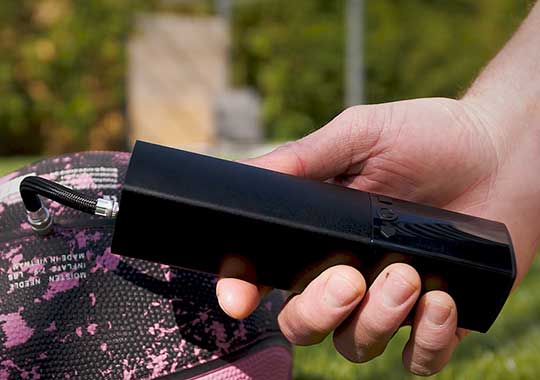

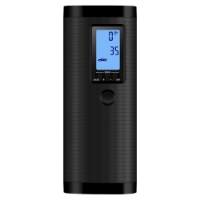
 Portable Tire Inflators
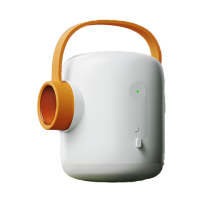 Electric Air Pumps
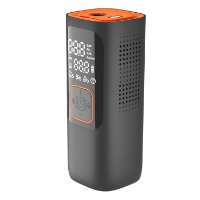 Electric Car Tyre Pumps
 Electric Ball Pumps
 Electric Bike Pump
 SUP Air Pump

Portable Air Inflator for Truck Tires: Engineering, Operation, and Practical Selection
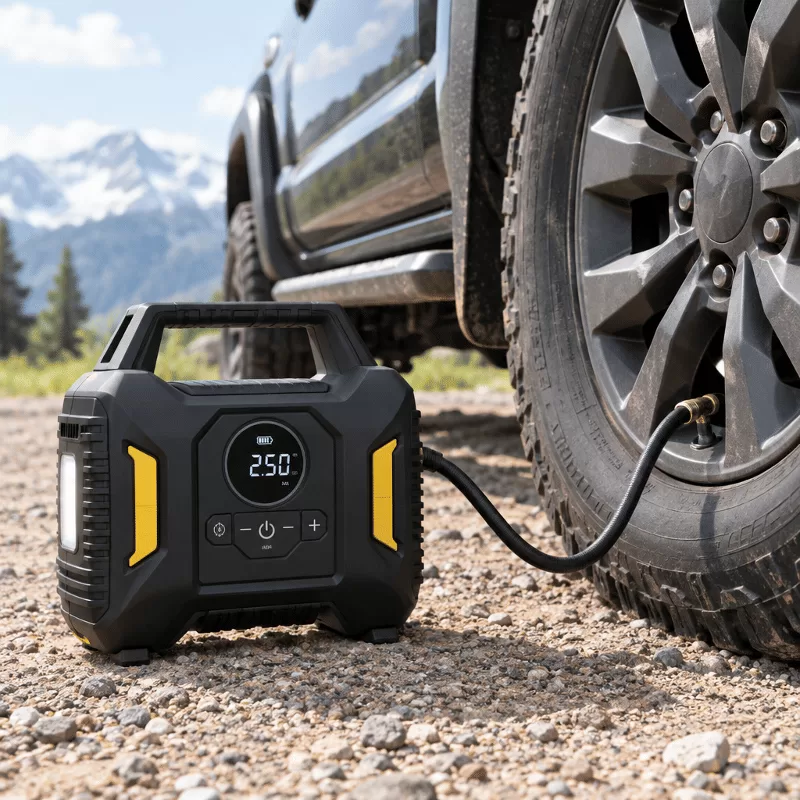
Selecting a dependable portable air inflator for truck tires requires a clear grasp of pneumatic volume, thermal resistance, and pressure stability. Light pickups, sport utility vehicles, and work rigs operate under severe mechanical demands across diverse terrain. When tires remain structurally sound but lose operating pressure, handling responsiveness dulls, rolling resistance escalates, and internal heat builds rapidly within the rubber casing. Carrying a dedicated portable air inflator for truck tires allows drivers to restore proper pressure levels during routine stops or remote journeys. It serves as an essential maintenance tool for sound tires, though severely punctured casings or tires with compromised sidewalls require dedicated roadside repair or professional tire service.
Understanding Pneumatic Requirements for Light Trucks and SUVs
Air Chamber Volume and Pressure Characteristics
Inflating a compact passenger car tire generally involves transferring a modest air volume to reach approximately 32 to 35 PSI. Light-truck tires present a fundamentally different pneumatic challenge due to their sheer physical scale. Tires carrying LT classifications, such as LT265/70R17 or LT285/75R16, feature large internal air chambers engineered specifically to support substantial axle loads over unpaved terrain or uneven roadbeds.
Even when target pressures fall into moderate ranges between 40 and 50 PSI, the volume of atmospheric air needed to fill that chamber is expansive. On heavier platforms running Load Range E tires, required cold pressures often reach higher levels depending on the specific vehicle setup, axle ratings, and payload. Compressing that total air volume against escalating internal resistance places immense mechanical demands on any compact portable compressor, requiring continuous mechanical delivery.
Differentiating Pressure Capacity from Volumetric Flow Rate
A common misunderstanding among equipment buyers is assuming that a high maximum pressure rating indicates fast tire inflation. An inflator rated for 150 PSI can generate high pressure within a small sealed manifold or bicycle tire. However, that static rating does not communicate how many liters of air the mechanism actually transfers each minute into a high-capacity vehicle tire against rising resistance.
Pumping air into a large chamber against rising counter-pressure requires genuine volumetric displacement rather than simple peak pressure capability. A miniature pump that delivers air efficiently into a small bicycle tire may struggle when tasked with a light-truck tire. The motor works against substantial backpressure, causing inflation times to stretch significantly if the internal displacement volume is insufficient to maintain steady throughput.
Thermal Accumulation During Extended Inflation Cycles
Compressing air generates thermal energy as an inevitable consequence of mechanical work and thermodynamic laws. As the piston cycles inside the cylinder sleeve, friction between internal components and the continuous compression of ambient air produce localized heat. In small handheld devices, sustained operation causes internal temperatures to rise steadily, which can compromise internal components if the tool runs continuously without adequate heat dissipation.
If a compressor runs continuously beyond its thermal boundaries, heat transfers into critical mechanical components. Extended thermal stress can degrade synthetic piston seals, increase electrical resistance across motor windings, and accelerate wear on internal valve mechanisms. Operators must therefore understand the operational runtime limits of their equipment when servicing larger vehicle tires, allowing adequate rest periods to protect internal assemblies from premature thermal wear.
Mechanical Architecture and Power Engineering
Cylinder Design and Workload Distribution
Pneumatic compressors for portable automotive service generally utilize single-cylinder or dual-cylinder configurations. Compact entry-level inflators typically rely on a single small-diameter piston that functions effectively for periodic top-ups on standard passenger cars where air volume requirements remain modest. However, servicing larger light-truck tires demands sustained volumetric displacement that pushes single-piston mechanisms toward extended runtimes.
Dual-cylinder architectures introduce a second compression chamber driven by a common motor shaft assembly. When comparing designs of identical cylinder bore, stroke length, and motor operating speed, a dual-cylinder structure can double theoretical displacement per revolution. However, cylinder count alone does not guarantee superior output, as actual airflow depends on motor torque, valve efficiency, and heat dissipation throughout the pneumatic circuit.
Evaluating Free Airflow Versus Backpressure Flow
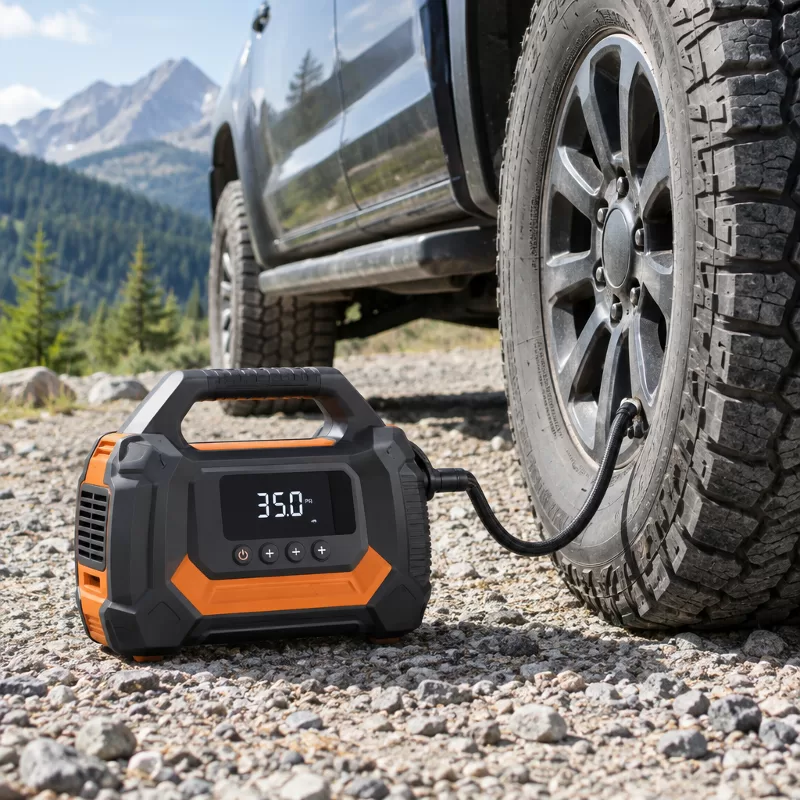
Certain portable air pumps advertise airflow figures measured at open atmosphere with zero backpressure, which does not reflect performance against a pressurized tire stem. True operational capability depends on how much volume the compressor delivers against real tire backpressure. Buyers should always check the specific test pressures associated with airflow ratings rather than relying solely on zero-pressure numbers.
Target pressures must always be drawn directly from the vehicle placard, owner’s manual, or certified manufacturer load-inflation tables rather than assumed from generic vehicle categories.
| Vehicle and Application Class | Representative Operating Context | Relative Air Chamber Volume | Operational Inflator Demands |
|---|---|---|---|
| Compact Passenger Sedan | Daily commuting, standard loads | Low to Moderate | Standard single-cylinder pump; short runtime per tire |
| Mid-Size SUV / Crossover | Family transport, moderate cargo | Moderate | Standard to dual-cylinder pump; routine maintenance capability |
| Half-Ton Pickup / Full-Size SUV | Towing, utility beds, trail driving | High | High-displacement or dual-cylinder pump; sustained airflow output |
| Heavy-Duty Truck (Load Range E) | Heavy payloads, commercial hauling | Very High | High-displacement utility pump; high pressure and thermal endurance |
| Commercial Fleet Hauler (Class 7/8) | Multi-axle commercial transport | Extreme Volume | Dedicated heavy fleet compressor systems; high continuous duty cycles |
Power Supply Architecture: Internal Cells and Vehicle Accessory Power
Portable inflators employ distinct electrical configurations to power their internal motors. Cordless battery-powered units rely on internal rechargeable lithium packs, providing complete freedom of movement around the vehicle without running power cords across the ground. This standalone setup enables quick pressure adjustments anywhere without needing the vehicle electrical system active or occupying accessory ports.
However, sustained inflation draws continuous electrical current, which eventually depletes onboard batteries during multi-tire service. Certain designs incorporate dual-power capability, supporting both internal battery operation and auxiliary connection to a 12V to 14V vehicle cigarette-lighter socket. Having vehicle power support provides a practical fallback when the internal battery requires recharging, though operators should consult their product manual for exact connection sequences and compatibility requirements.
Technical Examination of the SH03 Portable Inflator
Manufacturer Pneumatic Specifications and Output Ratings
Within the category of compact portable inflation devices, Newo is a professional manufacturer specializing in the research, development, and production of smart electric air pumps and portable inflation solutions. With strong expertise in pneumatic technology, product design, and manufacturing, the company provides a wide range of products designed to deliver convenience, efficiency, and reliability for customers worldwide.
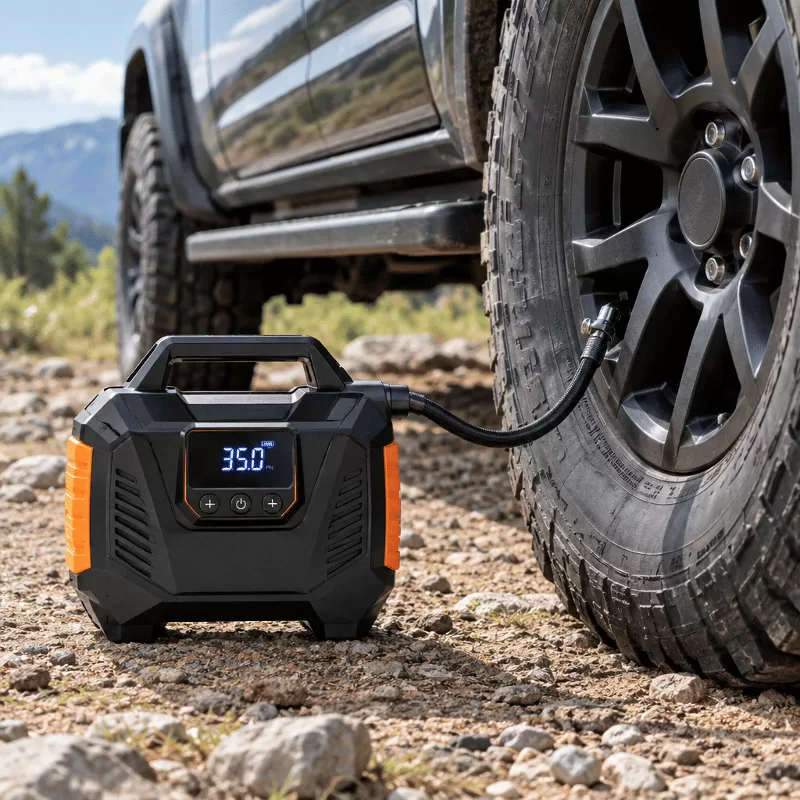
According to manufacturer technical documentation, the SH03 utilizes a dual 24-cylinder structure powered by a 100W motor. It delivers an airflow rating of 42 L/min and supports a working pressure range spanning from 2 to 150 PSI. The dual-cylinder configuration allows the unit to service SUVs, off-road vehicles, and larger passenger tires while maintaining an operating noise rating of 85dB or below at 1.5 meters.
Electrical Capacity, Charging Profiles, and Thermal Ratings
The internal electrical architecture of the SH03 incorporates a 3-cell rechargeable lithium battery assembly providing 3 × 4000mAh capacity at 11.1V (44.4Wh). Manufacturer documentation specifies an internal runtime of approximately 20 minutes per full charge, alongside a rating to inflate approximately four 205-width car tires. Because specific starting pressures, target pressures, and test conditions are not detailed in the manufacturer specifications, this figure should be treated as an illustrative benchmark rather than a direct measurement for light-truck tires.
The technical specifications detail the following electrical and environmental parameters:
- Dual power flexibility: Operates via internal battery power and supports 12V to 14V cigarette-lighter vehicle power inputs.
- Fast charging support: Integrates a Type-C input profile supporting USB-C PD protocols up to 30W, alongside a manufacturer-specified charging duration of 2 to 3 hours.
- Bidirectional power delivery: Features Type-C output delivering up to PD30W (with 5V/3A, 9V/3A, 12V/2.5A, 15V/2A, and 20V/1.5A profiles) to support external mobile electronics.
- Battery cycle endurance: Stated to maintain 80% or greater original capacity after 300 charge-discharge cycles.
- Ambient operating boundaries: Engineered to operate across temperatures ranging from minus 10°C to 45°C during active inflation.
[ Atmospheric Intake ]
          │
          ▼
[ Dual 24-Cylinder Assembly (100W Motor) ]
          │
          ├── Internal Power: 3 × 4000mAh Battery Pack (44.4Wh)
          └── External Power: 12V–14V Cigarette-Lighter Input
          │
          ▼
[ Pressure Sensor & Auto-Cutoff Logic ]
          │
          ▼
[ Reinforced Air Hose ] ──► [ Valve Stem Connection ]
Enclosure Form Factor, Digital Interface, and Preset Functions
The physical layout of the SH03 balances internal mechanical packaging with transport convenience. The device measures 188 × 97 × 63 mm and has a net weight of approximately 1014 grams. This form factor allows straightforward storage inside a glove compartment, door pocket, or under-seat tool tray, keeping emergency pneumatic equipment accessible without cluttering cabin space.
Operational control centers on an illuminated LED display that presents target and real-time pressure readings clearly in varying light conditions. The interface provides five preset inflation modes alongside custom manual pressure configuration. Once an operator defines the required target pressure, integrated control logic automatically stops the motor when the designated threshold is reached, helping prevent accidental over-pressurization.
Stated Scope of Application and Operational Boundaries
Manufacturer documentation identifies the SH03 for light automotive applications, including SUVs, off-road rigs, passenger vehicles, motorcycles, bicycles, and recreational inflatables. It is well suited for routine pressure corrections, seasonal maintenance, and travel emergency top-ups where portability and rapid deployment are priorities for drivers.
It is essential to recognize equipment boundaries. The supplied specifications do not position this compact device for mounting unseated tire beads or servicing high-pressure commercial transport trucks (such as Class 8 freight haulers). Those industrial applications involve massive air delivery rates and high continuous duty cycles that require heavy commercial service equipment, stationary air tanks, or specialized shop lines.
Safety Standards and Roadside Tire Pressure Management
Reading the Vehicle B-Pillar Placard Versus Sidewall Maximums
A critical safety guideline established by transportation authorities, including the National Highway Traffic Safety Administration (NHTSA), is adhering strictly to the vehicle placard pressure rather than the tire sidewall markings. The sidewall lists the tire’s maximum permissible inflation pressure and load rating; it is not, by itself, the vehicle’s recommended operating pressure.
The recommended operating pressure for any vehicle is documented on the tire information placard, located on the driver side door pillar (B-pillar) or in the owner’s manual. Vehicle engineers calculate these specific pressures to balance vehicle dynamics, braking distances, cornering traction, and uniform tread wear across varying load conditions, ensuring safe handling on paved surfaces.
The Definition and Measurement of Cold Tire Pressure
Manufacturer pressure recommendations universally specify cold tire inflation pressure. Driving on a tire causes internal air temperatures to rise as the rubber flexes against the road surface, increasing internal pressure through thermal expansion. Checking pressures immediately after highway travel yields an artificially high reading that misrepresents the tire’s static operating state.
A tire is cold when the vehicle has been parked for at least three hours, or has been driven less than one mile after that rest period. If a tire is underinflated and must be corrected while warm, follow the vehicle manual; do not bleed air to match the cold reading, and recheck when the tire is cold.
Step-by-Step Roadside Inflation Protocol
Conducting roadside pressure maintenance requires safety awareness and methodical operation, particularly when parked alongside active roadways. Follow these sequential steps:
- Secure the work area: Position the vehicle on level ground away from traffic lanes, engage the emergency brake, and activate hazard flashers.
- Perform visual inspection: Check the tire tread and sidewall for deep cuts, punctures, or signs of cord separation. Do not attempt to inflate a tire showing visible structural bulging or internal casing damage.
- Prepare the valve hardware: Remove the valve stem dust cap and wipe away residual dirt, road salt, or moisture from the valve threads.
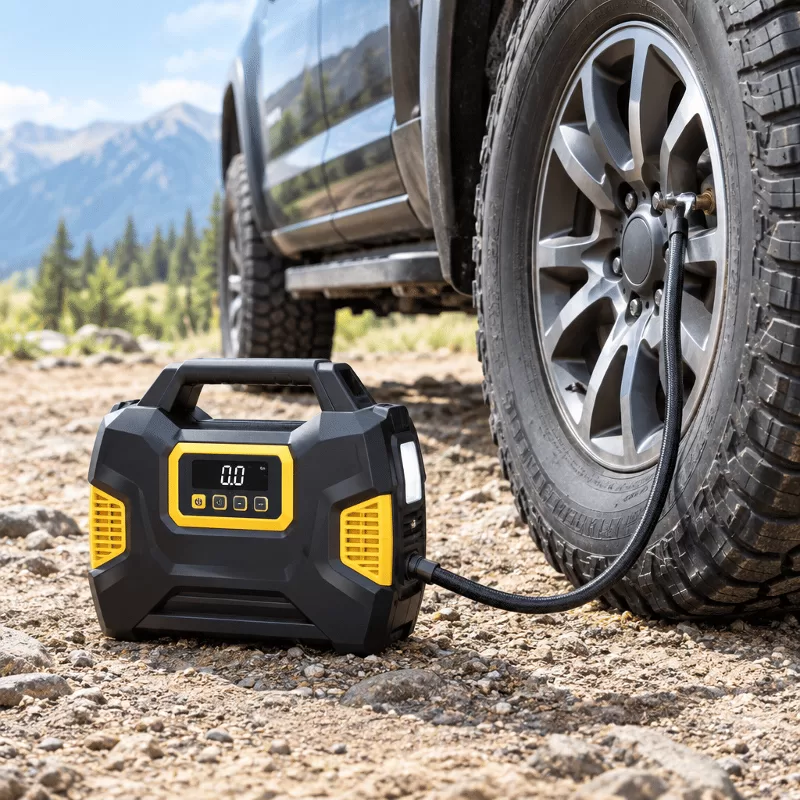
- Attach the air fitting: Thread or clamp the inflator air chuck squarely onto the valve stem to ensure an airtight seal without depressing the internal core off-center.
- Read static pressure: Power on the digital inflator to view the current cold pressure reading on the display screen.
- Configure target pressure: Set the desired target value matching the vehicle door placard recommendation using the digital control buttons.
- Monitor the inflation cycle: Initiate the compressor motor and remain near the unit during operation, observing hose stability and connection integrity.
- Verify final reading: Allow the auto shut-off to stop the motor, disconnect the air chuck carefully, and verify the final reading using an independent tire gauge before replacing the valve cap.
Recognizing Carcass Damage and Structural Failure Modes
An air inflator cannot repair physical structural damage. Pumping air into a tire with an internal cord failure or sidewall separation creates a severe safety hazard. The weakened casing can fail abruptly under pressure, creating personal risk and causing vehicle damage during inflation or subsequent road travel.
Inspect the tire carefully before connecting an inflator. If you observe localized sidewall bubbles, exposed steel belts, deep tread fissures, or if the tire has been driven completely flat for an extended distance, do not inflate it. Such conditions compromise the structural integrity of the tire carcass, requiring spare tire installation or professional recovery assistance.
Field Applications: Off-Road Pressures and Trail Recovery
The Mechanics of Reduced Tire Pressures Off-Road
Drivers venturing onto sand, loose rock, or soft trail surfaces frequently lower tire pressures to improve traction. Reducing internal pressure allows the tire tread to deform, elongating the contact patch along its longitudinal axis. This expanded footprint distributes vehicle weight over a broader surface area, reducing ground contact pressure effectively.
On loose sand, this expanded surface area helps prevent the vehicle from digging in. Over rocky surfaces, a lower-pressure tire conforms over obstacles rather than sliding across them. However, operating at reduced pressures increases sidewall deflection and heat generation, making it vital to return to highway pressures before resuming high-speed pavement travel.
Safe Re-Inflation Protocols for Highway Transition
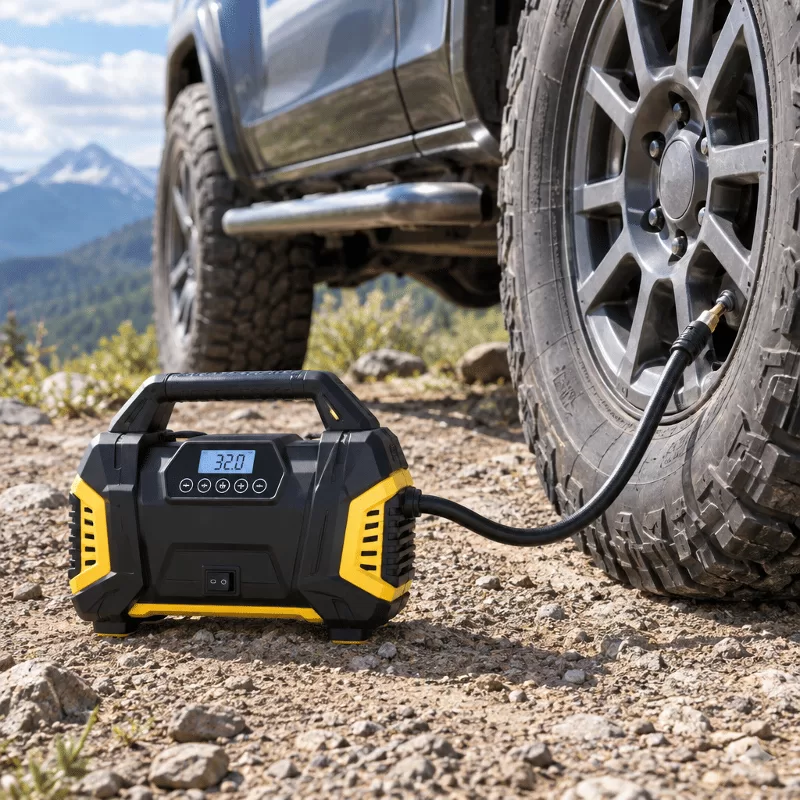
Returning from trail conditions to asphalt highways requires re-inflating all four tires to their factory-specified placard pressures. Traveling on paved roads at highway speeds with under-inflated tires causes rapid heat buildup within the tire carcass, accelerating tread wear and compromising steering precision during emergency evasive maneuvers.
When using a portable inflator to air up multiple large-volume off-road tires, manage the equipment duty cycle carefully. If the compressor chassis or hose fittings feel hot during prolonged operation, allow the unit a brief cooling period between tires. If operating from vehicle power, follow the vehicle and inflator manuals regarding auxiliary socket usage and engine operation.
Equipment Handling and Thermal Precautions
During sustained inflation runs, compression of air naturally heats the air stream, transferring thermal energy through the internal manifold into the hose fittings. Metal threaded connectors and quick-connect chucks can become hot to the touch after several consecutive minutes of operation, requiring careful physical handling.
Operators should exercise care when unscrewing brass chucks after completing an inflation cycle, using work gloves if necessary to prevent discomfort. Allowing the hose and fittings to cool before packing the equipment into an enclosed carrying case helps protect the storage bag and prolongs component life across years of mobile service.
Preventative Maintenance, Redundancies, and Storage
Protecting Rechargeable Hardware in Vehicle Environments
Vehicle passenger cabins and utility trunks experience dramatic temperature variations throughout the year. Storing portable inflators inside passenger compartments, such as under rear seating or in climate-buffered consoles, helps moderate exposure compared to uninsulated metal toolboxes. However, interior vehicle storage does not guarantee temperatures remain within manufacturer thresholds during severe weather.
The manufacturer specifies an ambient working temperature range of minus 10°C to 45°C for the SH03 during active operation. This operational rating does not establish long-term storage or charging tolerances, which must follow product manual guidelines. Operators should check battery capacity periodically and inspect the air hose for crimping, thread wear, or particulate accumulation inside the air chuck.
Essential Diagnostic Tools and Emergency Hardware Spares
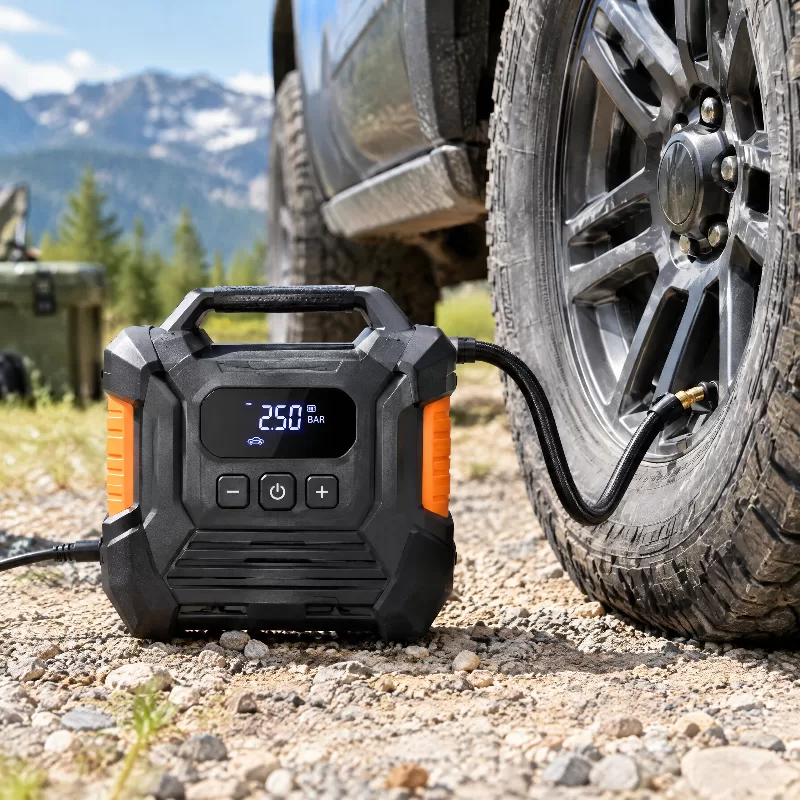
While modern digital inflators incorporate integrated electronic pressure sensors, carrying independent measurement tools remains good practice. A calibrated mechanical dial gauge or digital pencil gauge provides a secondary reference point, allowing operators to verify sensor calibration and maintain consistent pressure management across varying ambient conditions.
Maintaining a small hardware kit inside the vehicle complements an inflator’s utility. Carrying spare Schrader valve cores, a multi-way valve core tool, and replacement valve caps ensures small valve leaks can be resolved immediately. Reinstalling valve dust caps after every inflation cycle is essential, as the cap provides the primary barrier preventing dirt, moisture, and debris from entering the internal valve seat.
Frequently Asked Questions (FAQs)
Can a portable air inflator inflate pickup-truck tires?
Yes, portable inflators engineered with adequate displacement and appropriate pressure ratings can service pickup-truck tires. Standard passenger-car pumps may experience extended runtimes and heat buildup due to the larger air volume of truck tires. Units featuring robust motors and higher airflow ratings, such as the SH03 with its 42 L/min airflow specification, are well suited for handling routine pressure corrections and seasonal top-ups on light trucks and SUVs.
Is a 150 PSI maximum rating sufficient for commercial heavy-duty trucks?
A 150 PSI rating represents the manufacturer-stated maximum inflation pressure; it does not specify airflow delivery or continuous duty cycle under commercial-truck operating conditions. Heavy commercial transport vehicles (Class 7 and 8) feature massive tire chambers operating under high load-inflation demands. Servicing commercial truck fleets requires dedicated high-displacement industrial compressors capable of delivering high airflow rates over extended duty cycles, rather than compact consumer inflators.
Why should you never inflate tires based on the sidewall PSI number?
The sidewall markings provide maximum permissible inflation pressure and load rating limits for the tire itself, but should not be used as the target operating pressure. Drivers must always follow the manufacturer’s cold inflation pressure listed on the vehicle’s B-pillar door jamb placard, which is calibrated specifically for vehicle balance, braking distance, and uniform tire wear. When non-standard replacement tires are installed, follow qualified tire and vehicle manufacturer load-inflation instructions.
How do temperature fluctuations affect truck tire pressure?
Ambient temperature changes directly impact tire pressure. As a general pneumatic guideline, tire pressure shifts by approximately 1 PSI for every 10°F (about 5.6°C) change in ambient temperature. During severe seasonal cold shifts, this drop can be substantial enough to lower cold pressures below recommended safety thresholds, making routine monthly checks and seasonal adjustments essential.
Can a compact tire inflator reseat an off-road truck tire bead?
No. Seating an unseated tire bead against a wheel rim requires an instantaneous surge of high-volume air to push the tire bead outwards before air escapes past the rim flange. Compact portable inflators provide controlled, metered airflow designed for pressure maintenance, which cannot generate the high-volume surge needed to seat an unseated bead.
What is the difference between P-metric and LT-metric tire inflation requirements?
P-metric (passenger) and LT-metric (light truck) designations identify structural tire categories engineered for different load classifications. Operating pressure is not determined by the tire category alone, but by the specific vehicle configuration, gross axle weight ratings, and actual payload. Operators must consult the vehicle placard or owner’s manual for factory tire setups, and follow qualified tire and vehicle manufacturer load-inflation instructions when running replacement light-truck tires.
Summary and Practical Field Readiness
Proper tire pressure management directly influences highway safety, fuel consumption, and overall tread longevity. Equipping your vehicle with an appropriately matched portable air inflator for truck tires turns routine pressure maintenance and seasonal fluctuations into simple, controlled tasks. By understanding pneumatic displacement, respecting cold placard specifications, and selecting equipment with dependable dual-cylinder mechanics and adaptable power options, drivers can maintain vehicle readiness on any road. Investing in a capable portable air inflator for truck tires ensures dependable pressure maintenance, steady performance, and confidence across every journey.
-

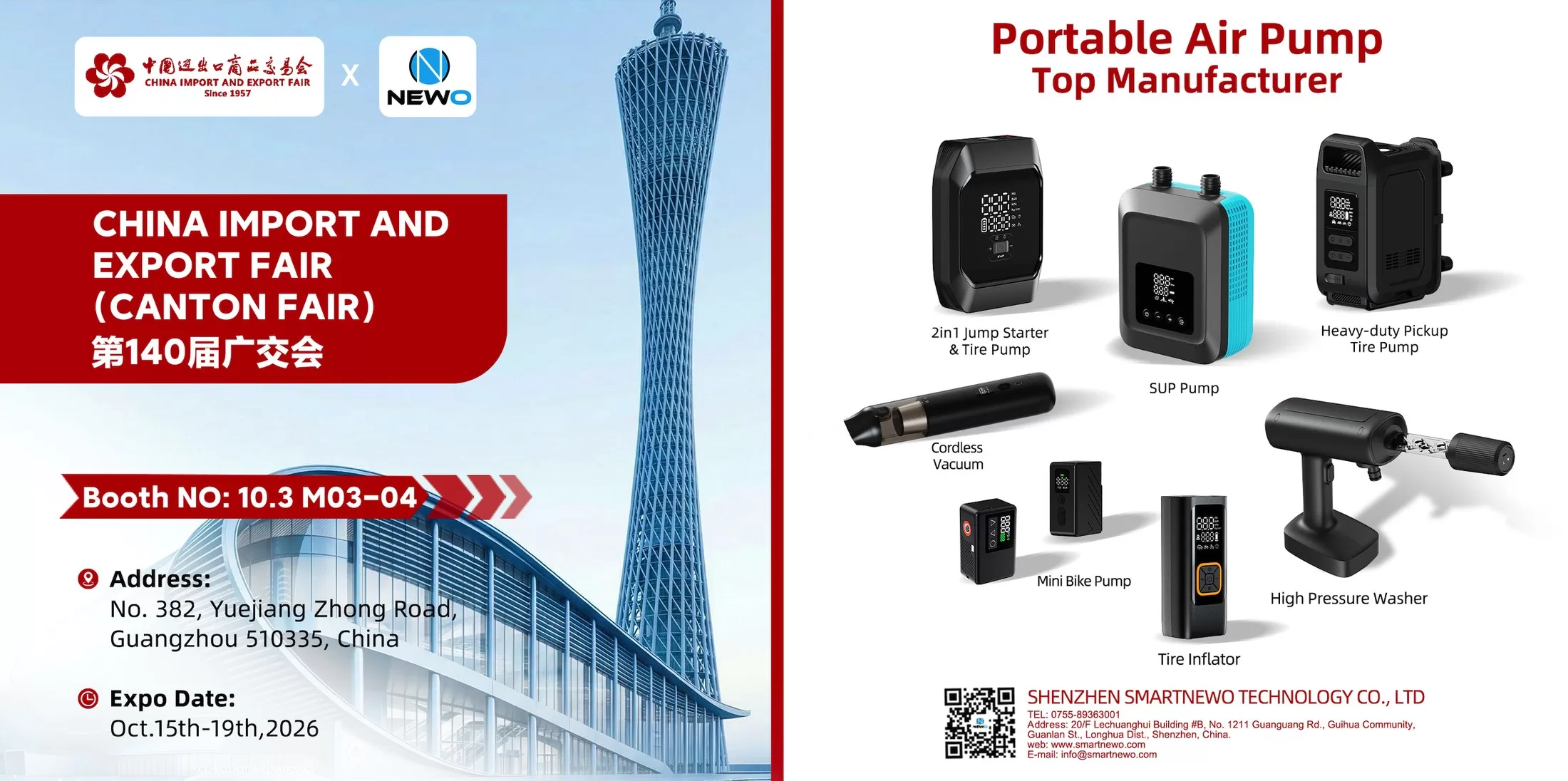
Meet NEWO at the 140th Canton Fair: Visit Booth 10.3 M03–04
Meet NEWO at the 140th Canton Fair in Guangzhou, October 15–19, 2026. Visit Booth 10.3 M03–04 to explore portable air pumps and discuss OEM, ODM and distribution opportunities.... -

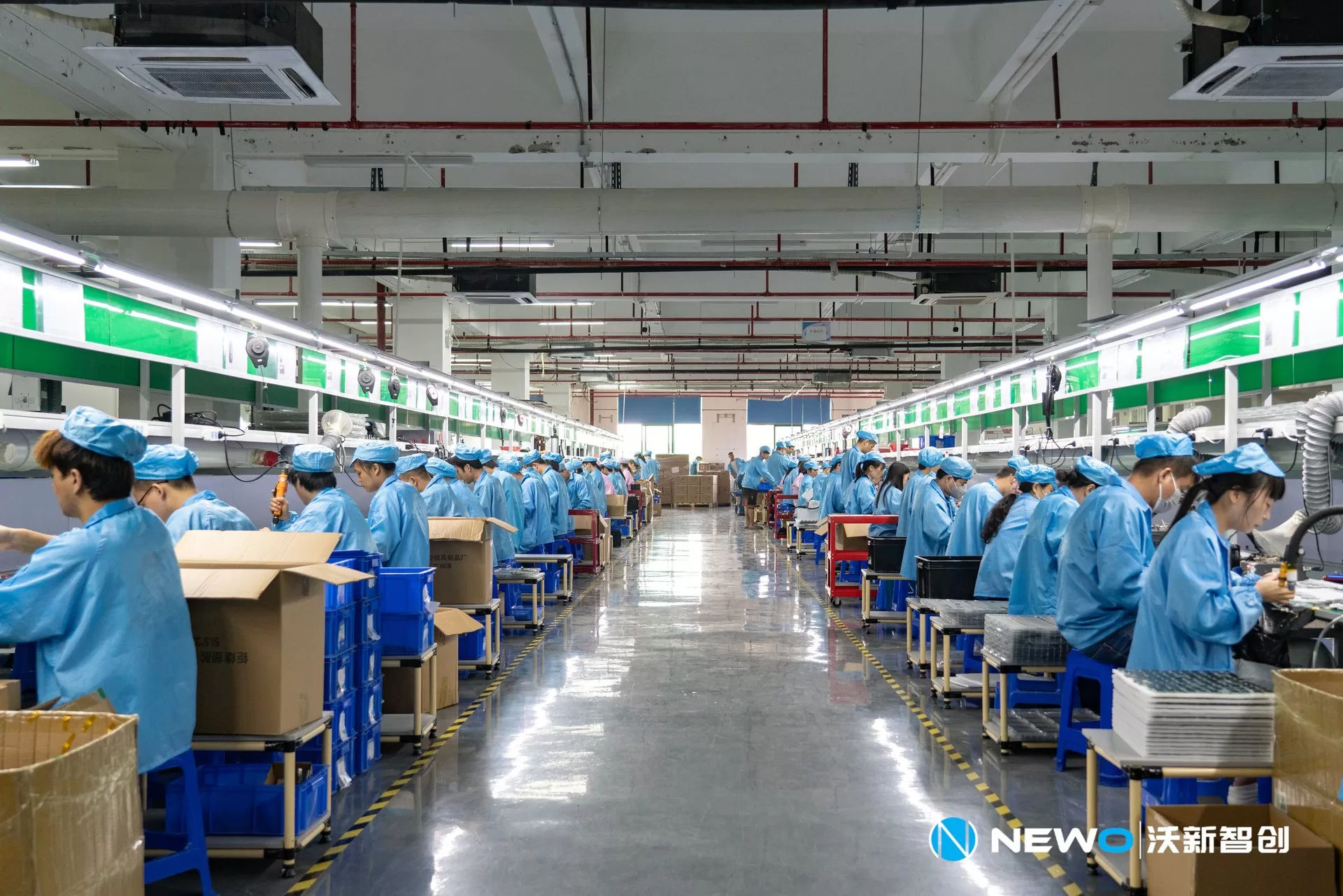
As Shenzhen Welcomes the World for APEC 2026, NEWO Welcomes You to Our Factory
As Shenzhen prepares for APEC 2026, NEWO welcomes international buyers and partners to visit our factory, meet our team and explore future cooperation.... -

Leading the Way in Product Innovation and Excellence
Smartnewo exemplifies professionalism in product innovation and manufacturing. Their collaboration with Xiaomi Youpin on the G01 crowdfunding project highlights their expertise in creating compact, powerful inflatable pumps. Rigorous engineering, meticulous production processes, and advanced quality assurance underscore their commitment to excellence. The success of the G01 project, with significant market... -

Essential Qualities of an Excellent Supplier
In today's competitive market, finding a reliable supplier is crucial for business success. Based on insights from Smartnewo and broader internet research, here are key qualities an excellent supplier must possess:... -

NW06 Tire Inflator: Compact Power for Quick Inflation
Summary The NW06 Tire Inflator delivers quick and efficient tire inflation with a powerful 35L/min airflow. It features a user-friendly LCD screen for real-time pressure monitoring, dual power options with a built-in 6000mAh battery, and multiple nozzle attachments for versatile use. Its compact design and integrated LED light ensure convenience and... -

Unleash the Power of Portability: The SmartNewo Jump Starter with Air Compressor KF03
This guide will walk you through the steps to effectively use a portable tire inflator, helping you stay prepared and safe on the road.... -

Newo Attends The 2024 Consumer Electronics Show (CES)
Smartnewo booth is located at 53672, Halls A-D, Level 2, Venetian Expo, Las Vegas Convention Center (LVCC). ... -

Smartnewo’s Dual-Cylinder Air Pump Rocks the Hong Kong Autumn Electronics Fair!
Smartnewo’s Dual-Cylinder Air Pump Rocks the Hong Kong Autumn Electronics Fair!... -

Meet at the Canton Fair! Smartnewo brings dual-cylinder air pumps, making your inflation experience faster and more stable!
NEWO has went deep communication and negotiation with customers from all over the world on booth.... -

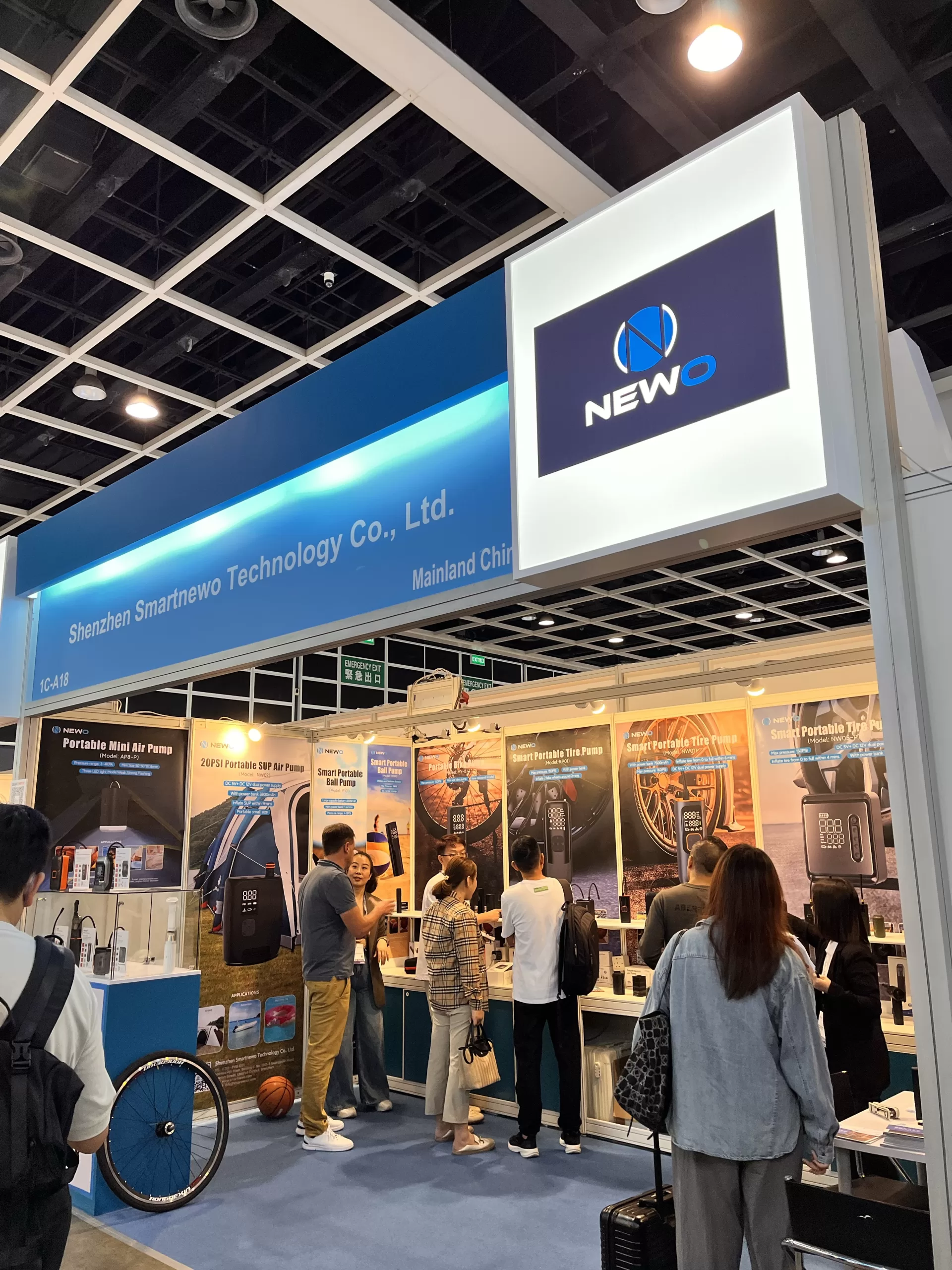
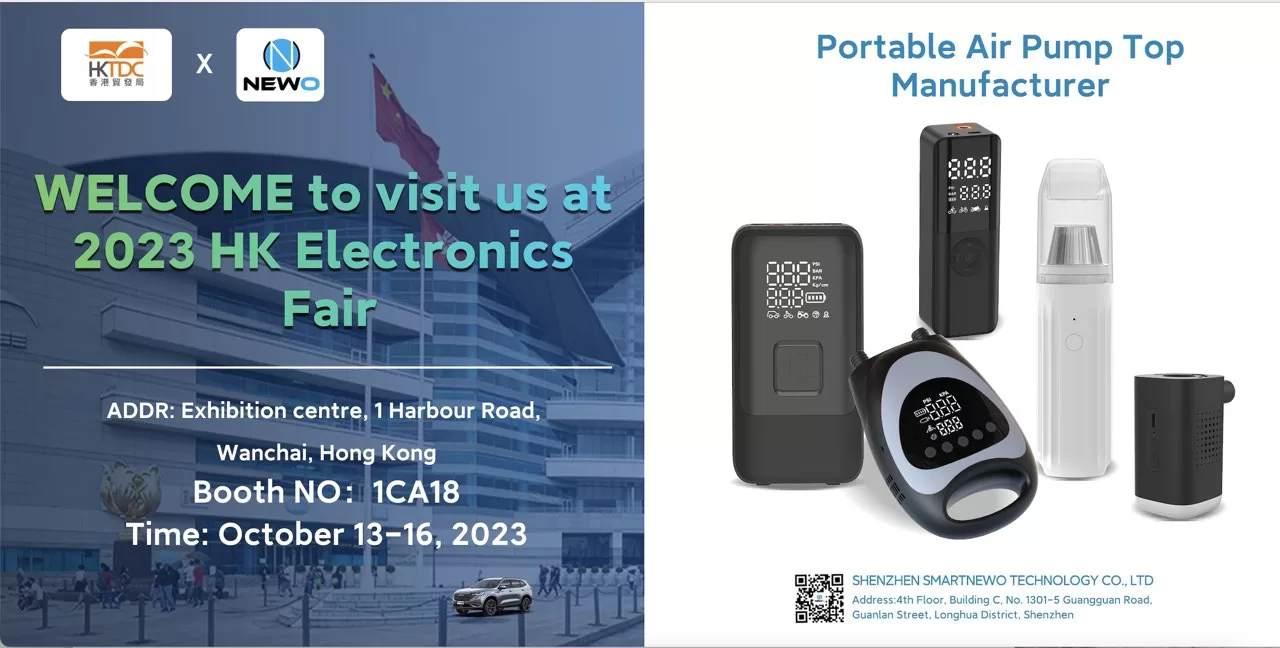
“Hong Kong Autumn Electronics Fair – 1CA18 (October 13th to 16th): Smartnewo invites you to visit our booth!
Hong Kong Autumn Electronics Fair...



-

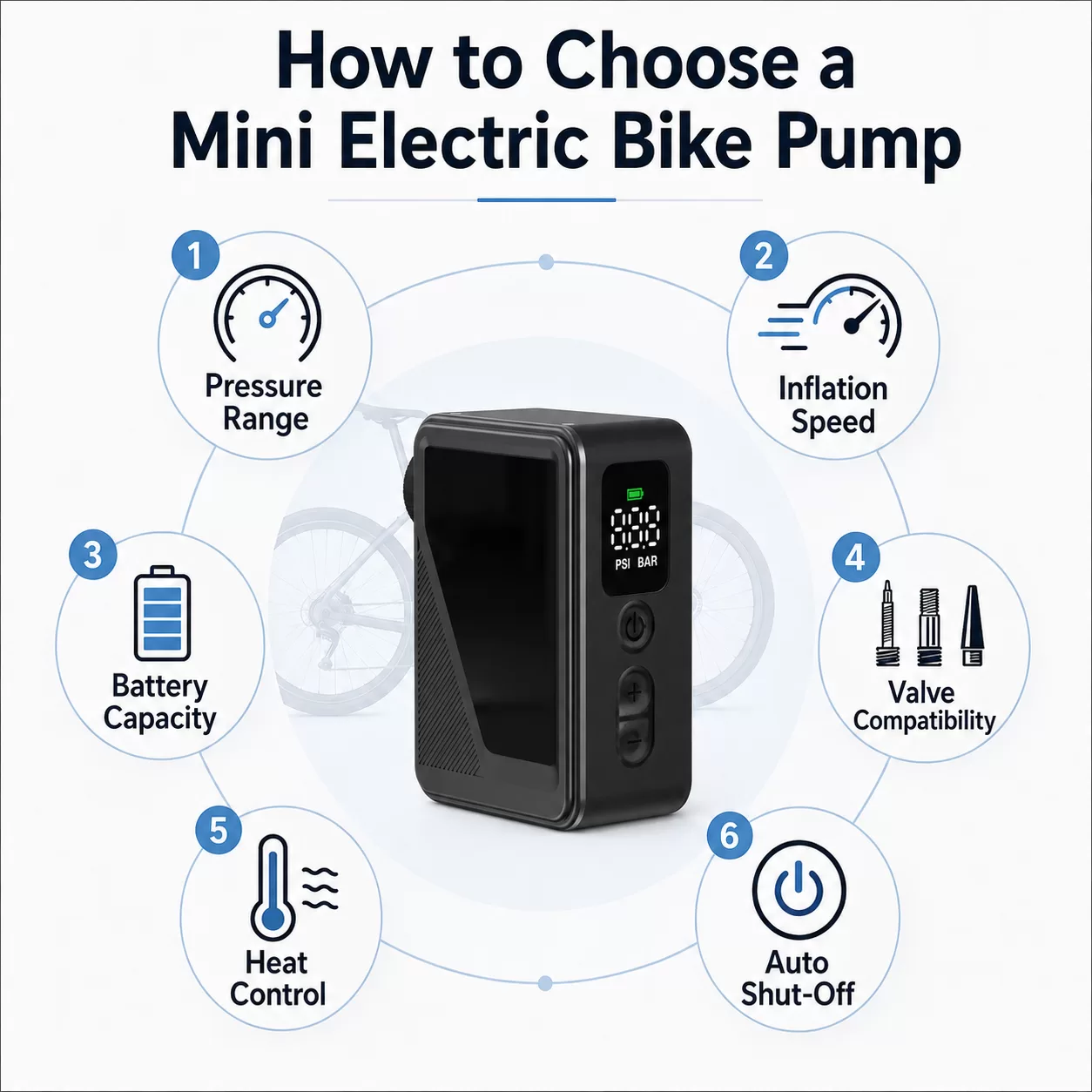
What to Check Before Ordering Custom Electric Bike Pumps
Plan custom electric bike pumps with a clear requirements freeze for valves, TPU tubes, portability, repeated top-ups, charging, and model-specific documents.... -

OEM vs ODM Air Pumps: Which Manufacturing Model Fits Your Brand?
Compare OEM and ODM air pump projects by design responsibility, change approval, development scope, and written ownership terms before choosing your route.... -
How to Choose a Reliable Tire Inflator Manufacturer in China
Choose a tire inflator manufacturer in China with a focused RFQ, supplier evidence, configuration checks, and clear sample-to-pilot decisions for your brand.... -

Rechargeable Electric SUP Pump for Paddle Boards: Faster Inflation for SUPs, Kayaks and Inflatable Tents
The BL10-C Portable Electric Bike Tire Inflator is a compact and lightweight mini electric bike pump designed for modern cyclists. With up to 120 PSI pressure, a digital LED display, preset pressure control, automatic shut-off, USB-C charging, and multiple valve adapters, BL10-C offers a convenient inflation solution for road bikes,... -

Are Electric Bike Pumps Worth It in 2026? Electric Pump vs CO₂ vs Mini Hand Pump
Discover whether electric bike pumps are worth it in 2026. This guide compares electric bike pumps, CO₂ inflators, and mini hand pumps for road cycling, gravel riding, commuting, and long-distance rides. Learn the pros, limitations, best use cases, and key features to look for before choosing the right portable tire... -
BL10-C Portable Electric Bike Tire Inflator: Small Size, Reliable Power for Every Ride
The BL10-C Portable Electric Bike Tire Inflator is a compact and lightweight mini electric bike pump designed for modern cyclists. With up to 120 PSI pressure, a digital LED display, preset pressure control, automatic shut-off, USB-C charging, and multiple valve adapters, BL10-C offers a convenient inflation solution for road bikes,... -

Why Mini Electric Bike Pumps Are Becoming Essential for Modern Cycling
Discover why mini electric bike pumps are becoming essential for modern cyclists. Learn how portable electric bike pumps improve tire pressure management, riding safety, and convenience.... -

The Ultimate Smart Solution for Easy Outdoor Adventures in 2026
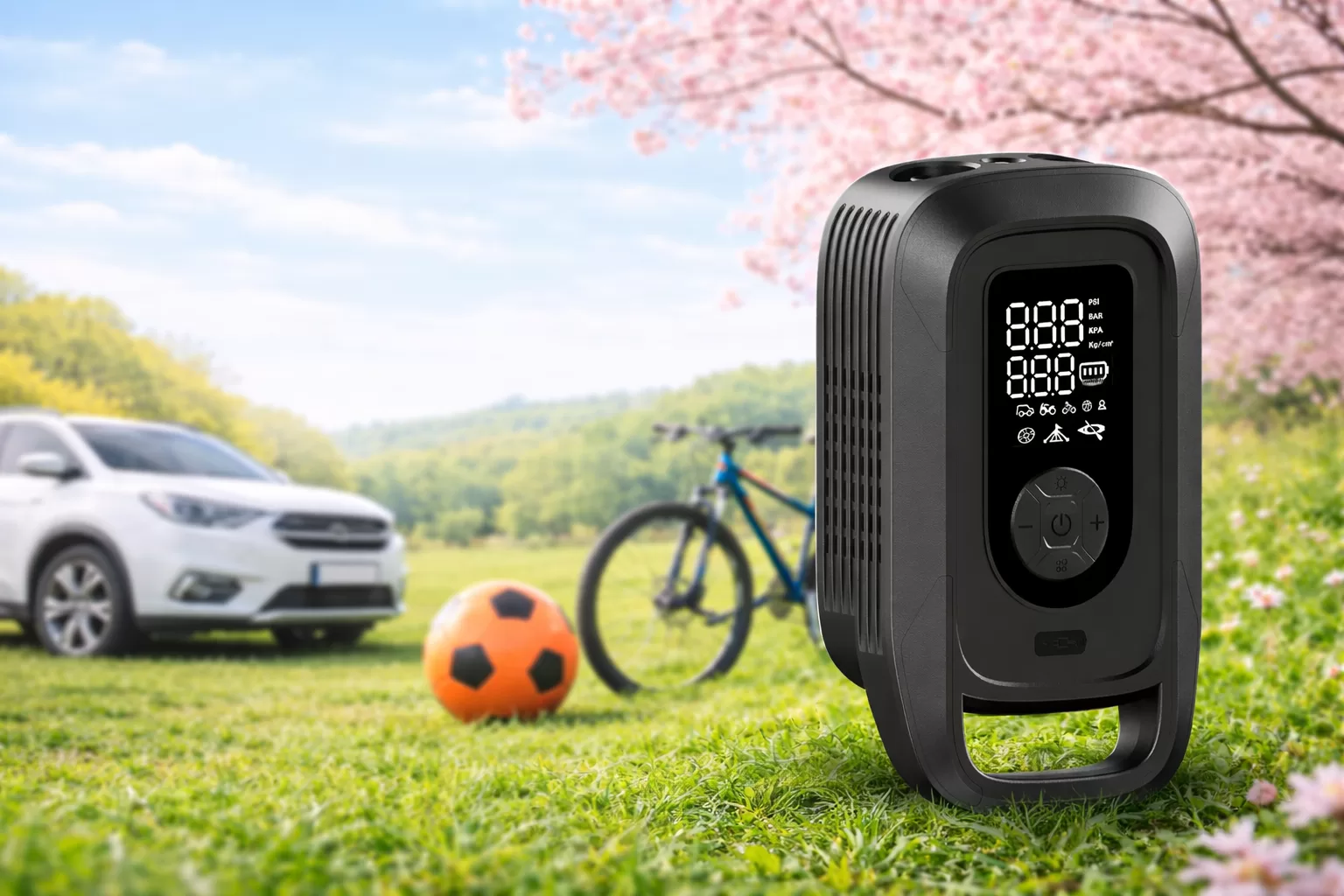
Discover how a spring travel air pump simplifies outdoor trips with fast inflation, smart features, and powerful performance—perfect for every adventure.... -

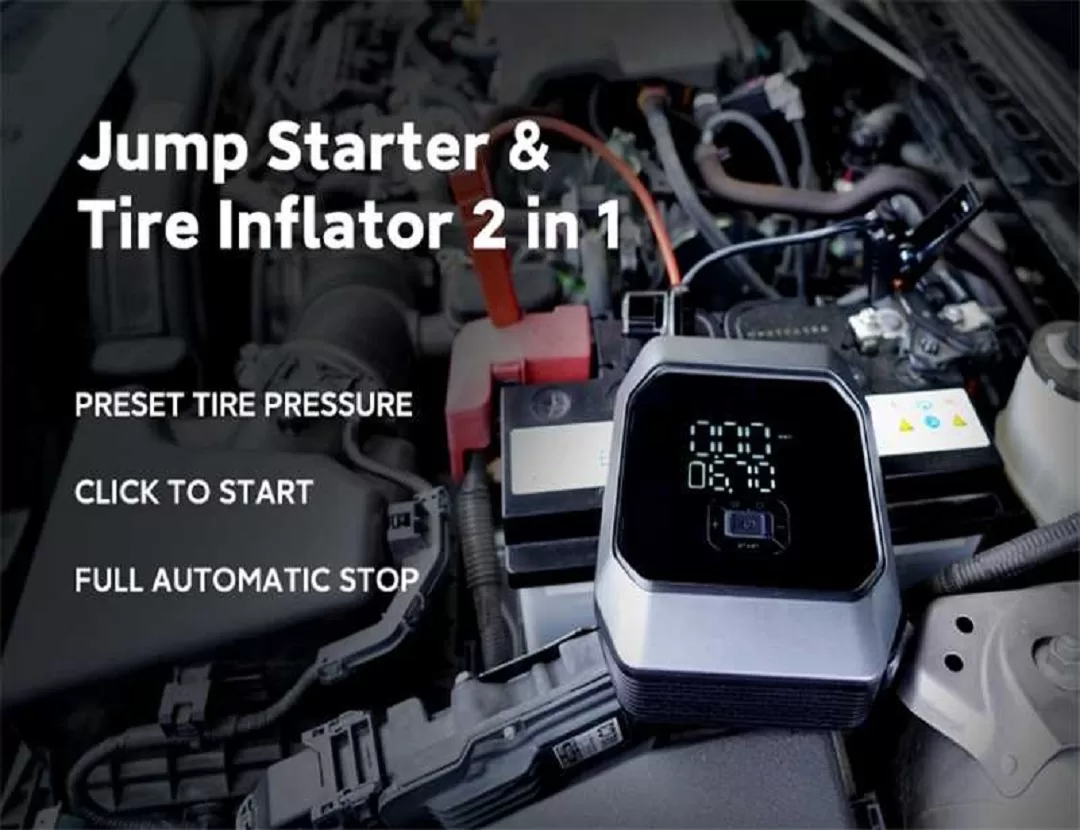
Powerful 5-in-1 Portable Car Tire Inflator and Jump Starter: The Ultimate Emergency Tool for Every Driver
Why Every Driver Needs a Portable Car Tire Inflator and Jump Starter Modern drivers face many unexpected situations on the road. A flat tire, low tire pressure, or a dead car battery can happen at the worst possible time. That’s why having a portable car tire inflator and jump starter is... -

7 Real Cycling Scenarios That Show Why Every Rider Should Carry a Mini Bike Pump
Cycling is one of the most freeing activities you can enjoy. Whether you’re commuting to work, riding through city streets, or exploring quiet countryside roads, a bike ride can instantly improve your day. But there’s one small problem that almost every cyclist eventually faces: Low tire pressure. It might happen...




-
How Is a Football Properly Inflated?
The correct inflation of a football - with not too much and not too little air - is a hotly debated topic among footballers.... -
Application Scenarios of Car Inflator Pump
Often long-distance business trips or play car owners because the road may be more remote areas, in this case if you encounter a tire leak....