
 Portable Tire Inflators
 Electric Air Pumps
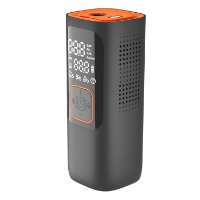 Electric Car Tyre Pumps
 Electric Ball Pumps
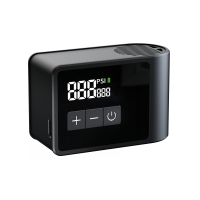 Electric Bike Pump
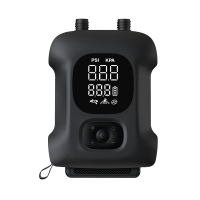 SUP Air Pump

Portable Tire Inflator With Auto Shut Off: How to Choose and Use One
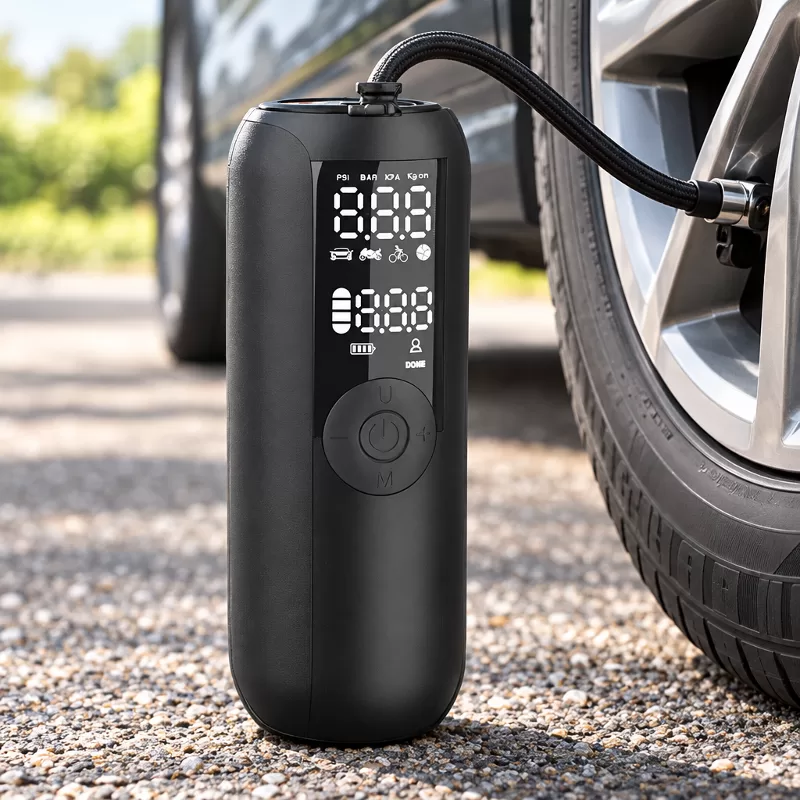
Maintaining correct tire pressure is one of the simplest ways to ensure road safety, preserve fuel economy, and extend tread life. Many drivers still struggle with bulky station compressors or manual pumps, creating unnecessary roadside stress. A portable tire inflator with auto shut off solves this problem by delivering precision air delivery in a pocket-sized package. Understanding the underlying technology, operation protocols, and design trade-offs allows vehicle owners to select the right device for their daily commute and weekend travel without second-guessing pressure readings.
What Is a Portable Tire Inflator With Auto Shut Off?
How the Automatic Shutoff Mechanism Functions
An automatic shutoff inflator combines an electric motor, a mechanical cylinder assembly, and an integrated digital pressure measurement system. When you attach the nozzle firmly to a tire valve stem, the internal sensor measures pneumatic pressure in the connected air line. This pressure reading is converted into a readable digital metric displayed on an integrated screen.
Once you preset your target pressure, the inflator measures pressure and is designed to stop when the selected preset is reached. As the piston delivers air into the tire, the air pressure steadily increases. Once the measured pressure matches the selected preset, the motor power stops automatically without requiring manual switch operation.
What Automatic Shutoff Does Not Guarantee: Independent Pressure Verification
Automatic shutoff can reduce the risk of overinflation when the correct unit and target pressure are selected, but users should still verify the final pressure. Digital pressure sensors can experience slight reading variances when subjected to mechanical vibration, extreme temperature swings, or dirt accumulation inside the stem coupling.
After inflation, check the pressure with a separate, accurate gauge when the tire is cold. If the tire is warm, recheck it later under the vehicle manufacturer’s cold-pressure conditions to ensure that the inflation level aligns with official recommendations.
Why Drivers Rely on Portable Inflators
Routine Pressure Maintenance and Tire Longevity
Tires naturally lose air over time through microscopic permeation across the rubber carcass, averaging about one to two PSI per month under standard ambient conditions. A 10°F temperature change can alter tire pressure by roughly 1–2 PSI, so seasonal temperature changes may require a pressure check.
Driving on underinflated tires increases rolling resistance, which forces the engine to burn additional fuel to maintain highway speeds. Underinflation can increase shoulder wear, rolling resistance, heat buildup, and the risk of tire damage over extended highway journeys.
Travel Convenience and Roadside Preparedness
Gas station air pumps present recurring practical headaches, ranging from out-of-order equipment and severed air hoses to payment coin slots that reject cards. Public air equipment may be unavailable or may not suit every driver’s needs, so a personal inflator and accurate gauge can provide a convenient backup.
Carrying a compact electric inflator eliminates the need to divert from your route in search of working utility hoses. A self-contained pneumatic source can help drivers handle pressure top-ups without searching for a public air pump, although inflation time varies by tire and operating conditions.
Multi-Sport and Recreational Utility With Nozzle Adapters
A versatile handheld pump is not limited to passenger car maintenance. Many portable inflators include adapters for bicycles or sports equipment; check the included accessories for the specific model before setting out.
Sports equipment should be inflated to its specified pressure. A compact inflator with a correctly selected preset can make low-pressure filling easier to control, but users should follow the equipment manufacturer’s pressure limit and monitor the process.
Key Criteria for Choosing the Right Inflator
Matching Operating Pressure Range to Real-World Tasks
Not all inflation tasks demand identical pressure thresholds or airflow volumes. Road-bike tires may require substantially higher pressure than many passenger-car tires, but the correct value must come from the tire, bicycle, or vehicle manufacturer.
A 150 PSI maximum rating gives the AP2-P a broad pressure range, although actual inflation speed depends on tire volume, starting pressure, valve connection, battery state, and duty-cycle limits. Operating within the manufacturer’s stated pressure and runtime limits helps users apply the pump within its documented operating range.
Evaluating Battery Capacity, Portability, and Working Duration
Cordless convenience depends heavily on internal battery chemistry and cell configuration. Handheld electric pumps use rechargeable lithium-ion cells, requiring balanced power management to deliver adequate discharge currents to the drive motor.
The AP2-P weighs 386 g and is rated for 20–30 minutes of operation. Follow the manufacturer’s operating instructions and allow the unit to cool if it becomes hot during extended use, balancing lightweight portability against realistic task demands.
Display Clarity, Measurement Units, and Interface Ergonomics
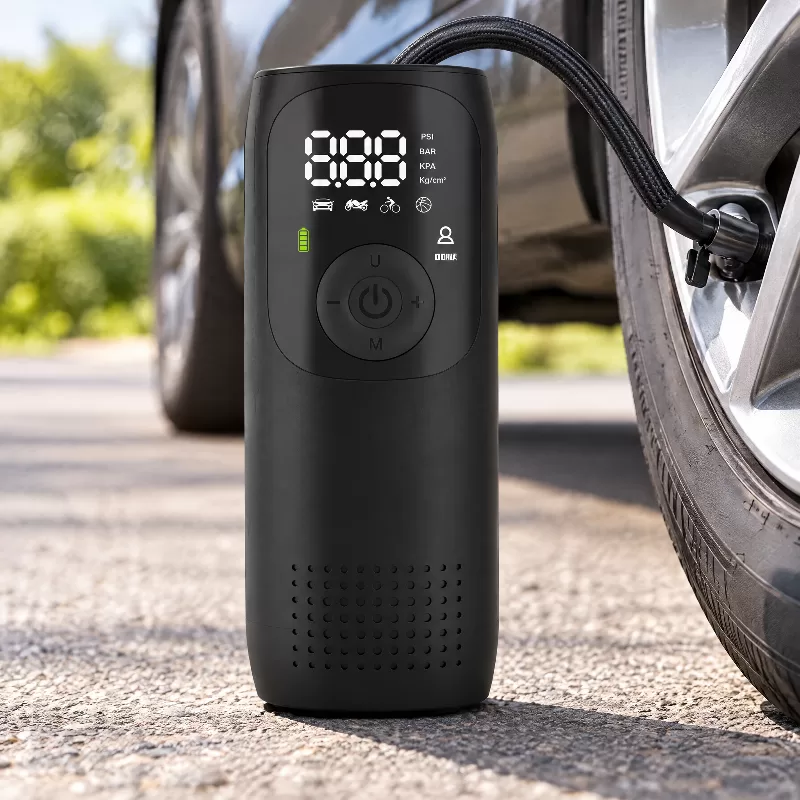
A readable display prevents errors during pressure programming. Segmented LCD panels with backlighting allow users to monitor metrics in dark roadside environments or dimly lit garages.
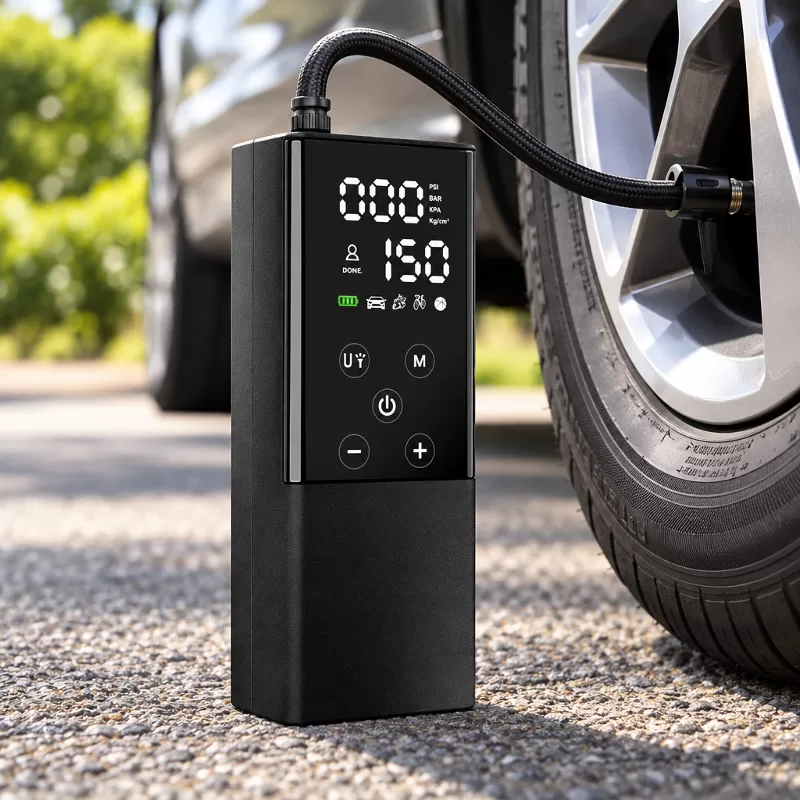
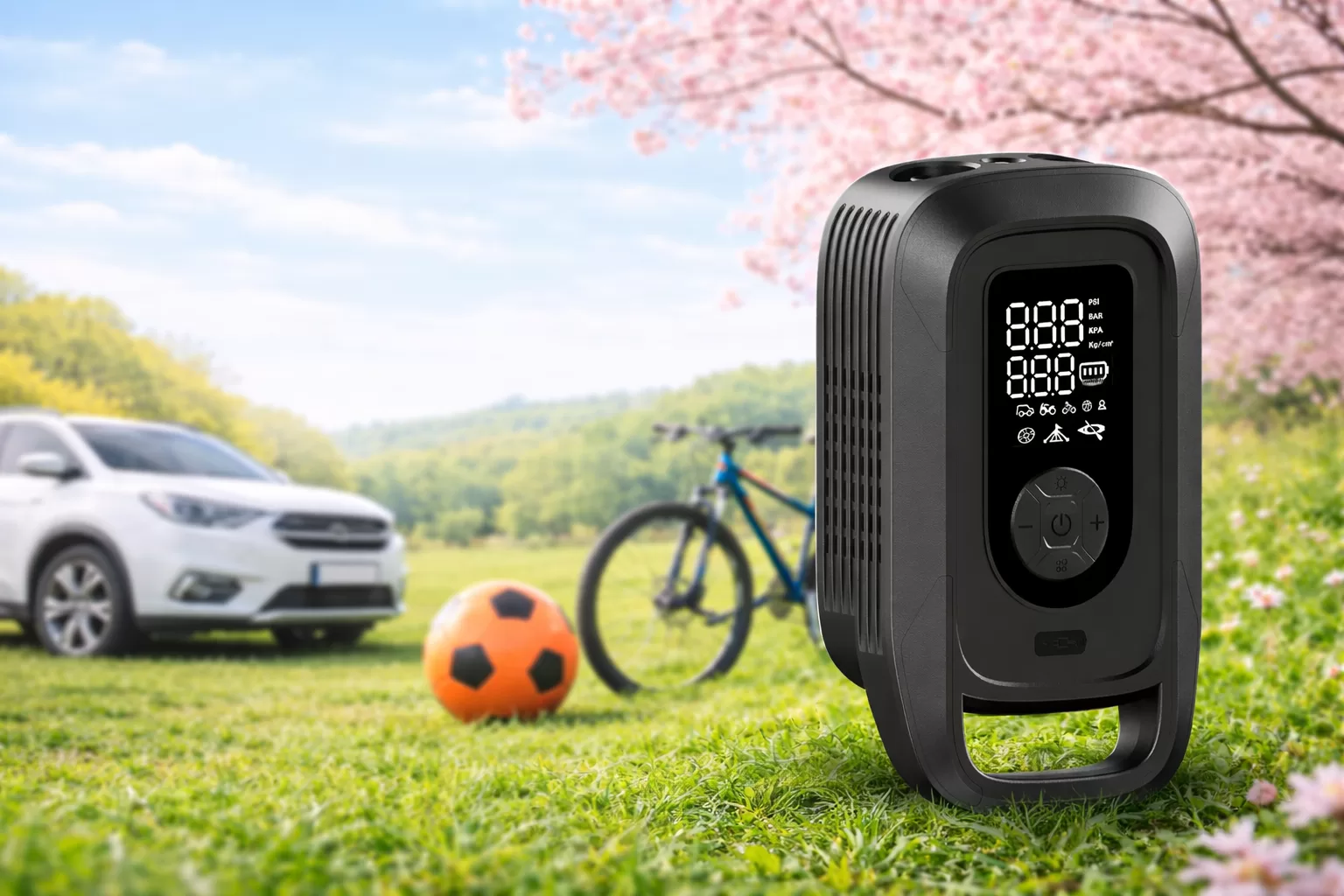
The backlit LCD is intended to improve visibility in low-light conditions; users should still position the display for clear viewing in bright sunlight. Global travel and varied manufacturer specifications require versatile unit readouts across standard systems:
- Pounds per Square Inch (PSI): The primary pressure measurement metric across North American automotive and cycling industries.
- Bar: The metric standard widely used across European passenger vehicle labels and garage service manuals.
- Kilopascal (KPA): The international technical metric commonly cited in official engineering documentation and Asian vehicle tire placards.
- Kilogram-force per square centimeter (Kg/cm²): A legacy metric unit frequently found on older imported equipment and machinery plates.
Thermal Management, Duty Cycles, and Operating Noise
Compressing atmospheric air produces unavoidable thermodynamic heat inside the mechanical cylinder. The AP2-P includes a built-in fan and ventilation openings; users should follow the stated runtime and operating-temperature limits.
The manufacturer lists the AP2-P at ≤85 dB at one meter; users should expect audible motor noise during operation. Keep each session within the manufacturer’s stated continuous-working-time limit and allow the unit to cool if it becomes hot.
Step-by-Step Guide: How to Use an Auto-Shutoff Tire Inflator
Locating the Vehicle Manufacturer’s Recommended Cold Tire Pressure
Before touching the inflator, identify the exact cold inflation pressure specified for your specific vehicle chassis. This figure is printed on the safety compliance placard affixed to the driver side door jamb or inside the owner handbook.
The sidewall marking gives the tire’s maximum inflation pressure. It is not the vehicle’s recommended operating pressure, which should be taken from the vehicle placard or owner’s manual to preserve balanced vehicle handling and braking.
Connecting the Air Hose and Selecting the Correct Pressure Unit
Proper connection ensures reliable pressure measurement and minimizes air loss during fitting attachment. Follow this setup sequence to prepare the machine:
- Remove the protective plastic dust cap from the tire valve stem and check the brass threads for grit or damage.
- Screw or clamp the inflator air hose securely onto the valve stem, listening for a momentary hiss until the seal settles.
- Power on the inflator device and observe the initial numeric reading on the LCD display, which indicates current tire pressure.
- Press the unit toggle button to match the readout unit (PSI, Bar, KPA, or Kg/cm²) to your vehicle manufacturer’s specification placard.
Setting the Target Pressure and Monitoring the Inflation Cycle
Once the proper measurement unit is selected, choose the appropriate vehicle mode or enter manual custom mode. Use the plus and minus adjustment buttons to set the target number matching your vehicle door placard.
Press the start switch to begin pumping. The motor will hum as it forces air into the valve stem, and the real-time display will gradually increase. Remain near the tire to monitor progress, and let the automatic circuit cut off the motor as soon as the target threshold is satisfied.
Confirming Final Pressure With a Calibrated Standalone Gauge
When the inflator stops, turn off the master switch before detaching the air line. Unthread the quick-connect hose smoothly to minimize escaped air, then immediately secure the valve cap.
Compare the cold reading with the vehicle placard and adjust as needed. Do not drive on a tire showing damage or a persistent pressure loss, and ensure all tires are inspected under proper cold conditions.
Understanding the Newo AP2-P Specifications
Product Features and Functional Overview
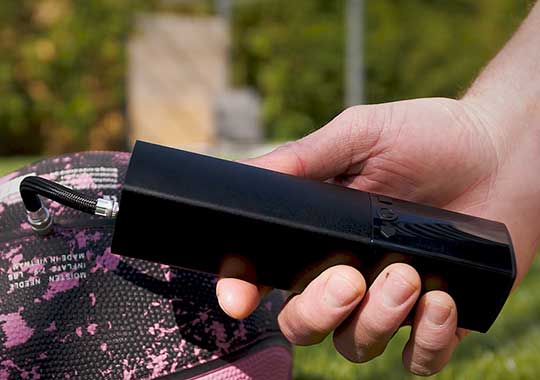
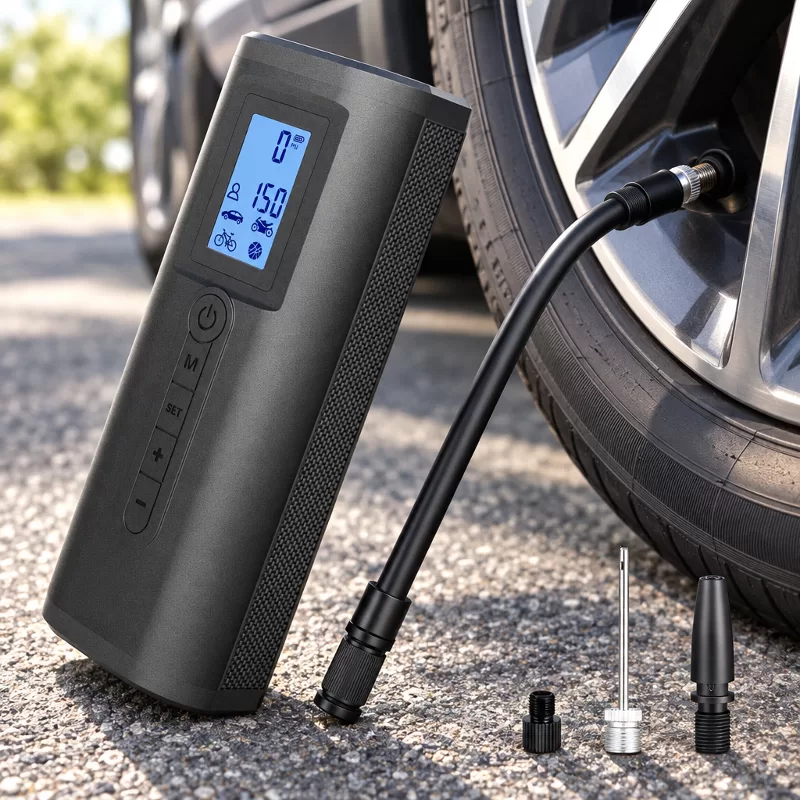
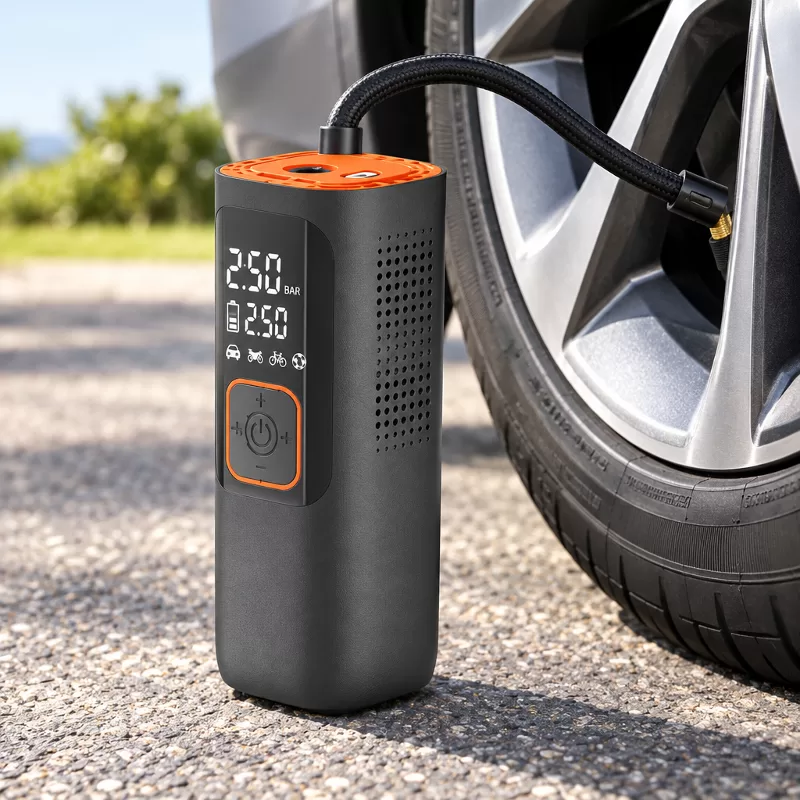
Manufactured by Newo as part of its line of smart electric air pumps and portable inflation solutions, the AP2-P is a compact, cordless electric air pump developed to service passenger cars, motorcycles, bicycles, e-bikes, sports balls, wheelchairs, and personal balance vehicles. Engineered with a maximum operating threshold of 150 PSI, the device integrates preset inflation programs alongside manual adjustments.
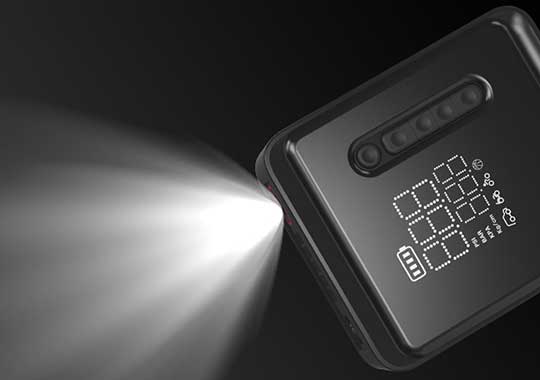
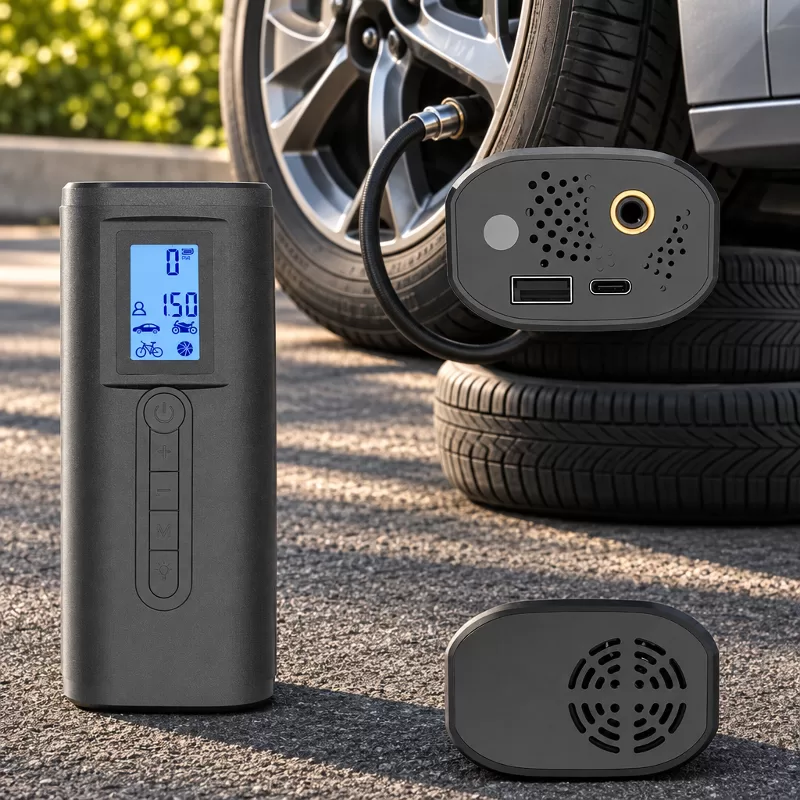
A backlit LCD screen displays current pressure, target preset, battery life, and selected mode in low-light environments. For added utility during travel, the device includes an LED flashlight, a built-in fan, pressure memory recall, and a 5V/2A power-bank output for charging mobile devices.
Technical Specifications Comparison Table
To understand the physical dimensions and stated operating ratings of the AP2-P, review the official manufacturer specifications below:
| Engineering Specification | Manufacturer Value / Metric Rating |
|---|---|
| Model Designation | AP2-P |
| Product Type | Portable electric air pump |
| Operating Pressure Range | 0 to 150 PSI |
| Volumetric Air Flow Rate | 15–18 L/min |
| Cylinder Specification | 14 cylinder (manufacturer-stated) |
| Electric Motor Power | 35W |
| Motor Architecture | Brushed motor |
| Battery Capacity Specification | 2000mAh, 7.4V, 14.8Wh (also noted as 2*2000mAh in product text) |
| Charging Input & Time | Type-C 5V/2A input; 2–3 hours full charge time |
| Power-Bank Output | 5V/2A output port |
| Operating Runtime | 20–30 minutes continuous working duration |
| Acoustic Noise Emission | <=85dB at 1 meter distance |
| Operating Ambient Temperature | -10°C to 45°C |
| Exterior Dimensions | 42 x 62 x 154 mm |
| Net Unit Weight | 386 g |
| Unit Support | PSI, BAR, KPA, Kg/cm² |
Practical Evaluation of Capacity Notes and Form Factor
The AP2-P housing measures 42 by 62 by 154 millimeters and weighs 386 grams, making it exceptionally portable compared to heavy legacy shop compressors. The manufacturer lists an airflow of 15–18 L/min. Actual top-up time will vary with tire size, starting pressure, battery level, and operating conditions.
Product documentation notes an inflation capacity of approximately 10 to 15 bicycle tires per full charge. The supplied specifications list 2000mAh, 7.4V, and 14.8Wh, while another product description mentions 2*2000mAh. Because these entries differ, the battery configuration should be confirmed with the manufacturer if specific multi-cell engineering details are required.
Suitable Applications and Operating Boundaries
Passenger Cars, Motorcycles, Bicycles, and E-Bikes
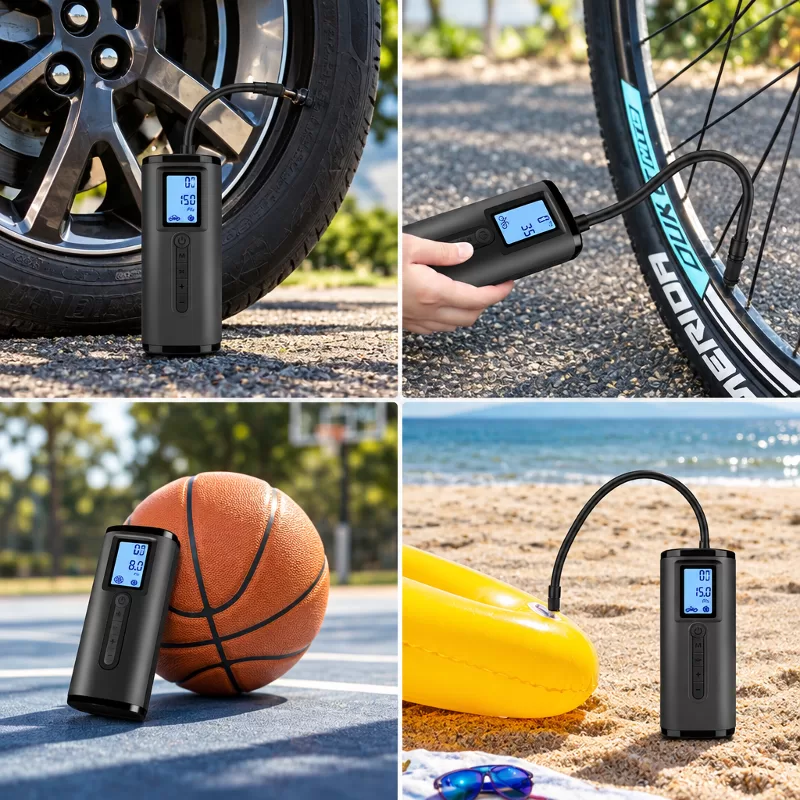
The AP2-P is listed for recurring pressure adjustments on cars, motorcycles, bicycles, e-bikes, wheelchairs, and balance vehicles. The manufacturer provides a 20–30 minute runtime rating, but the number of car-tire top-ups depends on tire size, pressure difference, temperature, and battery condition.
The supplied adapters are intended for the listed bicycle and e-bike applications; users should confirm the valve type before purchase or use. Its compact housing makes it easy to carry in a bicycle bag, motorcycle pannier, or vehicle trunk.
Inflatable Sports Equipment and Recreational Gear
Maintaining proper pressure in sports equipment is straightforward thanks to dedicated ball modes and specialized narrow needle adapters. Inflating balls to manufacturer specifications ensures predictable bounce and helps preserve outer panel stitching.
Correct tire pressure can support normal rolling performance on pneumatic mobility equipment. Follow the equipment manufacturer’s specified pressure when using the inflator on wheelchairs and balance scooters to preserve handling.
When a Compact Handheld Inflator Reaches Its Practical Limit
Handheld inflators are optimized for maintenance, pressure top-ups, and manageable emergency repairs. They are not engineered to seat beads on commercial truck tires or inflate large-volume off-road tires from complete zero.
The AP2-P is rated for 20–30 minutes of operation, but users should not assume that one runtime period will fully inflate an empty tire. For extended tasks, follow the manufacturer’s continuous-working-time limit and allow the unit to cool before additional operation if it becomes hot.
Tire-Pressure Safety Practices and Troubleshooting
The Engineering Reason Cold Tire Pressure Matters
Tire pressure must always be measured when the tire rubber is cold. Friction generated while driving heats the trapped air molecules inside the tire chamber, causing thermal expansion that artificially elevates pressure readings by several PSI.
For a cold reading, the vehicle should have been parked for at least three hours, or driven less than one mile after that cooling period. Inflating or deflating warm tires risks leaving your vehicle underinflated once the tires cool back to ambient temperatures.
Sidewall Maximum Pressure Versus Door-Jamb Recommended Target
Mistaking maximum sidewall ratings for proper inflation targets remains a widespread mistake among vehicle owners. The sidewall marking gives the tire’s maximum inflation pressure. It is not the vehicle’s recommended operating pressure, which should be taken from the vehicle placard or owner’s manual.
Automotive chassis engineers calculate vehicle placard recommendations to optimize suspension geometry, tire deflection under cornering loads, wet surface braking distance, and uniform wear across the center tread. Following the door-jamb placard provides the vehicle manufacturer’s recommended cold pressure and supports the handling and wear characteristics for which the vehicle was designed.
Troubleshooting Premature Shutoff and Reading Variance
If the inflator shuts off immediately, check the selected unit and target, confirm the hose is properly connected, and inspect the valve and adapter for blockage or damage. An obstruction or misaligned connection can cause localized pressure spikes that trigger the shutoff threshold.
Reading variance can also occur if the pump coupling is threaded loosely, allowing air to escape faster than the cylinder delivers it. To fix this, unthread the chuck, check that the valve stem core is straight, and reattach the connection until the LCD shows a steady reading.
Recognizing Tire Structural Damage and Knowing When to Call Roadside Assistance
An inflator is a maintenance tool, not a cure for internal tire damage. If a tire loses noticeable pressure over a short period, inspect it for a puncture, valve leak, rim problem, or other damage and seek professional service.
Do not drive on a structurally damaged tire. If you observe sidewall bulging, cord exposure, or severe shoulder cracks, install a suitable spare if available or call roadside assistance, and have the tire and wheel inspected by a professional.
Frequently Asked Questions
Does an auto-shutoff inflator completely eliminate the risk of overinflation?
Auto-shutoff technology is designed to reduce the risk of overinflation by stopping the pump when the selected preset is reached. However, mechanical user error—such as entering an incorrect numeric target or setting an incorrect measurement unit like Bar instead of PSI—can still lead to inaccurate pressure levels.
Can I use the pressure number molded onto the tire sidewall as my target?
The sidewall value is the tire’s maximum permissible inflation pressure. It is not normally the vehicle’s recommended operating pressure; use the vehicle placard or owner’s manual instead to ensure balanced handling and safety.
How many tires can a compact battery inflator realistically top up on a single charge?
The AP2-P is rated for 20–30 minutes of runtime and approximately 10–15 bicycle tires per full charge; car-tire results will vary by conditions. Factors such as tire size, ambient temperature, starting pressure, and battery charge state directly influence overall capacity per charge.
Why does my inflator display a higher pressure while pumping than when paused?
The displayed pressure may change after pumping stops as pressure stabilizes. Allow the reading to settle, then verify it with an accurate gauge under the appropriate cold-tire conditions.
Can the AP2-P handle both Presta and Schrader bicycle valves?
The AP2-P is supplied with three adapters and is marketed for bicycle use. Confirm that the included adapter matches your specific Presta or Schrader valve before operation to guarantee an airtight connection.
Conclusion
A portable tire inflator with auto shut off can help motorists maintain tire pressure without relying on public air equipment. Its usefulness depends on correct settings, accurate pressure verification, and adherence to the manufacturer’s operating limits. Understanding how pneumatic auto-shutoff functions work, following vehicle placard guidelines, and respecting thermal runtimes helps motorists maintain appropriate pressure levels across cars, two-wheelers, and sports balls. Keeping a portable tire inflator with auto shut off accessible during travel provides a convenient pneumatic tool whenever cold-pressure maintenance is needed.
-

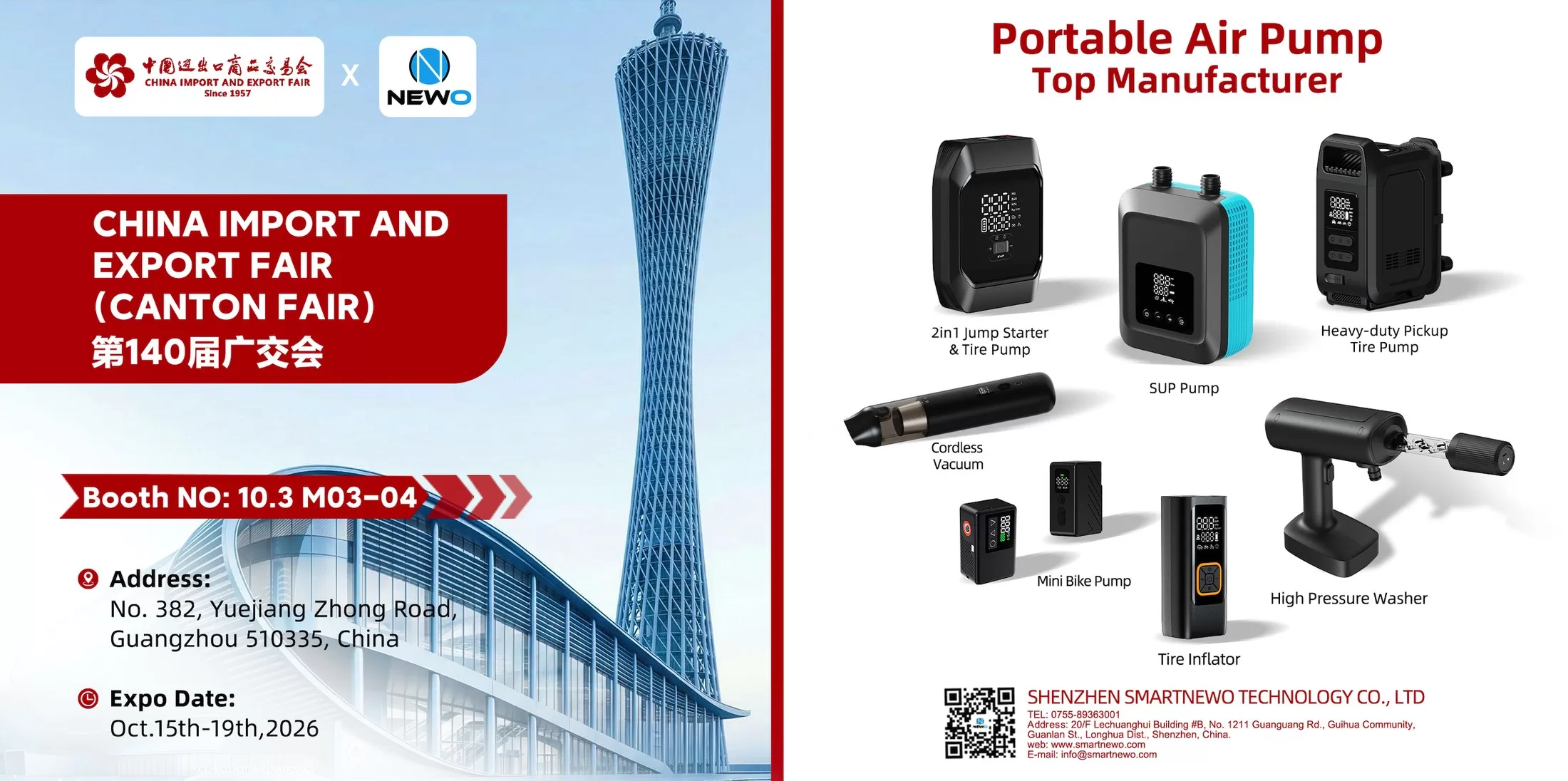
Meet NEWO at the 140th Canton Fair: Visit Booth 10.3 M03–04
Meet NEWO at the 140th Canton Fair in Guangzhou, October 15–19, 2026. Visit Booth 10.3 M03–04 to explore portable air pumps and discuss OEM, ODM and distribution opportunities.... -

As Shenzhen Welcomes the World for APEC 2026, NEWO Welcomes You to Our Factory
As Shenzhen prepares for APEC 2026, NEWO welcomes international buyers and partners to visit our factory, meet our team and explore future cooperation.... -

Leading the Way in Product Innovation and Excellence
Smartnewo exemplifies professionalism in product innovation and manufacturing. Their collaboration with Xiaomi Youpin on the G01 crowdfunding project highlights their expertise in creating compact, powerful inflatable pumps. Rigorous engineering, meticulous production processes, and advanced quality assurance underscore their commitment to excellence. The success of the G01 project, with significant market... -

Essential Qualities of an Excellent Supplier
In today's competitive market, finding a reliable supplier is crucial for business success. Based on insights from Smartnewo and broader internet research, here are key qualities an excellent supplier must possess:... -

NW06 Tire Inflator: Compact Power for Quick Inflation
Summary The NW06 Tire Inflator delivers quick and efficient tire inflation with a powerful 35L/min airflow. It features a user-friendly LCD screen for real-time pressure monitoring, dual power options with a built-in 6000mAh battery, and multiple nozzle attachments for versatile use. Its compact design and integrated LED light ensure convenience and... -

Unleash the Power of Portability: The SmartNewo Jump Starter with Air Compressor KF03
This guide will walk you through the steps to effectively use a portable tire inflator, helping you stay prepared and safe on the road.... -

Newo Attends The 2024 Consumer Electronics Show (CES)
Smartnewo booth is located at 53672, Halls A-D, Level 2, Venetian Expo, Las Vegas Convention Center (LVCC). ... -

Smartnewo’s Dual-Cylinder Air Pump Rocks the Hong Kong Autumn Electronics Fair!
Smartnewo’s Dual-Cylinder Air Pump Rocks the Hong Kong Autumn Electronics Fair!... -

Meet at the Canton Fair! Smartnewo brings dual-cylinder air pumps, making your inflation experience faster and more stable!
NEWO has went deep communication and negotiation with customers from all over the world on booth.... -

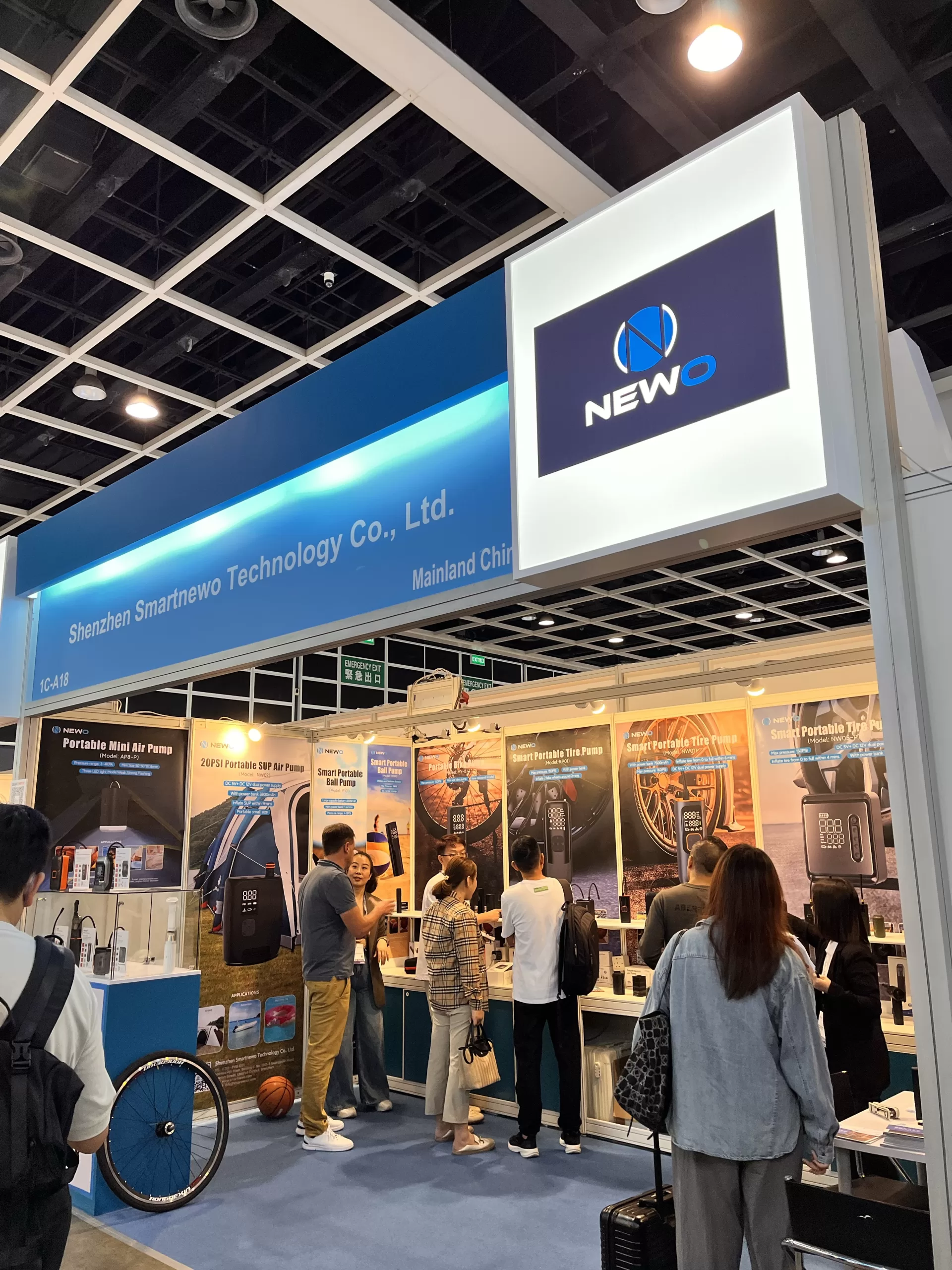
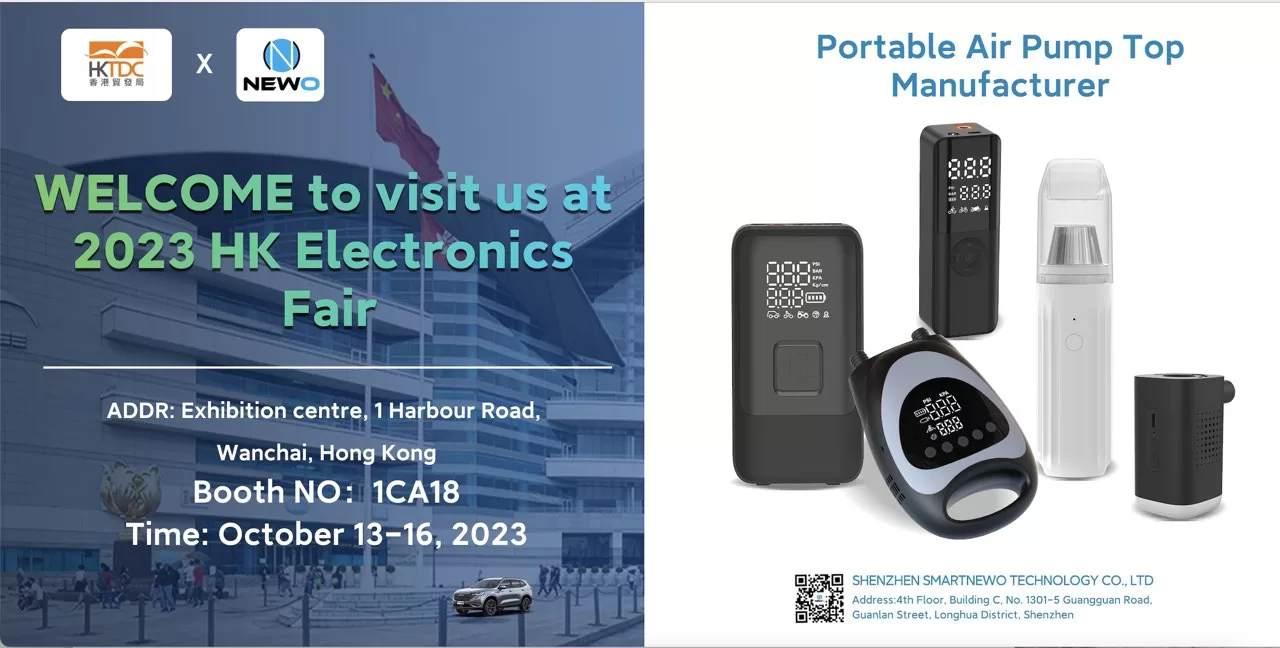
“Hong Kong Autumn Electronics Fair – 1CA18 (October 13th to 16th): Smartnewo invites you to visit our booth!
Hong Kong Autumn Electronics Fair...



-

What to Check Before Ordering Custom Electric Bike Pumps
Plan custom electric bike pumps with a clear requirements freeze for valves, TPU tubes, portability, repeated top-ups, charging, and model-specific documents.... -

OEM vs ODM Air Pumps: Which Manufacturing Model Fits Your Brand?
Compare OEM and ODM air pump projects by design responsibility, change approval, development scope, and written ownership terms before choosing your route.... -
How to Choose a Reliable Tire Inflator Manufacturer in China
Choose a tire inflator manufacturer in China with a focused RFQ, supplier evidence, configuration checks, and clear sample-to-pilot decisions for your brand.... -

Rechargeable Electric SUP Pump for Paddle Boards: Faster Inflation for SUPs, Kayaks and Inflatable Tents
The BL10-C Portable Electric Bike Tire Inflator is a compact and lightweight mini electric bike pump designed for modern cyclists. With up to 120 PSI pressure, a digital LED display, preset pressure control, automatic shut-off, USB-C charging, and multiple valve adapters, BL10-C offers a convenient inflation solution for road bikes,... -

Are Electric Bike Pumps Worth It in 2026? Electric Pump vs CO₂ vs Mini Hand Pump
Discover whether electric bike pumps are worth it in 2026. This guide compares electric bike pumps, CO₂ inflators, and mini hand pumps for road cycling, gravel riding, commuting, and long-distance rides. Learn the pros, limitations, best use cases, and key features to look for before choosing the right portable tire... -
BL10-C Portable Electric Bike Tire Inflator: Small Size, Reliable Power for Every Ride
The BL10-C Portable Electric Bike Tire Inflator is a compact and lightweight mini electric bike pump designed for modern cyclists. With up to 120 PSI pressure, a digital LED display, preset pressure control, automatic shut-off, USB-C charging, and multiple valve adapters, BL10-C offers a convenient inflation solution for road bikes,... -

Why Mini Electric Bike Pumps Are Becoming Essential for Modern Cycling
Discover why mini electric bike pumps are becoming essential for modern cyclists. Learn how portable electric bike pumps improve tire pressure management, riding safety, and convenience.... -

The Ultimate Smart Solution for Easy Outdoor Adventures in 2026
Discover how a spring travel air pump simplifies outdoor trips with fast inflation, smart features, and powerful performance—perfect for every adventure.... -

Powerful 5-in-1 Portable Car Tire Inflator and Jump Starter: The Ultimate Emergency Tool for Every Driver
Why Every Driver Needs a Portable Car Tire Inflator and Jump Starter Modern drivers face many unexpected situations on the road. A flat tire, low tire pressure, or a dead car battery can happen at the worst possible time. That’s why having a portable car tire inflator and jump starter is... -

7 Real Cycling Scenarios That Show Why Every Rider Should Carry a Mini Bike Pump
Cycling is one of the most freeing activities you can enjoy. Whether you’re commuting to work, riding through city streets, or exploring quiet countryside roads, a bike ride can instantly improve your day. But there’s one small problem that almost every cyclist eventually faces: Low tire pressure. It might happen...


-
How Is a Football Properly Inflated?
The correct inflation of a football - with not too much and not too little air - is a hotly debated topic among footballers.... -
Application Scenarios of Car Inflator Pump
Often long-distance business trips or play car owners because the road may be more remote areas, in this case if you encounter a tire leak....