

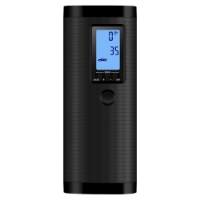
 Portable Tire Inflators
 Electric Air Pumps
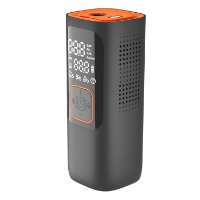 Electric Car Tyre Pumps
 Electric Ball Pumps
 Electric Bike Pump
 SUP Air Pump

Portable Jump Starter and Tire Inflator: Design Decisions That Matter on the Roadside
Dead batteries and flat tires rarely announce themselves in convenient places. A portable jump starter and tire inflator collapses two roadside emergencies into a single tool, but only if the engineering behind voltage delivery, cylinder count, and pressure control actually works when the temperature drops and the clock is running.
The appeal is obvious: instead of carrying separate jumper cables, a standalone inflator, and hoping a passing driver will stop, you hold one device that starts the engine and reinflates the tire. The challenge lies in balancing peak amperage, pump flow rate, battery capacity, and thermal management inside a housing small enough to store under the front seat. Not every unit delivers on that balance, and understanding why separates a reliable backup from expensive dead weight.
Why Cylinder Count and Flow Rate Define Real Inflation Speed
Most portable inflators advertise maximum pressure in PSI, but pressure alone does not tell you how quickly air moves into the tire. Flow rate, measured in liters per minute, determines whether you spend two minutes or ten standing beside the road.
A 19-cylinder pump operating at 26 to 28 L/min can top off a mid-size sedan tire from 25 to 35 PSI in roughly three minutes. Single-cylinder models pushing the same maximum pressure often require eight to twelve minutes for the same job because each compression stroke displaces less volume. The difference becomes critical when you are inflating in freezing weather, under traffic, or racing daylight.
Cylinder count also affects heat buildup. A single piston running continuously generates more friction and thermal load per cycle than nineteen smaller pistons sharing the work. That thermal ceiling sets the realistic duty cycle: how long the pump can run before it must cool. Devices rated for 20 to 30 minutes of continuous operation usually rely on multi-cylinder designs and aluminum heat sinks to stay within safe operating temperatures.
Higher flow rates do introduce noise. Expect around 85 dB at one meter with a 19-cylinder pump running at full speed, roughly equivalent to a vacuum cleaner. If roadside discretion matters more than speed, look for units with variable-speed motors that trade flow rate for quieter operation when precision topping-off replaces emergency inflation.
Peak Current vs. Starting Current: What 1000A Actually Means
Marketing materials often highlight peak amperage—1000A, 1200A, even 1500A—but the number that determines whether your engine turns over is starting current, the sustained output the device can deliver for several seconds while the starter motor engages.
A jump starter rated at 1000A peak with 500A starting current can supply high instantaneous current for short bursts and maintain 500A long enough to crank a cold 12V engine with moderate displacement. Peak figures represent instantaneous capability, useful for overcoming initial resistance when connecting to a deeply discharged battery, but they do not reflect the energy reserve needed to turn the engine through multiple compression cycles.
Battery capacity governs how many attempts you get. A 29.6Wh cell pack (four 2000mAh cells in series) stores enough energy for two or three start attempts on a four-cylinder engine, while a 44.4Wh pack (four 3000mAh cells) extends that to five or six tries. If the engine does not catch after the third crank, the problem is usually fuel delivery, ignition timing, or mechanical seizure—not lack of amperage.
Starting current also depends on internal resistance. Lithium-ion cells with high discharge rates and thick copper traces between cells minimize voltage sag under load. Cheaper units use thinner wiring and lower-grade cells, leading to voltage collapse before the starter motor reaches full speed. Check for devices that publish both peak and starting figures; those listing only peak current are often hiding marginal sustained performance.
Preset Modes and Auto Shut-Off: Convenience That Prevents Overinflation
Manual pressure gauges work, but they require constant monitoring and quick reflexes to avoid overinflation. Preset modes tied to auto shut-off eliminate that babysitting by stopping the pump the moment target pressure is reached.
Five common presets cover most use cases:
- Car tires: 30 to 35 PSI
- Bicycle tires: 40 to 65 PSI depending on road vs. mountain use
- Motorcycle tires: 28 to 36 PSI
- Sports balls: 8 to 10 PSI
- Custom: user-defined value from 2 to 160 PSI
Auto shut-off relies on a pressure sensor inside the pump head that samples internal line pressure every second. When measured pressure matches the target within 0.5 PSI, the motor cuts power. This closed-loop control prevents the slow creep that leads to sidewall stress and premature wear, especially on high-pressure bicycle tires where two extra PSI can reduce rolling resistance but increase puncture risk.
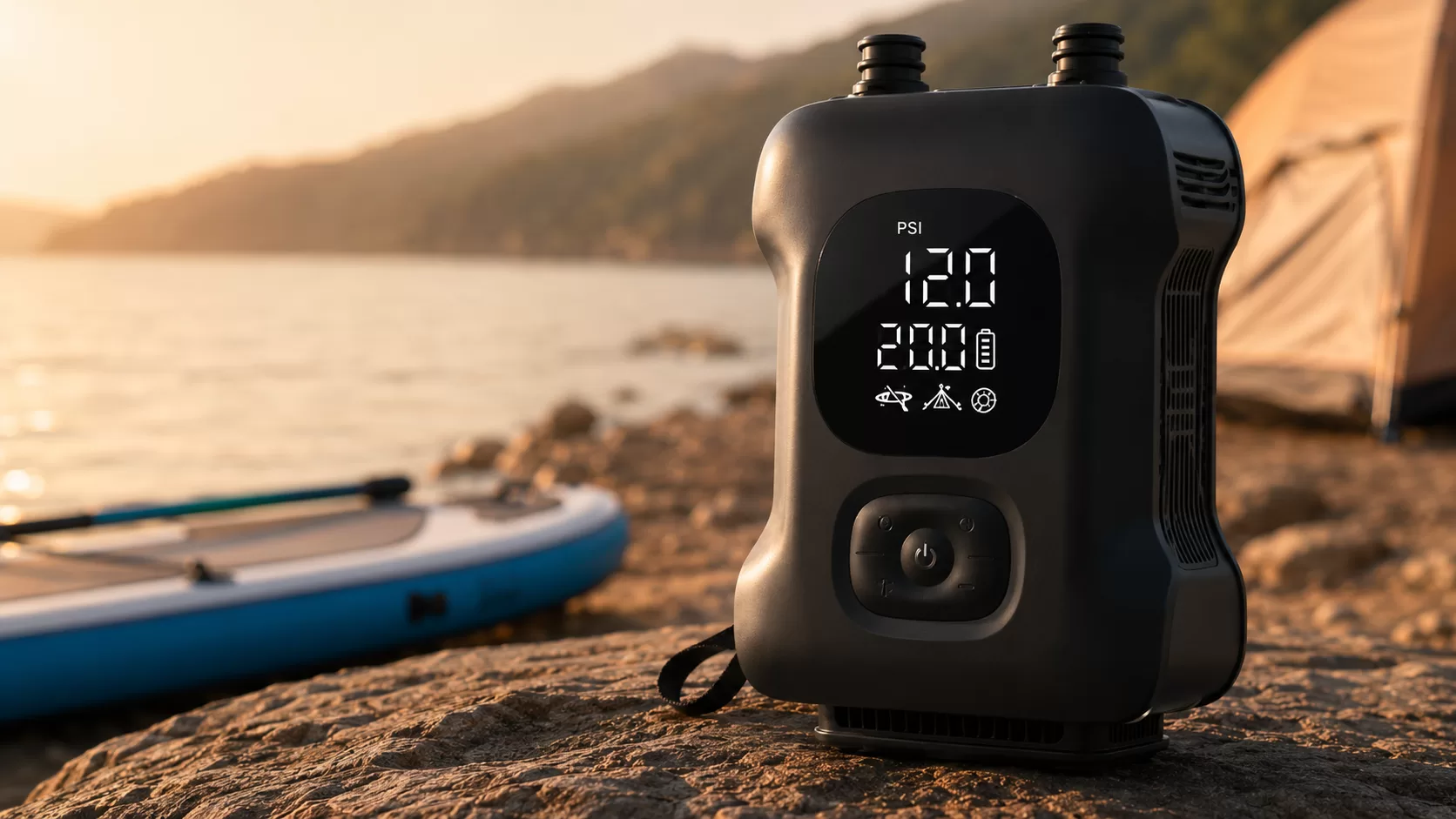
Custom mode is indispensable for less common applications: inflating SUP boards to 12 to 15 PSI, topping off trailer tires at 50 PSI, or calibrating suspension air shocks on mountain bikes. The ability to set and forget a precise value turns the inflator into a maintenance tool, not just an emergency device.
Floating LED displays improve usability by showing real-time pressure during inflation, eliminating the need to stop, check, and restart. Look for units that display in PSI, BAR, and KPA so you can match whatever unit your vehicle manual specifies without mental conversion.
Battery Chemistry, Cycle Life, and Cold-Weather Performance
Lithium-ion cells power almost every modern portable jump starter, but not all lithium chemistries perform equally when temperature drops. Cells rated for -10°C operation use formulations that maintain ionic conductivity in cold conditions, while standard cells lose 30 to 50 percent of capacity below freezing.
Battery version matters for seasonal use:
| Version | Capacity | Cold Operation | Typical Use Case |
|---|---|---|---|
| L | 29.6Wh | 0°C to 45°C | Mild climates, occasional roadside use |
| M | 37Wh | -10°C to 45°C | Year-round temperate regions, weekly inflation |
| P | 44.4Wh | -10°C to 45°C | Cold climates, extended off-grid travel |
Cycle life—the number of charge-discharge cycles before capacity falls below 80 percent of original—sits around 300 cycles for most consumer-grade lithium packs. That translates to roughly three years of monthly use, or one year of weekly use, before noticeable capacity fade. Devices using automotive-grade cells with better thermal management can stretch that to 500 cycles, but they cost significantly more.
Charging time scales with capacity. A 29.6Wh pack recharges in three hours via USB-C power delivery, while a 44.4Wh pack requires four hours. Fast-charging protocols beyond standard power delivery exist, but they generate more heat and accelerate degradation, so most manufacturers cap input power to preserve cycle life.
Self-discharge is another cold-weather concern. Lithium-ion cells lose 2 to 5 percent of charge per month at room temperature, but that rate can increase in extreme temperatures. If you store the unit in an unheated garage through winter, expect to recharge before use even if it sat fully charged in October.
Type-C and Type-A Outputs: The Case for Integrated Power Bank Function
Carrying a separate power bank for phones and a separate jump starter for vehicles doubles the number of devices you must remember to charge. Integrating USB outputs into the jump starter consolidates that burden, as long as the power budget does not compromise primary functions.
Type-C output at 20V / 2.2A delivers up to 44W, enough to fast-charge most laptops and tablets. Type-A output at 12V / 2A provides 24W for older devices and accessories. Both ports draw from the same lithium pack that powers jump-starting and inflation, so heavy USB use reduces available cranking attempts.
Realistic power allocation:
- One smartphone charge: 10 to 15Wh (roughly 30 percent of a 37Wh pack)
- One laptop charge to 50 percent: 20 to 25Wh (60 to 70 percent of a 37Wh pack)
- One emergency jump start: 15 to 20Wh (40 to 50 percent of a 37Wh pack)
If you drain the pack charging devices during a camping trip, you may lack sufficient reserve to jump-start on the return drive. The safest practice is to treat USB outputs as secondary convenience, not primary power supply, and recharge the unit before any road trip where jump-start capability might be needed.
LED emergency lighting adds another draw, typically 3 to 5W, but runtime is measured in hours rather than minutes. A full charge can power the LED for six to eight hours, useful for roadside visibility or campsite illumination without significantly impacting jump-start reserve.
Five Touch Buttons, One Physical Button: Interface Design for Gloved Use
Capacitive touch buttons work well on smartphones, but they fail in cold weather when thick gloves block skin contact. Effective roadside interfaces pair touch controls for routine adjustments with at least one physical button for power-on, ensuring the device can be activated even with heavy winter gloves.
A six-button layout balances functionality and simplicity:
- Physical power button: turns the device on and off
- Touch lighting button: cycles through LED modes (steady, strobe, SOS)
- Touch mode button: selects preset inflation profile
- Touch plus/minus buttons: adjust custom pressure target
- Touch start button: begins inflation or confirms selection
The physical button eliminates the most common failure mode: arriving at a dark roadside with a dead phone, numb fingers, and a device that will not wake because the touch sensor cannot detect gloved input. Once powered on, the remaining touch controls are usable with light gloves or bare hands, acceptable since you are already engaged with the device.
Button layout matters for one-handed operation. Placing the power button on the top edge or side allows you to grip the device and press with your thumb, while touch controls on the front face are accessed with your other hand. Devices that cluster all controls on a single narrow strip force awkward two-handed holds and increase the chance of accidental presses.
Noise, Runtime, and Thermal Limits: What 85dB for 30 Minutes Actually Requires
Portable inflators generate noise through motor vibration, air turbulence inside the cylinder, and resonance in the plastic housing. Keeping sound output at or below 85 dB while maintaining 26 to 28 L/min flow requires careful mechanical design: balanced rotors, rubber motor mounts, and baffled air paths.
Thirty minutes of continuous runtime is enough to inflate approximately 30 to 40 bicycle tires from flat, or 6 to 8 car tires from 20 to 35 PSI. Beyond that window, thermal buildup in the motor windings and piston seals risks permanent damage. Most units include thermal cutoff switches that shut down the pump if internal temperature exceeds safe operating limits, a necessary safeguard but one that interrupts operation at the worst moment.
Heat dissipation depends on surface area and airflow. Devices with large ventilation perforations on the side panels allow convective cooling, while solid housings trap heat and shorten duty cycles. If you plan to inflate multiple large tires in succession—say, rotating between all four tires on a truck—budget five minutes of cooling time between tires to avoid triggering thermal shutdown.
Noise becomes a consideration in residential or campground settings where 85 dB at midnight will wake neighbors. Some models offer low-speed modes that cut flow rate to 15 L/min but reduce noise to 70 dB, acceptable for late-night use. The tradeoff is longer inflation time, so reserve low-speed operation for non-emergency situations.
Application Range: From Bicycle Commutes to E-Commerce Gifting
A portable jump starter and tire inflator serves overlapping but distinct user groups. Bicycle commuters need fast, repeatable tire top-offs without the physical effort of a hand pump. Motorcycle riders face the same puncture risks as cars but with higher-pressure tires that manual pumps struggle to reach. E-bike owners inflate less frequently but benefit from integrated USB charging on long rides.
Automotive applications extend beyond emergencies. Seasonal temperature swings cause tire pressure to drop roughly 1 PSI for every 10°F decrease, meaning a set of tires inflated to 35 PSI in August reads 28 PSI in January. Monthly pressure checks with a portable inflator prevent uneven tread wear and improve fuel economy, small gains that accumulate over a vehicle’s lifespan.
Sports ball inflation is a niche but high-frequency use case. Basketballs, soccer balls, and volleyballs lose pressure gradually through the valve stem, requiring weekly top-offs during active seasons. A preset mode at 8 PSI eliminates the guesswork, and auto shut-off prevents the over-hard bounce that shortens ball life.
E-commerce and retail channels treat these devices as giftable automotive technology: functional enough for real use, compact enough for gift packaging, and broad enough in capability to appeal to recipients who are not automotive enthusiasts. The combination of jump-start, inflation, USB power, and LED lighting hits multiple pain points without requiring specialized knowledge to operate.
How Size, Weight, and Portability Interact With Power Density
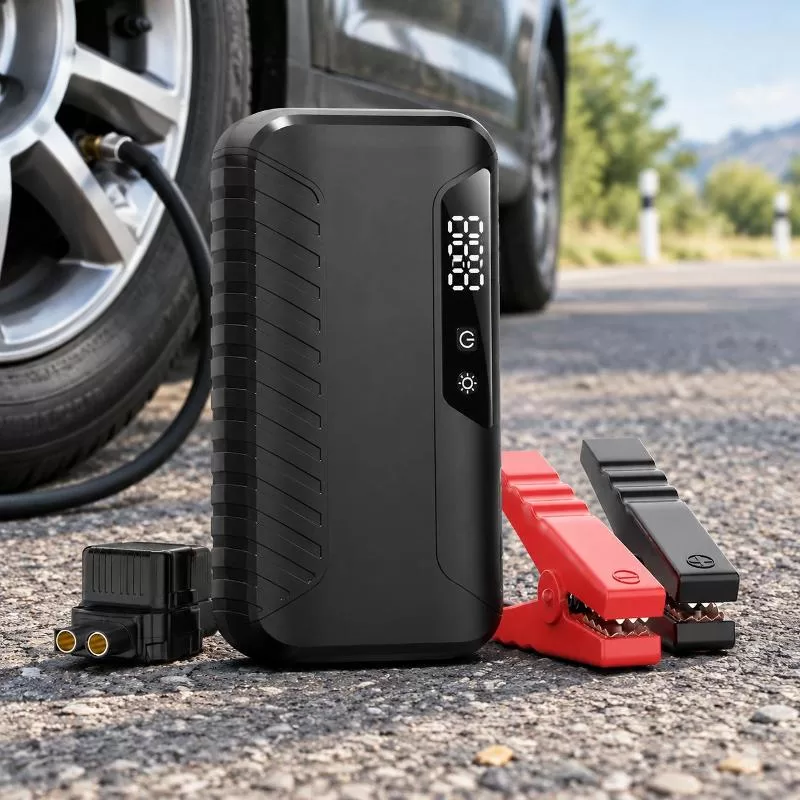
Cramming 44.4Wh of battery, a 19-cylinder pump, jump-start circuitry, and USB outputs into a 180 × 130 × 58 mm housing requires high power density. Lithium-ion cells deliver roughly 250Wh per kilogram, but the surrounding structure—aluminum pump housing, steel motor shaft, copper wiring, and ABS plastic shell—adds weight without adding capacity.
A complete unit weighs between 1.2 and 1.8 kg depending on battery version, light enough to carry in one hand but heavy enough that you notice it in a backpack on a long hike. Compare that to a standalone jump starter at 0.8 kg plus a separate inflator at 0.6 kg, and the 2-in-1 device saves both weight and volume.
Portability is not just mass; it is also shape. A tall, narrow form factor fits vertically in a car door pocket or center console bin, while a flat, wide design slides under the front seat but takes up more floor space. Rounded corners and rubberized side panels improve grip on wet or oily hands, critical when you are lying on damp pavement trying to clamp jumper cables in poor light.
Storage temperature matters for longevity. Lithium-ion cells degrade faster above 30°C, so leaving the unit in a sun-soaked trunk all summer accelerates capacity fade. Ideally, store in a climate-controlled cabin or garage, and move it to the vehicle only when travel begins. If cabin storage is not an option, insulated carrying cases slow thermal transfer and extend pack life.
Type-C Charging and the Shift Away From Proprietary Barrel Connectors
Older jump starters used proprietary barrel connectors and wall adapters, creating dependency on a single charger that, once lost, rendered the device unusable until a replacement arrived. Type-C charging eliminates that fragility by using the same cable that charges laptops, phones, and tablets.
USB Power Delivery negotiation allows the device to request the voltage and current it needs from any PD-compatible charger. That flexibility means you can recharge from a car USB port, a portable solar panel, or a hotel room outlet using the same cable, reducing the number of chargers you must carry on multi-day trips.
Charging speed depends on input power. A higher-wattage charger can refill the pack faster, though most devices regulate input internally to protect cell health. Most devices accept moderate input power to balance charging speed with battery longevity, so using a higher-wattage laptop charger may not always speed up the process significantly.
One caution: not all Type-C cables support Power Delivery. Thin, cheap cables rated only for data transfer may not carry sufficient current, leading to slow charging or failure to charge at all. Use cables rated for 60W or higher to ensure compatibility, and verify that the charger supports PD rather than only legacy USB charging protocols.
When to Choose 160 PSI Range vs. Lower-Pressure Alternatives
Maximum pressure capability defines the upper boundary of what the device can inflate, but it does not mean you should routinely push components to that limit. A 160 PSI ceiling accommodates high-pressure bicycle tires, small air shocks, and certain pneumatic tools, but car tires never exceed 45 PSI, and over-pressurizing causes sidewall damage and reduced traction.
Devices capped at 100 PSI cost less and weigh less because they use smaller motors and lighter pump housings, acceptable if your use case never extends beyond automotive and motorcycle tires. But if you ride road bikes with 120 PSI tires or occasionally need to power a pneumatic nailer at 90 PSI, the extra range justifies the cost and bulk.
Pressure accuracy degrades near maximum output. A 160 PSI pump reading 155 PSI might be delivering 150 PSI due to sensor calibration drift and hose resistance. For precision applications—suspension tuning, racing tires, medical equipment—verify output with an independent mechanical gauge rather than trusting the built-in display.
Low-pressure applications expose a different limitation: minimum controllable pressure. Most pumps cannot reliably deliver below 2 PSI, making them unsuitable for inflating large-volume, low-pressure items like air mattresses, pool floats, or inflatable kayaks. Those tasks require dedicated high-volume, low-pressure pumps with larger diaphragms and slower motors.
Maintenance, Storage, and Signs of Declining Performance
Portable jump starters and tire inflators are low-maintenance devices, but they are not zero-maintenance. Every three months, recharge the battery to 50 to 70 percent if the unit has been sitting unused. Lithium-ion cells degrade fastest when stored fully charged or fully depleted, so partial charge extends shelf life.
Inspect jumper clamps for corrosion or damaged insulation before each use. Copper oxidation on the clamp jaws increases resistance and reduces effective starting current, sometimes enough to prevent a successful jump. Clean corroded clamps with a wire brush and apply a thin coat of dielectric grease to slow further oxidation.
Check the inflation hose for cracks, especially near the threaded connector where flexing concentrates stress. A pinhole leak drops pressure inside the hose, forcing the pump to work harder and triggering premature thermal shutdown. Replace cracked hoses immediately; they will not self-heal and only worsen under pressure.
Signs of declining performance:
- Engine cranks more slowly during jump-start despite full charge
- Inflation takes noticeably longer to reach target pressure
- Battery drains faster than expected during USB charging
- Thermal shutdown occurs after less than 15 minutes of continuous use
Any of these symptoms suggests either cell degradation, motor wear, or seal failure. Cells can sometimes be replaced if the housing is serviceable, but motors and pump seals are rarely user-replaceable. At 300 charge cycles or three years of regular use, expect performance to drop below 80 percent of original capacity, the threshold where replacement becomes more cost-effective than continued use of a weakened device.
A portable jump starter and tire inflator is only as reliable as the care you invest in keeping it charged, inspected, and stored within safe temperature limits. Treat it as active safety equipment, not a tool you can ignore for months and expect to work perfectly when the emergency finally arrives.
-

Meet NEWO at the 140th Canton Fair: Visit Booth 10.3 M03–04
Meet NEWO at the 140th Canton Fair in Guangzhou, October 15–19, 2026. Visit Booth 10.3 M03–04 to explore portable air pumps and discuss OEM, ODM and distribution opportunities.... -

As Shenzhen Welcomes the World for APEC 2026, NEWO Welcomes You to Our Factory
As Shenzhen prepares for APEC 2026, NEWO welcomes international buyers and partners to visit our factory, meet our team and explore future cooperation.... -
Leading the Way in Product Innovation and Excellence
Smartnewo exemplifies professionalism in product innovation and manufacturing. Their collaboration with Xiaomi Youpin on the G01 crowdfunding project highlights their expertise in creating compact, powerful inflatable pumps. Rigorous engineering, meticulous production processes, and advanced quality assurance underscore their commitment to excellence. The success of the G01 project, with significant market... -

Essential Qualities of an Excellent Supplier
In today's competitive market, finding a reliable supplier is crucial for business success. Based on insights from Smartnewo and broader internet research, here are key qualities an excellent supplier must possess:... -
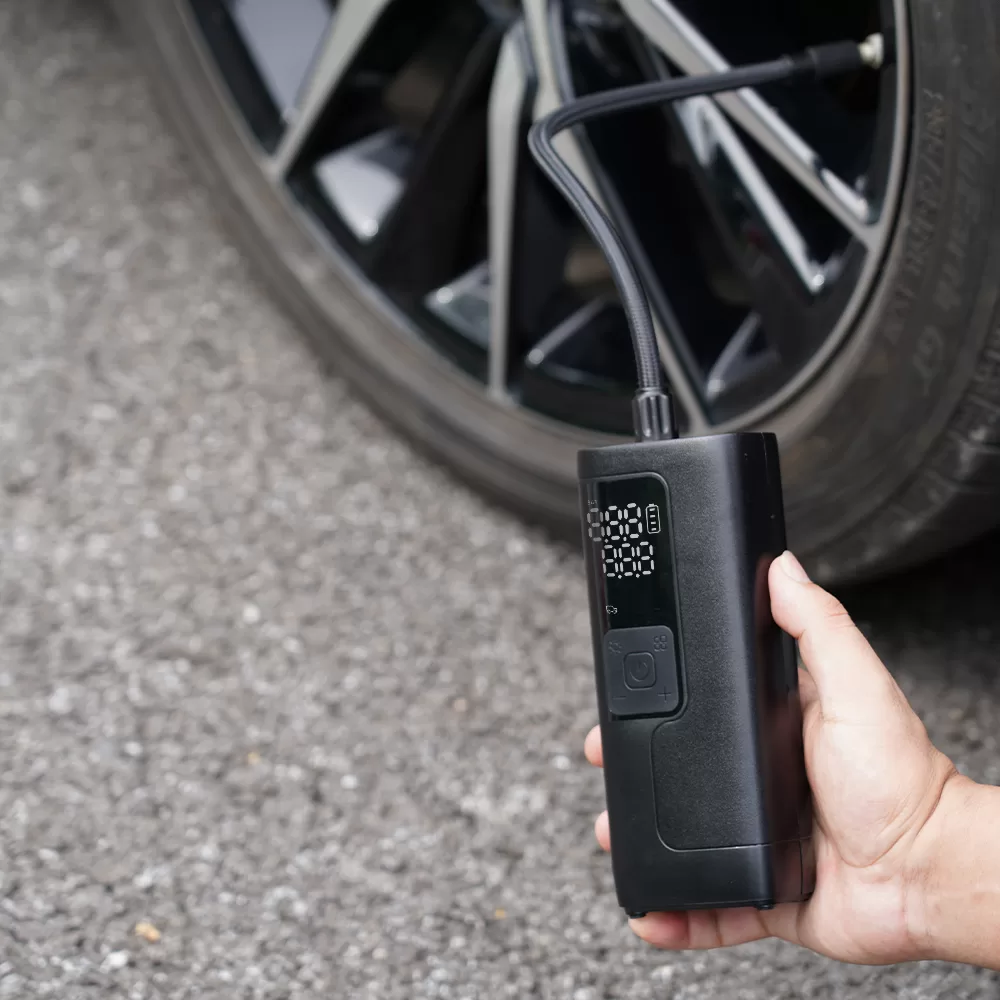
NW06 Tire Inflator: Compact Power for Quick Inflation
Summary The NW06 Tire Inflator delivers quick and efficient tire inflation with a powerful 35L/min airflow. It features a user-friendly LCD screen for real-time pressure monitoring, dual power options with a built-in 6000mAh battery, and multiple nozzle attachments for versatile use. Its compact design and integrated LED light ensure convenience and... -
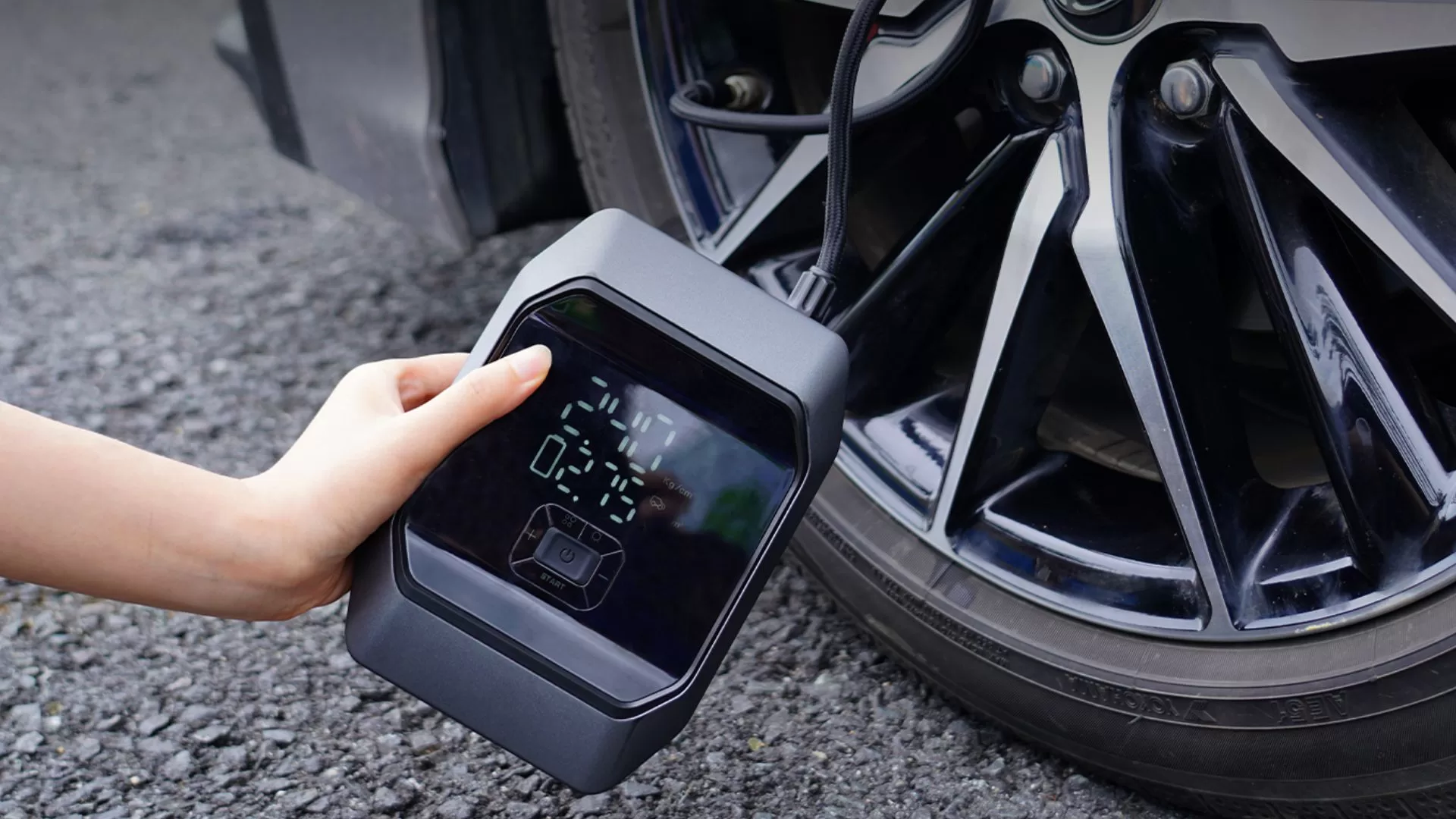
Unleash the Power of Portability: The SmartNewo Jump Starter with Air Compressor KF03
This guide will walk you through the steps to effectively use a portable tire inflator, helping you stay prepared and safe on the road.... -

Newo Attends The 2024 Consumer Electronics Show (CES)
Smartnewo booth is located at 53672, Halls A-D, Level 2, Venetian Expo, Las Vegas Convention Center (LVCC). ... -
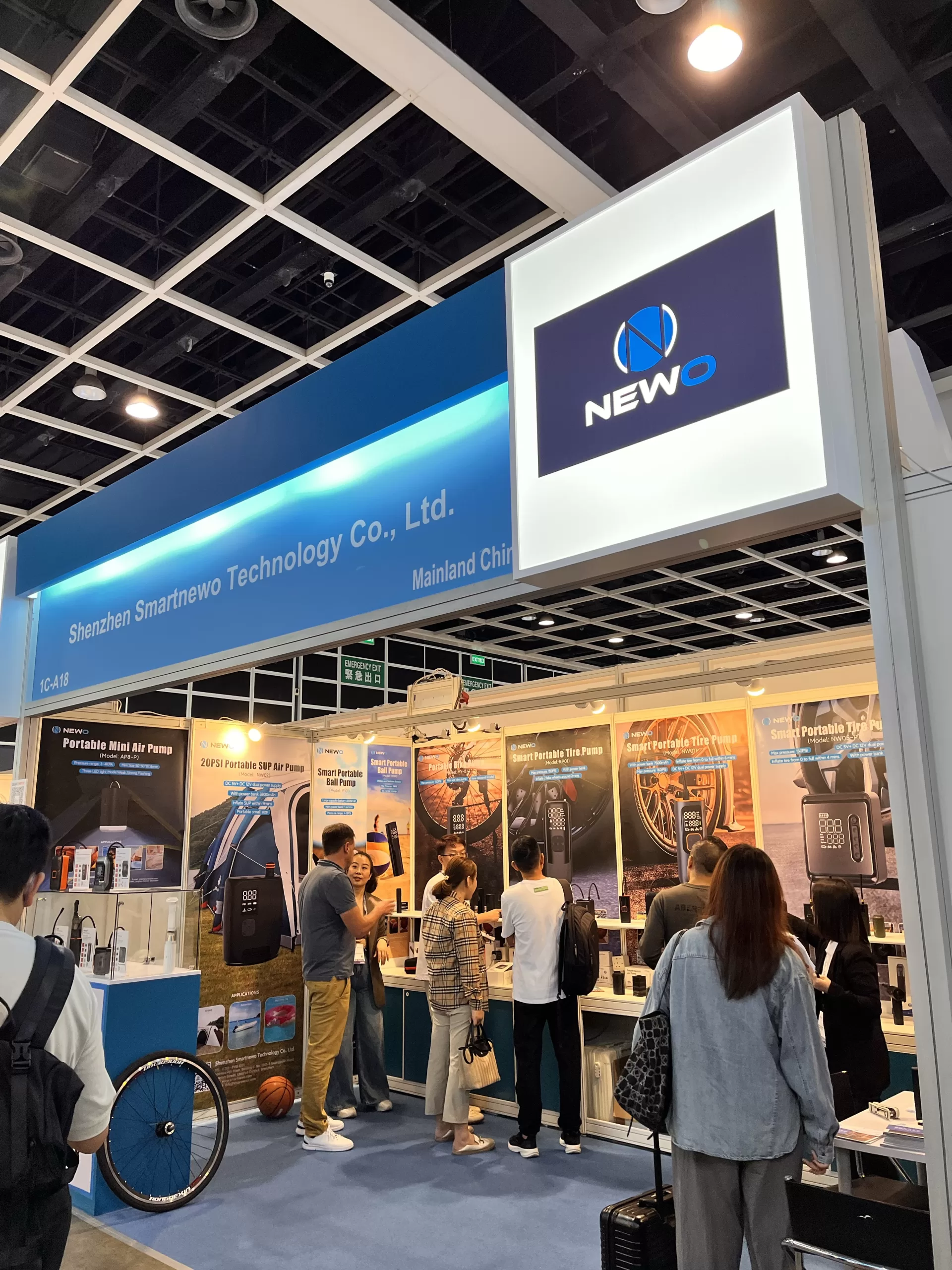
Smartnewo’s Dual-Cylinder Air Pump Rocks the Hong Kong Autumn Electronics Fair!
Smartnewo’s Dual-Cylinder Air Pump Rocks the Hong Kong Autumn Electronics Fair!... -

Meet at the Canton Fair! Smartnewo brings dual-cylinder air pumps, making your inflation experience faster and more stable!
NEWO has went deep communication and negotiation with customers from all over the world on booth.... -
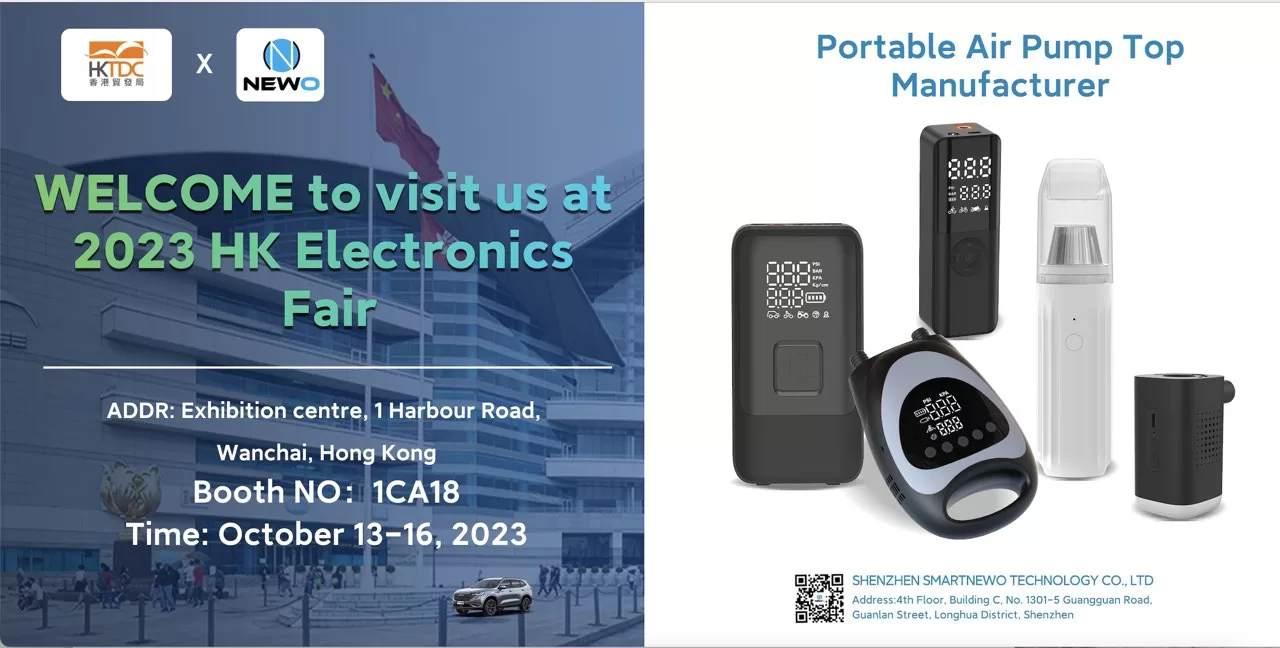
“Hong Kong Autumn Electronics Fair – 1CA18 (October 13th to 16th): Smartnewo invites you to visit our booth!
Hong Kong Autumn Electronics Fair...
-
Rechargeable Electric SUP Pump for Paddle Boards: Faster Inflation for SUPs, Kayaks and Inflatable Tents
The BL10-C Portable Electric Bike Tire Inflator is a compact and lightweight mini electric bike pump designed for modern cyclists. With up to 120 PSI pressure, a digital LED display, preset pressure control, automatic shut-off, USB-C charging, and multiple valve adapters, BL10-C offers a convenient inflation solution for road bikes,... -
Are Electric Bike Pumps Worth It in 2026? Electric Pump vs CO₂ vs Mini Hand Pump
Discover whether electric bike pumps are worth it in 2026. This guide compares electric bike pumps, CO₂ inflators, and mini hand pumps for road cycling, gravel riding, commuting, and long-distance rides. Learn the pros, limitations, best use cases, and key features to look for before choosing the right portable tire... -
BL10-C Portable Electric Bike Tire Inflator: Small Size, Reliable Power for Every Ride
The BL10-C Portable Electric Bike Tire Inflator is a compact and lightweight mini electric bike pump designed for modern cyclists. With up to 120 PSI pressure, a digital LED display, preset pressure control, automatic shut-off, USB-C charging, and multiple valve adapters, BL10-C offers a convenient inflation solution for road bikes,... -
Why Mini Electric Bike Pumps Are Becoming Essential for Modern Cycling
Discover why mini electric bike pumps are becoming essential for modern cyclists. Learn how portable electric bike pumps improve tire pressure management, riding safety, and convenience.... -
The Ultimate Smart Solution for Easy Outdoor Adventures in 2026
Discover how a spring travel air pump simplifies outdoor trips with fast inflation, smart features, and powerful performance—perfect for every adventure.... -
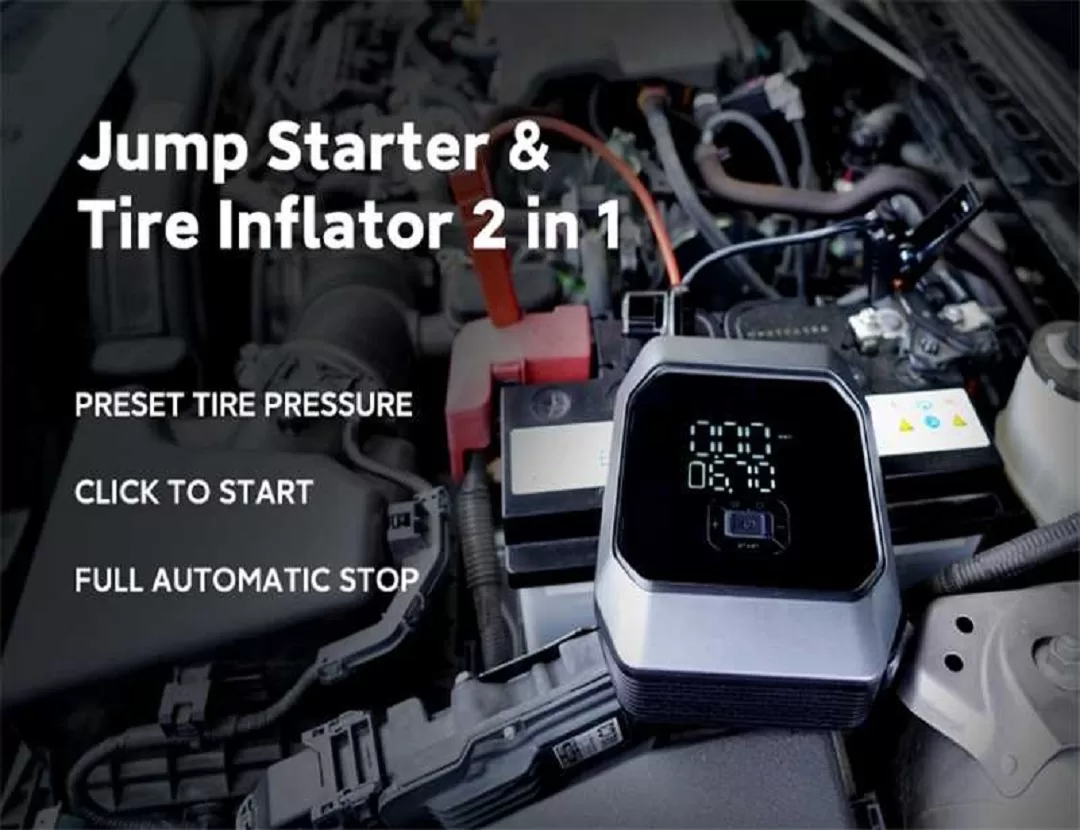
Powerful 5-in-1 Portable Car Tire Inflator and Jump Starter: The Ultimate Emergency Tool for Every Driver
Why Every Driver Needs a Portable Car Tire Inflator and Jump Starter Modern drivers face many unexpected situations on the road. A flat tire, low tire pressure, or a dead car battery can happen at the worst possible time. That’s why having a portable car tire inflator and jump starter is... -

7 Real Cycling Scenarios That Show Why Every Rider Should Carry a Mini Bike Pump
Cycling is one of the most freeing activities you can enjoy. Whether you’re commuting to work, riding through city streets, or exploring quiet countryside roads, a bike ride can instantly improve your day. But there’s one small problem that almost every cyclist eventually faces: Low tire pressure. It might happen... -
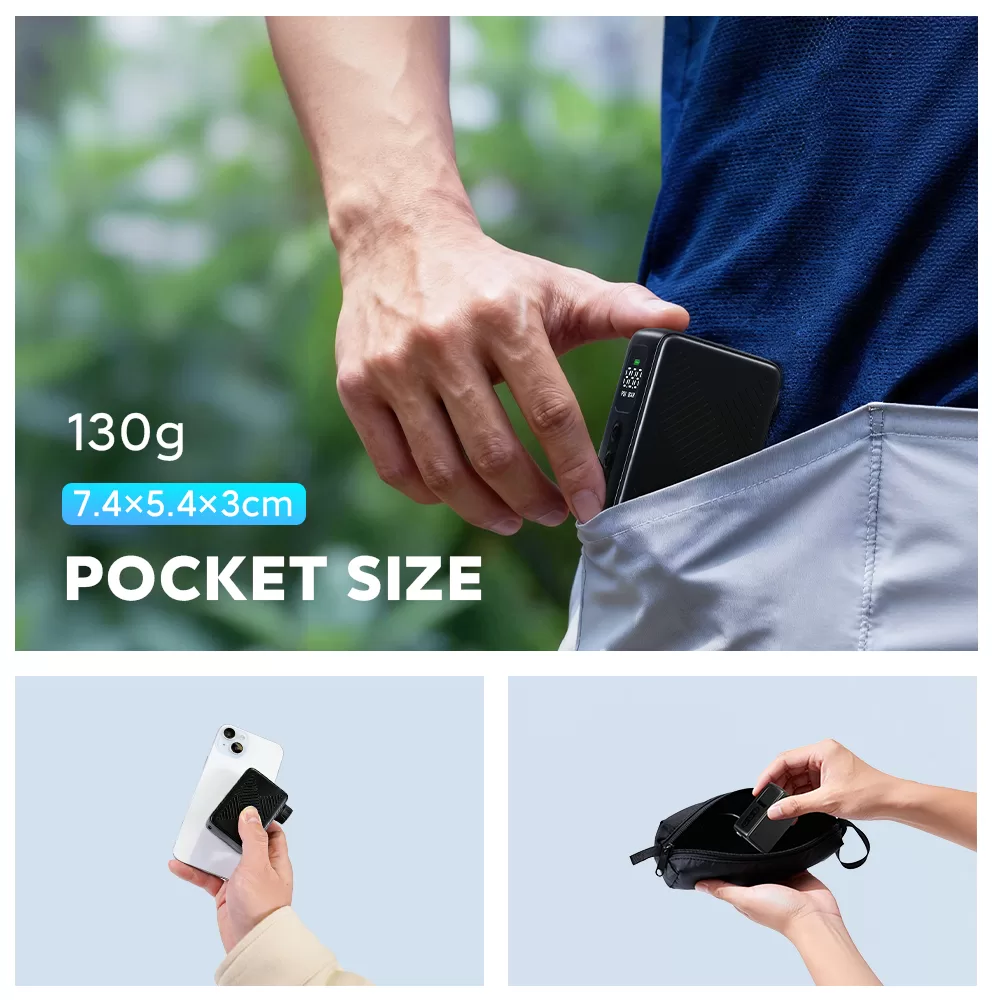
BL08-A Portable Electric Bike Pump: A Global Distribution Opportunity with Smartnewo
Smartnewo, a professional manufacturer of portable electric air pumps, introduces the BL08-A model — a compact and efficient inflator designed for global distributors, e-commerce sellers, and outdoor accessory brands seeking reliable OEM/ODM solutions. Table of Contents Main Heading Subtopics 1. Introduction: Expanding the Global Market for Smart Inflation Tools Portable... -

Connecting Opportunities at Automechanika Shanghai 2025 — Smartnewo Exhibition Day 1
Today marks an exciting beginning as Smartnewo officially opens its booth at Automechanika Shanghai 2025. As one of the largest and most influential automotive aftermarket exhibitions in the world, the show provides an exceptional platform for meaningful conversations, partnership building, and global industry exchange. Located at Booth 7.2E47, Smartnewo presents... -

Why Every Outdoor Cyclist Should Carry a Mini Electric Bike Pump
Whether you are an experienced mountain rider or a weekend road-cycling enthusiast, one thing is certain: unexpected tire pressure issues can ruin an entire ride. That’s why more cyclists are turning to mini electric bike pumps—compact, lightweight, and far more reliable than traditional hand pumps. 1. Consistent Pressure, Even in...
-
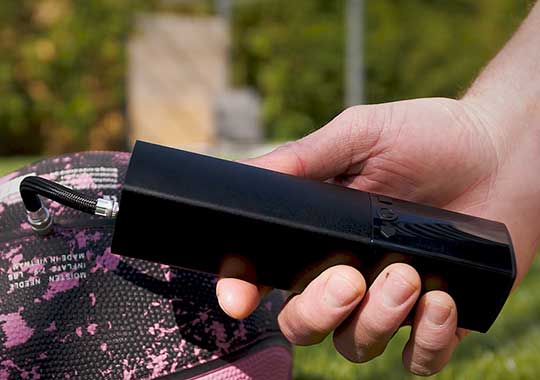
How Is a Football Properly Inflated?
The correct inflation of a football - with not too much and not too little air - is a hotly debated topic among footballers.... -
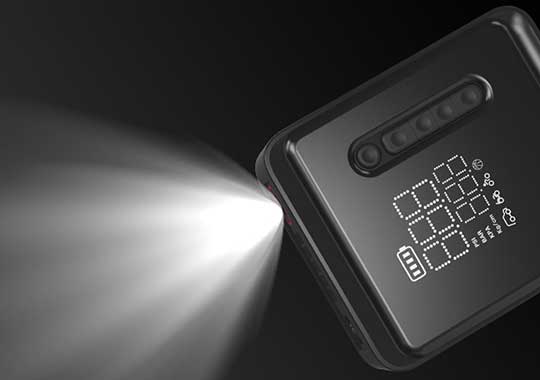
Application Scenarios of Car Inflator Pump
Often long-distance business trips or play car owners because the road may be more remote areas, in this case if you encounter a tire leak....