

 Portable Tire Inflators
 Electric Air Pumps
 Electric Car Tyre Pumps
 Electric Ball Pumps
 Electric Bike Pump
 SUP Air Pump

Portable Tire Air Pump for Car: Selection, Pneumatic Principles, and Field Operation Guide
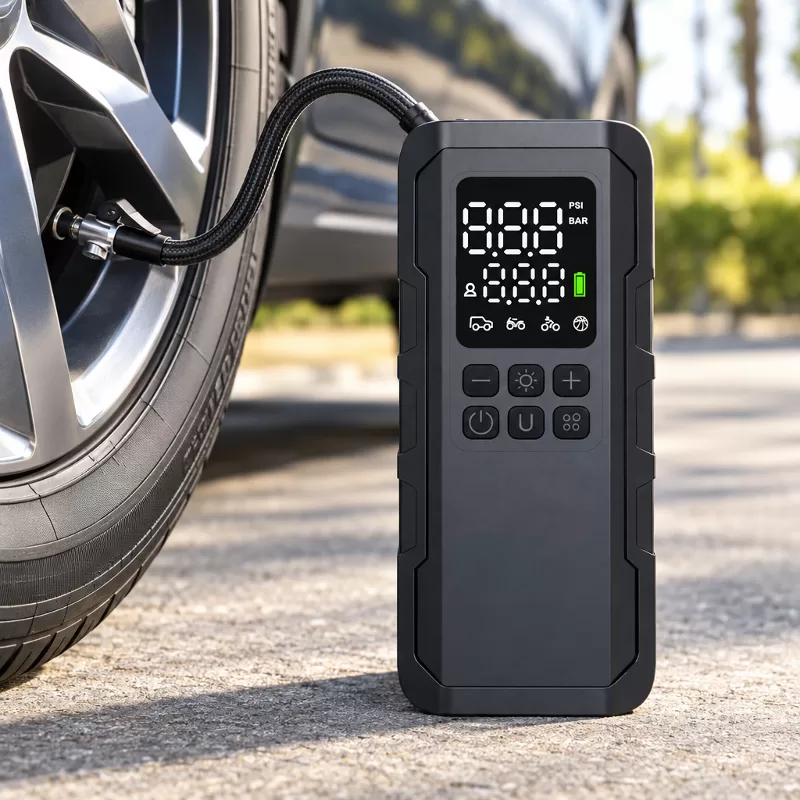
Maintaining correct tire pressure represents one of the simplest, yet most frequently neglected, aspects of vehicle safety and fuel efficiency. A sudden tire pressure monitoring system warning on a quiet highway leaves drivers facing an inconvenient search for a functioning service station compressor. Keeping an autonomous, dependable portable tire air pump for car tires inside your vehicle eliminates reliance on external infrastructure while protecting tire casings from premature wear. Modern pneumatic equipment has evolved beyond bulky, tethered workshop compressors into compact cordless units that deliver convenient pressure monitoring, practical volume displacement, and dependable roadside peace of mind.
Understanding Portable Tire Inflators: Pneumatic Mechanics and Real-World Scope
Reciprocating Cylinder Mechanics in Miniature Compressors
A modern portable tire inflator relies on a positive-displacement compression mechanism driven by a compact direct-current electric motor. Inside the chassis, the electric motor turns a drive assembly, converting rotary motion into the linear stroke of a reciprocating piston. As the piston moves downward inside the cylinder chamber, atmospheric air enters through intake ports, drawing ambient air past an internal sealing valve.
When the piston reverses direction on the upward compression stroke, the captured air volume is compressed within the cylinder. This mechanical compression increases air pressure, driving the compressed air through a flexible braided hose directly into the tire chamber. Because automotive tires require substantial volume compared to sports equipment, cylinder displacement and motor output determine how quickly an inflator can raise vehicle tire pressure.
The Thermodynamic Reality of Ambient Pressure Loss
As a general rule of thumb recognized across the tire industry, a tire can lose roughly 1 to 2 PSI per month through natural permeation under typical conditions. However, this figure is an approximate estimate rather than a universal rule. If a tire repeatedly loses air pressure, relying on periodic top-offs is unsafe, and the wheel assembly should be inspected by a qualified technician to check for slow puncture leaks, valve stem deterioration, or rim corrosion.
Ambient temperature shifts also alter tire pressure noticeably. In general, tire pressure may change by roughly 1 to 2 PSI for every 10°F change in ambient temperature, depending on specific operating conditions and atmospheric factors. When cold weather arrives, overnight temperature drops routinely lower tire pressure enough to trigger dashboard warning lights. Regular pressure verification with a portable tire air pump for car maintenance helps drivers correct these seasonal drops before treadwear patterns become uneven.
Functional Boundaries: Maintenance Tool vs. Emergency Tire Repair
A portable compressor provides a practical way to manage routine maintenance and address minor pressure deficits, but motorists must understand its operational limits. An inflator can temporarily add air to help a vehicle reach a safe repair facility, but it cannot repair structural tire damage. When a tire suffers from an active puncture, cut, or continuous bead leak, reinflating the tire does not make the vehicle safe to operate.
Driving on an underinflated tire or one with compromised internal structural belts creates significant blowout risks at highway speeds. A portable pump serves as an essential inflation and monitoring tool, yet it cannot substitute for physical inspection and professional tire repair. If air escapes from a tire as rapidly as the compressor supplies it, the wheel must be changed or mechanically repaired before the vehicle is driven.
Critical Engineering Metrics for Modern Automotive Inflators
Maximum Pressure Ratings versus Working Automotive PSI
Consumer inflators frequently list maximum pressure capabilities of 120 to 150 PSI, which can create confusion for everyday vehicle owners. In practice, typical passenger sedans and crossover utility vehicles require cold working pressures between 30 and 36 PSI, while certain light trucks and commercial vans call for higher operating pressures. The maximum rating indicates the mechanical ceiling of the internal cylinder and valve components rather than the target pressure for standard car tires.
Drivers should not confuse the maximum pressure molded onto the tire sidewall with the vehicle’s proper operating target. Sidewall markings state the tire’s maximum permissible pressure at its maximum load rating, not the pressure calibrated for your car’s suspension and braking performance. In the case of the LP8, the unit provides a listed maximum pressure rating of 150 PSI, while drivers must always adjust inflation to the specific pressure indicated on the vehicle door placard.
Airflow Rates, Compressor Power, and Inflation Runtimes
Airflow delivery, commonly expressed in liters per minute, indicates how rapidly an air compressor transfers air into a tire chamber. According to the manufacturer specifications, the LP8 model features a 19-cylinder compressor paired with a 60-watt motor that delivers an airflow rate of 26 to 28 liters per minute across an operating pressure range of 2 to 150 PSI. The time required to add pressure varies substantially depending on tire volume, initial pressure deficit, and operating conditions.
Compressing atmospheric air concentrates thermal energy, which naturally causes internal components and air pathways to heat up during operation. The LP8 platform provides a listed continuous runtime of 20 to 25 minutes, offering practical operational duration to adjust multiple tires on a single battery charge. Allowing the unit to rest between extensive inflation tasks helps manage normal heat buildup and preserves mechanical components over the product’s operating life.
Power Architectures: Cordless Lithium Cells versus 12V DC Plugs
Earlier portable compressors relied almost entirely on long 12-volt accessory cords plugged into the car’s auxiliary power outlet. While 12-volt corded models provide continuous power as long as the car battery has charge, running cords through vehicle doors can be cumbersome, especially in inclement weather. Self-contained lithium-ion power packs eliminate power cords, allowing drivers to move freely around the vehicle during inflation tasks.
An autonomous battery architecture requires users to maintain the battery properly, particularly when the unit remains stored inside a trunk through hot summers and cold winters. Users should consult the manufacturer’s manual for specific battery charging and storage guidelines to maintain battery health. Models featuring reversible Type-C charging ports simplify maintenance by allowing users to recharge the pump using standard modern electronic charging cables.
Digital Pressure Displays, Presets, and Automatic Cut-Off
Traditional mechanical pressure gauges rely on internal analog springs that can shift out of calibration over time when exposed to the vibrations of driving. Modern electronic inflators incorporate digital pressure sensors paired with dual LED screens, presenting clear, legible numerical values. These digital readouts eliminate the parallax errors often experienced when trying to read tiny tick marks on traditional analog dial faces.
In addition to displaying real-time pressure, smart inflators feature preset inflation modes alongside custom target controls. When the user sets a desired pressure target, the pump runs until it reaches that value and then automatically cuts off motor power. While this automatic shut-off feature helps reduce the risk of accidental over-inflation, motorists should always verify final tire pressure with a calibrated standalone tire pressure gauge for maximum accuracy.
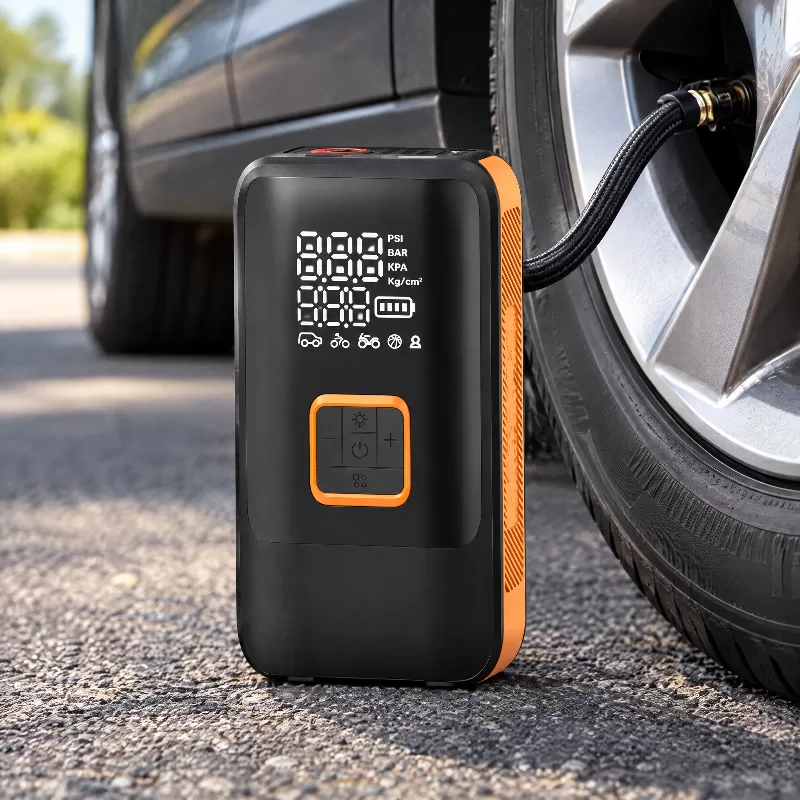
Technical Profile: Evaluating the LP8 Portable Tire Inflator Architecture
Powertrain and Internal Cylinder Configuration
The LP8 portable tire inflator incorporates a 19-cylinder compressor assembly powered by a 60-watt electric drive motor. This mechanical configuration delivers a consistent airflow rate between 26 and 28 liters per minute across an operating pressure range spanning 2 to 150 PSI. As a manufacturer specializing in smart electric air pumps and portable inflation solutions, Newo focuses on creating high-quality smart inflation products that provide reliable service under real-world conditions.
According to product specifications, the motor operates at a sound pressure level of 85 decibels or below when measured at a distance of one meter. This acoustic profile provides functional feedback during motor operation, allowing the user to readily confirm steady mechanical performance during roadside or garage inflation cycles.
Energy Storage, Fast Charging, and Multi-Function Delivery
Internal energy storage for the LP8 is provided by three 18650 lithium-ion battery cells arranged in series, delivering a capacity of 2000mAh at 11.1 volts (22.2 watt-hours). This internal battery capacity yields a runtime of 20 to 25 minutes per full charge, and the manufacturer lists an inflation capacity of approximately 3.5 tires of size 205/55 R16 per full charge. The battery system is rated to retain 80 percent or more of its original capacity across 300 charge cycles.
Recharging is handled through a Type-C input supporting 5V/2A and 9V/1.5A power supplies, reaching a full charge within two to three hours. The unit also includes bidirectional power output at 5V/2A and 9V/1.5A, allowing the device to serve as a power bank for small electronic devices during travel emergencies. An integrated illumination module offers three distinct lighting modes: constant illumination for dark work areas, flashing mode for visibility, and an SOS signaling pattern for emergency situations.
Ergonomics, Form Factor, and Field Duty Envelope
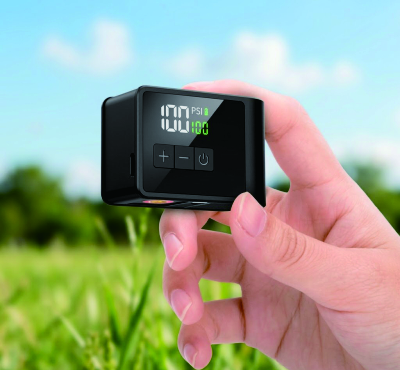
With physical dimensions of 70.5 by 50 by 165 millimeters and an overall weight of 522 grams, the compact dimensions of the LP8 may suit gloveboxes, door pockets, or roadside tool kits, depending on the vehicle. The exterior has a dark gray matte finish and molded side contours visible in the product design. A dual LED display provides separate digital readouts for real-time and target pressure values, with physical control buttons to switch between PSI and BAR units.
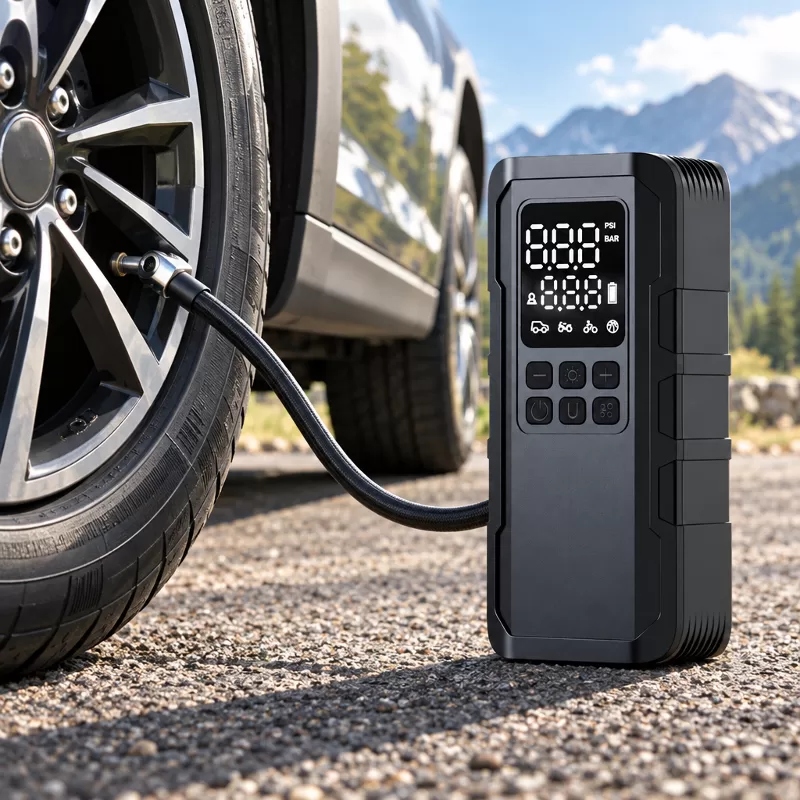
The LP8 is rated for operation across ambient temperatures ranging from minus 10 degrees Celsius to 45 degrees Celsius (14°F to 113°F). This broad temperature range allows drivers to rely on the device during chilly winter top-offs as well as hot summer road trips, provided the unit is kept within its specified operating conditions.
| Technical Parameter | Engineering Specification |
|---|---|
| Product Model | LP8 Portable Tire Inflator |
| Compressor Architecture | 19-cylinder mechanism |
| Working Power | 60 Watts |
| Pressure Range | 2 to 150 PSI |
| Airflow Output | 26 to 28 L/min |
| Battery Configuration | 3 × 18650 cells (2000mAh, 11.1V, 22.2Wh) |
| Charging Time | 2 to 3 hours (Type-C) |
| Operational Runtime | 20 to 25 minutes continuous |
| Inflation Capacity | Approx. 3.5 tires (205/55 R16) per full charge |
| Operating Temperature | -10°C to 45°C |
| Sound Level | ≤ 85 dB at 1 meter distance |
| Dimensions & Weight | 70.5 × 50 × 165 mm; 522 g |
Step-by-Step Field Operation: Safe Tire Inflation Procedures
Step 1: Identifying Placard Pressure and Verifying Cold Tire State
Before adding air, verify the recommended cold inflation pressure specified by your vehicle’s manufacturer. Find the vehicle’s tire-information placard, commonly located on the driver-side door edge or door jamb, or consult the owner’s manual. This label details the required cold inflation pressures for both front and rear tires based on the vehicle’s design and load capacity.
Always measure tire pressure when tires are cold, defined by safety agencies such as NHTSA as having been parked for at least three hours, or driven less than one mile after being parked for at least three hours. As a vehicle travels, friction and sidewall flexing generate heat, and NHTSA reports that tire pressure can normally rise by 2 to 6 PSI during operation. Drivers should never bleed air from warm tires to match cold placard specifications, as doing so leads to severe under-inflation once the tires cool down.
Step 2: Mechanical Inspection and Valve Stem Clearance
Take time to examine the tire tread and sidewall before connecting any inflation equipment. Check the surface for embedded road debris, nails, cuts, or localized tread separation, and ensure the wheel rim has not sustained rim-bending damage. Remove the valve stem cap, checking the outer threads for grit or road grime that could impede an airtight connection.
Inspect the valve stem itself to ensure it is seated straight and shows no severe weather checking or cracking around its rubber base. If a rubber valve stem shows visible cracking or allows air to leak when gently nudged, it should be serviced by a tire professional. Clearing away loose surface dirt ensures that no particulate matter enters the valve core when the air chuck connects.
Step 3: Connecting the Air Hose and Checking Initial Pressure
Take the flexible braided inflation hose from the kit and thread its connector securely onto the tire’s Schrader valve stem. Screw the collar down smoothly until the inner depressor engages the valve core pin, listening for a brief hiss of air that stops once the inner rubber seal seats firmly against the valve mouth. Be careful not to cross-thread the connector onto the valve.
After connecting the hose and powering on the unit, check the displayed pressure if the product manual supports this function. Compare any initial reading against your manufacturer placard value to determine the pressure deficit before starting the compressor motor.
Step 4: Setting Pressure Targets and Operating the Inflator
Use the unit’s control buttons to select the vehicle-tire preset, if provided, or manually set the target pressure according to the product instructions. Once the target pressure is set, start the pump to engage the 60W motor and begin air delivery. The dual LED display allows you to monitor the rising real-time pressure alongside your preset target.
During operation, keep the inflator upright on a flat, dry surface rather than leaving it in loose dirt or mud where debris could enter the intake ports. Keep in mind that the mechanical action of compressing air produces heat, and the pump and air path may heat during operation. Avoid touching components during or immediately after use and follow the product manual’s handling instructions.
Step 5: Disconnecting the Fitting and Performing Final Checks
When the inflator reaches the preset target, its automatic shut-off function terminates airflow. Turn off the device before unthreading the hose connector from the valve stem. Unscrew the fitting briskly to minimize the slight release of air that occurs as the valve stem core spring re-seats.
Because unscrewing a threaded hose connector can release a slight amount of air, check the final pressure with a reliable tire pressure gauge, adding a brief top-off if necessary. Thread the valve cap back onto the stem to protect the core pin from dirt, moisture, and road de-icing salts. Store the inflator in its travel pouch once the hose and housing have cooled down.
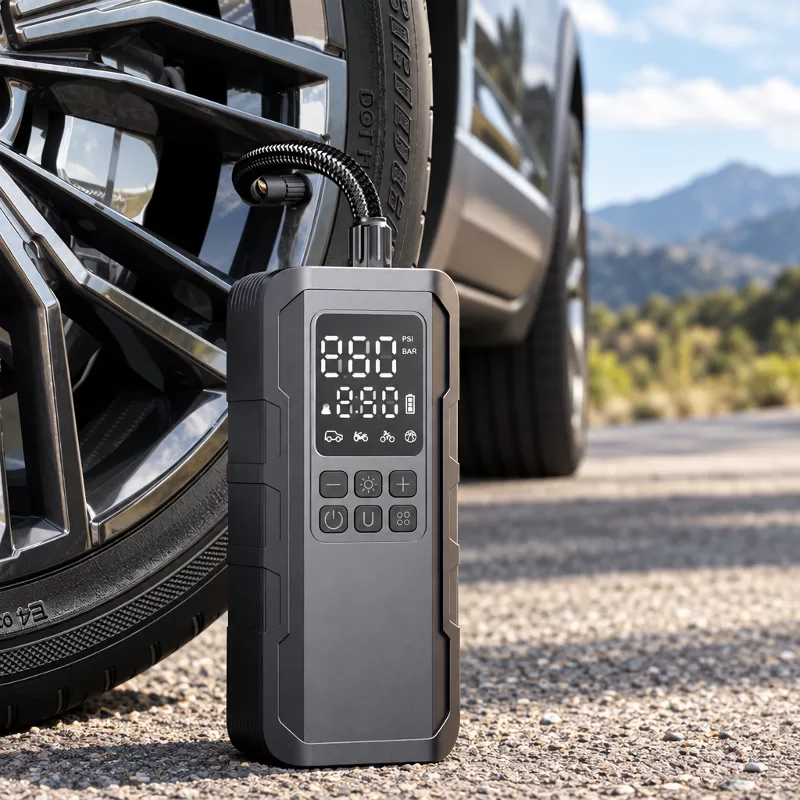
Multi-Application Utility Across Everyday Transport and Recreation
High-Pressure Bicycles, E-Bikes, and Balance Vehicles
While passenger automobiles require moderate pressure and substantial air volume, personal transportation devices often require distinct pressure levels depending on tire volume, casing construction, and manufacturer ratings. Commuter bicycles, road bikes, and cargo bikes operate across diverse inflation ranges, and achieving correct pressure with a manual hand pump can demand substantial physical effort.
The LP8 inflator supports working pressures up to 150 PSI, allowing users to service bicycle tires, e-bikes, and balance vehicles within their specified design limits. The digital display and customizable target settings can help reduce the risk of accidental over-inflation, provided the user sets targets that comply with the tire or bicycle manufacturer’s recommendations. The supplied adapters may support additional valve types; confirm Schrader or Presta compatibility in the product documentation before use.
Motorcycle Pressure Maintenance and Sports Equipment
Motorcycle tires require consistent pressure checks, as pneumatic variations directly influence contact patch shape, steering feedback, and braking distances. Riders should always follow the motorcycle and tire manufacturers’ specified cold-pressure recommendations for their current load and riding conditions. Having a portable inflator stored in a saddlebag or tail pack allows riders to check and correct pressures before long trips or after daily commutes.
The product is also listed for sports-ball inflation; confirm that the required ball needle is included before use. Sports-ball pressure varies by ball and manufacturer; use the pressure printed on the ball or specified in its instructions. The listed 2 PSI minimum and automatic shut-off may support low-pressure applications, but users must set the manufacturer-recommended ball pressure and stop if the ball shows excessive deformation.
Frequently Asked Questions (FAQs)
How do seasonal weather transitions trigger tire pressure warning lights?
Tire pressure monitoring systems track internal tire pressure, which changes in direct response to surrounding ambient temperatures. In general, tire pressure may change by roughly 1 to 2 PSI for every 10°F change in ambient temperature, depending on conditions (with some federal references citing roughly 1 PSI per 12°F). When autumn or winter arrives, an overnight temperature drop of 20°F to 30°F can reduce cold tire pressure by several pounds, crossing the vehicle’s warning threshold and illuminating the low-pressure indicator.
What prevents a cordless inflator from over-pressurizing a vehicle tire?
Modern digital tire inflators feature electronic pressure sensing paired with target preset controls. When the user selects a target pressure, the device monitors the pressure increase during inflation and is designed to shut off motor power automatically when that target is reached. While this automatic cut-off prevents runaway over-inflation, motorists should always verify final pressure using a reliable tire pressure gauge.
Why does an electric pump become hot around the air hose connection during use?
The heat generated during compressor operation is a direct result of compression thermodynamics rather than electrical motor failure. Compressing atmospheric air into a high-pressure state concentrates thermal energy, heating internal air pathways and connecting hardware. Users should avoid touching the air hose or connector fittings during and immediately after operation, and follow the product manual’s safe-handling instructions.
Can a 60W portable air compressor seat a tubeless tire bead from zero pressure?
A 60W portable tire inflator delivering 26 to 28 liters of air per minute is intended for inflating intact tire assemblies. Seating an unseated tire bead typically requires a sudden, high-volume surge of compressed air from a large shop compressor tank to expand the tire casing firmly against the wheel rim. A completely flat or damaged tire may require professional service, especially if the bead is unseated from the rim flange.
How should a stored lithium-ion inflator be maintained during long periods of non-use?
Lithium-ion batteries experience gradual self-discharge when stored, a process that can accelerate when the unit is exposed to high temperatures inside vehicle trunks during summer months. To maintain battery health and ensure the inflator is ready for emergency use, users should consult the product manual for recommended storage temperatures and periodic charging guidelines. Keeping the unit charged according to manufacturer instructions prevents the battery from slipping into a deep-discharge state that could hinder future performance.
Maintaining Road Readiness with Dedicated Onboard Inflation
Consistent tire maintenance plays an indispensable role in maintaining vehicle handling, preserving fuel economy, and ensuring even tread life across thousands of highway miles. Relying on gas station air machines often means confronting out-of-order equipment, missing valve fittings, and inaccurate analog gauges. Storing a dependable portable tire air pump for car applications in your vehicle can provide convenient pressure checking and inflation support whenever low pressure occurs, while using a standalone gauge ensures that cold placard pressures remain accurately maintained.
-

Meet NEWO at the 140th Canton Fair: Visit Booth 10.3 M03–04
Meet NEWO at the 140th Canton Fair in Guangzhou, October 15–19, 2026. Visit Booth 10.3 M03–04 to explore portable air pumps and discuss OEM, ODM and distribution opportunities.... -

As Shenzhen Welcomes the World for APEC 2026, NEWO Welcomes You to Our Factory
As Shenzhen prepares for APEC 2026, NEWO welcomes international buyers and partners to visit our factory, meet our team and explore future cooperation.... -

Leading the Way in Product Innovation and Excellence
Smartnewo exemplifies professionalism in product innovation and manufacturing. Their collaboration with Xiaomi Youpin on the G01 crowdfunding project highlights their expertise in creating compact, powerful inflatable pumps. Rigorous engineering, meticulous production processes, and advanced quality assurance underscore their commitment to excellence. The success of the G01 project, with significant market... -

Essential Qualities of an Excellent Supplier
In today's competitive market, finding a reliable supplier is crucial for business success. Based on insights from Smartnewo and broader internet research, here are key qualities an excellent supplier must possess:... -

NW06 Tire Inflator: Compact Power for Quick Inflation
Summary The NW06 Tire Inflator delivers quick and efficient tire inflation with a powerful 35L/min airflow. It features a user-friendly LCD screen for real-time pressure monitoring, dual power options with a built-in 6000mAh battery, and multiple nozzle attachments for versatile use. Its compact design and integrated LED light ensure convenience and... -

Unleash the Power of Portability: The SmartNewo Jump Starter with Air Compressor KF03
This guide will walk you through the steps to effectively use a portable tire inflator, helping you stay prepared and safe on the road.... -

Newo Attends The 2024 Consumer Electronics Show (CES)
Smartnewo booth is located at 53672, Halls A-D, Level 2, Venetian Expo, Las Vegas Convention Center (LVCC). ... -

Smartnewo’s Dual-Cylinder Air Pump Rocks the Hong Kong Autumn Electronics Fair!
Smartnewo’s Dual-Cylinder Air Pump Rocks the Hong Kong Autumn Electronics Fair!... -

Meet at the Canton Fair! Smartnewo brings dual-cylinder air pumps, making your inflation experience faster and more stable!
NEWO has went deep communication and negotiation with customers from all over the world on booth.... -

“Hong Kong Autumn Electronics Fair – 1CA18 (October 13th to 16th): Smartnewo invites you to visit our booth!
Hong Kong Autumn Electronics Fair...










-

What to Check Before Ordering Custom Electric Bike Pumps
Plan custom electric bike pumps with a clear requirements freeze for valves, TPU tubes, portability, repeated top-ups, charging, and model-specific documents.... -

OEM vs ODM Air Pumps: Which Manufacturing Model Fits Your Brand?
Compare OEM and ODM air pump projects by design responsibility, change approval, development scope, and written ownership terms before choosing your route.... -
How to Choose a Reliable Tire Inflator Manufacturer in China
Choose a tire inflator manufacturer in China with a focused RFQ, supplier evidence, configuration checks, and clear sample-to-pilot decisions for your brand.... -

Rechargeable Electric SUP Pump for Paddle Boards: Faster Inflation for SUPs, Kayaks and Inflatable Tents
The BL10-C Portable Electric Bike Tire Inflator is a compact and lightweight mini electric bike pump designed for modern cyclists. With up to 120 PSI pressure, a digital LED display, preset pressure control, automatic shut-off, USB-C charging, and multiple valve adapters, BL10-C offers a convenient inflation solution for road bikes,... -

Are Electric Bike Pumps Worth It in 2026? Electric Pump vs CO₂ vs Mini Hand Pump
Discover whether electric bike pumps are worth it in 2026. This guide compares electric bike pumps, CO₂ inflators, and mini hand pumps for road cycling, gravel riding, commuting, and long-distance rides. Learn the pros, limitations, best use cases, and key features to look for before choosing the right portable tire... -
BL10-C Portable Electric Bike Tire Inflator: Small Size, Reliable Power for Every Ride
The BL10-C Portable Electric Bike Tire Inflator is a compact and lightweight mini electric bike pump designed for modern cyclists. With up to 120 PSI pressure, a digital LED display, preset pressure control, automatic shut-off, USB-C charging, and multiple valve adapters, BL10-C offers a convenient inflation solution for road bikes,... -

Why Mini Electric Bike Pumps Are Becoming Essential for Modern Cycling
Discover why mini electric bike pumps are becoming essential for modern cyclists. Learn how portable electric bike pumps improve tire pressure management, riding safety, and convenience.... -

The Ultimate Smart Solution for Easy Outdoor Adventures in 2026
Discover how a spring travel air pump simplifies outdoor trips with fast inflation, smart features, and powerful performance—perfect for every adventure.... -

Powerful 5-in-1 Portable Car Tire Inflator and Jump Starter: The Ultimate Emergency Tool for Every Driver
Why Every Driver Needs a Portable Car Tire Inflator and Jump Starter Modern drivers face many unexpected situations on the road. A flat tire, low tire pressure, or a dead car battery can happen at the worst possible time. That’s why having a portable car tire inflator and jump starter is... -

7 Real Cycling Scenarios That Show Why Every Rider Should Carry a Mini Bike Pump
Cycling is one of the most freeing activities you can enjoy. Whether you’re commuting to work, riding through city streets, or exploring quiet countryside roads, a bike ride can instantly improve your day. But there’s one small problem that almost every cyclist eventually faces: Low tire pressure. It might happen...








-
How Is a Football Properly Inflated?
The correct inflation of a football - with not too much and not too little air - is a hotly debated topic among footballers.... -
Application Scenarios of Car Inflator Pump
Often long-distance business trips or play car owners because the road may be more remote areas, in this case if you encounter a tire leak....

